Loupe is a simple, small magnification device used to see minute details more closely. They generally have higher magnification than magnifying glass. It is a small tool in the hands of most precision-oriented printers to check the print registration and quality of print. The magnification of content and its spread to other printing technologies envisioned through the loupe by the new owners of Labelexpo group made them expand the gamut, by renaming this premier event to include multiple segments of printing and packaging and be named Loupe! On the 15th of September 2025, on the opening day of Labelexpo 2025 at a new venue Fira Gran Via Barcelona Spain, Informa Markets the present owners of the event announced that Labelexpo had been transformed and renamed to be known hereafter as Loupe.

The Labelexpo exhibitions held in Europe, USA, China and India over the years have come to be referred to as the Mecca of successful label printers around the world. The Labelexpo exhibition was founded by Clive Smith in the year 1979, a year later in 1980 the first Labelexpo exhibition titled Labelex at that time, was held in London’s Royal Horticultural Hall, in a net area of 1000 square meters with just 44 exhibitors. Three shows later in 1985 the show was renamed as Labelexpo Europe and moved to Brussels and in 1998 it was sold to Tarsus who expanded the labelexpo to global destinations including India by acquiring the India Label Show in 2005 and renaming it as Labelexpo India in 2008. After growing the brand multifold in 2023, Labelexpo Global Series was acquired by Informa, the world’s largest B2B event organizer, commanding 800+ brands and 14,000 employees across 30 countries. On September 15th, 2025, Labelexpo not only moved from Brussels, its traditional venue of 20 years and moved to Fira Gran Via Barcelona Spain but also was transformed by the new owners to a different format. From being primarily a label event, it will now encompass the companies in various technologies that include besides labels, flexible packaging, cartons and various forms of packaging. While no mention is made for the total area covered by Labelexpo 2025, but it is mentioned that the show had 650 exhibitors from 138 countries.

Trying to get opinion of visitors, a questionnaire as follows was sent to some visitors and exhibitors;

  • What is your response regarding the shift of Labelexpo from Brussels to Barcelona? Is it better or was Brussels better ?
  • The shift of management from Tarsus to Informa Markets, was it a better organised event? Your opinion
  • The change of name from Labelexpo to Loupe, do you like it? Change of format from labels to packaging.
  • If sheet offset is also in the new format,  labels will be a miniscule portion. Your take?

Analysing the responses as an overview; At the very outset it will be pertinent to mention that this was a premium show where largely exhibitors drew value for money. It delivered the results envisaged!

However, being a predominantly European show, the larger number of visitors appeared to be more from the same region. As per the author’s personal perception there appeared to be a smaller number of visitors than before from the Indian subcontinent. Although the total number of attendees seemed lower, this observation is also based on perception, as Informa Markets has not released an official statement or press release to this effect. The city of Barcelona was amazing, but many would have loved to be on holiday in Spain and not just for an exhibition. As regards the change of venue from Brussels to Barcelona, the industry getting together and the camaraderie amongst peers at Grand Place in Brussels was missing, yet a majority of respondents feel it is a good move, and the show will settle down well in Barcelona. 

While change of management from Tarsus to Informa is a matter of record, in this edition of the show, there were problems in organization of the event. The signages were not only bad but unacceptable. The meticulous planning at Brussels was missing . Even the Gala dinner was a damp affair as compared to the grand sit down, well planned formal dinners at Brussels with great pomp and show. And there were no proper signages leading to the dinner venue. The author had to climb 3 floors to be told by the girl at the door that one has to go down 3 floors and come up another way after checking the wrist badges which we already adorned, even though the main hall was just a few steps from where she was. Not even caring for senior citizens! The air conditioning in the exhibition halls was inefficient  and in Hall 3 it was unbearably hot. Again, it is felt these are transitional glitches and will eventually be addressed.

The labels community at large has expressed that Labelexpo was a preferred name as it was their show and would wish it had continued so. However still, it is understood to be the prerogative of the show owners to change the name. It will probably settle down with time. The change of format from narrow web self-adhesive labels to include flexible packaging pouching in mold labels, and so, is acceptable. In fact, the roll form narrow to mid-web printing and converting appears to be the relevant format to extend the show towards. My last question, “ If sheet offset is also in the new format,  labels will be a miniscule portion. Your take?” drew the strongest response from a majority, “We cannot be a part of such a show where we lose our status as a part of the vibrant label industry.”

Reproduced below are some of the important comments of all the respondents. Producing all comments would make the article too long. 

Kuldip Goel CMD Any Graphics Noida India and past President LMAI: “Our experience of Brussels was better. I would not be repeating visit to Barcelona though I see that  Informa is doing a great job. I do not think  that the change in name is going to impact much, but Label Expo looks better. Label should be treated differently. Inclusion of Sheetfed Offset may make the event loose its uniqueness.”

Isidore Leiser, Owner Stratus Packaging, Brussels, Belgium: “Personally, I like a label show to remain focused on labels. If someone wants something broader, they can always go to Drupa.”

Naveen Talwar, Director Skypack India Pvt Ltd Faridabad India: “I prefer the Barcelona venue; it is closer to airport. It is a cleaner city compared to Brussels. I felt safer. Personally, I feel the show should stick to ‘roll to roll” converting. Sheet fed will make things totally different.”

Raul Silvestre, Lartec, Alicante Spain: “The change of venue to Barcelona is good but it was badly organized. Access for exhibitors was not allowed by own cars. We had to handle all boxes from door 4 to the stand, manually. Very Bad exit doors, only 2 available when the show has a lot to go out. I do not like the change of name and the format change. It should remain an event focused on labels. The change will result in lesser share for label industry visitors to have opportunity to contact and spend time with exhibitors.”

Amit Sheth, Director Intergraphics Mumbai India: “Frankly, the new organiser was not as efficient as the previous one . The signages were missing; the assistance desks in every intersection were missing; the maps of all the halls at each intersection were missing . As for format change from Labels to Packaging, Label being the primary subject should not be unfocussed. Merging packaging up to mid web  is fine but SHEETFED OFFSET OR ANY SHEET FORM MACHINES OR APPLICATIONS SHOULD NOT BE ENCOURAGED.”

Nitin Garg, Managing Director NBG Printographics Faridabad India: “The shift to Barcelona seems to be a good decision and will boost international participation. The event was well organized, with no complaints. This change of name is logical from the management’s perspective and aligns with the broader industry shift from labels to packaging. The success of Labelexpo stemmed from its clear focus on the label industry and the strong connections its management had within the sector across different countries. With the current shift toward packaging, it remains to be seen whether the same success can be replicated, as packaging is a much broader and more complex domain. The core focus should remain on labels.”

Ankit Gupta Managing Director Holostik Noida India: Barcelona was okay for us though I missed the weather and vibe of Brussels. The Expo was organised well but I neither like the change of format nor the change of name. Sheet offset should not be a part of this landmark show. It will lose its unique identity.”

Sandeep Sharma Director at Acme Rolltech Pvt Ltd Ahmedabad India: Barcelona was good as it creates new positive enthusiasm amongst the exhibitors as well as the visitors. Both Tarsus and Informa are good organisers. Except for the air conditioning issue which needs to be taken care of going forward, overall, it was a good show for us.

Nalani Jaichandra Director VeePee Graphics Bengaluru India: ´It is better in Barcelona, much safer than Brussels. The show was well organized but the name Labelexpo was more apt. Yes, this format widens the target market, which will bring in more visitors and as Labels is a part of packaging having everything under one roof will be better. Sheetfed offset should be kept out, the focus should be only on flexo and digital.

Dinesh Mahajan, Managing Director Prakash Labels Noida India: “Barcelona is as good as Brussels! Unfortunately, the event was not that well organized compared to what it used to be in Brussels. The name Labelexpo when spoken gives clear impression of what event we are talking about, though Loupe is not that explicit. Change of format seems all right, but Sheet offset should be resisted to be displayed in this event.

Mahendra Shah, Director at Renault Paper Products Pvt ltd. Mumbai: “After initial adverse reactions, once settled, the venue looks good. Organisational glitches will eventually be taken care of and sure to settle down. As for the name, I would prefer Labelexpo, it connects us to the event. The change of format is way forward. For the sheetfed offset segment, web converting is the future, and they should be visitors to the show.”

Summing up, it is generally felt the venue in Barcelona is acceptable or will gradually settle down with visitors from industry. The organization of the show will improve given the stature experience and capabilities of Informa Markets and the changed format restricted to web converting, preferably up to mid-web, will be widely welcomed but to include sheetfed offset will make it a replication of the many shows like Drupa. The wish to make it to specially focused labelexpo and meet label industry peers will diminish. We will wait to see how Labelexpo, renamed Loupe, will actually transform and find acceptability from the label fraternity.

Note: One day prior to the show that opened on 16th September 2025, on the 15th, Amit Sheth and the author Harveer Sahni, representing LMAI were the judges for World Label Awards and also attended the meeting of L9 the confederation of nine leading label associations of the world.

My short pictorial walk through the Labelexpo 2025:

Written by Harveer Sahni, Chairman Weldon Celloplast Limited New Delhi September 2025

For advertising on this blog and on website www.labelsandpackagingworld.com please email to

info@labelsandpackagingworld.com 

In the ever changing and evolving technological advancements in label printing and application processes, change remains constant, leaving very little space to remain complacent. One needs to remain abreast of evolution and stay updated and adopt new developments in whatever way possible. Staying stuck to technologies that are undergoing change, longer than necessary with chance of becoming obsolete,  may bring in a feeling of uncertainty and negativity. 

It does not mean one should immediately forget everything and start changing, but it would be worthwhile to stay abreast and consider accepting indulgence in evolution. In the early 1970s, the author was in process of setting up a factory in the suburbs of Delhi to increase the production of their popular fountain pen inks. Friends in those days cautioned that ball pens are a disruption coming in, however countering that, it was felt fountain pens are here to stay. But what happened is history now, fountain pens are just a show of affluence for some, ball pens rule in mass usage, the fountain pen ink business became negligent and miniscule. Printing technologies in India to produce self-adhesive labels or stickers also transformed from the earliest screen printing manually in sheet form to roll form by letter press, flexo to digital and hybrid. The industry is in that transitional mode of contemplating whether digital will takeover and disrupt. The general opinion in this phase is that both digital and analogue will co-exist as of now. Even digital printing technologies are evolving in multiple tangents. Labelexpo Europe 2025 at Barcelona is around the corner, and it will be good indicator of how the digital label printing and converting is evolving. The author interacted with leading digital label printing equipment providers to understand their presentations at this important show.

At the very outset it is important to understand that while the narrow web label printing has evolved to wider width, it has in its advancement entered the flexible packaging and carton converting arena as well. In the foray into futuristic converting, the digital finishing, embellishment and converting are also undergoing the digital path to evolution. Label printers while considering investments, are not anymore investing into digital presses, limiting themselves to only manufacturing labels, but also considering increasing their capabilities to produce shrink sleeves, pouches, diverse forms of flexible packaging and folding cartons.

HP Indigo: My recent article on Trigon digital Mumbai is an ode to this expanded product range on digital printing and converting. HP Indigo has supported such endeavors and are exhibiting at Barcelona. HP Indigo offers full digital print solutions that enable converters to allocate the right job to the right press. They will showcase the HP Indigo V12 which runs at speeds up to 120 meters per minute and offers full digital print solutions that enable converters to allocate the right job to the right press. Proven to achieve breakthrough milestones in high-volume output, including record-setting runs.

HP Indigo 6K+ that combines a new integrated SmartControlSystem, alongside AI-powered PrintOS tools for greater accuracy, reliability and real-time insights. HP PrintOS, AI-powered solutions and automation software tools to streamline production, boost creativity and accelerate growth. HP PrintOS and HP Nio, users can control workflows form order to shipping, turn data into insight and enhance performance across every operator.

Domino will be at booth 3E91 displaying their latest digital label printing solutions. Ajay Raorane Vice president Domino Printech India LLP says,” With the rise of e-commerce and the government’s push to support startups, we expect Increased demand for quick, high-quality label printing. While India still has a large installed base of conventional printing, the percentage growth of digital appears higher due to a smaller installed base. We feel the trend will grow as more installations happen.” Ajay further expressed that with digital also expanding into flexible packaging, it is a very exciting time for the entire packaging industry. He firmly believes that this is a time of transformation. 

They will exhibit; The Domino N730i, a high-performance 1200 DPI press using their own Brother Bitstar printhead, capable of printing at speeds up to 90 meters per minute. The Domino N610i, monochrome printers, the Domino K600i and the Domino K300, which can print at impressive speeds of up to 150 and 250 meters per minute, respectively. According to Ajay, Digital printing has come a long way. What started as a solution for short runs is now being used for medium and even long runs, where the added value of digital, like variable data printing and image-level personalization, brings real benefits to brand owners.  The presses are getting faster, more reliable, and offer greater profitability for converters. Digital printing can also support sustainability goals by reducing waste, lowering excess inventory, and minimizing obsolescence due to regulatory or consumer changes. This is a time of transformation.

Xeikon will be present in Hall 3 at Labelexpo displaying their Xeikon Titon TX500 20” wide dry toner press, Xeikon PX3300 HD 1200dpi UV Inkjet press, Xeikon LX3000 330mm wide dry toner press. It is a similar range that they displayed at the last Drupa. Vikram Saxena Sales General manager at Xeikon says, “In my opinion buyers for high end digital printing solutions are less, as compared to Europe or North America. Most Indian Label convertors seek low or mid budget digital printing solutions. Lower running cost plays important role for Indian buyers instead of top quality or sustainable solutions.” He further stated that the Indian label printing market will grow by 13.29% CAGR upto 2030 according to Mordor intelligence report and will reach  $4.59 billion by 2030. He stressed the need for awareness regarding sustainability; Indian Label convertors often ignore this point.

Durst Group exhibiting at Labelexpo Europe 2025 Booth E79, Hall 3 showcasing its next-generation digital printing platforms, including both hybrid systems and roll-to-roll configurations. As per the Labelexpo Europe 2025 website, Durst is keeping the details of its new press G3 launch under wraps until the show, describing it as a ‘compact, scalable’ 8-color LED-UV press. Hybrid presses can make use of an almost unlimited combination of digital and conventional print, decoration, and converting units. An example at the Durst stand will be the 9-color 420mm-wide Durst KJET, incorporating the company’s LED-UV inkjet print engine, four flexo units, two multi-purpose lamination units, turn-bar and semi-rotary die-cut.

Durst Indian agent Venkatesh Selvaraj mentions, “The technologies being unveiled are both new and forward-looking, developed to meet the future demands of label converters and the full details will be revealed exclusively at Labelexpo.”

Guangzhou PULISI Technology Co., LTD will be exhibiting at Labelexpo Europe Stand 5D81 displaying Two variants of UV Inkjet Digital Press; 1. Hybrid Digital with Flexo to optimise both Technologies in one press and printers can use this combination for value-addition production of Self-Adhesive Labels, Shrink Sleeve, IML and boards. 2. A standalone UV inkjet press designed for the digital segment, utilizing inkjet technology with a resolution of up to 1200 dpi with addition of Online Digital Embellishment possibility, enables users to address various market needs in label production and flexible packaging.

Amit Sheth Director at Pulisi says, “Digital printing in true sense has so far not fully evolved as an acceptable technology for both short and medium to long run jobs. Digital is growing but considering its pros and cons, one must learn and then decide as in reality it is not just that at touch of a button you print what you need. There is a lot more to consider.

Monotech Systems Ltd. will be exhibiting at Booth E50 in Hall 5. Showcasing running live, their advanced Track and trace solution – Tracesci® Loop a compact tabletop system for variable data printing, code connected packaging, brand protection and consumer engagement. In addition, they will display high-quality printed application samples from their digital inkjet label press JETSCI® KolorSmart+ and the dSpark digital embellishing and finishing system.

T P Jain Managing Director Monotech says, “Digital label printing in India is witnessing steady and accelerated growth with increasing demand for shorter runs, personalization, faster turnaround times, and high-quality output driving adoption across multiple industries. While conventional printing will continue to dominate in terms of overall volume, digital will outpace conventional in percentage growth. Digital label printing is no longer just about speed and quality it’s evolving into a platform for intelligence, security, and brand engagement.”

Arrow Digital will be exhibiting at stand 4A10. Showcasing Arrowjet water-based digital pigment ink label printer with in-line primer coater. It is a futuristic sustainable solution which printers are looking for. This press available in 330mm and 700mm can print at a speed up to 150 meters per minute.

While digital is now growing and if we talk of percentage of growth, it looks robust because at the smaller base number of about 70 to 80 presses from established brands a 15% growth rate translates into just 10 to 12 presses in a year. However, it is interesting to note that in a large customer base, not just the bare population of the country but the printing companies that are operational in the packaging space, digital once the adoption starts will grow fast.

Already the widths have grown wider, and the speeds have gone up to 120 meters per minute. The economies of scale may eventually trigger the downward trend in cost of consumables. The preference of going beyond the CMYK regime using Extended Color Gamut (ECG) printing to  reproduce a greater percentage of Pantone spot colors, increases possibilities of catering to a wider range of package printing needs. While it is a fact the digital is just a fraction of the conventional or analogue printing but now that digital is finding acceptance, it will remain an industry to watch.

Written by Harveer Sahni Chairman Weldon Celloplast Ltd. New Delhi

In December 2018, I wrote a story on Anil Namugade and his company Trigon Digipack https://harveersahni.blogspot.com/search?q=trigon+Digital. As circumstances evolved, from becoming employee to enterpreneur in 2007, Anil initiated his maiden startup Trigon in 2008, as a proofing and mockups service provider. Commitment and hard work led him to success, and in 2015 he bought his first HP Indigo label press and in the three years thereon he was already recognized as a trailblazer in digital label and packaging. Unstoppable thereafter, he kept leading Trigon to more success with 3 wide web and one narrow web HP Indigo.

The Pandemic had put on hold many businesses but for Trigon it amounted to keep providing service to their customers. During the pandemic in 2020 they decided to install a wider 760mm HP Indigo 25K first in Asia to get into short runs of flexible packaging and laminates which was already being done on their smaller width 330mm HP Indigo 6900. They saw a huge opportunity in short and medium quantity runs for startups and there were few suppliers focused on catering to that demand in a proper way. Anil saw that it was time to expand to cater to this opportunity. That is why they took a bold step to acquire the first HP Indigo 25K in India together with total inhouse finishing and converting equipment for lamination, production of pouches and shrink sleeves, in fact the complete set up to provide labels and flexible packaging.

Customer growth and retention is the way of life at Trigon as they are a one stop solution provider. By catering to more than 400 startups, SMEs and their existing FMCGs brand owner customers, Trigon has registered unprecedented growth in digital printing and converting. With the startups community growing so fast, Anil experienced business growth, so decided to expand yet again. In 2024 they moved to a new additional 50000 square feet facility in Vasai near Mumbai  and invested in another digital press installed at new factory, an HP Indigo 200K to increase capacity in flexible laminates. The converting capability was also enhanced by installing a 3D flat bottom pouching machine to cater to a premium market segment and be the only company to offer such pouches with digital printing. At the new facility, they also installed a whole line of equipment to produce rigid boxes and canisters, to cater to the demand of their existing customers. All this was done to become a ONE STOP packaging solution provider and be at the buyer’s doorstep when a solution is needed.

Anil says, “we always research the needs of customers in various segments and share knowledge, such that their confidence in our capabilities grows continuously and they believe in our vision of offering the best futuristic technology, remaining ahead of competition.” Trigon has attained the position as a market leader in digitally printed and converted packaging. Their customers are convinced of them providing packaging that will enhance their brand visibility and demand. Trigon is experiencing a rise in domestic demand but enquiries from international customers are adding exports to their focus.

Anil does not subscribe to the thought process of the label and package converting fraternity that digital is only for short runs, so how can one grow with startups? He explains that most startups initiate their work with multiple SKUs and once they order for example, 500 for each variant, it becomes a substantial order to start with. When there is an order to produce 5 or 6 variants, for them it is just one single job. They do not have to make any cylinders or plates or job changes on the go. Digital technology has a huge advantage with possibility to print on demand. For example, a dry fruit company cannot operate with only one product but maintaining an overly large and varied inventory can be inefficient. In addition to selling on an e-commerce platform, timing is a crucial factor for achieving success. Trigon has understood that the name of the game is quick production, good quality and on time delivery. For catering to such needs of their customer base we have invested to setup the whole manufacturing ecosystem in our factories.

Responding to question on how they reach out to new customers or vice versa, Anil expressed that despite them having a technically strong client servicing team, it is mostly word of mouth publicity. They give respect and importance to all customers irrespective of their size. Reference from existing satisfied customers has built up credibility and brand equity which has provided inertia for their growth. Trigon’s team is very active on social media and digital marketing, which generates substantial enquiries.

The general perception in label and flexible packaging industry is that digital is expensive and this fact is a big deterrent which does not justify the huge investment. “It is a misconception that digital is expensive, mentions Anil.” He further adds, “If a customer has 10 designs for making 2000 pieces each. How can you justify and cost of plates, cylinder, set up time, press time in changeovers and the time in producing 10 different sets of small quantities? In digital as I mentioned earlier it is just one online job of 20,000 pieces, which justifies the cost eliminating the plate and cylinder cost plus the time which is very important”. Moreover, at Trigon they just do not only print a design that a customer brings in, but they also study their job its marketability and add their own expertise in colour management and embellishing capabilities to enhance the packaging for the customer. Since prepress is the heart and soul of any print, they have invested in high-end sophisticated equipment to ensure excellence.

Trigon operates out of a total shopfloor area close to 100,000 square feet in both units at Goregaon and Vasai, put together with 150 workforce, four digital presses one 330 mm wide while the rest are 760 mm wide running at speeds of 30 to 35 meters per minute. Post press is the backbone of any digital printing business and for that reason they have invested in a wide array of digital finishing, embellishing and converting machines which also justify their need for a large shop floor. Anil says if not really the largest, then at least they are definitely amongst the top five companies worldwide in terms of the number of clicks made on their HP Indigo presses. Whether they will diversify to other printing technologies? Anil says that they have grown in digital and there is so much more happening, so there is not much need to change courses as yet, but then one never  knows, They are driven by customer demand, and what course is to be traversed hereon is difficult to mention at this stage. One cannot really comment on the efficacy, advantage or disadvantage of various technologies without really indulging. All processes have their plus and cons. Trigon is driven by their acquired customer profile which is limited to small, medium and customized runs  and are comfortably growing in what is suiting them best.

Talking of growth of digital printing and web converting, Anil feels that with a total of less than 10 machine of wide web digital printing now in India, the potential is huge. In his estimate this segment is registering a CAGR of 15-20%. There seems to be no reason for volumes to slow down as the country moves ahead. A young population’s demand for new products is providing the emergence of new brands offering frequent changes to attract the new generation, providing reason for digital printing and converting to make it convenient to respond to such changes. Regarding comparison of converting costs, there is no way that in volume converting digital will match the cost in volume converting as compared flexo or roto gravure. Marginal reduction of prices of consumables in digital may happen as volumes and competition escalate. As for different digital technologies, most have fairly decent quality and reasonable speed but for consistently producing high quality at good speed, Digital is the preferred technology for Trigon at the moment.

They already export 15-20% of their production but now with expanded infrastructure, they plan to enhance exports yet remaining focused to Indian demand without any compromise. India is one of the fastest growing economies and it is the market that has shown immense resilience. Trigon’s investment in the first HP presses 18k, 25k and 200K were all the first ones in India. They have been trendsetters becoming trailblazers. and have taken risks in investing which with hard work are paying off well. Presently operating at 80% capacity, it may as well be time for expansion yet again. Anil Namugade sums it up,  “Partnership with brands  and their needs make us to grow every time a requirement emanates; it is an opportunity for us, and we respond with full fervor.”

Written by Harveer Sahni Chairman Weldon Celloplast Ltd. New Delhi July 2025

Celebrating 25 years of inception along with their biennial Conference themed, “Emerging Beyond Boundaries”, Label Manufacturers Association of India LMAI, delivered value! 

700 plus delegates were awestruck attending the seventh LMAI conference  at the picturesque and astounding venue, The Fairmont Palace Udaipur from 3rd to 6th July 2025. All 300 rooms at the property were booked at the venue Hotel and additionally 60 rooms were booked  in Hotel Aurika with a total of 360 rooms. 35 sponsors including some of the most renowned names in the world for the label manufacturing industry supported the event.  Kurz was the platinum sponsor and Avery Dennison the elite sponsor besides many others. Fairmont Udaipur Palace is an alluring destination to discover the charm of Udaipur, seamlessly blending timeless tradition with modern elegance, featuring a historic stepwell, one of Rajasthan’s largest ballrooms and exclusive events pool with jacuzzi and amphitheater. Nestled in the Aravalli Hills, it offered easy access to the city’s top attractions and cultural landmarks. In view of the author who has travelled the world over for diverse label events, 

This three nights-four days event, packed with amazing presentations and entertainment, was perhaps the biggest label event in the world”!

Traditional Rajasthani welcome awaited the delegates arriving by road rail and air. Local folk dancers, drums, music, garlands, traditional aarti and special beverages were a part of  the welcome on arrival while being ushered into the hotel. Excellent arrangements executed for their arrival and meticulous planning made it stress free checking-in for all guests. 

The conference was officially thrown open at 6PM on the 3rd of July 2025. The inaugural evening was themed patriotic, so the board of directors (BOD) were all wearing the Modi jackets and tricolor stoles around their necks.  

The welcome note was delivered by the LMAI President Rajesh Chadha.

The conference agenda information was given by the two conference Chairmen Manish Desai and Jaideep Singh. 

Pradeep Saroha events director of Labelexpo India came onstage to apprise  the audience about the upcoming Labelexpo Europe. 

This was followed by Raveendran Selvarajan, Managing Director of Seljegat Printers Pvt.Ltd. being conferred the fourth LMAI lifetime contribution award. 

It was a pleasant surprise that after a lapse of few years the LMAI founder president Surendra Kapur came to attend the conference.  

After a presentation by Stephane Royere from platinum sponsors Kurz, all the event sponsors were felicitated. 

Thereafter the Welcome night themed “Saar’e Jahan Se achha”, was thrown open for cocktails, dinner and entertainment by Mohit Verma and troupe. The delegates, eager to party, hit the dance floor until late in the evening. When asked to wrap up so that they are back in time for the presentations next day, happy people were heard saying, “Abhi toh party shuru huyee hai!” Means, the party has just begun.

The second day commenced with another presentation by Stephane Royere, Head of business area packaging and print, international sales and marketing, of Kurz India and followed by one from Jitesh Mehta senior Director LPM Avery Dennison India. 

The vibrant young girl Natasha Jaichandra director VEEPEE graphics enthralled the audience speaking on the ECG (expanded colour gamut).

After that followed an array of great presentations. Notable amongst them were from Appadurai country head of HP Indigo, Thomas Schweizer Global head of sales at Heidelberg Gallus.  

A huge attraction was LaBella!  She is an AI robot, she added glamour in leading delegates to wherever they wished to go!

Pawandeep Sahni, Managing Director of OMET India Private Limited made a high powered and energetic presentation pulling the audience into attention and becoming interactive. The presentation can be viewed on YouTube https://youtu.be/cVtHUPa-OGo?feature=shared Click the image on the left to watch the full presentation.

The preplanned motivational speaker’s slot had to be altered to the next day as Gaurav Arya, who was supposed to deliver the motivational speech, could not reach due to flight cancellations. The LMAI leadership must be commended for arranging yet another speaker in a short time. Anand Ranganathan, a renowned speaker, agreed to fly in on the next day that was final day and address the label fraternity. 

The label industry continues to evolve, emerging beyond boundaries. The wet glue or glue applied labels have continued to transform initially to self-adhesive labels, converted on narrow web label presses and register a high growth rate to reach more than 50% of all the labels produced in India. Later the narrow web converting started to expand owing to evolution and labels, moved into diverse tangents. To dwell on the impact of this expansion and the modalities involved, the first program on the 3rd day was a panel discussion moderated by the author Harveer Sahni and titled, “Narrow web label converting expanding to diverse applications”. The panelists were leading Indian printers in narrow web converting, Priyata Raghavan Deputy CEO of Sai Packaging, Mehzabin Nair Managing Director Skanem India, Ankit Gupta Jt. Managing Director Holostik Limited, Hemanth Paruchuri director Pragati Pack, Denver Annunciation Director Janus International and Stephane Royere of Kurz India. The impact and future of this expansion was discussed at length in the panel. 

The panel discussion was followed by a very interesting and confident presentation for Weigang by the young daughter of LMAI founder Amit Sheth.

More presentations followed until noon after which the motivational speaker Anand Ranganathan came onstage to deliver his speech. Following this a round table interaction was arranged for all sponsors to interact with printers. Each sponsor was given a table on which printers would visit in batches of six each to enable sponsors the opportunity to interact with their customers. 

The day culminated in a gala evening hosted by Kurz India. The dress code was “Men in Black” and for ladies it was “Glitter” to add shimmer to the vibrant evening started with an amazing 

laser show by special artists. 

After Jitender Pal Singh CEO of Kurz India addressed the gathering, LMAI past president Vivek Kapoor delivered a vote of thanks. 

It was then time for the celebrity performer Asees Kaur to add fun to the entertainment and prompt the delegates to hit the bar and the dance floor enjoying until late in the night or the wee hours of morning.

All good things come to an end, leaving nostalgic memories of fellowship, togetherness, networking, knowledge delivery and entertainment. It was time to go back home with perfect departures arranged so that there are no inconveniences.  This covering of the event would be incomplete without appreciating the amazing venue overlooking lush green hills all around, the weather was fantastic, the hotel staff was hospitable in the true sense of the word. 

The general Manager Vishrut Gupta was always around with his team responding to guests personally and as for the food, kudos to Amitesh Virdi the culinary director and his team who did a wonderful job delivering taste.

The events organizing company led by the beautiful Hemal Bhagwat created precision in every aspect of the stay from arrival to departure. Delegates have been showering praise ever since.

The LMAI board of directors need to congratulate themselves for having created and delivered this mind-boggling big event, bigger and better than the best in the world. The icing on the cake is wonderful appreciations pouring in from delegates and sponsors. It is an encouragement to imagine and plan more for the next conference!

Written by Harveer Sahni, Chairman Weldon Celloplast Limited, New Delhi July 2025

More Images from the conference:

With the evolution of Indian label industry, narrow web label converting has started to expand beyond traditional pressure-sensitive labels to embrace a broad array of diverse applications such as flexible packaging, shrink sleeves, in-mold labels, sachets, wrap-around labels and more. Besides market expansion, these diversifications are not just driven by market demand, but also by an imperative need to implement sustainability across all formats of packaging.

To dwell on the topic LMAI, The Label Manufacturers Association of India has organized a panel discussion titled “Narrow web label converting expanding to diverse applications” during the LMAI conference at Udaipur on the 5th of July 2025. The panel will be moderated by Harveer Sahni, Chairman Weldon Celloplast Limited. Panelists from renowned label converting companies and Kurz, suppliers of global repute include:

 1.      I.V. Stephane Royere

Head of Business Area

Packaging and Print

International Sales and Marketing

LEONHARD KURZ Stiftung & Co. KG

 2.      Manoj Kochhar

Director

Holoflex Limited

 3.      Denver Annunciation

Director – Strategic Initiatives.

Janus International Pvt Ltd

 4.      Priyata Raghavan

Deputy CEO

Sai Packaging Company

 5.      Mehzabin Nair

Managing Director

Skanem India Pvt Ltd

 6.      Hemanth Paruchuri

Director

PRAGATI PACK (INDIA) PRIVATE LIMITED

LMAI Conference themed “Emerging Beyond Boundaries.”

The Label Manufacturers Association of India, LMAI is celebrating their 25 years along with their biennial LMAI Conference themed “Emerging Beyond Boundaries”. The conference is expected to be the biggest ever LMAI event. It is to be held at the Fairmont Udaipur Palace from 3rd to 6th of July 2025. Fairmont Udaipur Palace is an alluring destination to discover the charm of Udaipur, seamlessly blending timelessly tradition with modern elegance, featuring a historic stepwell, one of Rajasthan’s largest ballrooms and exclusive events pool with jacuzzi and amphitheater. Fairmont Udaipur Palace is 45 minutes from the nearest airport and 10 km from Udaipur city center. Nestled in the Aravalli Hills, it offers easy access to the city’s top attractions and cultural landmarks. The LMAI Conference  brings together the entire Indian label fraternity including label converters and leading industry suppliers from within India and from around the world.

LMAI President Rajesh Chadha says, “The event will deliver immense value to the label industry, we endeavor to make it a memorable event.”

The conference is open only to LMAI members of good standing. An extensive list of sponsors includes Kurz India as Platinum sponsors and Avery Dennison as Elite sponsors besides so many others. Over 350 rooms are booked for the conference, the main event will be held at The Fairmont Udaipur Palace, additional rooms are arranged at Hotel Aurika Udaipur. Elaborate transport, transfer, and registration arrangements are put in place. As usual the conference will be a knowledge delivery event with motivational and other speakers, celebrity driven entertainment, panel discussion, multiple networking programs and much more.

Conference Chairmen Manish Desai and Jaideep Singh assure in unison, “We are making sure that it is a well-organized event with all functions and programs running smoothly to precision. We strive to provide satisfaction to delegates.”

Label Manufacturers Association of India
Navi Mumbai, Mob – 8097333995, Email – lmaiorg@gmail.com

Absence makes the heart grow fonder! There was a general perception that the impact of a fierce pandemic, the Finnish Paper Mills strike, Ukraine war, shortages and rising raw material prices, difficult logistics and increased travel costs have left the market sentiments bruised. There was strong narrative doing the rounds in the labels industry that Labelexpo Europe 2023 at Brussels will lose its sheen and may not deliver the desired results. Contrary to all perceptions the show was a huge success. The numbers may have been slightly lower than the previous years, but the quality of turnout brought cheer to the faces of exhibitors. The proof of that is given by the reported rebook rate for the next edition of this important event by Tarsus, announced at a whopping 96%! Labelexpo Europe 2023 was spread over 9 halls covering 35889 square meters. 36588 visitors flocked to the show, coming from 138 countries. Most stands reported robust enquiries or sales from established and serious printers from around the world. Though the aisles were not as crowded as in previous shows, the stands were busy. That is exactly what exhibitors expect from a globally renowned show. I cite a personal experience, I had to conduct an important meeting with one of our company’s several principals. Despite visiting their stand on all days at various times, the concerned person was busy with clients, finally I had to ask him to come to another meeting point other than his stand, so that we could discuss our project in peace. Such was the deliverance of Labelexpo 2023.

The Indian presence; The Indian labels and packaging industry has been continuously growing at steady pace to reach a position of stability and strength. The Indian visitors to labelexpo have also transformed. Earlier we saw many of those who mixed their visit with tourism, so the interest was diluted, and the enquiries lacked seriousness. This trend is seen as changing, given the increased travel costs and technologies evolving in different packaging segments, the smaller printers prefer to visit the domestic editions of Labelexpo. 

In 2005, my company was the only one from India to exhibit at Labelexpo Europe in Brussels, over years the number of Indian exhibitors has been growing. Indian producers of materials, machines and tooling have improved in quality to match global levels and offer their products in the international marketplace. 

From just the one exhibitor from India displaying labelstock in 2005 they reached 14 exhibitors in 2017, and in 2023 the number of Indian exhibitors grew to 26. This number included several label press manufacturers, manufacturers of coaters and laminators, raw material suppliers, tooling manufacturers, etc. In fact, registering their presence in all segments of label manufacturing. As for the visitors, it is an even more interesting result. In 2019 2% of the total of 37903 visitors were from India.

This works out to over 750 visitors. This figure has swelled! In Labelexpo Europe 2023. Indian visitors were 3.9% of the total of 36588 visitors and this works out to over 1400 visitors, almost double the number. We can imagine the dynamism and steady growth of “make in India” concept. The Indians are now quick learners who visit these shows and become adapters of global technologies to produce and offer to the world.

Diverse technologies displayed: Labelexpo global series was in the initial stages aimed at growth of stickers that had evolved as self-adhesive labels. The earliest web label presses were largely coming from eastern part of the World as 4 or 5-inch-wide flatbed letterpress machines for printing labels in roll form to eventually transform with development of label applicators, it led to automation in packaging lines.

Development and introduction of rotary flexographic label presses brought a paradigm shift as it provided better speed of printing.

Since the web width in the earliest stages was small, the industry eventually started being referred to as narrow web label industry. The rest is history. With evolution and development of prepress printing speeds and quality also improved making the technology widely acceptable. Printing widths increased to 10 inches or 250 mm and had for quite some time settled at 330mm.

Speeds that were just 5 or 6 meters per minute in the beginning with the flatbed presses, have reached up to 200 meters per minute and more. The narrow web label industry flourished and kept growing. With time label technologies have undergone a sea change. What was wet glue labels, transformed into self-adhesive labels but later the label grew towards various tangents. The label users started adopting a wide variety that includes wraparound labels, shrink sleeves, Inmold labels, heat transfer labels and many more. In the initial stages of transformation large multinational FMCG companies became users of wrap-around labels and shrink sleeves, because of the large volume they required, these became the product of the wide web rotogravure printing industry. With market changes happening, the need of smaller manufacturers and demand for short runs by marketing professionals, these diverse segments also became evident in the offerings of narrow web industry. 

The narrow started growing wider still, printing and converting evolved exponentially and became suppliers of not only to wide spectrum of labels but also flexible packaging, Lami-tubes and folding cartons. The flexo presses also transformed to be hybrid ones  employing combination of flexo, offset, gravure, screen and digital, etc.

At Labelexpo Europe 2023, one could witness displayed, a merger and combination of different printing technologies to produce excellence in print of labels and packaging. This was substantially exhibited by industry stalwarts like Gallus, Omet, Nilpeter, Mark Andy, Bobst, Weigang, Lombardy, etc. who displayed their finest web printing and converting equipment. It is interesting that waste reduction and sustainable manufacturing practices to reduce carbon footprint are becoming imperative for all responsible machine builders.

Overview: Material suppliers like Avery Dennison, UPM Raflatac and Fedrigoni displayed their vast ranges of labelstocks with an evident effort towards sustainability. Many did talk of linerless and the initial developments they have made but the actual linerless self-adhesive label for mass usage is still a far cry. 

As mentioned before, from the just one Indian Labelstock producer in 2005, there were five Indian labelstock producers at the show, Jindal SMI, SticOn papers, MLJ, Shree Lamipack and Varshil. Looking at the number of visitors on stands it was clear that the focus of label fraternity is shifting from commodities to creativity, innovation and sustainability. While all labelstock companies had a steady flow of visitors, the Fedrigoni stand that offered specialty textured and decorative materials was extremely busy. 

A similar situation was observed at the Cartes stand whose displayed equipment offered amazing embellishments with various combinations of digital jet screen varnishing and printing, screen printing, laser die-cutting etc. The electronic integration in labels is another field that attracted the attention of forward-thinking printing companies. RFID insertion options for labels and packaging were displayed by many, some of whom include  Avery Dennison, Beontag, Muhlbauer, Delta Modtech, etc. Another aspect witnessed is the growing number of finishing equipment manufacturers, which clearly indicates the need for printing companies to produce more with less. The concept of printing at full machine speeds on their expensive presses and finishing offline makes available more time on their main printing presses. The futuristic digital printing equipment continues to evolve indicating it to become a dominant label printing technology in future, given the wider widths and faster speeds.

The hall number 8 with exhibitors led by HP, offered a vast variety of digital printing equipment. The increased display of finishing or digital finishing machines is also indicative of the increasing importance of digital printing, which in recent times has become a necessity for prosperous label printers. Running short runs needs offline finishing. else the digital presses with inline finishing will not only be expensive but will not be able to deliver production to their full capacity due to short runs and quick changeovers.

One thing that has become evident at Labelexpo Europe 2023 is that the narrow web label industry continues to go wider and evolve, increasing its footprints in other segments of packaging and it would not be out of place to mention that soon it  will be referred to as “Web label and package converting industry.”

The end of show was a nostalgic moment, people bidding farewell to Labelexpo in Brussel where so many wonderful memories, stories of success and friendships had been scripted. The label fraternity now looks forward to making another beginning with Labelexpo Europe 2025 in Barcelona, Spain.

Pictures of my walk through Labelexpo 2023 and some of the events on the sidelines;

World Label Awards Judging:

One day before Labelexpo opened, the judging for label awards was held.

Same afternoon, L9 meeting was held, followed by L9-Dinner

The global Label awards evening!

On Wednesday 13th September 2023, fairwell dinner for Label Guru Mike Fairley was held

My Walk through!

Written by Harveer Sahni, Chairman Weldon Celloplast Limited New Delhi India September 2023


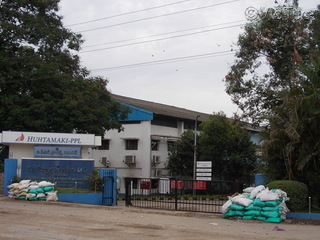
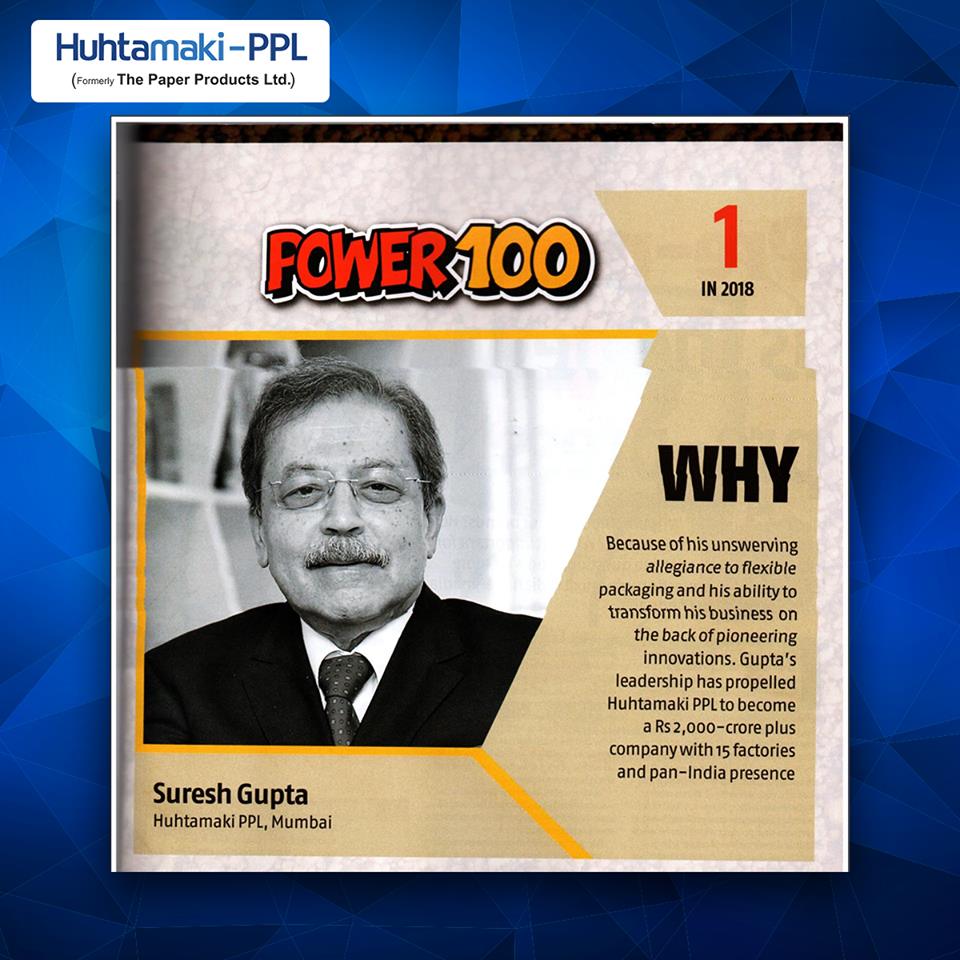
Thirty-one years after joining Huhtamaki-PPL (formerly Paper Products Limited or PPL), Suresh Gupta retired as its Executive Chairman. He joined the company in 1987 at a difficult time for the company, as business had slowed down since 1980 and they had to sell off their paper mill. When Suresh became a part of PPL the turnover of the company was just Rs.24 Crore and with a large workforce of 700 employees. He led the company until his retirement with sales reaching almost 100 times to Rupees 2300 Crores and the number of people working rose to 3500! Huhtamaki-PPL is now the largest producer of printed and finished flexible packaging materials in India. Under his leadership, the company, led not only PPL’s but also India’s foray into diverse label technologies as well. They were the very first entrant into shrink sleeve labels in association with Fuji Seal of Japan. Today Huhtamaki-PPL is the largest player in label manufacturing segment in India with their label sales touching 400 Crores which includes Pressure sensitive labels, Shrink Sleeves, Wrap arounds, In-moulds and other label forms. They are vendors to the virtual “who is who” in the Indian branded consumer goods and pharmaceutical industries. In pressure sensitive adhesive labels alone also, they are the largest at 200 Crores after taking over Webtech Labels, Ajanta Packaging and Positive Packaging.
Suresh Gupta
Being an army man’s son Suresh’s childhood was spent at various locations within India. His father who is now 92 years of age, was a paratrooper with artillery from the well-known 17 parafeild regiment of Indian army and retired as Director of Military intelligence. After retirement he was assigned as Director SSB (Special Security Bureau) by the cabinet secretariat. Retiring from SSB he was taken by the Himachal Government to be the chairman of Himachal State Electricity Board. Suresh has a brother who is 9 years younger than him and followed his father’s footsteps to join the army, has primarily headed combat formations, served in the UN Peace Corps and is currently a Major General. Typical of army families, Suresh’s schooling took place at various schools across the country, the last two being St. Georges School, Agra, and St Xavier’s School Delhi where he was in the boarding and finished in 1967 with excellent marks.  Being underage, he could not apply for admission into the IIT or Delhi University colleges, so at the age of 15 years he did a year of pre-engineering at Government college for Men Chandigarh, where the youth in him got the better of him in not attending any classes other than chemistry. He did poorly, much to the disappointment of his father who was posted in Ambala at that time. His mother gave him 200 Rupees and sent him to Delhi to his grandmother. Admissions had closed for most good courses but a good school marksheet helped him get admission for BA economics honours in the prestigious Hindu College Delhi University. He studied hard and in the very first year he got a first division and ranked in the University to win back his father’s confidence. After graduating from Delhi University Suresh went to the Jamnalal Bajaj Institute of Management studies Bombay, which then was considered amongst the best two in the country.


Finishing his MBA, he was motivated and impressed upon by the head of HR department of Jamnalal Bajaj Institute who was also the vice president of Corning Borosil to join Corning Borosil, which he eventually did as a management trainee in 1974. 


Suresh and wife Kumi


The following year in 1975 he got promoted and got married to Kum Kum Talwar fondly called Kumi. Kumi graduated from the prestigious Lady Shriram College in Psychology honours and did her Masters in Social Work when she topped her class in Delhi University, and has been Suresh’s close confidante. At a young age of 23 he was posted in Madras as Regional Manager South for Corning Borosil who manufactured custom designed glass reactors for specialised industrial chemical processes, laboratory glassware and consumer ware under brand names Corning, Borosil and Pyrex. Surprisingly his immediate colleague working under him, the Head of Sales and Service was 52 years old. 


With daughters Ratna(L) and Shivani(R)
He enjoyed his stint in Madras as it was great learning time there and in 1979 his elder daughter Ratna was born. Post Emergency when the Janta government came to power the then minister George Fernandes came down heavily on US companies. While Coca Cola left the country, Corning was asked to dilute their equity to less than 40%. Suresh Gupta was at this time transferred to Delhi as Regional Manager North with additional responsibility of interacting with government and convincing them to excuse Corning from this equity reduction as a special case. Being a high technology company also supplying critical materials to defence, they were not allowed by USA government to setup ventures where they did not have full control. It was tremendous experience for Suresh, one side interacting with government and other side selling to large industries, government laboratories and finally setting up channel sales for their consumer products. Once it was clear that government of India would not relent regarding equity dilution, the company stopped further capital investment into the country. Now that it was evident that there would be no growth in the company, Suresh decided it was time to move on in life.
He shared his thoughts with a friend at Usha International, who instantly arranged for Suresh to meet Lala Charat Ram of Shriram group. He was taken on board and became Divisional Manager of the Lucknow Division of Usha International, stationed at Lucknow when he was 28 years old with almost 200 people working under him. Usha was selling sewing machines, electric fans and agricultural pumps. This was a challenging job as the market was extremely competitive and majority of the employees i.e. the mechanics, belonged to a militant union and were unionised. The area of operation for him was interesting as criminals and bad elements roamed free there. There are interesting and scary stories of his time spent in those areas. Due to his frequent tours his family at home had to be provided armed security guards due to threats.
Sardari Lal Talwar Founder Paper Products


During this period there was pressure from his wife Kumi’s family to join Paper Products Ltd. the company founded by her father Sardari Lal Talwar.


In the meantime, a close friend of Suresh Gupta from Middle East came visiting him in Lucknow out
of the blue with a first-class open ticket and a proposal to join the Doha headquartered Almana Group whose Chairman wanted an executive director who he could trust to join his Board as there seemed many issues with his existing team. Suresh took the trip to evaluate what was being offered, finding it very exciting he accepted the offer and joined them in late 1982. In due course, various businesses were put under him some of which he started, and seven companies including an IBM agency reported to him. He then was designated as Executive Director-International, he started businesses or had oversight of investments in Saudi, Dubai, Turkey, UK and US. After joining he recruited 16 Indian Managers in his team and parted company with four other Managers already in the company. He spent the next five years in Doha and reminisces of them as fascinating years, as a time of immense learning, travelling all over the world for 15-20 days each month. His younger daughter Shivani was born there. In the beginning of 1987 Suresh and Kumi were reviewing their career and lifestyle. Their eight-year-old elder daughter who was going to British school could not speak a word of Hindi, their mother tongue. They wondered if they should continue to live in the Middle East. The Almana Chairman understanding their dilemma offered to station Suresh in another country of his choice. At this time Suresh was also toying with the idea of taking up an assignment with United Nations but Kumi’s family was persistent and he decided to return to India and join Paper Products. 
Rare picture of Suresh Gupta and father in law Sardari Talwar
In October 1987 Suresh Gupta and family returned to India to join Paper Products as a promoter and he acquired a minority shareholding. As mentioned earlier even though being a legendary company it had problems, the paper mill they had in Roha was sold. Kumi was the youngest child of Sardari Lal Talwar her two brothers were ageing and not keeping well and have since passed away.
Paper Products Limited was founded by Sardari Lal Talwar in 1935 in Lahore, that time in undivided India. Sardari Lal was running one of the four largest departmental stores of India of that time called Moolchand of Lahore with a customer base of Indian royal families and Britishers. The store stocked goods like a modern-day multi product retail and was founded by his Grandfather Moolchand and Uncle Khairati Ram who were also very charitable persons. They were running Hospitals, Schools, Temples and Dharamshalas (subsidised dwelling for travellers). Moolchand Dharamshala in Lahore was just opposite the Lahore Railway Station. The founders passed away at an early age and leaving the business to a young 15-year-old Sardari Lal. Moolchand store was importing milk bottle caps made of paperboard and paper crimped cups for the army till one day a British army officer in charge of the Dairy came to him and suggested that he import the paper and make the caps and pastry crimp cups in India. It would save the army some amounts enabling them to extend their budget. Sardari on advice of his international friends got the hand presses developed in India, imported some dies and punches and started to make the caps and cups in Lahore in 1935. 
To start this maiden manufacturing venture, he emptied one of the Moolchand store warehouses and commenced production with the signboard outside reading, “PAPER PRODUCTS”. He later imported machinery from Windmoller and Holscher Germany in 1939 to start manufacturing paper bags. This was the inception of what is today Huhtamaki-PPL.
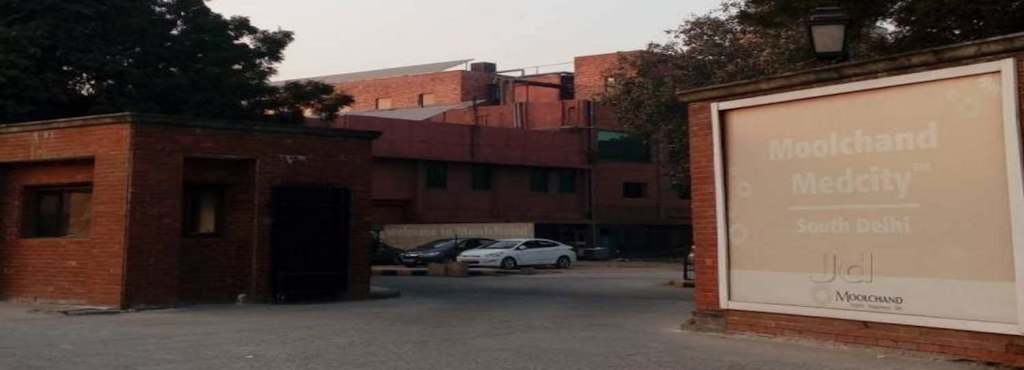
Moolchand Hospital Lajpat Nagar, New Delhi
Then came the partition of India, all was lost and left behind in Lahore when the family migrated to Delhi. For all the charitable work that the family did in what was left behind in Pakistan, Sardari Lal was given land in Lajpat Nagar as compensation. He had an emotional need to carry the philanthropic ideals of his parents, so before doing anything else he established the “Moolchand Kharaitiram Hospital” in Lajpat Nagar, South Delhi. He also started making packaging products that he was already doing before. Immediately after world war II in 1948 the Germans were holding the first Drupa, Sardari Lal, travelled by ship to attend where he met and struck friendship with some of the leading packaging people in Europe. Owing to his good reputation, Windmoller and Holscher gave him five Bag making machines with printing, on open credit. He returned to start a factory in Faridabad in 1949 followed by one in Ghatkopar Mumbai. Paper Products started to grow steadily and Sardari Talwar took his company public in 1951 retaining 51% with himself. Paper Products started to grow steadily and Sardari Talwar took his company public in 1951 retaining 51% with himself. 
Thana Factory
Billy Heller owner of Milprint (now a part of Bemis Company, Inc.), then the world’s leading flexible packaging company based in Milwaukee, USA became a dear friend of Sardari Lal. Billy was also a philanthropist wanting to share his knowledge with the world, had set up an organisation called Milprint International Club with global leaders including Paper Products as members. With Milprint’s technical help he built the Thana factory in 1960 to the then world class standards. At this time his elder son Dr. K K Talwar who had done his doctorate in USA at the institute of Paper Chemistry returned to India. A little later his younger son Suresh Talwar completing his master’s in economics from USA, also returned to India. Dr KK Talwar was amongst India’s foremost scientists in chemical technology and paper making, he drove the company’s technology leadership. Suresh Talwar was the dynamic operational business head of the company. Business grew after Thana factory was commissioned, and many small factories were constructed across the country at Madras, Calcutta, Nagpur, Hyderabad and a paper mill in Roha.
Around 1980 things slowed down due to various reasons, the paper mill in Roha got sold, it was a difficult period. In 1987 the family had convinced their son-in-law Suresh Gupta to return to India and join the company. Suresh joined in October 1987 and spent a whole year working hard, travelled extensively in India and around the world to learn the technology and business as also meeting all the major customers and suppliers of PPL to understand the intricacies of their business. By 1989 Suresh was ready with his business plan that included induction of new latest technologies, while very slowly shutting down all factories except Thane. Due to the humane angle they did not abruptly sack people but informed transparently that in 10 years’ time this would happen. This with intention to let ageing employees retire and not add any new ones. However, expansion in Thane factory was kept going on, old machines were phased out and replaced by new ones and the staff from shop floor workers to upwards were given in-house training in latest technologies. Meantime a new cadre of craftsmen trainees, diploma trainees, graduate engineer trainees and management trainees was started with inductions of freshers from ITIs, diploma schools, engineering colleges and management institutes. An elaborate program of in-house training was put in place. The program was designed by Suresh and his colleagues to suit their specific needs may they be technology, customer or people handling. They were transforming the company to project their acumen in offering the latest in packaging. They went digital way ahead of time in 1989 when they started digital scanning and digital engraving of cylinders. They also started to computerise the company ahead of time. A start up consultancy company was recruited to put-in a modern computer hardware and software system (one of the first ERP’s) to replace the old card punch system. While modernising operations in Thana factory he shut down the old printing and wax coating converting lines and installed modern gravure printing and lamination lines making Thana a state of art unit once again. The first metalliser capable of producing certified barrier coatings was commissioned in 1994. There were many things done for the first time in India.
With Amar Chhajed
Suresh continued to add new products and expand his footprints into the world of packaging and in one of his frequent travels in 1990 he saw shrink labels in Japan. He established contact with the Fuji Seal Chairman Masaki Fujio, the global inventor of shrink sleeve and became the only licensee of Fuji Seal for shrink sleeve manufacturing in 1991. At around the same time he was discussing Therimage label technology with Dennison, later merged with Avery to become Avery Dennison. This technology enabled labels to be printed on a coated film and transfer the images on to the bottles eliminating the need for release liners. PPL installed the Therimage label production facility in Thana. Therimage was a challenge for Avery’s core business of pressure Sensitive adhesive products, so they bought Dennison and killed the Therimage business. Suresh saw the future of Therimage with Avery was not bright, so he shifted focus to pressure sensitive labels where the growth looked inevitable. PPL invested in an Aquaflex Label press and they were into manufacturing PSA labels at the Thana factory in 1994. In later years wanting to grow in labels business, since he was not finding enough of the right people and expertise to expand, he decided to buy expertise. For this reason, he bought Amar Chhajed led Webtech Labels, the leader in pharma labels in India. Then, Suresh extended his reach in fmcg by buying Chandan Khanna led Ajanta Packaging as well. In between he had acquired Positive Packaging which though large in flexibles had also taken over the labels business of SGRE in Bangalore. Therefore, now they have pressure sensitive label production in Mahape, Baddi, Rudrapur, Thana, Daman, Hyderabad and Bangalore.  


Silvasa Factory
Being a first-time entrant into some of the evolving technologies he had to develop global suppliers and was instrumental in their eventually coming India. By 1994 Suresh was wanting to build another world class factory, despite resistance coming from the family which still held 51%, he went ahead with his plans for building it in Silvasa. PPL made a rights issue to raise the money to build the factory and enhance the working capital for growth. Construction began in the 12 acres property in 1995 and in one year the unit was in production for mainly flexible packaging including shrink sleeves. They made profit in the first year itself. Paper Products Ltd was growing at breakneck speed ranging between 20-30% per annum.
In 1998 Suresh bought the Hyderabad unit of Gautam Thapar, Ballarpur Industries which had been 
Hyderabad Factory
setup as a joint venture with A and R, a leading European flexibles company. The unit was completely refurbished and new capacity was added. Hyderabad became the centre for wrap around labels. Meanwhile the company had made another rights issue to fund growth and the family’s holdings reduced to 32% as some members did not exercise their options. To fund the continued growth and expansion Suresh wanted to do yet another rights issue and wanted the family to increase their holding. But the younger generation were pursuing other professions, so it was decided to bring in an outside investor in synergy with PPL’s business. Van Leer and Huhtamaki combination which eventually merged to be one entity became the major investor chosen from amongst many options. Rather than the family selling its shares, PPL’s share base was doubled and the foreign partner directly invested into the company through preferential allotment of shares equivalent to 51% of the enhanced equity on 16 July 1999.
The company now with Huhtamaki as the new majority shareholder continued to aggressively pursue growth. Huhtamaki worldwide as a Euro 3 billion consumer packaging major had almost 100 companies across the globe. In 2001 and again in 2005, the Huhtamaki Board awarded PPL with the most exclusive and prestigious award of “Best Company of the Year”. PPL also received the “Most Innovative Company of the Year” award. Meanwhile Suresh was awarded the globally best “Manager of the Year” award, a unique honour.
Consequent to new fiscal incentives being announced by Government for Uttarakhand, a huge factory was built yet again on a 12-acre plot and commissioned at Rudrapur which again made a profit in the first year of production, and PPL continued with growth.
Huhtamaki wanted Suresh Gupta to head Huhtamaki’s global flexible business which he was hesitant to accept as he had no interest in moving out of Mumbai. However, he accepted to take the responsibility for Asia Oceania, operating from his base in Mumbai for three years. Finally, Huhtamaki removed his objection to running the group’s global flexible packaging business by telling him he could run it from his Bombay office. He had to accept the responsibility and ran the global business as an EVP and member of the Executive Board for Huhtamaki for six years. Thereafter he reverted to be the Executive Chairman for PPL but stepped down from his role as a promoter and simultaneously as per Huhtamaki’s desire he sold his shareholding to Huhtamaki.


Meantime industry peers honoured him with a Lifetime Achievement Award and Print Week, based on a readership vote. ranked him number 1 in the top 100 ranking of individuals in the industry. In Feb 2018, Suresh handed over day to day running of HPPL to the new Managing Director while he focused on tying up Board issues.


On 31st December 2018, Suresh Gupta retired and left the company that he so fondly nurtured.
 

In recent years, as a hobby, Suresh has been a supporter of socially beneficial enterprises from start-up stage and of businesses with purpose. He is also deeply interested in Art. He plans to intensify his work here and run a packaging industry advisory from his new office in Bandra. He would be happy to be of help to industry colleagues. He also plans to continue his active role in the “Indian Flexibles and Folding Cartons Association of India (IFCA)”. He leaves behind for his successors in HPPL his philosophy for success: “Sound fundamentals are enshrined in Good values; being Good compassionate people, knowing knowledge is power to be used with integrity, ever improving quality and service and continuous innovation makes for happy customers. Be the flag bearer of standard in your industry”.

Suresh Gupta can be reached at his email: suresh.gupta20@gmail.com

Print Publications are free to reproduce this article by compulsorily giving credit to author and mentioning blog address http://harveersahni.blogspot.com 
 

Written by Harveer Sahni Chairman Weldon Celloplast Ltd. January 2019