In the early nineties a printer friend of mine showed to me a package that he had designed and printed for a customer. Surprisingly, it had a barcode printed on it at a time when they were virtually not used in India. I had seen these barcodes in use on a previous trip to USA and wondered if the technology had already arrived in India. On further investigation I came to know that since imported consumer products coming into the country carried this image, my friend had put it on the carton to give the product an international look. He had no clue about the functionality or usage of these set of black lines. Little did he realize that one day soon, these barcodes would become an important and essential part of every package with widespread usage in trade and industry. The barcodes that appear as bands of vertical parallel lines of varying thickness and spacing are referred to as linear or one dimensional (1D) barcodes. These are optical representations that are machine readable and contain a lot of data about the product on which they are affixed. The data from these images is read by barcode scanners and decoded to provide information relating to retail sales, tracking, accounting, inventory control, etc.

 
2D Bar Code
Barcodes have further evolved into rectangles, dots, hexagons and other geometric pattern representations to accommodate larger amount of information. Such barcodes are referred to as two dimensional (2D) barcodes. Bar codes initially appeared as circles and were introduced in the shape of bars and stripes in 1991. Active commercial usage of barcodes commenced in USA in June 1974 when a retail pack of Wrigley’s chewing gum was scanned at the sale counter of a store.
 
 
The Government of India also realized the importance of barcodes. In 1996 the Ministry of Commerce, promoted GS1India, a joint initiative of the Government of India and industry, to educate the trade and industry on the use of GS1 numbering system for unique identification of products, services and locations in line with international practices of using them as standards for barcodes. Over the years the Government has been advocating the widespread usage of barcodes. Various steps taken in this direction are;
 
 In 2007 the ministry of micro, small and medium enterprises announced a financial assistance scheme to support the micro and small enterprises in implementation of barcodes.
 
 On 20th October 2009, The Ministry of health and family welfare, made GS1 barcodes mandatory on all drugs, devices and other medical supplies to Govt. of India w.e.f. 1st April 2010, this was later deferred to be implemented in a phased manner. The implementation will start from October 2011 and final implementation will have to be made by April 2012. With the implementation of this order the Government wants to take decisive action against the menace of substandard and spurious medicines being pumped into the public healthcare system. If this endeavor enables the government procurement agencies to pinpoint and trace the culprits who supplied spurious medicines, it will definitely improve the reliability in public healthcare.
 
 In an effort to safeguard Indian pharmaceutical exports from the bad name they were given when some spurious medicines in Africa, were found labeled "made in India", on 10th January 2011, DGFT, under the Ministry of Commerce, made it mandatory for exporters of pharmaceutical products to build track and trace capability for their export products by using barcodes as per GS1 global standards. The bar codes were to be employed at primary, secondary and tertiary level packagings. The above order was slated to come into force on the 1st of July 2011 but owing to representations made by trade and industry the implementation was deferred. The order will now be implemented in a phased manner and the final application of barcodes on primary packaging will become mandatory from 1st July 2012. Once the order is implemented, a package going out of a factory will have an identifying bar code and unique number that can be read at any point in the supply chain right up to the retail shop. These can then be matched with the batch number and other manufacturing details stored in a central database to find out if the package is genuine or not. The image can be captured in any cell phone and transmitted to get the verification from the database in seconds.
 
The Indian drug export industry is of the size of Rs.45000 crores and most of the larger producers are willing to implement this order. It is the small and medium sized manufacturers and exporters who account for exports to the tune of Rs.20000 Crores, that are objecting and fear the implications. There are about 6000 SMEs in the pharma sector spread across the country. According to them, this order will have adverse implications on their businesses:
 
1. It will make their products costlier.
 
2. They tend to lose sales due to already existing tough competition.
 
3. The cost of implementation according to some exporters is almost one crore, though this appears to be exaggerated.
 
4. The cost of barcode per strip or vial will make the product unsalable.
 
5. The whole process of barcode generation and application will need computerization and automation but the SMEs have mostly manual packing facilities.
 
Given the resolve of the government and the benefits of this order, it is a matter of time that this order will be fully implemented. Drug regulating authorities in most foreign countries are also making bar coding mandatory and exporters to these markets, whether big or small will have to comply with these regulations.
 
High Speed Anti-counterfeiting Labeling solutions:
 
Definition of counterfeiting is, " A deliberate attempt to deceive consumers by copying and marketing goods bearing well known trademarks, so that they look like the original products made by a reputed manufacturer ". Counterfeits in pharmaceuticals have far reaching damaging effects on the unsuspecting patients. With time, manufacturers and marketers have tried to develop various anti-counterfeiting solutions to counter this deception of consumers by counterfeiters. There is constant work being done in this field but at the same time these criminals who fake the products work overtime to copy these solutions to cheat the consumer. Counterfeiting is one of the fastest growing financial crimes, threatening jobs and endangering public health and safety. The World Customs Organization estimated annual global trade in illegitimate goods at about $600 billion (2004), which is expected to rise to $1.7 trillion by 2015, representing 5% to 7% of all worldwide trade. The size of global fake drugs industry is estimated some t 90 billion US Dollars. Estimates vary on the number of fake drugs made in India. The Indian government says that 0.4 percent of the country's drugs are counterfeit and that substandard drugs account for about 8 percent, but independent estimates range from 12 to 25 percent drugs to be fake.
 
I list many of the anti counterfeiting technologies available, all or most of them can be converted to self adhesive labels to be dispensed on high speed labeling machines. Some of these solutions are overt and others covert. The overt solutions are visible and verifiable by the end users but the covert ones are not visible;
 
1. Holograms: Holograms are optically variable devices. The optical interaction of the holographic image with the human eye makes it ideal for both brand promotion and security. Many holograms produced are tamper evident and also have other security features built into them like sequential numbering, UV fluorescence in the adhesive, etc. The area of holography is quite well developed and there is a lot of scope in it for producing newer security options.
 
2. Security Graphics: This involves printing technologies like the ones used for banknote printing. The security can be further enhanced using special designs like micro text and latent images.
 
3. Transfer labels: These are similar to the tattoos. The printed image is directly transferred to the product
 
4. VOID labels: These labels have special features built into them, such that they show hidden text when they have been removed and reapplied. The classic example is the label which when removed leaves the message VOID behind. Labelstock can be designed such that the residual message VOID can be customized to customer needs. It can show a brand, an emblem or a message. It can even change color when removed.
 
5. Destructible label: Destructible labels are another form of tamper evident labels. Such labels fragment into small pieces when attempted to be removed. These labelstocks can be top coated for accepting barcode printing and also adding more security features.
 
6. On product markings: On-product marking technologies allow for special images or codes to be placed on conventional oral dosage forms. These overt technologies can be difficult to replicate and offer a security technology at the pill level. This added layer of security is effective even when products are separated from the original package.
 
7. Embedded image: An invisible image can be embedded within the graphics on the pack. It can only be viewed using a special filter, and cannot be reproduced by normal scanning.
 
8. Security inks (UV sensitive): Creating security features into labelstocks or labels using security inks is possible in many diverse ways. This is possible due to the wide variety of inks available e.g. UV sensitive inks which glow under UV light or change color when exposed to sunlight and Metameric inks that are similar in day light condition but change under different light sources. One can print an invisible message which becomes readable when light conditions change, such images cannot be photocopied.
 
9. Thermochromic inks: These inks change color with change of temperature.
 
10. Micro-Taggants in labels: Microtaggants are microscopic Identification Particles that are traceable and play an important part in anti-counterfeit technology. Microtaggants are highly versatile in their use and application. In basic form, Microtaggants are a unique numeric code sequence in a multiple colored layer format. In more complex forms, Microtaggants deliver multiple layers of security through the incorporation of several taggant technologies. These can be used in inks coatings, adhesives and paper making. The simplest form of taggants can be identified from their different colours. Other taggants can be energy sensitive, fluorescent, magnetic, etc.
 
11. DNA Taggants: These are DNA-embedded biotechnology security applications. These are proprietary formulations and processes and can be verified by laboratory DNA analysis. This is used for very high level of security and anti counterfeiting measures.
 
12. Security threads and fibres: . UV sensitive fibres can be incorporated into the pulp by the paper mill or in the adhesive during production of labelstock. Such fibers can be seen under the UV light.
 
13. Barcodes: As explained earlier, these are high-density linear or 2 dimensional bar codes. A 2D code can typically be 1cm square or smaller, and yet contains up to 1 Kb of data. Linear bar codes may used where space is not a constraint. The codes are printable by on-line methods including inkjet or digital printing, allowing direct computer control and transfer of records to the central database. Systems have been developed whereby the label on a shipping case is linked to the identities of all its contents, and this can be further extended up to the pallet labels.
 
14. Consecutive or sequential numbering: Consecutive and sequential numbering is done as a part of the label printing or finishing process. This does not provide a very high level of security. The main disadvantages of sequential numbering are that the sequence is predictable and easily replicated. Infact it is generally used as a security enhancing process. A label that has other security features is given this numbering to further enhance the level of security. One of the biggest users of this process is the state excise departments who apart from having various security features in their seals also number them in an evident effort to keep a track on the labels in the supply chain.
 
15. Serialisation: The Track and Trace label may not be difficult to copy, but its security is greatly enhanced by the inclusion of unique and apparently random serialisation, or non-sequential numbering, ideally at individual item level. If the serialisation was sequential, then the level of security would be very low as the sequence is predictable, whereas “random” serialisation using a highly secure algorithm or method of encryption overcomes this. Individual packs may still be copied, but the database will identify duplicates or invalid serials, as well as those which have been cancelled or expired, or which appear in the wrong market, or with invalid product details.
 
 
16. RFID: An RFID tag comprises of an antenna with a microchip at its centre. This tag has specific and batch information which can be scanned at a distance, and without requiring line of sight (unlike bar codes). The radio frequency used determines the range and sensitivity, but no, one specification suits all applications. Some systems are able to capture multiple records for a mixture of different products, but there are some issues around orientation of the tags and absorbance of the radio signal by liquids and foils. But one clear advantage of RFID is that it has the potential to be fully automated in warehouses and even through to pharmacies, without requiring manual intervention.
 
17. Water mark paper: These are marks that you can see as an image in the paper when you hold it against light. These are built into the paper at the paper making stage in a paper mill.
 
18. Laser coding: This process of putting batch and variable details by laser coding requires special and expensive equipment. Laser codes can be applied to cartons, labels, plastic and metal components.
 
19. Odor: Micronic capsules containing distinctive odors can be applied as an additive to an ink or coating to provide a novel covert or semi-overt feature.
 
The scope of security labels and brand protection solutions are wide and no, one solution can be a permanent solution. The development and innovation does not come about quickly due to hesitation on the part of the users in avoiding to spend more. Another step required to defeat the counterfeiter is to keep upgrading the security labels but the manufacturers resist this and want a solution that would last them at least five years. This is not possible as the counterfeiter works overtime to make duplicates and fakes. Continuous innovations are required to produce security solutions that become a deterrent for them. Giving them so much time would make us fall into a trap facilitated by the time that we ourselves give to the counterfeiters. Designing a security label needs application of mind, time and money. We have to reconcile to the fact that providing security solutions is an ongoing process. Application of security labels is only one part of the exercise, educating customer to check its authenticity is the more important part. What good is a security label if it cannot protect the duplication and if you do not know how to check if it is a genuine product?
 
Presentation made at PackPlus South in Hyderabad 2011 on 2nd July, 2011 by Harveer Sahni, Managing Director, Weldon Celloplast Limited, New Delhi-110008, India
 
 
Born into a family who migrated to Delhi from Lahore (now in Pakistan) at the time of prtition of India, Prem Khanna, is a typical Punjabi who works hard, enjoys good food, makes a lot of friends, loves to entertain and puts up a brave front with a smile, even in times of adversity. While he has been born and brought up in Delhi and is an alumni of Delhi’s Kirori Mal College yet the Lahore culture and style is evident on his personality, “Doing everything with a flair!” Prem Khanna started his professional carrier as an employee of a custom clearing agent. Even as he worked hard at his job he knew one day he will be running his own show as an employer. It was just a matter of time and firm resolve that soon he started his own custom clearing company and found success. As he moved ahead in business, he struck a close friendship with one of his customer P C Jain, who was a trader and regularly imported Hand Held Labelers, Labels, etc. from companies like Pitney Bowes and Monarch Marking Systems. The concept of gun labels, as they came to be called with time, was introduced in India by P C Jain. Being a pioneer in this field, Jain saw the potential and need to start a manufacturing operation to produce these price marking labels in India complemented by trading in the imported hand held labelers. He proposed the venture to his friend and custom clearing agent Prem Khanna, inviting him to invest in equity and join the board of the start-up venture Great Eastern Impex Pvt. Ltd., as a director. Khanna, with his urge to diversify and grow, saw it as an opportunity and accepted to invest and join the board of the company as a director. This was in the year 1983-84, Prem Khanna made his tryst with self adhesive labels and silently pledged to excel in this field.

 
 
Most of the work in the initial years at Great Eastern was done by PC Jain who continuously travelled and Khanna preferred to remain a silent partner, observing the business as it grew. It was in 1987-88 when the company moved to their new premises in Gurgaon that Prem Khanna started to take active interest in the working of the company to understand the manufacture and marketing of self adhesive labels. He fondly remembers the high margins that they roped in those days. A product that they now sell for just Rs.680.00 used to sell at in excess of Rs.2000.00. Great Eastern is a success story that I intend to chronicle another day. The company grew at a fast pace and expanded with time. It was in 2002 after Shakti Jain, PC Jain’s son returned to India after completing his studies in the United States and joined business that things started to change. In time P C Jain proposed to Prem Khanna to end the partnership and split the business into different business segments and marketing zones and still maintain an association. This looked interesting on paper and appeared to work for a while but eventually the reality prevailed, the partnership had come to an end. Prem Khanna realized he had reached the turning point of his life and he was left with his start up venture Rachna Overseas Pvt. Ltd. (ROPL) to move on in life. Time had come to keep his tryst with self adhesive labels and redeem his pledge to excel in the field. In true Punjabi tradition he put his mind and soul in the venture. He was assisted in his endeavor by A S Shekhawat an alumni of IIM who also had worked as Vice President at Great Eastern and had left them at that time to join ROPL as a director.

 
With a Mark Andy 830 label press, an Ihle ribbon slitter and some staff inherited from Great Eastern, Khanna and Shekhawat went ahead to establish a pan national marketing network to sell the same product mix they were doing earlier. Space was initially a constraint and finance was difficult but Prem Khanna managed it well. The first success came with a contract from Hindustan Paper Corporation followed by orders from Hero Honda and others. Thereafter it has been continuous growth and expansion at ROPL. Starting from less than 10000 square foot factory they have now moved to a 30000 square foot smart looking facility producing primarily a range of variable data labels, barcode labels, price marking labels, thermal transfer labels, etc. They also import and sell point of sale items like barcode printers and scanners. With their manufacturing facility in Gurgaon near Delhi, ROPL operates out of six more offices located at Delhi, Mumbai, Chennai, Bangalore, Hyderabad and Kolkata. They have added more equipment and now have seven label presses, 2 Ihle ribbon presses and a host of ancillary equipment. ROPL has a workforce of over 150. Prem Khanna himself overseas all administration, while his son takes care of marketing in Delhi and Mumbai. The production and the branches are handled by A S Shekhawat. “Rachna Overseas Pvt. Ltd. has been growing at a fast pace of 35% per annum” says Prem Khanna and goes on to add with a flair, “In the next five years we will grow at least three times if not more” They have started to test their marketing with RFID and would like to start production when they feel the technology has stabilized. Digital printing has not been considered so far. As for their foray into international business, they have been exporting for a while but soon they will be a multinational of sorts. Commercial production will soon begin at their joint venture Rachna Overseas (Bangladesh) Pvt. Ltd. in Dhaka. ROPl aspires to start another manufacturing facility close to present one.
 
 
Prem Khanna’s wife Rachna, after whose name his company has been named, is a homemaker and his moral support in all endeavors. His only son Karan has joined him and given the energy levels of Prem Khanna, it will be a while before he hands over the baton completely to Karan. Prem Khanna is a dedicated family man. When he finishes for the day he heads straight home looking forward to spending time with his two granddaughters. His only daughter Nupur is married. His success has not gone to his head, he reminisces that he was innocent and slow in his younger days, his father used to tell him, ”I wonder what you will do in life?” Today a successful Khanna lends support to his extended family including his brothers and sisters. On Sunday mornings he does allocate his time to play Cricket, which has been his passion for long years. Prem Khanna goes pensive when asked about his love for going on holidays, “There is no time” he complains, “the growth in labels is addictive and compelling. It changes your priorities; they become your first love”.
 
Written by Harveer Sahni, Managing Director, Weldon Celloplast Limited, New Delhi-110008 1st June, 2011.
As we get into the middle of summer holidays, most of the bigger label printers seem to be heading to some exotic destinations with their families. They have worked hard to achieve success and so it is appropriate to reward themselves with relaxing and fun-filled vacations. When they return to work rejuvenated, it will be start of yet another bout of hard work to chisel their success stories with print. The retailing revolution in India has unfolded a growth in the Indian label industry that needs constant indulgence and continuous expansion to achieve excellence in printing with enhanced capabilities to produce defect free labels at high speeds and be cost effective. The market keeps on getting bigger and consumers get more demanding both in terms of quality and prices. With raw material prices sky-rocketing, the pressure on the label printers is evident. In such a scenario the time-off is justified, so that they come back and get back to work with enhanced vigor.



Hotel Park Hyatt, Goa
The Label Manufacturers Association of India has been toying with the idea of holding a conference for long time. The event has finally gone beyond the planning stage and has been announced. The LMAI Conference, “Innovations in Print” is scheduled to be held at Hotel Park Hyatt, Goa on the 29th, 30th and 31st of July 2011. The event is just two months away and preparations are in full swing. The management team at LMAI headed by their President Vivek Kapoor is making efforts to make this conference a big success. The industry has welcomed the move and the event appears to be heading for a fully sold out situation! Leading equipment and material suppliers have seen the opportunity in this conference where the “who is who” of the Indian label industry will meet, and have come forward with sponsorships. Most of these renowned international companies are also sending in speakers to make presentations that will impart knowledge on innovative developments in the field. LMAI is making efforts to make this event a memorable one by arranging lunches, dinners, entertainment, celebrity performances, African drummers, etc. This is an evident effort to add value to the meet with good content, good entertainment and great networking. It is interesting to note that with the announcement of this event the LMAI membership has started to grow.
 
Before the LMAI conference, earlier on in July from the 1st to 4th “PackPlus South 2011” is being held in Hyderabad. Though it is primarily a packaging show yet it does have a converting zone where important industry suppliers to the label industry as also some leading label printers will be exhibiting. Given the event organizers heritage and links with the label industry, it is expected many of the constituents of the label industry, more so from South India will be seen at the show either as exhibitors or visitors. The show also gains importance from the fact that it has established a foothold in the south Indian market in recent times.
Two months later in the end September, “Labelexpo Europe 2011” will be held from 29th September to 1st October 2011 at Brussels. This show is the Mecca for successful Label printers across the world. The last show in 2009 marketed as, “Greatest Label show on earth” lived up to its tagline with over 24000 visitors from 125 countries, despite the fears of the impact of economic slowdown. The show in September 2011 is going to be the biggest ever label event with some innovative features. Last year at Labelexpo Americas, the event promoters Tarsus had tried a new concept of organizing, “Technology Print Workshops”. The huge success of these workshops has prompted them to introduce the same at Labelexpo Europe this year. Three printing technologies (dry toner, liquid toner and inkjet) will be compared against each other during live machine demonstrations run by an independent moderator. The technologies will be represented by Xeikon, HP and EFI Jetrion respectively. There will be four sessions per day, three of which will see the different companies printing the same job – a food, pharmaceutical or personal care label – on the same substrate. The fourth session will allow participants to print a label of their choice. Visitors will also get to see the narrow web printing and converting technology undergoing a transition so as to integrate label printing, flexible packaging and package converting technologies on to the same press. This would enable a label company to acquire one high end press and have the capability to produce labels, shrink sleeves, flexible packaging, folding cartons, etc on the same equipment employing diverse print technologies. The developments displayed at this event will be an eye opener for the future trends in the label industry.
 
The no. of visitors from India to Labelexpo Europe this year is expected to be exceptionally high. They will definitely be the select band of visitors to watch and woo. They will be the ones ringing the order bells for the equipment suppliers. Most of the printers are holding their order to finally announce their acquisitions at this premium event. The year seems to be getting busy and interesting for the label industry. Hereon it will be Hyderabad followed by Goa and then finally Brussels. They will be doing business, partying and networking, all the way!
 
Written by Harveer Sahni, Managing Director, Weldon Celloplast Limited, New Delhi-110008 1st June, 2011.
 
 
Finat,the worldwide association representing the interests of the self-adhesive labeling industry, has announced the winners of its latest label awards competition at the recently held Finat congress in Sicily, Italy.It was ahighly successful congress attended by over 330delegates from across the world.The 31stFinat label competition, a part of the congress deliberations, received a record number of entries. It was also reported that entries were of higher quality than average, making selecting winners 'very difficult' and resulting in many more Highly Commended awards.

Hameed of Wintek receiving the award from Tony White
with Gururaj in the middle.
 Tony White Chairman of the judges said,"‘We received just over 360 entries from 50 companies worldwide, an eleven percent increase over last year’s record numbers’.
It is a matter of pride for us in India that Wintek, Bangalore and UPSL, Chennai a member of the Manipal Group headed by the enterprising Gautham Pai were recipients of awards at this prestegious events. I was extremely thrilled to hear my friend Gururaj Ballarwad say, "I am pleased to inform you that we have wontwo Category Awardsand six"Highly Commended Certificates" at the FINAT Label competition in Sicily, Italy".
In picture the winners! Hameed, Helmut Schreiner,
Isidore Leiser, Gururaj and others
The Award function was attended byGururajand his partner K M Shahul Hameed on behalf of the Wintek. "Keep it up Gururaj and team Wintek, you have worked hard and it is a journey which gets decorated by the day, with more awards coming by".


Harveer Sahni, Managing Director Weldon Celloplast Limited. 16th June 2011.

 
Surinder Kapur
“In the next five years we will expand to make our label business grow five times!” This statement comes from a man fully committed to making good labels and talking so at an age when others are talking of their retirement plans. Surinder Kapur is the grandson of Lala Jaidayal Kapur, the erstwhile distributor of the largest paper manufacturers in the country Ballarpur Industries Ltd. (BILT). As history goes Lala Jaidayal Kapur used to run his stationery business in Lahore. After partition of India, he moved to Amritsar in India and struck a close friendship with Lala Karam Chand Thapar, the founder of BILT, now renamed “ Avantha Group”. This friendship brought to him the coveted distributorship of Shree Gopal Paper Mills Ltd. also owned by the illustrious Thapar. Lala Jai Dayal Kapur had seven sons. His fifth son Raj Kumar, father of Surinder Kapur moved to Mumbai in 1950-51 and setup his paper distribution business under the name of Jai Dayal Kapoor (Bombay). A couple of years later Raj Kumar set up his maiden manufacturing venture R K Papers at Prabha Devi Mumbai to manufacture excersize notebooks. Surinder one of Raj Kumar Kapur’s six sons, was still in school when the family felt that this business needed a family member’s continuous involvement. As Surinder finished his school, at this relatively young age, he was called upon to divide his time to attend college and spend the rest in the Prabha Devi unit. He handled the situation well and by 1971 they moved to a unit in Ghatkopar expanding to start plastic blow moulding as well. With hard work, business prospered and soon it was time to move yet again to a bigger place. The 40000 square foot Taloja unit was setup in 1974. The exercise notebook manufacturing was initially moved here subsequently additional plastic blow moulding capacity was installed. It was only in 1981 that a label press supplier suggested to Surinder Kapur to start manufacture of self adhesive labels. He was interested and started to research the potential of this new product. He found that Johnson & Johnson was the only established manufacturer of labels at that time. Further indulgence revealed that they were selling ½” X 1” labels at Rs.140.00 per thousand. That translates into a per square meter price of over Rs.430.00! The decision of Surinder to enter into the manufacture of self adhesive labels is obvious. As a labelstock manufacturer today, even I am overwhelmed at this exorbitant price. When Surinder told me this fact I could only think of a popular song of an era gone by and sung by Mary Hopkins, “Those were the days my friend”. I really wonder where those days vanished.
R K Papers started to produce Self adhesive labels with an M250 Iwasaki label press. The success was sweet, Surinder went on to buy a total of nine Iwasaki label presses in the times that followed. Initially, selling stickers, three decades ago at prices similar to that of J&J was extremely difficult. No customer was ready to pay that price for a “sticker”. He reminisces that a small change in their marketing brought results. Instead of calling their product stickers, they called them pressure sensitive labels and the market was ready to pay the price. As the market grew, Surinder saw the need to respond to customer requirements promptly. Sitting in Taloja when no internet was available, it was a difficult task to send the designs to the plate makers in south Mumbai and then wait for days for the plates to come in. In 1983, he installed his nylo plate making equipment, to be able to print labels when the customer needed. Another problem that he faced at that time was the fact that in those days Shantilal Doshi was the only supplier of labelstock, so availability was difficult. He remembers that the suppliers used to ration the supply. You ask for 20,000 square meters and they would give only 10,000. As for printing, Surinder’s experience in printing notebooks helped and there were no hiccups in that area. Surinder has been actively and vigorously been supported in the labels venture by his younger brother Jatinder Kapur.
As they grow older the two brothers have mentored and helped their sons to setup their flagship label company, J K Fineprints Pvt. Ltd. also at Taloja. Surinder’s son Himanshu takes care of the production while Jatinder’s son Karan ensures that his marketing efforts produce a continuous stream of orders. J K Fineprints is a 10,000 square foot factory that has been designed meticulously and is exceptionally clean and organized. When Roger Pellow Managing Director Labelexpo group visited JK Fineprint, he commented that it was a rare sight around the world that he could walk around the press with no wires and pipes in the way. In the last 3 years they have installed a Gallus, three Orthotecs, two Omegas and the expansion plans are still on. Their total label business provides employment to about 70 people.
On a personal front Surinder is a much disciplined person. He is up every morning by 5-5.30am and by 8.30am he leaves his home in south Mumbai on his way to factory at Taloja. He is well planned and his desk is always spotlessly clean, by 5-5.30pm he is on his way back home. He finds active support from his wife Rita who is forever smiling. All three of his children, two daughters and one son are married. I would here like to narrate a very interesting episode. Surinder is a very dear friend to me, all his relatives know it. At his daughter’s wedding one guest came up to me and remarked, “It is strange that you are a sardar(sikh) and Surinder’s best friend today!” The story goes that when R K Papers Taloja factory was being built, a sikh contractor with whom there was a dispute, got an injunction from court and Surinder could not enter his own factory for weeks. Once the stay was vacated Surinder put up a notice outside his factory, “Sardars not allowed inside” Those were days when he was young and aggressive. He looks an angry man but he is one of the most loving persons I have ever known.
Surinder Kapur was the founder president of LMAI, Label manufacturers Association of India. He and some of the leading label printers across the nation got together to initiate this association that has now become the voice of the Indian Label Industry. Surinder has worked hard in his successful journey in the label industry, a journey that was initiated by his illustrious grandfather “from trading in paper to producing self adhesive labels”
 
Written by Harveer Sahni, Managing Director, Weldon Celloplast Limited, New Delhi-110008 April 2011
When Shakespeare said, “Frailty, thy name is woman” he probably did not realize the strength that women generate when in a seat of power, cannot be matched by men. The level of mental endurance women have has made many a strong men in an otherwise male dominated society, lean on their feminine and delicate shoulders in hours of distress. Women have risen from being mere homemakers to world leaders. Margaret Thatcher and Indira Gandhi lead their countries and made the world realize that women can lead from the front with an iron hand. Over the ages women around the world have been given lesser opportunities to literacy and technical education as compared to men. It is a fact that countries that have invested in educating their women and have promoted their empowerment have seen their economies and rate of development grow faster. Across the world more and more women are now acquiring expertise and capabilities similar to their men folk. They strive hard to excel in their selected areas of work. We are seeing that change happening in India as well. A society that insisted on restricting their women to household chores is gradually transforming. With government spending heavily in bringing public awareness on the need to also educate the girl child and empower women, the results are evident. Walk into any big company’s office and you see a lot of young and bright women carrying on their work with confidence and crisp efficiency. Women are now more educated and capable of involving themselves in more and more arenas that were earlier the mainstay of men only. Whether it is police or army, flying aircrafts or travelling into space, heading businesses or governments, they are not restricting themselves. Our Indian label industry did not have active business women managers till not very long ago. All that is changing now, Indian women are acquiring technical and management skills to lead high levels of investments in the label industry that is in a growth path. It is thus that I felt it is time to recognize the contribution of these women.
 
Honey Vazirani
In 1989 my friend Sushil Bhatia, who used to work for Avery Dennison before he started his own business, introduced me to a young and vibrant Honey Vazirani, working at Paper Products Limited, Thane. That was almost the beginning of this wonderful girls’ journey into the world of labels. From being a management trainee in1989, she rose to be the head of the labeling division of this 700 Crore company which is heavily into flexible packaging. It is truly a decorative and colorful travel. Ever since then Honey has been at the forefront of PPL’s foray into production of labels which began in 1991. Her job involved client servicing, marketing, product development and leading the labels team at PPL. She has handled key customers who are a virtual who is who of the fmcg sector. Servicing demanding customers like HUL and Dabur and bringing to them the most premium and modern labeling technologies has been a passion for her. In words of Torsten Jung Lenz, who in those days worked for Jacstadt Germany, “Honey is married to labels!” Her ambition is to excel in everything she does. Having spent 21 years in the industry she took a sabbatical in 2009. She spent a whole year consolidating herself by travelling, reading, spending time with friends and relatives and enjoying good food. Yes, she is a self confessed foodie! In 2010 she returned to PPL, which has four plants and 1500 employees, to head the company’s HR department. While she is contented and enjoying her new role in HR, yet you can see the twinkle in her eyes when you ask about her future in the labels industry. Her advice to others in the label printing and packaging industry is that it is a pity that for most in the industry, “Good enough is enough” She motivates people in her company by her mantra, “ Good enough is not enough”.
In the late eighties, I had the chance to meet a very talented screen printer Kartar Singh Dunglay of Goodwork Co. which had started to print in 1955. He is one of the elders in our industry from an era and class of people who were in love with their work as the youngsters are today with their girlfriends. They would think work and dream work. It was during that time I met his dynamic wife Kusum Dunglay. Kusum is an MBA from London University and lead Goodwork's entry into label printing. She first bought a Mark Andy press and followed it up with a fully loaded Gallus for specialized and decorative labels. She now heads sister concern Reydunn Label Printing Pvt. Ltd. With a work force of 80, she is handling clients like ITC, L’Oreal and other leading FMCG groups in India. Given the experience and innovative heritage that her husband mentored, she was one of the earliest ones to invest in a combination press. Kusum Dunglay is quite excited at the prospects of tapping the growth emanating out of the Indian indulgences in retail marketing. In 2002 at one of the roadshows at New Delhi for promoting the India Label Show, in my presentation, I talked about the two women who were heading successful label printing companies at that time. Both are like sisters to me. One is of course is Kusum Dunglay, while the other is Amila Singhvi. Amila Singhvi heads the large IPP at Noida. Since her print packaging business is growing multifold at a fast pace, she has decided to gradually exit from the label business and concentrate in the packaging business.
 
Soft spoken gentleman of the label industry Bharat Mehta is both, the history and present of the Indian label industry. He is one of the first label printers in India. I could sit with him and chat for hours about our time spent in this industry which has evolved like a family for him and me. Bharat Mehta’s Super Labels is one of the leading and respected label printing companies in Mumbai. His two sons have joined business in recent times after completing their management studies. Silently but emphatically, providing vital inputs and support is Bharat Mehta’s wife Meena Mehta, a B.Sc in Chemistry. For over 20 years she has been driving the organization through motivation, enthusiasm and participating in all decision making.
Renuka Raj, an MBA from IIFT Delhi, spent the first three years of her career in a paints company. Later she moved on to promote and run a pharmaceuticals business. A friend proposed for them to join in starting a label printing business, Renuka found it interesting as it was a backward integration for her pharmaceuticals business. That was the beginning for her labels venture Ra Labels at Hyderabad. She has been heading that business for the last 10 years. According to Renuka it was the first flexographic label printing company in Andhra Pradesh. Renuka has ambition to increase investment and grow in this industry to become leaders in Andhra Pradesh.
Divya Keshav
 Delhi based Shaikher Kaishiv of Krishna Halftone Pvt. Ltd. Is also one of the earliest entrants into the label industry in the decade of 1980’s. In recent times he has handed over the reigns of this company to his daughter Divya Keshav, the present Managing Director. Divya works hard in this male dominated industry to carry forward the good work done by her father. She is post graduate in marketing and an alumnus of the India School of business, Hyderabad. She is recipient of “Rising Talent 2010” award given to 25 women entrepreneurs below the age of 40 across the globe by the “Women Forum for Economy & Society” France. Her company operates from two locations in New Delhi and Noida with multiple label presses.  There are other women entrepreneurs who I am aware of but have not responded to my emails requesting information to cover them in this article. Shweta Sheth, an alumnus of Amherst, Massachusetts USA, is actively involved in the working of Primark labels as a director. Primark is a part of the General Metallisers Group.  Anjali Deshpande, wife of LMAI General Secretary, Ramesh Deshpande has been the driving force behind the success of Renu Prints, Aurangabad. She has been honored for her work by the ministry of MSME (Micro Small and Medium Enterprises). Then there is the enterprising Ramesh at S K Labels in Chennai, who has also put his daughter in command.


Priyata Raghavan
After completing her post graduation course from IIM Lucknow, Priyata Raghavan joined the FMCG division of ITC Limited, before moving over to Sai Security Printers, a company owned by her father, Vijay Raghavan. Sai had invested in an imported press for producing scratch lotteries but a sudden ban on lotteries made them to sit up and rethink. The growing label segment presented the opportunity and they decided to enter this field. At that point of time Priyata took over the complete operations of the company in North India. The company has another unit in Bangalore. Priyata has lead the company’s label printing operations to profitability and an emphatic presence in the high quality label segment. Sai security printers surprised all at the last Labelexpo in New Delhi by announcing purchase of two Gallus Label Presses, one for their unit at Faridabad and the second one for Bangalore. Priyata sees tremendous scope in the growing label industry. She says, “There is a lot of scope for well managed vendors of high-end labels and packagings”. She is leading Sai Security Printers to be a leader, by offering well defined levels of services and technical competence.


Sandhya Shetty and Santosh Shetty
At the end of an industry meeting called by Roger Pellow, Managing Director of the UK based Labelexpo group in early 2008, to promote the next India Label Show, as I came down to the lobby of Hotel Grand Hyatt in Mumbai, I saw Manish Kapoor of Nilpeter in a serious discussion with a young man whom I did not recognize. Manish introduced him as Santosh Shetty Managing Director of Surface Graphics, a company founded by his father H G Shetty and involved in manufacture of cartons. Santosh was considering purchase of a Nilpeter press to expand into the label production. The venture was to be headed by his sister Sandhya Shetty. Sandhya is a graduate in Chemistry and Masters in management Studies (Marketing). On completing studies she had spent 8 years in the field of business research and analysis. She worked on projects involving Government contracts, Defence sector in the US and in the hospitality sector in India. When her brother Santosh brought the idea of producing labels to Sandhya, her feminine instincts went to work. The yearning to create products that would be decorative, add to aesthetics, have scope of innovation in design came to the fore. She called it a day for her research and analysis job and decided to be a “labels girl” from day one. Labelexpo 2008 was held in very traumatic times. Mumbai had suffered a dastardly terror attack and the global economies were in crisis mode and nose-diving. Sandhya’s new Nilpeter was being showcased at the show in New Delhi’s Exhibition Center Pragati Maidan. A confident brother sister team of Santosh and Sandhya were at the Nilpeter stand all the time meeting fellow printers, prospective suppliers, and other colleagues in the label industry. The industry found an instant friend in the ever smiling Sandhya. Despite the difficult economic scenario, she was determined to do justice to the MD’s chair that she was occupying in her company, Synergy Packaging Pvt. Ltd. and lead the company to its vision of success. In just two years of starting, Sandhya and her team produced their first award winning label. She aspires to take her company to global standards and global presence.


It was extremely difficult for me to write on so many women in one go. When I decided to do this article, I assumed that it would be a relatively simple job for me, given the knowledge and experience in the industry. Once I started to gather more and more information on these women and their capabilities, I was confused. I was wondering how short sighted Shakespeare may have been while calling women as frail. Well, that was his personal opinion and may have been true at that point of time. These are intelligent women with amazing capabilities and their craving to excel is unique. They are all educated and technically capable to talk the language their customers and their team will understand. Silently and efficiently they have worked their way to a position of strength. I wonder if I have done justice to their work. I could have written a separate article on each one of them and their achievements. These women are homemakers, mothers, sisters, and friends besides being the successful business persons they are. The more I tried to discover the more there was to learn. Maybe another time I will try to write on them separately but at this time it was necessary for me to write on them collectively, because it is my tribute to these women in the label industry, “The women who endeavored!”
Written by Harveer Sahni, Managing Director, Weldon Celloplast Limited, New Delhi-110008 6th March, 2011.

The Hague, The Netherlands – March 15, 2011 – FINAT, the European association for the self-adhesive label industry reports that demand for self-adhesive label materials in Europe has continued its strong recovery in 2010. From the all time lows recorded at the peak of the global financial crisis in mid 2009, demand returned to pre-crisis levels in the course of 2010. Last year, an overall volume of around 5.7 bln. square meters was recorded, an increase of 11.4% compared to 2009 and 3.5% above the level recorded in 2007, the year before the collapse of global financial markets.
Underlying this growth was the strong, 9.5% recovery of the demand for rolls of paper based label materials, representing some 70% of total demand for self-adhesive label materials. Exceeding this growth, however, was the increase in demand for filmic roll label materials (PE, PP, others), which amounted to 15.3% over the previous year. Filmic materials thus resumed their rise in the share of European self-adhesive materials demand and this from just over 15% at the beginning of the decade to over 22.5% in 2010.
Geographically, growth in demand was driven by Eastern and Southern Europe (including Turkey). Both regions recorded healthy double digit growth figures of 20.6% and 13% respectively. Within these regions, Turkey, Russia, Bulgaria and Romania stood out with annualized growth (well) in excess of 20%, a sign of strong economic development in this emerging region. In the more matured regions, growth of self-adhesive label demand was more modest at around 4.5 – 8.5%, although double digit growth figures recorded for Germany, The Netherlands, Italy and Spain ranked above the top end of this range.
This healthy recovery does not come without significant future risks and concerns however. Already in the late summer of 2010, FINAT members expressed concerns about disturbances in the supply chain that were building up pressure on raw materials’ market conditions. According to FINATs quarterly member survey, this prospect tempered the optimism of executives at the beginning of 2011, although the balance of respondents continued to be positive about business prospects for the industry.
Over the past three to four months, the pressure on raw materials has aggravated. Between January 2010 and January 2011, the benchmark pulp prices increased between 20-25%, while resins for LDPE, PP and PET, crucial to filmic label materials, increased between 25-35%. Polymers necessary for the production of adhesives, even increased by 65-75%. Also ink suppliers are being faced with the impact of tight raw materials’ markets and have announced price increases ranging up to 30%. The rise of crude oil, driven by the uncertainties in the Arab world, is further intensifying the pressure, not in the least because of the increase of related transportation costs.


According to FINAT Managing Director Jules Lejeune, “capacity limitations cause a gap in supply versus double digit growth in demand. A gap that is only closing slowly. Our members are confronted with quarterly price adjustments or even „spot‟ prices on materials not yet delivered. Under such market conditions and because of the time lapse, contractual raw materials clauses only offer limited shelter. Ultimately this could affect the financial stability of label businesses.”
About FINAT
FINAT, founded in Paris in 1958 and headquartered in The Hague (The Netherlands), is the world-wide association for manufacturers of self-adhesive labels and related products and services. With 600 members in over 50 countries around the world, FINAT has much to offer to label converters and all suppliers to the labeling industry in terms of information exchange and the opportunity to network internationally. www.finat.com
For more information, please contact
Duomedia Public Relations
Maria Laura Lombardi, Tel. + 39 339 32 66 476 – marialaura.l@duomedia.com
Lut Verschueren, Tel. + 32 474 04 49 40 – lut.v@duomedia.com
FINAT
Jules Lejeune, Tel. + 31 (70) 312 39 10 – jlejeune@lejeune.nlThe Hague, The Netherlands – March 15, 2011 – FINAT, the European association for the self-adhesive label industry reports that demand for self-adhesive label materials in Europe has continued its strong recovery in 2010. From the all time lows recorded at the peak of the global financial crisis in mid 2009, demand returned to pre-crisis levels in the course of 2010. Last year, an overall volume of around 5.7 bln. square meters was recorded, an increase of 11.4% compared to 2009 and 3.5% above the level recorded in 2007, the year before the collapse of global financial markets.
Underlying this growth was the strong, 9.5% recovery of the demand for rolls of paper based label materials, representing some 70% of total demand for self-adhesive label materials. Exceeding this growth, however, was the increase in demand for filmic roll label materials (PE, PP, others), which amounted to 15.3% over the previous year. Filmic materials thus resumed their rise in the share of European self-adhesive materials demand and this from just over 15% at the beginning of the decade to over 22.5% in 2010.
Geographically, growth in demand was driven by Eastern and Southern Europe (including Turkey). Both regions recorded healthy double digit growth figures of 20.6% and 13% respectively. Within these regions, Turkey, Russia, Bulgaria and Romania stood out with annualized growth (well) in excess of 20%, a sign of strong economic development in this emerging region. In the more matured regions, growth of self-adhesive label demand was more modest at around 4.5 – 8.5%, although double digit growth figures recorded for Germany, The Netherlands, Italy and Spain ranked above the top end of this range.
This healthy recovery does not come without significant future risks and concerns however. Already in the late summer of 2010, FINAT members expressed concerns about disturbances in the supply chain that were building up pressure on raw materials’ market conditions. According to FINATs quarterly member survey, this prospect tempered the optimism of executives at the beginning of 2011, although the balance of respondents continued to be positive about business prospects for the industry.
Over the past three to four months, the pressure on raw materials has aggravated. Between January 2010 and January 2011, the benchmark pulp prices increased between 20-25%, while resins for LDPE, PP and PET, crucial to filmic label materials, increased between 25-35%. Polymers necessary for the production of adhesives, even increased by 65-75%. Also ink suppliers are being faced with the impact of tight raw materials’ markets and have announced price increases ranging up to 30%. The rise of crude oil, driven by the uncertainties in the Arab world, is further intensifying the pressure, not in the least because of the increase of related transportation costs.
According to FINAT Managing Director Jules Lejeune, “capacity limitations cause a gap in supply versus double digit growth in demand. A gap that is only closing slowly. Our members are confronted with quarterly price adjustments or even „spot‟ prices on materials not yet delivered. Under such market conditions and because of the time lapse, contractual raw materials clauses only offer limited shelter. Ultimately this could affect the financial stability of label businesses.”
About FINAT
FINAT, founded in Paris in 1958 and headquartered in The Hague (The Netherlands), is the world-wide association for manufacturers of self-adhesive labels and related products and services. With 600 members in over 50 countries around the world, FINAT has much to offer to label converters and all suppliers to the labeling industry in terms of information exchange and the opportunity to network internationally. www.finat.com
For more information, please contact
Duomedia Public Relations
Maria Laura Lombardi, Tel. + 39 339 32 66 476 – marialaura.l@duomedia.com
Lut Verschueren, Tel. + 32 474 04 49 40 – lut.v@duomedia.com
FINAT
Jules Lejeune, Tel. + 31 (70) 312 39 10 – jlejeune@lejeune.nl


As we came to the end of 2010, the last month of the first decade of a new millennium, December 2010, saw hectic activity in the printing and packaging industry. The winter chill had started to descend in the capital city of Delhi. The wedding and party seasons that starts around Diwali festival time, was reaching a crescendo. At this time another set of events also began to unfold for our label industry, more so for the printing industry at large. A series of exhibitions and related events were to be held in New Delhi. The mood is generally is festive and upbeat at this time of the year. The way we look forward to meeting friends and relatives at weddings, we also are excited to meet industry colleagues and business friends at the trade related events. This is a time to meet, network and renew relations with fellow printers, material suppliers and equipment suppliers. It gives us the opportunity to update our knowledge of new developments in the industry. It is also time to plan expansion after witnessing the latest equipments and products on display.
On the 3rd of December2010 PackPlus India 2010 opened in Pragati Maidan, New Delhi. It was a fairly big show incorporating many different segments of the packaging industry. The visitor profile was extremely diverse and left many exhibitors confused. Even though the organizers had earmarked areas to different segments yet the intermingling of visitors does take place and exhibitors end up spending time on visitors from unrelated industries. While on one hand printers were exhibiting on the other hand there were other printers visiting the show. Similarly packaging product manufacturers were at the exhibition as visitors, looking for equipments and material suppliers while as exhibitors they were hunting for end user customers. Even though the show was successful with over 11000 visitors, yet the need for having more focused shows is becoming evident as the packaging industry continues to grow. Interestingly, end user packaging buyers who normally come looking for suppliers of packaging materials and packaging machinery were seen rubbing shoulders with some of their own vendors as visitors to the show. I guess the organizers saw the need to have a focused visitor profile and for this reason they have split the next edition of the PackPlus into three different shows at three different locations across India. On the sidelines of PackPlus, “Package” conference was held at the same venue. Some of the presentations made were of truly international standard. The All India Food Processors Association also organized a one day conference on “Inclusive growth of food processing industry” during this period at the same venue in association with Printpackaging.com.
 
 
After a gap of just one day, Labelexpo India 2010 was inaugurated yet again at Pragati Maidan to run from December 8-11, 2010. There were some common exhibitors who just had to move from one hall to another. For them it turned out to be one their longest showing as exhibitors at one venue from 3rd December to 11th. Labelexpo India is organized by UK based Tarsus group as a part of the Labelexpo series held around the world. A highly focused set of shows aimed at the label industry worldwide. The exhibition was extremely successful and left the visitors and exhibitors happy and satisfied. The show was of truly international standard. Renowned suppliers from around the globe were exhibiting and displaying the latest label printing and converting technologies. The international press manufacturers  who were present with working presses included Mark Andy, Nilpeter, Omet, Rotatek, Gallus, Xeikon, HP, Orthotec, BangSung, etc. Indian press manufacturers put up a smart show as well. Leading from the front was Multitec with an all UV multicolor press running to perfection, others who also showcased their products include Jandu, RK and Apex Rototech. Presence of renowned dignitaries, in the field of labels, added value to the show. Mike Fairley-The label Guru, Jan Fredrik Vink-Past President Finat, Taco Zevenbergen-Finat, the entire Tarsus team, other members of Finat Young Managers Club, etc. were seen mixing and conversing with Indian printers at the show. On the sidelines of the Labelexpo a joint FINAT/LMAI YMC meeting was held at The Meridien Hotel on 6th and 7th December 2010. It was a networking event cum conference with inspiring presentations from noted speakers Professor A K Murthy and Professor Parimal Merchant both of S P Jain Institute Mumbai. The programme was a complete success due to efforts made by the LMAI-YMC President Sandeep Zaveri, General Secretary Pawandeep Sahni, who is also Finat YMC Board member and Taco Zevenbergen-Finat.
 
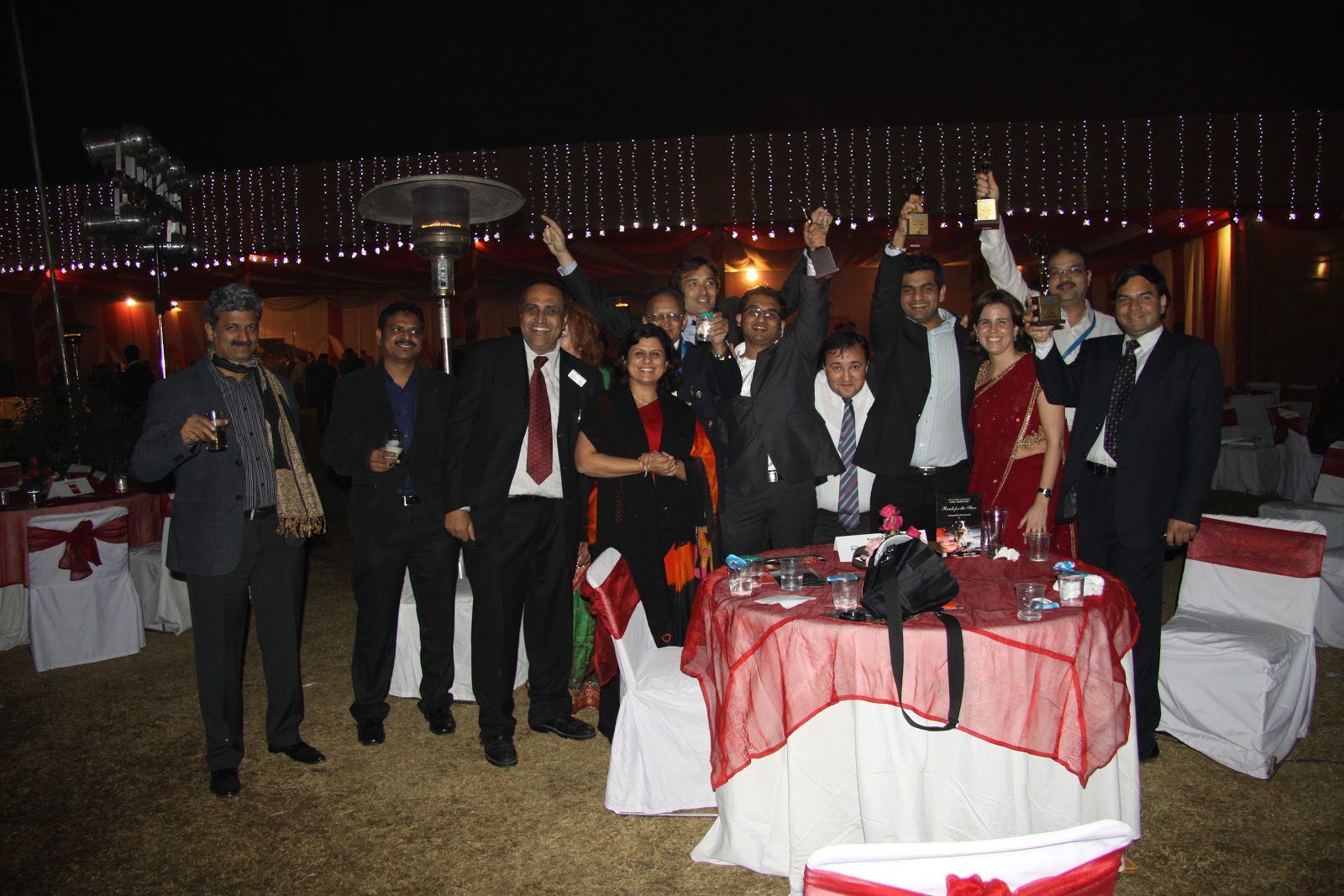
LMAI Label awards evening was held on 8th December 2010 at Jhankar Banquet on the outskirts of Delhi. The whole team of LMAI leadership lead by their President, Vivek Kapoor was present to welcome the guests at this gala networking event. Mike Fairley the Label Guru was given the lifetime achievement award. I, Harveer Sahni was honoured for my services as a judge at the World Label Awards. It was an overwhelming moment for me to be given the dais to speak, express my gratitude and thank my colleagues in LMAI for the honour and support. Leading Indian label printers who had won awards for their excellence in printing were proud recipients of the trophies. Though there was some external entertainment yet the printing fraternity rose to the occasion, leading label printers, suppliers and others joined the fun by dancing onstage to Bollywood tunes. The LMAI team under the leadership of Vivek Kapoor had done a great job. No wonder that later in January the entire executive committee of LMAI unanimously voted and decided that Vivek Kapoor and his team should manage the affairs of LMAI for yet another term. On 16th January 2011, India’s largest printing industry event “PrintPack India” opened yet again in New Delhi’s Pragati Maidan. Being a big successful and regular event catering primarily to the offset printing and converting industry, it attracted visitors not only from India but also from most of the neighboring countries as well.
The series of printing exhibitions and events that took place in New Delhi one after the other gave credibility to the title of my column written earlier, “Breathless at Showtime!”
 
 
Written by Harveer Sahni, Managing Director, Weldon Celloplast Limited, New Delhi-110008 30th January, 2011.
 
 
While I was still in school, I started to get training as a salesman in my father’s company. One of the first lessons my father gave was, “If you cannot talk, you cannot sell”. It has stuck to my mind ever since. Mike Fairley, the international label guru, also made a similar comment while recognizing and appreciating the master salesman in Roger Pellow, Managing Director of the Labelexpo Group. Mike said, “You have the gift of the gab!” Roger is the marketing face of Tarsus. He is a tireless traveler and trots around the globe, meeting Label printers suppliers and end users, in an effort to market his high profile Labelexpo series of shows. He can surely talk and live out of a suitcase. Mike further adds, “Roger is like a bouncing ball and cannot be kept down. Every time you throw it down it bounces back to you”. Roger appears at regular intervals at faraway destinations to renew his contacts with the label world. “The global Label industry is his world”.
The Labelexpo group headed by Roger Pellow was acquired by the UK based Tarsus group in 1998. Tarsus are the owners of Labelexpo exhibitions and summits. Additionally they produce a series of annual publications like Labels and Labeling along with the China and India editions to cater to the local markets, “Encyclopedia of labels and label technology” in several languages, “The Labels Yearbook”, “The RFID How to Book” and a host of other surveys and yearbooks. In 2005 Tarsus acquired the “India Label Show” founded by Anil Arora and later renamed it as “Labelexpo India” to be part of the global Labelexpo series of exhibitions. The Labelexpo exhibitions held in Europe, USA, China and India are the Mecca of successful label printers around the world. The Labelexpo exhibition was founded by Clive Smith in the year 1979, almost the year I entered the Self adhesive Label industry. In 1980 the first Labelexpo exhibition was held in London’s Royal Horticultural Hall, in a net area of 1000 square meters. Three shows later in 1985 the show moved to Brussels and in 1998 it was sold to Tarsus.
Roger Pellow joined Tarsus around 2001, the brief to Roger was to bring the show to global standard and scale of participation from exhibitors as well as visitors. There was lot of work to be done. His first task was to bring the global label community to a single platform. He identified the big three, Nilpeter, Mark Andy and Gallus and set himself the task of building a bridge of friendship with them. His first meeting was with Jakob Landsberg of Nilpeter in early 2003 at Copenhagen. Jakob was annoyed with Tarsus and Roger went committed to that meeting. He left that meeting happy and satisfied. Nilpeter was now a permanent and trusted partner to Labelexpo. In quick succession Mark Andy and Gallus shook hands with a highly indulgent Roger. Labelexpo 2003 was huge and successful. Roger was now aspiring to achieve more success at other venues. He started to clear the bottlenecks that he had inherited. He recognized the “Guru” in Mike Fairley and found in him a mentor in the Label industry whom he could consult at all times.  Every successful professional manager has to respect the history of his organisation and understand the core inherent strength. To achieve this he found support from the founder of Labelexpo, Clive Smith, whom he befriended early in his career with the Labelexpo group.
Success does not emanate out of stagnation, one needs to move forward and expand. After the success of labelexpo 2003, Roger Pellow put together a team that thought like him and supported his endeavors. He led the group to launch “Labelexpo China” without a single employee in that country at that time! He followed this up with a series of Label Summits and events around the globe, topping it up by acquiring “The India Label Show”. When asked about the nightmares, he refers to the difficult situation that prevailed at the show following the 9/11 attack in USA and the show in New Delhi after the terrorist attack in Mumbai in 2008. The shows finally did go through with moderate success but they were sad moments. Roger has divided his focused clients into four major groups i.e. Suppliers, Visitors, Media and End users. Recognising the importance of each of these groups in making the shows successful, he travels around the world and spends time adequately distributed between these focused groups separately. He has setup a good sales team but he singularly remains the marketing face of labeexpo group. His marketing mantra is, “Think global and work local” he further adds, “You have to understand what drives business” He now intends to focus also on the Middle East and African markets.
Roger Pellow was born in Cornwall, England into a family involved in shipping related business. As a young boy he was a keen sportsperson and due to this fact he still spends close to an hour in the gym in his office building each morning before starting work. Surprising as it looks he calls me almost each week at around 10.30-11.00AM when he is driving to work, I am sure readers will understand that it is 6 to 7 AM in the morning there in a bone chilling weather. After completing a B.A. in Geography he became a senior school teacher and soon realized that there was no money in it. Shifting job, he joined an fmcg company to sell Dunhill and Rothmans cigarettes and three years down the line he knew how businesses ran and was ready for yet another change. He joined a publishing company with a magazine for DIY products, building interiors and design. Seven years later he moved yet again to join United Business Media a division of CPM to get his first exposure to the exhibition industry. This company did shows for electronics. He liked the show business and moved eventually to his present job at Tarsus. Instantly he fell in love with the label business and found the job extremely satisfying. He found the people in the label business extremely warm and friendly. As time progressed he made close and dear friends everywhere in the world. He looks at the international label industry as a closely knit global family.
Roger travels 18-20 days each month and has active support from his wife Jayne, whom he met at a beach and initially they did not like each other. However still they ended up in love. She was a nurse who later became a stewardess in British airways. She now is a home maker taking care of their two daughters Kate and Sophie. Roger wishes that his daughter travel the world like him and be the “Children of the World”. If it was not for Jayne, Roger could not have done this, travelling 18-20 days each month. Having been a stewardess herself she understands the needs of a job that calls for extensive travelling. With her active support Roger Pellow would still be travelling around the world for many more years and getting the label industry together to create a global label family because, “The label industry is really his world!”
 
Written by Harveer Sahni, Managing Director, Weldon Celloplast Limited, New Delhi-110008 30th January, 2011.
 
Labelexpo India 2010 was fun time for the Label Industry. Sometime it is not words but the pictures that say it all. I reproduce some pictures of the show and of the parties held alongwith on the side. Enjoy! 
 
The show opened with the lighting of the traditional lamp by Roger Pellow, Managing Director Labelexpo Group and Government Officials. Earlier the LMAI President Vivek Kapoor and Treasurer, Sandeep Zaveri also spoke and participated in the ribbon cutting ceremony.


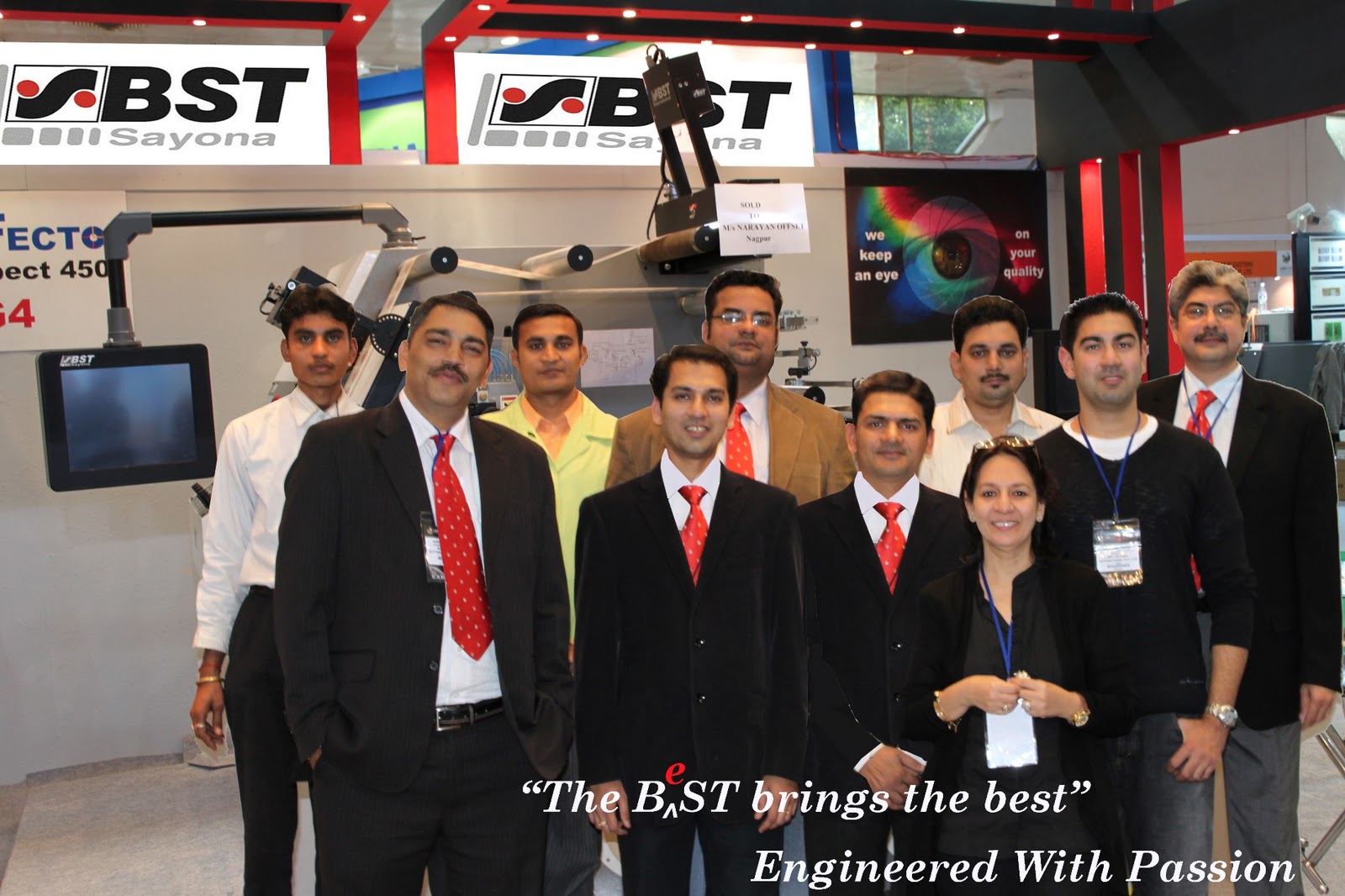
BST team at their stand stand!
 
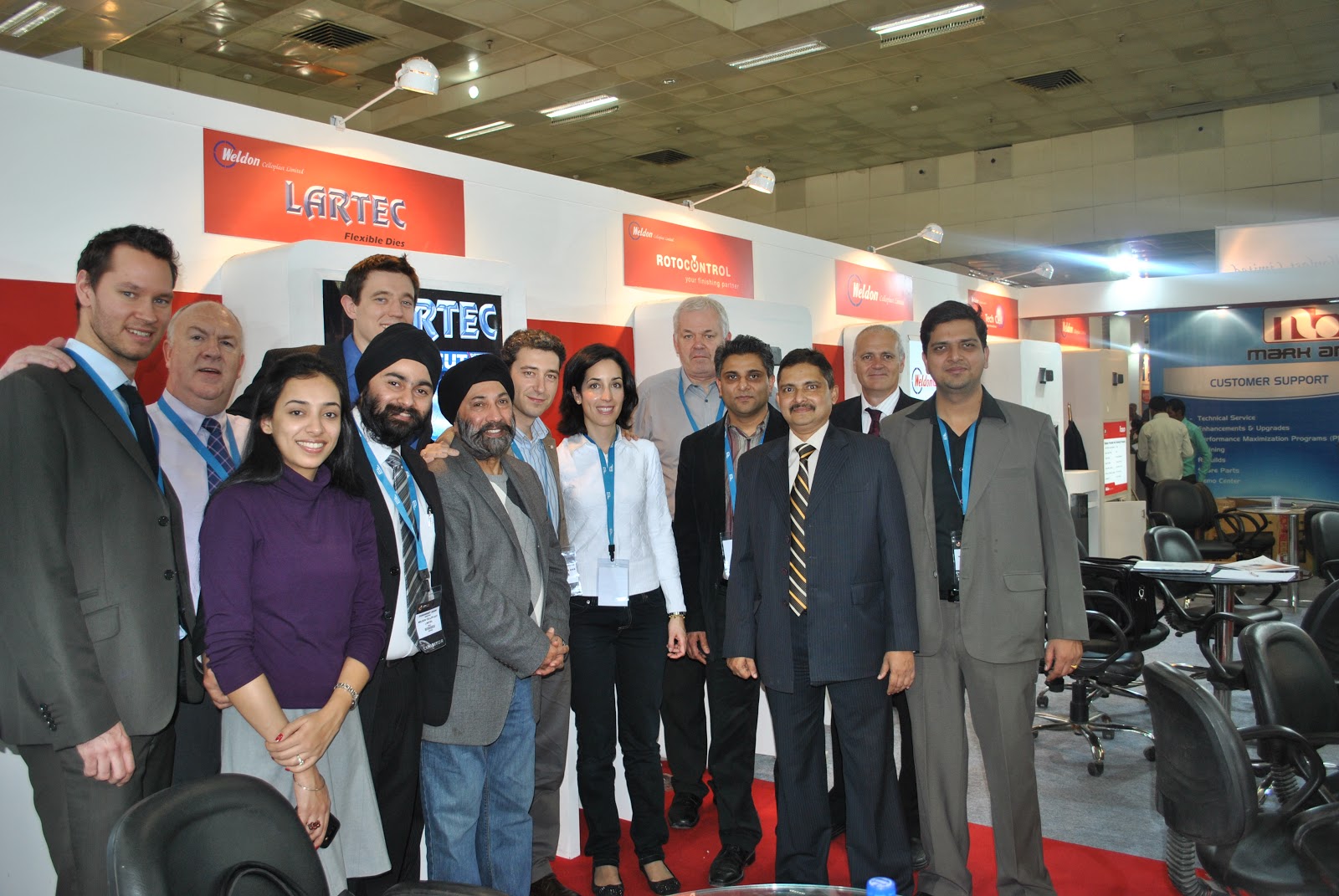
Weldon team at their Stand.


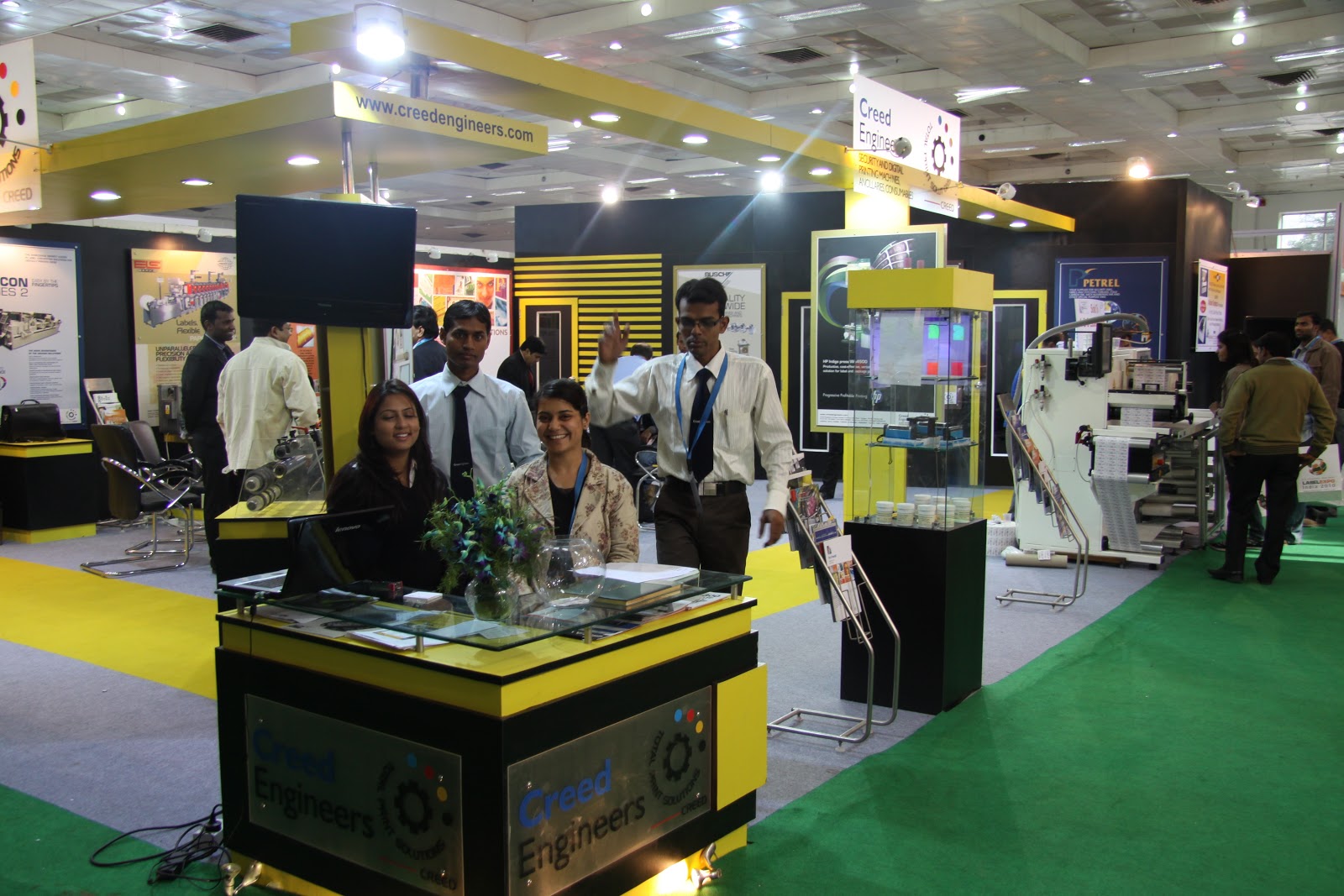
Creed Engineers Stand.


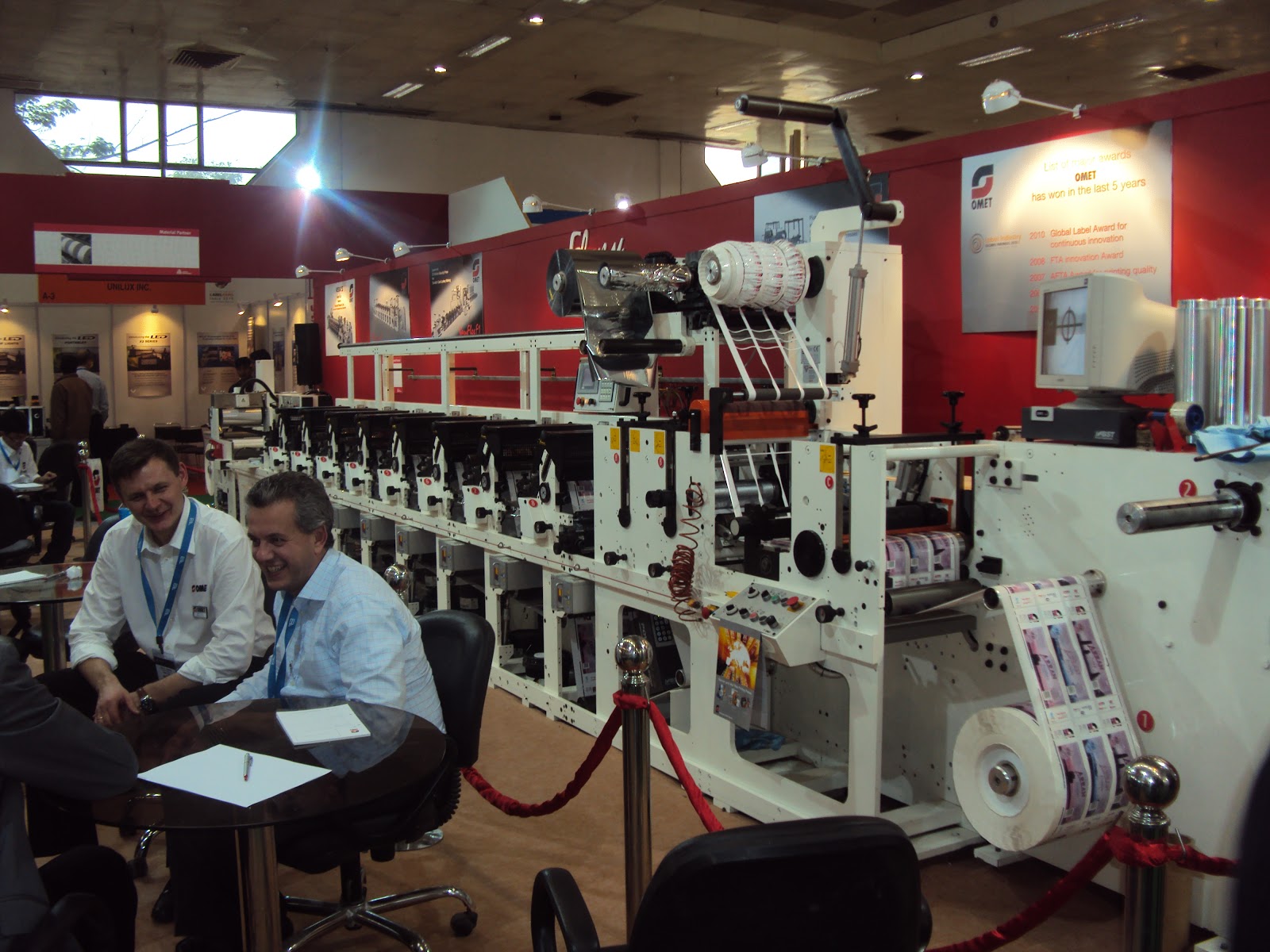
Omet stand.


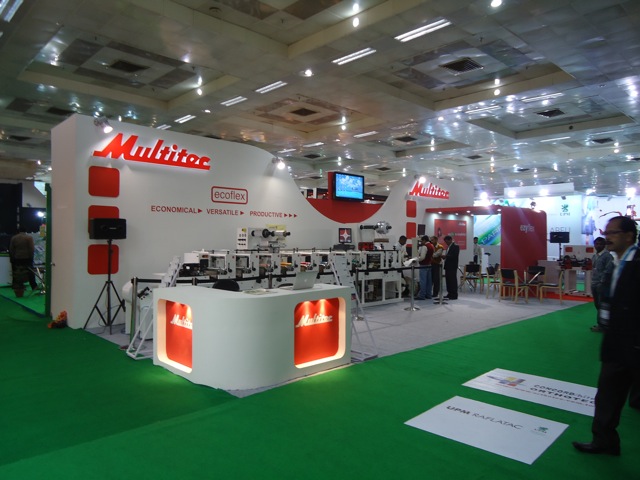
Multitec Stand


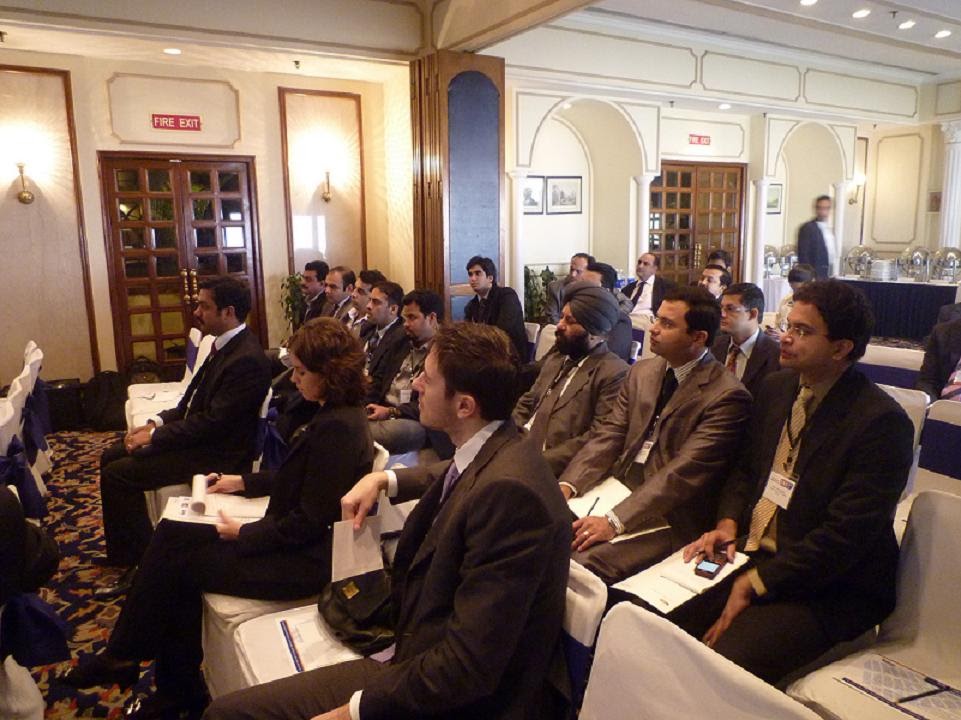
The picture on left is Finat LMAI Young Managers Club meet in progress.


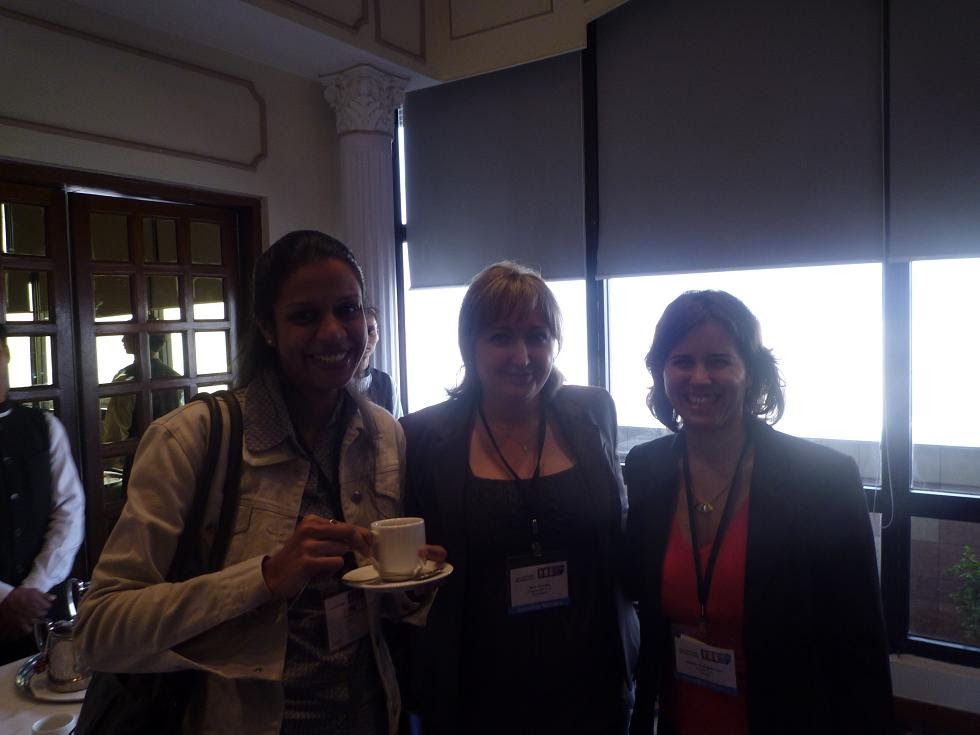
Birds of a feather flock together, Sandhya Shetty of Synpac and Bibiana of Rotatek with another participant in the middle, enjoy the networking opportunity during coffee break.


The not so young also found their way to the young manager’s meet and found a cozy corner. Jan Fredrik Vink, Past President Finat with Ms. Rodriguez of Rotatek. Cheers!


Pawandeep Sahni, Member Finat board for YMC and also General Secretary LMAI YMC with Roger Pellow, Managing Director Labelexpo group.


Creed Team at Label awards.
 
 
Harveer Sahni speaking at the awards night after being honoured for rendering services as judge for World Label.Association Awards at Brussels.
 

KayDee Sahni of Weldon Celloplast and Chandan Khanna of Ajanta Packaging chill at the LMAI Label Awards night.


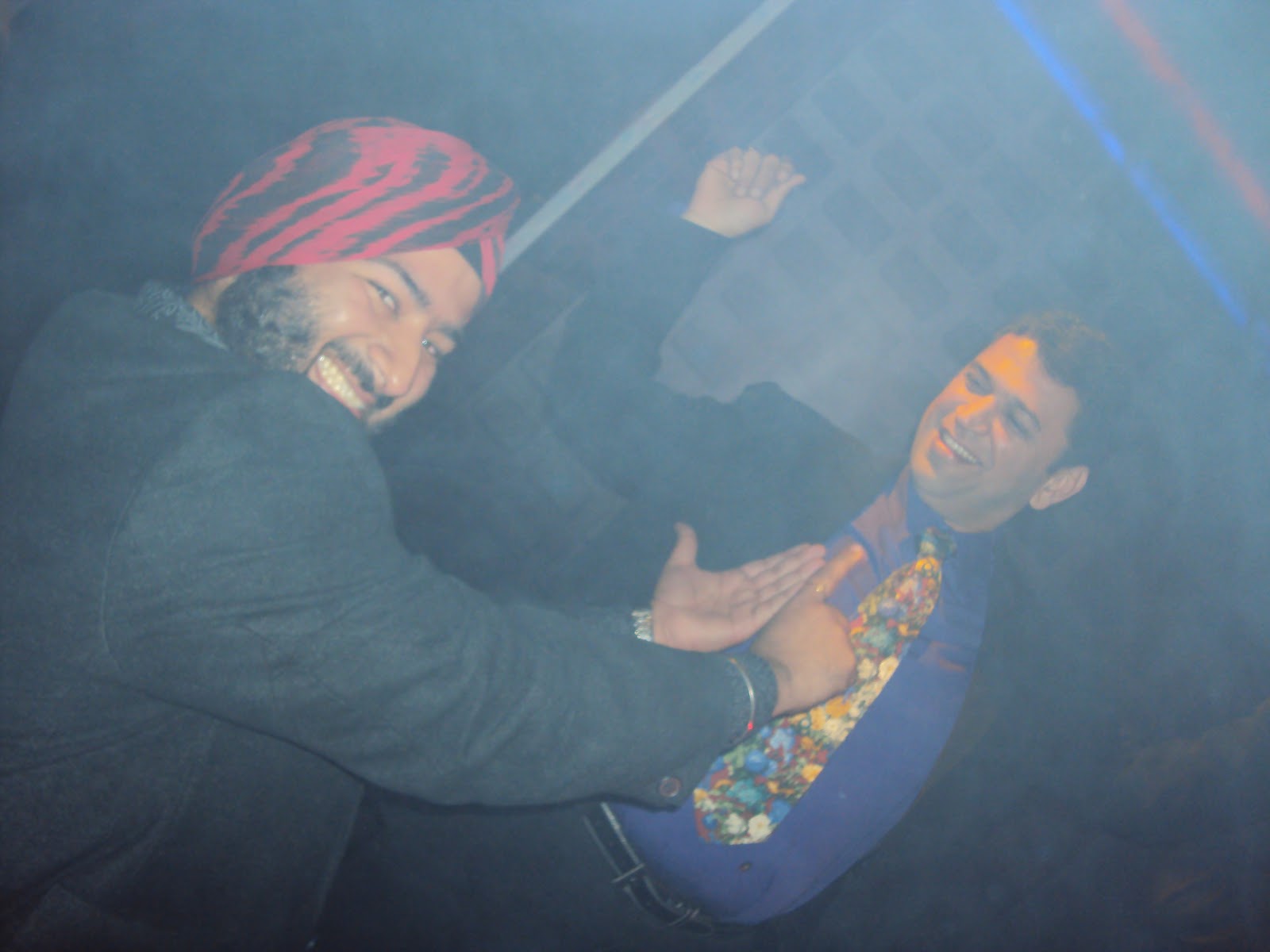
Kaydee Sahni of Weldon and Sheila Harper (of Techtonics) dance to popular tune “Sheila Ki Jawani” with music blaring from Kaydee’s car parked in the Weldon Home’s drive way.


At the Weldon dinner.In the picture on right from left to right Douglas Emslie (Group Managing Director-Tarsus), Gary Hendel(Delta, USA), Harveer Sahni (Weldon), Paolo Grasso (Omet), Mike Fairley (Label Guru), Roger Pellow (Managing Director-Labelexpo group), Kavneet Sahni(Tarsus) and in front Andy Thomas (Group Editor Labels and  Labeling)


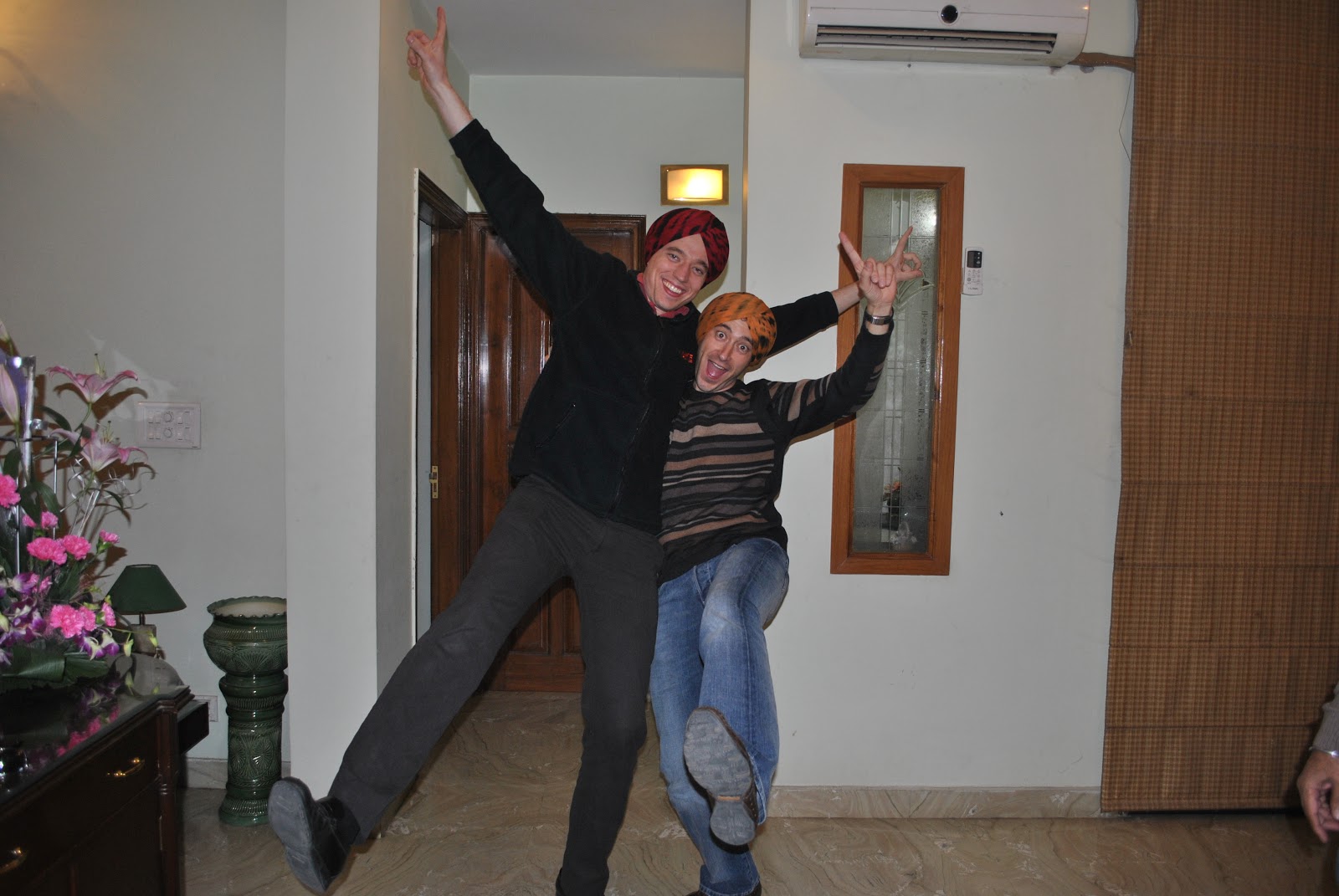
In the picture on left, Isidore Leiser of Stratus Packaging, France in a “Balle Balle” mood at the Weldon party.


The picture on right has Gary Hendel (Delta USA) and Raul Sylvestre(Lartec) doing a Panjabi Bhangra number at the Weldon party.


Label Guru and me…    


The above feature is compiled by Harveer Sahni Managing Director, Weldon Celloplast Ltd,