Introduction:
 
 
Protection is one of the very basic human reflexes related phenomenon. What if you suddenly feel a hand touching your pocket where your wallet is placed.. Immediately your reflexes work & “Pat” goes your hand over your pocket in an evident effort to protect your wallet. In the middle of the night, you hear a noise and realise that someone is moving in the house or is trying to make an entry. Impulsively your hand goes to the light switch in a clear effort to protect your home from burglary. You are in the market for shopping and your child is in the back seat. Suddenly you see your child getting out into the middle of the busy road, you run and grab the child away from the traffic protecting him or her from getting hurt. Obviously people who are not quick in their reflexes end up losing their wallets or getting their houses burgled or suffering from their child getting hurt. But the more sensible and clever persons in todays world would go a step further and opt for security systems and devices. The person carrying his wallet would probably start using credit cards, a more secure form of carrying money. The home owner would probably opt for a burglar alarm, a cctv or a sensor light that would come on at the slightest of movement and the car owner would probably opt for the simple child lock in the car. In todays world protecting ones life earnings and valuables is a necessity. Similarly brands, which have much more value then a wallet, a car or a home, need protection.
 
Overview:-
 
A life time effort goes into building brands and protecting them is as mind boggling as it is necessary. As with time brands become more and more valuable, the need to protect them from counterfeiters and their fraudulent intentions becomes imperative. Corporate brand owners are raking their minds to find ways to protect the brand from duplication. It is not just brands that have problems with counterfeiters, currency notes, ID papers, credit cards, passports, share certificates, banker cheques, etc., are all the targets of forgers and counterfeiters. Brand piracy and product duplication are large scale frauds. The global anti counterfeiting group which represents the interest of the brand owners worldwide, estimates that fakes and duplicates cost the brand owners about 368 billion US dollar this represents 5-7 percent of world trade. Billions of dollars are lost in sales by brand owners. The government loses tax revenues; and the consumers suffer from the problems due to fake products. Pharma duplication remains the biggest area of concern as it is facing the highest level of threat and the consumer of pharmaceuticals products are the worst sufferers. Liquor is another area, greatly affected by duplicates. It is generally talked about in all the cocktail circuits in India that the amount of Johnny Walker scotch sold in India is more than what they produce in Scotland.
 
Senior level management teams in FMCG companies are dwelling more and more on security options available to fight this menace. Self-adhesive labels are now in the forefront offering a range of options to counter the attack from counterfeiters and duplicators. The narrow web label printer is playing a very important role in development of the security label. It is necessary that to arrive at the most appropriate security label a close co-operation of the end user, the narrow web label printer and the labelstock manufacturer is very important. The end user has to be aware of the possibilities that the labelstock producer can build-in at the production stage of the labelstock. The labelstock manufacturers has to have a variety of capabilities and skills to improvise in the laminate, similarly the narrow web label printer is required to have advanced capabilities to perform conversion on the label and build-in feature that contribute to the security of the product.
 
The role of labelstock manufacturers here is very important. He has to bring to the forum of these partners i.e, the user, label printer and himself, the information on the availability of raw materials and his own capabilities and the options that can be built-in at the time of producing the stock. The user brings to the forum the knowledge that he possesses about the skills of the counterfeiters and the techniques they employ in faking. The label printer who brings the label to its final shape has to have specialized converting and decorating capabilities to be able to contribute fruitfully to the efforts of this forum to design a label that would make the fakes easily identifiable. The label so produced should prove to be an effective deterrent.
 
The present scenario and the need for security label provides opportunity for the producer of security label, as a new market, where price is important, but not of prime concern is opening up and growing at a steady 20% per annum. Labelstock, primarily consists, of three main constituents- the release liner, the adhesive and the face paper. The release liner in most of the cases ends up in the dustbin. There are exceptions like the piggy back labels which have two liners and one ends upon the package as a part of the end label. So in general terms there is not much security built into the backing liner. It is however necessary to customize it according to the converting and dispensing requirement of the end label. The other two constituents i.e, the adhesive and face paper play an important role as these go along and are an integral part of the final dispensed label. The labelstock manufacturers needs to be well informed and equipped with the possibilities which can be employed to customize and secure a label. Most of the security is built into the facestock and the adhesive is designed to compliment the requirements of the security functions built into the facestock.
 
Some examples of duplication
 
Every country has its own type of counterfeiters & duplicaters. I mention here on what we have in India:-
 
1.FMCG products: I personally would probably rate toothpaste as the most widely and easily duplicated product in India. Every now and then we find the brand owners reporting raids on illegal packaging companies and catching the criminals. Yet the process of duplication goes on un-abated. The hawkers on the payments of metros or the smaller shopkeepers in smaller towns, stock & sell. Fakes or look-alikes of a famous brand Colgate being sold fraudulently under brands like Golgate, Collate or Colage in exactly similar looking packaging to many poor illiterate consumers. I wonder if it amounts to dental hygiene or not.? I feel simple a security seal affixed on the product packaging and adequately advertised, would be a deterrent but then the brand owners are the best judges, they may already have put their minds on this.
 
2.Bank frauds: I now bring to you a classic example of cheque forgery. A particular person in collusion with a postman got hold of a bankers cheque issued by a bank favouring Canara bank for Rs.Eight Million This is how the word Canara bank was written.
 
Canara Bank
 
The person used a matching pen & changed it like this.
 
"Tucanarain Bankey "
 
by affixing “T U” before Canara and in after it and then “e y” after bank. The cheque now read Tucanarain Bankey which appears to be a normal Indian name. He opened an account with Syndicate bank in name of Tucanarain Bankey, deposited the bankers cheque and withdrew the money. The fraud came to light when the man had vanished leaving some 50000/- in the account. To check frauds like this a co. in Mumbai had opted for affixing transparent filmic labels on all the written text of the cheque to prevent such tampering. Temporarily this did act as a deterrent. Now we have a request from the same customer to further modify the product as duplicators use hair dryers to heat the product label and peel it off when the adhesive softens. They make changes in the amount/name and refix the label.
 
The above examples clearly indicate the imperative need of introducing security features on all products. Labels play a very definite and important roll in this. To reach the final security labels a sincere effort and collective thinking of the brand owner, the label printer and the labelstock manufacturer is required. Without hampering the brand image, security has to be built up in the product and the method for educating the end user to verify the authenticity of the product has to be devised.
 
Security Option:-
 
I list below some of the security options available-
 
1. Barcodes
 
2. Consecutive or sequential numbering
 
3. Holograms
 
4. DNA Inks
 
5. Thermochromic inks
 
6. Multi layered label
 
7. Transfer labels
 
8. Security cuts on labels
 
9. VOID stock
 
10. Security inks (UV sensitive)
 
11. Micro Taggants in labels
 
12. Destructible label
 
13. Sub surface printing
 
14. Security threads
 
15. RFID
 
16. UV Fibres in pulp or adhesive
 
17. Water mark paper


I now dwell on the some individual security labels and the construction of such labelstocks. Some features are overt those that can be seen and others covert that can not be seen normally.
 
1. Barcode labels:-
 
I am sure most people recognize barcodes. These are present on labels as a band of verticle lines of varying thickness. These contain a whole lot of information in them. Barcodes are used for billing, inventory control, product tracking and a variety of control systems beside providing a fair amount of security. Barcodes can be printed by many printing processes but the most widely used process to print barcodes with the highest level of sensing remains the Thermal transfer printing. For accurate printing of a barcode the labelstock needs to be specially designed. The face paper is double coated on top for smoothness and for firm anchorage of the barcode to the paper. The reverse side of the face paper is also coated to prevent any seapage of the adhesive to the top, especially when the thermal transfer barcode is printed by application of heat. The adhesive has to be designed to adhere to a vide range of difficult and low energy surfaces. One can imagine the trouble that would erupt if these labels that provide a lot of information besides security, fall off the packages they are supposed to adhere on. The release paper has to be a highly calendered glassine which provides for a certain amount of transparency to enable the barcode printer to sense the label through the release paper. The release paper is also designed to offer release values which compliment high speed convertion and further dispensing on automatic labeling machines. Today demand for barcoded labels is coming from users on different substratres like BOPP, Polyester, Metalized films, etc. Again here these substrates need to be given a top coat to make them suitable for the required printing process and proper sensing and reading of the barcode thereafter.
 
2. Holograms-
 
Holograms are optically variable devices. The opticall interaction of the holographic image with the human eye makes it ideal for both brand promotion and security. These are generally produced out of polyester films and the labelstock manufacturing is a part of the process involving production of holograms. The hologram producers has to work hard to keep innovating and developing complex origination process to make it difficult for counterfeiters to copy. Many holograms produced today are tamper evident they also have other security features built into them like sequential numbering,UV fluorescence in the adhesive, etc. The area of holography is quite well developed and there is a lot of scope in it for producing newer security options. The hologram manufacturer does have special capabilities to produce the label face yet the adhesive and release are generally sourced outside. The release paper has to be specially designed with extremely low peel values for the tamper evident holograms. Smallest hindrance in the case of release may tamper the hologram before it is applied. This will render the hologram useless.
 
3. Security Inks and threads and UV Fibres- Creating security features into labelstocks or labels using security inks is possible in many diverse ways. This is possible due to the wide variety of inks available.
 
Some examples-
 
(a)Thermo chromic inks:- These inks change colour with change of temperature e.g, if you keep a bottle of cold drink or a beer in a freezer, the moment it reaches a temp of say 10 degree C the otherwise invisible printed text “chilled” would be visible and readable. It would disappear with the rise of temperature. Similarly we have inks that change colour at higher temperature.
 
(b) UV sensitive inks- These glow under UV light or change colour when exposed to sunlight.
 
(c)Metameric inks- These are inks that are similar in day light condition but change under different light sources. One can print an invisible message which becomes readable when light condition change such images cannot be photocopied.
 
At the labelstock manufacturing stage the face paper can be printed on the top or the reverse with any of the security inks. The front side is generally printed with these inks by the label printer at the time of producing labels. However if printing is desired at the reverse before the adhesive this has to be done prior to producing the label laminate security threads can also be introduced into the laminate . UV fibres can be incorporated into the the pulp by the paper mill or in the adhesive during production of labelstock. Such fibres can be seen under the UV light.
 
4. Tamper evidents-
 
  
    Sealed
        
    Opened
    Resealed
 Tamper evident labels are the most widely used security labels. These labels generally have features built into them, such that they show when they have been removed and reapplied. The classic example is the label which when removed leaves the message VOID behind. Today labelstock can be designed such that the residual message VOID can be customized to customer needs. Destructible labels are another form of tamper evident label materials. Such a label fragments into small pieces when somebody attempts to remove it. These labelstocks can be top coated for accepting barcode printing. Generally used materials for destructible are acetate and vinyls however some companies do have some proprietory constructions. Other products falling under the category of tamper evidents is the multi layer, where the layers are designed such that they split when the label is removed. In the case of the transfer label whole or part of the label is transferred to the substrate on which label is applied, blank film or partially printed film comes off from the top.
 
5. RFID-
 
The list of security labels would be incomplete without dwelling on the RFID or the Radio frequency identification. It is perhaps the most interactive technology that is making its impact on the world of packaging & labeling. It has far reaching impact on the supply chain and marketing systems. Large retail chain stores are demanding that the vendors provide smaller and compact RFID that adhere to the products. Benefits of these devices include inventory control, theft detterent, data of purchase of a full basket products be transmitted instantly for billing as also setting off the alarms if an uninvoiced product is being taken out of the exit. It is at this stage a lot of development being undertaken to incorporate the RFID into labelstocks and finally into labels. RFIDs can exist with barcoded labels and are difficult to copy or simulate. The cost of equipment to be used for inlay of chips into the labelstocks presently is huge and in face of fast changing technologies there is substantial risk. The equipment may soon become obsolete.
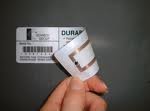
 
Producing finished RFID label is a challenging job. Many of the inlays may be damaged in the process and losses are estimated to be upto 15 percent. The labels and chips may get damaged in the converting process itself. Special cushioned substrates can prevent damage to the chip thus making it extremely necessary for testing the functionality and readability of the chip before and after insertion into the labelstock.
 
A typical construction has been developed by a leading US based co. Here the chip is inserted into the labelstock with a foam layer then a antistatic coating is given to prevent the RFID from static charge thereafter the face paper and finally the top coating to accept barcode printing. There is a lot of hipe of RFID being the technology of the future. It will change the face of labels that aid retailing. Then there are others, who do not agree with the line of thought. At this stage I would like to add a word of caution lest one may over indulge in a technology that changes fast and may not eventually be implemented.
 
Summary- The scope of security labels is wide. The efforts of innovative labelstock manufacturer and label producers can produce new and effective security solutions. The list of other options available can further include DNA inks, taggants that are microscopic particles or even biocodes, water mark papers or labels with security cuts, the list extends as far as the imagination of the innovative labelstock or label manufacturers extends. Preparing security labels is only one part of the exercise, educating customer to check its authenticity is the more important part. What good is a security label if it cannot protect the duplication and if you do not know how to check if it is a genuine product?
 
Before I conclude I must state that developing security labels and producing them is an ongoing process. No single solution is a permanent solution for a product, because if someone can make it then someone can fake it. It just may be a matter of time.
 
Written by Harveer Sahni, Managing Director, Weldon Celloplast Limited, New Delhi-110008


It was at Pamex 1997 when Amar saw the Mark Andy label press for the first time. He was instantly drawn to it and was overawed by it. He kept thinking about it in the days that followed. Four weeks later his decision was made, he had to buy this machine.  At an age when boys his age were dreaming of buying their favorite cars, he had decided to buy a Mark Andy Label Press! It was a big investment and Amar found support from his uncle, a part of the extended family, to fund the acquisition.  His uncle ran a successful packaging unit producing corrugated boxes, where Amar got his initial training. The experience and contacts made during this period helped him get settled in the label business. Today Jitesh, his cousin is his partner and a treasured colleague. As a young boy, in the early nineties when the stock markets were booming, like all those who wanted to make big money, Amar was also infatuated by the stocks. He wanted to become a successful stock broker. As luck would have it, while still in school at a tender age of 16years he lost his father who was a farmer turned sugar trader. He was left wondering…what next? His heart was never in studies, he indulged in stock markets and did make some money. It was only when he suddenly lost all in the trading that he realized the meaning of what his father had once said to him, “Son, you have to create something”. The family had no bread earner and those words coming back to him changed the entire way he looked at life. He decided to be successful and create. Webtech, Amar Chhajed’s startup enterprise was setup in 1998. He trained himself to be the first operator of the press that he had acquired. For six months he was the only employee and used to produce and sell all alone. His experience in his uncle’s packaging unit turned out to be a great advantage. 

While Elf Lubricants was his first customer yet it was the Indian oil order that brought in volumes and got him going. Amar, remembers the first meeting he had with the GM of Indian Oil and it lasted a couple of minutes, leaving him confused. They asked him his capacity which he assured was 5 lakh labels per day and they bluntly told him that he had to supply a million labels each day! The meeting ended. It was time to buy the next press. Amar did not stop there. Webtech today is one of the biggest label printers in India. They have as of date twelve label presses in their Mumbai unit and two in Parwanoo in Himachal Pradesh. There are two more presses on way. Many firsts in the industry include the first all UV Mark Andy press, first AVT inspection system installed on a narrow web label press, the first shuttleworth job management software for narrow web labels and the first Xeicon digital press.

He smiles when he says he was poor in maths while at school but now numbers remain his strong point in business. With 160 employees, Webtech consumes 6lakh to 7lakh square meters of label stock each month and the dedicated team put together by Amar and his cousin Jitesh is sure to double up this figure in just five years. They also aspire to diversify into other related areas in packaging. It is credible that they ship out 150 variables to different customers each day! Amar has surely created a company driven by passion to satisfy their customers.The most memorable incidence of his life remains a problem that he addressed in the earliest stages of his carrier and has become the motivating vision for his entire team. One evening at 7PM he got a call from his factory that the UV lamps on the press had failed and the production had come to a stop and that they could not meet the customers schedule.  His suppliers in the UK told him they could not deliver the lamps before 5 to 6 days even though hey had the lamps in stock. The courier co. would take that much time. Not ready to accept the situation, four hours later Amar was on a flight to London. The lamps were delivered to him by the suppliers at London’s Heathrow airport and a few hours later Amar was on the return flight to Mumbai. The lamps were collected by his people at the Mumbai airport and rushed to his factory. In less then 24 hours the labels were being produced again at Webtech, to this day the customer does not know that there was a gap in production. Amar has always been very dedicated to his customers. They start producing labels the moment their customers want them and to this day they work in two 12 hour shifts, irrespective of the situation whether there is order or no order. It is Webtech’s endeavor and resolve to be there whenever the customer needed them. He is proud to tell his customers, “We are available, 24 hours!”
Written by Harveer Sahni, Managing Director, Weldon Celloplast Limited, New Delhi-110008

 http://www.weldoncelloplast.com/

In the last issue I had dwelled on the need for printers to go green. It is definitely not going to be long before government regulations on waste management and environment issues in self adhesive label industry get more stringent. It will not be possible anymore to send your label waste to the landfill or burn it. On March 13, 2010, The Global Label Associations Summit was held in Barcelona, Spain. LMAI(Label manufacturers association of India) is also a member of the L8, the prestigious group of leading world label associations. In a joint statement they endorsed the industry’s commitment to a more sustainable and environmental responsible future and to supporting ongoing industry measures to further reduce the environmental impact of labels, encourage more sustainable label materials and production processes, meet changing industry and customer recycling targets, and to working towards the continued reduction of label waste. Among the many measures that global label industry associations, suppliers and converters are already targeting are:

  • The promotion and encouragement of the use of environmental management and audit systems (ISO 14001, EMAS, LIFE) in the label industry
  • Enhancing measures to inform, educate and support label producers in meeting current and future label environmental and sustainability targets
  • Supporting the use of materials and schemes that encourage sustainable and renewable resources, such as FSC, PEFC or SFI
  • Continued industry development of solutions to maximize cost-effective recovery and recycling of self-adhesive labelstock waste
  • Highlighting the development and use of thinner, lighter label materials
  • Working towards further reduction in the amount of landfill waste and higher recovery and recycling rates

Having a more prominent industry voice and input into global government, brand owner, packaging and related organizations that are currently impacting on environment and sustainability issues relating to labels and label usage. Mike Fairley, the renowned Label Guru and Director Strategic Development at the Labels Group Tarsus, was the keynote speaker at the summit. Speaking on “Global Industry Challenges and Opportunities” he spoke on the need for key label buyers and specifiers consisting of global brand owners and retail groups, to be the driving force. The issue of waste management has also started to bother some of the leading label printers of India. In the last couple of weeks following publication of my last column in this magazine, I have had calls from some of the printers asking about ways how to dispose the waste as their local administration is making it more and more difficult and also expensive to attend to this problem. Our local industry association LMAI also needs to step in on the issue and arrange brainstorming sessions in various parts of the country to evolve a strategy on this. I am sure there will be government support and funding on such initiatives. As for LMAI, the association is putting its act together and working. On 26th of March 2010 they held a seminar on intellectual property rights at Aurangabad in association with MSME. The Young Managers Club of FINAT also met in Barcelona on the sidelines of the Global Label Associations Summit. A Young Managers Board had meanwhile been elected that was currently in the process of establishing a programme of networking, management exchange and education for the coming years. About half of the currently 55 YMC members were from outside Europe, mainly India. The Indian association LMAI had meanwhile informed FINAT that they were in the process of creating a similar Young Managers Club. Vivek Kapoor, President LMAI has in the meanwhile taken steps in this direction. He has designated Pawandeep Sahni, member FINAT YMC Board to lead the initiative to form Young Manager’s Club at LMAI. LMAI is also planning to have meets and seminars on costing and technical ugradation. Plans are also afoot to organise a conference and networking event for the label industry. Very soon the process for LMAI awards will be initiated. This year looks to be more interesting in the field of newer technologies. Last time when this competition was held there were categories where there were no or very little participation but in the interim period there have been investments made especially in digital printing and booklet labels. We expect more active participation. The LMAI also needs to increase membership so that representation is widespread and the association has true national presence.Labeltech 2010, a label exhibition, was held at Mumbai recently. Label Planet/Intergraphics was the only stand showcasing working label presses. Other then this, the show was quite small and the visitors from the label industry were a disillusioned lot. This show was held along with Intelpack, which is a packaging show and had a fair participation. However this was not of interest to label printers who travelled long distances to visit. Printers, suppliers and press suppliers felt that the shows need to be more professionally and efficiently organized. The shows also need to be spaced such that there is only one big good quality show per year. With industry getting more and more competitive, people feel, too many shows add up unnecessary travel expenses as also put a huge pressure on valuable time. Moreover if the show is not up to the mark, the expense and time goes waste.
Written by Harveer Sahni, Managing Director, Weldon Celloplast Limited, New Delhi-110008 http://www.weldoncelloplast.com/

Charanjeet Lal Mahajan worked as Superintendent Engineer in DESU (Delhi Electric Supply Undertaking) until his retirement in 1997. He is a modest smiling man, totally dedicated to his family and a friend to all who know him. While still in service himself, he dreamt and wished his three sons to grow up and start a successful industrial enterprise. He used his resources to give good education to his sons and worked hard towards his dream. When his eldest son Rakesh completed his graduation and then Post graduation in Marketing and sales in 1986, Mahajan took him to his friend Vinayak Sud of Liddles for employment and soon Rakesh was selling labels. Liddles were pioneers in self adhesive labels and were riding a boom those days. Rakesh soon saw the huge profits this industry generated. Meanwhile in the same year Dinesh the second son, had acquired his degree in mechanical engineering and had joined Thermax, Pune. In 1989 when Neeraj, his youngest son graduated with a degree in commerce, Mahajan decided, it was time to initiate his sons into business.

By now Rakesh had acquired in-depth knowledge about self adhesive labels more so gun labels. Rakesh quit his job and Neeraj joined him to start their trading venture from an office in Asaf Ali Road. In less the four years in 1993 senior Mahajan was sure his two sons had enough business acumen and Dinesh working at Thermax had acquired enough skills in management and systems necessary for running an efficient enterprise. It was time to move to the final step of fulfilling his dream. Dinesh resigned from his job, Rakesh and Neeraj wound up their trading operations and they were ready to launch their manufacturing venture. New or used branded label presses were expensive and beyond their reach. Charanjeet Lal Mahajan’s vision saw in his long time friend Baldev Singh Jandu, the potential and capability of building an indigenous label press.  Jandu, the optimist as he is, accepted the challenge and soon left for USA, to study the Mark Andy press. On his return he came back and started to put together the first Jandu fully rotary flexo Label Press for Mahajans. Meanwhile the Mahajans had got a loan sanctioned by UPSIDC to fund their startup manufacturing venture. Unfortunately their loan got cancelled due to a complaint from one of their suppliers in their trading business. The Mahajan brothers, that day were a worried lot. They had closed their running business, left their jobs and bet all on this. They were devastated and in that awful mood they walked to their home in trans-Yamuna area of Delhi, from the UPSIDC office in Connaught Place. It must have been over one hour of walking! Tired and dejected, they reached home and told the story to their father. The senior Mahajan was smiling! He was not giving up, he had faith in his sons. He sold his house to fund the start of Prakash Labels Pvt.Ltd. and the entry of the Mahajans in to the manufacturing of self adhesive labels! Charanjeet Lal Mahajan was happy because what he had done was his Karma!The senior Mahajan has never indulged in the operations of the company and left everything from start to this day to his sons. There has been no looking back. Dinesh Mahajan heads the team and overseas overall management and marketing, Rakesh heads the manufacturing operations and Neeraj collects all the money, he heads the Finance. The brothers fondly remember that for their first customers Uncle Chips and Castrol they stayed three days in the factory trying to print a label correctly! Again when the weights and measure department banned the use of price marking labels on consumer packs, it was a nightmare for them. They changed focus and repositioned themselves to grow in business. Their biggest growth came when they started to produce sequential labels for the garment industry. They have come a long way since then.  They are leaders in labels for hand held labelers and barcode labels. They have a very strong association with Open data of Italy.Prakash labels as of today has four factories, three factories in NOIDA, One of which is an EOU(Export Oriented Unit) in the export processing zone and one factory in Baddi in Himachal Pradesh. They have their own offices in six cities across India and one office in UAE. They have 12 label presses and one more is awaited. Out of these they have one Mark Andy 2200 with turret rewinder, an Italian press also with turret rewinder, Two Orthotecs, eight Jandu presses (One yet to be delivered) and one more local press.  The young Mahajans proudly mention that Baldev singh Jandu who was their father’s friend is now the dear friend of this second generation. Consuming over half a million square meters of labelstocks, they are one of the largest buyers of labelstocks in India. With a 160 strong workforce they plan to move further ahead and make investments in RFID and other VIP labels (Variable Information Printing).The Mahajans continue to grow at a steady pace and feel their father has been the driving force in their success. He has instilled in them family values that bond them all together. Charanjeet Lal Mahajan had a vision, he was committed to it, he did his KARMA! His sons delivered, they labeled it…as SUCCESS!
Written by Harveer Sahni, Managing Director, Weldon Celloplast Limited, New Delhi-110008 http://www.weldoncelloplast.com/

The following article was written in 2006, The second part written in July 2019 is published in a series of four parts. the first part 2A is available at 

Years ago in 1981, I came across a book on the house of Tata’s. The book written by Russi Lala was named, “Creation Of Wealth” and it chronicled the events that led to Tata’s becoming the biggest Industrial group in India at that time.

After reading the book I was overwhelmed and wished that some day I will write something like this. Maybe track the roots of my own large extended family. Somehow I never got down to seriously working on this. I guess the opportunity came around again when I was invited by Roger Pellow of Tarsus to make two presentations at the first India Label Summit in 2006. I decided that in the first presentation where we take an overview of the India Label Market, I will chronicle the events that led to the establishment of the narrow web label printing industry in India. I am sure that this topic is of prime interest to all the label printers in India. Though it is extremely difficult to put all those interesting historical happenings, bottlenecks or interesting landmarks into this presentation yet I have tried to put together in whatever best way I could. I feel less then writing a book, there cannot be proper justice done to the subject. Maybe one day if I can find time, I will attempt it. Meanwhile getting data on this has been a very interesting job and I thank my senior colleagues in the Industry, without whose inputs and help, I could not have put together this presentation.

The very beginning

The credit of bringing self adhesive labels, in their present form, to India goes to a US multi national, Johnson and Johnson. It was in the turbulent post independence time in 1947 that Johnson & Johnson came to India.

In 1957 they established Johnson & Johnson India Ltd. A couple of years later they started the permacell division to make self adhesive tapes. It was around 1965 that they entered into the manufacture of self adhesive labels. They installed a rotary label press. They sold only converted labels and did not offer any labelstock to others in the market. So there was no real scope at that time for others to setup label presses or any other sticker manufacturing facility.

The Decade of sixties.

The first self adhesive label produced by an Indian printer also started around the same time in 1965, almost thirty years after Stanton Avery produced the first self adhesive label in Los Angeles, California.

Manohar Lal Bhatia, a screen printer, producing water transfers in his company, Sharat Industries, did pioneering work and produced what was the first self adhesive sticker in India. Using a PVC face stock with pressure sensitive adhesive supplied by Calico and a Polyethylene sheet as a release liner they manufactured their stickers. The reason they did not use paper as face material is that silicon release liners were not available and Polyethylene provided for a very tight release due to which the paper would tear off. Manohar Das Bhatia was later joined by his two sons Shyam and Rattan. They worked hard to make self adhesive stickers under their brand “Sharastick” popular in those days. While Manohar Bhatia is no more, my efforts to trace his son Shyam who probably still produces labels have been futile. I tried to reconfirm if Manohar Bhatia really was the first and got the reply from Badal Hasija, a screen printer with over 45 years of experience. “101 %, he was the first” says Badal and added “I even remember the first label he made was for Gabriel shock absorbers and it left me wondering for days, what Manohar Bhatia had produced”.

Jagdish Zaveri of Preeti Arts has also been one of the earliest of screen printers who produced self adhesive stickers and started around the same time. Other prominent screen printers who did pioneering work in stickers include, Hamid Vasi of Triace, Dinesh Gogari of Diamond Stickers, Vasu Rawal of Prachi Graphics and the list goes on. Their contributions however were more in the early seventies.

As the decade of sixties was coming to an end, a young Suresh Doshi from a family of textile merchants, who had drifted into distribution of PVC and decorative laminates, decided to try his hands at manufacturing of self adhesive Wall Papers. In 1969 he traveled to Germany to visit various machinery producing companies and he finally settled to buy a Kroenert coater for his new venture.

This machine had the capabilities to siliconise and produce self adhesive labelstocks. Little did Suresh Doshi realize that this plant would be the mother equipment for the Indian narrow web label industry.

The Decade of Seventies.

In 1971 the Kroenert coater/ laminator landed in Mumbai. The company Shanti Lal Doshi & Co, the maiden manufacturing venture of the Doshi family was in place to take off. This was a landmark year and I see it as a step that would lead to the birth of the self adhesive label in roll form, made by Indians. In a couple of year’s time the Doshi’s were ready to try producing labelsocks. Metroark Ltd. , which is now Wacker Metroark, was already there to provide the silicone release coatings for making release papers. Solvent based adhesive was provided by BASF and it was time to produce the first labelstock made in India by Indians.

In 1972-73 the commercial production of Labelstock had started.Around the same time that Suresh Doshi left for Germany in 1969, another young man, Jeetubhai Shah, visited the offices of Standard type foundry in Himalaya house in South Mumbai. He was surprised to see a die cut paper label that did not need to be remoistened to make it tacky. It would stick to glass with slight pressure. It was sticky to touch and would remain so even after having touched and peeled off from the hand many times. He kept playing with it for a while. Sticking the label to his hand and removing it. He was so fascinated with the label  that he started to make further enquiries. He also got from Standard Type foundry, a catalogue of Iwasaki machine that would make these die cut labels. A few trips later he came to know that Suresh Doshi was about to produce material for this machine. Jeetubhai decided do buy this machine. He joined hands with his income tax consultant and friend P P Bhagat to form a Company called International Trading Company at Kalyandas Industrial Estate in Worli. They applied for grant of an import license, and in those days of difficult foreign exchange regime, getting an import license was a nightmare. With a lot of effort they did manage the license and imported the machine. 
Jeetubhai fondly remembers that Japan had floated their currency that year and due to this, his machine became cheaper by at least 15%.. The timing of installing the machine was perfect. By the time it was installed, Shantilal Doshi & Co. was ready with labelstocks. There were numerous hurdles that these pioneers faced when they endeavoured on these path breaking efforts, like a whole night he spent at a workshop in the middle of Mumbai’s red light area to get his first Flat bed Die made. With deep sense of nostalgia he remembers the full page advertisement they gave in news papers, “First time in India Self Adhesive Labels, die-cut in any shape.” This was their USP over Johnson and Johnson, who were using expensive rotary dies whereas International Trading Co. had perfected their indigenous flat bed die making process. This advertisement brought in the first big label customer for them, which was Siemens.  International Trading company and later along with their sister co. Global graphics were the first roll form customers for Shantilal Doshi and Co., while Sharat Industries was their first sheet form customers. International Trading Co. still exists and is run by Kishore Parekh. The original partners had left the company. Jeetubhai later started a label company called Finearts.

I had asked Suresh Doshi to cite any interesting incident of those days and spontaneously he cited one. Sharat  Industries had made full die-cut labels for J K Helene Curtis from their stock and supplied. The users came up with a strange complaint.

The stickers were sticking well during the day but would fall off during the production at night. Not being able to find an answer to this one Mr. Doshi suggested that they use the labels during the day only. The production people at J K Helen Curtis did not agree as they had to run the night shift also. So Suresh Doshi was compelled to visit them during the night. He was shocked to see that the workers were not removing the release paper and thinking these to be remoistenable labels were using only water to stick the labels to the bottles. No wonder the labels were falling off !

The label industry was extended to other parts of India by the shear sincere efforts of the Doshi’s. By 1976, they had already suggested, encouraged and convinced close relatives Bharat Mehta and his brother to setup a label press.

Bharat Mehta bought his first Siki Label press from Ahmedabad where it was being used to produce unsupported wet glue labels. Shifting over from a business in agricultural pumps at the age of 26, Bharat Mehta, settled down perfectly in to his label printing business. He and his company Super Labels is one of the most respected label printers. From a single siki he went on to add  a fully loaded Gallus, an EM 280 8 colours, EM 280 6 colours, and an Acquaflex. In the earlier part of  the decade of 2000-2010 he lost heavily in a major fire but firm resolve brought him right back in what he liked best,  “Producing self adhesive labels”. Other early entrants into the industry in the west  during the seventies were, Vidya Mehta of Pressure Tags, The Kapoors of R K Papers, etc.

By end of the decade, the Doshi’s went southwards and encourage yet another relative, Dilip Sutaria to become a label printer. He setup Better Labels to lead the march of self adhesive labels in the south. In North, the Doshi’s appointed an ex-partner of  Dilip Sutaria, Mr. P D Khanna and his son Vinod Khanna as their agents in New Delhi. Around the same time in late seventies, Vinayak Sood of Liddles had installed a Norprint from UK and went on to add the first Mark Andy in 1983. The year 1979 saw Narula of Rikki Sales start his label printing operations.

In East the Doshi’s found their first customer in the former national  tennis champion and a celebrated player, Premjit Lal. The Doshi’s had completed their reach all over the country and by end of the decade self adhesive label industry was an established fact. According to Suresh Doshi, the biggest boost to the self adhesive label industry was in the year 1975. Starting with the controversial Rae Bareily election of Indira Gandhi, when congress introduced their self adhesive bindis, to the imposition of the law to make minimum retail price marking on consumer packages, compulsory, these decision brought a surge in demand for self adhesive labels . By 1975 another young Gujarati entrepreneur Pravin Patel had setup a polytype coater in Ahmedabad to produce silicone papers and labelstocks. 1978 saw Hari Gupta start his H P Lablette in Delhi with his Japanese coater, and towards the end of the decade PCI in Kolkata, IPW, Veekay papers and Geva in Mumbai and Weldon in Delhi had either started or were about to begin commercial siliconizing operations.

The decade of Eighties

With the start of a new decade more developments came into the self adhesive label industry. Shantilal Doshi had started operations with solvent based adhesive but environment friendly Acrylic emulsion adhesive were now in use for labelstock production. In 1982 Kilaru Prasad of Prasad Accumeter had brought in hotmelt coater from Accumeter in the US where he worked as a Sales Director. Ananth Rao of Stayon paper followed suit with another accumeter coater and Interlabels now perhaps the largest Indian printer also installed their accumeter hot melt coater to support their entry into the label printing industry around that time.

The decade of 80’s saw label printing companies being set up at various places in India. The eastern sector growth was extremely slow due to the lack of industrial infrastructure there. According to Bharat Mehta, the biggest boost to the industry this decade came in 1987 when many pharma companies started their shift rom wet glue labels to automatically dispensed self adhesive labels. This step helped establish a constant growth mode for this industry.

The Decade of NinetiesThe decade of nineties was perhaps the most eventful one. For me personally it was a memorable  one as during this time we took the landmark decision to switch over from being a mere commercial siliconizer to a prominent labelstock manufacturer. However for the industry, the biggest event I rate as the entry of the multinational Co, whom I refer to as our big brothers in the industry. Avery Dennison had setup production facilities in India. I have always felt their entry has changed the way people look at this industry. From being a mere sticker maker, the narrow web label printer became a specialty label producer. In the same decade we saw printers grow in stature and capabilities. Seljagat, Wintek, S K Labels in south. Interlabels, Webtech, R K Papers, Mudrika, Icon, Tayabi, etc in the west. Update, Syndicate, Jain transfer, Great Eastern, Prakash Labels, etc in the North. The three brothers at Prakash Labels worked hard in the price marking labels  segment to drive in volumes that were unheard of in the industry. Syndicate Printers went Global with operations in The UAE.The new millennium, the first decade of a new centuryAs we crossed the middle of this decade and the world’s eyes were on us. The label summit in early 2006 was a proof. The big time presses started coming in all over the country. You name them they were here, Gallus, Nilpeter, Iwasaki, Gidue, Mark Andy, Rotatek, Focus, Orthotec, the list is endless. The local press manufacturers have also reasons to be proud of. Multiflex, Jandu, RK Machine, webtech and a host of others  are reporting installations constantly. The two dyanamic ladies in our industry also emerged as highly successful narrow web label printers in this decade. Amila Singhvi at IPP and Kusum Dunglay at Goodwork. Goodwork took a legendary step by signing up a joint venture with Reynders. Unfortunately they parted ways the following year in 2008. Reyenders continued their operations as an individual entity. Our Industry Leaders Interlabels setup a unit in Africa on one hand and adding more state of art presses at a new and bigger facility. Webtech also expanding with new machines moved to bigger premises. In the earlier part of this decade, over thirty years after making a historical start the Kroenert coater of Shanti Lal Doshi and Company was sold to Gloss Holdings.A proud event for us at Weldon was being the first Indian Labelstock manufacturer ever to have exhibited at Labelexpo Brussels. We are happy to report our exports to Iran, UAE, Ukraine, Lebanon, Turkey, Jordan, Bahrain, UK, France, Italy, Germany, New Caledonia, New Zealand, etc. Another feather in our cap was that my presentation on the Indian market, became a part of the International Cham Symposium at St. Moritz, Switzerland in the year 2003.The India Label show in 2002 opened to a resounding success and repeating the success in 2004 in cooperation with Tarsus at New Delhi. It was also in 2002 that we saw another historic step, the formation of LMAI. This happened due to sincere efforts of Amit Sheth and Industry stalwarts like Surinder Kapoor of R K Papers, Bhavin Kothari of Interlabels,  Rajesh Chadha of Update Prints, Kuldeep Goel of Any Graphics, Vivek Kapoor of Creative Prints( At that time he was with Icon Prints), etc.Halfway through the decade we were expecting many more exciting things to happen. More International Companies were waiting to enter, looking for oppurtune time or the right partners. The Industry was on a definite growth path and it was just a matter of time when it became a major market in labels in this part of the world. The years afterThe preceding part of this article I wrote in early 2006 and  towards the end of the year I looked back and saw changes coming in  rapidly. I would start by adding here that immediately after having made the above presentation at the label summit organised by Tarsus, the owners of Labelexpo,  I had a pleasant surprise. Shyam Bhatia, the son of the first label printer was standing in front of me at our stand during the summit. I had tried to trace him without success. I was excited, I gave him a chair, since he had missed the presentation, I gave it to him and asked him to read it and tell me if there was any thing wrong in what I wrote. As he finished reading his eyes were moist and shining, he just kept saying, “it is so true…it is so true” and then he was gone…
Rapid developments and changes are happening in the Indian market. More international companies have become extremely active. The Indians are also investing across the country. At least dozens of Chinese hot melt coater laminators have been installed. Label stock manufacturing is going wider, there are a few 1.5 meters coater laminators that have been installed or are in the process of being installed. A whole new set of Offset printers are investing in high-end label presses, indicating a firm shift from wet glue to self adhesive labels. Narrow web label printers are coming up in smaller cities and towns rather then being restricted only to metros. Installations have been reported at Nagpur, Pune, Indore, Hyderabad, Chandigarh, Ahmedabad, Baroda, Baddi, Uttranchal etc.
A host of international label Co.s like CCL, Brady’s, etc are already in the process of setting up shop in India. The successful Finat and LMAI sponsored, Euro-India label exchange, held on the sidelines of India Label Show 2006, indicated to setting up of a whole new set of joint ventures in the field of narrow web labels. It surely was interesting to see more and more of European companies registering on the show website. If registrations on the India Label Show website were any indication then surely India is the happening destination for the narrow web label industry. As per my information visitors from over 35 countries had registered. The 2006 India label show happened and it was a great success. So much so that by September 2007 it was taken over by Tarsus. The announcement of India Label show having become a part of the global labelexpo group came at the Labelexpo 2007 at Brussels. The two years following the 2006 show have seen unprecedented growth. The flock of marketing agents of most of the international press manufacturers, had shifted gears and were in an aggressive selling mode. The credit of expanding this market goes to the likes of Gaurav Roy selling all those Mark Andy’s, Ranesh Bajaj selling Rotateks, Lintec, Omega, etc. Amit Sheth selling Focus and Orthotec, Heidelberg selling Gallus machine, Vijay Pareekh offering MPS, Autoprint offering Omet, Riefenhauser selling Gidue and the list could go on. The biggest surprise came from the industry leader worldwide, Nilpeter. In 7 preceeding years they sold just one press and in the last two years they not only sold four new presses but also announced setting up of facility to produce Nilpeter presses in Chennai, India. The credit goes to the forward thinking of Dilip Shah and hard working of Manish Kapoor. The Indian press manufacturers also have made their mark, with R K Machines of Ahmedabad reporting 150 installations and Jandu reporting 26 installations in 2-3 years. There are a whole lot others but the list would become too exhaustive.Two very important happenings that took place in these two years after 2006 were first, the entry of Raflatac with setting up of their slitting facility near Mumbai and second, the expansion of Avery Dennison, with them setting up another coating laminating facilty near Pune. The competition in the labelstock segment became extremely intense. Many local stock producers suffered due to to erosion of margins and unviable credit terms. With raw material prices climbing and wafer thin profits, the time for shakeout and restructuring had arrived. Many have started looking out towards global markets or venturing into new and profitable products with synergy. During these two last years a multitude of presses have arrived in India. The likes of young Chandan Khanna, who diversified from being a sheetfed offset printer to a narrow web label printer has surprised many. In just a few years from his first one waterless offset Iwasaki press, it became three presses and then at the Labelexpo 2006 he surprised all by announcing that he had bought a Nilpeter and an MPS in one go. Prakash labels also reported unprecedented growth with their multi location manufacturing and stock facility in the UAE. Interlabels, the market leader continued to grow not only in India but also in their international operations. In south Gururaj of Wintek in Bangalore and Raveendran of Seljegat in Sivakasi were on a roll reporting fresh investments in the label business.  As the inflationary pressure came to hit USA and found its way also to India, label printers who have made huge capital investments in state of art Label presses started to feel the pinch of competition coming from not only international printers but also from their local counterparts, with their relatively cheaper investments in Chinese Label presses.
This period also becomes significant because of recognition of Indians in the label industry on a global scale. It was a matter of pride for me for having been chosen as the only Asian to be a member of the Finat committees. At the Finat congress 2008 in Paris, it was heartening to see many Indian faces and creditable that Bharat Mehta of Superlabels of Mumbai and Kamlesh Shah of Letragrafix were recipients of Finat awards for excellence in printing. With LMAI now becoming more active and interactive they are once again parternering Finat for yet another Indo European label exchange hopefully along with the next India Label Show 2008. LMAI is also in the advance stages of conducting a fare and competitive label awards competition, professionally. It is heartwarming that printers from surrounding countries have become or have expressed the desire to be a part of LMAI. As a young India continues to grow at a fast pace, more and more young Indians earn more and spend more, giving a big fillip to the retail industry. As the retail grows, so does the requirement of labels. There may be bad patch or a small pause but for a long time this industry has still to grow, set many landmarks and create history.

The second part written in July 2019 is published in a series of four parts. the first part 2A is available at 
Written by Harveer Sahni, Managing Director, Weldon Celloplast Limited, New Delhi, leading manufacturers and exporters of self Adhesive Labelstocks. (first written in November-2006 and last updated in September 2008)  http://www.weldoncelloplast.com/

When we look at the growth of self adhesive label industry in India, as a first step we try and calculate the amount of labelstock consumed during the year that went by and the amount by which this figure increased over that in the preceding year. This does give the indication of the growth achieved in the last financial year and we end up assuming that the growth pattern will remain the same in the current year to arrive at a figure of estimated demand. This maybe the most obvious way to calculate but in my opinion the actual health of the industry and sustainability of growth rates comes from the level of capacity enhancement in the industry. The amount of capital invested in new and modern equipment alongwith the capability of such equipment to convert volumes is the true indicator of sustained growth in the years that will follow. However unexpected economic trends like those in the difficult year that went by, cannot be ruled out. It is a matter of rejoicing that India had strong fundamentals and financial discipline because of which it is pulling out of an otherwise distressing economic slowdown at a steady pace. If we look at the reporting pattern on the growth and new installations in the label industry in India, we note that most of the time it is the fancy branded imported presses that get the mention leaving our local presses unnoticed. It is the growing number of imported presses that are taken as the parameters indicating the health of self adhesive label industry. The local label press manufacturers, who were small and struggling to find recognition, received only occasional mention in articles reporting on the Indian Label Industry. I am happy to say that I chose to write this article on the Indian narrow web press manufacturers. They are moving out of the shadows. Slowly and steadily they continue becoming a force to reckon with. Already the amount of labelstocks converted on the Indian presses is a substantial share of the total consumption of material consumed in the country. These press manufacturers have toiled hard and have served their customers well, success is finally showing up on their side as well. It will not be long before they are on the world map selling their presses internationally and offering value for money. Indian press manufacturers are spread across the nation and each one trying to improve upon the technologies that there equipments employ to produce the best labels. The presses are within the reach and affordable for the small entry level label printers. Even larger label companies are buying these equipments to enhance capacities at least for simpler jobs. India’s self adhesive label industry initially evolved by depending on and largely employing small Japanese flat-bed label presses. Iwasaki, Onda, Siki, etc. were the names that were synonymous with sticker or label production in the earlier days. “That has changed!” exclaims Manojbhai of R K Machines, Ahmedabad. He goes on to add “Now no one in this segment looking for a new press will shop abroad, they come to RK”. He asserts that the industry is now in top form after a slowdown last year. R K Machines have grown steadily in the flat bed label press segment. According to Manojbhai, they sold 60 presses last year and hope to sell over a 100 presses this financial. They have moved further and feel that the future is not in the flatbed press segment but in the rotary flexo and higher technologies. To complete their range of offerings, they were importing tower stack type presses and selling them here. Now they have developed this model locally and will be showcasing the same at Labelexpo India in New Delhi in December 2010. Jandu Engineers are another press manufacturer who has tasted success in building label presses. They offer only rotary flexo printing and converting machines. They started to build these presses in the mid nineties, with the first one going to Prakash Labels at NOIDA. Baldev Singh Jandu is proud to declare that over a 100 presses are in operation. He is a busy man and says “we cannot meet the demand” He further adds that, “we hope to deliver 20-25 presses in this financial year achieving a growth rate of over 25%”. Jandu is now building a four colour plus one UV station modular rotary flexo press and plans to make a full UV six colour press in the near future. To cater to the plain label and barcode label segment they have recently introduced a “Baby Model”. This is a small low cost rotary die cutting press with two die heads. They have yet to decide the products that they will showcase at Labelexpo or perhaps they wish to keep the information as a surprise! “It is great time now” says Amit Ahuja of Multitec at Faridabad, when I asked him how the Indian label industry was shaping up after the slowdown. He feels his company will grow 50% in this segment. They sold 12 presses last year and hope to sell over 18 in the current financial. He is quite excited about showcasing his next development, “A full servo multi-colour modular rotary flexo press” at Labelexpo India, Delhi. I had visited his facility earlier last year and was highly impressed by the setup and their capabilities. This company will go a long way! Hamayun of Keen Engineering Mumbai, also feels the industry has moved away or lost interest in the slow flat bed machines that he was making. In view of the flexible dies becoming affordable, more and more customers are opting for rotary models. Though he did not find much success last year yet he is happy that the industry is growing by 20-25% and that has prompted him to soon launch his rotary intermittent press. He feels there is a definite segment for this technology. Apex Rototech in Delhi sell a couple of machines each year and are also trying their hands on an all servo press. There are other players also trying to carve out their place in the industry. Shreya and Rattan in Mumbai, Webtech in Faridabad and few others across the country are catering to localized customers. Auto print in Coimbatore is a relatively big player and quite respected for the quality of their offerings. The one fact common to them all is that they are all of the view that the self adhesive label industry is growing. The pace at which our Indian Label press manufacturers are growing, the day is not far when they will showcase at international shows and go global, rubbing shoulders with the best in the world. Written by Harveer Sahni, Managing Director, Weldon Celloplast Limited, New Delhi-110008 http://www.weldoncelloplast.com/

Those who know Ranesh Bajaj, always remember him because of his smiling face and capabilities to smile in diverse situations. Alumni of Punjab Engineering College Chandigarh, after acquiring his degree in mechanical Engineering, he appeared all set to do what a typical Punjabi lad is expected to do, join his father’s business. His father a wing commander in Indian Air Force, had taken premature retirement to start an ancillary spare parts manufacturing business supplying to HMT and Punjab Tractors. His father had made this strategic move to create a plat form for his son to takeover when he hung his boots. Ranesh was a restless young man who did not wish to remain restricted to Chandigarh. When an offer came from his maternal uncle Mr. J Sachdev of Standard Printers Providers to join them, Ranesh promptly accepted and was soon on his way to Japan for training. In the three months that he spent in a remote place in Japan, Rajesh learnt a lot about machines, human relationships and ways to deal with distressing situations. When he reached Japan, he knew no one there. The nearest phone to make a local phone call was 70 kms. away and to make an international call home was 150 kilometers away! He did not understand the language and had to find ways to communicate. It is a matter of pride for him to say that when he left Japan, he was friends with all in the company and in the areas around him.

All the staff comprising of 150 people came to the far off airport to see him off. What a feeling it must have been, to so many people in a foreign land waving to bid him farewell.On return to India, Ranesh worked hard travelling across the country, selling and servicing, Taiyo forms presses for Standard Printers Providers. By 1993 he was restless and ready to move ahead in life, it was time to start on his own. The same year he launched his maiden startup venture, Creed Engineers.  The first agency they got was that of A B Graphics for Omega Slitters and Rewinders. They also sold used label printing machines and the first such press he remembers he sold to S Patel & Co., Ahmedabad. Selling used presses gave him substantial profits but Ranesh’s vision was focused way ahead. He decided to visit Drupa ’95 and also made sure many of his prospective customers would be there as well. Such was his selling acumen that he sold 8 presses during that show. That was indeed the turning point in his life. He got noticed by equipment suppliers making lucrative deals and soon offers for agencies were pouring in.Ranesh’s father had packed up his business in Chandigarh and moved to Delhi to support and guide Creed Engineers. Ranesh’s family is an educated intellectual lot. His mother is a doctorate (Ph.D) in Botany, sister a pathologist and wife Geeta also a doctorate (Ph.D) in communications. Geeta is a senior and respected professor in a leading management institute in Gurgaon. The family is a very well knit one forming a strong support system for each other.By end of Drupa 1995, Ranesh was convinced that to succeed, he had to build the brand “Creed”.  Also that to achieve this he had to be selling new label presses and not used ones even though he made more money selling used presses.  He indulged and soon had Creed Engineers representing leading press manufacturers, “Rotatek”.  There was no looking back thereafter.  Today Creed has seven offices across India and over a 100 employees. They represent and sell a diverse range of companies and their products including Rotatek, Acquaflex, Linetec, A B Graphics, Security inks, Kodak flexo plates, Jet polymer plates, security software, etc.  It is a record of sorts that till date they have sold almost 100 Omega slitter rewinders.  Besides this they have sold in all about 60 label presses. The biggest deal Ranesh attributes to his selling two 16 colour printing presses for security printing.Ranesh’s USP is his smiling face. He is the provider of consumables and equipment to the label printing industry and does it all with a smile.

Written by Harveer Sahni, Managing Director, Weldon Celloplast Limited, New Delhi-110008 www.weldoncelloplast.com

“There is a fountain of youth; it is your mind, the talents, the creativity you bring to your life and the lives of people you love. When you learn to tap this source you will truly have defeated age” These words came from the famous Italian actress Sophia Loren. So very true! As parents, when people my age witness their offsprings unfold the talents and creativity they have acquired as they grew up, there is a sense of fulfillment and satisfaction. Every parent strives hard in the given means to provide the best education and professional training to their children, so that they can standup to the challenges of modern day competitive living. In our Indian business society, the fathers or for that matter even mothers are natural mentors who guide the youth to eventually grow up to inherit the businesses that they painstakingly set up. It is a pleasure to see the children join you as trainees, gradually transform into managers, become business owners and eventually business leaders. Our label industry which originated in the seventies of the last century, is now witnessing a handing over of the baton to the next generation. The way this generation is moving out of the shadows of their mentors to evolve into professional managers who modernize, expand, systemize and lead the companies successfully to new arenas, is commendable. I dedicate this column to the Gen-Next of the Indian Label Industry!Finat, the international association of the self adhesive label industry, recognized the need to channelize the energies and huge potential of this emerging group of young managers. The association decided to form, “Young Managers Club”.  The FINAT-YMC, as the club came to be known, was formally launched during the 2008 Finat congress at Paris. The occasion was also to celebrate the 50years of Finat. In lines of the Finat initiative, Vivek Kapoor, President LMAI announced the setting up of LMAI-YMC (LMAI Young Managers Club). The club would have Sandeep Zaveri to be the head and assisted by Pawandeep Sahni who is also the member of the board of Finat-YMC. The LMAI-YMC is aimed to bring together the next gen leaders, create exchange opportunities with Finat-YMC, participate in programmes like innovation, lean management, succession, etc. The YMC members will be young leaders under the age of 40 years. They maybe first, second or third generation entrepreneurs.I have made a study of some of these young leaders across the country. It is difficult to cover each and every one of these dynamic youths, yet I have tried to cover many who I have seen taking their positions to lead and excel with fervor and passion. Leading the group is the enterprising Gautham Pai, Managing Director of Manipal Press Limited, a part of the 750 million dollar Manipal group. Manipal Press was started with a single letterpress machine in 1941 and is now spread over 600000 square feet with over 2000 employees and state of art machines. While Manipal Press is a predominantly a security and offset printing company yet Gautham has lead the company’s foray into self adhesive labels. They have also struck a strategic partnership with Chennai base UPSL which is again headed by a young Rakesh Kukliya, son of the founder of UPSL. Chennai is also home to one of the oldest label printers, Better Labels owned by Dilip Sutaria who is systematically handing over the charge to his son Pakshal. In Sivakasi, the scale and quality of investments being made by the Raveendran and his brothers at Seljegat leaves one in awe! Also commendable is the way this soft spoken and humble family is handing over the decision making to their sons Prashant and Sivanesh.  Gururaj Ballarwad of Wintek at Bangalore toiled hard to achieve a position of leadership for his company. Today day to day business is transacted by his son Girish.  Sai Security Printers, Bangalore having multi-location presence has entrusted their label business to young Arvind in the South and Priyata in the North. Pramodh at Global Printing and Mahaveer at Mahaveer labels are other youthful leaders at Bangalore, designated to lead the label businesses of their companies. At Hyderabad, Pragati Offset has been a highly successful and celebrated offset printer who has experimented with self adhesive labels. The charismatic Narendra Paruchuri has transformed the label business to level comparable to the best in the industry. The shots are now called by his sons Hemanth and Harsha.Mumbai, the birthplace of self adhesive labels has also drawn its succession plans. Bharat Mehta, a pioneer, who can probably give us all the inputs on the history of self adhesive labels in India, is a proud father now that his sons Dhaval and Darshan take most of the decisions. Jagdish Zaveri of Total Print has left it all to his soft spoken son Sandeep Zaveri, who is also the treasurer of LMAI and the president LMAI-YMC. Joe Annunciation had come to meet me for advice before his first Gallus Press was installed at Janus International. Now after three Gallus presses and an Hp Indigo press, Joe is seldom in office because his sons Denver and Janus are delivering.  The young brother and sister team of Santosh and Sandhya Shetty surprised all in the industry when they bought the brand new Nilpeter to announce their entry into self adhesive labels. In Aurangabad the feisty LMAI general secretary Deshpande is now taking time off because his son Hrishidesh is holding fort. PPL (Paper Products Limited) is perhaps the only case I can cite where a professional mentor has made way for a youthful colleague. The smiling, friendly and dynamic “Labels Girl”, my dear friend Honey Vazirani, handed over charge of the labeling division to Mandeep Singh Chhabba. Honey still works in the same organization with different responsibilities.Heading North, I would not like to miss out my own handing over the charge to my sons Pawandeep and Kanwardeep. Pawan has been instrumental in changing the company from being a mere labelstock producer to a total solution provider for the label printers. Gaurav Goel, son of Anil Goel of Gopsons NOIDA, proudly announces his expansion in labels. Jain Transfer at Noida is experiencing the change with Bhrigav and Rishab, sons of brothers Sudhir Jain and Pavail taking charge. Anuj Bhargav of Kumar Printers has gone it alone and maintained the trust of his mentors from day one. It is a pleasure to hear Kuldeep Goel of Any Graphics talking about his passion to attain the ultimate in quality in labels and also about the brand new 100000 square foot factory that he is building. He proudly says that most of the decisions have originated from ideas given by his son Naveen. The list of these youngsters is exhaustive. I wish I had the space to write more about the education, capabilities and caliber of these young men. They are like an aromatic fresh breeze blowing over the Indian Label Industry!Written by Harveer Sahni, Managing Director, Weldon Celloplast Limited, New Delhi-110008 http://www.weldoncelloplast.com/

Partition of India uprooted Jai Gopal Khanna from his birthplace in Multan, now in Pakistan, and he migrated to Mumbai. By 1950 he took on the profession of being a commercial artist. His work was good and his customers were happy with his work. Creativity had a different meaning those days when no computers were there to aid designing. Those days the only cosmetic cream that sold around the year was called snow. One of his customers, a snow manufacturer, was so impressed by Jai Gopal Khanna’s work that he urged him to start printing and converting of packaging material for them. They partly funded Khanna to buy his first treadle letter press. His work increased and he started to carry his designing work home. His sons lived with him and in typical Punjabi tradition, they also joined his business. While working on his designing the elder Khanna let his little grandson play with the colors that he was using. In fact he encouraged the child to play and enjoy the colorful experience. Little did he realize that he was delivering his first lesson as a mentor to the little boy, Chandan Khanna.

As Chandan grew, he saw his father and uncles work hard to make Ajanta Printarts, their startup venture, a successful packaging Co. but his mentor remained his grandfather. Ajanta got their first Japanese four color offset press in 1987 and did not have to look back thereafter. They started to acquire new presses and equipments every couple of years. After graduating in commerce stream, from NM College in Mumbai, Chandan Khanna left for London for specialized training in Offset Printing. He returned to join Ajanta in 1992. While the business was growing, customers like Unilever and Wipro were driving them to further expansion, Chandan was restless. He wanted to do something else, he wanted to be different.

On an international flight to an industry printing event he met Vivek Kapoor, now owner of Creative Prints and President of LMAI. During the journey Vivek answered all of Chandan’s questions about the nuances of self adhesive label industry. Little did he know at that time, that Chandan would soon be a competitor to him. Nerker of Unique Photo Offset and Gautam Rajani of PM Industries are others who influenced Chandan to satisfy his urge of doing something different by indulging in production of self adhesive labels. He started studying a lot about narrow web label presses. Letterpress was not of interest to him and his heart was in offset printing. He finally bought an Iwasaki waterless offset narrow web press in the year 2000. This was the only one of its kind in India and hence it was different! People in the industry thought he had made a big mistake by opting for a new technology when there were no operators available for such a press. They were laughing at him. Though momentarily, yet Chandan wondered if he really had made a mistake. Not ready to accept defeat, he worked hard trying to get knowledge about the press and the technology. Six months down the line he successfully printed the first self adhesive label in roll for clinic shampoo. The label was well accepted and appreciated. Another few months of running the machine was making profits and Chandan was having the last laugh. Ten years after joining work, Chandan decided to acquire further skills and he joined the S P Jain institute in Mumbai and to get his masters degree in Family Managed Business (FMB). I personally feel happy to have suggested to him this course at that time as my own son was pursuing that course and I was pleased by the outcome.Chandan has a busy family. While he and his father look after the joint family’s label business, his wife is a successful solicitor and his mother, who was a teacher till a couple of years ago is now devoting much of her time to social work. A five year old son and an eight months old daughter account for Chandan’s spare time. I asked him when he will make them splash colors like his grandfather did. To this he laughs it out and says, “It will be good if they take to family business however I will not force them”.Ajanta packaging has steadily grown since then. With 150 employees they have production facilities at three locations i.e. Daman, Baddi and Dubai(UAE). A total of ten label presses have been acquired till date. Three waterless offsets  and a one Nilpeter at Daman, One offset and two MPS flexo presses at Baddi and two offset presses at Dubai. Even though he is an outrightly offset man, Chandan surprised all at Labelexpo 2008 in Brussels by announcing the purchase two Flexo Presses, a nilpeter and an MPS in one go! As his business continues to grow he gives all credit to the team he has put in place. Important customers like Proctor and Gamble, Unilever, Wipro, etc. have helped him to implement efficient management systems. He is committed to excel in labels and reach the topmost slot in five years from now and would still be doing something different!
Written by Harveer Sahni, Managing Director, Weldon Celloplast Limited, New Delhi-110008

This article was published in Packaging South Asia in july 2009 issue
The label industry met once again, second time in the month due to an initiative of the new team leading the Label Manufacturers of India (LMAI), at the hotel Orchid in Mumbai on the 27th of June 2009. LMAI organized an awareness meet on National Manufacturing Competitiveness Programme (NMCP) of Government of India for the label printing industry. Mr. K  R Sharma Director MSME (DI, Mumbai), explained the details of the programme and various grants that the Government was offering to the printers. Mr. SVG Nandgopal, Chief General Manager SIDBI (W) Zone, spoke on the credit guarantee funds/trusts for MSME’s. Mr. Vijay Kumar, Director In charge, MSME (DI Indore), summed up by speaking on the credit linked subsidies available. The meet was very well attended and the mood of the printers was upbeat as they felt that the programme was very informative and they stood to benefit by the initiative of the association. The industry has been on the defensive for almost a year now due to an evident slowdown in the aftermath of recessionary trends in the western world. New investments had been put on hold and expenses cut in an effort to stay afloat. All that gradually appears to be changing and there are indications of a definite improvement in the sentiments. Printers are slowly but cautiously beginning to plan new investments. The new thought process doing the rounds is interesting as printers debate on the question, “Did recession actually come to India?” They now seem to be convinced that the slowdown that they experienced may actually have been due to the intense competition that came in due to a spate of new installations in the preceding year. The market still grew but not as much as capacity so the supply increased more then the demand. From the interaction with this elite gathering of label printers, one could easily conclude that investments into new capacity enhancement, has begun. The number of people attending this awareness meet is a proof of a movement in the positive direction. After all you can benefit from a capital subsidy scheme only if you invest. It was an eye opener of sorts, printers divulged that in recent times as many as 20-25 presses were either already installed or are in the process of being installed. Reaching an approximate figure, I estimate that at least four Mark Andy presses (New or pre-owned) have been bought and a similar number are under negotiation, Label Planet has orders for 6 Presses (3 Flexor, 2 intermittent and 1 screen). Gallus, Nilpeter and other brands have made sales but are tight lipped until the equipments are installed. The industry is starting to wipe the frown and smile yet again. Printers are attending events to discuss, share knowledge, network with suppliers and decide on future expansions. J.K  Fineprints, Mumbai, has setup a brand new Label printing factory starting from scratch less then two years ago. They have built a dust-free state of art unit with a fully loaded Gallus, two Orthotecs, two Omega’s, etc. The bigger news comes from Kuldeep Goel of Any Graphics, NOIDA, whose story I have written in the latter half of this column. He has commenced construction of a new factory which will be housed in a 100000 square feet covered area. I am sure this news will encourage those who had put their plans on hold and had decided to wait and watch. The need to get back to the drawing boards, study government grants, talk to financial institutions, interact with customers for new and emerging technical options, has become necessary. Printers need to come out of slumber, shift gears and move ahead because it is now, “time to grow”!Written by Harveer Sahni, Managing Director, Weldon Celloplast Limited, New Delhi-110008 http://www.weldoncelloplast.com/