Self Adhesive Labels Industry In India and The World
The pressure sensitive adhesive labels and packaging industry is growing at a steady and rapid pace in India. It is now time that the contribution of those who have achieved success is chronicled so that those who wish to move ahead have a platform to look for information, news and interaction. This Website intends to provide all that along with inspiration and reference.
Presenting CARTES newest technology, the Jet D-Screen unit for digital embellishment, which make easy to create multi-layer effects such as spot coating, complex tactile raise volumes and braille printing as well as very detailed foil and metallic doming transferring.
Available for GEMINI and GT360 Series, also allows to personalize & beautify labels in just one-step, with no tooling costs, immediate start-up and no material waste. In addition, our well know Laser converting system, available in Single or Double head versions, powered with 350W Semi-Sealed sourcing technology that provides an unlimited lifetime with a constant power and cutting quality, suitable for paper & film as well as for liner-less face stock processing with also all proper gadgets to automate processes, like the Automatic Barcode Reading, Turret Rewinding and the Auto-slitting systems, all them completing a perfect match with roll to roll digital press concept.
GE362JJ
Digital Embellishment machine powered by two Jet D-Screen units and foil transferring for metallic doming and detailed foiling.
GT365WSHJR
Finishing and embellishment configuration with Flexo coating, conventional Screen and Hot Stamping applications, Digital Screen printing with Foil transferring for Metallic Doming and Semi-Rotary die-cutting.
GE362 WL
Laser Converting machine with Flexo coating, Automatic job Change Over, Invisible Laser Cutting and Turret Rewinding systems ready for web-to-print processing.
With the ongoing trend to track more products through the supply chain now boosted by significant Covid-19 related online retail sales growth, Domino Digital Printing Solutions has seen substantial investment by label converters into adding variable data printing of tracking codes onto labels for online retail supply chain requirements.
Jim Orford, Domino Digital Printing Solutions Global Product Manager for the K600i, comments, “In the last two years, the number of codes being printed has almost doubled. We have witnessed a substantial growth for variable data printing, both in the number of K600i printers installed, with a far higher uptake of wider and higher speed configurations, with systems printing up to one million different codes onto labels per hour. This trend towards online retail is understood and many of our label converter customers have invested significantly in capacity to meet this.”
Other K600i applications include security and anti-counterfeit mark printing, traceability codes for pharmaceutical and tobacco products, promotional games and loyalty schemes. Jim Orford adds, “Variable data printing enables a label converter to both develop new business and benefit from this added value work.”
The versatile and modular Domino K600i ink jet printer is designed to be mounted inline on a conventional flexo press or label finishing line and could be described as another form of embellishment. The printer is configured to the required press web width it is integrated onto, ranging from 108mm (4.25”) to 781mm (30.8”) with variable data print applied anywhere across the web. It operates with either UV-curable or aqueous inks at web speeds up to 200m/min (650 ft/min). Data files and job setup is managed by the Domino Editor Starlight or Editor RIP PC based controller solutions, with data processed inline at the same time as it is printed. For additional security, the Editor Starlight can be integrated with a vision system to read, verify, track and provide a quality grade for the codes being printed. Domino supplies the Lake Image System’s Discovery Multiscan vision product as part of a total turnkey variable data printing and verification solution package.
Philip Easton, Director of Domino Digital Printing Solutions, highlights, “The K600i has been a real success for Domino and reflects our 44 years’ experience of developing digital inkjet products. Thei-Tech or intelligent Technology features provide such a reliable and robust solution and it is a real pleasure to receive positive feedback from our customers about how our products have progressed, improving productivity and allowing their businesses to grow and prosper.”
The key Domino K600i i-Tech features include i-Tech CleanCap, an automated process for cleaning and capping the print head;i-Tech ActiFlow, an ink recirculation system which reduces the risk of diverted jets impacting print quality; and i-Tech StitchLinkwhich enables optimum registration allowing an image to be printed anywhere across the full web width. To find out more about these unique, productivity enhancing i-Techfeaturesof the K600i and watch 3D animation videos of them in action, please visit: https://www.domino-printing.com/en-in/products/k-series/k600i
About Domino
Digital Printing Solutions is a division within Domino Printing Sciences. The company, founded in 1978, has established a global reputation for the development and manufacture of digital ink jet printing technologies, as well as its worldwide aftermarket products and customer services. Its services for the commercial print sector include digital ink jet printers and control systems designed to deliver solutions for a complete range of labelling, corrugated and variable printing applications.
All of Domino’s printers are designed to meet the high speed, high quality demands of commercial printing environments, bringing new capabilities to numerous sectors including labelling, corrugated, publications and security printing, transactional, packaging converting, plastic cards, tickets, game cards and forms, as well as the direct mail and postal sectors.
Domino employs over 2,900 people worldwide and sells to more than 120 countries through a global network of 25 subsidiary offices and more than 200 distributors. Domino’s manufacturing facilities are situated in China, Germany, India, Sweden, Switzerland, UK and USA.
Domino’s continued growth is underpinned by an unrivalled commitment to product development. The company is the proud recipient of six Queen’s Awards, the latest being received in April 2017, when Domino was awarded the Queen’s Award for Innovation.
Domino became an autonomous division within Brother Industries on 11th June 2015. For further information on Domino, please visit www.domino-printing.com
Narinder Chhatwal hailed from a family of traders in Lyallpur, a city which is now in Pakistan after the partition of India in 1947. Lyallpur was named after the founder of the city the then Lieutenant-Governor of the Punjab, Sir James Lyall, for his role in establishing the canal colonisation project. In 1977 the Government of Pakistan changed the name of the city from Lyallpur to Faisalabad (‘City of Faisal’) in honour of King Faisal of Saudi Arabia, who made several financial contributions to Pakistan. Faisalabad is the third-most-populous city in Pakistan after Karachi and Lahore, respectively. It was in the turbulent times of 1947 during the division of India into India and Pakistan, that the Chhatwals migrated to New Delhi. After completing his schooling, Narinder Chhatwal took up a job in the iconic Kwality Restaurant in coveted location, New Delhi’s Connaught Place, a venture set up in 1940 by P L Lamba and his brother-in-law I K Ghei who grew it as a multilocation restaurant chain. Narinder worked there until 1961. There was a strong urge to have his own business, so he set up a unit to produce ice cream cups but as situation warranted then, he left this venture and rejoined Kwality Restaurant yet again in 1964. Despite the stable job, the entrepreneur in him was restless and the urge to set up his own production unit re-surfaced and he finally quit the job permanently to start a printing unit nostalgically named Kwality Carton Manufacturing Company, in a single room rented at Kirti Nagar, New Delhi in 1966-67 using the manually fed treadle letterpress printing machine. He manufactured Ice cream cups, lids, cartons for Ice cream bricks and in fact a host of printed packaging items. In 1971 he could get an allotment for an industrial plot from government at Naraina Industrial Area and he moved the unit to this location where from, they operate to this date.
A little over a year after moving into their Naraina factory they bought their first offset printing press, a 712 single colour Dominant, a year later they bought another similar press and followed it up with a 714 Dominant. Falling short of space, the adjoining building was available, so they bought it as they were growing. In 1982-83, expanding further they acquired a two colour Planeta. Once into offset printing, Kwality was in expansion mode, they were adding equipment every alternate year. At this time, they renamed the company as Kwality Offset Printers. In 1986 Narinder Chhatwal’s son Rajeev an 18-year-old had joined business. Rajeev did his initial Schooling at Springdales School Delhi followed with graduation from Delhi University. The post partition Punjabi families who left all that they had, back in what had become Pakistan were hard working and were quick to start from scratch to regain their stature by sheer hard work. The second generation were all following their father’s footsteps and would be helping their parents in the work, spending time after school or college on the shopfloors of their startup units. For them, the shop floors became the training ground, and they learnt the nuances of business hands on. Rajeev was no different, with a father like Narinder mentoring him and passing on the experience to his son who was a quick learner, he settled down in the business quickly. He however did go for a short training program at Heidelberg Germany. With his joining in, the business accelerated and soon the space in their Naraina factory was again falling short. In 1988, they bought out yet another next-door unit to make room for more production space so now the factory is operating from three adjacent plots. The same year they bought their first four colour offset press a secondhand Roland. Expansion became a routine process. They believed and were convinced that as far as possible it is better to operate from a unified single location in one city. This way the management which was Narinder Chhatwal, and his son Rajeev Chhatwal were not split and would remain a support to each other.
Until 1995 Kwality offset was producing Cartons, some commercial printed items and wet glue labels. In 1995-96 they decided to become a hundred percent label manufacturing unit which was only wet glue labels. The story of their entry into wet glue labels is interesting. In the early 1990s when the number of breweries started to grow and bottling speeds were on the rise. To label bottles at 250 bottles per minute, the labels needed to be perfectly die punched and stacked to run on highspeed lines. The normal flatbed dies would not work well. Kwality, because of their experience in ice cream cups and lids production were well versed in ram die punching and their workers were well trained in the process. Their manufactured labels ran extremely well on the high-speed labelling machines at breweries and distilleries and soon the word spread of their capabilities. This helped them get the orders from many other breweries and liquor producing companies. It was just a matter of time that they became the largest suppliers of wet glue labels in north India, though they were supplying pan national. It is interesting to note that normally people print and then get into label finishing equipment, here because of their knowledge of finishing the ice cream cup lids by hydraulic ram punching got them into high end big volume label printing. Their first customer for beer labelling was a government owned Haryana breweries at Sonepat making a popular brand of beer those days “Rosy Pelican.” Their success in making the perfectly die-punched wet glue labels also got them their first break in corporate world with orders from the multinational brand owner Nestle.
It was in the year 2000 when self-adhesive labels were gaining in popularity, the Chhatwals invested in a Mark Andy 2200 narrow web label press and in the following year, they also increased their investment in sheetfed offset by installing a six colour Heidelberg press. In 2002 they installed another sheetfed offset a five colour Roland with UV and online coater. Hereon, expansion became an ongoing process, they added three Mark Andy presses, a Gallus and a Xeikon in 2018 to make their entry into digitally printed labels with an ABG Digicon series 3 finishing and embellishing machine, which also has hot foil stamping , embossing and screen-printing capabilities. These investments enabled them to add multiple security features on labels. Increasing their footprint in flexo they also set up inhouse platemaking with Kodak Flexcel. Rajeev’s father Narinder Chhatwal passed away in 2008 until when, he was still attending business, though the reins had been passed on to his son Rajeev.
Rajeev’s other siblings include a younger brother who is into real estate and a sister who is a homemaker. His wife Shalini is also a home maker. His son Krish completed his business management from Sydney and joined business at Kwality offset four years ago. Two of those initial years were passed in facing the pandemic and last year in 2021 he got married. Krish’s wife Sanya, an expert in baking, after completing a course from APCA Malaysia, is running her own business, a bakery named Delhi’ce in Gurgaon making specialty cakes. Rajeev’s daughter recently completed her study in architecture and is now pursuing her career as an architect.
Having put in place a full-fledged team to manage all production, Rajeev, and son Krish personally look after sales and marketing. While Krish looks after all new customers, Rajeev manages and caters to, and successfully retains all old customers. The present spread of business is with three flexo presses, one digital label press Xeikon, Abg digicon, one Roland and one Heidelberg sheet offset press in a shopfloor admeasuring approximately 60,000 square feet. Total workforce is 130 persons all in one location at Naraina Industrial Area New Delhi. With no more space left for expansion at present location, they have bought a 2200 square yard plot at Manesar south of New Delhi for another factory to fuel their further expansion. When asked about future plans, Rajeev expresses that they are not really concerned about just volumes, they are more oriented to implement better and innovative technology and be profitable to grow the bottom line instead of focusing on bigger turnovers. Kwality has been growing at about 10 percent per annum and they are committed to maintain the growth rate. Conscious about the environment they have tied up with approved and certified waste management agencies as also cooperating with Avery Dennison on their waste management endeavours. They even try and source most of their paper materials from FSC certified vendors. Despite the aftereffects of pandemic, the father-son team are committed and firm to keep the expansion and investment in new technologies an ongoing process. Their resolve years ago to give-up cartons and other commercial printing to stay with 100% manufacturing of labels is unique in today’s situation. These days offset printers do integrate forward to produce labels and vice-versa label printers, in an effort to grow turnovers, expand into print packaging. They wish to remain specialty label printers, investing into innovation.
Written by Harveer Sahni, Chairman Weldon Celloplast Limited New Delhi March 2022
PS: Printing Magazine may publish this article giving credit to author Harveer Sahni and Blog https://harveersahni.blogspot.com
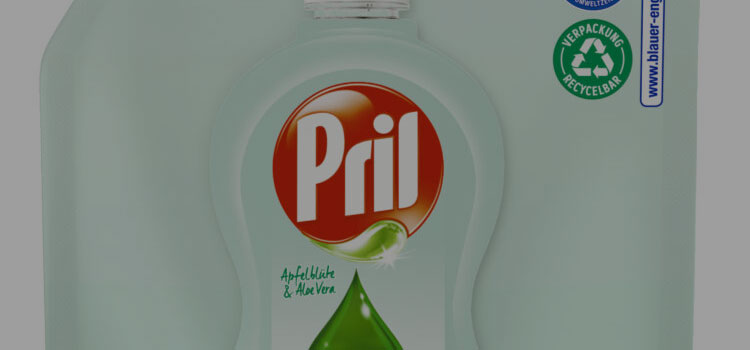
Mondi has created a recyclable refill pouch enabling Henkel consumers to reduce plastic by 70% and helping Henkel to move closer to its sustainability targets
Henkel’s Pril hand dishwashing liquid is available in a 100% recycled PET pump dispenser bottle which can be re-used many times using refills packaged in Mondi’s recyclable mono PE refill pouch
The innovative pouch is light-weight, convenient to use, certified as leak-proof and highly durable even for home deliveries
Mondi, a global leader in packaging and paper, and Henkel are helping consumers to wash dishes more sustainably by creating a completely new reuse packaging concept. The two companies worked together on a packaging solution for Henkel’s hand dishwashing products that allows refilling plastic bottles from flexible pouches. This supports Henkel’s sustainability targets of making 100% of its packaging recyclable or reusable and reducing 50% of fossil-based virgin plastic by 2025.
Since January, consumers can purchase a new keep-at-home refillable pump dispenser with refills in the lightweight, mono-material pouch produced by Mondi. The flexible stand-up pouch reduces plastic by 70% every time it replaces rigid plastic bottles and is easy to recycle where existing infrastructure exists.
Convenient and lighter to carry home, the pouch completely empties thanks to its shaped design, leaving no residue. It is soft touch with a sturdy base so it can easily stand in-store, offering retailers attractive and eye-catching on-shelf appeal while also communicating all the brand information including sustainability benefits. Mondi’s leak-proof pouch is certified according to ISTA 6, providing a highly durable packaging for both in-store and online shopping.
Muriel Joncheray, Global Key Account Manager Consumer Flexibles, Mondi says: “Sustainability is a vital element in the homecare industry and a trend that is shaping the whole market – and rightly so. At Mondi, we have defined sustainability goals that focus on circular driven solutions in our MAP2030 action plan. This includes a target to make 100% of our products reusable, recyclable or compostable by 2025 – just like the recyclable pouch for Henkel. Our EcoSolutions approach meant that we worked very closely with the Henkel team to create the new packaging. While the aim was to provide a solution that helped Henkel reach its sustainability targets, we also needed to ensure the materials and structure would protect the product in transit and on-shelf, preventing leakage and minimising waste.”
Carsten Bertram, Head of Global Packaging Innovation Dishwashing at Henkel added: “At Henkel, we recognize our responsibility related to packaging. We’re committed to driving sustainable packaging and have a set of ambitious targets. Our strategy is based around circular economy and focuses on integrating recycled plastics, reducing the amount of plastic packaging, having reusable packaging and using fully recyclable packaging concepts to close the loop. Mondi was the obvious partner to help us with their expertise in creating the best possible solutions – for the product, the planet and the customer.”
The new packaging concept is being launched for Henkel’s brand Pril in Germany. It has been certified by “Blauer Engel”, the independent ecolabel of the German Federal Government that sets stringent standards for environmentally responsible products and services.
Avery Dennison has achieved another market first with the launch of a new certified portfolio of vegan labels, which contain no animal-derived components. Additionally, every item in the portfolio was created without animal testing, or the use of GMOs of animal origin. Because of this, the collection has received approval from EVE VEGAN®, an independent organization created by Vegan France, which works to promote vegan alternatives in different industries, including food and medicine.
At the time of launch, there are six paper facestocks, three adhesives and two liners in the collection, and they can be mixed and matched according to customer needs. Each item offers a similar level of performance to non-vegan alternatives in both converting and application. Based on converter and end user needs, there are plans to expand the range with new paper facestocks.
“Veganism goes beyond diet,” says Luuk Zonneveld, product manager at Avery Dennison. “It’s a philosophy and way of life centered on avoiding animal exploitation for food, clothing and everything else you can think of. Naturally, this extends into the world of packaging, and we’re excited to help brand owners take their dedication to being cruelty-free to the next level with these innovative labels developed by our R&D team.”
Suitable for the beauty, wine and spirits and food and beverage sectors, the new labels also serve as a unique selling point for brands. Thanks to the certification, companies can let consumers know their entire purchase – packaging included – abides by their values.
“We’re very proud to have received EVE VEGAN® certification and consider it a powerful symbol that lets brand owners, and their customers, know we take our commitments seriously.” says Luuk.
Sun Chemical has collaborated with HP to launch sustainable flexible packaging produced with HP’s Indigo digital press and Sun Chemical’s new solventless lamination solution SunLam.
Due to its fast-curing, ultra-low monomer and solvent-free properties, SunLam can help brands improve their sustainability and expand the circular economy.
As part of the partnership, Sun Chemical and HP developed stand-up pouches printed on HP’s Indigo 25K digital press using monomaterial polyethylene (PE) and polypropylene (PP) substrates, and laminated with Sun Chemical’s SunLam solution. The all-PP pouch was certified by Germany’s Institute Cyclos-HTP after being successfully tested for a recyclability rate of 96%.
The PE and PP laminated structures were produced with HP Indigo using SunLam Adhesives ZA-1000+ZB-301 on standard mono materials with lamination on the Nordmeccanica Super Simplex E-800 solventless laminator.
Pierangelo Brambilla, Product Director, Global Laminating Adhesives & Cold-Seals Sun Chemical, explained: “The close collaboration between Sun Chemical and HP Indigo is helping develop faster routes to market for flexible packaging. By combining HP Indigo digital printing with the fast-curing capabilities of Sun Chemical’s ultra-low monomer adhesive, without compromising the overall quality of the package – a new solution is now available to enable printers and brands to meet the most stringent food safety regulations.”
He added: “These are just two great examples of how mono material PE and mono material PP were used to show how the proper selection of lamination adhesives and coatings demonstrate the fast-to-market value proposition of digitally printed pouches while providing more sustainable packaging and consumer choice.”
ItaiShifriss, HP Indigo WW Supplies Business Director, commented: “HP Indigo has been collaborating with Sun Chemical for many years to provide innovative solutions to HP Indigo customers. Today, demand for sustainable packaging solutions is driving converters to digital printing which can lower the impact of printing with on-demand production while eliminating plates and cylinders. “By working together to deliver end to end solutions for HP Indigo customers, we are helping converters and brands grow their digital printing capabilities.”
Historic day in the campaign to beat plastic pollution: Nations commit to develop a legally binding agreement
Nairobi, 02 March 2022 – Heads of State, Ministers of environment and other representatives from 175 nations endorsed a historic resolution at the UN Environment Assembly (UNEA-5) today in Nairobi to End Plastic Pollution and forge an international legally binding agreement by 2024. The resolution addresses the full lifecycle of plastic, including its production, design and disposal.
“Against the backdrop of geopolitical turmoil, the UN Environment Assembly shows multilateral cooperation at its best,” said the President of UNEA-5 and Norway’s Minister for Climate and the Environment, Espen Barth Eide. “Plastic pollution has grown into an epidemic. With today’s resolution we are officially on track for a cure.”
The resolution, based on three initial draft resolutions from various nations, establishes an Intergovernmental Negotiating Committee (INC), which will begin its work in 2022, with the ambition of completing a draft global legally binding agreement by the end of 2024. It is expected to present a legally binding instrument, which would reflect diverse alternatives to address the full lifecycle of plastics, the design of reusable and recyclable products and materials, and the need for enhanced international collaboration to facilitate access to technology, capacity building and scientific and technical cooperation.
The UN Environment Programme (UNEP) will convene a forum by the end of 2022 that is open to all stakeholders in conjunction with the first session of the INC, to share knowledge and best practices in different parts of the world. It will facilitate open discussions and ensure they are informed by science, reporting on progress throughout the next two years. Finally, upon completion of the INC’s work, UNEP will convene a diplomatic conference to adopt its outcome and open it for signatures.
“Today marks a triumph by planet earth over single-use plastics. This is the most significant environmental multilateral deal since the Paris accord. It is an insurance policy for this generation and future ones, so they may live with plastic and not be doomed by it.” said Inger Andersen, Executive Director of UNEP.
“Let it be clear that the INC’s mandate does not grant any stakeholder a two-year pause. In parallel to negotiations over an international binding agreement, UNEP will work with any willing government and business across the value chain to shift away from single-use plastics, as well as to mobilise private finance and remove barriers to investments in research and in a new circular economy,” Andersen added.
A shift to a circular economy can reduce the volume of plastics entering oceans by over 80 per cent by 2040; reduce virgin plastic production by 55 per cent; save governments US$70 billion by 2040; reduce greenhouse gas emissions by 25 per cent; and create 700,000 additional jobs – mainly in the global south.
The historic resolution, titled “End Plastic Pollution: Towards an internationally legally binding instrument” was adopted with the conclusion of the three-day UNEA-5.2 meeting, attended by more than 3,400 in-person and 1,500 online participants from 175 UN Member States, including 79 ministers and 17 high-level officials.
After a two-year pause, the Indian print industry’s flagship scheme, PrintWeek Awards will once again go live. The entries to the twelfth edition of PrintWeek Awards 2022 will officially open on 1 May 2022 and the PrintWeek Awards Night will be held on 27 September 2022.
The Covid-19 pandemic proved to be a crisis that humanity has faced. The Indian print industry too had its fair share of woes. But after two years of challenges, the print industry is hoping to rebound this year, though inflationary and supply concerns related to input material continue to post challenges to the print industry.
“After being forced to pause the Awards scheme in 2020 and 2021 because of the Covid-19 pandemic, PrintWeek Awards resume, albeit in a limited capacity form,” said SudhanvaJategaonkar, B2B business head at Haymarket SAC Publishing.
PrintWeek Performance Awards in 2022 will have a total of 10 awards instead of the six awards in the past eleven editions. These entries in this category will be audited plus vetted on the basis of financial as well as contribution to the industry.
In the Quality Awards, there will be 13 Awards that will celebrate “the latest and the best”. This edition of PrintWeek Awards will introduce a new category: Special Covid-19 Awards, a total of five awards will be presented to recognise factories and teams in the Indian print industry who have gone above and beyond the call of duty.
“By returning to host the annual PrintWeek Awards event, we would be celebrating the achievements of the print industry and those working in it, in the tough past two years, and have emerged unscathed,” added Jategaonkar. “As we reflect on where we are as an industry, this celebration of the extraordinary work that is accomplished each and every day by those in the print and packaging business. It also gives the industry an opportunity to savour the challenges and successes.”
As Kayyum Memon, director of Vadodara-based Concord Printing Press said while talking to PrintWeek, “To be certain, the last two years were filled with many challenges, but also many achievements to celebrate. Our people have worked harder than ever amid challenging circumstances of the Covid-19 pandemic to achieve our goals, and make a positive difference to our company.”
The pandemic may have altered the way the print industry does business or may not, but it hasn’t stopped from doing what it does best – excellent printing.
Maxcess, a provider of innovative products and services for web handling applications has unveiled VisionMax and VisionConnect, powerful 100% vision inspection and automation tools that reduce scrap, customer claims and rework, while improving productivity.
“In today’s converting environment, with unprecedented material and labor shortages, it is crucial to be able to run your process line as efficiently as possible by automating the process and removing defects before they become critical, which can cause significant material waste and expensive rework,” said Conor O’Neil, Business Development Manager for Maxcess Vision Systems. “Our new line of 100% vision inspection and workflow automation solutions for wide-web applications feature industry-leading price performance, an easy operator interface and advanced workflow automation software for smart converting, giving customers the ability to deliver defect-free material to their customers. Backed by the global service and support network of Maxcess, doing business where you do business, customers can trust that their investment will be supported for years to come.”
Featuring high-definition cameras, advanced lighting, a high-resolution touchscreen operator interface and advanced out-of-the box 100% inspection software, VisionMax is a flexible tool that can be used in both surface and print inspection applications, finding key defects like insects, gels, carbons, color problems, streaks, drags, roller marks and more, alerting operators before they become costly. VisionConnect is an advanced workflow automation software suite, which allows operators to automatically control process lines and slitters to physically remove defects with as little waste as possible.
Tending to the evolving needs of the advertising industry in the post-lockdown era, Media Expo is set to introduce an entirely new product category on labelling and packaging technology at its next edition in Mumbai. Slated to be held in May, the trade fair will unite buyers and industry stakeholders for product sourcing and B2B interactions.
Media Expo has been home to some of the latest technology showcases in printing, signage, retail displays, finishing and fabrication as well as consumables and media.
This year, the organiser – Messe Frankfurt India is looking forward to up the tempo by introducing a brand-new category on ‘labelling’ during the 48th edition of Media Expo at Bombay Exhibition Centre, Goregaon from 12 – 14 May 2022. The quality of labelling and packaging is one of the crucial factors that can influence a consumer’s buying choices and makes a significant difference in today’s world where brands are constantly competing against each other. Media Expo’s new product section will encompass various label printing technologies and materials for the flexible printing and packaging segments, giving business visitors a much broader value and brand-new variety of products to include in their arsenal of branding tools.
Leading manufacturers of large-format printing technology, HP India and Mehta Cad Cam will be introducing their most advanced labelling and packaging production technologies for the very first time on the show floor of Media Expo.
Commenting on the changes ensuing in advertising sector, Mr Raj Manek, Executive Director and Board Member, Messe Frankfurt Asia Holdings Ltd shared: “The manner in which advertising and brand content is consumed and perceived has drastically changed over the last few years. Today, digital and physical advertising mediums have become two-sides of the same coin and go hand-in-hand in delivering better reach and impact of a brand over its audience. Nonetheless, just as digital advertising keeps evolving, it is also crucial for the physical advertising segment players to keep discovering new technology and channels to suit the preferences of modern consumers.”
MrManek further elaborates on Media Expo Mumbai: “Having set a tone for the new normal with our New Delhi edition, we are ready to once again welcome our industry stakeholders at Media Expo Mumbai 2022. I am also delighted to announce that our brand-new product category in labelling featuring on our show floors this year will enable us to further expand our value offering to trade visitors. We are confident that Media Expo will prove to be an adept platform to explore new products, trends and business opportunities that will pave the way to the growth of physical advertising segment in India.”
Arihant Uniglobe, Benson Polymers, D-Kit Media, HP India, Laxmi Sales, Mehta Cad Cam, Mimaki, Mistry Sign, Scorpio and Silicon are among top manufacturers who have confirmed participation at the three-day exhibition.
As advertising trends foray into a mix of digital and physical mediums, Media Expo Mumbai 2022 will be the ultimate business event to witness technologies that will drive the future of traditional advertising sector. Other than the Mumbai edition, Messe Frankfurt India will also host the advertising fraternity at Media Expo New Delhi from 01 – 03 September 2022 at India Exposition Centre & Mart, Greater Noida.