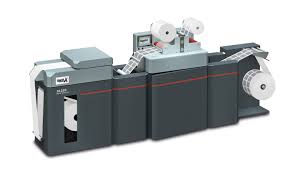
The Indian operations of privately owned and Chandan Khanna lead Ajanta Packaging has been acquired by Mumbai headquartered Huhtamaki-PPL. Ajanta packaging has been a leading provider of labels with units at multiple locations. They have factories at Daman and Baddi.

Huhtamaki-PPL Ltd. or HPPL (Previously known as Paper Products Limited) is a Rupees 2200 Crores flexible packaging company in India and is listed on the Indian stock Exchanges since more than 50 years.

They are providers of flexible packaging, labels, tube laminate webs, thermo formable laminates, promotional materials, and gravure cylinders. The parent company Huhtamaki OYJ is a NASDAQ listed packaging company with a turnover exceeding 3 Billion Euros. 

In November 2012, they acquired Amar Chhajed lead Webtech labels and with this move they became market leaders also in the label segment besides Shrink Sleeves, Wrap Around and Wet Strength Labels as well as IML making it the only true and complete Labeling solutions provider in the country. Amar Chhajed now heads all the labeling businesses of Huhtamaki-PPL as President.HPPL has entered into a business Transfer Agreement for acquisition of the business of Ajanta Packaging India as a slump sale at an enterprise valuation of Rupees 1003 million, on a cash free debt free basis.

The merger will enable customers to get benefits of new technologies and stronger innovation capability. This partnership will further consolidate HPPL’s position of being the leader in labeling market in India.

Chandan Khanna says, “this move will make the label market in India to grow in a healthy way. The expanded market reach and size of HPPL will help them serve the customers better with further enhancement on service quality. Moreover the enhanced capabilities will help them offer superior and innovative products.”

Reported by Harveer Sahni, Chairman Weldon Celloplast Limited New Delhi March 2018.

In a largely populated country India, the normal of growth of population itself, translates into large volume growth in demand. For label industry growth in India estimates have been made at 7-15%. Even if we assume a 10% growth, market will probably grow by 100 million square meters adding a whopping 2500 million Rupees or about 38 million US Dollars to the existing market size. One is left wondering that with demand growth in double digits, why is then the label industry, facing intense competition and stressed margins? One simple conclusion can be that in a growing economy with government encouraging new industrial investments and banks ready to finance, people start looking for areas that have stable growth over the years, labels do move into their focus. Packaging industry in an effort to offer a complete bouquet of packaging products, keeps on adding labels in their manufacturing program. The capacity seems to be growing a little faster than demand. This leads to a situation whereby to service their debt and stay afloat, printers flock toward leading brand owners who pitch sellers against one another to get lower prices. There are other reasons like increasing raw material prices, reverse auctions and short runs which bring further pressure on margins. In such a situation it becomes imperative, that to achieve a better bottom line, there is need for “creating innovations in labels”. Many label companies in India have already moved into this direction by investing to enhance capabilities to create products that do not fall into the commodity or simple label range. Even brand owners who are in a race to catch the consumer’s eye while shopping, are on the lookout for such labels that make their premium products on the shop shelves being picked up faster.  They are willing to pay higher if the label has unique features escalating their brand image. Some of the printers who have moved in this direction are listed below with details of their moves to create labels that are different.
Gautham Pai

Gautham Pai lead Manipal Technologies, is a multi product and multi location company that has made substantial investments in label manufacturing. Though they have units located in India and abroad, a tour of their facilities in Manipal leaves one in awe of what they have achieved. The company has integrated backward and forward with investment in extremely diverse technologies enhancing capabilities to innovate. As for labels, they produce their own holograms, security labels, security envelopes, etc. They also produce their own self adhesive labelstocks on a Nordson hotmelt coater. 


Recent developments include; Electroluminescence Label: This is an eye-catching and low power consuming optical lighting system developed in-house with strong competency on printed electronics. It works best for promotional activities with various activation options using any of the touch sensitive, pressure sensitive, motion sensitive sensors. This can be adopted for both labels as well as carton packaging.
 
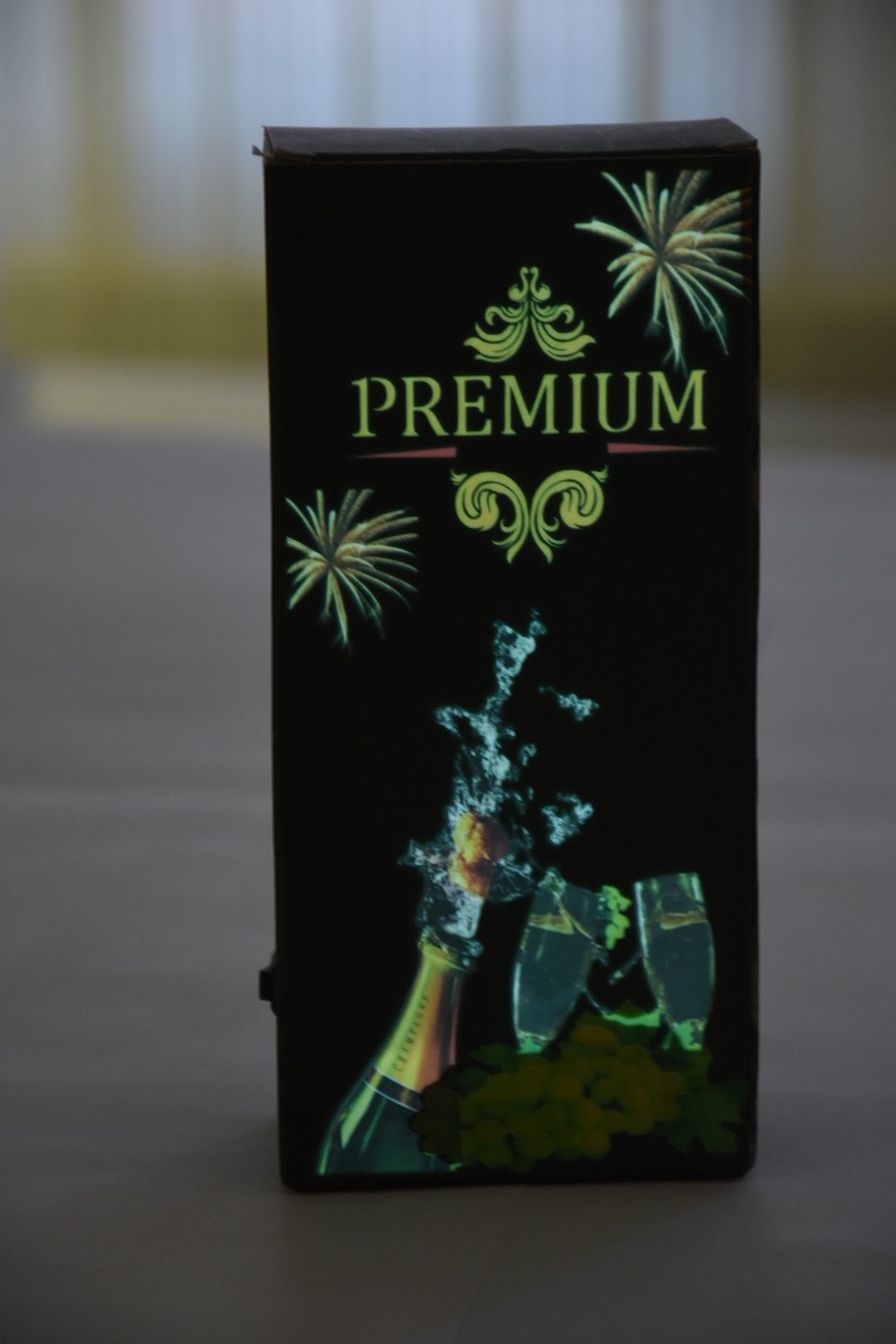
Glow in the Dark: The Glow-in-the-dark feature will completely transform packaging by hiding messages, creating a nightclub atmosphere, or an element of surprise.


Kuldip Goel


Kuldip Goel of Any Graphics Noida has repeatedly proven the need to invest time and money in creating innovations. Though he has always wanted to produce the best, stressing on aesthetics yet it was in the start of new millennium that he realized the pressing need to strengthen capabilities to produce labels that were not commodity labels done on one simple flexo press but those with added value by indulging in creativity. Anygraphics have to their credit the world label awards, Fespa awards, only Indian company to have been nominated for Global Label award for innovation, winning Printweek label printer of the year award for five consecutive years in a row, special Printweek Jury award for innovation and many LMAI label awards. 


Label created by Any Graphics
 
 
Anygraphics creates innovative labels and packaging using multiple equipment and processes for the same product employing technologies like Screen Printing, Foiling, Embossing, Doming, Narrow web Letterpress printing, Narrow web Flexo printing, Offset printing and Digital printing.


Booklet Label by Unick-Fix-A
-Form
Hemen Vasa’s Unick Fix-A-Form was set up in 1985-1986, in rented premises with one small machine (Semi automatic model) for making Booklet/Leaflet labels in Ahmedabad. In the initial years they outsourced printing.  They convinced Bayer-India to be their first customer for their Innovative leaflet labels made by using wet glue, developed for manual application on containers of agrochemical bottles. In 1992 another customer came for these labels in self adhesive format. Since pressure sensitive products were in a nascent stage that time and locally made silicone release paper was not consistent creating problem of label dispensing from applicator, Unick started import of Self Adhesive Paper.  Being the only manufacturer of booklet/leaflet labels those days, their business grew profitably and they expanded by moving into own premises and installing high-end rotary label presses, booklet making equipment and offset press. Their business has expanded to the pharmaceuticals segment with a range of offerings that include Cartons, Labels, in mould labels, Shrink Sleeves, etc. They have won many awards at home and abroad. Their supremacy in innovative leaflet-booklet labels segment has been the main reason for their success and expansion!
 
Pragati Pack (India) Pvt. Ltd., being one of the most awarded printers in the country is hesitant to share their work and endeavours in creating innovations. However still, Hemanth Paruchuri says, they try to bring innovation in labels by investing in the right equipment and pushing the limits of that equipment. Their knowledge and experience gained in the carton, commercial printing areas aids their efforts. The aim is to create innovations that are unique and have a high shelf appeal.
 
U K Gupta, Managing Director of India’s largest Hologram manufacturing company and specialty label manufacturer Holostik India Ltd. says, “Innovation is the key to drive any industry in the ever-changing dynamic world, anything that does not keep changing, ultimately loses track and is out of the race.” He has mentored his team to understand that ‘Change is the only constant’ and therefore they have to innovate with their products. Extraordinary labels, that are not just visually appealing but also render security to the product are now a necessity in view of the fact that security feature of labels cannot be ignored due to the tremendous growth of the counterfeiting business. Holostik has on an ongoing basis been making significant investments to enhance their capabilities.
 
Anil Namugade at Trigon Digital Solutions says, “Innovation is a continuous process.”  They are passionate, entrepreneurial, collaborative and creative to always deliver on their commitments. Trigon Digital established in 2007 has production facilities in Mumbai, Bangalore, Delhi, Dubai and an office in Singapore offering services in Pre-press, Print Packaging, Color management and serving over 350 brands including 20 out of top 100 global brands in 12 countries.  They provide packaging mockups on actual substrates with finishes like foiling, embossing, varnishing, lamination etc. for cartons pouches, shrink sleeves, lamitubes and labels. They specialize in Print on Demand, small and medium quantities for shrinks sleeves and Labels with personalization and variable data printing. With an ongoing innovation developing vision they aspire to be the best in the innovative label and packaging business.
 
Anuj Bhargava of Kumar Labels belonging to an extended family of label printers, is excited that his company has been recipient of many label awards in recent times including Printweek label printer of year award 2017. His team is trained to look at the product, its target audience, its selling price bracket and the brand’s desired perception that it wants to create amongst its customers, before proposing a label solution. For them innovation is not just increasing price of a label or adding shots of foil or screen inks. Different brands need different innovations. A mass market brand needs a re-engineered cost effective label stock with which it can reduce its decoration costs. A brand from the same customer, which may be targeted for the upper market segment, may need multiple foils and textured stocks. So no one formula works for all. By utilizing their expertise in print process, machine manufacturing and label stock making, Kumar Labels is able to offer different innovations. They produce their own specialized labelstocks that include textured and unique substrates normally not available.
 
It is evident that to drive in better margins, capabilities in print and decoration need to be substantially enhanced by making the correct and timely investments. Earlier only a reasonably designed and printed label was enough. Now with growing, knowledgeable, and well informed consumers one needs to study the demand perception and design the label to appeal and communicate with the end consumer in a short while that he or she is in front of the shop shelf. Pre-press is extremely important process to draw out the creativity that the design tends to deliver. Selecting the right substrate, the adhesive and shape of the label is another imperative. The label has to last the life of the consumer product as it remains visible until all of its lifespan and keeps delivering value to the brand by its aesthetic appearance. Finally it is the Press that will not only do full justice to the print but also decorate, inspect and finish the label with speed; ease of use and with least waste generation. Productivity and managing production waste are other imperatives that affect the profitability. Brand owners attempt buying at the lowest prices for their established products, however the fact still remains that to stay ahead of competition in getting the consumer attention, they need to dress up their products well. With numerous options available in an already crowded shelf space, brand owners will only consider higher prices if a label promotes their sales. To reach a win-win situation for suppliers and brand owners, printers need to invest in “Creating Innovations in Labels”!
 
Written exclusively for Narrow Web Tech, Germany by Harveer Sahni Chairman Weldon Celloplast Ltd. New Delhi India December 2017. 

The above article is restricted for reproduction without permission from the author or Narrow Web Tech, Germany
 
Waste matrix stripping or removal in production of self adhesive labels is a very important part of label conversion and is an imperative that leads to a web of labels which can be dispensed on automatic label dispensers in high speed packaging lines. Even though it sounds to be a simple process of stripping the ladder like extra waste after die cutting of labels, yet it remains to be one of the most complex and problematic area of label converting process. A problem with waste removal, like matrix breaking or labels lifting with the waste ladder may slow down the machine or in some cases make it extremely difficult to remove it online. Converters may have to resort to removing the waste manually offline making the process unproductive and costly. A host of parameters affect the process and it is difficult to address the issue in a singular way. With so many variables that impact the waste removal process, it is difficult to predict a simple solution. It could be due to the shape of label, size of label, release liner, face stock, adhesive, die cutting process, speed of conversion, die blades or the design of the waste removal section that may affect the correct and efficient removal at the optimum machine speed. Any of these may impact the final result and slow down the machine and the printing process. No one solution can apply to all problems. The traditional waste rewinding system is gradually becoming unpopular due the fact that tension is the key to efficient waste rewind. The rewound waste matrix ladder roll has empty spaces from where labels have been die-cut and as the roll becomes bigger there is lot of irregular tensions leading to breaks. As the market becomes extremely competitive with rising prices of labelstocks printers tend to reduce the gap between the labels to 2mm making the process even more difficult. This article will dwell on most of the variables mentioned here above.
 
Release Liners: The most widely used base papers as release liners in self adhesive label materials are glassine, super calendared Kraft and clay coated Kraft. These are uniform caliper, densified and non porous papers that have adequate strength and accept a uniform coating of silicone giving excellent releasing properties to become a proper backing for self adhesive papers. In recent years due to possibility of recycling and reducing the tonnage of waste generated, filmic liners also are being used as backing in labels. Release liners play a major role in die cutting and in turn impact the waste removal process. The die blade has to cut through the laminate and stop at the face of the liner so has to achieve a perfect half cut or kiss cut. The uniform thickness or caliper of the liner is an imperative. If the liner has variations, it will create problems at die cutting and eventually at waste stripping. If the release gets thicker the die will pierce the liner making a through cut and exposing paper fibers to the adhesive.  This also may result in web breaks. If the liner gets thinner, the die will not cut resulting in labels lifting with the matrix. Release level of the liner is also very important. If the release level is tight the matrix will tend to break due to tension and if it is too easy, labels will tend to lift with the ladder. Uneven silicone coating or pinholes in coating may also create problems. If the labelstock prior to waste matrix removal goes through a nip roll that has excessive pressure between them, the edges may develop micronic nicks that may render the face paper susceptible to web breaks. The paper rolls may also develop these rough edges in transportation and mishandling. The web needs to be inspected thoroughly before taking up label conversion.
 
 Face Paper:  Paper and films are generally used as face materials. A fairly high strength paper will perform well if all other parameters are addressed. If the gap in labels is too small, 2mm or less, the matrix will tend to break repeatedly. Moisture content in paper should ideally be between 3.5% and 5.5%; sharp increase in moisture will affect the strength adversely. The tensile strength of paper at Relative Humidity (RH) up to 50% is maximum after which it moderately decreases with RH up to 65% and on further increase in RH, it drops sharply. The uncoated papers are hygroscopic, so they tend to absorb moisture faster than coated papers. Evidently weather and storage condition of paper does have an impact on waste removal. Even when using emulsion based adhesive if the adhesive is not dried properly, the face paper will tend to absorb the residual moisture from the adhesive and result in deterioration of paper and affect waste stripping. In case of filmic face stocks, weather may not impact but the condition of die and quality of die cutting does play a major role. If the die is damaged or blunt it may not cut properly resulting in label lifting or film tear.
 
Adhesive: Commonly available labelstocks are coated with either emulsion based or hot melt pressure sensitive adhesives (HMPSA). In both cases for a perfect waste removal it is necessary that the die cuts through the adhesive as well, as otherwise if the coated film of adhesive is not cut, labels will lift with the matrix. Emulsion adhesives have good die cut ability however hot melt adhesives for better die cutting properties have to be specially selected. In case of HMPSA if the waste is not lifted immediately after die cutting the adhesive may rejoin and lift the labels with the matrix.


Size and shape of a label: These are parameters that are customer driven based on their specific needs, so the converting company cannot request changes from customer.  Small labels have a very limited area of contact and reduced tack holding it to the release liner and with little force the label may fly off or lift off with the matrix. In such a case die makers suggest packing self adhesive foam in the die shapes so as to push the label back on the release liner. Other times printers have found limited success in addressing this problem by increasing speed of the web. Waste ladder removal of irregular and complex shaped labels with sharp corners like in a star shape, is even more complex to handle. This becomes even more difficult in substrates like BOPP where a small nick may lead to web break. Converters need to slow down the machine to a great extent to finish the labels online. Machine manufacturers have addressed this issue of handling complex shapes as explained later in this article.
 
Die design: The die has a definite role to play in waste matrix removal. The subject is extensive and can take a full article to dwell on the nuances. The blade angle, blade height and coating on the die are factors that lead to ease or difficulty of label conversion.  Thickness of the face materials, type of adhesive and thickness of release liners are all imperative inputs that are needed before a die is put into production. A die that is designed for paper material is not recommended for filmic materials. Blade angle for paper is kept wider so that after penetration of around 80% into the paper the rest of the cut happens by crush or bursting of the material before stopping at the surface of the liner. In case of filmic face material a sharper acute angle is needed to pierce the film as in case of a wider angle the film will stretch and not be cut. An acute angle blade appears to cut better but wears off faster than the wider angle blade dies. Depending on the materials used the die angle varies between 45degrees and 110 degrees. The blade height needs to be adjusted to cut through the face, which maybe paper or film or a laminate, and adhesive without piercing the release liner. If any of the parameters is not right, the waste matrix removal will become a challenge. If the blade pierces the liner even slightly, it may expose the release paper fibers to the adhesive and get stuck to them causing waste ladder breakage. If the blade does not cut through the adhesive, labels will lift with the matrix. In case of coated materials like direct thermal and thermal transfer the coatings on the paper are abrasive in nature and tend to make the die wear off soon. In such case laser hardened dies are recommended. Adhesive sticking and building up on the dies also results in uneven cutting and also resulting in early die wear off. This is more evident where aggressive high tack hot melt adhesives are used. For this reason special non stick, coated dies are available so that the adhesive will not stick to them. The standard gap between the magnetic cylinder and the anvil is also very important as in case of die wear off the gap increases resulting in spaces where labels are not cut and would lift off with the matrix and to get a perfect cut the die pressure is increased. This results in faster wearing off of the bearers leading to a smaller gap and over cutting. Care has to be taken in die storage and handling. Before commencing any job proper inspection of die should be done regarding cleaner blades, blunt edges or nicks. The dies need to be stored in an environment avoiding excess humidity which may result in rusting.
 
Machine manufacturers have been consistently making efforts to address the issue of waste matrix removal to aid faster converting. Some of the steps taken include; 1.Lifting the waste matrix immediately after die-cutting. 2. Taking the die to a larger diameter stripping roller that would support the waste ladder on separation rather than a thin diameter roll that would provide a sharp angle to waste being stripped off. 3. By rethreading the paper in such a manner that the label web is peeled off the matrix instead of the matrix being pulled off. 4. De-laminating the web and re-laminating it before die cutting as this would reduce the tension required to peel off. These measures did help to some extent but complex shapes and a host of issues and factors that impact this process have had machine manufacturers continuously researching this area to keep implementing changes. One such solution that came around some years back was suction of the waste matrix into a suction and shredding system. This does take care of the tension and also manages waste by cutting it to small pieces and compacting it, but such systems have other problems. They are expensive, large in size so difficult to be fitted on presses due to lack of space, costly to operate as they use extra motors, compressor or vacuum and very noisy to run. Yet there is a brighter side to it, there is development going on to separate the waste and recycle it inline so as to reduce the impact on environment.
 
 
The larger established press manufacturers seem to have reached a viable solution. Some years ago they have introduced a big innovation in the industry by designing a simpler contact system rewinder for waste matrix. The idea was very simple; instead of pulling only the matrix up to the rewinder, we pull the entire web up near the rewinder. Here the matrix is peeled off against an idle roll and immediately pasted on the rewinder. Basically this reduces the travel of the matrix from 1 meter to hardly 5 cm and the journey is even supported by a roll. This system has now become the standard with many label press manufacturers


“Simple solutions are invented to simplify the label converting process however It does not hold true for all jobs, when a problem comes it can be challenging and creating a solution can be another game changer”!


Written by Harveer Sahni Chairman Weldon Celloplast Limited New Delhi January 2018
 
NOTE: This article is exclusively written for magazine Label and Narrow Web USA. Publications desirous of reproducing the article may write for permission to Steve Katz editor LNW : skatz@rodmanmedia.com 
From the evening of 18th November 2018 until 25th November; it was celebrations, learning, networking and partying for the global label fraternity congregated in India at Greater NOIDA. Label manufacturers association of India was hosting “L9” world label associations, for four days followed by Tarsus organised Labelexpo India. The L9 meet was held at Jaypee Greens Golf & Spa Resort spread across 9 acres, a super luxury designer resort in Greater Noida. The property is strategically nestled at the lush green premises of Greater Noida, this magical creation is enclosed by the abundant sweep of greenery and is a Golfers delight. L9 is the confederation of nine leading international label associations. The alliance consists of LMAI (India), JFLP (Japan), FINAT (Europe), TLMI (North America), LATMA (Australia), PEIAC (China), AMETIQ (Mexico), ABIEA (Brazil) and SALMA (New Zealand).
L9 meet
 
 
International delegates started to arrive at the Jaypee resort from 18th afternoon until late night. 


On 19th November morning after breakfast the delegation was taken for a factory visit to Any Graphics, NOIDA. 


The delegation on arrival were accorded a traditional welcome after being received at factory gates by LMAI President and owner of Any Graphics Kuldip Goel. 
 
 
Thomas Hagmaier L9 President


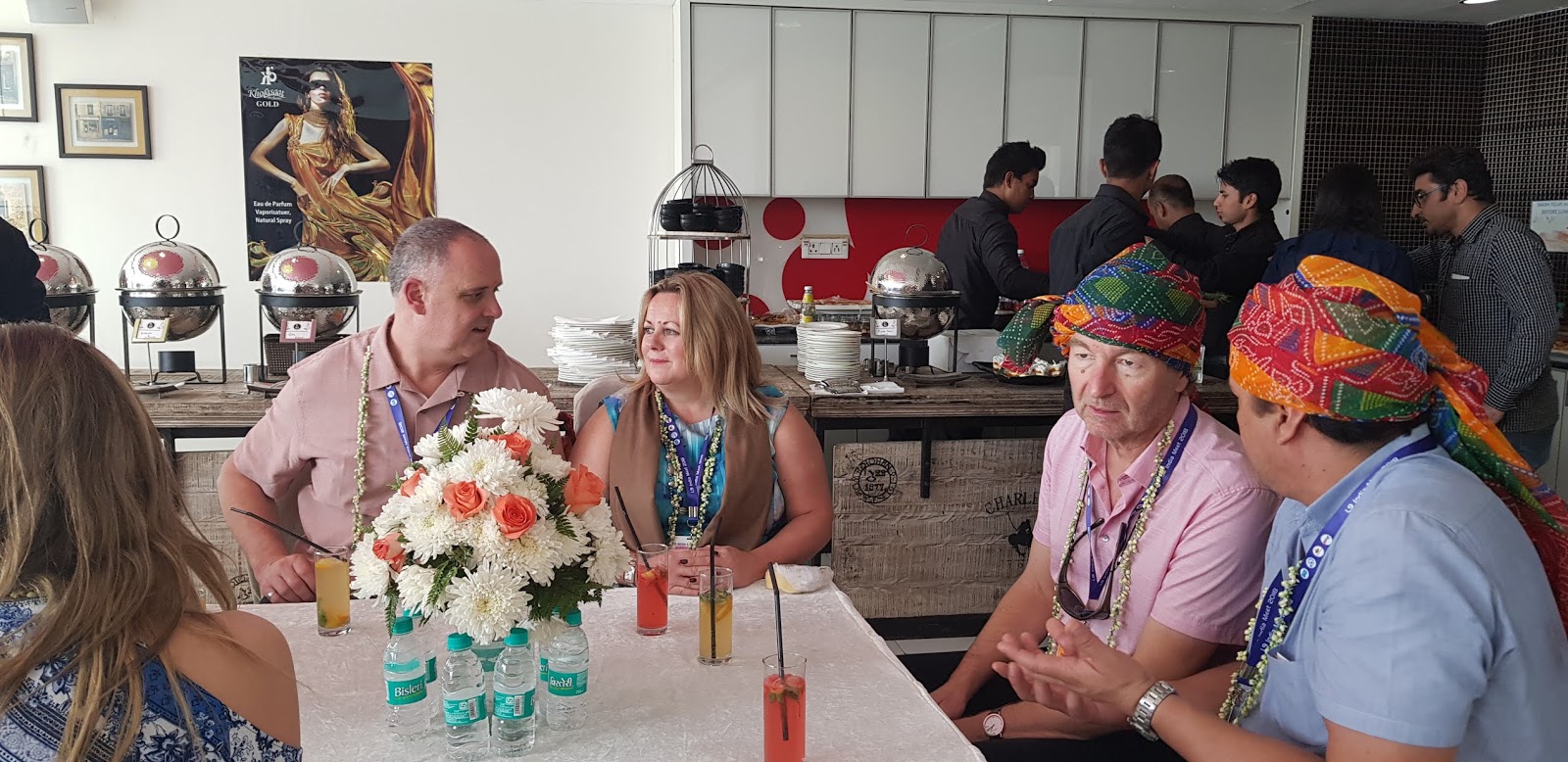
After application of teeka or an auspicious mark on forehead, guests were served refreshing welcome drinks while colourful folk dancers entertained the guests. Professional Turban tying persons tied colourful turbans on all visitors providing a celebratory aura to their welcome. 


At this time factory staff, LMAI Board members and foreign visitors danced with the folk dancers, enjoying their welcome. 


Jules Lejeune, Chris Elliso, Susan Ellison and Harveer Sahni


Once the welcome was done the guests were led to their huge conference room where Naveen Goel Director Any Graphics made an impressive presentation on the vast capabilities of his company and showcased the global as well as domestic awards won by them. 
 
Naveen Goel
 
LMA


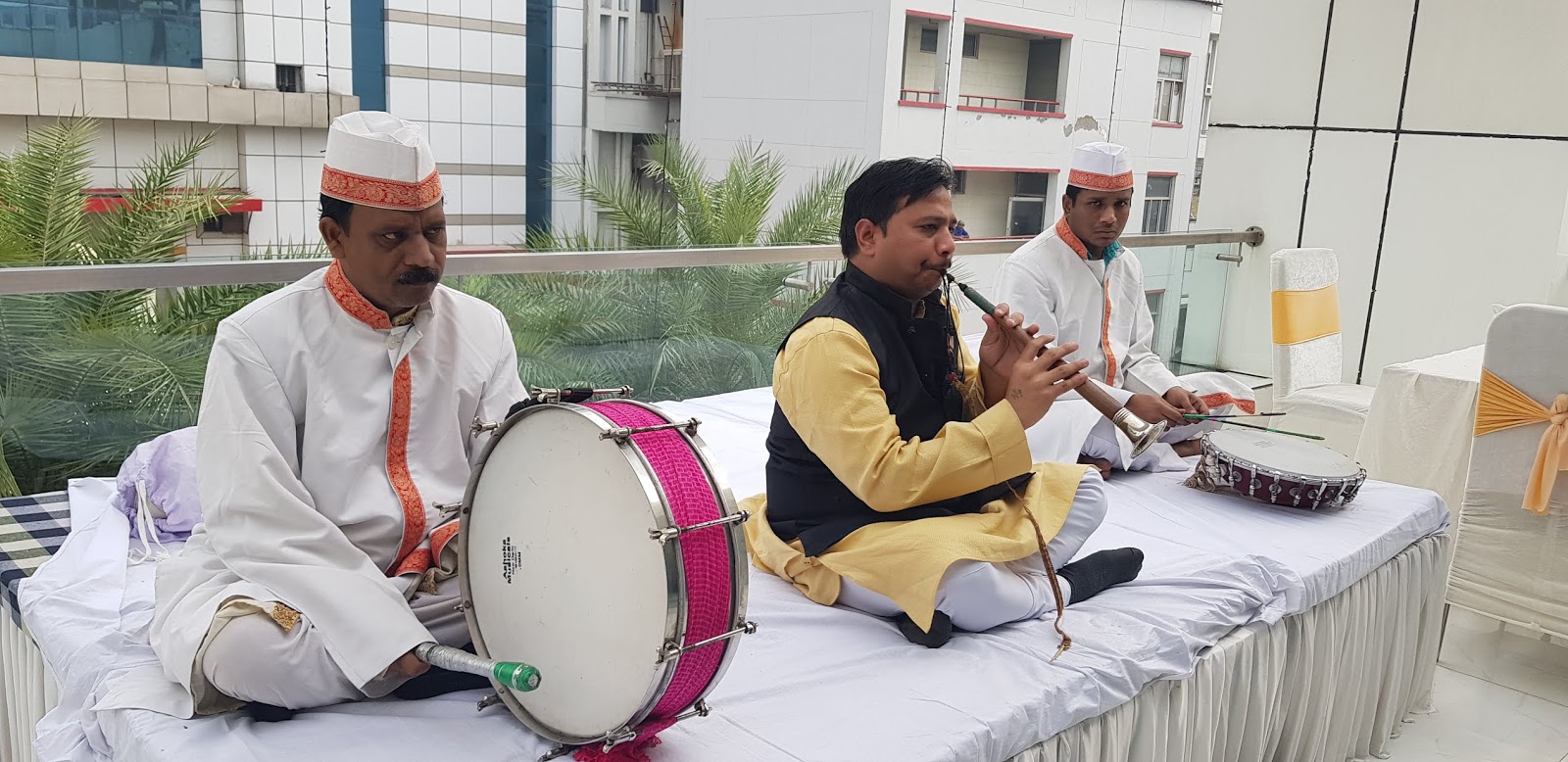
After a visit to their factory shop floor spread over 100000 square feet, guests were taken for lunch in the company’s cafeteria with shehnai music players playing live while the visitors enjoyed a lavish lunch. 


Before departing all guests were presented gifts and photographs of their visit to Any Graphics.


The guests were then taken to Raj Ghat Delhi the memorial of Mahatma Gandhi, father of nation. 


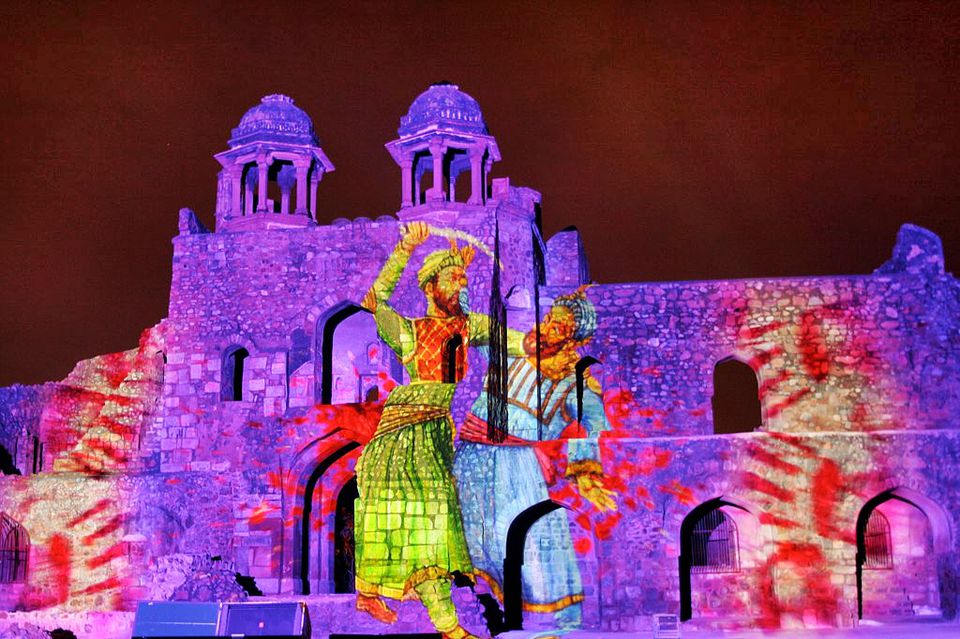
This was followed by a visit to a sound and light program on the history of rulers of Delhi at Purana Qila (Old Fort). 


After this the entourage returned to Noida for dinner and cocktails. 


Keren(Mexico) and Ajay Mehta


The delegates were enjoying their visit and danced in joy, they were having fun. 


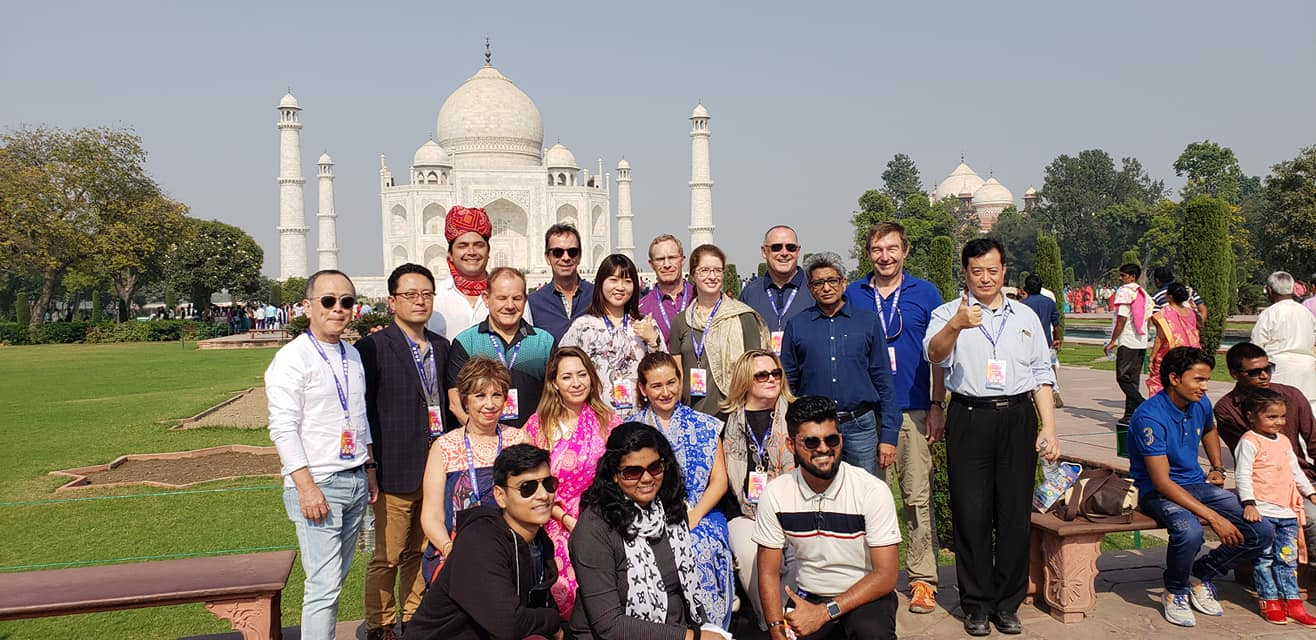
The next morning on the 20th the visitors were taken to Agra to visit Taj Mahal and returned same evening to attend a dinner hosted by Labelexpo Managing Director Lisa Milburn at Hotel Crowne Plaza also in NOIDA. 


21st November was the official business meet of L9. It started with board meeting of all visiting international associations with board of Directors of LMAI. They deliberated over ways of collaborating and agreed to meet in Mexico in 2020. 


The afternoon session was opened to Indian converters and sponsors followed by dinner and cocktails. 
 
 
Carrie Duan-China


Presentations were made by all visiting international associations highlighting activities in their respective countries. 


Ajay Mehta-SMI
 
 
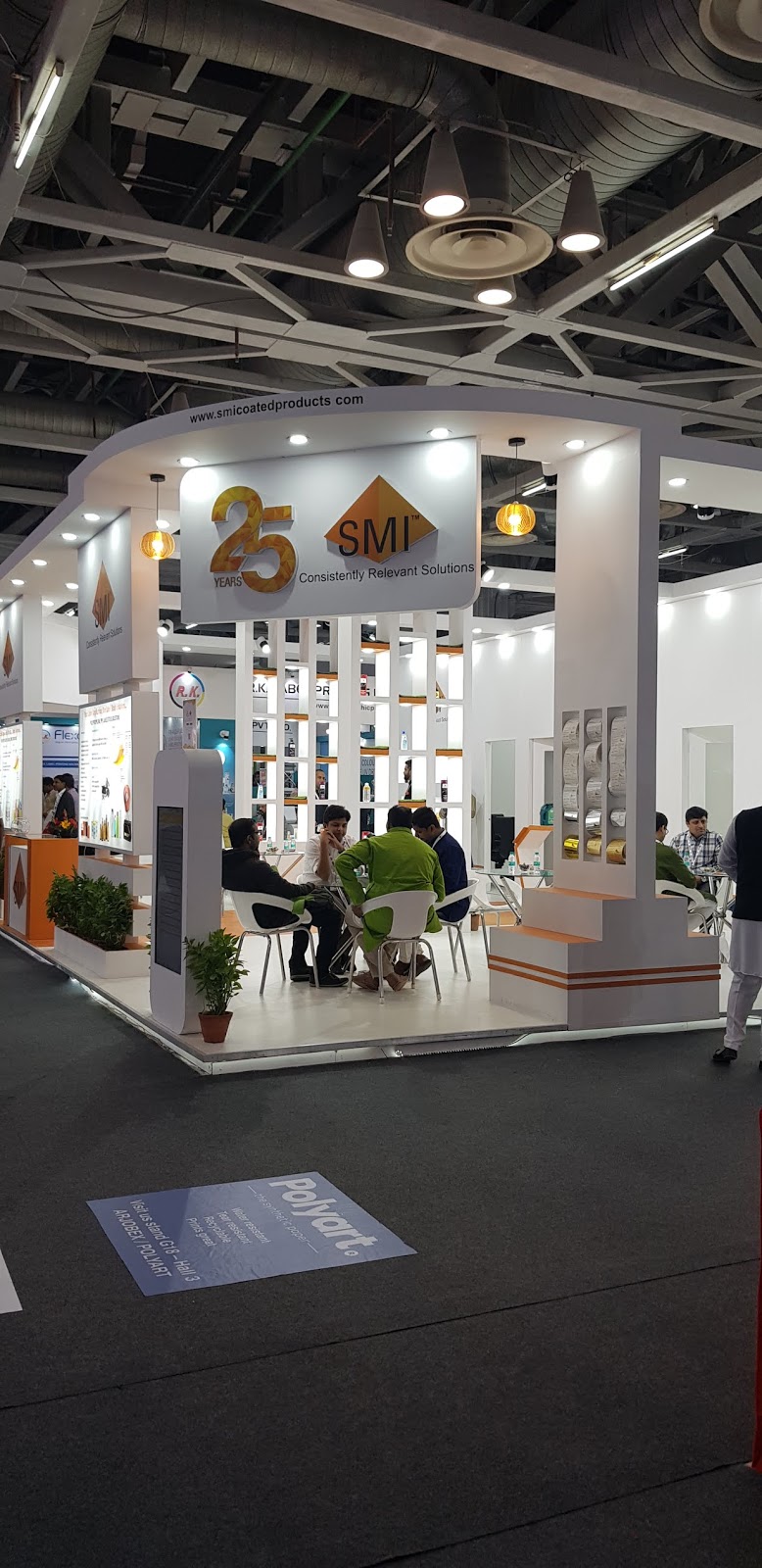
The event was sponsored by SMI Coated 
Products and Pulisi. Ajay Mehta MD SMI and the Pulisi representatives also addressed the gathering. The guests visited Labelexpo India next day on 22nd November 2018 and the LMAI Avery Dennison Awards night before returning home the following morning.
 
 
On completing his journey Chris Ellison President FINAT said, “Like India’s warm generous people, India’s label industry is colourful, vibrant and passionate to grow.” Commenting on his experience in India, the L9 President Thomas Hagmaier said, “Family you cannot choose but friends you can. We bring nothing to this world but take out friendship. You are great people, Thank you for a wonderful event”. Jules Lejeune MD FINAT saw it as an interesting ride and thanked LMAI and the L9 team for their great work. Ms. Carrie Duan from China was happy to have attended and said, “we will miss you”. Keren from Mexico said, “There are moments that remain in the heart. These are moments shared with you that will remain in my heart. Thank you for being wonderful hosts. See you in Mexico in 2020”.
Labelexpo-India 2018
On 22nd November 2018, the largest Label event in South Asia “Labelexpo-India” opened its door at India Expo and Mart Greater Noida India. Visitors started pouring in right from the word go to witness the products and equipment showcased by over 250 exhibitors, a 25% increase from the number at last show. The show was spread over four halls, continuous flow of very high-quality focussed visitors made it the best Labelexpo India ever. Speaking at the inauguration Lisa Milburn Managing Director Labelexpo Group reiterated the commitment they have towards India and mentioned that this year the focus will also be towards package printing besides just labels. Besides providing knowledge, Labelexpo is a platform for bringing together peers in the industry for networking and increasing their vision in the field.
Lisa Milburn Managing Director Labelexpo
Labelexpo India 2018 hosted “Brand Innovation Day” took place on the afternoon of Thursday 22 November (Day 1 of the show). It included a series of presentations followed by a short tour of key suppliers, highlighting the latest technologies and showing how brands can achieve stand-out product presence. 
 
 
About 50 brand owners and packaging designers in India attended. The purpose of the program was to equip delegates with expert insight into making the most out of their brand, how they can overcome key challenges on the path to future growth and staying ahead of competition in a fast-paced industry. 
 
Sukhdev Saini-General Mills


Speaking at the event Sukhdev Singh Saini, packaging lead AMEA, General Mills said, “Creating environmental awareness in the branding of a product including how to handle recycling of both raw materials and end-use product is imperative now”. Noel D’Cunha editor Printweek in his presentation focused on the use of digital and label and packaging.


Kuldip Goel LMAI President


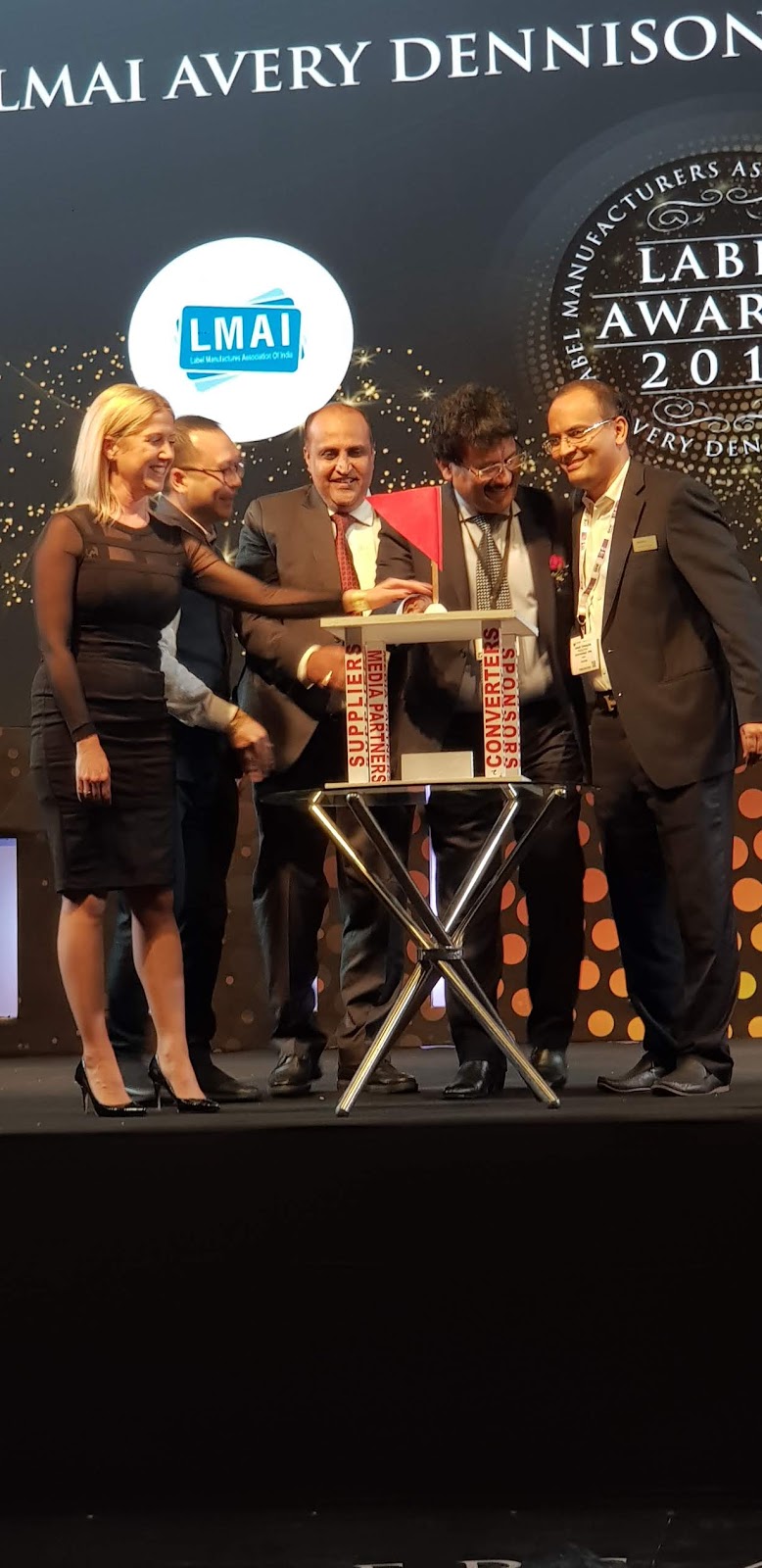
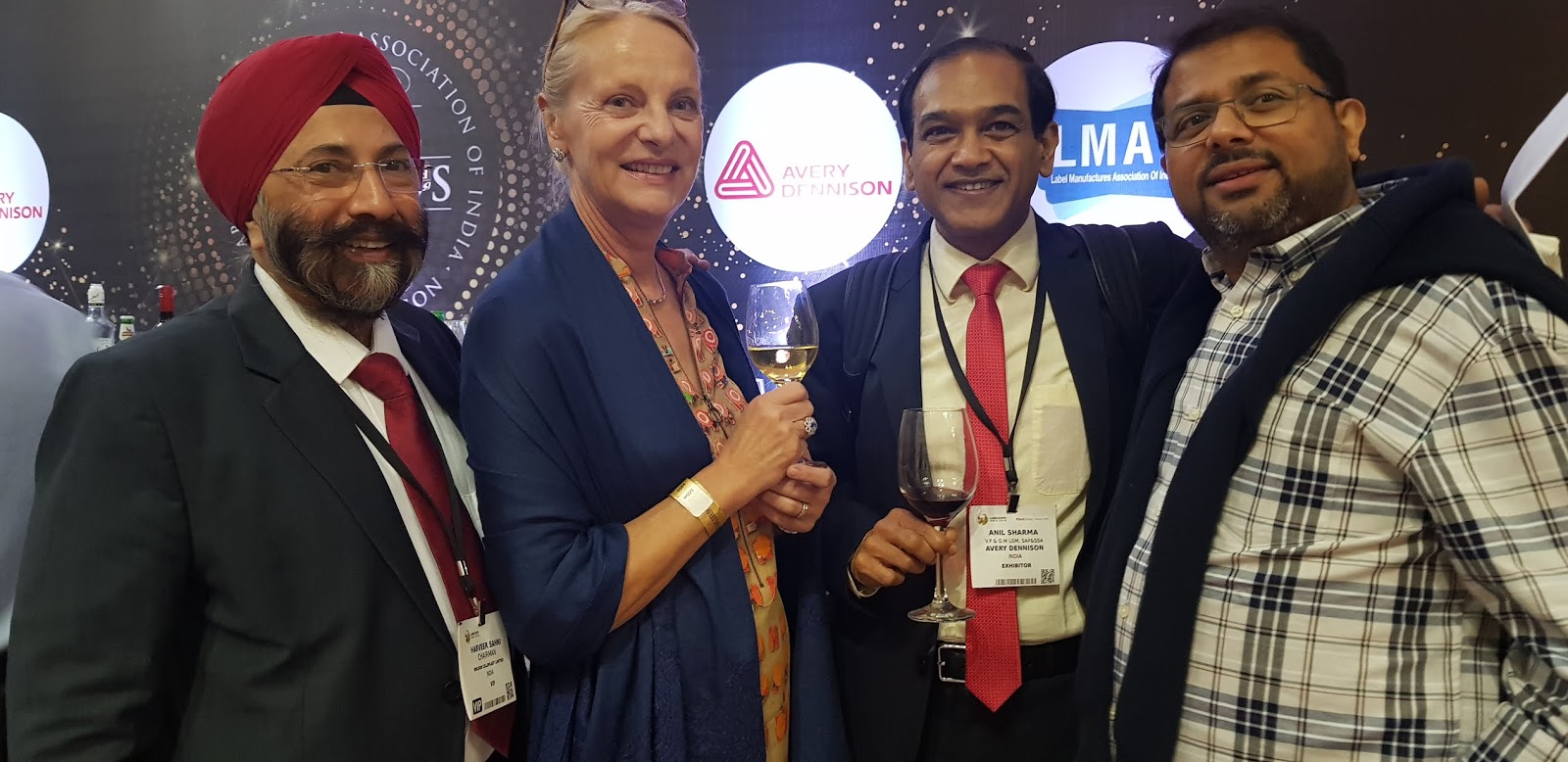
LMAI Avery Dennison Awards night was organised by the LMAI on their own. In the previous years it was organised by Tarsus the organisers of Labelexpo. The show was well managed, despite entry being restricted to one ticket per member and rest on payment basis only, over 700 people attended the gala event. A global audience consisting of international and Indian exhibitors, L9 Delegates, Printers, suppliers and visitors thronged the event. 


LMAI President Kuldip Goel welcomed the guests and gave a passionate speech comparing the various constituents of the label industry to the four pillars of a temple. 


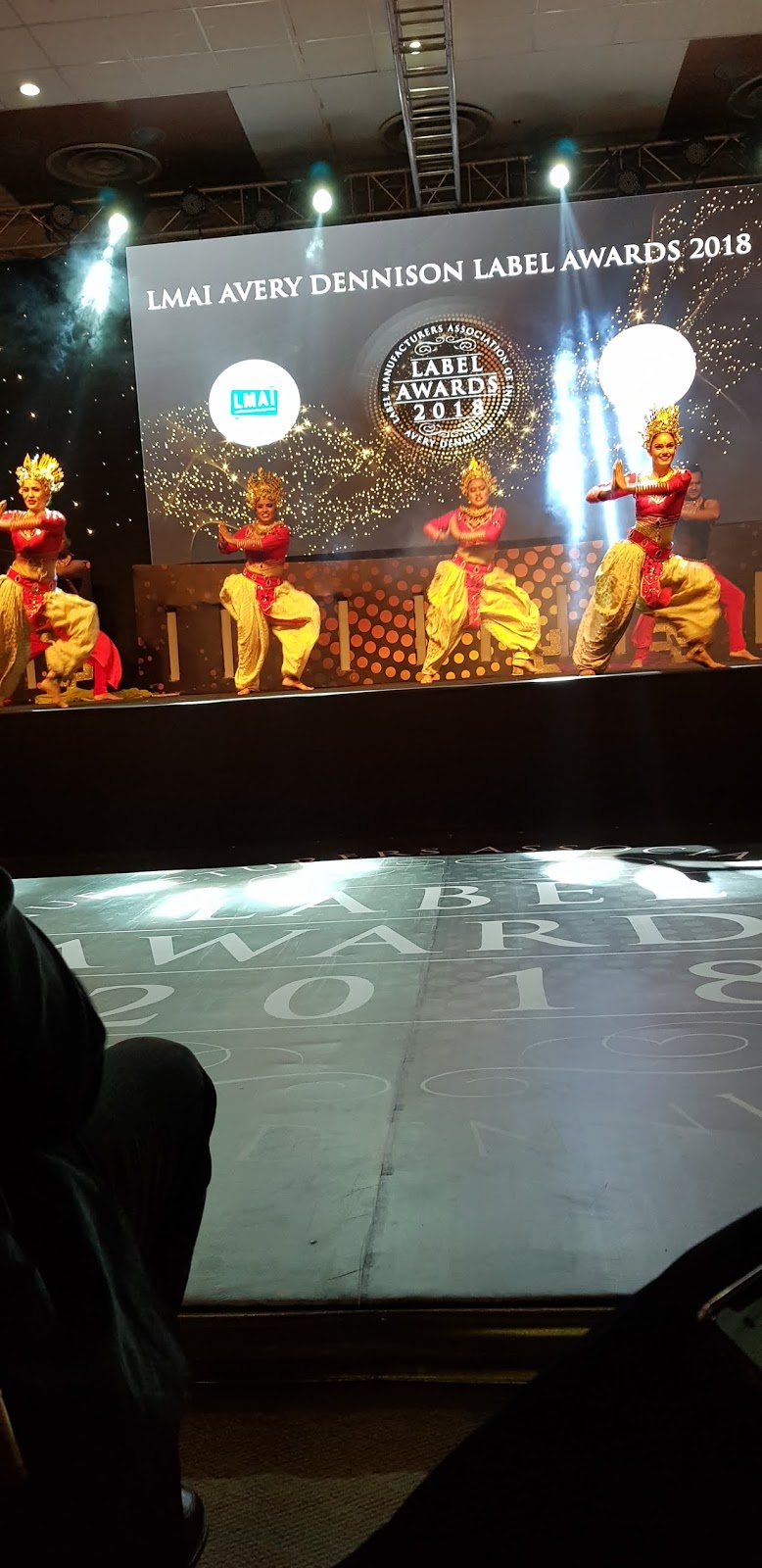
Interspaced with entertainment programs the awards for excellence were given away to winners and runners up in 23 categories. 


Kumar labels, Any Graphics, Huhtamaki-PPL and Update Prints were amongst the prominent winners in multiple categories. 
 
The awards ceremony was followed up by cocktails and dinner. Sponsors for the event included Avery Dennison, SMI, Nilpeter, Vinsak, Omet, Dupont, Intergraphic Pulisi, Gallus/Heidelberg and J N Arora And Co.


The show was busy throughout with a continuous stream of visitors not only from India but also from many other countries. 
 
 
Raj K Dua with Weldon team with the press he bought


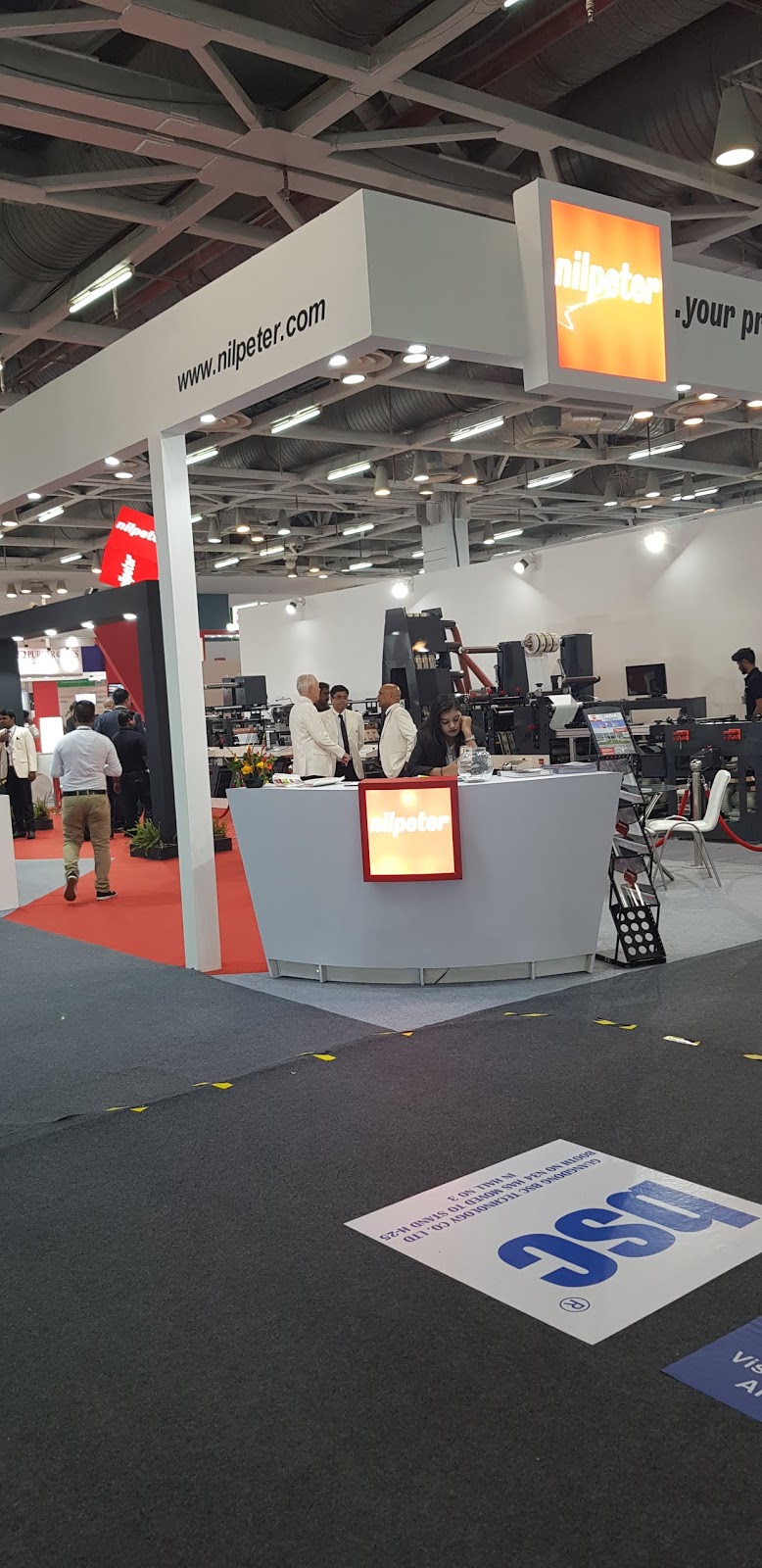
Sales were reported by leading International press manufacturers like Omet, Nilpeter, Lombardy, Weigang, etc. 


Domestic Label press manufacturer Multitec announced multiple sales and signed a cooperation agreement with Domino to build hybrid presses. There was an increased exhibitor presence in the digital label printing segment. Companies who were prominently displaying their digital label printing equipment included HP, Konica Minolta, Domino, Monotech and Dillli.
 
Gallery


John-Orthotec
 
Raul Silvestre-Lartec Spain


The article is written and compiled by Harveer Sahni Chairman Weldon Celloplast Limited New Delhi November 2018.
Ashok Jaipuria
Ashok Jaipuria led Cosmo Films Limited, headquartered in New Delhi, is one of the largest manufacturers of BOPP (Biaxially Oriented Poly Propylene) films in the world. According to Wikipedia they are in fact the largest manufacturer of thermal lamination films in the world. Ashok Jaipuria is prided with his lineage from an elite Marwari family (people from the Marwar region of Rajasthan).   Ashok is the only son of his father Late Sri Sitaram Jaipuria, who was an Industrialist and Promoter of Swadeshi Polytex Limited,  Swadeshi Cotton Mills Limited and was a member of the Upper House of the Parliament of India. Ashok started his own firm Cosmo Films in 1976 with an objective to manufacture and market BOPP films. He qualified in Business Administration and Marketing Science in the year 1973. BOPP film was a licensed item those days, visualizing growth and opportunity in this nascent area; he applied for and acquired the license to manufacture it. He setup and commissioned his first BOPP production line in 1981 at Chikalthana, Aurangabad. Being one of the first entrants to produce BOPP in India, the initial years were very tough, more so because customer awareness did not exist and educating them on the product was a challenge. Print lamination and self adhesive packaging tapes were the first target segments for this product. Once settled, there was no looking back, they commissioned their second production line at Waluj, Aurangabad in 1988 and third line also at Waluj in 1996.
 
Entering the new millennium, Cosmo Films was steadily growing, so was the market for 
Cosmo Films Vadodara Unit
BOPP and also the market share of Cosmo for BOPP films. With a positive situation prevailing, they became bullish and registered unprecedented growth in this decade.  In 2001 they commissioned their fourth line and a year later in 2002 they acquired Gujarat Propack Limited, the Karjan Vadodara based BOPP manufacturer which became their fifth BOPP line. In 2003 the sixth line was commissioned and in the very next year in 2004 they decided to go for specialties in BOPP by adding a metalizer, an extrusion coating plant and yet another BOPP line taking their total count to seven. Expanding on coated products, they commissioned their second extrusion coating line in 2005. Encouraged by the success, Cosmo added five more extrusion coating lines. Two were added in 2006, one in 2007 and two more in 2008. Extending their footprint globally, in 2009 they acquired USA headquartered GBC’s Print Finishing Business from Acco Brands Corporation USA. Also in 2009 they enhanced their BOPP production capacity with yet another line at Vadodara, taking the total to 8 lines. 
 
 
Cosmo Films Hagerstown USA
They wrapped up the decade by installing their 2nd metalizer at Karjan, Vadodara. In the second decade of the millennium Cosmo continued on their growth path. Pankaj Poddar also of Marwari descent, a qualified Chartered Accountant, took charge as the CEO of Cosmo Films in 2011. In the ensuing years a new plant was commissioned with their existing eighth extrusion thermal coating line in South Korea. Two more BOPP lines in Aurangabad SEZ and Karjan Baroda were added in subsequent years taking the total BOPP production lines to ten. In addition, they have five coating lines, three metalizers and one CPP (Cast Polypropylene) line. When the first line was commissioned Cosmo’s capacity was only 850 tons per annum, which now has reached 2,00,000 tons from five different locations that include three in India, one in Korea and one in USA, the biggest facility being the one in Vadodara. The production in India spreads over 100 acres of land with 850 permanent employees. Even though volume growth of BOPP was coming from packaging and lamination yet the business had sometime along the way started to get competitive. To maintain their leadership and profitability, they had in the 1990s, shifted focus to specialties in films and label films for wrap around labels, IML (that had started evolving) along with limited presence in self adhesive labels.  Out of their initial endeavours, white film for Parle and production of synthetic paper was vital in their rapid growth. 
 
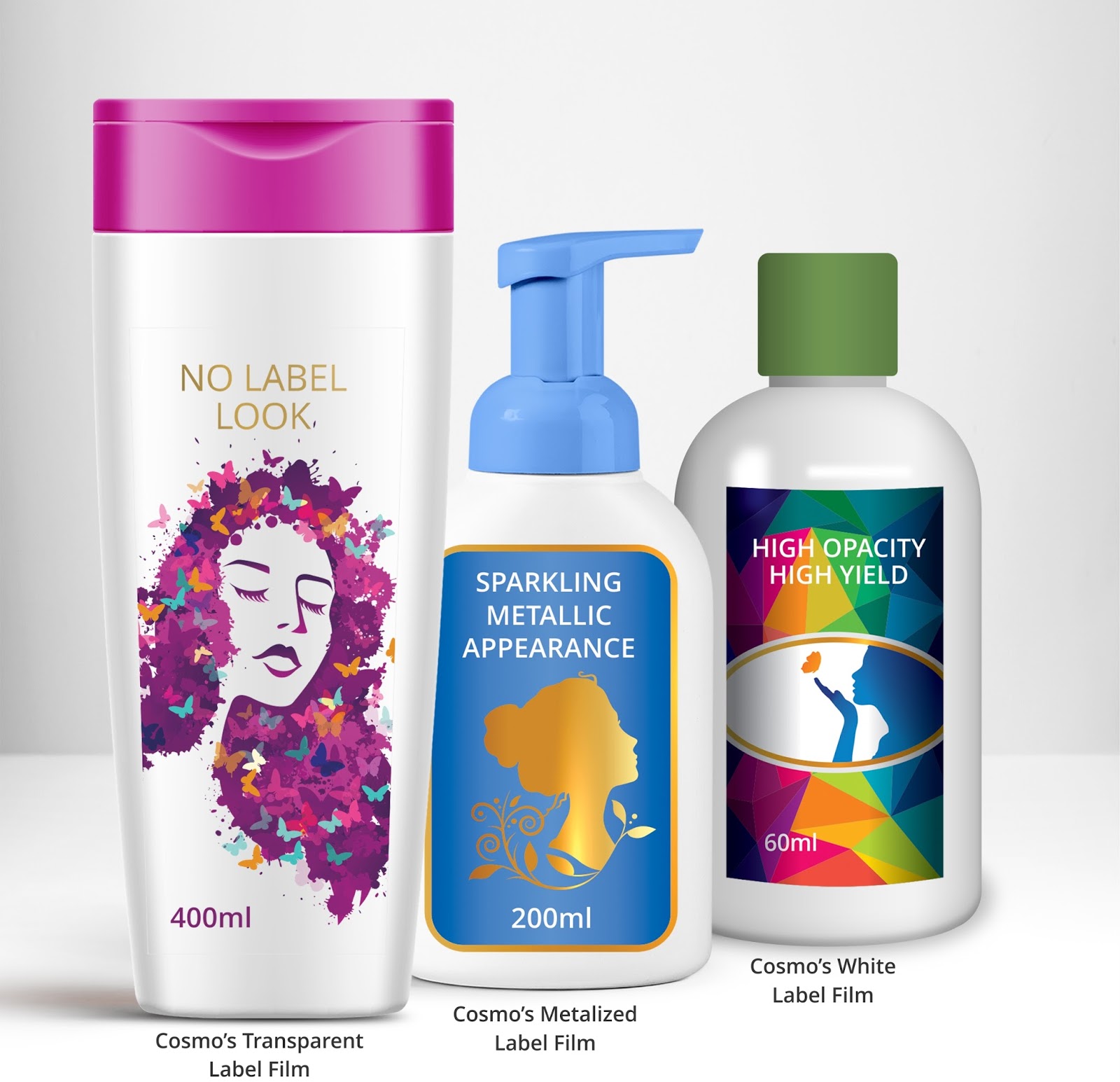
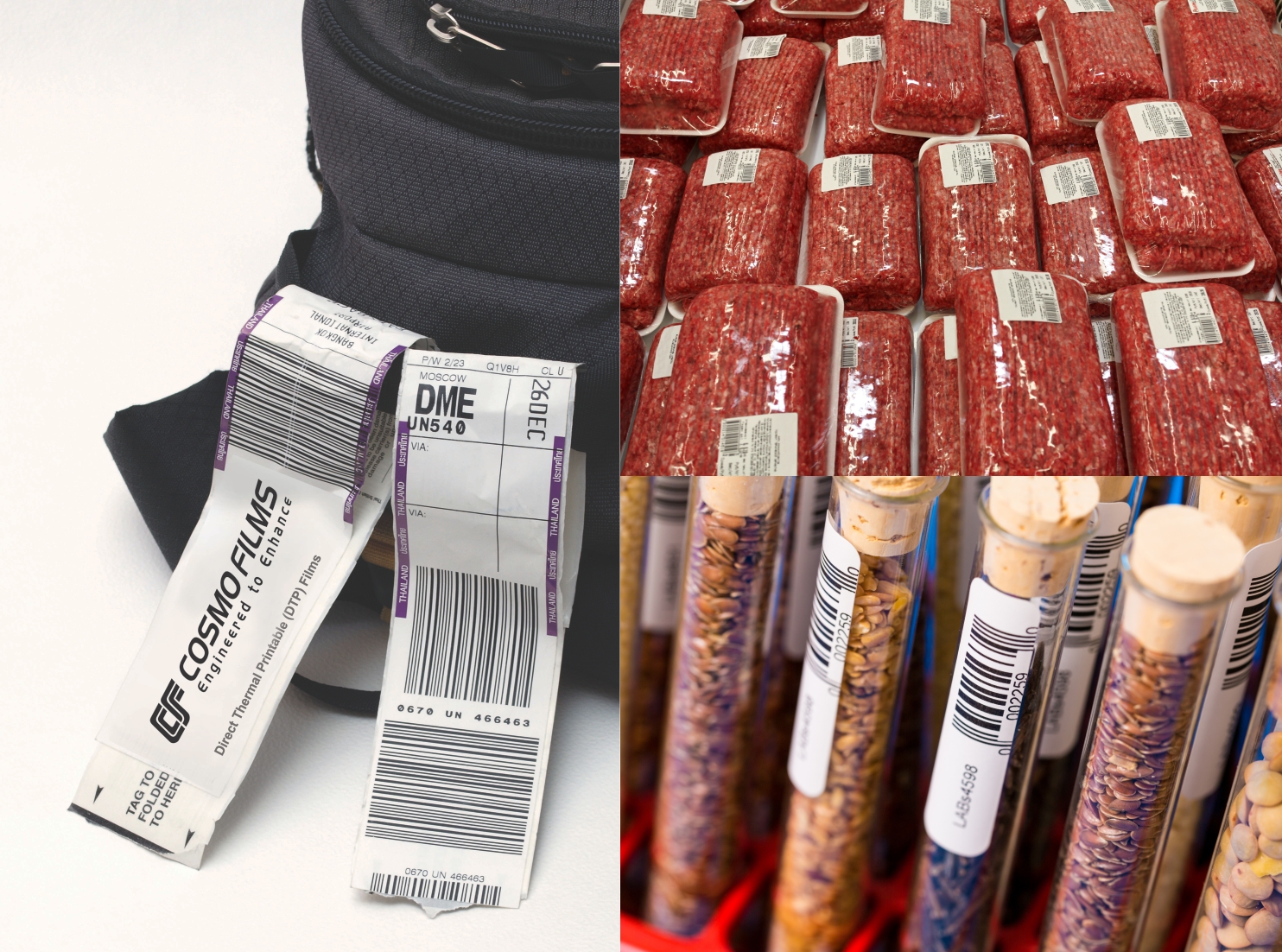
With Pankaj Poddar at helm, the company became more aggressive especially in the label segment. The label segment comprising of self-adhesive labels, wrap around labels and IML is continuously growing in volumes. They supply these films worldwide with some sales also in China. Today leading Indian Labelstock and other label producers use Cosmo’s products for labels. Label films continue to become a substantial part of the company’s product offerings these are now around 15% of their total production. Cosmo has invested in creating the right products to facilitate top of the line decorative packaging. Their offerings include films that are white opaque pearlised, transparent, solid white, gloss/matt metalized, etc. Their films have a clean surface, have excellent gloss, high clarity and can be printed by different print technologies that include printing by using Water based inks, UV inks, Gravure inks, Thermal transfer ribbon printing and some Digital print processes. According to Pankaj, while the domestic BOPP market is growing at around 10 % per annum, the growth is slightly more in self adhesive labels and IML, yet Cosmo is registering a growth rate above this due to their increasing exports. They are committed to diversify more and more into the specialty segments due to depressed margins of commodity products in a competitive scenario. They will soon be launching direct thermal printable film and paper. Being firmly committed to maintain their leadership, for them delivery of quality and innovative products is a priority. They have invested more than 1.50 Million US$ in their new Research and Development/Innovation centre. The centre has capability to analyse the entire film’s chemistry viz. surface, polymer and chemical analysis.  The centre is also capable of testing all properties of the film right from its concept stage way upto its end applications.  Centre can also conduct in house  printing tests with diverse processes like Screen, UV flexo, Gravure printing, Direct Thermal and Thermal Transfer Printing.
 
Pankaj is emphatic that BOPP consumption will continue to grow at a fast pace, but he wishes to see Cosmo diversify more into specialty segments. They will also be adding a Cast Poly Propylene film (CPP) and metalized CPP film line in 2018; they will also be installing a PET film line. Both product lines will be packaging and label centric. PET will be majorly offered as label face or later for release liner applications. PET liners can reduce the adverse impact of liner waste on the environment by bringing down the tonnage of liners using thinner liners. While most of the present paper siliconised liners go to landfills, PET liners can be recycled. Capacity enhancement for synthetic paper is also on cards. Their biggest competition at global level comes from Jindal Poly films subsequent to their acquisition of Exxon Mobil’s BOPP films division and from Innovia films. However still, Pankaj says, “We will be enhancing capacities. As for specialties, we have no real competition”. Pensively and hesitantly he does agree that digital printing direct on product that will eliminate the substrate maybe a challenge but he is confident it will not affect Cosmo’s growth plans.
 
Pankaj Poddar
Pankaj Poddar is an alumnus of Delhi’s Shri Ram College of commerce (SRCC). After finishing his B.Com at SRCC, he completed his articles to be a qualified CA and then completed his degree in MBA from IMT Ghaziabad. He worked with Ernst and Young for 7 years, for automotive parts company Delphi for 5 years two years each with Reckitt Benckiser and Avon Beauty Products. He comes from a traditional Marwari business family, his father dealt with heavy earthmoving machinery spare parts, brother traded in air-dryers and chilling plants and sister’s husband supplies alloy metal to auto parts companies. Moving away from the tradition Pankaj preferred to be a professional executive. His wife is a dietician and they are blessed with two school going children, a son and a daughter. When he joined Cosmo, the turnover of the company was Rupees 850 Crores (130Million USD) and it has now reached Rupees 1900 Crores (300 Million USD). He was awarded as “Indian CEO of the year” by ABCI, Association of Business Communicators of India at their “Brand India Summit” in 2016.  When Pankaj took charge, Cosmo Film’s share was trading at Rs.80-90 and now it has reached Rs.350-400.
 
Cosmo Films is an environmentally conscious company and continues to make strides in implementing eco friendly measures.  All coatings on their films are water based and they support water based ink printing for conversion of their films. They are an ISO: 14001 certified company. The waste water in all their plants, after effluent treatment, is used for gardening. All plant sites have water harvesting. Natural lighting is used wherever possible. They plan to initiate a solar power plant at their Vadodara site as a first experiment and if found successful, they will replicate in other sites as well. Every employee in their organization has to undergo training. As a part of their corporate social responsibility, they work on supplementing basic education provided to young children in government schools in and around their plants through various sustainable programs like Computer Literacy, basic English Learning, basic reading, writing, and arithmetic skills. They have trained about 150 rural youth as qualified teachers to be able to execute this and till date more than 25000 students have benefitted from these programs.
 
Pankaj feels in 5 years Cosmo’s turnover will more than double up from the present 300 million US Dollars to 600-700 US Dollars. This he states will be just from the ongoing organic growth. However if they install more projects and happen to acquire some businesses, the turnover may reach USD 1 billion. The present share of specialty films in the company portfolio is around 40%, he hopes and wishes to increase this share to 60% so as to keep adding value to its bottom line.


Written for Packaging South Asia magazine by Harveer Sahni Chairman, Weldon Celloplast Limited, New Delhi, December 2017.
 
Print Publications wanting to reproduce may do so by giving credit to the author Harveer Sahni and by mentioning that it is published in arrangement with "Packaging South Asia"
I have expressed my personal views on how the Indian labels market is likely to move ahead in 2018

From being a country with predominantly rural population and unorganized retail, urbanization in India is steadily transforming the market to a mature one with consumer orientation. Products that were mostly available in loose unpacked format are now increasingly being offered from organized retail food marts in decorative and attractive packaging. 
 
 
A label or pack that had limited need earlier has become the communication tool between the seller and end consumer. Indian label market that has over the years defied recessionary trends at the global level has been growing steadily with double digit growth. Market segmentation has also been a continued process both in terms of producing labels for the commodity products and those for high end with attractive decoration. The former segment forms the bottom of the triangle, accounts for the larger volume of labels and is highly competitive with depleting margins. 
 
 
This segment will stay fiercely combative in the marketplace and will resort to heavy cost cutting to drive in margins with economy of scale. They will resort to buying traditional but low cost presses with faster speeds, lower wastage and lesser downtime. The Upper part of the triangle is which caters to the users for whom a good and unique label is an imperative to boost sales. This is the segment that drives in development with innovative capabilities to help drive in better margins. For this reason we will see growing demand for hybrid presses by leading high end printers. 
 
Digital printing in labels is still a segment where Indian printers are hesitant to step in even
though the journey in this direction has commenced. This is so due to the higher cost of production in this printing technology. Short runs and variable data, drive this segment and in a high population country like India, this market will grow but not at the rate at which it grows in the western world. Lower cost of printing and converting equipment may boost this segment. Digital equipment manufacturers who can address this aspect will surely make this segment to prosper. Imperative need for brand protection, communicative labels, decorative labels and relatively short run labels to aid marketing in different geographical regions in India with different languages and festivals, spells the need for hybrid presses.
 
India witnessed turmoil in business due to aggressive government economic policies that would aid faster growth longtime. Business slowed down a bit, but moved on due to inertia. The settling down of economy will surely create an expanded market. We envisage a better growth rate in 2018. Labels moving into different tangents like Shrink sleeves, IML, wrap around, etc. stem a larger growth rate in the self adhesive labels but as mentioned earlier, due to the sheer market size, all segments will keep growing. 


Environmental concerns are also likely to impact the Indian market scenario, it is becoming increasingly difficult to send the waste to landfills or incinerate it. 2018 will see emphatic moves to conserve the environment. How this evolves, only time will tell.


Written By Harveer Sahni, Chairman Weldon Celloplast Limited, New Delhi January 2018. To email the author; harveersahni@gmail.com  
Label is primarily information appended to a product or its packaging giving the brand name, information on the product, its usage, safety instructions, manufacturer’s details, statutory information, prices and now bar codes that provide a system for track & trace, price information, inventory control and logistic support. How the label or the required information has been attached to the product has varied over the ages. The earliest form of labeling was done by etching, embossing or stamping brands and information directly on glass or metal containers. Labels have been in use for hundreds of years but labels as we know today have evolved largely after the 17th century. Printing originated in China in the 11th century and was further developed in Korea in the 12th century but a wooden block printing press for mass printing was invented by a German Johannes Gutenberg in the mid-15th century.  It was only in the earlier part of 18th century that printed paper labels surfaced as a possibility but since adhesives to affix these labels were not available, their usage started later. By then lithography had developed, so directly metal printed containers started being used for packing and canning. Many products are still packed with modern canning processes using metal cans printed with the lithographic printing process. It was only in the 19th century that printed paper based labels started being used for labeling and packaging using natural gum based adhesive to stick the paper labels to glass, metal or paper based containers and packaging. These labels in an evolving label scenario are now referred to as Wet Glue Labels.
 
With increasing levels of literacy, growing population and growth of packaged products, mass production in factories has become an imperative. New glass, paper, metal and plastic based packages are being developed to catch the eye of demanding consumers. The aesthetics are enhanced by affixing colourful and attractive labels. Faster labeling and packaging methods evolved as also the need to have highly decorated labels to service the need of consumers. Driven by this demand labels have evolved into different tangents. Diverse and technical labeling technologies have emerged. Listed below are some of the prominent technologies that labels have presently evolved into;
  1. Pre printed labels on metal container
  2. Wet Glue Labels
  3. Self Adhesive Labels  
  4. Self adhesive Liner less Labels 
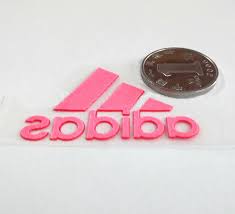
  5. Heat Transfer Labels
  6. Direct on product screen printed labels 
  7. Contact printing and stenciling
  8. Laser  engraved labels 
  9. Metal anodized labels 
  10. Shrink Sleeves 
  11. In Mould Label 
  12. Digital: Direct on product Labels 
  13. 3D Printed labels 
Pre printed labels on metal containers: Metal containers or cans are made from tin plate (steel

covered in a thin tin layer) or of Aluminum and steel coated with a lacquer. The labeling is done in any of the three different ways listed below;


  • Metal tinplate sheets are printed by offset process and then converted into containers.


  • Preformed round metal containers are printed using a curved surface printing machine. Each color of ink is placed on a different (plastic letterpress) plate, and then transferred to a single rubber blanket which re-transfers the inked image to a can allowing all colors to be printed at a time followed by ink curing and varnishing.
  • Preprinted labels of paper, film or foil are laminated to preformed cans. These labels can be printed by, flexo, offset, gravure, or digital printing processes. These can be highly decorated on high end hybrid narrow web presses having advanced finishing capabilities. These labels can be applied as full wrap around labels or part labels with the balance surface left coated to show a metallic lustrous effect.

Wet Glue Labels: These labels are also referred to as glue applied labels. These formed the mainstay
of product labeling until well into the middle of last century. Labels initially printed on letter press machines and later on offset presses, were gummed manually and applied to the bottles or containers.  In 1880 De La Rue came up with a machine for gumming labels but this had a problem as paper labels would curl as soon as they would come out with gum applied on it making it difficult to handle.  From my personal experience I can cite example of how our company adapted to manual gumming of labels. Our parent company was established in 1939 to produce fountain pen inks and office adhesive that were packed in glass bottles. To achieve optimum level of production we devised an interesting method of applying glue and labeling. Those days the final packing was done in wooden cases, corrugated boxes came much later. We took a wooden crate and turned it upside down, spread a full roll of surgical cotton on it and then covered it with a thick cotton cloth that was tightly fixed by nailing it all around. This was then dipped into water overnight with its face downwards. In the morning we would squeeze out the water and our gumming pad was ready. A thin solution in water of natural gum (Gum Acacia) that grows on trees was applied on the pad and then labels spread on it. We would have the unlabelled bottles on one side of this pad and with a little gum on the finger, which made it a little tacky, lift the evenly gummed label off the pad and place it on the bottle without any curl and put on the other side for further packaging.  Subsequently with development of high solid faster drying Dextrin based adhesive automatic machines to apply gum and dispense labels to the bottles were developed. This made large scale production on automated production lines possible.
 
 
 Direct on product screen printed labels: Screen printing saw growth in the Indian label scenario in the middle of last century. A lot of consumer product that shifted from glass to plastic packaging also opted for screen printed containers. However this did not last for many years as self adhesive labels with the high end decoration they offered soon became the preferred option. However screen printing on container is still in use but has limited application.
 
 
Self Adhesive Labels: In 1935 “Ray Stanton Avery” developed the self adhesive label also referred
to as Sticker or Pressure Sensitive Label. This label revolutionized the way how the world branded and labeled their products. The label basically consists of a face stock which could be paper film or foil, coated with a tacky non drying adhesive and protected with a backing also referred to as release liner. The label after printing and die cutting just needs to be lifted off the release liner and placed on the product achieving instant bond on applying pressure, unlike the wet glue labels that need drying after application otherwise they would shift and look bad. The self adhesive label industry has over the years evolved to offer a diverse range of labels catering to various industries and applications that include fmcg products, lubricants, cosmetics, food, Pharmaceuticals,  variable information, logistics, brand protection, etc. In the initial years these labels were printed and die-cut on slow flat bed letterpress presses and with time they are now printed on high speed flexo rotary or combination label presses with capability to decorate and finish the labels in line in a single pass delivering finished labels at the end of the line. These labels are used on high speed label dispensing machines adding to production volumes for end user.
 
Self adhesive Liner less Labels: Self adhesive labels as described above have an issue as regards the
environment. The release liner and waste matrix after die cutting is not generally recyclable, though efforts are being made in this direction. This waste goes either to the landfills or is incinerated impacting the environment adversely in both cases. Moreover if the liner can be done away with while converting this type of label, it will amount to cost saving and become eco friendly. Considerable amount of work has been done in this direction and various options are now available. The simplest one being to make a tape like product printed, and siliconised on one side and adhesive coated on the reverse and self wound. However these labels that can be cut with sharp corners, cannot be die cut and dispensed in regular labeling equipment. Many European and US based food companies are already using such liner less labels. There is development being done to overcome the challenges of die-cutting complex shapes and dispensing cost effectively.


Heat Transfer Labels: PET film that is precoated with special release lacquer is reverse printed by flexo, offset or gravure to form labels in roll form. The image is transferred onto the container or product using heat and pressure. The labels are a composition of inks and lacquers selected so as to perform to customer’s specific needs. On transfer these labels are just the image and no substrate is transferred. Many years ago Mumbai headquartered Paper Products Limited (now Huhtamaki PPL) commissioned this technology known as “Therimage” with help of Avery Dennison. Later with self adhesive label emerging as  very decorative in presentation, this technology lost its popularity. In recent times it has resurfaced. It is extensively being used by the pen industry.It is now being extended to garments and other product segments.


Contact printing and stenciling: In present times even the corrugated shipper cartons bear self
adhesive labels needed for identification, inventory control and logistic requirements. In earlier days as I mentioned, wooden cases were used as shipper cartons. People would write on them using marker pens but when need for aesthetics became important stencils were made of tin plate. They were placed on the wooden cases and ink brushed over them to imprint the required information. Later when corrugated boxes started to be used for final packaging, roller contact printers with changeable rubber types and foam ink rolls were available to print the information that could be changed by changing the type faces as per need. Once corrugated cartons replaced the bulk of outer packaging, these cartons started to be printed and self adhesive labels applied, if needed. Stenciling is still used where wooden crates are required for final packaging.
 
Laser engraved labels: Steel or other metal auto components, like bearings need to be branded, they cannot be labeled with paper or film labels. Only the secondary packaging can be branded, this can amount to duplication and counterfeits. For this reason laser engraved branding is preferred. A laser beam which is a very small, focused point of laser power effectively superheats a tiny point of a surface and removes part of the surface, creating a permanent engraving. This beam of light is controlled and moved to create a brand name or permanent design.


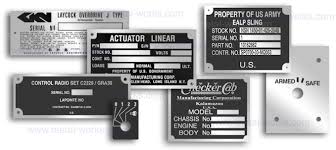
Metal anodized labels: These labels are used in applications where permanent product identification
is critical such as equipment nameplates, signage, safety/warning plates, machine control panels, etc. Abrasion and corrosion resistance anodized aluminum labels are produced by chemical etching on photo sensitive anodized Aluminum. These are mostly riveted on to the equipment or panels as they are required to last most of the life time of the equipment.
 
Shrink Sleeves: Shrink sleeves offer 360 degrees space for decoration and product information. They are made of either of these materials; Polyester, PE, PVC or PP. Pre printed film is welded to form a tube, cut to desired size of the bottle or container and applied over it. It is then exposed to a heat gun or passed through a heated shrink tunnel for the tube to shrink and attain the form of the bottle or container providing all around decoration. Shrink sleeve labels originated in 1965 and invented by Fuji Carpentry shop that were later named as Fuji Seal. The actual large scale usage of these sleeve labels commenced in the mid 1980s. According to Suresh Gupta Chairman of Huhtamaki PPL, shrink sleeves were brought to the Indian market in 1991 when Paper Products Limited (now Huhtamaki PPL), set up the plant with help from Fuji Film to make these in India. This segment continues to register a steady growth rate. Global growth is 6-7% but in India it is slightly more, given the size of the market. In India these are largely printed on gravure printing presses. However in recent times, in an effort to cater to short run customers who maybe large customers doing special editions or small and medium enterprises, printing is also being done on flexo presses and in some cases on digital label presses.
 
In Mould Labels: Paper or film printed labels (mostly filmic) are placed inside the moulds during
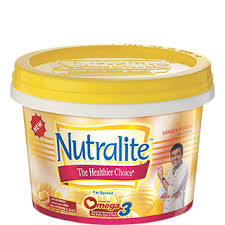
the molding process. After placing the label, molten plastic is injected into the mould. On cooling the label is fused with the resin, takes the shape of the so molded container and becomes an integral part of it. The labels referred to as IML can be printed and decorated by any of the processes i.e. Offset, Flexo Gravure or digital. The end result is a highly decorated container. These IML applied containers are used for Ice cream, butter, paints, food packaging, etc. According to research firm MarketsandMarkets, the global in-mold label (IML) market is projected to grow from $2.58 Billion in 2015 to $3.23 Billion by 2020, at an estimated CAGR of 4.54%. It is the fastest growing segment amongst the various label segments.


Digital, direct on product Labels: Digital printing has made its presence in all variants of label
printing and converting. From wet glue to self adhesive and in mould labels, digital printing is making inroads everywhere. Some years ago when I was interviewing Helmut Schreiner, the former Chairman of Schreiner Group, I asked him, “What do you see as the biggest threat to self adhesive label industry?” He became pensive and after deep thinking said, “It will be digital printing direct on the product”! It makes a lot of sense as we see the market slowly evolving in that direction. This will open up a whole lot of opportunities for the brand owners. No paper, no silicone, no adhesive, no dies, no tooling and yet the option to indulge in personalization and creativity! According to AlexanderWatson Associates, “It may, indeed, be a disruptive technology”. Direct to digital has been around for some time printing on textiles and ceramics. It is commonplace to see digitally printed fabrics and ceramic tiles. It has started to make inroads into the consumer product market and we need to wait and watch where it leads to.


3D Printed labels: This is another technology which may see computer controlled 3D characters and images on products and labels. It will make the imagination go wild on what all can be created. It is a process in which layers of material are formed under computer control process to create an object that can be of almost any shape formed by deposits of binder material onto a powder bed with inkjet printer heads layer by layer.


The evolution of labels has created a whole bouquet of technologies which still keep coming up in new avatars. No one technology can become the predominant one for label production. With labels diversifying into different tangents, label printers need to select the way forward so as to stay innovative and ahead of time. It is surely time to emerge out of the crowd and create a separate visible entity.
 
Written Exclusively for Label and Narrow Web magazine USA by Harveer Sahni, Chairman Weldon Celloplast Limited, New Delhi November 2017. The article may not be reproduced without the magazine's or the author's permission.
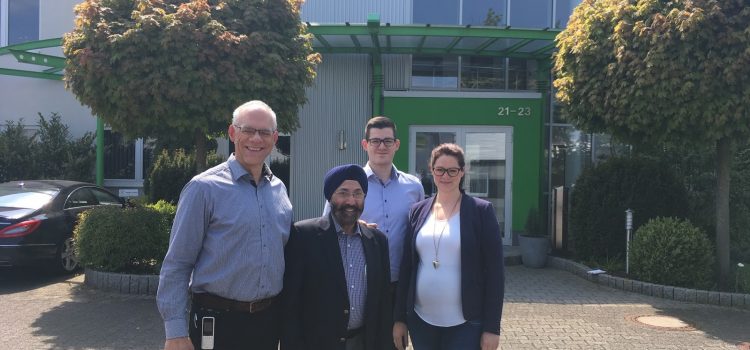
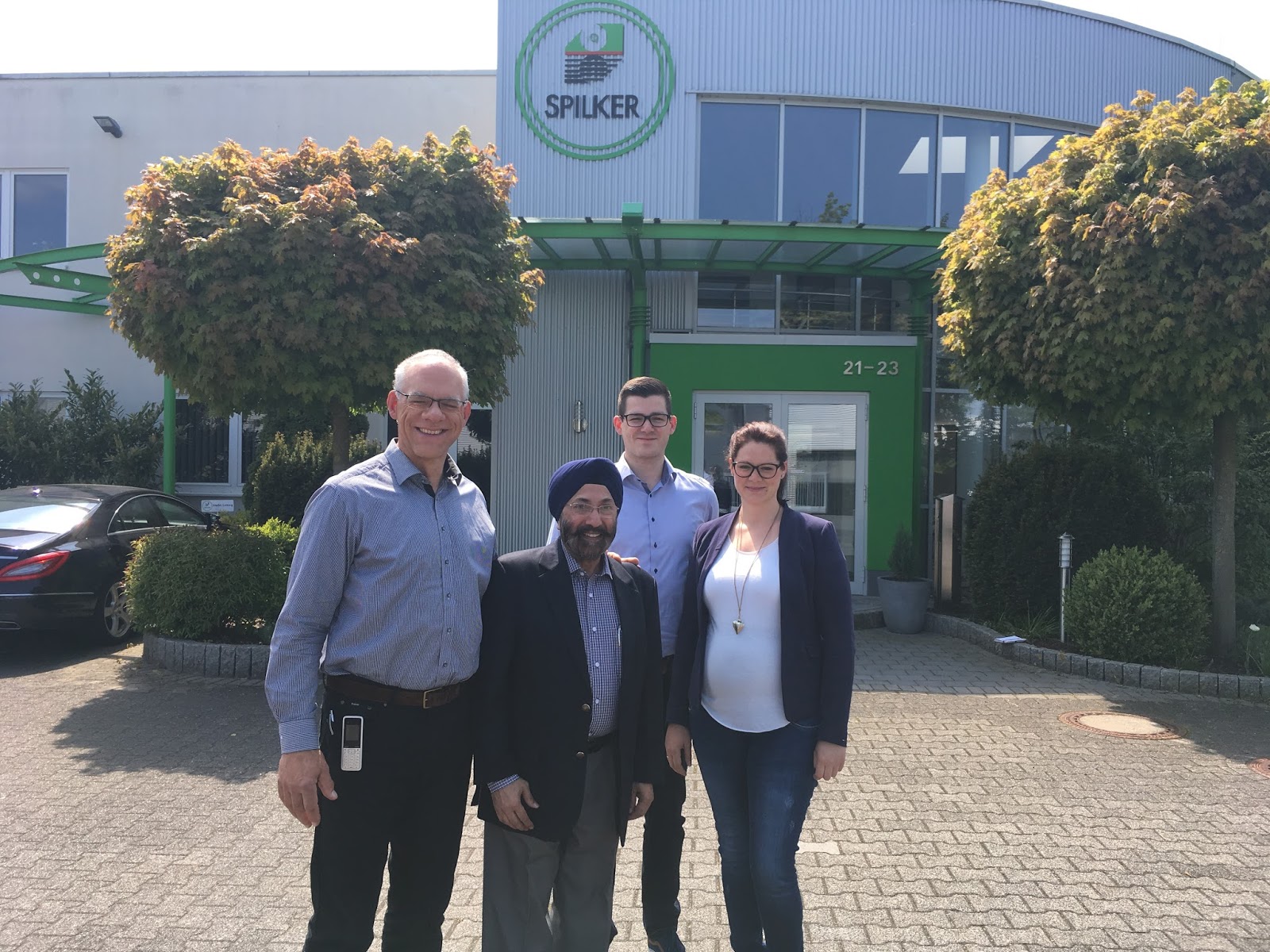
Story of  a family run enterprise Spilker GmbH, where three generations have technically indulged to grow their venture  from humble beginnings to attain success at global levels. They strive to upgrade and cater to customer needs maintaining quality standards assuring reliability in German precision!
 
http://www.spilker.de


Humble beginnings
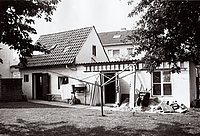
In 1963, Herbert Spilker, trained as an engraving master, set up his startup venture in a small garage. Without any equipment and relying on his engraving skills, he started engraving metal brass plates for trophies with the barest minimum hand tools. With three children to support, a son Andreas the present Managing Director of Spilker GmbH born in 1961, another son and a daughter, he worked hard all by himself to grow his maiden engraving enterprise. In 1970s he felt it was time to move ahead. Self adhesive labels were evolving at a fast pace and the die cutting process was in the process of transforming from flat bed die cutting to rotary die cutting. Herbert Spilker wanted to produce flat bed dies but as luck would have it, prospective customers were already considering moves into faster converting process using rotary dies. They resisted his offer for flatbed dies and advised him to consider supplying rotary dies which at that time were being supplied by only two companies i.e. Kocher+Beck and Gerhardt (now merged into Rotometrics). The delivery time was very long, almost 2-3 months. Herbert was convinced that rotary dies was the business to be in. In 1978 he produced his first rotary die engraved by hand for a company Ritter Etiketten, now a part of the Rako Group since 2006. That was the beginning of an exciting journey to success in rotary tooling.
 
The first step towards expansion
 
Herbert Spilker
A year later in 1979 Herbert Spilker’s son Andreas, also trained as a master engraver joined the company as its 12th employee. The other son preferred to venture out as a printer but his daughter did join the business and now looks after the HR (Human Resource) department of the company. When Andreas joined the company they were still working without any machinery. They bought solid metal blanks and outsourced all other turning, machining and grinding processes. Finally the father son duo “master engravers”, would complete the die engraving by hand. In 1981 with experience of having produced 25-30 dies,they decided to invest in used turning and grinding machines. The turning machine at that time cost 1000 DM or 500 Euros. The grinding machine was more expensive at 2500 DM. The Spilker enterprise took it’s first big step of buying a CNC machine for engraving and then there was no looking back. In 1988 they moved to their present building in Leopoldshohe, it was a big step and time to expand!
 
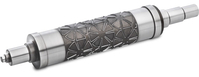
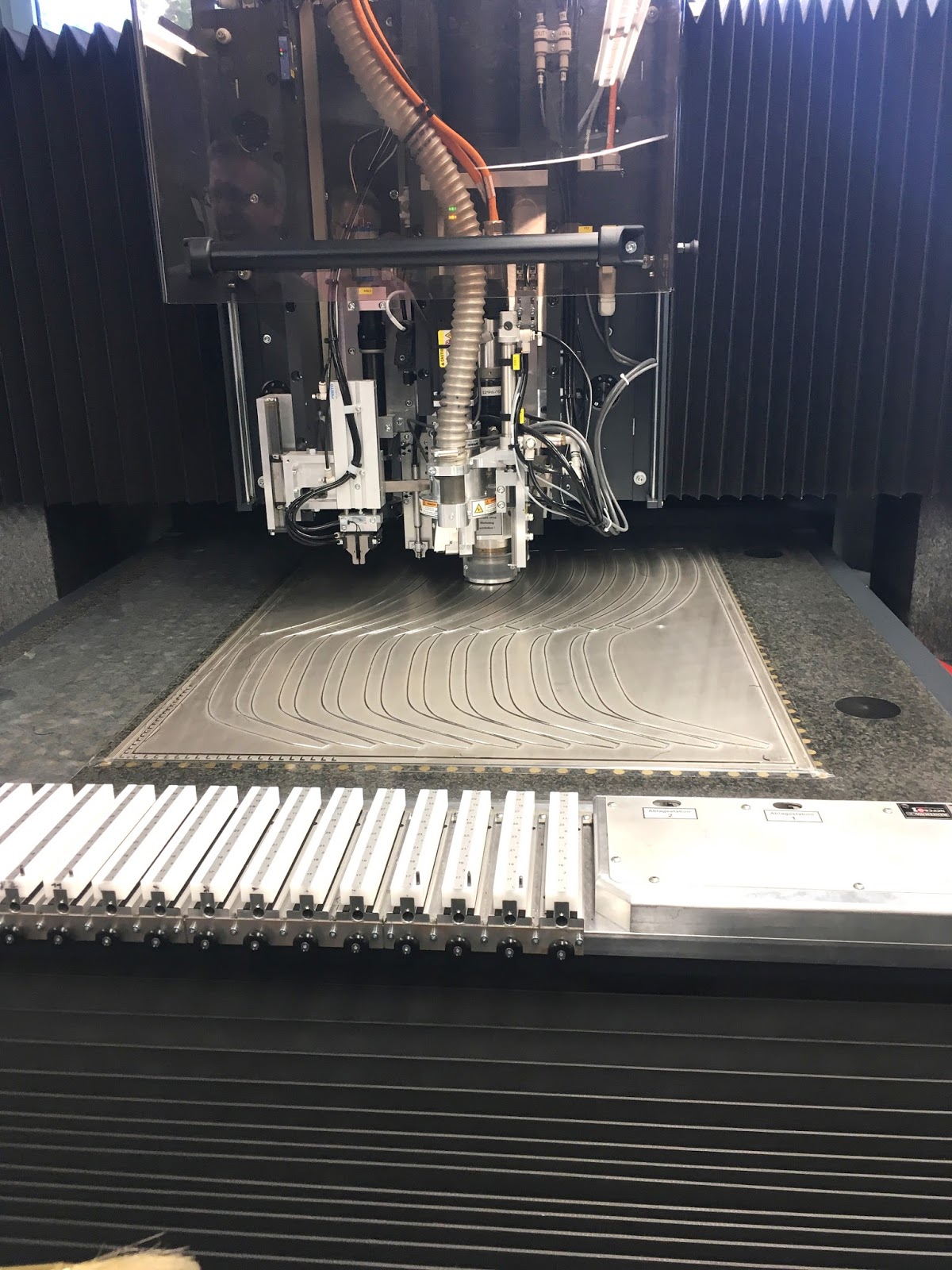
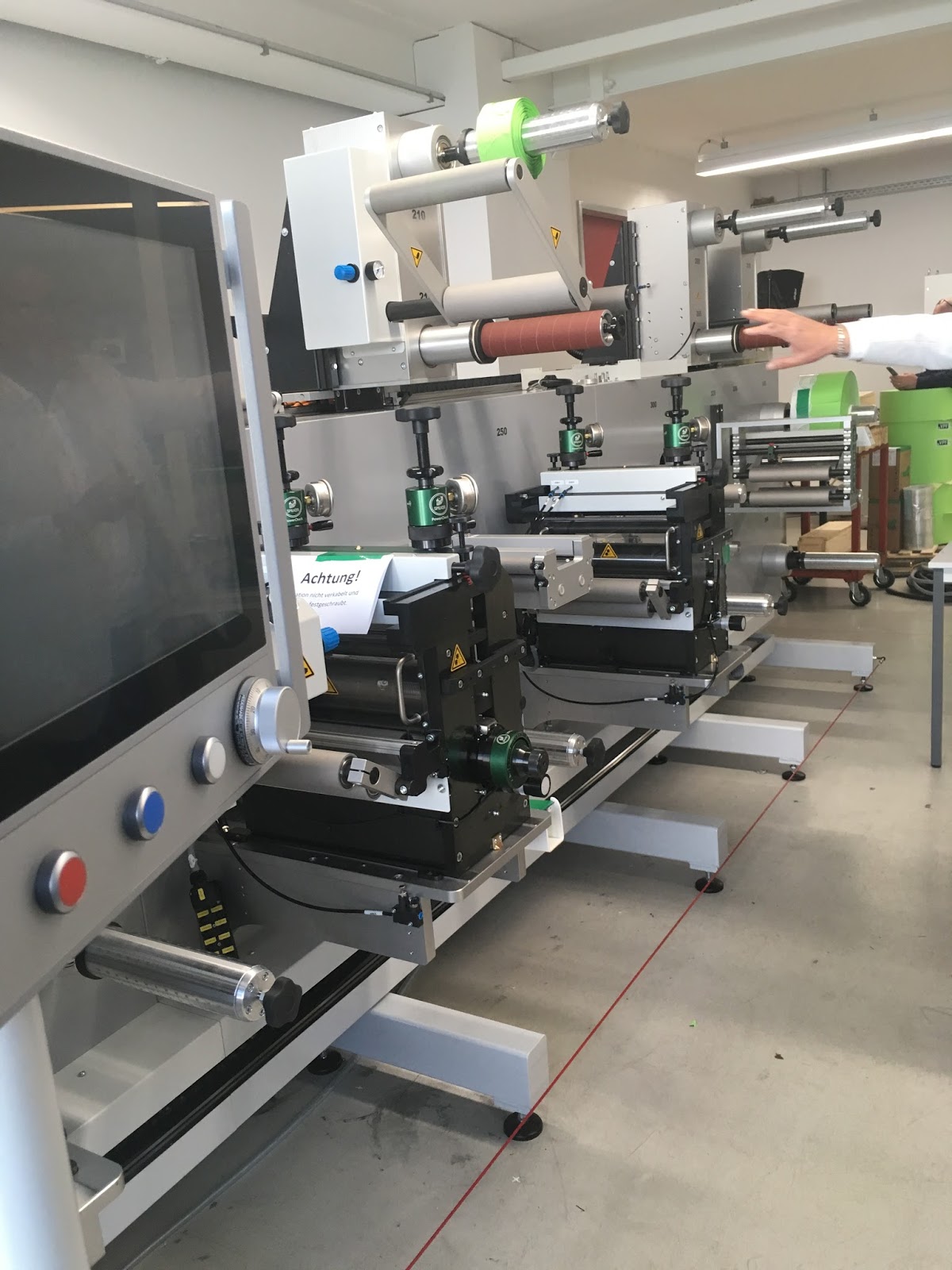
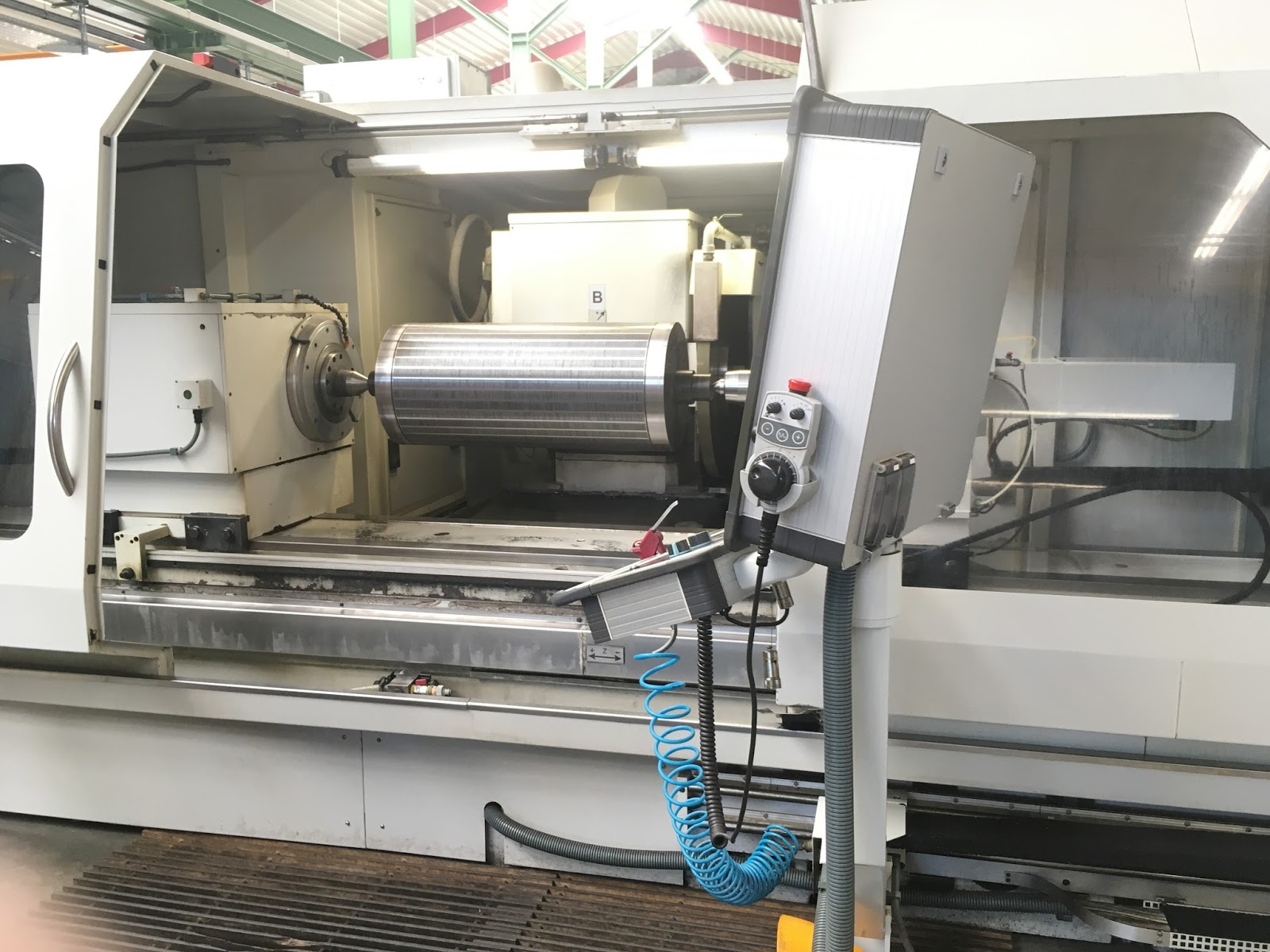
In the late eighties the cost of rotary dies was making label printers consider using the cheaper but slower flatbed cutting options. The costlier solid rotary dies made it imperative to sell labels at a higher price making it difficult to compete. Flexible dies developed in America and  much cheaper than rotary dies, started being imported by others into Germany. These were instantly opted for by label printers to maintain their production speeds and consistent quality. Once in their new premises, in 1988, Spilker GmbH invested in equipment to produce both magnetic cylinders and flexible dies. Andreas Spilker proudly states, “No one taught us how to make these flexible dies and magnetic cylinders, we learnt it all ourselves” he further added, “It was the need of our existing customers, so the investment and development became an imperative”. The next decade was spent in consolidating, growing the new business, expanding and making renovations in whichever department it was needed. Herbert Spilker a farsighted man understood the need to transfer management to the generation next at an appropriate time. He mentored his son and transferred the power step by step until 1998 when he decided to retire and hand over the reigns of his growing business to his son Andreas Spilker, the present Managing Director. In 2003 Spilker installed their first machine for milling and sharpening rotary dies. Till then dies were sharpened by hand. They were the first manufacturer to offer rotary dies sharpened by machines. In 2004 the variabase anvil roll was developed for adjusting the cutting depth. In 2005 flexible dies in bigger format 860mm X 1050mm were developed. Spilker also has now capability to produce magnetic cylinders in very wide width up to 2800 mm. In 2006 they developed their first rotary die cutting machine. In 2008 they added another 3200 square meters to their production shop floor. In 2013 the MEP (Mechanical Ejector Pins) dies were developed. In 2015 another 300 square meters hall was added to develop custom built die cutting and laminating machine, such equipment was showcased at the Labelexpo Europe in September 2017.
 
The Family in business

Spilker continues to grow and attain global success. Andreas, a technocrat himself and a hands on
Andreas Spilker, Harveer Sahni, Henrik Spilker & Anika
 technically indulgent business owner, attributes this success to the inertia set in by his father Herbert Spilker. Even the day when this interview was to take place, Andreas was busy on the shop floor managing a new development. He is technically involved in all technical aspects of his company. His wife Katja is a home maker. Two out of his three children are already in the company. His daughter Anika born in 1990 and son Henrik born in 1988, joined the business in 2006. Henrik trained in metal engineering as a milling machine operator. After a stint in the company left to join university in 2010 and graduate in engineering. He returned to the company in 2015 to pursue his passion for technical innovation in workplace. He now looks after development of new tools, machine development and automation. Anika who has been in the company since 2006 is a refreshing personality, an imposing leader and leading her team by delegation. However still, her authority is evident in her area of operation.  She takes care of sales of rotary tools and in recent times has been passionately indulgent to grow the machine building business. Her husband is a police officer. The youngest offspring of Andreas, Marie at 19 years is still studying and only time will tell if she too joins the family business. The entire Spilker family are technology driven, Andreas remarked that none of them are accountants or management experts. “We can hire professionals for that but I am happy that the family is involved in production so as to turn out excellent, technically advanced and precision engineered products.
 
Getting over difficult times
 
Flexible die in production
The economic slowdown of 2008 brought the most difficult time at Spilker. Ironically and with regret,at that time they had to give up loyal employees to stay afloat. The crisis came at a time when they had acquired an additional shop floor area from a neighbor to expand their production. They had to stall the production until things improved and they were back on their feet. Once out of recession they came out stronger and fit to carve out a path of permanent and fruitful growth. Spilker with 210 employees presently works out of shop floor area admeasuring 20,000 square meters or over 200,000 square feet. Sales at over 20 million Euros continue to grow steadily at 10% per annum. They try to find special solutions to customer’s problems and attend to them completely, offering combination of new processes and products. They endeavor to make perfect rotary dies helping customers to build required production systems to service their respective customers. Andreas says, “The more complicated is the problem, the better it is for us. We love challenges”.
 
 
custom converting machine


The present business is spread into three business segments;
 
·         Rotary tooling that include rotary dies and magnetic cylinders
·         Flexible dies
·         Custom built machines

The above segments cater to the following industries;
 
·         Labels and printing
·         Medical and Pharmaceuticals
·         Automotive supplies
·         Electronics.


Magnetic Cylinder in production
A walk through their factory shows perfect workflow, state of the art capital equipment and testing systems to turn out products of highest quality standards. New developments at Spilker include tools with nonstick coatings for clean cutting adhesive labels with aggressive adhesives, tools for adhesive tape and wound care products, MEP systems with ejector pins for medical plasters that have holes, Sonic dies for punching holes and suction of waste rounds, etc. As for expensive rotary dies they offer value to their customers by repeatedly sharpening the tools when they become blunt. 


Andreas is pensive in his thoughts about his future in the company. He asserts that now that his children are getting firmly involved in the running of Spilker, in 5 years he will like to leave the management to them and retire. His daughter Anika is optimistic on the future and asserts that the company will grow further in both label and non label segments. Both Henrik and Anika are making efforts to expand into machine building while maintaining the quality and growth of existing business. Indulgent youthful attributes guided by an experienced mentor parent is sure to take Spilker to another level of success.
 
Written exclusively for Narrow Web Tech, Germany by Harveer Sahni, Chairman, Weldon Celloplast Limited, New Delhi India May 2017 

The article maybe published with the permission of Narrow WebTech Germany giving credit to them and to the author

For advertising inquiries please email to; harveersahni@gmail.com 


Add caption
Labelexpo Europe 2017 at Brussels has been the biggest ever edition in the event's history so far. The show that is primarily dedicated to self adhesive labels industry has now evolved to  different segments of labels and into the larger world of print packaging. Evidently the show will continue to become bigger in the years that follow. As per information from Tarsus, the show occupied nine exhibition halls to be 12 percent bigger than the previous edition in 2015. It hosted 679 exhibitors, including 198 new participants. There was 25 percent more working machinery demonstrated at the show, including a number of product launches. Labelexpo Europe attracted large delegations from Brazil, China, India and Japan, the show reported 37,724 visitors; an increase of 5.6 percent on 35,739 visitors to Labelexpo Europe 2015. There were a number of sales recorded on the show floor.

I reproduce here images from my pictorial walk through this amazing show and the events organised on the sides and attended by me.


The Omet Agents Dinner one day prior to Labelexpo


Harveer Sahni and Amit Sheth as Judges at World Label Awards


Judging in progress for World Label awards


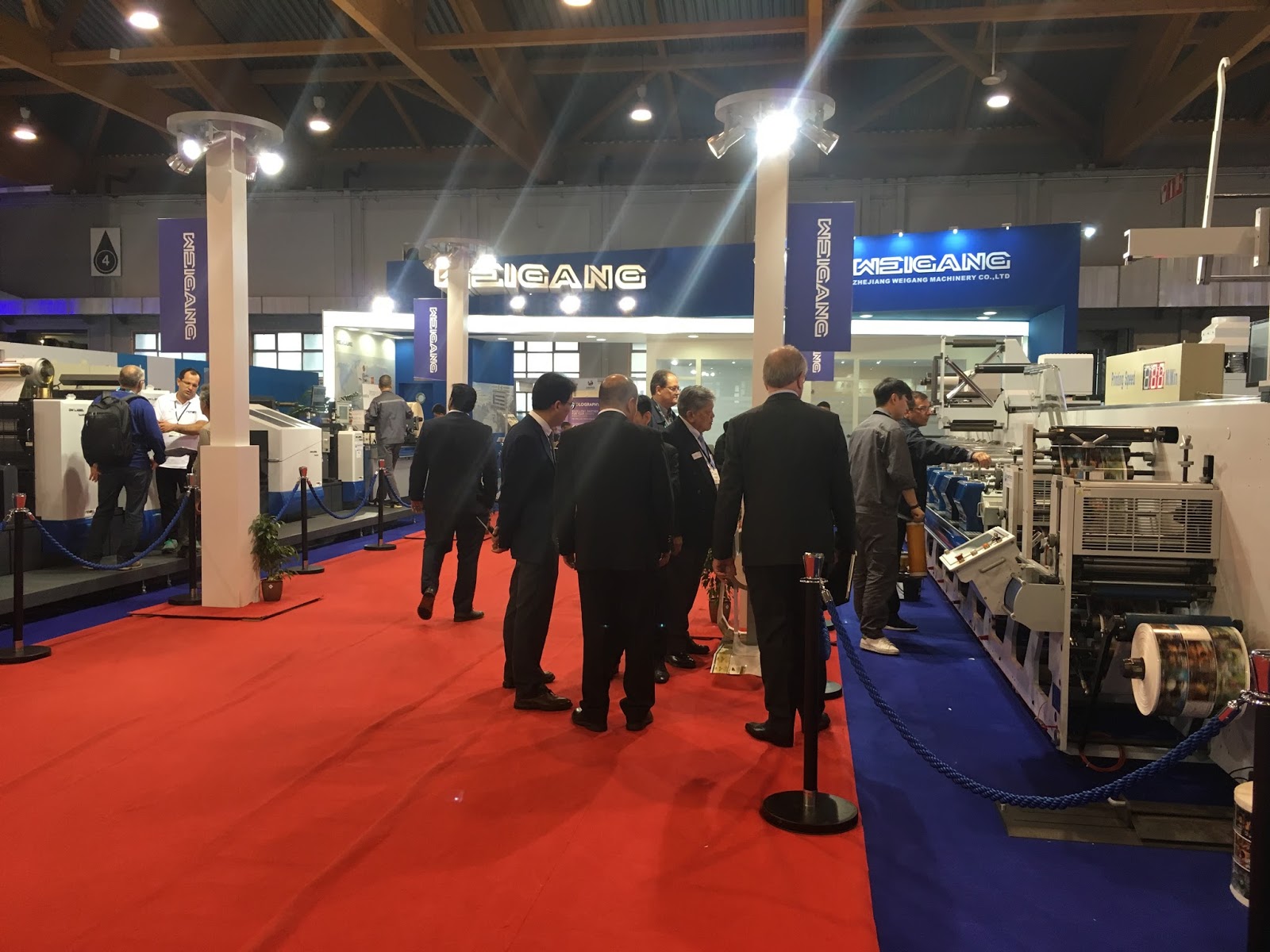
Chinese Press Manufacturers Weigang, stand


With Mike Russel International Sales Director Mark Andy


Mark Andy/Rotoflex Stand  


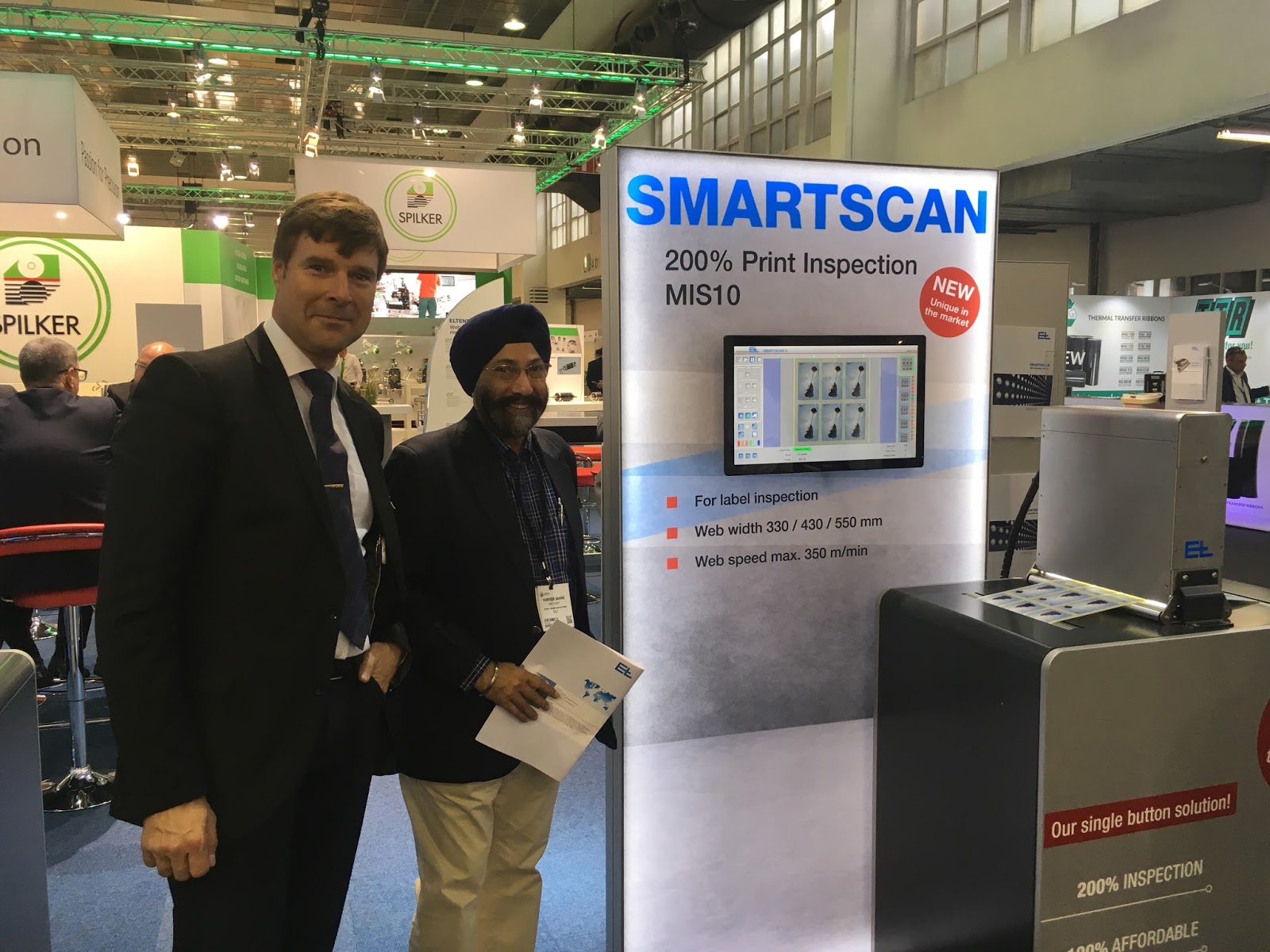
With Dirk Schroder, Sales Manager E+L displaying their intelligent inspection system


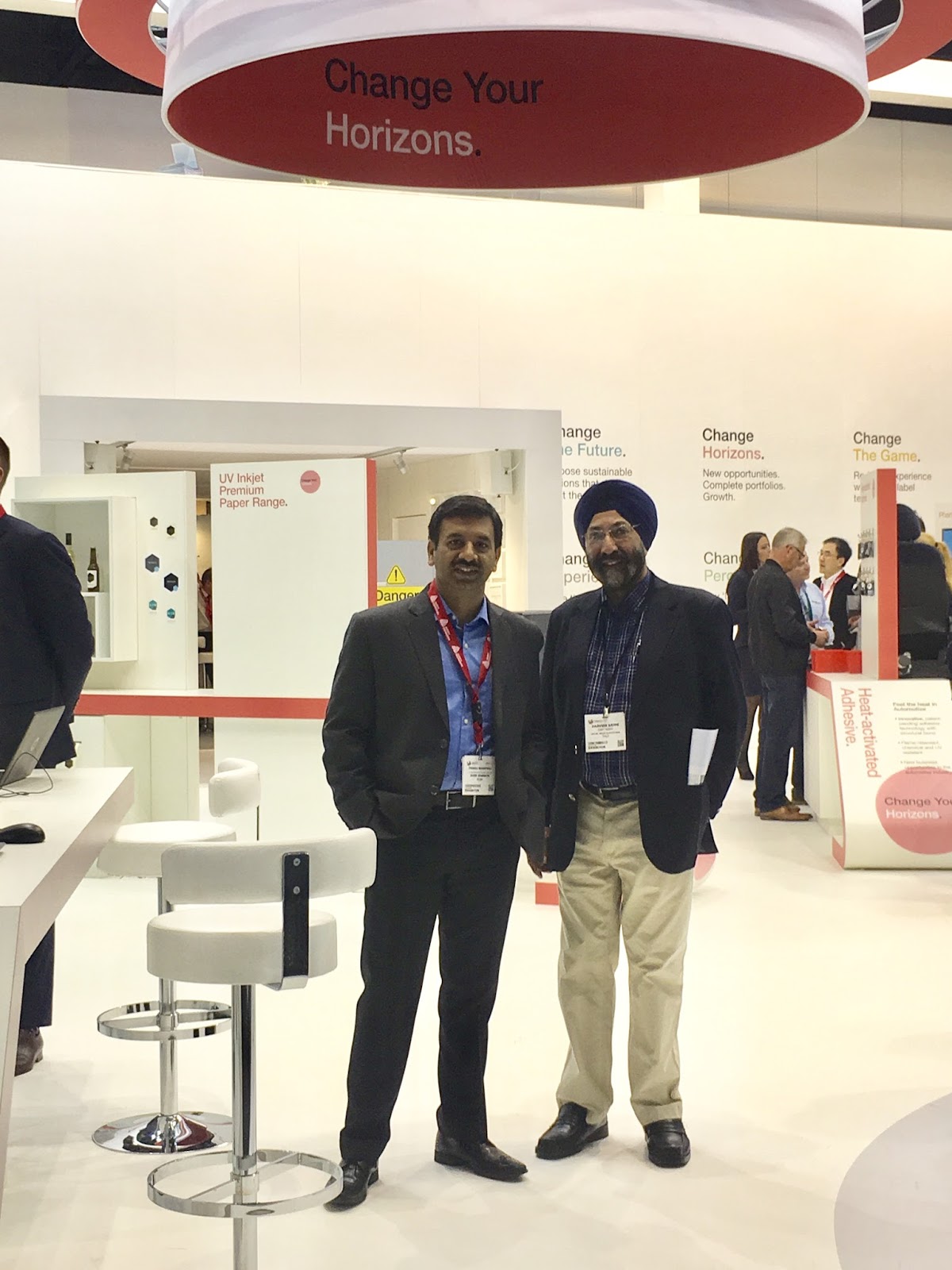
With Pankaj Bhardwaj Vice President and General Manager, South Asia Pacific and Sub Saharan Africa of Avery Dennison, India at their stand.


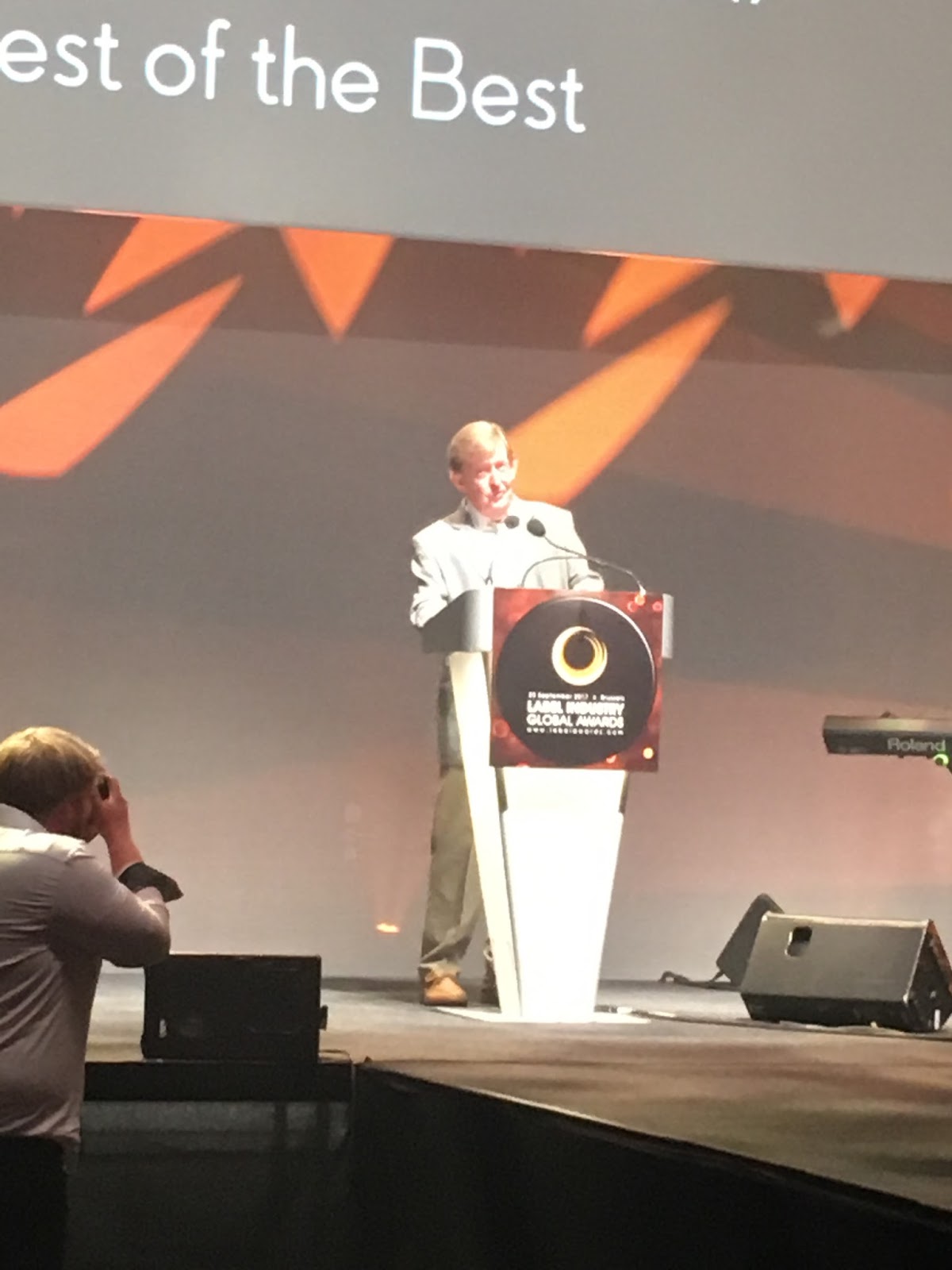
At the The Label Industry Global Awards Night and Gala Dinner, Tony White announcing the "Best of the Best" in World Label awards heldon the sidelines of Labelexpo Europe!


LMAI (India's label association) President Kuldip Goel and Vice President Rajesh Nema with Labelexpo Managing Director Lisa Milburn.


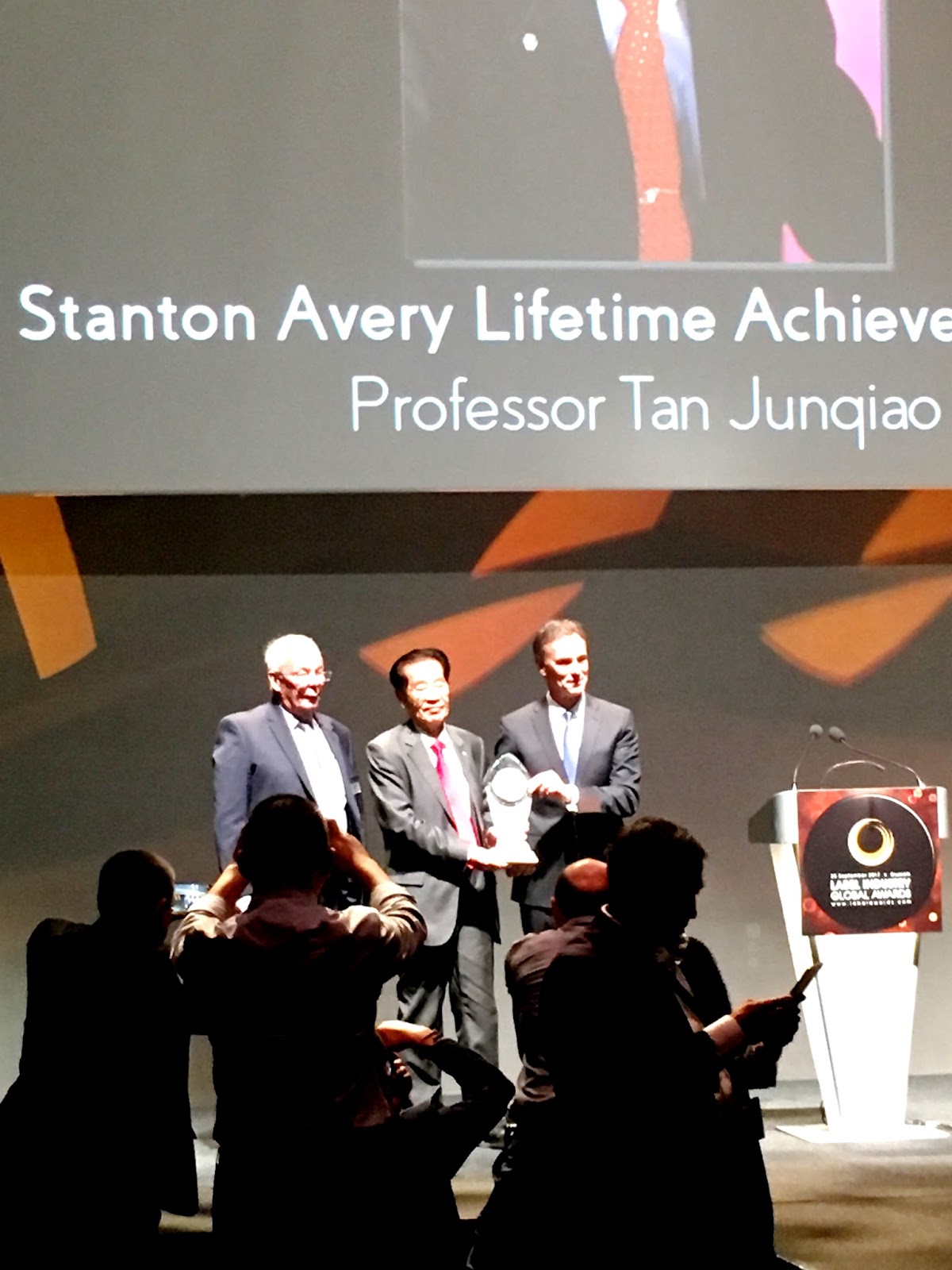
Professor Tan Junqiao receiving the receiving the Stanton Avery Lifetime achievement award from Georges Gravanis, President, Label and Graphic Materials, Avery Dennison and Mike Fairley


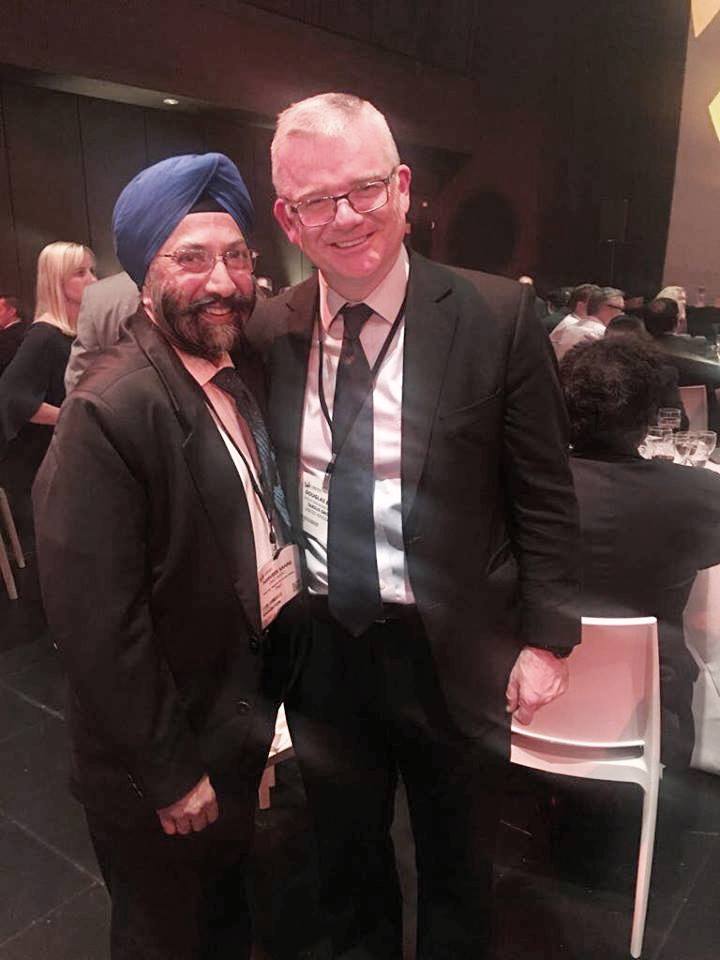
With Douglas Emslie, Tarsus Group Managing Director  


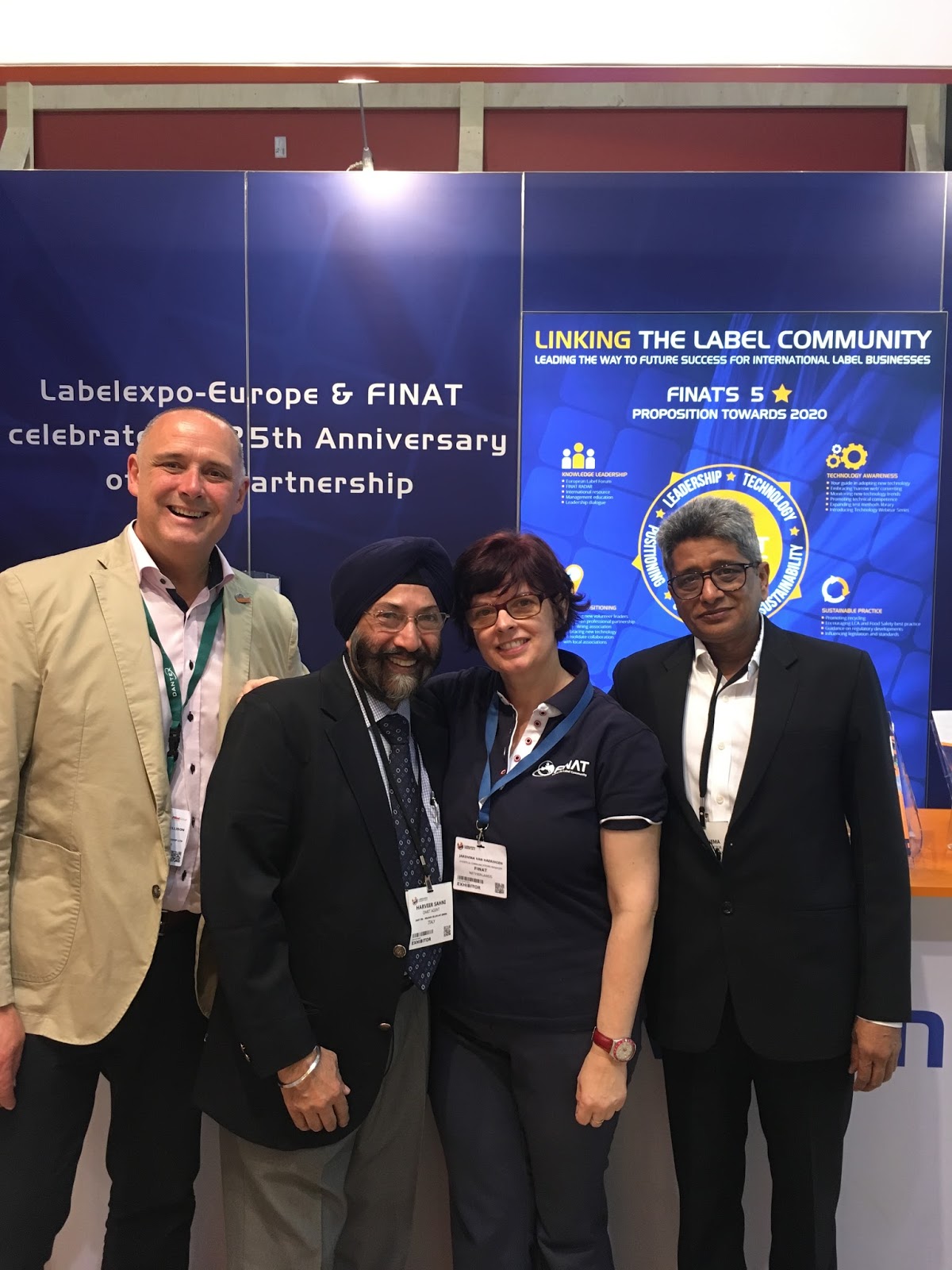
With FINAT President Chris Ellison, FINAT events and communication manager Jakovina and LMAI Vice President Rajesh Nema


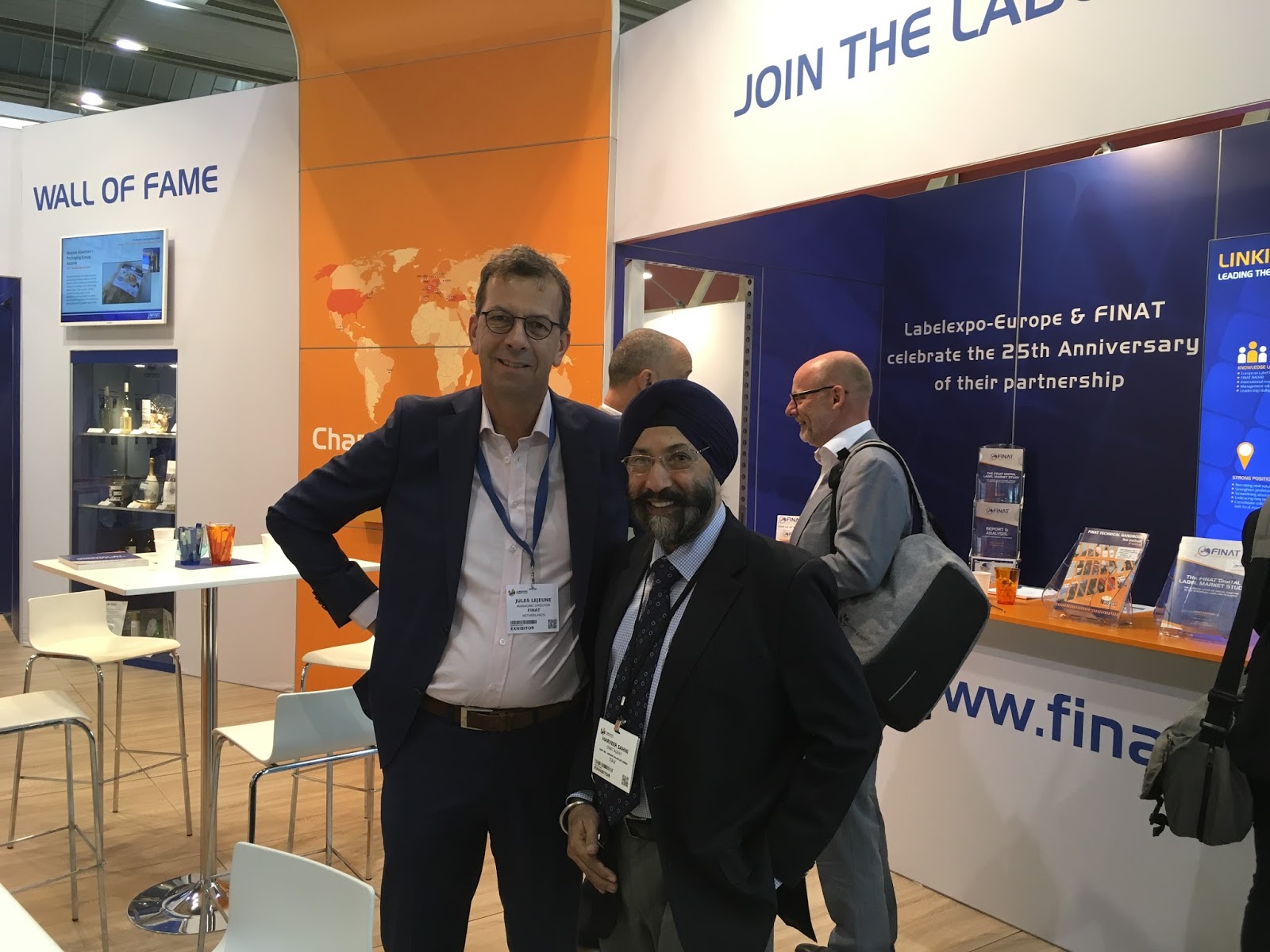
With Jules Lejuene, Managing Director FINAT


FINAT President in meeting with Mike Fairley at the "Label Academy" Stand


Networking at Dinner hosted by Lisa Milburn for Industry friends and colleagues around the world


Jakob Landsberg Sales Director of Nilpeter with Niklas Olsson Global Brand Manager of Flintgroup


With Lisa and Mike Fairley at the dinner        
SMI Team at their Stand


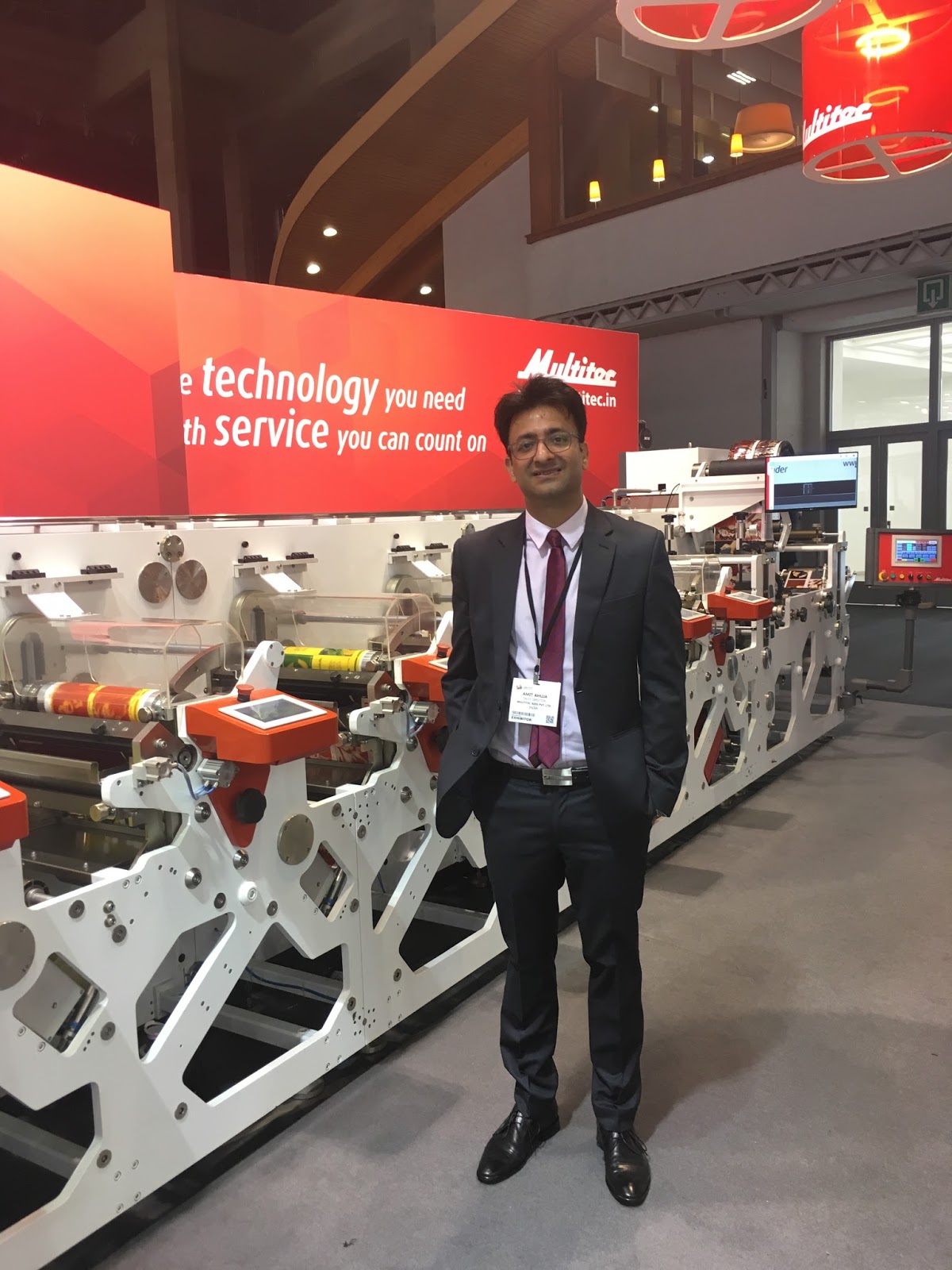
Amit Ahuja Multitec            


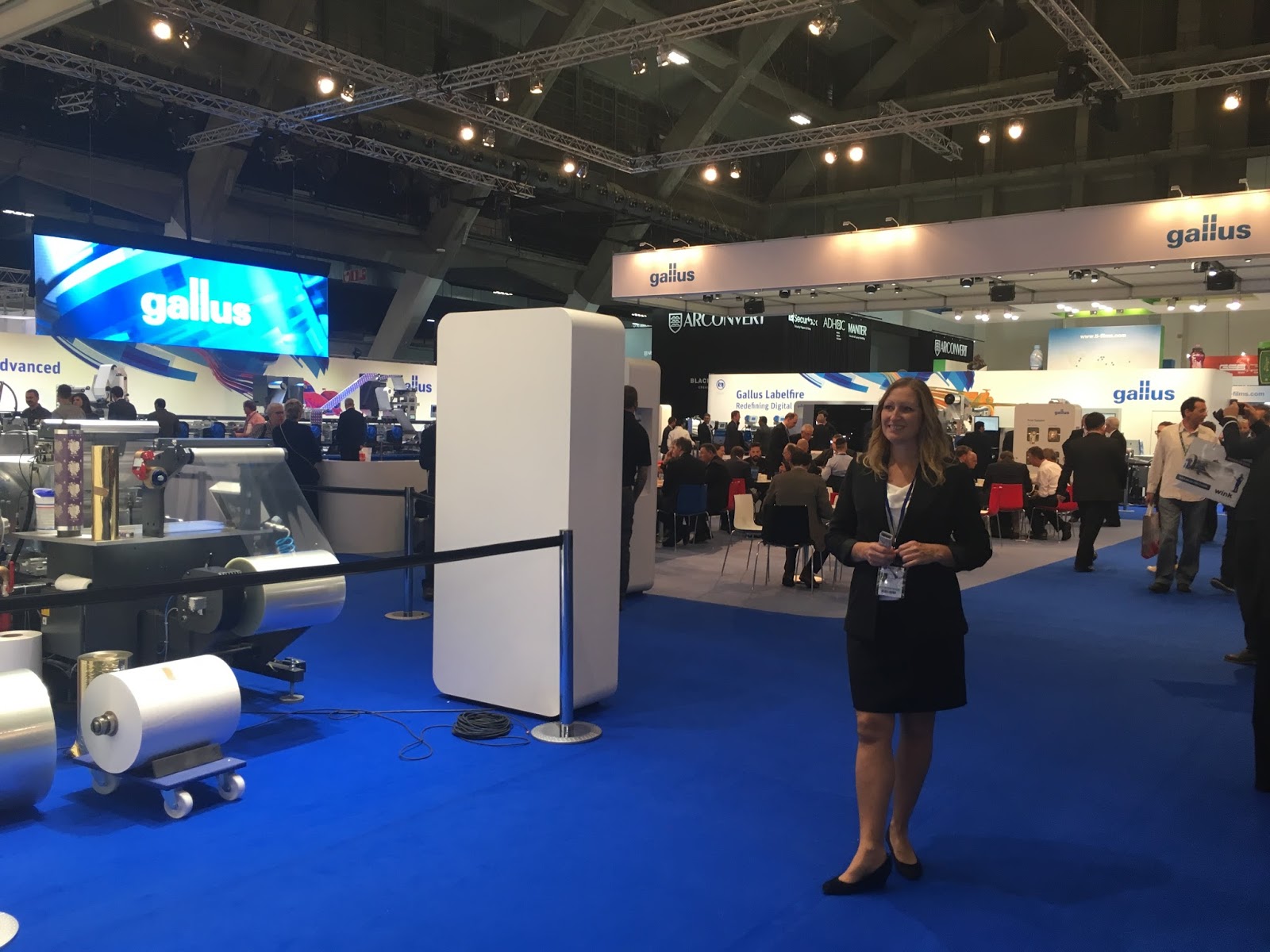
The Gallus Stand
 
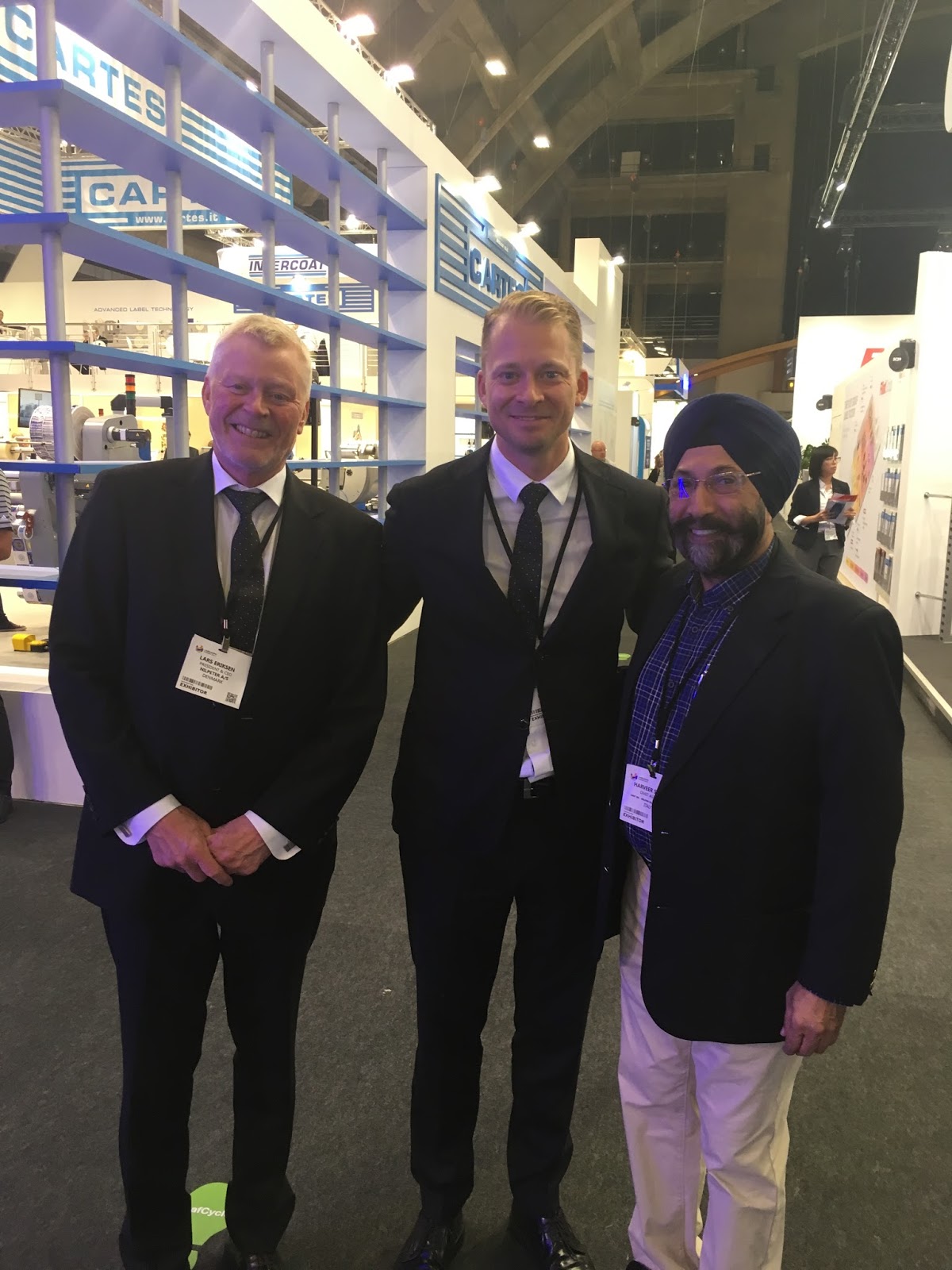
With Lars and Peter Eriksen of Nilpeter
 
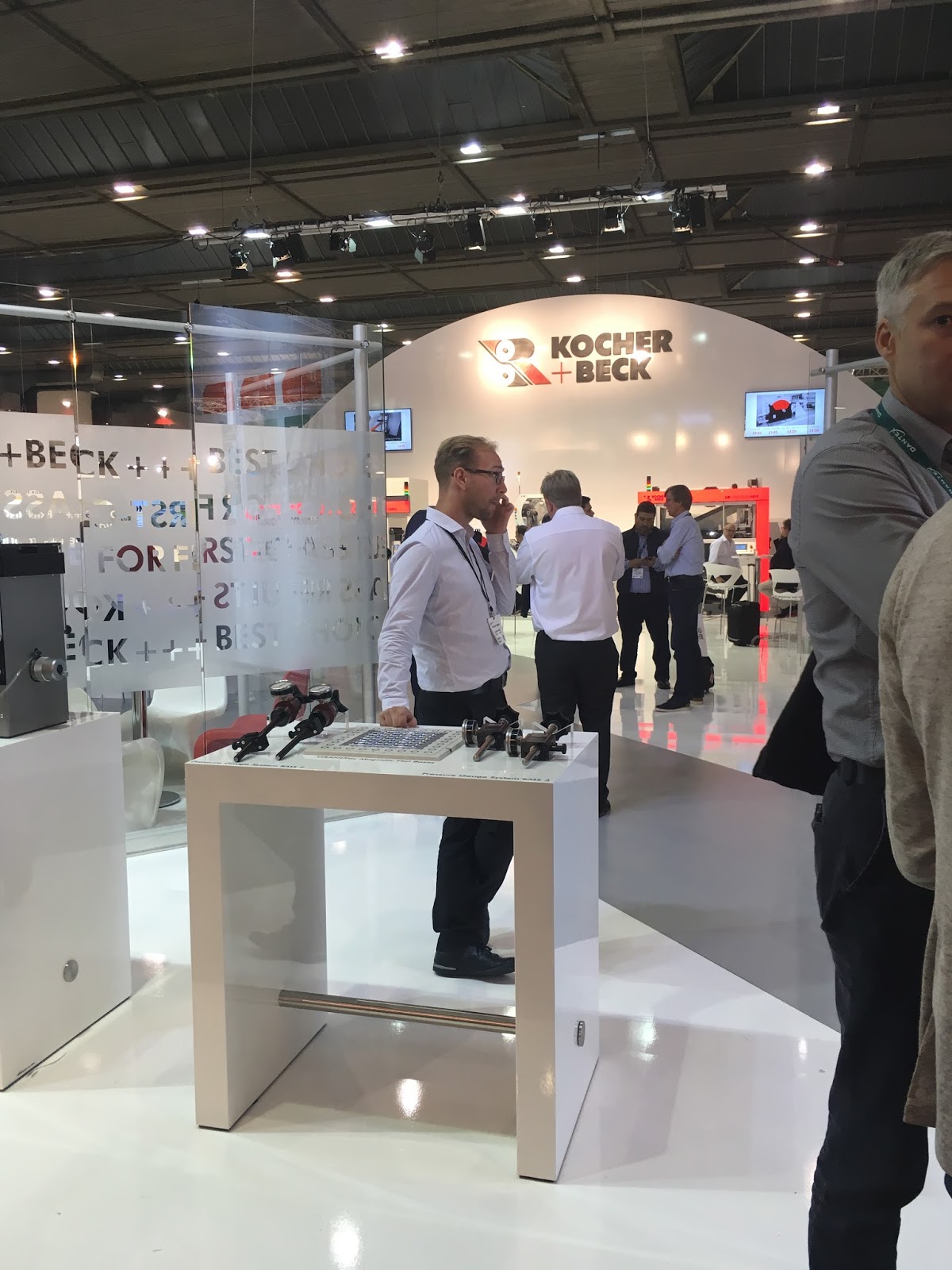
Kocher + Beck Stand
 
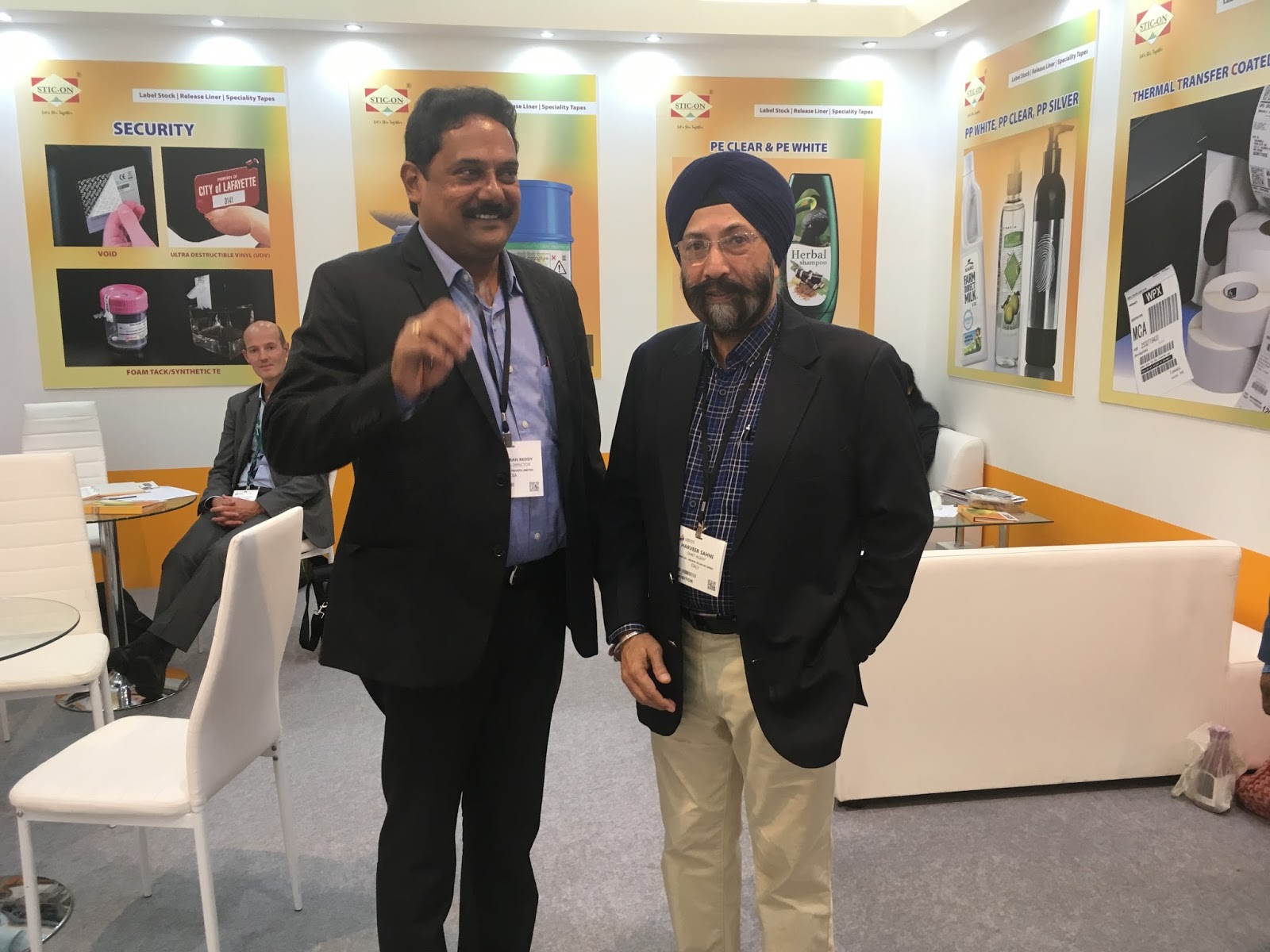
Karan Reddy of SticOn papers Hyderabad
 
Tapan Patel of BST Eltromat


John of Orthotec  
Bobst Stand  


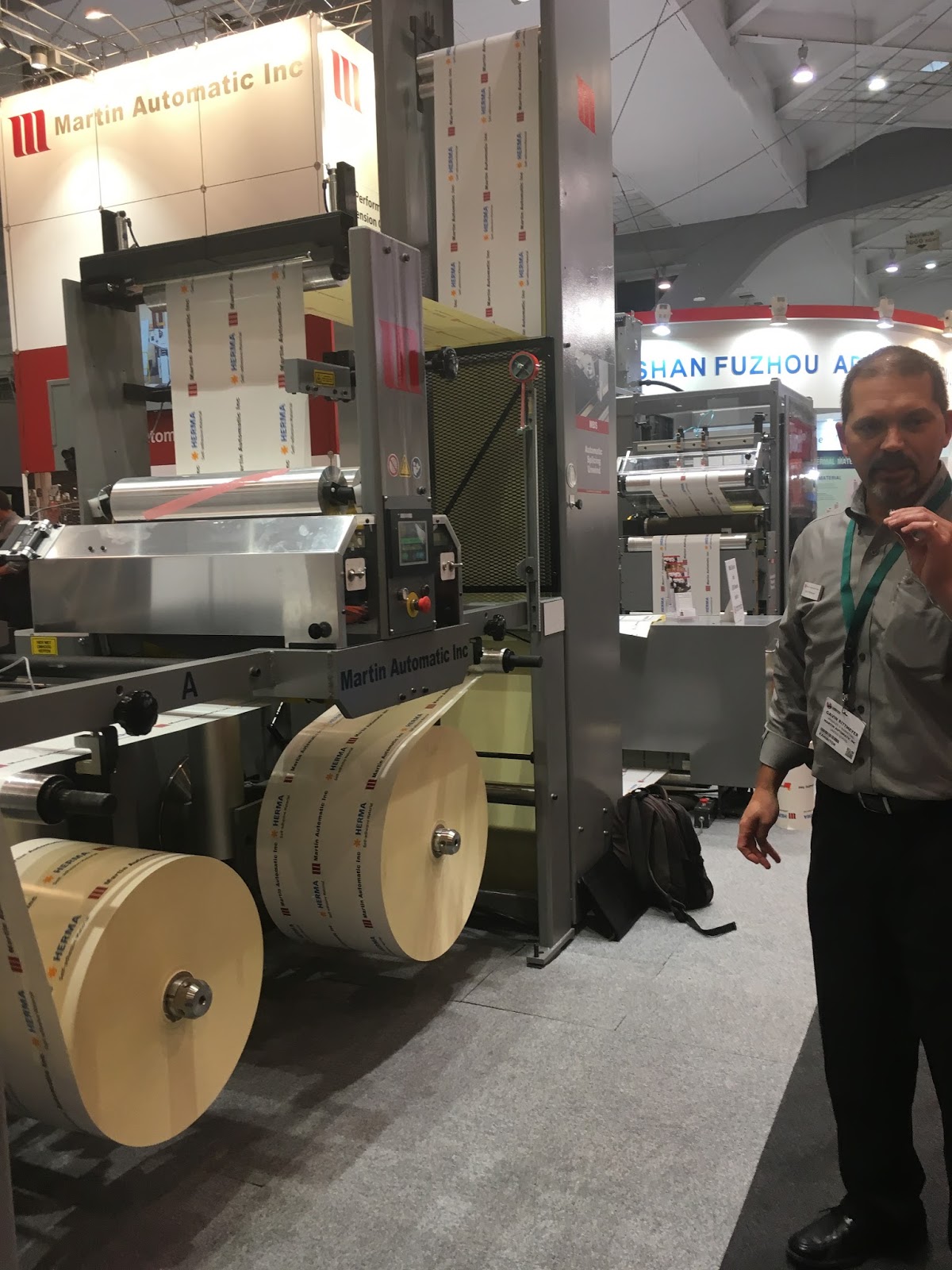
Gavin Rittmeyer of Martin Automatic
MPS Stand


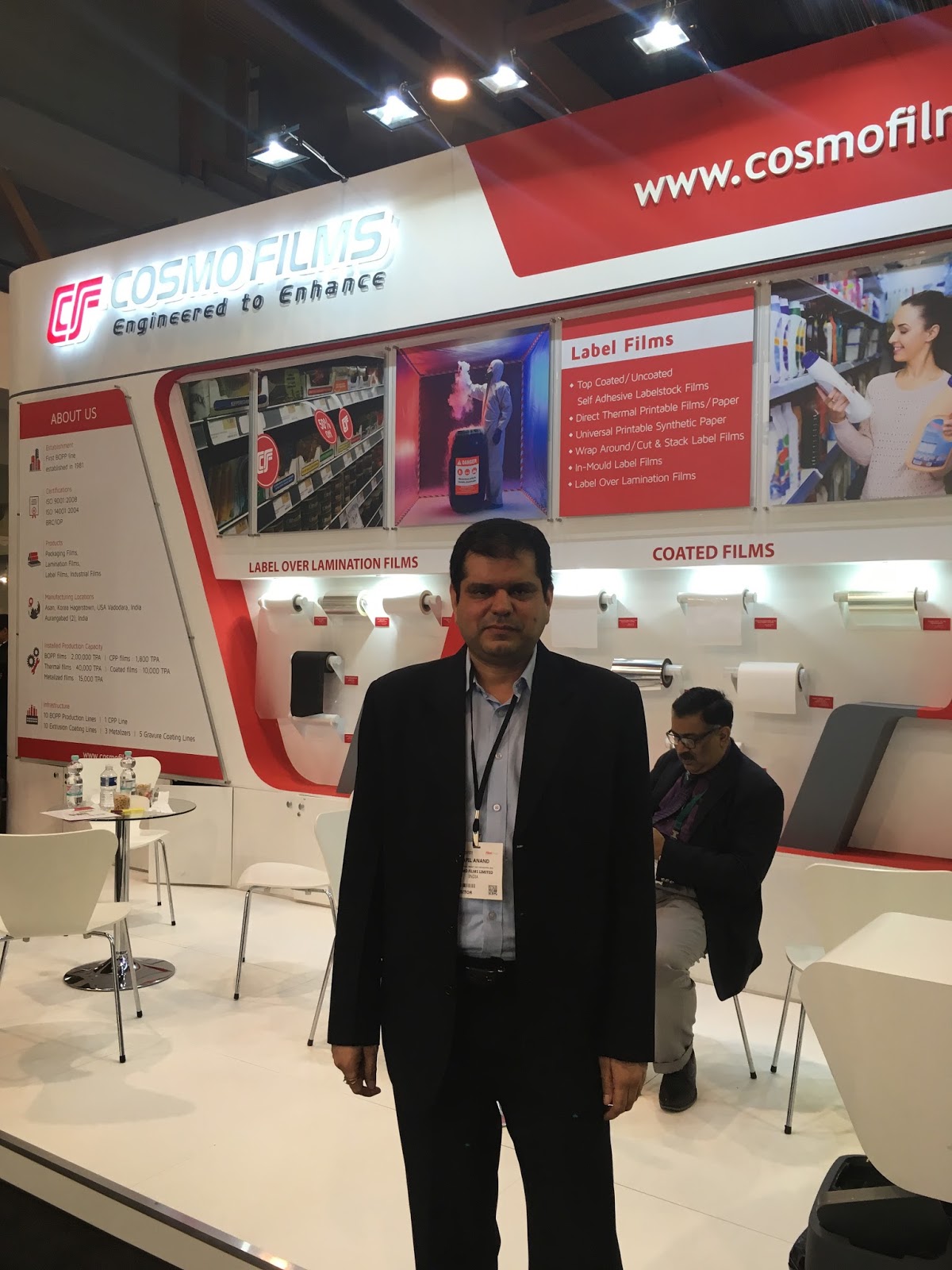
Kapil Anand of Cosmo Films
Marco Calcagni of OMET


Spilker Team


The Sahnis with Paolo Grasso, Omet


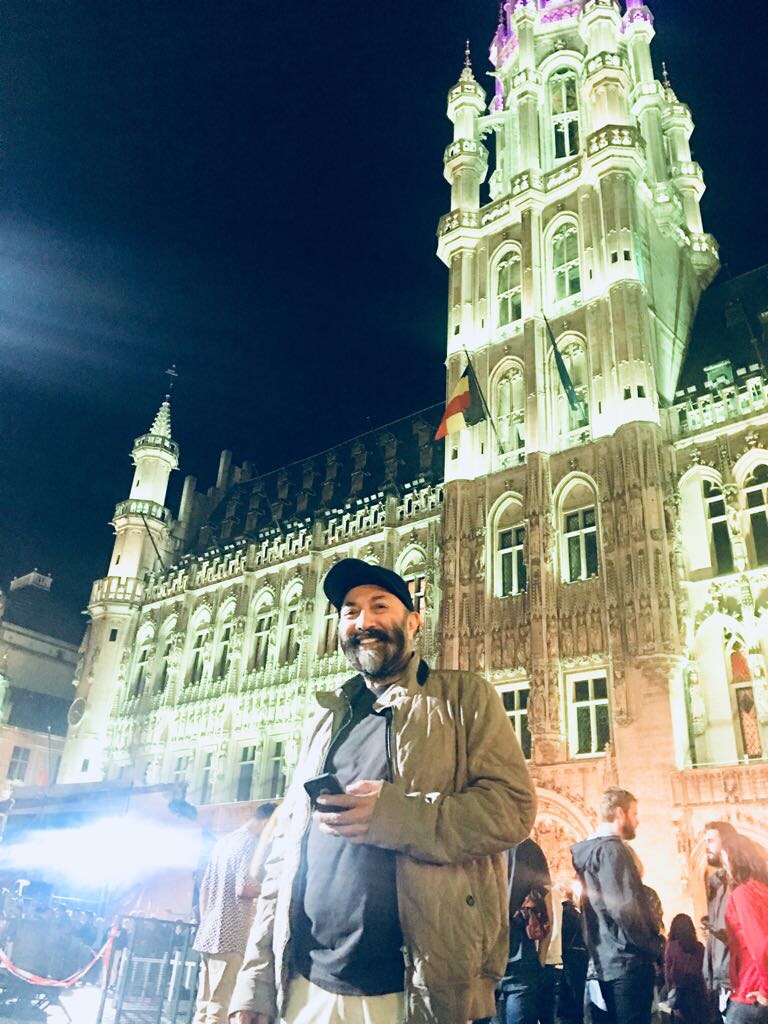
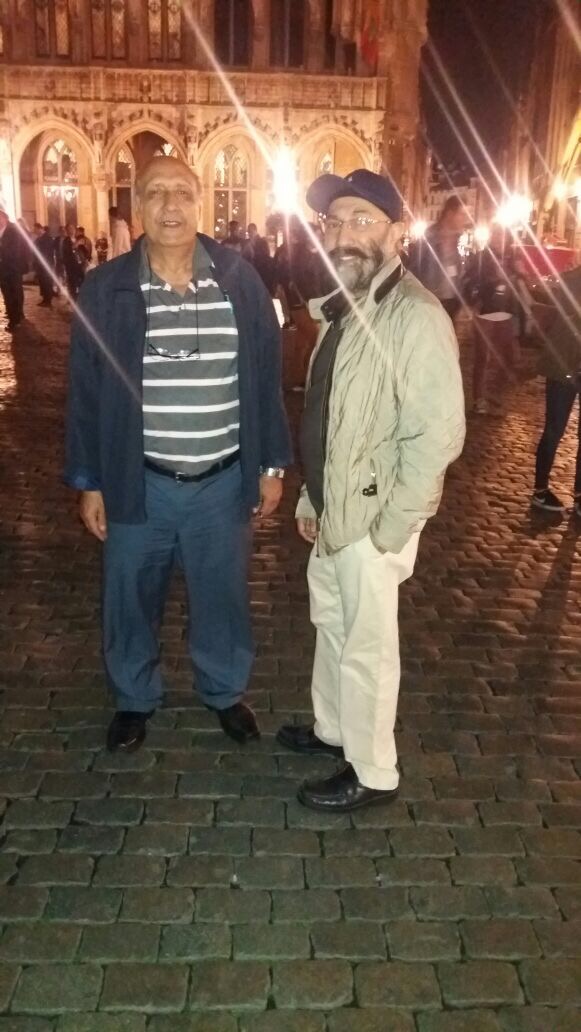
No Labelexpo at Brussels is complete without having spent a casual fun evening at the Grand Place!!!


Compiled By Harveer Sahni, Chairman, Weldon Celloplast Limited, New Delhi October 2017
www.averydennison.com
Living in a rented chicken co-operative, a young American poverty stricken man in his early 20s worked as a night clerk to fund his education. He stopped school and went to live for a year in China, where he gained experience working with a printing press. He returned to USA after the year, graduated and desperately tried his hands at various business options, he even sold smoked bananas! He then took on a morning job at a flower shop and later in the day started to experiment on various small things in a 100 square foot place nearby. He came up with the idea of making self sticking labels. With the printing press experience behind him he saw the vision to start his new venture. With no money of his own, he borrowed 100$ from his fiancée, Dorothy Durfee, who later became his wife, to invest in his startup business. Using a washing machine motor, parts of a sewing machine and a saber saw, he developed the world’s first self adhesive label cutting machine. In 1935 he started his maiden venture Kum-Kleen Adhesive Products Co which would be the mother enterprise of the world’s largest labelstock company Avery Dennison Corporation and this poor man was"Ray Stanton Avery!"
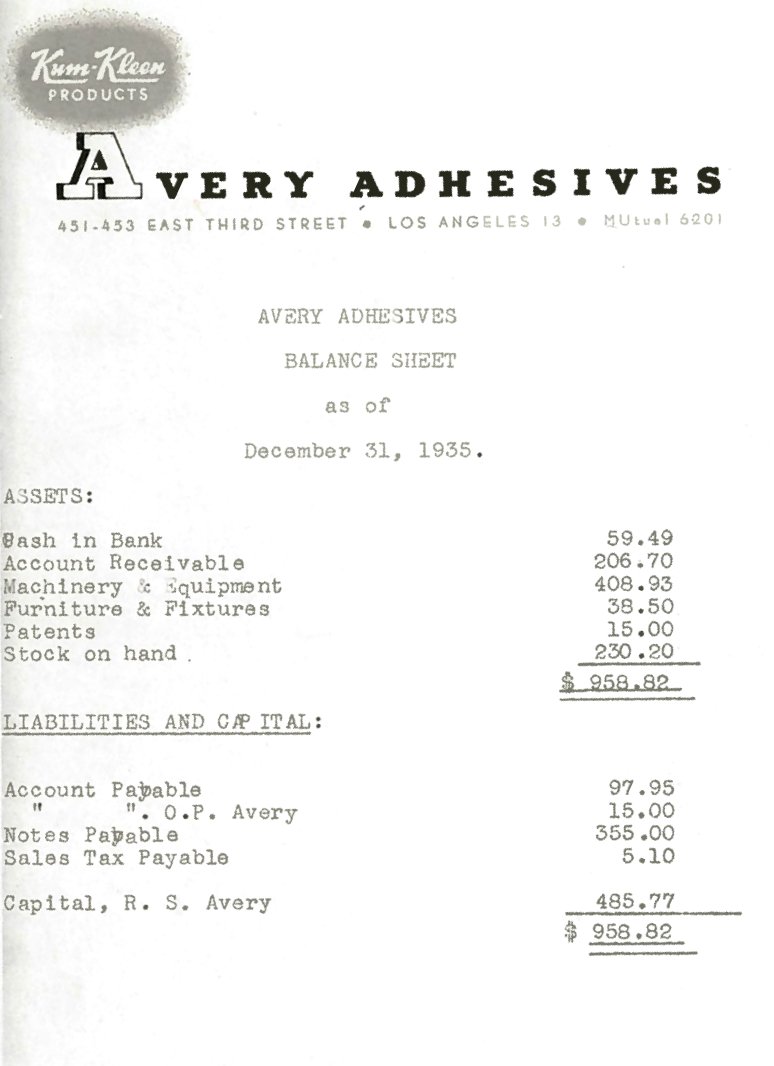
In the first balance sheet of the company on 31st December 1935, the total assets stood at 958.82$ and Stan Avery’s capital at 488.77$.
The company was later renamed Avery Products Corp. based in Pasadena USA. In 1990 it was merged with Dennison Manufacturing of Framingham, Massachusetts, a firm that made and marketed adhesive label products as well as glue sticks, felt markers and other office supplies through such chains as Home Depot and Staples. It came to be known as Avery Dennison Corporation. The business so acquired from Dennison Manufacturing, became the Office and Consumer Products Division. This business along with their “Designed and Engineered Solutions” business was later sold to their largest customer CCL Industries Inc. for 500 Million USD.
R Stanton Avery
R Stanton Avery died in 1997 at the age of 90 years. At that time the company had 16,000 employees and annual sales of $3.2 billion. As of 2016, Avery Dennison’s sales were 6.09 Billion Dollars with manufacturing and distribution presence in over 50 countries, product sales in 90 countries and 25000 employees worldwide. They are ranked 427 in the list of Fortune 500 companies.
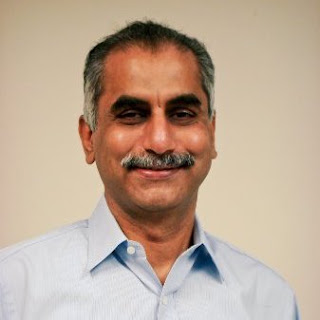
Raj Gopal Srinivasan
As western markets started showing signs of saturation and slowing growth rates, Avery Dennison took a strategic decision to invest in emerging markets.Chinaand India being home to over 37% of the world population became the obvious destinations to invest into. The China investment happened in 1994-95 and investments into India followed soon after. Indian pressure sensitive labels market was still in a nascent stage and the potential of this technology had neither been fully unraveled or exploited. Wet glue labels were largely prevalent. Manual labeling or wet glue applicators were in use with most brand owners. An Avery Dennison team, led by Ron, set up its base in India. Raj Gopal Srinivasan was appointed the first General Manager to build and to lead a motivated team. Under his dynamic leadership the first team of 25-30 employees gave shape to the project and in March 1997Avery Dennison India Private Limitedcommenced operations as a part of Asia Pacific Division of Avery Dennison Corporation.
The initial operations were started in a leased facility at Narsinghpur Industrial Area, Gurgaon with a single slitter to slit and distribute material imported from their units outside India. Given the size of the country and the label industry spread in small numbers across all regions, it was gigantic task with a limited team to achieve levels of business that would do justice to their stature as a multinational. Raj and his team did an excellent job by building personal rapport and relationship that extended bonding not only to the company managements but also to the families of owners. It was relationship selling at its best. A setup that was based entirely on imports was difficult to sustain as custom duties were high, foreign exchange fluctuated and rules were stringent. The input cost variations made stable selling prices a challenge.The management at Avery Dennison soon realized the imperative need to produce locally. A one meter wide hotmelt adhesive coater was installed in January 1998 to produce stocks with imported raw materials. The initial staff had a perfect team spirit instilled in them and motivated to achieve more with less resources.

Mahesh Pathak
A few of those initial team members of Raj Srinivasan are still working with Avery Dennison.Mahesh Pathak, joined in 1997 asone responsible for entire process and quality of plants. He was instrumental in setting up the entire department from scratch and commercialized all products locally with success. He was responsible for the organization to be the first certified Six-Sigma BB in whole of Asia-pacific region. He is also responsible for having lead the expansion and setting up of all plants. He has risen to be theSenior Operations Director – South Asia Pacific and Sub-Saharan Africa (SAP and SSA).Umesh Agrawal, joined in 1997 as materials manager and over the years took up different responsibilities in the organization. Heading the operations from 2001-2003, Head of business and product development 2003-2006, Director-Supply Chain and Product Development 2006-2012, Director Supply Chain 2012-2014 South Asia and South Africa and now Director Supply Chain, Asia Pacific.Muralie KS, a Chartered accountant joined the team later in 2008, he is the Finance Director of the company.Sailesh Kapur joined Avery’s team in January 2008, he built up a strong connect with customers and also shaped up the present structure of their sales organization. Other members of Raj Srinivasan’s team who also contributed to making a strong foundation for the project but later left the organization includeDhiraj KapurandKapil Anand.
Once local production started, business did begin to settle down, however high duties and political uncertainty in country drove the company to start innovating and develop products based on local inputs manufactured to their stringent specifications and quality control systems. In 2001, Avery Dennison started to siliconize their own release liners and started to produce adhesive locally. This exercise of localizing and reducing dependence on imports along with lean manufacturing to economies of scale helped the company to offer products at affordable prices. Avery Dennison also took upon themselves to educate brand owners about the benefits of usingPressure Sensitive Adhesives(PSA) labels and about the consistency of the quality from Avery Dennison products. This not only brought additional business to them but helped to grow the market size in the country. Once the business situation settled down, by 2004 Avery Denison India was on a steady rate of double digit growth. It was time to make significant investments in technology and people as also to contribute to the expansion of PS market in India. It was also time to expand.
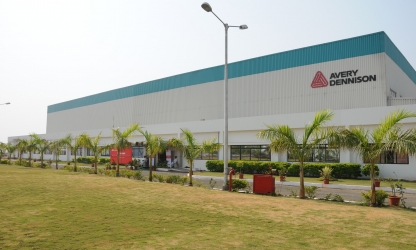
Avery Dennison Plant in Pune
In 2007 land admeasuring 22 acres was acquired at Ranjangaon near Pune for expansion. In 2008 the facility was ready to go into production with a one meter hotmelt coater, with capability to run at 500 meters per minute with inline silicon coating, this compared to the first one meter coater at Gurgaon that could run at 250 meters per minute. The facility was inaugurated by Dean Scarborough, the previous global CEO and President of Avery Dennison Corporation. An interesting story of his visit is that Dean flew into Mumbai on company’s private jet from where he came to Pune in a helicopter. The pilot of the helicopter lost way and landed in fields nearby and Dean had to be brought in by a private car. In 2010 having paved the path for stable growth and leaving behind a legacy of service to the customers as a primary focus, Raj Srinivasan left for USA. He had inculcated in a culture at Avery Dennison India of going to any extent to honour commitments and deliver top-notch service. It is his legacy that 95% of genuine requirements are serviced within 36 hours. The legacy has been carried on and improved upon by the teams that have succeeded him. Good planning, in-time supplies, exact sizes and good forecasting specially with imported materials, has become a way of life for the supply chain teams now. “97% of these targets are met and we are assessed and rated as per the 36 hour target” says Vivek Kumar, who is heading the Supply Chain at Avery Dennison. He further adds, “Stringent quality control and consistent quality makes us deliver to happy customers!” With the depart of Raj Srinivasan to the USA,Anil Sharmawas appointed to head the Indian operations.
Anil Sharma
Anil Sharma brought in a new wave of professionalism. Building the foundation and establishing the fundamentals from a startup, needs a lot of personal human intervention, which was well delivered by Raj and his team. The company under Anil Sharma gradually started to move from being men driven to systems driven and building up to the next level of expansion and growth. Implementing the systems for order registration, timely delivery, payments collection and addressing customer concerns. All these processes started to become systemized while still maintaining the personal connect. 2011 was an eventful year for Avery Dennison in India. Another 1.5 meter hotmelt adhesive coater was installed at the Pune facility to enhance production capacity. Since they already had a production facility in North in Gurgaon and also in the West at Pune, a need was felt for having a stock point South India to make just-in-time supplies to customers in the south, adhering to the legacy of excellent customer service delivery. A slitting facility was also commissioned in Bangalore in 2011.
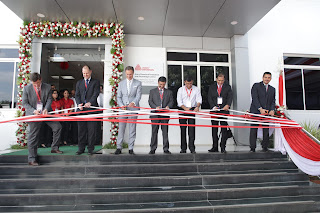
Inauguration of Innovation and Knowledge center PUNE
In the same yearAvery Dennison Knowledge centerwas set up in Bangalore. It was largely felt by Anil Sharma and his team that there was a dire need of training in the Indian label industry. There is also an acute shortage of trained manpower in the industry that was steadily growing with increasing population. High numbers of educated young people are coming out of universities getting employment and in turn creating a huge market for retail and eventually labels. According toJitesh MehtaDirector Product development, “This knowledge centre was created to be a brand neutral platform, purely to impart knowledge to converters and to their employees”. In recent times Avery Dennison has helped trained many young boys in collaboration with the Indian label association,LMAIhas also helped some of them with placement in label manufacturing companies. This centre aims to impart skills and not to do any brand promotion.The knowledge center has recently been shifted to Pune because they already had their Research and Development center there. It was synergy to have the Research and Development center and knowledge center at the same place.

With substantial investment made in 2010-11 they had surplus capacity and capabilities in their hands. Avery started to invest in the South Africa and other African markets to expand the sale of their products in these countries. Marketing team was hired locally in these countries while finance and back-end support is handled in India. It is interesting to note that they were the first among the organized global labelstock manufacturing companies who invested in these markets. Avery Dennison has in recent times also endeavored successfully to expand their reach to countries around India selling their products to Srilanka, Pakistan, Bangladesh and Nepal as well.
In 2014 to expand further and augment its range of products offered, Avery Dennison India installed another coater at Pune. This time, it was an emulsion adhesive coater of 1.50 meter width. With increased manufacturing capacity and capabilities a bigger range of products is now being offered to their customer base. According to Vivek, who heads the supply chain management in South Asia, Avery Dennison’s bulk of the production i.e., about 350-400 SKUs comes out of the Pune facility. Gurgaon plant now complements the total production most of which is rolled out from the Pune plant. Solvent based adhesive products are still imported and sold wherever required. 95% of all products sold by Avery Dennison in India are made in India complying with the Prime Minister’s call to “Make in India”. 20 years ago they were largely reliant on imports and now only 8-10% material is imported, rest is all manufactured in India.
Pankaj Bhardwaj
In 2015 Anil Sharma was elevated to take up larger responsibilities as Vice President and General Manager, South Asia Pacific and Sub Saharan Africa. His team-matePankaj Bhardwaj, became his successor as Commercial Director-South Asia, Labels and Packaging Materials. Later this year in 2017 Pankaj was entrusted with a larger role as Senior Director & General Manager-South Asia at Avery Dennison India Pvt Ltd. Pankaj became a perfect combination of Raj’s legacy of relationship building and Anil’s professionalism. While maintaining close co-operation with converters, most of whom are running family owned businesses, he leads his team to interact with brand owners advising them on decoration, value addition on labels to keeping them updated on the latest trends. Avery Dennison continues to invest in technologies and new business areas likeRFID, specialty tapes, reflective products and sustainable manufacturing. They are also investing time and money in advising printers on new decoration and converting techniques as also helping expansion of the PSA label markets to smaller towns of India.
Pankaj feels that it is good that more labelstock manufacturers are coming into the market. It maybe challenging in view of depleting margins but if that makes the market size to grow, it is welcome. Avery Dennsion looks at India as one of the fastest growing markets and they are willing to continuously invest here. Proof of their commitment is evident from setting up of R&D center, Knowledge Centre, support to LMAI, support to technical workshops and label awards, etc. Adjacent technologies do present a challenge; Shrink sleeves growing at the same rate as PSA labels, IML is a niche not very wide spread and Digital is to be watched. Indulgence in digitally printed label segment is fast becoming an imperative. Despite the market dynamics Avery Dennison India in the last 5-7 years is achieving a CAGR (Compound aggregate growth rate) of double digits.


Recyclability and waste management are industry challenges. As an environmentally consciouslyCorporation, Avery Dennison has published its global sustainability goals. Avery Dennison India is making steady progress to support these goals by having all Indian sites FSC certified and more than 50% paper sourced from FSC certified sources. Also, all Indian sites are more than 99% landfill free.

Company is continually redesigning its products to reduce carbon footprint and promoting 25 mic PET liners given thatpaper liners are largely 60-62 gsm substance and are extremely difficult to recycle. PET is recyclable thereby reducing the impact on environment.
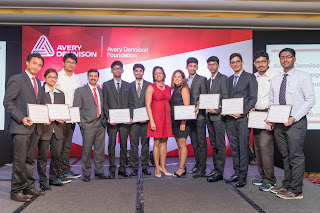
Corporate social responsibility is getting increasing focus for Avery DennisonIndia. Company has multiple programs in the areas of women empowerment, children health and education. Among other programs, Avery Dennison Foundation runs a program by the name of 'Avery Dennison Spirit Of Inventions' in collaboration with six universities by recognizing and rewarding innovative ideas from students in the field of science, engineering and technology.


Written by Harveer Sahni Chairman, Weldon Celloplast Limited, New Delhi August 2017
Printing magazines and publications may reproduce this article giving credit to author.
For advertising on this blog please email toharveersahni@gmail.com