India shining! Indian Exhibitors at Labelexpo Europe


Fourteen Indian companies will be showcasing their produce at Labelexpo Europe 2017 in Brussels. I am tempted to look back at 2005 when my company Weldon Celloplast Limited was the only Indian company exhibiting its labelstocks at the show. It remained so with each subsequent edition of the show until 2009. In 2011 we were joined by at least three more Indian companies as exhibitors and thereon the number of exhibitors from India has continued to slowly increase. Indian companies have benefitted from Labelexpo Europe. Initially it was a learning process as visitors and coming back home to upgrade their products to global standards. I contacted all the fourteen who are exhibiting to know their experience. Eleven of the fourteen responded. What is interesting to note is that all the Indian exhibitors at Labelexpo Europe 2017 are repeat exhibitors. Each one of them was present at the 2015 Labelexpo in Brussels. This actually indicates the value that this exclusive show delivers. The suppliers return repeatedly to showcase yet again.
 
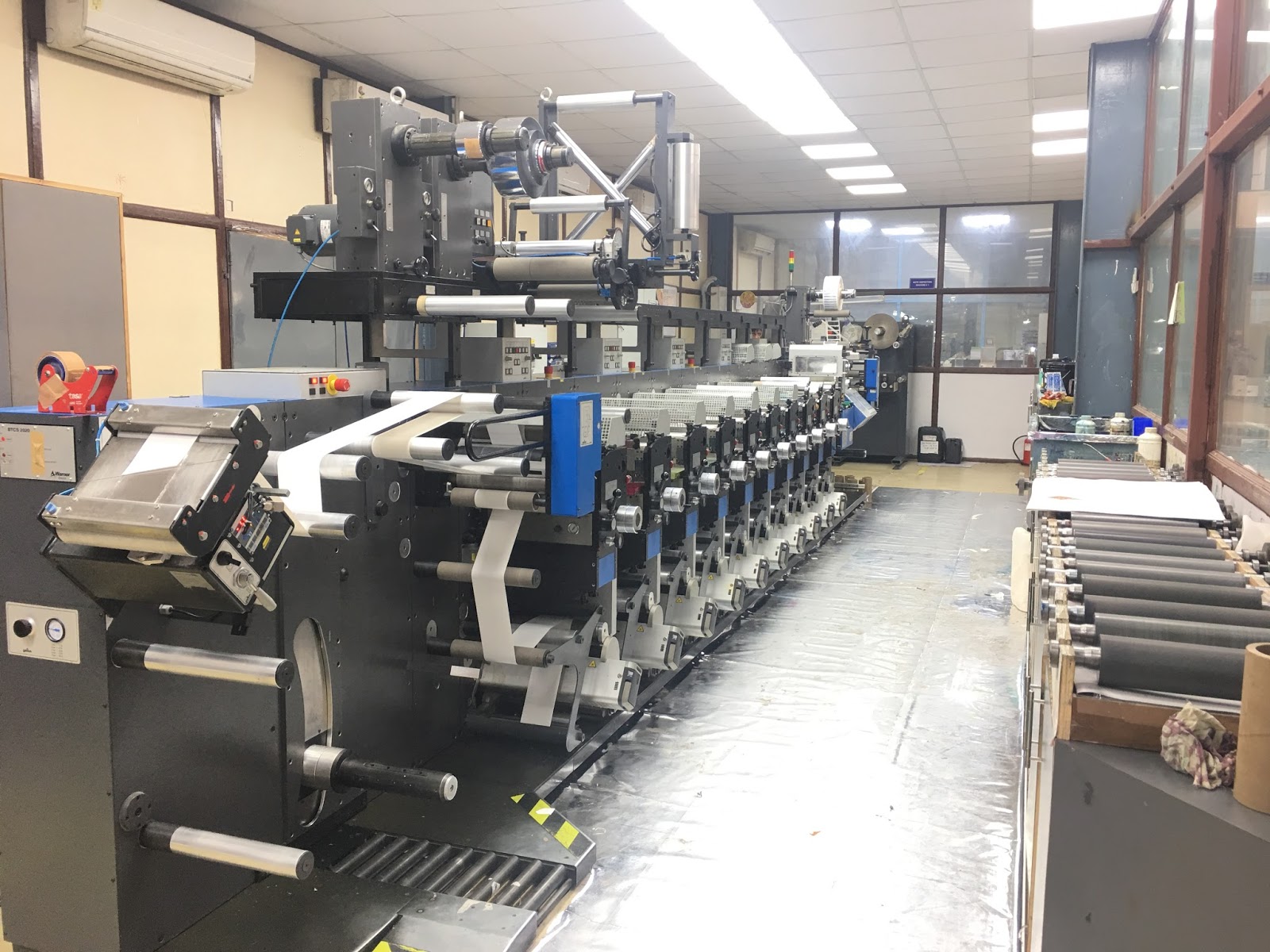
For a Label show or for that matter any print show to succeed, it must have the maximum number of running presses live onsite at the show. As I mentioned above until 2009 there was just one Indian exhibitor showcasing labelstocks. There was no Indian press manufacturer who could display a label press that could stand up to the international quality standards needed in a label printing press. At Labelexpo Europe 2011 we saw a welcome change when Amit Ahuja of Faridabad based Multitec Aids Pvt. Ltd. Stand No. 5C10, a design engineer showcased his label press. Multitec, setup in 1983, has continued to exhibit in all subsequent editions of this show. It will be their 4th time to be showcasing there running label press in Brussels. This time they will exhibit their S2 model which is a full servo press with metal sleeve/cylinder concept which is advantageous as compared to fibre sleeves. The plate cylinder has been converted into a sleeve for easy mounting with no gear contact between sleeve and impression cylinder. There is a direct servo drive to print cylinder and another direct servo drive to impression cylinder in every printing unit. The machine has fast setup time, low wastage and infinitely variable print repeat. Amit is happy that after multiple showcasing at Labelexpo they are recognized as a supplier of world class equipment economically. They are now hoping to extend their marketing to South America and African countries after their success in Indian and Middle East markets.
 
The largest amongst the Indian labelstock manufacturers, Ajay Mehta lead SMI Coated Products
Pvt. Ltd. Stand No. 11A27 was setup in 1993. In their 4th time showcasing at Labelexpo they will exhibit their large range of labelstock solutions. SMI offers 200 SKUs with various adhesive options, their products are sold to 22 countries. Ajay says, “Labelexpo Brussels is the Mecca of Label Industry, each show is better than the previous one. We are able to generate gainful leads with our participation in the show”. He further adds, “It also gives us an opportunity to meet friends from around the world”. SMI will launch two new label stock solutions; Clear on Clear and UV cured peel able adhesive label solutions, especially for “Wet Wipes” application. 
 
 
Cosmo films Stand No. 3C70 with Ashok Jaipuria as founder Chairman and Managing Director was established in 1981.They are a global leader and manufacturers of specialty films for packaging, lamination and labeling applications offering biaxially oriented polypropylene (BOPP) films, cast polypropylene (CPP) films and soon to be offered biaxially oriented polyethylene terephthalate (BOPET) films. Also a fourth time exhibitor at Labelexpo, they will display their entire range of label films for Wrap Around, Cut N Stack, IML and PSA labels along with over-lamination films, direct thermal printable film and universal printable synthetic paper. Pankaj Poddar, the CEO of Cosmo film while confirming that exhibiting here generates business, expresses his appreciation for this show, “Our experience at the previous shows has been very good. Europe has always been a leading market for coated films and PSA label films. One gets to see the latest trends that are going to be driving future demand in our segment”. Some of the new products that will be on display include high temperature direct thermal printable film which can endure temperatures of -20 to 130 degrees C, used for carcass tagging and deep freeze labeling.  Also on display will be premium label over lamination films in velvet, black velvet and scuff free finishes.
 
Third time exhibitor Shashikant Garware’s, Garware Polyester Ltd. Stand No. 3E70, established in 1978, are the first and one of the largest manufacturer exporter of Polyester Film in India. An ISO 9001 – 2008 certified company, Garware Polyester is global technology-driven organization with an expertise in  manufacturing,  marketing value added Polyester, BOPP, Thermal lamination and Sun Control Window Films. It has been a trendsetter in Polyester Film manufacturing for more than last 30 years with development of products like Motor Insulation Films, Low Oligomer Films, PET Shrink Films, Lidding films, BOPP films, PET and BOPP Coated LABELS film, PET Silicone Liner, PET Matt Film, Pet White Qpaque Film and Lamination Films (Wet & Thermal). At Labelexpo they will like to establish global presence in Label industry and to expand their network. They assert that the last two times that they exhibited has given them a platform to showcase the product range, specially the new products and innovations with an opportunity to meet new possible future clients and brand owner prospects globally.
 
Exhibiting for the 3rd time MonotechSystems Ltd. Stand No. 9A42 is manufacturer of solutions for printing and packaging industry in India representing a number of world renowned companies. They will display brochures and samples of their recently launched solutions and Color Press-Colornovo: UV Inkjet Label Production press will be re-launched with more additions to it, plus a Track and Trace Solution will be showcased. According to Tej Prakash Jain Managing Director, the previous two exposures have benefitted Monotech and now that they offer various inkjet solutions for label printing like monochrome, full color inkjet system, security printing and track and trace solutions, they would be looking at a good number of prospects. Faridabad headquartered AlliancePrintech Pvt. Ltd. Stand No. 11A/22 manufacturer of flexo label press is exhibiting for the 2nd time. Owner Jatinder Julka says, “Though we sold our machines in Arab countries and UAE yet it was most rewarding to find sales partners at previous Labelexpo in Western and Eastern Europe. We would like to strengthen our partnerships further”. India’s only flexible dies manufacturer Diehard dies Pvt. Ltd. Stand No. 7A46 exhibiting for the third time are a satisfied exhibitor who will display their range consisting of Premium flexible Dies, Laser Hardened flexible Dies, Brass and Magnesium embossing blocks, Foiling blocks, texture embossing, foiling blocks, multilevel embossing blocks, Flat cutting, creasing Dies and Rotary Dies. Owner T R Prabhu says, “It is a good platform to show case technology and innovations. We are also going to show case double sided plating steel flexible dies”.
 
Amit Sheth owned company Intergraphic India with their OEM partners Pulisi at Stand No.4A42 will exhibit their inline inspection machine with turret and re-inspection function. Stic-On Papers Pvt.Ltd.Hyderabad Stand No. 6E43 manufacturers of release liners and self adhesive labelstocks is exhibiting for the second time at Labelexpo Europe. Stic-On has been growing and expanding in capacity in recent times. Managing Director Karan Reddy states, “It is the platform where we meet new customers who come to know about our company. It is a time and place for our customer base to grow”. Harsh Doshi heading commercial siliconizing company Globus International Coaters Pvt Ltd. Stand No. 4A38 Mumbai is happy to be at the Labelexpo for the second time. According to him, “It is an excellent show. We participate to meet existing and potential new Customers as also to create new markets for ourself”. They will be exhibiting Solvent-less Silicone Coated Release Papers and Films. They will also be showing their new products Fluoro Liners, HDPE high temperature resistant liners and Non-silicone Liners. Gaurav Sathaye of United Speciality Inks Pvt. Ltd., Stand No.3E62 says, “It is an excellent show with label printers and solutions providers from India, Europe, Africa and South America visiting to know about the latest trends and to find alternate suppliers. This is our second time at Labelexpo and the last time we got a lot of interest from global distributors for our products. We are one of the oldest and reputed manufacturers of Printing Inks in India”. They will also display their new UV Flexo Opaque White, Jet Black, specialty and Security Solutions in inks.
will exhibit their inline inspection machine with turret and re-inspection function.

 
India’s largest hologram manufacturers U K Gupta lead, Holostik Ltd. Stand No. E-42, Hall No. 4, is the only Indian converter who has been continuously present at the last three consecutive editions of Labelexpo Europe. It is widely felt that this event is for suppliers to label industry as exhibitors and converters or printers are visitors. However in case of Holostik, they have found value in their presence here, so have returned for the 3rd time to be an exhibitor. When asked about their previous experience at the show, Umendra Kumar Gupta, Chairman and Managing director replied, “It definitely has been a good experience for us and this is the reason that we keep on participating in Label Expos. We get decent number of enquiries from the show and it also serves the purpose of brand building for our company Holostik”. Holostik will be showcasing the latest anti-counterfeiting technologies portraying their innovative products and solutions.
 
*Three companies namely Convertech Equipment Pvt. Ltd.Mona Equipment and IEEC Power Electronics PVT. LTD. also exhibitors at this show did not respond to my queries for information.
 
Written by Harveer Sahni, Chairman Weldon Celloplast Limited, New Delhi India August 2017
 
Printing magazines and publications may reproduce this article giving credit to author. 
 
For advertising on this blog please email to harveersahni@gmail.com 
 
Ray Stanton Avery
It is a time in the evolution of label producing technologies when development is taking place globally towards various tangents. Until the 1930s, wet glue was perhaps the only technology for label production and application. When in 1936 Ray Stanton Avery created the self adhesive label, another process evolved and started to grow so much so that in recent times the usage of self adhesive or pressure sensitive labels reached a level of almost 50% of all the labels produced. Screen printing is a very old technology, with evolution and further development of this process into other applications somewhere in the 1960s, when plastic containers started replacing the heavy glass containers in packaging consumer products, screen printing directly on containers became popular. This could not really be classified as a mass usage technique as it lacked the decoration capabilities that were fast becoming the need of increasing consumerism. Initially flat bed letterpress and then flexo rotary printing presses with in line die cutting provided a good platform for producing multi-coloured labels at faster speeds. Introduction of more decorating processes like varnishing, lamination and foiling on these presses made the screen printing on containers loose ground even though screen printing evolved and grew in other application.
 
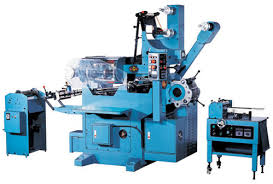
Flatbed label press
Over the next three decades narrow web label production saw landmark changes. Flexography saw immense technological advancements. Print quality improved tremendously and PSA (Pressure Sensitive Adhesive) label markets started to register amazing growth and proliferation. The printing and converting speeds which, in the initial years was 10-15 meters per minute on flat bed letterpress Japanese machines of 5-7 inches width had grown initially to 10 inches which later increased to be 13 inches to 20 inches and more. The printing and converting machines have also registered increase in speed, the new label presses are running at over 200 meters per minute. Ink technologies have also seen rapid changes. From the thick paste inks in letterpress to liquid inks in flexo printing. Drying techniques also changed drastically. In the initial days printers would hang paper web after printing on a clothes line to dry and then manually re-roll the labels. Then came the time when hot air drying was introduced on presses to increase speed. With introduction of UV inks the speeds shot up tremendously. As production speeds increased, number of printers also increased bringing intense competition. The need to reduce wastage and energy became an imperative to stay profitable. New changes and processes started to emerge on presses. The short web path, continuous production, inline inspection, and host of other changes were taking place in label presses. Introduction of LED UV inks is another step towards conservation of energy. Need for short runs, variable data printing and the speed of creation from computer to print made digital printing to also grow and evolve. 
 
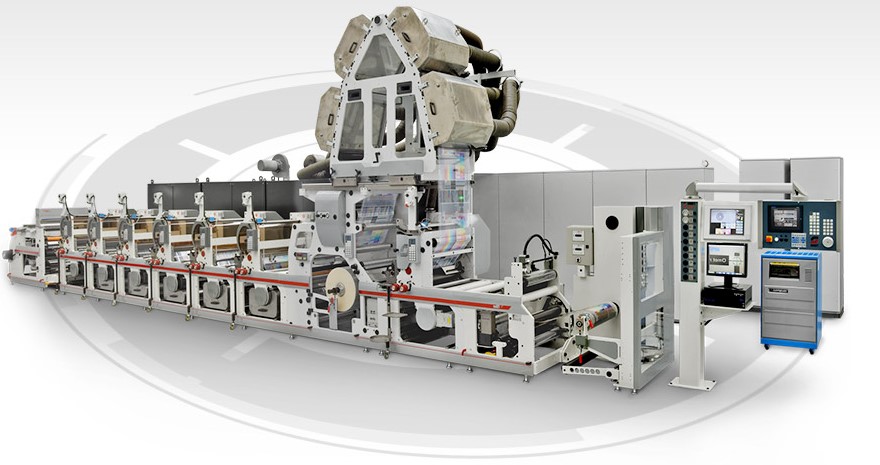
Hybrid label press  
In the beginning of a new millennium, to stay ahead of competition, label printers started to invest in hybrid machines with capabilities to print and convert with multiple technologies. Different printing technologies are now possible on the same equipment. Screen printing re-emerged in label printing machines with rotary screens, where high deposition of colour is needed. Gravure printing is also now a part of a label printing press where metallic inks are to be printed. Today presses are available with Flexo, Offset, Gravure, digital and Screen printing inline on the same press along with decorating and finishing like varnishing, lamination, embossing/debossing, die cutting, waste matrix removal, slitting sheeting in a single pass. The label presses have further evolved to have multi-substrate printing and converting capabilities. They are now capable of handling from films of 12 micron thickness to thick boards. These equipment are now able to produce a wide range of end products like labels, flexible packaging, shrink sleeves, lamitubes and folding cartons.
 
Labelexpo Europe has been the front runner in showcasing the evolving label printing and converting
technologies. Over the years it has acquired the status of being the Mecca of label industry. It remains the must-attend show for label printers spread across the world. Global suppliers of equipment, tooling, consumables, software, other related material and service providers exhibit their products alongwith new developments made by them at this premium show. This year 650 exhibitors will showcase their offerings at Labelexpo 2017. At the last showing in 2015, 31795 visitors came from 158 countries to witness the labels evolution taking place and showcased in 7 halls that have now increased to 9 halls. Digital label printing and converting that had miniscule presence some years ago is now spread in dedicated halls with 65 digital presses in operation. The show has grown from strength to more strength over the years. It has now become the must attend show for the global label printing and packaging companies. The story in India is no different, as one the fastest growing economies in the world, the label industry also is growing at a healthy and steady pace. Indian label printers have started to patronize this expo in growing numbers that keep swelling in every showing of this premium event. In an effort to assess the mood of the leading label companies in India I have asked them about their interest in the event or what motivates them to be there and maybe about their intention to buy.
 
Arvind Shekhar
Planning to visit Labelexpo Europe for the first time, South India Bangalore based Arvind Shekhar Director of Sai Packaging says, “Yes I will attend Labelexpo, It will be my first visit and I am looking forward to the opportunity to learn.” Also planning to visit first time is Himanshu Kapur, Director of J K Fine Prints Pvt. Ltd. Mumbai. He is son of past President of LMAI, a veteran of label industry, Surendra Kapur. Himanshu feels it is necessary to be at the show since no one wants to be left behind in the technology race for achieving perfection. His views are reaffirmed by Uday Lodha, Director Barcom Ltd. Mumbai. He says “I will attend Labelexpo because I have missed out on last two occasions and being part of the label fraternity I can’t afford to do that this time around and of course I look forward to connect with friends, colleagues and associates under one roof which is brimming with world class innovation and supreme technological advancements”. Rajendra Gandhi, Director Maharshi Labels Pvt. Ltd. Ahmedabad states that the event cannot be missed as we must attend to gain knowledge and update ourself.


Changing scenario in the global label industry has made many printing companies to sit up and study
Hemanth Paruchuri  
 the developments taking place. No other event in today’s time brings together the complete gamut of changes happening in the label industry globally. Mukesh Goel, Director, Gopsons Papers Ltd. New Delhi wishes to understand the technological advancements and future direction of this industry.  Y H Solanki, Managing Director Sicon Packs Pvt. Ltd. Mumbai expresses that it is the biennial knowledge point for understanding the evolution of labels and the direction it is going in. The Indian industry is convinced that it is time to make strategic decision to restructure or plan their moves for leading their companies to new directions and excel. Hyderabad headquartered Pragati Pack has been in the fore front of industry constituents who are consistently investing in emerging technologies. They have never missed a Labelexpo for many years. Though the CEO of Pragati Group and industry stalwart Narendra Paruchuri is not attending but heading their label business his son Hemanth Paruchuri Director, Pragati Pack (India) Pvt. Ltd. Hyderabad will attend and he says “It is an important show that gives insights into trends in the industry and also showcases the latest technology”.  Jaideep Singh Owner Zodiac Printers also from Hyderabad expressed that it is a melting POT of all new innovations from across the globe. To be there is necessary for us to understand and assimilate, which enables us to plan our future strategy.


With India attracting the interest of global players in labels and packaging notable investments have taken place mostly as acquisition of running successful enterprises by companies like Huhtamaki, Skanem, ITW, etc. Amar Chhajed President Huhtamaki PPL Ltd. says, "We will be studying the latest developments in digital printing and finishing as well as new age technologies like EB curing. Sustainable raw material is also an area of special interest to us". Hariharan Venkataraman Managing Director, Skanem Interlabels Industries Mumbai- India will attend Labelexpo to catch a glimpse of the frontiers of labeling technology. 


Raveendran of Seljegat
 Exhibitors are always on the lookout of printers who will take purchase decisions. Raveendran Managing Director of Sel-Jegat Printers PrivateLimited, at Sivakasi in South India will attend Label Expo Europe at Brussels. They propose to finalise a machine with latest technology for the production of special labels as well as for the packaging line. They also intend spending more time on the digital printing equipment to understand and subsequently invest in the same. Dinesh Mahajan Managing Director Prakash labels says, "The expo will provide us with a platform for important buying decisions.". Harish Gupta, Director Sai Com Codes  Flexoprints Pvt. Ltd. Rai Distt. Sonepat NCR Delhi said “We intend to line up with new technology and to finalise two more lines for our new expansion”. Recently concluded LMAI conference titled “Innovations Simplified” left an indelible mark on the minds of the label fraternity attending the event. Tejas Tanna, Director Printmann Group Mumbai, India asserts that to keep up with the latest trends in the label industry and to identify simplified solutions to improve production efficiency, he will attend this exhibition.
 
Sandeep Zaveri

A rapidly growing market size and increasing number of label printing companies has brought with it intense competition. Added to this, the print buyers resorting to cost cutting measures like reverse auctions has made converters to sit up and consider measures to innovate, create new products, be more efficient and produce cost effectively. Sanjeev Sondhi, Director Zircon Technologies India Limited, Noida, Uttar Pradesh, India  will attend Labelexpo with an intent to explore new technologies to produce to economies of scale and to add such value which can command better price. U K Gupta Managing Director India's largest Hologram manufacturing company Holostik Ltd. sees labelexpo as the showcase of latest innovations, trends and developments that lead to future growth of label industry. Sandeep Zaveri, Managing Director Total Prints Pvt. Ltd. Mumbai and President LMAI (Label Manufacturers Association of India) will be looking forward to see many innovations and latest equipment running on the show. 


Manish Desai  


Networking at such events brings about comradeship amongst global label industry printers and suppliers. It builds bridges of friendship that leave lasting memories for industry members to look forward to and to return to the show in its next edition. Kuldip Goel, Managing Director Anygraphics Noida, U.P. is convinced that Labelexpo is not just an eye opener to the future trends, it also brings the global label fraternity a lot closer. It provides amazing networking opportunities. Manish Desai of Mudrika Labels Pvt Ltd Mumbai India and past President LMAI says "Label Expo delivers endless knowledge and networking opportunities with fellow label printers and suppliers.
 
 
Written by Harveer Sahni, Chairman Weldon Celloplast Limited, New Delhi India August 2017
 
Printing magazines and publications may reproduce this article giving credit to author. 
 
For advertising on this blog please email to harveersahni@gmail.com 

The 4thLMAIconference was well managed from start to finish. Incoming delegates were picked up from Delhi airport and transported in 8 coaches toJaypee Palace Hotel and Convention Centre Agra, in the historical city ofTaj Mahal. There were many from Delhi and other north Indian towns who drove in their own cars. On reaching the hotel, as delegates descended from their vehicles, they were welcomed with beating of drums, traditional welcome by hostesses and LMAI conference team.
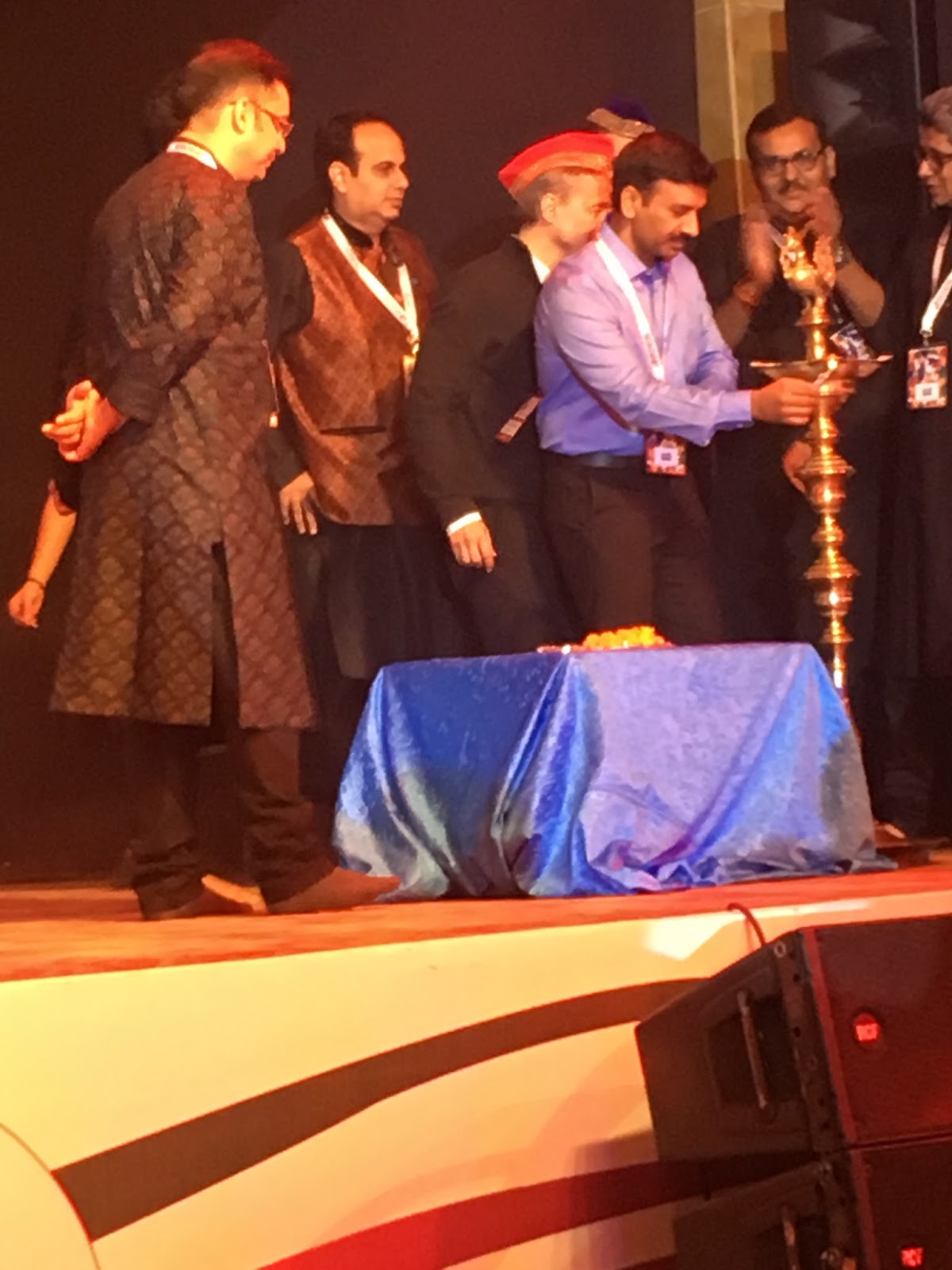
Lighting of lamp
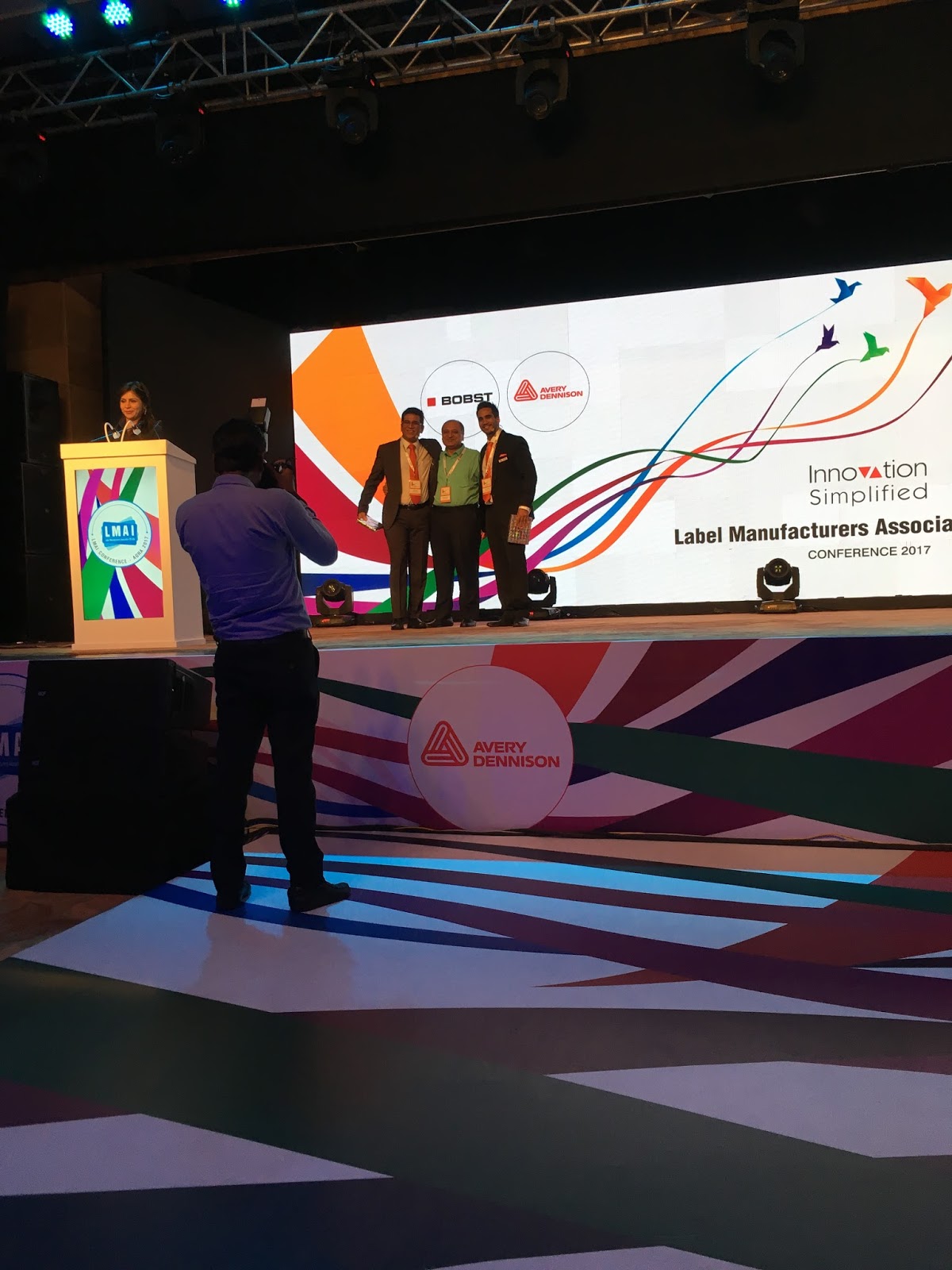
The conference commenced with a welcome speech fromSandeep Zaverifollowed by lighting of the lamp. This is considered as an auspicious ritual before commencing any important event. LMAI initiated their new creation, the LMAI anthem which was played after the lighting of lamp.
Sandeep Zaveri, welcoming guests. LED screen in backdrop
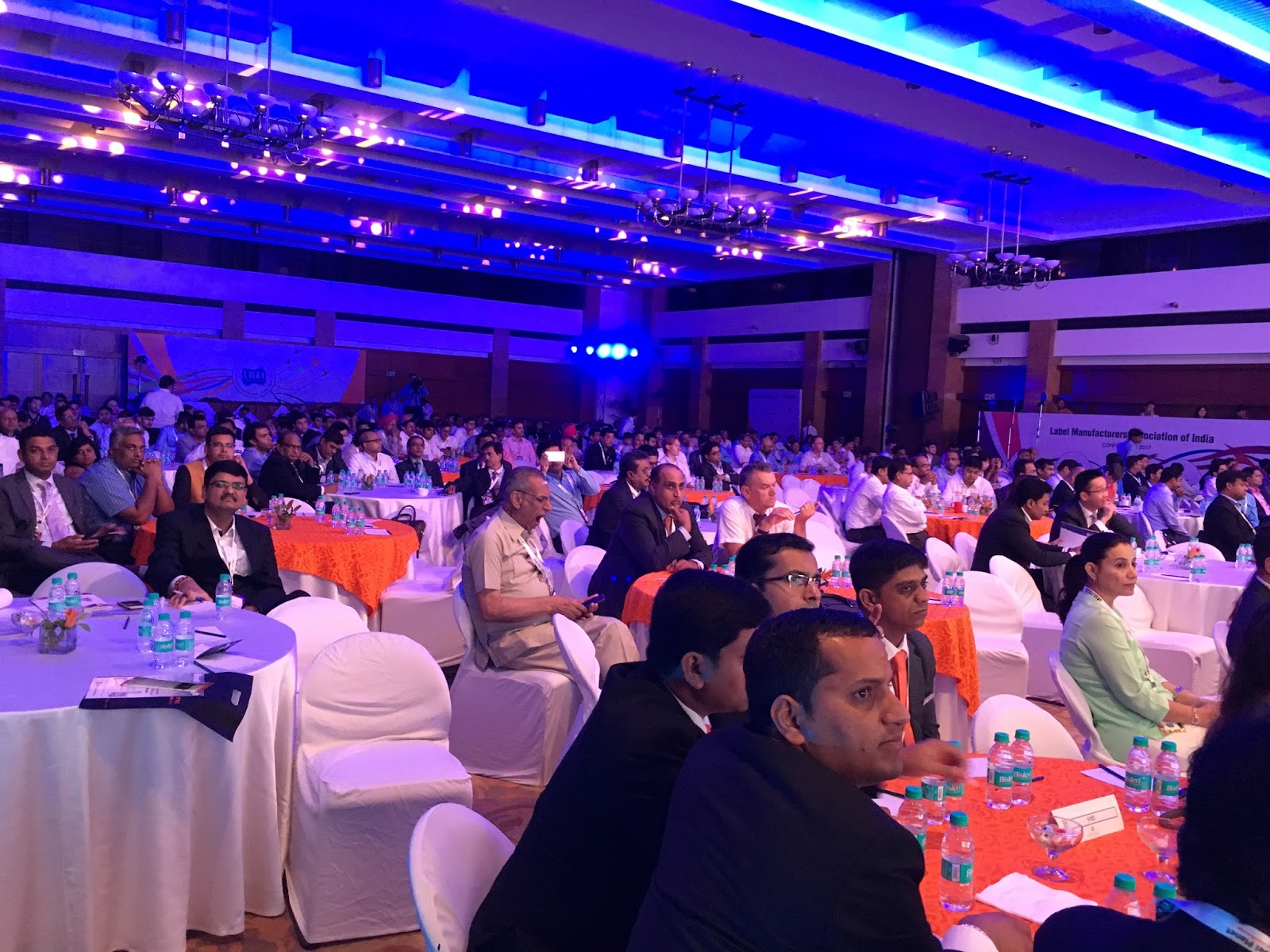
Welcoming the over 550 delegates and thanking sponsors, Sandeep Zaveri mentioned that the label industry was like a joint family. He dwelled on the conference theme, “Innovation Simplified” and stressed on the need for innovation to spread to all processes of label creation. Label is the important part of a product and connects it directly to the consumer.
Pankaj Bhardwaj


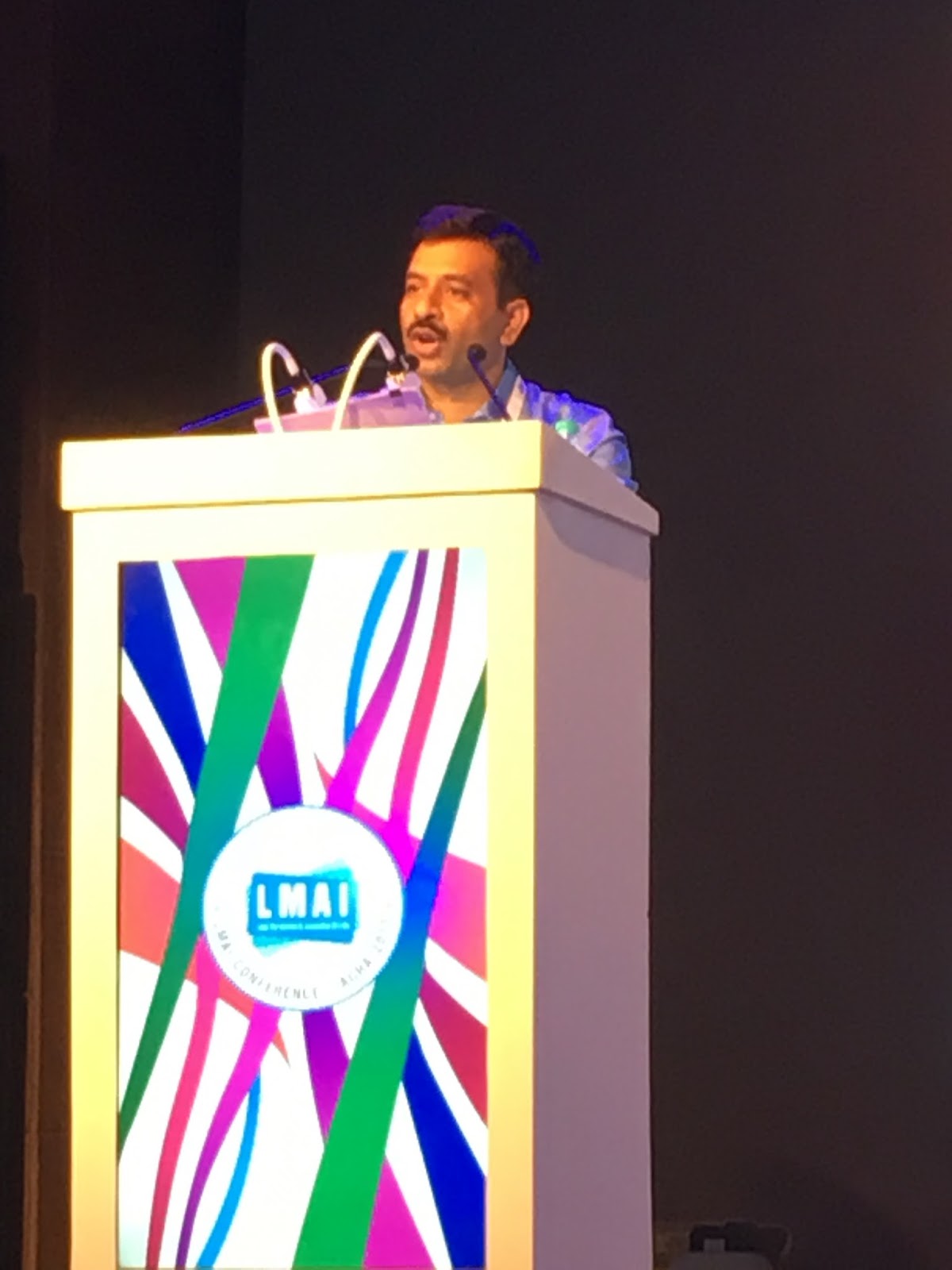
Pankaj Bhardwaj Senior Director and general Manager, Label and Graphic Materials South AsiaAvery Dennison, delivered the keynote address.


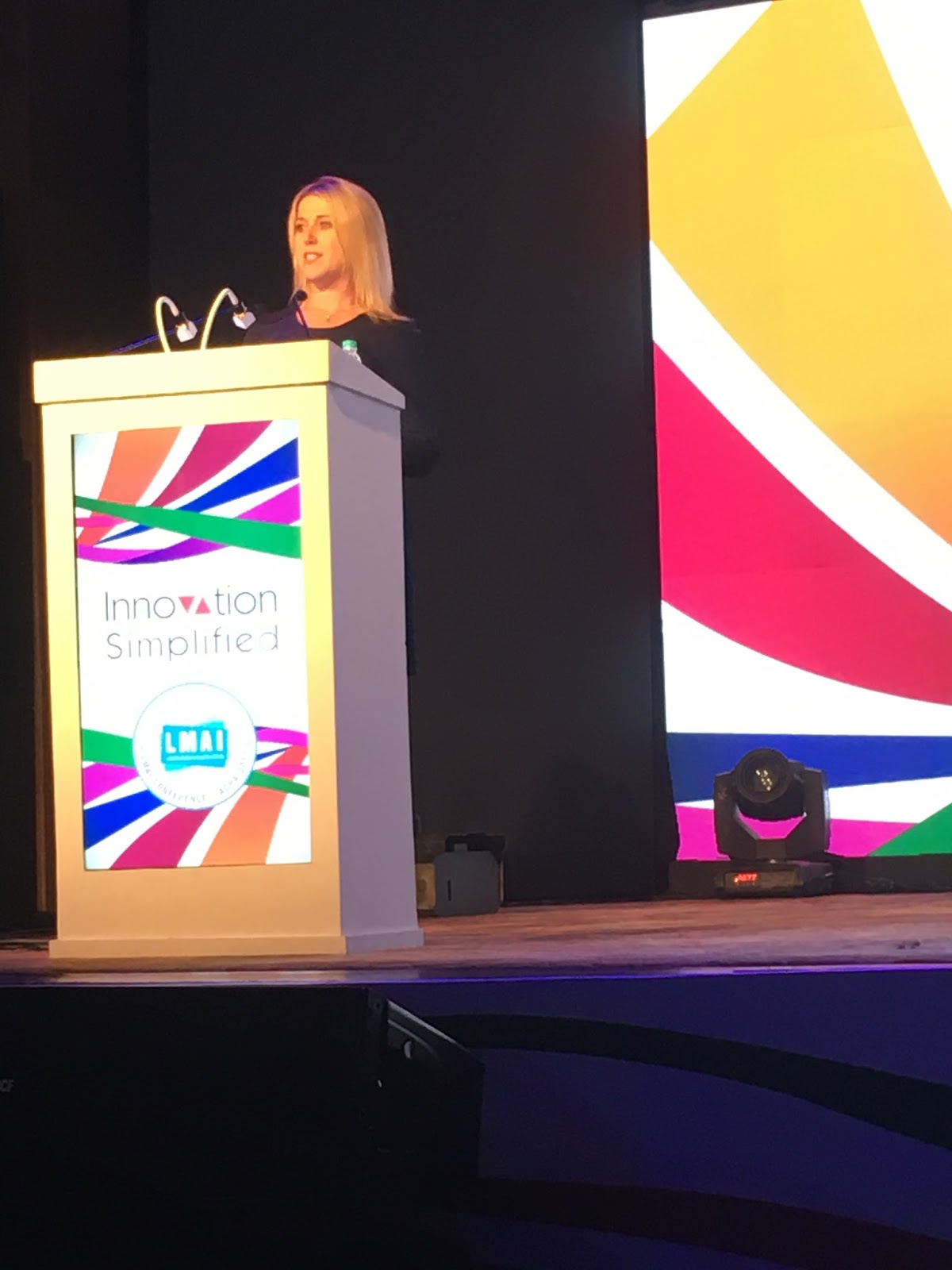
Lisa Milburn Managing Director LabelexpoGroup


In her special address Lisa Milburn, Managing Director Labels Group, Tarsus Group PLC UK mentioned the strong and ongoing partnership with LMAI. She also spoke on the forthcoming meeting of L9 (The federation of nine leading global label associations) which is scheduled to be held next year in India. Pradeep Saroha, Country Manager for Labelexpo group gave information onLabelexpoEurope in Brussels in September this year. Conference ChairmanKuldip Goelapprised the audience with agenda of the event.


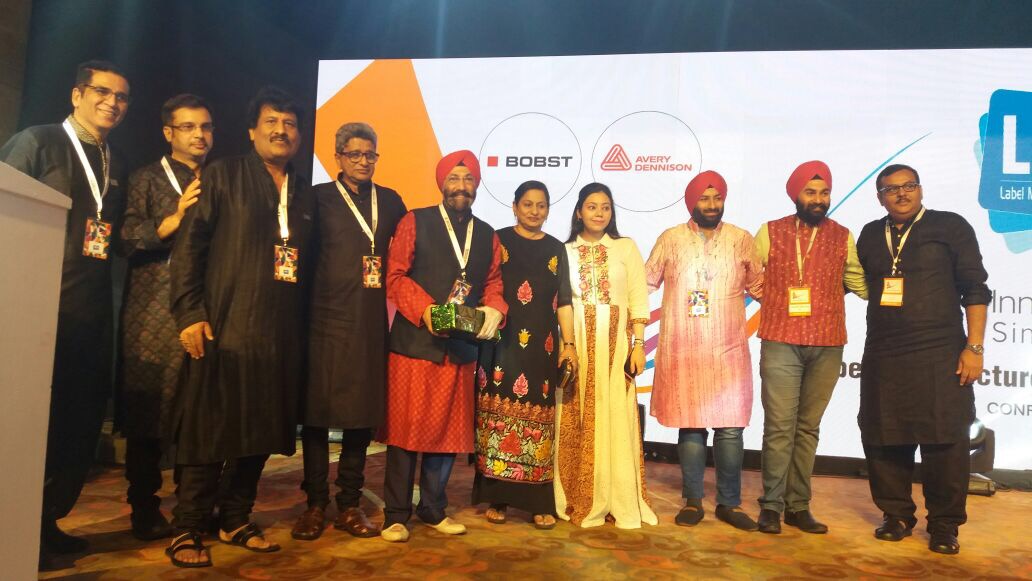
Harveer Sahni awarded lifetime award with family and LMAI leadreship team


At the same time he announced an award toHarveer SahniofWeldon Celloplastfor a “Lifetime in support of the Indian label industry”.


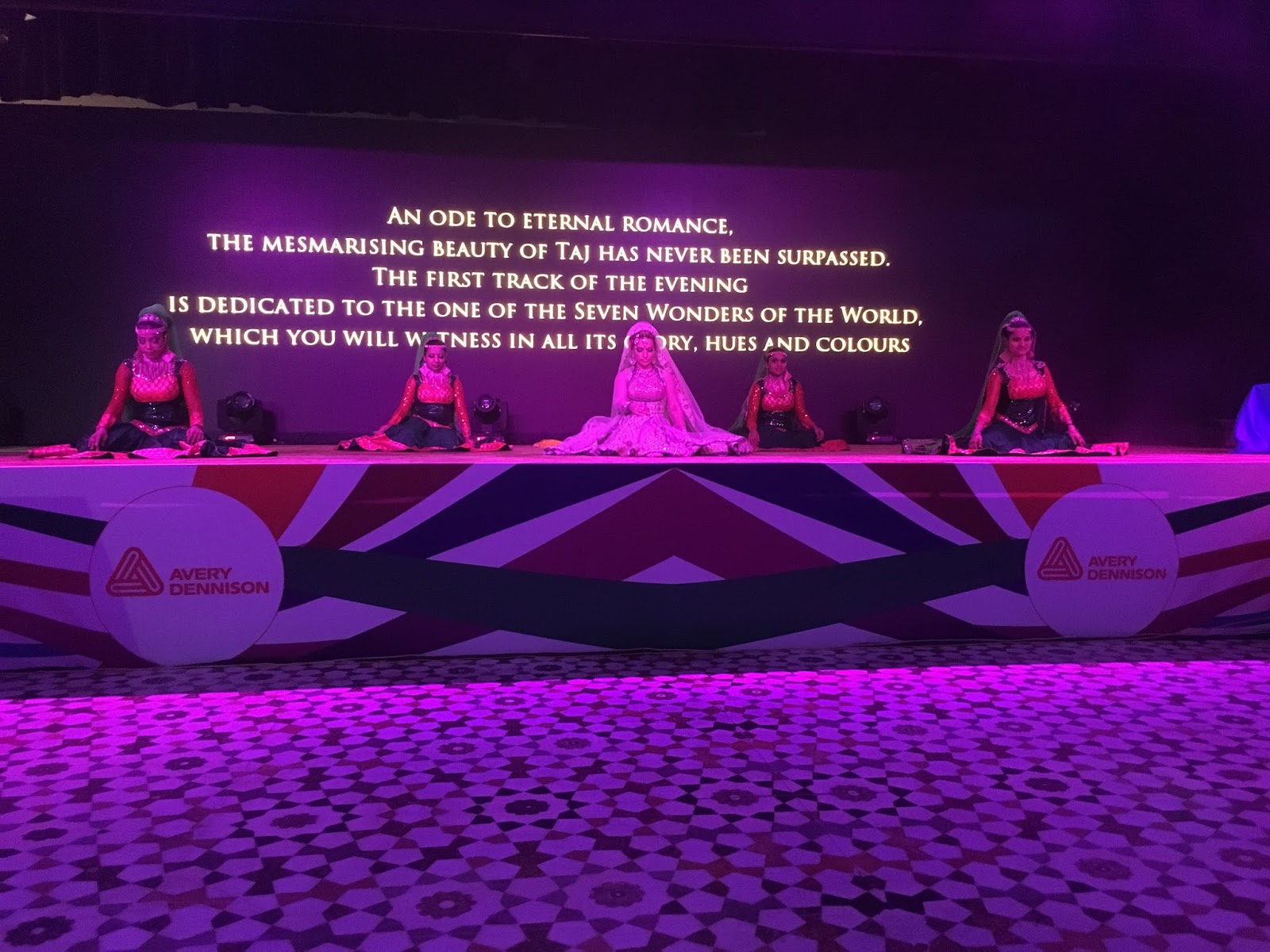
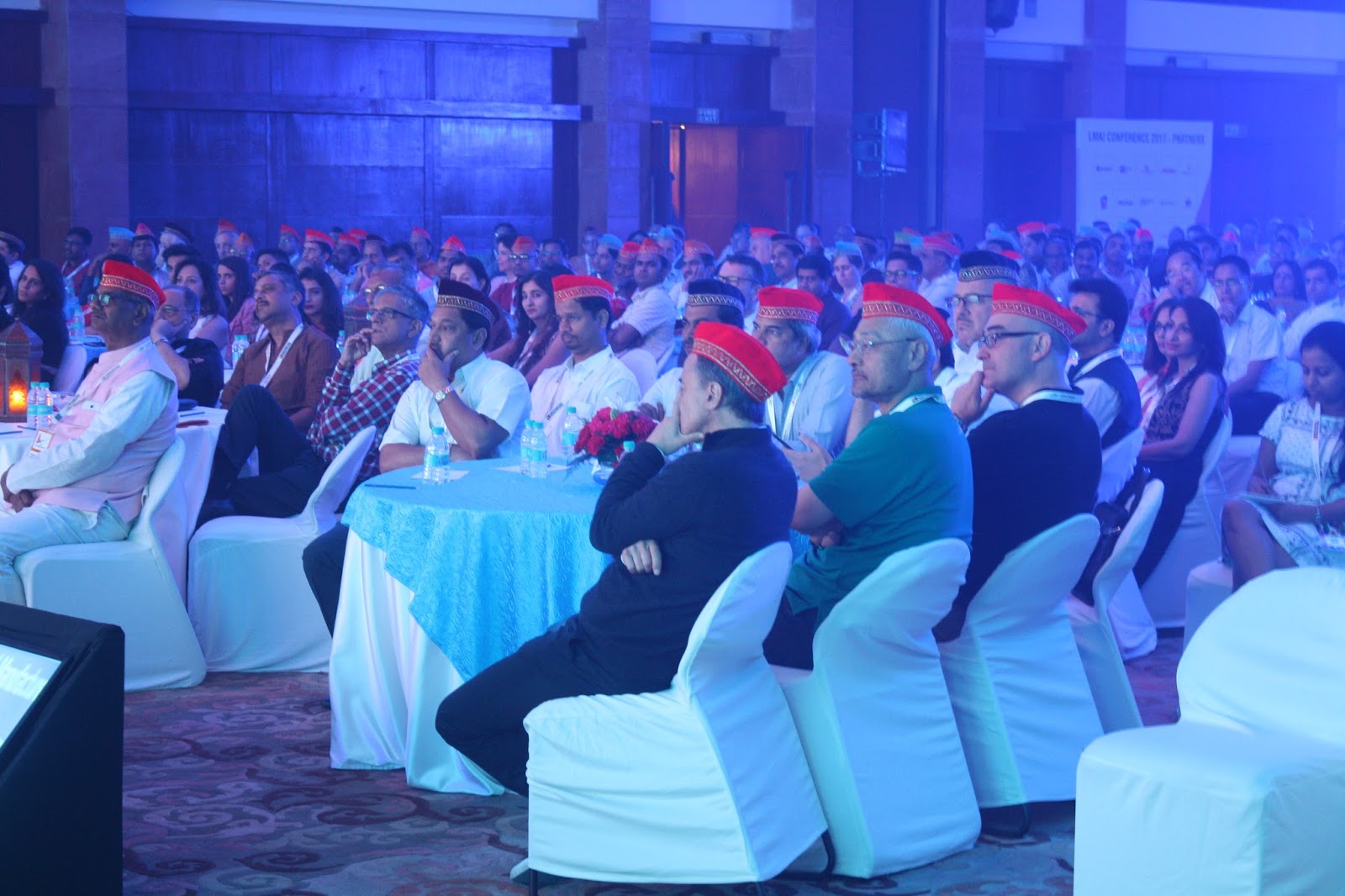
The day ended with an entertaining evening sponsored byBobstFirenzeand themed, Mughal-e-Azam followed by Dinner. Many delegates were in traditional Indian dresses.
Entertainment program


Jitesh Mehta, Director Avery Dennison
Next morning after breakfast Rajesh Nema secretary LMAI initiated the conference by showing avideo of LMAI activities during the past year and informing the day’s agenda. Jitesh Mehta, Director Avery Dennison had interesting questions for the audience on innovations in the structure of Taj Mahal. Interesting facts came to light. He also said, “Innovation is a team sport and aids profitable implementation of ideas, creating value across the value chain” he further added, “By making innovation complex, we maybe killing it”.


Ajay and Rohit Mehta SMI being felicitated


Ajay Mehta and Rohit Mehta ofSMI Coated Paperscautioned that reverse auctions were affecting printers adversely and instead of becoming complacent, they need to move on. Competition brings innovation making quality and consistency in product offering an imperative for driving growth.


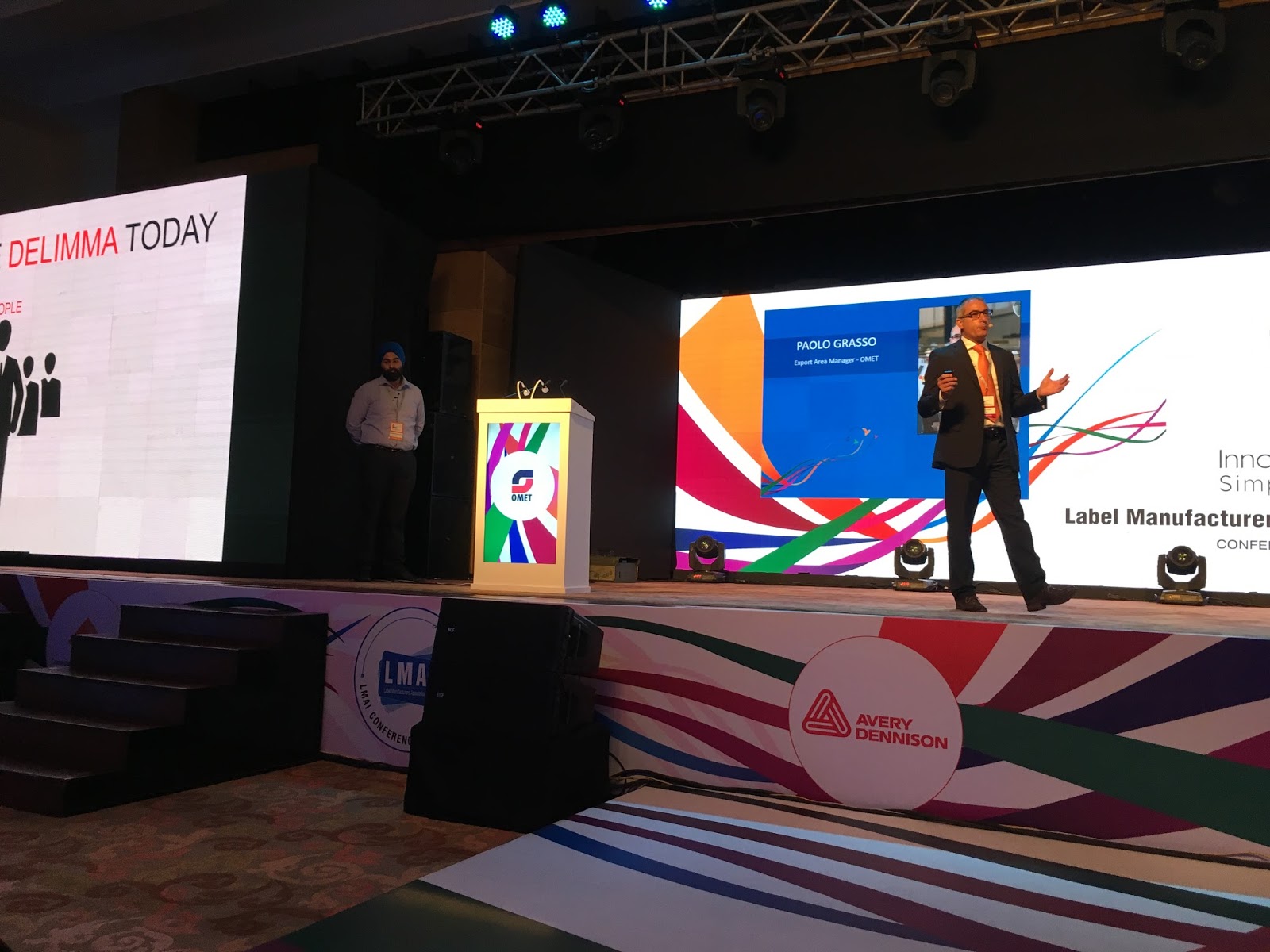
Paolo Grasso Omet and Pawandeep Sahni Weldon


Pawandeep Sahni ofWeldonand Paolo Grasso ofOmetmade an impressive presentation titled “simplify Visions, innovate processes” The presentation which was interactive with the audience, was highly appreciated. Shaun Paullen ofMark Andyspoke on “Turning market needs into machine deliverables”.


Amit Ahuja Multitec
Amit Ahuja ofMultitecspoke on wastage control. Gavin Rittmeyer ofMartin Automaticexplained the need for automation and nonstop continuous production to reduce wastage. Impressive knowledge delivering presentations were made by the large number of speakers representing companies who sponsored the event. A holistic session was held byIsha Foundationof Sadguru fame. The swami ji hosting the session taught the delegates the nuances of meditation. A session of “Isha Kriya” was taken up with audience participation. He said that for the power to create, we need to meditate to success. Success is not an aspiration, it is your work that others will connect with and say he is successful. He also advised the congregation that creating happiness at workplace will get full potential from employees.The last part of the evening hosted by SMI Coated Papers, began with a high powered motivational lecture by renowned management guru, Shiv Khera.
Motivational speaker Shiv Khera

Shiv Kheraspoke for almost three hours and the delegates in full attendance were glued to their seatslistening in rapt attention.Quoting boxing legend Mohamad Ali he said, “We need the skill and the will to succeed. Between the two, will is more important” Such was the delivery of his address that the audience was left in awe. Quoting the former President of India, Dr. A P J Kalam he said, “Dreams are not that make you sleep, dreams are those that don’t let you sleep”. Adding more to this he went on to convey that success is not absence of problems, it is the overcoming of problems. Luck is not designed to deliver success but concentrated efforts do deliver it. His advice to the audience was that for conflicts in life learn to resolve issues and not dissolve relations. The evening ended with dance performances and networking dinner.


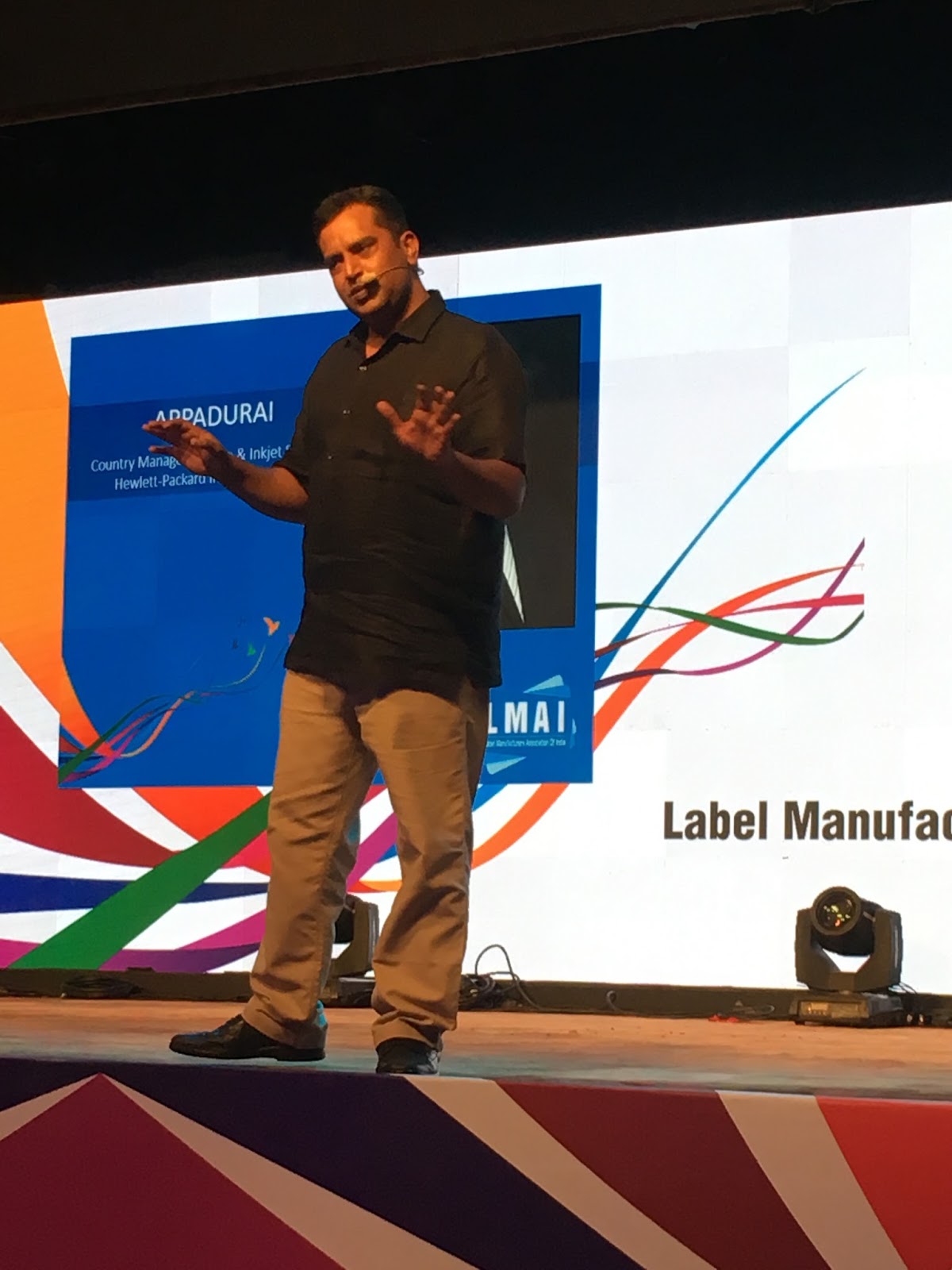
Appadurai Country manager HP


Two days of hectic schedule and non-stop presentations, did not tire the delegates and one was surprised to see they were ready for more.The final day again had a holistic meditation session by Isha foundation. This was followed by presentations by Samir Patkar-Gallus,Appadurai-HP, Manish Jain-Loparex,Seigwerkand A K Datta-Kurz. Guest speaker Sudhaker Kasture spoke on export strategy on labels. The day’s presentations ended with presentations fromHuber groupandTesa Tapes.


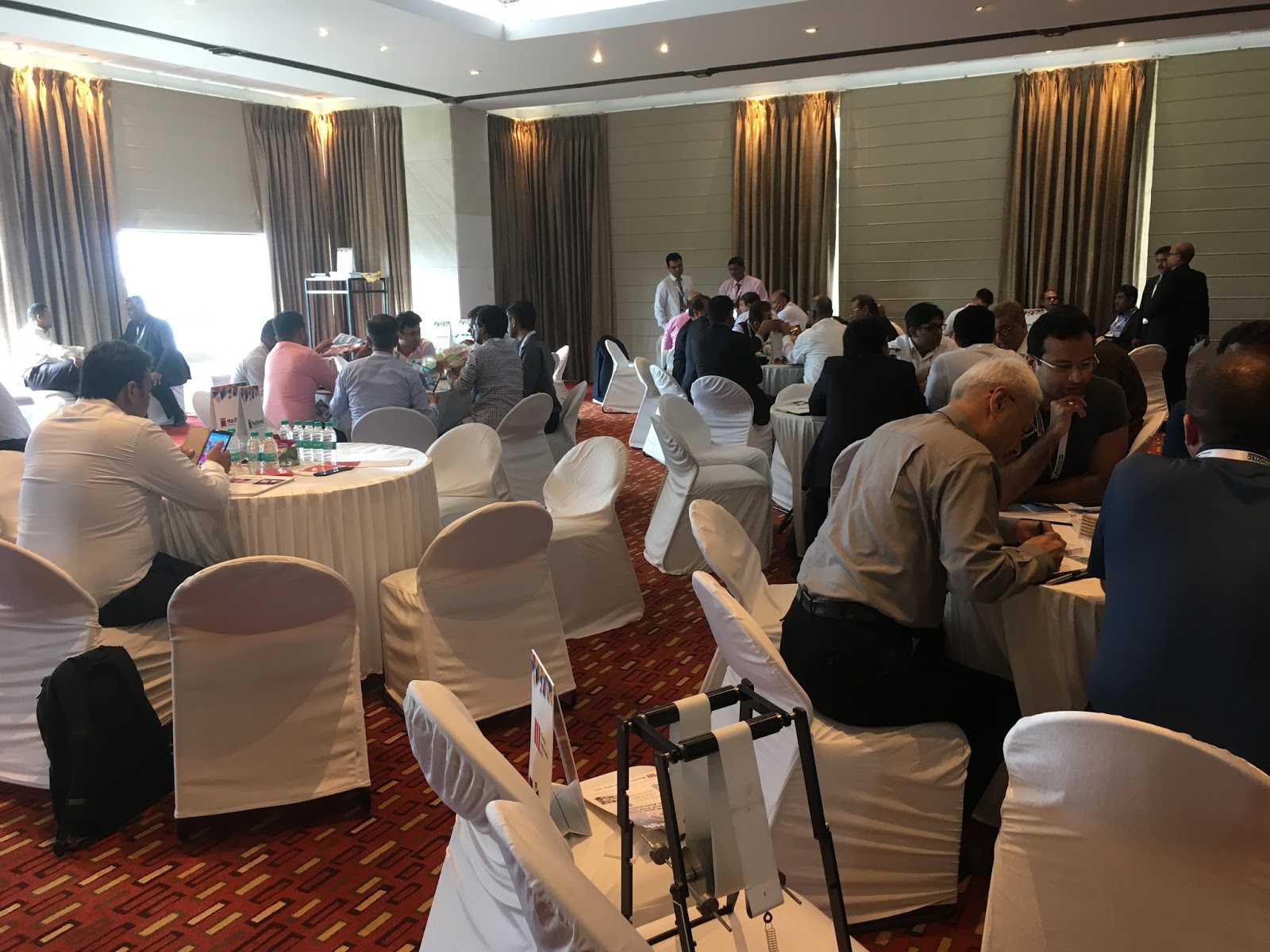
Round Table in Progress
This was followed by a very interesting event; LMAI Round Table. For this part of the event all the sponsors were divided into different groups that were allocated different rooms with round tables. Each sponsor was allotted a table. The printer members were also divided into groups. Each group of printers were the made to sit on round tables with sponsors for 10 minutes and then asked to move on to next sponsor’s table. The sponsors and printers got to interact one to one driving in satisfaction in the process whereby their queries were answered face to face. All through the conference, a well spread out table top exhibition was in progress. Delegates were able to visit, interact with exhibitors and collect literature.
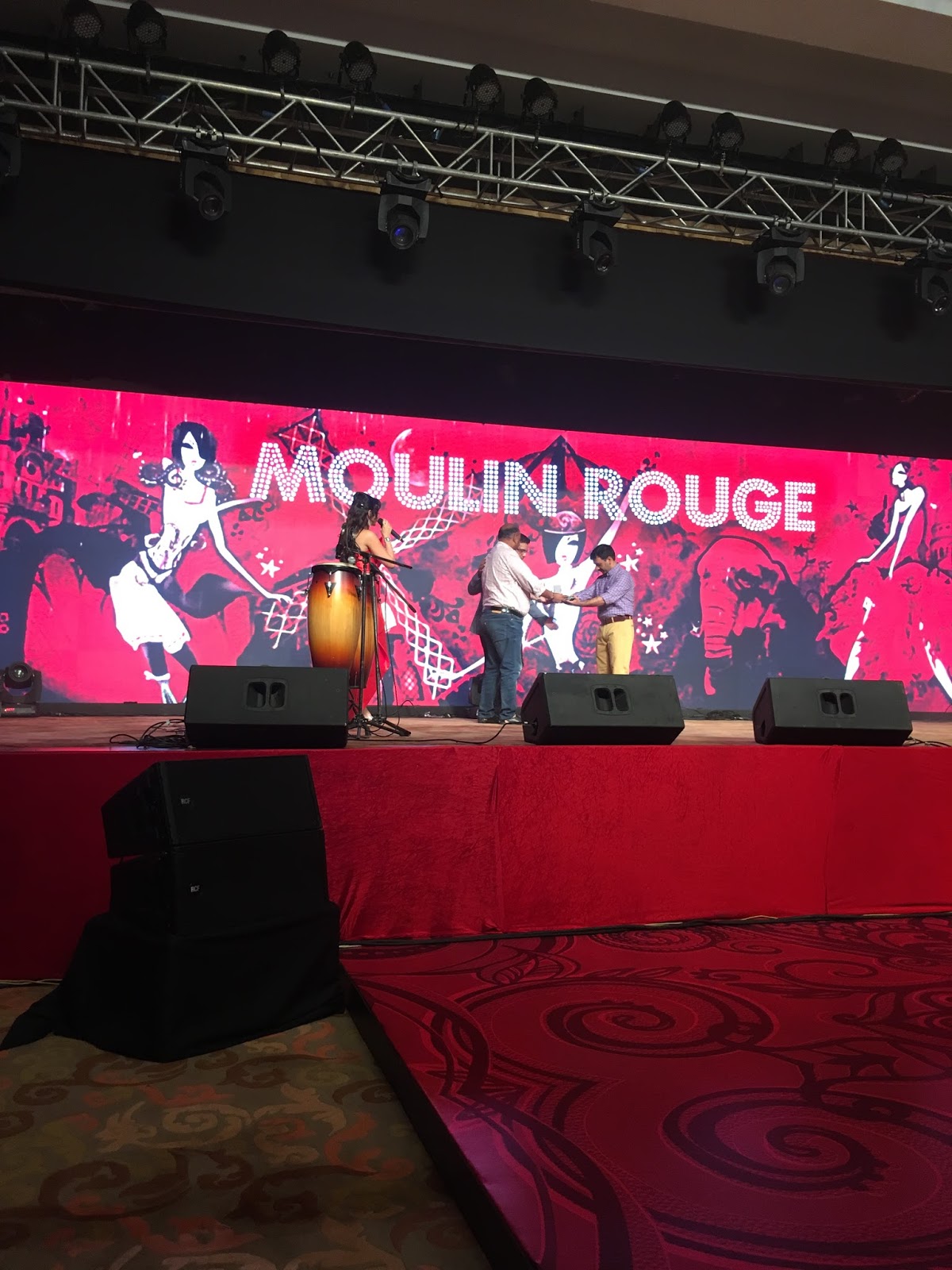
Gala Evening


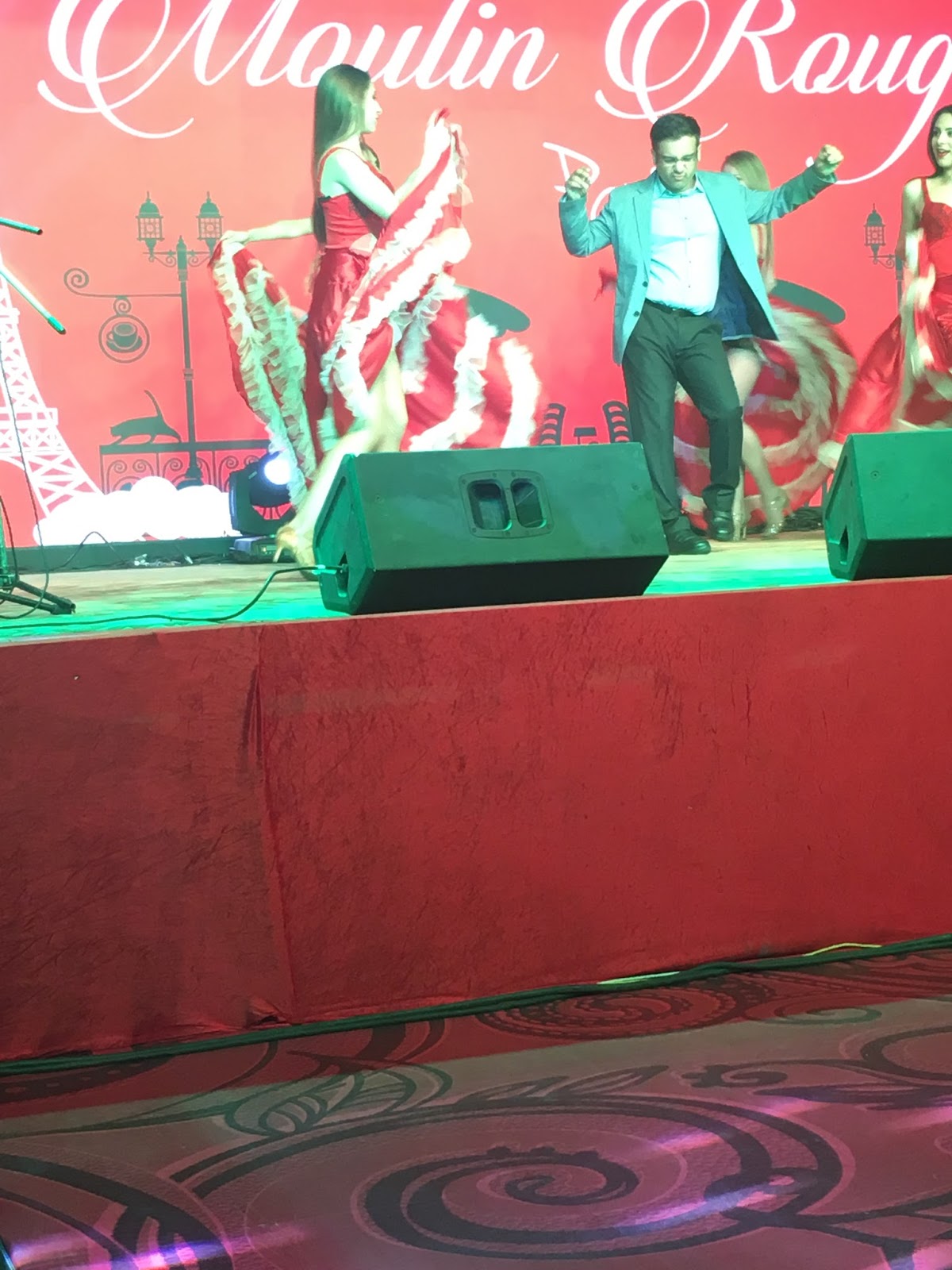
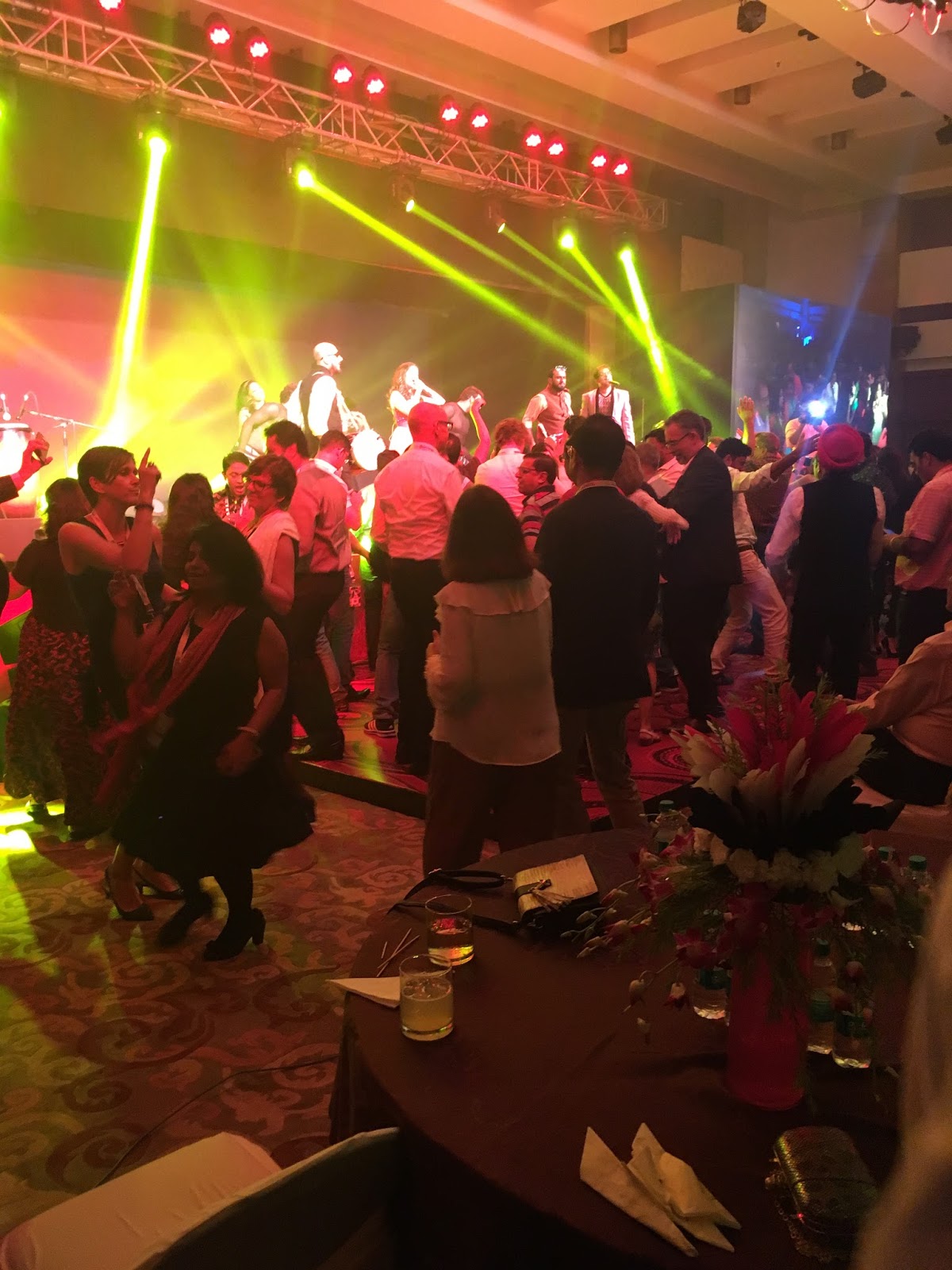
The final part of the conference was a gala evening hosted by Avery Dennison with theme “an Affair to remember” and titled “Moulin Rouge”! The evening started with conference chairman Kuldip Goel giving vote of thanks.


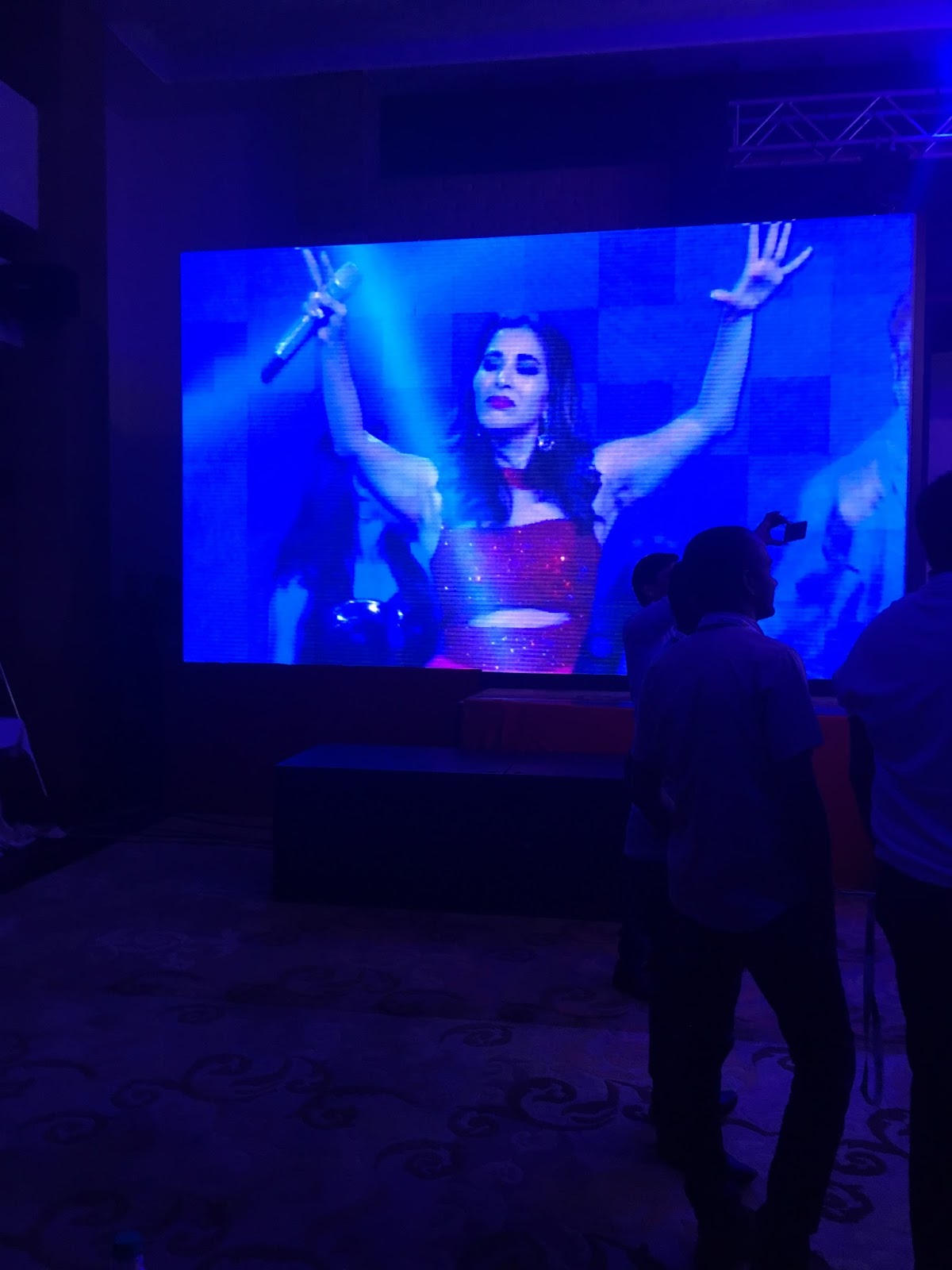
Sophie Choudry


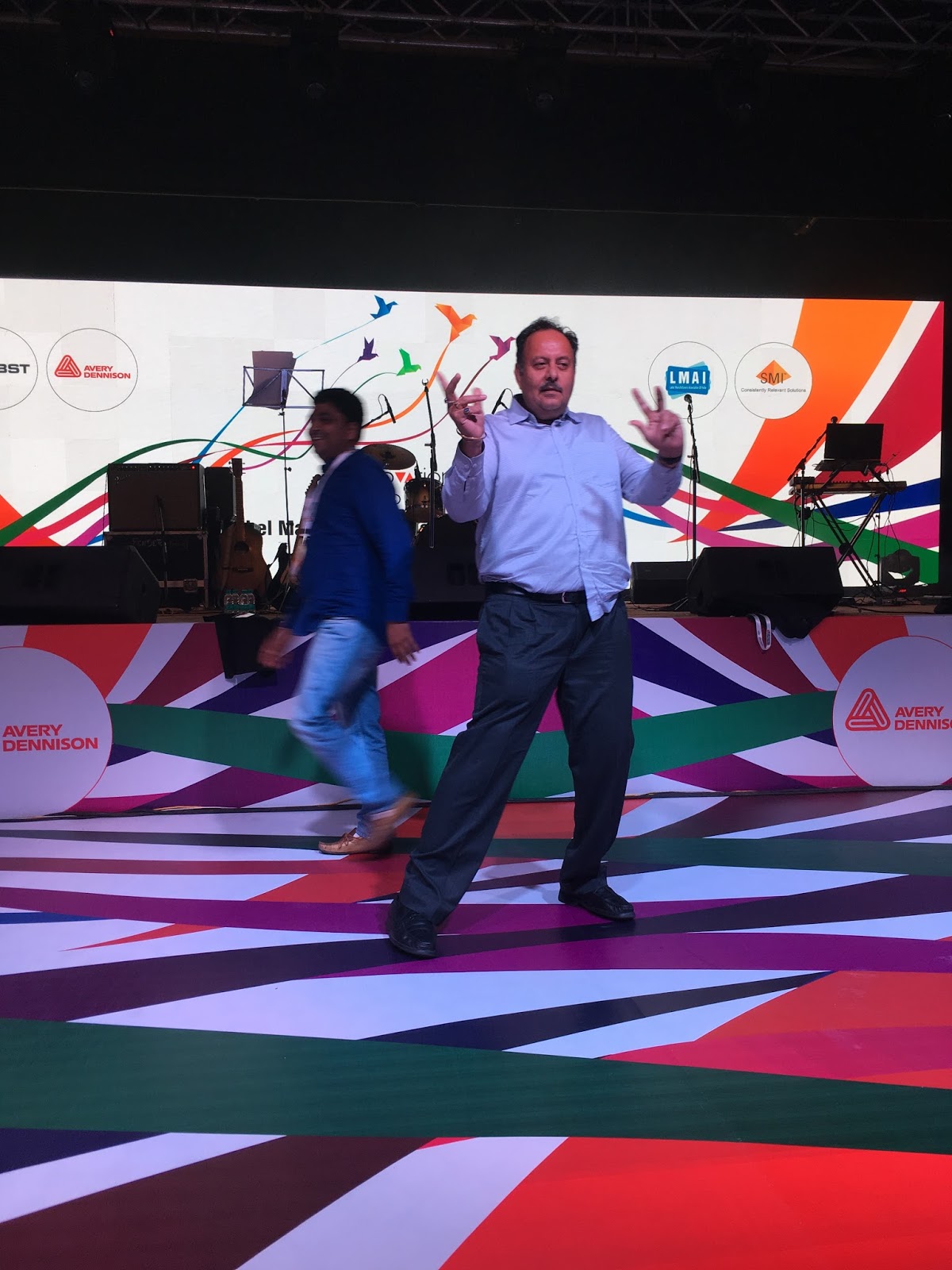
This was followed by a vibrant musical performance by celebrity artiste Sophie Choudry. After this the dance floor was thumping with delegates dancing till wee hours of the night or the morning.


This conference was appreciated and enjoyed by all. They left Agra with lingering memories of a euphoric networking event. The industry was a little more bonded and connected giving credence to Sandeep Zaveri’s statement that the Indian Label Industry is like a joint family. As the delegates bid good bye they went with hope of yet another similar event in the summer of 2019!

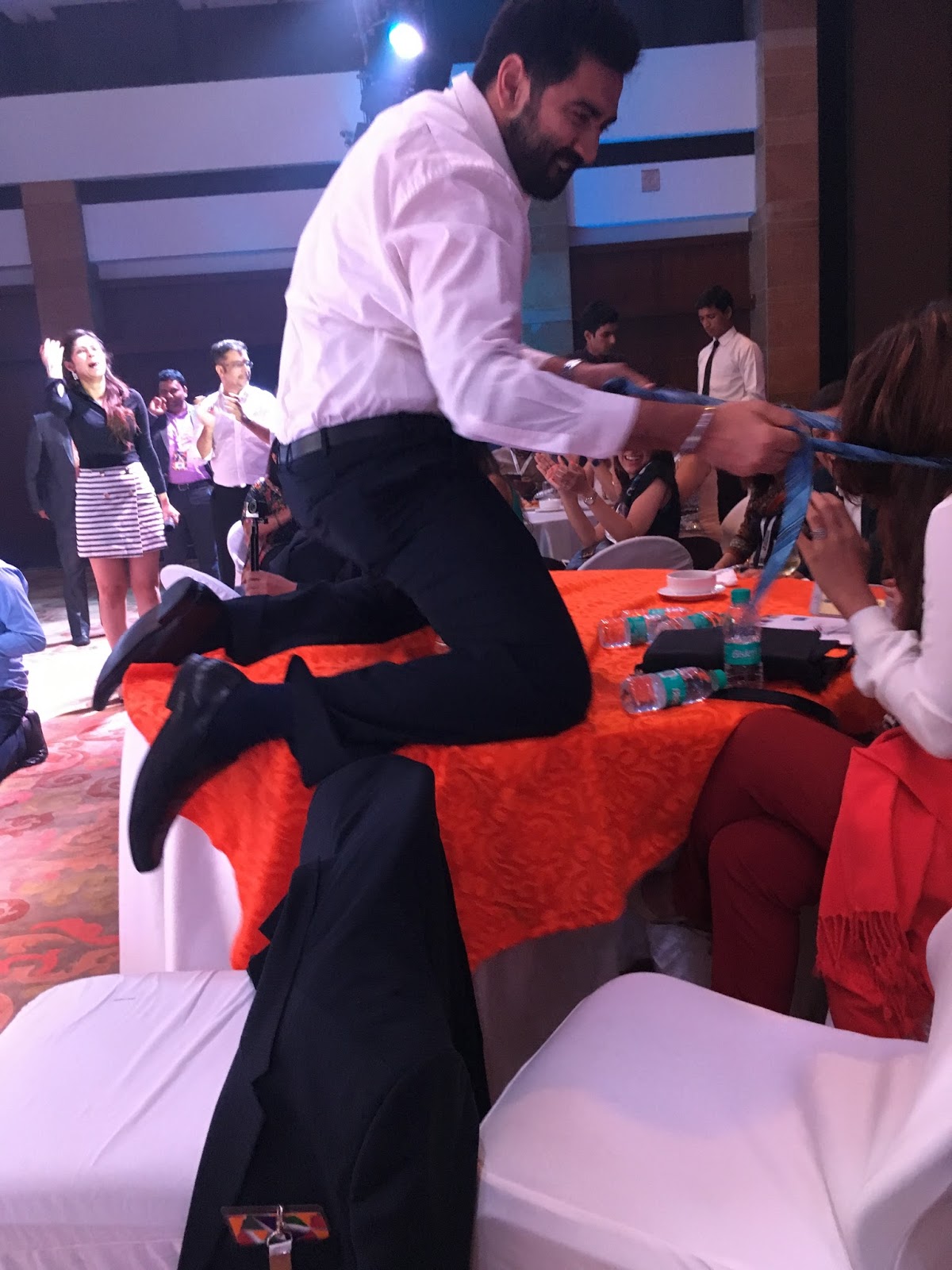
The sidelines and the "Fun Part";


Printing magazines and publications may reproduce this article giving credit to author. For a copy of this article in word format or high resolution pictures please email toharveersahni@gmail.com


Written by Harveer Sahni, Chairman Weldon Celloplast Limited, New Delhi July 2017

On 9th of December 2017, Label Manufacturers Association of India (LMAI) conducted a “Technical workshop and networking session” at hotel The Lalit, Chandigarh. It was a very successful event attended by almost 100 delegates giving credibility to LMAI’s efforts to extend its membership to smaller towns that are now attracting investment in production of labels.

The event besides delivering knowledge provided opportunity to printers to join the mainstream association with a platform to interact and network with their peers in the industry. The event was sponsored by Avery Dennison India Private Ltd., SMI Coated Products Pvt. Ltd., Flint Group, NBG Printographic Machinery Co. Pvt. Ltd., Provin Technos Pvt Ltd. and HP Inc. and offered an opportunity to them for making presentations to new entrants in nascent areas.

The evening’s first presentation was made by Ankur Joshi Product Manager of Provin Technos Pvt. Ltd. He explained in detail about the Miyakoshi presses offered by them. This was followed by a very thought provoking session by Bhupinder Singh of Avery Dennison. He initially explained how Avery partnered with printers to offer the PS Label solutions engineered to their specific needs.

He then spoke on ground realities and effects of competition in the label industry with emphasis on the imperative need to innovate and decorate their product adding value to the end product such that even if the margin in terms of percentage wise remains the same the quantum of profit gets bigger due to higher value of the end product. He also gave a comparison of PS labels to wet glue and suggested ways to motivate wet glue customers to switch over to PS labels. Shamim Alam of HP Indigo impressed upon the need for change in the label industry to achieve growth. He presented case studies in personalization with digital to achieve success and dwelled on possibilities by going digital. Harshal Mahajan of SMI Coated Products Pvt. Ltd. made a presentation to educate printers on the right selection of face paper, adhesive and liner. He also spoke on the effects of weather, ambient temperature, storage condition and service temperature on labels and label materials. Sailesh Sharma of Flint informed the gathering about upcoming trends in inks. He also explained the negative effects of migration and Flint’s support to customers for low migration printing and converting. He also spoke of Good Manufacturing Practices and benefits of LED UV inks offered by them. Finally Nitin Garg and Kishore of NBG Printographics presented details of the new indigenous full servo flexo press developed and offered by them.

LMAI President Kuldip Goel in his short speech impressed upon printers to invest in capabilities to innovate and create value in their products to attain continued growth. Harveer Sahni, on behalf of LMAI spoke on the path traversed by LMAI, benefits of its membership and the programs conducted by it. LMAI was established 15 years ago by a small group of printers and the association has thereafter grown to over 350 members. LMAI is recognized by global entities like Tarsus, FINAT and TLMI.

It s also a part of L9, a global alliance of world’s leading nine label associations. LMAI organizes technical and networking sessions across various geographical zones of India. These include programs on cost restructuring, GST training and other important issues. Their annual conference has become a must attend event for the label industry. LMAI has partnered with Tarsus and extended their support to Labelexpo India. On the sidelines of next Labelexpo, LMAI will be hosting the LMAI label awards gala evening and the L9 meet where printer members from these global associations are expected to attend and network with Indian printers. LMAI also successfully publish their magazine, “Label Legacy”. The next LMAI Technical Workshop and networking meet is planned to be held early next year in Chennai.

In conclusion Rajesh Nema honorary secretary LMAI thanked the delegates for their presence and also acknowledged the hard work put in and support given by local printer members Aditya Kashyap and Vishal Vohra in organizing this successful event.  The evening ended with networking over cocktails and dinner.

Label Manufacturers Association of India

A-418, Mayuresh Trade Center,Plot no: 04, sector-19, Vashi Turbhe Road,Vashi, Navi mumbai: 400 703

Mob : 08097333995

Web: www.lmai.in

Posted on behalf of LMAI by Harveer Sahni December 2017


Jaypee PalaceHotel and Convention Centre
 
 
“Wow, tough to miss!” says Chandan Khanna of Ajanta Packaging on going through the
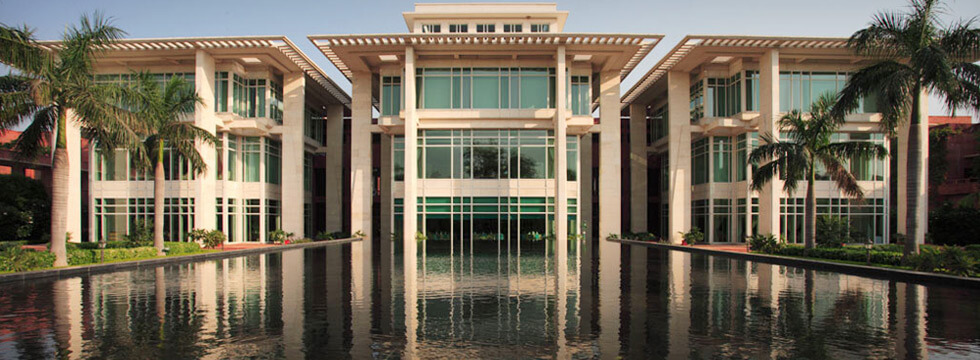
Agenda/Program of the forthcoming LMAI Conference at Agra, the city of Taj Mahal from 20th to 23rd July 2017. Running multiple units in three different countries Chandan was not sure if he could spare the time. Now he is a confirmed delegate. The conference is to be held at the regal Jaypee PalaceHotel and Convention Centre, a glorious structural blend of red sandstone and marble is spread over an unbounded 25 acres of elegantly landscaped luxuriant greenery. Sprinkled with enormous water bodies and endless walkways, this magical creation impeccably blends Mughal and contemporary architecture with modern amenities. It is a venue from where delegates will take back wonderful memories.
 
Sandeep Zaveri President LMAI


LMAI President Sandeep Zaveri and his team have done a commendable job and we can look forward to a vibrant event that will be remembered for a long time. The event is packed with presentations on the conference theme, “Innovation Simplified”.   


Pankaj Bhardwaj, Avery Dennison


After the inauguration by lighting of lamp and welcome address by LMAI president on the 20th of July, key note address will be delivered by Pankaj Bhardwaj, Senior Director and General Manager Avery Dennison for south Asia. 


Lisa Milburn, MD Labelexpo    


Special address will be made by Lisa Milburn the managing director for the Labelexpo Global Series of events followed by address by conference chairman Kuldip Goel. The evening themed, “Mughal-e-Azam” will have dance performances and a show by standup comedian Atul Khatri followed by cocktails and dinner.


Both the following mornings after breakfast when the conference is initiated by LMAI
secretary Rajesh Nema, there will be “Holistic sessions” by Isha foundation of Sadhguru fame! An impressive number of presentations will be made by Indian as well as global suppliers. It is interesting to note here that the number Indian suppliers sponsoring LMAI events have now started to grow, indicating the importance of this association’s endeavours and the growing stature of India’s label industry suppliers. Knowledge delivering presentations will be made by Avery DennisonDuPontEsko GraphicsIntergraphic PulisiSMI Coated PapersOMETInsight Print CommunicationsMultitec, System Flexovision, PGI TechnologiesAPL MachineryFlexo ImageGraphicsFlintVinsakMartin AutomaticDragon FoilsUPM RaflatacMonotechHP IndigoReifenhauserHeidelberg IndiaBST EltromatLoparexIndiaTion EnterprisesSiegwerk IndiaKurz IndiaHubergroup IndiaTesaTapes, and Macdermid
Sanjeev Sondhi, Zircon


Sanjeev Sondhi at Zircon Technologies says, “It is surely a unique event where we are together with industry colleagues and suppliers for three eventful days. I am looking forward to it”.


Shiv Khera


On the second day after the presentations scheduled for the day there will be a 3 hour address by celebrated motivational speaker and management Guru Shiv Khera. Guest Speaker Sudhakar Kasture will speak on “export strategy for labels” 


Hemant Paruchuri, Pragati Pack
On 22nd after lunch a round table event is organized for one to one interaction of sponsors who are leading suppliers to the label industry, with printer members attending the conference. This program, that was initiated at the last conference received appreciation from both suppliers and printer members. Hemant Paruchuri of Pragati Pack Hyderabad says, “I am looking forward to information sharing sessions at the conference”. All speaker presentation sessions will be interspaced with coffee/Tea and lunch breaks. At the end of the conference on 22nd evening a gala evening is arranged with theme, “An affair to remember”. The evening will culminate with a musical performance by the renowned celebrity artiste “Sophie Chowdhary” before the dance floor is thrown open to those who wish to extend the celebration of being together with industry peers.
Dinesh Mahajan


What an amazing response this conference has received! Networking will attain another dimension in quality and opportunities at Agra. “The countdown has begun for the finest label technology event” says Dinesh Mahajan of Prakash Labels.  


Rajesh Chadha, Update Prints


480 delegates from 334 companies spread all over the world, have registered so far and the registrations keep coming. 191 label printing companies and 143 suppliers have registered to be at the event. 30 speakers along with 3 guest speakers will deliver information driven by technology and innovation. As the euphoria builds up, demand for more bookings is pouring in. All the rooms arranged at the venue hotel have been sold out while registrations are still coming in. LMAI leadership has arranged a few rooms at another hotel Courtyard by Marriot but the way it is going they will have to soon express inability to accommodate any more delegates. In words of Rajesh Chadha, Managing Director, Update Prints, “All the conference committee members have worked incredibly hard, we are proud of them”!


Written by Harveer Sahni, Chairman Weldon Celloplast Limited, New Delhi-India July 2017
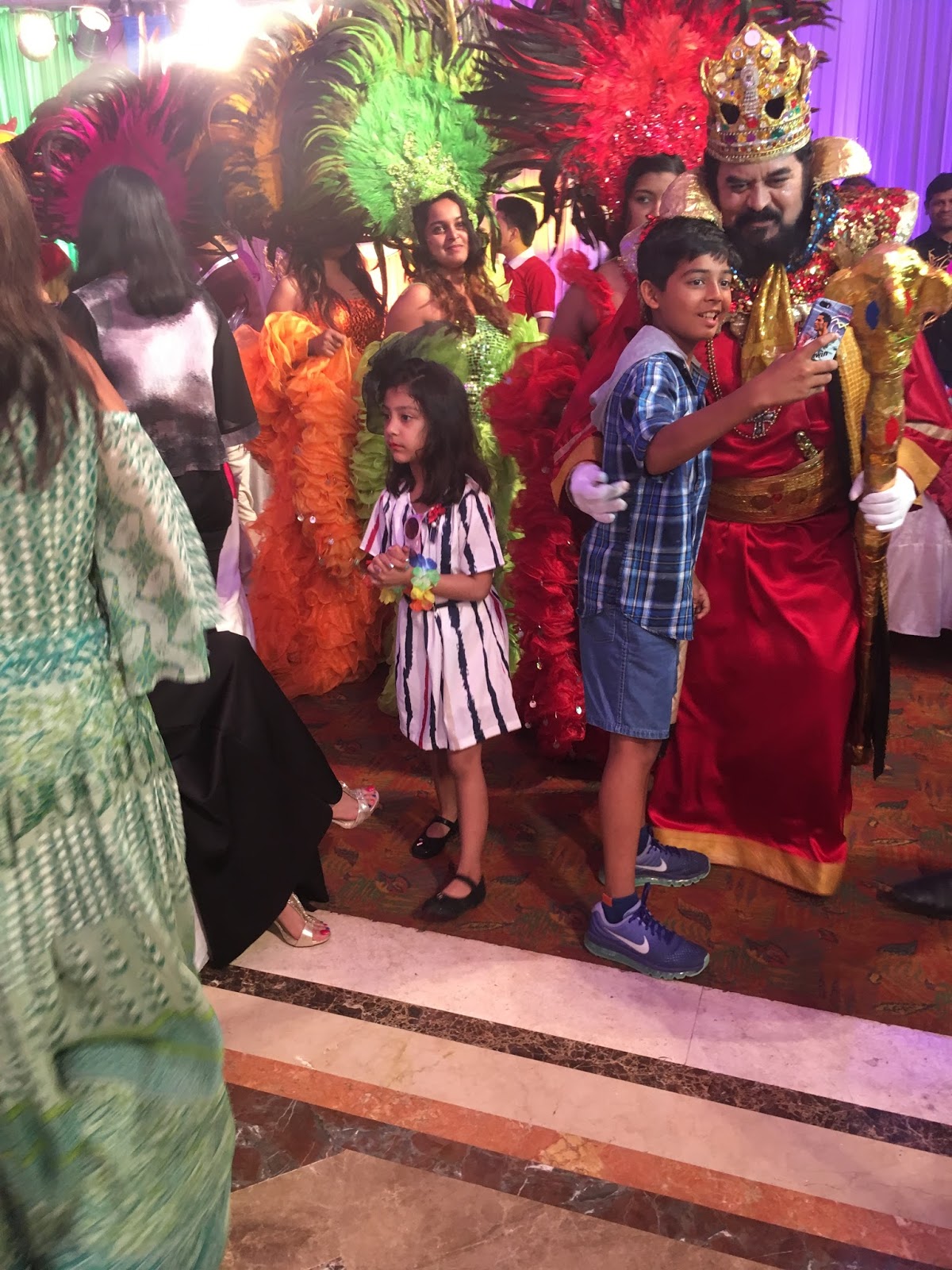
It was business mixed with pleasure from the word go! As delegates landed at Goa’s Dabolim airport, office bearers of the AIDC Technologies Association of India were there to greet guests. The buses were waiting to take the arriving guests to a signature property The Lalit Golf and Spa Resort which is about one and a half hour drive from the airport. Snack packets and drinks were handed over to the guest for the way. It did build an aura of excitement of great hospitality waiting for the arriving members at this event. The office bearers of the association were very excited and greeting all arriving guests with smiles and hugs. 
 
 
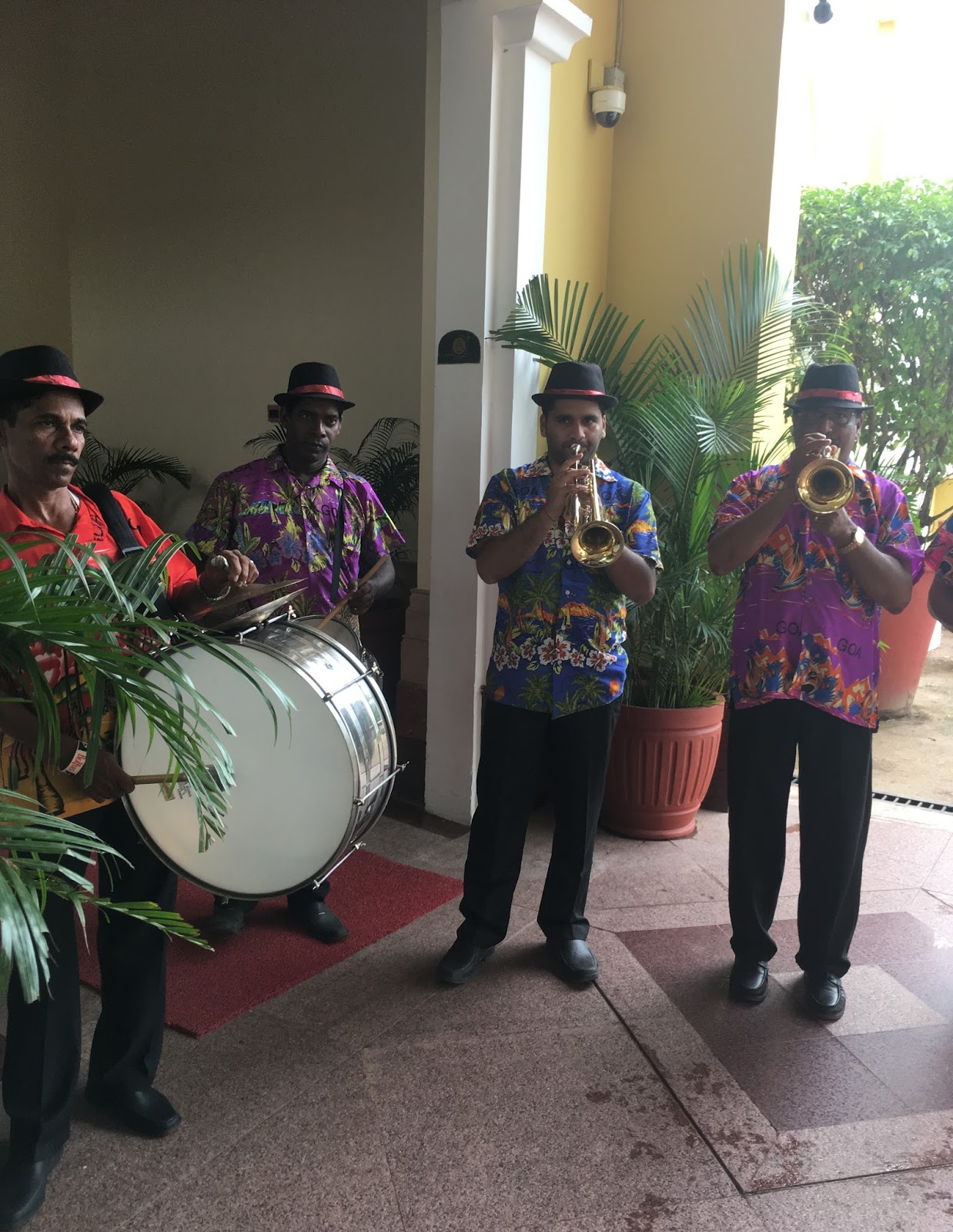
As we deboarded the bus at the hotel, a Goan band was playing for us and then the president of AIDC Viral Vyas with his other office bearers was personally there to welcome the incoming guests.  Welcoming hostesses, came forward to garland arriving guest with garlands made of sea shells and offer welcome drinks before directing delegates to the registration desk for registration collecting room keys and their summit kits. Surprising as it may seem, lunch was still being served for incoming persons till 4pm. Guests were given an hour to reassemble for the inauguration of the summit/conference. It was an amazing, widely spread out resort on the beach which was exceptionally clean.


For me personally AIDC meant it was an association somewhat like the label association dealing with blank labels, printing and providing bar code printed labels to end users. The only extension appeared that they would also supply thermal transfer barcode printers and TTR rolls with some software support. This summit was an eye opener for me personally, realizing the amount and scale of technology that members of this association are involved with. AIDC stands for “Automatic Identification and Data Capture”.  It is a broad category of technologies used to collect information from an individual, object, image or sound without manual data entry.  AIDC systems are used to manage inventory, delivery, assets, security and documents. Sectors that use AIDC systems include distribution, manufacturing, transportation, medicine, government and retail, among many others. AIDC applications typically fall into one of a few categories: identification and validation at the source, tracking, and interfaces to other systems. 


As per Wikipedia, The actual technologies involved, the information obtained and the purpose of colletion vary widely. 
Current AIDC technologies include:
  • Barcodes are a bar of black and white vertical lines of variable thickness. These are as we see every day in retail and have been visible in our daily life routine. Higher end barcodes are used for industrial applications like track and trace.
2D barcodes store information not only horizontally, as one-dimensional barcodes do, but vertically as well. That construction enables 2D codes to store up to 7,089 characters. The traditional, unidimensional barcode has a 20-character capacity.
  • Magnetic stripes, as seen on credit cards, debit cards, key cards and swipe cards. The stripe consists of iron-based magnetic particles in plastic-like tape. Each particle is a tiny bar magnet. Information is written on the stripe by magnetizing the tiny bars in either a north or South Pole direction. The writing process, called flux reversal, causes changes in the magnetic field that can be detected by a magnetic stripe reader.
  • Smart cards, which are plastic cards about the size of a credit card with an embedded microchip. A smart card can store much more data than a magnetic stripe card. It can be loaded with data, used for telephone calling, electronic cash payments, accessing services and other applications. The card can be refreshed for reuse. Some smart cards can include programming and support multiple applications.
  • Optical character recognition (OCR), which is the recognition of printed or written text characters by a computer. The process includes scanning the text character-by-character, analyzing the resulting character image and translating that image into a machine-readable character code, such as ASCII. Among other things, OCR is used to digitize documents and books, sort mail, and process checks and mail-based payments by credit cards.
  • Radio frequency identification (RFID) systems, which consist of three components: an antenna and transceiver (often combined into a single device) and a transponder (the tag). The antenna transmits a signal that activates the transponder, which then transmits data back to the antenna. The data is used to notify a programmable logic controller that some specific action should occur. Because RFID does not require direct contact or line-of-sight scanning, RFID tags are replacing barcodes in many applications.
  • Biometrics: Various biometrics applications, which identify individuals by comparing captured biological data, such as fingerprints, voice characteristics and iris patterns, against stored data for that individual.  Biometric systems consist of a reader or scanning device, software that converts the scanned biological data into a digital format and compares match points, and a database that stores the biometric data for comparison. Authentication by biometric verification is becoming increasingly common in corporate and public security systems, consumer electronics and point of sale (POS) applications. Specific biometric AIDC technologies include finger scanningelectro-optical fingerprint recognitionfinger vein ID and voice recognition.
  • The Internet of things (IoT) is the inter-networking of physical devices, vehicles (also referred to as "connected devices" and "smart devices"), buildings, and other items embedded with electronics, software, sensors, actuators, and network connectivity which enable these objects to collect and exchange data.


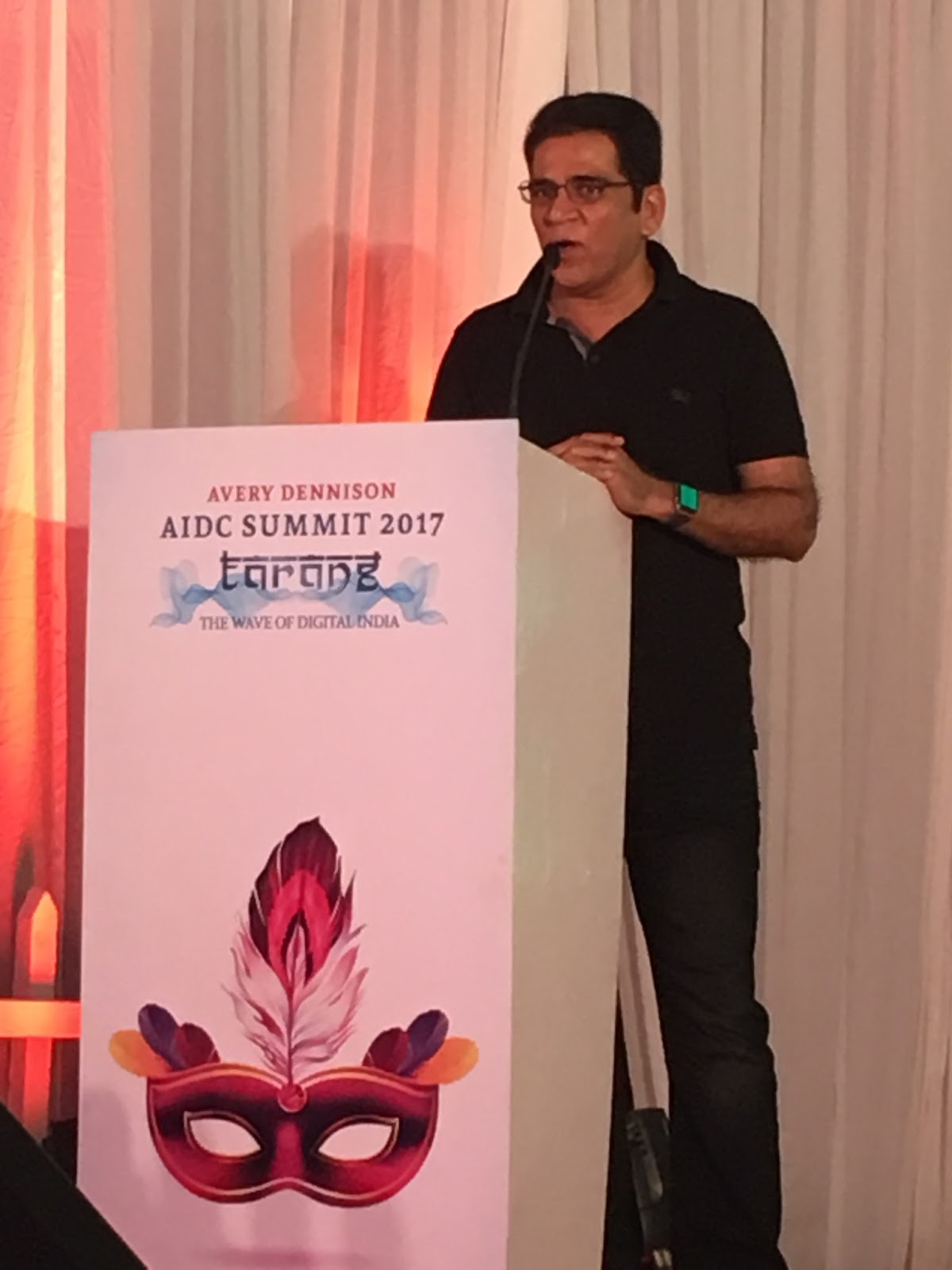
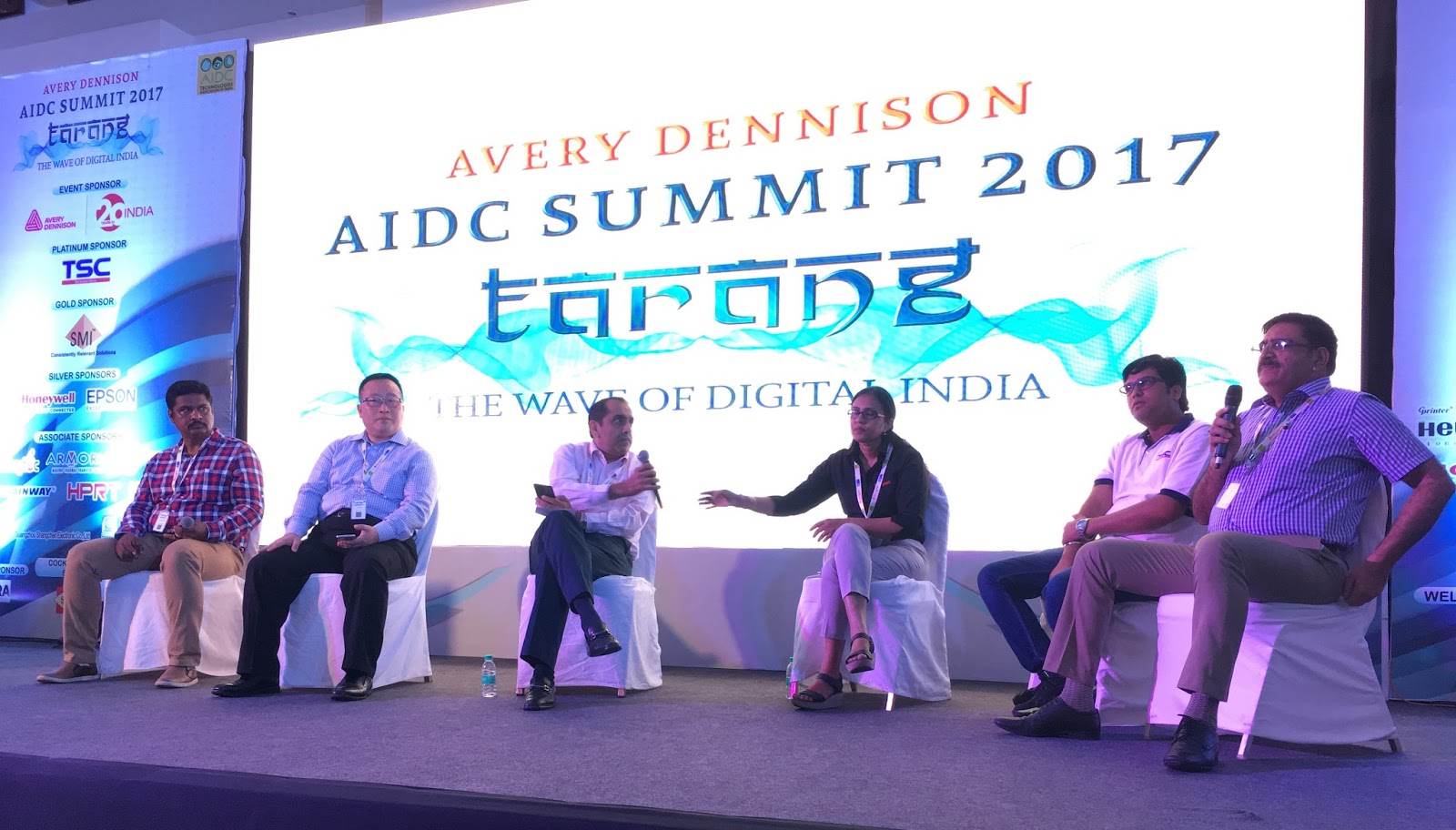
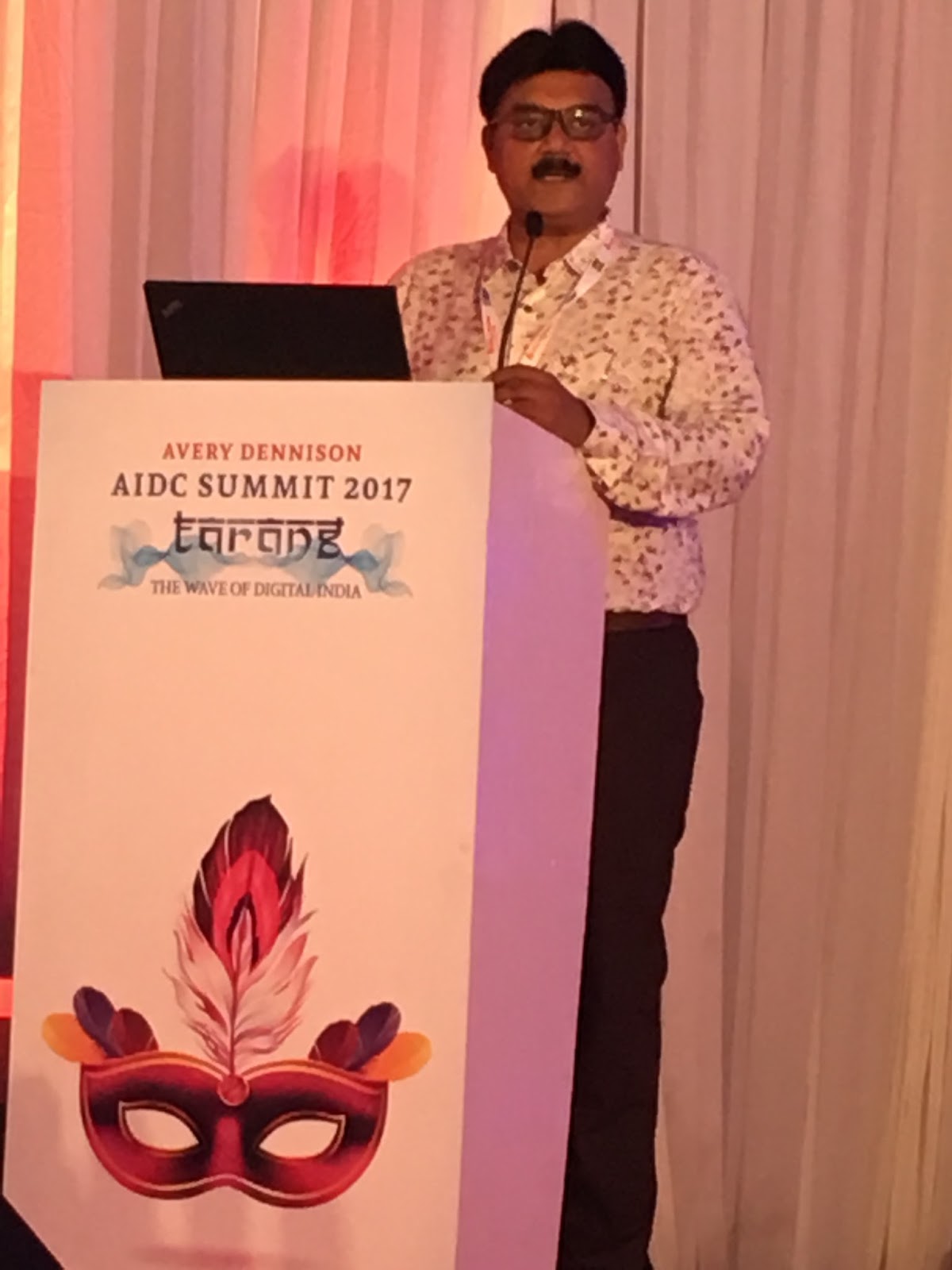
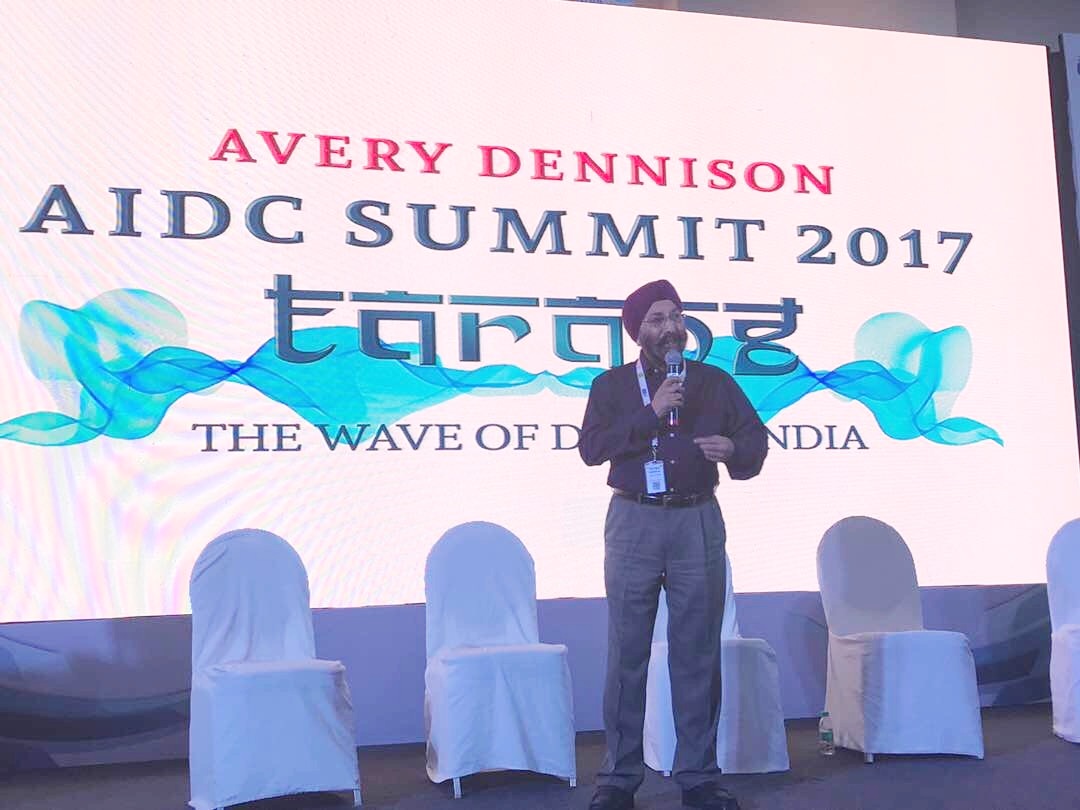
The AIDC summit titled “Tarang-The wave of digital India” was thrown open by lighting of the traditional lamp. After the secretary AIDC’s speech Pankaj Bhardwaj Senior Director and General Manager of Avery Dennison delivered the keynote address, appreciating the work of the AIDC association he added, a young and educated India is bound to ensure growth and emerging of new technologies and that Avery is committed to empowering their customers with knowledge. 


Ajay Mehta of SMI Coated papers spoke on the enhanced reach and capabilities of SMI in regards to labelstocks manufactured by them. Other presentations were made by HP, Guagzhou Shangchen Electronic company, Novexx Solution, Stic-on papers and Epson. 


This was followed by entertainment program and networking cocktails.


The next morning after the secretary’s speech the representative from GS1 came onstage to give a very informative lecture on the role of GS1 and the developments being made on evolution of data sharing and tracking with barcodes. GS1 India is a Standards body (registered under Societies Registration Act 1860) with founder members comprising Ministry of Commerce and Industry, Government of India, CII, FICCI, ASSOCHAM, FIEO, IMC, APEDA, Spices Board, IIP and BIS. It is affiliated with GS1® a not for profit global standards organisation. 


After a presentation by Avery Dennison on their products, a panel discussion took place on “Opportunity for AIDC industry in Transportation, Logistics and Retail Verticals.” Rohit Mehta of SMI spoke on labelstock selection procedures. He also informed that SMI had launched an App that can help users identify the product, its quantity, substrate and adhesive requirement. Chainway India spoke on their handheld RFID readers and devices. Ricoh Thermal informed the conference about their company, infrastructure and sales network that they have setup in India for their TTR Ribbons and other products. 
 

This was followed by a panel discussion on services and regulatory in respect of healthcare, Government, transportation. After a presentation by Honeywell International, the survey vertical by AIDC association was made public. 


It was indeed an interesting and informative session. According to the survey out of the total 52 companies reviewed, 32 companies had revenues of less than Rs. 5 Crores, 13 companies had between Rs. 6-20 Crores, 4 companies reported revenues of Rs.21-50 Crores, only one company had reported between Rs.51-75 and 3 companies had revenues in excess of Rs. 76 Crores. As regards usage of Labelstocks Avery Dennison heads the chart with over 50% market share in this segment of the label industry. The final session had more presentations from Todaytec, PGI Technologies, Xiamen Hanin, Armor, Heyday global Retail solutions and technologies before the final panel discussion on IOT (Internet of Things). IOT speaks about computers and smart devices communicating amongst themselves for data proliferation.  It indeed was a conference full of high level of technological presentations about offerings of sponsors. There was also a table top exhibition for sponsors to display on the sidelines of the conference.
Before the conference finally came to an end the AIDC association management lead bypresident Viral Vyas called me, Harveer Sahni, Chairman of Weldon Celloplast Limited to the stage to felicitate and honour me for having spent almost 40 years in the Indian label industry and for my contribution thereof. I was overwhelmed and in my small address to the audience I thanked all for this honour and spoke on the need to mentor and empower our generation next so that the growth and expansion of the enterprises the first generation has painstaking built is infused with the energy of the youth and new ideas to take the industry forward on a path of steady and continuous growth.
 
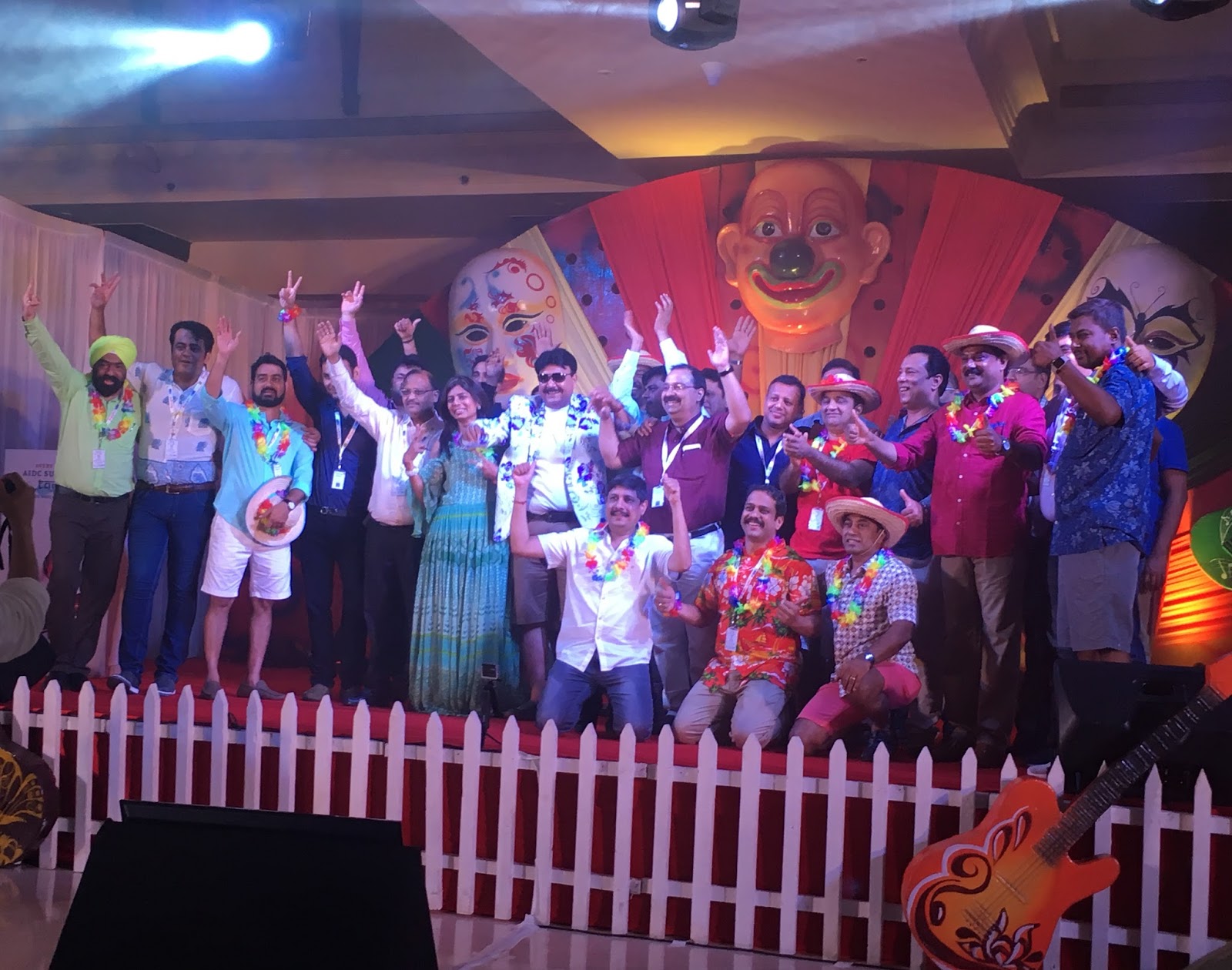
The conference ended but the fun part started with wonderful performances followed by the bar being thrown open. Feeling lighter, the members hit the dance floor and carried on till the wee hours of the morning taking back memories to motivate them to look forward to yet another edition next year.


Written By Harveer Sahni, Chairman Weldon Celloplast Limited, New Delhi June 2017
 
While still in school Anuj Bhargava loved good music and the quality of sound stirred up emotions within him such that he wished to make it better. He was in class six of New Delhi’s prominent Delhi Public School, when he developed an amplifier and sold it to a friend. Encouraged by the deal he went on to make almost 50 more such equipment and sold to friends and relatives at that young age. The interest in electronics lead him join YCCE College of engineering and pursue further studies leading to BE (Bachelor of Engineering) in electronics.  Thereafter he went to USA to do MS in electronics. As luck would have it, after the first semester he had a change of heart and switched to study industrial engineering. He worked to support his education while studying in America. On completing his masters in Industrial Engineering, Anuj took up employment in the central engineering department of Corning Glass for display technology. His job required him to coordinate with all Corning plants in various countries like Japan, Taiwan, Korea, etc. In 2002 itself he got posted to their plant in Japan. As luck would have it, before he arrived the company’s packaging development engineer had left job and Anuj was asked to replace him. Anuj whose family was in printing and packaging, had advised him to avoid printing and packaging as a career but that is kismet! Fate had destined him elsewhere he wished one day to be in electronics, another day he wanted to be in the furniture business but had to give up due to the huge investment needed, finally landed up with a job in a global company in their packaging department for large sized glassware.
 
In 2006 Anuj resigned from his job and returned back home. His father S K Bhargava was

planning to visit Ipex exhibition in Birmingham, Anuj decided to accompany him to visit the premier show in printing and packaging. While in college he was greatly influenced by a professor who was an expert and consultant to aerospace industry on lean management. Lean management was a subject Anuj always felt would be an asset to manufacturing which he would eventually indulge in. Digital printing appealed to him and implementation of lean manufacturing principles in the process seemed to be in synergy. Moreover digital printing appealed to him because of instant creativity and delivering possibilities that it offered. All through at Ipex show he kept studying digital printing but yet again fate had other plans for him. By end of Ipex he realized PSA labels were talk of the time. The growth that it was offering and the possibility of success on indulgence made him decide to seriously contemplate labels as his business. Strange as it is, destiny drove him to labels.


M K Bhargava, Chairman Kumar Printers
Anuj is from the second generation of the Bhargava family who scaled immense success in the printing industry in North. His uncle M K Bhagava who has been a mentor to Anuj, is the eldest of the three brothers, initiated his career in printing as a freelancer. He would seek orders from customers and outsource printing form other printing companies like Delhi Press, Zodiac Printers etc. In 1964 M K Bhargava started his maiden venture Kumar Printers with a leased single colour Dominant press, from a 200-300 square foot factory in Doriwalan in Karol Bagh Delhi. The second brother N C Bhargava and Anuj’s father; the youngest of the siblings, S K Bharagava who was pursuing studies at Allahabad Print College, joined Kumar Printers soon after. In 1970 all three brothers joined in Kumar Printers to take the business forward. M K Bhargava had gained knowledge from having worked with established printers during his stint as a freelance printer and it helped them establish and grow their maiden venture. With deep commitment to human values, quality, integrity and hard work, the family grew their business. Their mantra for themselves as also to their generation next was that each one had to work his way up in life and nothing would come to them served on a platter. They encouraged their second generation to set up their own ventures. M K Bhargava ‘s son Sandeep is an alumni of IIT Chennai, Sanjeev son of N C Bhargava is an MBA and Anuj has been described in the opening paragraph of this article. Sandeep inherited the reigns of Kumar Printers while his father still continues to be with him at work at an age of 83 years, Sanjeev set up his venture Premier Paper Packaging and S K Bhargava‘s only son Anuj set up his maiden venture Kumar labels. Interesting to note that the elder Bhargava brothers continue to be together as directors at Kumar Printers while their second generation, have set up new businesses separately. All three ventures are successful and continue to grow. The family businesses do not compete amongst themselves.
 
When destiny appeared to have lead him to labels, AnujBhargava on return from the Ipex trip in 2006 decided to evaluate a life in labels. In the process he did a feasibility study, met prospective customers and wrote a business plan. He spoke to many label printers and was surprised that most people suggested that he invest in a Mark Andy rotary flexo press, a very popular brand those days. Anuj was not impulsively indulgent, the as he researched, he came to the conclusion that major end user customers had now started to demand short runs on a regular basis. He saw the gap in that segment and decided to go for an intermittent Letterpress label machine instead of a rotary press that was suited for larger volumes as he saw a demand for short runs growing and smaller run supplies from rotary flexo printers coming hesitantly. Before investing in a press, he ordered a plate making machine. With negatives and plates he left for Korea and Taiwan. Using the same plates he got samples printed on various presses that included IwasakiShikiBangsung, STR, DolphinMida and Orthotec to do a decision analysis. While in Corning glass, he had learnt about Kepener Tregoe problem solving and decision making tool. This tool is used by all aerospace companies. Since he had been trained to use this tool he used it to make comparison and evaluation of the printed samples. On completion of analysis, Bangsung won with the highest numbers and the decision was made. The order was finally placed with Bangsung. As luck would have Anuj got a nod from PNB for machine loan based on which he placed order for the machine. However at the very last moment PNB declined and within 15 days Anuj obtained funding from SIDBI (Small Industries Bank of India).
 
It all started in 2007 with the arrival of his first label press, an intermittent Bangsung at a 
The die cutting machine developed by Anuj
1740 square feet rented factory in Okhla Industrial Area, New Delhi. Two years later in 2009, Anuj bought another identical Bangsung press and the shop floor space in Okhla fell short. In 2011 he shifted his factory to an 18000 square feet rented factory in Sector 83 NOIDA, on the outskirts of Delhi. He also added an inspection machine and a screen printing equipment. With space at his disposal and business growing, the outgoing entrepreneur in Anuj became unstoppable. In 2012 he added two Multitecflexo rotary label presses. One was installed in January 2012 and another in June 2012. In the same year Anuj started his own captive machine division to build semi rotary intermittent registered die cutting machine. He showcased this equipment initially at Labelexpo India 2012 and later at Labelexpo Europe in Brussels in 2013 and 2015. Till date he has sold 16 machines and all are working well. He is proud to say repeat orders came from export markets of Poland and Korea. In 2013 Anuj decided to integrate backwards and started to produce silicon release papers and self adhesive labelstocks for his captive consumption. 
 
The Gallus at Kumar Labels
By this time in 2013 not only was the space in the factory getting crowded but the lease was expiring and the landlord also was not willing to renew. Anuj, took the bold step of buying a plot of land admeasuring 1750 square Meters in Greater Noida. In 2014 he started construction, finished it in a record time of 48 days due to pressure of vacating the previous premises and moved into the new 25000 square foot factory in September 2014. Once operational in their owned new factory, Anuj bought another screen printing machine, a Gallus label press, and many ancillary equipment. For his label sock manufacturing he added equipment to produce label materials with special effects and textures. In the same year he filed two patents. A year on in 2015 Anuj bought the adjacent 1800 square Meters of land for further expansion.
 
Kumar labels is Anuj Bhargava ‘s sole proprietorship company, reminiscing his earliest days
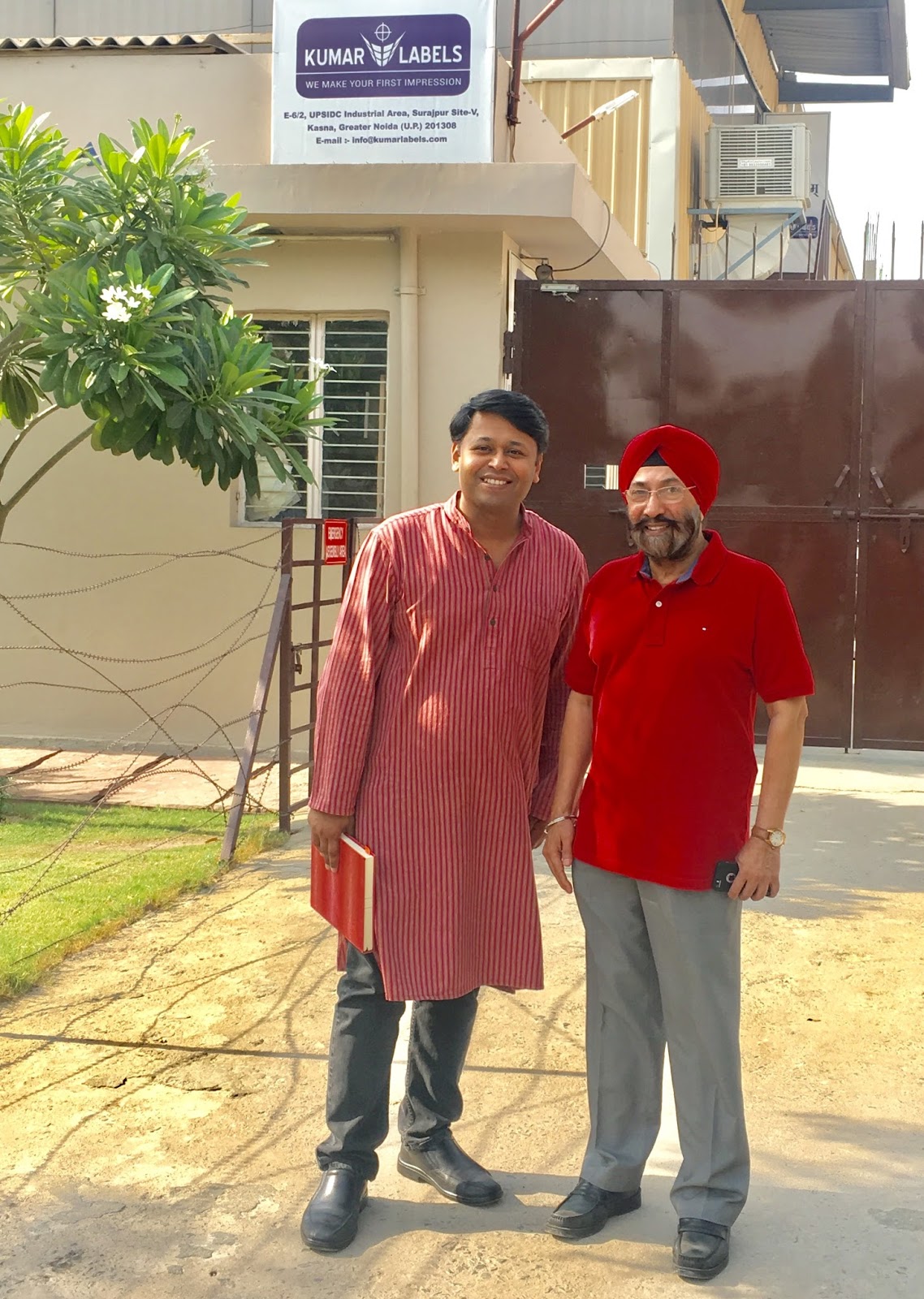
Anuj Bhargava with Harveer Sahni
 when he started printing labels he mentions his first customer that was his big  break, was Bausch & Laumb. They gave him a complicated label with a very tight registration to print. However much they tried they were not getting it right. That night he himself stood on the machine and kept on trying and finally got it right at 3am in the morning. He took the materials in his car and supplied to the customer some 80 Kms away and returned home at 5.30 am. Anuj has active support from his wife Somya, a Bangalore girl he married after his first year in labels. They have two children a daughter aged 6 and a son aged 4. Somya is an engineer with MBA and looks after Finance, procurement and HR and comes to work Mondays to Fridays. Kumar labels, is presently working with 9 label presses, 105 employees and a shop floor 25000 square feet in size. They have additional land next door for expansion. Anuj believes in continuously training employees so that they are not left stranded when some employees quit. He proudly states that he has trained over 300 persons in label conversion but is not comfortable with the fact that in this industry skilled employee retention is a problem. This so, at a time when competition is getting to be intense and reverse auctions making life very uneasy. He plans to shortly start a special technical training program under the aegis of Government of India SkillDevelopment Program.
 
As for future Anuj wishes to concentrate on art of print and create innovations in labels. He wishes his enterprise to be a front runner in decoration of labels for leading brands where quality and innovation will matter and not just volumes. He wants and is committed to make his business grow 15% per annum not just in top line but in the bottom lines so that with added profitability he can invest more in creativity. Digital printing does catch his interest and the indulgence may happen soon when his plans and ideas for it fall into place. He is also in the process of developing a process to reduce waste in self adhesive labels by almost 50% but for that he says, “I will divulge later when ready”.
 
Written by Harveer Sahni, Managing Director,Weldon Celloplast Limited, New Delhi India May 2017
 
The article was first printed in Printweek India.

This is the final part of History of Indian Label Industry” up to third quarter of 2019 written by the author. The history would look incomplete if mention was not made of those who started their label journey from scratch or very humble beginning and then rose to a pinnacle achieving success not only in the home market but also internationally and continue with their journey to greater heights.

From the start of new Millennium in 2000 until the time of writing this part of the history, enormous changes have come about in the Indian label industry. Label printing companies who started from virtually nothing, grew and spread to multiple locations. Some of the bigger ones on the way, decided to sell out to or partnered with foreign companies who were entering the Indian market for label manufacturing. Label, being a miniscule portion of the total packaging cost of a product, does not deliver very large turnover as compared to that of package printing or flexible packaging companies.

However, it does generate relatively higher profit margins than that of high turnover package printing industry. For this reason, we did not see any label companies in the earlier part of the new Millennium who could reach a coveted target of Rupees 100 Crore or a Billion Rupees as annual sales turnover. However, some packaging companies or multinationals who invested in labels as well, were above this figure. It was incredible that at least three Indian startup companies who started their business purely with stickers that later evolved as labels, grew to cross Rupees 100 Crores turnover or more in 2018-2019.

First among them is Manish Desai led Mudrika Labels. Sandeep Desai working at a greeting cards company started trading in stickers that he outsourced in 1975 and a year later he started screen printing them at home. His 10-year-old cousin, Manish was always excited to see stickers being made. In 1977 Sandeep moved his sticker manufacturing to a 500 square feet factory in Malad.

In 1985 they started outsourcing pregummed sheets and get them printed on offset to finally finish them to be stickers at their factory. They grew and expanded into packaging, making cartons and corrugated boxes. Sandeep eventually moved into packaging and the young Manish who had labels in his heart, in 1996 expanded into labels with Kopack label presses and later many Gallus presses. He further expanded integrating backwards to produce self-adhesive labelstocks and collaborated with a Korean company to produce heat transfer labels. By 2019 Mudrika labels were working out of 100,000 square foot shop floor, 550 workforce to achieve a Rupees 160 Crore (1.60 Billion Rupees) annual sales turnover.

The second person to achieve this Kuldip Goel of Any Graphics started from very humble beginnings. At a tender age of 14 years he started making stickers by screen printing manually himself to earn some money while still in school. He did this in his one room home. Despite extreme hardships in life he remained honest and focussed on providing the best in quality and indulging in innovation. In 1989 he started his maiden venture Stickline in Noida. By start of the millennium Kuldip’s company Any Graphics was recognised as one of the best label manufacturers in quality and one that never cut prices to get orders but prove their innovative capabilities to convince customers. From mere screen printing he went on to add dome labels and letterpress printed labels in his portfolio. In 2009 he moved to a 100,000 square feet clean sanitized dust free factory adding, Heidelberg Offset Presses, Orthotecs and a fully loaded Omet flexo and screen combination label press. He also became one of the largest makers of rigid boxes.

By 2019 he had crossed the Rupees 100Crore sale without compromising profit margins and becoming one of the most awarded companies in India. In 2019 he commenced construction of a certified green factory spread over 15000 square meter plot size and 250,000 square feet shop floor.

 The third printer who grew in similar pattern, a stout follower of Lord Shiva who greets people with, “Jai Bhole Ki” (Victory to Lord Shiva, lovingly referred to as Bhole) Sanjeev Sondhi, started his career as a medical Representative and carried on in the profession switching jobs until 2005 when he decided to trade in Barcode labels, printers and accessories.

He was looking for bigger things in life! Two years later in 2006 he launched his maiden start-up venture Zircon Technologies India Limited with a Mark Andy 2200 Label press in Dehradun. Being a salesperson himself he drove the company in fast mode expansion and in a few years added multiple Mark Andy and Omet label presses which include the high-end combination Omet Vary flex 430mm. In just 15 years of inception Zircon crossed the Rupees 100 Crore reaching 120 Crores annual turnover mark coming purely from label manufacturing, “a record in itself”! While other successful label companies at this stage would look for foreign suitors, Zircon in 2019 was the first totally indigenous label manufacturing company planning to go public to raise capital for future expansion. They got the approval from SEBI in November 2018 with plans to open a 90-100 Crores public issue. Waiting for an appropriate time to launch their public issue Zircon continued to grow and invest in expansion. Sanjeev hoped to invest 80 percent of the receipts in expanding labels business while the rest in other allied products. Sanjeev was even looking at inorganic growth by indulging in Mergers and Acquisitions. With 3 factories in Dehradun and one in Chennai Sanjeev Sondhi aims to grow multi-fold with blessing of Bhole (Lord Shiva).

Having achieved such success through sheer commitment and hard work it is natural for companies like the three mentioned above to look at other avenues in synergy with their business to achieve a faster growth. All the above, while they continued to be proud of their beginnings and aware of the evolution, started to study or invest in new technologies. 

 We had reached a time when multiple labelling technologies surfaced, and future had many surprises in store. From the primitive times when a label had to be either tied to a product or riveted on to it or affixed with a wheat flour paste, we believed to have reached a pinnacle when self-adhesive or pressure sensitive adhesive labels that were developed and grew to establish as a predominant labelling technology. Initially it was the manually applied wet glue adhesive paper labels that were in use. With development of starch and dextrin-based glues and availability of automatic wet glue labelling equipment, wet glue labels became the most widely used method of labelling. Most of the organised industry employed packaging lines incorporating wet glue labelling. It was used in all segments like pharmaceuticals, Liquor, cosmetics, oils and in fact most of the products that were packed in glass bottles or metal cans. When plastics, mostly HDPE (High Density Polyethylene), started to evolve as a preferred packaging material for glass bottles and cans due to ease of manufacturing, reduction of freight due to lighter weight per can, possibility to produce in different shapes and colours, labelling with starch or dextrin based adhesive became a challenge. This change was taking place during the 1970s and 1980s. Since HDPE is a low energy material, paper labels with water-based adhesives made from various gums, starches and dextrins would not anchor on to the containers or would fall off in transit. Labels with pressure sensitive adhesives or stickers had already started being made initially by screen printing methods and later by offset printing, these labels would stick well just by application of pressure. They did not have to wait for drying and could be packed instantly after labelling while the wet glue labels would have adhesives oozing out on the sides and attracting dust and shifting in packing process, adversely affecting the aesthetics. More and more companies were opting for these stickers.

Towards the end of last century self-adhesive labels evolved in roll form and the automatic labelling equipment for pressure sensitive adhesive labels became available. Many companies did resist shifting from wet glue to self-adhesive due to the high cost of label applicator replacements.

This is a big challenge that the likes of printers mentioned above faced and yet with their firm resolve they became a part of the change that brought them success. As the retail became dependent on customer choices and there was need for better decorated labels, self-adhesive labels became the preferred labelling technology and grew at fast pace. In between screen printing on containers also started but a slow process that did not have much decoration as compared to printed labels, it did not grow as a preferred process. Self-adhesive grew so much that it became almost 50% of all the labels produced in India. As we entered the new millennium and started looking also into future the thought process for future of labels is becoming extremely diverse and evolving in different tangents. Shrink sleeves came in to take away a big market share given the possibility of 360 degrees visibility. Wrap around labels also became extensively used in the beverage segment. Heat transfer label technology that had originated as Therimage Label technology developed by Dennison Manufacturing company in USA in the 1990s did not flourish then because Avery, who acquired Dennison, did not promote it as it was not in sync with their core business of self-adhesive labels. Once the patents expired, the Heat Transfer Labels or HTL reappeared in the second decade of new millennium and started growing. In mould labels is another labelling technology that had found usage in many segments and started registering growth in large volume usage. At this time, I try and link the changes to the three above who understood the need to expand the scope of labels in their business portfolio. While Mudrika as I mentioned invested in heat transfer labels, Any Graphics into innovative labels and rigid boxes and Zircon also started moving into brand security and innovative packaging including spiral wound containers.

Around this time environmental concerns also impacted the self-adhesive label industry as almost 50% of the converted product is waste going to landfills. Much work was being done on this to reduce the liner tonnage by opting for thinner filmic liners that can be recycled and by developing linerless labels.

Digital printing on to the products is another technology that may replace some of the usage of self-adhesive labels. All said and done, the sheer market size in India and the inertia, brings business to all label technologies and for this reason the self-adhesive labels market continued to grow at double digit rates. The industry will keep evolving both in terms of quality and innovation as also taking environmental concerns in its stride.

In over a year, as another decade ends, the author will update the history on the outcome of such endeavours. The total History as chronicled by the author until now is now available on this blog on links as below:
Part 1: https://harveersahni.blogspot.com/2010/08/history-of-indian-label-industry.htmlPart 2A: https://harveersahni.blogspot.com/2019/07/history-of-indian-label-industry-part-2a.htmlPart 2B: https://harveersahni.blogspot.com/search?q=History+part+2bPart 2C: https://harveersahni.blogspot.com/2019/08/history-of-indian-label-industry-part-2c.htmlPart 2 D: Above
Written by Harveer Sahni Chairman Weldon Celloplast Limited New Delhi July/September 2019
Note: No one is authorised to reproduce, copy or reprint this article until permitted by the author in writing. 

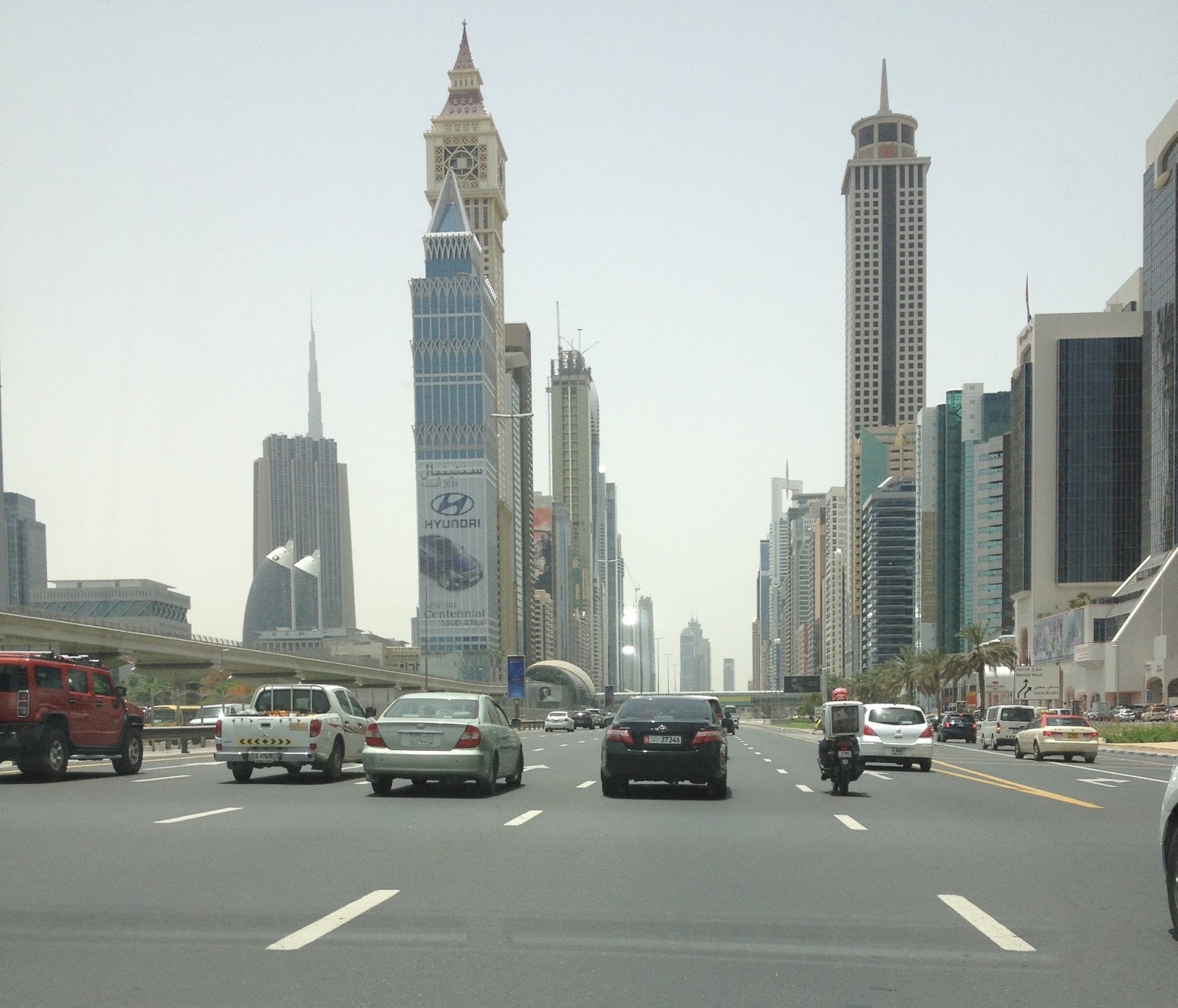
Sheikh Zayed Road Dubai
UAE (United Arab Emirates), a federation of seven countries has a population of just about 9 million out of which over 85% are expatriates, yet there is a label industry that is growing steadily and is attracting interest from global suppliers all the time. At the start of this millennium the number of label printers in UAE worth the mention was less than 10. The number of label companies has been rapidly growing ever since. Those were the days when Industrial growth started seeing an upswing in UAE. The number of companies from India who started to set up shop in the UAE was also growing. Indian label printers who were ambitious to go global started to make efforts to use UAE as a gateway to the world of international business. The then Finance minister (later Prime Minister) Dr. Manmohan Singh’s economic liberalization programs had become the catalyst in aiding the Indian entrepreneurs’ aspiration to be called a multinational!
 
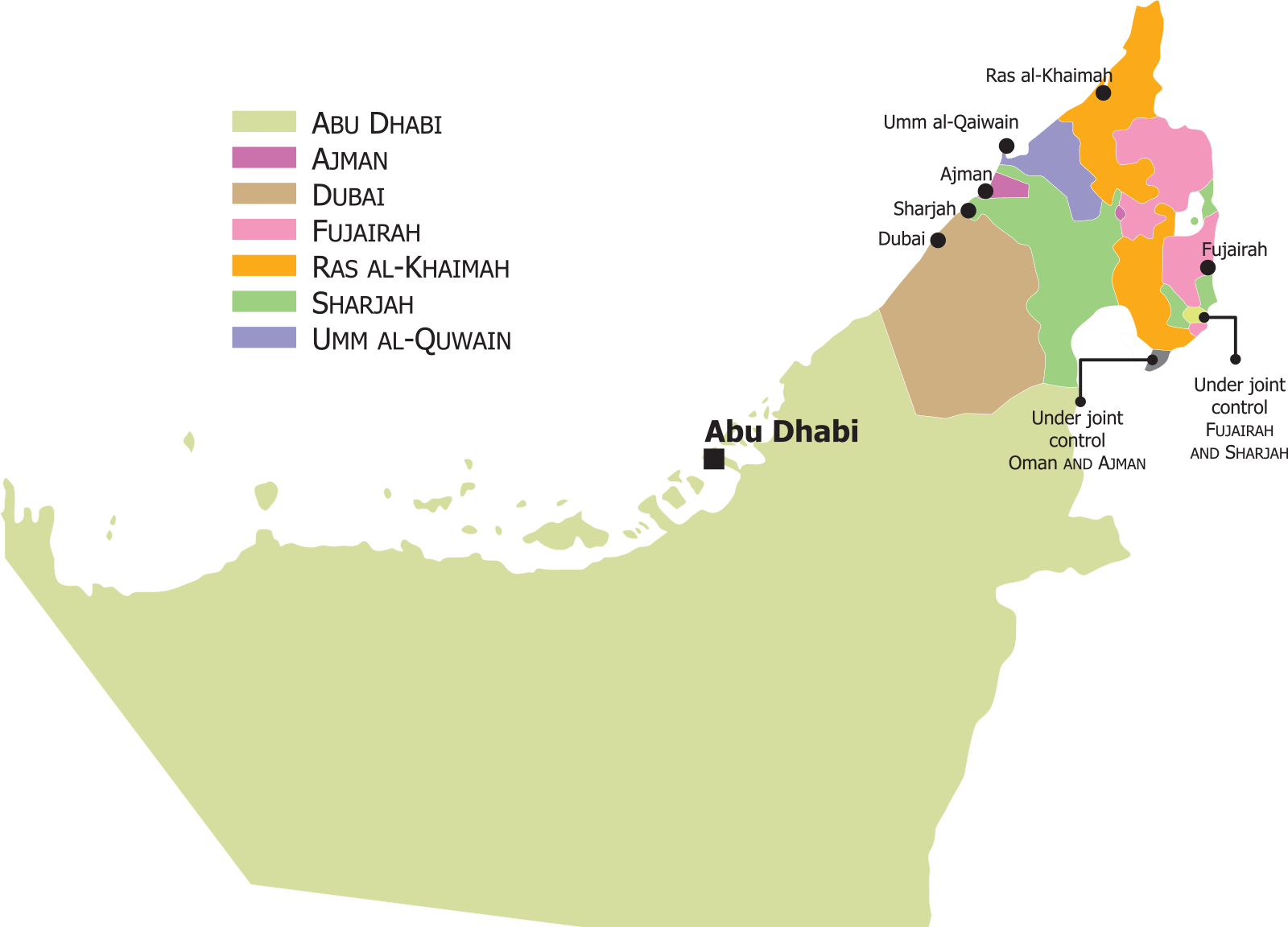
Dubai has always been the face of UAE even though in terms of area it is just less than 5% of the of the total of 83,600 km² area of UAE (The whole of UAE in terms of area is smaller than the small state of Meghalaya in East India). The largest emirate (or country) in UAE is Abu Dhabi at 67,340 square kilometers, yet it is Dubai that is recognized as the face of UAE. Dubai has a population of 2.7 million that, if not already there, is inching towards a figure twice that of the population in Abu Dhabi. Surprisingly the percentage of women in Dubai is just 31 % and men 69 % according to data available as of 2014. This is largely due to expatriate population who, leave their families back home and travel to UAE for gainful employment. The gender mismatch is also similar in other emirates. UAE is a federation of seven emirates, and was established on December 2, 1971. 


The constituent emirates are Abu Dhabi (which serves as the capital), Ajman, Dubai, Fujairah, Ras al-Khaimah, Sharjah and Umm al-Quwain. UAE is a major international tourist and business hub. It has one of the highest per capita incomes in the world at nearly $25,000 USD.  UAE has approximately 10% of the world's total known oil reserves, 90% of these oil reserves are in Abu Dhabi and only about 10% of these are in Dubai. UAE is not anymore solely reliant on oil and gas revenues. The oil sector contributes about 30% of the country's GDP.  Lead by Dubai the trade, tourism, real estate and construction are large contributors to UAE economy. Sometimes one wonders how a country with population and area less than most big cities in India, continues to attract such fervor for tourism and investment. Indians form over 25 % of UAE population. With the country being home to between 50,000 and 60,000 Indian companies, today India is UAE's largest trading partner.
 
The label industry in UAE is facing a more or less similar situation as in India. The market keeps growing and the number of printers also keeps on increasing, thereby translating into intense competition and lower margins. Being a federation of emirates or countries with low population, it is actually the exports that are driving growth in labels. From being a trading distribution centre, UAE has transformed to be a manufacturing hub selling globally. The immediate access to Middle-Eastern and African markets is the starting point for all label companies and as they step up their capabilities, from here they venture into Europe and beyond as well. The glitter, liberal life style, cosmopolitan character and excellent infrastructure of Dubai and the rest of UAE, has always tempted the ambitious investors to establish presence here. According to recent Smithers Pira report, total printing revenues in the Middle East and North Africa (MENA Region) were $17.6 billion in 2012, and are forecast to grow 7.2% per annum reaching $26 billion by 2018. On trying to reach an approximate market size in the region; considering labels to be 20% of the total print industry, the size of label industry in this region in 2018 is estimated at $5.2 Billion. Pressure sensitive labels being a little over 40% of the total labels industry one can estimate the market size of pressure sensitive labels in the MENA region in 2018 to reach approximately $2.08 Billion.
 
 
UAE Label industry is largely, either owned, run or managed by Indian expatriates. This
Kimoha Factory in Dubai
 market is divided into 3 distinct segments; (A) the top end that has 5-6 very big players. (B) The big players that are the middle segment and (C) The not so big players who are either testing their luck or are the offshoots, ex employees of A & B trying to emulate their ex-employers. As is always, the middle segment suffers the most as they are continuously held back by the competition from the smaller players making it difficult for them to invest so as to get into the top segment due to lower margins and unviable return on investment. The niche or top segment has the least competition but delivering to customer’s expectations and retention is in itself a big challenge that the top players keep attending to so as to meet the demands of their high end customers. Therefore the increase in number of printing companies, affects largely within the segments they operate in. The established top players in UAE include; Emirates Printing Forms in Abu Dhabi, Kimoha in Jebel Ali-Dubai, Pacman CCL in Alquoz-Dubai, Futurepack in Sharjah and GulfAdhesive Label Factory in Ajman. In recent times established Indian companies who have invested in UAE include GulfscanPrakash Labels and Ajanta packaging.
 
Vinesh Bhimani Managing Director Kimoha
The rough estimate of the total market size in terms of labelstock usage in UAE alone is approximately 50 million square meters per year. This maybe off the mark, but after interaction with leading printers, this estimation has been arrived at. We cannot really translate this in terms of per capita usage as about 80 % of the labelstock is exported either as converted labels or as a part of manufactured end products. UAE appears to be a bigger market then Saudi Arabia for production of labels because of better infrastructure and liberal policies aided by no tax regime for sales within the GCC countries. According to Nimeesh Lilani at PacmanCCL, “The reason for this is the ease of doing business in UAE, easy availability of funds and it being a logistic hub with ease of making clearances and shipments”. According to Vinesh Bhimani heading Kimoha, “from the just a handful of label companies,there are now in excess of 45 label companies. 
 
 
Gopalan Nair & Chinnadurai at Future Pack
The market is getting crowded”. Chinnadurai at Future Pack says, “New entrants are just one part of the story affecting margins, online auctions have started to surface in UAE also, this will be another headache!” he further added, “We are trying to replace old machines with new technologically advanced equipment to produce cost effectively.” Sachin Arya at Ajanta packaging says, “Prices have become challenging and payments are delayed making it difficult for us to operate. More and more Indians are wishing to locate outside India and to succeed; they are under compulsion to sell by undercutting prices”. Chinnadurai feels that if the trend goes on like this it will not be long before we see some people exiting this business. 
 
Assad Antonios heading Abu Dhabi based Emirates Printing Forms says, “Cost of living in
Assad Antonios of Emirates Printing Forms Abu Dhabi
 UAE has gone up and with new printing companies coming up in Africa the market place is shrinking bringing pressure on smaller players to exist” Increasing number of printing companies, bring with it the need for more operators whose demands become difficult to meet as they wish to bring their families to UAE as well. It is becoming very expensive to hire operators. One wonders how the new entrants with just one machine and that too of a lower end can survive in an economy where per capita income is one of the highest in the world and the market appears to be almost saturated. However still, most big printers have said that there is definite growth in the market. The UAE market as mentioned earlier in this report is dominated by a few large printing companies. Dubai based Pacman CCL Is headed by John Dawson and has been in the news for their recent takeover of Mumbai based Super labels. The company is a joint venture between the Albwardy group and Geoffrey Martin lead CCL Label, the world’s largest label company. They have units in Dubai, Oman, Egypt, Saudi Arabia, Pakistan and now India. Jebel Ali headquartered Kimoha headed by Vinesh Bhimani has been a front runner and always striving to excel. Abu Dhabi located Emirates Printing Forms has been another success story. They have grown from just being a computer forms manufacturer to a huge enterprise manufacturing Continuous forms, Self adhesive labels, document security printing, wrap around labels on wide web machines, EDP products, Shrink Sleeves, IML, Cut & Stack Labels, etc. Assad Antonios of Lebanese descent has been heading the company for last 26 years. He is proud to mention that this company, growing at a steady rate of 10% per annum, now operates out of over 100,000 square feet shop floor space with 140 employees. He is happy that due to respect given to all employees and creation of a family like atmosphere, the company has very low employee turnover. Sharjah based Future Pack is a part of the Saudi Arabian ENPI group which in turn is a part of the Saudi Printing and packaging Co. (a public listed company in Saudi Arabia). The company produces a diverse range of paper and plastic packaging. Chinnadurai as their Vice President Operations at Sharjah has lead the company from just labels to even production of specialized labelstocks and innovative label products. 
 
The Label industry in UAE started from Dubai then spread to other emirates like Abu Dhabi, Sharjah and Ajman. With real estate prices escalating and cost of living in Dubai becoming unaffordable, label printing started to come up in other Emirates like Ras Al Khaimah, Umm al-Quwain and Fujairah. Today the label printers are spread over in all emirates. However it is pertinent to note that it is not the domestic sale or locational advantage that makes them locate their units in far off emirates rather than in Dubai. It is actually the need to produce cost effectively with lower overheads that takes them to other emirates. The growing market at this manufacturing hub has made Tarsus the organizers of Labelexpo series of events around the world to invest in Gulf Print and Pack Dubai. The show has become a premier event in Middle East Asia and printers from all countries in the region make it a point to visit the show. This year’s edition, as per their official website has over 200 exhibitors. Registering a 26.7% increase, 11918 visitors from 110 countries visited the last edition of the show. The interesting part of UAE is that the local governments recognize the need for exporting and increasing their share of global trade rather than relying on the limited and fast depleting oil reserves. They have transformed the UAE economy from oil revenue based one to one based on global trading, manufacturing, tourism and real estate development. It is evident that mindset of rulers of the country will make manufacturing to prosper and with that, the market of labels in UAE will surely grow.
 
Written by Harveer Sahni, Managing Director, Weldon Celloplast Limited, New Delhi-India February 2017
 
The article maybe published with the permission of Narrow WebTech Germany giving credit to them and to the author

For advertising enquiries please email to; harveersahni@gmail.com
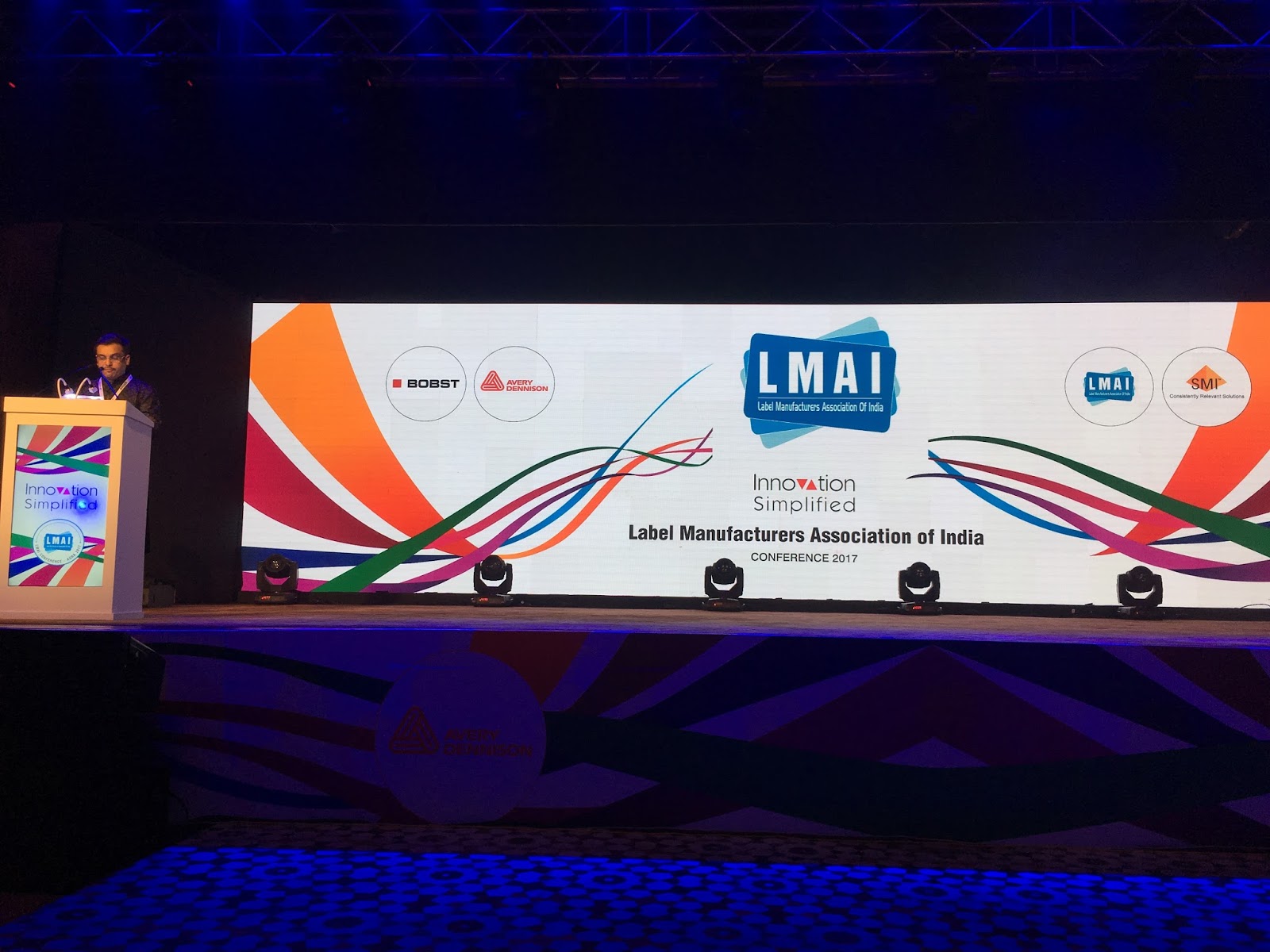
In May 2015 I wrote on this blog that the verdict from the Indian label industry, after I had interviewed some leading printers was, “Digital for labels has to wait”. In the concluding part of my article I mentioned, “The time frame before digital printing becomes largely visible and used in label printing in India varies between three to five years.” 
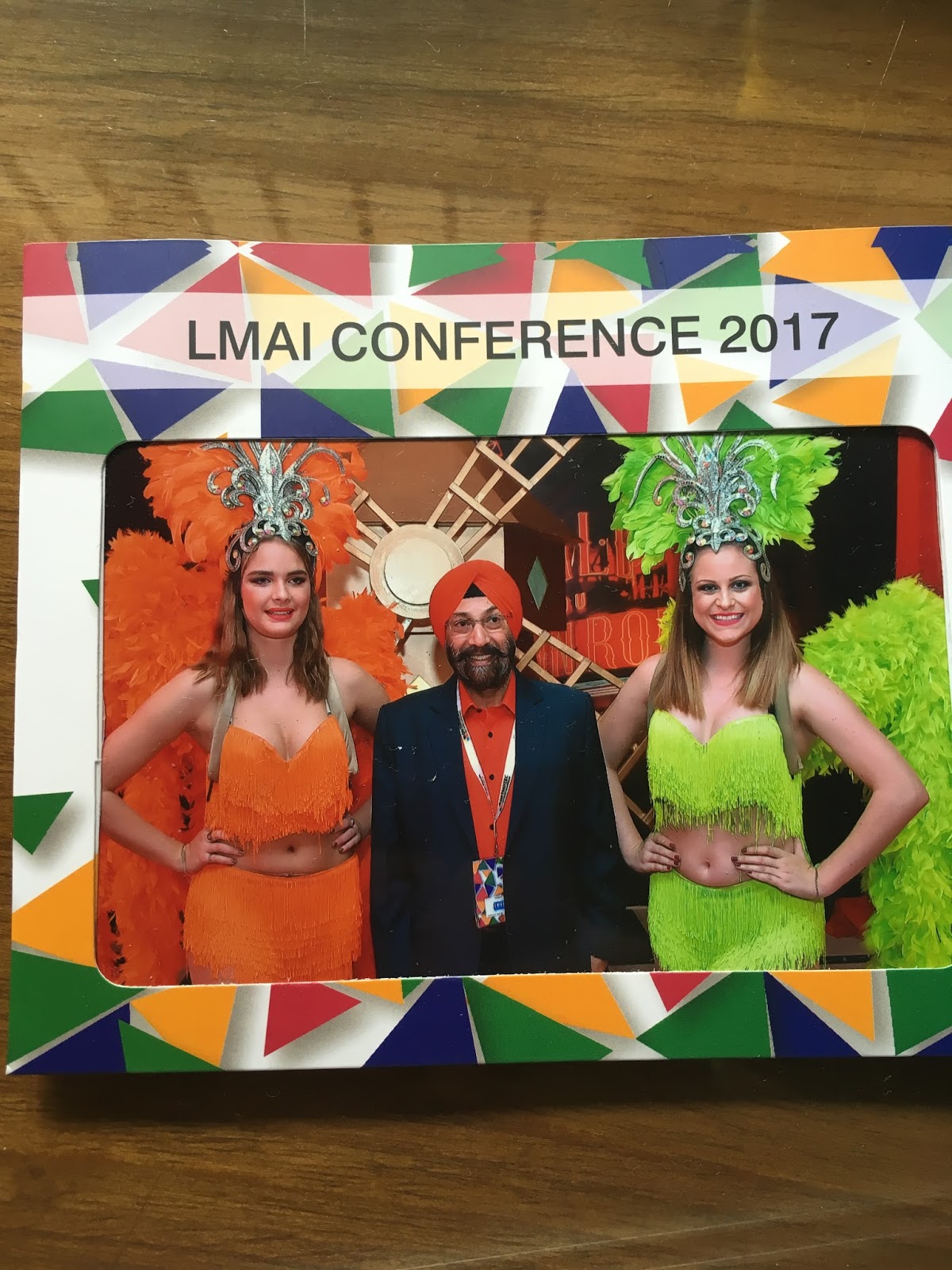


Amar Chhajed Huhtamaki PPL-Webtech
I must here appreciate and commend Amar Chhajed of Huhtamaki PPL-Webtech labels for his foresight when he said digital printing in labels will become evident in 2-3 years. He said this in May 2015 and two years hence as we enter the third year since then, we note that some big time investments are being made in digital printing in labels. Digital printing in labels has been registering continuous growth in Europe, followed by that in North America. 


I and Adrian Tippenhauer MD Rako Etiketten
In my reporting on the last DRUPA, I had quoted Adrian Tippenhauer Managing Director of Rako Etiketten Germany. According to him the last 36 label presses acquired by them out of the 100s that they have, are all digital presses. If the Labelexpo-Europe and Drupa are indicators, the visitors to these shows can very well imagine the way forward. Digital was the most predominantly exhibited technology at these events. HP became the biggest exhibitor at DRUPA with an almost 5000 square meter hall showcasing their digital offerings.  Other leading suppliers of digital label presses were all there. The writing was on the wall that it would not be long before the trend starts to flourish in India. Indian label printers have been very cautious towards investing in digital printing of labels. However as they say, you cannot stop an idea whose time has come. When I researched and estimated the size of digital label market in India, the findings became interesting. By latest count the population of leading brands of digital label presses in India has reached 22 in number. This is besides the small low value small printers that some companies may have acquired. Now this is a fairly impressive figure when just a year back we had the industry largely saying that digital has to wait. Estimating the size of the digital label market I made some assumptions. The average width of the press was taken as 330mm (as widths vary from 250 mm to 370 mm), printing speed is calculated at an average of 30 running meters per minute, because it varies from 20 to 50 meters per minute for different brands and working hours assumed at 12 hours per day. This amounts to a total consumption in the industry for digitally printed labels of over 52 million square meters in a year. Self adhesive labels form the largest part of total label market which include besides self adhesive labels, shrink sleeves, wrap around labels, wet glue labels, in mould labels, etc. In October 2016 I had estimated the total Indian label industry size (mostly conventional) at almost 900 million square meters per annum. This translates into to almost 5.8 % of the total self adhesive labels in India to be printed digitally; conservatively we can assume the figure to be 5%.  This surely indicates that for digital label printing in India, the journey has begun!
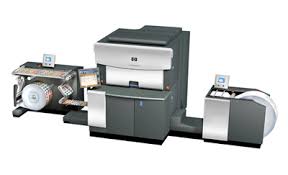

 
In the last edition of LMAI’s magazine Label Legacy, Gautham Pai Managing Director of Manipal
Gautham Pai MD Manipal Technologies
 Technologies said, ““Digital printing offers a plethora of opportunities for both the suppliers and the clients. With the Indian market trending towards more customized products, a large number of brands, shorter TATs (Turnaround Times) and more ecologically sustainable solutions, Digital printing would prove to be one hallmark technology for the Label Industry.” Manipal Technologies has an HP Indigo installed at its subsidiary UPSL in Chennai. The deterrent so far for the label industry to invest in digital printing equipment has been the high cost of consumables and the end price to consumer including margins, as not being acceptable. However the evolving retail selling patterns and consumables becoming more affordable, the technology is now more relevant. As run lengths continue to shrink, short runs being more in demand and customization or personalization needs become imperative to modern day marketing; it is driving printers to think digital. Added requirement for variable data on the labels that helps companies to track and trace their products, brings about the compelling need to complement their analogue printing with digital printing. In words of Narendra Paruchuri of Pragati Pack Hyderabad who have installed an HP Indigo 6800, ““One of things that all of us must understand and appreciate is that both digital and analog will co-exist. Digital’s greatest advantage is variable data printing. Short runs are cheaper. So the areas are clearly ear marked.” Digital printing of packaging and labels is growing at an enormous pace in the western world. We have touched the tip of an iceberg; it will not be long before the trend picks up in India as well.
 
Sai Packaging team announcing Epson Surepress Purchase
The ease of use and consistency in print reached in this technology makes it interesting for established printers to indulge. Pravin Savla of J P Printers Mumbai is ecstatic that he invested in an Epson Surepress. He says, “I can print good quality on a variety of substrates using the computer to print capability. He caters to his customer base that demands short runs with so many design changes and is still profitable.” He further adds that reduced need of manpower helps him manage well with ample time on his hands. He says conventional flexo and letterpress technologies are time consuming and have hidden costs. Yet another Epson customer Arvind Shekhar of Sai Packaging Bangalore says, “We have had good experience for short run jobs defined as less than 20,000 labels for bigger size and 50,000 for smaller pharma labels and we have never had colour consistency issues with Epson.” Adding to the views of Narendra Paruchuri Arvind states, “I don’t' see it as a standalone ROI (Return on investment). When you see increased sales on Flexo plus plate costs saved; then the ROI makes sense.” Denver Annunciation from Janus International, perhaps the very first label printer to install an HP Indigo label press says, “Yes the technology has evolved a lot and we are seeing the crossover point shift higher”. While those in the process of acquiring capabilities in digital remain tightlipped yet others like Raveendran of Sel Jegat Sivakasi, Manjunath of Global Printing Bangalore and Rajesh Nema of Pragati Graphics Indore say they are studying the technology and will invest in the near future.
 
 
While calculating the number of digital label presses in India, I have not taken into account the
presses that are not operational. Out of the 22 presses, the bulk of the share goes to HP Indigos that employ Electro Photography as a process to print, which is similar to offset printing using liquid inks. Electro photography and inkjet are both improving in quality and speed, there evolution and further developments are challenging the dominance of other printing processes like offset, wide-web flexo and gravure. 13 presses amounting to 59% of the total digital label press installations in India are HP indigo. This is followed by 5 Epson SurePress L-4033AW that use water-based inks and is suitable for segments such as pharmaceutical, cosmetics and food, amongst others. The press uses a seventh white ink to print the transparent no-label look, as well as metallic labels. The opaque white printing on materials, such as clear film and metallic substrates, has the flexibility of printing white first or last. Epson accounts for almost 23 % of the installations, 2 Xeikons account for 9% and one each of durst and EFI accounting for 4.5% each.
 
59% of all the digital label presses installed are in the West Zone, 23% in South and 18% in North. Out of the 13 HP Indigo label presses working in India, 7 are installed in the west zone. One at Janus International Mumbai, 1 at Diadeis Alia (formerly Alia Creative Consultants) Mumbai, 2 at Astron Packaging Ahmedabad, 1 at Essel Propack Mumbai, 1 at Trigon Digital Mumbai and 1 at Skanem Interlabels Mumbai. 4 HP Indigos are installed in South, 1 at Pragati Pack Hyderabad, 1 at Pravesha Hyderabad, 1 with Huhtamaki (SGRE Labels) Bangalore and 1 at Manipal Technologies (UPSL) Chennai. 2 of the HP Indigos are in North. 1 at Hora Art Centre NOIDA and 1 at Moser Baer Noida (working). Out of the 5 Epson Surepress preses 1 is installed in South at Sai Packaging Bangalore others are in the West zone with 1 at Trigon Digital Mumbai, 1 at J P Printers Mumbai, 1 at Syndicate Printers Goa and 1 with a customer in Pune. Of the 2 Xeikons installed, one is with Huhtamaki PPL-Webtech Labels in Mumbai and one with Kwality Offset New Delhi. The only EFI Jetrion installed is with Reynders in Chopanki in the North and the only Durst is with Astron Packaging in Ahmedabad. I have accounted for most of the recognized brands of digital label presses in India.
 
Hemanth Paruchuri of Pragati Pack


On further evaluation of data compiled by me 9 out of 20 i.e. 45% of the companies who indulged in digital label printing are either multinationals or corporates and the rest 11 are family owned businesses. It is interesting to note that at least 7 out of the 11 companies have the young generation-next either in command or actively involved in day to day affairs of the company. So evidently it is the corporate mindset or the youth that is driving the march into digital printing of labels in India.


Written by Harveer Sahni, Managing Director, Weldon Celloplast Limited, New Delhi India May 2017 email: harveersahni@gmail.com