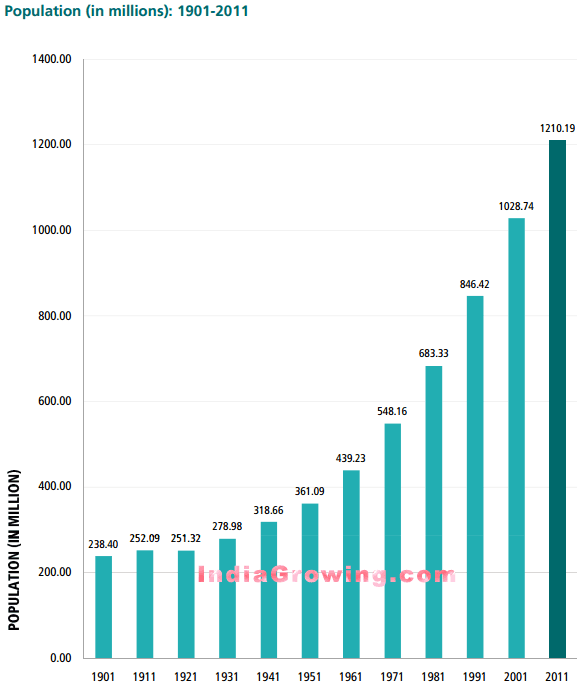
“The annual turnover of Indian packaging industry will touch $ 32 billion by 2025 from the present $ 24.6 billion” the Union Minister for State for Commerce and Industry E M Sudarsana Natchiappan said as per report in the Economic times of Jan 06, 2014. We are now into the end of 2016, which is almost three years hence. The growth rate is estimated by the Indian Institute of Packaging and the ministry of Commerce & Industry at 15%. If I take this CAGR (Compounded annual growth rate) of 15% and calculate, the total packaging market size in India at present should be 35 Billion USD per annum. According to PIRA (Pira is the worldwide authority on the packaging, paper and print industry supply chains), labels constitute less than 3% of the total packaging market. This includes all of Self adhesive labels, Shrink sleeves, Wet glue labels, In-mould labels, etc. So the market size of labels in India if I calculate at a modest rate of just 2.5% of the total packaging market, it works out to be in excess of 0.9 Billion USD or at present rate of Forex conversion rate, it is estimated to be Rupees 6000 Crores. Assuming 40% of this to be the market of self adhesive labels, the market size of self adhesive labels then works out to over Rupees 2400 Crores or approximately 900 million square meters. This would include all of printed paper & film labels, Sheeted and roll form labels, stock lots, Barcode labels, etc. The organized sector may look much smaller but together with the unorganized sector in the label industry which has mushroomed all across different geographical zones in the country adding volumes to the overall consumption, the consolidated figure becomes substantial. Consumption continues to grow steadily in even the smaller towns of the country. Some of my industry colleagues exercising caution, differ in opinion and emphatically state that the market size is lower. With current Indian population in October 2016 being 1.33 Billion, the per capita usage of label materials in India is estimated by me to be 0.67 Square meters while my other friends in the industry feel it is a little less than half a square meter per capita, meaning the market size is almost 670 million square meters. So the market should be within the range of 670-900 million Square Meters.
 
In 2003 I made a presentation for Cham Tenero Paper Mills Pressure Sensitive Symposium in St. Moritz Switzerland whereby I had made an assessment of market size of self adhesive labels in India based on consumption of adhesive and silicone sold in India to produce silicone release liners and self adhesive labelstocks. The presentation has been reproduced by me as a post on this blog, please check out . With my experience of being a siliconiser and labelstock manufacturer I calculated the amount release paper and labelstock that could have been produced. The figures coincided and gave a realistic picture of indigenous production of labelstocks by local players to be between 125-140 million square meters plus the imports and sales of Avery Dennison which had just started to get a firm foot hold into the market and was operating out of their Gurgaon facility only. Taking 125-140 million square meters as the reasonable figure in 2003 and calculating at the Ministry of commerce and Indian Institute of Packaging declared CAGR of 15% per annum we arrive at a present market size of self adhesive label materials  of 769-861 million square meters  which is within the estimated market size arrived at in the paragraph above. In the earlier part of the new millennium we saw rapid growth of self adhesive labels, much above the CAGR 15%, this was for various reasons; the economy was opening up, organized retail was also coming up creating new demand for labels and the old slow flat bed label printing machines were making way for faster rotary flexo label presses.
 
In 2013 I wrote an article on Baldev Singh Jandu of Jandu Engineers, who besides making label printing machines also makes coating and lamination machines. Most of his equipment is supplied to MSME units that fall into unorganized sector. He has been making coaters for many years now. In 2013 alone he sold 16 coaters, though he says his coater are being now designed to run almost 100 meter per minute, yet I calculated at an average speed of just 50 meters per minute, two 8 hour shifts and a 25% down time. That would translate into an annual production capacity of 170 million square meters. This increase is coming from just one equipment supplier in just one financial year. He has been building coaters and selling for many years. He continues to sell his coaters and there are others also like him building coating lamination machines adding to the bulging capacity of self adhesive materials in India. Then we have hot melt adhesive coaters coming in from China. This all is besides the capacity augmentation by the likes of Avery, SMI or the imports by Raflatac. I am sure neither of these coaters are idle nor are they up for sale. The market is huge and continues its upward trend. In the second half of 1990s there were just three labelstock manufacturers in NCR Delhi and maybe 10 to 15 across the country. Today the number in NCR is close to 30 and overall in India is in hundreds. This all leads to figures of market size much larger than what we are assessing it to be.


Let me go about this, another way. There are more than 500 label printers for printed labels and an equal if not more, number of label manufacturers who produce plain labels, price labels, A4 inkjet/laser labels and barcode labels. This adds up to a 1000 converters having anything from one to maybe twenty presses. There are large converters who use over 40,000-50000 square meters per day and then there are those who consume much less. If I take just an average of a modest 2500 square meters per month and with almost 1000 converters, this translates into a consumption of 750 million square meters per annum! If I increase the average consumption to 3000 square meters per day the consumption figure jumps to 900 million square meters calculated at 300 days production. If I add to this the sheet fed label market the market sizes increases further. I have tried assessing the market size in three different ways and each time it reaches within the same limits. Surely we have with finality crossed the half a square meter per capita consumption mark and are inching towards the one square meter per capita and presently hovering around close to the magical I billion square meter mark!
 
Note for print publications: Magazines may reproduce the above article by giving credit to the author.
Written by Harveer Sahni, Managing Director, Weldon Celloplast Limited New Delhi India. October 2016.


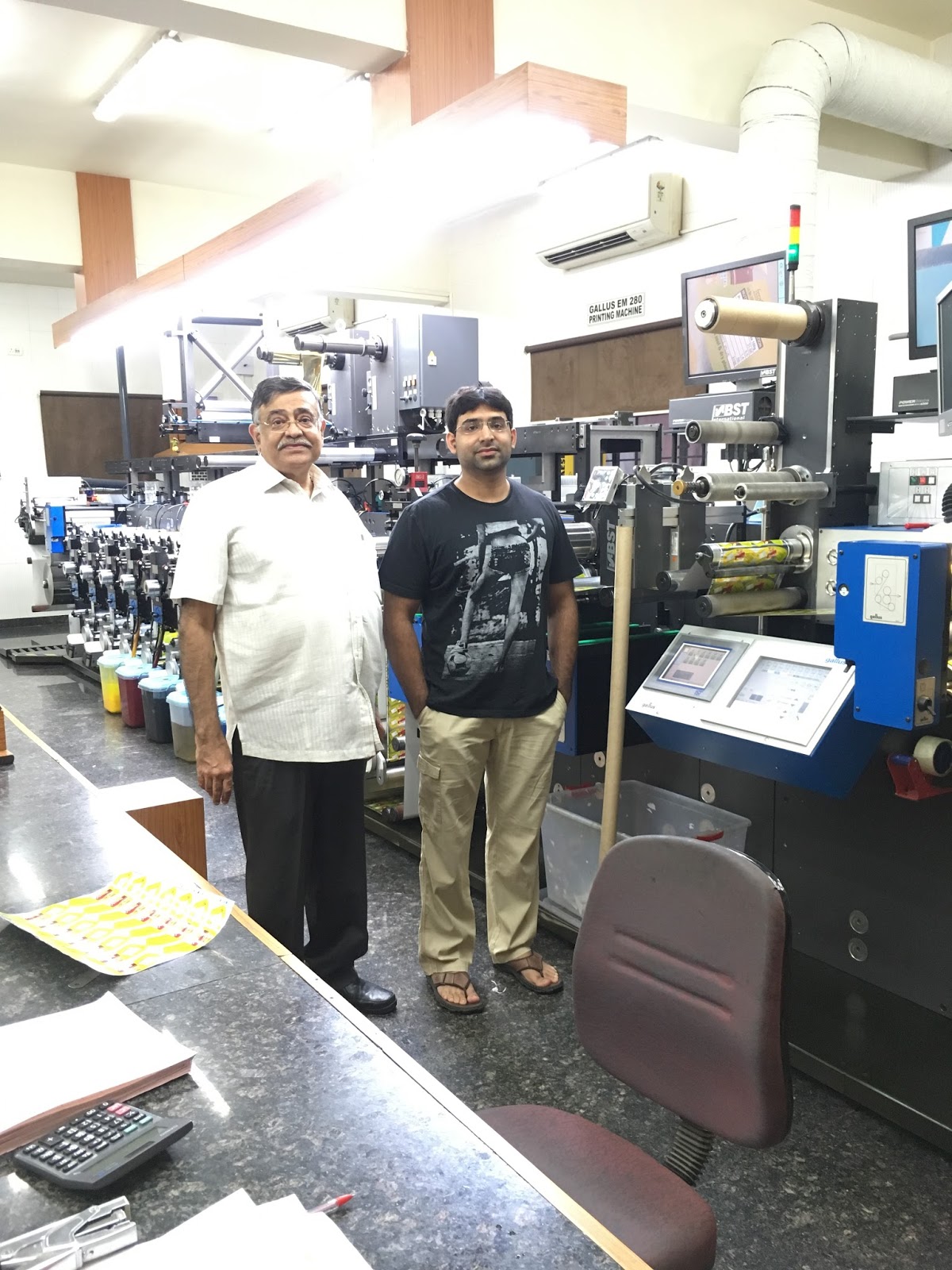
Brothers Surendra Kapur and Jatindra Kapur directors of Jai Kaushal Industries and R K Papers Mumbai mentored their sons Himanshu Kapur and Karan Kapur into label printing business with their start-up enterprise J K Fine Prints Pvt.Ltd. While their fathers and mentors continue to run their own continuous stationery, business forms and label printing unit R K Papers Pvt. Ltd., their young boys continue to grow their label business efficiently with financial discipline, quality assurance and modern business management systems in place. Surendra Kapur has been an early entrant into label industry and the founder president of LMAI (Label Manufacturers association of India). He draws immense respect from the label fraternity in India. On April 22, 2011 I wrote on Surendra Kapur in this blog https://harveersahni.blogspot.in/2011/04/trading-in-paper-to-producing-labels.html . On one of my recent visits to Taloja, Mumbai where J K Fine Print is located, I had the opportunity to visit and interview Himanshu Kapur and see for myself the path traversed in these last few years. 


Karan Kapur  
Since Karan looks after marketing and sales, operating out of their Nariman point office in SouthMumbai, I could not meet him. Himanshu an MA in Psychology and Karan an MBA from Mumbai’s SP Jain Institute were just 23 years and 24 years old respectively when J K Fine Prints was setup.  It was a pleasure to see Himanshu now as a much learned label printer, confident and in control of what he was doing. I asked him whether he thought of opting for other careers before starting this enterprise and whether he faced any initial starting troubles, he said, “There was no problem in starting the company as Dad Surendra Kapur had trained him well for two years before starting this venture”. He further added that since the family was in labels he never thought of anything else, “I knew that for me, it has been labels, always!”


Surendra Kapur & Himanshu Kapur
Due to a talented and experience mentor behind, they never faced any real nightmares. Kapurs have traditionally been fans of letterpress printing. They even started this company with letterpress printing technology. For Himanshu the most satisfying moment till date has been the shift from 4 colour flatbed letterpress printing to Flexographic rotary printing by installing a 7 color Gallus press. Months before the press arrived he spent endless hours on internet surfing to learn the nuances of flexographic printing process. When the press came, he was ready for it and adapted it without any problem. He has been so satisfied that he has shifted most of his jobs from letterpress to flexo. I asked him which was the most complex job that he has done till date? Though he said there are many yet he mentioned the Kid Baion (Merck) label that he did. It was an 11 colour job that he compressed to 6+1 colour and achieved excellence. He proudly mentions that the elders do not interfere with their work and rather compliment them for having achieved success.
 
The unit has grown from 10000 square feet that was originally built to 18000 square feet by adding another floor. Presently they are working with two Gallus flexo label presses, two Letterpress label machines, three Omega’s, One Hot Stamping machine, fully automatic core cutting and a host of finishing equipment. As availability and management of manpower continues to become challenging, Himanshu has extensively indulged in automation. The automatic core cutter is one such equipment that cuts down time and reduces 3-4 persons permanently cutting cores. Plate cleaning was another area where they employed one person on each machine but with installation of an automatic plate cleaning machine they have just one person doing the job. They started with strength of 35 employees in 2006 and gradually went up to 70. With Himanshu‘s efforts they now produce more with just 35 people. He asserts that once he as an ERP system which he is working on in place, he will be able to reduce the workforce by another 4-5 persons.


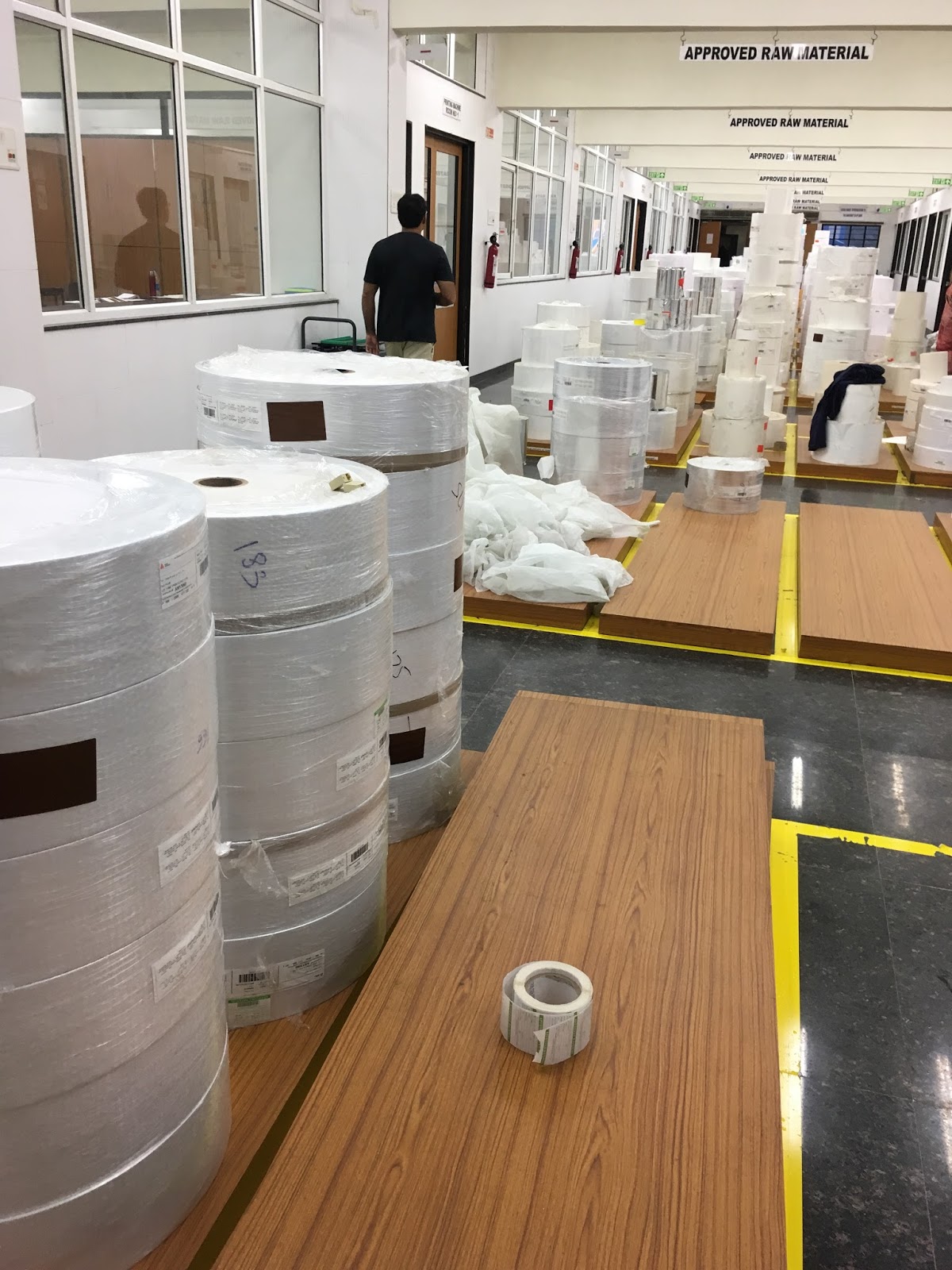
The youthful urge to grow is evident in these young men. When they started they were consuming just 15000-20000 square meters of label stock per month. This has now grown to 300,000 square meters. It was amazing to see that when they implemented their expansion plans, three different additional press rooms have been constructed providing space for three more label presses planned for future. All the rooms have storage areas for toolings and plates. Only the presses need to move in! Once Himanshu is able to get these additional equipment in, he is says the capacity will increase by 200% and is confident that the company will double up in sales in the next five years. He has spent a lot of time and money on time optimization as also on track and trace implementation. Each core has a core identification barcode label generated through a dedicated software so that in case of need the material can be traced to all steps of process that it has gone through. All raw materials coming in is tested and recorded in a fully equipped laboratory. Finished products are inspected both online and offline for 100% customer satisfaction.


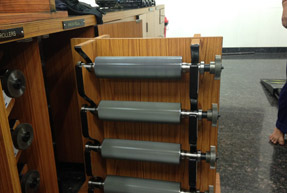
Himanshu has invested a lot of time in designing storage and handling systems for toolings and plates for easy access and their safety. The storage drawers and racks have specified materials that will not contaminate or scratch the toolings and consumables that contribute to quality production of labels. He is committed to continuously upgrade the setup to achieve higher levels of quality and efficiency. They have so far not invested in plate making capabilities because Himanshu believes that this job has to be left to professionals so that the product is delivered to them perfect and defect free. Maybe a day later in life, when the workflow and workload demands so, he may invest but as of now he does not wish to add a department in his company that will not produce additional revenue. Also given the fact he is comfortable with the quality delivered when plates are outsourced. 
 
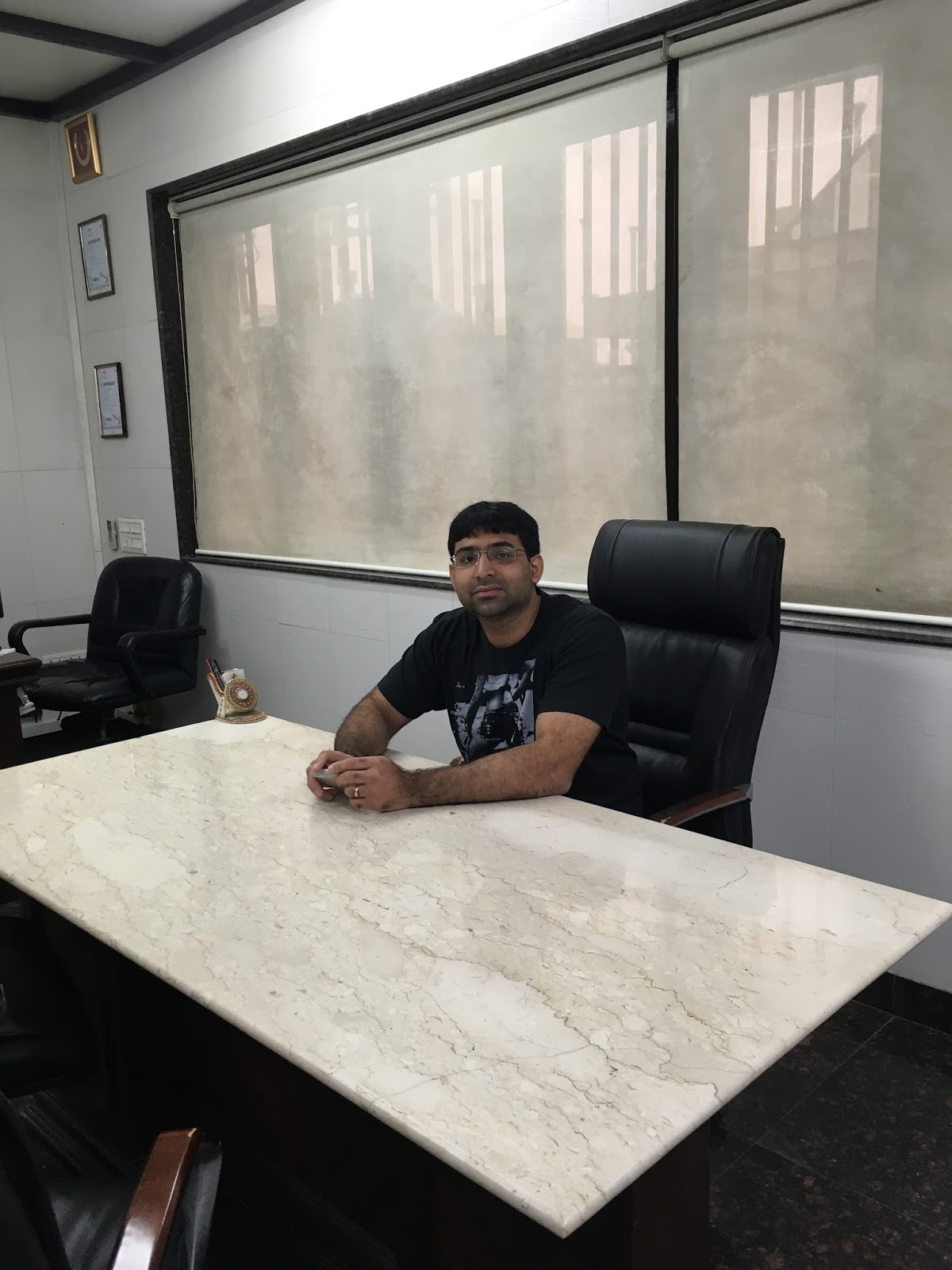
He has a voracious appetite to learn more about printing processes and his office is full of electronics and gadgets unlike his father’s office whose desk is devoid of any electronics or computers, only his mobile remains in his pocket. However even now if one visits Surendra Kapur, one cannot fail to notice that his desk is devoid of any papers and is immaculately clean. If a paper comes in to his desk, within moments he will dispose it off; either gives instructions on the matter or get up himself and put it neatly in a file. Himanshu for that matter also follows his father’s style but as far as electronics go, I need to go once again to see what all he keeps doing on that front. His main desk is in use when he is not on his computers and interacting with staff or visitors. His electronic workstation is on his right hand corner to be in use when he is on his computers and alone, to acquire further knowledge.


Though not actively involved in sales yet when asked about competition, Himanshu emphatically states that price is surely an area of concern and that we would prefer to lose a customer rather than reduce prices. Lastly when asked a question that I ask everyone, “what about digital printing?” Even more emphatically he says, “Not for another 7 years!”
 
Himanshu Kapur is not really the gen next in the Kapur family. Actually he is the fourth generation of the family patriarch Lala Jai Dayal Kapur who due to his friendship will Lala Karam Chand Thapar founder of BILT (now Avaantha Group) became the distributors for Ballarpur Industries Limited. Lala Jai Dayal Kapur’s son Ram Kumar Kapur, Himanshu’s grandfather setup, R K Papers in Mumbai to manufacture paper stationery. Ram Kumar’s son Surendra Kapur took over the reins of the manufacturing unit and expanded into labels, his brother Jatindra looked after marketing and sales. Now their sons Himanshu and Karan run J K Fine Print Pvt. Ltd. With a strong heritage and deep roots in business this, young duo is expected to rise exponentially in the label industry.
 
Note for print publications: Magazines may reproduce the above article by giving credit to the author.
Written by Harveer Sahni, Managing Director, Weldon Celloplast Limited, New Delhi. September, 2016.


DRUPA” derives its name from the German words “druck und papier” meaning print and paper respectively.  It was first inaugurated in 1951 spread over an area of 18450 square meters, 527 exhibitors from 10 countries and 195450 visitors. The main highlight then was the platen press. By 1962 the show had grown to 48000 square meters and letterpress printing was changing to offset printing. 1972 saw Drupa being held at the present site with a brand new exhibition centre and the size grew to almost 100,000 square meters. The next editions of Drupa upto the end of the new millennium more or so saw the growth and development in offset printing technologies. From smaller machines to bigger ones, UV inks, better ink control technologies, Web offset, Ctp, Digitalization of equipments, etc, were the highlights. It was largely recognized as an offset printers show. Printers involved in processes like Flexo, gravure screen, etc. would not be a part of this show. The last decade of the last millennium saw some fast growth and activity in digital printing. 50years after the exhibition was launched a transformation in printing technology was evident at Drupa 2000. This was the peak of participation. The show had grown to 158,875 square meters and 428,248 visitors from 171 countries, the highest in Drupa’s history, came to the show. 1943 exhibitors from 50 countries showcased their products and equipments catering to diverse printing technologies. By 2004 internet was providing immense possibilities to the printing industry by way of networking possibilities like data transfer which made life so much simpler for the printing fraternity. Digital printing was spreading its reach. 2008 Drupa did actually confirm that digital printing is going to be the future.  Leaders in digital like Océ, Canon, Agfa, Ricoh, Konica Minolta, Kodak and HP were present in huge floor spaces confirming their resolve to bring about that change from conventional to digital printing. In 2012, Benny Landa took inkjet to the next level by promising nanographic-printing to be better than even offset. Landa’s showmanship and vision pulled hoards of visitors to the Landa stand, the world was talking about it. The HP stand of 4950 sq.mtrs and large stands of Kodak and other companies exhibited a new trend of combining multiple print and converting technologies leading to hybrid machines. For this reason Drupa 2012 was the initiation of making Drupa not just an offset printer’s show. However still people said digital to spread cost effectively and emphatically will take time. 


Drupa 2016 figures: 260,000 visitors from 188 countries and about 1,900 journalists from 74 nations
travelled to Düsseldorf.  1,837 exhibitors from 54 countries exhibited to display their equipments and products. At 76% participation of international visitors at Drupa 2016, it increased by 16% compared to the 2012. The largest contingent came from Asia with 17% (2012: 13.6%) participation, particularly from India (5%) and China (3%). The majority of the European visitors came from Italy, France, the Netherlands and the UK. So infact the largest international group of visitors approximately 14000 came from India. The show has definitely transformed. HP showcased its offerings from a much bigger stand of 6200 square meters up from 4950 sq.mtrs. at the last Drupa. Landa’s Nano metallography displayed on an Omet X6 flexo press, attracted a whole lot of interest. The show had virtually every technology on display from Offset, digital, nanography, gravure, flexo, screen, 3D and so on. It is no more the offset show that it was. I would now personally refer to it as the "complete Printing and converting technology show". Since India is a market in focus of the global marketers and they formed the biggest group of visitors, I sent out a questionnaire to many exhibitors and visitors most of them in some way connected to the label industry to get their take on Drupa or the exhibitors view of the visitors.
 
David Jones-Alphasonics
Most of the exhibitors questioned by me did experience that Indians were there in large numbers however when I asked what they felt was the percentage of Indian Label printers amongst 14000 Indian visitors, the answers were quite strange. A few who understood my question did not wish to guess. Wild guesses came from many of those who chose to answer at 10-30%. Maybe they did not understand my question, 10% of 14000 is 1400! We don’t have so many label printers in India. Some exhibitors may have expressed this as a percentage of visitors at their stand but coming from label printers it was quite surprising. The only two people who gave realistic figures were Amar Chhajed of Webtech (Huhtamaki) as less than 1% and Sanjeev Sondhi of Zircon guessed close to 100 label printers, I too estimate 100 to be a fairly realistic figure. When exhibitors were asked if the visitors were serious buyers, David Jones of Alphasonics said “You can never tell. They all seem interested”. Dhyanesh Amonkar of GEW feels they were serious but were there mostly to assimilate the new technology available so that they can indulge when needed. Similar views were expressed by Itzick Barazani Director AVT, Spring Xu of Weigang, Peter Frei of Pantec and Pankaj Poddar CEO Cosmo films. Massimo of Omet says, “We saw an increasing level of quality of Indian visitors. People coming to our stand knew what to ask. They were serious” Appadurai of HP expressed satisfaction at the improving level of Indian visitors at trade shows, he said “They now do their homework well and know what to enquire”. Obviously it is clear that trade shows are no more seen as reasons for tourism. They are serious business for our business men.
Pankaj Poddar CEO Cosmo Films
 
All exhibitor respondents confirmed that it was mostly business owners alone or accompanied by their top level executives that visited them. This was also confirmed by the printers who were interviewed. Some top management executives from large business groups also came. This is so because most printing companies in India still continue to be family owned and final decision making remains with the owners. This is a positive sign for the exhibitors as they are in direct contact with the decision makers. Of course the negotiation does get tough when you actually deal with owners. When asked if they made deals at the show to sell into India, Alphasonics confirmed they sold two equipments, AVT sold two, Omet one and HP sold two label presses. (The question to HP was asked for label presses only). Most others have enquiries that appear to be very serious and may mature into orders. Indian economy is one of the fastest growing in the world; I asked if exhibitors felt the impact. David Jones gave and interesting answer, while he agrees that there are more and more people coming forward to enquire yet price bargaining is very high however he feels the gulp factor when you quote price especially to the larger printers is better. They don’t faint when you quote a European price.  Massimo at Omet finds the general mood as positive. Pankaj Poddar finds the Indian printers very motivated in the present day scenario. Unanimous in their response all agree that Indian print industry is moving up and upgrading with increased investments, cautiously but steadily. It is surprising that while most equipment suppliers complain prices are very difficult in India yet when asked do Indians have capability to invest in high end equipment, the answer is in the affirmative. All say there appears to be no issues on their capability to invest. 
 
With Adrian Tippenhauer Mg. Dir. Rako Etiketten
After the massive and amazing display of digital printing technologies at Drupa, one can be sure that it is the technology of future and is already under implementation rapidly. What technical implementation happens in Europe and USA eventually also reaches India. Quoting Germany’s leading label printer Adrian Tippenhauer Managing Director of Rako Etiketten, “We now invest only in digital presses”. Till date they have 36 digital presses out of the 100s of label presses, most of these digital presses are HP Indigos. If we see the participation of the top participants in Drupa in the last three showings we note that in 2008 out of the top five exhibitors we had three conventional offset equipment suppliers with Heidelberg as the biggest exhibitor. This dropped to two in 2012 and just one in 2016. This Drupa we had the biggest exhibitor as HP followed by Heidelberg, Landa, Canon and Kodak. I am sure this indicates the way forward. Serge Vincart of Dilii says “The market dynamics is eventually forcing the label printers towards digital” Itzick Barzani feels it may take time but that is the way. Pankaj Poddar feels for short runs, it is here to stay! HP’s Appadurai says, “Drupa accelerated the adoption and belief in Digital”! As for the label printers, Narendra Paruchuri of Pragati, Hyderabad reasserted his stand that digital and conventional will coexist. Aditya Patwardhan of Manohar packaging feels digital will not grow very quickly in India until shackles on proprietary substrates and consumables are removed.  Jordi Querra at Rotatek states, “In volume, all digital together means less than 1% of total printed production worldwide. Digital is for short runs and a single printed copy is very expensive. We think India customers are in the right direction. Digital is a difficult business today”. However Amar Chhajed expressed that the technology is now getting to be more relevant with improved pricing and faster speeds. Abhay Datta also believes digital is catching up. Sanjeev Sondhi of Zircon stated we have to adopt it pretty soon. Landa’s metallography seems to have impressed both Narendra Paruchuri and Sanjeev.
 
Much of the growth happening in the label industry in India is emanating from the offset printers.  They are already supplying packaging to FMCG end users who also need labels, so an area that has reasonable margins and a high growth rate is an attractive synergic segment to add to their growing package printing business. Commercial printing is on a downslide and package printing as also label printing is an area that the printers understand and get attracted to. Existing package printing companies have huge turnovers and for them, investment in label is not a very difficult proposition. However the reverse, i.e. label printers getting into packaging is happening but I would say is not very evident. Labels are just 2-3% of the packaging industry and the label is just a small fractional part of the total package cost. Even if label printers are successful yet their turnovers are restricted and cannot match the large package printing companies. The larger label printers, to grow bigger in size are contemplating or already making investments to get into package printing, flexible packaging and shrink sleeves  but they are small in number. During this exhibition one could see a lot of offset printers show interest in inline production of folding cartons and flexible packaging. It surely appears that it may become a trend. Most exhibitors confirmed India is their focus area and many confirmed they are already making or will make investments into India, According to Omet, “It has been a consideration for quite a while and will happen”. Peter Eriksen of Nilpeter though not exhibiting, says, “We have decided to make a very significant investment. We believe in the growth of the Indian label and flexible packaging market. Furthermore, we have chosen India to play a key role in Nilpeter global manufacturing setup”.


Narendra Paruchuri-Pragati Offset Hyderabad


 There is a 17% drop in the number of visitors at Drupa. I asked if it was (a) reduction in number of days (b) Loss of interest. (c) Consolidation with more focused visitors this time. I got mixed responses but it appears the consensus is that we had more focused visitors this time. There is so much of information available on internet and people need to travel only when it is necessary to proceed towards expansion. That is the time they wish to update themselves and decide the way forward. Those amongst printers that I interviewed and who actually made purchase decisions were Amar Chhajed-Webtech, Narendra Paruchuri-Pragati, Ramesh Kejriwal-Parksons, Abhay Datta-Datta Press and Aditya Patwardhan-Manohar Packaging. Most Indian printers felt the positive impact of exhibitor’s attitude coming towards them, given the fact that their country is now the fastest growing economy. Narendra Paruchuri feels that in today’s time any prospective buyer is welcomed, he says, “I was happy with the reception at last Drupa and happy this time as well”.
 
With Ramesh Kejriwal, Mg.Dir. Parksons Packaging
 All the printers who responded were repeat visitors to Drupa, in fact for Narendra Paruchuri it was the ninth Drupa. A whopping 36 years and he visited each time this show was held! When asked will you come again and the response, “Yes, as long as I can walk”.  All visitors felt they had learnt a lot of new things and would surely come back to visit the next Drupa. The four years cycle gets a thumbs up from most respondents but Amar Chhajed says, “Decisions cannot wait for four years in today’s rapid paced life, the motive of Drupa remains showcasing new developments. Purchase decisions can keep on happening”.  Mukesh Goel of Gopsons expressed that it was evident the visitors were very focused with intent to purchase this time and you could feel that when you saw people busy at stands. 
 
I also asked, what was the most interesting part of your visit to Drupa? It all varied from Landa’s Nanography to Nano metallography to 3D to technical advancements, but the most interesting reply I got was from Ramesh Kejriwal Managing Director of Parksons Packaging, he says “Beer at Alstadt!!!”


Written by Harveer Sahni, Managing Director, Weldon Celloplast Limited New Delhi India July 2016 exclusively for Narrow Web Tech Germany. 


The article maybe published with the permission of Narrow WebTech Germany giving credit to them and to the author

For advertising on this blog, please email to harveersahni@gmail.com Clicking on the advertisers logo takes you to advertiser's website. If advertisers name appears in the blog, link is provided from the name to their website
The label industry in India has in recent times been facing intense pressure on costs and reduced margins, making it difficult for label printers to sustain the required rapid growth. Leading FMCG companies continue to pressurize their purchase and sales teams to be aggressive so as to firm up their bottom line as also their top line. As far as printers are concerned both these measures are adversely affecting them. While a better top line for end users of labels even though it translates into higher sales, yet it means that the sales team will be offering freebees and schemes to customers putting pressure on the bottom line, so eventually the pressure is passed on to the purchases to maintain margins. The print buyers tend to squeeze the label suppliers to the maximum so as to prove their contribution to the bottom line. When suppliers started to resist reduction in prices, buyers have now unleashed the dreaded tool of reverse auction thereby putting label industry peers in confrontation amongst themselves. Despite despising the process and most printers agreeing that it is a very big dent on their balance sheets yet to retain the sales volumes that they need to project to their bankers, they still participate in reverse actions in hope that they will get a piece of this large pie which may not be as sweet as desired but will at least add to their sales. In earlier days it was a simple thing for them to pass on the decrease in price to labelstock manufacturers but intense competition, increasing paper and polymer prices have pushed even the labelstock producers against the wall. With wafer thin margins they have their hands-up in despair already.
 
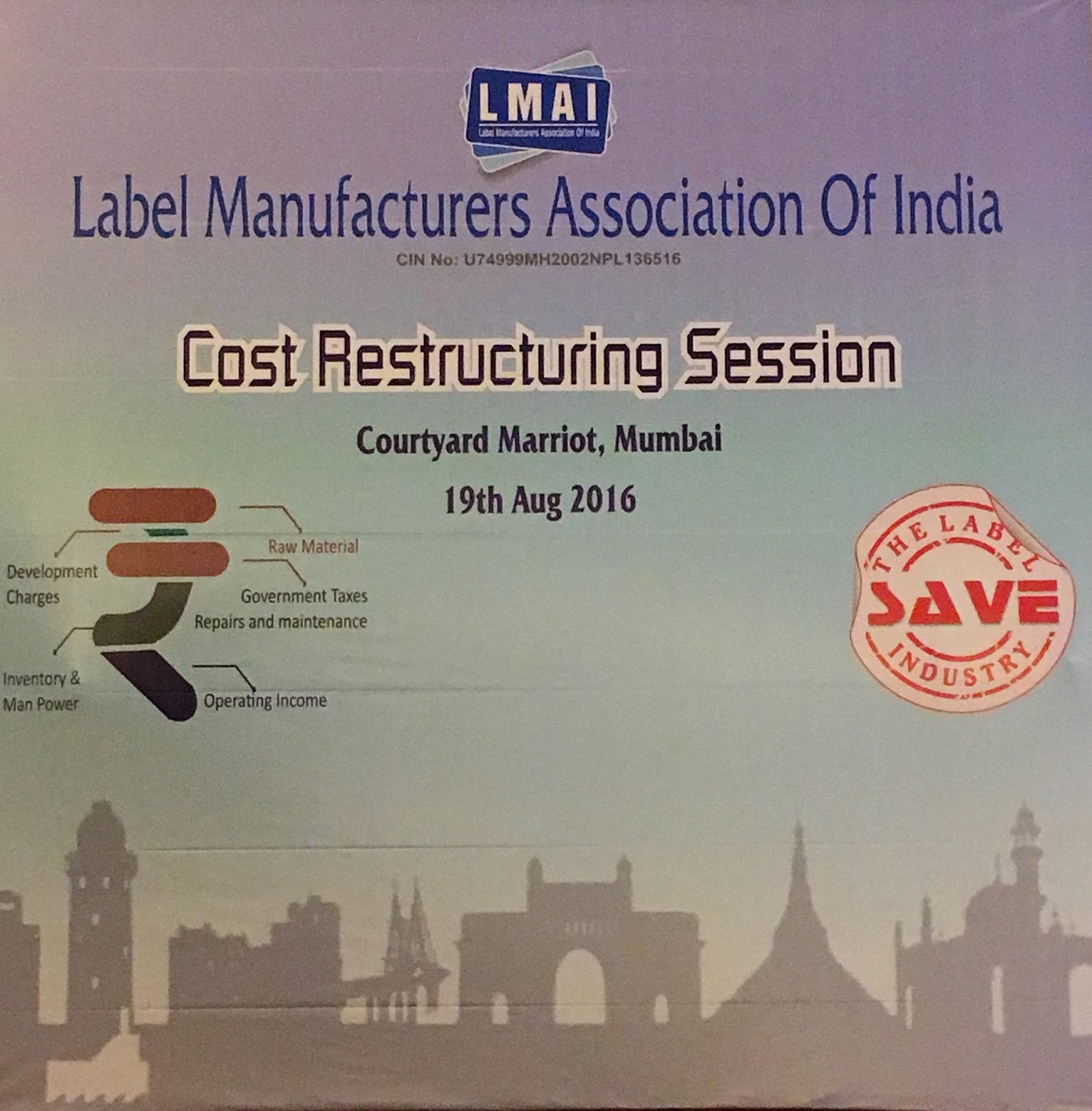
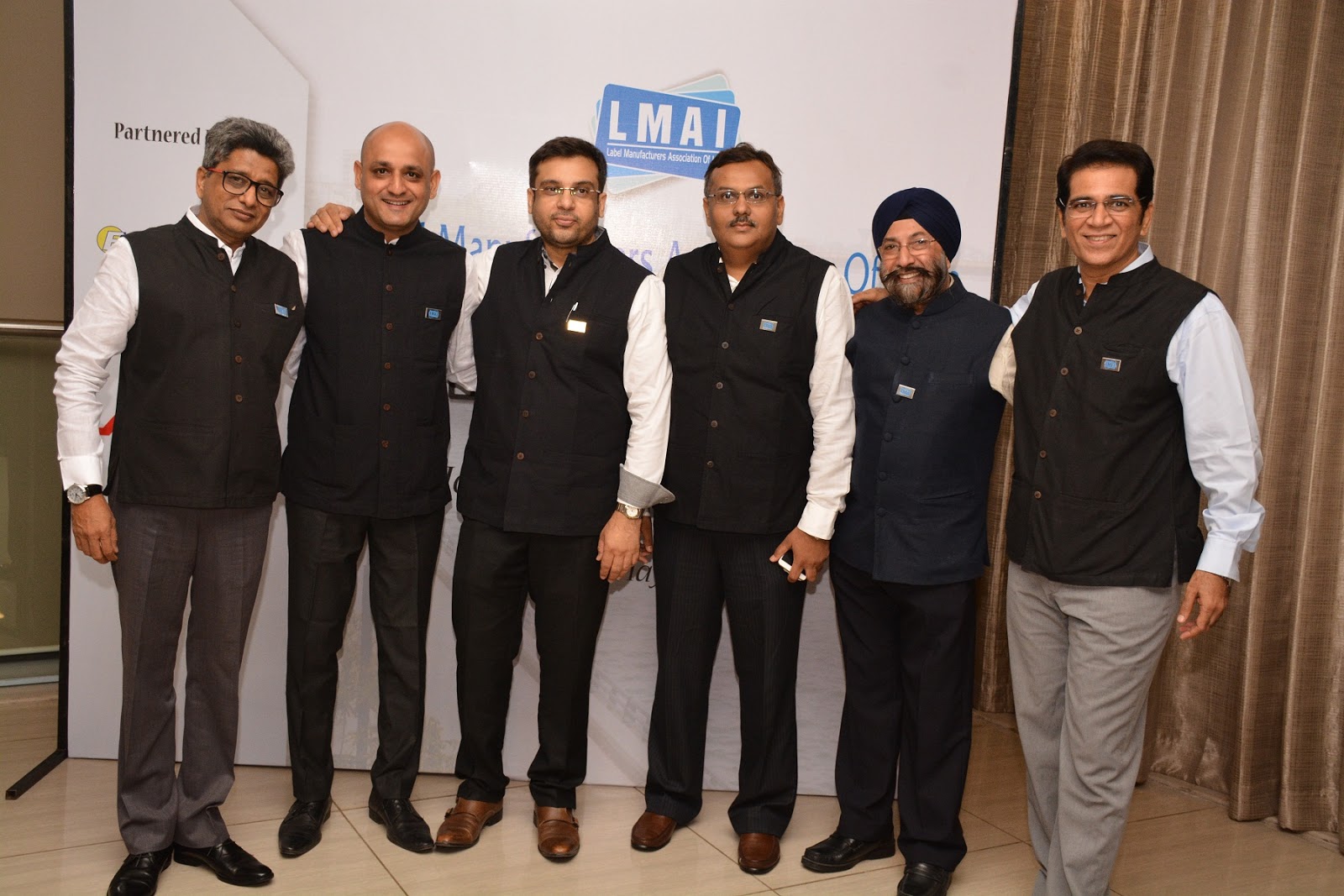
Modernisation is another imperative that has to be indulged in on an ongoing basis. Print buyers show preference to suppliers who possess top of the line label presses with enhanced capability to print convert and decorate labels with multiple printing technologies. Capital equipment acquisition costs continue to escalate and indulgence in it brings increased debt to be serviced on depleting margins. ROI (Return on Investment) is now a word that stirs in worries for most printers. A growing market makes economies of scale a necessity to retain market share and margins needed to service increasing liabilities and expenses. Increased sales means higher inventory levels and larger working capital requirements, further increasing the borrowings. Indian label printers decided to huddle together in an effort to dwell on this dilemma and try to find a lasting solution that would facilitate faster growth and stem the depleting margins. Sensing the mood and needs of its members, Industry association LMAI (Label Manufacturers association of India) organized a COST RESTRUCTURING SESSION IN MUMBAI ON 19TH AUG. 6 PM onwards at Courtyard Marriot Andheri.
 
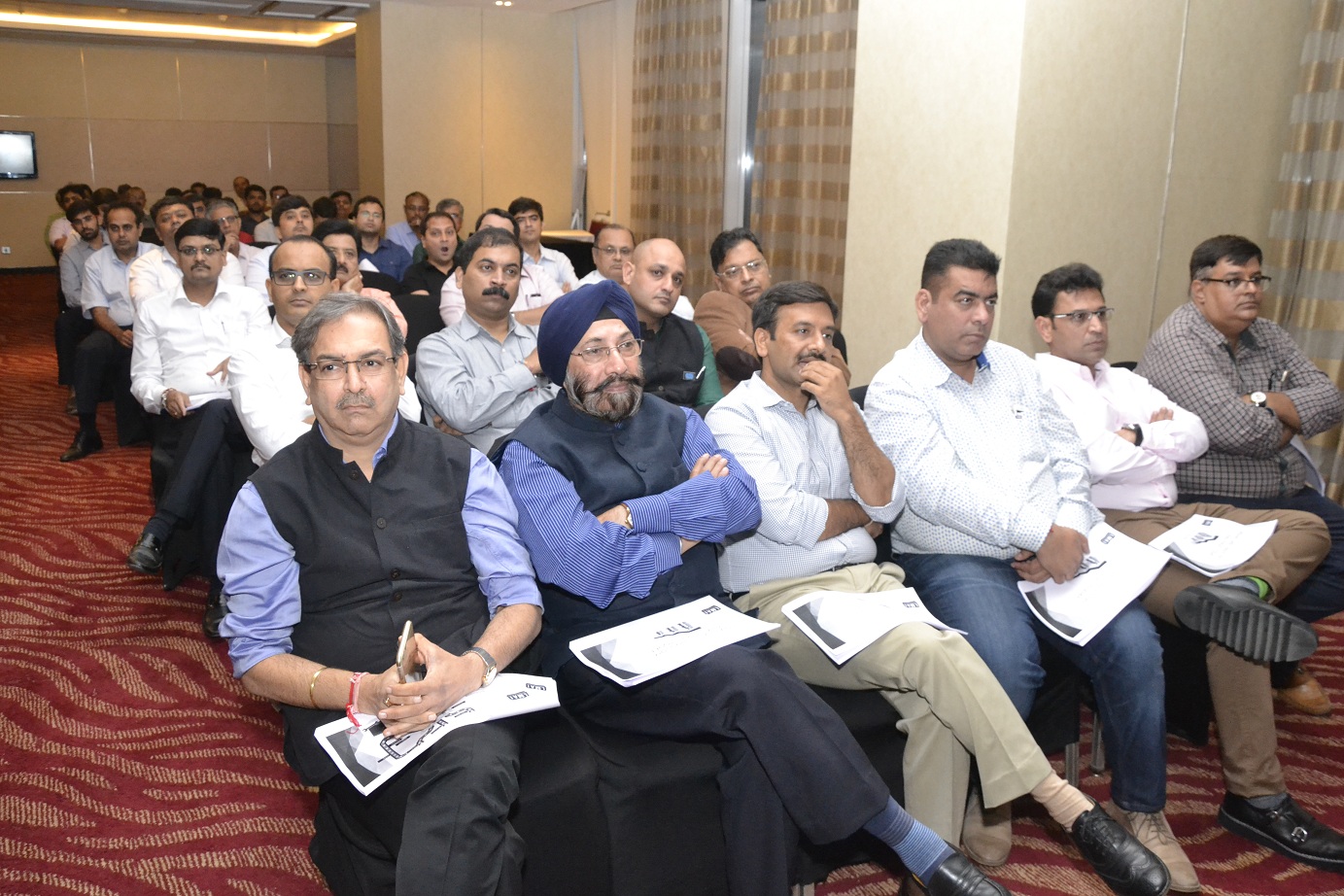
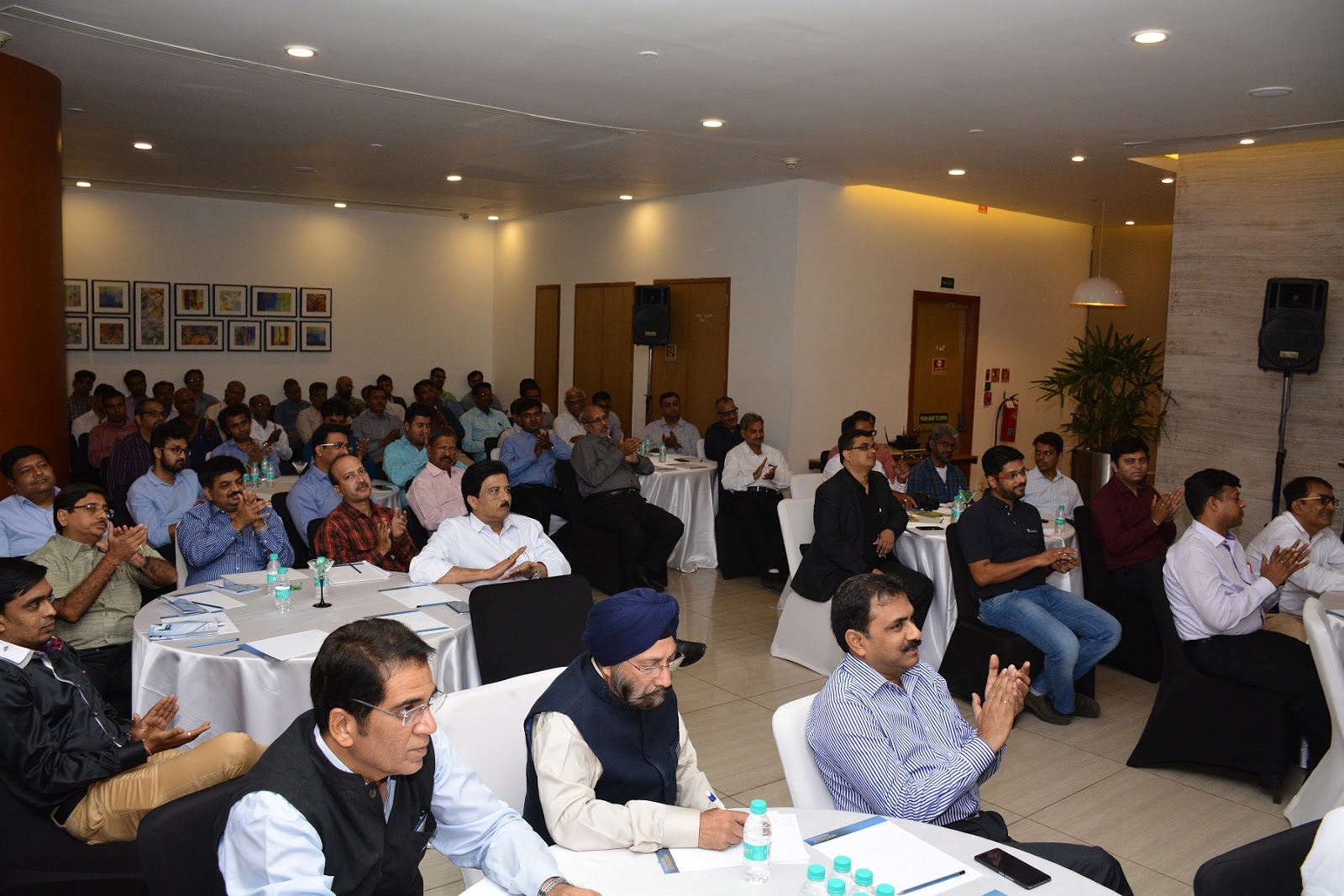
Normally in such meets the supplier members are not called as it is evident that the first attempt will be to try and reduce the cost of the inputs which may put the suppliers in an embarrassing situation or in direct confrontation with their customers. However the LMAI management thought differently and considering them as stake holders in the industry they invited suppliers to join in, witness the proceedings and understand their situation. It sure was interesting to note that leading suppliers of materials and equipment like Avery, UPM, SMI, Gallus, LabelplanetWeldon, Genius, Fujifilm, HP, Electro Optic, Henkel, BST, MultitecSKumar and many others attended this meet. It was appreciable that many of the leading suppliers gave their suggestions and inputs on how they felt the printers could produce more cost effectively and add to the receding margins or stem the slide. The meet was attended by over 100 delegates out of which, almost 70% were printer members. Stalwarts in the Indian label industry from all zones marked their attendance at the event, some of the most prominent seen there were Arvind Shekhar from Sai security Bangalore, Chandan Khanna-Ajanta, Manish Desai-Mudrika, Vivek Kapoor-Creative, Sandeep Zaveri-Total Print, Denver-Janus, Gautam/ Venkataraman-Skanem Interlabels, Rajesh Nema-Pragati Indore, Mahendra-Manohar Pkg, Amar Chhajed-Webtech, Karan Kapur- JK Fineprints, Sandhya-Synergy, Jigesh Dani-Maharshi Ahmedabad, Sanjeev Sondhi-Zircon and many more.


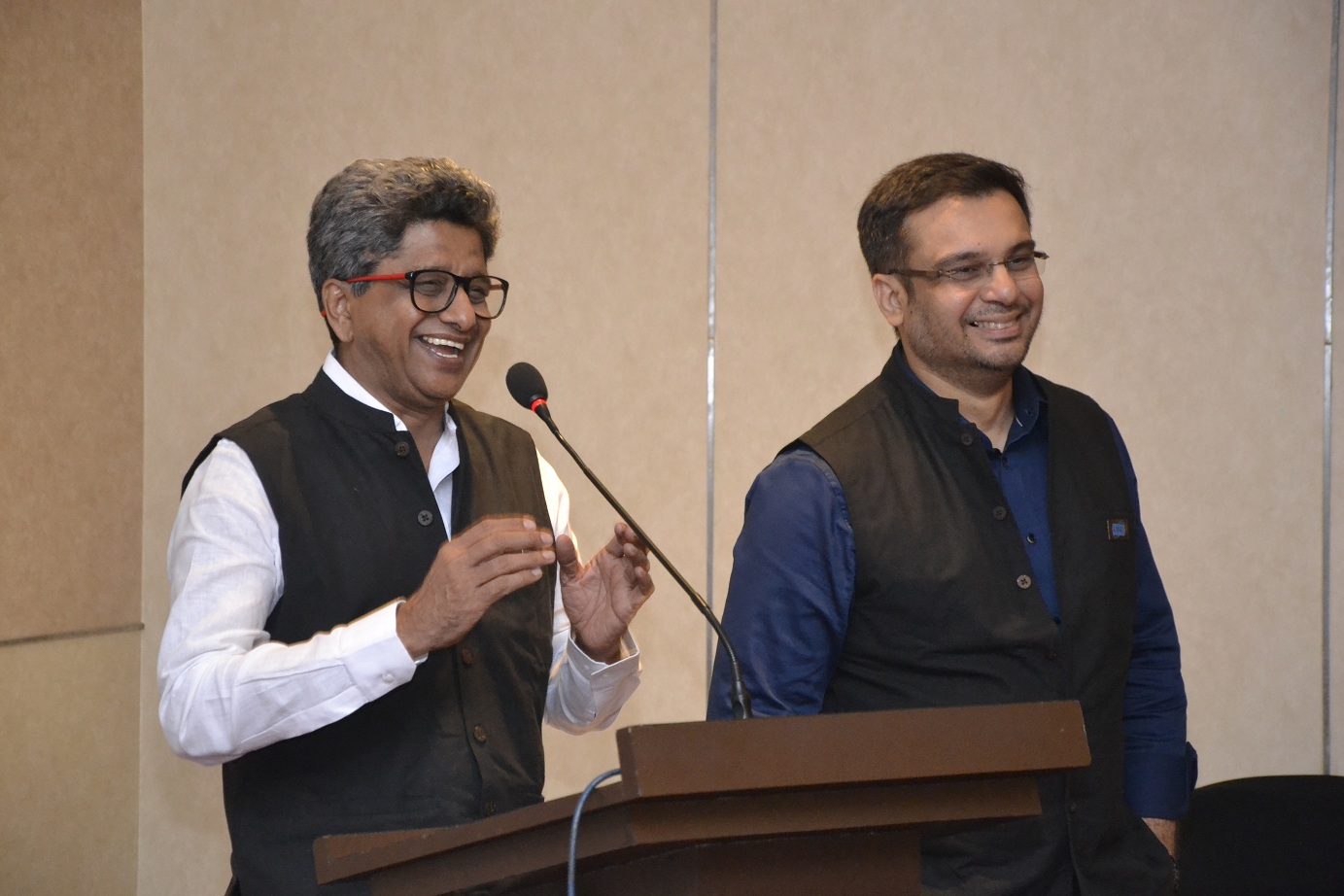
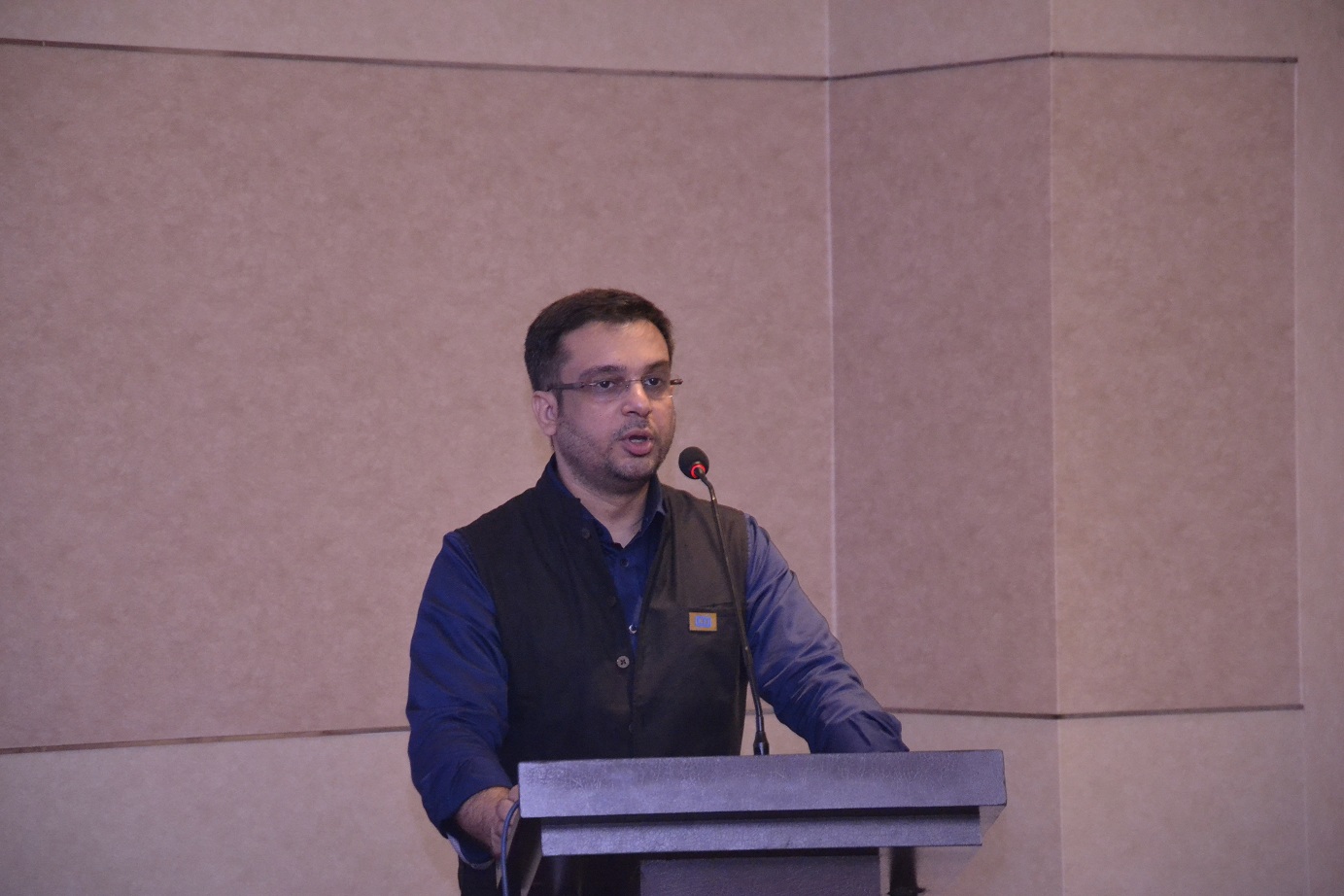
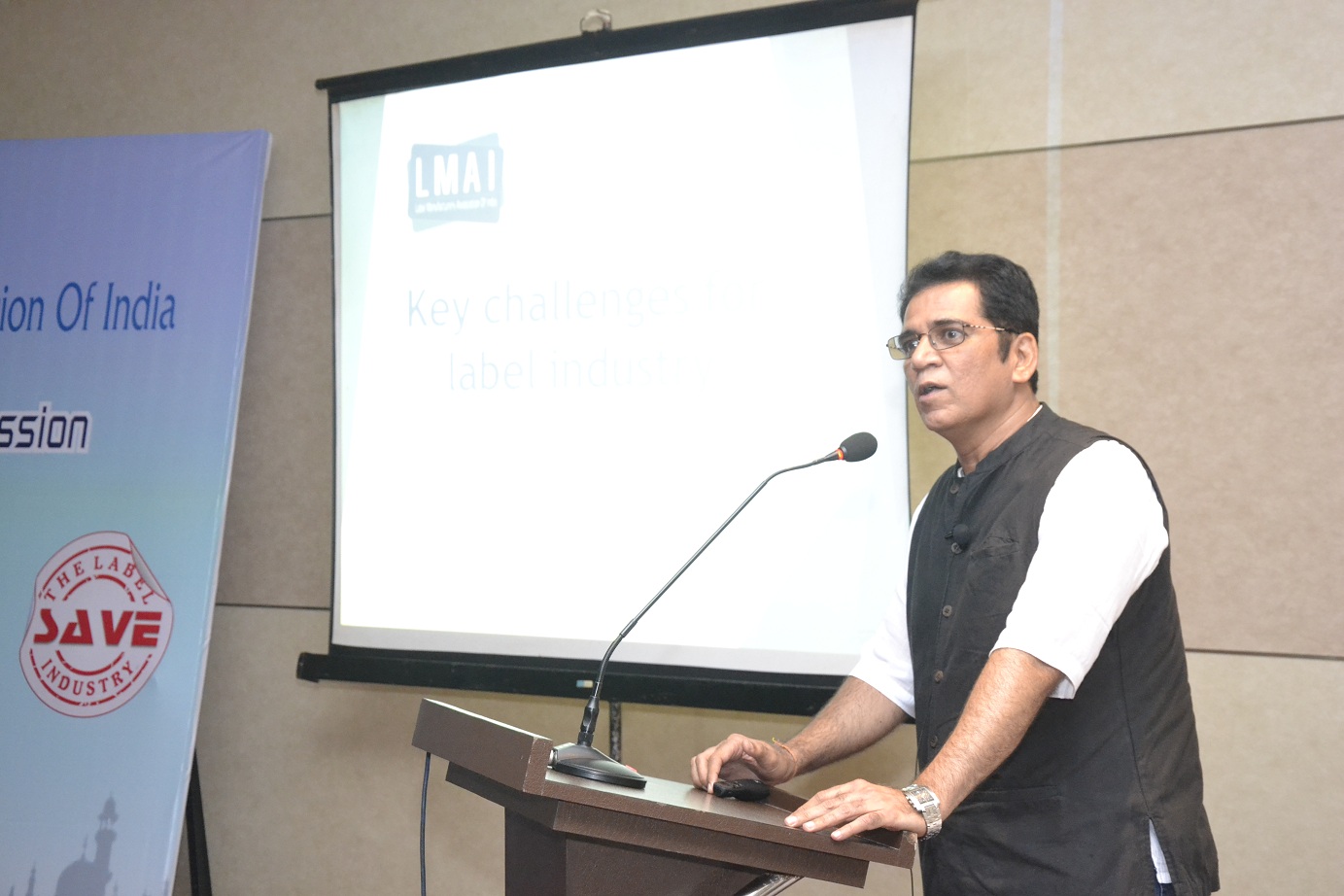
Rajesh Nema the host for the evening welcomed the guests and called upon Sandeep Zaveri, President LMAI to give the opening address. 


Sandeep stressed the imperative need for printers to put their minds together on this crisis like situation facing them. He stressed the need to shun reverse auctions and demand from customers a basic per square meter price below which no one should sell. He impressed upon members to debate, discuss and arrive at a consensus if not now then at least at the next meet that they plan on the issue. There is a pressing need for formulating a costing pattern that incorporates essential inputs besides labelstocks to justify the resultant profit to be enough to service their operations.
 
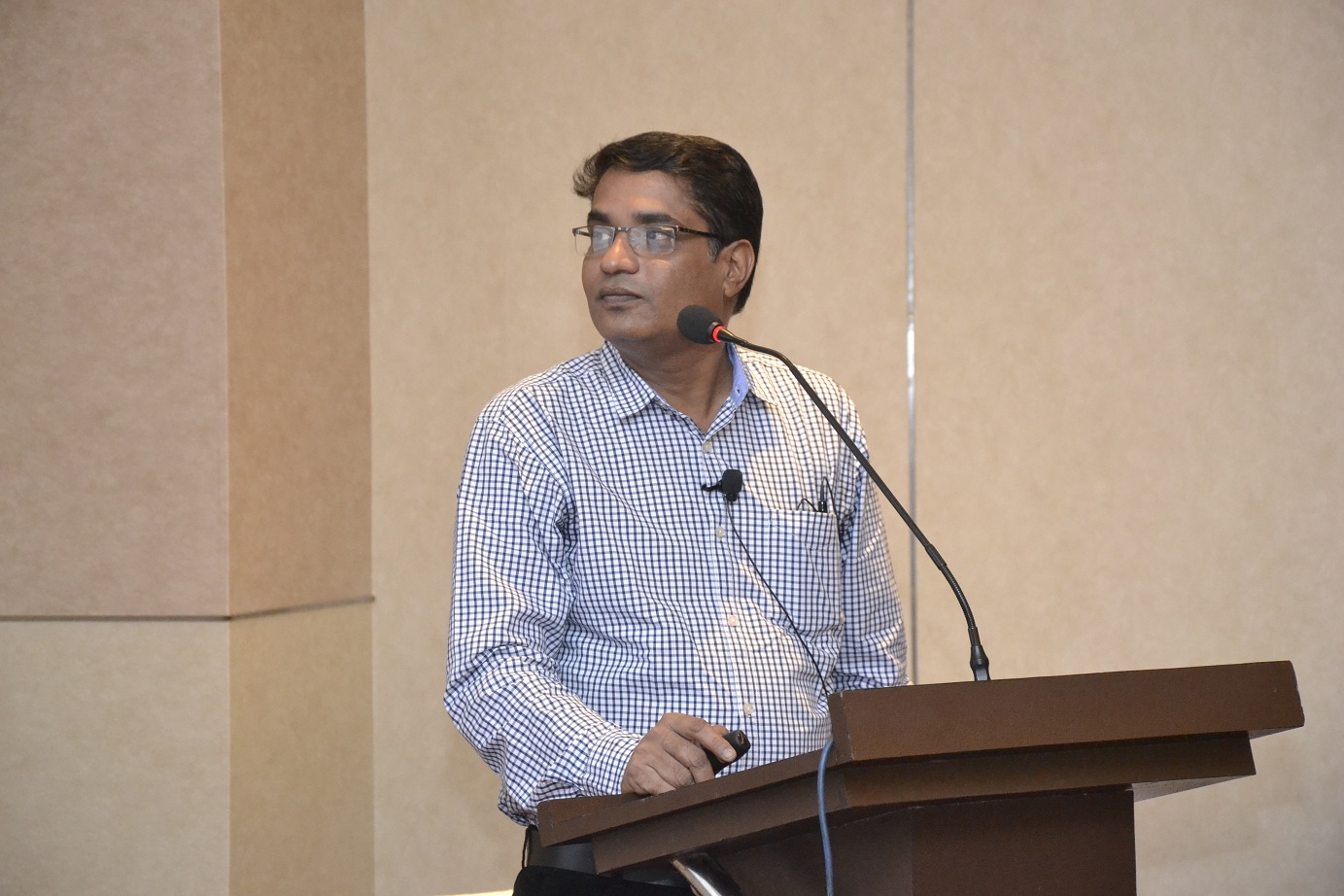
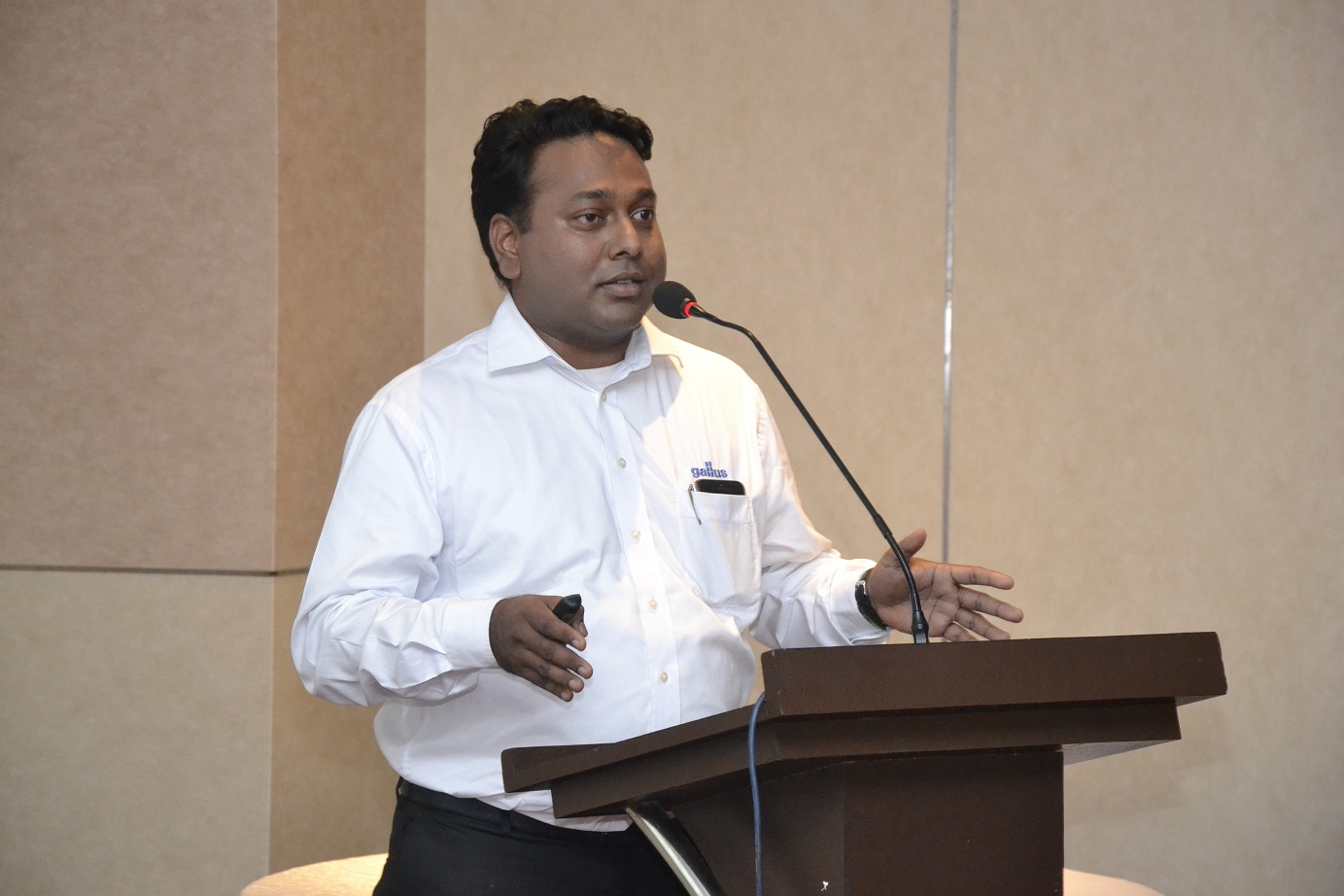
Satish Wakchaure of Saicom Systems and Samir Patkar from Gallus took the stage next. Their joint

presentation listed the pitfalls at length and shared the dangers of low pricing in competition amongst themselves. While Satish listed the difficulties and shared the envisaged consequences in this path, Samir Patkar went about listing solutions to produce cost effectively with lesser downtimes, lower wastages, and stemming the outflow due to not using expensive equipment to optimum capacity.


They summed it up by suggesting to printers the steps that would definitely help them improve their profitability. These included demanding development costs from customers, either shunning reverse auction or learning to say no beyond a certain point, investing in expansion wisely and planning reachable ROI with new generation equipment, using full capacity of machines, reducing wastages, produce better quality-not larger quantity, learn to say NO if it is unviable, do not settle for too long credit periods, do all finishing online as offline converting adds to cost and finally try to get a higher price for your work. 


Taking the topic further Ajay Mehta MD, SMI gave his suggestions for label printers to drive in better margins and tighten their belts to stay in the reckoning.


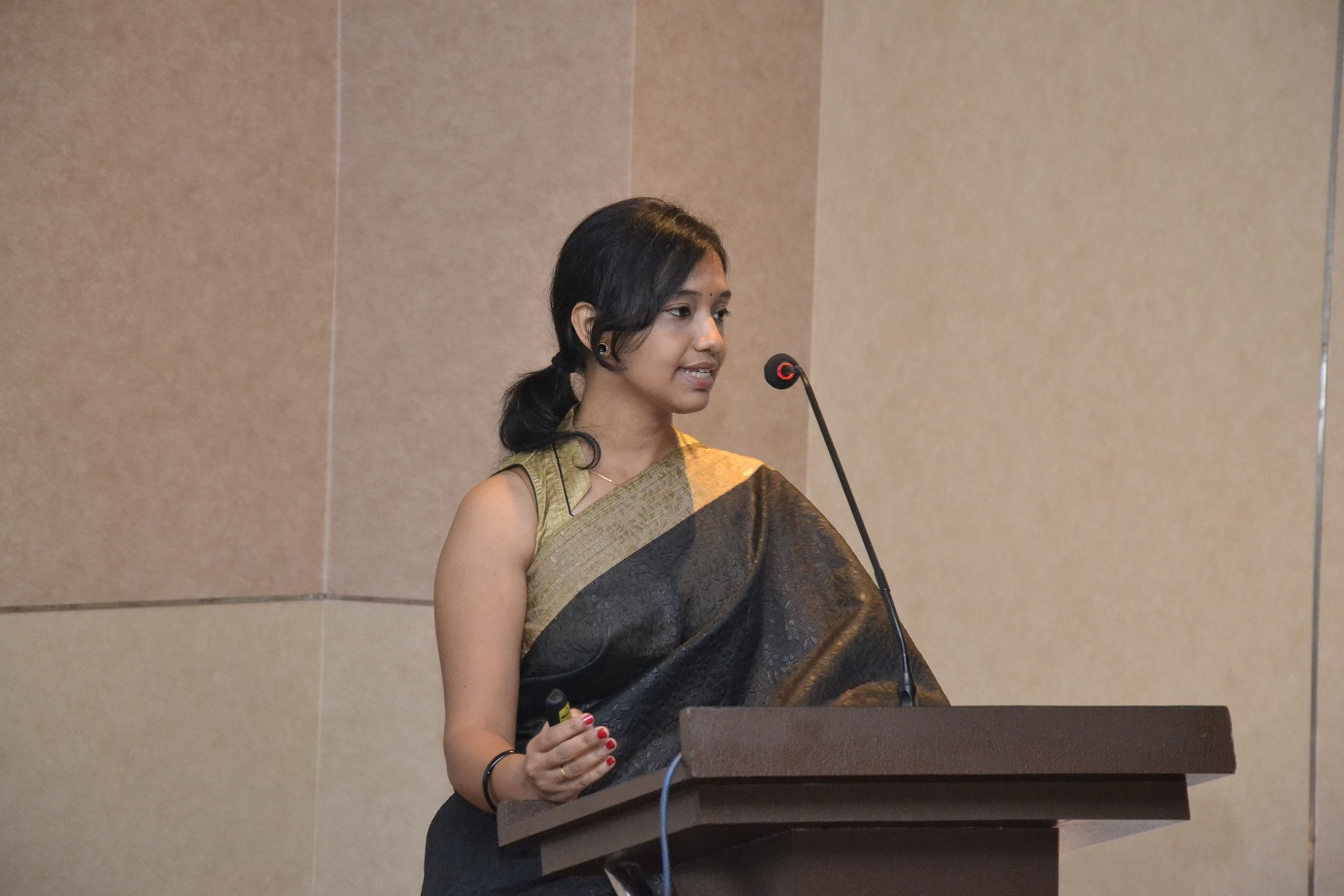
An eye opening presentation on the label printing companies was made by chartered accountant Deepa Lodha who was commissioned by LMAI to carry out this investigation. She had in-depth perused the financials of 77 label companies in India. The largest percentage at 42% of these 77 companies are located in the west followed by 27% in North, 23% in south and mere 8% in central and east India. Only 9% or 7 companies have a turnover of over Rupees 50 Crores, 31% are less than 5 Crores, 38% are between 5-20 Crores and 22% between 20 -50 Crores. The revenue growth of these 77 companies from 2013-14 to 2014-15 is 14% however this cannot be reflecting the exact growth rate in India as these companies are only printing in roll form. There is a huge, almost similar volumes coming from plain VIP labels and the sheet market. That market is experiencing substantial growth due to extensive use of barcodes in organised retail.  All the details of this report are difficult to reproduce in this article however I will share some key conclusions as below;
1.    Not enough Profit: Six companies out of 77 do not generate enough profit to pay their interest. One in every five reported loss at net level.
2.      Low asset turnover: 41 companies reported sales lesser than total assets.
3.   ROE: 6-8% improvement in ROE (return on equity) needed to make returns meaningful for promoters. They need to get 5-7% higher prices, tighter management of receivables/inventory and better utilization of assets.
4.      Efficiency needed: Few inefficient or loss making companies could exit business.


Pankaj Bhardawaj of Avery Dennison spoke briefly about better profitability and also dwelled on sustainability. Immediate past president 


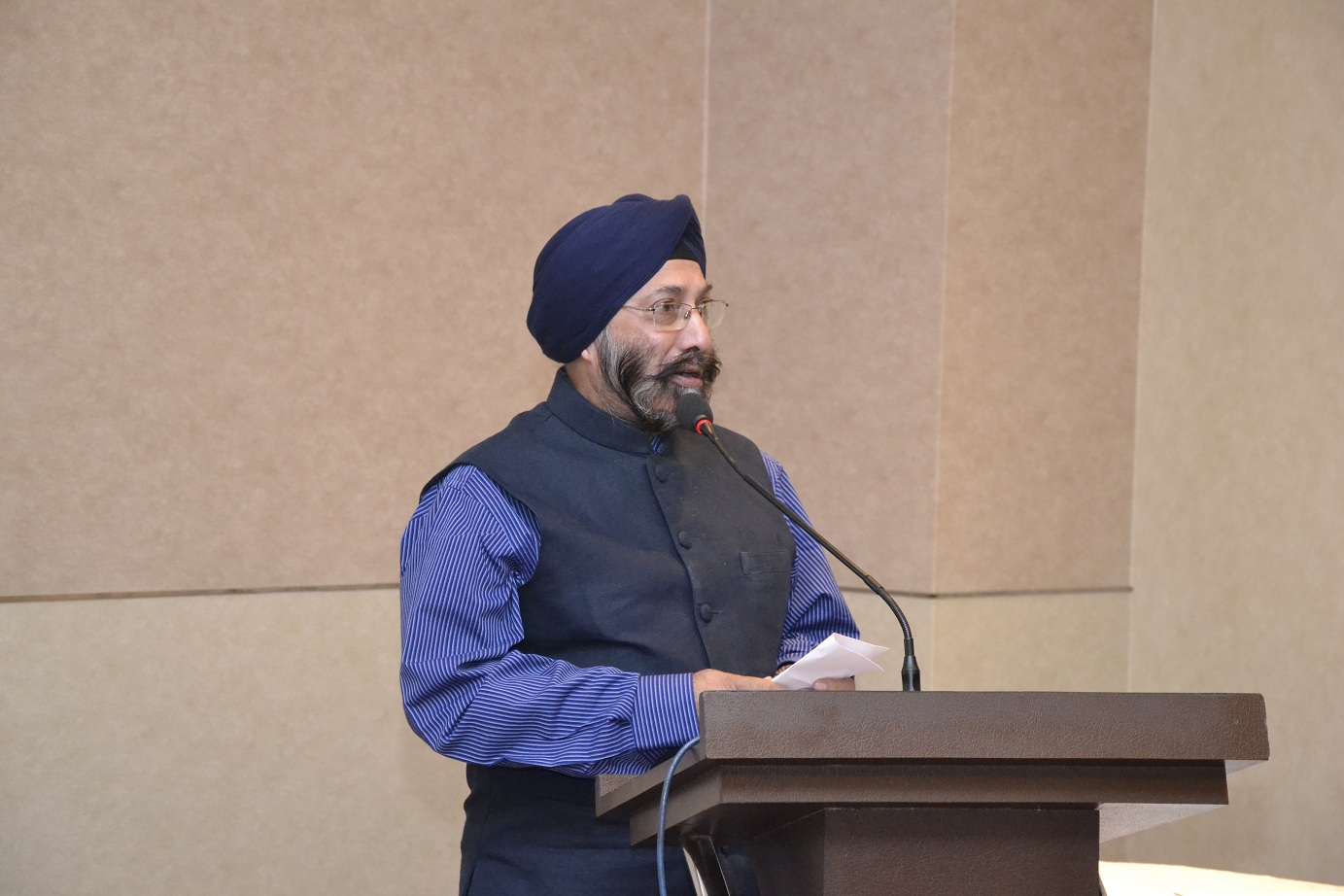
Vivek Kapoor took the interactive session inviting printers’ opinion and thoughts on the subject they were discussing. Renuka Uchil informed the gathering about forthcoming label awards and appealed to label printers to participate in big numbers. 


Harveer Sahni of Weldon on behalf of editorial board of Label Legacy, the LMAI publication, informed that the next issue would be released at Labelexpo India and would be a preview of the label event. He also appealed to the members to send in their news and articles that could be of interest to the industry. 


Finally Rajesh Nema secretary LMAI gave the vote of thanks.

International Label Guru Mike Fairley commented on my above report! I reproduce his full email as below;

 
Hello Harveer,


An interesting report. Shows the challenges the industry is facing. But it’s not just in India. A recent study of financial performance in the UK label industry gave the following:
 
       Over 30% of label converters were placed in the caution or danger segments in a financial analysis study of  the label industry (Plimsol report)
 
        
       More attention needs to be paid to financial management. Do companies really know the full cost of indirect costs/overheads


       Attracting new (profitable) business has become a major challenge
 
 
I’m working on writing a new handbook in our Label Academy series on ‘Management Information Systems’. Has key chapters on Estimating, Job Costing and Financial Management. Looks at how automated workflow through the label production chain from estimating, order processing, production planning, inventory control, quality control, costing and accounting can today eliminate time consuming data entry, planning, management time and work towards improved profitability.
I would expect to see more MIS systems being installed in India over the next few years. They can pay for themselves.
Hope you are well.
Best regards
Mike
 
 
Note for international readers: Rupees 1 Crore is equal to 10 million Rupees or at present rate of conversion approximately 150,000 USD
 
Note for print publications: Magazines may reproduce the above article by giving credit to the author.


Written by Harveer Sahni, Managing Director, Weldon Celloplast Limited, New Delhi. India August 2016
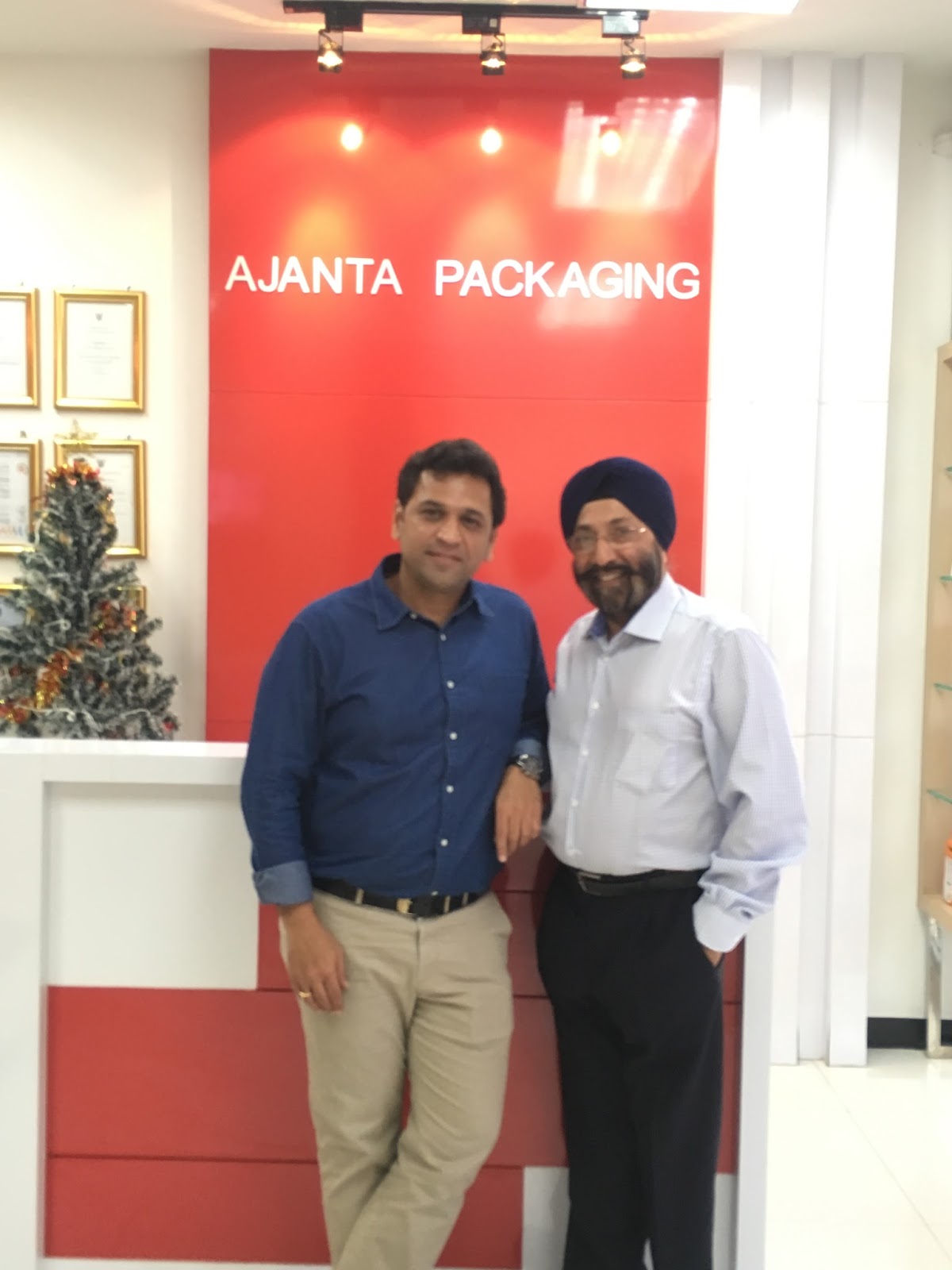
Exactly 6 years ago on the 7th of August 2010 I wrote an article titled “Chandan Khanna; I wanted to be different!” He has more or less proved that statement and has worked hard to excel in his journey to grow in labels. The last line of that article was, “He is committed to excel in labels and reach the topmost slot in five years from now and would still be doing something different!” Rarely one sees people committed to their aspirations and achieving what they wished. Today Chandan Khanna lead  Ajanta Packaging is now one of the top three label companies in India with wholly Indian ownership and qualifies to be the only Indian owned multinational label printing company having manufacturing presence in three countries i.e. India, UAE and, Thailand. In the last couple of months I have had the opportunity of visiting his two overseas units in Sharjah (UAE) and in June 2016, I visited his unit in Thailand. I was very impressed! I was tempted to question him, “Chandan how do you manage?” The answer he gave appeared to be in continuation to where we left in the last article in 2010. He replied, “I am different and will continue to be so.”!
 
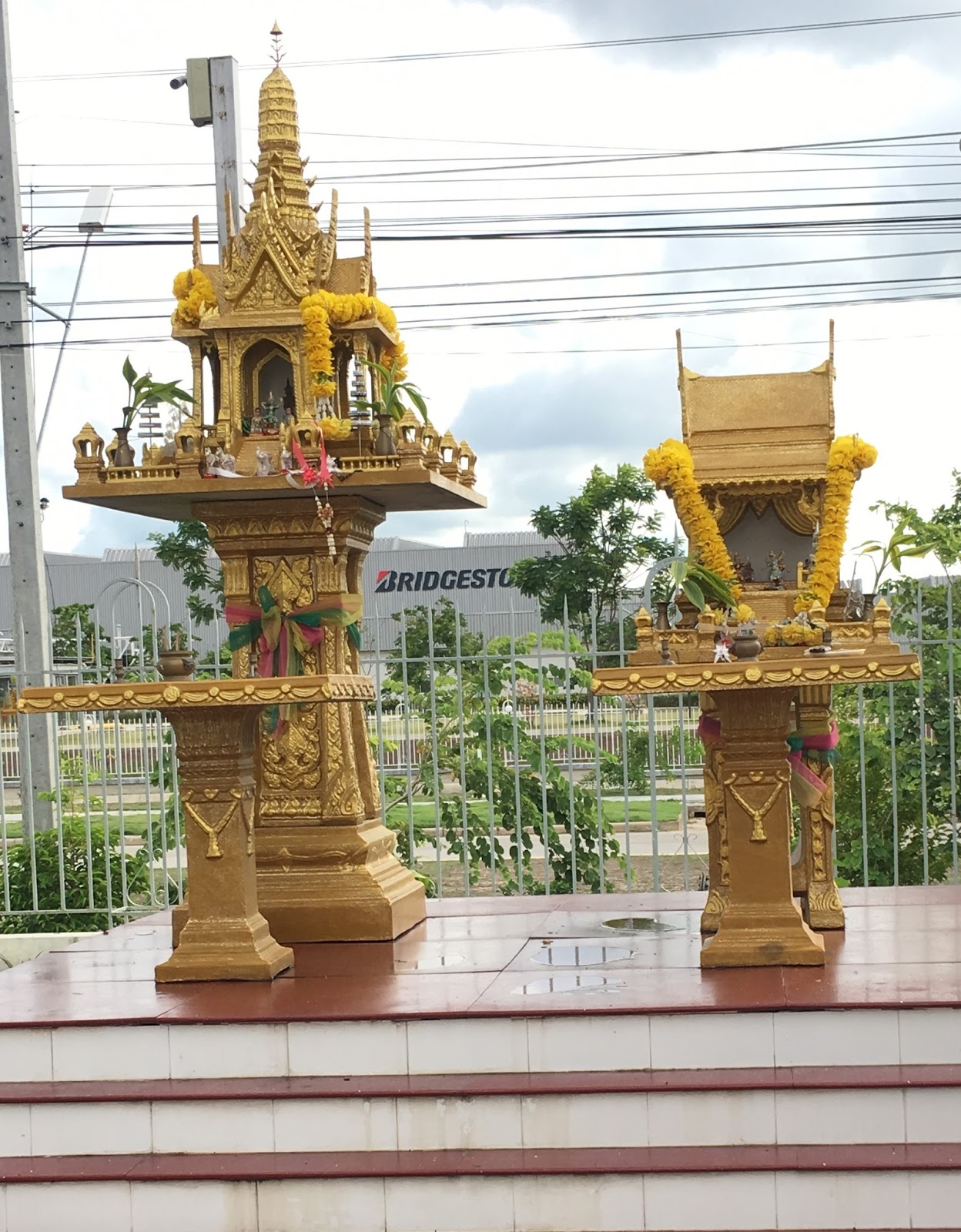
Ajanta Packaging’s Thailand unit is on the highway from Bangkok to the tourist destination of Pattaya. Infact it is almost on the outskirts of Pattaya. After spending the night at an amazing airport hotel Novotel Bangkok, we i.e. I and my wife, were picked up early morning by Ajanta’s car to drive to Pattaya. After checking into another outstanding property The Dusit Thani and freshening up we left for the Ajanta factory. As we arrived at the unit we witnessed a Thai Spirit temple adorning the entrance, further inside was also an Indian temple with Lord Ganesha and Laxmiji, displaying the owner’s deep faith and religious values. We were welcomed by an extremely hospitable staff with TV monitors displaying a welcome message for us and traditional “SwasdeeKha!” by the ladies who welcomed us.


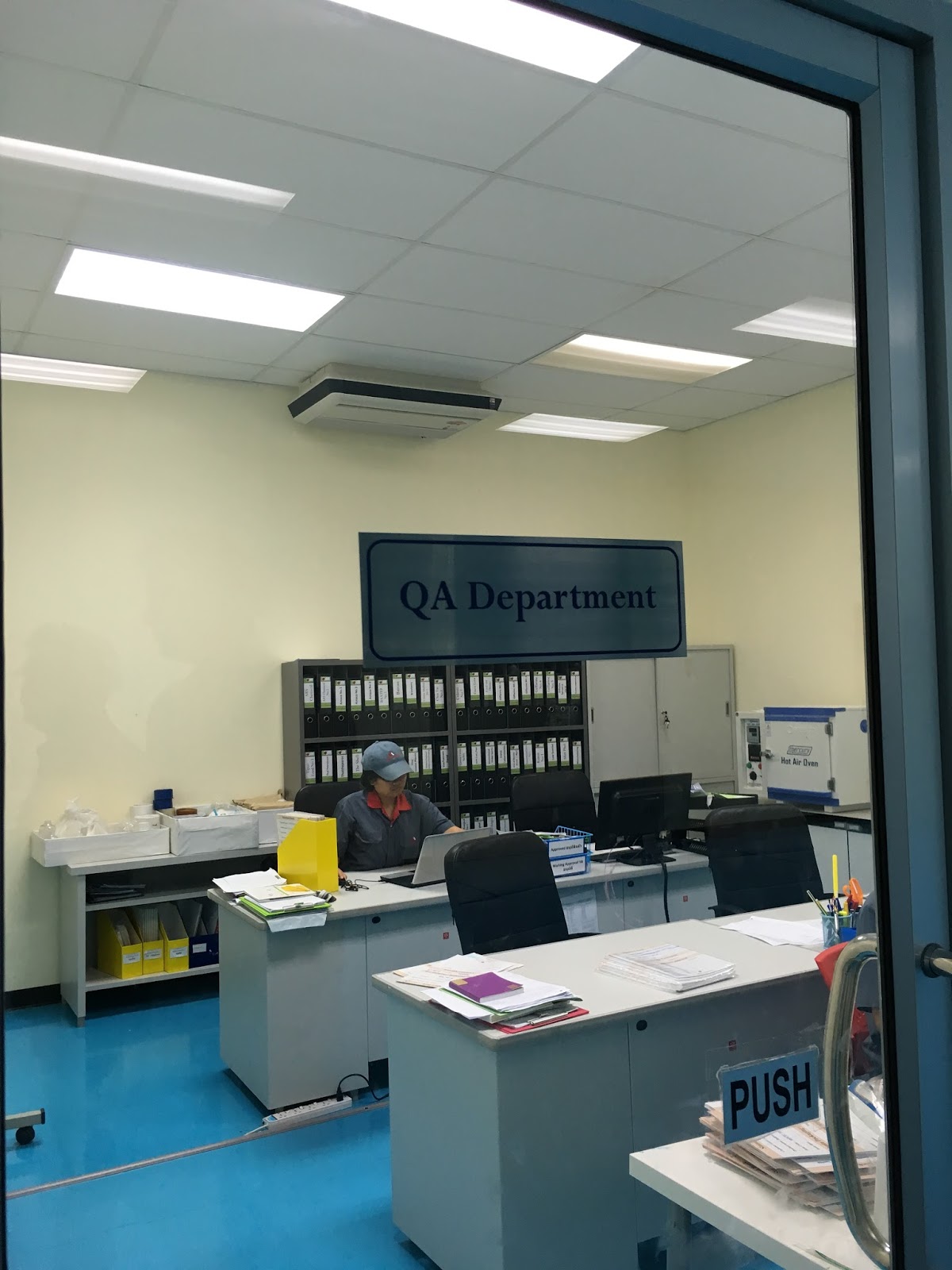
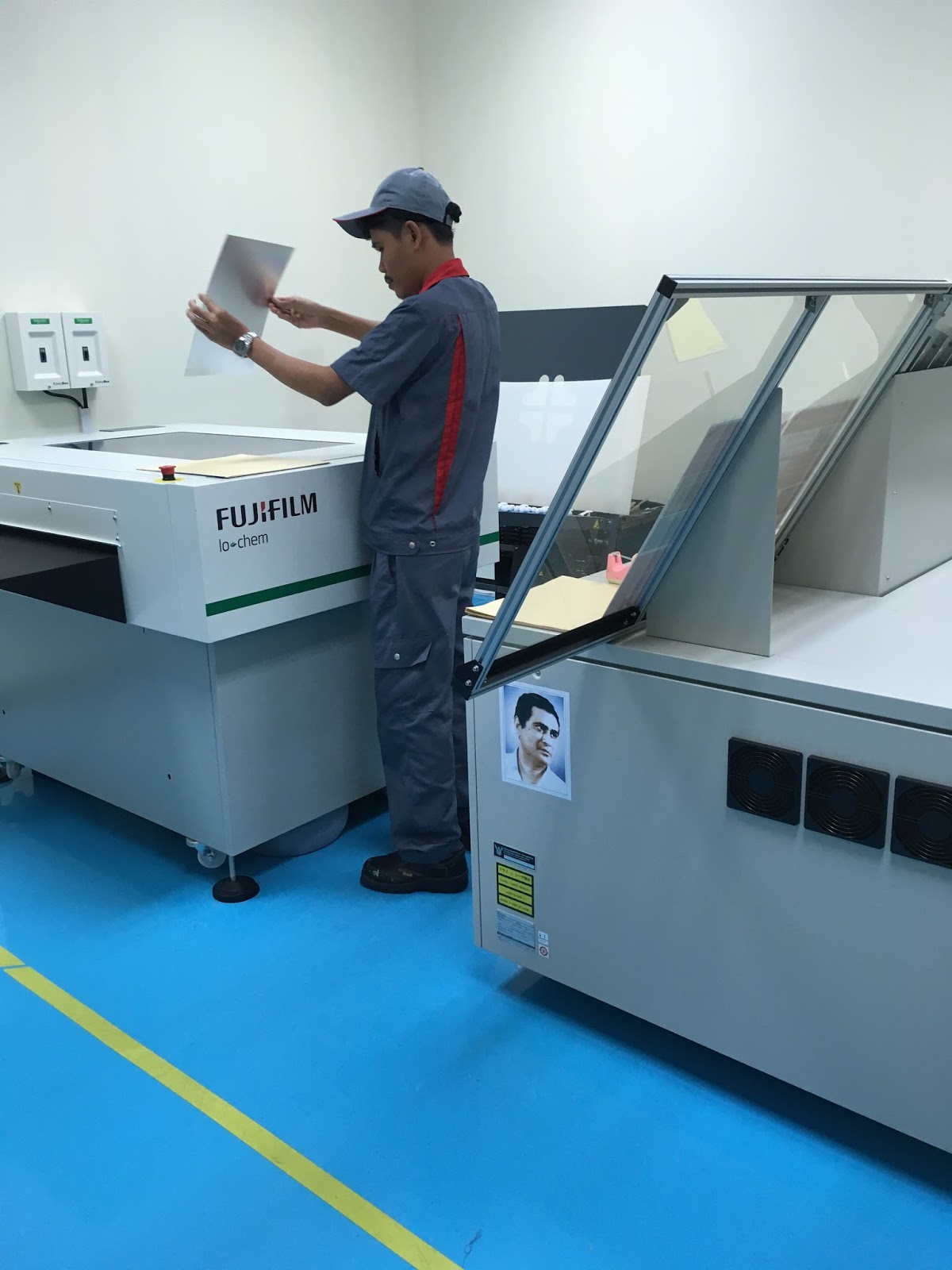
After a briefing in the fully equipped conference room we took a round of the unit. The unit is immaculately clean and self sufficient. They have their own design department, plate making department and quality control laboratory. 


The pressroom has one Nilpeter MO Combination Flexo/Offest presses and two Iwasaki intermittent offset presses besides flatbed registered die-cutting machines and a host of slitting, inspection and finishing equipment. A 12 colour Nilpeter Flexo/Gravure combination press will be installed later this month in August 2016. 
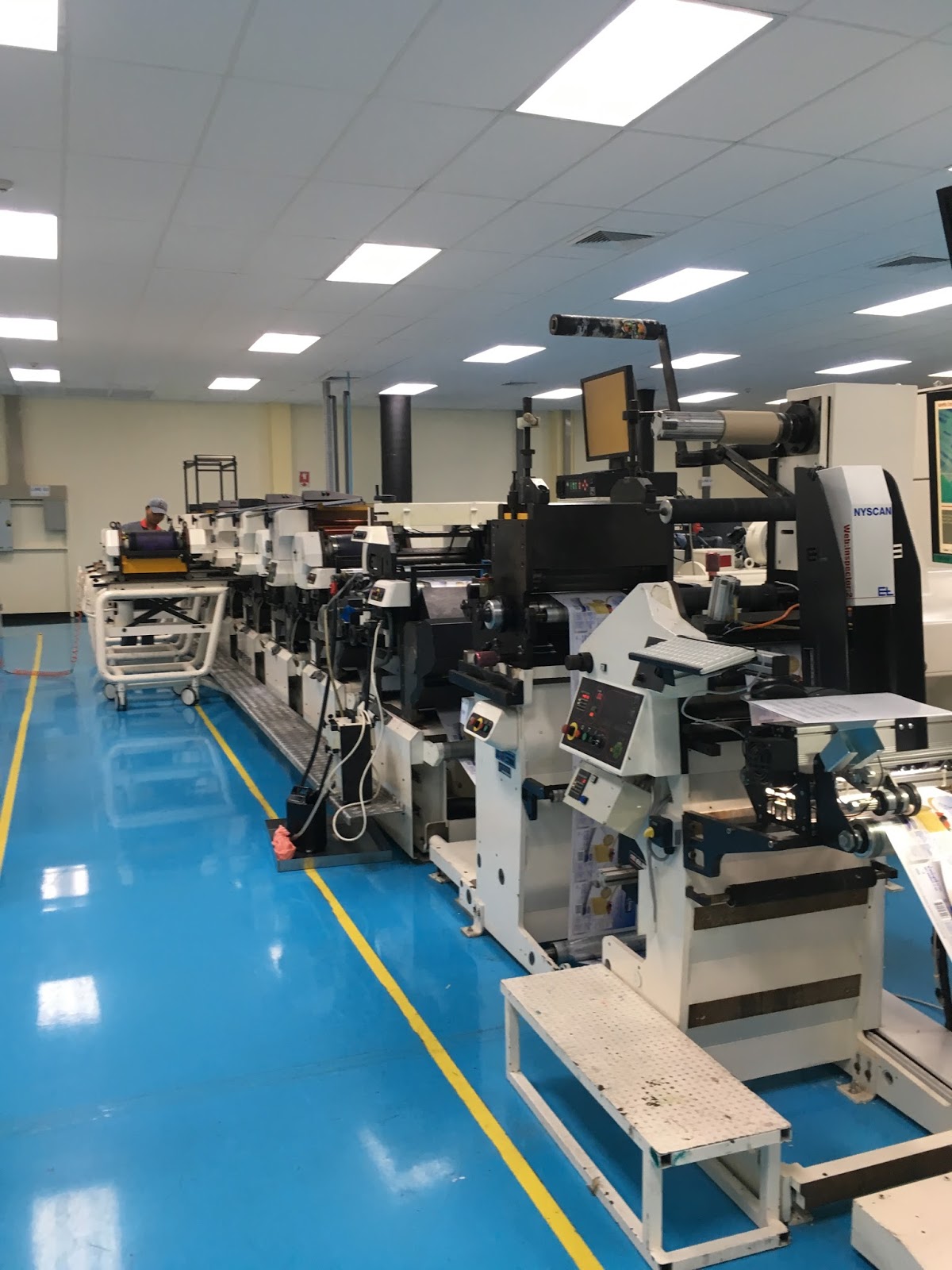


It was interesting to see that the space provided for further expansion and installation of new equipment was also kept spotlessly clean and gleaming. The dynamism of Chandan Khanna and his endless efforts to grow was evident by his personal indulgence in every aspect of this unit.


After lunch arranged by them in the unit’s dining room we left to meet yet again to experience Chandan ‘s excellent hospitality that evening at an open air restaurant on the seashore serving amazing seafood and local beer. I am still in awe of Chandan having made this trip memorable for us.


Ajanta Packaging owes its inheritance to a very renowned printing family of Mumbai that owns Ajanta Printarts. Ajanta packaging is headquartered in Mumbai and has manufacturing facilities in Daman (Near Mumbai), Baddi (North of Delhi, in Himachal Pradesh), two units in Sharjah (UAE) and this unit in Thailand. A very dedicated and ambitious technocrat, Chandan wants to extend his foot prints globally. He travels extensively to achieve his goals. He is now looking at moving his business to the western world as well. He is already evaluating investments in Europe by either taking over an existing unit or by entering into global alliances. 


Through ups and downs coming his way, Chandan moves on tirelessly to achieve his ambitions because he wants to reach the pinnacle in the next five years before he starts to slow down to enjoy the fruits of his labour and let the company grow and prosper by the inertia set in by him and led by his team of seasoned professionals in each and every plant. Will he slow down? It is a question I am not sure I have the answer to…


Note: Magazines may reproduce the above article by giving credit to the author.
 
Written by Harveer Sahni, Managing Director, Weldon Celloplast Limited, New Delhi. August2016
 
On July 21 2016 when I received information that PackPlus 2016 had been sold out I tweeted; “Sold out! PackPlus 2016 July 27-July 30 Pragati Maidan, N Delhi Show heading for unprecedented success http://www.packplus.in  @PackPlus2016
 
The show PackPlus, a complete packaging show, has grown more than 30 percent over the last edition with many more exhibitors, product launches and running machines. While there, one can learn about Package 4.0 at the AIA knowledge pavilion (stall no. 12A.40). There are free seminars on Next Generation Automation, Flexible Packaging, Open & Smart HMI, and Integrated & Vision Guided Robotics & Vision System for Quality. Register at: www.aiacampus.in/index.php/industry/automation-pavilion/click-to-register HP is planning free seminars for brand owners at their stand in Hall 12. The timings are at 4pm on 27 and 28 July and at 11 am on 29 and 30 July. In the gross area of 14,000 sq.mtrs., PackPlus will be happening alongwith SupplyPlus and CartonTech. The Show has positioned itself as one of the most sought for exhibitions for the display of latest innovations & developments from the industry. Some of the leading companies including Uflex Limited – Engineering Division, Pelican Rotoflex (P) Ltd., Ishida India (P) Ltd., Global Link Impex, Zhongke India (P) Ltd., Clearpack India (P) Ltd., Autoprint Machinery Manufacturers Pvt  Ltd., Hewlett – Packard India Sales Private Ltd., Intralox India (P) Ltd., AnyGraphics (P) Ltd., Domino Printech India (P) Ltd., Uflex Limited – Holography Division and many more have booked prominent stalls to showcase their wide range of equipment and to disseminate information. Visitors will get an opportunity to experience the running machines and have one-on-one interaction with the representatives from international companies
 
PackPlus is founded and organized by the husband wife duo Neetu and Anil Arora. They also happen to be the founders of India Label show which was subsequently acquired by UK based Tarsus and renamed as “Labelexpo India”. A decade ago I wrote about Anil Arora’s journey upto Labelexpo 2006. In 2007 it was acquired by Tarsus and for the 2010 edition they renamed it as Labelexpo India. I reproduce that article after moderate editing;
 
The path traversed by Neetu and Anil Arora:
It was during one of my visit to Mumbai in the year 2001, while planning a trip to Labelexpo Brussels with friends from Industry, I expressed my wish that we should have a label show in India. Immediately one of the label printer friends informed that one Mr. Anil Arora was already working on the project and had approached many in the industry in Mumbai. Since the subject was of interest to me I investigated and got Mr. Arora’s contact details. Before leaving for Delhi I called Anil Arora to enquire about his plan for the show. From the small chat with him I found him very convincing. I felt this man was committed to the show and would make success of it. I told him I would support him and if any help was needed I would be available. Three days later Anil was in my office in Delhi and we were discussing plans to make the show a big success.
 
By end of the year the whole industry was excited about the show and the first India label show was completely sold out. So much so that the organizer had to vacate their own stand to make room for demanding prospective exhibitors. The show was a big success.  It brought the industry closer and it was first time in the history of self adhesive labels in India that such fellowship was witnessed. It was also during the run-up to the show that the LMAI (Label Manufacturers Association of India) was formed.
 
The show then moved on to a much bigger Pragati Maidan. Anil Arora and his better half Neetu Arora worked hard to make the show bigger and better. The promotions were so well planned that road shows which gave insight on what to expect, were held in cities and towns all over India. There were road shows held in Srilanka and Bangladesh also. The second show in Delhi was bigger and better with the Tarsus group organizer of Labelexpo taking a big portion of the show. The India label show brand was fully established not only in India but also internationally. There are nostalgic memories of the awards nights and the parallel dinner meetings during the last show.
 
The third show in this series was held on (6-9 December 2006); the excitement in the label industry had built up. The show was bigger and attracted a much larger foreign attendance. The importance of the show was reflected by the fact that the Finat sponsored “Indo-European label Exchange” was held alongside the show. FINAT, the self-adhesive label trade association acted as ‘matchmaker’ between European and Indian labeling industries to create a forum to give small and medium sized member companies in both regions better chances of doing business with each other. The forum was supported by the EU’s Asia Invest programme and was organised in cooperation with the national trade associations VskE (Germany) and LMAI (India). More international presence, more working presses and a series of product launches from an industry that was waking up to global challenges confirmed the show’s resounding success. A conference was also held alongside the show, and was organized under the aegis of the world renowned Alexander Watson Associates (AWA).
 
Alongside the Show, International Packaging Conclave will happen on 29 July at Pragati Maidan Conference Centre. It will focus on Print Optimisation & Colour Management for Flexible Packaging. 25+ experts from the industry will unite for a daylong session where more than 200 delegates including Brand Owners, Package Converters, Packaging Technologists, Procurement Professionals, Print Specialists, QA, Managers, PrePress & Media Professionals, Designers, Material &Equipment Suppliers and Consultants will attend the programme. We are all set for a record-breaking edition,” said Neetu Arora, President, Print-Packaging.com (P) Ltd., the organisers of the Show.


Neetu and Anil have two children, a son Nauroze pursuing his management studies and a daughter Garima Arora who is a celebrated Chef. After training in Switzerland and France she has worked in the famous Gordon Ramsey’s restaurant in Dubai, then in the world’s number one restaurant Noma in Copenhagen and is now working at the best Indian restaurant recognized globally; Gaggans at Bangkok. She is soon expected to open her own restaurant in Bangkok with support from Gaggans.


Note: Magazines may reproduce the above article by giving credit to the author.
Written by Harveer Sahni, Managing Director, Weldon Celloplast Limited, New Delhi July2016
VICTOR HUGO, a French Poet in the mid nineteenth century, once remarked: “You can resist an invading army; you cannot resist an idea whose time has come. When mobile telephony came in, one could not imagine the reach it will provide to a common man who would not have means or will to reach out to the world at large. Telephones with internet connectivity have transformed life magically. No one could imagine that the only communication link that people had, “the landline” would one day become just a show piece. Such ideas, whose time comes by, evolve with such speed that the generations are left in awe of the change. Label industry is now faced with many such ideas like the move from conventional to digital printing, linerless labels and now evolution of in-line converting. Given the large investment in space and manpower, sheet offset, over a period of time is surely going to evolve to inline printing, decorating and converting using multiple technologies with lesser space and just a few people. At the recently concluded Drupa 2016, many such types of equipment were displayed attracting interest of printers. If it was just printing, the offset presses are doing a great job. It is the decoration and finishing that needs space, manpower and a host of different machines spread over a large shop floor. In modern retail highly decorated labels and packages are an imperative for consumers to reach out for the products. Hot foiling is one of the many processes that catches the eye of a consumer and becomes the preference of many a brand owner. So far most of the hot foiling is being either done offline on flat bed hot stamping machines or in-line with slow intermittent presses. It has been the wish of label printers who are so used to doing the conversion from start to finish in a single pass on their high speed rotary presses, to do the hot foil also in the same pass without compromising on the speed and quality.   
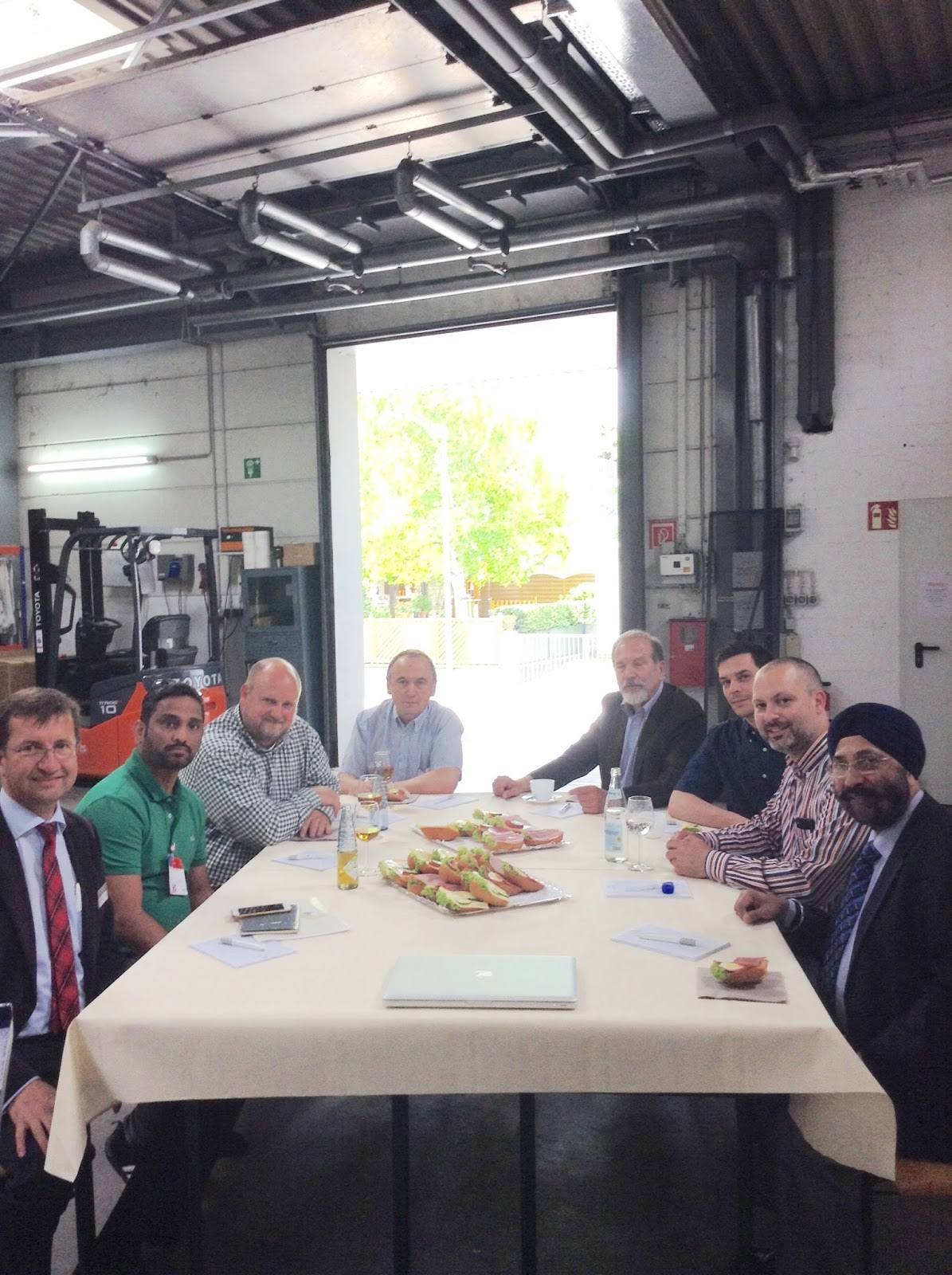
On the 3rd of June, Peter Frei, CEO Switzerland headquartered Pantec GS Systems AG pulled me out of a busy Drupa to take me to the premises of Gewa Etiketten located on the outskirts of Frankfurt some three hours drive, for an “open house” to showcase their in-line hot foiling application equipment “Rhino”, that can be integrated into flexo label presses without really compromising too much on speed. Pantec GS Systems AG is an independent subsidiary of Pantec, a worldwide operating technology supplier for industrial applications and medical devices offering services, products and solutions in the field of machinery and medical engineering. They provide sophisticated in-line refining solutions. Their dedicated equipment for rotary and flat bed hot foil stamping & embossing, high performance vacuum foil savers, high speed & precision hologram placement is made to provide efficient high quality refining, directly in-line.
 
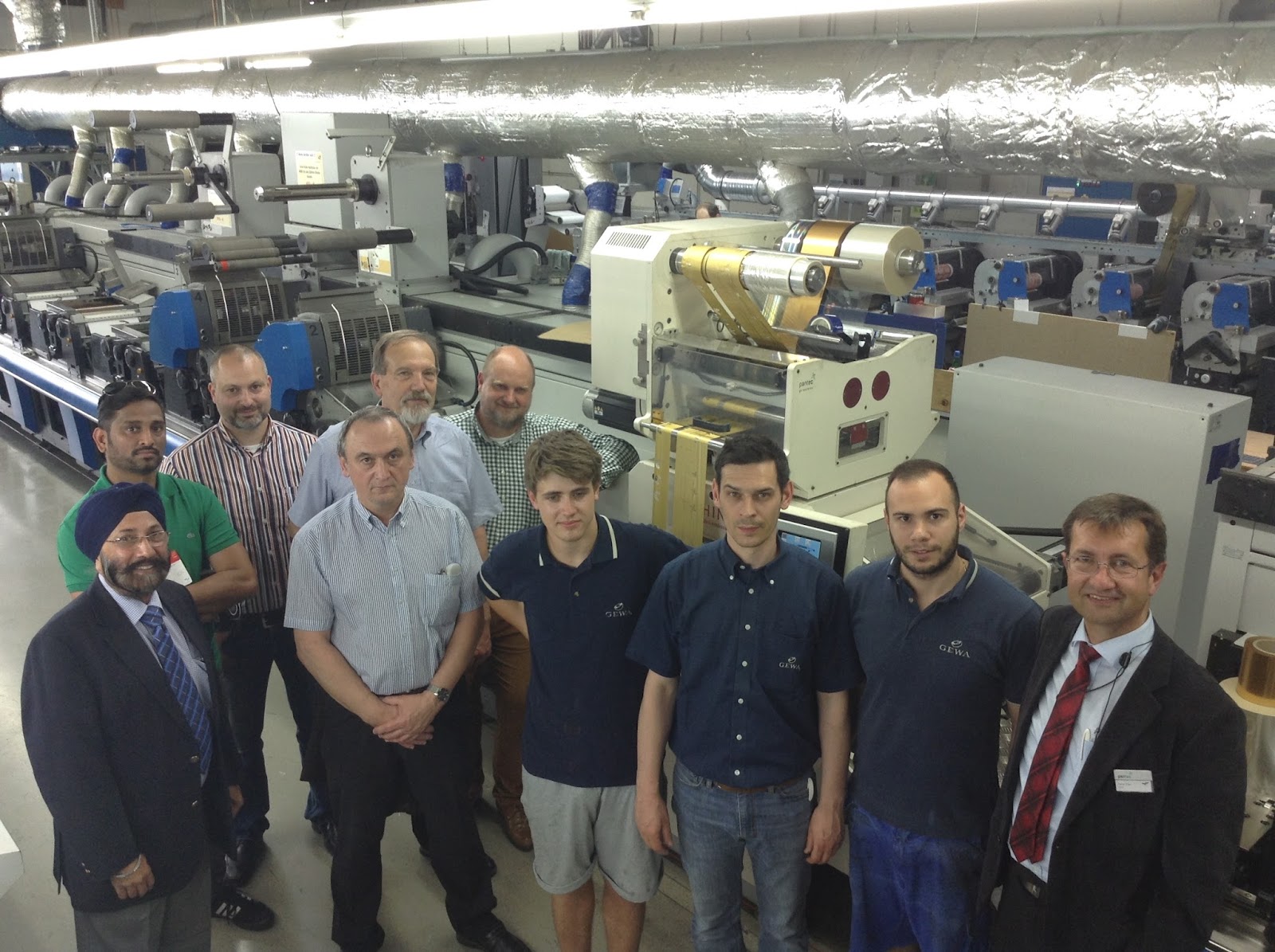
The company hosting the Open House, Gewa-Etiketten is leading producers of labels for Wine, Sparkling wine and spirits in Germany and Europe. The family owned enterprise was founded in 1931 and the third generation headed by Mathias Walter is still in control. The company operates from a total area of 7000 square meters and a production area in excess of 50,000 square feet. With 170employees at two locations, one that caters to sheet offset segment for wet glue labels and the other for self adhesive labeling, they achieve sales of 23 million Euros. The unit that we visited had 6 Gallus combination presses and one HP Indigo digital press besides a range of other complementary equipment. They cater to customers demands from 10,000 to half a million labels per day. As we reached the venue of Open House, Uwe Reflinghaus, CEO of Gewa-Etiketten welcomed us with lunch and introduced us to his team. Some more printers and suppliers were also present. 
 
 
Peter Frei


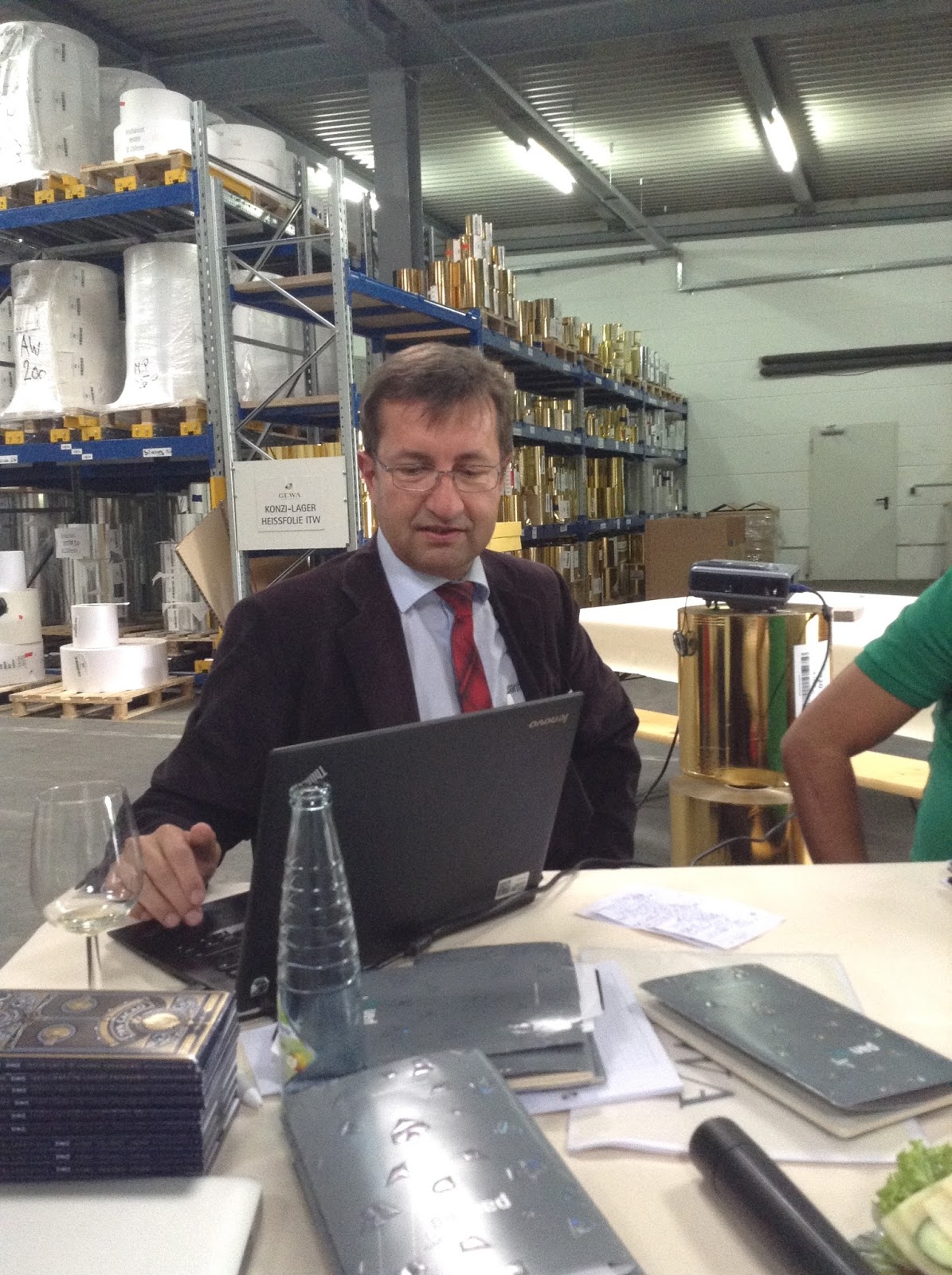
All visitors after introducing themselves heard Peter Frei, CEO Pantec GS Systems give his presentation. He said “I do believe  that single pass printing  and converting of packages is the real new opportunity for label printers having such web machinery already” He further added, “ I think there is a ‘huge opportunity’ that arises for label printers in packaging after integration of Pantec Rhino in an existing label press, as you will see being done here at Gewa”. After his presentation it was time to go to the shop floor for the demonstration of Rhino inline hot foiling system. 


Oliver Jung
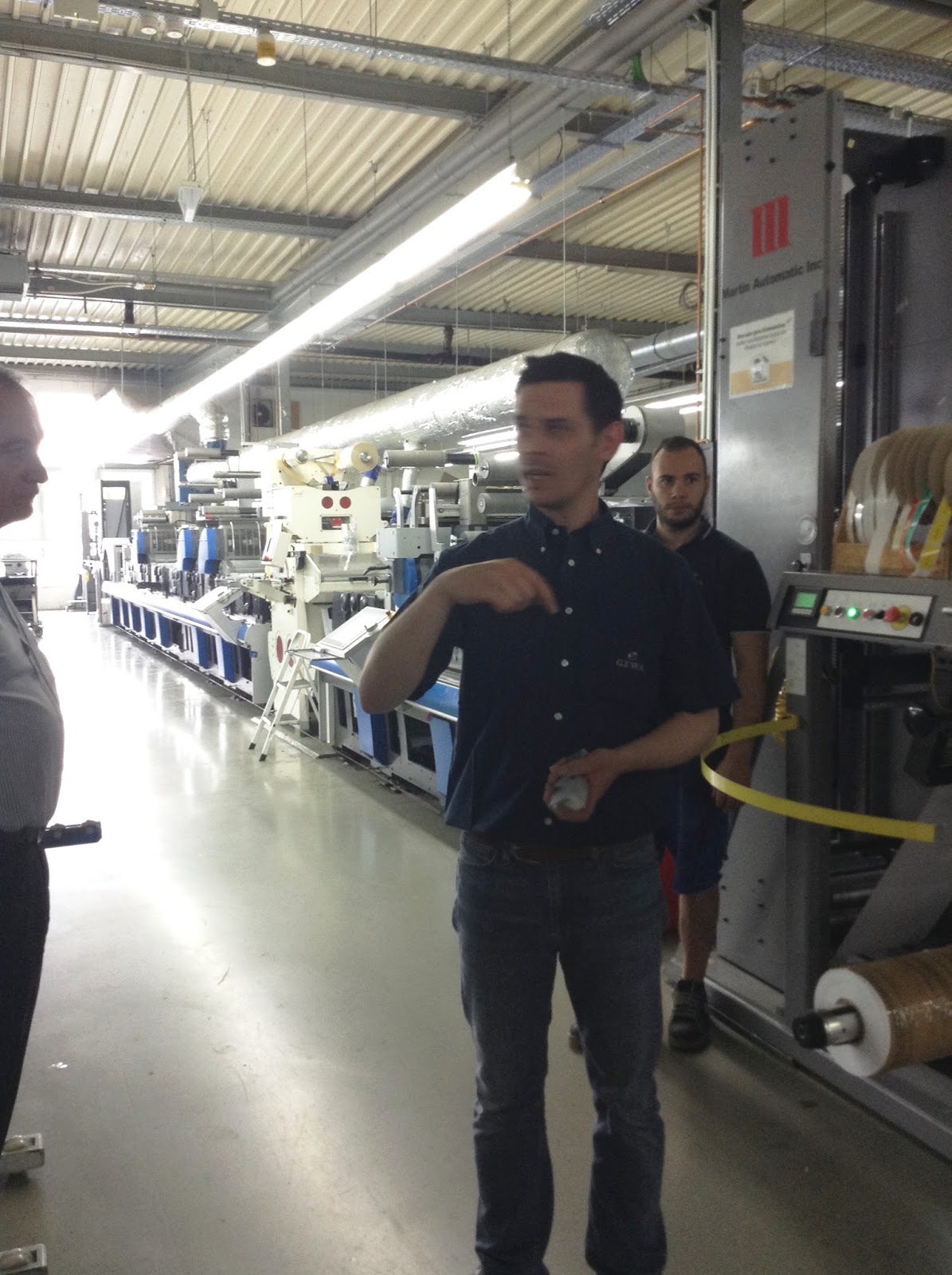
Oliver Jung, the printing expert handling the Pantec implementation project at Gewa took charge to explain and demonstrate the equipment and its technology.The Pantec Rhino was integrated in line on a Gallus RCS combination press to demonstrate In-line package printing and decoration as alternative to sheet fed package conversion. A label press was being used after integration of Pantec Rhino to produce highly decorated cartons. Contrary to the rotary web operation where the web continuously moves, this equipment has web Stopping-Stamping-Moving on, giving sharper images of stampings. The interesting part is that while the stop start operation is limited to the Rhino, the web otherwise keeps moving steadily and continuously at regular machine speed without stop and go motion. The equipment shown was capable of making 18,000 strokes per hour however they now have one that can do 25,000 strokes per hour. The movement and stamping is well portrayed in the video at https://www.youtube.com/watch?v=OA6SWgTqI-g&feature=youtu.be 


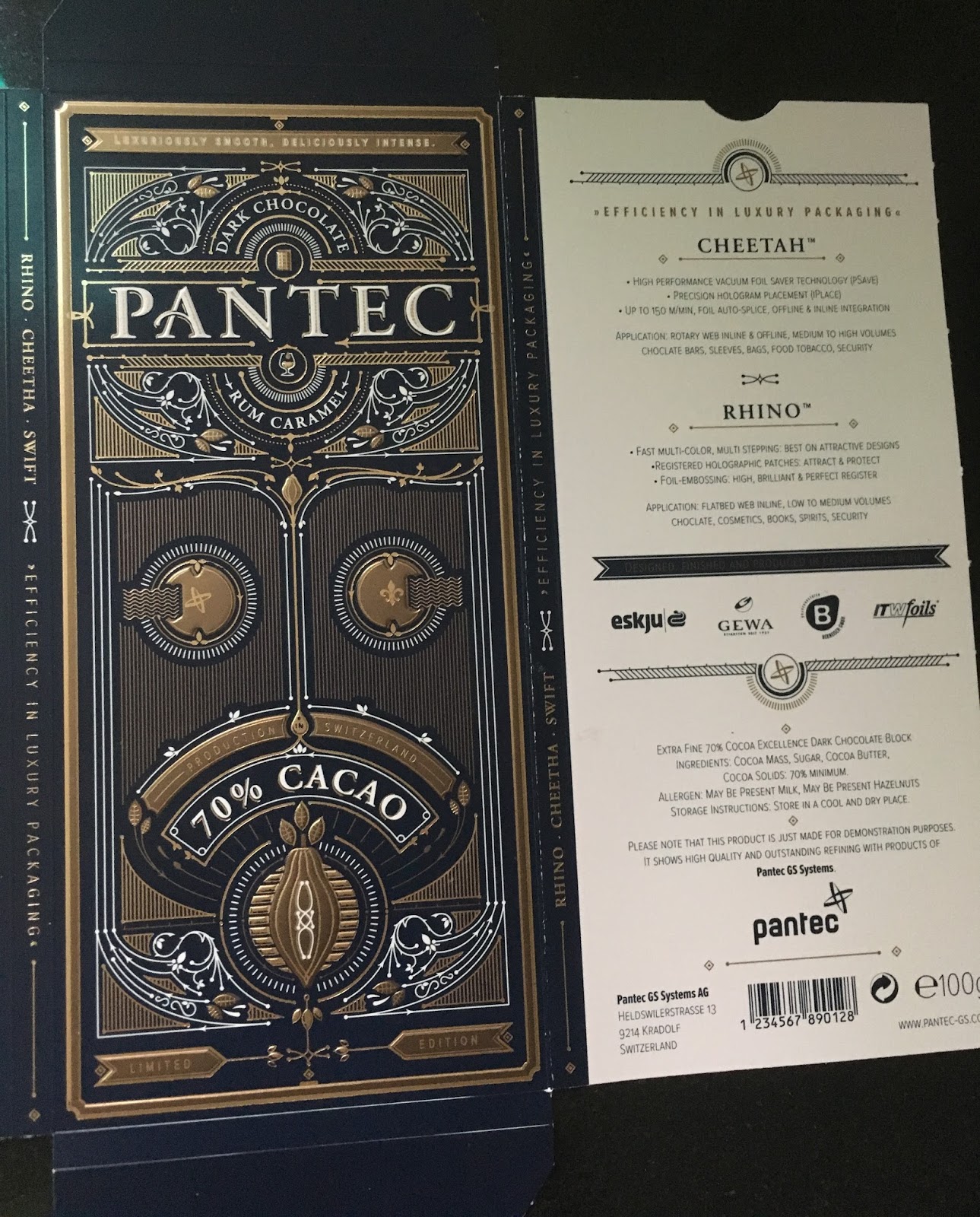
In one demo they ran a Pantec Rum Chocolate carton with printing, embossing, hot foiling and die cutting all running at 120 meters per minute in a single pass. 


In another demo they ran a carton with also placing of registered hologram, printing on it and embossing around it. The equipment has advantage of speed in roll and as compared to sheet it has no wastages that occur at grippers and at gaps.


Rhino system brings the quality of sheet fed hot foil embossing, attractive patch placement for prestige markets and hologram stamping for security into web presses;
·      Consistently designed for in-line economy
 
·         High frequency stamping for high press speed (up to 25´000 strokes/h)
·         Quick job change (no format parts) for high press availability
·         Crosswise foiling and multistroking allow single pass production of multifoil designs
·         Reduced per-unit costs (no off-line preparation, less maculation)
·         Up to two foil saving servos
·         Significantly reduced cycle times for orders
 

Note: Printing magazines and publications may reproduce this article giving credit to author.


Written by Harveer Sahni, Managing Director, Weldon Celloplast Ltd. New Delhi India July 2016


Ø  Indian label industry expanding to smaller towns
Ø  Indian label growth at 15% Per Annum
Ø  Combination printing is the emerging trend
Ø  Digitalprinting of labels, still a taboo
 

Population continues to grow at an enormous pace in the metropolitan cities of India and infrastructure, despite the rapid growth, remains under intense pressure. The migration of rural population to urban areas has made life in big metros extremely demanding and difficult. Government of India, for many years has been making efforts to stem this shift from rural to urban areas. The effects are now evident. Mobile telecommunications, television, internet, better road, employment guarantee scheme and rail connectivity have largely been successful in bridging the gap and stemming the pace of migration. As a result, the smaller towns have in recent years experienced a spurt in demand for consumer goods. 


Decades ago Mahatma Gandhi said, “India lives in its villages”. This is largely true even now but gradually the villages are modernizing owing to availability of all modern ameneties in nearby towns. They need not commute or shift to far away expensive metros to live a life that they watch on TV. This has resulted in a steady growth in demand of consumer durables in the smaller towns of India attracting investments from leading manufacturers to cash in on this change. The Neilsen Compnay, in a report titled, ‘Emerging Consumer Demand: Rise of the Small Town Indian’ states; “Eight thousand towns, 630,000 villages, over eight million stores and 1.2 billion people! In such a diverse consumer universe, how do you measure demand, where is it strongest? North vs. South, the metros vs. Rural – the choices are endless. Despite current inflationary environment, tier II and tier III towns are showing strong momentum with an improved demand appetite. The smaller Indian towns are leading the demand surge & shopping like metros.” The label printing industry has also been witness to this trend. In the past few years we have seen investments being made to produce labels in smaller towns of India. An industry that originated and was predominantly located in the west gradually spread to the other metro cities, is now registering its presence in these smaller towns. In my effort to assess the impact I asked printers in all zones of India, “Label industry is now expanding into smaller towns and cities. Do you agree?” The response was unanimous, YES! They all felt that it will impact the label growth positively. The LMAI President Sandeep Zaveri stressed, “It is required to grow in smaller towns”.
 
In trying to assess the trends and growth of labels in India, I interviewed 12 established and leading label printers spread across different geographical zones of India. 10 respondents out the 12 confirmed that there is definite growth in the country, one was not sure and felt it may have grown at places and gone down elsewhere while one was emphatic in saying that the growth rate had decelerated. Anuj Bhargav of Kumar Labels, while being convinced that the label consumption graph is positive yet he cautions, “Growth exists, but increase in capacity is more than the demand escalation. This is leading to unhealthy competition”. So over 90% of printers interviewed say there is growth. When asked the rate at which they individually grew, 10 out of 12 reported double digit growth, 3 of them grew 20% and the topper Sanjeev Sondhi of Zircon reported a growth rate of a whopping 35-40%!  Two reported 7-10% and one 5-7% growth.  Answering my question as to how they estimate the national growth rate of self adhesive labels in India to be, only 9 responded and out of these 7 confirmed it is a double digit growth between 10 and 20% and 3 out of these 7 said the growth was actually 20%. 2 of them said 7-10% and one said it was 5-7%. When I look at all these three questions and the responses from printers, it is quite evident from the way printers have grown and the way they estimate the national growth rate, labels in India can safely be estimated to be growing in excess of 15% per annum.
 
Most of the organized Indian label industry belongs to the MSME sector (Micro, Small & Medium Enterprises) and that they are predominantly family owned businesses. A handful of them have been acquired by international companies but largely they remain within the control of original promoters and their families. These units were largely initiated at very small scale with a single label press. Until a few years ago most of the good presses that contributed to the evolution of labels in India came from Europe, US and Japan. Gradually Taiwan made presses came in which then was followed by the Chinese made equipment coming to India in big numbers due to the low prices of the equipment. Indian press manufacturers have also made a mark for themselves in recent times. Today label printers with these Chinese and Indian presses have become a definite and identifiable segment of our label industry. I asked all the targeted label printers, “Chinese and Indigenous label presses manufacturers have in recent times made many installations in India. This trend is creating a lot of capacity at the lower and middle segment of the market. What is your opinion?” All respondents agreed with this and feel there is enough for all at various levels of investments. Sanjeev Sondhi in response says, “In my opinion quality will finally decide who will remain in game.” Industry leader and veteran Narendra Paruchuri heading Pragati Pack, Hyderabad stated, “This is quintessential question like the chicken and egg syndrome. The markets in the smaller towns cannot afford or break even on the high tech machines. So they will opt for the cheaper ones from China. Quality will not be very good but may be that is what is needed in that market. We are no judge for this and if they can sell and make it a success, good for them.” Pragatai Pack has invested in some of the most advanced equipments to enhance their printing, converting and decorating capabilities. On my question, “What is your mantra for growth, higher volumes or highly technical & innovative products?” he added, “We have to keep on at the technology and see what is it that we can do and can do that better than others. This is a quest for all businesses and only in the answer to this question lies your success. So if you come out with a unique/innovative product, your sales will rise. Also maybe the growth rate of the country itself will give you an opportunity to grow your business. Progress is relentless and technology a great leveler. So what we thought was exclusive a few years ago is common occurrence now. So the quest has to continue. Always…”
 

All the respondents agree that it is time to take stock of the situation, shift focus and innovate. They have similar answers to my querry on their “Mantra for growth”. Mahendra Shah of Manohar Packaging, “Higher volumes have not paid off to any one and I guess we label printers have gone beyond lower limit, so best would be to divert on to innovations and get into more technical products”. Himanshu Kapur of J K Fine Prints Mumbai states, “Higher volumes and lower margins is a wrong growth trend , so we prefer technically innovative products”. Dinesh Mahajan Prakash Labels, Noida; “It has to be a mix of high volume and innovations.”


The trend of combination printing that helps employ diverse printing and converting technologies in a single pass has become synonymous with innovation and secure printed products. To my question “Combination or hybrid printing is attracting lot of investment. Do you see this as an emerging trend?” 8 out of 12 printers feel that combination printing is necessary to create innovations and it is the emerging trend. 3 did not respond to this statement and only one said it is not the emerging trend. Many offset printers have started to invest in combination label printing equipment as a part of their expansion into packaging. Label printers on the contrary would not really invest in offset printing. A few years ago I remember Amar Chhajed of Webtech answer this question to me. He said we are so used to doing all printing, decoration and finishing of product in-line in a single pass, it is difficult for us to imagine moving stacks of sheets around the huge shop floor with a massive workforce. 

 
Ahmedabad based Mahrishi Labels, had forayed into offset printing and they did not find comfort with their decision. As per Jigesh Dani, “Having entered into sheet fed business we have realised that it's not just simply printing but a different ballgame. In my opinion it may be easier for sheet fed offset printers to enter inline converting but difficult other way”.  With the advent of combination presses going wider and able to handle a wide array of substrates and thickness, the possibility to produce folding cartons inline also has become a reality. Many label printers feel this is the time to move in the direction.


Raveendran of Seljegat feels it is time for combination printing and says, “Yes we need to invest on the production of functional packaging”. Gururaj Ballarwad of Wintek Bangalore which is a part of Signode India Group feels not many label printers will move into packaging yet he says, “Investment in combination printing is necessary to sustain, maintain & enhance the capabilities.”


Digital printing in India still remains a taboo with Indian label printers due to high cost of operation and consumables. However as a slight change in their thought process the higher end printers say it is time to consider digital printing as a complimentary part in a combination press. So while they invest in a press that has offset, flexo, gravure and screen printing capabilities, they will probably also opt for a digital printing station as well that will add to their capabilities. This will also help them in proofing, as also to cater to increasing number of short run customers.
 
India is a large and diverse country with multiplicity of cultures, food, language, dress habits, different festivals and lifestyles. As literacy enhances and the pockets of the middle class start to bulge it becomes an imperative for the marketers to focus on individual segments of the society. Innovation at this time becomes an imperative as also the capabilities to produce segment specific short runs. Just in time deliveries is another demand coming for end users due to the short run jobs. This results in making the larger label companies to consider multi locational production facilities. The response on this is quite divided within the industry. While many printers feel that one centralised facility is better for quality production and control. With better logistics it is possible deliver anywhere in the country in reasonable time. Yet there are others who feel locational advantage is necessary to service and retain large clients. Some large printers already have invested in multiple facilities not just within India but also outside India. Ajanta Packaging has units in Daman in the west and Baddi in North of India. They also have units in Ajman UAE and Bangkok Thailand. Indian label industry continues to grow at a steady pace and is also attracting international attention however still it has not yet grown to the level of large international label companies. There is still room for much more but it should grow steadily, as the demand grows.
 
 
Written exclusively for Label and Narrow Web USA http://www.labelandnarrowweb.com/issues/2016-05/view_features/india-rsquo-s-label-market/ by Harveer Sahni, Managing Director, Weldon Celloplast Limited New Delhi India. March 
2016 The article may be reproduced by giving credit to the author and http://www.labelandnarrowweb.com
L to R: Rajesh Nema, Jigesh Dani, Sandeep Zaveri,Amit Sheth
Harveer Sahni & Ajay Mehta
In scorching heat with Ahmedabad temperature soaring to 46 degrees Celsius Rajesh Nema, honorary Secretary LMAI was driving from Indore to Ahmedabad, a six hour drive to reach the venue of yet another technical workshop organized by LMAI (Label Manufacturers Association of India). That is commitment!  This is the fourth in series of  Technical workshops organized under the leadership of the young LMAI president Sandeep Zaveri. It was held at Hotel Novotel Ahmedabad on the 14th of May 2016. The LMAI leadership team reached the venue a day in advance or in the morning of the event to foresee that the Ahmedabad printer members have a perfect workshop and networking opportunity.
 
Sandeep Zaveri & Jigesh Dani
 
 
The host for the evening was Jigesh Dani from Maharshi Labels, a leading label printing company in Ahmedabad. Jigesh himself painstakingly made the arrangements at the hotel and also interacted with the local LMAI members to be present and ensure success of this event. 


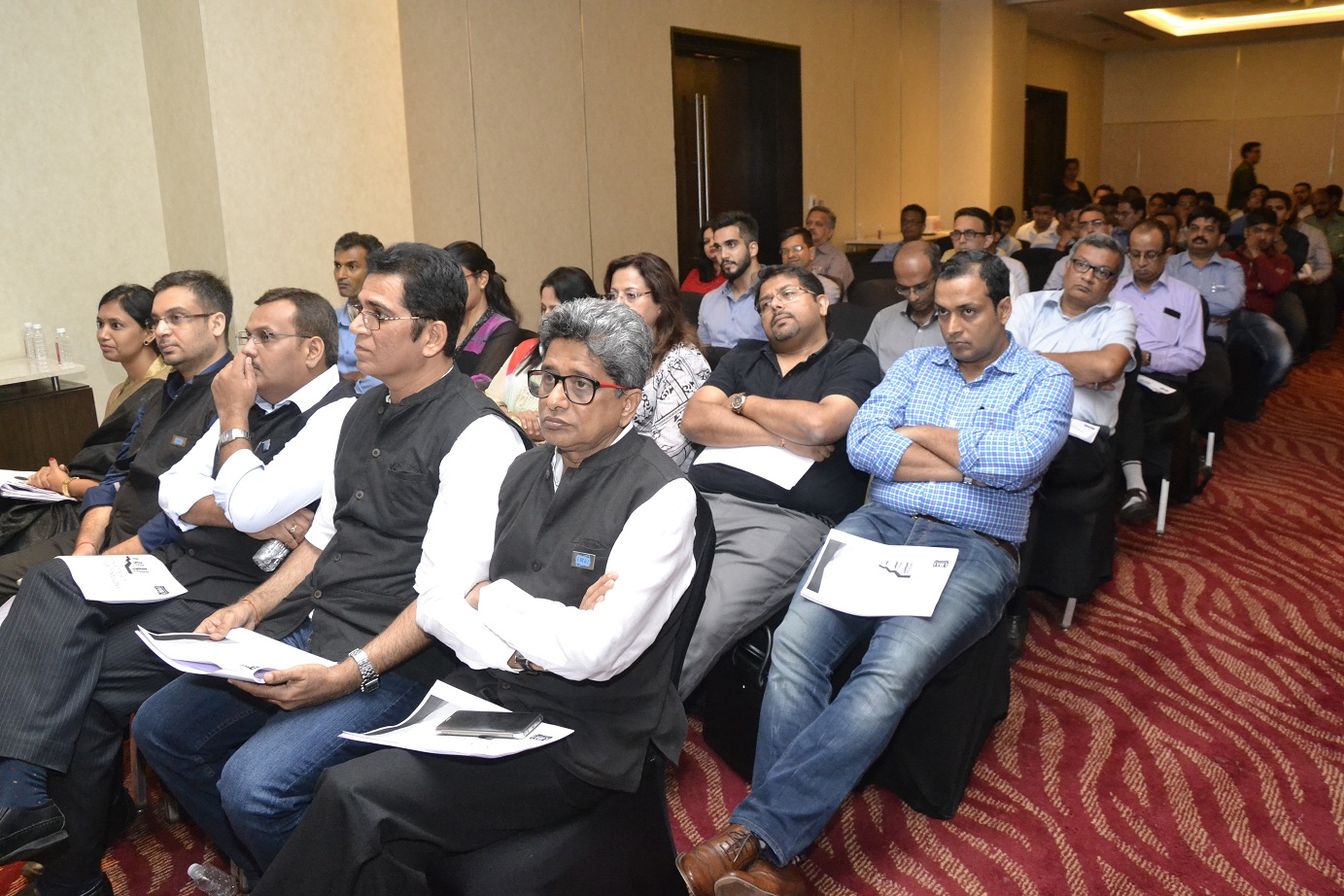
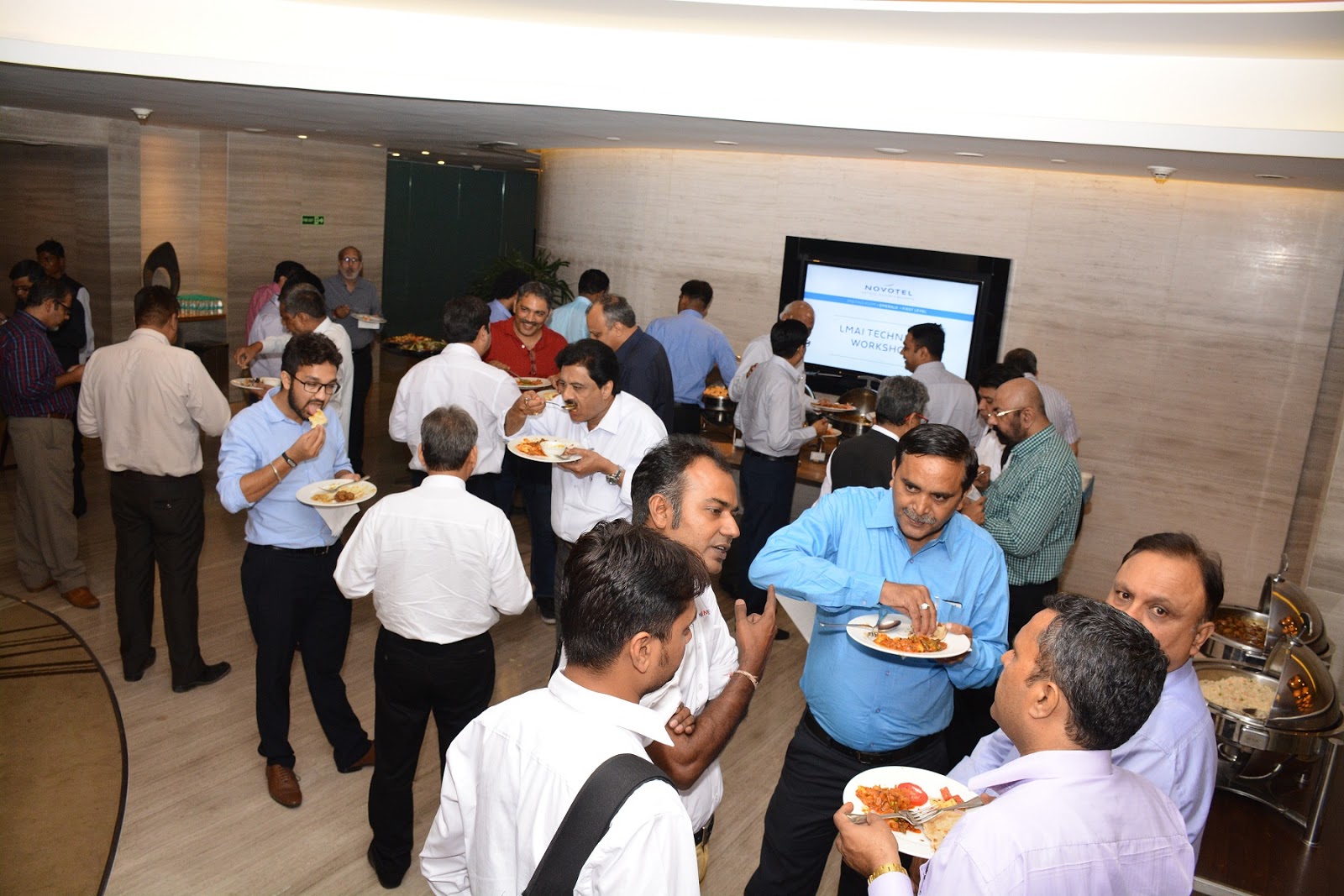
Audience
 
 
Almost 90 delegates attended the workshop, making it a very successful event. The printers and suppliers had enough time before and after the presentation to network and exchange views on the issues their industry was facing. 


Neeraj Muni
After welcoming the guests Jigesh invited the first speaker Neeraj Muni from Electro Optics to address the audience. Neeraj extensively explained the difference in blade angle for films and paper. The angle is broader, say 90 degrees when you have to cut a paper stock because after initial penetration into the paper the rest of the paper is crushed apart however in case of films a sharper angle is imperative for the blade to pierce into the film and effectively die-cut it. He also spoke about common problems faced like through punching, uneven cutting, die wear, etc. He also advised how to clean and store the dies for better die life.
 
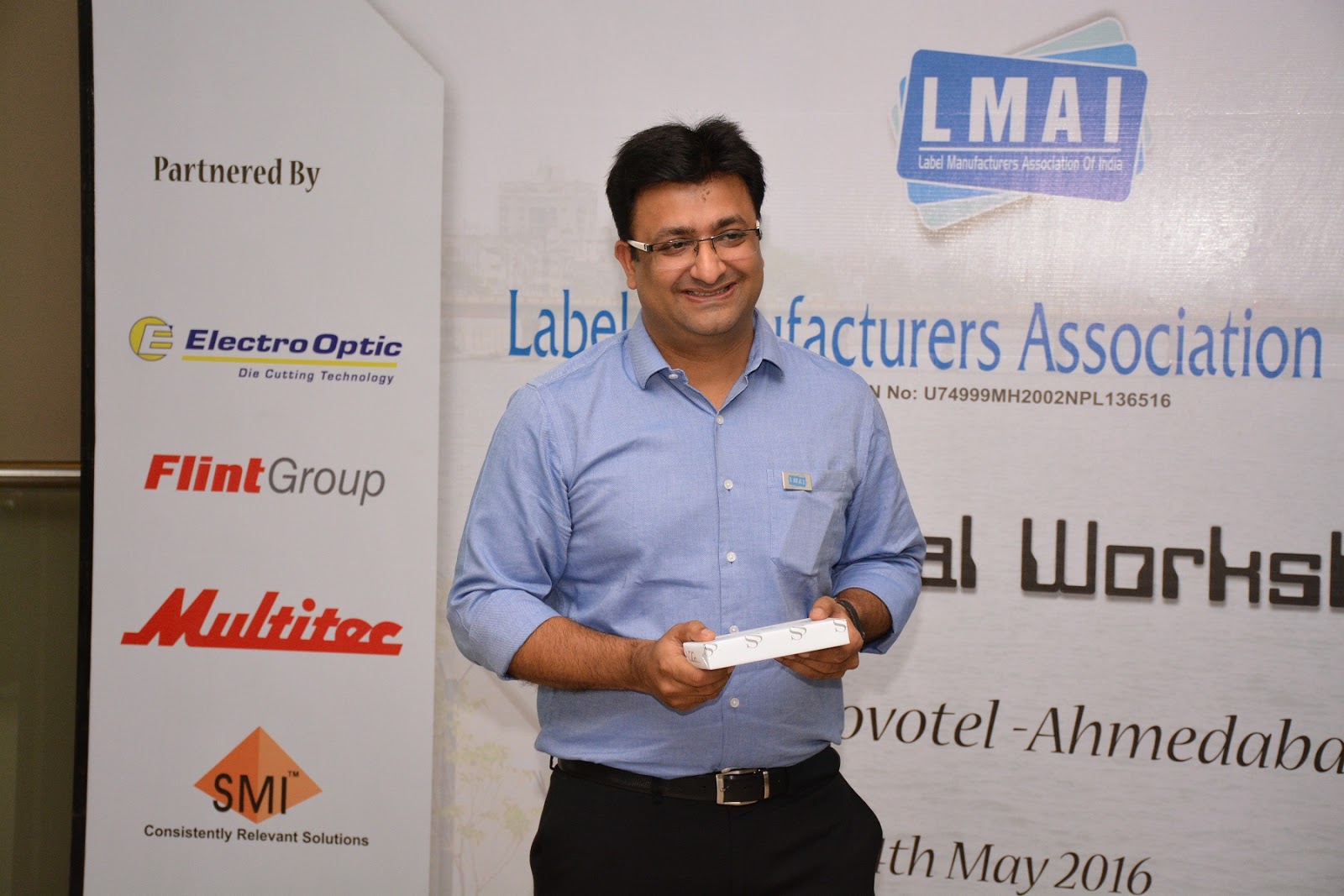
Nirav Shah of Letra Graphics felicitating Neeraj Jagga
Neeraj Jagga from Xeikon, now a part of Flint group, spoke next. He briefly dwelled on the reasons why label printers have so far stayed away from digital printing and then went on to further explain why powder toner technology was better than liquid ink digital printing technology. According to him in case of powder toner the dry powder sits on top of the paper unlike the liquid that penetrates the paper thereby interfering with the chemistry of the paper. The advantage of using dry toner technology is that it is approved by FDA, printed matter is light fast and does not penetrate the packaging paper substrates. He agreed that for long runs it is expensive to use digital however it is ideal for short runs and that so far it is recommended as a complimentary printing technology and not a mainstream system for large printing houses.
 
LMAI awards distribution function is a standard side event for Labelexpo India held every
Rajesh Nema & Sandeep Zaveri

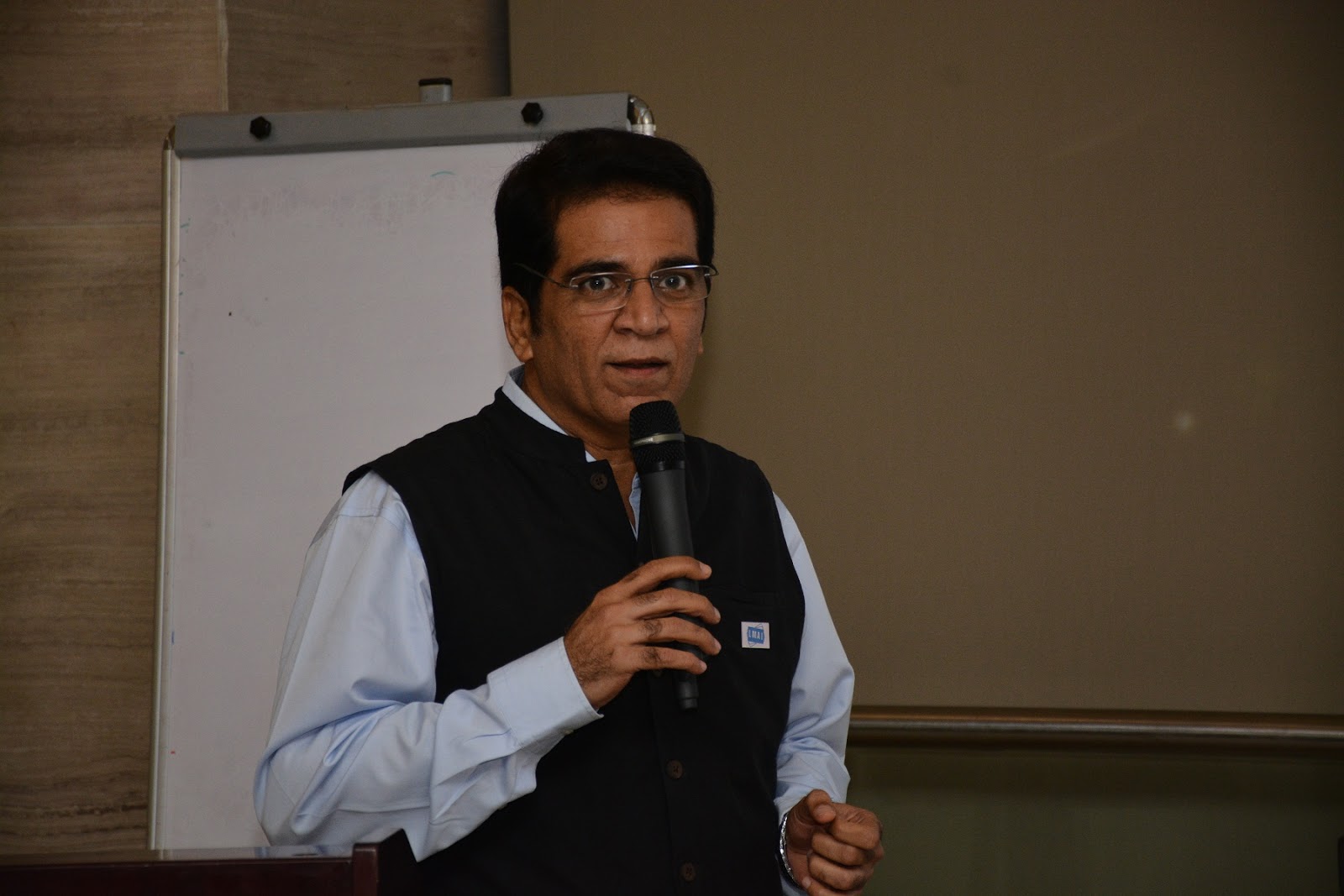
alternate year. It has been observed that a very small number of companies apply to participate in this competition. As a result we see the same company going to the stage for one after another award. It is now the endeavour of the LMAI leadership to try and have widespread participation from an increased number of LMAI printer members. The LMAI honorary Secretary Rajesh Nema and the President Sandeep Zaveri took the stage next to appeal for all converter members to come forward and send entries for LMAI awards in greater numbers. As an incentive to encourage wider participation the duo announced that the first entry from each member would be free. Fees will be charged for subsequent entries. It was also felt that fancy presentations made by large label printers influenced the judges more than the actual label entry. To offer a level playing field, LMAI have distributed a standard kit in which label entries can be made. It was also informed that Premier Marketing was the firm that had been appointed to coordinate the collection, compilation and conducting of the label competition. LMAI is also organizing the next technical workshop at Kolkata on 15th July 2016 thereafter they plan yet another series that will commence from Mumbai.


Ajay Mehta
 
Ajay Mehta, of SMI Coated papers, a leading manufacturer of self adhesive labelstocks spoke on the various types of components in Labelstocks. He discussed different facestocks, adhesives and release liners. He also spoke on what effect storage and application temperature has on the final label.


Amit Ahuja


Amit Ahuja of Multitec, has been the front runner in taking Indian label press manufacturing being acceptable at global platforms. He spoke on nuances of label printing and converting on flexo rotary presses. He also informed about further developments being made in label presses that are made in India. 


Chirag Gokani of Wealthwiz, gave an informative presentation on wealth and estate management. He also discussed the process of creation of will, setting up of various trusts, their management and how to store the documents so that they are traceable and manageable by the inheritors.
 
Harveer Sahni
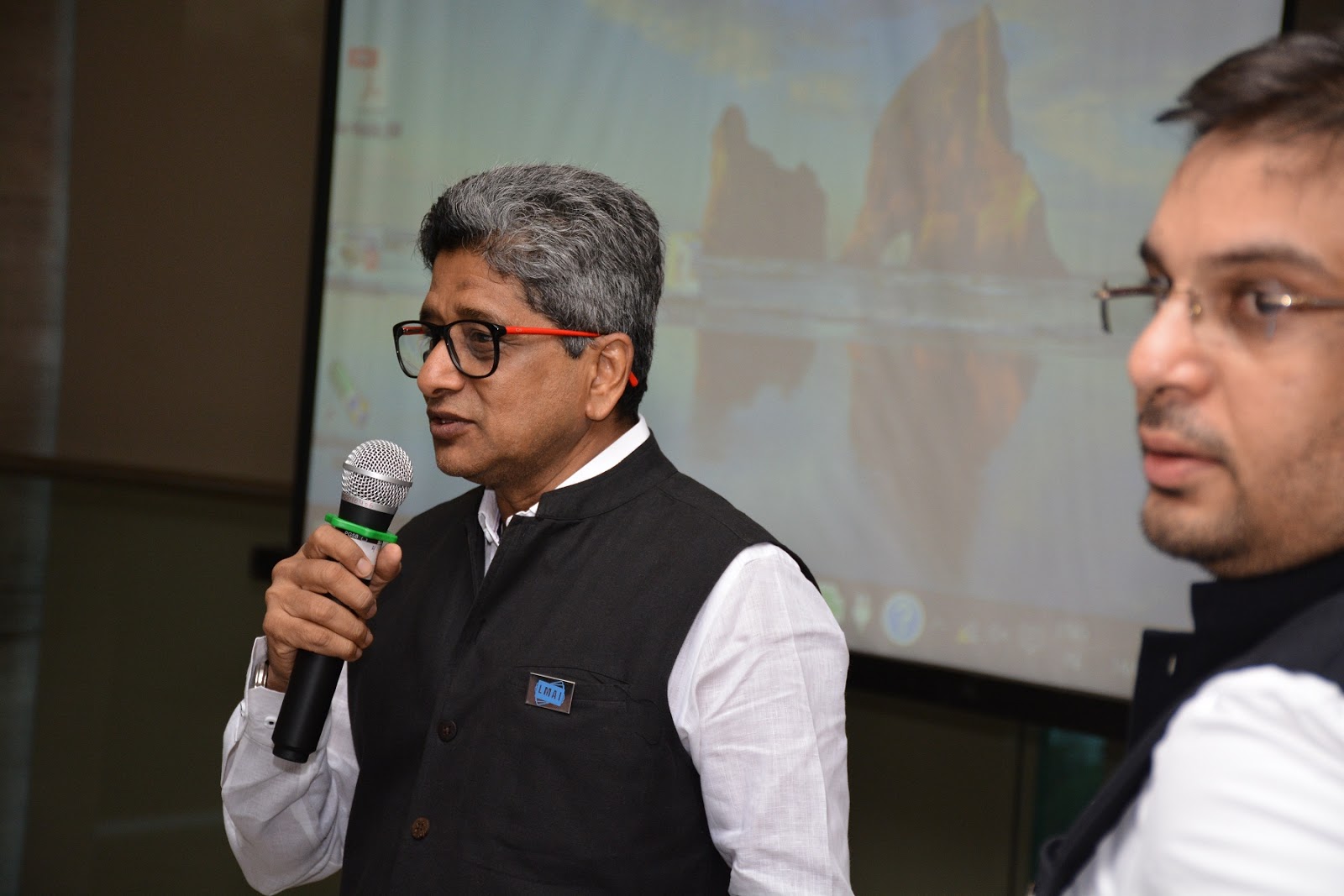
Finally Harveer Sahni of Weldon Celloplast conducted an interactive question and answer session. Starting with a discussion on blade height for different types of adhesives other topics discussed were reduction of waste in label production, impact on price of labelstock by supplying EXACT width not matching the deckle width,  impact of different climatic zones in the country on performance of pressure sensitive adhesives and avoiding wastages on a label press. Finally when the audience was asked to raise questions on wealth and estate management surprisingly there was absolute silence. Summing it up Sahni said, “It is a typical of Indian businessmen not to discuss their financial queries in public.”


Leading Printers who attended the program included delegates from Astron Packaging, Maharshi Labels, Letra Graphics, Pinmark, Art O Print, Unick Fix-a-Form, Nitai Labels and Ankit Graphics besides others. Media presence was from Print week, Packaging South Asia and Printing Samachar. Vote of thanks was given by Rajesh Nema followed by a networking dinner.


The above article maybe reproduced or published by magazines giving credit to author.
 

Written by Harveer Singh Sahni, Managing Director, Weldon Celloplast Limited, New Delhi, India May 2016