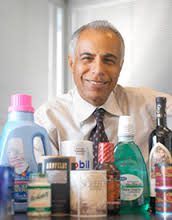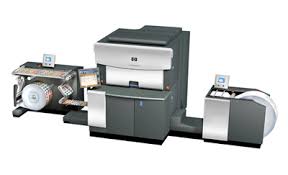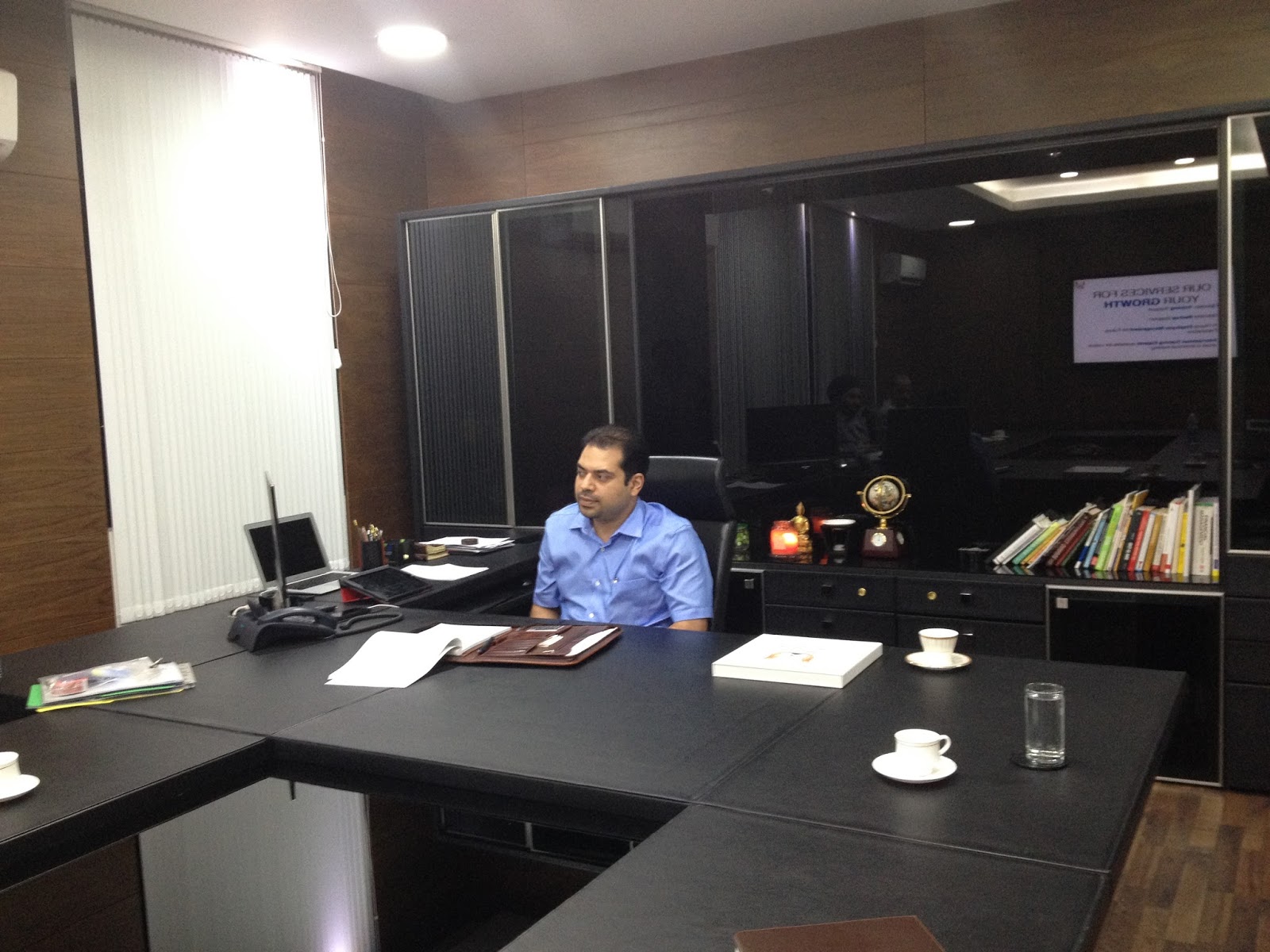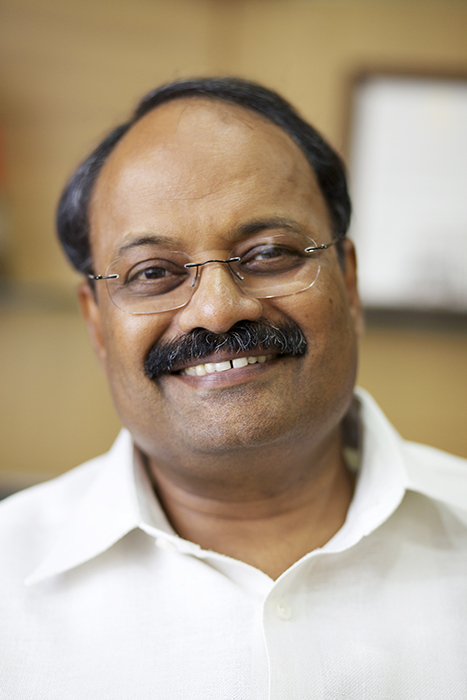
In the early 1970s Narinder Mohan Lal, his son Sandeep Lal and rest of the family left their home town Allahbad a city in the North Indian state of Uttar Pradesh to migrate to Toronto in Canada. Narinder Lal initially started trading in Labels and in 1974 setup a small label production facility in the basement of his home. Sandeep joined his father in business and by start of the new millennium he was put in the driving seat to lead Metro Labels to blossom into one of North America’s top players. In addition to the main 132,000 square foot Progress Ave.-Hwy 401 facility at Scarborough, Ontario, Canada, the 180-employee firm also has locations in Vancouver and Napa Valley. I had written about Sandeep in 2009 and later wrote again last year when they celebrated their 40th Anniversary http://harveersahni.blogspot.in/2014/08/this-is-very-interesting-story-of.html. Having reached a pinnacle, Sandeep Lal decided to sell his profitable and well managed company to Tapp Label Company USA. Recently Sandeep wrote to me explaining the reasons to sell and also sent the transfer of ownership speech that he had made to the employees of Metro Labels.
 
Indian label industry has in recent times witnessed some sell-offs and acquisitions. I am sure it will be interesting reading for the label industry about the journey of this company that was started from scratch to reach the top and then sold while it was very profitable. I reproduce both the documents mentioned above, unedited.
 
Sandeep's email:
 
August 30, 2015
 
Harveerji,
 
I promised to tell you more about the transaction and my reasons for the sale. I have attached a copy of the speech I made to the employees at the Toronto Plant one week before the sale was to transpire.
Starting in 1974 I spent two years working part time, in a sales role while I was studying at the University of Toronto, and then another 39 years at Metro Label, providing leadership for the last 14 years. After assuming the leadership I grew the business 14 fold and our profit increased over 40 fold. We chose not to share our numbers with TLMI and intentionally kept a low profile. Our business generated EBITDA of over 22% on sales for most of the last 15 years. Focus on Innovation, a determination to lead technically, appropriate environmental initiatives, a motivated and well trained team was the reason for our success.
The goal was always make a large range of products, to outperform our competitors on quality initiatives, on time delivery and overall performance matrixes while seeking markets outside the typical geographical areas that we were supposed to sell in.
I have listed below some of the things we did for over 20 years to differentiate and grow our business.
1     We led the marketplace by being one of the first, back in 1976, to have our own in-house rubber plate-making. This was followed by an art department and then typesetting equipment when most of this work was done at third parties. When the Mac’s first came out we were an early implementer and did our own films and photopolymer plates in house almost as soon as the technology was available. We were also an early implementer of in-house ink mixing technology in the late 1990’s.
2      Installed the first Customized Unix driven software solution in 1985. This fully integrated package enabled us to capture data off the shop floor and provide instantaneous updates on job status to clients. Order entry, inventory management,  Procurement, Job costing,  data collection, invoicing, Accounts receivables, accounts payable, GL were all fully integrated. This software was comparable to software that became available in the early to mid 1990’s. The efficiencies realized were unimaginable. We were able to outperform the competitors to service their business as a result. Just one of the efficiencies achieved was a large reduction in inventory. We turned our complete inventory 37 times per year. Average competitor gets 12-15 turns a year.
3      We were the third North American installation for Indigo’s very first digital platform back in 1995.
4      We achieved ISO 9001 certification in 1995.
5      We custom designed and installed equipment to integrate Radio Frequency and Electro Magnetic type EAS tags from Checkpoint & Sensormatic, on the adhesive side of our labels to assist retailers to receive products fro their suppliers with the tag buried under their Product identification labels. This was done at 175 feet at minute as many as 4 rows across on one of our presses in 1997
6      All water base and Solvent base presses were converted to UV by 1998, increasing quality, run speeds and reducing run waste and quality defects.
7      All presses had Video web inspection and UPC code verifications systems installed by 1998 to ensure that bar codes printed by us would exceed the UPC scan rate requirement of all major retailers. A statistical record was kept of the scans on press. At least one out of 6 printed labels was read/scanned.
8     We built the first LEED certified building in 2005 to house a Label company globally and won the Global environmental award for it from the Label industry along with awards from the FTA, TLMI, PAC and the city of Toronto.
9      We installed Solar Panels on the roof of Metro Label’s Toronto Plant in 2015.
 
There were many other innovations that would be tedious to list here.
We developed a reputation of being fearless and ruthless competitors who outperformed our competitors. Client loyalty was a by-product of our performance. Our margins were the result of our strong performance which enabled us to charge a small premium for our products and services.
I look forward to sharing the experience acquired through my successful business journey with my peers in the future.
 
Sandeep Lal

David Bowyer CEO Tapp Label Co.


Transfer of ownership speech by Sandeep Lal the former Owner/President of Metro Labels Toronto Canada.
 
It is my privilege to speak to you as a group one last time, as the principal shareholder of Metro Label.
When Narinder Mohan Lal my father started this business, our company was definitely an underdog in the label business. There were times when our competitors, suppliers, and sometimes even I, doubted our ability to get through some of the difficult times. Our business survived and prospered because Narinder Lal, my father, believed that our business would survive no matter what, and it did. Not only did it survive it grew and grew. Just like my parents my siblings Nandini & Raideep, my son Vikram, & I were motivated, to work hard and make Metro Label a success so that we may provide for our families.
My parents, Nandini, Raideep, Vikram & I were all fortunate that your personal journey included a career at Metro Label. Your personal motivation, support, work ethic and loyalty inspired us. It made us believe that anything was possible and it was. In the past at the pinnacle of our company’s success Metro Label was ranked the 14th largest company in North America and one of the most profitable. If the Tag and Label Manufacturers Institute had an award for inspiration and effort you all would have won that award many times.
I know that my assertive style and relentless push for excellence created much adversity within our organization. However by working together we set the benchmark for successful label companies in North America. I always did my best to ensure that we looked out for each of your needs. I know that we didn’t succeed at everything we attempted to achieve but it wasn’t for lack of trying.  I always pushed for each of you to reach down deep inside yourself and excel at whatever you were doing.  And you did.
To succeed you need motivated and inspired management with a vision, management which leads by example, and has the Zen like focus to keep all aspects of the business on a sound footing. Over the last few years I came to the conclusion that I was no longer motivated and driven as I had been in the past.
Like most entrepreneurs I had hoped that the next generation of our family would have an interest in taking over the business and provide the leadership. Quite possibly I did not allow that to happen in a way that was acceptable to them.
You have given this company your loyalty and unwavering support. I knew that you all deserved the same. After my much reflection, many sleepless nights, and the support of all members of my family it was determined that Metro Label, which is highly profitable, has an excellent reputation, motivated and loyal team members and a great client list, deserved new owners that would provide renewed leadership and focus.
We expect to conclude a transaction on June 30. What is important for all of you to know is that when you arrive at work on July 1/2015, all of our employees, including my nephew Curran, will continue in their jobs as usual and maintain their employment with the new owners, at this location, a place they have come to know. All employees will earn the same pay, maintain their benefits and seniority and continue to work in this location. Nothing will change.
The new owner has signed a long term lease to stay in this building.
Once the transaction is completed, Nandini and I will work with the new owners to transition the business over to them during the month of July.
I want to thank my father Narinder Lal for founding this business and for giving me the opportunity to run it. I want to thank my parents for their unwavering support and beliefs in my skill and judgement. Vikram and Jayanti for loving me inspite of the adversity and stress I brought home because of my work ethic, and desire to succeed. My deceased brother Raideep, my sister Nandini, and my son Vikram deserve a medal for doing what needed to be done and doing it regardless of what I said and how I said it.  Of all team members they suffered my wrath the most often, and were as responsible for providing the leadership to grow our business. I also want to thank my brother Jaideep for always providing his silent and financial support when needed. I would be remiss if I didn’t thank Meredith my spouse for all of her wonderful support and guidance.
Most of all I want to thank all of you. The company would never be what it is if you hadn’t treated it like it was your own. Last year at our 40th anniversary party I promised the Deferred Profit Sharing Plan(DPSP) payment would be made this year. We will fulfill my commitment to you by making discretionary contributions totalling $400,000 to your payroll accounts as our personal recognition of your support.  This will be our largest contribution in Bonus or DPSP ever. Many of the contributions have been supplemented by an additional discretionary contribution as my personal recognition of your support.
After the deal is completed, on July 1 I will personally introduce you to the new owners. 
 
Sandeep Lal
 
Reproduced and compiled by Harveer Sahni, Managing Director, Weldon Celloplast Limited New Delhi-India September 2015
 
Effective August 1, 2015, Loparex Group will assume 100% ownership of the India joint venture company, Kaygee-Loparex India Private Ltd.   
 
Mike Apperson, Loparex CEO comments, “We are delighted to add the world class manufacturing capabilities of Kaygee-Loparex to the global Loparex family. In addition to the assets, we also welcome an incredibly talented and dedicated group of employees to our Loparex team, which will synergize our ability to bring additional value, not only to our local India-based customers, but also to our customers throughout the world”.  
 
Apperson adds, “The addition of Loparex-India compliments our unique and continuing investment strategy and our long term commitment to serving the diverse needs of our global customers”. 
Established as a joint venture in 2001, Kaygee-Loparex is India’s largest release liner manufacturer. The state-of-the-art facility, located in Silvassa (near Mumbai), produces a wide array of custom-engineered silicone coated papers and films which support the diverse release liner needs of key industries including Medical, Tapes, Hygiene, Labels, Security, Composites and other industrial markets. 
 
In-house product development, combined with IMS Certification (ISO 9001:2008, ISO14001:2004 and OHSAS 18001:2007), practiced GMP, and robust quality management methodology ensure the highest standards of quality, efficiency, regulatory and EHS compliance.  
 
Loparex, the leading global supplier of release liners, also has manufacturing, product development and commercial operations in the US, Europe, China and Thailand.
In May 2015 I wrote on this blog that the verdict from the Indian label industry, after I had interviewed some leading printers was, “Digital for labels has to wait”. In the concluding part of my article I mentioned, “The time frame before digital printing becomes largely visible and used in label printing in India varies between three to five years.” 


Amar Chhajed Huhtamaki PPL-Webtech
I must here appreciate and commend Amar Chhajed of Huhtamaki PPL-Webtech labels for his foresight when he said digital printing in labels will become evident in 2-3 years. He said this in May 2015 and two years hence as we enter the third year since then, we note that some big time investments are being made in digital printing in labels. Digital printing in labels has been registering continuous growth in Europe, followed by that in North America. 


I and Adrian Tippenhauer MD Rako Etiketten
In my reporting on the last DRUPA, I had quoted Adrian Tippenhauer Managing Director of Rako Etiketten Germany. According to him the last 36 label presses acquired by them out of the 100s that they have, are all digital presses. If the Labelexpo-Europe and Drupa are indicators, the visitors to these shows can very well imagine the way forward. Digital was the most predominantly exhibited technology at these events. HP became the biggest exhibitor at DRUPA with an almost 5000 square meter hall showcasing their digital offerings.  Other leading suppliers of digital label presses were all there. The writing was on the wall that it would not be long before the trend starts to flourish in India. Indian label printers have been very cautious towards investing in digital printing of labels. However as they say, you cannot stop an idea whose time has come. When I researched and estimated the size of digital label market in India, the findings became interesting. By latest count the population of leading brands of digital label presses in India has reached 22 in number. This is besides the small low value small printers that some companies may have acquired. Now this is a fairly impressive figure when just a year back we had the industry largely saying that digital has to wait. Estimating the size of the digital label market I made some assumptions. The average width of the press was taken as 330mm (as widths vary from 250 mm to 370 mm), printing speed is calculated at an average of 30 running meters per minute, because it varies from 20 to 50 meters per minute for different brands and working hours assumed at 12 hours per day. This amounts to a total consumption in the industry for digitally printed labels of over 52 million square meters in a year. Self adhesive labels form the largest part of total label market which include besides self adhesive labels, shrink sleeves, wrap around labels, wet glue labels, in mould labels, etc. In October 2016 I had estimated the total Indian label industry size (mostly conventional) at almost 900 million square meters per annum. This translates into to almost 5.8 % of the total self adhesive labels in India to be printed digitally; conservatively we can assume the figure to be 5%.  This surely indicates that for digital label printing in India, the journey has begun!
 
In the last edition of LMAI’s magazine Label Legacy, Gautham Pai Managing Director of Manipal
Gautham Pai MD Manipal Technologies
 Technologies said, ““Digital printing offers a plethora of opportunities for both the suppliers and the clients. With the Indian market trending towards more customized products, a large number of brands, shorter TATs (Turnaround Times) and more ecologically sustainable solutions, Digital printing would prove to be one hallmark technology for the Label Industry.” Manipal Technologies has an HP Indigo installed at its subsidiary UPSL in Chennai. The deterrent so far for the label industry to invest in digital printing equipment has been the high cost of consumables and the end price to consumer including margins, as not being acceptable. However the evolving retail selling patterns and consumables becoming more affordable, the technology is now more relevant. As run lengths continue to shrink, short runs being more in demand and customization or personalization needs become imperative to modern day marketing; it is driving printers to think digital. Added requirement for variable data on the labels that helps companies to track and trace their products, brings about the compelling need to complement their analogue printing with digital printing. In words of Narendra Paruchuri of Pragati Pack Hyderabad who have installed an HP Indigo 6800, ““One of things that all of us must understand and appreciate is that both digital and analog will co-exist. Digital’s greatest advantage is variable data printing. Short runs are cheaper. So the areas are clearly ear marked.” Digital printing of packaging and labels is growing at an enormous pace in the western world. We have touched the tip of an iceberg; it will not be long before the trend picks up in India as well.
 
Sai Packaging team announcing Epson Surepress Purchase
The ease of use and consistency in print reached in this technology makes it interesting for established printers to indulge. Pravin Savla of J P Printers Mumbai is ecstatic that he invested in an Epson Surepress. He says, “I can print good quality on a variety of substrates using the computer to print capability. He caters to his customer base that demands short runs with so many design changes and is still profitable.” He further adds that reduced need of manpower helps him manage well with ample time on his hands. He says conventional flexo and letterpress technologies are time consuming and have hidden costs. Yet another Epson customer Arvind Shekhar of Sai Packaging Bangalore says, “We have had good experience for short run jobs defined as less than 20,000 labels for bigger size and 50,000 for smaller pharma labels and we have never had colour consistency issues with Epson.” Adding to the views of Narendra Paruchuri Arvind states, “I don’t’ see it as a standalone ROI (Return on investment). When you see increased sales on Flexo plus plate costs saved; then the ROI makes sense.” Denver Annunciation from Janus International, perhaps the very first label printer to install an HP Indigo label press says, “Yes the technology has evolved a lot and we are seeing the crossover point shift higher”. While those in the process of acquiring capabilities in digital remain tightlipped yet others like Raveendran of Sel Jegat Sivakasi, Manjunath of Global Printing Bangalore and Rajesh Nema of Pragati Graphics Indore say they are studying the technology and will invest in the near future.
 
 
While calculating the number of digital label presses in India, I have not taken into account the
presses that are not operational. Out of the 22 presses, the bulk of the share goes to HP Indigos that employ Electro Photography as a process to print, which is similar to offset printing using liquid inks. Electro photography and inkjet are both improving in quality and speed, there evolution and further developments are challenging the dominance of other printing processes like offset, wide-web flexo and gravure. 13 presses amounting to 59% of the total digital label press installations in India are HP indigo. This is followed by 5 Epson SurePress L-4033AW that use water-based inks and is suitable for segments such as pharmaceutical, cosmetics and food, amongst others. The press uses a seventh white ink to print the transparent no-label look, as well as metallic labels. The opaque white printing on materials, such as clear film and metallic substrates, has the flexibility of printing white first or last. Epson accounts for almost 23 % of the installations, 2 Xeikons account for 9% and one each of durst and EFI accounting for 4.5% each.
 
59% of all the digital label presses installed are in the West Zone, 23% in South and 18% in North. Out of the 13 HP Indigo label presses working in India, 7 are installed in the west zone. One at Janus International Mumbai, 1 at Diadeis Alia (formerly Alia Creative Consultants) Mumbai, 2 at Astron Packaging Ahmedabad, 1 at Essel Propack Mumbai, 1 at Trigon Digital Mumbai and 1 at Skanem Interlabels Mumbai. 4 HP Indigos are installed in South, 1 at Pragati Pack Hyderabad, 1 at Pravesha Hyderabad, 1 with Huhtamaki (SGRE Labels) Bangalore and 1 at Manipal Technologies (UPSL) Chennai. 2 of the HP Indigos are in North. 1 at Hora Art Centre NOIDA and 1 at Moser Baer Noida (working). Out of the 5 Epson Surepress preses 1 is installed in South at Sai Packaging Bangalore others are in the West zone with 1 at Trigon Digital Mumbai, 1 at J P Printers Mumbai, 1 at Syndicate Printers Goa and 1 with a customer in Pune. Of the 2 Xeikons installed, one is with Huhtamaki PPL-Webtech Labels in Mumbai and one with Kwality Offset New Delhi. The only EFI Jetrion installed is with Reynders in Chopanki in the North and the only Durst is with Astron Packaging in Ahmedabad. I have accounted for most of the recognized brands of digital label presses in India.
 
Hemanth Paruchuri of Pragati Pack


On further evaluation of data compiled by me 9 out of 20 i.e. 45% of the companies who indulged in digital label printing are either multinationals or corporates and the rest 11 are family owned businesses. It is interesting to note that at least 7 out of the 11 companies have the young generation-next either in command or actively involved in day to day affairs of the company. So evidently it is the corporate mindset or the youth that is driving the march into digital printing of labels in India.


Written by Harveer Sahni, Managing Director, Weldon Celloplast Limited, New Delhi India May 2017 email: harveersahni@gmail.com
 
India has been termed as perhaps the fastest growing market for printed products in the world. According to the NPES/PRIMIR World Wide Market for Print study, published by the Economist Intelligence Unit, “the size of India’s print market will be USD 29.3 billion in 2017 up from USD 24.3 billion in 2014. Print market growth in India has slowed down since the global financial crisis, but the market will continue to grow over the period through 2017; total print product revenues in India will grow at 6.8% annually through 2017”.
 Digital printing accounts for 15% of all printed products globally. However, as for India, given the late start and slower adoption of new and fast changing technologies by the cautious print fraternity, even if we make a moderate estimate, the market size for all the digital printed products should be within USD 3-4 billion. This is my personal estimation but if I take predictions and estimation of industry leaders, it appears to be relatively accurate. Pankaj Kalra of Xerox stated in 2012, that “the size of the digital printing market is estimated at USD 1.5 billion now and is expected to grow to USD 2.5 billion by 2012-13”, clocking a whopping 70% growth! The packaging and label segment account for over 40% of the total printed products in India and the segment is growing at 15% against a global growth rate of 5%.
 
Middle class and cultural diversity as growth drivers
Most of the growth is expected or is coming out of the bulging middle class in India. It is a consumer
 
 
segment that is turning out a literate and young workforce with disposable income and a long residual working life indicating stability. This young workforce is exposed to the internet and wishes to indulge in modern day retail spending, driving amazing demands for consumer products and also for labels and packaging.
India is a large country having a population with diverse cultures and religions. In addition, similarly different cultures have different festivals. Retail marketing professionals are formulating ways to tap the selling opportunities such occasions offer. It is at this time customized short runs become the need of the hour. The print on demand capabilities of digital printing provides the perfect solution to such requirements. Consumer product companies can offer limited edition packs with regional festival branding. It is one such example of things that are driving that tremendous growth into digital printing in India.

The impact of digital printing
While digital printing has made its impact in the Indian sheet fed printing arena, yet it still does not have many takers in the narrow web label printing. Most of the established offset printers have more or less enabled themselves with digital capabilities for not just proofing but also to cater to their customers who need short run jobs. Otherwise customers would start looking elsewhere to get short runs done. Customer retention is a very important requisite for successful print firms with large capital investments. They cannot afford their customers to go to other printers for short runs as this way they are liable to lose their bulk business as well.
The reason for small digital printing companies for sheet-fed mushrooming all over the country is that most of the large offset printers are still focused on their high volume customers and they acquire some digital capabilities to address the needs of existing customers. The smaller consumers needing just the short runs, have created a demand to cater to this need, small digital printing outfits have come up in colonies and markets in all big cities in India.
I believe sooner or later the bigger players in the organized segment will indulge in tapping this market in an organized manner offering services at the smaller customer’s door step on demand. Obviously these are game changing times and that is what makes the Indian printing stalwarts go on the defensive. The sheer ever changing and evolving nature of electronic technologies makes them apprehensive. They fear their equipment will become obsolete before they can say they got their return on the investment.


Personalities interviewed;
 
Narendra Paruchuri-PragatiPack Hyderabad
Gautam Kothari- Skanem Interlabels Mumbai


Rajesh Nema, Pragati, Indore
 
Amar Chhajed- Webtech Labels, Mumbai


Vivek Kapoor-Creative Labels, Mumbai


This article is  exclusively written by Harveer Sahni, Managing Director Weldon Celloplast Limited, New Delhi India for Narrow WebTech Germany in May 2015 The article should not be used or published without the permission of Narrow Web Tech Germany. Should you wish to reproduce, please contact the author or editor Narrow Web Tech
Over the last seven years Printweek Awards have gained immensely in respect, stature and value for delivering recognition to outstanding work in Print. The Printweek team lead by Group Editor Ramu Ramanathan has painstakingly worked to make these, as one of the most prestigious awards in India. The real value comes from selection of an eminent and learned jury; a line-up of big-name print buyers, who not only ensure but also measure the consistency of work submitted. They also check financial performance and business strategy so as to provide inspiration to new and young entrants into Print. Getting dedicated and committed creative printing companies to send in their master creations in print as entries is in itself a gigantic task which the Printweek team accomplishes with hardcore indulgence. The standard of work that has come in as entries for these awards over the years has continuously seen a escalation in quality of print and finishing processes employed by printers who continue to master the latest technologies in printing, converting and finishing.
 
Ramu Ramanathan
Printweek has been successful in bringing together the printing industry across the Nation through
their publication and driving in, a culture to achieve excellence in print. It is heartening to see them touching base with printers of all size and catering to all segments in printing in remote corners of India. They have created categories that cover almost all technologies like Offset, Flexo, Gravure, Screen, etc and to segments like commercial printing, packaging, POP, advertising and Labels. Bringing together such a large collection of printers under one umbrella is laudable. What is more interesting is that they also honour students who excel, while still learning the skills of high quality printing. They are the future of print! This connect will surely be the long term bridge between those who create masterpieces in print and those who bring appreciation and rewards to printers.
Anygraphics receiving the Printweek 2014 award.
Education, advertising and packaging still rely heavily on the printing quality and innovation. It is at this time an imperative, for those who are making an entry into print or those who are trying to find avenues to profitability and success, to actually dwell on innovative creations.  I would like to suggest to Printweek to institute an award for that one printer in the country who invested in some new technology or developed a new technique or a product that was so far not there, thus creating awareness in need to take the printing industry in India to another level.
PrintWeek India Awards has announced entries open from  1st  May 2015  for its seventh edition of the annual print hunt. The entries are open to all Indian  print companies for jobs printed  from 1st  April, 2014 onwards. Like each year, the awards are categorised as the Performance Awards ( 6 categories) and the Quality Awards (20 categories).
 
THE PERFORMANCE AWARDS
1.    PrintWeek India Printing Company of the Year
2.    Green Printing Company of the Year
3.    Post-Press Company of the Year
4.    Pre-Press Company of the Year
5.    SME Printing Company of the Year
6.    Student of the Year
 
THE QUALITY AWARDS
1.    Book Printer of the Year (Academic and Trade)
2.    Book Printer of the Year (Specialty)
3.    Brochure & Catalogue Printer of the Year
4.    Creative Repro Company of the Year
5.    Cross Media Company of the Year
6.    Digital Photo Album Printer of the Year
7.    Digital Printer of the Year
8.    Direct Mail Printer of the Year
9.    Fine Art Printer of the Year
10.  Industrial Product Printer of the Year
11.  Innovative Printer of the Year
12.  Label Printer of the Year
13.  Magazine Printer of the Year
14.  Newspaper Printer of the Year
15.  Packaging Converter of the Year (General)
16.  Packaging Converter of the Year (Luxury)
17.  PUR-Book Maker of the Year
18.  Screen Printer of the Year
19.  Social Stationery Printer of the Year
20.  Wide-Format Printer of the Year
 
Early Bird Deadline –  30 June 2015.
Early Bird Entry Fee –  Rs 2000 per entry.
Deadline – 31 July 2015
Regular Entry Fee – Rs 2500 per entry.
Latest updates and entry forms will soon be available on the PrintWeek India Awards website.
For further detail write to printweekawards@haymarket.co.in or call 022 43025016
 
Written by Harveer Singh Sahni, Managing Director, Weldon Celloplast Limited, New Delhi, India May, 2015

The above post maybe reproduced by giving credit to author.
 
 
LMAI team at first 2011 conference
In the chronology of self adhesive labels in India, July 2011 will go down as one of the most important historical times when the first LMAI conference was held at the picturesque Park Hyatt Hotel in Goa. The longest serving President of LMAI Vivek Kapoor and his team had targeted a delegate strength of 125 but the event was so successful that the final count was 270! Rooms fell short and delegates had to be accomodated at nearby hotels. We were in the initial stages, not sure if another conference will be held later and when. However in the end of the conference the decision was unanimous, it has to be a regular biennial event and so it is. Report of the event with pictures is available on this blog at  http://harveersahni.blogspot.in/2011/08/lmai-conference-innovations-unlimited.html   
Labelexpo team at the 2013 conference
Two years on in July 2013 the Indian Label industry was back in Goa with a bang, this time at the Grand Hyatt, a much bigger venue than the Park Hyatt as a larger gathering was expected. True to expectations of the LMAI team the number of delegates crossed 390, a commendable job. World class entertainment was delivered after learned speakers had shared their knowledge with the delegates in an extremely focused conference. My report on this event as well is available at http://harveersahni.blogspot.in/2013/08/rocking-at-goa-indian-label-conference.html. At the last LMAI conference  there were murmurs that the venue needs to move to another destination but there were many who were adamant that it should remain in Goa. As time elapsed the murmur in Goa became louder leading to a decision to move the conference northwards to a heritage city in Rajasthan. Finally it was decided to hold the conference in Jaipur.
 
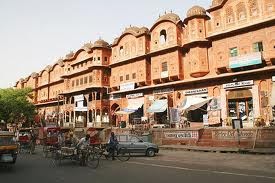
Jaipur the capital of Rajasthan state in India was founded in 1727 by Maharaja Sawai Jai Singh II, a Kachwaha Rajput, who ruled Jaipur State from 1699-1744. Initially his capital was Amber, which lies at a distance of 11 km from Jaipur. He felt the need of shifting his capital city with the increase in population and growing scarcity of water. Jaipur is the first planned city of India and the King took great interest while designing this city of victory. According to that time, architecture of the town was very advanced and certainly the best in Indian subcontinent. In 1878, when Prince of Wales visited Jaipur, the whole city was painted in Pink color to welcome him and after that Jaipur was titled ‘Pink City’. Still, the neat and broadly laid-out avenues, painted in pink provide a magical charm to the city. Jaipur is rich in its cultural and architectural beauty, which can be traced in the various historical and aesthetic places that reside in the city. This city of victory really wins the hearts of the people with its splendid charisma and heritage.
 
LMAI conference is slated to be held in Hotel Fairmont in Jaipur on the 16th, 17th & 18th of July 2015. Fairmont Jaipur is an ode to the pink city through awe inspiring architecture and decor, inspired by the Mughal Dynasty and Royal Rajputs of yore. This luxury Jaipur hotel is nestled amongst the majestic Aravalli hills, all 199 rooms and suites are elegantly appointed, to reflect a perfect blend of traditional Rajasthani décor and modern amenities. Over 400 delegates consisting of converters, material suppliers, consumable suppliers and press suppliers are expected to congregate at the conference venue. The event promises to deliver value in terms of knowledge, networking and entertainment. The industry constituents are already excited to share the good times with colleagues. Expecting a shortage of rooms the LMAI management has also made arrangements in hotels nearby.
 
Vivek Kapoor
Commenting on the event, LMAI President Vivek Kapoor says, “Over the years, the LMAI Conference has become an important platform for addressing various industry issues. This year we have increased the duration of the conference from two days to three days to ensure that the delegates, who travel from around the country and world to attend this event will get ample time to network and conduct B2B discussions”. Chairperson of LMAI 2015 Conference, Guraraj Ballarwad says, “The label industry in India faces significant challenges in this ever changing dynamics of label manufacturing and it is necessary to identify changing trends that help gear the Indian industry to meet those challenges.” Leading printers and Industry stalwarts have also expressed optimism and excitement at this forthcoming event. Sanjeev Sondhi of ZIRCON TECHNOLOGIES INDIA LTD. says, “This conference is an excellent platform for label fraternity to sit together and look for ways and means to make this industry more vibrant in terms of technology, operations and improving profits”. In South India, Sivakasi based Seljegat’s Raveendran feels that while industry events like this conference is a good occasion to network and share experiences with peers, yet he says, “The content needs to be more wholesome. Instead of just the sponsors making speeches, it would be better if we have neutral speakers who can shed light on the way forward.” He further adds, “Label Printers would like to dwell on what direction the label industry is moving globally and the impact of multi process printing and converting equipment in enhancing capabilities to develop specialty labels. This will help them make investment decisions”.

Finally the young Chandan Khanna heading multi-location Ajanta Packaging having multinational presence with units in Daman(India), Baddi(India), Thailand and Ajman(UAE) sums it all. He says, “The LMAI conference, which comes once in two years is an event that personally I try and ensure I attend. The presentations, open panel discussions, the getting together with your peers and industry suppliers in a relaxed environment is good for all industry constituents. I feel, positive changes occur from the networking whereby all in the industry stand to benefit. It is a must meet event. I am looking forward to being at the conference”.

With excitement building up and registrations coming in at fast pace, the LMAI conference promises to deliver value and fun in the heritage pink city of Jaipur. I look forward to an august gathering where competitors, suppliers and customers will rejoice togetherness!

The above article maybe reproduced by magazines giving credit to the author.

Written by Harveer Singh Sahni, Managing Director, Weldon Celloplast Limited, New Delhi, India April 2015
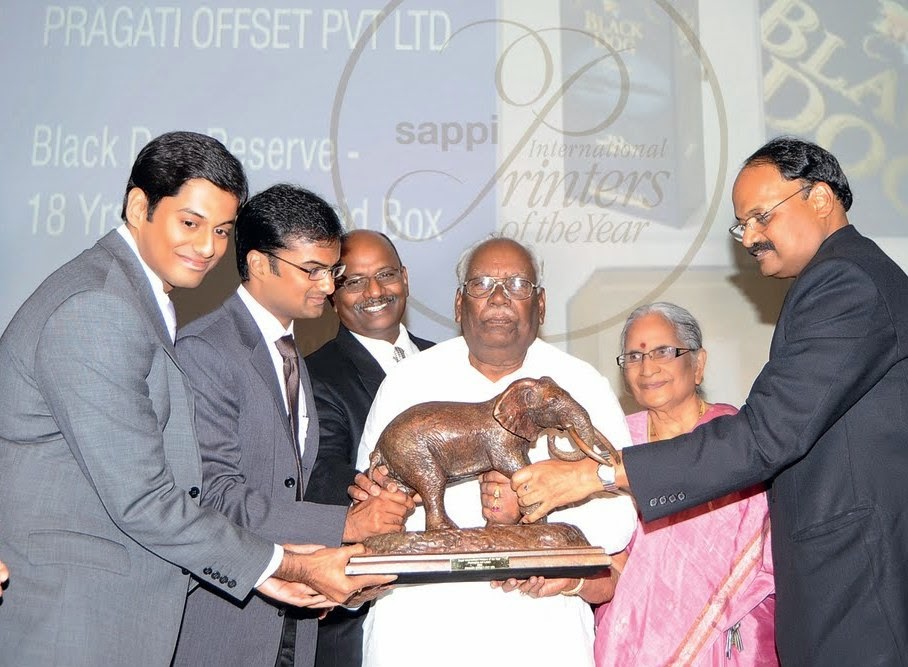
Hanumantha Rao, the founder of Pragati Offset who passed away peacefully on the 2nd of March, 2015 was a man who grew from grass root level and became a legend in his lifetime leaving behind a legacy for his enterprise to excel in print and for generations to follow! The inertia for growth that originated with inception of the enterprise by him, has not only been carried forward by his two sons and grandchildren but has actually received further impetus from their passionate dedication to print. When I visited their home in 2011, it was indeed a very warm and eye opening experience for me. It was an ideal situation, with family bonding and respecting traditions. There, I found the true meaning for, “Athithi Devo Bhava”(The guest is like GOD), this; from the respect that the family bestowed upon me and my son Pawan that evening. I too come from family owned business but this was class! Four generations in the same room in perfect unison. Hanumantha Rao’s grand children were playing around while I enjoyed the evening with him, my friend; his son Narendra Paruchuri and his grand children. Hanumantha Rao took immense pleasure in telling me that his great grand children accompanied him to the press some afternoons after school. This was amazing foresight this man had, motivating the fourth generation as well. I am always sure that this enterprise will stay indebted to its founder in laying the path to continuous growth and excellence by personal indulgence!


On the 1st of September 1962, Hanumantha Rao who after completing his BA Hons. (philosophy), a short stint as a journalist with Visala Andhra and five years as manager of Sarathi Cine Studios also doing small roles in films out of which some even with the late N T RamaRao, set up a small printing press with one treadle press and three workers. The three men that he employed were a binder, a composer and a machine man. Surprising as it may sound two of these men are still associated with his company even after almost 50 years, though only in advisory capacity.


Hanumantha Rao had some basic knowledge of printing from his time spent at printing detective novels written by his friend Narayana Rao in Chennai. Also he was a quick learner and does not shy from saying that he learnt and grasped well from his otherwise trained workers. He fondly remembers the first job he printed was a folder with Ganesha on it! The first big order that came his way was the 1973 voters list. Thereafter it was always the way ahead to be traversed and soon he bought his first offset press, a second hand single colour OM-4 Russian Offset Press. He vowed to be a quality producer and set standards that would be the way forward for his company. The foundation had been laid and the journey into excellence in printing had begun. It was time to induct more working hands in this business.


The ensuing generations of this family are not resting on their laurels, they strive hard to retain the saga at Pragati, “Winning awards for print excellence, is a way of life for them!”


Author: Harveer Sahni, Managing Director Weldon Celloplast Limited New Delhi March 2015

Converting process:


Designing a label is a designer’s job, passion and creative indulgence, but converting it into a label that will deliver the envisaged results of communicating with the consumer, is the job of a label converter.  If, as I mentioned in the earlier two parts of this series, the designer has taken care of the converters capabilities and challenges, the result is close to being as desired. However, if at the designing stage the eventual converting process is not revisited, converting may become a nightmare and may call for more time and involvement to make changes in design. Let us consider a label that is not one of the regular shapes like a square, a rectangle or a circle. If it is a like a star or an odd shape with sharp corners, it will be a challenge to die cut the labels slowing down label conversion, bringing up the cost of label. In such a situation label dispensing may also become erratic. Such label presses are now available with many label printers that die-cut and remove waste matrix of  complex shaped labels while converting but then these options are not available with all venders. The designers need to consider ease of conversion and dispensing. Sometimes designers tend to create labels in the shape of objects like a flower, a dumbbell, a butterfly, a bird or even like a falling drop. These shapes will either be difficult to die cut and will substantially slow down the label press during conversion. I am not suggesting that such shapes should not be indulged in, but on the contrary if the product and its marketing warrant’s it so and can support a higher conversion cost, it may even become a necessity to create such complex labels. At times when it is an innovation being created to reach out to a specific customer segment, the challenges in conversion and speed must take a back seat. Die-cutting in label conversion in-itself is a very exhaustive topic and an intricate technology which is beyond the purview of this article as we are dealing with the life of a label from concept, design, and conversion to its final resting on the product and its performance there from.


Brand Promotion:


Any brand from inception onwards, in its journey to success keeps gaining value as it reaches out to the product’s targeted audience. Label is one part of the package that contributes towards the brand promotion from the word go! The aesthetics and the decoration part have been dwelled upon earlier in this series, yet a very important part of the label is brand promotion. While the aesthetics and decoration of the label tempts the consumer, to impulsively lift the product off the shop shelf but it is the brand promotion in-built into the label that will bring the customers back to make a repeat purchase. A product may have been created with lot of skill and effort to be the best buy for the discerning consumer. Its commercial success will depend not only on repeated purchase by the impulsively indulgent buyer but by his spreading the message by word-of-mouth to others about the product. The information on the label should communicate the strength and reliability of the manufacturer. The label should deliver a message that the brand is “value for money” bringing appreciation from the judicious buyer who inadvertently becomes the brand’s ambassador. It is easy to mimic successful brands, but one must realize that the learned and well-informed consumer is quick to recognize a copy. I refer to this issue of duplication later in this article. The label needs to communicate the research and effort being put into creating the product to meet the emotional and aspirational requirements of the users. The label and eventually the product itself must communicate that it will add to the stature of the user. The message on label in the shortest form, given the limited space, is required to be conveyed emphatically and should be very strong and bold in branding! The content on the label is necessarily required to create an aura promoting brand recall. One must be mindful of the preferences and sensitivities of the target audience that could be children, young people, males, females or the elderly. The brand promotion capabilities of the label will create a communication link between the product and its consumer thereby establishing a channel for successful sale of the product on an ongoing basis. Often sales promotion is also incorporated in the label like free extra quantity or freebies with each purchase but here a word of caution is to be remembered, one should not confuse brand promotion with sales promotion. Brand promotion is a priority for building stature and value of a brand in the customers mind while sales promotion is a temporary step to give intermittent boost to sales. While brand promotion brings long term gains, sales promotion gives shorter gain.


Brand Protection:


As brands attain popularity and grow driving-in more revenue, another set of people wanting to make quick money by cashing in on the value of these brands, start to create look-alikes, duplicates and counterfeits. The innocent user falls prey to such unscrupulous elements by buying these non-standard products. They are exposed to dangers of being harmed by usage of such spurious products. Consumer is unable to judge whether the product is duplicate or the original product sold by the brand owner is of inferior quality. The brand is likely to suffer in value and reliability for no fault of theirs. The menace of counterfeits has attained gigantic proportions. According to a report by “The Organisation for Economic Co-operation and Development (OECD)”, Trade in counterfeit and pirated goods has risen steadily in the last few years – even as overall trade volumes stagnated – and now stands at 3.3% of global trade, according to a new report by the OECD and the EU’s Intellectual Property Office. Trends in Trade in Counterfeit and Pirated Goods puts the value of imported fake goods worldwide based on 2016 customs seizure data at USD 509 billion, up from USD 461 billion in 2013 (2.5% of world trade). 


It has become an imperative to incorporate security features in labels and packages, as a part of brand protection keeping in mind that all brand protection features need to facilitate brand authentication as well. What good is a security feature if the user cannot verify its authenticity?  Holograms have been used for quite some time and they have a high level of security in them but in recent time holographic labels without security features but resembling the original holograms have made it difficult for the consumers to differentiate between the original and fakes. The topic of security is large and needs to be dwelled upon separately, however still I emphasize that security features need to be considered while designing labels for leading brands. These may be tamper-evident labels, labels with micro texting, thermo chromic inks, invisible inks, holograms and labels with special printing effects that help in brand protection. Building-in security or anti-counterfeiting features in labels and the packages is an exercise that needs to be revisited by brand owners and by label designers from time to time. If the label security features have not been reviewed for long, it is possible that the counterfeiters will develop something resembling it. It is a known fact when referring duplicators, “If someone can make it, there is someone who can fake it”


Innovation:

Consumer is the king! It is a famous quote, I would modify it a little and say, Consumer is the king maker!” If consumers approve of a product, it could deliver fortunes to the brand owners. So, to reach out to these king makers, the brand owner must innovate both in the package and label design. One sometimes wonders what innovation one can create in a label. A small patch of label that carries the brand and its information, can be decorated as mentioned earlier in this series with foiling, embossing, varnishing, lamination and die-cutting in various shape. However, in an effort to catch the consumers fancy, labels must have innovations as per the label segment they cater to. A food product label is created with a natural effect where you can see and feel the texture of the label. Portraying freshness, a leaf or a flower may be created to exhibit water droplets that one can touch and feel. These are accomplished by using diverse printing and processing technologies on their combination presses. Development of such labels is the outcome of creative capabilities of innovative label printing companies. I quote some of the innovations that I have seen in recent times;


Consider a wine label; Wine enthusiasts like to know about the wine before indulging in it. They wish to know the quality of grapes used for making that wine, the region and the terrain where the grapes came from. The label is made like a book to be read! One cannot put all this information on a single label, so labels are produced like a small booklet affixed to the wine bottle.


The hazards of using infected syringes, has been highlighted for long to curtail the spread of infection. There is an imperative need to dispose-off the used needles safely. I visited the Schreiner facility in Munich Germany, some time ago and was shown labels where after use the needle is broken on to a plastic trap which forms a part of the label on disposable syringe. These traps are then sent for safe treatment and disposal.


Another interesting example is a label created for the Heinz tomato ketchup pack. On one side if you open the pack, ketchup can be squeezed out like it is done from a regular bottle. However, if there is need to use the ketchup as dip, one can peel off the entire label by pulling the tab on another end to expose the ketchup and get a feel as if it was in a bowl.


Other innovations are like a safety temperature indicating label on cooking gas cylinders that would change colours to indicate safe temperatures or Braille labels on wine bottles for the physically challenged blind who also like normal people enjoy their wine and will like to read the information as wine lovers.


Summary

Label printing and converting technologies continue to evolve and I have written about the different processes on my blog where a lot of information is available. The printing that initially surfaced as letter press, moved over to flexographic printing followed by stand alone or hybrid presses incorporating combination of flexo, digital, screen, offset Rotogravure printing and diverse embellishing process like hot-foil, cold-foil, UV varnish, embossing, debossing, front and back printing all done in a single pass. The packaging development specialists now need to be well versed with all the technologies and processes. In this three-part series, one can see the journey of the label from concept to its life on the product after application. It goes through a technical life cycle interacting with diverse technologies from design, to printing, conversion, dispensing and life thereafter. Each of the technologies that the label encounters in its life cycle including the chemical, mechanical and physical properties is a science it itself. Before concluding we must keep in mind the end-of-life waste management while creating a label or package. The whole chain of persons who contribute to the life of a label are a team who eventually rejoice in the success of a product that adorns a label they created.

The complete 3 part series are accessible at the following links;

https://harveersahni.blogspot.com/2014/09/the-life-of-label-i.html

http://harveersahni.blogspot.com/2014/12/the-life-of-label-ii.html

https://harveersahni.blogspot.com/2022/02/life-of-label-iii.html


Written by Harveer Sahni, Chairman, Weldon Celloplast Limited, New Delhi-110008 India, January 2015 and updated in February 2022

A close look into label creation and development


India • In part one of this series of articles the author referred to the general importance of labels. Part two deals with the imperative, that the label design has to be a parallel creation when the package is being designed.


In the part one of this series, I wrote about the importance of label. It is however an imperative now that the label-design must be a parallel creation when the package is being created and designed. In earlier times one would just decide on a container depending on the product being a liquid, powder, or a product. If it had to be a bottle, it would either be glass or plastic and then the shape would be thought of. For cost effectiveness some products would go into printed or unprinted LDPE or PP bags. If the product is a solid one, it would probably end up in a paper-based package like a carton. A bottle would get a simple screw-on cap and then the rectangular label would separately be designed to adorn the package. The labeled bottle would again go into a mono carton and then into a corrugated carton. While the basics appear the same but modern-day technological mindsets have undergone a sea change on how to go about creating a package and its labels. Now extensive brainstorming is done before creating primary packaging on issues such as product chemistry, its construction, shelf life, usage, lifespan, aesthetics, convenience of product delivery from the package, product decoration on the label, communication capability of the label with the consumer with ease, value building for the brand; its enhancement, protection and its authentification, security features, pricing information, manufacturing/expiry dates, bar coding, etc.  With evolution, growth of consumerism and increased retail selling; packaging waste is also now generated in gigantic quantities. So, for this reason each of the above considerations, the recyclability, waste disposal and sustainability must be kept in mind at every stage of package design.


 Package:


Packaging design needs to start in reverse from the farthest end in the life cycle of a product with consumer as the end user in focus all the time at each stage. It is the consumer for whose attention and impulse to buy and comfort to use, the package is designed. One would imagine that once the product has been bought and has been used, its life cycle has ended. However present-day environmental obligations compel us to start our planning on how the packaging waste will end up, whether it is bio-degradable, or recyclable or reusable. So obviously the planning to create a package must begin with the end consumer and environment in focus at each stage. Now at the very outset we need to study the product that we have to package. It could be liquid, powder, or an appliance. It could be a chemical or a food product. Let us for the purpose of understanding the designing process consider packaging of perfumed hair oil. Large scale bottling of lubricating oils and cooking oils is done in HDPE (High Density Polyethylene) containers. HDPE is known to be somewhat porous and on long storage for months, oil seeps to the surface. Since the lifespan is short and since the lubricating oils are on shelves of gas stations before they are opened and used up, not much attention is given to the slight porosity. Similarly cooking oils are stored in cooking cabinets away from sight again it is not of much consequence. However, in case of perfumed hair oil which has to sit on dressing tables; first the porosity can make the bottle look greasy and dust attracting over long storage and secondly the perfume will gradually evaporate degrading the product. For this reason, the material of the bottle must be carefully chosen. Aromatic liquid preparations and volatile liquids like nail polish remover when packed in HDPE lose their aroma and lose levels due to evaporation. For this reason, PET becomes the preferred material for such packaging. Glass would be an ideal material and with full recyclability as it provides the best shelf life but due to the weight and its fragile nature, plastics are preferred. Similarly, when we decide to opt for flexible packaging, tin packaging, glass packaging, paper-based packaging etc., we need to dwell on how the chemistry of the product will react and stay well in the selected packaging materials. The shape of the package must be made attractive but at the same time convenience of use is importance. In case of lube oils, cooking oils and milk packaging the neck is moved to one side to facilitate pouring. Also, in bigger packs handles are molded-in to provide ease of lifting to the consumers. Additionally caps with pouring devices inbuilt or pumps are also used to make dispensing a pleasure. Once the material of the package has been selected the shape has to be created and it should keep in mind the behavior of the stability of the package on the packaging line during high-speed filling, capping and labeling process. Space needs to be provided for labels and their position, also ensuring that the label will easily dispense to be positioned correctly. The size of label should also be such that it takes into account the label printer’s press width with minimum waste matrix and deckle wastage to achieve cost effectiveness. The shape of the package should also be such that it can be placed and transported with ease and safety in secondary and tertiary packs. Another point for consideration is to provide the space for applying tamper evident label or seal wherever necessary. Most liquor bottles require government seal to be put on caps, but the uneven surface makes firm anchorage of the self-adhesive seals a challenge leaving room for tampering.


 Label Design:


\As I said label has to be in mind all along. It is the communicating arm of the product. It actually becomes the one part of the package that attracts the consumer’s attention, tempts him or her to lift it off the store shelf and then becomes the communication link between the manufacturer and the buyer. At this time, it does the job of being the best salesperson that the company has. It has the consumer’s focused attention there on. It is thus that it becomes the all-important part of a package. The self-adhesive label’s journey starts at the label stock manufacturers plant and meets the label designer’s ideas in the pre-press department, gets decorated and converted on the label press of the converter. Finally, it meets and is united with its life partner, the package at the product manufacturers packaging line. Hereafter begins the harsh journey experiencing product handling by different people, usage and facing diverse environments. The labelstock consists of primarily three components i.e., the release liner, the adhesive and the face material. Each component has to be in the mind of the package and label designer. Even though the release liner ends up in the waste dump, yet it is the most important part of the label converting and dispensing operation. The release levels will ensure speed of conversion and dispensing. 


If the release level is too tight then the waste matrix will keep breaking adding to down time and it will not dispense labels well. Also, if the waste matrix is too thin it will also amount to matrix breakages. On the other hand, if the release level is too easy then the smaller labels will lift with the matrix and may fly off at the label dispensing line. The designer needs to select a size that will not add to waste yet provide a waste matrix that will lift easily and will help in faster conversion. Finally, the liner, if it is paper, is adding to a gigantic waste problem as proper recycling facilities are not available. A filmic liner is thinner, decreasing the tonnage of waste generated and it is also recyclable. As for the liner to be used and the release level the stock manufacturer needs to be taken into confidence. Largely the optimum release values set by coaters, work across a very wide range. There is lot of work being done to produce linerless label materials still there is time before the product is developed to be used on existing packaging lines. The adhesive is a crucial component and needs the designer’s attention at the designing stage. It is the link between the label and the container such that it must adhere and perform well. HDPE is a hard to wet substrate and normal general purpose acrylic emulsion adhesives do not deliver a permanent bond. Specially formulated adhesives need to be used. Further if a removable label needs to be affixed and later removed, then removable adhesives are needed. Finally, the label material which is the top layer of the label stock and becomes the face of the product is also called the facestock. The designers need to do a careful selection as this is the part of labelstock that along with adhesive goes with the label on to the product. This is the most important part of label design and its integration with all the final packaging is what the product will eventually deliver.


Designers need to make the maximum indulgence in selecting the right face material. To design for printing excellence, creating appealing and convenient shapes of the packaging is an eventuality for any consumer product but what to print upon is an imperative and there is a world full of options. Not much long ago it was just deciding whether to use paper or film. By and large it still happens this way, however as vision expands and as we look around considering the possibilities that exist, labels start looking for an interesting avatar! Some parameters and inputs could provide the answer on what the label face material should be, but the way markets are evolving it needs a more intense thought process. To select the face material for a label we need to be again starting from the extreme end of the chain. We need to dwell on disposability or recyclability, endurance of usage conditions, compatibility with the product chemistry, cost analysis, aesthetics that aid selling, convertibility in supplier’s plants, statutory information, variable information on the label and capability to accept the desired printing, decorating and converting processes.


Consider any toiletry in a bathroom; it must be there all the time facing harsh and diverse conditions. It has to bear cold water, hot water, dry weather, cold weather, hot and humid environment, soap and continuous squeezing of the bottle. If the bottle material has been selected as HDPE, then the label in such a case cannot be paper as it will not withstand conditions to which it is exposed. Brand owners cannot expect their product to have a shriveled-up label lying in a customer’s bathroom for other guests to see such a situation which would have adverse impact on their brand image. Going further down the chain, a label should ideally be of a polymer that can be recycled along with the bottle. In a situation like this a PE film as label face will be preferred as it will behave same as the bottle material in recycling. However still, the selection of label face material cannot be limited due to above parameters only, even though they are necessary considerations. It must be worthwhile to deliver the sales impetus to the product that it will be applied upon. In present times designers have the options of a very diverse range of face materials. Examples are uncoated paper, coated art paper, Kraft paper, textured paper, metalized paper, foil laminated paper, PE Film, PET film, BOPP film, PP film, hybrid films, metalized films, clear transparent films, fabrics, cork sheets and the options go on increasing as per the designer’s imagination.


The final Label design


This needs the magic touch! The shape of the label must be in synergy with the package. One cannot have a square label on and oval container! Once the shape of the label has been decided we again need to design the label with the product and consumer in mind. A pharma label will be simple line jobs having consistency and legibility. It must carry all the statutory information, contents usage and dosage information. Recent government regulations have made it mandatory to print 2D barcodes to facilitate track and trace mechanism as a measure to counter duplication and fakes. Given the small size of most the primary pharmaceutical packs putting all this on a label becomes a very challenging proposition. When we consider the FMCG (Fast Moving Consumer Goods) products we are required to decorate the labels with high resolution images with real skin tones. Capability of the label printer is of importance as we move to higher end  labels. Most labels are printed on flexo presses. These labels need excellent registration controls on all UV flexo presses with hot or cold foiling and combining, screen, offset or gravure printing on hybrid presses for special effects. Shapes are die-cut conforming to the shape of the package. These labels have a very tough task of convincing the consumer to buy so they need to be designed to communicate. The label must have product information with high resolution graphics to hold the customers attention. Since lot of information is required regarding usage, manufacturing dates, retail prices, bar codes, licensing details, contents and manufacturers address, a separate label is provided behind the container. The front label that is the face is made as attractive as possible to tempt the customer to reach out for it and the back label starts to communication with the user. As we go on to wine and liquor labels the need for attractive graphics becomes even more demanding. As the store shelves get crowded with number of brands and strict laws restricting advertising of alcohol, labels become the major platform to advertise and catch the consumer’s eye. Wine and liquor labels require very high level of decorating capabilities from label printers. The labels have textures, advanced graphics, foiling, printing with metallic effects, embossing and additional effects. It is for this reason that companies who indulge in liquor labels have made large investments in high end combination presses where in they can incorporate flexo printing with offset, screen and rotogravure printing to achieve the special metallic colour effects so prominent in highly decorative labels.


In the next part of this series on life of label, I will dwell on die-cutting, brand protection, building security in labels, additional decoration and finally innovations in labels.

 Written by Harveer Sahni, Chairman, Weldon Celloplast Limited, New Delhi-110008 India, October 2014 and updated in January 2022

 
FINAT is the European association for the self-adhesive label industry with members from many countries around the world, including India
 
 
SCOPE AND FUNCTIONS OF FINAT;


·         Providing a networking platform for converters, suppliers and indirect suppliers
 
·         Represent members' interests
 
·         Provide a central source for industry information
 
·         Offer education and technical publications
 
·         Represent the industry's views
 
·         Establish and maintain industry-related best practices, standards and test methods
 
·         Offer a global communication platform for regional and national associations world-wide
 
 
FINAT has commissioned to "market research agency LPC" an initiative called “FINAT RADAR”, to provide a convenient and up to date ‘radar screen’ to monitor trends and developments relevant to narrow web label business. The reports contain an overview of trends and developments per region in the demand for self-adhesive materials as well as equipment installations, as indicators of consumption and investment inside the industry. Finally, the closing chapter of the RADAR is dedicated to a topic of special interest. The first edition compared notes with industry’s counterparts from across the Atlantic. The FINAT RADAR thus offers a full 360˚ scan of the industry and its market. The first edition of the RADAR was released in June 2014.


FINAT has now released the second edition of FINAT RADAR and for this, input was received from a large number of label converters throughout the different European regions and other parts of the world. The second major source of information was the series of one-on-one interviews with a panel of more than 50 major brand owners in key markets globally. Thirdly and fourthly, the report contains consumables and investment data obtained from the leading materials and (conventional) equipment suppliers. And finally, having recently completed Labelexpo India, the special interest section of this report contains a comparative overview of the main characteristics of the Indian label market.


I present the FINAT RADAR-II for the benefit of the global label fraternity…
 
www.finat.com
 FINAT CONVERTER VIEWPOINT Growth, Challenges and Opportunities 
 
Once again, FINAT member converter companies in every major European region filled out detailed surveys for the compilation of this second edition of RADAR. Total annual revenues for all respondents in 2013 was more than € 1.3 billion, representing more than 10% of the total EU label market.  A number of the questions in the most recent RADAR Converter Survey were similar to those asked in the first edition. Repeating certain questions enables us to track specific data and to compare and contrast this data to past surveys so that we may gain an understanding of growth and/or contraction rates in the European narrow web marketplace.
Each participant was asked to indicate the region in which their factory is located. If a participant’s company headquarters was in another region, the participant was asked to answer the questions in the survey as only applicable to the factory in which they work. This ensures the data obtained is relevant to a specific European region, rather than being applied across all of Europe. The graph below indicates a geographic breakdown for all FINAT Converter Survey Respondents…Read More.
 
The FINAT RADAR is presented by Harveer Sahni, Member of membership Committee of . It can be reproduced unedited by publications after informing the presenter or the Finat secretariat at info@finat.com Posted December 2014.