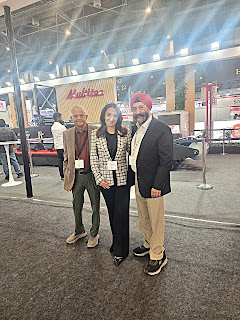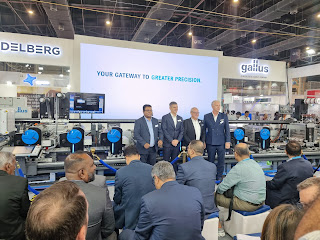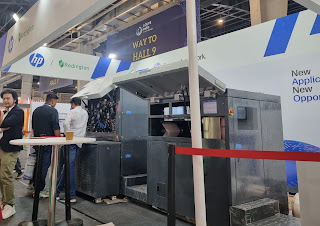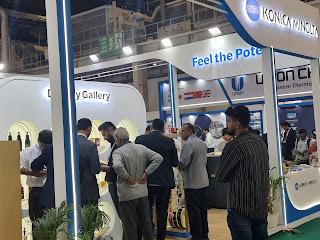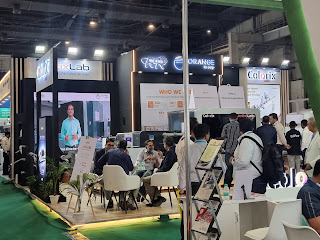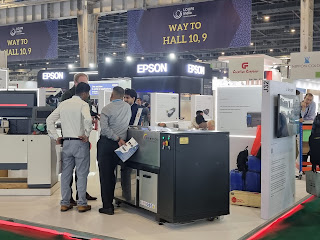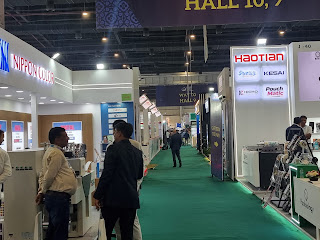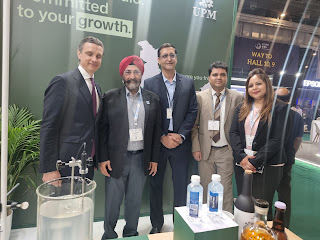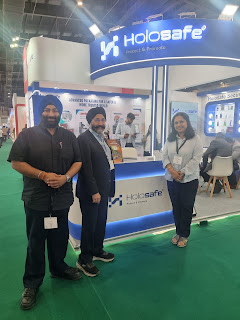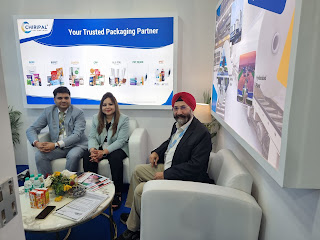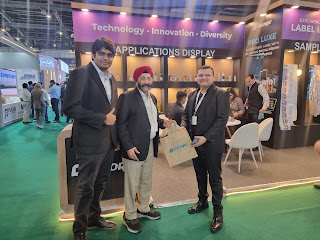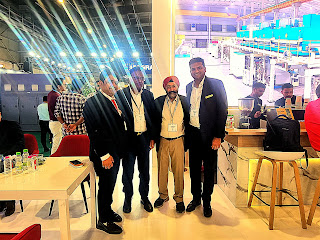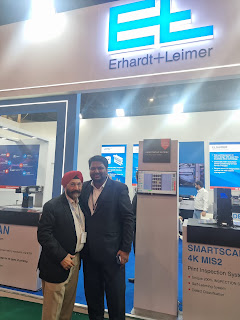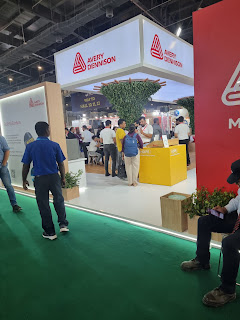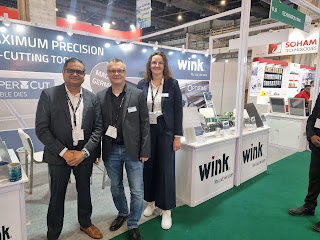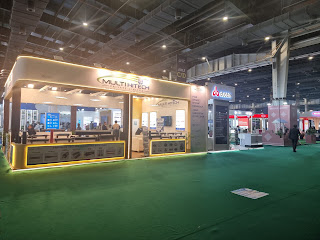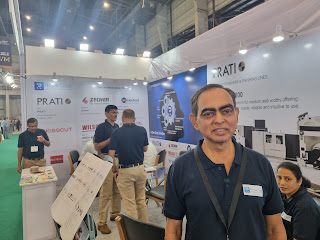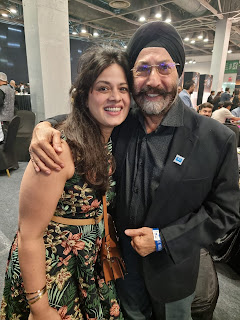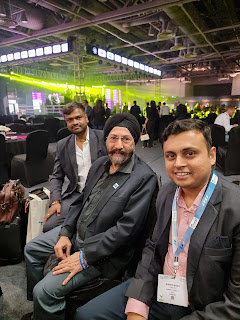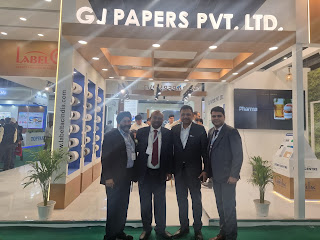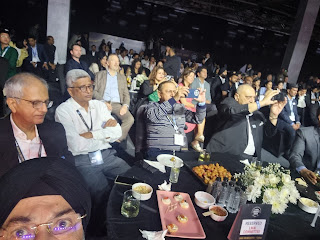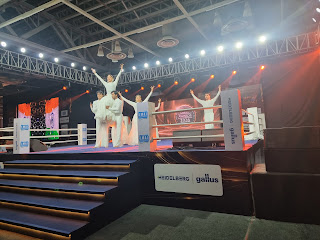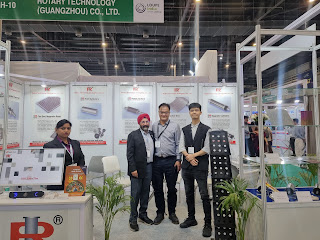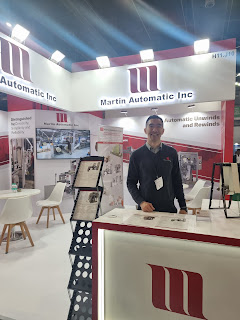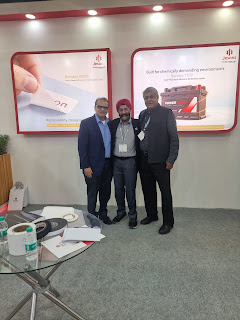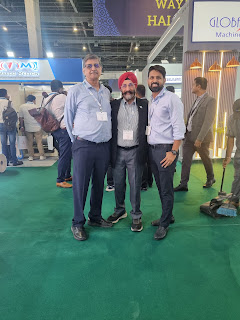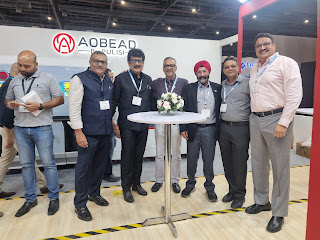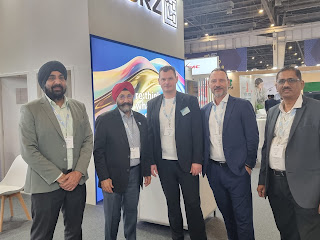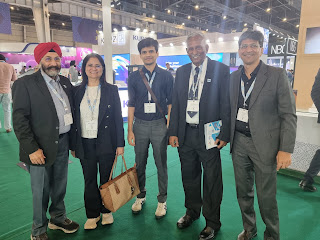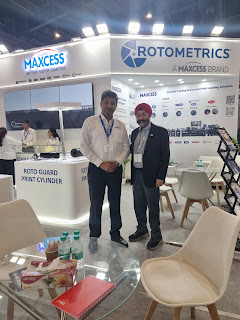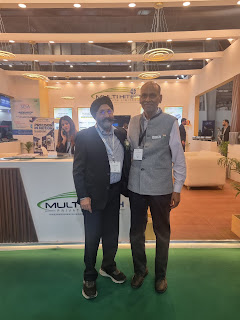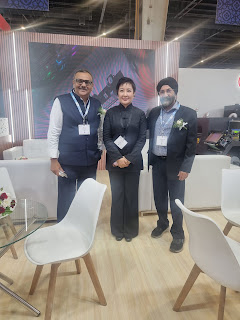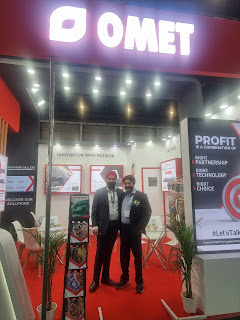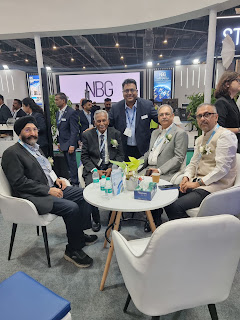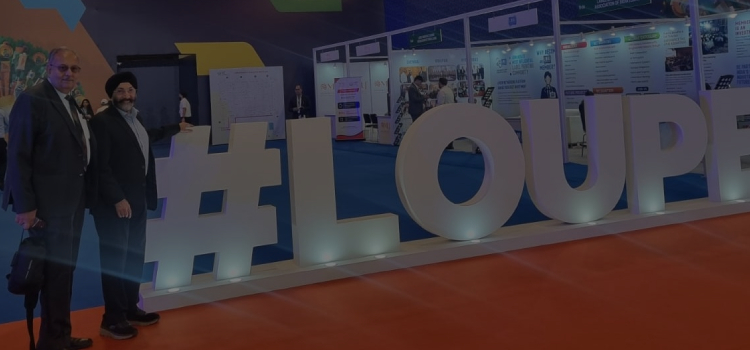
Loupe India, formerly known as Labelexpo India was held on 29th October to 1st November 2026 at India Expo Mart Limited NOIDA. The event was well attended, and the changing face of this industry was evident. One of the salient points was a generational change happening. While the reduced attendance of Industry’s elders and veterans was felt, yet the freshness of the next generation stepping into decision-making roles indicates the transformation happening in Indian label and packaging industry. Technological evolution is an imperative, change is always the prevailing constant! We witnessed industry suppliers reworking their strategies, label and packaging converters indulging in technologies other than conventional and imminent transformation; the indigenisation of equipment, tooling and materials. A very important wind of change blowing over this colorful and vibrant industry is the increasing number of women in leadership roles in every aspect of operations.
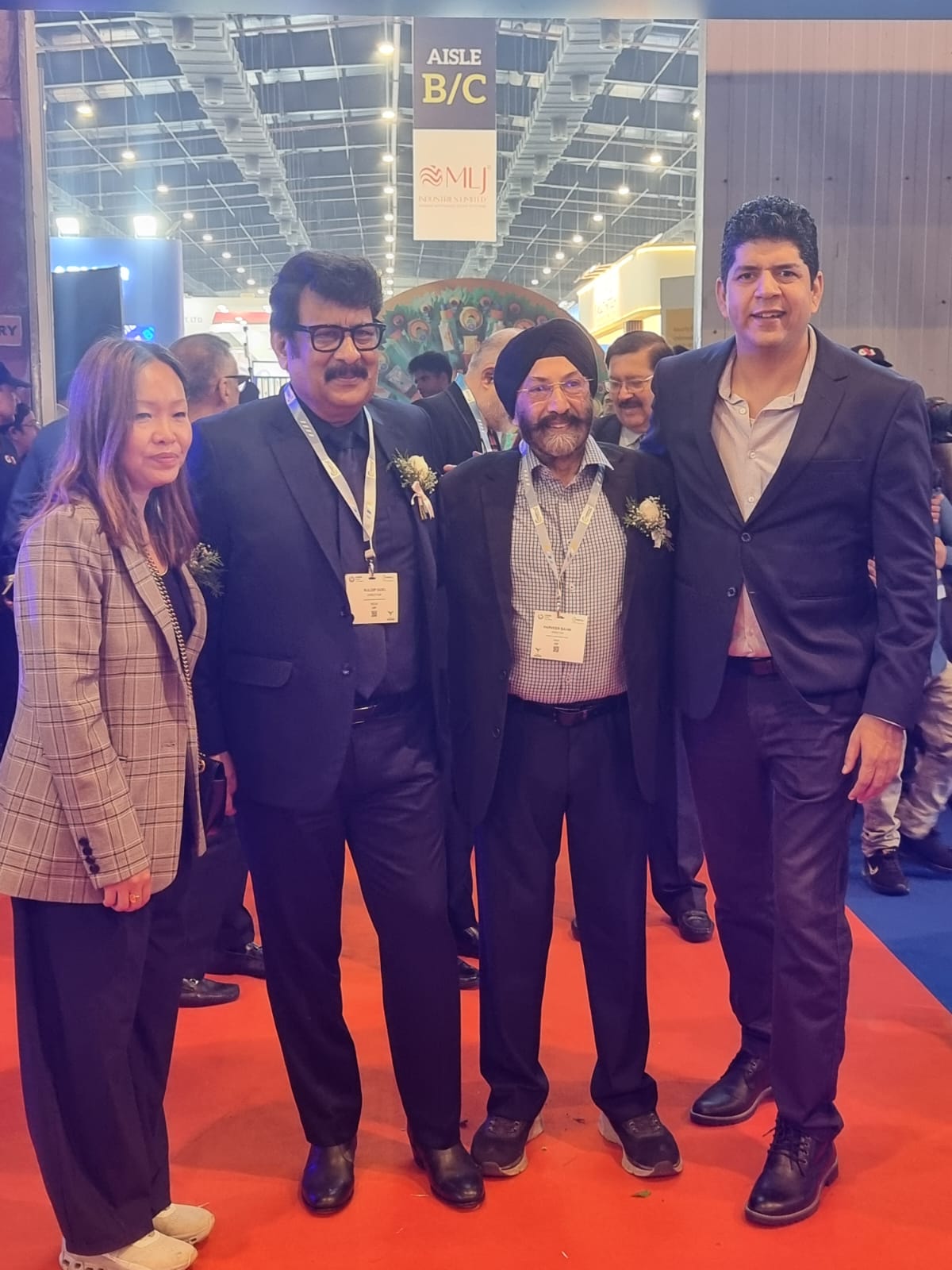
Some of the elders/veterans who have been regulars or visible part of label industry and were not seen at this event included Narendra Paruchuri of Pragati Pack Hyderabad, Surender Kapur of JK Prints, Ramesh Deshpande of Renu Prints, Kusum Dunglay of Goodwork Company, Gururaj Ballarwad former owner of Wintek Bangalore, P C Jain of Great Eastern ID Tech Gurgaon, Marc Reynders of Reynders Chaupanki Rajasthan, Debashish Sarkar of Classic Images, Late UK Gupta of Holostik Noida, Bharat Mehta of erstwhile Super labels Mumbai, late Bhushan Banahatti of Narayan Offset Nagpur, Subhash/Romi Bhandhari of Nirmal Stickers, Vikrant Kapoor of Printrays Jalandhar, B S Reddy of Pravesha, Vijay Varma of Arunodaya Print Pack, A Ramesh of SK Strappings & Labels Chennai, and so many others. The names mentioned are those who may have missed due to pre-occupation, may have taken a back seat, retired, left business or have sadly passed away. Their contribution to industry is and will always be remembered for leaving behind a legacy that is precious. The presence of some of the 2nd generations that have taken leadership or decision-making roles  was evident. These young leaders are either management graduates or trained hands on in their factories and have access to an ocean of knowledge online expanded by AI. They impart a different kind of approach to selection and purchase, leading to expansion of their companies.
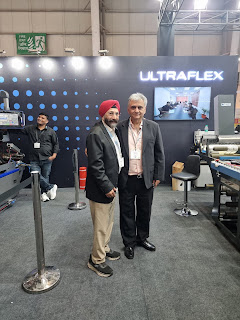
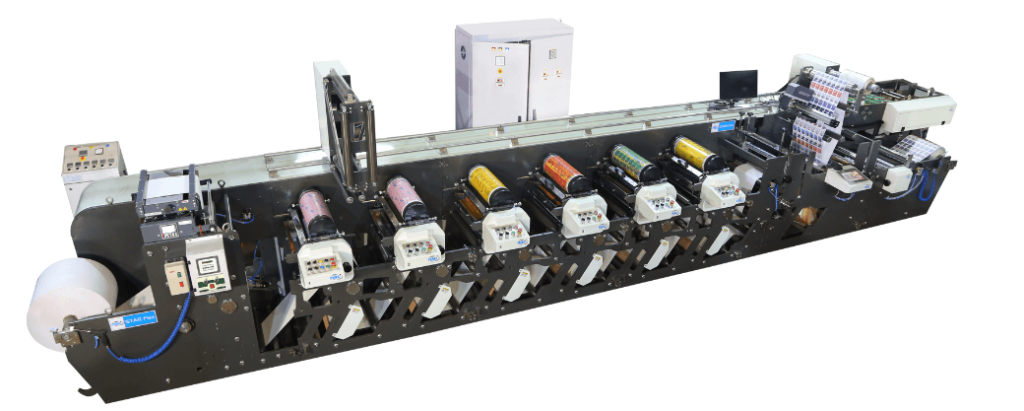
Over the decades the narrow web label industry has continued to transform. What started in the early 1970s as converted with slow flatbed letterpress machines printing 4-5 inches per minute in 5 inches width, transformed into CI flexo rotary converting in the mid-1980s running at increased speeds in 7 inches width with inline die-cutting. In years following the introduction of flexo rotary the width went wider to 10 inches or 250 mm and speeds up to 40 to 50 meters per minute. As flexo plate making evolved, in the 1990s, modular multicolur presses printing with water-based inks and hot air dryers too became evident and speeds reaching closer to 100 meters per minute. Another transformation happened with the switchover to UV flexo due towards the end of 1990s. Quality became improved and consistent with speeds rising further due to UV curing. Rapid transformation happened in the first decade of the new millennium; inline embellishments were introduced, printing widths increased from 250mm and further to 330mm and more. Narrow web presses with combination of various print technologies were introduced and print width increased further at higher speeds. Another new technology transformation made it presence in the self-adhesive label industry in India, digital label production started in 2008, but the acceptance was minimal. Digital label printing has been growing and evolving slowly and steadily with different variants like inkjet, dry toner, liquid toner and UV Inkjet. Digital printing has grown as a stand-alone printing process with offline finishing because inline finishing made the equipment unaffordable. However, the width and speed kept on increasing with evolution.
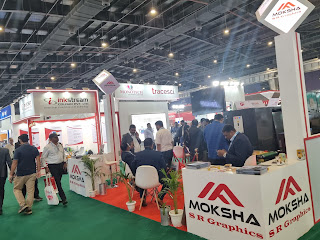
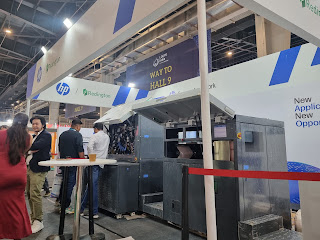
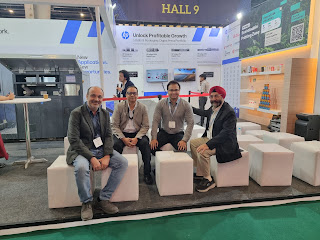
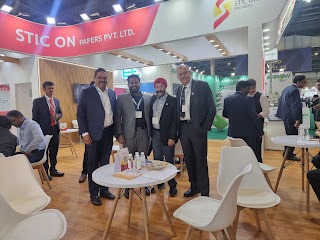
At Loupe India 2026 one could sense that it is time when digital equipment is making a definite statement of having arrived for good in the Indian label converting segment. The highest number of digital presses ever displayed at this Loupe, formerly Labelexpo, were present along with hybrid presses making their entry and registering sales. While HP leadership mentioned earlier that it has been the best year for them. Pulisi exhibited their hybrid press with inline flexo, embellishments and die-cutting. They also announced multiple sales. Pictures taken during my walk through the show are proof of the increased proliferation of digital printing in labels.
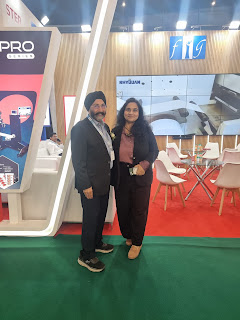
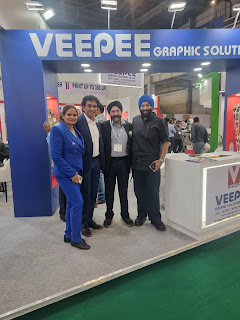
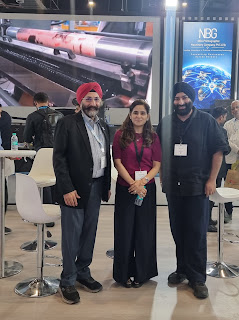
Labels have been over the decades been a male dominated industry but at Loupe we saw the ongoing transformation, more and more women are taking up leadership positions in all segments like converting, pre-press, equipment supplies etc. This article would be lacking in its focus if names of some of the women who were prominently visible are not quoted. I mention them; Priyata Raghavan of Sai Packaging, Manjula & Preeti Mishra of Holosafe, Isha Deshpande of Trigon Digital, Minakshi Mittal of Wonderpac, Manjusha Singh of DIC, Priyanka Rathi of Holostik, Nalani Jaichandra of VEEPEE Graphics, Shagun Walia and Shipra Bijawat of Avery Dennison, Taruna Garg of NBG, Jinali Mehta of Reifenhuaser, and many more. The women in Informa team led by Jade Grace, and Chelsea Mcdougal were omni present taking care of arrangements or reporting the event proceedings. They did an excellent job.
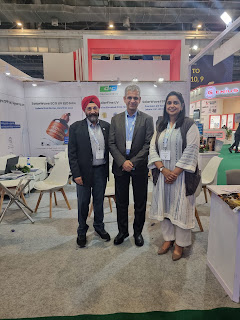
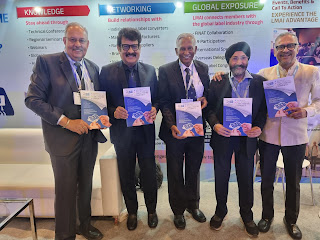
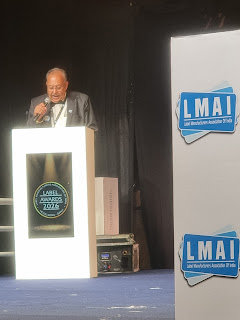
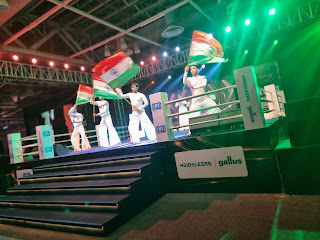
Loupe India was supported by LMAI (Label Manufacturers Association of India), with most of the board of directors present at the show. On the second evening of the exhibition the glittering LMAI Awards night was held to a full house of industry constituents.

More pictures:
Written by Harveer Sahni Chairman Weldon Celloplast Limited New Delhi November 2026
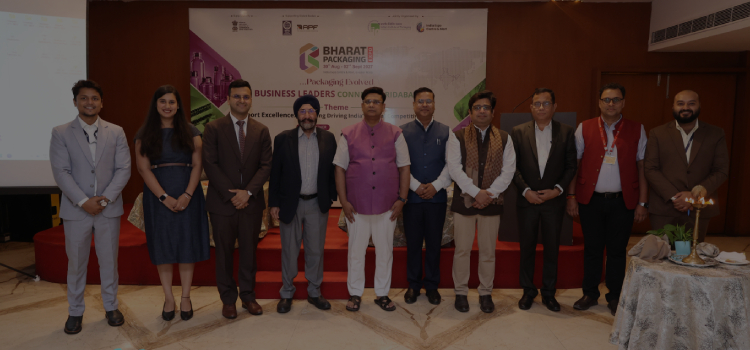
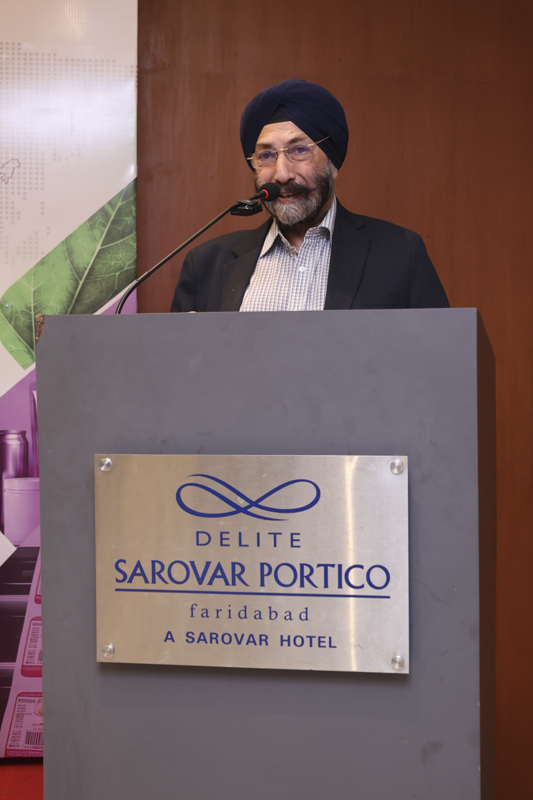
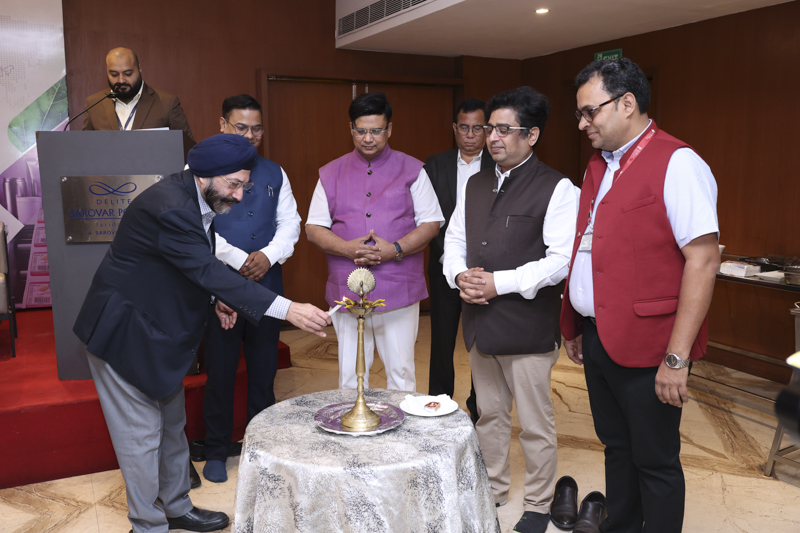
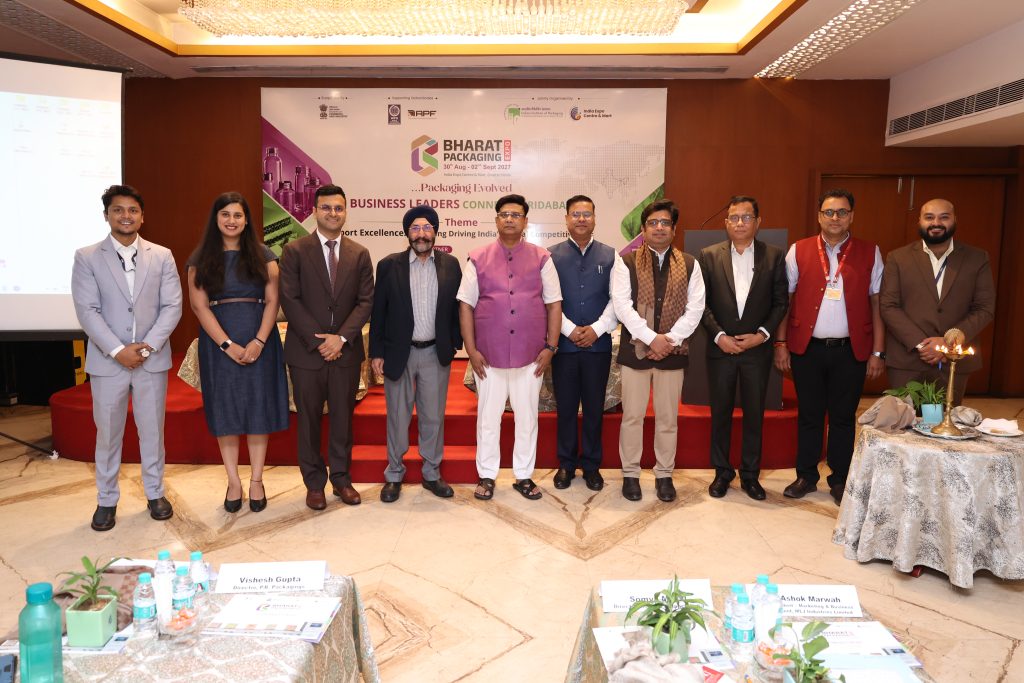
To promote the Bharat Packaging Expo 2027, a roadshow was held titled, “Business Leaders Connect-Faridabad”, it was held on Friday, 18th September 2026 at Hotel Delite Sarovar Portico, Faridabad, Haryana India. Bharat Packaging Expo 2027 is being organised by Indian Institute of Packaging (IIP) , Ministry of Commerce and Industry, Government of India, India Exposition Mart Limited, supported by WPO World Packaging Organisation and The Asian Packaging Federation. It is a show that envisions a position for India as a global leader in sustainable and innovative packaging, advancing a circular economy and strengthening its role in global trade. It is slated to be perhaps the biggest packaging event covering all segments of packaging, may it be based on paper or paper board, films, rigid plastic, glass, metal or Jute, etc. It will cover the complete production of the manufacturing chain that will include suppliers, converters, equipment manufacturers, material suppliers, accessories and all that is a part of packaging. 

The Expo is planned to be more than an exhibition. It is India’s leading platform where innovators, suppliers, and global buyers come together to showcase how packaging powers industries, supports exports, and builds sustainable solutions for the future. The event highlights breakthroughs across the value chain that improve safety, efficiency, and sustainability. 

Speakers besides I included, Rishu Gautam, Deputy Director, Indian Institute of Packaging–IIP, Sanjay Singh, Deputy Director, Plastics Export Promotion Council (PLEXCONCIL),  Vishesh Gupta, Director, P.R. Packaging Ltd. Dr. Ashok Marwah, Vice President – Marketing & Business Development, MLJ Industries Limited, Somya Agarwal (Mittal), Director, Manik Printpack India Pvt. Ltd.

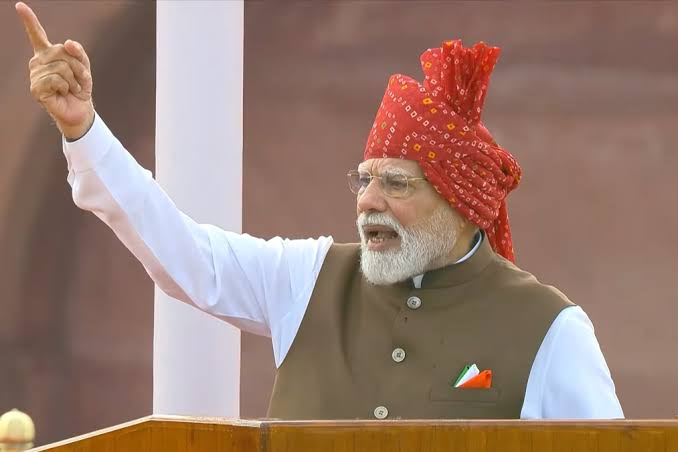
India’s Prime Minister Narendra Modi addressing the nation from the ramparts of Red Fort on the occasion of 80th Independence Day said, “Our factories must be competitive, our products user-friendly and our packaging must be the best”! He also mentioned, “We need to focus on three things; Cost, quality and scale, Every Indian is embracing the spirit of Make in India and Vocal for Local.” Bharat Packaging Expo intends to take the Prime Minister’s statement to another level. The industry is already in that mode in all segments of packaging, making world class machines. Our printing and converting fraternity continue to be innovative  delivering creativity. Our flexo label press manufacturers have made a credible development. Just a few years back all the machines displayed at Label expo were international brand state-of-art presses. All that stands changed, at least 7 flexo label press manufacturers are in Faridabad alone and exporting worldwide, there are other producers elsewhere.

 I was called upon to make the opening address at this event; I reproduce it here:

In the mid-1990s, when Dr. Manmohan Singh, then India’s Finance Minister, liberalized the economy, he changed the country’s trajectory. Until then, India’s major exports were largely bulk spices, minerals, garments, food products, and similar commodities. After liberalization, international trade and exports became preferred business opportunities. As Indian manufacturers began supplying products worldwide, the need to ensure that goods reached buyers safely and in acceptable packaging became a critical concern.

I remember that the Indian Institute of Packaging (IIP) was initially tasked with improving export packaging and expanding India’s offerings to include packaged goods. At the time, IIP was largely led by representatives of the corrugated box industry. I also recall a presentation by the late Mr. P. V. Narayanan, then Director of IIP, in which he showed a photograph of a shipment: a stack of corrugated boxes damaged by moisture, leaning to one side and nearly collapsing. The international buyer had taken the photograph to demonstrate the inferior quality of the packaging and may have sent it to IIP. We have come a long way since then. Safe, attractive, and effective packaging has become essential to strengthening India’s export competitiveness. Our target market has shifted from primarily domestic to increasingly global. Over the years, IIP has evolved into an institution that educates and promotes some of the best talent in innovative packaging. Many packaging development managers in large industrial enterprises are IIP alumni. Machine builders and material suppliers are also driving growth, innovation, and distinctive packaging that promotes Brand India globally.


As we moved ahead, our focus shifted to heighten the shelf appeal of products. Product decoration or embellishments, started to find preference in label and package design. Even products like food, garments, tissue paper, medical items, retail and industrial use applications, started being sold in innovative packaging. These packaging were created for ease of use and their design appeal. The initial developments were “me too” creations, copying global brands but with promotions done by IIP and ministry of commerce, introducing packaging awards and exhibitions,  local packaging development fraternity started to deliver the much-needed impetus to growth, creating and development of internationally acceptable packaging. However still, much needs to be done for the infrastructure so that even after good packaging, the finesse and quality of the material should reach the buyer intact, and uncomfortable questions are  not raised.

I will cite an example of what we went through many years back. We shipped a container load of labelstock to a customer in Germany. When we started producing labelstocks decades back, we would wrap the rolls in paper and then pack them in plastic woven bags and stitch them. To match global standards, on starting exports, we started to stretch wrap each roll and then stacked them on a pallet and the whole pallet would also be stretch wrapped. It looked very nice and customers sent appreciation messages. But, another time, for some reason a container of goods was withheld by customs and put in the customs warehouse. After clearance, the goods were finally shipped and when they reached the customer, who is a close friend, he was fuming on the packaging. I was worried wondering what happened, I visited the customer in Germany. I was shocked, in the customs warehouse in Delhi there were pigeons flying around, dust and pigeon droppings were there on all the pallets. The customer workers were not ready to touch the goods, fearing infection. Fortunately, our people in factory had packed the goods well and my friend agreed to my suggestion and used a garden hose to wash all the pallets, and we were saved a lot of trouble. So, when we are looking forward to excelling, the infrastructure needs to be upgraded as well.

Of late consumer safety has become a big concern. In pharmaceuticals statutory information must be put on the labels, security features, track and trace  and compliance with government directions have become necessary. All packaging must be created keeping consumer safety in mind. Over the years, with the dire need for reducing pollution and environmental concerns have made it necessary to include sustainability as a must feature in designing packs. We need to give back to mother earth what we draw from it. We need to dwell on the end of life of any pack that we create. Reduce, reuse, recycle and recover must be our integrity and a part of creating packaging. Sustainability regulations and their implications are getting strict now. In India Pernod Ricard set a good example by removing the monocartons from their liquor brands.

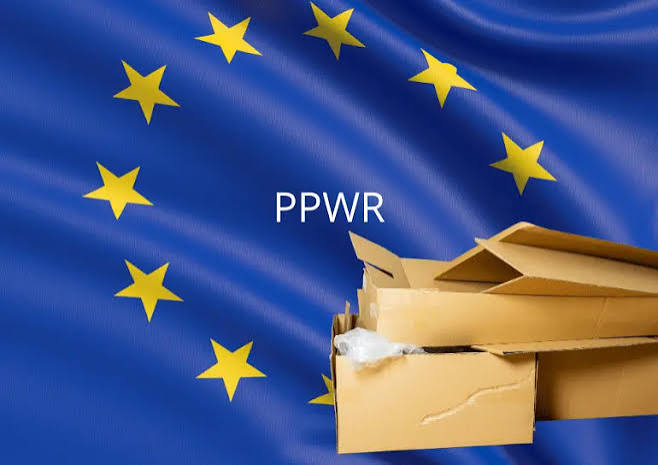
This reduced usage of hundreds of tons of paper boards. This, even though it was the much-needed advertisement space on the carton was lost, as liquor advertisement is banned. Other brands also followed suit. The European Union Packaging and Packaging Waste Regulation (PPWR) is a strict European Union law that sets legally binding rules to reduce waste, ban non-compliant packaging, and enforce recycling standards across all member states as of August 12, 2026, onwards, this will become applicable all over the world gradually. A massive regulatory clampdown on single-use plastics has been witnessed in India and many parts of the world. Many countries have started enforcing strict Extended Producer Responsibility (EPR) laws. For Indian exporters, this means non-recyclable multi-layer plastics will eventually face rejection, if not complied with. It is the onus of our material suppliers to support this transformation. Global demand for sustainable paperboard and innovative mono-material flexible packaging is increasing exponentially. Hi-barrier films that are fully recyclable are now being preferred for Indian FMCG brands.

Our machine suppliers must come forward with automation and speed to create packaging that has variable data inline, ease to use and make unboxing products a wonderful experience. A smudged barcode or a non-functional pack opening function can result in big time rejections. Smart packaging is another area that is becoming important worldwide. It is changing the operating systems in logistics. Global buyers want total traceability. 

They want to scan a QR code or an RFID tag on a pallet and know its temperature history, its authenticity, and its exact journey through the cold chain. For equipment manufacturers, integrating these digital touchpoints directly into the coding, marking, and packaging processes is no longer optional, it is a baseline expectation. Circular economy is something that must bear in mind each time a package is being designed. The earlier perception of disposable packs is not a preference now if they are not biodegradable, compostable or recyclable and non-polluting.

Packaging is and will be required till there is need by humanity for food pharma and clothing and the entire system to create it. The world needs it. Our “make in India” is a great initiative and mindset that will take us a long way but yes, we need to dwell and improve upon our packaging as per needs of the global users to excel and deliver quality as desired.

Harveer Sahni Chairman, Weldon Celloplast Limited 18/09/2026