Die Cutting’s Impact on Matrix Removal and Rewinding

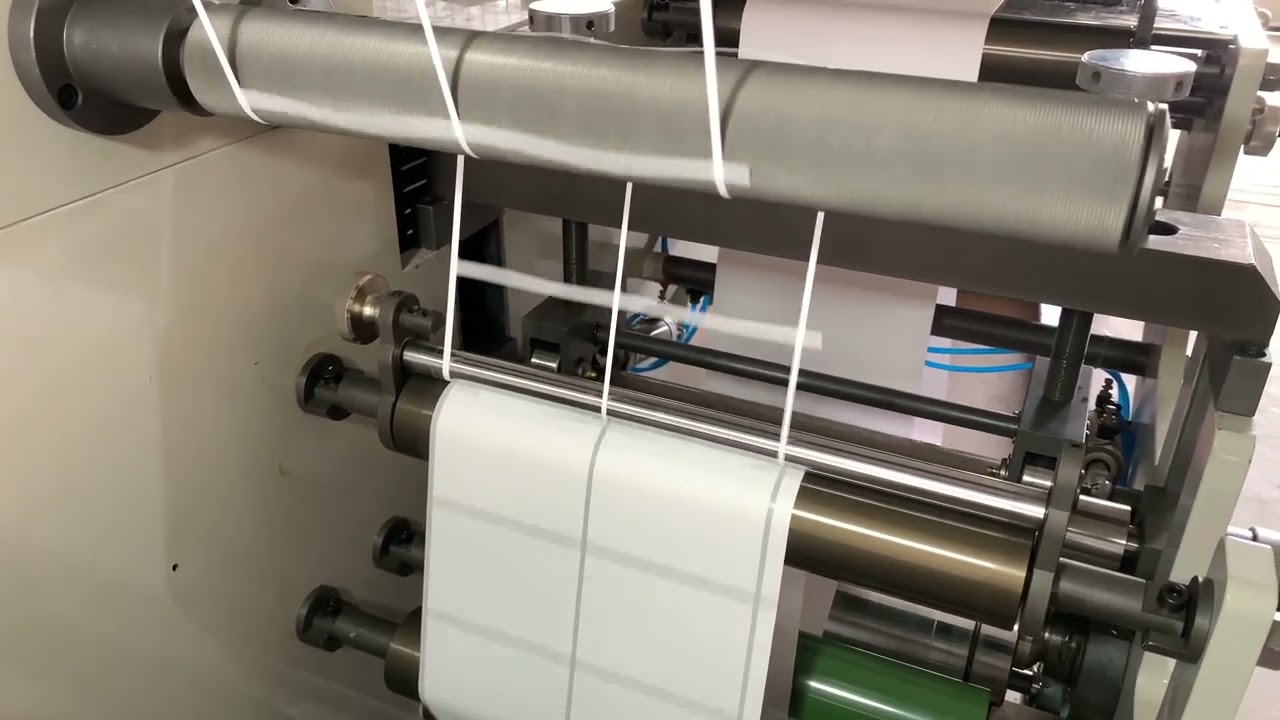
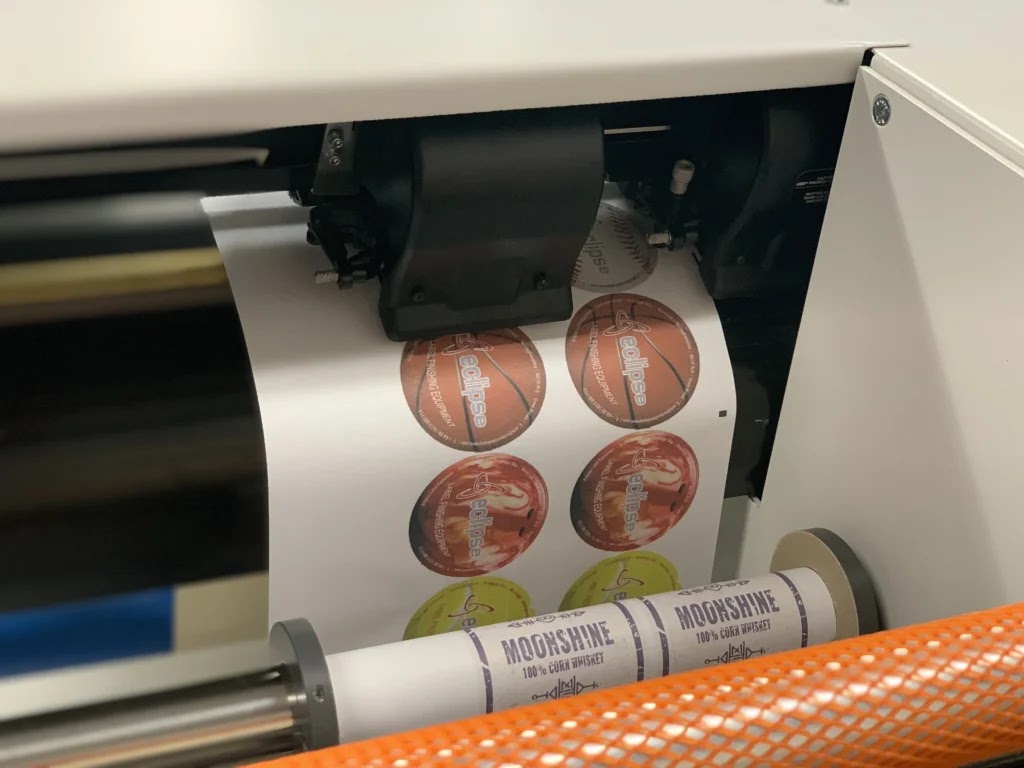
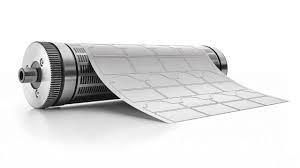
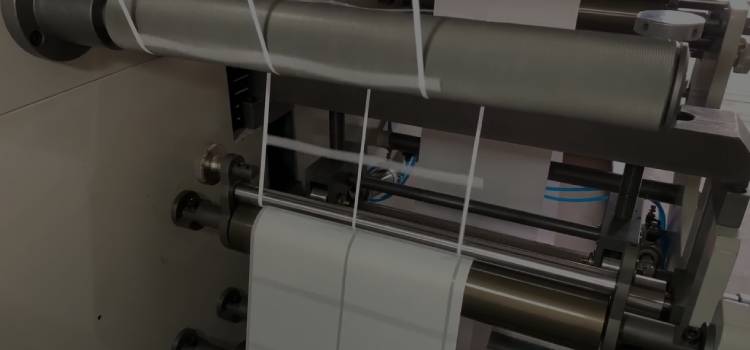
The die-cutting process extends beyond simply making cuts in the label material. Subsequent operations, including matrix removal—stripping waste material from finished labels—and rewinding the completed label roll, are directly influenced by the quality and parameters set during die cutting.

Matrix Removal: Challenges and Efficiency

Matrix removal difficulty is closely tied to blade height and cutting depth. When blades cut deeply into the liner, a pronounced score is left, which can make peeling the label easier. However, this can also lead to liner tearing during matrix stripping at high speeds. Balancing ease of label peeling with maintaining matrix integrity requires careful optimization, considering the specific application and production speed requirements.

Matrix removal efficiency depends on producing clean and complete cuts. If the die blade lacks sharpness or the cutting pressure is too low, labels may not separate cleanly from the matrix, resulting in tearing during stripping. Such issues generate waste and slow down production as operators must clear jams.

The shape of the label affects matrix removal as well. Small interior cuts, sharp corners, tight radius corners, and thin connecting strips in the matrix are more susceptible to tearing during stripping if die cutting is not precise. Dies should be designed with matrix removal in mind, sometimes incorporating relief cuts or modified geometries to reinforce the matrix in its most vulnerable areas.

Stripping Tension and Liner Integrity

Stripping tension needs to be carefully managed. If tension is too low, the matrix can bunch or fold, leading to unreliable stripping and potential web breaks. If tension is too high, labels may be pulled partially free from the liner if the kiss cutting depth is shallow, resulting in defects in the finished product.

Liner integrity after kiss cutting has a significant impact on rewinding quality and downstream performance. Liners deeply scored by excessive die penetration are more likely to break during rewinding, especially at the edges where tension is concentrated. This can cause production stops and waste. Even if the liners withstand rewinding, too much die-strike damage may result in failures when the label roll is unwound in applicators.

Edge Quality and Rewinding

Edge quality from die cutting influences how well labels are rewound. Rough or stringy edges can catch on to adjacent wraps as the roll builds, leading to telescoping (uneven roll sides) or starring (radial compression lines visible on the roll face). These defects compromise roll quality and may cause applicator problems when the labels are used.

Rewind tension control must consider the residual stresses introduced during die cutting. Materials stressed during cutting may display different tension characteristics compared to uncut material. Tension compensation is needed as the roll builds to maintain uniform roll density and prevent defects.

Diverse Types of Dies for Specialized Applications

Beyond the use of standard flexible and solid rotary dies, the label industry employs an array of specialized die types to meet the specific requirements of various applications and materials. These alternatives allow converters to address unique production challenges and enhance efficiency in niche scenarios.

Adjustable Dies

Adjustable dies are designed with removable blades, which can be replaced when worn or when different materials need to be processed. While less frequently used in narrow-web label converting, adjustable dies offer valuable flexibility for converters working with a wide variety of substrates, eliminating the need to keep extensive inventories of dies for each material type.

Combination Dies

Combination dies integrate multiple cutting functions into a single tool. For example, a combination die might feature both cutting and creasing blades, enabling the production of folding cartons or multi-panel labels in one pass. Perforation blades may also be included to create tear-off sections or features for easy opening. By consolidating several processes into a single die station, combination dies reduce the number of stations required, shorten setup times, and can improve registration accuracy by completing multiple operations in one controlled step.

Embossing and Debossing Dies

Embossing and debossing dies produce three-dimensional effects in label materials, enhancing visual appeal or providing tactile security features. These dies function through matched male and female patterns and require precise pressure control to ensure consistent depth without damaging the substrate. For embossing applications, magnetic cylinders with enhanced holding force are used to maintain die alignment under the substantial pressures involved.

Hot Stamping Dies

Hot stamping dies are used to transfer metallic or pigmented foils onto labels using heat and pressure. Although they are not cutting tools themselves, hot stamping cylinders are often integrated with die cutting stations for inline processing. These cylinders must manage both accurate temperature control and the mechanical requirements of maintaining the die or foil pattern in precise registration.

Perforation Dies

Perforation dies are engineered to create lines of weakness in materials, facilitating controlled tearing. The blades are precisely spaced, with cutting edges separated by gaps to produce an alternating cut-and-uncut pattern. The ratio of cut to tie length determines the ease of tearing and must be carefully designed for each application and material.

Micro-Perforation Dies

Micro-perforation dies refine the perforation process to produce nearly invisible perforations that still allow clean tearing. These dies are suited for security applications, pharmaceutical labels, and other situations where the perforation must remain hidden until use.

Normal vs. Laser-Hardened Dies

Choosing between standard dies and laser-hardened alternatives is a critical decision for label converters, balancing economic and performance factors.

Standard Dies

Standard dies are made from tool steel, CNC-machined to precise specifications, and heat-treated using conventional methods to achieve hardness levels between 52 and 58 HRC. These dies are reliable and cost-effective for many applications, making them ideal for short runs, prototyping, or processing less abrasive substrates. However, their limitations become apparent during high-volume runs or when converting abrasive materials such as thermal papers, thermal transfer stocks, or certain films. The cutting edge of standard dies gradually wears down and becomes rounded, which requires increased cutting pressure or slower line speeds. Eventually, dies must be re-sharpened or replaced, impacting productivity and increasing costs.

Laser-Hardened Dies

Laser-hardened dies employ focused laser energy to selectively harden the cutting edge, achieving hardness levels of 65-68 HRC, and up to 80 HRC for specialized chrome-coated versions. The laser hardening process creates a shallow, hardened zone at the cutting-edge tip while retaining normal hardness in the rest of the die for flexibility. This selective hardening significantly extends die life, sometimes by two or three times compared to conventional dies, reducing tooling costs per thousand labels produced. The harder edge stays sharper longer, ensuring consistent cutting quality and less frequent die changes or press adjustments. The hardened surface also reduces friction and adhesive buildup, preserving cutting quality and cleanliness. For converting abrasive thermal materials, laser-hardened dies may be the only practical option for achieving satisfactory production runs without constant maintenance.

Economically, laser-hardened dies are favored for high-volume applications. Although their initial cost may be significantly higher, their extended life and reduced downtime offer a compelling return on investment when producing millions of labels. Standard dies remain a better choice for short runs or frequently changing designs, given their lower upfront cost.

Alternative Die Cutting Technologies

While rotary die cutting is the mainstay of label production, alternative technologies are increasingly important for specialized applications and are gaining market share.

Semi-Rotary Die Cutting

Semi-rotary die cutting blends elements of flatbed and rotary systems. The web advances intermittently, while the die rotates. This hybrid mechanism enables fast changeovers and digital registration, making it ideal for digital-flexo hybrid presses where variable data printing is combined with die cutting. Although slower than full rotary systems, semi-rotary die cutting offers flexibility valuable for short runs and custom labels.

Laser Cutting: The Future of Label Die Cutting?

Laser cutting technology has advanced greatly, now serving as a viable alternative to conventional die cutting for many uses. It utilizes a focused laser beam to cut or perforate materials through controlled ablation and vaporization.

CO2 Lasers

CO2 lasers, operating at a 10.6-micron wavelength, are most used for labels, effectively cutting organic materials like paper, PET films, and polypropylene. Fiber lasers, working in the near-infrared spectrum, are gaining popularity for metallized materials and multi-layer constructions.

Laser cutting provides several advantages. Without the need for physical dies, setup times are reduced dramatically, and new patterns can be loaded within seconds. This makes laser cutting ideal for very short runs or custom labels where die costs would otherwise be prohibitive. Digital files allow for rapid design, iterations and customization, supporting personalized packaging and limited-edition products. Laser cutting delivers exceptional precision, enabling features as small as 0.1 mm and positional accuracy measured in microns. Complex shapes, small text, micro perforations, and other demanding features can be executed digitally with consistent quality.

However, laser cutting has limitations that prevent it from taking over high-volume label production. Speed is the primary constraint; even the fastest laser cutters lag behind rotary die cutting in throughput. Complex shapes further slow the process, making laser cutting less attractive for intricate designs despite its precision. Material compatibility also poses challenges. Some materials may release toxic fumes or reflect laser energy, making them difficult to cut. The heat-affected zone around laser cuts can cause discoloration or melting, impacting aesthetics or peel characteristics.

Operating costs for laser systems include high electrical consumption, regular replacement of laser components, and advanced exhaust systems to manage fumes and vaporized material. These costs must be considered when comparing economics to conventional die cutting. Despite these challenges, laser cutting is well-suited for security labels, pharmaceutical serialization, prototyping, and ultra-short runs. Hybrid systems that combine digital printing and laser cutting are expanding options for brand owners seeking customization.

Plotter-Type Die Cutting: Speed and Capabilities

Digital plotter cutting systems use a computer-controlled knife or blade, guided by digital patterns. The cutting head moves along X and Y axes, with blade depth controlling penetration, enabling kiss cutting, through cutting, or creasing. Modern plotter systems can achieve speeds up to 60-80 meters per minute for simple shapes, though complex cutting paths reduce throughput. Their advantage lies in flexibility—job changeovers require only loading a new digital file rather than changing physical tooling.

Plotter systems excel in prototyping and short-run production. Design firms and brand owners can quickly produce physical label samples from digital artwork, accelerating product development. Custom labels in small quantities are economical without traditional die setup costs. Registration capabilities have advanced through camera-based systems that read registration marks, automatically compensating for printing variations and keeping cuts aligned. Some systems can even adjust for material distortion or skew, ensuring precise cutting.

Plotter cutting is compatible with many materials, though extremely stretchy materials may deform rather than cut cleanly, and abrasive materials can accelerate blade wear, requiring frequent replacement and increasing costs. Plotter systems are economically superior for runs below 5,000-10,000 labels, where die costs are the largest expense. As volume rises, slower speeds and higher per-unit costs make rotary die cutting more practical. The crossover point depends on label complexity, material, and die life expectations.

Hybrid workflows that combine digital printing and plotter cutting are enabling new business models, such as print-on-demand label services with no minimum orders or tooling charges. Variable data capabilities allow each label to be unique, supporting serialization, personalization, and limited-edition launches.

Written by Harveer Sahni, Chairman Weldon Celloplast Limited, New Delhi, April 2026

The pressure-sensitive adhesive labels industry owes its existence to a struggling clerk working in a loft above a flower shop in downtown Los Angeles. In 1935, Ray Stanton Avery, who went by name Stan, was living in near poverty, residing in a rented chicken coop while working at the Midnight Mission to pay his way through college. What he created with a $100 loan from his fiancée Dorothy Durfee would transform how products are labeled worldwide and launch an industry that today generates billions in revenue.

The Genesis: Stan Avery’s Revolutionary Label

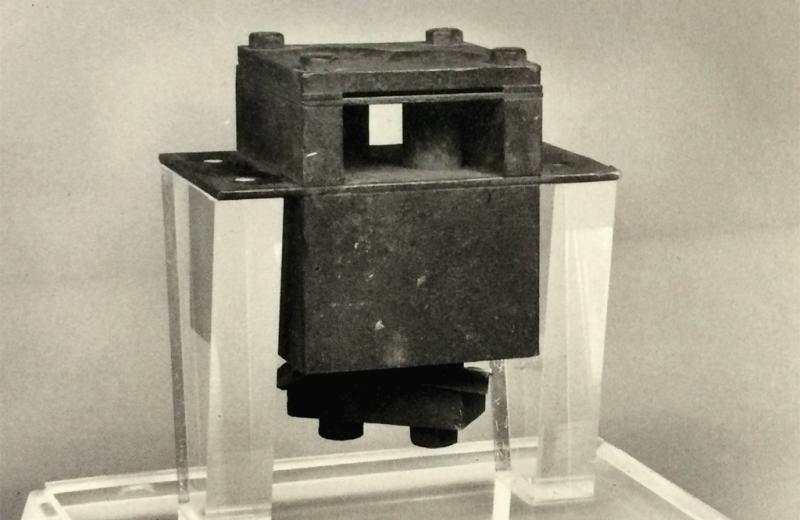
Stan Avery didn’t just invent the self-adhesive label, he invented the entire machinery to produce it. Using parts from a washing machine motor, a sewing machine, and a saber saw, he created and patented the world’s first self-adhesive, die-cut labeling machine. His company, initially named Kum Kleen Products, advertised the ability of these labels to be removed without leaving a mark on merchandise. The first Avery labels were simple, round price stickers meant for gift shops and retailers. In his first six months of operation, sales totaled a modest $1,391. Few could have imagined that this humble beginning would evolve into Avery Dennison, a Fortune 500 corporation with global operations across more than 50 countries and 36,000 employees worldwide.

The innovation Stan Avery brought to market solved a fundamental retail problem. Before pressure-sensitive labels, merchants relied on gummed labels that required moistening with water or paste, a time-consuming and messy process. Avery’s self-adhesive labels eliminated this inconvenience entirely, creating a faster and more practical labeling solution. His vision extended beyond the label itself to include the machinery for precise die-cutting, which would become the foundation of label converting technology.

By 1940, Avery had moved beyond his humble beginnings and officially started selling his products under the brand name Kum Kleen Price Stickers. The company incorporated in 1946 as Avery Adhesive Label Corporation, and in 1990 merged with Dennison Manufacturing to form Avery Dennison. Throughout his career, Stan Avery received 18 patents for his innovations in pressure-sensitive materials and production technologies. His legacy lives on, not just in the company that bears his name, but in every self-adhesive label produced today.

The Evolution of Die Cutting Technology

Die-cutting itself predates Stan Avery’s innovation by nearly a century. The process was invented in the mid-1800s to help the shoemaking industry. Cutting leather soles for shoes by hand was laborious, time-consuming, and expensive. The invention of the die-cutting machine revolutionized cobbler work, allowing shoes to be cut to consistent sizes and shapes rather than crafted individually. This standardization enabled modern shoe sizing as we know it today.

Flatbed Die Cutting: The Foundation

The earliest die-cutting machines used in the label industry were also flatbed presses. These hydraulically operated machines use a steel rule die to “click cut” or punch out die-cut parts by driving the die in a downward motion through the material. The flatbed die-cutting press operates much like a stamp, pressing a flat die onto material that sits on a stationary surface, applying even pressure to cut the material into the desired shape with each strike.

Flatbed dies are used with hydraulic or mechanical presses and other lifting systems to press a die down on a sheet of material. They are particularly suited for heavier materials and thicker substrates, making them less ideal for pressure-sensitive labels but excellent for applications requiring precision cutting of rigid materials. Steel-rule die cutting uses a formed strip of hardened steel set into a slotted plywood die-board, with rubber ejectors aiding part release after the cut.

While flatbed die cutting adapted for labels, offers excellent control over each cut and is ideal for intricate shapes with close tolerances, it operates at a considerably slower pace compared to rotary systems. Typical speeds range from 1,000 to 5,000 cycles per hour, making it suitable for small or mid-sized batches but impractical for high-volume label production. The tooling costs for flatbed dies are significantly lower than rotary alternatives, and the ability to make quick die changes makes them valuable for short-run or prototype jobs.

The Rotary Revolution in Label Converting

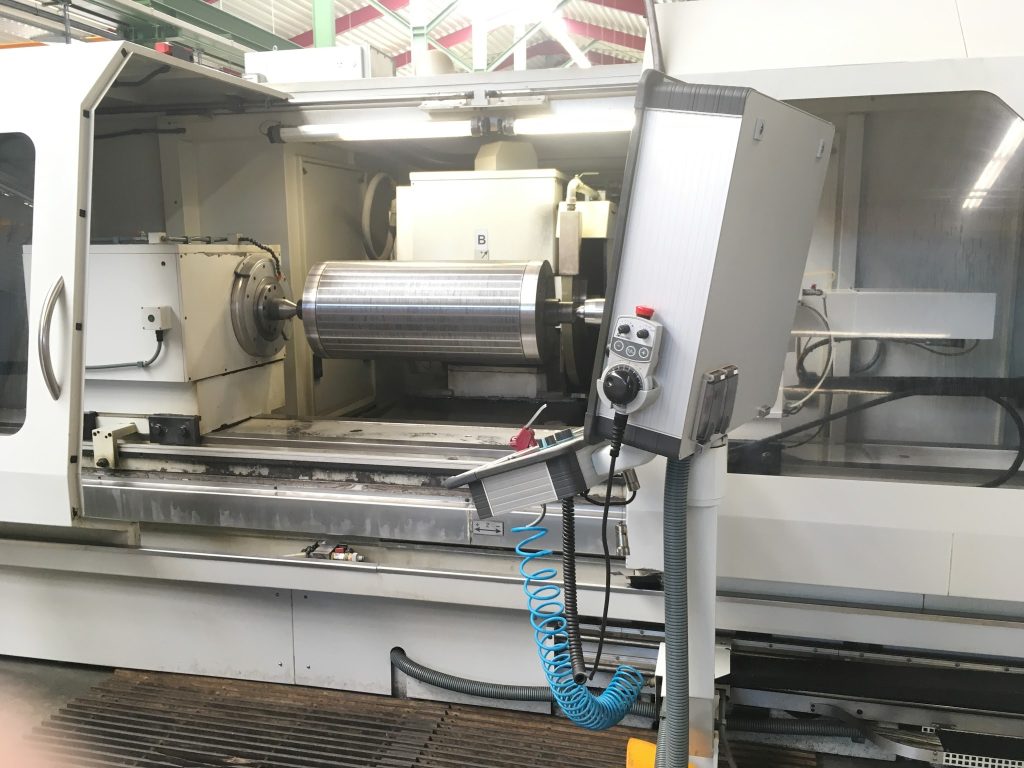
The transition from flatbed to rotary die cutting marked a transformative moment in label converting. Rotary die cutting uses a solid cylindrical die that rotates continuously in sync with the web material, paired with an anvil cylinder. The press feeds thin, flexible material, known as web, between these two cylinders. The cutting-edge pinches material against the anvil cylinder, producing clean cuts, perforations, or creases at exceptionally high speeds.

This method revolutionized label production by dramatically increasing throughput. Modern rotary die-cutting systems can reach 10,000 cycles per hour or more, with the fastest machines achieving speeds of 300 meters per minute. The ability to perform inline with printing and other finishing operations means that labels can be printed, die-cut, matrix stripped, and rewound in a single pass, transforming manufacturing efficiency.

A series of gears or servo motors now, force the die to rotate at the same speed as the rest of the press, ensuring that cuts line up precisely with the printing on the material. Rotary presses can incorporate multiple stations that die-cut specific shapes, perform perforations, create creases, or even cut the sheet or web into smaller sections. Some machines use automatic eye registration to ensure cuts and printing align with tolerances measured in fractions of a millimeter, critical for complex label designs and high-quality output.

The economics of rotary die cutting favor high-volume production. While the initial tooling costs are higher than flatbed alternatives, the operational efficiency brings labor expenses down over time. For standardized, repeat orders running into millions of labels, rotary systems offer compelling long-term value and unmatched productivity.

The Magnetic Cylinder Revolution

While the exact inventor and date of the magnetic cylinder for flexible dies are not definitively documented in available industry records, this innovation transformed the economics and flexibility of rotary die cutting. The magnetic cylinder system addressed a fundamental challenge: solid engraved rotary dies were expensive to manufacture, store, and transport, making them cost-prohibitive for short to medium production runs.

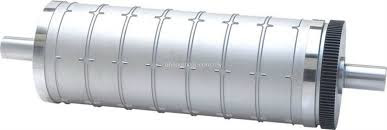
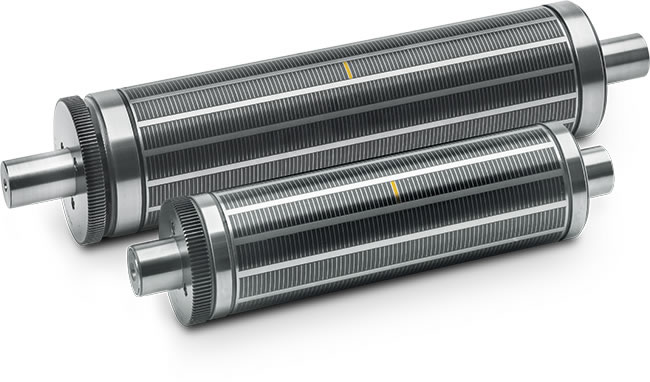
Magnetic cylinders are precision-engineered metal cylinders embedded with powerful magnets, either ceramic or neodymium rare earth magnets, on their surface. They are designed to hold flexible dies—thin, etched steel dies—firmly in place during rotary die cutting. The magnets ensure that every square inch of the flexible die remains securely pressed against the precision-ground cylinder surface, preventing any lifting or shifting during high-speed operation.

In 2005, Bunting Magnetics launched the X-treme Magnetic Die-Cutting Cylinder, the first magnetic die-cutting cylinder in the world with total run-out accuracy below 40 millionths of an inch (1 micron). This level of precision was revolutionary, enabling clean cuts even on extremely thin materials like 1-mil stock with less than 1-mil liners, on “no-look” labels, and on synthetic materials that previously posed challenges.

The advantages of magnetic cylinders transformed the label industry. Mounting and removing flexible dies takes just minutes, dramatically reducing downtime during job changeovers, particularly valuable in short-run label printing or multi-SKU packaging environments. The cylinders weigh significantly less than solid rotary dies, reducing operator fatigue, machine wear, and transportation costs. Most importantly, they enabled the use of flexible dies, which cost a fraction of solid engraved cylinders and could be stored flat, saving valuable warehouse space.

Today, magnetic cylinders are available for virtually all types of label presses and converting machinery, from brands like Mark Andy, Gallus, Nilpeter, Omet, Rotoflex, etc. Custom designs accommodate a variety of special applications, making magnetic cylinder systems remarkably versatile.

Flexible Dies: Engineering and Innovation

The development of flexible dies went hand in hand with magnetic cylinder technology. Flexible dies are thin sheets of steel, typically ranging from 0.5mm to 1.5mm in thickness, that wrap around magnetic cylinders and are used for rotary and semi-rotary presses. These dies are produced from specially formulated steel and undergo several sophisticated manufacturing processes.

Manufacturing Process

Production of flexible dies begins with plotting an image directly on the die material. Background material is then removed through chemical etching, and CNC mills create the required cutting or creasing lines with extraordinary precision. The cutting geometry includes profile heights ranging from 0.3mm to 1.5mm and cutting angles that vary based on the material being cut, typically from 30° to 110°.

The manufacturing process includes several optional treatments. Back grinding ensures consistent die thickness. Chemical de-burring smooths edges to prevent damage to the label stock. Most critically, laser hardening and various surface coatings dramatically extend die life and performance.

Die Materials and Surface Treatments

Standard flexible dies are CNC-sharpened and feature smooth polished cutting edges obtained using ultra-fine edge polishing techniques. These universal dies are suitable for all types of self-adhesive and single-material products including paper, PP, PE, PVC, PET, Tyvek, thin films on PET liner material, and other materials that are difficult to cut.

Laser hardening represented a breakthrough in die technology. Companies like Kocher + Beck were the first manufacturers in the world to achieve hardness levels of 65 to 68 HRC through laser hardening technology. This process extends die service life by two to three times longer than conventional dies. The laser hardening increases hardness at the tip of the cutting edge based on the carbon content in the steel, creating exceptional wear resistance while maintaining die flexibility.

For extremely demanding applications, chrome-coated dies offer even greater durability. A thin layer of chromium, typically 0.01mm thick with a hardness of 70-80 HRC, enables extremely high running performance with outstanding wear properties. These dies are particularly suited for abrasive thermal and thermal transfer papers used in longer production runs.

Non-stick coatings represent another important innovation. Special onyx or polymer coatings have no detrimental effect on the cutting-edge angle or sharpness while preventing adhesive and ink deposits on the cutting blades. These coatings are food-safe, FDA-approved, and significantly reduce downtime for die cleaning. The reduced friction and perfect resistance to wear enable maximum running performance with a consistently sharp cutting edge.

To be continued to part-2

Written by Harveer Sahni, Chairman Weldon Celloplast Limited, New Delhi, January 2026

Story of  a family run enterprise Spilker GmbH, where three generations have technically indulged to grow their venture  from humble beginnings to attain success at global levels. They strive to upgrade and cater to customer needs maintaining quality standards assuring reliability in German precision!
 
http://www.spilker.de


Humble beginnings
In 1963, Herbert Spilker, trained as an engraving master, set up his startup venture in a small garage. Without any equipment and relying on his engraving skills, he started engraving metal brass plates for trophies with the barest minimum hand tools. With three children to support, a son Andreas the present Managing Director of Spilker GmbH born in 1961, another son and a daughter, he worked hard all by himself to grow his maiden engraving enterprise. In 1970s he felt it was time to move ahead. Self adhesive labels were evolving at a fast pace and the die cutting process was in the process of transforming from flat bed die cutting to rotary die cutting. Herbert Spilker wanted to produce flat bed dies but as luck would have it, prospective customers were already considering moves into faster converting process using rotary dies. They resisted his offer for flatbed dies and advised him to consider supplying rotary dies which at that time were being supplied by only two companies i.e. Kocher+Beck and Gerhardt (now merged into Rotometrics). The delivery time was very long, almost 2-3 months. Herbert was convinced that rotary dies was the business to be in. In 1978 he produced his first rotary die engraved by hand for a company Ritter Etiketten, now a part of the Rako Group since 2006. That was the beginning of an exciting journey to success in rotary tooling.
 
The first step towards expansion
 
Herbert Spilker
A year later in 1979 Herbert Spilker’s son Andreas, also trained as a master engraver joined the company as its 12th employee. The other son preferred to venture out as a printer but his daughter did join the business and now looks after the HR (Human Resource) department of the company. When Andreas joined the company they were still working without any machinery. They bought solid metal blanks and outsourced all other turning, machining and grinding processes. Finally the father son duo “master engravers”, would complete the die engraving by hand. In 1981 with experience of having produced 25-30 dies,they decided to invest in used turning and grinding machines. The turning machine at that time cost 1000 DM or 500 Euros. The grinding machine was more expensive at 2500 DM. The Spilker enterprise took it’s first big step of buying a CNC machine for engraving and then there was no looking back. In 1988 they moved to their present building in Leopoldshohe, it was a big step and time to expand!
 
In the late eighties the cost of rotary dies was making label printers consider using the cheaper but slower flatbed cutting options. The costlier solid rotary dies made it imperative to sell labels at a higher price making it difficult to compete. Flexible dies developed in America and  much cheaper than rotary dies, started being imported by others into Germany. These were instantly opted for by label printers to maintain their production speeds and consistent quality. Once in their new premises, in 1988, Spilker GmbH invested in equipment to produce both magnetic cylinders and flexible dies. Andreas Spilker proudly states, “No one taught us how to make these flexible dies and magnetic cylinders, we learnt it all ourselves” he further added, “It was the need of our existing customers, so the investment and development became an imperative”. The next decade was spent in consolidating, growing the new business, expanding and making renovations in whichever department it was needed. Herbert Spilker a farsighted man understood the need to transfer management to the generation next at an appropriate time. He mentored his son and transferred the power step by step until 1998 when he decided to retire and hand over the reigns of his growing business to his son Andreas Spilker, the present Managing Director. In 2003 Spilker installed their first machine for milling and sharpening rotary dies. Till then dies were sharpened by hand. They were the first manufacturer to offer rotary dies sharpened by machines. In 2004 the variabase anvil roll was developed for adjusting the cutting depth. In 2005 flexible dies in bigger format 860mm X 1050mm were developed. Spilker also has now capability to produce magnetic cylinders in very wide width up to 2800 mm. In 2006 they developed their first rotary die cutting machine. In 2008 they added another 3200 square meters to their production shop floor. In 2013 the MEP (Mechanical Ejector Pins) dies were developed. In 2015 another 300 square meters hall was added to develop custom built die cutting and laminating machine, such equipment was showcased at the Labelexpo Europe in September 2017.
 
The Family in business

Spilker continues to grow and attain global success. Andreas, a technocrat himself and a hands on
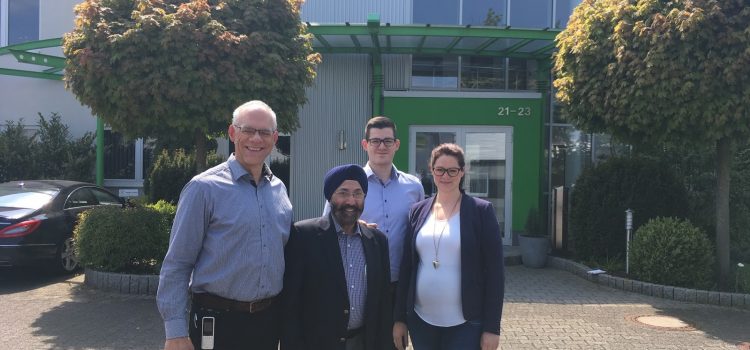
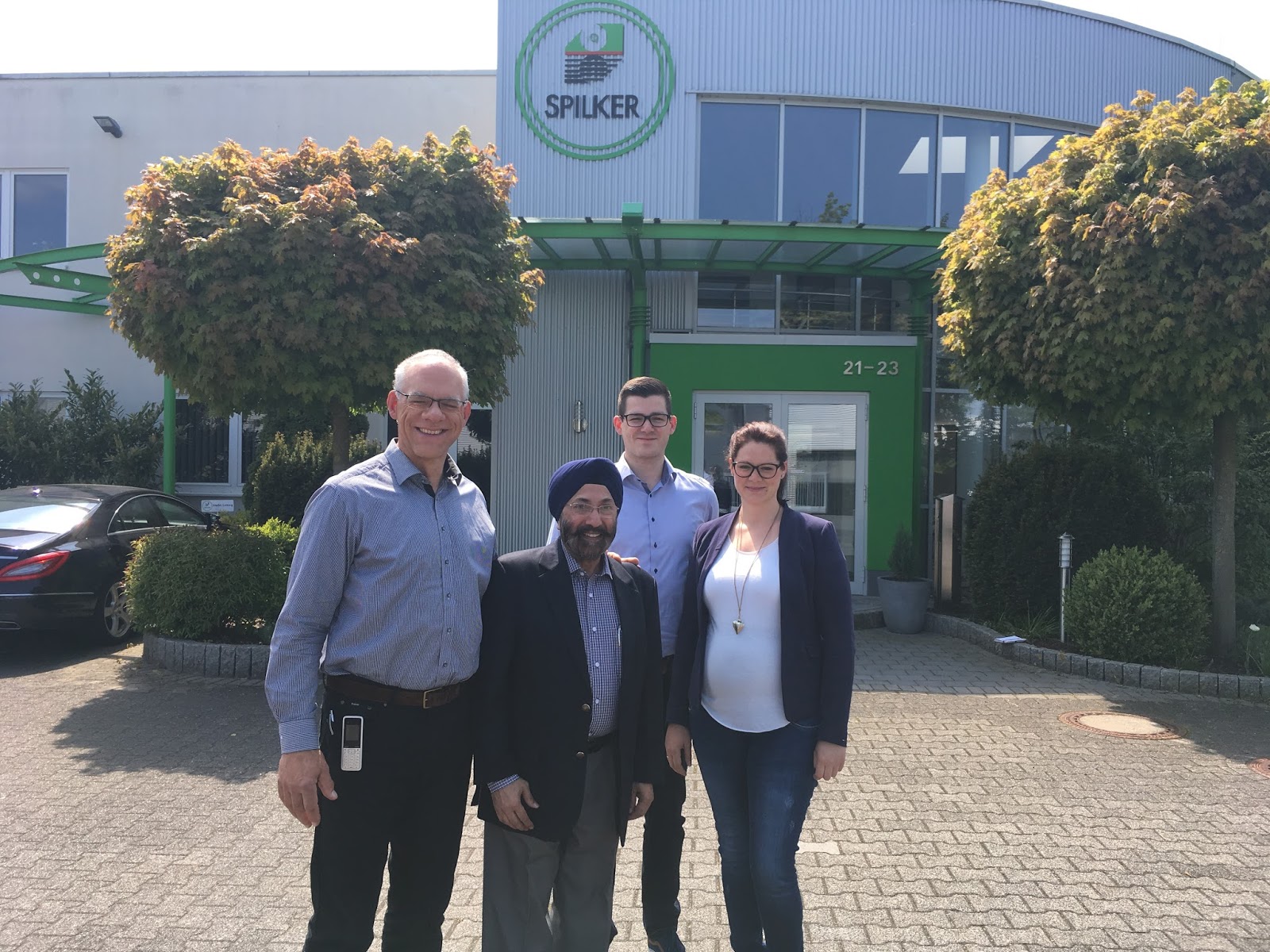
Andreas Spilker, Harveer Sahni, Henrik Spilker & Anika
 technically indulgent business owner, attributes this success to the inertia set in by his father Herbert Spilker. Even the day when this interview was to take place, Andreas was busy on the shop floor managing a new development. He is technically involved in all technical aspects of his company. His wife Katja is a home maker. Two out of his three children are already in the company. His daughter Anika born in 1990 and son Henrik born in 1988, joined the business in 2006. Henrik trained in metal engineering as a milling machine operator. After a stint in the company left to join university in 2010 and graduate in engineering. He returned to the company in 2015 to pursue his passion for technical innovation in workplace. He now looks after development of new tools, machine development and automation. Anika who has been in the company since 2006 is a refreshing personality, an imposing leader and leading her team by delegation. However still, her authority is evident in her area of operation.  She takes care of sales of rotary tools and in recent times has been passionately indulgent to grow the machine building business. Her husband is a police officer. The youngest offspring of Andreas, Marie at 19 years is still studying and only time will tell if she too joins the family business. The entire Spilker family are technology driven, Andreas remarked that none of them are accountants or management experts. “We can hire professionals for that but I am happy that the family is involved in production so as to turn out excellent, technically advanced and precision engineered products.
 
Getting over difficult times
 
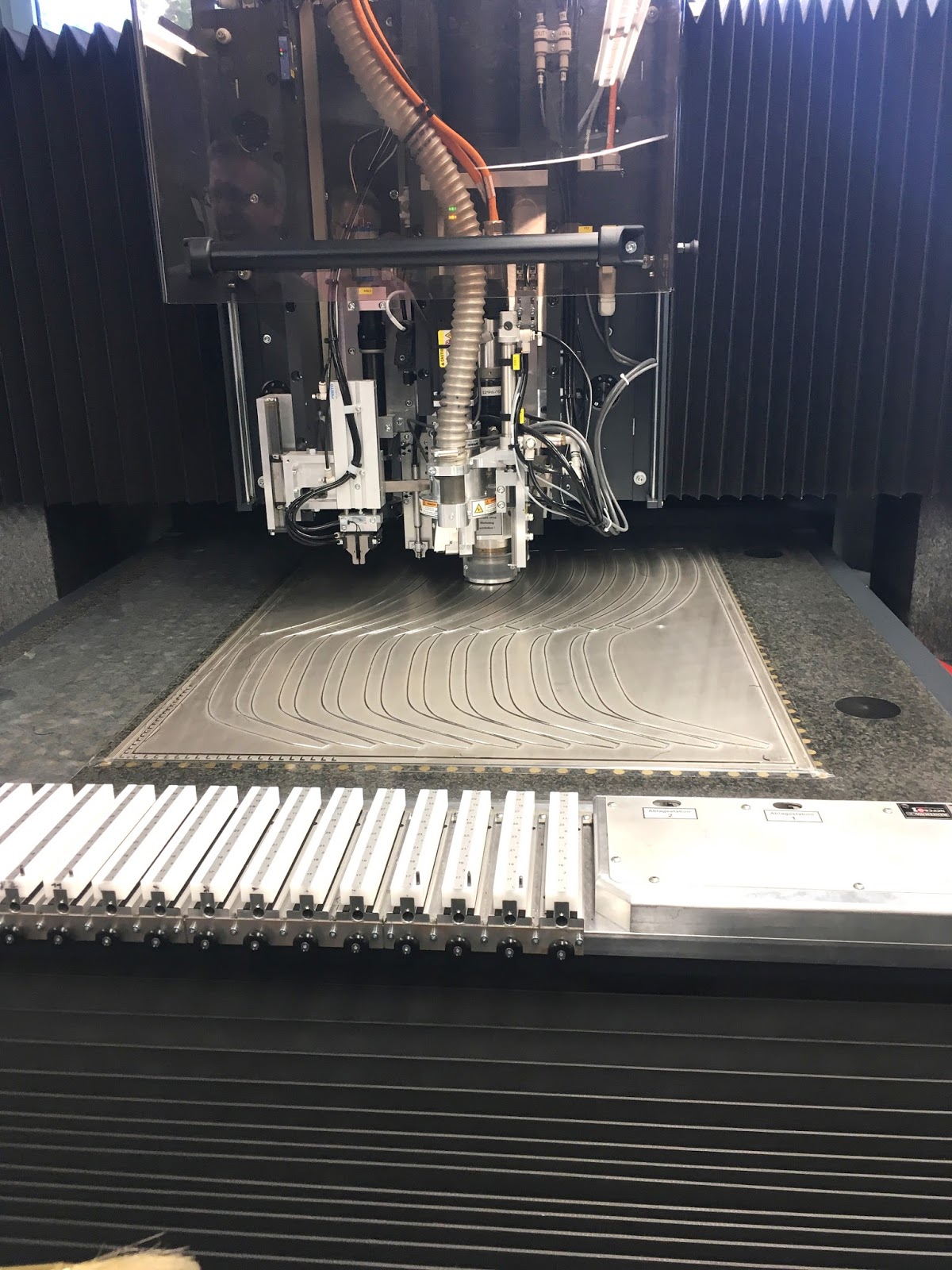
Flexible die in production
The economic slowdown of 2008 brought the most difficult time at Spilker. Ironically and with regret,at that time they had to give up loyal employees to stay afloat. The crisis came at a time when they had acquired an additional shop floor area from a neighbor to expand their production. They had to stall the production until things improved and they were back on their feet. Once out of recession they came out stronger and fit to carve out a path of permanent and fruitful growth. Spilker with 210 employees presently works out of shop floor area admeasuring 20,000 square meters or over 200,000 square feet. Sales at over 20 million Euros continue to grow steadily at 10% per annum. They try to find special solutions to customer’s problems and attend to them completely, offering combination of new processes and products. They endeavor to make perfect rotary dies helping customers to build required production systems to service their respective customers. Andreas says, “The more complicated is the problem, the better it is for us. We love challenges”.
 
 
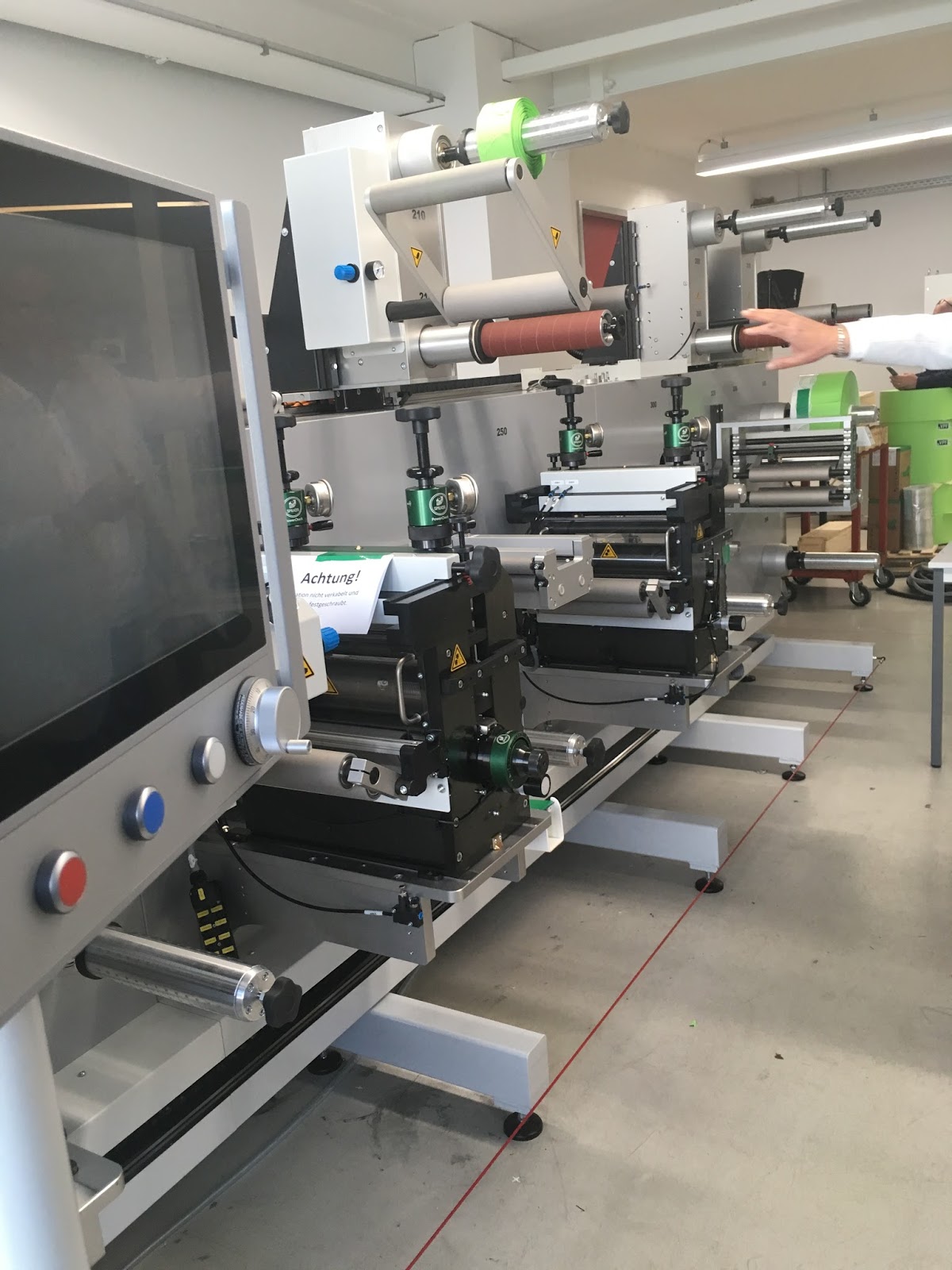
custom converting machine


The present business is spread into three business segments;
 
·         Rotary tooling that include rotary dies and magnetic cylinders
·         Flexible dies
·         Custom built machines

The above segments cater to the following industries;
 
·         Labels and printing
·         Medical and Pharmaceuticals
·         Automotive supplies
·         Electronics.


Magnetic Cylinder in production
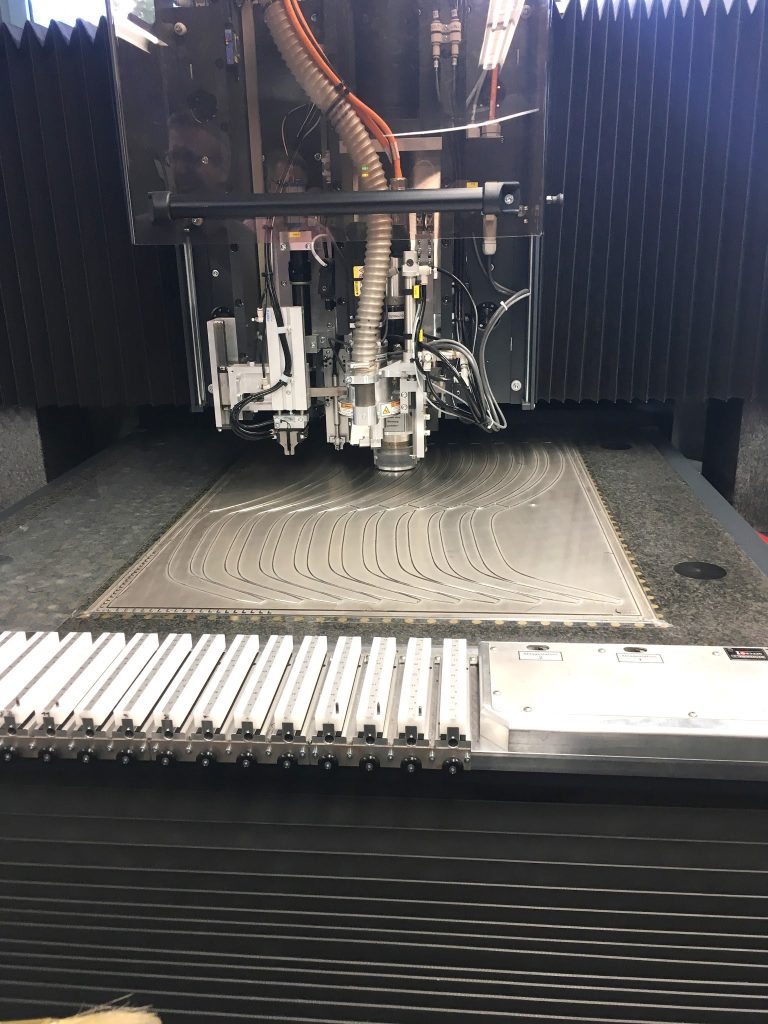
A walk through their factory shows perfect workflow, state of the art capital equipment and testing systems to turn out products of highest quality standards. New developments at Spilker include tools with nonstick coatings for clean cutting adhesive labels with aggressive adhesives, tools for adhesive tape and wound care products, MEP systems with ejector pins for medical plasters that have holes, Sonic dies for punching holes and suction of waste rounds, etc. As for expensive rotary dies they offer value to their customers by repeatedly sharpening the tools when they become blunt. 


Andreas is pensive in his thoughts about his future in the company. He asserts that now that his children are getting firmly involved in the running of Spilker, in 5 years he will like to leave the management to them and retire. His daughter Anika is optimistic on the future and asserts that the company will grow further in both label and non label segments. Both Henrik and Anika are making efforts to expand into machine building while maintaining the quality and growth of existing business. Indulgent youthful attributes guided by an experienced mentor parent is sure to take Spilker to another level of success.
 
Written exclusively for Narrow Web Tech, Germany by Harveer Sahni, Chairman, Weldon Celloplast Limited, New Delhi India May 2017 

The article maybe published with the permission of Narrow WebTech Germany giving credit to them and to the author

For advertising inquiries please email to; harveersahni@gmail.com