Die Cutting’s Impact on Matrix Removal and Rewinding

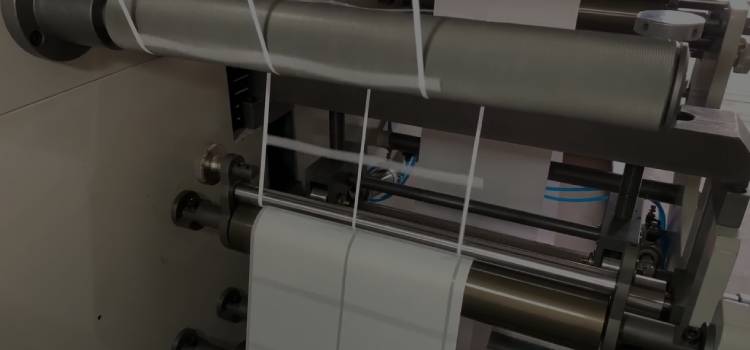
The die-cutting process extends beyond simply making cuts in the label material. Subsequent operations, including matrix removal—stripping waste material from finished labels—and rewinding the completed label roll, are directly influenced by the quality and parameters set during die cutting.

Matrix Removal: Challenges and Efficiency

Matrix removal difficulty is closely tied to blade height and cutting depth. When blades cut deeply into the liner, a pronounced score is left, which can make peeling the label easier. However, this can also lead to liner tearing during matrix stripping at high speeds. Balancing ease of label peeling with maintaining matrix integrity requires careful optimization, considering the specific application and production speed requirements.

Matrix removal efficiency depends on producing clean and complete cuts. If the die blade lacks sharpness or the cutting pressure is too low, labels may not separate cleanly from the matrix, resulting in tearing during stripping. Such issues generate waste and slow down production as operators must clear jams.

The shape of the label affects matrix removal as well. Small interior cuts, sharp corners, tight radius corners, and thin connecting strips in the matrix are more susceptible to tearing during stripping if die cutting is not precise. Dies should be designed with matrix removal in mind, sometimes incorporating relief cuts or modified geometries to reinforce the matrix in its most vulnerable areas.

Stripping Tension and Liner Integrity

Stripping tension needs to be carefully managed. If tension is too low, the matrix can bunch or fold, leading to unreliable stripping and potential web breaks. If tension is too high, labels may be pulled partially free from the liner if the kiss cutting depth is shallow, resulting in defects in the finished product.

Liner integrity after kiss cutting has a significant impact on rewinding quality and downstream performance. Liners deeply scored by excessive die penetration are more likely to break during rewinding, especially at the edges where tension is concentrated. This can cause production stops and waste. Even if the liners withstand rewinding, too much die-strike damage may result in failures when the label roll is unwound in applicators.

Edge Quality and Rewinding

Edge quality from die cutting influences how well labels are rewound. Rough or stringy edges can catch on to adjacent wraps as the roll builds, leading to telescoping (uneven roll sides) or starring (radial compression lines visible on the roll face). These defects compromise roll quality and may cause applicator problems when the labels are used.

Rewind tension control must consider the residual stresses introduced during die cutting. Materials stressed during cutting may display different tension characteristics compared to uncut material. Tension compensation is needed as the roll builds to maintain uniform roll density and prevent defects.

Diverse Types of Dies for Specialized Applications

Beyond the use of standard flexible and solid rotary dies, the label industry employs an array of specialized die types to meet the specific requirements of various applications and materials. These alternatives allow converters to address unique production challenges and enhance efficiency in niche scenarios.

Adjustable Dies

Adjustable dies are designed with removable blades, which can be replaced when worn or when different materials need to be processed. While less frequently used in narrow-web label converting, adjustable dies offer valuable flexibility for converters working with a wide variety of substrates, eliminating the need to keep extensive inventories of dies for each material type.

Combination Dies

Combination dies integrate multiple cutting functions into a single tool. For example, a combination die might feature both cutting and creasing blades, enabling the production of folding cartons or multi-panel labels in one pass. Perforation blades may also be included to create tear-off sections or features for easy opening. By consolidating several processes into a single die station, combination dies reduce the number of stations required, shorten setup times, and can improve registration accuracy by completing multiple operations in one controlled step.

Embossing and Debossing Dies

Embossing and debossing dies produce three-dimensional effects in label materials, enhancing visual appeal or providing tactile security features. These dies function through matched male and female patterns and require precise pressure control to ensure consistent depth without damaging the substrate. For embossing applications, magnetic cylinders with enhanced holding force are used to maintain die alignment under the substantial pressures involved.

Hot Stamping Dies

Hot stamping dies are used to transfer metallic or pigmented foils onto labels using heat and pressure. Although they are not cutting tools themselves, hot stamping cylinders are often integrated with die cutting stations for inline processing. These cylinders must manage both accurate temperature control and the mechanical requirements of maintaining the die or foil pattern in precise registration.

Perforation Dies

Perforation dies are engineered to create lines of weakness in materials, facilitating controlled tearing. The blades are precisely spaced, with cutting edges separated by gaps to produce an alternating cut-and-uncut pattern. The ratio of cut to tie length determines the ease of tearing and must be carefully designed for each application and material.

Micro-Perforation Dies

Micro-perforation dies refine the perforation process to produce nearly invisible perforations that still allow clean tearing. These dies are suited for security applications, pharmaceutical labels, and other situations where the perforation must remain hidden until use.

Normal vs. Laser-Hardened Dies

Choosing between standard dies and laser-hardened alternatives is a critical decision for label converters, balancing economic and performance factors.

Standard Dies

Standard dies are made from tool steel, CNC-machined to precise specifications, and heat-treated using conventional methods to achieve hardness levels between 52 and 58 HRC. These dies are reliable and cost-effective for many applications, making them ideal for short runs, prototyping, or processing less abrasive substrates. However, their limitations become apparent during high-volume runs or when converting abrasive materials such as thermal papers, thermal transfer stocks, or certain films. The cutting edge of standard dies gradually wears down and becomes rounded, which requires increased cutting pressure or slower line speeds. Eventually, dies must be re-sharpened or replaced, impacting productivity and increasing costs.

Laser-Hardened Dies

Laser-hardened dies employ focused laser energy to selectively harden the cutting edge, achieving hardness levels of 65-68 HRC, and up to 80 HRC for specialized chrome-coated versions. The laser hardening process creates a shallow, hardened zone at the cutting-edge tip while retaining normal hardness in the rest of the die for flexibility. This selective hardening significantly extends die life, sometimes by two or three times compared to conventional dies, reducing tooling costs per thousand labels produced. The harder edge stays sharper longer, ensuring consistent cutting quality and less frequent die changes or press adjustments. The hardened surface also reduces friction and adhesive buildup, preserving cutting quality and cleanliness. For converting abrasive thermal materials, laser-hardened dies may be the only practical option for achieving satisfactory production runs without constant maintenance.

Economically, laser-hardened dies are favored for high-volume applications. Although their initial cost may be significantly higher, their extended life and reduced downtime offer a compelling return on investment when producing millions of labels. Standard dies remain a better choice for short runs or frequently changing designs, given their lower upfront cost.

Alternative Die Cutting Technologies

While rotary die cutting is the mainstay of label production, alternative technologies are increasingly important for specialized applications and are gaining market share.

Semi-Rotary Die Cutting

Semi-rotary die cutting blends elements of flatbed and rotary systems. The web advances intermittently, while the die rotates. This hybrid mechanism enables fast changeovers and digital registration, making it ideal for digital-flexo hybrid presses where variable data printing is combined with die cutting. Although slower than full rotary systems, semi-rotary die cutting offers flexibility valuable for short runs and custom labels.

Laser Cutting: The Future of Label Die Cutting?

Laser cutting technology has advanced greatly, now serving as a viable alternative to conventional die cutting for many uses. It utilizes a focused laser beam to cut or perforate materials through controlled ablation and vaporization.

CO2 Lasers

CO2 lasers, operating at a 10.6-micron wavelength, are most used for labels, effectively cutting organic materials like paper, PET films, and polypropylene. Fiber lasers, working in the near-infrared spectrum, are gaining popularity for metallized materials and multi-layer constructions.

Laser cutting provides several advantages. Without the need for physical dies, setup times are reduced dramatically, and new patterns can be loaded within seconds. This makes laser cutting ideal for very short runs or custom labels where die costs would otherwise be prohibitive. Digital files allow for rapid design, iterations and customization, supporting personalized packaging and limited-edition products. Laser cutting delivers exceptional precision, enabling features as small as 0.1 mm and positional accuracy measured in microns. Complex shapes, small text, micro perforations, and other demanding features can be executed digitally with consistent quality.

However, laser cutting has limitations that prevent it from taking over high-volume label production. Speed is the primary constraint; even the fastest laser cutters lag behind rotary die cutting in throughput. Complex shapes further slow the process, making laser cutting less attractive for intricate designs despite its precision. Material compatibility also poses challenges. Some materials may release toxic fumes or reflect laser energy, making them difficult to cut. The heat-affected zone around laser cuts can cause discoloration or melting, impacting aesthetics or peel characteristics.

Operating costs for laser systems include high electrical consumption, regular replacement of laser components, and advanced exhaust systems to manage fumes and vaporized material. These costs must be considered when comparing economics to conventional die cutting. Despite these challenges, laser cutting is well-suited for security labels, pharmaceutical serialization, prototyping, and ultra-short runs. Hybrid systems that combine digital printing and laser cutting are expanding options for brand owners seeking customization.

Plotter-Type Die Cutting: Speed and Capabilities

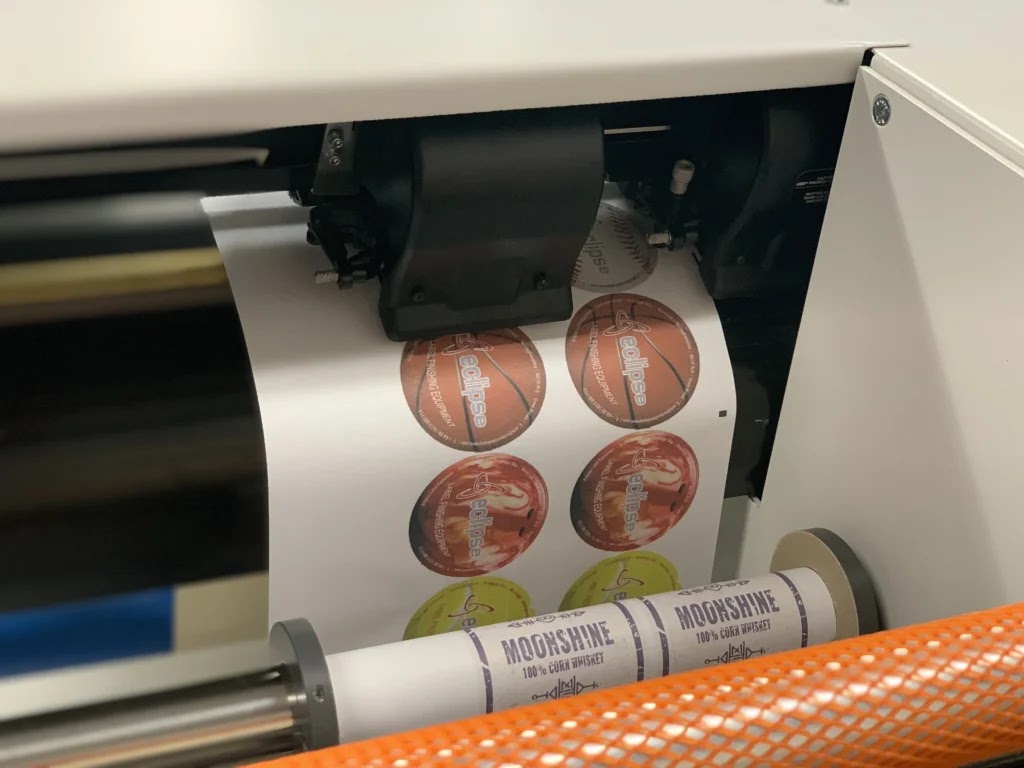
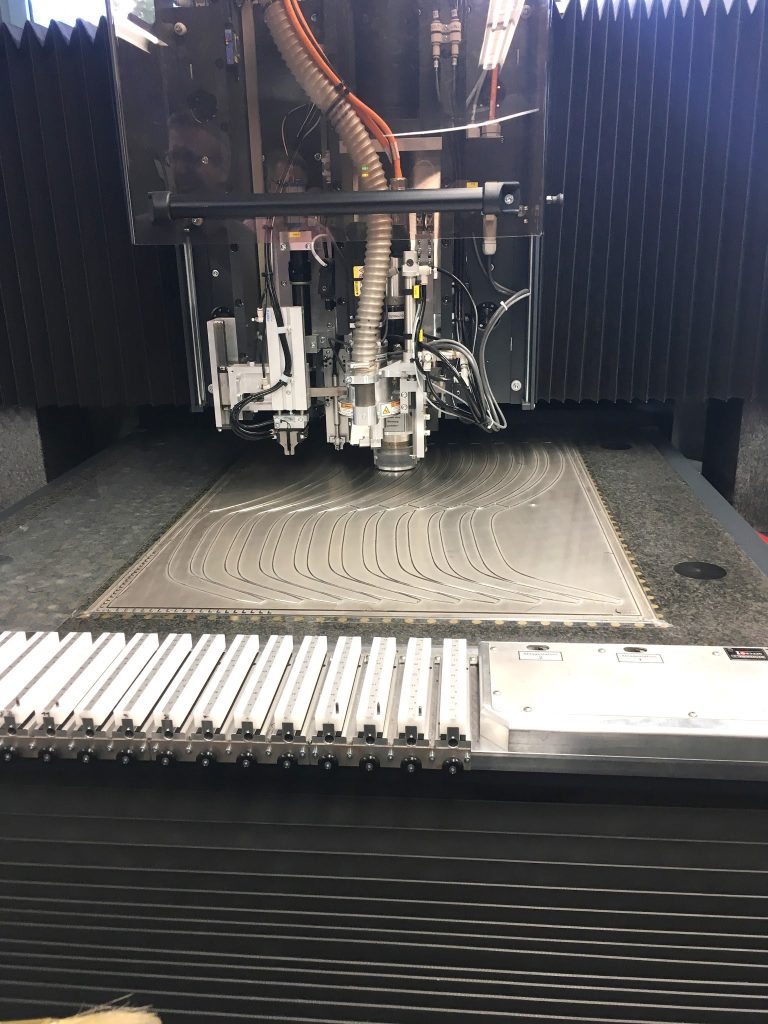
Digital plotter cutting systems use a computer-controlled knife or blade, guided by digital patterns. The cutting head moves along X and Y axes, with blade depth controlling penetration, enabling kiss cutting, through cutting, or creasing. Modern plotter systems can achieve speeds up to 60-80 meters per minute for simple shapes, though complex cutting paths reduce throughput. Their advantage lies in flexibility—job changeovers require only loading a new digital file rather than changing physical tooling.

Plotter systems excel in prototyping and short-run production. Design firms and brand owners can quickly produce physical label samples from digital artwork, accelerating product development. Custom labels in small quantities are economical without traditional die setup costs. Registration capabilities have advanced through camera-based systems that read registration marks, automatically compensating for printing variations and keeping cuts aligned. Some systems can even adjust for material distortion or skew, ensuring precise cutting.

Plotter cutting is compatible with many materials, though extremely stretchy materials may deform rather than cut cleanly, and abrasive materials can accelerate blade wear, requiring frequent replacement and increasing costs. Plotter systems are economically superior for runs below 5,000-10,000 labels, where die costs are the largest expense. As volume rises, slower speeds and higher per-unit costs make rotary die cutting more practical. The crossover point depends on label complexity, material, and die life expectations.

Hybrid workflows that combine digital printing and plotter cutting are enabling new business models, such as print-on-demand label services with no minimum orders or tooling charges. Variable data capabilities allow each label to be unique, supporting serialization, personalization, and limited-edition launches.

Written by Harveer Sahni, Chairman Weldon Celloplast Limited, New Delhi, April 2026

The pressure-sensitive adhesive labels industry owes its existence to a struggling clerk working in a loft above a flower shop in downtown Los Angeles. In 1935, Ray Stanton Avery, who went by name Stan, was living in near poverty, residing in a rented chicken coop while working at the Midnight Mission to pay his way through college. What he created with a $100 loan from his fiancée Dorothy Durfee would transform how products are labeled worldwide and launch an industry that today generates billions in revenue.

The Genesis: Stan Avery’s Revolutionary Label

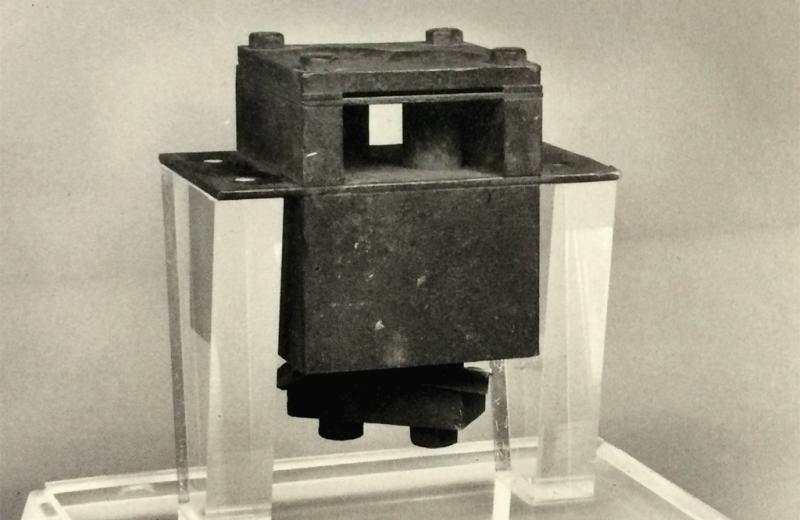
Stan Avery didn’t just invent the self-adhesive label, he invented the entire machinery to produce it. Using parts from a washing machine motor, a sewing machine, and a saber saw, he created and patented the world’s first self-adhesive, die-cut labeling machine. His company, initially named Kum Kleen Products, advertised the ability of these labels to be removed without leaving a mark on merchandise. The first Avery labels were simple, round price stickers meant for gift shops and retailers. In his first six months of operation, sales totaled a modest $1,391. Few could have imagined that this humble beginning would evolve into Avery Dennison, a Fortune 500 corporation with global operations across more than 50 countries and 36,000 employees worldwide.

The innovation Stan Avery brought to market solved a fundamental retail problem. Before pressure-sensitive labels, merchants relied on gummed labels that required moistening with water or paste, a time-consuming and messy process. Avery’s self-adhesive labels eliminated this inconvenience entirely, creating a faster and more practical labeling solution. His vision extended beyond the label itself to include the machinery for precise die-cutting, which would become the foundation of label converting technology.

By 1940, Avery had moved beyond his humble beginnings and officially started selling his products under the brand name Kum Kleen Price Stickers. The company incorporated in 1946 as Avery Adhesive Label Corporation, and in 1990 merged with Dennison Manufacturing to form Avery Dennison. Throughout his career, Stan Avery received 18 patents for his innovations in pressure-sensitive materials and production technologies. His legacy lives on, not just in the company that bears his name, but in every self-adhesive label produced today.

The Evolution of Die Cutting Technology

Die-cutting itself predates Stan Avery’s innovation by nearly a century. The process was invented in the mid-1800s to help the shoemaking industry. Cutting leather soles for shoes by hand was laborious, time-consuming, and expensive. The invention of the die-cutting machine revolutionized cobbler work, allowing shoes to be cut to consistent sizes and shapes rather than crafted individually. This standardization enabled modern shoe sizing as we know it today.

Flatbed Die Cutting: The Foundation

The earliest die-cutting machines used in the label industry were also flatbed presses. These hydraulically operated machines use a steel rule die to “click cut” or punch out die-cut parts by driving the die in a downward motion through the material. The flatbed die-cutting press operates much like a stamp, pressing a flat die onto material that sits on a stationary surface, applying even pressure to cut the material into the desired shape with each strike.

Flatbed dies are used with hydraulic or mechanical presses and other lifting systems to press a die down on a sheet of material. They are particularly suited for heavier materials and thicker substrates, making them less ideal for pressure-sensitive labels but excellent for applications requiring precision cutting of rigid materials. Steel-rule die cutting uses a formed strip of hardened steel set into a slotted plywood die-board, with rubber ejectors aiding part release after the cut.

While flatbed die cutting adapted for labels, offers excellent control over each cut and is ideal for intricate shapes with close tolerances, it operates at a considerably slower pace compared to rotary systems. Typical speeds range from 1,000 to 5,000 cycles per hour, making it suitable for small or mid-sized batches but impractical for high-volume label production. The tooling costs for flatbed dies are significantly lower than rotary alternatives, and the ability to make quick die changes makes them valuable for short-run or prototype jobs.

The Rotary Revolution in Label Converting

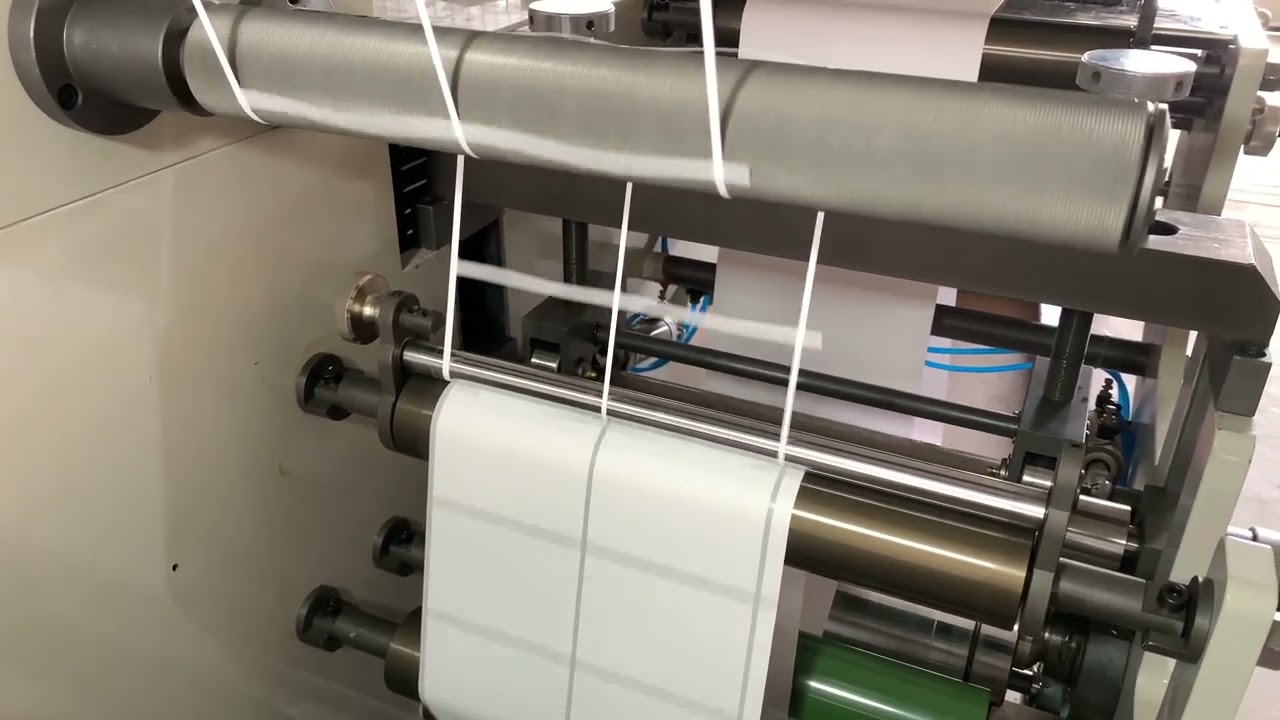
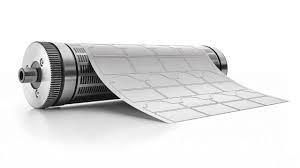
The transition from flatbed to rotary die cutting marked a transformative moment in label converting. Rotary die cutting uses a solid cylindrical die that rotates continuously in sync with the web material, paired with an anvil cylinder. The press feeds thin, flexible material, known as web, between these two cylinders. The cutting-edge pinches material against the anvil cylinder, producing clean cuts, perforations, or creases at exceptionally high speeds.

This method revolutionized label production by dramatically increasing throughput. Modern rotary die-cutting systems can reach 10,000 cycles per hour or more, with the fastest machines achieving speeds of 300 meters per minute. The ability to perform inline with printing and other finishing operations means that labels can be printed, die-cut, matrix stripped, and rewound in a single pass, transforming manufacturing efficiency.

A series of gears or servo motors now, force the die to rotate at the same speed as the rest of the press, ensuring that cuts line up precisely with the printing on the material. Rotary presses can incorporate multiple stations that die-cut specific shapes, perform perforations, create creases, or even cut the sheet or web into smaller sections. Some machines use automatic eye registration to ensure cuts and printing align with tolerances measured in fractions of a millimeter, critical for complex label designs and high-quality output.

The economics of rotary die cutting favor high-volume production. While the initial tooling costs are higher than flatbed alternatives, the operational efficiency brings labor expenses down over time. For standardized, repeat orders running into millions of labels, rotary systems offer compelling long-term value and unmatched productivity.

The Magnetic Cylinder Revolution

While the exact inventor and date of the magnetic cylinder for flexible dies are not definitively documented in available industry records, this innovation transformed the economics and flexibility of rotary die cutting. The magnetic cylinder system addressed a fundamental challenge: solid engraved rotary dies were expensive to manufacture, store, and transport, making them cost-prohibitive for short to medium production runs.

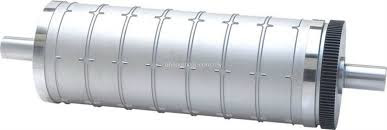
Magnetic cylinders are precision-engineered metal cylinders embedded with powerful magnets, either ceramic or neodymium rare earth magnets, on their surface. They are designed to hold flexible dies—thin, etched steel dies—firmly in place during rotary die cutting. The magnets ensure that every square inch of the flexible die remains securely pressed against the precision-ground cylinder surface, preventing any lifting or shifting during high-speed operation.

In 2005, Bunting Magnetics launched the X-treme Magnetic Die-Cutting Cylinder, the first magnetic die-cutting cylinder in the world with total run-out accuracy below 40 millionths of an inch (1 micron). This level of precision was revolutionary, enabling clean cuts even on extremely thin materials like 1-mil stock with less than 1-mil liners, on “no-look” labels, and on synthetic materials that previously posed challenges.

The advantages of magnetic cylinders transformed the label industry. Mounting and removing flexible dies takes just minutes, dramatically reducing downtime during job changeovers, particularly valuable in short-run label printing or multi-SKU packaging environments. The cylinders weigh significantly less than solid rotary dies, reducing operator fatigue, machine wear, and transportation costs. Most importantly, they enabled the use of flexible dies, which cost a fraction of solid engraved cylinders and could be stored flat, saving valuable warehouse space.

Today, magnetic cylinders are available for virtually all types of label presses and converting machinery, from brands like Mark Andy, Gallus, Nilpeter, Omet, Rotoflex, etc. Custom designs accommodate a variety of special applications, making magnetic cylinder systems remarkably versatile.

Flexible Dies: Engineering and Innovation

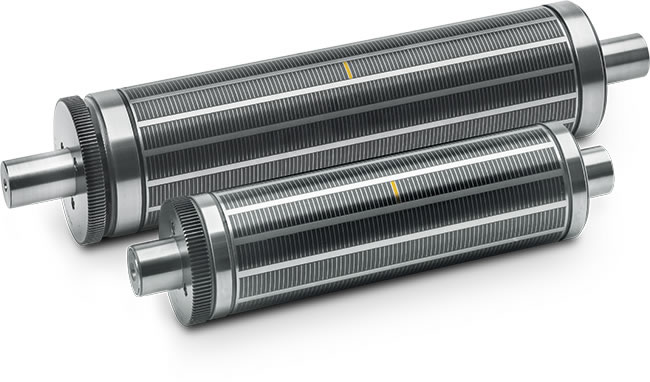
The development of flexible dies went hand in hand with magnetic cylinder technology. Flexible dies are thin sheets of steel, typically ranging from 0.5mm to 1.5mm in thickness, that wrap around magnetic cylinders and are used for rotary and semi-rotary presses. These dies are produced from specially formulated steel and undergo several sophisticated manufacturing processes.

Manufacturing Process

Production of flexible dies begins with plotting an image directly on the die material. Background material is then removed through chemical etching, and CNC mills create the required cutting or creasing lines with extraordinary precision. The cutting geometry includes profile heights ranging from 0.3mm to 1.5mm and cutting angles that vary based on the material being cut, typically from 30° to 110°.

The manufacturing process includes several optional treatments. Back grinding ensures consistent die thickness. Chemical de-burring smooths edges to prevent damage to the label stock. Most critically, laser hardening and various surface coatings dramatically extend die life and performance.

Die Materials and Surface Treatments

Standard flexible dies are CNC-sharpened and feature smooth polished cutting edges obtained using ultra-fine edge polishing techniques. These universal dies are suitable for all types of self-adhesive and single-material products including paper, PP, PE, PVC, PET, Tyvek, thin films on PET liner material, and other materials that are difficult to cut.

Laser hardening represented a breakthrough in die technology. Companies like Kocher + Beck were the first manufacturers in the world to achieve hardness levels of 65 to 68 HRC through laser hardening technology. This process extends die service life by two to three times longer than conventional dies. The laser hardening increases hardness at the tip of the cutting edge based on the carbon content in the steel, creating exceptional wear resistance while maintaining die flexibility.

For extremely demanding applications, chrome-coated dies offer even greater durability. A thin layer of chromium, typically 0.01mm thick with a hardness of 70-80 HRC, enables extremely high running performance with outstanding wear properties. These dies are particularly suited for abrasive thermal and thermal transfer papers used in longer production runs.

Non-stick coatings represent another important innovation. Special onyx or polymer coatings have no detrimental effect on the cutting-edge angle or sharpness while preventing adhesive and ink deposits on the cutting blades. These coatings are food-safe, FDA-approved, and significantly reduce downtime for die cleaning. The reduced friction and perfect resistance to wear enable maximum running performance with a consistently sharp cutting edge.

To be continued to part-2

Written by Harveer Sahni, Chairman Weldon Celloplast Limited, New Delhi, January 2026

Loupe is a simple, small magnification device used to see minute details more closely. They generally have higher magnification than magnifying glass. It is a small tool in the hands of most precision-oriented printers to check the print registration and quality of print. The magnification of content and its spread to other printing technologies envisioned through the loupe by the new owners of Labelexpo group made them expand the gamut, by renaming this premier event to include multiple segments of printing and packaging and be named Loupe! On the 15th of September 2025, on the opening day of Labelexpo 2025 at a new venue Fira Gran Via Barcelona Spain, Informa Markets the present owners of the event announced that Labelexpo had been transformed and renamed to be known hereafter as Loupe.

The Labelexpo exhibitions held in Europe, USA, China and India over the years have come to be referred to as the Mecca of successful label printers around the world. The Labelexpo exhibition was founded by Clive Smith in the year 1979, a year later in 1980 the first Labelexpo exhibition titled Labelex at that time, was held in London’s Royal Horticultural Hall, in a net area of 1000 square meters with just 44 exhibitors. Three shows later in 1985 the show was renamed as Labelexpo Europe and moved to Brussels and in 1998 it was sold to Tarsus who expanded the labelexpo to global destinations including India by acquiring the India Label Show in 2005 and renaming it as Labelexpo India in 2008. After growing the brand multifold in 2023, Labelexpo Global Series was acquired by Informa, the world’s largest B2B event organizer, commanding 800+ brands and 14,000 employees across 30 countries. On September 15th, 2025, Labelexpo not only moved from Brussels, its traditional venue of 20 years and moved to Fira Gran Via Barcelona Spain but also was transformed by the new owners to a different format. From being primarily a label event, it will now encompass the companies in various technologies that include besides labels, flexible packaging, cartons and various forms of packaging. While no mention is made for the total area covered by Labelexpo 2025, but it is mentioned that the show had 650 exhibitors from 138 countries.

Trying to get opinion of visitors, a questionnaire as follows was sent to some visitors and exhibitors;

  • What is your response regarding the shift of Labelexpo from Brussels to Barcelona? Is it better or was Brussels better ?
  • The shift of management from Tarsus to Informa Markets, was it a better organised event? Your opinion
  • The change of name from Labelexpo to Loupe, do you like it? Change of format from labels to packaging.
  • If sheet offset is also in the new format,  labels will be a miniscule portion. Your take?

Analysing the responses as an overview; At the very outset it will be pertinent to mention that this was a premium show where largely exhibitors drew value for money. It delivered the results envisaged!

However, being a predominantly European show, the larger number of visitors appeared to be more from the same region. As per the author’s personal perception there appeared to be a smaller number of visitors than before from the Indian subcontinent. Although the total number of attendees seemed lower, this observation is also based on perception, as Informa Markets has not released an official statement or press release to this effect. The city of Barcelona was amazing, but many would have loved to be on holiday in Spain and not just for an exhibition. As regards the change of venue from Brussels to Barcelona, the industry getting together and the camaraderie amongst peers at Grand Place in Brussels was missing, yet a majority of respondents feel it is a good move, and the show will settle down well in Barcelona. 

While change of management from Tarsus to Informa is a matter of record, in this edition of the show, there were problems in organization of the event. The signages were not only bad but unacceptable. The meticulous planning at Brussels was missing . Even the Gala dinner was a damp affair as compared to the grand sit down, well planned formal dinners at Brussels with great pomp and show. And there were no proper signages leading to the dinner venue. The author had to climb 3 floors to be told by the girl at the door that one has to go down 3 floors and come up another way after checking the wrist badges which we already adorned, even though the main hall was just a few steps from where she was. Not even caring for senior citizens! The air conditioning in the exhibition halls was inefficient  and in Hall 3 it was unbearably hot. Again, it is felt these are transitional glitches and will eventually be addressed.

The labels community at large has expressed that Labelexpo was a preferred name as it was their show and would wish it had continued so. However still, it is understood to be the prerogative of the show owners to change the name. It will probably settle down with time. The change of format from narrow web self-adhesive labels to include flexible packaging pouching in mold labels, and so, is acceptable. In fact, the roll form narrow to mid-web printing and converting appears to be the relevant format to extend the show towards. My last question, “ If sheet offset is also in the new format,  labels will be a miniscule portion. Your take?” drew the strongest response from a majority, “We cannot be a part of such a show where we lose our status as a part of the vibrant label industry.”

Reproduced below are some of the important comments of all the respondents. Producing all comments would make the article too long. 

Kuldip Goel CMD Any Graphics Noida India and past President LMAI: “Our experience of Brussels was better. I would not be repeating visit to Barcelona though I see that  Informa is doing a great job. I do not think  that the change in name is going to impact much, but Label Expo looks better. Label should be treated differently. Inclusion of Sheetfed Offset may make the event loose its uniqueness.”

Isidore Leiser, Owner Stratus Packaging, Brussels, Belgium: “Personally, I like a label show to remain focused on labels. If someone wants something broader, they can always go to Drupa.”

Naveen Talwar, Director Skypack India Pvt Ltd Faridabad India: “I prefer the Barcelona venue; it is closer to airport. It is a cleaner city compared to Brussels. I felt safer. Personally, I feel the show should stick to ‘roll to roll” converting. Sheet fed will make things totally different.”

Raul Silvestre, Lartec, Alicante Spain: “The change of venue to Barcelona is good but it was badly organized. Access for exhibitors was not allowed by own cars. We had to handle all boxes from door 4 to the stand, manually. Very Bad exit doors, only 2 available when the show has a lot to go out. I do not like the change of name and the format change. It should remain an event focused on labels. The change will result in lesser share for label industry visitors to have opportunity to contact and spend time with exhibitors.”

Amit Sheth, Director Intergraphics Mumbai India: “Frankly, the new organiser was not as efficient as the previous one . The signages were missing; the assistance desks in every intersection were missing; the maps of all the halls at each intersection were missing . As for format change from Labels to Packaging, Label being the primary subject should not be unfocussed. Merging packaging up to mid web  is fine but SHEETFED OFFSET OR ANY SHEET FORM MACHINES OR APPLICATIONS SHOULD NOT BE ENCOURAGED.”

Nitin Garg, Managing Director NBG Printographics Faridabad India: “The shift to Barcelona seems to be a good decision and will boost international participation. The event was well organized, with no complaints. This change of name is logical from the management’s perspective and aligns with the broader industry shift from labels to packaging. The success of Labelexpo stemmed from its clear focus on the label industry and the strong connections its management had within the sector across different countries. With the current shift toward packaging, it remains to be seen whether the same success can be replicated, as packaging is a much broader and more complex domain. The core focus should remain on labels.”

Ankit Gupta Managing Director Holostik Noida India: Barcelona was okay for us though I missed the weather and vibe of Brussels. The Expo was organised well but I neither like the change of format nor the change of name. Sheet offset should not be a part of this landmark show. It will lose its unique identity.”

Sandeep Sharma Director at Acme Rolltech Pvt Ltd Ahmedabad India: Barcelona was good as it creates new positive enthusiasm amongst the exhibitors as well as the visitors. Both Tarsus and Informa are good organisers. Except for the air conditioning issue which needs to be taken care of going forward, overall, it was a good show for us.

Nalani Jaichandra Director VeePee Graphics Bengaluru India: ´It is better in Barcelona, much safer than Brussels. The show was well organized but the name Labelexpo was more apt. Yes, this format widens the target market, which will bring in more visitors and as Labels is a part of packaging having everything under one roof will be better. Sheetfed offset should be kept out, the focus should be only on flexo and digital.

Dinesh Mahajan, Managing Director Prakash Labels Noida India: “Barcelona is as good as Brussels! Unfortunately, the event was not that well organized compared to what it used to be in Brussels. The name Labelexpo when spoken gives clear impression of what event we are talking about, though Loupe is not that explicit. Change of format seems all right, but Sheet offset should be resisted to be displayed in this event.

Mahendra Shah, Director at Renault Paper Products Pvt ltd. Mumbai: “After initial adverse reactions, once settled, the venue looks good. Organisational glitches will eventually be taken care of and sure to settle down. As for the name, I would prefer Labelexpo, it connects us to the event. The change of format is way forward. For the sheetfed offset segment, web converting is the future, and they should be visitors to the show.”

Summing up, it is generally felt the venue in Barcelona is acceptable or will gradually settle down with visitors from industry. The organization of the show will improve given the stature experience and capabilities of Informa Markets and the changed format restricted to web converting, preferably up to mid-web, will be widely welcomed but to include sheetfed offset will make it a replication of the many shows like Drupa. The wish to make it to specially focused labelexpo and meet label industry peers will diminish. We will wait to see how Labelexpo, renamed Loupe, will actually transform and find acceptability from the label fraternity.

Note: One day prior to the show that opened on 16th September 2025, on the 15th, Amit Sheth and the author Harveer Sahni, representing LMAI were the judges for World Label Awards and also attended the meeting of L9 the confederation of nine leading label associations of the world.

My short pictorial walk through the Labelexpo 2025:

Written by Harveer Sahni, Chairman Weldon Celloplast Limited New Delhi September 2025

For advertising on this blog and on website www.labelsandpackagingworld.com please email to

info@labelsandpackagingworld.com 

Celebrating 25 years of inception along with their biennial Conference themed, “Emerging Beyond Boundaries”, Label Manufacturers Association of India LMAI, delivered value! 

700 plus delegates were awestruck attending the seventh LMAI conference  at the picturesque and astounding venue, The Fairmont Palace Udaipur from 3rd to 6th July 2025. All 300 rooms at the property were booked at the venue Hotel and additionally 60 rooms were booked  in Hotel Aurika with a total of 360 rooms. 35 sponsors including some of the most renowned names in the world for the label manufacturing industry supported the event.  Kurz was the platinum sponsor and Avery Dennison the elite sponsor besides many others. Fairmont Udaipur Palace is an alluring destination to discover the charm of Udaipur, seamlessly blending timeless tradition with modern elegance, featuring a historic stepwell, one of Rajasthan’s largest ballrooms and exclusive events pool with jacuzzi and amphitheater. Nestled in the Aravalli Hills, it offered easy access to the city’s top attractions and cultural landmarks. In view of the author who has travelled the world over for diverse label events, 

This three nights-four days event, packed with amazing presentations and entertainment, was perhaps the biggest label event in the world”!

Traditional Rajasthani welcome awaited the delegates arriving by road rail and air. Local folk dancers, drums, music, garlands, traditional aarti and special beverages were a part of  the welcome on arrival while being ushered into the hotel. Excellent arrangements executed for their arrival and meticulous planning made it stress free checking-in for all guests. 

The conference was officially thrown open at 6PM on the 3rd of July 2025. The inaugural evening was themed patriotic, so the board of directors (BOD) were all wearing the Modi jackets and tricolor stoles around their necks.  

The welcome note was delivered by the LMAI President Rajesh Chadha.

The conference agenda information was given by the two conference Chairmen Manish Desai and Jaideep Singh. 

Pradeep Saroha events director of Labelexpo India came onstage to apprise  the audience about the upcoming Labelexpo Europe. 

This was followed by Raveendran Selvarajan, Managing Director of Seljegat Printers Pvt.Ltd. being conferred the fourth LMAI lifetime contribution award. 

It was a pleasant surprise that after a lapse of few years the LMAI founder president Surendra Kapur came to attend the conference.  

After a presentation by Stephane Royere from platinum sponsors Kurz, all the event sponsors were felicitated. 

Thereafter the Welcome night themed “Saar’e Jahan Se achha”, was thrown open for cocktails, dinner and entertainment by Mohit Verma and troupe. The delegates, eager to party, hit the dance floor until late in the evening. When asked to wrap up so that they are back in time for the presentations next day, happy people were heard saying, “Abhi toh party shuru huyee hai!” Means, the party has just begun.

The second day commenced with another presentation by Stephane Royere, Head of business area packaging and print, international sales and marketing, of Kurz India and followed by one from Jitesh Mehta senior Director LPM Avery Dennison India. 

The vibrant young girl Natasha Jaichandra director VEEPEE graphics enthralled the audience speaking on the ECG (expanded colour gamut).

After that followed an array of great presentations. Notable amongst them were from Appadurai country head of HP Indigo, Thomas Schweizer Global head of sales at Heidelberg Gallus.  

A huge attraction was LaBella!  She is an AI robot, she added glamour in leading delegates to wherever they wished to go!

Pawandeep Sahni, Managing Director of OMET India Private Limited made a high powered and energetic presentation pulling the audience into attention and becoming interactive. The presentation can be viewed on YouTube https://youtu.be/cVtHUPa-OGo?feature=shared Click the image on the left to watch the full presentation.

The preplanned motivational speaker’s slot had to be altered to the next day as Gaurav Arya, who was supposed to deliver the motivational speech, could not reach due to flight cancellations. The LMAI leadership must be commended for arranging yet another speaker in a short time. Anand Ranganathan, a renowned speaker, agreed to fly in on the next day that was final day and address the label fraternity. 

The label industry continues to evolve, emerging beyond boundaries. The wet glue or glue applied labels have continued to transform initially to self-adhesive labels, converted on narrow web label presses and register a high growth rate to reach more than 50% of all the labels produced in India. Later the narrow web converting started to expand owing to evolution and labels, moved into diverse tangents. To dwell on the impact of this expansion and the modalities involved, the first program on the 3rd day was a panel discussion moderated by the author Harveer Sahni and titled, “Narrow web label converting expanding to diverse applications”. The panelists were leading Indian printers in narrow web converting, Priyata Raghavan Deputy CEO of Sai Packaging, Mehzabin Nair Managing Director Skanem India, Ankit Gupta Jt. Managing Director Holostik Limited, Hemanth Paruchuri director Pragati Pack, Denver Annunciation Director Janus International and Stephane Royere of Kurz India. The impact and future of this expansion was discussed at length in the panel. 

The panel discussion was followed by a very interesting and confident presentation for Weigang by the young daughter of LMAI founder Amit Sheth.

More presentations followed until noon after which the motivational speaker Anand Ranganathan came onstage to deliver his speech. Following this a round table interaction was arranged for all sponsors to interact with printers. Each sponsor was given a table on which printers would visit in batches of six each to enable sponsors the opportunity to interact with their customers. 

The day culminated in a gala evening hosted by Kurz India. The dress code was “Men in Black” and for ladies it was “Glitter” to add shimmer to the vibrant evening started with an amazing 

laser show by special artists. 

After Jitender Pal Singh CEO of Kurz India addressed the gathering, LMAI past president Vivek Kapoor delivered a vote of thanks. 

It was then time for the celebrity performer Asees Kaur to add fun to the entertainment and prompt the delegates to hit the bar and the dance floor enjoying until late in the night or the wee hours of morning.

All good things come to an end, leaving nostalgic memories of fellowship, togetherness, networking, knowledge delivery and entertainment. It was time to go back home with perfect departures arranged so that there are no inconveniences.  This covering of the event would be incomplete without appreciating the amazing venue overlooking lush green hills all around, the weather was fantastic, the hotel staff was hospitable in the true sense of the word. 

The general Manager Vishrut Gupta was always around with his team responding to guests personally and as for the food, kudos to Amitesh Virdi the culinary director and his team who did a wonderful job delivering taste.

The events organizing company led by the beautiful Hemal Bhagwat created precision in every aspect of the stay from arrival to departure. Delegates have been showering praise ever since.

The LMAI board of directors need to congratulate themselves for having created and delivered this mind-boggling big event, bigger and better than the best in the world. The icing on the cake is wonderful appreciations pouring in from delegates and sponsors. It is an encouragement to imagine and plan more for the next conference!

Written by Harveer Sahni, Chairman Weldon Celloplast Limited, New Delhi July 2025

More Images from the conference:

The late Umendra Kumar Gupta (hereinafter referred to as UKG), a veteran in the anticounterfeiting industry, founder and former President of the Authentication Solution Providers Association (ASPA) and CMD of Holostik India, was born in 1954 into a family of freedom fighters and farmers from Dhampur in the Bijnor district of Uttar Pradesh. His father, a farmer who emphasized ethics and hard work, taught his children to live honestly, respect family values, and support one another. UKG’s parents established a foundation based on resilience and moral courage, which continues to influence their descendants. Coming from a close-knit bonded family of four brothers and two sisters, UKG after finishing his schooling at Dhampur pursued BBA and MBA from Banaras Hindu University. All brothers ventured into diverse businesses.

UKG, a man with entrepreneurial spirit, did not wait for the ‘right time’, he believed in creating opportunities rather than waiting for them. The urge to build something of his own was evident from the very beginning. Right after completing his education, he chose to start his own venture instead of taking up a job. In the mid-1960s, polyethylene entered India, and its plastic products gained popularity. UKG founded his first venture in 1978 to produce polyethylene bags that had become fancy at that time. He later pursued various projects including Sulfur crushing, water tanks under the POLYWELL brand, and warehousing through his company United Warehousing. His group of companies then were known as Ukay Group. The pivotal moment was in 1991 when he established Holostik India, one of the earliest hologram manufacturing companies in India, renaming his group of companies as Holostik Group in 2008, marking the beginning of his legacy. Holostik under UKG’s leadership, quickly grew to become the largest producer of holograms in the world. As the market evolved, they expanded to become a comprehensive anti-counterfeiting solutions provider. A remarkably self-driven individual, UKG believed in learning from every experience and from every person he met. Life itself was his biggest teacher.

UKG was an ambitious hardworking entrepreneur and indulged in products ahead of time. He continued to expand into new industries with passion and foresight. In 2008, he launched United Multichem, a venture into aroma chemicals and essential oils. In 2015, extending his global outreach for holographic products, Holoprint was established in Dubai getting a foothold in the Middle East and gradually expanding globally. In 2020, Holostik group invested in sustainability by launching NaturTrust—a brand focused on biodegradable products. Around the same time, CAMVEDA was launched to produce pure Camphor products under United Multichem. In 2005, Holostik began diversifying into holographic packaging foils and pouches, this marked their entry into secure packaging. They also introduced shrink sleeves, security labels in 2015 and mono-cartons in 2018  as a part of packaging. This evolution was a natural extension of their core mission to protect brands, ensure product authenticity, and offer end-to-end solutions that combine innovation, trust, and performance.

Though UKG’s first customer was Kores India Ltd., yet the turning point came in 1995 when T. N. Seshan, the then Chief Election Commissioner of India, approved use of holograms on Election ID cards. That endorsement not only validated the technology but also opened the doors for widespread adoption across government and private sector, initiating Holostik’s journey in secure packaging and authentication. Another milestone came in 1999, they convinced the excise department to implement holographic labels on liquor bottles as a measure to prevent counterfeiting and revenue leakage. With a strong holography background, entering the label business was new for Holostik. Security labels weren’t just another product added in their range, these provide anti-counterfeiting measures and authenticity while regular product labels are meant for aesthetics or branding. Shifting focuses on continuous innovation and extending security features to product labels, they also became a part of their offerings.

All businesses in their path from inception to growth come across hardships and difficult times, The fittest take them in their stride and move on. UKG too faced many hardships and one of the toughest ones was during his water tank business, his entire factory was engulfed in a massive fire. It was something he built from scratch, and he was in extreme emotional distress. A determined and resilient UKG built it all back as Holostik, single handedly and moved ahead in life to grow his business. None of his siblings were involved in the same business. Each of them chose different paths and built careers in diverse sectors. He respected and encouraged that individuality. Holostik was his own vision, nurtured independently, he worked hard and kept taking it higher with innovation and creativity.

UKG married, Vandana Gupta, in 1980, she is a well-educated person having completed her B.Sc., M.Sc., and B.Ed. . UKG and Vandana have two sons Ankit and Shobhit. She remains a pillar of strength for her family. Vandana chose to be a home maker, but her influence on the upbringing of her sons has been immense. While she was taking care of the household, her husband was scaling up his business setting new benchmarks. In 2010, Holostik was recognized among the top 500 fastest-growing Indian companies by Inc. magazine, and in 2013, they were named amongst the ‘Most Innovative 100 Companies’ by the same publication. In 2017 they were recognised as a leading SME in IT and IT-enabled services company. In 2019 their R&D labs were accredited by DSIR, receiving the prestigious CII Industrial Innovation Award. He was one of the founding members of Authentication Solution Providers Association (ASPA) and guided it to build brand protection ecosystem in India. He was the recipient of the coveted Economic Times Lifetime Achievement Award in 2020.

Each of these recognitions reflect UKG’s relentless pursuit of innovation and quality, a legacy that his inheritors would continue to carry forward. He was a legend in the holographic and authentication industry, sadly on the 1st of June 2021, the legend Umendra Kumar Gupta aged 67 years, passed away!

The Gen-Next

Carrying forward the legacy of their illustrious father U K Gupta are his two sons Ankit and Shobhit as Joint Managing Directors. Both brothers complementing each other are jointly leading the Holostik Group, which spans across multiple business verticals including print and packaging, chemicals, and real estate—with operations both in India and the Middle East. Shobhit specifically heads the chemical division, oversees their Dubai operations besides managing key segments of the packaging business. Their father was the guiding force behind Holostik. His presence commanded immense respect, both within the organization and across the industry. For both, stepping into their father’s shoes honoring his legacy, upholding the values he built the company on, and carrying forward the trust he had earned over decades was not an easy task. That transition eventually came to the duo with a lot of emotional responsibility with renewed motivation to take Holostik to even greater heights.

1981 born Ankit Gupta did his initial schooling at Modern School, New Delhi and followed it by Computer Engineering from Bangalore. Later he took a job in the Aditya Birla Group in Mumbai, where he worked for two years gaining valuable exposure to corporate operations, exposure to different functions, the scale at which things operated. He then pursued and completed his MBA at UCLA Anderson Los Angeles USA and IIM Ahmedabad (exchange transfer program) thereby earning alumni status at both institutions. Post-MBA, in 2007, he had a consulting job offer in Boston with a $100,000 annual package but the entrepreneurial ambition prevailed, and he decided to return to India and start his maiden venture in hospitality, setting up a restaurant named ‘Mocha in Delhi which he ran successfully for four years. Finding real estate an exciting business, he quit the restaurant business and began developing real estate projects in Gurgaon and later started a chemical trading business focused on flavors and fragrances, which continues within the Holostik group. In 2015, Ankit enrolled in the Owner/President Management (OPM) program at Harvard Business School. It was a transformative three-year experience spending a few months each year on the HBS campus, eventually becoming an alumnus of Harvard.

At this juncture, Ankit decided to join the family business by becoming involved in Holostik’s HR, Marketing & Communications departments. Meanwhile Holostik has evolved from being a prominent manufacturer of holograms and labels to a comprehensive authentication solutions provider. 

His brother Shobhit, holding an engineering degree from Delhi College of Engineering, completed his MBA from the Richard Ivey School of Business in Canada. He started his career at Evalueserve Gurgaon and later joined Holostik in 2007. Together the brothers remain united by the common goal of taking their father’s vision to new heights.

In 2007 Ankit got married to Neha, an engineer with an MBA, who started her professional journey with HDFC Bank. For a brief period, she was involved in business, initially supporting the Mocha hospitality project and then in 2008 she was involved in setting up the HR department at Holostik. Over time, she explored different creative avenues, serving as the editor of a few publications, and as a director at NIMAI, a niche jewellery brand. She is now focused on raising her two children, son Vivan 14 years studying in 9th and daughter Jiya 11 years studying in 7th. Once the children are on their own, Neha may plan to return to some profession. Shobhit got married in 2010 to Mansi, and they are blessed with two children, son Aryaveer and daughter Nitara. Mansi has been a part of the sales and marketing team at Bentley Motors. She is now involved in the group’s CAMVEDA business, guiding the team on marketing initiatives. Both brothers express that the unwavering support of spouses has been instrumental in helping them focus on building and growing Holostik.

Talking about his mentorship, Ankit says, “My father has been my greatest mentor, his values, clarity of thought, and resilience continue to inspire me every single day. I stepped into the labels and packaging space as a second-generation entrepreneur. With a huge legacy, one inherits both the assets and responsibilities. It is not just about enjoying the perks of what the first generation built, it is about carrying that forward elevating it.” He further adds, “My most memorable success was launching the Café Mocha brand in Delhi. It was my first independent venture after returning from UCLA, it was a creative expression of what I had learned about entrepreneurship, consumer experience, and brand building. Confident after the success with Mocha, I could take on challenges when I eventually joined in leadership role in Holostik with deep understanding to scale-up the business.

 One of the biggest challenges for any second-generation entrepreneur is earning respect, it takes time for people to stop seeing you as just the founder’s son trusting your vision and decisions. For me, that journey of achieving credibility and proving my approach took some time. For Shobhit, the challenge was different. He took on the responsibility of starting Holoprint from scratch and building it into a specialized entity to cater to international markets. Establishing a new company under the larger umbrella of Holostik, carving out its space, and scaling it to a new level was no small feat. We’ve both faced different challenges, but what’s united us is the drive to build on our father’s legacy while creating something of our own.

Ankit was conferred on the prestigious Larry Wolfen Award for Entrepreneurial Spirit at UCLA in 2006. He has made presentations and shared technical papers at more than 20 events hosted by reputed organizations like CII, PHD Chamber, IHMA, ASPA, and several other key platforms in the printing and packaging industry, engaging with diverse audiences. In 2017, he was interviewed by Radio One as a Shark for startup investments for sharing insights on entrepreneurship and what makes a venture investable.

Both Shobhit and Ankit are committed to sustainability. One of their key initiatives has been the installation of a 500 kWp solar power plant at the Greater Noida manufacturing facility, reducing carbon footprint and embracing clean energy. They have developed sustainable alternatives like paper holograms and are exploring holography on wide web paper substrates to replace polyester. The Holostik Group consists of seven diverse companies including Holostik India, United Multichem, Holoprint, NaturTrust, Utopia Digitech, CAMVEDA, ThinkNext Village, and United Services operating with a workforce of over 750. They operate from more than seven state-of-the-art manufacturing facilities spread across over 40,000 square meters. Their corporate headquarters are in Okhla, New Delhi, apart from 12 offices strategically located across the country. Holostik’s exports to more than 90 countries are a testament to their quality, innovation, and reliability.

Ankit summed it up interestingly on behalf of Shobhit and himself. The brothers are united in delivering excellence to the legacy passed on to them by their father, the legend; Umendra Kumar Gupta. He says, “Success does not come overnight—it is built through consistency, perseverance, and staying true to your values. I strongly believe in the philosophy of ‘Ek aur ek gyarah’—because when people align with a shared purpose, 1 + 1 can truly become 11. Plan well, de-risk wherever you can, and most importantly—keep going, no matter what. Or as I like to say… Lage Raho Munna Bhai!

(Lage Raho Munna Bhai! Is name of popular Indian film but it actually means; Keep working brother! Or in the author’s interpretation it means, “The show must go on!”)

Written by Harveer Sahni Chairman Weldon Celloplast Limited New Delhi May 2025

The last Labelexpo India 2022 was witness to an interesting evolution in the display of high-end label printing presses. For the first time since the inception of this show, the European and American presses running live were missing.

However, the flexo presses displayed at this all-important label exhibition were made in India. This was an indicator towards the Indian press manufacturers to have come of age. These Indian manufacturers are now, not only announcing sales in India but also succeeding in the global label arena. An interesting part of this evolution is that most of the successful brands of flexo presses that have been developed come from Faridabad, the neighboring industrial suburb of New Delhi. Faridabad is a part of NCR Delhi and a major industrial hub of the state of Haryana. It is famous for henna production from the agricultural sector, while tractors, motorcycles, switch gears, refrigerators, shoes, tyres and garments constitute its primary industrial products. There is reason why most of the leading brands of Indian made flexo presses are from this city. These presses include Multitec, Webtech, NBG, Label Flex and many other smaller ones. Even UV Graphic technologies now headquartered in NOIDA, started their manufacturing in partnership with Faridabad based Multitec. 

The credit of printing equipment manufacturing industry flourishing and growing in this city goes to the establishment and transformation of a company founded by Kishan Das Kohli, a man who fought for the independence of India prior to its partitioning.

The Printers House now renamed as TPH Orient group was founded by Kohli in 1946 as an agency house bringing global printing technology to India. He was responsible for installations, commissioning, providing technical expertise and operators for the imported equipment. For the pioneering work he did for the printing industry in India, he received numerous awards that included the Kohinoor Ratna award. An enterprising businessman, he started manufacturing printing presses in India in the mid-1960s initiating his maiden startup manufacturing unit in Faridabad to build letterpress and offset printing presses there. Around this manufacturing unit, an ecosystem of mechanical engineering professionals and engineering companies was built and went on growing. Many companies now making flexo presses or any other type of presses in Faridabad first started out as their vendors. Making any type of press requires components such as frames, cylinders, etc.

The Printers House helped create the infrastructure and this supply chain in Faridabad, which is what makes it ideal for printing press manufacturing hub. Later another company Sud and Warren led by Baldev Sud, Arora and Ahuja  also commenced manufacturing  slitting machines and later web-based computer stationery. The company did not grow as envisaged and some of their ex-employees are now narrow web label press manufacturers

I, the author, having had two factories in Faridabad since the 1960s, producing stationery and silicone release papers under the brand Weldon, had  heard a lot about The Printers House and the kind of work they had done. Weldon’s vendors in earlier days used to print their packaging on the old traditional treadle presses and when the Mercedes automatic presses from TPH were launched, it was a game changing moment. The author reminisces an evening during a party in connection with Printpack India in 1991, he was introduced a tall smart man who was surrounded by print industry stalwarts of that time. He was  Manmohan Kohli, heading The Printers House (TPH) and was the son of the founder K D Kohli. Manmohan was an alumnus of ETH Switzerland, a university of science and technology from where he passed out as gold medalist engineer.

He pioneered the evolution of printing technology in India. Under his leadership TPH became a name to be reckoned with globally, having installations in over 60 countries. Manmohan Kohli, a legend in Indian printing equipment industry,  passed away in June 2022 at the age of 83 years passing the reigns of the company to his only young son Rishab Kohli who now aged 28 years heads TPH as Managing Director.

The first few years of Rishab’s schooling were at New Delhi based Sanskriti School and thereafter he was sent to Gordonstoun school in Scotland. Finishing school in Scotland, he joined Georgetown university in Washington DC where he studied economics and had the opportunity to go through numerous internships in Washington DC including prominent lobbyist firms and international organisations. Completing his education at university, he initiated his career in the United States in finance/investment banking in the US where he worked between the US and Europe extensively. Thereafter he returned to India and in 2020 he took over the reigns of The Printers House now renamed The TPH Orient group, as CEO. Backed by his experience and pedigree in business he envisioned to create a group of companies in India that would cater to the printing , packaging, and other industries.

On assuming the leadership in TPH, Rishab worked with numerous partners across the globe to acquire technology and bring it to India. He saw the label segment growing rapidly and felt there is high reliance on imports on capital equipment in this segment. On his indulgence, TPH  launched their flexo and inkjet label press, extending their application to packaging as well. Given the infrastructure available at TPH, Rishab has decided to produce equipment with economy of scale to make it cost effective and such that customers feel secure with their investment and service. He felt the technical expertise to produce flexo and digital label presses of global standards was still needing upgradation, so he or his team travelled to acquire appropriate technologies.

Rishab mentions that development of the first fully digital ink delivery system made by them in India that successfully printed a full color label at high speeds is huge achievement for TPH. Being the first of its kind developed in India, it will remain as one of the most memorable moments. With the ability to print at 1200 DPI with in-house dynamic RIP (RIP stands for Raster Imaging Processor software), it is a prime competitor to the established leaders in the field of digital label printing. He gives credit for support, guidance and help to the late Ramani Vishwanathan who was a pioneer in digital printing in India. He helped Rishab create this technology. Justifying his move into Digital label printing equipment he states that Inkjet is crucial for label printing due to several macroeconomic factors and market forces. With the rise in short run jobs and customization in packaging, a roll fed digital press is crucial to meet the needs of end clients. Additionally, with the speeds of inkjet presses increasing and head technology advancing at the pace that it is, the mid to long runs may also be catered to by inkjet.

As regards the flexo press developed by them, he asserts, “It is the fastest Indian made machine of its kind at this moment. Additionally, we offer sleeve technology and narrow web along with wider width options.”

The TPH Orient group is now a diversified group of companies and a market leader in printing machinery, packaging machinery , printing consumables , engineering services for defence, aerospace, and solar. They have 800 employees spread over a 20-acre campus and 6 factories in Faridabad working in numerous segments. They also now manufacture inkjet presses, flexo presses, folder gluers, web offset presses, printing chemicals etc. They have one of the largest CNC machine shops in north India and perhaps largest in Faridabad. According to Rishab, TPH Orient group is the largest Indian exporter of printing machines with exports to 60 countries. They have service engineers and offices in 12 locations in India and presence worldwide. They are considering extending manufacturing operations in foreign locations.

Talking of challenging times in his short career, Rishab says, “Covid was a tough period, but we got through it, taking every day at a time. But a lot was learnt, and we came out of it stronger.” In his journey so far, a key member of TPH board of directors, Naveen Chahal, has been a mentor to him. Being an extremely experienced person, his guidance has helped the turnover grow to over 15 times the figure when Rishab took over. In printing and packaging Rishab acknowledges the guidance of Christoph Mueller, director Koenig and Bauer, for his guidance in quality enhancement of their products.

Rishab Kohli sums up his vision for the future as, “The key for Orient in the printing and packaging industry is to provide a holistic solution to the printing and packaging community worldwide. We have a simple goal which is to be the largest equipment supplier in our field coming out of India and ideally Asia in this segment. With our infrastructure , scale, and history this is a realistic and an important 5-year goal.”

 Written by Harveer Sahni, Chairman Weldon Celloplast Limited New Delhi August 2024