Storing Magnetic Cylinders and Dies: Best Practices

Proper storage and handling of magnetic cylinders and dies directly impacts their service life and the quality they deliver. These precision tools represent significant capital investments that deserve appropriate care.

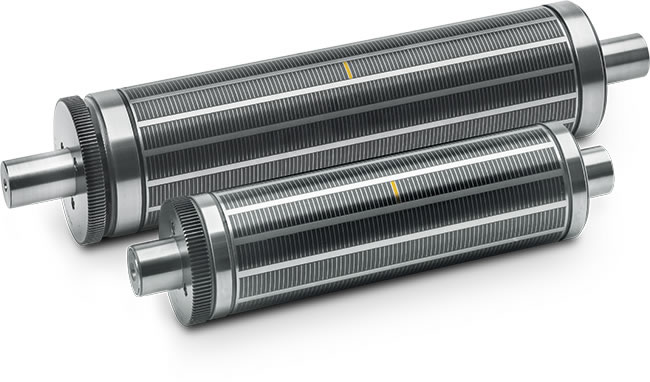
Magnetic cylinder storage begins with cleanliness. Before storage, cylinders must be thoroughly cleaned to remove any adhesive residue, ink deposits, or debris. Even microscopic contamination can attract moisture, leading to corrosion that damages the precision-ground surface. A light coating of rust-preventive oil protects the surface, though this must be removed before the cylinder returns to service.
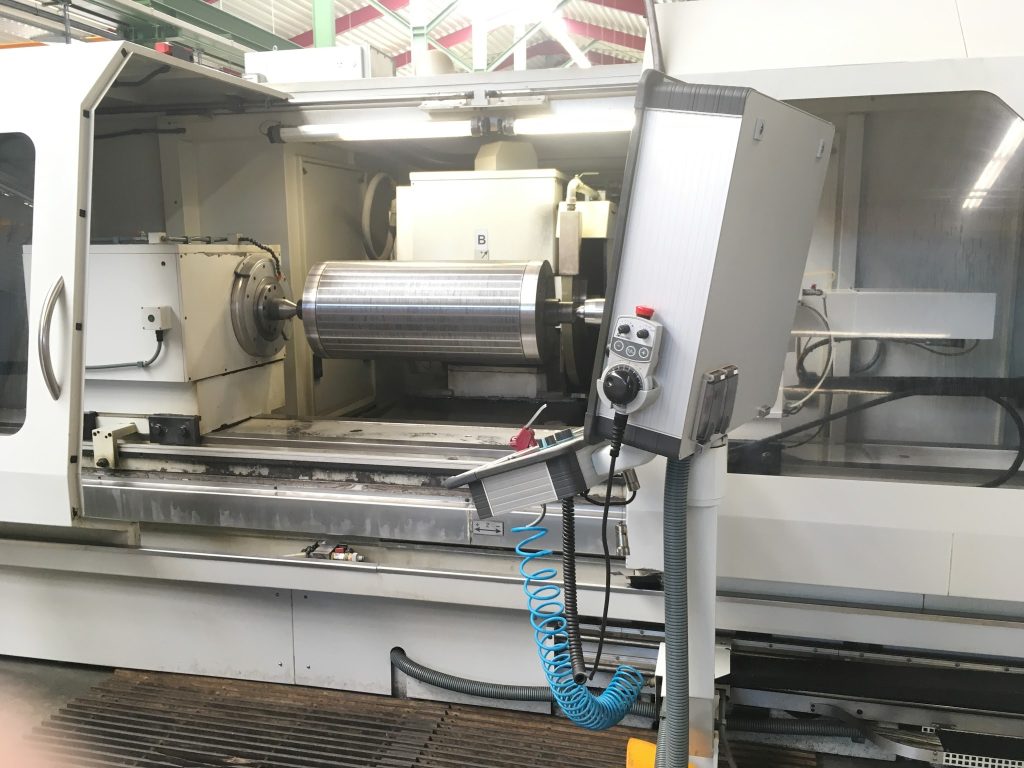
Environmental control is critical. Magnetic cylinders should be stored in a temperature and humidity-controlled environment, ideally between 18-24°C and 40-60% relative humidity. Rapid temperature changes can cause condensation that leads to corrosion. The storage area must be free from magnetic interference sources that could demagnetize the embedded magnets, reducing their holding force. Magnetic cylinders should be ideally stored with protective covers to prevent surface damage, and when not in use for short periods, pressure should be released to maintain precision tolerances. Cylinders should be stored on padded racks or in protective cases with soft linings. The precision-ground surface must not contact hard materials or other cylinders, as even small dents or scratches translate into cutting defects. Cylinders stored vertically minimize bending stress that could compromise roundness tolerances. In India and largely people use open racks to store.

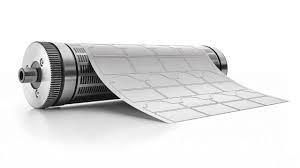
Flexible die storage requires protecting thin, precision-etched steel from damage. Dies should be stored flat, never rolled, as rolling can permanently deform the cutting edges. Individual dies should be separated by protective sheets to prevent edge-to-edge contact that could chip cutting blades. Silicone release paper or polyethylene foam works well for separation.

Organization and identification are equally important. Dies should be clearly labeled with job information, date of manufacture or last use, and any specific setup parameters. This documentation prevents errors during setup and helps track die life and performance. Many converters maintain logbooks recording die usage, and performance notes to optimize die management and predict replacement timing.

Climate control for die storage parallels cylinder requirements. Steel is susceptible to rust, and even stainless-steel alloys used in some dies can corrode under adverse conditions. The storage environment should maintain stable temperature and humidity with adequate air circulation to prevent moisture accumulation.

Handling procedures matter as much as storage conditions. Dies and cylinders should be handled with clean, lint-free gloves to prevent skin oil contamination. Dropping or bumping precision tooling causes damage that may not be immediately visible but will manifest as quality defects during production. Magnetic cylinders should be checked for surface condition and magnetic field strength.

Additional Considerations in PSA Label Production

The pressure-sensitive adhesive label industry encompasses far more than die cutting alone, though die cutting remains a critical converting step that influences every aspect of label performance and quality.

Sustainability has emerged as a dominant concern. The label industry is working toward reduced material consumption through thinner liners, no-liner label technologies, and improved matrix efficiency. Die cutting plays a role through precision cutting that minimizes waste and enables thin liner applications. Some converters report matrix waste percentages below 15% through careful label design optimization and precision die cutting.

Quality control increasingly relies on vision inspection systems working in concert with die cutting stations. Cameras can detect incomplete cuts, die-strike damage, registration errors, and edge quality defects in real-time, triggering automatic press stops before significant waste accumulates. This integration of die cutting with automated quality verification represents a significant advancement over manual inspection.

Automation continues to transform label converting. Automatic die changes, powered by robotic systems or quick-change mechanisms, reduce setup times from 30-45 minutes to under 10 minutes. Automatic job changeover systems, fed by production scheduling software, sequence jobs to minimize die changes and setup time. These technologies are making short-run production increasingly viable, expanding the addressable market for pressure-sensitive labels.

Digital integration connects die cutting with upstream design and prepress systems. Label designs are created with die cutting constraints built-in, ensuring manufacturable shapes and avoiding features that would create matrix removal problems. Digital twin simulations can predict die cutting performance before physical production, reducing trial-and-error during setup and accelerating new product launches.

Future developments in die cutting technology continue to evolve. Research into laser-induced plasma cutting promises speeds approaching mechanical die cutting while maintaining the flexibility of digital systems. Ultrasonic cutting, using high-frequency vibration to assist mechanical blades, shows potential for difficult-to-cut materials. Water jet cutting, common in other industries, is being investigated for specialized label applications.

The pressure-sensitive label industry has traveled an extraordinary distance from Stan Avery’s first self-adhesive label produced in that flower shop loft in 1935. Today’s sophisticated converting lines, producing millions of precisely die-cut labels per day at speeds that would have seemed impossible even a decade ago, stand as testament to continuous innovation and refinement. Yet the fundamental principle remains unchanged—a precision cutting tool separating labels from their backing, enabling the convenience and functionality that pressure-sensitive labels bring to virtually every product we encounter in daily life.

The journey from flatbed presses cutting a few thousand labels per hour to modern rotary systems achieving 300 meters per minute represents not just technological advancement but a transformation in what’s economically and practically possible in product labeling. As laser systems mature, digital workflows integrate, and automation advances, the die cutting component of label converting continues to evolve. The future promises even greater flexibility, faster changeovers, and capabilities we’re only beginning to imagine.

For those of us who have witnessed the Indian label industry’s growth over decades, from its nascent beginnings to becoming a sophisticated, globally competitive sector, the technological journey of die cutting mirrors our own industry’s maturation. The precision, efficiency, and innovation embodied in modern die cutting systems reflect the same qualities that have driven successful label converters to build world-class operations capable of serving the most demanding brands and applications.

Written by Harveer Sahni, Chairman Weldon Celloplast Limited, New Delhi, April, 2026
Die Cutting’s Impact on Matrix Removal and Rewinding

The die-cutting process extends beyond simply making cuts in the label material. Subsequent operations, including matrix removal—stripping waste material from finished labels—and rewinding the completed label roll, are directly influenced by the quality and parameters set during die cutting.

Matrix Removal: Challenges and Efficiency

Matrix removal difficulty is closely tied to blade height and cutting depth. When blades cut deeply into the liner, a pronounced score is left, which can make peeling the label easier. However, this can also lead to liner tearing during matrix stripping at high speeds. Balancing ease of label peeling with maintaining matrix integrity requires careful optimization, considering the specific application and production speed requirements.

Matrix removal efficiency depends on producing clean and complete cuts. If the die blade lacks sharpness or the cutting pressure is too low, labels may not separate cleanly from the matrix, resulting in tearing during stripping. Such issues generate waste and slow down production as operators must clear jams.

The shape of the label affects matrix removal as well. Small interior cuts, sharp corners, tight radius corners, and thin connecting strips in the matrix are more susceptible to tearing during stripping if die cutting is not precise. Dies should be designed with matrix removal in mind, sometimes incorporating relief cuts or modified geometries to reinforce the matrix in its most vulnerable areas.

Stripping Tension and Liner Integrity

Stripping tension needs to be carefully managed. If tension is too low, the matrix can bunch or fold, leading to unreliable stripping and potential web breaks. If tension is too high, labels may be pulled partially free from the liner if the kiss cutting depth is shallow, resulting in defects in the finished product.

Liner integrity after kiss cutting has a significant impact on rewinding quality and downstream performance. Liners deeply scored by excessive die penetration are more likely to break during rewinding, especially at the edges where tension is concentrated. This can cause production stops and waste. Even if the liners withstand rewinding, too much die-strike damage may result in failures when the label roll is unwound in applicators.

Edge Quality and Rewinding

Edge quality from die cutting influences how well labels are rewound. Rough or stringy edges can catch on to adjacent wraps as the roll builds, leading to telescoping (uneven roll sides) or starring (radial compression lines visible on the roll face). These defects compromise roll quality and may cause applicator problems when the labels are used.

Rewind tension control must consider the residual stresses introduced during die cutting. Materials stressed during cutting may display different tension characteristics compared to uncut material. Tension compensation is needed as the roll builds to maintain uniform roll density and prevent defects.

Diverse Types of Dies for Specialized Applications

Beyond the use of standard flexible and solid rotary dies, the label industry employs an array of specialized die types to meet the specific requirements of various applications and materials. These alternatives allow converters to address unique production challenges and enhance efficiency in niche scenarios.

Adjustable Dies

Adjustable dies are designed with removable blades, which can be replaced when worn or when different materials need to be processed. While less frequently used in narrow-web label converting, adjustable dies offer valuable flexibility for converters working with a wide variety of substrates, eliminating the need to keep extensive inventories of dies for each material type.

Combination Dies

Combination dies integrate multiple cutting functions into a single tool. For example, a combination die might feature both cutting and creasing blades, enabling the production of folding cartons or multi-panel labels in one pass. Perforation blades may also be included to create tear-off sections or features for easy opening. By consolidating several processes into a single die station, combination dies reduce the number of stations required, shorten setup times, and can improve registration accuracy by completing multiple operations in one controlled step.

Embossing and Debossing Dies

Embossing and debossing dies produce three-dimensional effects in label materials, enhancing visual appeal or providing tactile security features. These dies function through matched male and female patterns and require precise pressure control to ensure consistent depth without damaging the substrate. For embossing applications, magnetic cylinders with enhanced holding force are used to maintain die alignment under the substantial pressures involved.

Hot Stamping Dies

Hot stamping dies are used to transfer metallic or pigmented foils onto labels using heat and pressure. Although they are not cutting tools themselves, hot stamping cylinders are often integrated with die cutting stations for inline processing. These cylinders must manage both accurate temperature control and the mechanical requirements of maintaining the die or foil pattern in precise registration.

Perforation Dies

Perforation dies are engineered to create lines of weakness in materials, facilitating controlled tearing. The blades are precisely spaced, with cutting edges separated by gaps to produce an alternating cut-and-uncut pattern. The ratio of cut to tie length determines the ease of tearing and must be carefully designed for each application and material.

Micro-Perforation Dies

Micro-perforation dies refine the perforation process to produce nearly invisible perforations that still allow clean tearing. These dies are suited for security applications, pharmaceutical labels, and other situations where the perforation must remain hidden until use.

Normal vs. Laser-Hardened Dies

Choosing between standard dies and laser-hardened alternatives is a critical decision for label converters, balancing economic and performance factors.

Standard Dies

Standard dies are made from tool steel, CNC-machined to precise specifications, and heat-treated using conventional methods to achieve hardness levels between 52 and 58 HRC. These dies are reliable and cost-effective for many applications, making them ideal for short runs, prototyping, or processing less abrasive substrates. However, their limitations become apparent during high-volume runs or when converting abrasive materials such as thermal papers, thermal transfer stocks, or certain films. The cutting edge of standard dies gradually wears down and becomes rounded, which requires increased cutting pressure or slower line speeds. Eventually, dies must be re-sharpened or replaced, impacting productivity and increasing costs.

Laser-Hardened Dies

Laser-hardened dies employ focused laser energy to selectively harden the cutting edge, achieving hardness levels of 65-68 HRC, and up to 80 HRC for specialized chrome-coated versions. The laser hardening process creates a shallow, hardened zone at the cutting-edge tip while retaining normal hardness in the rest of the die for flexibility. This selective hardening significantly extends die life, sometimes by two or three times compared to conventional dies, reducing tooling costs per thousand labels produced. The harder edge stays sharper longer, ensuring consistent cutting quality and less frequent die changes or press adjustments. The hardened surface also reduces friction and adhesive buildup, preserving cutting quality and cleanliness. For converting abrasive thermal materials, laser-hardened dies may be the only practical option for achieving satisfactory production runs without constant maintenance.

Economically, laser-hardened dies are favored for high-volume applications. Although their initial cost may be significantly higher, their extended life and reduced downtime offer a compelling return on investment when producing millions of labels. Standard dies remain a better choice for short runs or frequently changing designs, given their lower upfront cost.

Alternative Die Cutting Technologies

While rotary die cutting is the mainstay of label production, alternative technologies are increasingly important for specialized applications and are gaining market share.

Semi-Rotary Die Cutting

Semi-rotary die cutting blends elements of flatbed and rotary systems. The web advances intermittently, while the die rotates. This hybrid mechanism enables fast changeovers and digital registration, making it ideal for digital-flexo hybrid presses where variable data printing is combined with die cutting. Although slower than full rotary systems, semi-rotary die cutting offers flexibility valuable for short runs and custom labels.

Laser Cutting: The Future of Label Die Cutting?

Laser cutting technology has advanced greatly, now serving as a viable alternative to conventional die cutting for many uses. It utilizes a focused laser beam to cut or perforate materials through controlled ablation and vaporization.

CO2 Lasers

CO2 lasers, operating at a 10.6-micron wavelength, are most used for labels, effectively cutting organic materials like paper, PET films, and polypropylene. Fiber lasers, working in the near-infrared spectrum, are gaining popularity for metallized materials and multi-layer constructions.

Laser cutting provides several advantages. Without the need for physical dies, setup times are reduced dramatically, and new patterns can be loaded within seconds. This makes laser cutting ideal for very short runs or custom labels where die costs would otherwise be prohibitive. Digital files allow for rapid design, iterations and customization, supporting personalized packaging and limited-edition products. Laser cutting delivers exceptional precision, enabling features as small as 0.1 mm and positional accuracy measured in microns. Complex shapes, small text, micro perforations, and other demanding features can be executed digitally with consistent quality.

However, laser cutting has limitations that prevent it from taking over high-volume label production. Speed is the primary constraint; even the fastest laser cutters lag behind rotary die cutting in throughput. Complex shapes further slow the process, making laser cutting less attractive for intricate designs despite its precision. Material compatibility also poses challenges. Some materials may release toxic fumes or reflect laser energy, making them difficult to cut. The heat-affected zone around laser cuts can cause discoloration or melting, impacting aesthetics or peel characteristics.

Operating costs for laser systems include high electrical consumption, regular replacement of laser components, and advanced exhaust systems to manage fumes and vaporized material. These costs must be considered when comparing economics to conventional die cutting. Despite these challenges, laser cutting is well-suited for security labels, pharmaceutical serialization, prototyping, and ultra-short runs. Hybrid systems that combine digital printing and laser cutting are expanding options for brand owners seeking customization.

Plotter-Type Die Cutting: Speed and Capabilities

Digital plotter cutting systems use a computer-controlled knife or blade, guided by digital patterns. The cutting head moves along X and Y axes, with blade depth controlling penetration, enabling kiss cutting, through cutting, or creasing. Modern plotter systems can achieve speeds up to 60-80 meters per minute for simple shapes, though complex cutting paths reduce throughput. Their advantage lies in flexibility—job changeovers require only loading a new digital file rather than changing physical tooling.

Plotter systems excel in prototyping and short-run production. Design firms and brand owners can quickly produce physical label samples from digital artwork, accelerating product development. Custom labels in small quantities are economical without traditional die setup costs. Registration capabilities have advanced through camera-based systems that read registration marks, automatically compensating for printing variations and keeping cuts aligned. Some systems can even adjust for material distortion or skew, ensuring precise cutting.

Plotter cutting is compatible with many materials, though extremely stretchy materials may deform rather than cut cleanly, and abrasive materials can accelerate blade wear, requiring frequent replacement and increasing costs. Plotter systems are economically superior for runs below 5,000-10,000 labels, where die costs are the largest expense. As volume rises, slower speeds and higher per-unit costs make rotary die cutting more practical. The crossover point depends on label complexity, material, and die life expectations.

Hybrid workflows that combine digital printing and plotter cutting are enabling new business models, such as print-on-demand label services with no minimum orders or tooling charges. Variable data capabilities allow each label to be unique, supporting serialization, personalization, and limited-edition launches.

Written by Harveer Sahni, Chairman Weldon Celloplast Limited, New Delhi, April 2026

The pressure-sensitive adhesive labels industry owes its existence to a struggling clerk working in a loft above a flower shop in downtown Los Angeles. In 1935, Ray Stanton Avery, who went by name Stan, was living in near poverty, residing in a rented chicken coop while working at the Midnight Mission to pay his way through college. What he created with a $100 loan from his fiancée Dorothy Durfee would transform how products are labeled worldwide and launch an industry that today generates billions in revenue.

The Genesis: Stan Avery’s Revolutionary Label

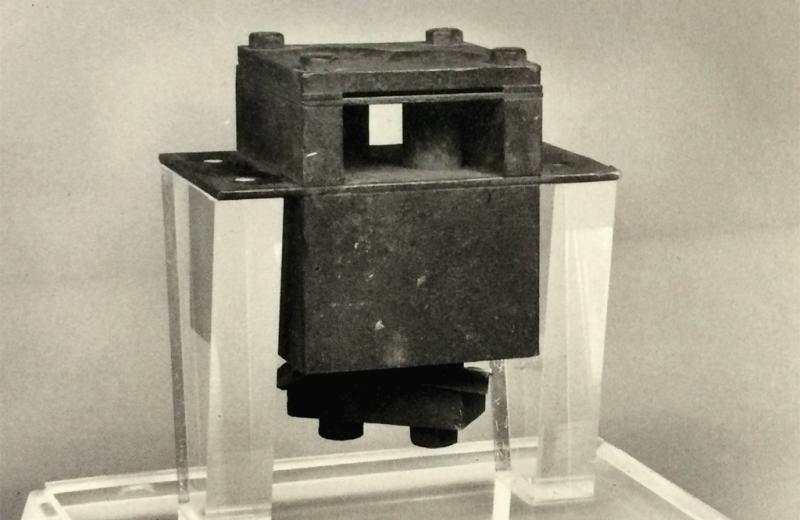
Stan Avery didn’t just invent the self-adhesive label, he invented the entire machinery to produce it. Using parts from a washing machine motor, a sewing machine, and a saber saw, he created and patented the world’s first self-adhesive, die-cut labeling machine. His company, initially named Kum Kleen Products, advertised the ability of these labels to be removed without leaving a mark on merchandise. The first Avery labels were simple, round price stickers meant for gift shops and retailers. In his first six months of operation, sales totaled a modest $1,391. Few could have imagined that this humble beginning would evolve into Avery Dennison, a Fortune 500 corporation with global operations across more than 50 countries and 36,000 employees worldwide.

The innovation Stan Avery brought to market solved a fundamental retail problem. Before pressure-sensitive labels, merchants relied on gummed labels that required moistening with water or paste, a time-consuming and messy process. Avery’s self-adhesive labels eliminated this inconvenience entirely, creating a faster and more practical labeling solution. His vision extended beyond the label itself to include the machinery for precise die-cutting, which would become the foundation of label converting technology.

By 1940, Avery had moved beyond his humble beginnings and officially started selling his products under the brand name Kum Kleen Price Stickers. The company incorporated in 1946 as Avery Adhesive Label Corporation, and in 1990 merged with Dennison Manufacturing to form Avery Dennison. Throughout his career, Stan Avery received 18 patents for his innovations in pressure-sensitive materials and production technologies. His legacy lives on, not just in the company that bears his name, but in every self-adhesive label produced today.

The Evolution of Die Cutting Technology

Die-cutting itself predates Stan Avery’s innovation by nearly a century. The process was invented in the mid-1800s to help the shoemaking industry. Cutting leather soles for shoes by hand was laborious, time-consuming, and expensive. The invention of the die-cutting machine revolutionized cobbler work, allowing shoes to be cut to consistent sizes and shapes rather than crafted individually. This standardization enabled modern shoe sizing as we know it today.

Flatbed Die Cutting: The Foundation

The earliest die-cutting machines used in the label industry were also flatbed presses. These hydraulically operated machines use a steel rule die to “click cut” or punch out die-cut parts by driving the die in a downward motion through the material. The flatbed die-cutting press operates much like a stamp, pressing a flat die onto material that sits on a stationary surface, applying even pressure to cut the material into the desired shape with each strike.

Flatbed dies are used with hydraulic or mechanical presses and other lifting systems to press a die down on a sheet of material. They are particularly suited for heavier materials and thicker substrates, making them less ideal for pressure-sensitive labels but excellent for applications requiring precision cutting of rigid materials. Steel-rule die cutting uses a formed strip of hardened steel set into a slotted plywood die-board, with rubber ejectors aiding part release after the cut.

While flatbed die cutting adapted for labels, offers excellent control over each cut and is ideal for intricate shapes with close tolerances, it operates at a considerably slower pace compared to rotary systems. Typical speeds range from 1,000 to 5,000 cycles per hour, making it suitable for small or mid-sized batches but impractical for high-volume label production. The tooling costs for flatbed dies are significantly lower than rotary alternatives, and the ability to make quick die changes makes them valuable for short-run or prototype jobs.

The Rotary Revolution in Label Converting

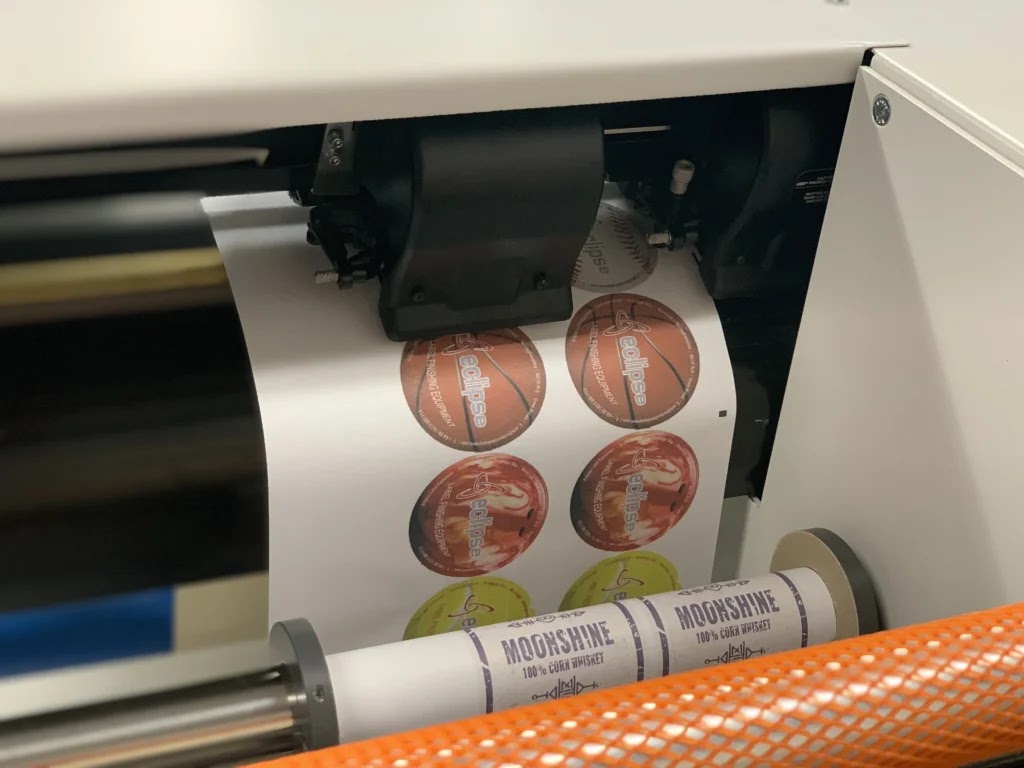
The transition from flatbed to rotary die cutting marked a transformative moment in label converting. Rotary die cutting uses a solid cylindrical die that rotates continuously in sync with the web material, paired with an anvil cylinder. The press feeds thin, flexible material, known as web, between these two cylinders. The cutting-edge pinches material against the anvil cylinder, producing clean cuts, perforations, or creases at exceptionally high speeds.

This method revolutionized label production by dramatically increasing throughput. Modern rotary die-cutting systems can reach 10,000 cycles per hour or more, with the fastest machines achieving speeds of 300 meters per minute. The ability to perform inline with printing and other finishing operations means that labels can be printed, die-cut, matrix stripped, and rewound in a single pass, transforming manufacturing efficiency.

A series of gears or servo motors now, force the die to rotate at the same speed as the rest of the press, ensuring that cuts line up precisely with the printing on the material. Rotary presses can incorporate multiple stations that die-cut specific shapes, perform perforations, create creases, or even cut the sheet or web into smaller sections. Some machines use automatic eye registration to ensure cuts and printing align with tolerances measured in fractions of a millimeter, critical for complex label designs and high-quality output.

The economics of rotary die cutting favor high-volume production. While the initial tooling costs are higher than flatbed alternatives, the operational efficiency brings labor expenses down over time. For standardized, repeat orders running into millions of labels, rotary systems offer compelling long-term value and unmatched productivity.

The Magnetic Cylinder Revolution

While the exact inventor and date of the magnetic cylinder for flexible dies are not definitively documented in available industry records, this innovation transformed the economics and flexibility of rotary die cutting. The magnetic cylinder system addressed a fundamental challenge: solid engraved rotary dies were expensive to manufacture, store, and transport, making them cost-prohibitive for short to medium production runs.

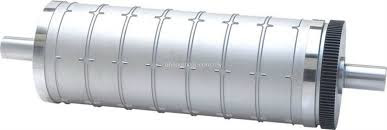
Magnetic cylinders are precision-engineered metal cylinders embedded with powerful magnets, either ceramic or neodymium rare earth magnets, on their surface. They are designed to hold flexible dies—thin, etched steel dies—firmly in place during rotary die cutting. The magnets ensure that every square inch of the flexible die remains securely pressed against the precision-ground cylinder surface, preventing any lifting or shifting during high-speed operation.

In 2005, Bunting Magnetics launched the X-treme Magnetic Die-Cutting Cylinder, the first magnetic die-cutting cylinder in the world with total run-out accuracy below 40 millionths of an inch (1 micron). This level of precision was revolutionary, enabling clean cuts even on extremely thin materials like 1-mil stock with less than 1-mil liners, on “no-look” labels, and on synthetic materials that previously posed challenges.

The advantages of magnetic cylinders transformed the label industry. Mounting and removing flexible dies takes just minutes, dramatically reducing downtime during job changeovers, particularly valuable in short-run label printing or multi-SKU packaging environments. The cylinders weigh significantly less than solid rotary dies, reducing operator fatigue, machine wear, and transportation costs. Most importantly, they enabled the use of flexible dies, which cost a fraction of solid engraved cylinders and could be stored flat, saving valuable warehouse space.

Today, magnetic cylinders are available for virtually all types of label presses and converting machinery, from brands like Mark Andy, Gallus, Nilpeter, Omet, Rotoflex, etc. Custom designs accommodate a variety of special applications, making magnetic cylinder systems remarkably versatile.

Flexible Dies: Engineering and Innovation

The development of flexible dies went hand in hand with magnetic cylinder technology. Flexible dies are thin sheets of steel, typically ranging from 0.5mm to 1.5mm in thickness, that wrap around magnetic cylinders and are used for rotary and semi-rotary presses. These dies are produced from specially formulated steel and undergo several sophisticated manufacturing processes.

Manufacturing Process

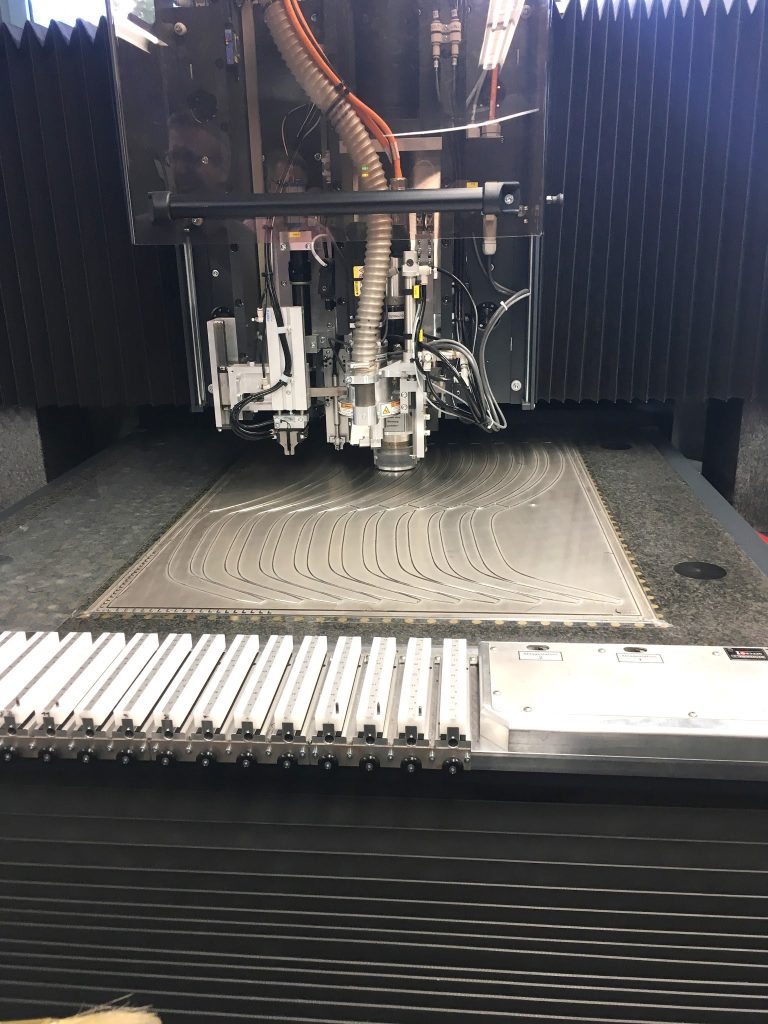
Production of flexible dies begins with plotting an image directly on the die material. Background material is then removed through chemical etching, and CNC mills create the required cutting or creasing lines with extraordinary precision. The cutting geometry includes profile heights ranging from 0.3mm to 1.5mm and cutting angles that vary based on the material being cut, typically from 30° to 110°.

The manufacturing process includes several optional treatments. Back grinding ensures consistent die thickness. Chemical de-burring smooths edges to prevent damage to the label stock. Most critically, laser hardening and various surface coatings dramatically extend die life and performance.

Die Materials and Surface Treatments

Standard flexible dies are CNC-sharpened and feature smooth polished cutting edges obtained using ultra-fine edge polishing techniques. These universal dies are suitable for all types of self-adhesive and single-material products including paper, PP, PE, PVC, PET, Tyvek, thin films on PET liner material, and other materials that are difficult to cut.

Laser hardening represented a breakthrough in die technology. Companies like Kocher + Beck were the first manufacturers in the world to achieve hardness levels of 65 to 68 HRC through laser hardening technology. This process extends die service life by two to three times longer than conventional dies. The laser hardening increases hardness at the tip of the cutting edge based on the carbon content in the steel, creating exceptional wear resistance while maintaining die flexibility.

For extremely demanding applications, chrome-coated dies offer even greater durability. A thin layer of chromium, typically 0.01mm thick with a hardness of 70-80 HRC, enables extremely high running performance with outstanding wear properties. These dies are particularly suited for abrasive thermal and thermal transfer papers used in longer production runs.

Non-stick coatings represent another important innovation. Special onyx or polymer coatings have no detrimental effect on the cutting-edge angle or sharpness while preventing adhesive and ink deposits on the cutting blades. These coatings are food-safe, FDA-approved, and significantly reduce downtime for die cleaning. The reduced friction and perfect resistance to wear enable maximum running performance with a consistently sharp cutting edge.

To be continued to part-2

Written by Harveer Sahni, Chairman Weldon Celloplast Limited, New Delhi, January 2026

Celebrating 25 years of inception along with their biennial Conference themed, “Emerging Beyond Boundaries”, Label Manufacturers Association of India LMAI, delivered value! 

700 plus delegates were awestruck attending the seventh LMAI conference  at the picturesque and astounding venue, The Fairmont Palace Udaipur from 3rd to 6th July 2025. All 300 rooms at the property were booked at the venue Hotel and additionally 60 rooms were booked  in Hotel Aurika with a total of 360 rooms. 35 sponsors including some of the most renowned names in the world for the label manufacturing industry supported the event.  Kurz was the platinum sponsor and Avery Dennison the elite sponsor besides many others. Fairmont Udaipur Palace is an alluring destination to discover the charm of Udaipur, seamlessly blending timeless tradition with modern elegance, featuring a historic stepwell, one of Rajasthan’s largest ballrooms and exclusive events pool with jacuzzi and amphitheater. Nestled in the Aravalli Hills, it offered easy access to the city’s top attractions and cultural landmarks. In view of the author who has travelled the world over for diverse label events, 

This three nights-four days event, packed with amazing presentations and entertainment, was perhaps the biggest label event in the world”!

Traditional Rajasthani welcome awaited the delegates arriving by road rail and air. Local folk dancers, drums, music, garlands, traditional aarti and special beverages were a part of  the welcome on arrival while being ushered into the hotel. Excellent arrangements executed for their arrival and meticulous planning made it stress free checking-in for all guests. 

The conference was officially thrown open at 6PM on the 3rd of July 2025. The inaugural evening was themed patriotic, so the board of directors (BOD) were all wearing the Modi jackets and tricolor stoles around their necks.  

The welcome note was delivered by the LMAI President Rajesh Chadha.

The conference agenda information was given by the two conference Chairmen Manish Desai and Jaideep Singh. 

Pradeep Saroha events director of Labelexpo India came onstage to apprise  the audience about the upcoming Labelexpo Europe. 

This was followed by Raveendran Selvarajan, Managing Director of Seljegat Printers Pvt.Ltd. being conferred the fourth LMAI lifetime contribution award. 

It was a pleasant surprise that after a lapse of few years the LMAI founder president Surendra Kapur came to attend the conference.  

After a presentation by Stephane Royere from platinum sponsors Kurz, all the event sponsors were felicitated. 

Thereafter the Welcome night themed “Saar’e Jahan Se achha”, was thrown open for cocktails, dinner and entertainment by Mohit Verma and troupe. The delegates, eager to party, hit the dance floor until late in the evening. When asked to wrap up so that they are back in time for the presentations next day, happy people were heard saying, “Abhi toh party shuru huyee hai!” Means, the party has just begun.

The second day commenced with another presentation by Stephane Royere, Head of business area packaging and print, international sales and marketing, of Kurz India and followed by one from Jitesh Mehta senior Director LPM Avery Dennison India. 

The vibrant young girl Natasha Jaichandra director VEEPEE graphics enthralled the audience speaking on the ECG (expanded colour gamut).

After that followed an array of great presentations. Notable amongst them were from Appadurai country head of HP Indigo, Thomas Schweizer Global head of sales at Heidelberg Gallus.  

A huge attraction was LaBella!  She is an AI robot, she added glamour in leading delegates to wherever they wished to go!

Pawandeep Sahni, Managing Director of OMET India Private Limited made a high powered and energetic presentation pulling the audience into attention and becoming interactive. The presentation can be viewed on YouTube https://youtu.be/cVtHUPa-OGo?feature=shared Click the image on the left to watch the full presentation.

The preplanned motivational speaker’s slot had to be altered to the next day as Gaurav Arya, who was supposed to deliver the motivational speech, could not reach due to flight cancellations. The LMAI leadership must be commended for arranging yet another speaker in a short time. Anand Ranganathan, a renowned speaker, agreed to fly in on the next day that was final day and address the label fraternity. 

The label industry continues to evolve, emerging beyond boundaries. The wet glue or glue applied labels have continued to transform initially to self-adhesive labels, converted on narrow web label presses and register a high growth rate to reach more than 50% of all the labels produced in India. Later the narrow web converting started to expand owing to evolution and labels, moved into diverse tangents. To dwell on the impact of this expansion and the modalities involved, the first program on the 3rd day was a panel discussion moderated by the author Harveer Sahni and titled, “Narrow web label converting expanding to diverse applications”. The panelists were leading Indian printers in narrow web converting, Priyata Raghavan Deputy CEO of Sai Packaging, Mehzabin Nair Managing Director Skanem India, Ankit Gupta Jt. Managing Director Holostik Limited, Hemanth Paruchuri director Pragati Pack, Denver Annunciation Director Janus International and Stephane Royere of Kurz India. The impact and future of this expansion was discussed at length in the panel. 

The panel discussion was followed by a very interesting and confident presentation for Weigang by the young daughter of LMAI founder Amit Sheth.

More presentations followed until noon after which the motivational speaker Anand Ranganathan came onstage to deliver his speech. Following this a round table interaction was arranged for all sponsors to interact with printers. Each sponsor was given a table on which printers would visit in batches of six each to enable sponsors the opportunity to interact with their customers. 

The day culminated in a gala evening hosted by Kurz India. The dress code was “Men in Black” and for ladies it was “Glitter” to add shimmer to the vibrant evening started with an amazing 

laser show by special artists. 

After Jitender Pal Singh CEO of Kurz India addressed the gathering, LMAI past president Vivek Kapoor delivered a vote of thanks. 

It was then time for the celebrity performer Asees Kaur to add fun to the entertainment and prompt the delegates to hit the bar and the dance floor enjoying until late in the night or the wee hours of morning.

All good things come to an end, leaving nostalgic memories of fellowship, togetherness, networking, knowledge delivery and entertainment. It was time to go back home with perfect departures arranged so that there are no inconveniences.  This covering of the event would be incomplete without appreciating the amazing venue overlooking lush green hills all around, the weather was fantastic, the hotel staff was hospitable in the true sense of the word. 

The general Manager Vishrut Gupta was always around with his team responding to guests personally and as for the food, kudos to Amitesh Virdi the culinary director and his team who did a wonderful job delivering taste.

The events organizing company led by the beautiful Hemal Bhagwat created precision in every aspect of the stay from arrival to departure. Delegates have been showering praise ever since.

The LMAI board of directors need to congratulate themselves for having created and delivered this mind-boggling big event, bigger and better than the best in the world. The icing on the cake is wonderful appreciations pouring in from delegates and sponsors. It is an encouragement to imagine and plan more for the next conference!

Written by Harveer Sahni, Chairman Weldon Celloplast Limited, New Delhi July 2025

More Images from the conference:

LMAI, the labels Manufacturers association of India organised a panel discussion titled, “Label buyers’ challenges with quality, Sustainability & Innovation” on the 2nd of May 2025 Hotel Radisson Blu, New Delhi. The event was attended by a “house full” of leading label printers and suppliers as sponsors. The distinguished panel consisted of leading brands Nestle, Diageo, Reckitt Benckiser, Amway, Dabur and Sun Pharma. The panel moderated by the author Harveer Sahni, Chairman Weldon Celloplast Limited and member of Board of Director LMAI. The panel on stage consisted of Arijit Mondal(Nestle), Sanjay Ghoshal( Diageo), Naveen Stuart (Reckitt Benckiser), Swati Gupta(Amway), Sidharth Sharma(Dabur) and Mohit Mittal (Sun Pharma). The delivery of responses by panelists to questions by the moderator, left the audience spellbound. Ruma Ghatak head Packaging at Nestle was a special invitee. The program was initiated by the hard-working LMAI secretary Jaideep Singh who had made untiring efforts to organize this amazing event, this was followed by the welcome speech by the LMAI President Rajesh Chadha. 

Pradeep Saroha director label expo updated the audience on the next edition of Labelexpo Europe in Barcelona Spain. Jaideep Singh shared a presentation of the upcoming LMAI biennial conference at Udaipur from 3-6 July 2025. Organising committee member Sandhya Shetty conducted the agenda efficiently. Dinesh Mahajan Vice President LMAI gave the vote of thanks. This was followed by an interactive question and answer session.

The congregation was highly appreciative of the knowledge delivering panel discussions and their responses to LMAI team and the moderator are as follows. The responses are reproduced here unedited and as received.

Mrs. Kusum Dunglay Director Redunn Labels Gurgaon: A truly impressive and well-executed event. Congratulations to LMAI and the brand owners for putting together such a memorable event.

Manish Hansoti, Founder and Managing Director S.Kumar Group Ahmedabad: Thank you for putting together such an incredible event. Your careful attention to details, from the label printer’s perspectives created an atmosphere that perfectly matched with unanswered questions from label printers to Brand owners. I especially appreciate how you handle without any boring topics. The event’s success is a testament to your planning abilities and dedication. I am truly grateful for all your hard work in making this event so special.

Anuj Bhargava, Founder Kumar Labels NOIDA: Well organised event by LMAI. Intriguing questions by Label Pitamah Harveer Ji. Brand owners shared valuable insights. Always good to connect with fellow industry colleagues. Many thanks to LMAI for organising this cosy event.

Rakesh Mahajan, Director Prakash Labels Noida: It is refreshing to see buyers and sellers coming together to address common challenges. This exchange can drive innovation and growth in the label printing sector.

Yoshita Goel from Any Graphics Noida: The LMAI panel discussion held on 2nd May 2025 was a remarkable success and quite knowledgeable. The interactive session among the panelists was intellectual and brainstorming towards the printing and packaging industry.

Yogesh Agarwal Print Pack New Delhi: The event was very well-organized, and the panel discussion was insightful and engaging. Sincere thanks to Harveer Sahni Ji for moderating and conducting such a meaningful and well-curated session.

K M Manoj Director Avery Dennison: It was great to see some of the prominent packaging professionals share their views about pressure sensitive labels. The conversations  around emerging regulations, how labels can be more sustainable and actions to tackle the common challenges were insightful.

Ranesh Bajaj Managing Director Vinsak: Well organised and very informative panel discussion. It was great to hear brand owners sharing details which are critical to the growth of label convertors as they align their future plans.

Bhaumik Mehta Director Flueron Inks: It was a pleasure for us to have sponsored this event for our friends and colleagues in the label industry. The panelist, the moderator and the audience were all in sync on the topic of discussion. It was insightful to see how the brands perceive procurement, supply chain partners and their own responsibility towards sustainable solutions. What struck out was the Q and A which the panelists took their time and put the answers in perspective on the business.

Innovation and Sustainability not just in products and services but in growth and prosperity is as much essential for all partners involved and this to me was a fantastic outlook. Cheers to LMAI for hosting this and giving us an opportunity to be a part of this amazing initiative for the industry.

Inderjit Singh Toyo Inks: We are thrilled to have attended the panel discussion on Label buyers’ challenges with focus on quality, sustainability and innovation organized by LMAI (Label Manufacturers Association of India). The discussions reinforced the importance of collaborative efforts to drive sustainability, ensuring regulatory alignment while adopting innovative and sustainable approaches.

The event was an incredible experience, filled with inspiring discussions and I had the pleasure of meeting and connecting with some amazing brand owners and partners. Looking forward to applying these new learnings and continuing the conversations to fulfill the brand owner’s requirements.

Gautam Kothari Managing Director Worldpack: LMAI Event Sheds Light on Label Buyers’ Pressing Challenges. The LMAI event held last evening proved to be a timely and insightful gathering for stakeholders across the label manufacturing ecosystem. With a sharp focus on the challenges faced by label buyers, the panel brought together key voices from FMCG, pharma, and logistics sectors who shared first-hand accounts of the evolving demands and operational bottlenecks in label procurement and usage. Overall, the LMAI event succeeded in bringing buyer concerns to the forefront, sparking necessary dialogue around innovation, transparency, and strategic partnerships in the label industry.

Ashwani Kumar RSM Kurz: The recent LMAI event fostered a productive dialogue between brand owners and industry leaders regarding key challenges and potential solutions in the label manufacturing sector. Discussions highlighted the detrimental impact of price pressures and reverse auction practices on innovation, alongside the complexities of liner recycling. Brand owners underscored their requirements for superior quality, competitive pricing, and dependable partnerships, with Swati emphasizing the role of partners in brand protection. Mr. Naveen (Reckitt) articulated that effective anti-counterfeiting necessitates products being both easily recognizable and difficult to replicate. The increasing significance of track and trace technologies for ensuring product authenticity and enhancing supply chain transparency, as demonstrated by Dabur’s application, was also a key takeaway.

Pradeep Saroha Director Labelexpo India: “The LMAI’s ‘Amazing Brand Owner Evening’ was a resounding success! The interactive event brought together numerous brand owners and printers to discuss innovation and sustainability. It was a fantastic platform for networking and exploring new ideas.”

The panelists also commented.

Arijit Mondal Global Packaging Development Lead Nestle: Thank you Harveer ji and panelists for super engaging discussion. It has been a super enriching experience to meet all of u in person and our super capable label fraternity. I am looking forward to another time together in the near future too.

Swati Gupta Senior Manager Open Innovation and Packaging Development Amway: Thank you, Harveer ji and all fellow panelists. Great perspectives and learning!

Sidharth Shankar Sharma DGM-Purchase Dabur: Thanks Everyone for being such a wonderful fellow panelist. Special thanks to Harveer ji for bringing us to such a platform.

Sanjay Ghoshal Head of Packaging Diageo: Thank you very much Harveer ji and the LMAI. It is my honour and privilege to be part of such an elite panel and such an august audience. It is truly a great platform for the exchange of thoughts and wisdom between the demand and Supply side of label/labelling industry.

Naveen Stuart Cluster Packaging manager – Health – SoA Reckitt Benckiser: Thankyou sir and everyone at LMAI. It was a perfectly organised event and an excellent platform to share views.

Mohit Mittal Senior Manager Packaging Development Sun Pharma: The LMAI panel discussion event was a well-organized and insightful event, bringing together key industry stakeholders, innovative technologies, and valuable networking opportunities. The sessions were informative and addressed current challenges and future trends in the label manufacturing sector. Looking forward to more such impactful gatherings in the future.

Jaideep Singh Director Zodiac Reprographics Hyderabad: Thank you each one of you to add immense value to the panel discussion event with your insights on the perspective of labels in each of your industries .We  as label printers feel reassured labels will play an important part of your brand perception and create an impact  and value perception which is important to grow your industry through the value our labels will be able to provide.

Deepanshu Goel, Founder & Managing Director Creative Graphics Noida: This was an ensemble of renowned packaging development specialists. Great learning!

Amol Naval, National Manager, Maxcess India: We had a wonderful experience at the LMAI event. It was both interactive and informative for all attendees, offering a valuable platform for close engagement and networking with existing and potential customers. Thanks to the LMAI team for organizing such an insightful gathering that brought together end users, label manufacturers, and solution providers under one roof.

Raman Anandchahl Neovation Graphics Private Limited Gurgaon: It was a pleasure to attend such a well-conducted event. The entire session was highly informative, especially for someone like me who is always eager to learn. This event was also particularly special for me, as my elder daughter, Nitya Anandchahl, who joined our business just last month, was introduced to the industry for the first time here. She interacted with the panelists and many other industry stalwarts throughout the day. I was truly happy to see how warmly everyone welcomed her and wished her success in the future. Seeing the next generation step in with such enthusiasm makes me feel assured that the future of our beautiful label industry is in safe hands.

 More Images from the event:

Born to Malayali parents in the south Indian state of Kerala, Hari Nair CEO of Digital Labels in Toronto  does not sound like a Malayali, on the contrary he sounds like a typical Mumbaikar (Local longtime residents of Mumbai). The Malayali people are a Dravidian ethnolinguistic group originating from the present-day state of Kerala in India, occupying its southwestern Malabar coast.

They are predominantly native speakers of the Malayalam language. They constitute the majority of the population of Kerala. It is pertinent to mention here that Hari is proud of his Indian heritage and firmly believes in the oneness of being an Indian rather than be recognized as a part of separate religious or caste-based segment of the society. Long years ago, Hari’s parents had moved residence to Mumbai, where he grew up. They lived in Santa Cruz, close to airport. He did his schooling from Kalina Education Society and  college in Parle college. He followed this with Masters in Organic Chemistry from Bombay University. Finally, he completed his MMS (Master of Management Studies) from Sydenham Institute of Management Studies, Mumbai. Post education in 1989 he along with a few others were hired by Suresh Gupta former Chairman Huhtamaki-PPL, which at that time was Paper Products Limited (PPL) promoted by the late Sardari Lal Talwar and his family. Paper Products Limited or PPL was later acquired by multinational Huhtamaki. Sardari Lal Talwar’s son in law, Suresh Gupta had joined PPL when it was facing tough times. Suresh Gupta fondly called SG, was in the process of transforming the company from purely owner driven to  professionally managed one. An elaborate program of in-house training was put in place. The program was designed by SG and his colleagues to suit their specific needs, may they be technology, sales, customer or people handling. They were transforming the company to project their acumen in offering the latest in packaging. So, he hired these youngsters and trained them. He would not let them to take it easy. They were initially trained in flexible packaging, learning every part of the process including slitting. Hari mentions, “SG had long term vision.” He achieved success by implementing his ideas. These new incumbents included 6 or 7 persons to be groomed as his core management team. Hari Nair was one of them and who considers Suresh as his mentor and remains in awe of his capabilities to transform a company that was just Rupees 35 Crores when Hari joined and under SG’s leadership PPL had crossed Rupees 2300 Crores when SG retired.

Hari started his career at Thane (Mumbai) plant of PPL in flexible packaging division. When SG introduced Shrink Sleeves 1993-94, Hari was sent to Fuji seal Japan for training him and taking other persons from the company along with him, for training. In 1997 he was moved as General Manager to Hyderabad plant of PPL. Hari came to Canada in 2001 from his last posting in India at PPL Hyderabad. When asked why he moved to Canada, he is not sure, but then says, ”I always thought it will be good for his daughter plus I was fascinated by the west.” Each time he visited these countries on his business trips, he was in awe of the infrastructure, the roads and facilities.

Comparatively, he felt India was always “work in progress” and in his lifetime, it will never be like this in India. He yearned to live in these countries and drive on these roads, though today he says, these were stupid reasons. He feels as one matures and looks back; the realization comes that they were not the right reasons however his vison for his daughter Mythili getting better education has worked well. Since so many children are coming to Canada to study, she would also have had to do that but now that she is here, it is working out for her, she is a doctor and moving on well with her life. When they shifted to Canada his family had no clue what they were going to be up against, on arriving in Toronto they were all holed up in one room of a town house in which four families were living, sharing kitchen. It was an extremely challenging situation from the life they had been leading back in India.

On landing in Toronto, he tried looking for jobs in the field that he was experienced in and approached companies in similar fields. Sandeep Lal the then owner of Metro Labels called him for an interview and in response felt Hari was overqualified and he did not have a position for him at that time. For a full year thereafter, Hari did not get a break and he was so distressed that he even sent a message to his mentor SG that he might want to come back to PPL. The experienced mentor and a professional management leader that he was, SG advised him that while he was welcome to return, yet he did not want Hari to regret later and feel he did not try hard enough. SG asked him to wait for some more time and try some more, things will work out. That was the motivation coming from a mentor that made him hang on, it was the encouragement that changed his mind. A year later while he was contemplating moving out of the packaging industry, he saw many youngsters joining banks as the jobs were there on offer. On a suggestion from a friend, he did a course in financial securities hoping to get a bank job. He was then living at Kingston Ontario and met almost all the bank manager there, looking for a job.

While he was searching for a job in banks, Hari stayed connected and following up with Sandeep Lal at Metro Labels. A year had elapsed and one fine day he got two calls, one from a bank offering him a teller’s job for 10 dollars an hour and that too for just 10 hours each week which was not enough to feed a family, and the second job offer came from Sandeep Lal which Hari accepted and joined Metro Labels as an estimator. The job was entirely different from what it was in  India, the workload was heavy. One of the first lessons he learnt was that in India if you are dealing with large customers the price for a particular customer remains same for all quantities of same label but in Canada, each job is estimated and quoted separately. In 6 to 8 months, he became the plant manager for Metro Labels. A year down the line he felt the discomfort as the environment was a lot different from the time, he worked in Paper Products in Mumbai. After having spent over two years  there he quit Metro Labels and joined another label company Labelad. He joined as a supervisor and gradually moved up and stayed there for the next 7 years. While in PPL he had worked a General Manager and had handled from production to selling more like as an entrepreneur but in Canada the work system was entirely different and here Hari worked completely in production.

During his tenure at Labelad, while he was attending a Fasson seminar, the speaker mentioned that there were two big opportunities in North America and those were flexible packaging and digital printing. Sitting at a round table along with his colleague Chris Henderson from sales in Labelad, referring to digital printing, Hari said to Chris, “this is the future.” They parted on that note and forgot about the incident. Six months later Chris was at Hari’s office asking him if he remembered his comments on digital and whether he wished to start something. With an affirmative reply, both indulged, and Digital labels was born. Chris had spent 14 years in Labelad and it was an ideal combination with Hari as the production person and Chris as the Sales expert. From experience Hari felt that the HP Indigo 4000 series could not sustain a business expense but when the 6000 series came it became a different story and once it was two years of launch of that model, they felt comfortable to buy the press. Within six months they came in contact with Charlie Maclean President from ASL Printfx and decided to get into an association with ASL investing in Digital Labels, taking a small part of the ownership. Since they also had interest in digital. It was a win-win situation as ASL could use the digital capabilities of Digital Labels who could in turn have access to ASL’s sales network. ASL has grown and is very focused in high-end jobs like wine and spirits and for short runs and personalized variable print jobs, Digital Label’s capabilities are an important resource.

Digital labels are into manufacturing of all segments of labels, shrink labels and decals, but mostly concentrating on short and specialized runs. To start they had huge challenges as both partners were into service before and had no business background, so banks were reluctant to fund them. Working capital dried up soon. Once they got over the initial hiccups and proved their capabilities it became smooth sailing. The first 6 months were tough as buyers did not trust them since they were new in labels business but then a Godsent opportunity came to them when a scented candle manufacturer who was having trouble with current vendors of labels, approached them. That business came to them as a big saviour. Once orders from that customer came in, they were operating better and later when ASL came into the picture, things changed for good.

Chris and Hari have worked tirelessly, and their efforts have been fruitful as Digital Labels has been growing in the last few years at around 25% each year. Their business is now around 7 million Dollars, and they plan and make efforts to reach 10 million in the next 3-4 years  from organic growth alone. They presently operate from a premises admeasuring 8000 square feet and the space it is fully utilized. Due to shortages faced following the pandemic, they had to increase their inventory. They rented a lot of space around their present premises so that they could maintain enough stocks to service their customers well. They operate with 25 employees, presently working 8-10 hours basis. They are a slim trim enterprise who are very careful with expenses and very focused to grow their business. Commercial real estate in Toronto is expensive so they feel that for any expansion that becomes imperative, they will try to rework their present setup and increase the working shift for the time being.

His wife Surekha with whom Hari got married in 1994, is from Goa. She is a social worker by training and now since 2007, she is working for the social services division of the city of Toronto. Their daughter Mythili was born in 1995. Hari remains connected with all his friends in India. But has no business with India. He still remains in awe of Suresh Gupta whom he looks at as a mentor and feels he has yet to meet anyone as smart, knowledgeable and professional as him.

Nostalgically and pensive in thoughts he says, “Whatever I learnt in my journey in profession so far, it has been from him”!

Written by Harveer Sahni Chairman Weldon Celloplast Limited, New Delhi December 2022

Narinder Chhatwal hailed from a family of traders in Lyallpur, a city which is now in Pakistan after the partition of India in 1947. Lyallpur was named after the founder of the city the then Lieutenant-Governor of the Punjab, Sir James Lyall, for his role in establishing the canal colonisation project. In 1977 the Government of Pakistan changed the name of the city from Lyallpur to Faisalabad (‘City of Faisal’) in honour of King Faisal of Saudi Arabia, who made several financial contributions to Pakistan. Faisalabad is the third-most-populous city in Pakistan after Karachi and Lahore, respectively. It was in the turbulent times of 1947 during the division of India into India and Pakistan, that the Chhatwals migrated to New Delhi. After completing his schooling, Narinder Chhatwal took up a job in the iconic Kwality Restaurant in coveted location, New Delhi’s Connaught Place, a venture set up in 1940 by P L Lamba and his brother-in-law I K Ghei who grew it as a multilocation restaurant chain. Narinder worked there until 1961. There was a strong urge to have his own business, so he set up a unit to produce ice cream cups but as situation warranted then, he left this venture and rejoined Kwality Restaurant yet again in 1964. Despite the stable job, the entrepreneur in him was restless and the urge to set up his own production unit re-surfaced and he finally quit the job permanently to start a printing unit nostalgically named Kwality Carton Manufacturing Company, in a single room rented at Kirti Nagar, New Delhi in 1966-67 using the manually fed treadle letterpress printing machine. He manufactured Ice cream cups, lids, cartons for Ice cream bricks and in fact a host of printed packaging items. In 1971 he could get an allotment for an industrial plot from government at Naraina Industrial Area and he moved the unit to this location where from, they operate to this date.

 
A little over a year after moving into their Naraina factory they bought their first offset printing press, a 712 single colour Dominant, a year later they bought another similar press and followed it up with a 714 Dominant. Falling short of space, the adjoining building was available, so they bought it as they were growing. In 1982-83, expanding further they acquired a two colour Planeta. Once into offset printing, Kwality was in expansion mode, they were adding equipment every alternate year. At this time, they renamed the company as Kwality Offset Printers. In 1986 Narinder Chhatwal’s son Rajeev an 18-year-old had joined business. Rajeev did his initial Schooling at Springdales School Delhi followed with graduation from Delhi University. The post partition Punjabi families who left all that they had, back in what had become Pakistan were hard working and were quick to start from scratch to regain their stature by sheer hard work. The second generation were all following their father’s footsteps and would be helping their parents in the work, spending time after school or college on the shopfloors of their startup units. For them, the shop floors became the training ground, and they learnt the nuances of business hands on. Rajeev was no different, with a  father like Narinder mentoring him and passing on the experience to his son who was a quick learner, he settled down in the business quickly. He however did go for a short training program at Heidelberg Germany. With his joining in, the business accelerated and soon the space in their Naraina factory was again falling short. In 1988, they bought out yet another next-door unit to make room for more production space so now the factory is operating from three adjacent plots. The same year they bought their first four colour offset press a secondhand Roland. Expansion became a routine process. They believed and were convinced that as far as possible it is better to operate from a unified single location in one city. This way the management which was Narinder Chhatwal, and his son Rajeev Chhatwal were not split and would remain a support to each other.


Until 1995 Kwality offset was producing Cartons, some commercial printed items and wet glue labels. In 1995-96 they decided to become a hundred percent label manufacturing unit which was only wet glue labels. The story of their entry into wet glue labels is interesting. In the early 1990s when the number of breweries started to grow and bottling speeds were on the rise. To label bottles at 250 bottles per minute, the labels needed to be perfectly die punched and stacked to run on highspeed lines. The normal flatbed dies would not work well. Kwality, because of their experience in ice cream cups and lids production were well versed in ram die punching and their workers were well trained in the process. Their manufactured labels ran extremely well on the high-speed labelling machines at breweries and distilleries and soon the word spread of their capabilities. This helped them get the orders from many other breweries and liquor producing companies. It was just a matter of time that they became the largest suppliers of wet glue labels in north India, though they were supplying pan national. It is interesting to note that normally people print and then get into label finishing equipment, here because of their knowledge of finishing the ice cream cup lids by hydraulic ram punching got them into high end big volume label printing. Their first customer for beer labelling was a government owned Haryana breweries at Sonepat making a popular brand of beer those days “Rosy Pelican.” Their success in making the perfectly die-punched wet glue labels also got them their first break in corporate world with orders from the multinational brand owner Nestle.


It was in the year 2000 when self-adhesive labels were gaining in popularity, the Chhatwals invested in a Mark Andy 2200  narrow web label press and in the following year, they also increased their investment in sheetfed offset by installing a six colour Heidelberg press. In 2002 they installed another sheetfed offset a five colour Roland with UV and online coater. Hereon, expansion became an ongoing process, they added three Mark Andy presses, a Gallus and a Xeikon in 2018 to make their entry into digitally printed labels with an ABG Digicon series 3 finishing and embellishing machine, which also has hot foil stamping , embossing and screen-printing capabilities. These investments enabled them to add multiple security features on labels. Increasing their footprint in flexo they also set up inhouse platemaking with Kodak Flexcel. Rajeev’s father Narinder Chhatwal passed away in 2008 until when, he was still attending business, though the reins had been passed on to his son Rajeev.


Rajeev’s other siblings include a younger brother who is into real estate and a sister who is a homemaker. His wife Shalini is also a home maker. His son Krish completed his business management from Sydney and joined business at Kwality offset four years ago. Two of those initial years were passed in facing the pandemic and last year in 2021 he got married. Krish’s wife Sanya, an expert in baking, after completing a course from APCA Malaysia, is running her own business, a bakery named Delhi’ce in Gurgaon making specialty cakes. Rajeev’s daughter recently completed her study in architecture and is now pursuing her career as an architect.


Having put in place a full-fledged team to manage all production, Rajeev, and son Krish personally look after sales and marketing. While Krish looks after all new customers, Rajeev manages and caters to, and successfully retains all old customers. The present spread of business is with three flexo presses, one digital label press Xeikon, Abg digicon, one Roland and one Heidelberg sheet offset press in a shopfloor admeasuring approximately 60,000 square feet. Total workforce is 130 persons all in one location at Naraina Industrial Area New Delhi. With no more space left for expansion at present location, they have bought a 2200 square yard plot at Manesar south of New Delhi for another factory to fuel their further expansion. When asked about future plans, Rajeev expresses that they are not really concerned about just volumes, they are more oriented to implement better and innovative technology and be profitable to grow the bottom line instead of focusing on bigger turnovers. Kwality has been growing at about 10 percent per annum and they are committed to maintain the growth rate. Conscious about the environment they have tied up with approved and certified waste management agencies as also cooperating with Avery Dennison on their waste management endeavours. They even try and source most of their paper materials from FSC certified vendors. Despite the aftereffects of pandemic, the father-son team are committed and firm to keep the expansion and investment in new technologies an ongoing process. Their resolve years ago to give-up cartons and other commercial printing to stay with 100% manufacturing of labels is unique in today’s situation. These days offset printers do integrate forward to produce labels and vice-versa label printers, in an effort to grow turnovers, expand into print packaging. They wish to remain specialty label printers, investing into innovation.


Written by Harveer Sahni, Chairman Weldon Celloplast Limited New Delhi March 2022

PS: Printing Magazine may publish this article giving credit to author Harveer Sahni and Blog https://harveersahni.blogspot.com  

LMAI Board of directors


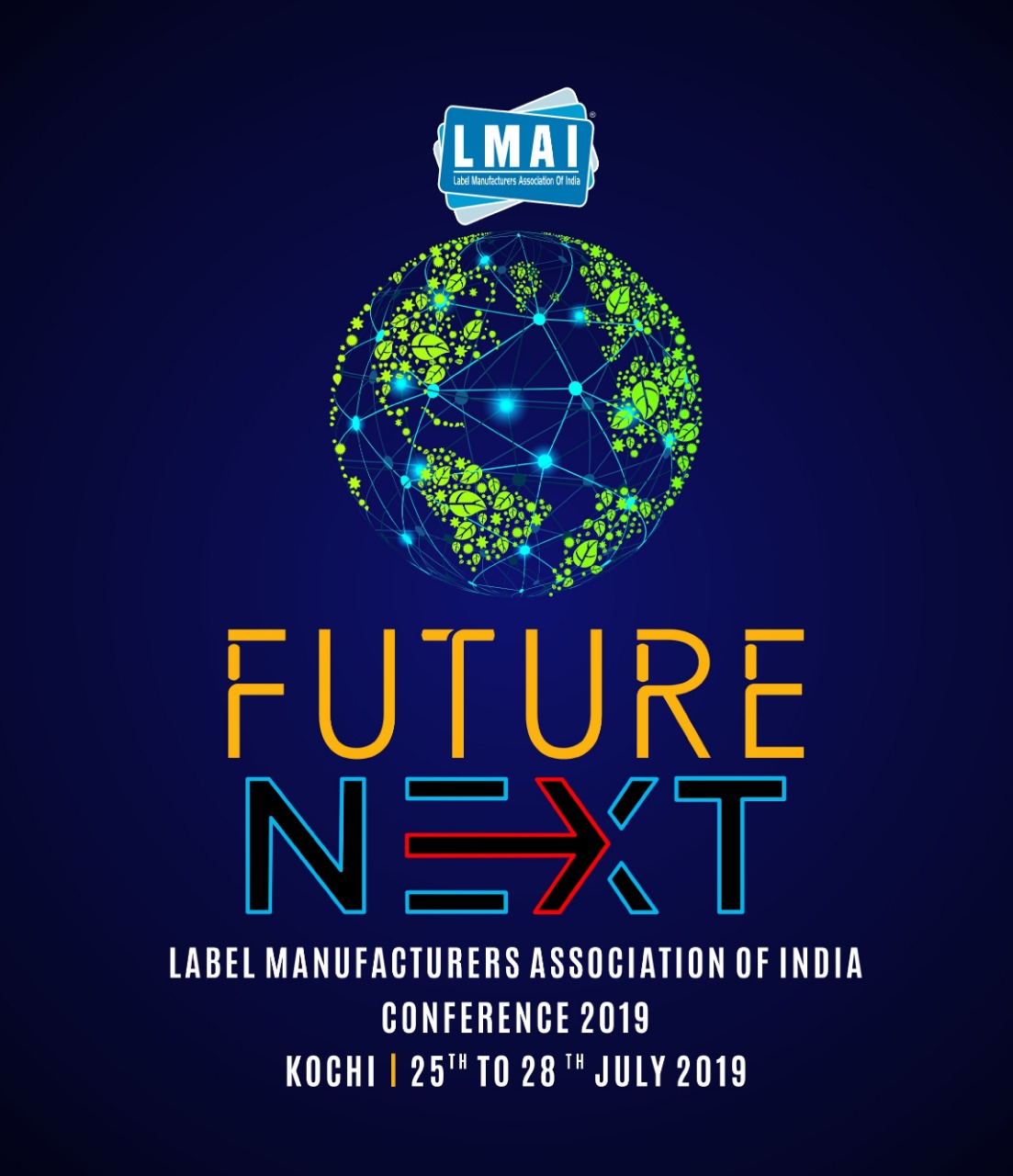
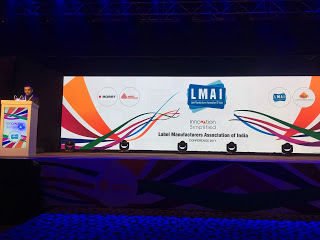
The 3-day LMAI label conference from 25th-27th July 2019 was an event that was efficiently organized and delivered the promise of comradeship, entertainment and knowledge sharing. From the time of landing at Kochi to the time of departures on 28th, it was all done with clockwork precision. It was a gigantic task of hosting over 550-600 delegates from all over India and various parts of the world attending this biennial event. They were put up in 317 rooms spread across 3 hotels The Bolgatty Grand Hyatt, The Marriot and The Taj. The event was held at Grand Hyatt, perched on 26 acres of plush green land on the serene Bolgatty Island, Grand Hyatt Kochi Bolgatty is a waterfront urban resort overlooking the backwaters of Vembanad Lake.

After a smooth check-in and registrations, the delegates reassembled for start of conference. 

It all started with traditional lighting of the lamp.

Welcome address by Kuldeep Goel President LMAI followed next.

Pankaj Bhardwaj Senior Director and General Manager Avery Dennison delivered the thought-provoking keynote address, setting the tone of the conference. Pankaj, while referring to the growing Indian market mentioned, “Diminishing divide between urban-rural population in India and an aspiring middle class means a growing demand of consumer products and also label”.

Due to a delayed flight, special guest Lisa Milburn Managing Director Labelexpo Group UK could not reach in time to deliver her address and in her absence, Pradeep Saroha country manager Labelexpo spoke to update the audience about the forthcoming Labelexpo Europe in Brussels, it being the 40th anniversary of Labelexpo additional features included will be on sustainability, flexible packaging, digital printing and a host of other technologies.

Manish Desai Conference chairman spoke on the flow of events at the conference.

Shahidi Ainain Director SIES School of packaging who was moderator for the event gave the guidelines to be followed while making presentations and advised speakers on the need for time management.

The audience dispersed to re-assemble again later for welcome dinner with Thallaavia theme.

L to R: Ajay Mehta, Amit Sheth, Dinesh Mahajan, Raveendran, Harveer Sahni
Pankaj Bhardway-Avery, Kuldip Goel, Rajesh Nema, Sandeep Zaveri,
Vivek Kapoor, Ramesh Deshpande and Amar Chhajed

The conference being held in Kerala, it was an imperative to give it a local theme on the very first evening. All the Board of Directors of LMAI and Committee members dressed up in the local Malayali traditional dress, giving the evening a local celebratory touch. After felicitation of sponsors by committee members and their walk on the ramp there was Carnatic band playing, networking and dinner.

A surprise announcement was made for bestowing upon Amit Sheth of Label Planet and Intergraphic a lifetime award for contribution to the Indian Label Industry! After an emotional thank you speech, Amit walked the ramp with wife Rupa and their two daughters.

Next day after breakfast the audience reassembled for a busy day full of presentations by eminent sponsors and of very high standards. Past President Vivek Kapoor’s welcome address was followed by presentation by Manoj KM and Parag Bagade of Avery Dennison. While Manoj spoke on futuristic labelstock offerings, Parag spoke on the sustainability endeavours by Avery including collection and recycling of liner and self-adhesive waste.

Presentations made were as follows;
Avery Dennison India, Manoj KM and Parag Bagade, “Emerging Technology & Sustainability”Pulisi Technology, Olive Liu, “Relationship between Technology and Life”SMI Coated Products: Ajay Mehta and Rohit Mehta, “Technical Aspects of Applications of Label Stock Solutions”Domino Printech India: David Ellen, “Advantages of HYBRID systems for labels and Packaging converters”Vinsak India: Ranesh Bajaj, “Future Based Solutions”Retail Solution and Technologies: T. R. Ravishankar, “Trends in Barcoding and Enterprise Mobility”WEIGANG: Spring Xu, “Features enhancing to choose a good flexo machine”Luster LightTech Group: Carrie Duan, “Mining your potential”Nilpeter India: Manish Kapoor, Indian Label Indusrty – “The question of Scale and Scalability”Insight Print Communications: Ajay Aggarwal, “Transition to Digital – Now and for Future”Loparex: Manish Jain, “Future Sustainability”Heidelberg and Gallus: Samir Patkar, “The Power of 2 – when conventional meets digital (hybrid technology)”DuPont Advanced Printing: Shyamal Desai, “End user benefits”Flint Group India: Shailesh Kumar Sharma, “New Gen Color Management”HP India Sales: Appadurai, “Future is Now”BOBST Firenze SRL: Ludovico Frati, “Connectivity”Dragon Foils – Inter Films India: Raymond Lu, “Innovation and frontier of cold foil technology”

Two interactive and knowledge imparting Panel Discussions moderated by LMAI Board member Harveer Sahni of Weldon Celloplast were held after lunch. The first one was with printers where the topic was, “Creating the future vs embracing the future”.

Panelists included Priyata Raghavan Sai Security Printers, Tejas Tanna of Printmann, Aaditya Kashyap of Marksfine, Mahendra Shah of Renault Paper, Shakti Jain of Great Eastern IDTech, Yudhviram Solanki of Sicon Packs and Anurag Mohan of Interact.

The second Panel discussion was with industry suppliers as panelists and titled, “Evolving trends in Labels manufacturing!” Eminent suppliers who were in the panel and gave thought provoking inputs included;

Bhupinder Singh of Avery Dennison, Samir Patkar of Heidelberg Gallus, Appa Durai of HP, Ranesh Bajaj of Vinsak, Pawandeep Sahni of Omet, Manish Kapoor of Nilpeter, Prasenjit Das of Dupont and Sreenivas Goud of Flint. Time being a constraint the audience wished there was more time for these engaging discussions but since the schedule for the conference was so packed that there was no room for extension

After the day’s presentations ended, there was an excellent talk sponsored by SMI and Pulisi on “Secrets of Impactful Success” by motivational Guru, Gaur Gopal Das which left a full packed hall of almost 600 people spellbound and in awe of what he delivered. 

The evening ended with yet another program sponsored by SMI and Pulisi, a musical performance by the visually impaired performers from the National Organisation of Disabled Artists. They sang old Bollywood songs so well that it left the audience full of awe and at that moment, compassion turned into joy, watching their special abilities to deliver so well to a large audience.

The label printing fraternity was up on its feet and on to the dance floor enjoying the renderings of this awesome group. Towards the end, the President LMAI on behalf of his team announced an additional sum of Rupees one lakh over and above what they had contracted for.

This was followed by many in the audience committing large sums to support the social cause of encouraging disabled artists.

On the final day after a welcome address more presentations as mentioned below followed;

Apex Asia Pacific: Carl Brock, “Nothing short of revolution in flexographic printing”Flexo Image Graphics: Ian Pollock, “Future of Printing Technology”ROGLER International Sàrl: Hannes Rogler, “Future based solution”Multitec Aids: Amit Ahuja, “Life beyond labels”RotoMetrics: Cain Harper, “It’s about more than the die”Brotech Digital Graphics: Ramon Lee, “The future of hybrid printing and finishing”GEW: Marcus Greenbrook, “Upcoming Technology”Numex Blocks: Supachai Theravithayangkura, “Innovative Flexo Plate Solutions for Narrow Web Printing”JN Arora presentation

A panel discussion jointly hosted and moderated by Ajay Mehta of SMI Coated papers and Amit Sheth of Pulisi Technology was conducted with young panelists that included Hemanth Paruchuri of Pragati Pack, Vidur Agarwal of Veekay Industries,

Krishh Chhatwal of Kwality Offset, Denver Annunvciation of Janus International and Naveen Goel of Any Graphics titled “Young printer’s perception on future of label industry”

After the presentations concluded that afternoon it was time for a “Sadhya” typical of that area. Sadhya in local language Malyalam is a feast of Hindu origin and of importance to Hindu Malayalis, consisting of a variety of traditional vegetarian dishes usually served on a banana leaf in KeralaIndia.

Sadhya means banquet in Malayalam. It is a vegetarian feast prepared by both men and women, especially when needed in large quantities, for weddings and other special events. Sadhya is typically served as a traditional dish for Onam, the state festival of Kerala. It was a feast for the eyes to see, a diverse gathering Indians and foreigners relishing the local cuisine and eating with bare hands.

Past president Sandeep Zaveri updated the audience about the next program of Round tables, the interaction between sponsors and Printers.

“Round tables” program with all sponsors attending to a rotating groups of label printers was a much-appreciated part of this conference. 

It gave the sponsors opportunity to interact with existing and prospective customers. This program was highly appreciated by the sponsors.

The final evening sponsored by Avery Dennison was themed “The Great Gatsby!”. 

American author F. Scott Fitzgerald that follows a cast of characters living in the fictional towns of West Egg and East Egg on prosperous Long Island in the summer of 1922. Fitzgerald—inspired by the parties he had attended while visiting Long Island’s North Shore—began planning the novel in 1923,

desiring to produce, in his words, “something new—something extraordinary and beautiful and simple and intricately patterned.” In the novel the character Gatsby throws very extravagant, excessive parties with hundreds of guests, all for the purpose to attract a lady’s attention. The evening had the settings of the 1920s.

The evening began with a vote of thanks by LMAI treasurer Dinesh Mahajan of Prakash Labels.

It was then time for SMI Managing Director Ajay Mehta’s talented daughter Nikita Mehta who trained in the USA and is all set to go professional in the Indian singing arena, to go on stage and give a melodious heartwarming singing performance.

Finally, while people enjoyed photo ops and networking over drinks.

Bollywood singer Nakash Aziz took the stage while the LMAI conference delegates hit the dance floor and enjoyed the fun until late in the night.

Credit goes to Hemal Bhagwat who heads the event management company Mercury Integrated along with her husband and a dedicated team. “Thank you Hemal for making this a memorable event, memories will linger on till it is time to plan yet another better and bigger LMAI CONFERENCE”

Written by Harveer Sahni Chairman Weldon Celloplast Limited New Delhi July 2019

Magazines are free to reproduce by giving credit to author.

At the last, Indian label industry event, “LMAI  Conference” in 2017 at Jaipur I promised to write the 2nd part of my first article titled  “History of the Indian Label Industry” which I wrote in 2006. It is available in this blog at https://harveersahni.blogspot.com/2010/08/history-of-indian-label-industry.html
I have now written the 2nd part. This is brief reporting so I plan to complete a book on the subject with a lot more expanded information in the near future. In a large country with industry spread over such a vast area and a huge population, it is difficult to chronicle all in few words. Being a long article, the part 2 of History of the Indian Label Industry will be posted on my blog in a series of four articles. The first part of series numbered  2A is as below;

The first decade of new millennium was very eventful for the Indian label industry. After 2006 a global economic recession surfaced and kept growing, affecting businesses across the world.

It even impacted many industries in India where we saw companies reducing manpower, which in turn affected spending in all segments of retail. Surprisingly while printers in India as well, were complaining of recessionary trends and difficulty in operations, yet the Indian label industry overall, continued to grow steadily. Capacity enhancement kept on being made, though it was a little reduced. The Indians became indulgent not only as label printers but also as diverse product and equipment suppliers to label printing companies. For the first time an Indian company Precise Graphics, later renamed PGI Technologies in 2005 produced a magnetic cylinder that worked on a label press. Dhiresh Ghosalia led Jesons, manufacturers of emulsion pressure sensitive adhesives for the label industry at their large factory in Daman, expanded and moved northwards in India and setup an additional manufacturing capacity at a 100,000 square feet facility in Roorkee. Kaygee Papers was promoted by Pranay Godha in 1997 to produce silicone coated release papers. In 2001 they made a Joint Venture, Kaygee Loparex Pvt. Ltd. with Loparex, a member of UPM group and world’s largest commercial Siliconiser. They continued to grow and became an important part of the Indian label industry in the first decade. In 2015 Loparex assumed 100% of the company and rechristened it as Loparex India Pvt. Ltd. In August 2007 Diehard Dies, based in Guntur Andhra Pradesh, started operations to become an indigenous manufacturer of flexible dies for the printing, packaging and label industry. By middle of 2019 Acme Rolltech a company led by 3 young entrepreneurs Parag Patel, Sandeep Sharma and Parag Koradiya started the first Indian facility manufacturing Ceramic Anilox Rolls. Sandeep, came to the partnership with 15 years of experience having worked with Avery Dennison, Kurz India and Domino Printech, Parag Patel and Parag Koradiya came from entrepreneurial background of manufacturing Gravure Cylinders. 

In 2007 the largest indigenous labelstock producer Ajay Mehta’s SMI Coated Products initiated an expansion program that would eventually place SMI as an undisputed leader in labelstock production by a wholly Indian owned company, not only in India but also in many international markets.

They procured a 6540 square meter plot in MIDC, Ambernath near Mumbai, constructed 2200 square meter shed, shifted all plant and machinery from Daman to Ambernath, added two silicon coating machines and one Acrylic Coating machine. In 2014 they increased the production area by another 3000 square meters and installed a Hot Melt coating line, following it up by installing yet another hotmelt adhesive coater later.  

In 2017 they purchased the adjoining plot admeasuring 9820 Square meters, constructed 1000 square meters to install Schaeffer moving racks for better handling of an increasing volume of goods in their expanding stores.

In 2019 they completed construction of another 3000 square meters shed and moved all coating machines to new premises along with a new emulsion adhesive coating tandem machine to do inline siliconizing and adhesive coating in a single pass, 1350 mm wide to run at a speed of 150 meters per minute, reaching an installed capacity of 19 million square meters per month. They celebrated their 25 years in grand style by hosting over 200 guests to visit their works besides take part in the celebrations. Other indigenous labelstock manufacturers also grew in their own respective regions. Stayon Papers and Sticon in Hyderabad, Million papers and NG papers in Chennai, Capri Coating Solutions in Mumbai, Shree Arihant, STP Paper, Gj Industries and many more in Delhi were some of the active and visible manufacturers. Some of the earlier leaders in the Labelstock manufacturing segment pulled back or shifted focus in view of depleting margins, intense competition and unviable credit terms.

Indian label press manufacturers transformed in this period to produce label presses that were comparable to international products and made their mark not only in India but internationally as well.

Amit Ahuja led Multitec is the front runner who had exhibited their first modular rotary flexo label press in partnership with Abhay Datta of Datta Press Delhi at the first India Label show in 2002 at Nehru Centre Mumbai. The association of Multitec with Datta came to an end around 2008. Multitec redesigned their label press as a competitive product with all basic features. After renaming the press, “Ecoflex” they relaunched it. Two year hence they launched yet another version of their label press and continued to upgrade their offerings and grow phenomenally. By the end of 2018 they had achieved outstanding success producing label presses from a quality accredited design and a fully integrated manufacturing facility spread over 26,000 square meters. At the time of writing this article their website reports having sold over 300 Label presses to over 25 countries through a team of agents spread across the world. Other Indian press manufacturers who also made their mark are mostly from Faridabad, south of Delhi, the same city as Multitec. They are Alliance Printech, Webtech Engineering, NBG Printographic Machinery Co. Pvt. Ltd., M Tech Industries, etc. Other than these, Ahmedabad based RK label machines claimed to have sold 150 rotary plus 600 flatbed label presses and Noida based Jandu Engineers had sold about 135 rotary flexo presses. Jandu is also a leading manufacturer of coating and laminating machines and has a large presence amongst local labelstock manufacturers and according to Baldev Singh Jandu, they have till date sold over 150 coaters.

The Indian label market was growing at a steady double-digit growth rate and interest of international label fraternity in India also kept on growing with it. Avery Dennison who had found success in the country had in 2007 invested in land admeasuring 22 acres at Ranjangaon near Pune for expansion.

In 2008 the facility was with a one-meter wide hotmelt coater having capability to run at 500 meters per minute with inline silicon coating, this compared to the first one-meter coater at Gurgaon that could run at 250 meters per minute. The then global CEO and President of Avery Dennison Corporation Dean Scarborough specially flew in to inaugurate the facility. In 2010 Raj Srinivasan who had established Avery’s foothold in India returned to USA handing over reigns of the Indian operations to Anil Sharma. New wave of professionalism descended in the working of Avery; more expansion followed with installation of a 1.5 meters hot melt coater in 2011 at Pune. In the same year a slitting facility was commissioned in Bangalore in 2011 to serve the southern customers effectively. To help the cause of a limited number of trained press operators in India in face of a growing label press population,  Avery Dennison Knowledge Centre was also set up in Bangalore to train people for becoming press operators, but later in 2018 the centre was moved to Pune, next to their research and development centre. In 2014 an emulsion coater of 1.5meter width was added at the Pune facility. In 2015 Anil Sharma was elevated for bigger responsibilities and handed over charge to his teammate Pankaj Bhardwaj. Amongst international Labelstocks companies UPM Raflatac had established a substantial foothold with their slitting facilities in India while Lintec, Ritrama, flexcon and a few others sold through agents or directly.

Increase in number of visitors to labelexpo Europe in Brussels was a positive indicator of a growing label market in India and the interests of printers to invest in globally acknowledged label presses. In 2005 Weldon Celloplast Ltd. was the lone Indian exhibitor and by 2011 edition of the show, the number of Indian exhibitors had swelled to fourteen, up from four in the previous show in 2009.

At Labelexpo Europe 2009 there were 338 Indian visitors and this figure had swelled to 429 in 2011. The number just went on increasing, there were more Indians then before at successive labelexpos.

In 2007 at Labelexpo Europe in Brussels Tarsus announced their acquisition of India Label show, a show that was set up by Anil Arora and his wife Neetu Arora.

The next edition of India Label show 2008 in New Delhi’s Pragati Maidan was held in the aftermath of terrorist attack in Mumbai and in the middle of a huge recession, yet the show stood its ground proving the strength of growing Indian label market. In 2010 the show was rechristened as Labelexpo India. The show owners Tarsus UK made a strategic alliance with Indian Label association LMAI for the event and to have an awards night and a gala dinner organised by Tarsus at every Labelexpo India. LMAI was to conduct the LMAI label awards which became a regular feature thereafter. In 2009 under the leadership of Vivek Kapoor, the longest serving president of LMAI who completed 3 terms of 2 years each, it was also planned to hold biennial LMAI conference in alternate years, the trend has carried on till date. The first LMAI conference was held in Hotel park Hyatt Goa in 2011 and the event grew to be held again in 2013 at Grand Hyatt Goa and at Hotel Jaypee Palace in Agra in 2017. 

In 2010 leading global associations came together under the aegis of FINAT and formed the federation of global associations called L8. Later with one more association joining it was renamed L9, the confederation of nine leading international label associations.

The alliance consisted of LMAI (India), JFLP (Japan), FINAT (Europe), TLMI (North America, LATMA (Australia), PEIAC (China), AMETIQ (Mexico), ABIEA (Brazil) and SALMA (New Zealand). Sandeep Zaveri of Total Prints took over the presidentship of LMAI in 2015 and handed over the charge to Kuldip Goel of Any Graphics in 2017.  At the 2017 conference in Agra 550 delegates attended making it the largest gathering of label printers at a single conference. A proud moment for me at the Agra conference in 2017 came when I was announced as the first and only recipient till then of a lifetime award for support to the Indian Label industry.  

In 2016 Labelexpo was moved to the Expo Mart in Greater Noida outside Delhi, a part of Delhi NCR (National Capital Region) due to non-availability of dates at New Delhi’s Pragati Maidan.

In 2018 also it was held at the Expo Mart as the venue, Pragati Maidan in Delhi, was under redevelopment. In 2018 for the first time LMAI hosted a very successful L9 meet in India on the sidelines of Labelexpo India.

The evolution of label industry in India has been a continuous process, from the earliest days of screen-printed labels in sheeted format in the 1970s to roll form labels to be converted on very narrow width flatbed Japanese presses and then over to rotary flexographic printing label presses in the early 1990s.

Until the end of 1990s the flexo printing process used water-based inks with hot air drying.

The polymer plate making technology was also evolving. The process was evolving but it had shortcomings. It was faster than the flat bed machines but lacked consistency due to drying and viscosity changing issues. Better prepress and improvements in platemaking technologies brought flexo printing to almost at par in quality to offset printing. This led the rapid growth in flexographic label printing. As demand escalated, investments in equipment also witnessed increase with printers demanding wider presses for increased productivity and reduced wastages. By end of the last century UV curable inks became available and changed the way flexo printing grew. Originally, UV technology was introduced to the world in the 1960s. The drying effect for water-based inks is brought about by evaporation of volatile components. The required energy is supplied via IR-radiation and/or hot air. A loss in the dried coating thickness will appear depending on the amount of the evaporated components. The volatile components must be removed by an extraction. However, in case of the UV inks, the drying effect is due to polymerization, i.e. on cross-linking of long molecular chains. The energy required for cross-linking is supplied via UV radiation. For 100 % solid body systems the thickness of the dry coating corresponds to the thickness of the wet coating. There are no losses due to evaporation. By 2010 new UV inks came with enhanced ink transfer properties as well as faster reactivity to UV curing, meaning speeds over 200 meters/min. were achievable. Towards end of 2009 the conventional UV started to evolve to low power consuming LED UV with longer life lamps that had surfaced internationally, though the system had yet to be widely accepted in India due to non-availability of parts and inks, but it was being investigated and expected to grow substantially in demand or replaced on existing presses.  Some of the international equipment manufacturers had already introduced alternatives such as LED UV and even Electron Beam curing technology as an alternative. From the middle of first decade of 21st century onwards there grew a demand for high end hybrid presses with increased features like automatic registration, multiple printing processes for combination printing and decoration capabilities. As sustainability and environmental concerns became an imperative; waste reduction, and waste management became a necessity when an investment in equipment was being made.End of Part 2A, To be continued…
The remaining parts will be posted in gaps of 7-10 days 
Note: No one is authorised to reproduce, copy or reprint this article until permitted by the author in writing. 
Written by Harveer Sahni Managing Director Weldon Celloplast Limited New Delhi July 2019


Grand Hyatt Kochi
India’s label association LMAI’s 5th biennial conference is planned to be the biggest and most successful event of Indian label industry. The event is scheduled to be held at recently opened property, HOTEL GRAND HYATT, KOCHI, BOLGATTI from 25th – 28th July, 2019. Perched on 26 acres of plush green land on the serene Bolgatty Island, Grand Hyatt Kochi Bolgatty is a waterfront urban resort overlooking the backwaters of Vembanad Lake.


Grand Hyatt Waterfront


Leading label printing companies and suppliers will meet to discuss, evaluate opportunities, learn and strike business partnerships that shape the future of their businesses in relaxing ambience and surroundings. LMAI conference has been growing in strength and numbers over the years.


2017 LMAI Conference at Agra


The last conference was held at Agra with 550 delegates. The LMAI leadership is expecting the attendance to jump up to 600 delegates. An elaborate knowledge sharing, entertainment and technical program is being put in place to deliver value to the LMAI members coming from all over India.


About the city Kochi: Kochi (formerly known as Cochin) is a city in southwest India's coastal Kerala state, fondly referred to as “God’s own country”. It has been a port since 1341, when a flood carved out its harbour and opened it to Arab, Chinese and European merchants. Sites reflecting those influences include Fort Kochi, a settlement with tiled colonial bungalows and diverse houses of worship. Cantilevered Chinese fishing nets, typical of Kochi, have been in use for centuries.


St.Francis Church Kochi
St. Francis Church was the original site of Portuguese explorer Vasco da Gama’s burial when he died in Kochi in 1524. Santa Cruz Basilica is known for its pastel interior, including an imitation by Fra Antonio Moscheni of Leonardo da Vinci's "The Last Supper." Paradesi Synagogue, founded in 1568, features imported Chinese blue-and-white ceramic floor tiles. The surrounding quarter, once home to a large Jewish community, is now filled with antique shops and old spice warehouses. Mattancherry Palace, built by the Portuguese in the 16th century and later renovated by the Dutch, showcases vivid Hindu murals.


Label Manufacturers Association of India, LMAI has a strong support of the label industry suppliers as sponsors which has been growing steadily, making their conference, the most important label event in India. 


The following leading industry suppliers from across the world have registered as sponsors and there are still a few more on the waiting list;

SR. NO

NAME OF SPONSORS

CATEGORY

1

AVERY DENNISON INDIA P LTD

PLATINUM

2

SMI COATED PRODUCTS PVT. LTD 

DIAMOND

3

PULISI INTERGRAPHIC

DIAMOND

4

GALLUS

GOLD

5

VINSAK INDIA PVT. LTD.    

GOLD

6

HEWLETT-PACKARD INDIA SALES PVT LTD.

GOLD

7

DOMINO PRINTECH INDIA LLP

GOLD

8

MACDERMID

GOLD

9

PERFORMANCE SPECIALTY PRODUCTS (INDIA) PRIVATE LIMITED

GOLD

10

J N ARORA & CO. PVT LTD

SILVER

11

NUMEX BLOCKS INDIA PVT.LTD.

SILVER

12

APEX ASIA PACIFIC PVT LTD

SILVER

13

FLINT GROUP INDIA PVT LTD

SILVER

14

MULTITEC AIDS PVT LTD

SILVER

15

LOPAREX INDIA PVT LTD.

SILVER

16

INTER FILMS INDIA PVT LTD ( DRAGON FOILS)

SILVER

17

FLEXO IMAGE GRAPHICS PVT. LTD.

SILVER

18

BALDWIN VISION SOLUTIONS PVT. LTD.

SILVER

19

INSIGHT PRINT COMMUNICATIONS PVT LTD

SILVER

20

GEW

SILVER

21

BOBST FIRENZE SRL

SILVER

22

ROTOMETRICS INDIA PVT LTD

SILVER

23

NILPETER INDIA PVT. LTD

SILVER

24

ZHEJIANG WEIGANG MACHINERY CO.,LTD.

SILVER

25

WELDON CELLOPLAST LTD ( LUSTER)

SILVER

26

WELDON CELLOPLAST LTD ( BROTECH)

SILVER

27

ROGLER

SILVER

28

WELDON CELLOPLAST LTD ( MARTIN AUTOMATIC)

BRONZE

29

COSMO FILMS LIMITED

BRONZE

30

LINTEC INDIA PVT LTD

BRONZE

31

ACME ROLLTECH PRIVATE LIMITED

BRONZE

32

HUBERGROUP INDIA PVT LTD

BRONZE

33

MONOTECH SYSTESM LTD

BRONZE

34

REPRO GRAPHICS PRIVATE LIMITED

BRONZE


The LMAI leadership will soon be closing the registration of sponsorship for this, three nights four days event.

Kuldip Goel


LMAI President Kuldip Goel says, “Unlike exhibitions, the LMAI conference intends to bring together the Indian label fraternity at one venue for four consecutive days. The suppliers get a chance to spend full time with their prospective customers in a relaxing atmosphere” he further adds, “Since many delegates come with family, it brings about a unique bonding within the industry, creating the feel of belonging to a large entity, the Indian Label Family!”.  


Marriott Kochi


The conference registration process has started from 1st April 2019. In the first phase registration has been opened for LMAI ordinary or printer members so as to give them the first option for accommodation in the main event venue i.e. Hotel GRAND HYATT, KOCHI, BOLGATTI. Registration will be on first come first basis. Registration for Associate or supplier members will begin a little later. Once the main hotel venue is full, additional delegates will be accommodated in another property i.e. MARRIOTT, KOCHI a short distance from the main event venue. Adequate arrangements are being made to transport delegates to and fro, between the two hotels.


Manish Desai
LMAI Conference Chairman Manish Desai says, “We have already held the previous conferences at Goa in western India, Jaipur and Agra in North India and this time we moved it to South delivering value to our members. LMAI being a pan national association is committed to bringing value and fellowship amongst the Indian label community spread across the length and breadth of India”.  He also mentioned that the south India based members who found it inconvenient travelling long distances to north will also be able to attend conveniently and bond with their peers around the country.

Only members in good standing who have paid their membership fees are allowed to register. Non-members can only register by first becoming members of LMAI. This conference is slated to be better and bigger than ever before.

It is time yet again for the vibrant colourful world of labels to congregate in Kochi to experience the friendship and fellowship with global suppliers and competitors.

Contact for conference registration;
Event Organizers – Mercury Integrated
Contact Person – Felicia Lobo
Mob No – 9152326871/ 022-26115502
Emai Id – lmaiconferencekochi2019@gmail.com

Contact for membership registration:
Manish M. Panchal
(Admin Secretary)
Label Manufacturers Association of India
A-418, Mayuresh Trade Center,
Plot no: 04, sector-19, Vashi Turbhe Road,
Vashi, Navi mumbai: 400 703
Ph No : 8097333995

 Written by Harveer Sahni Chairman Weldon Celloplast Limited New Delhi India April 2019