UAE or the United Arab Emirates consists of seven independent city-states or emirates: Abu Dhabi, Dubai, Sharjah, Umm al-Quwain, Fujairah, Ajman, and Ras-al-Khaimah. Total population of all the emirates of UAE put together is much less than that of New Delhi India at 11.42 million with only 20% Emiratis and rest are expats making it the highest percentage  of  expatriates in any country in the world. The Indian expatriate population at 28% is the largest group in UAE. It is surprising that there is a substantial number of label printing companies there with more printers joining in year after year. In the start of the new Millennium, one could count the total number of label printing companies to around 10 which has now grown to over 40. Even though leading printers speak of intense competition and depleting margins yet there is a steady news of expansions and new companies joining the bandwagon of label printers. Obviously, it is not the local demand but due the business environment, conditions and facilities, the printing companies reach out to customers not only in the Middle East but also to Africa, Europe, and USA. It is a global hub from where they produce and export. It is normal to hear label printers in the region expressing difficulties due to a small market and intense competition, in such a situation it is heartwarming to see someone who comes from a fragile financial status, jumping into label printing and starting to register smart growth. One such person is Jagannath Wagle who endeavored to take the risk of setting up from virtually nothing, his maiden label venture, Sigma Middle East Labels that has started rising from humble beginnings.


Jagannath Wagle

It is rare to find humble people these days. Humility is putting pride behind, staying grounded to reality, have faith in oneself and learning from one’s modest beginnings to continuously move ahead with firm resolve and keep evolving. That is how Jagannath Wagle talks with respect and nostalgia about his humble background and times when he was growing up. this: As if living with his parents in a one 300 square feet room flat in Mumbai’s western suburb Nala Sopara along with two brothers was not crowded enough, to help the son of a family friend in village, his mother brought the boy to Mumbai to stay with them.” Jagannath’s father, an auditor with the government of India’s audit department had to manage within the meagre means to support a family of 6 people living in one room. However still they managed to impart the right education to all the children. Jagannath’s mother was a homemaker in true spirit, managing the household and the children by taking home tuitions, he reminisces fondly about her being an excellent cook.


Jagannath Wagle studied up to class 10th in Little flower English school in Nala Sopara followed by joining father Agnel technical college in 1992. Unfortunately, due to Mumbai riots in 1992 he could not attend college, had to drop a year, and later joined an institute in Vasai to complete the secondary school education. Later he wished to join an engineering college but could not afford the capitation fee demanded by institutes those days so as an alternative he studied to graduate with B.Sc. degree in Physics from Mumbai University in 1998. Due to the financial stress, a relative in Delhi suggested for him to join the Coast Guard but his mother did not relent as she wanted him to study further. He finally went on to get a B.Sc. (tech) degree that was equivalent to an engineering degree. Thereafter he started making applications for job in various organisations and also to start with, he accepted a job with a relatively small company TechGyan at a meagre salary of Rs.4000.00 per month (Approximately 55 dollars). He had a lot of interest in computers so had acquired knowledge about them and as a business to augment his earnings he started assembling computers for customers on job work basis charging Rs. 2000.00 per computer. He had already catered to almost 50 customers. At this time, he started getting interview calls from companies like HDFC, Wipro and Reliance. He was excited that he got selected in Reliance at a salary of Rs.18000. per month to start with. It is strange and a matter of kismet as to how life leads you to your eventual Karma Bhoomi, the land where one eventually works or performs his life’s deeds, this is as expressed in Indian literature. Before Jagannath could join Reliance, his family got a call from his mother’s brother in Dubai who had been tricked by someone to invest in a label manufacturing unit, knowing nothing about labels and he needed help. He requested the family to send Jagannath to Dubai.



Ajman
Like any young man Jagannath also had aspired to work in distant lands like Europe and USA but for the Dubai offer by his uncle, he was hesitant as he knew nothing about labels, his knowledge was limited to computers and engineering. His mother impressed upon him to go to Dubai and support her brother who needed help and who else he could rely upon except family at this time.  The decision was made and on 28 January 2004 Jagannath Wagle landed in UAE which everyone impulsively refers to as Dubai due to its being recognized as the face of UAE. He started to work with his uncle in Ajman, as a salesman on a salary of 1500 Dirhams per month. Though he started as salesman, but his job profile eventually became all in one, heading the label business with a team of only 3 persons just like a startup entrepreneur. Jagannath knew that with UAE having one of the highest per capita income, it would be expensive and difficult to manage in the income promised and more difficult if he got married. To make success of his career he plunged head on into the business he had no knowledge about. Customers and suppliers became his teacher and taught him all about plates, cylinders, color management etc. he was a fast learner. A business that was 10000 Dirhams per month when he joined and his uncle was pumping in money each month to sustain expenses, became 100,000 per month  in just a year’s time, all this with just one two color small tacky boy press. Any label printer will understand the  effort that must have gone into achieving this.



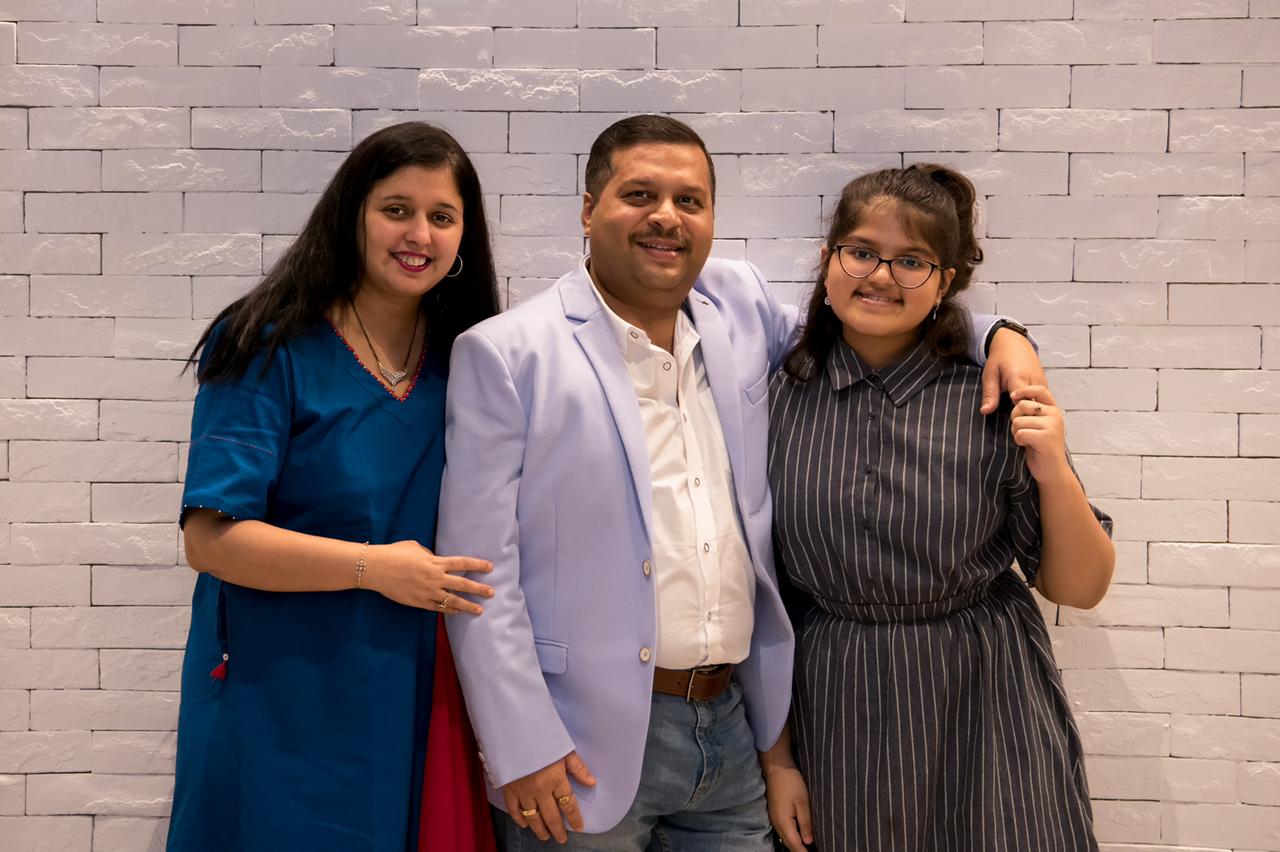
Pooja Wagle
In 2005 Jagannath convinced his uncle that to remain in business they needed another machine. A used 1980 model 7” 3color Mark Andy 830 was acquired. In today’s time of advanced servo driven modular presses that equipment sounds irrelevant yet by 2007 he was able to reach a sale of 350,000 Dirhams per month by working 24 hours every day, the Tacky boy press became redundant. Jagannath’s salary was enhanced to 3500 and he got married to Pooja from Bohisar in Mumbai. Pooja also came from a very humble background, the father having passed away, her mother taught children of poverty-stricken people. She was working as a credit card salesperson with ICICI bank. They came in contact through a matrimonial website and the marriage was arranged by parents with the couple having never met each other. Once married the couple faced financial stress and there was need to move up in life.


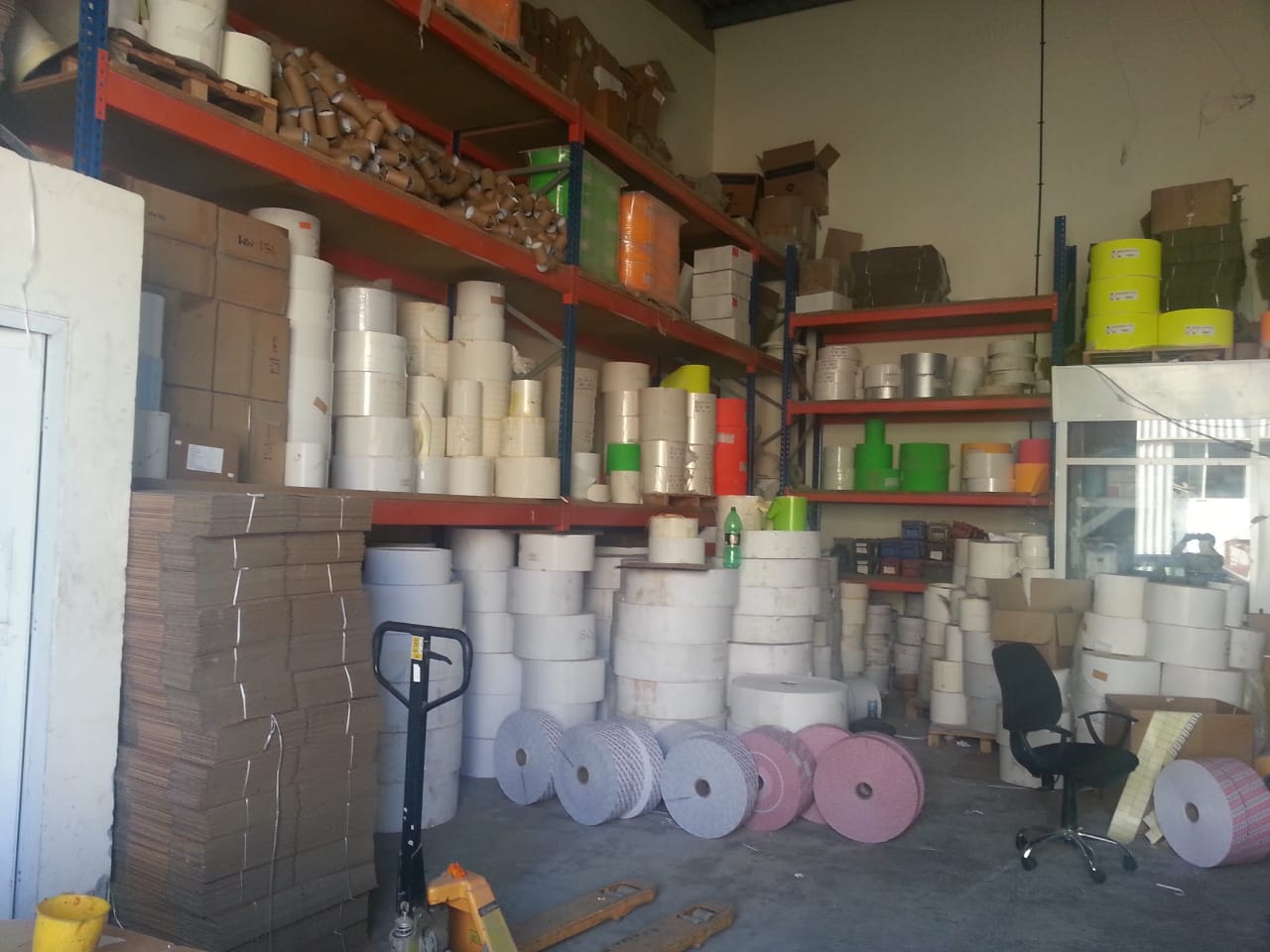
Part of Sigma old factory shed
There was no scope for further expansion with the existing Mark Andy 830 press, discontent crept in, Jagannath contemplated on starting on his own or returning to India, but his wife Pooja put her foot down that there was no way she will go back to India and bring up her children there. Meanwhile Jagannath’s cousin had joined the label business and took over the management. Jagannath decided to initially start his own trading business of making non adhesive liners for cores. Having no money to start manufacturing himself he started out sourcing converting also from his uncle’s company for whom he was working. He was so respectful toward his uncle because of whom he was in Dubai and had indulged in learning the label business, that he made sure not to touch any customer who was buying from them. He even kept working simultaneously with uncle during the day and after office hours for his trading business because he wanted to let his cousin to complete his MBA before he left that business completely. Once free Jagannath decided to get full-fledged into labels but making sure he never touched his uncle’s customers. He started getting his jobs done from a company called German labels and as luck would have it sometime later the owner of that company decided to quit business and sell the machine.


Old factory shed
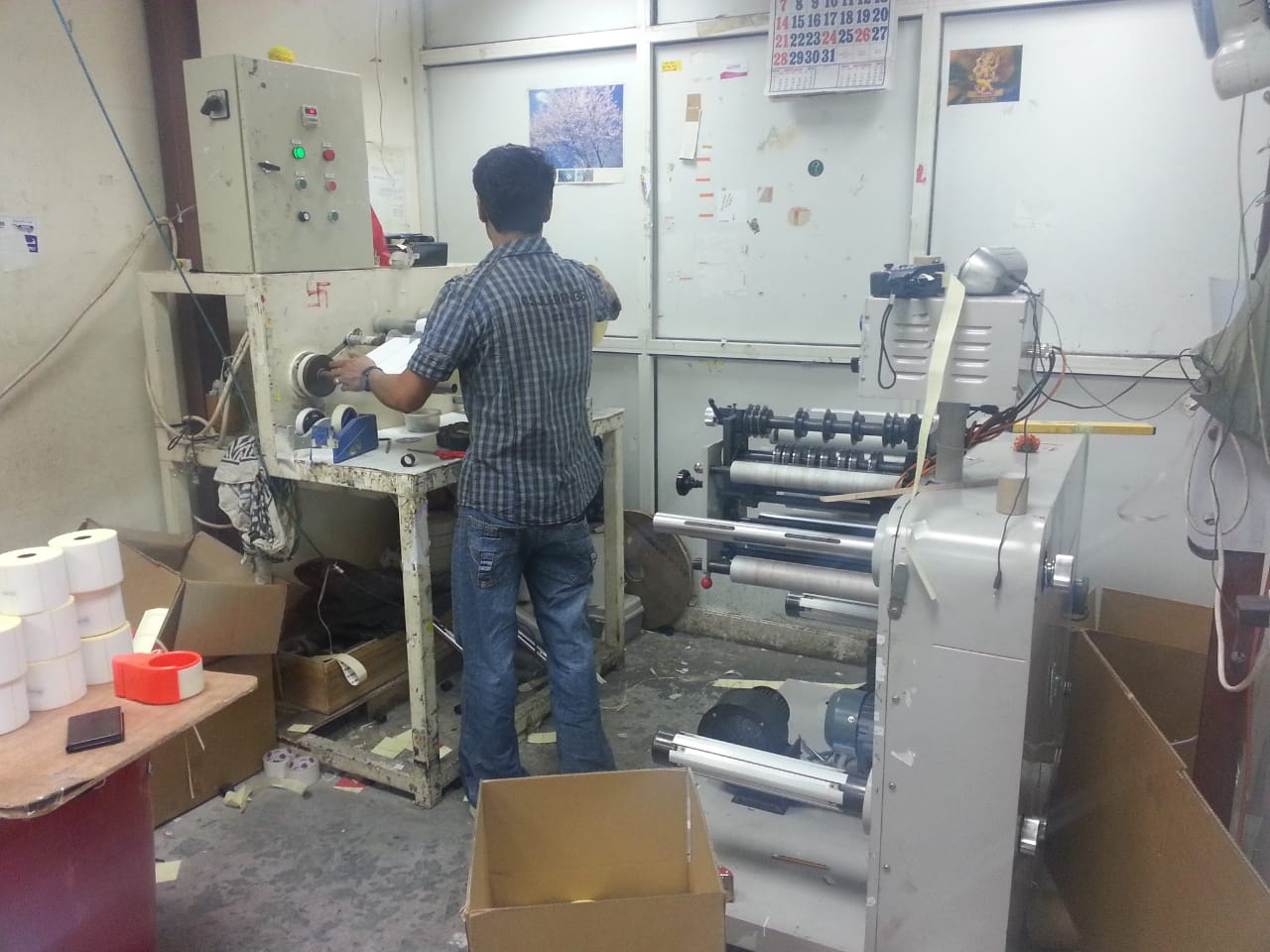
Jagannath wished to buy that press but did not have the funds, so he requested the owner to accept instalments, fortunately as he was destined, the owner agreed to handover the press with 50% down payment and 50% in 6 months. Now the 50% down payment was also not there but a determined Jagannath Wagle refused to give in. In due course of time his two brothers and the friend who lived with him in Nala Sopara had all moved to Dubai and were in good jobs. They all came to rescue and pooled in money to help him buy the Mark Andy. The trade license he took in 2009 was converted to a manufacturing license in 2010. So, in January 2010 Sigma Middle East Labels Industries LLC  started their maiden venture operating with a 250mm preowned Mark Andy 830 press in an 1100 square ft shed in Ajman with just one operator and a helper. Hard work and sheer perseverance produced good results and at this time a difficult situation cropped up. The only operator he had met with an accident and in emergency had to go to India. It was during the Eid period when business is at a peak in UAE, not being the one to be left behind, Jagannath himself operated the printing machine for the next three months. When a container of stocks arrived, he and his only helper would unload and moved goods into the shed and stack them. As at that moment he could not afford help and this incident will always keep him grounded to reality. Watching him make the gigantic offer many suppliers came forward to support him. He is extremely appreciative of Ajay Mehta of SMI Coated products for his support in supplying material on credit to his start-up venture.


Multitec
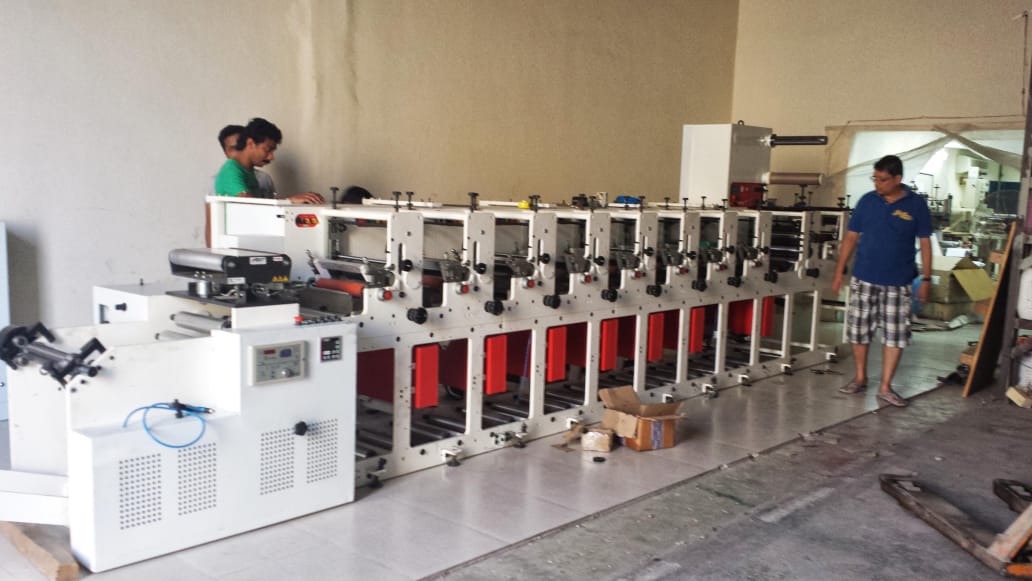
In 2012 when his sales from just one press reached 150,000 to 200,000 Dirhams per month, it was time for Sigma to move on to the next level and acquire another bigger press, he wished to install a European brand, but paucity of funds made him decide on an eight color all UV Multitec 330mm label press which was installed in 2013. It was his first modular press and was a big jump for Jagannath. Even though he lost some money initially as his costing was not right but soon, he took corrective steps towards growth, “This was my biggest learning curve” says Jagannath. 
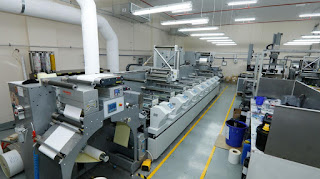


Bobst at New Premises
Two years down the line in 2015 a jubilant Jagannath fulfilled his dream of acquiring a European label press, a Gidue MX370 , 8 color all UV, 1 die station, delam-relam, cold foil and lamination was installed along with and some more additional equipment, also adding more shopfloor space. The fast unplanned expansion led to problems in cash flow and in 2016 Sigma ran into financial stress and troubles. Payments to suppliers were delayed and supplies became restricted. A person having risen from grass roots and not the one to give up, Jagannath kept constant touch with his vendors assuring them safety of their investment and in the meanwhile putting in enhanced efforts to nurture his company to good health. By 2017, recovery had started. Sigma moving ahead acquired yet another Gidue like the one they had. 
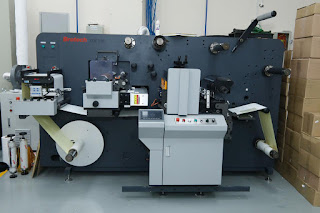


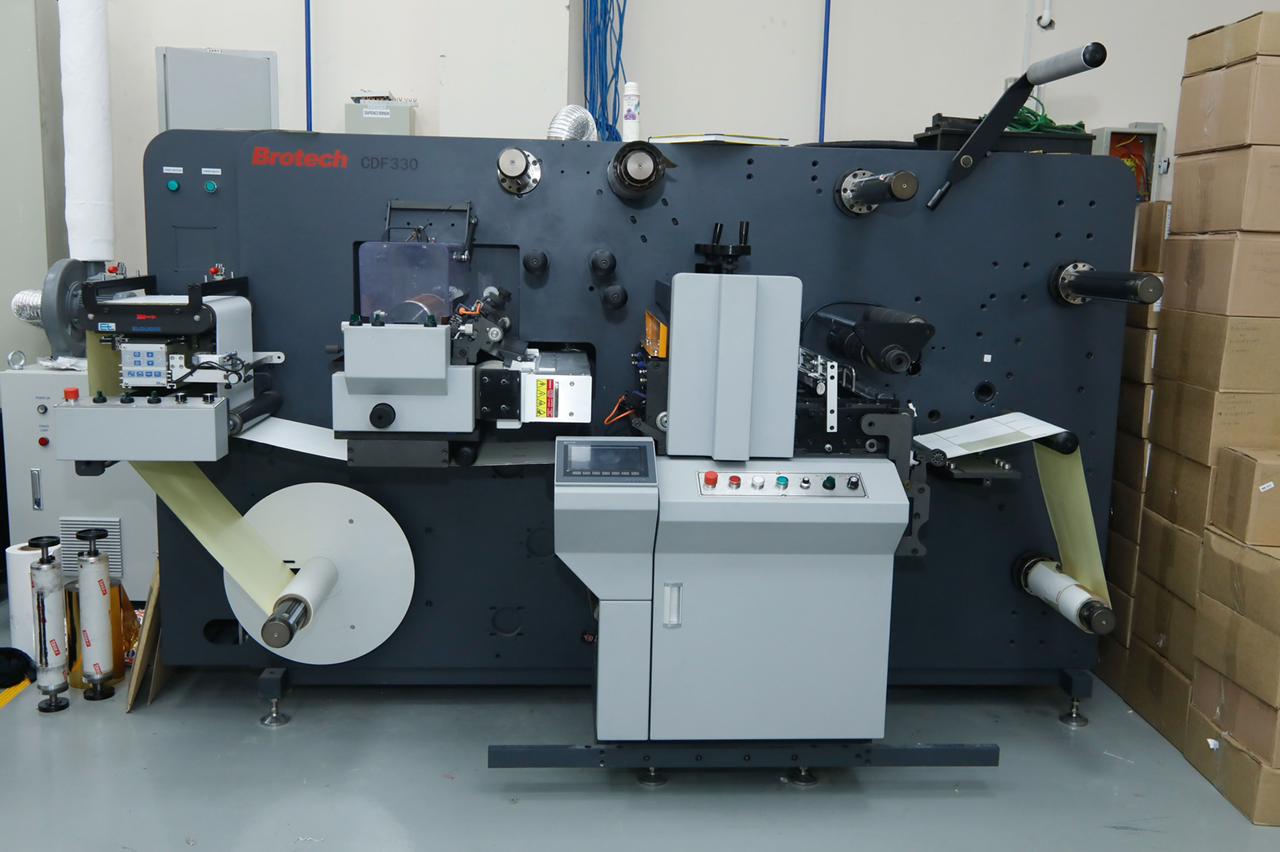
Brotech Finishing
Here on, a more professional approach was put in place, targets planned and achieved, more ancillary equipment including a Chinese press 5 colors with UV and hot air in 2019 to print the liners for cores was added and the second Gidue like the one bought before was bought. Yet again mentions Jagannath that SMI was there to support him, he remains indebted to them. However, learning from past experiences, he sold the Multitec press so that he did not run into financial stress again. The one 1100 square feet shed had multiplied to become 4 sheds and continued growth had become a reality at Sigma. The first used Mark Andy 830 that he had, was given to a friend in Oman at low price to help him.
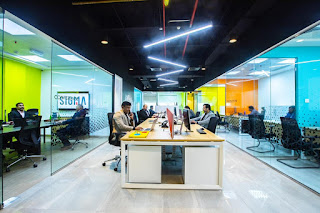


New office


In 2020 things became comfortable, Sigma moved from the four 1100 square feet sheds to a plush well planned 12000 square foot facility with well-furnished and equipped offices. 


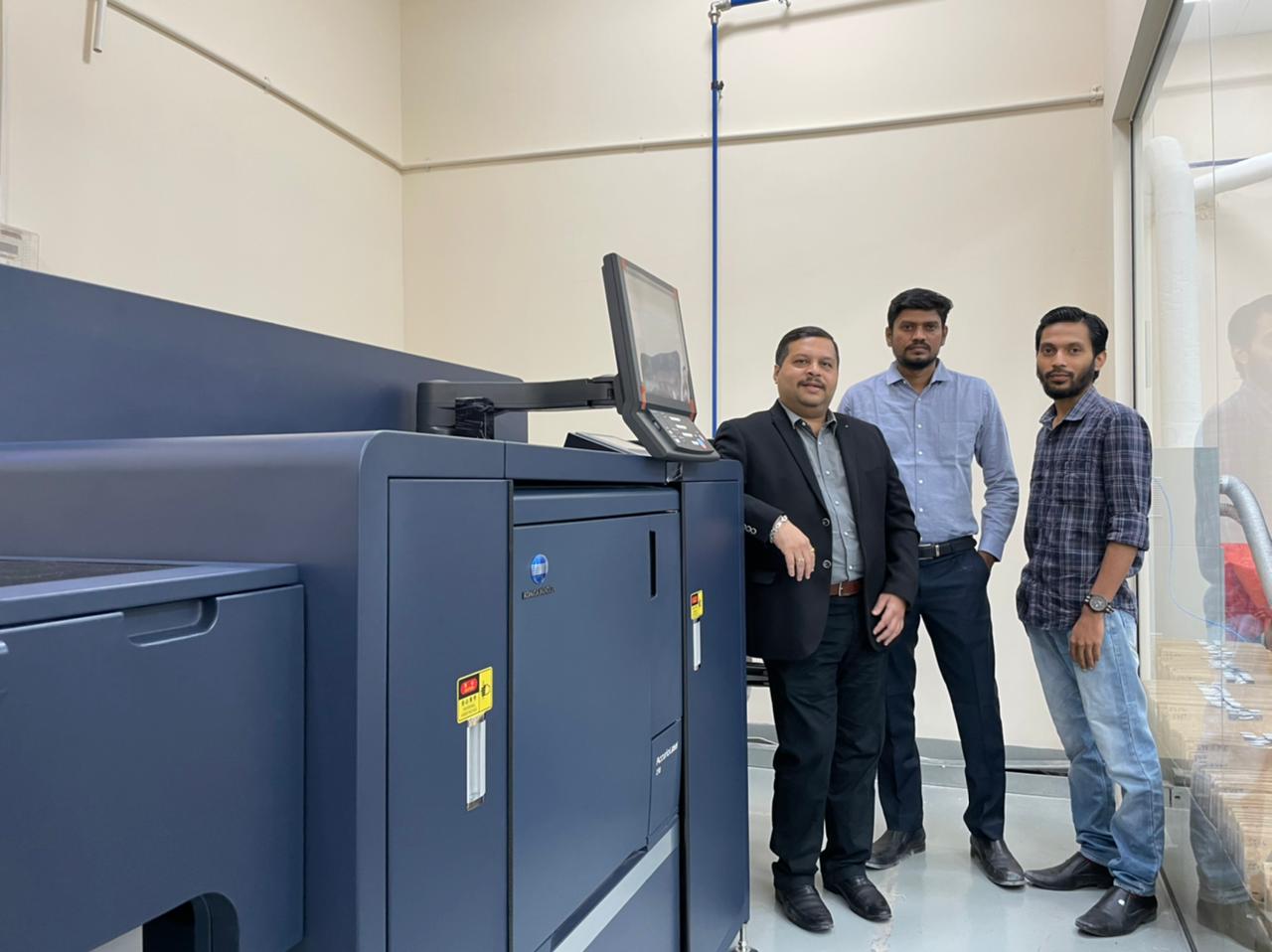
Going Digital with Konica Minolta


They invested 5 million Dirhams adding a Konica Minolta, foiling equipment and Esko and Asahi plate making system. 
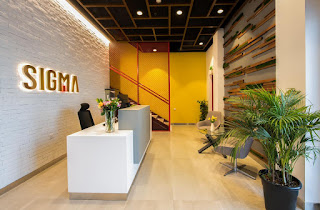


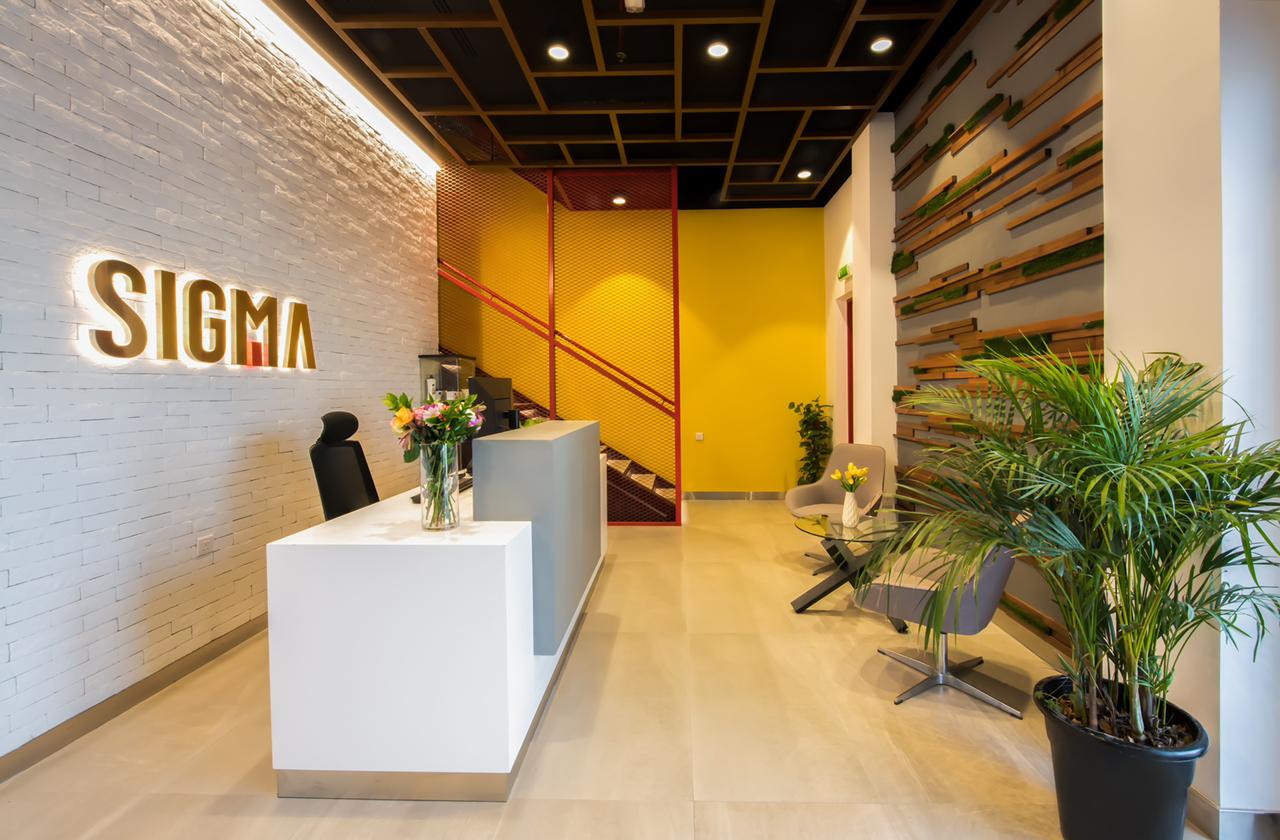
Reception of new premises


In early this year 2021 Jagannath decided that his company had to upgrade to latest equipment to be more efficient in production, he sold the first Gidue he had bought and replaced it with a brand new fully loaded Gidue M5. Jagannath has finally put Sigma on its road to success and bigger business, he attributes the his journey so far to the inspiration that he got from a Indian picture “Guru” based on the life of Dhirubhai Ambani the founder of Reliance Industries Ltd. He still quotes the dialogue from that film, “If I am doing well why not for myself ?”. 



The credit for this amazing journey largely goes to the woman behind Jagannath, his wife Pooja who solidly supported him right through, besides bringing up their only daughter. Pooja is a partner in the company holding the purse strings as the financial controller. No business succeeds without a good team Jagannath and Pooja carefully built their team as a family and took only people from grassroot levels and trained them, two of their teammates had joined as labour/helpers and now work as business development executive bringing in half a million Dirham business each. During their struggling days, Jagannath’s brother in law Kishor Vedpathak quit his job in Mumbai to come and support him, he now looks after Sigma as admin manager. Looking back, he reminisces that his first big break was when he got a big order for 100,000 price marking rolls from Centre Point Chain retail stores. He plans to enhance capacity again later this year with yet another flexo press plus another digital press. Up from just two employees when he started on his own, he now works with 55 employees including four designers inhouse, Sigma has registered a sale of 25 million Dirhams last year growing 30% in a pandemic year!



Jagannath in his new office


Deep in thought and with a smile he mentions that he wishes to be if not the biggest, he will try to be one of the biggest label printers in UAE in 5years time. He is confident that he will continue to lead Sigma Middle East Labels to keep rising to higher levels.


Written by Harveer Sahni, Chairman Weldon Celloplast Ltd. New Delhi June 2021

Print magazines my reproduce the above article by giving credit to author.

Mumbai headquartered SMI Coated Products Pvt. Ltd., a family managed company headed by Ajay Mehta as Managing Director, India’s largest amongst the indigenous labelstock manufacturers has recently acquired three Matho waste management systems that were installed at their Ambernath unit. SMI that was setup in Daman in 1993 on a 750 square meter industrial plot, is now operating out of 25000 square meter plot with 13000 square meter shopfloor converting 1350 tons per month of paper with seven coaters and producing 100 million square meters of labelstock per annum. SMI is  exporting to 22 countries and have setup a slitting cum distribution company in Jebelali Dubai UAE. Rohit Mehta Director of SMI says, “We continuously strive to invest in sustainable, clean room manufacturing and environmentally conscious  practices. Installation of Matho waste management systems is a step in that direction.”

In an evolving current scenario, the labels industry is more concerned than ever with having a cleaner and green workplace. Environmentally and socially responsible manufacturers of self-adhesive label material  or converters of labels simply do not wish to dump their production waste as garbage, in open or covered spaces. The slitting trims or matrix waste which has tacky adhesive on it and is voluminous is waste that attracts dust and bacteria so is a health a hazard  and also occupies expensive space that can be used for productive purposes. German manufacturers Matho offers waste management systems to extract the trims and matrix by suction from the slitting machine or die-cutting station to transport it the main equipment to shred the self-adhesive waste without letting it stick to the sides and clogging the pipes and further blow it on to either collection bags in highly reduced space or compact it for easy disposal.

MATHO Konstruktion & Maschinenbau GmbH is a leading manufacturer of granulators and waste extraction systems in the packaging, converting, and labels industry. Headquartered in Ellwangen, Germany, and with more than 25 years of experience the company focuses on the entire waste handling process. This focus includes the project planning, manufacturing, installation and commissioning of waste extraction systems.

The sale of these Matho systems has been handled by Matho’s exclusive agents in India Weldon Celloplast Limited, New Delhi established in 1982, who are providers of total label manufacturing solutions with exclusive representation of leading international equipment brands as principals. Commenting on this sale, Kanwardeep Sahni (KD) Managing Director of Weldon says, “SMI is an industry leader who is demanding and opting for the best. It is a prestigious sale for us to have been preferred by industry stalwart Ajay Mehta ”.

More information on SMI is available online at;

https://harveersahni.blogspot.com/2015/03/the-growth-of-one-of-biggest-labelstock.html

and

https://harveersahni.blogspot.com/2019/02/smi-celebrates-25-years-reaching-100.html

image001
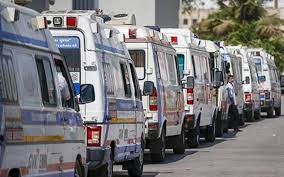
The continuous wailing of ambulance sirens, send a chill down one’s spine, another loved one from somebody’s family, suffering from the impact of second edition of covid-19, is on the lookout for a hospital bed and the much-needed evasive supply of oxygen as life support. It is ironic that in today’s time of technological advancement many unsuspecting innocent human beings are losing a desperately fought battle for survival against a more vicious and fast spreading variants of corona virus. Medical infrastructures are crumbling under the huge volume of patients reporting infections. Vaccination program is struggling to meet targets that keep becoming difficult by the day, the government has opened registration of people for vaccination, but it is a gigantic task which presently at the very outset, means reaching out to over 50% of the total population of almost 1.4 billion people which would be about 70 million people spread across a large geographical terrain in 29 states and 7 Union territories. Recently a newspaper reported the registrations for vaccinations coming at the rate of 55000 per second! A bigger danger is that much of rural India which accounts for almost 65% of the total population (90million) was largely unaffected and now the virus seems to be creeping there as well. The problem is not only India, as in today’s time given the travel mobility of people from all walks of life and with their relatives spread around the globe with different natural and adopted nationalities, the present dangerous second phase of the pandemic is a global problem and unless checked, it may reach very scary levels impacting the world at large. The second wave is so vicious that it has impacted every other home. It is heart-warming to see that governments around the world understand the problem and are coming forward to cooperate with each other in combatting this menace. On the domestic front we see religious bodies, NGOs, industry and many others doing their bit to defuse the pain and anguish due to the impact of the pandemic. The Indian label industry is also taking steps to contribute towards the safety and wellbeing of their workforce and wherever possible contributing to the society as well.


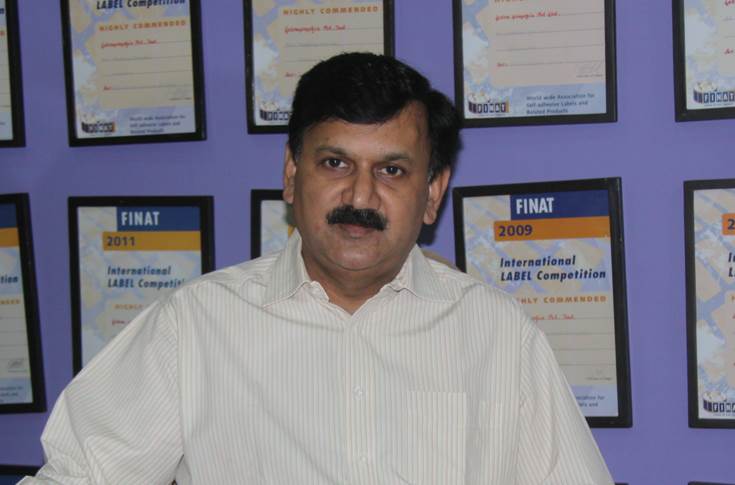
Kuldip Goel
The author reached out to many leading label manufacturers to assess the level of infections in the two phases of covid and their reactions to combat the menace.  The author, his most family members including both sons K D Sahni and Pawandeep Sahni, MD of Omet India Pvt. Ltd. and 4 employees in his company Weldon Celloplast Ltd. tested positive. Kuldip Goel president LMAI (Label Manufacturers Association of India) and Chairman/MD of Any Graphics NOIDA  reported 25 of his team including 14 of top management along with his son Naveen went through the ordeal. He restricts himself from saying he helped his people during the hard time but prefers to use the word support instead. Besides ensuring the job security of his people, providing financial and medical support they even arranged counselling to almost 100+ people in bringing them out from depression. Kuldip along with his colleagues in board of directors of LMAI are already planning to import Oxygen concentrators for the needy. Abhay Datta Director UV Graphic Technologies where 4 people were infected including himself and his son, has prepared guidelines and implemented them for awareness and safe working within the business. He has developed UVC disinfection devices for articles to contain spread of corona. He is unhappy on how the government has dealt with the outbreak, he says, “It is a bad situation, really sad that the government has failed to control it.” Twelve persons including himself and his plant head in Anuj Bharagava lead Kumar Labels suffered infection, but Anuj went ahead and made a makeshift clinic with Oxygen & IV facility at his NOIDA factory. As also helping communities by enabling concentrators and oxygen cylinders. He too is concerned about the handling of the spread, “It is a terrible period for India, and humanity. We wish things were better anticipated and planned by the authorities. However still, we are all doing our best to help each other. Sad to see some people trying to profiteer by selling drugs and services in black” he says.


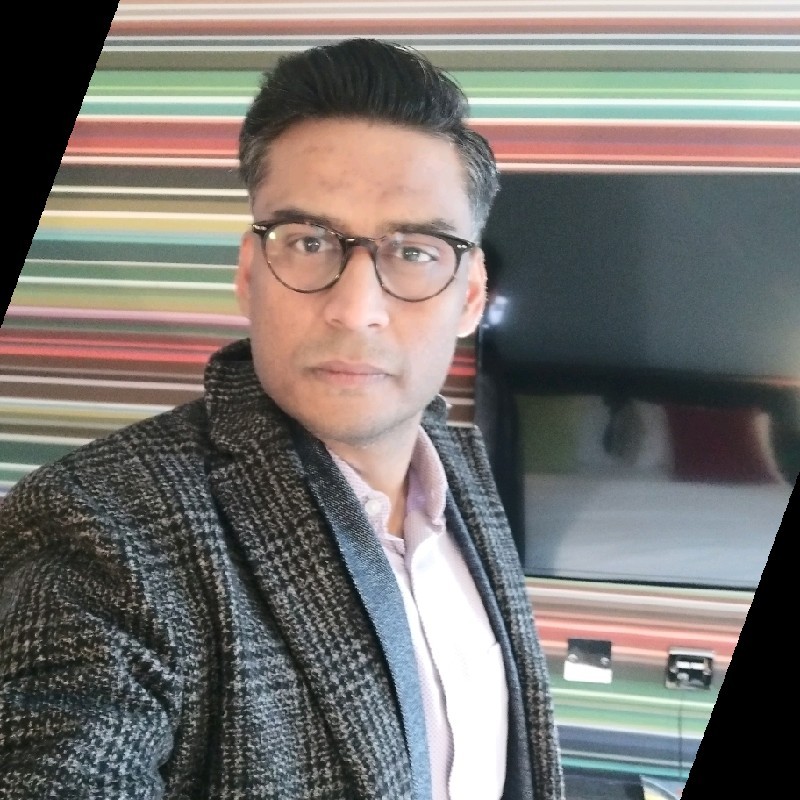
Nirav Shah
In central and west India there is a bigger concentration of label companies and there too most are impacted though some have succeeded in limiting the impact of the pandemic.  LMAI honorary secretary and Director of Indore headquartered Pragati Graphics and Packaging has been deeply involved in arranging hospital beds, medicines, oxygen, oxygen cylinders, etc. for a lot of people from and around Indore. He has also arranged two oxygen concentrators which are being given to needy people. Commenting on the 25 people infected in his company he said, “To me the picture looks gloomy. The industry was slowly picking up as the demand was growing. This wave of pandemic has again brought the industry to its knees and the situation will become very bad if the wave of Covid does not recede soon.” Nirav Shah heading Letragraphix in Ahmedabad had to re-engineer his production plans to meet timelines and service his customers efficiently since 20-25% of his workforce got infected. He has stood by his employees in full even during lockdown and providing whatever support was needed. On the social front Nirav finds satisfaction from the fact that they have donated sanitisers, ration kits and food packets besides supporting an NGO called Karma Foundation on regular basis. He states that these are unpredictable times which have taught many lessons to everyone to get adjusted to a new normal of work culture and pray for the world to heal soon.


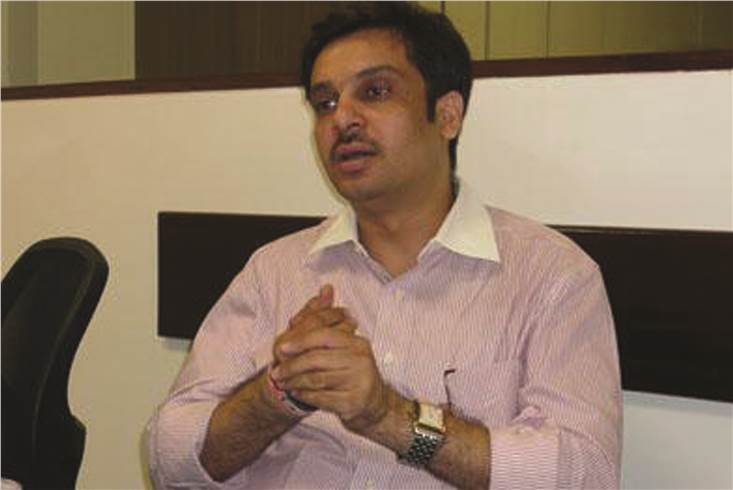
Vinod Vazhapulli of Skanem
Mumbai based Skanem India Pvt. Ltd. (Formerly Skanem Interlabels) a subsidiary of Skanem AS headquartered in Norway with presence in 8 countries also reported 15% to 20% of workforce as infected in its 4 sites within India. Vinod Vazhapulli Managing Director informed that the company has taken care of their employees by paying before time in full without any deductions whatsoever ever since the start of pandemic and supporting wherever help was needed. The company had them covered under the Insurance scheme with a coverage of Sum insured of Rs. 2 Lakhs especially for Covid by Skanem India, thereby ensuring that all their Medical and treatment expenses are taken care of under Cash less transaction schemes. Online counselling sessions / Yoga classes etc. were organized ensuring that any kind of anxiety or mental dis-order that would have developed due to the pandemic or extended lock downs are handled by experts, taking care of the mental wellbeing of their employees. As a social endeavor They have provided Medical aid , Food & PPEs to the Maljipada village where the Mumbai plant is, during the peak of Lock downs last year. Vinod says, “ there has been an impact of this outbreak on our Industry, the recovery had commenced but with this 2nd wave it is again pushed back to uncertain times”.


Raveendran
South India based Rajeev Nair CMD of Stallion Group informed that 25 % of their team including 5% from management were impacted, he is worried that the business that went down in the first phase of covid had started to recover is now again adversely impacted in the second phase. Raveendran of Seljegat in Sivakasi is thankful that they have been cautious with their workforce, so the infections were minimal, just two employees and his younger brother were impacted mildly and recovered. They have in place a strict protocol of checking temperature, oxygen levels and providing sanitisers. They also provide herbal immunity boosting tea to all workforce who must maintain safe distance and are divided into two shifts. Except for a week of lock down, they have been working right through and in fact are in 100% production. They provide separate buses for women and other workers making several trips to maintain distance and transport them to and fro safely. They have even invited government officials to study their systems that have helped in curtailing the infection. We see similar situation in J K Fine Prints Mumbai, Director Himanshu Kapur who is son of Surender Kapur the founder president of LMAI says, “We had just one infection between the two phases, we have given full financial support to our workers as also provided them and their families with masks, sanitisers and other needs” he further adds, “After the initial jolt, I now feel that label industry will not be so drastically impacted. We  will see  growth coming from Tier 2 and Tier 3 cities who will patronise organised retail for their needs”.


Sandeep Zaveri of Total Print
 
The best response came from LMAI past president Sandeep Zaveri heading Total Print Solutions Pvt. Ltd. Mumbai, he says, “Between the two phases none in our company got infected due to strict norms maintained by us and supporting our team with full salaries and food needs” he adds, “I think God has created this for us all human beings to go slow, spend quality time with our near and dear ones”.


Many NGOs(Non-Government Organisations), religious bodies, companies and individuals are contributing in whichever way they can reduce the sufferings of people. Donations and help from these groups keep pouring in and exhibits the caring that emanates from these groups. However, in contrast we have reached a situation when politicians continue to play the blame game accusing each other for the sufferings of population, with their eyes on the next election and access to country’s coffers they are insensitive to the pain people are going through. Allowing election rallies and religious gatherings of hundreds of thousand people not following covid norms has contributed to the massive spread. The central government says state government is wrong and vice-versa while the innocent citizens gasp for that breadth which will come loaded with some oxygen so that they may still survive to be with their loved ones another day. It is so unfortunate that we talk of financial outlay of billions in our budgets yet a commodity like oxygen that is an imperative for survival has become a political point for our leaders blaming it on logistics. The pain and suffering do not end for the relatives of those who have lost their fight against covid and passed away, there is neither the means to take the bodies to cremation grounds nor the space to cremate them. Will residents of another developed country understand this kind of situation?  All this while the needy yearn for that breadth which will decide if they exist the next day or not. Added to this the unscrupulous citizens who look at this as an opportunity to make more money, they make the Shylock in Shakespeare’s story “Merchent of Venice” appear as a reasonable person, he may have just asked for a pound of flesh from just one borrower, here these black marketeers are trading in oxygen, essential medicines and life support equipment to draw unreasonable profit from the lives of a suffering generation. 


History will not and should not pardon such unethical persons who have no feelings that a grandparent, a parent, a spouse, a sibling or an offspring are so  precious part that one yearns for them to be there always and losing them is not imaginable. Courts in India appear to be understanding the gravity of the situation but who will teach the politicians who are the executive running the country. It is not just watching on TV that people are suffering and dying, but it is now being felt and being experienced by all households largely. A friend, a relative, a business associate, a colleague or a loved one just vanishes losing out to the pandemic leaving a void and a hollow feeling whereby the tears have no place to go.


Written by Harveer Sahni Chairman Weldon Celloplast Limited New Delhi May 2021

Reproduction permitted by giving credit to author and link to blog http://harveersahni.blogspot.com 


In my early years when I worked for my parental company Weldon Sales Corporation established in 1939, manufacturing stationary products like Weldon Fountain pen inks and office glues besides a range of stationary products, I remember that we used to affix paper labels on glass bottles using water-based adhesives. Initially these were solutions of gum Arabic and later we switched over to starch based adhesives produced by us captively. These worked well on glass bottles or paper-based packaging, the only challenge was that we had to wait for the adhesive to dry before putting these into secondary or tertiary packs as the labels would shift if packed wet compromising the appearance of the product. The same issue was encountered by the beer industry which continues to face it, at least for some brands that still rely on adhesives that do not address this problem. Since glass packaging was heavy and was susceptible to breakages in transit the introduction of plastic HDPE (High Density Polyethylene) bottles came as a big relief at that time. HDPE that was invented in 1953, started being initially imported and later produced in India by Polyolefin Industries Ltd. a Mafatlal Group Company under license from Hoechst Germany, in the late 1960s. HDPE plastic bottles came as a big innovative development for the liquid packaging industry. When we at Weldon started using outsourced Plastic bottles, later manufacturing them in-house, labeling them brought fresh problems.

The labels affixed with water-based adhesives, on drying would fall off in transit or get wrinkled. This was because of the reason that HDPE is a low-energy polymer and for normal water-based adhesives to form a permanent bond is a problem.  For some round bottles, we started using wrap-around labels as then the label would come around and get pasted paper to paper. It was during this period after 1965 that the earliest self-adhesive labels started being produced in India and in the 1970s their usage in the packaging of products started to increase. These labels would bond instantly, would not need drying and would not shift in packaging , also aiding the aesthetics so their usage spread quickly and widely. It was that time we at Weldon also shifted to self-adhesive labels or pressure-sensitive labels. The rest of the evolution of Self-Adhesive labels is history and is still an ongoing process.

Adhesives: Pressure-sensitive adhesive(PSA) labels is now one of the fastest growing segments in a world of diverse labeling technologies. It provides accuracy of clean labeling and options to use a variety of adhesives for  application on different surfaces in most environments, including temperature, humidity, exposure to UV, etc. Advancements in products and their packaging require labels to perform in extreme and demanding parameters.

Some food and pharma products require the labels to perform at very low temperatures, typical are for ice cream, pharma and vaccines that require extremely low temperature for storage. Synthetic adhesives that are in use nowadays harden at very low temperatures and tend to fall off so must be formulated to withstand the application and storage conditions. These adhesive soften at high temperatures therefore signages and labels that must be used for outdoor in diverse environments, withstand UV light and heat build up due continuous exposure to sun also need adhesives specially formulated to perform for the duration of their lifetime. Direct PSA labels application on food products like fresh fruits and vegetables is now in use and labels must be certified safe for direct food contact and that they should not have adhesive or inks from which plasticizer may migrate into the product. Coming to labeling on low energy surfaces like HDPE bottles mentioned above, though the label sticks well but in these days of increased incidence of anti-counterfeiting, pilferage and tampering, the label with standard general purpose adhesive can be pulled off cleanly by an experienced hacker or counterfeiter. So, the adhesives are an important and integral part of evolving trends in self-adhesive labels. A lot of development has been done on these lines and continue to be taken up to produce special formulations that conform to the specific requirements.

Substrates and embellishments: As customers grow in numbers, segments, literacy, urbanisation and geographical spread, the packaging development managers are attempting to create innovations in partnership with label printers to woo the consumers, increase the shelf appeal of products and increase brand recalls.

Moving from simple label substrates like uncoated maplitho or uncoated woodfree paper, now the selection of substrate is as per the imagination or creative ideas of the label developers. The label face materials can be selected from a wide range of options available like semigloss paper, metallised papers or films, textured paper, various clear or opaque films, fabric, cork, lenticular films, holographic paper or films and anything that emanates out of a creative designer’s mind. As for embellishments, there was a time when either using a cast coated paper or a good varnish were the only options, but now a whole world of new ways to embellish labels has erupted. Using multiple printing technologies to get the best of every printing process, adding value to win customers and beat competition is becoming a necessity for printers. Today we see labels being made in-line in a single pass employing a combination of flexographic printing for spot colours or pantones, offset to create vignettes or skin tones, screen for higher deposition of ink, rotogravure to get the best results of metallic inks, cold foil, hot foil, using a variety of varnishes to create effects like textures, high gloss, matt, silk finish or just spot varnish, embossing and debossing to bring amazing results in the finished labels. We see printers create labels with raised effects like dew drops, print that seems to give the look and feel of wood and fruits with pulp, giving a natural effect. Adding further to the capabilities, now printers are employing digital printing either in combination as mentioned or as repass to do variable printing and or personalization. The options are getting to be limitless.

Security Labelling: Increasing number of instances of duplication, counterfeiting and pilferage has created a need for security to be made an important part of labeling.

Counterfeiting products is a problem not only limited to pharmaceuticals industry, but it also affects 5 to 7 percent of global trade. It has impacted other industries as well, such as electronics, automotive parts, spirits, consumer products and high-end cosmetics. Earlier security labels were only with security cuts incorporated at the time of die cutting, then specialized stocks with overt and covert features like the Void labels started being used followed by destructible labels. Holograms also have been largely employed and is now hologram production is a large segment of label industry. With development in pre-press and printing technologies printers use micro printing which is not visible to naked human eyes and other such printing methods used in printing currency to inbuild security in labels. Barcodes are also being largely employed to play an important role in security in labels besides aiding variable statutory information, track n trace information, inventory and logistical data. A very important development in recent times has been Intelligent labels that include near field communication (NFC) or radio frequency identification (RFID) to perform a wide variety of tasks. Integrating these capabilities with traditional labels is one of the most dramatic development in labeling.

Printing Equipment: The narrow web self-adhesive label manufacturing commenced in India in the first half of 1970s on small, about 4-5inches label presses imported from far eastern countries mostly from Japan at that time. These small narrow web presses that did block printing were extremely slow about 5 meters per minute but still did the printing and die cutting inline in a single pass, that was its USP.

It may appear strange to the younger printers of today that there were no drying arrangements in these presses. Printers would print and then hang the printed rolls of labels on a clothesline for drying before rerolling them on a core and sending to customers. Shop floors of narrow web label printers would look like washing yards referred to in India as “Dhobhi ghat”. The printing technologies with time went through continuous changes. The flatbed block printing made way for semi-rotary intermittent letterpress using polymer plates. With improvement in Flexo ink and plate technology, rotary label presses with central impression drum (CI Label Presses) found their way into print shops. These provided faster speeds at increased widths of 7 inches(180mm)-10inches(250mm) and as the buyers became more demanding on colours, speeds and performance, together with further evolution of prepress, advancements in plate making and registration controls, the CI narrow web label presses moved out making way for modular presses using water-based inks with hot air dryers. However, CI presses continued to be used for other applications like lami-tubes and mid-web flexible packaging. Label presses have over the years evolved to print wider web widths of 330mm, 430mm, 530mm and at last Labelexpo presses over 650mm were displayed. Printing speeds have also escalated to over 200meters per minute. In an evolving scenario of rising demands for perfection in print and printers facing challenges in reproducibility, colour variations due to viscosity changes in ink trays and set up wastage, were releived when UV inks, UV lamps for drying and short web path became a standard part of presses. The UV printing also enabled printing and converting filmic labels after addition of corona treaters inline to enhance print adhesion. Some label companies have of now reverted to include a combination of hot air and UV as some food products have witnessed migration of photo initiators in UV inks migrating into the food causing contamination, so the option to print with water-based inks comes in handy to service such requirements. LED UV also is being seen as replacement as there is energy cost saving and better as regards migration issues. Ideal solution maybe Electron Beam curing which is costly but that has still to be accepted by Indian label industry. There is hardly any installation with EB curing for production of narrow web labels in India.

Other evolutions that happened include label presses designed for quick change overs to enable a large number of jobs per day, servo drives to eliminate gears coupled with advanced vision camera systems to achieve perfect registrations in both machine and cross direction without human intervention, better matrix removal, web cleaners to eliminate pinholes and print aberrations, web turn bars to print both sides of the web along with the delam-relam function for enabling printing on back or the adhesive coated side of the web. Movable lamination stations and embellishing stations like foiling add value to the printed labels. Multiple die-stations to enable functions like embossing, debossing, slitting besides simple die cutting or sheeting have become a standard function demanded by high-end printing companies. Change of heavy magnetic cylinders was a cumbersome and time-consuming job requiring manpower and lifting arrangements. Now in a couple of minutes one can slide-out and slide-in a magnetic cylinder.

The pandemic that surfaced in end of 2019 and drastically impacted the whole world and made businesses suffer for all of 2020 and when we are hoping for it to taper off in 2021 providing relief to mankind, it has started to resurface. It has prompted the industry to re-engineer their working. The aim now is to work with less. Workflow management, increased automation, clean room manufacturing, inventory controls, effective management systems, etc.  are the buzzwords that even smaller entrepreneurs understand and are making efforts to implement them.  Automatic butt slicers/reel changing systems to achieve continuous 24X7 production when needed, waste management equipment sucking waste matrix right from the die cutting stage and shredding and inline inspection/colour management systems to reduce rejections which were earlier a preference of only a selected few, but these are now a part of standard equipment configurations envisaged commonly by Label printing  companies planning expansion or planning new setup. The evolution and shifting of trends in self-adhesive labels have been an ongoing process and printers need to adapt the changes as they originate to stay fit, competitive and innovative.

Author’s footnote: Each parameter listed above and many other parameter’s like inks, special adhesives, coatings and machine design are subjects that are to lengthy to be accommodated into one article and need separate coverage. 

Written by Harveer Sahni, Chairman Weldon Celloplast Limited, New Delhi-India April 2021

The adverse impact of lockdowns has not really worn off when a very awkward situation is now confronting the labels and printing industry at large. Prices of paper and all essential inputs are moving skywards disrupting the cashflows that appeared to be getting back to normalcy.It is a strange situation whereby there is a volume growth in demand and reduced availability of pulp and other materials

coupled with a compulsion of paper mills to recoup the losses incurred due to lockdown, driving up the paper prices. Stuck in between, the label and printing industry is compelled to swallow the increases with intense pressure on their operating margins and working capital requirements. The phenomenon is evident globally, as paper sellers are directing supplies to wherever they find a bigger demand around the world and can command higher prices. There are also logistics challenges owing to the shortage of containers. One wonders if this surge in demand is real or there is an element of stockpiling. If it is the latter, it may result in a market crash once the normal working returns that would be even more worrisome. It is mentioned by analysts that the present spurt in prices is due to increased demand coming from China’s domestic consumption increasing dramatically. Surely these are unprecedented increases happening leaving a premonition of adversity amongst the printing and packaging fraternity.

The price increases in the paper are coming continuously at regular intervals of time. Asia Pulp & Paper (APP) which is one of the largest pulp and paper company in the world, wide their notification dated 22nd  January 2021 increased prices of all grades of paper by 100$ per ton then on 1st February 2021 they increased the prices by another 100$ per ton and also withdrew the reel discount they were offering,

yet again on 1st March 2021 they increased the prices by yet another 150$ per ton.With such a steady rise on monthly basis, one is left wondering when and where this will stop. SAPPI another global supplier of label, packaging and specialty papers, on 3rd March 2021 announced an increase of 7-11% in prices. In the case of labels, both the face stock and the release paper have suffered cost escalation. Vinyl Acetate Monomer or VAM is an important part of pressure-sensitive adhesives used for the manufacture of self-adhesive label stocks and tapes. Owing to a whopping increase in demand from China VAM prices also witnessed a continuous upward trend to reach an increase of more than 20% so far in 2021. This too directly impacts the cost of producing self-adhesive label stock and eventually labels.  Many polyethylenes (PE) and polypropylene (PP) producers in Texas USA have shut plant operations because of the winter storm in mid-February 2021 sending prices of films upwards due to shortages. This increase in the prices of polymers directly impacted the price of label films and filmic label stocks. The increase for different films varies between 12-25%.

As if the raw material price rise was not enough the varying demand across different geographical zones in the world and shift in purchasing pattern of populations around the globe brought about a huge impetus to online retail business.

This resulted in a logistic change of transportation from established routes and volumes causing disruption of smooth flow of materials and altering the planning for container needs. All this led to increased freight rates, coupled with increasing fuel prices the ultimate impact on the end product keeps on escalating.  It is surprising that such an unprecedented upward revision of all inputs in one go has never been witnessed before in the labels industry. The labelstock manufacturer is squeezed between the large raw material suppliers and the printers who are themselves under intense pressure of high equipment cost and facing print buyers who are not willing to increase buying rates. More so, considering that increasing number of label printers are bidding for the same business and are always ready to compromise a bit more, the situation is complicated.

Gautham Pai founder and Executive Chairman of Manipal Technologies Limited Manipal, expressing concern at the situation prevailing says, “The price increase of raw materials is significantly impacting the business. In addition, the supply chain disturbances and logistic cost increases have added to the overall costs increases.

These increases at a time when buyers are still struggling with low demands and muted orders is a major concern.” U K Gupta Group Chairman & Managing Director, Holostik Group also feels, “Price increase in paper, solvents and adhesives have impacted the Label Industry badly”. Indian Labelstock producers have steadily grown in numbers and size as the industry registers double digit growth over the last many years. The industry players have gradually transformed from being manufacturers of  just commodity stocks like semi-gloss and uncoated wood free or maplitho to advanced specialized label materials, both coated, uncoated, filmic and specialty products like security label materials. Since all inputs in labelstock manufacturing have been adversely impacted and spreading the effect to the entire self-adhesive label industry, Ajay Mehta Managing Director of India’s largest indigenous labelstock manufacturing company SMI Coated Products Pvt. Ltd. brings forth the reality that the industry is facing by expressing, “The price rise in all raw materials of Label Stock solutions have gone up tremendously and we have to pass it on to the Label converters and unless the  Label converting industry joins hands, to take immediate action in getting a price rise from Label buyers , the Industry stands to loose INR 250 million per month, which is going to be extremely detrimental for the health of the industry”.

The pain and anguish at the emergence of this difficult unprecedented turn of events in words of, Ajay Agarwal, CEO of Syndicate labels New Delhi, “Price increase is nothing but a nightmare for the Label Printing fraternity and the biggest reason is that it disrupts the operations for all label Convertors.

The process of transmission of the rate increase to the end customer is extremely difficult and is often characterised by a new round of negotiations, reverse auctions etc. and most likely it results in reduced margins for the label convertor. While price increase is a reality and need of the hour yet in face of the current increase in prices of raw materials, it still leads to a lot of pain.” Sharing the same concern, Himanshu Kapur Director, J K Fine Prints Pvt. Ltd. Mumbai agrees, “Price increase is a necessary evil for accommodating inflation, if done effectively it will benefit the entire supply chain else  operation will suffer long term. Unfortunately, the print buyers are also responsible for the collapse of an industry which was once an art form and now considered a commodity”. Rajesh Nema Director Pragati Graphics Indore and honorary secretary LMAI (Label Manufacturers Association of India), “Label industry is indeed facing tough times as cost of all inputs has gone up yet print buyers are not agreeing to price increases. Most of the self-adhesive label manufacturers are in yearly contracts with their buyers, it is difficult to make them agree to price increases during currency of the contract”.  According to Lakshminarayanan business unit head-Wintek at Signode India Ltd. : Impact of Prices is not only from raw materials, but it is also due to Inflation and logistics. There is  a strong demand for consumer goods and food packaging in the country. Nonessential packaging sectors is also regaining normalcy, but the price increases continue to challenge converters supplying due to their inability to pass on the  price increases to end-users, who in turn are driven by their cost pressures and not accepting to consider any price increase in current situation. Considering the greater need for working capital due to the steep increase in prices during recent weeks and the narrowing margins, inventory held by both converters and end-users remained below the average.

A brave Anuj Bhargava of fast-growing Kumar Labels NOIDA beamingly says. “Price hikes shouldn’t affect any organization’s normal profitability in the entire eco-system. All actions favorable to this intent should be taken so that a new equilibrium is arrived at with positivity” However he further adds, “that price hikes should be passed on so that profitability is not affected for anyone. New equilibrium is with revised prices for everyone.”.

LMAI President Kuldip Goel, Managing Director of Any Graphics NOIDA,  sums it up as a situation whereby in the covid times many in the industry have lost customers because when you take the increased price to them, your competitors who have their own pressures to strengthen their balance sheets so that banks are satisfied to lend more, are ready to offer without any profit or at a minor loss. Or if they have spare capacity and can retain their loyal customers they will attempt to take in new customers at unreasonable rates. It is not that the print buyer is not facing the impact of covid-19, the moment they see price escalation they will start exploring options to prevent the rise in the cost of inputs.

Printers at this time must evaluate as to how best they can handle the situation; price increase is imperative for them to sustain but then it needs to be seen how much of their business is dependent on that customer. One must strike a balance in price and cost optimization internally by trying to achieve more from their existing infrastructure and manpower. One must look within, reduce labour cost, wastages, save electricity, inventory control, and produce more with less.

At this time, the entire value chain is in jeopardy, each business product unit is customer of another, all constituents of the industry up to the print buyers need to empathise with their suppliers to bring some relief from this dilemma post continuous increase in input costs, that has descended on entire industry. It is appropriate at this time to mention a famous quote, “The journey is never ending. There’s always going to be growth, improvement, adversity; you just got to take it all in your stride and do what’s right, continue to grow, continue to live in the moment”.

Addendum: Messages received after posting the above article;

Aaditya Kashyap, Marks Emballage Pvt. Ltd.  Baddi”; Already struggling to come back to normalcy from the pandemic-induced challenges, the increasing raw material pricing is like the last thing we could have wished for.  I see label printers in a very weak and vulnerable position completely squeezed out of business by increased prices from bigger players on the supply side and the dominant brands and buyers on the other hand who refuse to accept any price hikes. Would love to see that material manufacturers and suppliers work with printers to take the price hikes to brands and buyers. This is a difficult time for all, so need for all stakeholders to work together to find a win-win in this difficult times.”

Written by Harveer Sahni Chairman Weldon Celloplast Limited New Delhi March 2021

Note: Print magazines are free to reproduce this article subject to giving credit to author with blog address

Sometime during the spring of 2002 while I was camping in Mumbai, a father son duo came to meet me to seek my advice on the way forward in their label printing business. They were making labels for beer and liquor companies by outsourcing printing from sheetfed offset printers and then embellishing them at their factory, Hot foiling, Embossing, Die-cutting, etc.

They were at that time deciding to go in for a narrow web label printing press. By the time the meeting ended they were sure that they will invest in a new label press of international brand. The duo was none other than, Joe Annunciation and his younger son Janus, he has another son Denver. They had been considering a Mark Andy press earlier when it was sold by EAC graphics. Meanwhile Heidelberg had acquired EAC and had also invested substantially in Gallus in 2003 due to which it came within the Heidelberg portfolio replacing Mark Andy, the Annunciations were inclined towards Heidelberg as their printing vendors had their equipment and spoke of their unmatched service support in those days. This situation motivated them to finally settle for a Gallus EM280 label press to initiate their journey into narrow web label printing and converting.

Joe Annunciation a B.Sc. in chemistry started his career with Colour Cartons a leading package printing company of that time. Joe had the unique distinction of being the first chemist ever to be employed by a packaging company in India to work in their laboratory.

While he was still at Colour Cartons, Joe got an opportunity to work in a Dubai based plastic molding company Cosmoplast which he readily accepted and relocated to UAE. Cosmoplast are manufacturers of Industrial, household moulded plastic items and disposables. Here at Cosmoplast he shifted to marketing. His elder son Denver was born in 1980 while they were in Dubai. As time passed, Joe ventured out on his own. Given his technical knowledge, he started trading in Plastic Bags, travelling, and selling in the entire Gulf region. He envisioned setting up a manufacturing facility of his own someday, so kept remitting his savings back home. In 1985 just before the birth of his younger son Janus, it was time to head home and initiate his own business. Joe and his wife Lourdes, a homemaker, returned to Mumbai and set up the family’s maiden corrugated carton manufacturing unit in partnership with Joe’s brothers. A decade later he parted company with his brothers and in 1996, he set up his present labels printing company, Janus International.

Joe’s elder son Denver Annunciation who now runs Janus International along with his brother Janus, did his earliest schooling in Dubai but on return to Mumbai went to boarding school for further education. Denver attributes the time at the boarding school as the most rewarding in shaping up his career.

Post school he completed his B.Com. from SIES College Mumbai. He wanted to study further and become a computer programmer but due to his father’s problem with his eyes, in 2001 he joined the family business working initially in the accounts department besides assisting his father in production. Within 2 years of his joining, the Anunnciations invested in a 5 colour Gallus EM280, since it was a 5 colour flexo press, they impressed upon customers and converted most jobs to suit their equipment. The first label that they printed on their Gallus label press was for Cannon 10000 beer. 5 years after Denver joined business, his brother Janus also joined strengthening the team to expand and grow the company. A challenging time came when their regular customer Shaw Wallace got acquired by Sab Miller. The auditor from the new team at Sab Miller had different parameters to assess the vendors and reduced their business substantially. A persistent Denver took that in his stride, worked harder to grow the business exponentially. From just one press in 2003 they had installed 4 presses by 2008.

In 2006 Denver while still working joined S.P. Jain Institute of Management and Research to complete his MBA and then move to head the marketing and sales operations at Janus international. His brother Janus also followed Denver’s footsteps and pursued further studies to get an MBA degree.

While at S P Jain, a professor impressed upon Denver the unique model of Toyota whereby they could produce even one unique car. This had impacted his mind immensely, more so because they were already loaded with bulk manufacturing of beer and liquor labels day after day. Denver found this too monotonous and tiring without much innovation, even after registering a whopping 80% growth rate. He started thinking of the unique Toyota concept that his professor had advocated. Digital appeared to provide him the solution to diversify into an exciting arena of change and unique concept of creativity in short runs and catering to a much larger customer profile. At this time, they took the pioneering step of being the first label printing company in India to invest in an HP Indigo 4500 label press. Denver and Janus decided to visit Drupa in Dusseldorf and finalise the deal for an HP Indigo, but they were worried about the existing business in their absence for the long time that they would have to spend at Drupa. Fondly Denver reminisces that a day before leaving Janus accomplished a gigantic task of proofing 56 jobs in a single day so that things would run smoothly in their absence.  At Drupa they signed the deal to invest in an HP Indigo 4500 Digital Label Printing Press. They had finally the capabilities to print Offset, Flexo and Digital.
As early as 2008, Janus International led the Indian label industry’s move into digital label printing!

It is normal that when one indulges in a new technology there are many glitches and it becomes continuous learning until you stabilize and settle down to a comfort level. At Janus International it was no different, but Denver is appreciative of Ajay Rao Rane, then working for HP, who helped him through the learning process.

They had to test printing on all different materials, learn the primer coatings and other operational nuances. Now the brothers are adept in the digital label printing technology. They are capable of catering to a diverse range of customers offering short runs, immediate deliveries and customized jobs with variable information. 11 years after buying the HP Indigo 4500 they decided to upgrade the machine to HP Indigo 6900. Allowing Janus International to offer customers options such as shrink sleeves, cartons, pouches and in-mould labels. The upgrade has also enhanced Janus’ capabilities to address the requirements of a wider variety of brands, including small and medium-sized enterprise (SME) clients, for fast short-run production and packaging.  With this installation they can print wrap-around labels, pouches, IML, lamitubes, security labels, pressure-sensitive, shrink sleeves as well as folding cartons. Gradually the customer base swelled from 14 customers to reach over 350 customers.

Looking back, Denver feels some of the events that have brought him happiness and success include the decision to join a boarding school, join S P Jain for masters in business administration and his meeting Wilona, his wife and marrying her. Dr. Wilona Annunciation is an MD MBBS, a successful psychiatrist. The couple is blessed with two children, a daughter Allyssah 9 years and Aeyden 7 years. Denver still nurtures his passion for IT and IT related activities, as he grows in business, he wishes to someday become an industry consultant related to IT enabled print services, digital printing being an important part of such services.

Facing the pandemic, lockdown and restarting production, the Annunciation brothers say, “There was no change for us, we have been investing in workflow management and automation for a couple of years now. We could start production in 4 days with just 5 workers”.

They had got permission to restart as they were supplying to manufacturers of food and pharmaceuticals which are termed as essential supplies. They have adopted the standard safety procedures as recommended by the government. As regards future growth Denver is not really interested in just growing the topline. It is the bottom line that makes him more indulgent. The company with their efforts, has attained a certain level of inertia and will keep on growing in the normal organic way. Janus International now operate out of a 30000 square foot factory at a single location with 11 presses, 110 people 6 flexo label presses, four sheet offset presses and one HP Indigo 6900 digital label press.

Commenting on the evolution of new label technologies like linerless and direct on product labeling, he is not worried and feels that as the human race grows in numbers and lifestyles change take place, need for labels and packaging will remain an imperative.

The new technologies will not take away a growth, this industry will remain vibrant and we intend being there through all the change. Nowhere is anyone saying that a label will cease to exist. Just the technology to produce and deliver the same will change. We will need to evolve with the technology.
Written by Harveer Sahni Chairman Weldon Celloplast Limited, New Delhi August 2020

A resilient label industry that was reeling under the adverse impact of lockdown due to Covid-19 is now clawing its way back to normalcy despite facing a highly stressful financial situation that has left them staring at a massive gap in cashflow and loss of production. Customer demand is low as regards retail, with malls still not opening to full strength and consumers restricted to their homes, buying only essential items of use. A sudden spurt in requirement of sanitizers and pharma products has given a fillip to the label requirement but one is left wondering how long this will stay and with increasing number of printers offering similar products, the price of labels for this segment will also soon become intensely competitive and non-remunerative with no value addition needed as a necessity. The silver lining is that the industry at large is confident to bounce back to the pre-Covid levels, but this may take a few months to a year or more. Underlying threat of the virus not dying down continues to haunt the industry and it is time to look back evaluate the present and foresee or plan for a consistent future.

Details

On the 11th of May 2020 an embattled Indian Prime Minister Narendra Modi, fighting a mammoth pandemic Covid-19 on one hand and facing a dwindling economic scenario on the other, made a clarion call to the nation, calling for his countrymen to support his vision for Atma-Nirbhar Bharat or self-Reliant India. He mentioned the five pillars of Atmanirbhar Bharat as: Economy, Infrastructure, System, Vibrant Demography and Demand. A natural human response to any form of attack is to go on defense however it is dynamism and daring spirit to prompt the nation into an offensive with long term growth perception. It reminds one of what George Washington wrote in 1799, “That offensive operations, often times, is the surest, if not the only (in some cases) means of defense”. In simpler terms “offence is the best form of defense”. The five pillars of the Prime Minister’s vision of a Self-Reliant India were also explained as.
1) Economy, which brings in quantum jump and not incremental change2) Infrastructure, which should become the identity of India3) System, based on 21st-century technology-driven arrangements4) Vibrant Demography, which is our source of energy for a self-reliant India and5) Demand, whereby the strength of our demand and supply chain should be utilized to full capacity
To achieve the vision, a huge financial package is also being put in place to support and encourage the people, industry and other institutions furthering the cause.  Stressing on the imperative need for going local in mind, he stressed the “make in India” concept to escalate inherent strength of the nation. If the instilled red tapism that has prevailed in Indian bureaucratic system and has refused to die down over the years, does not create hurdles in disbursement to the beneficiaries specially the MSME sector, the large cache of technically educated English speaking manpower in democratic India can deliver the expected results. Expressing his reservations Chennai (South India) based A. Ramesh, owner of Sree Krishna Labels & Solutions Pvt. Ltd. says, “Most MSMEs will be restarting from ground zero and Govt support package has still not reached the banks and it is in the bank’s hand to decide”. This sentiment has been expressed by others as well. As for “going local” or “make in India” concept, as explained by the Indian finance minister on the following day of Prime Minister’s speech, clarifies that it does not mean that the country wishes to be in isolation. It translates into achieving freedom of dependence from global brands for everyday consumption of materials which our youth can provide if their entrepreneurial capabilities are encouraged to produce. It remains to be seen if this package is what will make the industry stand up and applaud and move on.

The Indian self-adhesive or pressure sensitive label industry is completing almost 50 years of existence. In the early years, the production was either manual or simpler and evolving technologies of that time were being used sparingly across India.

It is only in the last decade that the industry has risen to global standards in installing technically advanced label printing, decorating, and converting presses comparable to the best in the world. Since most label printing companies are MSMEs, they have faced a big adverse impact of lockdown following spread of pandemic Covid-19. They are mostly family owned first generation entrepreneurs who do not have large industrial groups backing them. Now if they get the financial aid as communicated by the government, it will be difficult and long before the industry bounces back. However, at this time the support as given, is not a compensation of losses incurred by industry, Government is only giving loans that will attract interest and add to the burden of the entrepreneurs. It may be enhanced business for Banks but a burden on industry. From the difficult experience gained during this lockdown, it may still make sense to take the Prime Minister’s appeal seriously towards becoming Atmanirbhar. Surely it does not imply going into isolation shunning everything or all technology that is foreign. Surely it means we use the best capital equipment available across the world to produce end products that are largely local in content. If Indian equipment suffices the need, it should be preferred. However, the industry needs to aim and create products in their factories that are of high standards and eliminate the need for imported products.

Label industry around the country on the contrary is unhappy and distressed at government’s response and decisions to sufferings they are facing and will be facing an even bigger challenge of reduced demand in coming months. The author interacted with label industry constituents in all geographical zones of India and the reaction every where was somewhat similar.

Kuldip Goel, President LMAI (Label Manufacturers Association of India) said, “I don’t see any benefit in the package being offered. A Loan being given and repayable in just 4 years is not the support that MSMEs need for losses that they incurred in lockdown facing this pandemic. The instalment and interest will be huge and add to the woes of MSMEs in a burdensome time”. Leading Label stock manufacturer Ajay Mehta Managing Director of SMI Coated Products Pvt. Ltd. is also apprehensive about the losses due to the lockdown, he says, “The governments financial support package is a reflection of its policy of Atmanirbhav, the confidence it has on the Indians to be able to take things ahead, despite all the constraints, by providing funds to take care of the liquidity crunch and not delve into the compensating the losses already  made in these months, as well as what losses would be incurred in the coming months.” Manoj Kochhar of Holoflex Kolkata in the East of India feels there is no direct incentive given, the biggest hit is due to this pause in operations. The Government should have at least made the loans interest free and for longer tenure. It is not easy to deal with banks as they have ways to become selective and find loopholes to refuse or reduce support. Harish Gupta heading Sai Com Codes in Rai, district Sonepat in the Delhi NCR is quite upset at the governments package, “We have been pushed back by two years! The support package is an eyewash and joke on the industry” he says and adds, “Ask anyone if he can easily get a loan from bank, they will make you cry”. He is also worried that workers who went back home are starving and they have no support, they now wish to return but there are no means to come back. LMAI General Secretary Rajesh Nema of Pragati Global Indore in Central India expressed, “Lockdown has taught us to live our life in a simpler way. Govt’s package would indeed increase liquidity in hands of entrepreneurs but the interest burden is going to be there. The Govt should have waived off interest for 3 months or at least reduced income tax to lessen the burden.” Sanjeev Sondhi of Zircon said, “Two things are killing; cash flow and manpower shortage. Government initiative looks a big puzzle if you can solve it, you may get something in the end”. Accepting life as it comes Harish Gulati Managing Director Alpine Containers Jammu in the northern most part of India said, “The biggest impact of lockdown has resulted in bringing economy to its knees which is beyond any body’s imagination and taught many new lessons out of management books. The tough time is going to be a new normal for quite a long time.” With a divergent response Raveendran Selvarajan Managing Director at Sel Jegat Printers Private Limited Sivakasi in South India states, “In present circumstances Government has made a good effort to bring about liquidity in market, If the intended support reaches the industry, it will bring buoyancy back into markets”. Summing up Jigesh Dani of Maharshi Labels, Ahmedabad western India says, “Justice delayed is justice denied!” he explains that the corona virus erupted in December 2019, government should have gone into planning to reduce stress on workers and industry, it would then have not led to migration of workers. If you look at the financial package of 20 Lakh Crores, the cost to Government is just 2500 Crores! Please see the table at the end of this article.  Even out this amount meant for them only 20-25% will reach the targeted MSMEs. A small single owner entrepreneur does not have the capability to cope up with the formalities that banks ask for and they finally get tired of pursuing and give up. By the time, the support does eventually reach some, they will be deeper in RED. If the government is earnest in supporting, then they should have transferred the monies straight into accounts…this delay is denied justice.”
To recover from this catastrophe there is need to look within and find the strength as Albert Einstein said, “Adversity introduces a man to himself.” To re-engineer your business we must adopt an operating structure of financial discipline. The adherence depends on profitability and cash flows. The production may appear to be profitable, but a negative cash flow will hamper the march toward self-reliance. Printers need to balance the inflow and outflow all the time and ensure its positive status, it may sound difficult for MSMEs but the present situation has made us realise that we have to be focused on quality customers and not quantity. The latter if not taken care of, will adversely impact your own status in terms of quality as buyers. Costing needs to be in check, for some persons this may translate into integrating backward and forward. Some big label companies may toy with the idea of producing labelstock to cut costs, but that would be counterproductive. It will be prudent to stay with core competence and keep achieving excellence in what you produce. It will also help in maintaining a focus of achieving a quantum jump. The reduction in cost must be in terms of wastages, down time, reduced human intervention, better inventory management and effective logistics. Label stock is the major part of a self-adhesive label and it involves a lot of imported papers. In an effort to localize, our Indian stock producers need to take initiative to reduce the imported content of labelstock and consider using alternative liners and indigenous face materials. They need to interact with paper mills to achieve the localization of these specialty papers. Label printers with support from Labelstock producers need to impress upon print buyers to opt for indigenously produced label materials reducing dependence on imported materials which are not really a necessity.
This leads to the need for better infrastructure and equipment which is a onetime capital investment, amortization of which is quicker as you produce in quality and quantity without wastages but if the equipment is wanting in parameters the impact of higher cost is ongoing for all jobs resulting in reduced profitability. There is now need for printers to implement automation and workflow management. Materials must move in a planned manner without hindrance in the given floor space. Equipment with highly advanced automatic registration control ensuring reduced wastage and setting time help in cost control. Order receiving from customer, approval and processing  for production, make ready (like ink preparation-plates and dies), just in time raw material ordering, final printing, converting, packing and finally logistics to dispatch all with real time targets can all be done through software. The progress of any order can be tracked by the customer, all departments concerned and logistics handlers who are involved with the process. There is virtually no need for huge inventory as materials are received just in time at allocated times and are lined up at designated presses for converting without need of extra worker moving around on shop floor reducing dependence on them. This may look expensive but as mentioned these are one-time costs that get amortised quickly as you produce more.
Systems are which make life easier for the management in label companies. May it be HRD, time management, sales/marketing, customer care, production, order tracking both inward and outward, etc. should all have pre-set systems implemented through proper software that can be accessed by whoever it pertains to with it being limited to his or her area of responsibility or concern. Successful will be those companies that are driven by systems and not by persons. This will surely leave enough time to innovate, create, network and much more to be a part of a vibrant demography.
As the economy of the country if and when it improves and there is more disposable money in hands of consumers, the demand will rise. Demand that has nosedived due to lockdown has impacted economy heavily and created a difficult situation for the label industry which has a direct link to sale of consumer products that need labels and packaging. The present boost promised by the Prime Minister is expected to bring the consumer back to the shopping arenas uplifting demand. Currently Label printers need to deliver well, quality of a label and its ability to motivate an end customer to lift it off the shelf gives a fillip to demand. It is a difficult unprecedented happening that has occurred in our lifetime and we wonder how long it will last? It is now duty of all concerned to contribute their might in bringing back normalcy, there is of course the big condition of receiving governments promised support in time with ease and not loaded with conditions.

Written by Harveer Sahni Chairman Weldon Celloplast Ltd. New Delhi May 2020

Printing magazines may reproduce this article by giving credit to author.

The Indian label industry has been quite resilient to market oscillations over the years. It has constantly been registering a positive CAGR (Compounded Annual Growth Rate) and attracting investment over the last two decades. Even in the time of economic slowdown or the great global recession of 2007-2009 the Indian label industry was still growing, though at a lesser rate.

The investment in new label presses and equipment that were technically more advanced offering automatic registration control, faster job change overs, short web path and reduced wastages was never stopped, it may have paused for a couple of months but would bounce back. This has been primarily due to the growing demand of consumer products sale emanating from an increasing number of literate young people with gainful employment and higher disposable incomes in their hands. A large population, predominantly rural and which is second in numbers only to China has a middle class that is getting urbanized being exposed to changing lifestyles courtesy the TV channels or networks and mobile telephony is adopting the modern day global living and shopping standards. From buying essential needs from neighborhood stores in lose condition they have been shifting buying packaged commodities and consumer goods from organized retail outlets and fancy malls offering an amount of safety mentioning manufacture and expiry dates with price and product safety information. This culture has continuously provided fillip to the growing demand of consumer goods and subsequently to demand of good labels and packaging. Unfortunately, the present situation created by the spreading Covid19 virus has put everyone in a state of worry, high alert and caution.

The virus has caused colossal loss of lives around the world besides infecting millions who are fighting to recover from the effects of this life-threatening pandemic. Originating in Wuhan China the first lesson learnt to contain this virus also came from there, to curtail the spread one must resort to complete lockdown of the city.

Once the fatal consequence of this fast spreading virus was witnessed in countries like Italy, Spain, Iran and many others, the Modi government in India took a timely decision to put the entire country in a state of lockdown initially for three weeks. This may have slowed down the spread to a great extent but since the danger loomed over the large population, the lock down was extended for another 3 weeks. The initial days of lockdown was like a vacation but when the reality of its impact on life at all levels of humanity became evident it has surfaced as a nightmare. On the 3rd of May 2020 when the extension of lockdown ends, we are left wondering if the lockdown will be lifted completely or partially and when life will return to normal. With Malls, airlines, transport, bus services, restaurants, markets, industry and business at large all closed, life has come to a standstill. The imagining of job losses, no revenues coming in, salaries and expenses payable for businesses and receivables for the salaried, not coming makes one sit up and wonder how will life move ahead like this?

The impact: Most label companies are family owned and run on the rotation of funds model with extraordinarily little funds parked anywhere for such contingencies. Now with no payments coming in due to lockdown and customers having a valid reason that they are closed in a similar situation the result is evident. It has a cascading effect on the industry.

The workforce consists of temporary, casual, permanent helpers, skilled and management staff. Most of lower and middle level workforce are migrants who have travelled long distances from their villages and live in rented accommodation on what they get each month getting their rations on credit from neighborhood stores. In the current scenario and no permanent solution in sight they are left with no option but to return to the safety of their homes in villages where they have roof on their heads and meagre agricultural incomes to feed them but without the fear of getting infected. Since Government directive says salaries and wages must be paid in full during lockdown label printers are in a dilemma, how to pay when no revenues are coming in. Production is stopped, receivables are not coming in, both fixed and recurring expenses are accumulating, bank instalment and interest adding on, maintenance is needed to restart, security personnel have to be in place, minimum electricity charges have to be paid, imports are attracting customs duty and incurring demurrages, all together the situation seems to be grim.

Consumer spending for the present is going to change completely and buying will be restricted to bare essentials. Visits to malls and markets or such public places will be restricted to avoid getting infected.

Travel by air, rail or state roadways is virtually stopped and will be immensely hit, this will also similarly impact restaurants, cinemas, shows and events. Biggest sales of garments originate from shops in malls and dedicated markets, these are likely to be impacted adversely. Label is one item that finds usage in all business segments, may it be product labels, Garment labels, Barcode labels, Baggage tags, Automotive labels, Lubricant labels, Computer labels, etc. The garment labels that account for almost one third of the total usage of labels is likely to see a big decrease in demand. Baggage tags is another area that will hugely impacted until air travels picks up to pre-Covid 19 levels or more. With all these indicators pointing towards a shrinking demand, printers are a worried lot and for this reason they have put on hold expansion plans for the time being and at least for the current financial year we do not expect any major expansion decisions coming in. Those deals made earlier may have to be honoured and installations may happen. However still the printers would like to put on hold these deals so as to wait and watch. Since the entire supply chain is affected the resources also become limited, supplier credit may reduce on the other hand customers demand for more flexible terms will arise. The industry will be looking at government support to keep afloat.

With most travel plans shelved print shows postponed or cancelled; it is evident that this downturn will have its full impact during the current financial year which for Indian companies is up to the 31st of March 2021. Hopefully by then a vaccine has been developed and life may start returning to pre-covid state.

Until then investment will remain extremely low or on hold and customer visits will also be limited, alternate business strategies will have to evolve and ways of doing business will change for good. One thing is sure that eCommerce will emerge a winner in this fight against the pandemic. People will try and order things online and receive at their doorsteps, sanitize them and use. The system may become a habit for all time and a large part of the buying will happen that way. Labels and packaging for ecommerce may also undergo change as the imperative need to tempt the buyer to pick up the product off the shelf at point of sale is not there, so embellishment that increase the price of labels and packaging can be cut for ecommerce.

The brighter side: The Pandemic is not going to last forever. The one that came over a hundred years ago was at a time when science was not that advanced, to day when the technical capabilities and research is extremely advanced it will not be long before a vaccine is invented and the world is freed of this menace.

All the earlier epidemics also came and went away so we must look at things positively and wait for better days to return soon. This pandemic has brought the global opinion against China as it is believed that this was created by them, one must wait and see if there is any proof of such a thought process. Meanwhile global multinational companies have started to consider moving their international manufacturing hubs. India does look to be a preferred destination being a democratic, English speaking country with one of the largest educated and technical workforces. The Indian government needs to create conditions to make the full use of this opportunity by simplifying the entry procedures and ease of operations without unreasonable red tapism. This will attract foreign direct investment and also expand the economy and facilitate return to continued growth.

The way forward: Our label printers need to positively use this lockdown time to make strategies to revive their business, list their strength and plan to put them to effective use to grow their businesses and make it future ready. Create an entity that is resistant to external contingencies. The business must be reinvented to be system driven rather than human driven, integrated workflow automation and distant operation possibilities need to be evolved.

All segments of customer service from development, planning prepress, production planning, printing, logistics, servicing and up to point of sales support need to be brought to a unified electronic platform to make it an extremely satisfying experience for the customer reducing the human involvement to minimum once an order has been initiated. In coming time dependence on online business is going to be the future. Selling via ecommerce model, creating labels from computer to either digital print or initiating the other processes will have to become the operational way in future. Printers need to keep reviewing their planning, updating themselves with latest techniques and processes. They need to create free time to make human contact with important customers when the situation warrants that also through online meetings until things are back to normal

Hugs from a friend!
Vinesh Bhimani Kimoha Dubai with author

So that we realise and feel that we are human beings and not machines or computers; Once we are back to normal do go over to your customer for a natural desire of meeting personally and giving a warm handshake plus a big hug!!!
Written by Harveer Sahni Chairman Weldon Celloplast Limited New Delhi India April 2020

As the few days of staying at home in lockdown extend to weeks and now looks like it is going to be months, what appeared to be a small intermission in life has now started to appear a massive traumatic challenge to daily existence even to the upper middle class of the Indian society.

The initial days of this pause in life went like a small vacation, spending time with family, indulging in hobbies. I have detailed some of these in an earlier blogpost. Time was being spent playing with children or grand-children, reading, surfing on the net, meditating, praying, working out at home and when the thought of business at a stand still gave rise to stress many like me busted it by trying creativity in cooking. Anuj Bhargava of Kumar labels shared his singing talent on social media. My own cousin and best buddy since childhood Mohanbir Sahni, chairman and managing director of Elofic Industries Limited, India’s largest automotive filter manufacturers, in response to my twitter/LinkedIn/blog post  which read, “Cooking seems to be the best stress buster during lockdown!” sent to me a WhatsApp message, “I agree cooking is the best stress buster…The cook inside me is getting active!” Sudhir Jain of Jain Transfer products is reading biographies of successful businessmen, Sanjeev Sondhi of Zircon Technologies, a devout follower of Lord Shiva spent a lot of time in prayers, meditation and cooking staying alone stuck at his manufacturing hub at Dehradun, LMAI President Kuldip Goel found time to reignite his passion for writing poetry, my school friend Rana Gurjeet Singh former minister Punjab and MLA Kapurthala spent time and money sanitizing his constituency, distributing food and supporting development of cost effective ventilators”. These are just a few examples of how people have used their time, but as we reach the end of the second part of lockdown; worries of time, money and business lost, looms large on our minds. Also worrisome is the fate of the workers and staff that face loss of jobs.

A growing number of organisations around the world have already started shedding jobs. Some of international Label industry equipment suppliers in Europe and USA have already cut down on the number of senior executives, especially those posted at foreign locations.

It would be unethical to mention any specific names in this difficult time until the companies themselves announce. Suffering is not just from infections due to covid-19 but also from its impact on jobs and lifestyles. In India, as you go down the lower rungs of society the difficulties grow exponentially. See the plight of migrant labourers who travelled hundreds of miles away from home to make an earning to feed their families and now they are without a shelter and without food. Many of them are daily wage earners who earn during the day to have money to buy food for the next 24 hours. They also have no transport to go back to their homes in villages faraway. They cannot pay the rentals and do not know what the next day has in store for them. For those who managed to reach their homes in villages are not sure if they will be accepted back at work. Even the employers will be hesitant as they are not sure who maybe carrying some infection. At this, one is tempted to wonder, “who has done it?”

The origin of Corona virus, everyone knows is Wuhan in China, then who originated it and who brought it to India? While the western world is convinced it is China’s doing and the Chinese say it is American plans to defame them.

Only time may tell the truth if it ever surfaces. Meanwhile it is obvious that the travelers are the ones who spread it inadvertently. In India it is either the foreigners travelling in or the outbound Indians returning home. Almost 3 million Indians travel out of India every month and the arrivals into India are less than a million every month making it a total of 4 million per month. If we take the total arrivals into India from January to march in 3months it should be around 12 million or 1.2 Crore people. Now is it not strange that less than 1% number has put 135 Crore Indians into problem. On the flip side, even just one percent of these travelers if infected, could have spelt havoc for the country. But then no one carries the infection intentionally. Who passed it on is not in the know of the unsuspecting traveler, one cannot really blame them? However, the timely lockdown by prime Minister Modi seems to have stemmed the fast spread to a great extent.

While the industry is still to realise the actual impact of this unprecedented occurrence, the very thought of the time ahead sends a shiver down the spine. India has been adversely impacted due to continuous changes which may have been brought about with good intentions, Demonetization, GST introduction, Slowdown and now the Lockdown due to Corona Virus.

Except for essentials for survival, all spending has been on hold, trade and industry is at standstill, expenses of businesses have ticked on while earnings have vanished. Even when the lockdown is lifted it will be a very slow process and may take many months to return to normalcy. Lack of demand for fmcg and other non-essential consumer goods will impact the industry negatively. The travel trade, organized retail and restaurants will face a crisis as it will be long before people gain confidence to travel or venture out in public places. Schools are not likely to open for a few months, unemployment is likely to rise. Life must go over a complete change. However, as they say there is light at the end of the tunnel. India may appear to become the preferred manufacturing hub for the world and when things improve (may be next year) the economy may bounce back to greater heights. It would be pertinent to mention here that in view of the imperative need for social distancing ecommerce is likely to grow immensely. Instead of crowding in shops and malls, home delivered shopping with safety measures will be opted for. On a brighter note; the pollution is down, the cities are cleaner, the rivers are clean, the sky is clearer, the birds are back and chirping and the world is united in its stance against this pandemic.

Coming back to those who lose jobs and homes (due to non-affordability of rentals), life may put forward many difficult parameters. The daily wage earners or those companies who are forced to shut shop due to being unviable will be asking themselves why this happened to us for no fault of ours? Who has done it?

The government has been putting some small amounts of cash in their accounts that does not cover all and moreover the amount is not enough to feed families of 4 or 5 persons. They are not sure how many will be able to return to their erstwhile jobs and whether they will be taken back or not and what precautions they have to take and whether life in cities will remain affordable here on. The poor and the worst effected will be left wondering the meaning of residual part of life, they will for sure be looking towards government for help. The constitution of India provides for a right to life. Article 21 of the constitution reads as: “No person shall be deprived of his life or personal liberty except according to a procedure established by law.” Elaborating on this the Supreme Court of India has put forth that, “The right to live includes the right to live with human dignity and all that goes along with it, viz., the bare necessities of life such as adequate nutrition, clothing and shelter over the head and facilities for reading writing and expressing oneself in diverse forms, freely moving about and mixing and mingling with fellow human beings and must include the right to basic necessities, the basic necessities of life and also the right to carry on functions and activities as constitute the bare minimum expression of human self.”So, it is an imperative for the government to come to the rescue of the affected citizens. The lockdown is not the brainchild or imposition of business owners or the trade. It is a result of a pandemic over which neither the workers nor the business owners have any control. At this time the government needs to come to the rescue of their citizens to exercise their right to life. Each time one tries to ponder over the impact of this virus and its deadly nature that has affected millions around the world, the question that is beyond a common man’s comprehension keeps cropping up, “Who has done it?”
Written by Harveer Sahni Chairman Weldon Celloplast Limited April 2020
Print Magazines are free to reproduce this article by giving credit to the author.