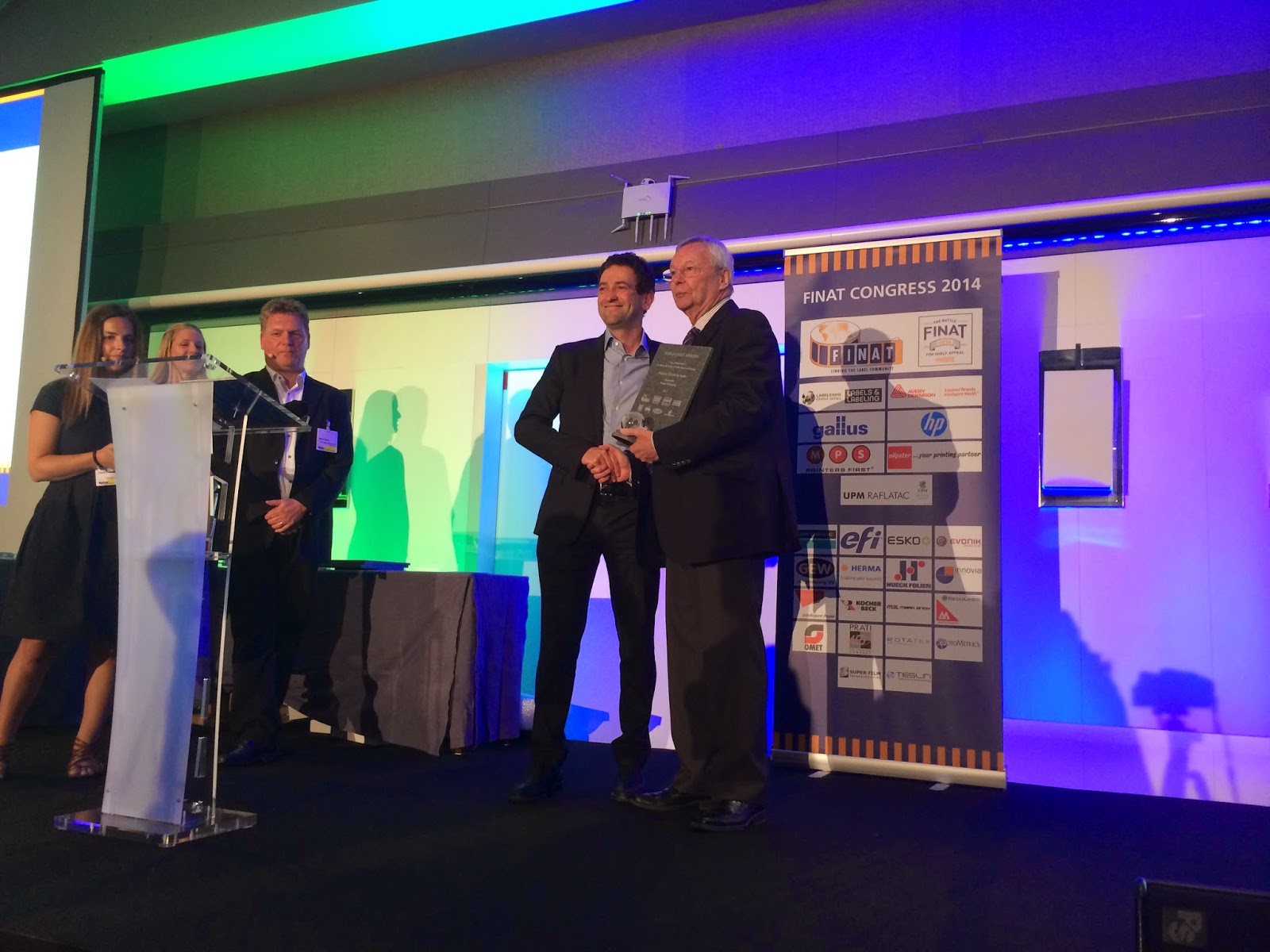
FINAT Congress 2014 was recently held from 5-7 June in picturesque destination, Monte Carlo, Monaco. The Principality of Monaco is a sovereign city-state, located on the French Riviera in Western Europe. It is bordered by France on three sides; one side borders the Mediterranean Sea. It continues to be an ideal tourist preference. 



The Finat Congress with its theme “The Battle for Shelf Appeal – Winning Strategies for the Label Industry”, attracted many stalwarts of the label industry. Modern day retailing across the world indicates that success in the battle to catch the eye of the consumer is of prime importance. There is an imperative need for the most attractive yet cost effective product decoration solutions. For label printers to excel and stay ahead of competition, they need to be in tune with emerging trends, developments, legislations and customer preferences. They need to take decisions to enhance their own competence as also invest in alternatives to meet the ever growing competition and challenges. Finat endeavors to empower the label printers across the globe. 
 
FINAT is the world-wide association for manufacturers of self-adhesive labels and related products and services. It was founded in Paris in 1958, and since then has been representing the whole self-adhesive supply chain. With 600 members in over 50 countries around the world, FINAT has much to offer to label converters and all suppliers to the labeling industry in terms of information exchange and the opportunity to network internationally. Over the years, the FINAT Congress has served as a vehicle for knowledge exchange, networking and inspiration among current and future label business leaders, suppliers, analysts and observers of the self-adhesive supply chain. 
 
I fondly remember my first Finat Congress at Paris in 2008. It was the year in which YMC was launched and it was also the 50th year celebrations of Finat. It has been a memorable event when I made the maximum number of global Label Friends! That is what a Finat congress does, it brings you in contact with peers around the world. Your vision and connection to the world of labels gets wider. Also unlike label shows, it is not restricted to a single destination and provides an opportunity to label printers to meet at exotic tourist spots in Europe.

 
Jules Lejeune, Managing Director Finat, while commenting on the Congress says, “Many useful business takeaways under the header 'The Battle for Shelf Appeal – Winning Strategies for the Label Industry'. From the '5 star diagram' of brand appeal (Cartils) to a 360 degrees overview of the label industry in France and Europe, via the future of product decoration in the eyes of the applicators, the mix of packaging and labeling technologies according to the brand industry, going beyond the shelf into 'mass customisation' (Mike Ferrari), helped by A.O. printed electronics (McClelland), right into the 'grand finale' of 3rd generation Swiss adventurer Bertrand Piccard.”
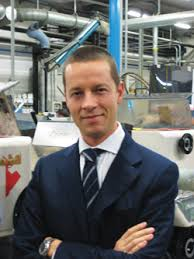


Andrea Vimercati past president of Finat says, “For me it has been one of the most interesting congress since 2001, my first one in Rhodes. We had high profile speakers and two panels full of ideas for the attendance, especially the one with end users. The Friday night at the Villa was great! All our guests were very surprised by this stunning place. Last but not least the experience of Piccard has left a cherry on the cake. This is the way the Finat Board intends to project the future events, in order to give more bullets to our members so they can help their customers to win the battle for shelf appeal!” Bertrand Piccard, Swiss aeronaut and explorer delivered the Keynote closing address.


With increasing number of exhibitions, events and conferences for labels taking place around the world, Label printers seem to have been stretched as to how much time and money they should spend on travelling to these premium shows around the world. Domestic event organizers in their respective countries also take away a lot of the committed indulgence that printers make in this respect. For this reason we see a decline in the number of printers coming to such events even though there is promise of constructive value in the content. Finat has always been able to offer extremely important content at their congress and thus I feel it is time to restructure the event so as to bring in a bigger number of printers from across the globe. This year ironically the number of printers was quite low as compared to suppliers. The suppliers are bound to get demotivated eventually as it is the printers for whom they invest. Even though the visit to Monte Carlo has been a satisfying experience for Isidore Leiser of Stratus Packaging, France yet he too feels it is time we dwelled on ways to improve attendance. He says, “I found the Congress very interesting and with many interesting topics the atmosphere was very cool. The places were exceptionally beautiful but there was one big thing that was missing is the number of label printers. How can we improve our industry if we, as members of this label printing fraternity are not indulgent and are not involved?”
 
 
Lisa Milburn, Managing Director of Labelexpo was at the show with her team along with the Label Guru, Mike Fairley. In her words, “The FINAT Annual Congress 2014 held in Monte Carlo was a great event. We had a wonderful opportunity to meet many industry colleagues and friends in beautiful surroundings. The conference programme was very informative and the signals of positive growth that were shared were extremely encouraging”. 

 
 
Jakob Landsberg, Chairman Finat membership committee and Sales director. Nilpeter summed it up as, “Last week FINAT conducted its annual congress in Monaco with 280 visitors from the entire value chain of the PS-industry. The growth in M2 seems to be back to pre crises with +3,5% from 2012 to 2013 – and optimistic projections of +6,4% 2013-2104 Europe wide. The congress was a great success with the theme "Battle for shelf appeal". How can we as the PS-industry help brand owners to create stronger brand awareness and shelf appeal?  The speakers came from sectors downstream in our industry and all expressed the importance in working together for success.  We managed to introduce a new interactive format with top panel participants – they represented application technologies in one panel and brand owners in the other. They both gave positive and inviting feed back to the PS-industry to keep close to them and to keep innovative. I have never seen so many questions from the audience at any congress before. The congress at the same time introduced the new FINAT Radar – a half yearly industry report with trends, statistics and bench mark information – to converters and suppliers members of the organisation. Finally the congress ended at a high with the inspirational speaker Bertrand Piccard, a Swiss pioneer that will fly the world in 2015 in his solar powered airplane, Solar Impulse. His message to all of us: "Welcome to those who believe in the power of dreams and who would like to join me in my exploration of life.  "Think the impossible possible" and "drop your ballast – it doesn't make you happy only heavy". We must all look for ways to improve the quality of the world we hand over to next generations – but same time bear in mind that good sustainability is profitable sustainability”
 
Gavin Rittmeyer of Martin Automatic USA says"Great Congress in Monaco. Good balance of speakers to inspire ideas for good leadership and practical measures to be creative and effective." Iban Cid of Germark Spain said, "The venue, Monte Carlo! with nice Ferraris but very expensive city! Socially it was very nice to meet all the industry friends. Specially the American's who have joined us. I had the opportunity to celebrate my 50th anniversary with them. In terms of presentations it was one of the best I remember. The most remarkable were the end users panel with L'Oreal, Reckit Benkiser, Lego and a guy of a big US winery. I could summarize it in two sentences: all of them love to have innovations from their label suppliers but they are not willing to pay a penny more for the labels!" Mikael Dahl of Nordvall's Sweden commented, "As usual, a very well organized event and as always it was nice meeting and networking with all friends within the industry. The working program at this year event was a little different to previous ones, in my opinion I must say it was to the better.The panel discussions, was an interesting concept. I think it is a very important issue to improve and engage our industries end users to learn what they think about printers and what they expect we can improve, so that we can do better.This kind of an event is a tremendous opportunity, when all stakeholders in the supply chain are gathered.The grand young man Helmut Schreiner, patriach of Schreiner Group said, "Finat Congress was a great experience. Especially for the Schreiner Group; also because of the number of awards."
 
Finat Congress is a premier global Label event! Printers worldwide need to congregate in big numbers to draw the benefit of what this unique institution provides. It is a platform that unites the label fraternity to a destination once each year in a fantastic networking environment with no barriers. It brings about the opportunity to interact with and exchange ideas with peers in different countries and explore the possibilities of alliances for mutual benefit. Many a joint ventures internationally owe their origination conceptionally at the Finat congresses. Printers return from Finat Congress with memories of good times lingering their minds. As luck would have it I regret I could not attend the conference this time but it gives me extreme pleasure that my friends missed me at the congress. Steve Katz editor Label and Narrow Web tweeted so. Calvin Frost President Channeled Resources wrote, “Everyone missed you at the Congress and hope you will make it next year” Yes I will make it next year!

Magazines or online websites may use this post by giving credit to the author!
 
Written by Harveer Sahni, Managing Director, Weldon Celloplast Limited, New Delhi India June 2014

FROM SMALL BEGINNINGS TO BIG SUCCESS

An Indian label converters’ story

INDIA The history of Rajesh Chadha, Managing Director of Update Prints Pvt. Ltd. which owes its inception and inheritance to P C Chadha & Co. started by his grandfather is an interesting one. The first thoughts on letterpress, managing waste problems and family support were all highlights along the way. Come on a journey from Kobe in Japan to New Dehli in India, following the Indian Label converter’s history and thoughts for the future.
The very beginning
In the late 1970s and early 1980s driving on New Delhi’s Ring road, many factories could be seen from far away. One such tall building was the factory of P C Chadha & Co. in the Naraina Industrial Area. Around the mid 1980s when I was a commercial siliconiser selling release papers, I came to know that P C Chadha & Co. manufactured stickers and was a prospective customer. It was then a matter of time that I supplied some reams of release paper to them. During on of my visits I spent two hours discussing why the stickers they were supplying were curling. I was quite naïve then but with time and experience, I have written on my blog a very widely read article on controlling curl. The young man I met was Rajesh Chadha, who was running P C Chadha & Co. and is the present Managing Director of Update Prints Pvt. Ltd. which owes its inception and inheritance to P C Chadha & Co. started by his grandfather. Come on a journey from Kobe in Japan to New Dehli in India, following the Indian Label converter family Chadha. Read more…

Written exclusively for Narrow Web Tech Germany by Harveer Sahni, Managing Director Weldon Celloplast Limited, New Delhi

Frank Burgos
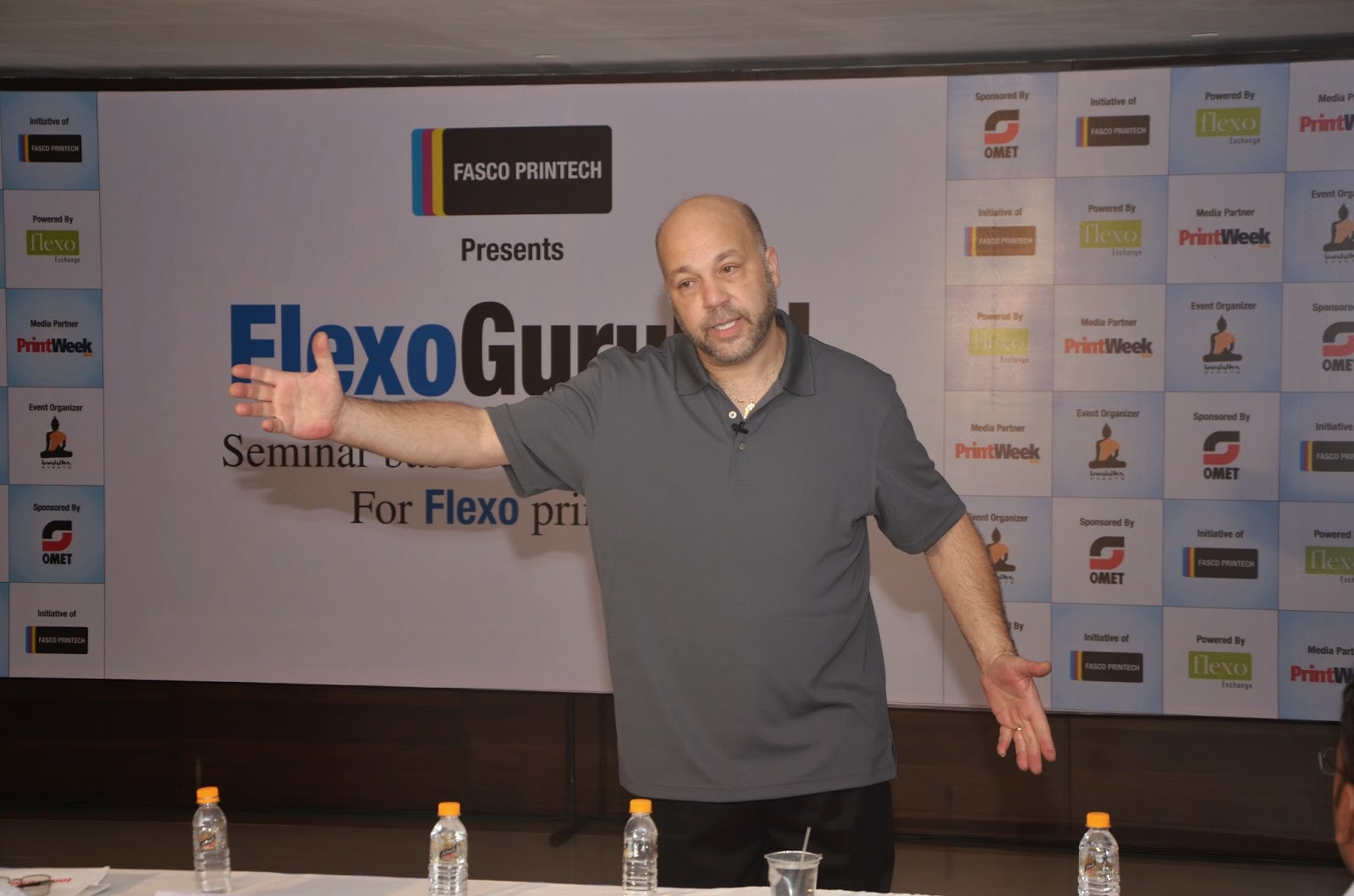
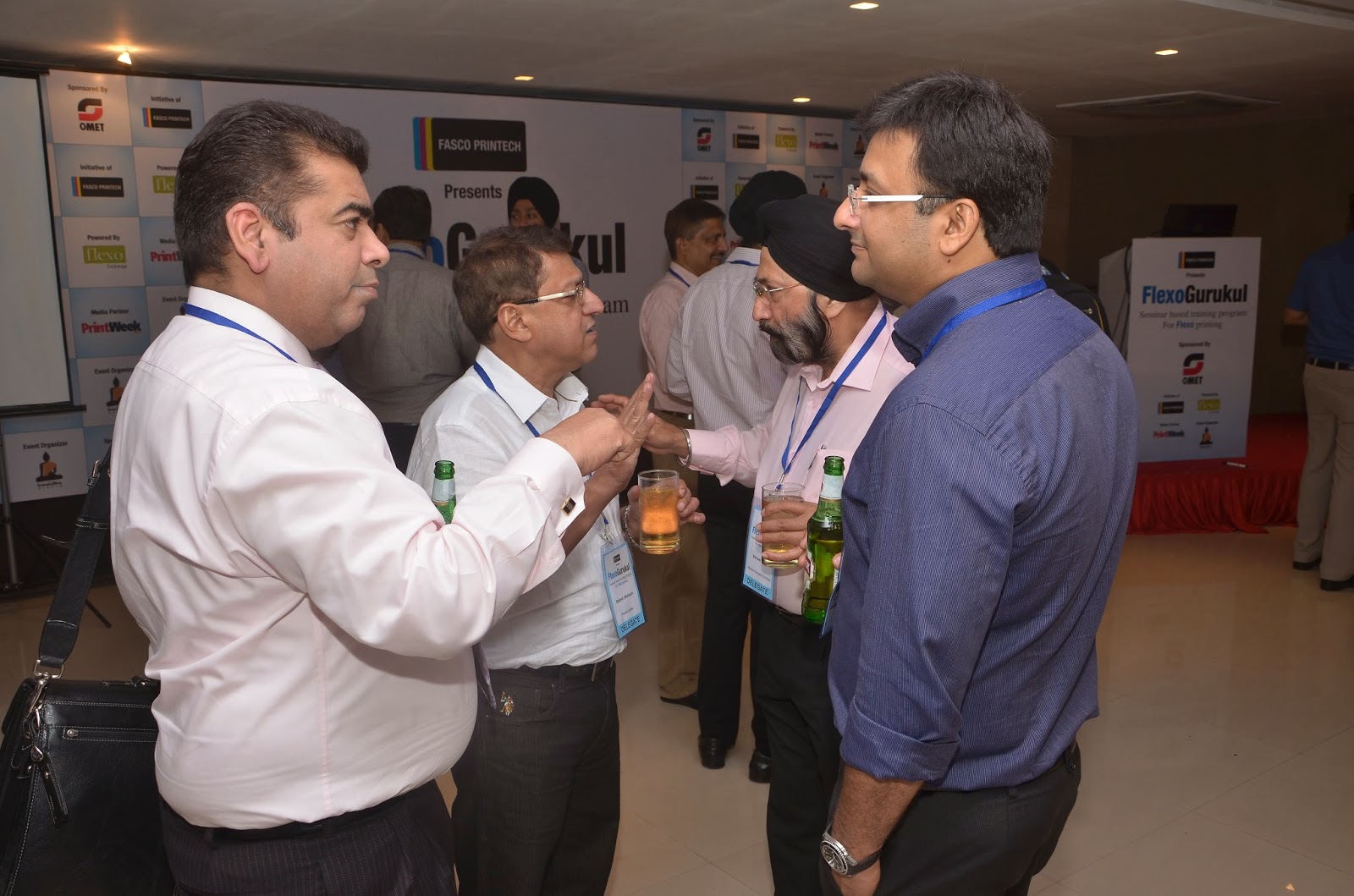
The first edition of “FlexoGurukul” an ongoing flexographic print training program launched by New Delhi based Fasco Printech Private Limited was held at Khar Gymkhana Mumbai on 28th and 29th of April 2014. The trainer was Frank Burgos President of USA based FlexoExchange.com, a company based in USA and recognised for training services provided by them in the field of flexographic printing. Frank has been in this industry for the last 30 years. Ever since 1997, when he founded FlexoExchange.com, he has served as the moderator of FlexoExchange's technical forum, troubleshooting print problems and offering advice to thousands of members from across the globe. Many of his articles can be found on FlexoExchange.com, covering topics as wide-ranging as attitude to blending and working of inks efficiently. In addition, he has created a YouTube channel dedicated to flexographic printing; UglyFlexo.com He has produced over 90 educational video tutorials! 
 
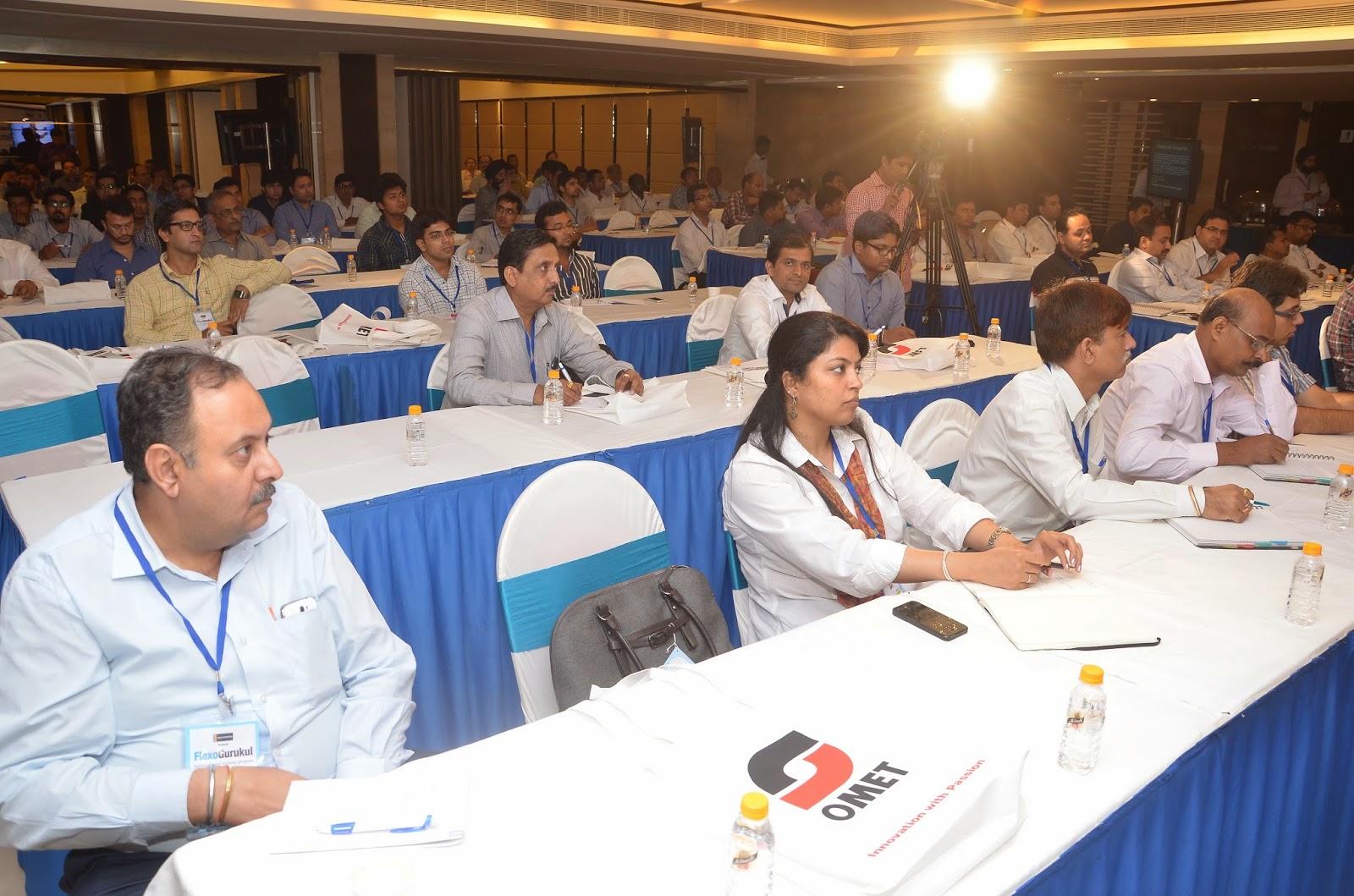
A Part of the audience
The print fraternity marked its stamp of approval by the large attendance resulting in a full house. The success confirmed the vacuum that exists in our printing industry in respect of training and technical empowerment. Fasco Printech has with success attempted to fill the void and need for trained human capital in the flexo printing industry. This program is initially spread over two years with two sessions each year, one in spring and one in autumn. The first session has touched upon the basics of flexographic printing and in the following sessions more advanced training will be delivered. The autumn session is proposed to be held just before the Labelexpo India at New Delhi. Fasco Gurukul has come as a welcome step in view of the growth in the industry and dearth of trained manpower. Out of over 130 attendees at the event, more than 70% were from printing companies which included those from Narrow web flexo, Wide web flexo and Offset printing. The balance, were mostly suppliers to the industry.
 
Pawandeep Sahni, CEO Fasco Printech Pvt. Ltd.


FlexoGurukul is the brainchild of Fasco Printech CEO Pawandeep Sahni, he says,” FlexoGurukul is the concept for empowering the owners and senior management on flexo printing. We are committed to help flexo printing companies grow to global levels”.


Chief mentor Harveer Sahni said, “We would like the training and education part to grow up to
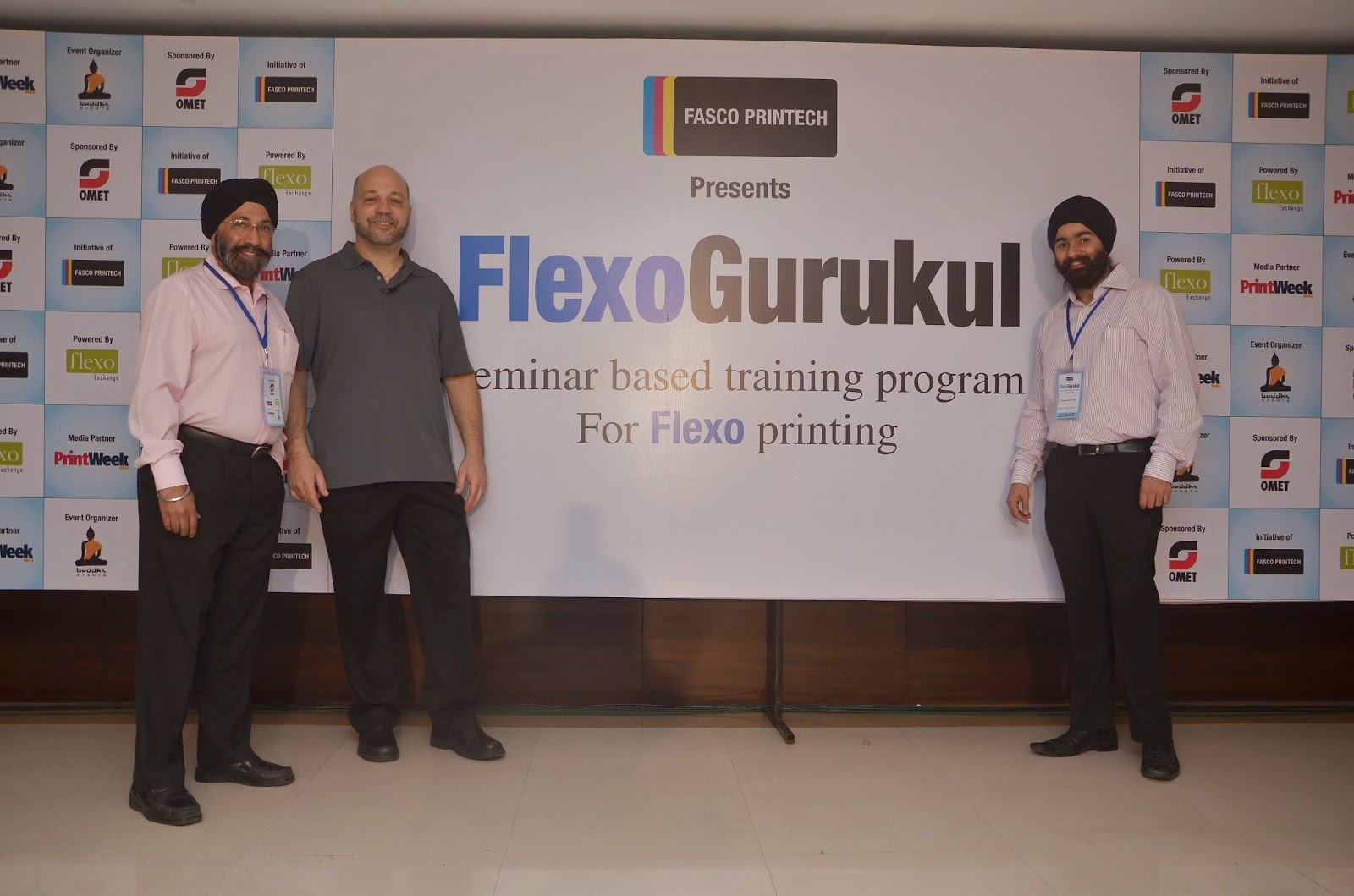
L to R: Harveer Sahni, Frank Burgos and Pawandeep Sahni
become an institute. We have a vision and hope to accomplish it substantially some day for the benefit of the flexo printing industry”. On the first day Frank spoke about the Importance of inks in the flexo process he said, “Ink is one of the difficult variables to control in the entire process” He dwelled on the three main types of inks namely, solvent-based, water-based and UV-cured inks, their composition and functions. Later in the day he spoke on various tools and methods for monitoring basic ink properties and problems related to ink and the importance of measuring as also controlling pH and viscosity of ink. He also covered topics like photopolymer plates, both analogue and digital and problems related to plate defects. Frank, on day two continued with plate defects and there after moved on to plate mounting tapes and anilox rollers. He emphasized, “Anilox is the heart of flexo printing process. Depending on the type of the job, anilox rollers should be opted. Since they are one of the expensive components in the press one has to follow proper maintenance procedures.”   
 
Lighter moments
The event was attended by leading names in narrow web flexo printing like Pragati Pack, Sai Packaging, Webtech, Zircon, Ajanta Packaging, Seljegat, Jain Transfer, Synergy Packaging, Prakash Labels, etc. There was an impressive presence from the wide web flexo like Positive Packaging, PPL Huhtamaki, IDMC, Multiflex, etc. The suppliers at the event included Avery Dennison, UPM Raflatac, Siegwerk, Fujifilm Sericol, etc. Kaygee Loparex, Rotometrics, Tesa Tapes, Esko Graphics, Daetwyler, X-Rite, etc.

 
W&H Team


Leading equipment suppliers like Windmoeller and Holscher, Nilpeter, Multitec and Jandu were also present at the event. As per the feedback forms filled by the delegates, most of them have confirmed their participation in the autumn edition of FlexoGurukul.


The event was sponsored by Italian Label Press manufacturer OMET. They have communicated their resolve to make flexo grow in India. They have demonstrated their mindset by agreeing to the sharing of this event with all constituents of the flexographic print industry. While throwing the event open Harveer Sahni added, "Today we are not competitors here. We are friends in a technology that we like, and are confident for its positive growth. Without support from Omet, this may have become difficult".


Those attending were a satisfied lot and commented;


Priyata from Sai Packaging said, “An engaging, well structured technical training with a management perspective and no brand endorsements, complete value for the time invested – Frank has left most of us looking forward to the next FGK”


Nikhil Khanna of Printers Den said, “The time spent at first FlexoGurukul has made me crave for more, made me fall in love with the process, looking forward to the next session”.


Manish Kapoor, Sales Manager Nilpeter said, “An initiative that the Indian Industry required and will go a long way”.


Amit Ahuja of Multitec commented, “Informative and well executed!”


Sanjeev Sondhi of Zircon summed it, “The missing link of knowledge delivery in our flexographic printing industry has been created as FlexoGurukul


The event FlexoGurukul was thus a booming success!
 

Fasco Printech Private Limited
S-49/37 DLF Phase-III
Gurgaon-122002
Haryana, India
P: 0124-4115380  
He was a part of India’s label history!


In the early 1980s, I was only a commercial siliconiser and screen printers making stickers were my customers. Label presses had yet to make a big impact and labelstock was still not a very viable market. All the stickers that were produced were coming from screen printers. Most of the work done was manual! Exposing the negatives or positives and then producing a screen to print, it was an art. It was the pre press and press work of that time. Printing was also done manually using a squeezee on an exposed screen… He was an expert, an artist who perfected the art and pioneered the evolution of that technology. He was my first customer in Mumbai!!! I sold to him five reams of silicon paper at that time. Jagdish Zaveri was the man. Last evening on 5th of April 2014, at the age of 75 years he breathed his last. The industry pays tribute to one of initiators of label in India. Rest in peace, Jagdishbhai!


It is ironic that almost exactly a year back on the 7th of April 2013 another legend in the label industry, Kartar Singh Dunglay had passed away.


I still cannot forget the time I first visited his office in Royal Industrial Estate Wadala. My in-laws lived in Wadala at that time, so his office was very close and with every visit it became a ritual to start my BOMBAY tour by meeting him first. As I entered his office the first time, I was overawed! Elegant as he looked with his all white apparel, a Tilak (A religious symbol or a line) on his forehead, a large table; which was very clean, had fancy telephones and gadgets of those times… Jagdishbhai was class. He was passionate about screen printing as I am for labels today. When I visited him that time, he probably saw the passion that I had for the industry. He took me inside his factory to show his innovative abilities. The cleanliness in the unit was evident. It was a time when people screen printed and used wooden racks or the factory floors for printed sheets to dry. He had pioneered in using spring loaded Aluminium drying racks for optimizing space and manufacture lean so that constraint of space would not restrict continuous production. More so in a place like Mumbai where place available is always short.


He was indulgent in his work and passionate about the industry. He took keen interest in the leadership of industry associations. As the founder president of Screen Printing Association of India, he spared and invested his valuable time for the growth of the screen printing industry. He was the Vice President of BMPA (Bombay Master Printers Association) in 2002-2003 and was also actively involved with social and sports associations. A man, who accepted change and evolution as it came, adopted the self adhesive label industry as it has evolved. He has passed on the heritage to his soft spoken son Sandeep Zaveri. Their present company Total Print solutions Pvt. Ltd. at Navi Mumbai is a successful label enterprise. Sandeep, taking the heritage forward is the vice president of LMAI (label Manufacturers Association of India) and the President of the YMC (Young Managers Club) of LMAI. His work for the label industry is widely appreciated.


Jagdish Zaveri lived an eventful life full of vigour and socializing. He strongly believed that one should give back to the society that gives you so much. He would never miss his association meetings and loved to spend his evenings with his friends in the club. He lived a full life and will always be missed by industry colleagues, family and his social associates. Rest in Peace my friend Jagdishbhai…


We ALL will miss you!


A tribute on behalf of the Indian Label Industry written by Harveer Sahni, Managing Director, Weldon Celloplast Limited, New Delhi-110008.  6th April 2014


I have always been of the opinion that there is nothing as stagnation in an industrial enterprise, more so in the Indian label industry. There is either growth or recession. Anything that stagnates starts to deteriorate. Growth or change is inevitable and an imperative part of any enterprise. Fortunately for a country like India with a large and numerically enhancing young population achieving increasing literacy levels, the demand for consumer products will continue to grow steadily. This growth in consumerism is obviously expected to give fillip to the already growing organized retail. This may witness exponential expansion of the retail sector if FDI in multi-brand retail begins to happen. All this will definitely drive growth in demand for labels. The industry maybe facing momentary slowdown due to circumstantial situation, but on a “year on year” basis the Label industry continues to register a near double digit growth. The slowdown in the manufacturing sector is expected to end and the economy is slated to lookup once a new stable government takes charge at the centre after general elections. India has no dearth of investors who drive growth in an industry that registers automatic growth consistently.  All growing industrial segments do experience the entry of new entrepreneurs besides expansion moves from existing companies. There are at least three types of expansion initiatives in the Indian Label Printing Industry. First, it is the existing printers who, in response to the need of their natural growth, have to invest in new capacities. Secondly, it is the commercial offset printers facing slowdown due to the impact of internet, who are expanding into the label industry which is growing. Then, it is the new investors who are flush with funds, maybe due to some real estate deals, who have no knowledge of printing but on hearsay or with prospective partners, make investments in Label presses. With investments growing in an unregulated environment, it is likely that there is creation of excess capacities. The pressures to break even for the new entrants into the industry, escalates and they start making desperate sales bringing down prices and putting margins under pressure. This creates difficulty for existing established printers. As a result of this situation we find printers complaining of a slowdown and difficult situations arising out of haphazard capacity growth. Despite such situation the label market has over the years segmented substantially and each segment has individually started to branch into their fields and register growth to contribute to a situation such that when we review it on a national level, the label industry shows up definite growth both in capacity and investments. However due to reasons explained herein, the industry is cautious but still growing.
Segmentation of the self adhesive label industry is a very important part of its growth and evolution.
In the earlier years a label printer would indulge in all types of stickers. These include from plain stickers to printed, hot foiled and decorated labels. With passage of time and investments being made in high-end equipment, it has all changed. The sticker became an engineered product called label. Size of the label industry is measured largely by the amount of labelstock consumed by it. The industry is segmented into various segments like the plain labels or variable information labels, pharma labels, product (FMCG) labels and the innovative/security/special labels. Strange as it appears the largest consumption of labelstock comes from a segment that has the least investment in equipment and the least margins. The plain label or the VIP label segment producing Price labels or gun labels, A4 labels and Barcode labels accounts for the largest share of labelstocks consumed in self adhesive labels. This also is the segment that has the lowest margins due to less value addition. Converting these does not really need very high-end machines with enhanced capabilities, neither does it need the expensive slitting and inspecting equipment. Most of the time converters are just die-cutting and finishing. These converters are always under pressure to drive in large volumes to stay afloat due to depressed profitability. With low initial investments and because of new entrants into labelstock manufacturing ready to fund their working capital needs with required raw material on credit, there is a rapid growth in the number of entrepreneurs in this segment. It is interesting that with so many new entrepreneurs, even though in the micro and small sector, they are likely to eventually settle down and start growing to higher levels providing further impetus to the growth of label industry.
The pharmaceutical labels and product label segment is perhaps the face of the self adhesive label industry. It is responsible for producing the highly engineered, converted and decorated labels. This segment accounts for bulk of the investments made for acquiring sophisticated European and American branded label presses. The label printers make huge investments to upgrade their capability not only in printing but also in expensive inspection and quality enhancing finishing equipment to meet the exacting demands of their customers. It is these days a difficult situation for the established players when they are pitched against new entrants who in their efforts to service their investments are ready to forego margins and create intense competition in the marketplace. This makes it difficult to justify returns on investments. This may appear to be a win-win situation for the print buyers. However, in the long run these new entrants may not be able to sustain their customer’s demands for quality control, tight schedules and short runs that cannot be catered to, in view of reduced margins. The pharma sector has in recent times faced slowdown due to circumstances at a global level however in view of the growing health concerns of a large population locally, this sector cannot remain down for a long time. It is thus that printers continue to invest even while exercising caution and restraint.
Microtext labels
The top end of the label industry these days seems to be the forte of a miniscule segment that is foreseeing high growth and higher margins. It also is attracting the highest investments in equipments with multiple capabilities in combination printing processes, decorating and diverse converting methods. For obvious reasons there appears to be less competition in this segment. This segment is perhaps the most innovative for its indulgence in creating products that stand apart from the mainline products. Some of the label products that this segment offers are; high security labels, booklet labels, lottery labels, document security, etc. Printers in this segment have acquired and continue to acquire additional capabilities like producing linerless labels, online siliconising and gumming. This enables them to print subsurface or on surface. The equipment they possess has capabilities to shuffle between self adhesive labels, shrink sleeves, lamitubes and folding cartons. They have access to diverse printing and converting capabilities on their expensive equipments.
At this time it is interesting to note that with the advent of indulgence in flexographic printing in self adhesive label industry in India, indegenous production of narrow web flexo presses commenced in the early nineties when an Indian entrepreneur Baldev Singh Jandu developed a flexo rotary label press. These machines catered well to the gunlabel (Price label) segment and later with growth of barcodes to barcode labels segment.  Jandu Engineers have been consistent in sale of their label presses and have created a very specific segment for their product. On another scenario since there was a definite segment for flatbed label presses created by the earlier Japanese presses and since it was a lower investment as compared to rotary western equipments, Indian printers invested continuously into these flatbed presses. Also given the fact that flatbed dies were much cheaper as compared to flexible dies used in rotary presses, these presses were popular. Ahmedabad based R K Label machines saw a market potential in this segment and developed flat bed machines that found a ready market. So successful were they in their venture that at the last Labelexpo India they claimed to have sold almost 700 machines till date. With rising prices of high-end label presses from the western world, Faridabad based Multitec developed their flexo rotary modular label press so as to find acceptability in comparison to the imported equipments. It is credible that the press has found acceptability with established printers like Update prints, Syndicate labels and Kumar labels. A satisfied Aditya Chadha at Update says, “We have recently installed an 8 colour multitec flexo press and are satisfied with the performance. It offers stability at high speeds, smooth production and flexibility to print on various substrates.” Multitec has also successfully exported many of its presses. An industry that was initially dominated by European, American and Japanese has gradually shifted equation. Mulitec has created a segment by successfully offering an acceptable alternative to Mark Andy 2200. While the European and American presses have maintained a steady presence yet the market has a very obvious presence of Chinese, Taiwanese and Indian label presses.
started with investments in Japanese flat bed label presses. Over the years with need for faster machines and evolution of flexo printing process, the shift from letterpress to flexo is evident, gradual and steady. With growth in demand for flexo printing label presses, soon many branded rotary flexo machines started coming to India. These were mostly from Europe or USA. These presses have over the years carved out a definite market for them self. Brand names like Mark Andy, Gallus, Nilpeter, Omet, Gidue, Rotatek, MPS, Edale, etc. are dominant in the label industry now.
The Indian label industry is now extremely diverse in its spread across the nation. I have attempted to estimate the no. of presses installed in the preceding year. It is my personal estimation after interaction with industry peers and machine suppliers. I have also relied on press reports. Samir Patkar, MD Gallus India has stated earlier at Labelexpo-Europe2013 that Gallus had sold 9 presses in 2013 and hoped to close the year with 10-11 press installations. Manish Kapoor Sales Manager Nilpeter India confirmed sale of six Nilpeters. There are other sales made by Mark Andy, Omet, Gidue, etc. According to Gaurav Roy whose company FIG sells the Mark Andy presses, they have sold 8 presses in the last one year. Says Gaurav, “We have over 150 Mark Andy installations in India. The trend is changing now; with printers opting to buy the high-end performance series, the number of installations per year maybe coming down but the value of equipment has risen”. In my personal opinion about 30 label presses from the established western suppliers have been installed in India in the last twelve months. Ahmedabad based Manish Hansoti selling Chinese Zonten presses has informed sale of five flexo presses and 13 die cutting machines. Though the die-cutting machines cannot be termed as label printing presses yet they contribute to the usage of labelstock and eventually growth of label industry so I will include them in the grand total of label converting equipments. Installations made by the Amit Sheth led Label Planet and their Asian principals are almost 14 Weigang flexo presses and 25 rotary die cutting machines. As for the Indian press suppliers Jandu has sold 12 presses. Ahmedabad based R K Label Machines says they have sold a total of 22 label presses, which is a mix of flexo rotary and flatbed. According to Amit Ahuja of Multitec, they have sold a total of 16 presses out of which 4 have been exported. There are other Indian machine suppliers but their contribution is miniscule. I estimate the total no. label presses and die cutting presses that would convert labelstocks into labels is in excess of 140 that would include other local presses and the used presses coming in.  Out of this grand total more than 50 machines are plain die-cutting presses but as I mentioned earlier, since they play an important part in the total usage of labelstock in India they have to be considered in estimation. Moreover it is the basic entry point at the micro level for people entering the label industry.
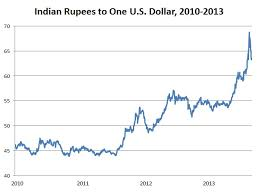
The Indian label industry would have ended the year on a very positive note and registered higher investments and growth rate but for the exchange rates having played the spoil sport. Before the Labelexpo Europe last year, all looked very good but when the Rupee fell by almost 15% making equipment costlier, label printers put purchases on hold and also many of them put off their trip to Brussels. Another factor that has been responsible for slower growth is the political unstability of the central government facing the nuances of coalition politics. Also FDI going on hold in anticipation of stability after the general elections this year, impacted the economy adversely. However still the Indian label industry is moving ahead with caution, to achieve growth and cater to the market that still has a lot of potential.
Written by Harveer Sahni Managing Director, Weldon Celloplast Limited, New Delhi India. March 2014

Publications may request the author for using this article. Unauthorised usage is prohibited,


In India’s pre-independence era when printing technology was still very basic and foot operated treadle presses like the one shown alongside were used to carry out printing jobs, in 1941 Upendra Anantha Pai and his brother Dr. T M A Pai in Manipal, South India co-founded, “Manipal Power Press”. They named their enterprise so because they used power to operate the presses in their unit. It was the new technology prevalent in those times. The printing company was located in Manipal, a small town near Udupi, the abode of Lord Krishna in coastal Karnataka.


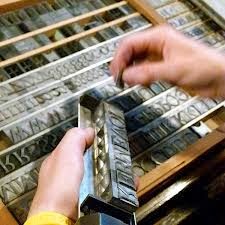
Type-setting with lead type-faces and wooden blocks used to be assembled together manually to make the printing frame that would be used to make repetitive prints. In today’s time this sounds primitive, yet in those days the printing process was considered to be ahead of its time. 


Satish Pai & Mohandas Pai with their manager

In the late 1950s Dr. T M A Pai’s eldest son T Mohandas Pai and T Satish Pai son of T Upendra Pai, joined the management of the press. As time progressed, technology kept on evolving and up-gradation to match the evolution was adapted by this enterprise. They kept pace with the need to implement change and automation, as and when it became an imperative. With passage of time, from the treadle printing presses to faster Mercedes letterpress machines to sheet fed offsets and web-offset printing presses, transformed Manipal Power press immensely. The original name Manipal Power Press started to appear a little confusing, as running a press or for that matter any factory, without the aid of power became unimaginable. So in 2000 the middle name was dropped and the company was renamed as Manipal Press Pvt. Ltd. and later Manipal Press Ltd. Youth has many attributes and some of them are the immense energy, desire to excel and the capability to take risks to stay ahead in a rapidly changing scenario. They are restless and if motivated and mentored in the right direction they can produce amazing results. Their induction in any enterprise along with experienced mentors brings about a freshness that transforms the organisation from a possible stagnation into the fast forward mode. When it was time to induct the generation next into leadership and to eventually pass the reigns into their hands, the management of Manipal Press took the expected decision of inducting Gautham Pai, grandson of the co-founder T Upendra Pai and son of Satish Pai, into the company. 
 
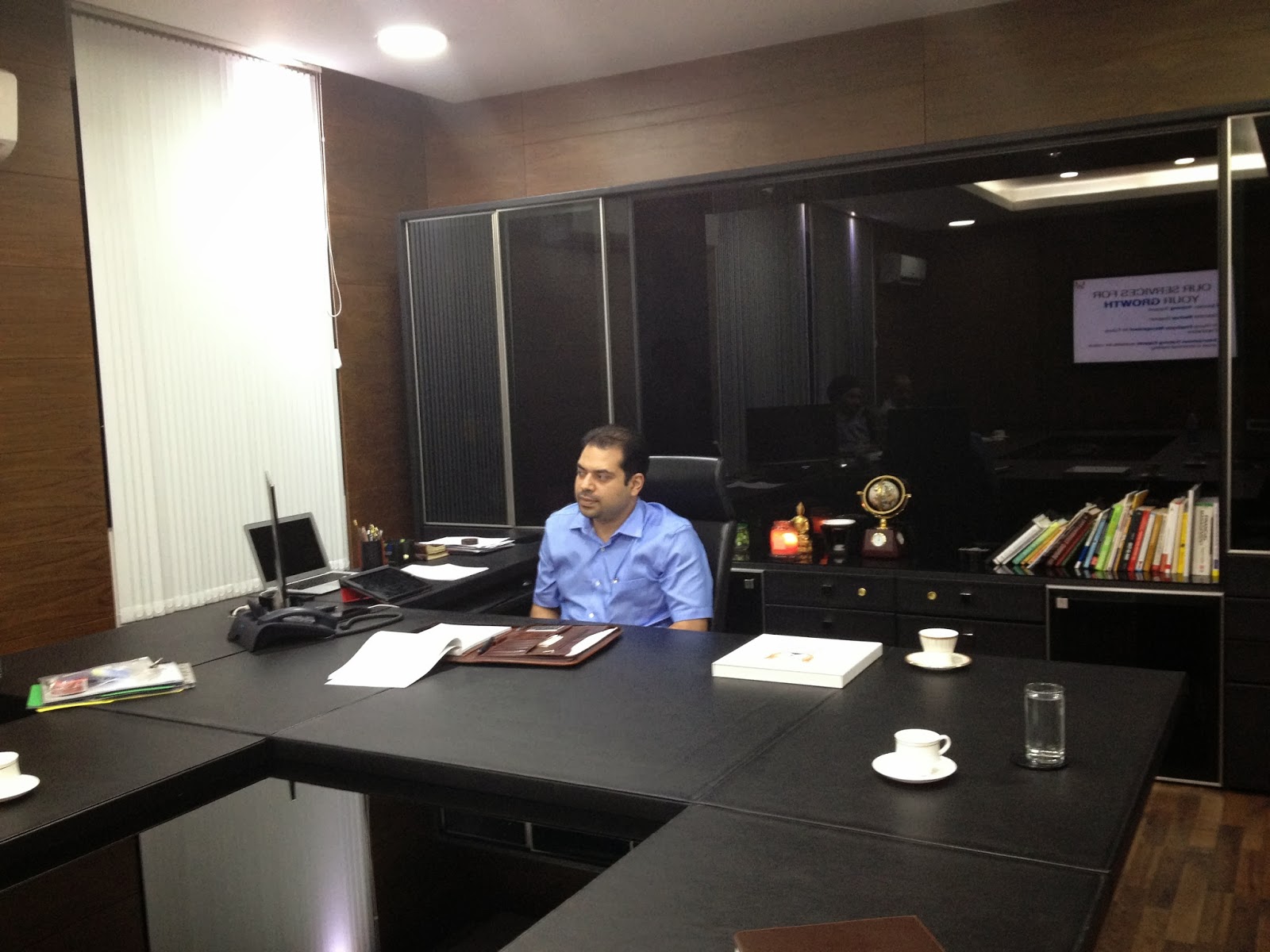
Gautham Pai, his office, designed to also be a conference room
Gradually, growth picked up with expansion towards various tangents. The focus of this organization, that was initially into printing transformed to become “communications”. Printing became a part of the process for Manipal Press to turn out products that would aid communications. Diverse printing processes and converting technologies were adopted to march into future and turn out state of art products and services. It was time again to change the name of the company such that it communicated its focused mindset. In 2011 Manipal Press Ltd. became Manipal Technologies Limited.


Upendra Ananth Pai alongwith his younger brother Dr. T M A Pai and friend Vaman Kudwa, an engineer by profession, were the founders of the now nationalized Syndicate Bank. Upendra Pai’s eldest son T A Pai was instrumental in rise of Syndicate Bank, he rose to be the chairman of the bank. T A Pai later headed many important, Government of India Organisations and also became a union cabinet minister. In 1957 his younger brother Satish Pai was inducted into the management of Manipal Power Press which was set up initially to cater to the needs of Syndicate Bank printing ledgers and stationery. With a committed customer in Syndicate Bank, the press kept growing at a modest pace. Other customers were added from the region but largely the operation remained active locally. The initial treadle presses were replaced by faster mechanical letterpresses and then by one and two colour Heidelberg offset printing presses. In 1975 as demand grew they felt a strong need to go for faster machines so they invested in their first web offset press, a 16 inch Thimson. At this time the company was producing bank stationery, cheques and other security printing materials. It was only in 1999 that they bought their first four colour offset press that actually brought them into mainline commercial printing. Around the same time, Satish Pai’s only son Gautham, then in his mid twenties joined Manipal Power Press when the company turnover stood at 90 crores. Gautham, did his schooling at the Madhav Krupa School in  Manipal followed by graduation at MGM College and finally acquiring his degree in printing technology from MIT Manipal. He initially worked in the media division looking after production of magazines and newspapers. Having interest in the digital IT field he also indulged in developing a business in software development. Even during his school days he was quite fascinated by the printing businesss and would often visit the press, sometimes even during the night when work was going on. However strange as it seems coming from an engineering student, he says, “It is the business that interests me more than the technology”. I guess it is the banking heritage that shows. In his initial training period Gautham even printed himself for two months. Later he set up a corrugated packaging unit all by himself and remembers the problems encountered. It took him 6 months to get a power connection he reminisces. Satish Pai has been a very positive influence on his son. Gautham is modest in his approach to people and very patient in listening to understand what people say. Speaking about his father Gautham says, “He is always accessible and mild by nature but extremely persistent in his pursuits”. Gautham also started a business in making candles and home fragrances which has grown phenomenally. When I asked him, “why fragrances”? His eyes lit up and said, “I love fragrances!”
 
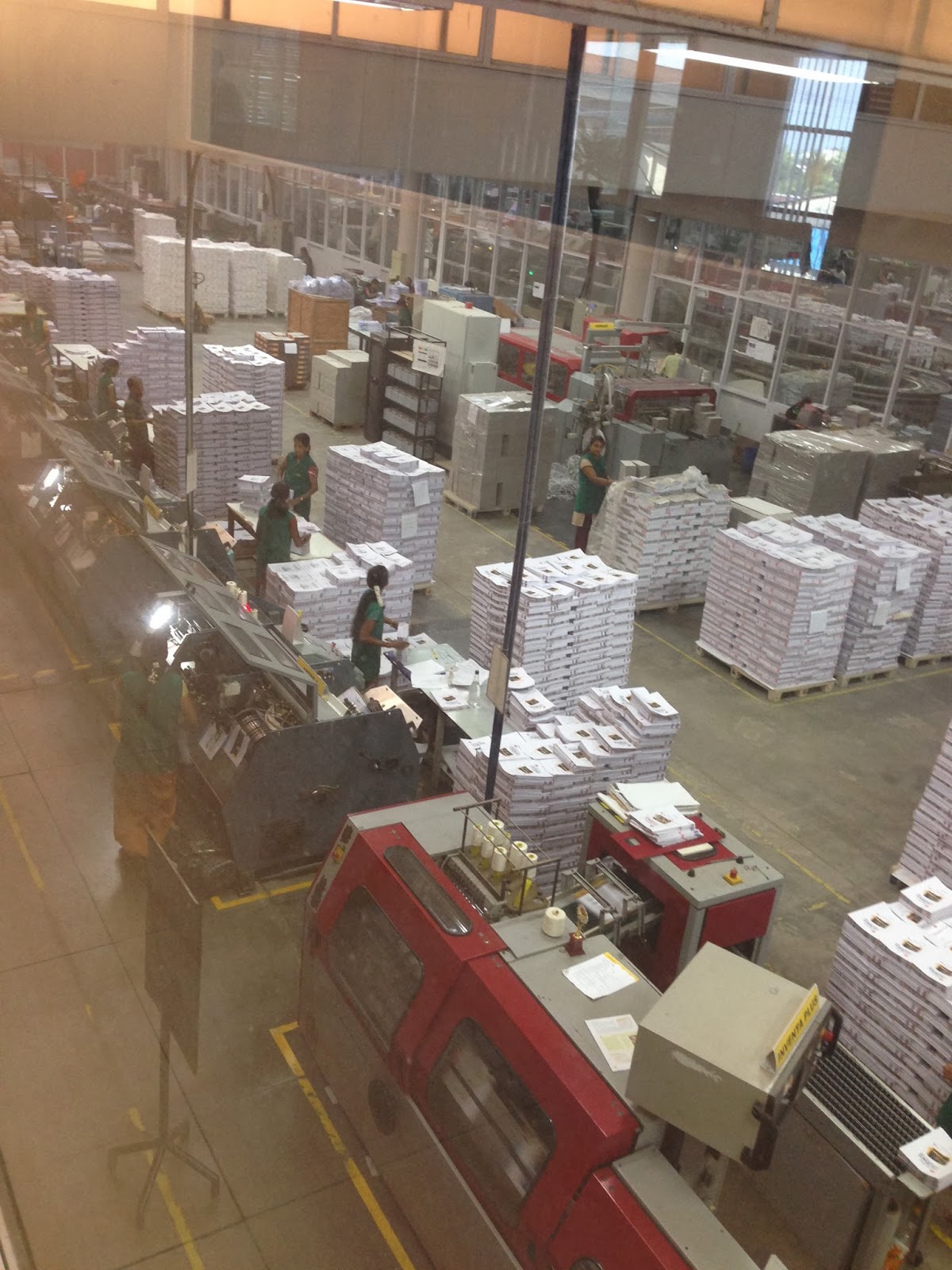
By 2004 a 30 year old Gautham was firmly in the driving seat at Manipal Press. A tour of all the facilities at Manipal escorted by him personally left me in awe of what this young man had achieved in the last nine years. It was absolutely amazing to see how this company had integrated backward and forward. They have invested in technologies that are extremely diverse and justify the new name. As one enters the book and magazine printing unit, one is left looking at a vast spread of machines, finishing/packaging equipment and a sea of workers converting tons of paper. The security printing and products unit makes credit cards, scratch cards and other security products. It is a totally self sufficient unit complete with an in-house post office. They produce their own holograms, security labels, security envelopes, etc. They also produce their own self adhesive labelstocks on a Nordson hotmelt coater. The packaging unit displays their move into the packaging by more investments being made there. In a recent move they have merged their packaging business with Utility Printpack, India’s leading packaging solutions providers, creating a new entity Manipal Utility Packaging Solutions (MUPL), having manufacturing operations in Manipal, Ahmedabad and Chennai. According to company press release this move is a game changer in the packaging business landscape in India and will create unbeatable customer value proposition. To increase their offerings to the FMCG and the Pharmaceutical sectors they have acquired controlling stake in Chennai based UPSL in 2007. They aspire, the label business to contribute Rupees 100 crores turnover in two years from units at multiple locations in India.
 
Gautham gives credit of this success to his team and finds pride in the fact that he has let them grow in their work space as entrepreneurs and draw pleasure in delivering value to the organization. It is thus that in times of crisis they come together as one team and family all knit as one to resolve issues effectively. Some of the employees in the company have grown from grassroots level to become managers. Gautham relies heavily on evaluation done by his team before making investment decisions. Finally it is always the banker in him that comes to the fore; “Numbers matter” he says and adds, “Never really have invested in a facility that did not work”. However he does get pensive when we talk of RFID on which they continue to research as the project appears to have futuristic potential but the numbers continue to evade, so the decision to invest remains on hold. Credit cards, document security, digital variable information printing, scratch cards, etc are projects that have exciting aspirational prospects for Manipal Technologies and will continue attract up gradation and investments on an ongoing basis. The company or the group as I would like to term it now has come a long way from 2004, the time Gautham took charge of management and when the turnover was 90 crores. Today, operating out of a total workspace of almost 700000 square feet and using 36000 tons of paper and board, the group total turnover is almost Rupees 2550 Crores. Manipal Technologies has units in Manipal, Mumbai, Chennai, Delhi, Kumta, Kolkata, Germany, Kenya and Nigeria. All units are certified for ISO (EMS) 14001.2004, FSC and fully compliant for the highest level of regulatory standards for pollution control. The break-up of their turnover is as here under;
Printing and packaging:    Rs.700.00 Crores with 4500 employees
 
Home Fragrances:             Rs.1600.00 Crores with 2000 employees
 
Media Business:                 Rs. 250.00 Crores with 300 employees
 

Satish Pai has since retired from business 6 years back. I missed the opportunity to meet him during my visit to Manipal as he was in USA visiting his daughter. Gautham’s mother Sandhya Pai who has been a very active support to her husband still spends time at the office managing the editorial of the media publications where she has been working since 1997.  Gautham’s wife Vanita, an alumni of Delhi’s LSR College, belongs to a Jain family from Moradabad. In 1999 she had come to Manipal to pursue a post graduate course in Journalism. As luck would have it, the college did not have a campus of its own so classes were being held in the building that also housed Gautham’s office. Just about a month before she was to return home after completing her studies, she met Gautham… it was love, at first sight! They met each day after that and decided to take the marriage vows. Vanita was worried if Gautham’s parents would accept her, which eventually they did. Vanita feels that her being a vegetarian influenced her mother in law’s decision to accept her. The evening I spent with them at their home, I could still see the glow on them and the twinkle in their eyes while telling their story. The romance was ongoing and evident! They have two wonderful daughters, Trisha and Divina aged 8years and 4 years respectively. When I asked Gautham if he expected them to join his business one day, he laughed it out that they were too young at this time and when time comes they will decide for themselves. Vanita loves journalism and does contribute to the media business occasionally. Helping in designing department, when annual calendars were being created.
 
Gautham Pai is satisfied that his company continues to grow in value in the end user prospective. The evolution of print technologies, whether digital or analogue, does not bother him. He is committed to go with the flow. As far as he is concerned, he is communicating. Digital, offset, gravure, flexo or letterpress is not the matter, it is communication. Manipal Technologies Limited will continue to evolve in print, credit cards, aiding payment transaction technologies, service solutions, document security, etc. In five years he sees this company as a 50% solutions providing company. As for packaging he wants his company to be creating value for his customers. By modest estimates he feels his business will grow at a rate of 20% per annum. To achieve so he feels he needs to have the right person at the right place to run the business effectively. However still he feels, while members of his committed team are extremely important for leading the business to continued growth, yet the business should be structured so as to run and grow steadily on strength of systems put in place by his team. He wishes and expects his team leaders to be smarter than he himself. His mantra, “Delegation is the key, ownership and management should not be mixed”
 
Written by Harveer Singh Sahni, Managing Director, Weldon Celloplast Limited, New Delhi, India December 2013
The article was first published by Printweek India.
 
2013: The year that went by.

With low or almost flat growth in Indian manufacturing sector and economy estimated to grow just 4.25% according to IMF forecast, as against the government projection of 5.5%, it is indeed a trying time for the industry. The year 2013 threw in some thought provoking challenges to the self adhesive label industry in India.
 
 
·        Shrink sleeves were continuously taking a significant share of the label market.
 
·        With Commercial printing facing a slowdown because of the impact of internet or electronic publishing, offset printers were diversifying into labels and packaging thereby creating more competition.
 
·        The expected market expansion due to FDI, foreign direct investment, in multi brand retail did not happen.
 
·        Environmental concerns have been highlighting the adverse impact of liner waste and pressure sensitive adhesive waste matrix going to landfills. Alternatives are becoming evident. Initial investments have been made to move towards linerless materials and labels.
 
·        The growth rates though still positive have slowed.
 
·        Raw material prices have risen while selling prices have not seen any improvement
 
·        There still is need to cater to an increasing market size so the capacity enhancement is an imperative that we cannot deny. This appeared to be the silver lining but the exchange rates making purchases go up by over 15% in value, became the spoilsport making many a printers put their purchase plans on hold.
 
 
As we move into 2014 things appear to be crystallizing;
 
 
·        Printers have started to invest in label presses with multiple capabilities to offer labels, shrink sleeves, lamitubes and folding cartons with the same equipment. They understand the need to expand the range of their offerings as well as the necessity to have a wider customer base.
 
·        Printers have started to consider high end equipment to achieve less wastage, faster production to achieve economy of scale, capabilities to offer innovation in their products to meet the competition head-on.
 
·        As we enter the third week of December 2013, the news that FDI in multi-brand retail is finally here! Tesco has tied up with Tata’s to be an active player in the ever increasing consumer product retail industry.
 
·        While they were being shrugged off in the past, environmental friendly alternatives are now being seriously looked at. The trend will continue in 2014
 
·        The general feeling around the country is that economic growth will return after the general elections.
 
·        In 2014 I do not see any reduction in raw material prices nor do I expect any escalation of selling prices in a competitive growing market. Printers will have to tighten their belts achieve better productivity, reduce wastages and to top it all. They will have to innovate!
 
·        The industry has to expand in capacity to cater to the needs of growth in demand in a country with a huge population. So we can safely expect more quality investments in the year ahead.
 
The above opinion of the author has been adapted & published on line by Labels and labeling UK as a part of their global coverage on “Voice of people” titled Label and package printing markets look forward to 2014 for detailed report and views of other suppliers and printers around the world   – See more at:
   
Written by Harveer Sahni, Managing Director Weldon Celloplast Limited New Delhi India. December 2013.
Statue of Lord Shiva
T R Sondhi, a retired bureaucrat of government of India, is a God fearing man and an ardent follower of Lord Shiva! He is a dedicated family man and wanted his children to have proper education and get good jobs to lead a simple and comfortable life. His elder son Sanjeev was always very close to him but also gave him nightmares as he was growing up. Sanjeev a mediocre student at school did all the mischief’s that boys his age would indulge in and more. He would not do his home work attracting his teacher’s wrath and would bunk school to see movies. He would run away on the sly to not only watch Ram Leela, an Indian religious epic that is dramatized in colonies all around the country days before Diwali, butalso acted as a religious character in them. When the news reached the modest T R Sondhi, he would lose his temper and Sanjeev was the recipient of punishments delivered in anger. In the western world such outburst by parents would attract legal implications but in India children have the heritage to accept it as love and compulsion of parent’s aspirations for their children to succeed in life. A worried father wondered what his son will become. As children grow into adolescence followed by teen years, they start to mellow down and start getting into a shell of their own. They are dreaming everything from fun to future. They look at successful people around and at people who did not succeed. As Sanjeev was finishing school he too was restless. He saw many boys not too far away from him in age leaving colleges and taking up jobs for Rupees 2000- 3000 per month. At that point in his life he made his first commitment and career promise to himself that he will never take up a job like that and for that amount in his life! He would work 18 hours a day to find success. His father, a worried mentor was unsure what further education his son should pursue. Sanjeev’s maternal uncle worked in Canada as an agricultural scientist and suggested to his brother in law T R Sondhi, to make Sanjeev study B.Sc Agriculture and thereafter he would help him get a job in Canada. Sanjeev took up the course despite the fact that his heart was not in that. He did have a technical and innovative trait in him. At home he would repair electric irons, pressure cooker and other appliances. He loved to work on gadgets hands-on. He realized that agriculture was not what he was made up for.He carried on with his studies till either he made up his mind or the right opportunity came along. He completed his masters in Chemistry and then MBA.
Sanjeev was undecided and restless on what he should do to move on in life so to initiate his career he took up a medical representative’s job with Glaxo in Kanpur. He worked hard and as he had promised himself earlier, he worked long hours. His mother would say, “Your Dad was committed to his job and worked long hours, I used to wait for him every evening to come back from work and now it is the same with you working long hours, I have to wait for you” However still they never stopped him from pursuing his ambitions. He switched jobs for better prospects and moved from Glaxo to Lupin labs. A hard working Sanjeev was restless once again and wanted to move on and take up a job in foreign lands. His father and mentor T R Sondhi was a taskmaster but decided to support him. His only reservation was that his son should not go to Brazil because he felt the girls there would get to his son! Sanjeev left India in 1994. He travelled in South East Asia taking up various jobs making pharmaceutical product sales. Ten years down the line, Sanjeev realized he was stagnating, he realized his parents were missing him and were very possessive about him. Moreover he came to a conclusion that India now presented opportunities that did not exist before. He decided to quit all that he was doing at his last posting and returned to his homeland. On return Sanjeev was faced with a strange dilemma, he could not find a job that would compensate him with an amount similar to the one he was drawing at Singapore. He was not wanting,to settle for less. His former employers wanted to start a grocery business in India and asked Sanjeev to head it. The business is something like modern day retail but delivered to home. The business appeared to succeed but yet again Sanjeev realized grocery and commodities was not his cup of tea. He wished to indulge in something in which there was technology involved and he would get a chance to test his creative skills.
After one year in 2004 Sanjeev started the bar-coding business, selling printers and
Sanjeev Sondhi
point of sales accessories and soon realized that equipment sales were erratic with lots of empty spaces in between and for regularity of business he needed to also include consumables like barcode labels in his portfolio and thus he came into labels in an indirect manner. Initially he was out-sourcing the labels from other label printing companies and later started to get them printed on job work by supplying them raw material that he would buy from Avery Dennison directly. By this time his father’s faith in Lord Shiva had completely rubbed on to Sanjeev and he too believes that he is doing what the Lord wills for him. His faith has become so strong that anyone meeting Sanjeev is not greeted with a good Morning or a Namaste or a plain Hello but by “Jai Bhole Ki” (Victory to Lord Shiva, lovingly referred to as Bhol’e).
The Zircon Dehradun Unit
Two years later the ambitious streak in Sanjeev made him restless yet again, He was growing in business slowly and steadily but the high growth that he had envisaged could not be sustained by producing just plain labels. He had to move forward to add more value to his offerings. He decided that he had to get into manufacture of labels himself, not just plain labels but printed and with special features. For inspiration he looked at profiles of other companies. He was highly impressed to note that a company like RR Donnelly could drive-in sales of 7 billion US dollars from printing business. He felt if they can do it, why I cannot attempt to achieve it. Obviously there is enough space in a growing market like India. He made his second commitment to himself that as a first step he has to reach a sale of 7 million US Dollars. With a target in mind to achieve, he started planning his label project. He was sure he could not tread the path to success with piecemeal approach. Unlike other entrants in labels who buy a small label press, add slitter/rewinder later, then plan a packaging arrangement and so on, Sanjeev planned to select the best and proven international equipments. All in one go. Most entrants first try and approach the pharma companies to reach their breakeven point with new investments, Zircon(as he decided to name his project)was lead on to attempt the more difficult and demanding FMCG consumer product labels. He was aware of the fact from day one that if he had to sell to large FMCG companies and multinationals, he will have to get his plant audited by them. He was not going to settle for something that would get his facility rejected. He was quite inexperienced in printing but the yearning to learn was prevalent and he acquired the knowledge quickly. People wondered how he will succeed when he asked them how many colours we need to print a picture. The interaction with industry suppliers and industry peers was helpful in the initial stages. In the year 2006 Zircon Technologies India Limited formally entered into the field of high-end printed product labels from their plant located at Dehradun in the state of Uttaranchal. Their first label press was an eight colour Mark Andy 2200 along with a Rotoflex/Rewinder/inspection system. He understood that for good printing, he needed good printing plates, so he sourced them from the best suppliers. To prove, that he was going to be ahead of others, at a time when the industry was using 1.7mm plates, on suggestion from DuPont he started with 1.14mm plates. The industry across the country was largely printing 133 LPI he started to print 175 LPI. Anilox is a very important part of the flexo printing process and to have a clean anilox is an imperative for the quality conscious printers. There are many in the industry, who clean their aniloxes manually using solvents but Sanjeev did not compromise and bought an Alphasonics anilox cleaner. He was a late entrant and had to stand up to the established players in the industry. He had to be suitably if not better equipped. Sanjeev’s startup had no time to fail and falter and then evolve. To be able get things right from day one he hired trained and experienced people. Understanding the need for meeting the challenge of operating in a distant location and facing a breakdown, even though all his equipment were new and under warranty, his second employee was a maintenance engineer who still works for him.Zircon was in production from the word go. He himself was an experienced sales person so sales were also not difficult to generate. In 2007 with just one label press at that time the Zircon facility was audited and approved by 15 companies in India. No wonder when I asked him what was his first label and the difficulties faced in creating his first label, he had no answer. He faced no problem and no difficulty, the first label produced was well accepted by the customer and there has been no looking back.
Sanjeev& the new Omet-Varyflex at Dehradun
Thereafter Zircon has continued to upgrade, innovate and expand. They keep investing in new and modern equipments to achieve enhanced capabilities. For Sanjeev it has been and still continues to be a continuous learning process. He spends a lot of time in his lab and with his team in creating new products and innovations. When a new customer comes to Zircon besides offering to do their existing labels, Zircon commits themselves and their infrastructure to the customers need for up gradation and innovation. Sanjeev has in the last few years sharpened not only his manufacturing skills but his capability do create pioneering security and anti counterfeiting solutions. His technical excellence is evident; six years ago he started by printing 175LPI and now he claims to be one of the few companies around the world who print 230 LPI. He has applied for two global patents and four patents in India two of these patents have been published. Zircon has licensed four security design technologies to a company operating globally and located in Europe under royalty agreement.
They are India’s first Esko HD-Flexo certified Label Printing Company.Zircon presently employs 250 people and operates with multiple label presses out of three plants occupying a covered area of 55000 square feet which is being expanded to 90000 square feet in the near future. Two of these plants are in Dehradun and one in Chennai. They have seven sales offices spread across India. They have complete prepress and plate making systems for letterpress and flexographic printing in-house from Esko and Flint. All three plants have fully equipped laboratories to assist them in research and development work. The icing on the cake came this year when Zircon acquired perhaps the largest label press in India a 430mm Omet Varyflex. It is a highly loaded press incorporating a combination of flexo and rotogravure printing technologies. The press has been built and configured to some proprietary web passes and attachments as per Sanjeev’s designs. It is a fully servo driven press having automatic registration control with facility to print back and front in a single pass. Thepress can print from 12 micron film to 600 micron board. With this press in operation Zircon has enhanced capabilities to produce not just labels but also shrink sleeves and folding cartons.
Sanjeev is satisfied that he has achieved both the commitments he made to himself. He never took a low paying job and he has surpassed the first goal of reaching the 7 million dollar sales. It is time to move ahead and he feels in five years he will be a total packaging solution provider catering to customer needs from labels, shrink sleeves, folding cartons, flexible packaging and micro flute monocartons. He intends to introduce security features in all packaging supplied by him ensuring a degree of protection to his customer’s brand as also driving value for the consumer who will buy the packaging along with the product. New plants will be coming up in Dehradun and west India ensuring a pan India presence and service to multi-location customers. He hopes to reach a level of Rupees 250- 300 crores in sales in five years time. Working at multiple locations and travelling all the time, takes a toll on one’s personal life. His wife Poonam has supported him all along. His mother feels first she used to wait for him now Poonam does that, however both have no complaints seeing the level of commitment he has towards his work. His only son Sanchay is pursuing Business management at Symbiosis Institute in NOIDA. The young lad is being mentored to become a leader but the father firmly believes Sanchay has to prove himself. A self made first generation entrepreneur Sanjeev Sondhi is only 44 years old and there is no plan of resting with his achievements. He is extremely grateful to his former employers, Industry friends, suppliers and Zirconians, as he calls his team. Without whose efforts neither the past was possible in a short span of six years nor can the future be achieved. Having said that he goes into a pensive mood he says, “My father put me on the road where God’s blessings come on their own…Jai Bhole Ki!”
Written by Harveer Sahni, Managing Director, Weldon Celloplast Limited, New Delhi-110008 on 7thNovember, 2013
“Unauthorized use or publishing of this article is prohibited”


The article maybe reproduced by other publications giving the following caption;

The above article was first published in “Narrow Web Tech” magazineand published byG & K TechMedia GmbH, Am Stollen 6/1, 79261 Gutach-Bleibach, Deutschlande-Mail:info@flexo.de
This special feature is in addition to the earlier article on Kuldip Goel in August 2010, which can be read by visiting the link http://harveersahni.blogspot.in/2010/08/kuldeep-goel.html


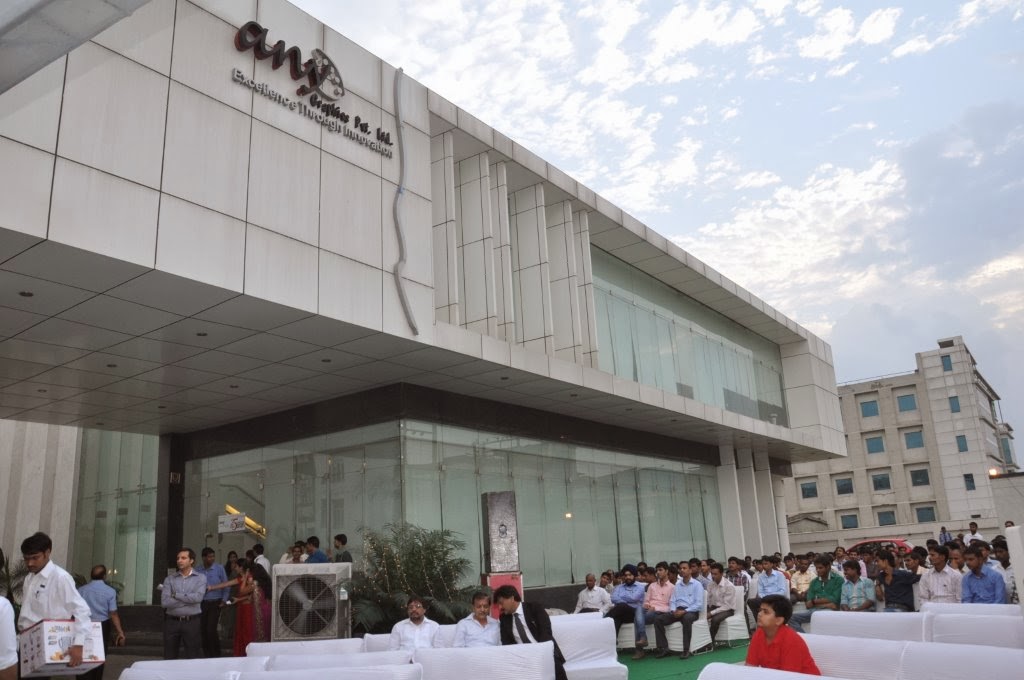
Anygraphics Factory


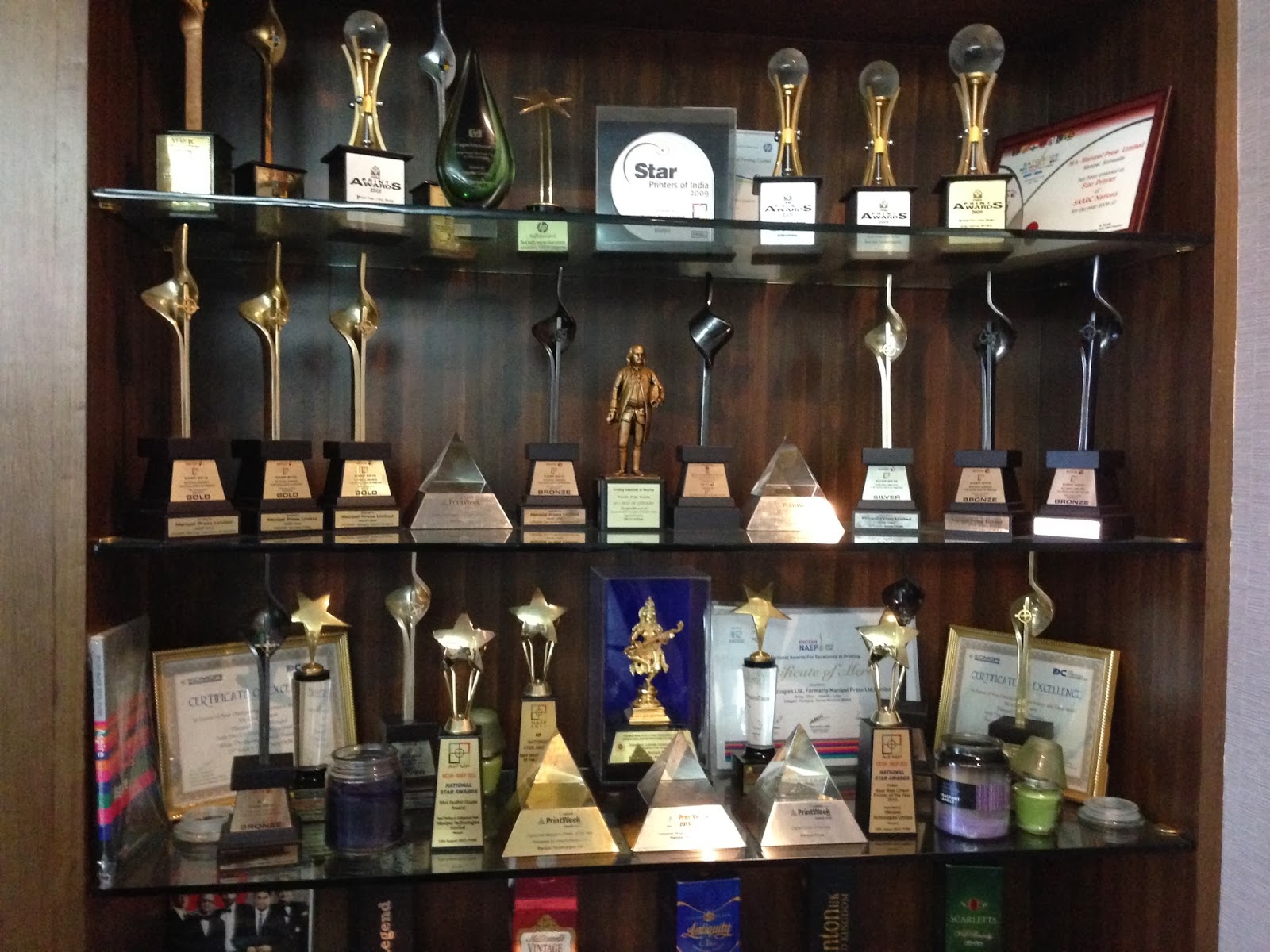
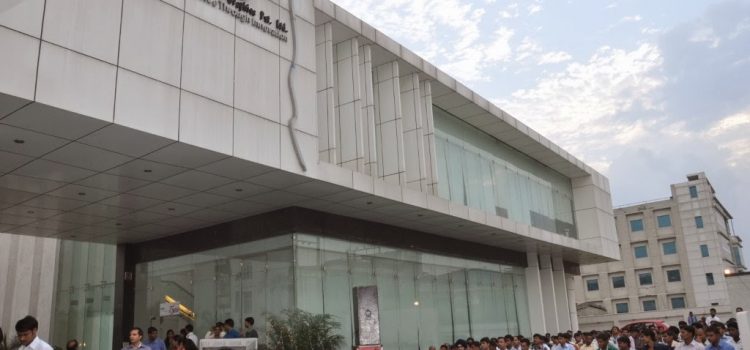
Noida based Anygraphics lead by the father son duo Kuldip and Naveen Goel recently celebrated their 25th anniversary at their impressive and sprawling Noida facility. The company is an extremely innovative and quality conscious printer who has successfully deployed diverse printing and finishing processes to turn out award winning labels and packaging, year after year. At recently held Printweek India awards they were the recipient of the Label printer of the year award. They have also received the Fespa global award and the World label award by World Label Association for excellence in label printing.  They have capabilities in Screen Printing, Intermittent Rotary Letterpress Printing, Offset Printing, Doming, Digital, etc. Their recent creations, the Horlicks carton and the Sensodyne carton with lens effects have been extremely applauded by the customers and well received in the marketplace. The products have a very high shelf appeal. Kuldip is a designer who has sharpened his skills by daily spending hours in creating designs and innovations in labels packages over the past few decades. Even now when an idea erupts in his mind, you can see the twinkle in his eyes and the smile on his face tells his mind is on the go. He does not waste even a minute and calls his people in the design section to delivers his instructions initiating the process to create something new to present to his prospective customers. Another one of his creations, the fruit pack with pictures of fruits with natural effects and feel leaves the viewer in awe.


Kuldip Goel
The function to celebrate 25 years of Anygraphics had almost 250 invitees. They all had one thing in common; they were all employees of Anygraphics Private Limited! It was a unique way to celebrate. All old employees, who had spent more than five years with the company, were rewarded. The rewards depending on the tenure and extent of their contribution to the company were gifts that ranged from  silver coins, wrist watches, microwave ovens, gas stoves, Mobile phones, LCD TV’s, Refrigerators, etc. The auspicious lamp initiating the celebrations was lit by the senior employees of the company and thanks giving prayers were offered at the deity installed in the factory premises. The employees in return conferred upon Kuldip the lifetime achievement award. Lunch was served for the team Anygraphics. The management and workers were seen as one family.


The Anygraphics team


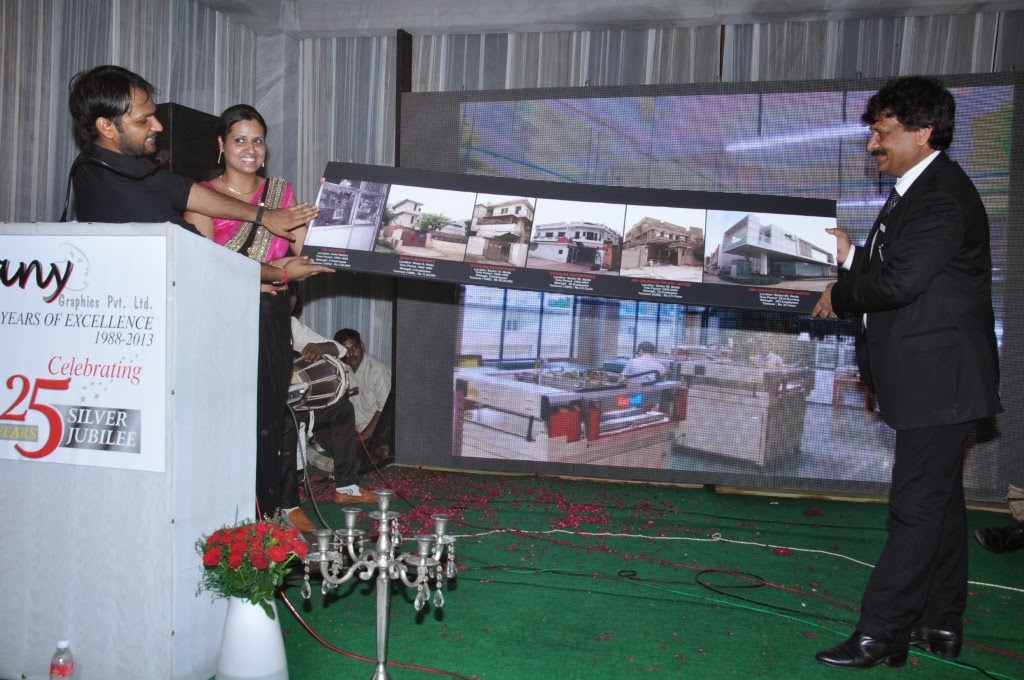
A nostalgic presentation was made by Naveen Goel about his father Kuldip Goel’s journey from his initiation in business as a 14 year old boy to the present 100000 square foot factory. The hard times and the tough journey left many eyes moist. Naveen has also prepared a small presentation which I had the pleasure to see. If at any time Naveen loads this presentation on the internet and it can be accessed, I will also provide a link on these pages. I have requested him to do so.
 
The pictures below in this feature will give the readers an idea of where he started from his first sale of stickers worth Rs.100.00(Less than 2 US Dollars) and to where he has reached.


 The very first one small room factory!


The next step!


The first building taken on rent.


The journey through various premises to the present 100000 square foot facility!
 
Congratulations Anygraphics! We wish that you reach many more successful landmarks like these in your journey in Print.
Written by Harveer Sahni, Managing Director, Weldon Celloplast Limited, New Delhi-110008 on November, 2013
 
Harveer Sahni, a label personality, engages with Tomas Rink, president, Ritrama Group and Tarcisio Scapinelli, president and CEO, ILTI – and decodes Core Linerless Solution technology.
 
Sahni, Scapinelli and Rink (l-r)
Harveer Sahni (HS): In this edition of Labelexpo Europe, Ritrama, ILTI, and Prati have successfully created a buzz with its Core Linerless Solution which offers to eliminate the liner wastage totally. How did the idea evolve?
Tomas Rink (TR): The idea of developing it came from my extensive debate last year with you; and then the consecutive discussion with Italian Labelling Technology Industry (ILTI). ILTI was doing some tests on substrates when Scapinelli expressed his wish to meet me and discuss something. He asked me: Why can’t we find a way out to eliminate the liner all together? That’s when I came up with the solution of developing a traditional material using traditional technology, which can be later converted into a linerless solution.
 
HS: Even for a labelstock manufacturer like me, the idea is fascinating. I find the idea so simple that it boggles me why nobody could come up with this solution earlier. You have eliminated the liner completely. Normally, one would print on a 50micron film and then laminate it with a 62gsm  liner and use it. However, here, the final labelstock face material is only 37micron instead of 50micron. The technology is, making a self adhesive laminate with a 25micron film and 12micron filmic liner in a conventional manner. This would then be printed at full speed on a normal label press. Then on, using a Prati equipment, the liner would be removed, turned-around and laminated to the same facestock exposing the siliconised side on top and rewound like an adhesive tape. The ILTI dispenser would cut and dispense these labels on to the product. So in effect, you are using a lesser thicknesss of face material, that is, 37micron instead of 50micron, which translates into lesser weight for each reel of labelstock and no liner going in the landfill.
 
Tarcisio Scapinelli (TS):The patented technology is simple yet intricate in application. In the Core Linerless Solution, once the facestock is printed, the liner is split and using a patented technology imposed as a laminate over the facestock to render a protective layer. The Prati machine for printing and converting as well as the dispensing machine from ILTI highlighted at the show were prototypes. 
 
HS: Just before dispensing it seems you use microperforation and use a gentle push-and-stick technique on the label before applying it on the package. But does micro-perforation offer a clear edge when slit with pressure technique?
TS: Yes, we microperforate the label. However, just before the label reaches the applicator it is slit using splicer that renders a clean edge to the label. Microperforation helps in the process and doesn’t slow down the machine. Since, both the liner-cum-laminate and the facestock are clear films, the need for die-cutting the labels is also eliminated. This means that the machine will enable printers to print one to 1.5-metre continuously and then slit it to finish it. Label printers will discontinue printing in smaller widths.  One of the limitations that restricted the length and speed was the die-cutting process. Core Linerless solution eliminates the need for die-cutting. It also means that there would be lesser machine stops, and in turn, higher productivity.
 
HS: Do you expect this technology to develop further? Also do you feel threatened that the technology can be adapted by other players since your technique is not very different from the traditional methods of labelstock manufacturing?
TR: It is a patented technology, especially the process of using the liner as an over-laminate. Therefore, any form of copying will be violation of the patent. As far as future development is concerned, every technology, including this, is open for development in future; that’s how they evolve. However, I do not see many changes in this technology.
 
HS: Although, the Indian label market is taking baby-steps in adoption of filmic labels, when do you expect your Core Linerless Technology to make inroads to India?
TR: We are working on finding a good pilot project to begin supplying this technology in India. We recently have found a Brazil paper and paperboard label printing company who has aligned with us for the pilot project. We do find India as an interesting market but investing in a good pilot project is something what is making us wait. 
 
HS: Around one-billion sq/metre of liner, ends as waste in India. Solutions like these would most certainly make a big impact. However, manufacturers like Ritrama should push the government to bring in legislation regarding this.
 
This Feature appeared in the 10 October 2013, Vol VI Issue 6 issue of PrintWeek India Magazine