Labelexpo India 2022 made it’s return to India, post the 4-year hiatus due to pandemic, in style and impressively. The show at Expo Centre in Greater Noida was vibrant with activity and label printers gave a  definite thumbs-up to this all-important show. From day one it became evident that the label fraternity was in wait to be at Labelexpo, network with peers and to make it evident that the exponentially growing Indian label industry was on the rise. Despite the leading international label presses not being there running live yet 250 exhibitors put forward their best to a demanding labels industry. A whopping record breaking 12000 visitors marked their presence in this busy show, a big rise from 9851 visitors at the 2018 edition of Labelexpo India, making it yet again the biggest Labelexpo held in India so far. 

LMAI Avery Dennison Awards evening

Our label printers are no less artists who are turning out labels that spell success to brands, a success that sounds like the best of music reaching their ears. Creativity starts with right imagination, generating a great artwork with the end consumers in mind, that is talent! Planning and striving to achieve excellence in print and creating the vibrance finally, is passion. When it is time to produce the label, it begins with the finesse of prepress to printing, plate creation and deciding on the embellishments, that is indulgence. Finally managing the colour, registration, implementation of the embellishments and converting to create magic on the press, that is origination. The whole run through is like an orchestra! The music conductor, our label printer, manages it all to achieve excellence in the label so produced, delivering the desired ambience to the product that adorns the label. Having created excellence and won accolades, it is time for getting rewarded with awards. LMAI endeavors to encourage and felicitate the winners of label competition at a glittering LMAI Avery Dennison Awards Ceremony., which was held on the evening of 11th November 2022. 

The author, Harveer Sahni, being the first ever recipient of R Stanton Avery Lifetime Achievement Award was felicitated by LMAI. 

Written & compiled by Harveer Sahni, Chairman Weldon Celloplast Ltd. NewDelhi November 2022

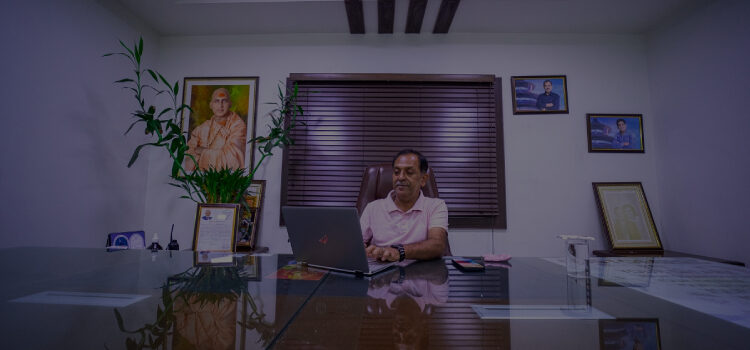
It is a treat to watch Harish Gulati, Managing Director Alpine containers Jammu, immensely active in his factory’s large shopfloor, moving from one corner to another at a pace that even youngsters find difficult to match. He is in constant communication with employees in all departments motivating them and encouraging them to perform better. At 70 years of age, he emanates energy that sets an example for his young workforce and inspires them to be active and more productive. His father was a central government employee in Jammu, the winter capital and the largest city in the erstwhile state of Jammu and Kashmir, which has now been converted to a union territory.

Lying on the banks of the river Tawi, the city is surrounded by the Himalayas in the north and the northern plains in the south. Known as the City of Temples for its ancient temples and Hindu shrines. Harish was born and brought up in Jammu. He completed his schooling from Ranbir School and did his graduation from MAM college and got his  PGDAM (post graduate diploma in business management) from Jammu University. Harish is credited for taking label manufacturing to northern most part of the country.

Once out of college, Harish applied and got selected for a job in IB the premier investigating agency of India at that time but owing to typical profound wish to do his own business, he did not take up the job. He started his own business of manufacturing candles and dhoop (Incense) in 1975 and selling within the state of Jammu and Kashmir. Moving on, in 1978 with family support he started his printing press in old Jammu City in an 800 square feet premises. That was his initiation into printing.

Unfortunately, a year later the factory was completely gutted in a fire, causing huge damage and loss. Not let down by the setback and with firm resolve, he restarted from scratch within a few weeks. However, at this time he closed his candle and dhoop business and concentrated on building his printing business. Though they did some commercial printing, yet his passion and concentration was in labels and packaging on which they started concentrating, finding success. Those days they used the primitive treadle presses to print with blocks and type fonts assembled inhouse. It was a challenging situation then, as blocks, dies, type fonts, artworks etc. were to be sourced from far away Delhi. He had to travel often to Delhi as there was no support for printing business within Jammu. Total support for prepress and materials was either available from Amritsar or Delhi, while sales were in the state of J&K. Amritsar had an established printing business and Harish did face competition from printers there, who would travel to  Jammu to sell their products. Total support for prepress and materials was either available at Amritsar or Delhi. Sometime later someone did start making blocks locally but being committed to quality he kept getting his blocks made at Delhi only. He had three treadle presses, two were used for printing and one was for die cutting. Most of the jobs were done manually which included printing, die cutting, pasting etc.

In 1980 Harish got married to Sujata who was a graduate by education and did help him in business for some time but resorted to be a home maker when their two children were born. Daughter Divya was born in 1981 and son Vipul in the end of 1982. Once settled at home front Harish Gulati worked hard to make his printing business grow. In 1985 he expanded and moved to a 1200 square Yards plot in Gangyal Industrial area with 8000 square feet built up space. This facility was a 10-fold increase over the premises at old city. They installed a letter press printing machine developed and supplied by The Printers House in Ballabgarh.

They also added additional equipment like Victoria die cutting machine, varnishing machine and other allied equipment. One of their earliest big customers was Camlin Art Material Division where they were supplying the cartons for the well-known Camlin pencils branded “Flora” and another big candle manufacturer besides other customers. In 1994 he upgraded to offset with a single colour Dominant offset press. Business was growing at steady pace and in 2003 his son Vipul joined business as a trainee. With an additional working hand from family, Harish Gulati setup another new factory by the name of Karton Kraft Packers in same industrial area but a different location to manufacture Corrugated boxes.

A year later the present company Alpine Containers Private Limited was established and they purchased land admeasuring 7000 square meters in two parts. Construction commenced in 2006 and by 2008 Alpine containers was actively in production at their present location at Bari Brahma, Jammu where the built-up area has expanded to 60,000 square feet. Vipul Gulati who had joined as a trainee, became actively involved in business in 2007. Bouyed by the addition of young energy of Vipul, major expansion was taken up as the father son duo could share the responsibilities and manage the growth more efficiently. This unit was setup to produce corrugated boxes. In 2012 they installed an imported 5 ply automatic corrugation plant which was the first automatic plant in J&K. One of the earlier units manufacturing mono cartons that they had setup in at Gangyal Industrial area was closed and sold while the other unit Karton Kraft still continues to operate at the same place making monocartons.

Here they had also expanded to install a four colour Planeta Super Variant offset press. They also ventured into printing labels in sheet form on pre-gummed Self-adhesive sheets and manually half die cut with blade.

Label printing was always in the mind of Harish Gulati from the time of his initial days, in 2015 they entered manufacturing of labels in roll form in Alpine containers with the installation of a brand new eight color Gallus label press ECS340. This was a pioneering move taking the PSA(Pressure sensitive Adhesive) label manufacturing in India to Jammu and Kashmir, the northern most part of India. The level of confidence in succeeding is evident as the installation was done without having any orders in hand. The confidence was there because of fact that their existing customers for corrugated box packaging were also users of labels, and it would be a matter of time when label orders would come their way.

The first big order that came to them for labels was from an Agro Chemical MNC. Gradually other companies including more MNC’s too became customers. Initially due to locational disadvantage at Jammu there were many challenges which were overcome by their sheer  perseverance and strong will  they managed. Four years later in 2019, they added yet another  press, this time they bought a Brand New 10 Colour Mark Andy P7 label press and other allied finishing machines.

They had planned further expansion at Baddi Industrial Area in Himachal Pradesh in the year 2015, but a customer prompted and convinced them to setup a unit in West, because instead of going from North to another location also in North it was better that they went westwards extending their reach in a big way.

Finally, they decided for expanding in western India and in 2016 invested in  Gujarat buying four acres of land for further expansion. Construction at site started in 2018 but when plant and machinery arrived from Taiwan the pandemic due to Covid19 had broken in, putting all plans on hold as no engineers could come for installation, plus there was restrictions on personal movement. Finally, the Auto Line was installed in the year early 2021. Production has now started in the 50,000 square feet-built shop floor and they have commenced construction of another 50,000 square feet. By end of the current financial year the full 100,000 square feet will be completed.

Harish Gulati’s daughter Divya born in 1981 is a computer engineer now married and living in Jammu. His son Vipul finished his schooling from Maharaja Harisingh Agricultural Collegiate School Nagbani Jammu and followed it with higher studies in business management from Lovely University Jalandhar. In words of Harish Gulati, “Vipul is a big contributor to the growth of their company and is very passionate about our business. He is a keen machinery buyer always wanting to buy the right equipment to produce the best.” He further adds, “As a parent I have to and do support his endeavors, he has the capability and knack to get after things and achieve success. A very hard negotiator.” Vipul got married in 2009, his wife Smridhi is a qualified doctor but prefers to remain a homemaker by choice to bring up their three  children, two school going children, a son. and a daughter. The third child is an infant son.

As regards the present scale business, they convert 1000-1200 tons of paper for manufacturing corrugated cartons. They convert 350,000  to 400,000 square meters of PSA Labelstocks per month to make labels. They are already working out of 170,000 square feet area at three locations; 60,000 Sq.ft. in Bari Brahma Jammu, 10,000 in Gangyal Industrial Area Jammu and 100,000 Sq.ft. West. There is wish  now to consolidate and modernize present factories only with more efficient machines with increased automation, despite having more industrial land in possession at Jammu. The total workforce employed as of now is two hundred and fifty persons. Keeping in view the multilocational growing presence, professional management team has been put in place to manage the operations efficiently maintaining the progress effectively.

There are plans to modernize the corrugation unit at Jammu by replacing with a new more automated faster plant for increased cost-effective production. Their present ever growing customer base extends from Jammu-Kashmir to Gujarat, Punjab, Himachal, Uttarakhand and Uttar Pradesh. They intend indulging in exports as and when more capacity is available. There is a definite plan to expand their label business exponentially and become a prominent player in the labels industry.

Written by Harveer Sahni, Chairman Weldon Celloplast Limited New Delhi India October 2022

It is a famous saying, “absence makes the heart grow fonder”! The last labelexpo held as a globally attended event was “Labelexpo Europe 2019” in Brussels, and while writing about the event on this blog, I titled it as Labelexpo Europe 2019, the best ever! I had started that article with the words; “From the word go, Labelexpo Europe 2019 was a vibrant and happening show!” and so it was. Each year a multitude of visitors from various segments of label industry  which include printers, suppliers, consultants, media and label users make a beeline for this august show, wishing it to be bigger and better than before . Little did anyone know or visualized that the humanity will go through a traumatic time of life termed as a “pandemic.” If all goes well, it will be four long years before the next Labelexpo Europe may be held in Brussels in 2023, a show that is referred to as the Mecca for the international labels community. The past three years have witnessed immense human suffering, many lost their lives and there were a vast number of businesses that suffered. Post a gigantic global drive to vaccinate the world population against the terrible virus Covid-19, normalcy started surfacing and businesses started limping back to life. The announcement of Labelexpo Americas was welcome news but there was still an air of caution about getting infected because the virus had not been completely eradicated. Labelexpo Americas is a much smaller event as compared to the European event. The yearning by the labels industry to venture out again to witness the new developments and network with global peers in the widespread labels industry surfaced and finally the American event turned out to be a remarkable success. At the Labelexpo Americas 2022, the joy in togetherness after a hiatus of three years was evident!

Label Industry Global Awards 2022

In the evening of the first day of Labelexpo Americas 2022 The Global Label Reunion Party 2022 was organized and the Label industry Global Awards were announced. The winners were chosen by a judging panel consisting of Lori Campbell, chairman of TLMI, Linnea Keen, president of TLMI, Philippe Voet, president of FINAT, Greg Hrinya, editor of Label & Narrow Web, James Quirk, then group editor of Labels & Labeling, and Jean Poncet, editor-in-chief at Etiq+Pack. The chair of the judging panel was Andy Thomas-Emans, strategic director Tarsus Labels & Packaging Group.

As previously announced, the winner of the 2022 R. Stanton Avery Global Achievement Award is Harveer Sahni, the author of this blog. The judging panel felt Harveer meets all the criteria for excellence demanded by the industry’s most prestigious award for an individual’s contribution to the growth and development of the global labels industry. His history in building a company to manufacture self-adhesive labels in India, through to his central role in building the Indian label association and then acting as an influential ambassador on the world stage, all helped the judging panel to come to their decision. He was introduced by the TLMI President Linnea Keen who conferred the award to him. Speaking on the occasion Harveer Sahni spoke of his journey in labels and the lessons he learnt. His speech can be head on the following link;

Other winners announced are as follows:

The Rising Star Award went to Stijn Billiet, Global Sustainability Director, MCC Label. Stijn joined MCC in 2020 and made an immediate impact bringing sustainability onto the agenda of the business. Early 2021 he presented a roadmap for all global production sites to reduce their carbon footprint, guiding the Belgian facility to carbon neutral production. Stijn represents MCC in its collaboration with organizations such as Holy Grail, RecyClass, APR, and CELAB. The judging panel felt Stijn has demonstrated clear potential to be a future leader and is already a strong voice within the labels industry.

The Environmental Sustainability Award was won by Flint Group Narrow Web, for a new line of products designed to enable more sustainable packaging. The first product in the series, Evolution Deinking Primer, when used with Flint Group EkoCure XS inks, enables deinking of crystallisable shrink sleeves, allowing the clean sleeve label material to be recovered and recycled into PET packaging. The judging panel felt that the Evolution Deinking Primer makes a major contribution to developing a circular lifecycle for label materials.

The Innovation Award for companies with over 300 employees went to Actega for its Signite decoration technology. Utilizing the latest in UV-curable chemistry, Signite decorations are created entirely on press, eliminating the need for the laminated constructions used in traditional pressure-sensitive label production. Signite decorations are built in register with the graphics and label content, so there is no die cutting and no matrix to dispose of. Signite decorations are applied with a specialist inline applicator developed by Actega, initially for glass straight-walled containers. The judging panel felt this to be a step change in the way label decorations are produced and a major contribution to industry sustainability.

The Innovation Award for companies with under 300 employees was awarded to S-OneLP for its ReEarth compostable flexible packaging films. ReEarth films have achieved ASTM D6400 commercial compostability standards and are both BPI and USDA Biopreferred certified. A compostable print film, adhesive, and sealant layer make up this laminated structure that can be surface printed with digital or flexographic technologies. The judging panel felt that with more label converters diversifying into flexible packaging products, a fully compostable solution is a great aid to future packaging industry sustainability.

The Rising Star award is sponsored by Avery Dennison; the Environmental Sustainability award is sponsored by Labels & Labeling; the Innovation Award for companies up to 300 employees is sponsored by Flint Group Narrow Web; and the Innovation Award for companies over 300 is sponsored by Xeikon.

Labelexpo Americas 2022

Defying the caution and scare of Covid-19 visitors travelled across continents to witness the ample display of technologies and solutions at the event. There were a lot of live equipment running and there was a sense of fulfillment amongst the visitors. The show was vibrant and a wonderful precursor to the biggest of them all, “Labelexpo Europe 2023 at Brussels”. I reproduce pictures of my walk through the show.

The author interviewed Vinod Vazhapulli Managing Director of Skanem India, according to him Label is a window, through which a brand communicates with customers. It is the bridge that connects the brand owner with end users of products. In an evolving scenario, where change is recognised as the only constant, label may change in converting technologies, types of labels and process of application on products but yes, labels are there to stay. Without label there is no identity, it is an absolutely relevant part of all products.

In a population that is young, growing in literacy with a fast-emerging organised retail culture, Indian consumers now enjoy shopping. They pick and select products, read the label to assimilate information provided on the label before deciding on the purchase. So, label is here to stay, it may change in shape, type, and substrate it is made of. The larger part of labels in India are produced and converted using analogue printing technologies like letterpress, Flexographic printing, screen, offset, etc. This is undergoing a transformation and Skanem is committed to adopt new developments in label converting. Moving forward, their focus is to build a sustainable future by implementing Industry 4.0 and Lean Six Sigma, combined with a steady yet aggressive growth plan. Skanem India aims at moving from being one of the top players to “The Market Leader” in product decoration solutions in India.

Skanem India is a renowned organisation with a legacy of over 115 years in the Packaging industry as a part of Skanem AS founded in the Stavanger region of Norway producing from metal cans to labels. In 2012 Skanem invested into the then India’s largest label manufacturers Interlabels Mumbai and in 2014-2015 they acquired it 100%. 

They now operate out of four printing sites spread across India having their mother plant in Mumbai and other factories at Baddi, Delhi and Gauhati, with 250 permanent and one hundred temporary employees. They are equipped to cater to customers in every part of the country. In 2021 Skanem AS divested, they sold their eight factories namely- Norway, Sweden, Denmark, Poland, UK, and Thailand to MCC. They continue to be headquartered in Norway and now have operations in India Kenya and Europe.

Divestment was done to reinvest in diversified businesses within the packaging arena. It was felt that European markets were somewhat saturated, and they saw a double-digit growth in India and Africa. In Mumbai, their investment in HP Indigo label press provides them with digital prowess that enables their customers to reach new heights with their marketing campaigns. At the same time, it enables them to fulfil the needs of budding customers (Start-ups) with shorter runs. Skanem would like to explore possibilities in packaging, by way of acquisitions or otherwise. they currently plan to use the present set up for flexible packaging and cartons and consider upgrading existing digital capabilities. Path breaking innovative products on digital which will bring in more business and need more investment are a part of future plans. What could not be done with analogue alone, will be achieved with digital, giving solutions to try test marketing with shorter runs for which analogue has limitations. Vinod Vazhapuli, the Skanem India Managing director adds, “Skanem will be hyper aggressive to expand in big way to increase our portfolio in labels, expand in flexo with improved, enhanced and technically advanced capabilities. As for digital, we will invest in more, to offer advanced and innovative solutions. With these capabilities we will be able to put heart and mind into labels.”

Vinod Vazhapulli is a qualified Mechanical Engineer with experience of over 23 years in industries like Automotive; Pharma Engineering; Tooling; Textile Engineering; Printing & Labelling. He has in the past, handled various international markets like USA, Canada, Mexico & Central America, Asia Pacific, Australia / New Zealand, Latin America, Europe. He has held P&L responsibility in the capacity of a Business Head, then as the CEO of an NSE/BSE Listed Manufacturing company and the Director of a UK company alongside, for a period of 2 Years and now the Managing Director of Skanem India. During his professional career, he has been bestowed with “Exemplary Leadership” award by ABP News, the Thought leadership & World Quality congress & Yes Bank, for the year 2018 under the Manufacturing segment; Featured and Ranked 35th & 32nd in the Power100 List of one hundred Most Influential Leaders in Print & Packaging Industry in India for the year 2020 & 2021, respectively. He was awarded, the Indian Achievers Award for excellence, leadership & innovation in Print & Packaging industry for the year 2021. He was a part of two Patent submissions in the field of Surface finish and Metallurgy.

He was also the part of National committee for Capital Goods & Engineering of both CII (Confederation of Indian Industries) & FICCI (Federation of Indian Chambers of Commerce & Industries), two of the most important and powerful Industrial associations in India, during the year 2017, as part of his professional journey. Vinod worked in Skanem for a year in 2016, heading the machines business (label applicators) as VP and Business head. In between, after a stint in Indian Card Clothing LTD. as their CEO, he returned to Skanem in 2019 as the Managing Director.

Commenting further on Skanem’s digital indulgence Vinod stresses that they are always abreast with modern technologies and as for now, digital for them is the one that enables them to produce smart labels. They are convinced that smart labels educate customers as they possess virtual reality to communicate which the customers enjoy. In lighter vein Vinod expresses an example, that a whiskey connoisseur would always like to read the label to find information on labels as to where the product was distilled and what kind of casks were used to mature and whether it is a blend or a single malt. Similarly, a wine label tells all what a wine lover needs to know regarding the types of grapes used, the region they come from, the year of production and a lot more information. Digital label printing gives that window of opportunity to cater to such demanding connect with the end consumer. Digitally printed labels are different from analogue converted ones which are non-interactive, to being interactive labels.

Such digitalisation, to variably print and communicate is ably provided by the digital label presses. Skanem was one of the first investors in an HP Indigo label press, “We were very first HP Customer” says Vinod. With the meaningful smile he says, “we look forward to HP giving us a good deal for the next HP Indigo.” Skanem’s experience with HP Indigo label press has been good, it gave them an edge with print buyers when they explained their enhanced capabilities. They have the flexo label presses but additionally with HP, it certainly helps to impress upon the customer about enhanced capabilities like short runs, customisation, immediate delivery runs, all of this has helped augment their business.

Cost is a deterrent but the ability to produce special types of labels does bring better realisation. They are sure that in coming times the true potential of the HP machine will become more evident. A specific example is Dettol label campaign, celebrating the covid warriors, done during the pandemic. Even though there was non-preparedness and manpower shortage, the job had to be done in specific period. It was because of digital capabilities they could run three million labels within span of 10 to 12 days. Without HP, they say, it was not possible. It was a noble gesture by the brand owners, and Skanem substantiated it by delivering in time because of digital capabilities. It enhanced the brand owner’s emotional connect with their customer. Indians are very emotional and the sacrificed space on labels for a human cause, narrating touching stories was satisfying and well received by consumers, enhancing brand value.

Unprecedented price rise, shortages, and the war in Ukraine, created an imperative need for just in time deliveries and customisation plus the generational differences as well, drove the need for digital presses.

Skanem endeavours to educate customers in appealing to the conscience and emotional quotient of people to deliver to their aspirations. Multinationals want large volumes, just in time deliveries, along with consistency. They talk about sustainability, circular economy, and carbon footprints while the start-ups need support in smaller quantities, they want to add different information, pictures and motifs with digital capabilities be delivered as per needs. Skanem as a globally responsible corporate try to add value to the products that they supply to their digitally printed label customers, both the large and small. The company has own plans and systems to support them for these important issues. Digital provides opportunity to produce small run of labels to test market products before going in for mass production. It complements analogue, when one is successful with test marketing and volumes increase, they can switch over to analogue. Typical customer for digital labels, are from industries like tyre, agro chemicals, dietary supplements, cosmetics, etc.

The Indian population of 1.5 billion people is largely young, adding up to almost 60% of them in the productive working age. With change in the joint family system, more and more young working people are living separate from families and eating out or trying to have ready to heat and eat meals, a segment that is bound to grow exponentially.

This segment will give a definite fillip to digitally printed labels demand. Today’s youth have entrepreneurial urges and they are setting up start-ups that need short runs, they just want to do things differently, differentiate their products segment wise from giant brands, by the way they present them, informing users about carbon footprints, organic nature, and unique packages with short, personalised, and variable runs. Skanem finds the HP Indigo press as the perfect equipment to support these young entrepreneurs and provide them the “wings of hope.”

Written by Harveer Sahni Chairman Weldon Celloplast Limited New Delhi July 2022

You don’t see it right away, but food packaging is quite complex. Due to diverse requirements placed on packaging, it often consists of several laminated films layers of different chemical compositions. Each of these has a specific function. The problem is: Packaging that consists of several plastics makes recycling difficult or even impossible. 

hubergroup Print Solutions, have put a lot of thought into how to enable a modern, recycling-friendly design for food packaging and found that barrier coatings provide a real alternative. Their new HYDRO-LAC GA Oxygen Barrier Coating, for example, protects packaged food from oxygen and, thus, enables mono-film packaging, which can be recycled much more easily. To take advantage of this property, food manufacturers only need to use film laminates consisting of a single type of polymer, usually polypropylene or polyethene, with a layer of oxygen barrier coating in between. Under industrial conditions, an OTR [oxygen transmission rate] of less than 10 cubic centimetres of oxygen per square metre and day can be achieved, when using polypropylene, for instance. Dr Ralf Büscher, Senior Expert Projects Flexible Packaging at hubergroup, concludes: “Our new barrier coating is ideally suitable for oxygen-sensitive food such as muesli or nuts because it protects them from atmospheric oxygen. This enables food packaging supporting the circular economy.” 

Last year, hubergroup has already launched the HYDRO-X GA Water Barrier Coating, which provides protection against water and, thereby, replaces a polyethene (PE) film lamination as a water barrier. As a result, packaging designers can choose pure paper instead of laminate structures for packaging moisture-sensitive foods such as flour or dry animal food – and the packaging can be recycled in the already well-established recycling system for paper packaging.  

adphosNIR ® systems are perfect for increasing production and improving print images in digital printing, conventional printing or hybrid applications. They also offer upgrades, retrofits or replacements for existing drying systems for digital presses, hybrid presses (conventional/digital) or finishing lines.

Benefits of adphosNIR ® technology:

  • Lower operating costs through:
  • Increased production speed, productivity and throughput
  • Less energy consumption compared to other systems
  • Reduces rejects due to the fast response times of the systems
  • Due to the low influence of the adphosNIR ® radiation on the substrate (less heating, formation of waves, rippling), higher productivity can be achieved in the further processing lines.
  • Higher quality end products (direct mail, books, publications, bank statements):
  • Less waving and frizzing due to minimized thermal stress

Applications:

Inkjet drying

  • Drying of water-based inkjet inks up to 1,000 m/min (3,000 ft/min)
  • Drying of inks on temperature-sensitive substrates – including plastics
  • Special solutions for booster dryers for existing inkjet printing machines

Inkjet integration

  • Integration of imprinting systems into traditional printing presses and finishing lines in black, solid color and four-color printing
  • Experience with the integration of all inkjet technologies – continuous, pieze and thermal
  • Solutions for print head positioning, inkjet drying and entire printing towers
  • A large number and options such as web handling and print image inspection are available

Coatings/Adhesives

  • Solutions for high-speed drying of waterborne pre- and post-coatings
  • Ideal for drying water-based adhesives (envelope gluing)

Avery Dennison Corporation (announced it has acquired the linerless label technology developed by Catchpoint Ltd, a UK company based in Yorkshire, England.

The purchase covers Catchpoint’s patents, brand, trade secrets and know-how. Arrangements have been made to ensure the continued support of the Catchpoint team. Under the agreement, Avery Dennison will honor Catchpoint’s existing commercial agreements.

“With the acquisition of Catchpoint, Avery Dennison will have intellectual property that helps us fulfill two of our main 2030 sustainability goals: to deliver innovations that advance the circular economy, and to reduce environmental impact in operations and technology,” says Noel Kasmi, VP Marketing, Avery Dennison Label and Packaging Materials EMENA. “As we are pushing to make linerless labels available widely to our customers, this technology will help us move more quickly, enabling sustainable and cost-saving solutions to reach our customers around the world more rapidly. This is world class technology that will deliver real benefits to our customers and the environment.”  

A key strategic priority for Avery Dennison is to innovate in the area of more sustainable product solutions. Linerless labels are one area of opportunity in this area, with the potential not only to reduce liner waste, but also related production and transport costs as well.

“We are excited for Avery Dennison to be acquiring our technology with the intent of making its products more sustainable. Combining our technology with Avery Dennison’s scale, market position and industrial know-how represents an amazing opportunity, a worthy destination for our journey to bring linerless labelling to the market,” said Mike Cooper, Business Development Director Catchpoint Ltd.

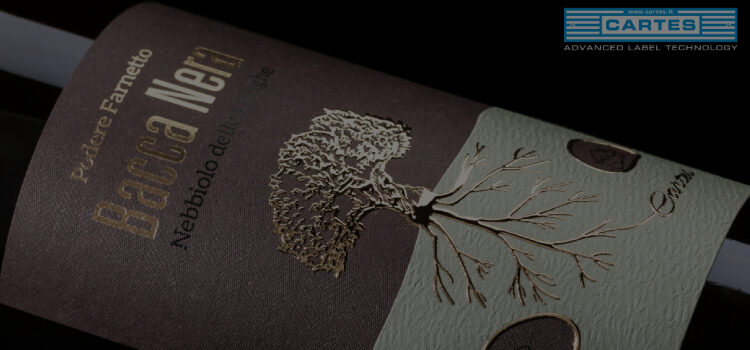
Presenting CARTES newest technology, the Jet D-Screen unit for digital embellishment, which make easy to create multi-layer effects such as spot coating, complex tactile raise volumes and braille printing as well as very detailed foil and metallic doming transferring.

Available for GEMINI and GT360 Series, also allows to personalize & beautify labels in just one-step, with no tooling costs, immediate start-up and no material waste.
In addition, our well know Laser converting system, available in Single or Double head versions, powered with 350W Semi-Sealed sourcing technology that provides an unlimited lifetime with a constant power and cutting quality, suitable for paper & film as well as for liner-less face stock processing with also all proper gadgets to automate processes, like the Automatic Barcode Reading, Turret Rewinding and the Auto-slitting systems, all them completing a perfect match with roll to roll digital press concept.

GE362JJ

Digital Embellishment machine powered by two Jet D-Screen units and foil transferring for metallic doming and detailed foiling.

GT365WSHJR

Finishing and embellishment configuration with Flexo coating, conventional Screen and Hot Stamping applications, Digital Screen printing with Foil transferring for Metallic Doming and Semi-Rotary die-cutting.

GE362 WL

Laser Converting machine with Flexo coating, Automatic job Change Over, Invisible Laser Cutting and Turret Rewinding systems ready for web-to-print processing.

With the ongoing trend to track more products through the supply chain now boosted by significant Covid-19 related online retail sales growth, Domino Digital Printing Solutions has seen substantial investment by label converters into adding variable data printing of tracking codes onto labels for online retail supply chain requirements.

Jim Orford, Domino Digital Printing Solutions Global Product Manager for the K600i, comments, “In the last two years, the number of codes being printed has almost doubled. We have witnessed a substantial growth for variable data printing, both in the number of K600i printers installed, with a far higher uptake of wider and higher speed configurations, with systems printing up to one million different codes onto labels per hour. This trend towards online retail is understood and many of our label converter customers have invested significantly in capacity to meet this.”

Other K600i applications include security and anti-counterfeit mark printing, traceability codes for pharmaceutical and tobacco products, promotional games and loyalty schemes. Jim Orford adds, “Variable data printing enables a label converter to both develop new business and benefit from this added value work.”

The versatile and modular Domino K600i ink jet printer is designed to be mounted inline on a conventional flexo press or label finishing line and could be described as another form of embellishment. The printer is configured to the required press web width it is integrated onto, ranging from 108mm (4.25”) to 781mm (30.8”) with variable data print applied anywhere across the web. It operates with either UV-curable or aqueous inks at web speeds up to 200m/min (650 ft/min). Data files and job setup is managed by the Domino Editor Starlight or Editor RIP PC based controller solutions, with data processed inline at the same time as it is printed. For additional security, the Editor Starlight can be integrated with a vision system to read, verify, track and provide a quality grade for the codes being printed. Domino supplies the Lake Image System’s Discovery Multiscan vision product as part of a total turnkey variable data printing and verification solution package.

Philip Easton, Director of Domino Digital Printing Solutions, highlights, “The K600i has been a real success for Domino and reflects our 44 years’ experience of developing digital inkjet products.  Thei-Tech or intelligent Technology features provide such a reliable and robust solution and it is a real pleasure to receive positive feedback from our customers about how our products have progressed, improving productivity and allowing their businesses to grow and prosper.”

The key Domino K600i i-Tech features include i-Tech CleanCap, an automated process for cleaning and capping the print head;i-Tech ActiFlow, an ink recirculation system which reduces the risk of diverted jets impacting print quality; and i-Tech StitchLinkwhich enables optimum registration allowing an image to be printed anywhere across the full web width. To find out more about these unique, productivity enhancing i-Techfeaturesof the K600i and watch 3D animation videos of them in action, please visit: https://www.domino-printing.com/en-in/products/k-series/k600i

About Domino

Digital Printing Solutions is a division within Domino Printing Sciences. The company, founded in 1978, has established a global reputation for the development and manufacture of digital ink jet printing technologies, as well as its worldwide aftermarket products and customer services.  Its services for the commercial print sector include digital ink jet printers and control systems designed to deliver solutions for a complete range of labelling, corrugated and variable printing applications.

All of Domino’s printers are designed to meet the high speed, high quality demands of commercial printing environments, bringing new capabilities to numerous sectors including labelling, corrugated, publications and security printing, transactional, packaging converting, plastic cards, tickets, game cards and forms, as well as the direct mail and postal sectors.

Domino employs over 2,900 people worldwide and sells to more than 120 countries through a global network of 25 subsidiary offices and more than 200 distributors. Domino’s manufacturing facilities are situated in China, Germany, India, Sweden, Switzerland, UK and USA.

Domino’s continued growth is underpinned by an unrivalled commitment to product development. The company is the proud recipient of six Queen’s Awards, the latest being received in April 2017, when Domino was awarded the Queen’s Award for Innovation. 

Domino became an autonomous division within Brother Industries on 11th June 2015. For further information on Domino, please visit www.domino-printing.com

Narinder Chhatwal hailed from a family of traders in Lyallpur, a city which is now in Pakistan after the partition of India in 1947. Lyallpur was named after the founder of the city the then Lieutenant-Governor of the Punjab, Sir James Lyall, for his role in establishing the canal colonisation project. In 1977 the Government of Pakistan changed the name of the city from Lyallpur to Faisalabad (‘City of Faisal’) in honour of King Faisal of Saudi Arabia, who made several financial contributions to Pakistan. Faisalabad is the third-most-populous city in Pakistan after Karachi and Lahore, respectively. It was in the turbulent times of 1947 during the division of India into India and Pakistan, that the Chhatwals migrated to New Delhi. After completing his schooling, Narinder Chhatwal took up a job in the iconic Kwality Restaurant in coveted location, New Delhi’s Connaught Place, a venture set up in 1940 by P L Lamba and his brother-in-law I K Ghei who grew it as a multilocation restaurant chain. Narinder worked there until 1961. There was a strong urge to have his own business, so he set up a unit to produce ice cream cups but as situation warranted then, he left this venture and rejoined Kwality Restaurant yet again in 1964. Despite the stable job, the entrepreneur in him was restless and the urge to set up his own production unit re-surfaced and he finally quit the job permanently to start a printing unit nostalgically named Kwality Carton Manufacturing Company, in a single room rented at Kirti Nagar, New Delhi in 1966-67 using the manually fed treadle letterpress printing machine. He manufactured Ice cream cups, lids, cartons for Ice cream bricks and in fact a host of printed packaging items. In 1971 he could get an allotment for an industrial plot from government at Naraina Industrial Area and he moved the unit to this location where from, they operate to this date.

 
A little over a year after moving into their Naraina factory they bought their first offset printing press, a 712 single colour Dominant, a year later they bought another similar press and followed it up with a 714 Dominant. Falling short of space, the adjoining building was available, so they bought it as they were growing. In 1982-83, expanding further they acquired a two colour Planeta. Once into offset printing, Kwality was in expansion mode, they were adding equipment every alternate year. At this time, they renamed the company as Kwality Offset Printers. In 1986 Narinder Chhatwal’s son Rajeev an 18-year-old had joined business. Rajeev did his initial Schooling at Springdales School Delhi followed with graduation from Delhi University. The post partition Punjabi families who left all that they had, back in what had become Pakistan were hard working and were quick to start from scratch to regain their stature by sheer hard work. The second generation were all following their father’s footsteps and would be helping their parents in the work, spending time after school or college on the shopfloors of their startup units. For them, the shop floors became the training ground, and they learnt the nuances of business hands on. Rajeev was no different, with a  father like Narinder mentoring him and passing on the experience to his son who was a quick learner, he settled down in the business quickly. He however did go for a short training program at Heidelberg Germany. With his joining in, the business accelerated and soon the space in their Naraina factory was again falling short. In 1988, they bought out yet another next-door unit to make room for more production space so now the factory is operating from three adjacent plots. The same year they bought their first four colour offset press a secondhand Roland. Expansion became a routine process. They believed and were convinced that as far as possible it is better to operate from a unified single location in one city. This way the management which was Narinder Chhatwal, and his son Rajeev Chhatwal were not split and would remain a support to each other.


Until 1995 Kwality offset was producing Cartons, some commercial printed items and wet glue labels. In 1995-96 they decided to become a hundred percent label manufacturing unit which was only wet glue labels. The story of their entry into wet glue labels is interesting. In the early 1990s when the number of breweries started to grow and bottling speeds were on the rise. To label bottles at 250 bottles per minute, the labels needed to be perfectly die punched and stacked to run on highspeed lines. The normal flatbed dies would not work well. Kwality, because of their experience in ice cream cups and lids production were well versed in ram die punching and their workers were well trained in the process. Their manufactured labels ran extremely well on the high-speed labelling machines at breweries and distilleries and soon the word spread of their capabilities. This helped them get the orders from many other breweries and liquor producing companies. It was just a matter of time that they became the largest suppliers of wet glue labels in north India, though they were supplying pan national. It is interesting to note that normally people print and then get into label finishing equipment, here because of their knowledge of finishing the ice cream cup lids by hydraulic ram punching got them into high end big volume label printing. Their first customer for beer labelling was a government owned Haryana breweries at Sonepat making a popular brand of beer those days “Rosy Pelican.” Their success in making the perfectly die-punched wet glue labels also got them their first break in corporate world with orders from the multinational brand owner Nestle.


It was in the year 2000 when self-adhesive labels were gaining in popularity, the Chhatwals invested in a Mark Andy 2200  narrow web label press and in the following year, they also increased their investment in sheetfed offset by installing a six colour Heidelberg press. In 2002 they installed another sheetfed offset a five colour Roland with UV and online coater. Hereon, expansion became an ongoing process, they added three Mark Andy presses, a Gallus and a Xeikon in 2018 to make their entry into digitally printed labels with an ABG Digicon series 3 finishing and embellishing machine, which also has hot foil stamping , embossing and screen-printing capabilities. These investments enabled them to add multiple security features on labels. Increasing their footprint in flexo they also set up inhouse platemaking with Kodak Flexcel. Rajeev’s father Narinder Chhatwal passed away in 2008 until when, he was still attending business, though the reins had been passed on to his son Rajeev.


Rajeev’s other siblings include a younger brother who is into real estate and a sister who is a homemaker. His wife Shalini is also a home maker. His son Krish completed his business management from Sydney and joined business at Kwality offset four years ago. Two of those initial years were passed in facing the pandemic and last year in 2021 he got married. Krish’s wife Sanya, an expert in baking, after completing a course from APCA Malaysia, is running her own business, a bakery named Delhi’ce in Gurgaon making specialty cakes. Rajeev’s daughter recently completed her study in architecture and is now pursuing her career as an architect.


Having put in place a full-fledged team to manage all production, Rajeev, and son Krish personally look after sales and marketing. While Krish looks after all new customers, Rajeev manages and caters to, and successfully retains all old customers. The present spread of business is with three flexo presses, one digital label press Xeikon, Abg digicon, one Roland and one Heidelberg sheet offset press in a shopfloor admeasuring approximately 60,000 square feet. Total workforce is 130 persons all in one location at Naraina Industrial Area New Delhi. With no more space left for expansion at present location, they have bought a 2200 square yard plot at Manesar south of New Delhi for another factory to fuel their further expansion. When asked about future plans, Rajeev expresses that they are not really concerned about just volumes, they are more oriented to implement better and innovative technology and be profitable to grow the bottom line instead of focusing on bigger turnovers. Kwality has been growing at about 10 percent per annum and they are committed to maintain the growth rate. Conscious about the environment they have tied up with approved and certified waste management agencies as also cooperating with Avery Dennison on their waste management endeavours. They even try and source most of their paper materials from FSC certified vendors. Despite the aftereffects of pandemic, the father-son team are committed and firm to keep the expansion and investment in new technologies an ongoing process. Their resolve years ago to give-up cartons and other commercial printing to stay with 100% manufacturing of labels is unique in today’s situation. These days offset printers do integrate forward to produce labels and vice-versa label printers, in an effort to grow turnovers, expand into print packaging. They wish to remain specialty label printers, investing into innovation.


Written by Harveer Sahni, Chairman Weldon Celloplast Limited New Delhi March 2022

PS: Printing Magazine may publish this article giving credit to author Harveer Sahni and Blog https://harveersahni.blogspot.com