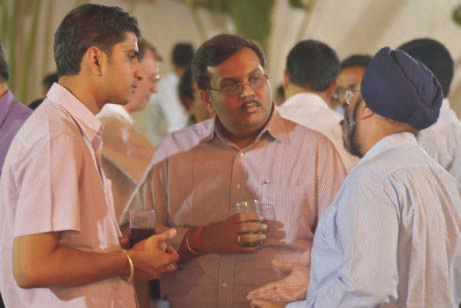
Surinder Kapur
“In the next five years we will expand to make our label business grow five times!” This statement comes from a man fully committed to making good labels and talking so at an age when others are talking of their retirement plans. Surinder Kapur is the grandson of Lala Jaidayal Kapur, the erstwhile distributor of the largest paper manufacturers in the country Ballarpur Industries Ltd. (BILT). As history goes Lala Jaidayal Kapur used to run his stationery business in Lahore. After partition of India, he moved to Amritsar in India and struck a close friendship with Lala Karam Chand Thapar, the founder of BILT, now renamed “ Avantha Group”. This friendship brought to him the coveted distributorship of Shree Gopal Paper Mills Ltd. also owned by the illustrious Thapar. Lala Jai Dayal Kapur had seven sons. His fifth son Raj Kumar, father of Surinder Kapur moved to Mumbai in 1950-51 and setup his paper distribution business under the name of Jai Dayal Kapoor (Bombay). A couple of years later Raj Kumar set up his maiden manufacturing venture R K Papers at Prabha Devi Mumbai to manufacture excersize notebooks. Surinder one of Raj Kumar Kapur’s six sons, was still in school when the family felt that this business needed a family member’s continuous involvement. As Surinder finished his school, at this relatively young age, he was called upon to divide his time to attend college and spend the rest in the Prabha Devi unit. He handled the situation well and by 1971 they moved to a unit in Ghatkopar expanding to start plastic blow moulding as well. With hard work, business prospered and soon it was time to move yet again to a bigger place. The 40000 square foot Taloja unit was setup in 1974. The exercise notebook manufacturing was initially moved here subsequently additional plastic blow moulding capacity was installed. It was only in 1981 that a label press supplier suggested to Surinder Kapur to start manufacture of self adhesive labels. He was interested and started to research the potential of this new product. He found that Johnson & Johnson was the only established manufacturer of labels at that time. Further indulgence revealed that they were selling ½” X 1” labels at Rs.140.00 per thousand. That translates into a per square meter price of over Rs.430.00! The decision of Surinder to enter into the manufacture of self adhesive labels is obvious. As a labelstock manufacturer today, even I am overwhelmed at this exorbitant price. When Surinder told me this fact I could only think of a popular song of an era gone by and sung by Mary Hopkins, “Those were the days my friend”. I really wonder where those days vanished.
R K Papers started to produce Self adhesive labels with an M250 Iwasaki label press. The success was sweet, Surinder went on to buy a total of nine Iwasaki label presses in the times that followed. Initially, selling stickers, three decades ago at prices similar to that of J&J was extremely difficult. No customer was ready to pay that price for a “sticker”. He reminisces that a small change in their marketing brought results. Instead of calling their product stickers, they called them pressure sensitive labels and the market was ready to pay the price. As the market grew, Surinder saw the need to respond to customer requirements promptly. Sitting in Taloja when no internet was available, it was a difficult task to send the designs to the plate makers in south Mumbai and then wait for days for the plates to come in. In 1983, he installed his nylo plate making equipment, to be able to print labels when the customer needed. Another problem that he faced at that time was the fact that in those days Shantilal Doshi was the only supplier of labelstock, so availability was difficult. He remembers that the suppliers used to ration the supply. You ask for 20,000 square meters and they would give only 10,000. As for printing, Surinder’s experience in printing notebooks helped and there were no hiccups in that area. Surinder has been actively and vigorously been supported in the labels venture by his younger brother Jatinder Kapur.
As they grow older the two brothers have mentored and helped their sons to setup their flagship label company, J K Fineprints Pvt. Ltd. also at Taloja. Surinder’s son Himanshu takes care of the production while Jatinder’s son Karan ensures that his marketing efforts produce a continuous stream of orders. J K Fineprints is a 10,000 square foot factory that has been designed meticulously and is exceptionally clean and organized. When Roger Pellow Managing Director Labelexpo group visited JK Fineprint, he commented that it was a rare sight around the world that he could walk around the press with no wires and pipes in the way. In the last 3 years they have installed a Gallus, three Orthotecs, two Omegas and the expansion plans are still on. Their total label business provides employment to about 70 people.
On a personal front Surinder is a much disciplined person. He is up every morning by 5-5.30am and by 8.30am he leaves his home in south Mumbai on his way to factory at Taloja. He is well planned and his desk is always spotlessly clean, by 5-5.30pm he is on his way back home. He finds active support from his wife Rita who is forever smiling. All three of his children, two daughters and one son are married. I would here like to narrate a very interesting episode. Surinder is a very dear friend to me, all his relatives know it. At his daughter’s wedding one guest came up to me and remarked, “It is strange that you are a sardar(sikh) and Surinder’s best friend today!” The story goes that when R K Papers Taloja factory was being built, a sikh contractor with whom there was a dispute, got an injunction from court and Surinder could not enter his own factory for weeks. Once the stay was vacated Surinder put up a notice outside his factory, “Sardars not allowed inside” Those were days when he was young and aggressive. He looks an angry man but he is one of the most loving persons I have ever known.
Surinder Kapur was the founder president of LMAI, Label manufacturers Association of India. He and some of the leading label printers across the nation got together to initiate this association that has now become the voice of the Indian Label Industry. Surinder has worked hard in his successful journey in the label industry, a journey that was initiated by his illustrious grandfather “from trading in paper to producing self adhesive labels”
 
Written by Harveer Sahni, Managing Director, Weldon Celloplast Limited, New Delhi-110008 April 2011
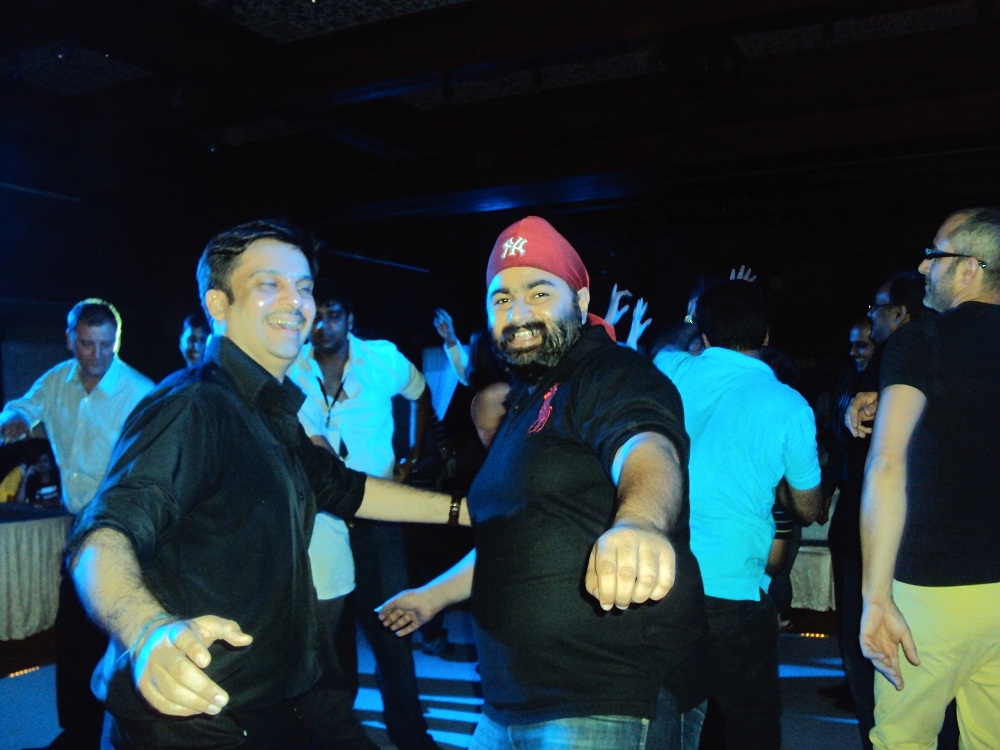
When Shakespeare said, “Frailty, thy name is woman” he probably did not realize the strength that women generate when in a seat of power, cannot be matched by men. The level of mental endurance women have has made many a strong men in an otherwise male dominated society, lean on their feminine and delicate shoulders in hours of distress. Women have risen from being mere homemakers to world leaders. Margaret Thatcher and Indira Gandhi lead their countries and made the world realize that women can lead from the front with an iron hand. Over the ages women around the world have been given lesser opportunities to literacy and technical education as compared to men. It is a fact that countries that have invested in educating their women and have promoted their empowerment have seen their economies and rate of development grow faster. Across the world more and more women are now acquiring expertise and capabilities similar to their men folk. They strive hard to excel in their selected areas of work. We are seeing that change happening in India as well. A society that insisted on restricting their women to household chores is gradually transforming. With government spending heavily in bringing public awareness on the need to also educate the girl child and empower women, the results are evident. Walk into any big company’s office and you see a lot of young and bright women carrying on their work with confidence and crisp efficiency. Women are now more educated and capable of involving themselves in more and more arenas that were earlier the mainstay of men only. Whether it is police or army, flying aircrafts or travelling into space, heading businesses or governments, they are not restricting themselves. Our Indian label industry did not have active business women managers till not very long ago. All that is changing now, Indian women are acquiring technical and management skills to lead high levels of investments in the label industry that is in a growth path. It is thus that I felt it is time to recognize the contribution of these women.
 
Honey Vazirani
In 1989 my friend Sushil Bhatia, who used to work for Avery Dennison before he started his own business, introduced me to a young and vibrant Honey Vazirani, working at Paper Products Limited, Thane. That was almost the beginning of this wonderful girls’ journey into the world of labels. From being a management trainee in1989, she rose to be the head of the labeling division of this 700 Crore company which is heavily into flexible packaging. It is truly a decorative and colorful travel. Ever since then Honey has been at the forefront of PPL’s foray into production of labels which began in 1991. Her job involved client servicing, marketing, product development and leading the labels team at PPL. She has handled key customers who are a virtual who is who of the fmcg sector. Servicing demanding customers like HUL and Dabur and bringing to them the most premium and modern labeling technologies has been a passion for her. In words of Torsten Jung Lenz, who in those days worked for Jacstadt Germany, “Honey is married to labels!” Her ambition is to excel in everything she does. Having spent 21 years in the industry she took a sabbatical in 2009. She spent a whole year consolidating herself by travelling, reading, spending time with friends and relatives and enjoying good food. Yes, she is a self confessed foodie! In 2010 she returned to PPL, which has four plants and 1500 employees, to head the company’s HR department. While she is contented and enjoying her new role in HR, yet you can see the twinkle in her eyes when you ask about her future in the labels industry. Her advice to others in the label printing and packaging industry is that it is a pity that for most in the industry, “Good enough is enough” She motivates people in her company by her mantra, “ Good enough is not enough”.
In the late eighties, I had the chance to meet a very talented screen printer Kartar Singh Dunglay of Goodwork Co. which had started to print in 1955. He is one of the elders in our industry from an era and class of people who were in love with their work as the youngsters are today with their girlfriends. They would think work and dream work. It was during that time I met his dynamic wife Kusum Dunglay. Kusum is an MBA from London University and lead Goodwork's entry into label printing. She first bought a Mark Andy press and followed it up with a fully loaded Gallus for specialized and decorative labels. She now heads sister concern Reydunn Label Printing Pvt. Ltd. With a work force of 80, she is handling clients like ITC, L’Oreal and other leading FMCG groups in India. Given the experience and innovative heritage that her husband mentored, she was one of the earliest ones to invest in a combination press. Kusum Dunglay is quite excited at the prospects of tapping the growth emanating out of the Indian indulgences in retail marketing. In 2002 at one of the roadshows at New Delhi for promoting the India Label Show, in my presentation, I talked about the two women who were heading successful label printing companies at that time. Both are like sisters to me. One is of course is Kusum Dunglay, while the other is Amila Singhvi. Amila Singhvi heads the large IPP at Noida. Since her print packaging business is growing multifold at a fast pace, she has decided to gradually exit from the label business and concentrate in the packaging business.
 
Soft spoken gentleman of the label industry Bharat Mehta is both, the history and present of the Indian label industry. He is one of the first label printers in India. I could sit with him and chat for hours about our time spent in this industry which has evolved like a family for him and me. Bharat Mehta’s Super Labels is one of the leading and respected label printing companies in Mumbai. His two sons have joined business in recent times after completing their management studies. Silently but emphatically, providing vital inputs and support is Bharat Mehta’s wife Meena Mehta, a B.Sc in Chemistry. For over 20 years she has been driving the organization through motivation, enthusiasm and participating in all decision making.
Renuka Raj, an MBA from IIFT Delhi, spent the first three years of her career in a paints company. Later she moved on to promote and run a pharmaceuticals business. A friend proposed for them to join in starting a label printing business, Renuka found it interesting as it was a backward integration for her pharmaceuticals business. That was the beginning for her labels venture Ra Labels at Hyderabad. She has been heading that business for the last 10 years. According to Renuka it was the first flexographic label printing company in Andhra Pradesh. Renuka has ambition to increase investment and grow in this industry to become leaders in Andhra Pradesh.
Divya Keshav
 Delhi based Shaikher Kaishiv of Krishna Halftone Pvt. Ltd. Is also one of the earliest entrants into the label industry in the decade of 1980’s. In recent times he has handed over the reigns of this company to his daughter Divya Keshav, the present Managing Director. Divya works hard in this male dominated industry to carry forward the good work done by her father. She is post graduate in marketing and an alumnus of the India School of business, Hyderabad. She is recipient of “Rising Talent 2010” award given to 25 women entrepreneurs below the age of 40 across the globe by the “Women Forum for Economy & Society” France. Her company operates from two locations in New Delhi and Noida with multiple label presses.  There are other women entrepreneurs who I am aware of but have not responded to my emails requesting information to cover them in this article. Shweta Sheth, an alumnus of Amherst, Massachusetts USA, is actively involved in the working of Primark labels as a director. Primark is a part of the General Metallisers Group.  Anjali Deshpande, wife of LMAI General Secretary, Ramesh Deshpande has been the driving force behind the success of Renu Prints, Aurangabad. She has been honored for her work by the ministry of MSME (Micro Small and Medium Enterprises). Then there is the enterprising Ramesh at S K Labels in Chennai, who has also put his daughter in command.


Priyata Raghavan
After completing her post graduation course from IIM Lucknow, Priyata Raghavan joined the FMCG division of ITC Limited, before moving over to Sai Security Printers, a company owned by her father, Vijay Raghavan. Sai had invested in an imported press for producing scratch lotteries but a sudden ban on lotteries made them to sit up and rethink. The growing label segment presented the opportunity and they decided to enter this field. At that point of time Priyata took over the complete operations of the company in North India. The company has another unit in Bangalore. Priyata has lead the company’s label printing operations to profitability and an emphatic presence in the high quality label segment. Sai security printers surprised all at the last Labelexpo in New Delhi by announcing purchase of two Gallus Label Presses, one for their unit at Faridabad and the second one for Bangalore. Priyata sees tremendous scope in the growing label industry. She says, “There is a lot of scope for well managed vendors of high-end labels and packagings”. She is leading Sai Security Printers to be a leader, by offering well defined levels of services and technical competence.


Sandhya Shetty and Santosh Shetty
At the end of an industry meeting called by Roger Pellow, Managing Director of the UK based Labelexpo group in early 2008, to promote the next India Label Show, as I came down to the lobby of Hotel Grand Hyatt in Mumbai, I saw Manish Kapoor of Nilpeter in a serious discussion with a young man whom I did not recognize. Manish introduced him as Santosh Shetty Managing Director of Surface Graphics, a company founded by his father H G Shetty and involved in manufacture of cartons. Santosh was considering purchase of a Nilpeter press to expand into the label production. The venture was to be headed by his sister Sandhya Shetty. Sandhya is a graduate in Chemistry and Masters in management Studies (Marketing). On completing studies she had spent 8 years in the field of business research and analysis. She worked on projects involving Government contracts, Defence sector in the US and in the hospitality sector in India. When her brother Santosh brought the idea of producing labels to Sandhya, her feminine instincts went to work. The yearning to create products that would be decorative, add to aesthetics, have scope of innovation in design came to the fore. She called it a day for her research and analysis job and decided to be a “labels girl” from day one. Labelexpo 2008 was held in very traumatic times. Mumbai had suffered a dastardly terror attack and the global economies were in crisis mode and nose-diving. Sandhya’s new Nilpeter was being showcased at the show in New Delhi’s Exhibition Center Pragati Maidan. A confident brother sister team of Santosh and Sandhya were at the Nilpeter stand all the time meeting fellow printers, prospective suppliers, and other colleagues in the label industry. The industry found an instant friend in the ever smiling Sandhya. Despite the difficult economic scenario, she was determined to do justice to the MD’s chair that she was occupying in her company, Synergy Packaging Pvt. Ltd. and lead the company to its vision of success. In just two years of starting, Sandhya and her team produced their first award winning label. She aspires to take her company to global standards and global presence.


It was extremely difficult for me to write on so many women in one go. When I decided to do this article, I assumed that it would be a relatively simple job for me, given the knowledge and experience in the industry. Once I started to gather more and more information on these women and their capabilities, I was confused. I was wondering how short sighted Shakespeare may have been while calling women as frail. Well, that was his personal opinion and may have been true at that point of time. These are intelligent women with amazing capabilities and their craving to excel is unique. They are all educated and technically capable to talk the language their customers and their team will understand. Silently and efficiently they have worked their way to a position of strength. I wonder if I have done justice to their work. I could have written a separate article on each one of them and their achievements. These women are homemakers, mothers, sisters, and friends besides being the successful business persons they are. The more I tried to discover the more there was to learn. Maybe another time I will try to write on them separately but at this time it was necessary for me to write on them collectively, because it is my tribute to these women in the label industry, “The women who endeavored!”
Written by Harveer Sahni, Managing Director, Weldon Celloplast Limited, New Delhi-110008 6th March, 2011.

The Hague, The Netherlands – March 15, 2011 – FINAT, the European association for the self-adhesive label industry reports that demand for self-adhesive label materials in Europe has continued its strong recovery in 2010. From the all time lows recorded at the peak of the global financial crisis in mid 2009, demand returned to pre-crisis levels in the course of 2010. Last year, an overall volume of around 5.7 bln. square meters was recorded, an increase of 11.4% compared to 2009 and 3.5% above the level recorded in 2007, the year before the collapse of global financial markets.
Underlying this growth was the strong, 9.5% recovery of the demand for rolls of paper based label materials, representing some 70% of total demand for self-adhesive label materials. Exceeding this growth, however, was the increase in demand for filmic roll label materials (PE, PP, others), which amounted to 15.3% over the previous year. Filmic materials thus resumed their rise in the share of European self-adhesive materials demand and this from just over 15% at the beginning of the decade to over 22.5% in 2010.
Geographically, growth in demand was driven by Eastern and Southern Europe (including Turkey). Both regions recorded healthy double digit growth figures of 20.6% and 13% respectively. Within these regions, Turkey, Russia, Bulgaria and Romania stood out with annualized growth (well) in excess of 20%, a sign of strong economic development in this emerging region. In the more matured regions, growth of self-adhesive label demand was more modest at around 4.5 – 8.5%, although double digit growth figures recorded for Germany, The Netherlands, Italy and Spain ranked above the top end of this range.
This healthy recovery does not come without significant future risks and concerns however. Already in the late summer of 2010, FINAT members expressed concerns about disturbances in the supply chain that were building up pressure on raw materials’ market conditions. According to FINATs quarterly member survey, this prospect tempered the optimism of executives at the beginning of 2011, although the balance of respondents continued to be positive about business prospects for the industry.
Over the past three to four months, the pressure on raw materials has aggravated. Between January 2010 and January 2011, the benchmark pulp prices increased between 20-25%, while resins for LDPE, PP and PET, crucial to filmic label materials, increased between 25-35%. Polymers necessary for the production of adhesives, even increased by 65-75%. Also ink suppliers are being faced with the impact of tight raw materials’ markets and have announced price increases ranging up to 30%. The rise of crude oil, driven by the uncertainties in the Arab world, is further intensifying the pressure, not in the least because of the increase of related transportation costs.


According to FINAT Managing Director Jules Lejeune, “capacity limitations cause a gap in supply versus double digit growth in demand. A gap that is only closing slowly. Our members are confronted with quarterly price adjustments or even „spot‟ prices on materials not yet delivered. Under such market conditions and because of the time lapse, contractual raw materials clauses only offer limited shelter. Ultimately this could affect the financial stability of label businesses.”
About FINAT
FINAT, founded in Paris in 1958 and headquartered in The Hague (The Netherlands), is the world-wide association for manufacturers of self-adhesive labels and related products and services. With 600 members in over 50 countries around the world, FINAT has much to offer to label converters and all suppliers to the labeling industry in terms of information exchange and the opportunity to network internationally. www.finat.com
For more information, please contact
Duomedia Public Relations
Maria Laura Lombardi, Tel. + 39 339 32 66 476 – marialaura.l@duomedia.com
Lut Verschueren, Tel. + 32 474 04 49 40 – lut.v@duomedia.com
FINAT
Jules Lejeune, Tel. + 31 (70) 312 39 10 – jlejeune@lejeune.nlThe Hague, The Netherlands – March 15, 2011 – FINAT, the European association for the self-adhesive label industry reports that demand for self-adhesive label materials in Europe has continued its strong recovery in 2010. From the all time lows recorded at the peak of the global financial crisis in mid 2009, demand returned to pre-crisis levels in the course of 2010. Last year, an overall volume of around 5.7 bln. square meters was recorded, an increase of 11.4% compared to 2009 and 3.5% above the level recorded in 2007, the year before the collapse of global financial markets.

Underlying this growth was the strong, 9.5% recovery of the demand for rolls of paper based label materials, representing some 70% of total demand for self-adhesive label materials. Exceeding this growth, however, was the increase in demand for filmic roll label materials (PE, PP, others), which amounted to 15.3% over the previous year. Filmic materials thus resumed their rise in the share of European self-adhesive materials demand and this from just over 15% at the beginning of the decade to over 22.5% in 2010.
Geographically, growth in demand was driven by Eastern and Southern Europe (including Turkey). Both regions recorded healthy double digit growth figures of 20.6% and 13% respectively. Within these regions, Turkey, Russia, Bulgaria and Romania stood out with annualized growth (well) in excess of 20%, a sign of strong economic development in this emerging region. In the more matured regions, growth of self-adhesive label demand was more modest at around 4.5 – 8.5%, although double digit growth figures recorded for Germany, The Netherlands, Italy and Spain ranked above the top end of this range.
This healthy recovery does not come without significant future risks and concerns however. Already in the late summer of 2010, FINAT members expressed concerns about disturbances in the supply chain that were building up pressure on raw materials’ market conditions. According to FINATs quarterly member survey, this prospect tempered the optimism of executives at the beginning of 2011, although the balance of respondents continued to be positive about business prospects for the industry.
Over the past three to four months, the pressure on raw materials has aggravated. Between January 2010 and January 2011, the benchmark pulp prices increased between 20-25%, while resins for LDPE, PP and PET, crucial to filmic label materials, increased between 25-35%. Polymers necessary for the production of adhesives, even increased by 65-75%. Also ink suppliers are being faced with the impact of tight raw materials’ markets and have announced price increases ranging up to 30%. The rise of crude oil, driven by the uncertainties in the Arab world, is further intensifying the pressure, not in the least because of the increase of related transportation costs.
According to FINAT Managing Director Jules Lejeune, “capacity limitations cause a gap in supply versus double digit growth in demand. A gap that is only closing slowly. Our members are confronted with quarterly price adjustments or even „spot‟ prices on materials not yet delivered. Under such market conditions and because of the time lapse, contractual raw materials clauses only offer limited shelter. Ultimately this could affect the financial stability of label businesses.”
About FINAT
FINAT, founded in Paris in 1958 and headquartered in The Hague (The Netherlands), is the world-wide association for manufacturers of self-adhesive labels and related products and services. With 600 members in over 50 countries around the world, FINAT has much to offer to label converters and all suppliers to the labeling industry in terms of information exchange and the opportunity to network internationally. www.finat.com
For more information, please contact
Duomedia Public Relations
Maria Laura Lombardi, Tel. + 39 339 32 66 476 – marialaura.l@duomedia.com
Lut Verschueren, Tel. + 32 474 04 49 40 – lut.v@duomedia.com
FINAT
Jules Lejeune, Tel. + 31 (70) 312 39 10 – jlejeune@lejeune.nl


As we came to the end of 2010, the last month of the first decade of a new millennium, December 2010, saw hectic activity in the printing and packaging industry. The winter chill had started to descend in the capital city of Delhi. The wedding and party seasons that starts around Diwali festival time, was reaching a crescendo. At this time another set of events also began to unfold for our label industry, more so for the printing industry at large. A series of exhibitions and related events were to be held in New Delhi. The mood is generally is festive and upbeat at this time of the year. The way we look forward to meeting friends and relatives at weddings, we also are excited to meet industry colleagues and business friends at the trade related events. This is a time to meet, network and renew relations with fellow printers, material suppliers and equipment suppliers. It gives us the opportunity to update our knowledge of new developments in the industry. It is also time to plan expansion after witnessing the latest equipments and products on display.
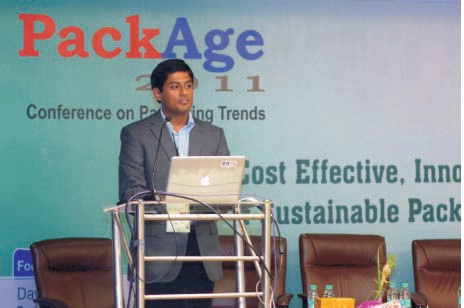
On the 3rd of December2010 PackPlus India 2010 opened in Pragati Maidan, New Delhi. It was a fairly big show incorporating many different segments of the packaging industry. The visitor profile was extremely diverse and left many exhibitors confused. Even though the organizers had earmarked areas to different segments yet the intermingling of visitors does take place and exhibitors end up spending time on visitors from unrelated industries. While on one hand printers were exhibiting on the other hand there were other printers visiting the show. Similarly packaging product manufacturers were at the exhibition as visitors, looking for equipments and material suppliers while as exhibitors they were hunting for end user customers. Even though the show was successful with over 11000 visitors, yet the need for having more focused shows is becoming evident as the packaging industry continues to grow. Interestingly, end user packaging buyers who normally come looking for suppliers of packaging materials and packaging machinery were seen rubbing shoulders with some of their own vendors as visitors to the show. I guess the organizers saw the need to have a focused visitor profile and for this reason they have split the next edition of the PackPlus into three different shows at three different locations across India. On the sidelines of PackPlus, “Package” conference was held at the same venue. Some of the presentations made were of truly international standard. The All India Food Processors Association also organized a one day conference on “Inclusive growth of food processing industry” during this period at the same venue in association with Printpackaging.com.
 
 
After a gap of just one day, Labelexpo India 2010 was inaugurated yet again at Pragati Maidan to run from December 8-11, 2010. There were some common exhibitors who just had to move from one hall to another. For them it turned out to be one their longest showing as exhibitors at one venue from 3rd December to 11th. Labelexpo India is organized by UK based Tarsus group as a part of the Labelexpo series held around the world. A highly focused set of shows aimed at the label industry worldwide. The exhibition was extremely successful and left the visitors and exhibitors happy and satisfied. The show was of truly international standard. Renowned suppliers from around the globe were exhibiting and displaying the latest label printing and converting technologies. The international press manufacturers  who were present with working presses included Mark Andy, Nilpeter, Omet, Rotatek, Gallus, Xeikon, HP, Orthotec, BangSung, etc. Indian press manufacturers put up a smart show as well. Leading from the front was Multitec with an all UV multicolor press running to perfection, others who also showcased their products include Jandu, RK and Apex Rototech. Presence of renowned dignitaries, in the field of labels, added value to the show. Mike Fairley-The label Guru, Jan Fredrik Vink-Past President Finat, Taco Zevenbergen-Finat, the entire Tarsus team, other members of Finat Young Managers Club, etc. were seen mixing and conversing with Indian printers at the show. On the sidelines of the Labelexpo a joint FINAT/LMAI YMC meeting was held at The Meridien Hotel on 6th and 7th December 2010. It was a networking event cum conference with inspiring presentations from noted speakers Professor A K Murthy and Professor Parimal Merchant both of S P Jain Institute Mumbai. The programme was a complete success due to efforts made by the LMAI-YMC President Sandeep Zaveri, General Secretary Pawandeep Sahni, who is also Finat YMC Board member and Taco Zevenbergen-Finat.
 
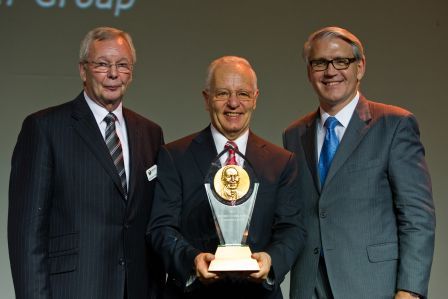
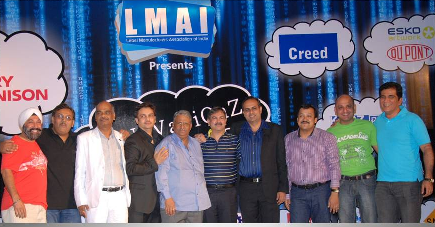
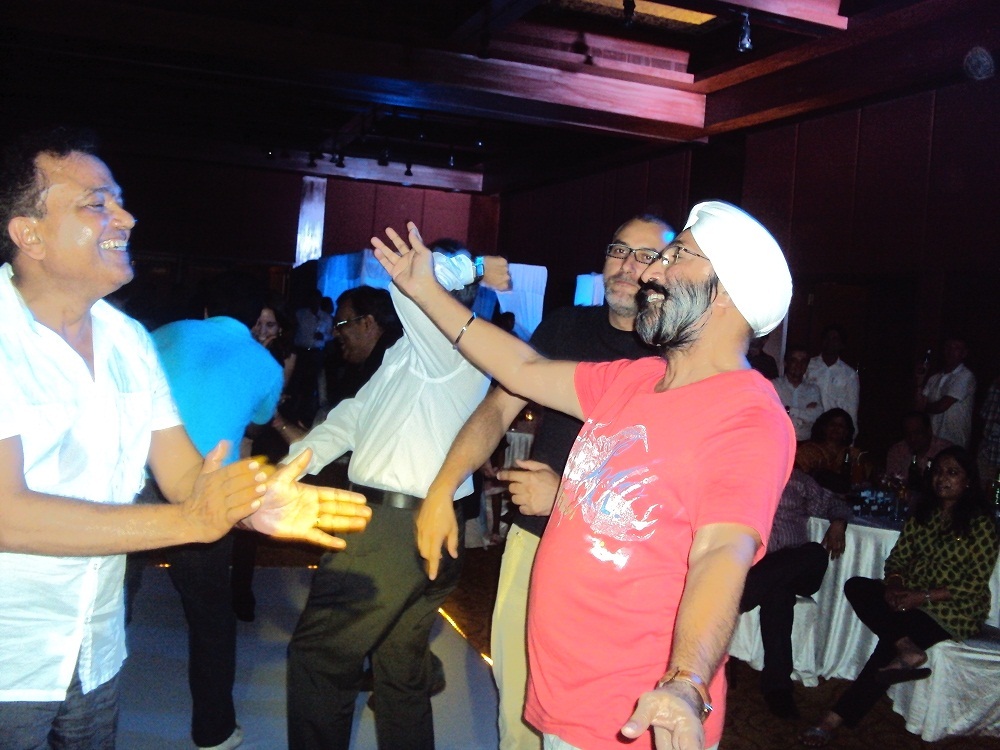
LMAI Label awards evening was held on 8th December 2010 at Jhankar Banquet on the outskirts of Delhi. The whole team of LMAI leadership lead by their President, Vivek Kapoor was present to welcome the guests at this gala networking event. Mike Fairley the Label Guru was given the lifetime achievement award. I, Harveer Sahni was honoured for my services as a judge at the World Label Awards. It was an overwhelming moment for me to be given the dais to speak, express my gratitude and thank my colleagues in LMAI for the honour and support. Leading Indian label printers who had won awards for their excellence in printing were proud recipients of the trophies. Though there was some external entertainment yet the printing fraternity rose to the occasion, leading label printers, suppliers and others joined the fun by dancing onstage to Bollywood tunes. The LMAI team under the leadership of Vivek Kapoor had done a great job. No wonder that later in January the entire executive committee of LMAI unanimously voted and decided that Vivek Kapoor and his team should manage the affairs of LMAI for yet another term. On 16th January 2011, India’s largest printing industry event “PrintPack India” opened yet again in New Delhi’s Pragati Maidan. Being a big successful and regular event catering primarily to the offset printing and converting industry, it attracted visitors not only from India but also from most of the neighboring countries as well.
The series of printing exhibitions and events that took place in New Delhi one after the other gave credibility to the title of my column written earlier, “Breathless at Showtime!”
 
 
Written by Harveer Sahni, Managing Director, Weldon Celloplast Limited, New Delhi-110008 30th January, 2011.
 
 
While I was still in school, I started to get training as a salesman in my father’s company. One of the first lessons my father gave was, “If you cannot talk, you cannot sell”. It has stuck to my mind ever since. Mike Fairley, the international label guru, also made a similar comment while recognizing and appreciating the master salesman in Roger Pellow, Managing Director of the Labelexpo Group. Mike said, “You have the gift of the gab!” Roger is the marketing face of Tarsus. He is a tireless traveler and trots around the globe, meeting Label printers suppliers and end users, in an effort to market his high profile Labelexpo series of shows. He can surely talk and live out of a suitcase. Mike further adds, “Roger is like a bouncing ball and cannot be kept down. Every time you throw it down it bounces back to you”. Roger appears at regular intervals at faraway destinations to renew his contacts with the label world. “The global Label industry is his world”.
The Labelexpo group headed by Roger Pellow was acquired by the UK based Tarsus group in 1998. Tarsus are the owners of Labelexpo exhibitions and summits. Additionally they produce a series of annual publications like Labels and Labeling along with the China and India editions to cater to the local markets, “Encyclopedia of labels and label technology” in several languages, “The Labels Yearbook”, “The RFID How to Book” and a host of other surveys and yearbooks. In 2005 Tarsus acquired the “India Label Show” founded by Anil Arora and later renamed it as “Labelexpo India” to be part of the global Labelexpo series of exhibitions. The Labelexpo exhibitions held in Europe, USA, China and India are the Mecca of successful label printers around the world. The Labelexpo exhibition was founded by Clive Smith in the year 1979, almost the year I entered the Self adhesive Label industry. In 1980 the first Labelexpo exhibition was held in London’s Royal Horticultural Hall, in a net area of 1000 square meters. Three shows later in 1985 the show moved to Brussels and in 1998 it was sold to Tarsus.
Roger Pellow joined Tarsus around 2001, the brief to Roger was to bring the show to global standard and scale of participation from exhibitors as well as visitors. There was lot of work to be done. His first task was to bring the global label community to a single platform. He identified the big three, Nilpeter, Mark Andy and Gallus and set himself the task of building a bridge of friendship with them. His first meeting was with Jakob Landsberg of Nilpeter in early 2003 at Copenhagen. Jakob was annoyed with Tarsus and Roger went committed to that meeting. He left that meeting happy and satisfied. Nilpeter was now a permanent and trusted partner to Labelexpo. In quick succession Mark Andy and Gallus shook hands with a highly indulgent Roger. Labelexpo 2003 was huge and successful. Roger was now aspiring to achieve more success at other venues. He started to clear the bottlenecks that he had inherited. He recognized the “Guru” in Mike Fairley and found in him a mentor in the Label industry whom he could consult at all times.  Every successful professional manager has to respect the history of his organisation and understand the core inherent strength. To achieve this he found support from the founder of Labelexpo, Clive Smith, whom he befriended early in his career with the Labelexpo group.
Success does not emanate out of stagnation, one needs to move forward and expand. After the success of labelexpo 2003, Roger Pellow put together a team that thought like him and supported his endeavors. He led the group to launch “Labelexpo China” without a single employee in that country at that time! He followed this up with a series of Label Summits and events around the globe, topping it up by acquiring “The India Label Show”. When asked about the nightmares, he refers to the difficult situation that prevailed at the show following the 9/11 attack in USA and the show in New Delhi after the terrorist attack in Mumbai in 2008. The shows finally did go through with moderate success but they were sad moments. Roger has divided his focused clients into four major groups i.e. Suppliers, Visitors, Media and End users. Recognising the importance of each of these groups in making the shows successful, he travels around the world and spends time adequately distributed between these focused groups separately. He has setup a good sales team but he singularly remains the marketing face of labeexpo group. His marketing mantra is, “Think global and work local” he further adds, “You have to understand what drives business” He now intends to focus also on the Middle East and African markets.
Roger Pellow was born in Cornwall, England into a family involved in shipping related business. As a young boy he was a keen sportsperson and due to this fact he still spends close to an hour in the gym in his office building each morning before starting work. Surprising as it looks he calls me almost each week at around 10.30-11.00AM when he is driving to work, I am sure readers will understand that it is 6 to 7 AM in the morning there in a bone chilling weather. After completing a B.A. in Geography he became a senior school teacher and soon realized that there was no money in it. Shifting job, he joined an fmcg company to sell Dunhill and Rothmans cigarettes and three years down the line he knew how businesses ran and was ready for yet another change. He joined a publishing company with a magazine for DIY products, building interiors and design. Seven years later he moved yet again to join United Business Media a division of CPM to get his first exposure to the exhibition industry. This company did shows for electronics. He liked the show business and moved eventually to his present job at Tarsus. Instantly he fell in love with the label business and found the job extremely satisfying. He found the people in the label business extremely warm and friendly. As time progressed he made close and dear friends everywhere in the world. He looks at the international label industry as a closely knit global family.
Roger travels 18-20 days each month and has active support from his wife Jayne, whom he met at a beach and initially they did not like each other. However still they ended up in love. She was a nurse who later became a stewardess in British airways. She now is a home maker taking care of their two daughters Kate and Sophie. Roger wishes that his daughter travel the world like him and be the “Children of the World”. If it was not for Jayne, Roger could not have done this, travelling 18-20 days each month. Having been a stewardess herself she understands the needs of a job that calls for extensive travelling. With her active support Roger Pellow would still be travelling around the world for many more years and getting the label industry together to create a global label family because, “The label industry is really his world!”
 
Written by Harveer Sahni, Managing Director, Weldon Celloplast Limited, New Delhi-110008 30th January, 2011.
 
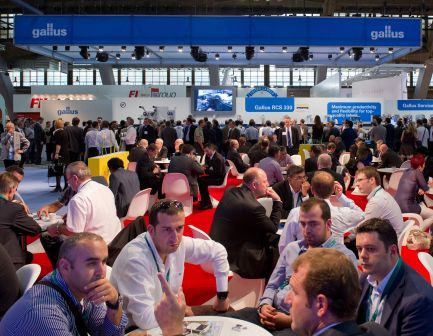
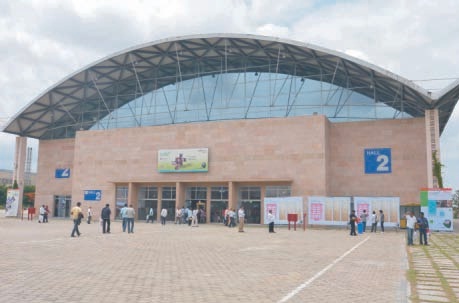
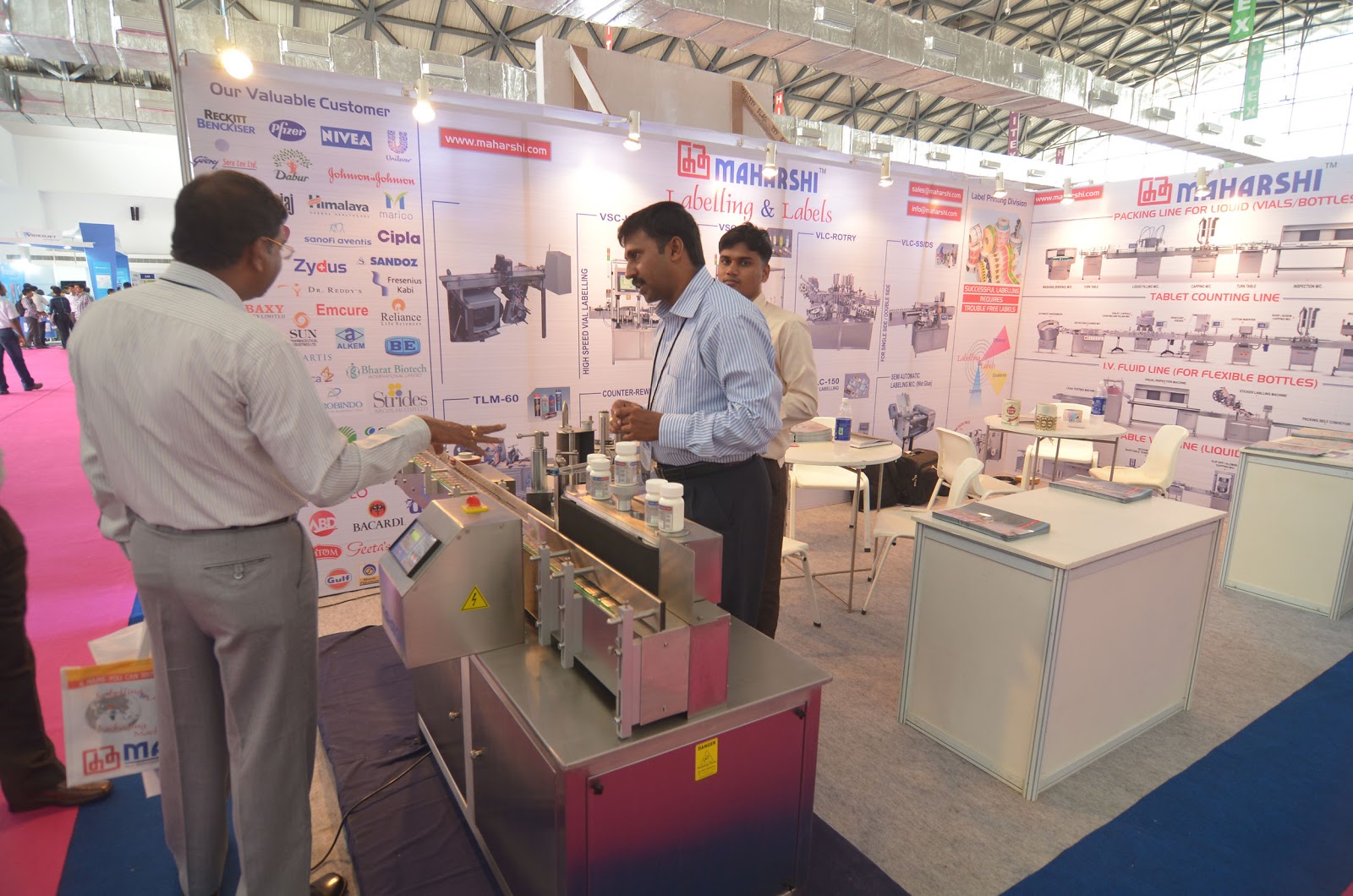
Labelexpo India 2010 was fun time for the Label Industry. Sometime it is not words but the pictures that say it all. I reproduce some pictures of the show and of the parties held alongwith on the side. Enjoy! 
 
The show opened with the lighting of the traditional lamp by Roger Pellow, Managing Director Labelexpo Group and Government Officials. Earlier the LMAI President Vivek Kapoor and Treasurer, Sandeep Zaveri also spoke and participated in the ribbon cutting ceremony.


BST team at their stand stand!
 
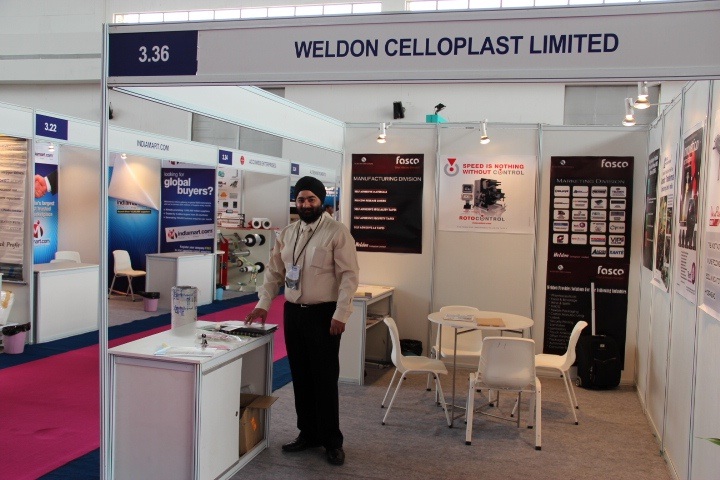
Weldon team at their Stand.


Creed Engineers Stand.


Omet stand.


Multitec Stand


The picture on left is Finat LMAI Young Managers Club meet in progress.


Birds of a feather flock together, Sandhya Shetty of Synpac and Bibiana of Rotatek with another participant in the middle, enjoy the networking opportunity during coffee break.


The not so young also found their way to the young manager’s meet and found a cozy corner. Jan Fredrik Vink, Past President Finat with Ms. Rodriguez of Rotatek. Cheers!


Pawandeep Sahni, Member Finat board for YMC and also General Secretary LMAI YMC with Roger Pellow, Managing Director Labelexpo group.


Creed Team at Label awards.
 
 
Harveer Sahni speaking at the awards night after being honoured for rendering services as judge for World Label.Association Awards at Brussels.
 

KayDee Sahni of Weldon Celloplast and Chandan Khanna of Ajanta Packaging chill at the LMAI Label Awards night.


Kaydee Sahni of Weldon and Sheila Harper (of Techtonics) dance to popular tune “Sheila Ki Jawani” with music blaring from Kaydee’s car parked in the Weldon Home’s drive way.


At the Weldon dinner.In the picture on right from left to right Douglas Emslie (Group Managing Director-Tarsus), Gary Hendel(Delta, USA), Harveer Sahni (Weldon), Paolo Grasso (Omet), Mike Fairley (Label Guru), Roger Pellow (Managing Director-Labelexpo group), Kavneet Sahni(Tarsus) and in front Andy Thomas (Group Editor Labels and  Labeling)


In the picture on left, Isidore Leiser of Stratus Packaging, France in a “Balle Balle” mood at the Weldon party.


The picture on right has Gary Hendel (Delta USA) and Raul Sylvestre(Lartec) doing a Panjabi Bhangra number at the Weldon party.


Label Guru and me…    


The above feature is compiled by Harveer Sahni Managing Director, Weldon Celloplast Ltd,
Multitec Factory  
Shanti Pal Ahuja was an energetic young man of 24 years when he joined as a director in Sud & Warren, an Engineering company promoted by his close relatives. It was in the early sixties that the promoters of Sud & Warren, Baldev Sud, K L Arora and Ahuja (Shanti Pal Ahuja’s elder brother) foresaw the potential of computer related products and there consumables. Using imported equipment they started to produce computer stationery and business forms. Shanti Pal Ahuja was deputed to go to Germany for getting technical training on the machines that they were using.  In those days of strict and controlled foreign exchange regime, getting import licenses and foreign exchange for imports was a difficult task. The hardship that they faced in importing machines or their spare parts led them to start their own venture, Sud & Warren. With Shanti Pal Ahuja as their technical Director the company started to build paper converting machines for their captive use as well for those in the similar trade. It was just a matter of time that the venture found success.
By 1983, a restless Shanti Pal Ahuja wanted to venture out on his own. He promoted Multitec Aids Pvt Ltd. to produce paper converting machines including equipment for making computer stationery. In fact he chose a product profile quite similar to that at Sud & Warren. He was fortunate that the bankers whom he approached knew his potential and experience from his days at Sud & Warren, so finance came relatively easy. After setting up the unit, the earliest success came from his efforts to associate with Indian Railways in indigenizing the machines for production of card tickets being used in those days. These tickets were being printed on old British machines. He fondly remembers that once his machines were in place, the Railways were printing, “2 tons of card tickets per day”. This order was followed up by providing machines for producing computer generated tickets for “Rajdhani Express” train.  He also reminisces the time he got a lot of praise from Times of India management for having suggested and supplied to them a bailing press for waste management. Due to this their facility became much cleaner and manageable. Despite producing some ancillary equipment, Multitec was primarily a manufacturer of computer stationery converting machines. The printing technique used on these machines was initially letterpress and then later web offset with high speed rotary converting. Till date Multitec has made over 600 installations, which are servicing their owners well.
Thirteen years after Shanti Pal Ahuja ventured out on his own his only son Amit Ahuja, alumni of Manipal Engineering College, was ready to join him in business. Amit a qualified mechanical engineer with a penchant for computer aided designing had ideas of diversifying in to other arenas and developing new machines. He found support from his father. The father son duo dwelled on the future of their present business and foresaw the end of growth or decline in the dot matrix computer stationery market. This was due to the dramatic growth in the A4 inkjet and laser printer markets. As technology advances to make these desktop printers faster and affordable coupled with rising demand for paperless offices, the demand for computer stationery in fanfold format with sprocket holes witnesses a steady decline. At this point of time it was a necessity to consider Amit’s proposal to diversify. Since Ahujas had adequate experience in web converting, they became serious when a customer friend Abhay Datta of Datta Press convinced them to join hands with him to produce a narrow web label press. The self adhesive label industry in India was registering high growth rates and the equipment was in synergy with their production program. It did not take much time for the Ahujas to decide on indulgence in this diversification. Amit’s father remembered his own history of having been trained in Germany on the machines that he later started to build in Sud & Warren. He decided it would be appropriate for Amit also to do a stint on machines that he was going to build. Soon the son was on way to North Carolina USA to train as an operator on Mark Andy flexo label presses. With engineering qualifications and experience at Multitec, it was easy for Amit to grasp the nuances of working with flexographic label printing presses.  The Industry is witness to the fact that people were surprised when at India Label Show 2002 at Nehru Centre, Mumbai, Abhay Datta was proudly displaying the Multiflex press built at Multitec Faridabad. The press was sold to a customer in Iran. Ahujas maintained a low profile at that show. They sold a few more presses but as luck would have it, discontent appeared in their relationship with Datta. Ahujas felt that they were not penetrating the market effectively and if a definite business plan was not put in place they would loose out. The association with Datta came to an end around 2008. Multitec redesigned their label press as a competitive product with all basic features. After renaming the press, “Ecoflex” they relaunched it.
Their efforts produced results! In last 20 months they have sold 18 presses. They are almost at the initial target they set themselves, “A label press every month”.  Multitec operates out of a 45000 square feet factory located on the outskirts of Faridabad, a suburban town in NCR Delhi and built on a plot of over 6 acres. It assures them availability of adequate space for future expansion. While most operations are handled at Faridabad, they have a marketing office a Mumbai. With a workforce of 80 they export 20% of their production. The factory is equipped with designing capabilities, CNC machines, computerized testing facilities, etc. They also have a demo centre where an Ecoflex press is kept on display for prospective customers to conduct trials. The most satisfying moment of their careers till now remains the time when they exported their label press to a mature market like Germany. Although 50% of their turnover comes from making computer stationery converting machines, label presses remains a focus area for them. They feel the label industry in India is largely unorganized however with continuous growth the label printers seem to be putting their act together and adopting modern production and management techniques. Multitec’s customer list includes big names like The Express Group, Times of India, Hindustan times, Avery Dennison, Technova, Thomson Press, etc. The company is committed to provide value for money. Amit feels that that for growing and improving upon their offerings the volumes need to go up. Though Amit is quite focused at present on making flexo printing presses, however from their capabilities and experience of making printing web by letterpress and offset, makes building a high-end combination label press one day, a strong possibility. They plan to exhibit their new development an all UV model of Ecoflex at Labelexpo 2010. Also on display at this show will be a module of their “Easyflex” which they feel will be an eye opener for the Industry. Trials have also begun on an all servo press with auto register features. If all goes as planned, this model will be displayed at Labelexpo Brussels next year in 2011.
With his father steadily withdrawing from this business to spend more time in trading in real estate which has given him rich returns, Amit has his hands full with so much more to achieve. His only son Avii, is only 8 years old. His wife Ashima, who is a homemaker, would prefer to be in the real estate business helping the elder Ahuja. Occasionally she does travel with her father in law to check out properties and learn about the trade.  Amit works hard and hopes to excel in his field of building good label presses. He is confident that there are very good times ahead for Multitec. He is committed to adopt the latest technologies in web converting. He is sure after Labelexpo 2010 Brussels, Multitec will get “Global Attention”.
Written by Harveer Sahni, Managing Director, Weldon Celloplast Limited, New Delhi-110008 30th November, 2010 for magazine "Packaging South Asia "
Rising prices and intense competition have made leading label printers to sit up and dip into their think tanks. To cater to the exacting demands of their customers, they need to upgrade their equipment with huge capital investment. To service the cost of these investments, they need to retain margins at a reasonable level. End user customers continue to demand better quality and service at better prices. With escalating raw material prices, label printers are considering cost effective processes to lower production costs. Large production runs, online defect detection to avoid rejections, lesser downtimes, operator efficiency, etc. are some of the issues that are being attended to. On the other hand printers are investing in complimentary equipments that can take smaller production runs economically. Cheaper flatbed presses, Chinese presses and second hand presses are being used to cater to the demands of smaller volume orders from large customers. No label printer supplying to a large volume customer would risk sending the customer to another printer for a smaller order. Neither can they afford to take small runs in their main expensive label presses increasing their downtime, expenses and production costs. While these cheaper equipments were being used for shorter runs yet there was a need for alternatives. Digital printing seems to be the ideal situation. As printing speed picks up and inks get cheaper, this technology is likely to be adopted by many large printers. All these are efforts to retain customers. Customer retention is a challenge that is facing many big label printers. Price is of course a sensitive issue but there are other factors that have also been becoming reasons for customers to shift loyalties. One big concern has been logistics. Printers, who were initially small in size, concentrated themselves in specific geographical zones. With growing demand for consumer and retail products, manufacturers or label buyers started to locate themselves across the nation, it became imperative for them to look for vendors closer to their facilities. As label printers grew in size with enhanced capital expenditures, it became a compulsion for them to retain these customers, who had multiple manufacturing locations.  These customers were demanding just in time deliveries to control their inventory levels and to ensure strict delivery program. It was time for label printers to assure their customers, “Service at Doorstep”.
Gautam Kothari
Interlabels, headquartered in Mumbai and leading label printers in India, started the trend of manufacturing at more then one location. They started by setting up their second unit in India at Delhi and then followed it up with units at Baddi, Kolkata and Chennai. They also have a unit in Nairobi Kenya, taking the total no. of units to six. They are now in the mood to consolidate before considering further locations. Gautam Kothari of Interlabels says “The trend in recent days is such that a lot of the customers want their suppliers to be close to their manufacturing locations. This, because the lead time needed to execute an order has shortened considerably due to market pressure. India being a huge country, catering to all the regions from one location is difficult. Having multiple manufacturing locations has helped us to reduce the time to get the material reaching them apart from reducing the freight cost.” He goes on to further add, “The concept of multiple locations for us is extremely beneficial as our customers are based all over the country and speed of response is essential. As far as manufacturing goes, it helps in better servicing however at a cost since having multi-location manufacturing does add to much higher operational costs which no customer is willing to pay for”. 
Amar Chhajed   
Amar Chajjed of Webtech, Mumbai who has a voracious appetite for expansion and growth was one of the first one to start (his second) a manufacturing unit in Himachal Pradesh near Baddi. He finds the experience extremely beneficial and says, “If it would not appear so, we would not do it” He feels it is one of the ways to grow and hopes to add two more locations in India or elsewhere in Asia.  Chandan Khanna of Ajanta Packaging says, “Having multiple locations is a part of Ajanta’s growth plan. Moreover it is in line with our commitment to our customers that we will go with you and grow with you” They have three manufacturing locations for label printing at Baddi, Daman and Sharjah (UAE).  Their corporate office and offset printing operations are in Mumbai. They also have marketing offices in Kolkata and Chennai.  According to Chandan, “If you have the patience and power to invest, multi-location manufacturing is highly beneficial. Ajanta will definitely add another location by 2012”.
Chandan Khanna on right
This mantra for growth is not restricted to printers in western India. NOIDA (Near Delhi) based Prakash Labels have also expanded to many manufacturing locations. Dinesh Mahajan heading the Praksash Labels management team states, “To serve customers in a vast country like India one has to be located in all zones if you wish to have a national presence”. Prakash labels have three manufacturing units in Noida, one in Baddi and one in Mumbai. Besides this they have marketing offices in various cities including Ajman, UAE. They are present in eight different cities. Dinesh further adds, “It is a definite way to grow”. Though they are fairly big in size he said he would be everywhere if he was bigger. They have recently put up the Mumbai unit so it will be a while before they think of yet another location. Zircon another Noida based label printer who commenced operations just a couple of years ago, has been reporting continuous expansion by adding new equipments. According to Sanjeev, heading Zircon, they have two manufacturing locations already and plan to add two more by end of 2011. Sanjeev feels that having multiple manufacturing locations is beneficial for rapid growth even though it needs a lot of administrative and supply chain management. I was quite surprised when Coimbatore (South India) based Rajiv Nair of Stallion Systems said, “We have four manufacturing locations and 16 marketing offices!” Rajiv used to work for another label company some years ago. Once he was on his own his company achieved grew vertical growth. He says,” Due to delivery delays to pan India customer base and high freight costs, it became necessary for us to locate at different places”.  Stallion benefitted from the decision and feel that it is the way to grow. They will continue to add more locations with better equipment.
Other label printers who have invested in multiple locations manufacturing and marketing include Unique Photo Offset, Syndicate Printers, Paper Products, Sai Security and a few others. Customer service is now acquiring new dimensions as end user demand just in time service along with delivery. This helps the end users of labels to manage their inventory, production and achieve better profitability. The parameters of vendor selection are now just not limited to price and quality. The label users are auditing their prospective vendors more rigorously. While price and quality are important yet logistics, social responsibility and environmental concerns are also considerations that decide in vendor selection. Vendors need to be extremely responsive to their customers growing demands and concerns. Proximity of the label printer to the manufacturing facility of their customers and capability to provide world class service has become necessary. There is a paradigm shift in the way label printers look at their expansion plans. Locating themselves strategically is now imperative for label printers to be able to provide, “SERVICE AT DOORSTEP.”
 
Written by Harveer Sahni, Managing Director, Weldon Celloplast Limited, New Delhi-110008 30th November, 2010 for magazine "Packaging South Asia "
 
Self adhesive labels originated in India around 1965 when a screen printer in Mumbai used a PVC film as face paper and a polyethylene film as the release liner. The hard to wet polyethylene or PE film performed as a release liner because the pressure sensitive adhesives available at that time were not designed to anchor on to PE. The label or sticker so produced would open with a crackling sound as it would be a little difficult to peel it from the PE backing liner. For the same reason paper could not be used on face as it did not have the adequate strength and would tear off while separating from the PE liner. The force required to peel was too high and thus the usage of PVC film was justified. That was the beginning! Soon special base papers and silicon release coatings were available in India. Siliconised glassine or “Silicon Paper” as it came to be known became the preferred backing liner for all self adhesive label materials. This also made it possible for paper to be used as face material. Silicone coating on these base papers provided for an “Easy Release” making it possible to peel off these self adhesive labels effortlessly from their backing release papers. Adhesive chemistries developed such that adhesives could permanently bond even to PE and silicon chemistries also experienced continuous development, such that they can now be applied to PE film for achieving excellent release properties. Since the silicone and adhesive chemistries are beyond the purview of this article, we shall dwell primarily on the various papers used in this industry.
 
Labelstock essentially consists of three main components, Release paper, Pressure sensitive adhesive (PSA) and Face paper. We will dwell on the various types of papers used to form the release paper and the face paper. It will be appropriate to mention here that the self adhesive labelstock technology has technologically advanced to a level whereby a substantial portion of the output has seen a definite shift to filmic substrates both as face papers and as release liner. Paper however remains the major and important part of the labelstock production. We discuss the two components separately.
Release papers: These are papers that are highly calendered, non-absorbent and with a smooth surface so that silicone can be coated on it for imparting release properties. The papers need to be densified and have uniform caliper for good die-cutting. The various types of papers used in production of release papers are as follows;
1.       Glassine
2.       SCK or Super Calendered Paper
3.       CCK or Clay coated paper using bleached Kraft as base paper.
4.       Polycoated papers.
5.       Saturated papers
Filmic liners have also steadily found acceptability due to their uniform caliper, smoothness and specific character, still paper based liners constitute almost 90%of all the release liner used. While SCK was the preferred substrates in North America due to lower price yet the European market was always largely using Glassine due to performance and aesthetic reasons in auto dispensed labels. India for long years followed the European model. Labelstock producers and label printers opted for labels with glassine as release paper. To have a good die-cut label, that would dispense with ease and speed on an automatic labeler, it is necessary to have a good release liner. Any variations in caliper of the liner may result in nicks in the release paper that would result in web breaks at the end user level. While die-cutting is done by the label printer, the end user of labels is the one who is dispensing them. The two processes are complimentary to each other. The functionality of the self adhesive label is highly dependent on the liner. Any web breaks would lead to increase in downtime and create problems for the users.  Auto dispensed labels and barcode labels drove the demand for glassine liners. This is due to the transparency of the paper through which the label is sensed by the sensor and dispensed or printed by a barcode printer. Things started to change but very slowly such that in the last decade, SCK which has very similar construction and properties to glassine started to be used sparingly. Since the bulk of the demand was for glassine, Indian stock manufacturers stayed away from promoting other varieties of paper. However in small manner some stock manufacturers were experimenting with SCK, CCK and Polycoated papers. The effort was extremely limited until stock lots of laminates and base papers from North America started to land in India in large quantities. Some printers under extreme pressure for cost reduction from customers started to use these stock lots. It was only a matter of time that the larger printers also started to consider these materials for customers who were not very fussy or rigid about the liners. This exercise created a definite segment of labelstocks with different release liners. While the auto-dispensed labels and barcode label segment partially started to accept SCK which had similarities to glassine, it was the sheeted product market that went in for a paradigm shift to CCK as liner. This is so because the laminate produced with CCK as backing and sheeted for Offset printing would have excellent lay flat nature. This would enable it to be printed on offset presses with speed, as curl in sheets was a printer’s nightmare. The siliconising operation involves taking the paper through high heat for thermal curing. This process depletes the moisture content of the paper and makes it unstable. Due to the highly calendered construction of glassine the paper cannot regain moisture quickly and evenly despite being subjected to re-humidification process. The uneven absorption of moisture when the labelstock is sheeted and exposed to atmosphere tends to make the release liner to expand and make the sheets to curl. CCK or clay coated paper has one side coated for imparting a good silicon hold out and the other side is left as it is, so that it can breath and regain moisture during the gumming process when emulsion adhesive are used and the heating chamber has high moisture content that helps the paper to rehumidify to a level of stability. Other segments of label printers who were now richer in their experience from using imported stockpots of labelstocks started accepting the stocks from local manufacturers with these non glassine liners for cost reasons.
Polycoated papers also have found usage in a limited quantity for the past two decades. These consist of normal maplitho variety of paper over which a layer of polyethylene or polypropylene has been extruded. Due to frequent defects in polycoating and lack of consistency in the earlier years, the growth of these papers was restricted. However in recent times imports from China and other East Asian countries with polycoated release papers made many people in the industry to rethink and improve upon the technology. So much so, that these papers have also found continued and specific usage in the computer label segment. Another paper that has started to find foothold in some segments is the saturated paper. This is very similar to polycoated paper, the only difference being that the plastic (PE or PP) is replaced by a proprietary chemical coating which provides a good silicon hold out.
Going by personal knowledge of the market over the years and assessment, I have tried to estimate the tonnage of paper used for release liners in all the labelstock consumed in India. The basis of my estimate are made on figures of total consumption of labelstock that I mention in the last Para of this article. I estimate that 45000 to 50000 tons of base papers form a part of all the labelstock sold in India solely for the purpose of self adhesive labels. The demand for other applications like tapes, Hygiene, medical, food, etc. is all separate and extra. The way this industry has evolved and due to cost pressures most of the base papers for labels are silicon coated captively by the labelstock manufacturers.
Face Papers: Face paper in labelstock is what actually and finally becomes the label. It carries the branding, product information and decoration along with the adhesive. The release paper only protects the adhesive so long as the label is not used. As soon as the label finds its application, the release paper comes to the end of its limited lifespan and ends up in a waste bin or a landfill or incinerated to dispose off. Efforts are being made to recycle them. Demand for face papers are according to the application they are needed for.  The list is exhaustive and keeps on extending as per the imagination of the designers. I list below some of the commonly used papers;
1.       C1S or Semi-gloss paper and commonly known as Chromo Art Paper.
2.       Uncoated Matt or Maplitho Paper
3.       Cast coated or Mirror Coated Paper
4.       Thermal Transfer Paper
5.       Direct Thermal Paper
6.       Fluorescent Paper
7.       Colored Papers
8.       Metalized Paper
9.       Foil Laminated paper
10.   Textured paper
11.   Security Papers
12.   Papers for Digital Printing
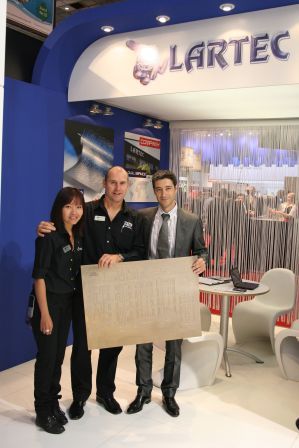
The semi Gloss or chromo art paper and Maplitho paper together account for the biggest chunk of labelstocks sold in India. According to my assessment between the two, they account for nearly 70% of the total stock used, over 15% is filmic and 15% is others. Filmic should have been more but the shrink sleeve has taken away substantial market share. This would amount to about 55000 tons of paper used annually, both chromo and maplitho put together for self adhesive labels. The chromo art paper labels are mostly used for pharma labels, cosmetic/product labels, lube oil labels, and also barcode label. Maplitho finds extensive application in  price marking labels for handheld labelers, computer labels, logistic and other EDP labels.  Cast coated paper, popularly known as mirror coated paper is used for high-end retail labels with lot of decoration on them. These have lost much of market since printers have started to use semi gloss paper with UV Varnish to get high Gloss. Moreover labels for smaller diameter pharma bottles faced problem with cast coated paper as due to their stiff nature they would get an edge lift leading to rejection of labels. Thermal transfer paper is a special matt finish smooth paper used for producing barcode labels in barcode printers with thermal transfer ribbons. The heated print head presses the ribbon against the paper to neatly transfer the image on to the paper resulting in a barcode. Barcodes help in retail selling, inventory control, logistics, accounting and a host of other applications. The volumes of this paper which is mostly imported, grew at a fast pace due to widespread usage of barcodes. However due to rising cost and availability problems much of this business has shifted to chromo art paper which has found a high level of acceptability from label printers and users. Everyone recognizes direct thermal paper popularly known as fax paper. It changes color when a heated print head touches it. With the advent of internet connectivity, emails becoming the mode of communication and faxes being phased out, this paper was heading towards a slow death. It suddenly got a new lease of life with new applications arising in labels with a shorter lifespan. It can print barcode without the need of a thermal transfer ribbon. Barcode labels for grocery in malls, petrol pump sale bills, toll tickets, retail vends, courier co’s, etc. started to be made on direct thermal paper. The product consumption is now growing at a fast pace prompting many companies to initiate manufacturing this product locally. Colored papers, fluorescent papers, metalized paper and foil laminated paper are used for their eye catching appearance and for attracting the consumer attention. With growth of packaged foods, gourmet foods and wines, the need for textured and designer paper for label applications has become imperative. At this time these papers are not produced in India. They are supplied by specialized paper producing companies like Fedrigoni of Spain. These papers are not produced in India and smaller volumes along with the diverse nature of designs, makes importing these, a costly proposition. Some innovative printers have started to indulge in getting the embossed effect on papers by using special flexible dies supplied by companies like Lartec also of Spain. These dies actually do not emboss but deboss and yet produce a textured effect on the paper. I am sure this will create market for textured papers in India. With increased incidents of pilferage, counterfeiting and duplication, there is a growing need for tamper evident and security labels. Some mills even in India have started to offer papers with UV fibres that glow in dark when exposed to UV light for verification. Others offer papers with water mark. There is also need for paper that would be weak and fragment into pieces on tried to be removed but this property is against the target specification of the mills who try to achieve high strength in the papers they produce.
As the digital printing industry continues to evolve and pose threat to the conventional printing, the paper mills in India cannot ignore this segment which is growing at a very fast pace. As quality and speeds pickup in digital printing, I am sure that it will be difficult to match the versatility of this technology even for label printing. Tambola tickets, lottery tickets, short run product labels, security and sequentially numbered labels are some of the applications that have already shifted over to digital printing. At this point of time special papers with top coating are required and some label printers do a primer coating on labelstocks themselves to achieve perfecting standards in digital printing. Label stock manufacturers also offer stocks top coated by them. It may just be a matter of time that paper mills offer pre-coated papers. The possibility of the technology upgrading further cannot be ruled out when all digital printers will print normal papers that are available without any additional primer coat.
India with its 1.12 billion strong populations is fast becoming a global economic powerhouse. It is estimated that this year the country will have the highest number of English speaking people in the world. Almost 30 percent of the country’s population is between the ages of 10-24 years, while the average age is 26 years. 70% of these young people are literate. A Young and literate workforce are growing up to work more, earn more and spend more. With higher disposable income they are becoming a part of a bulging middle class, larger then the entire population of United States. For this reason the world’s largest retailers are making a beeline to India to be a part of this growth.  If the number of mobile connections is an indicator, it is interesting to note that in July 2010 alone 17 million subscribers were added taking the total number of mobile users in the country to over 652 million. The demand for consumer products, packaged foods, pharmaceuticals and all packaged products is slated to see a quantum jump. With this will also increase the demand of labels. The self adhesive label industry is presently estimated to be growing by excess of 15% per annum. According to published data, 16 billion square meters of self adhesive labelstock is converted into labels in the world every year. By my own estimate total annual consumption of self adhesive labelstock in India is about 750 million square meters. This translates into a per capita consumption of almost 0.75 square meters. Compare this almost 3 square meters in China, between 13-15 square meters in Europe and a little more in the US.  Based on the above estimation of total consumption of labelstock, I calculated the quantity of paper used for release paper and that of face paper for label stock consumed in India. I conclude that over 1,00,000 tons of paper is used for the entire quantity of self adhesive labels used in India!
Written by Harveer Sahni, Managing Director, Weldon Celloplast Limited, New Delhi-110008 1st November, 2010. The article was published in October-November 2010 issue of the magazine "Paper Mart"