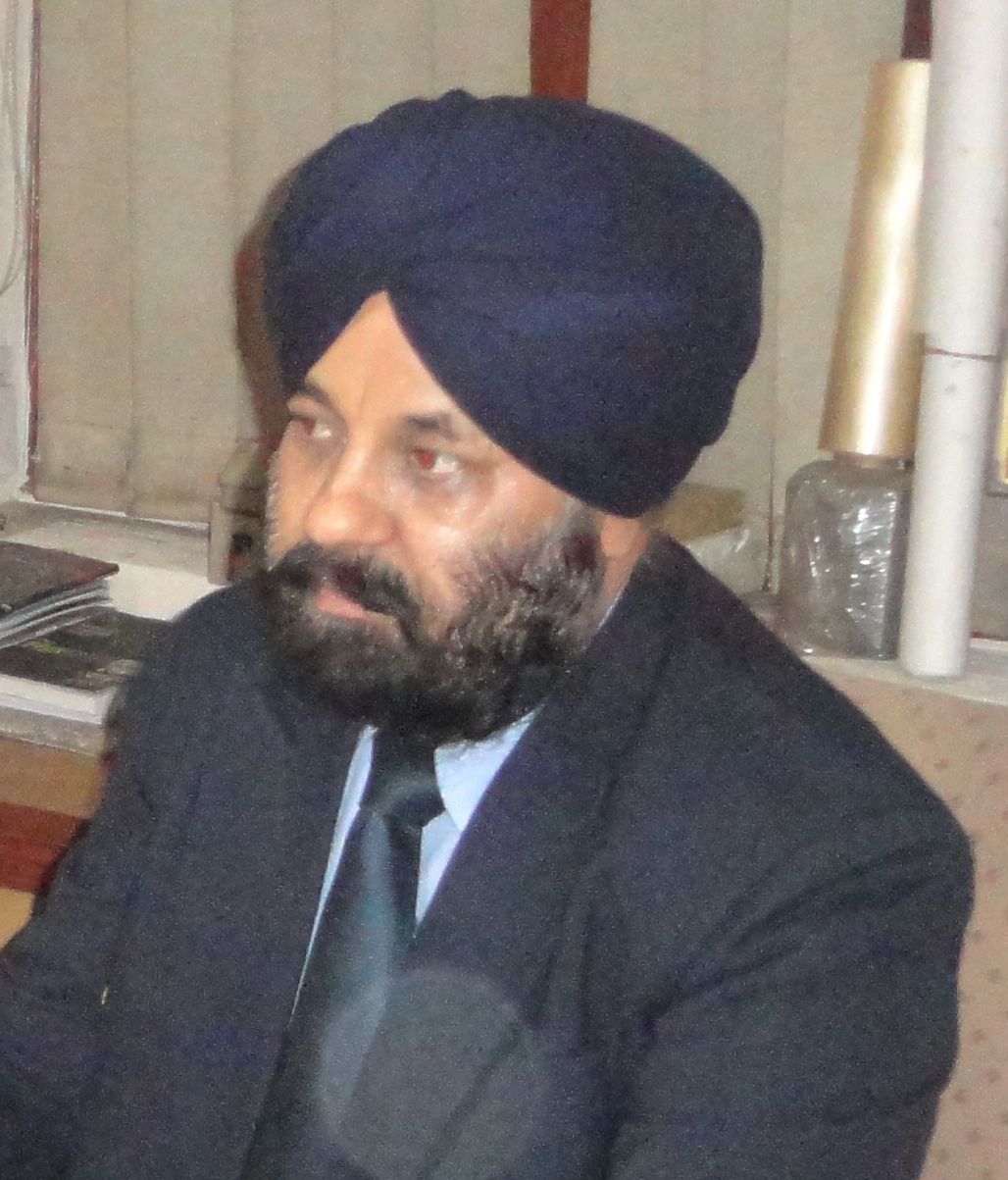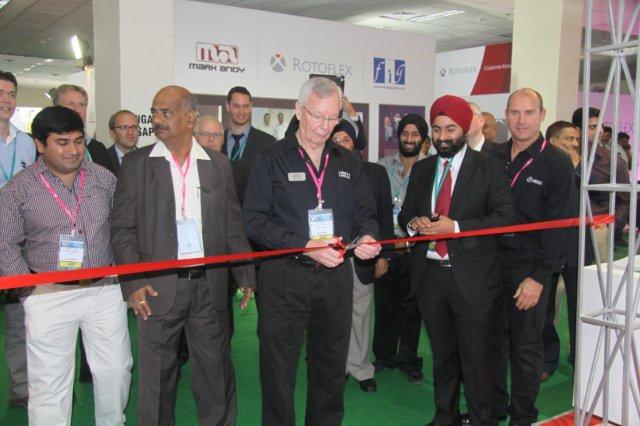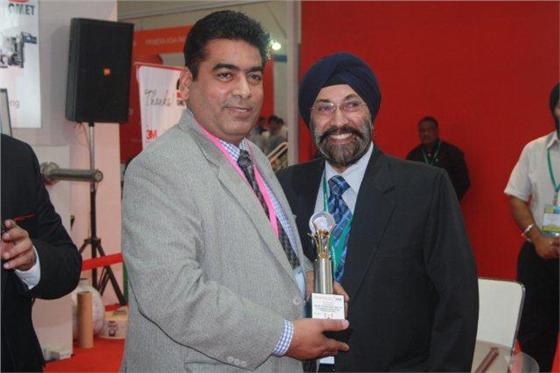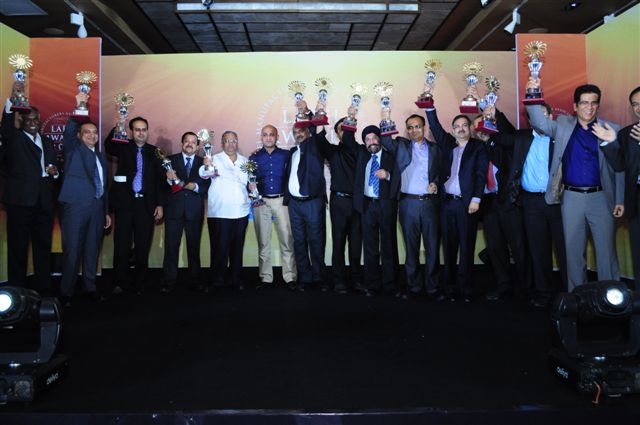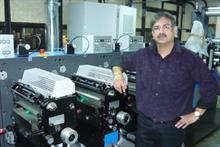
Amar and Jitesh Chajjed receiving the Technology award at Weldon
stand at Labelexpo India, from Ivan Bonev, Nikka Reserch for being
the first in India to invest in online inspection systems.
Mumbai based Webtech labels lead by Amar Chhajed and cousin Jitesh Chhajed is yet another leading label company that has been acquired by an internationally renowned company Huhtamaki Oyj's subsidiary in India PPL Huhtamaki. This is in line with the trend, that international label and packaging producing companies continue to consider India as their most important destination for market expansion. In my last post two weeks back titled, "Joint Ventures, Mergers, Acquisitions & International Partners, still Positive in labels" I mentioned, "Meanwhile constituents of the label industry are talking in hushed tones about another deal that has taken place but since the stake holders do not confirm publically, it remains gossip that goes on." This was it! I could not disclose the names as ethically it was wrong to disclose while the formalities were in progress. It is now official.
Webtech was established by Amar Chhajed in 1998 and in just fourteen years he built the company to international standards, fit enough to be invested in by world leaders in packaging. I wrote on Amar Chajjed in August 2010 in my post titled, "AmarChhajed…we are available 24 hours!" I could forsee at that time this company rising to global levels. I reproduce below the official press release;
 
 
Suresh Gupta, CEO
PPL Huhtamaki
Huhtamäki Oyj's subsidiary in India has acquired 51% of the shares in privately held Webtech Labels Private Limited for a debt free purchase price of approximately EUR 7 million. Webtech Labels Private Limited is specialized in manufacturing high-end pressure sensitive labels, especially to pharmaceutical customers. The annual net sales of the company are approximately EUR 10 million. The acquisition complements the Flexible Packaging segment's existing product portfolio. "We continue to implement our growth strategy, and we are pleased to add this expertise to our offering in a fast-growing market such as India," says Jukka Moisio, CEO of Huhtamäki Oyj.
 
For further information, please contact:
Jukka Moisio, CEO, tel. +358 10 686 7801
Timo Salonen, CFO, tel. +358 10 686 7880
Katariina Hietaranta, Head of Group Communications and IR, tel. +358 10 686 7863
 
HUHTAMÄKI OYJ
Group Communications
 
Huhtamaki Group is a leading manufacturer of consumer and specialty packaging with 2011 net sales totaling EUR 2 billion. Foodservice and consumer goods markets are served by approximately 14,000 people in 62 manufacturing units and several sales offices in 31 countries. The parent company, Huhtamäki Oyj, has its head office in Espoo, Finland and its share is quoted on NASDAQ OMX Helsinki Ltd. Additional information is available at www.huhtamaki.com.

Reported by, Harveer Sahni, Managing Director, Weldon Celloplast Limited, New Delhi 
Joint Ventures, Mergers and Acquisitions, etc. seem to be the topic of discussion when different members of the self adhesive label industry meet these days. These takeovers and alliances happen or become predominant in different situations and circumstances. In a particular scenario when times are bad, demand is down and business owners find that operating margins are low, demanding a need to restructure, look for an exit route or join partners who can bring in value to the operations. In another scenario when the going is very good, the growth is consistently in double digits and larger players are eyeing the market, at this time business owners either get a good price and call it quits or partner with the larger players with global presence to achieve a situation of monopolistic leadership. In India the situation is slightly different, the basic concept of double digit growth is relevant yet the industry is in a rather nascent stage as compared to international markets. Single owner companies, who are rather small as compared to large international label printing entities, are at the forefront of this industry offering a readymade platform to those who wish to enter the Indian markets. Big international label printing and packaging products manufacturing companies who realise that the large Indian literate population is turning out to be one of the biggest consumer product segment in the world, are considering investments in ventures here, to access these markets. To get a slice of this lucrative market they are on the prowl looking for ventures they can acquire or partner with, for an immediate entry into Indian label printing industry. It happens to be the quickest route as they take over or partner with existing successful label companies, already servicing large fmcg and multinational users.
 
International players have been in India for long. Johnson & Johnson are linked to history of label in India. They started to produce labels way back in 1978. Then there is CGPPI at Goa and Birla 3M in Bangalore but these were planned ventures set-up long years ago. The Joint Ventures, mergers and acquisitions in the current scenario all started when Kusum and Kartar Dunglay of Goodwork Company Delhi met Marc Reynders at a show in New Delhi. They eventually started their joint venture Reydunn at Manesar, Gurgaon in 2005. Unfortunately the partners later fell apart and both went their own ways. Reynders now run their wholly owned label unit at Chopanki in Rajasthan and Reydunn is a part of the Goodwork group operating from Naraina, New Delhi. In 2006 Brady Corporation headquartered in Milwaukee USA employing 6500people and  sales of 1.34 Billion US dollars setup a wholly owned company Brady Company India Pvt. Ltd. in Bangalore to produce labels for safety, security, identification, die-cut profiles, and specialty products. A little later my friend Mikael Dahl of Nordvalls Sweden joined hands with Venu Ayyar of Laxmi Compugraphics to enter into a JV. Nodvalls is an over 100 year old company with a turnover of over 19 Million Euros and over 105 employees. This venture too did not take off. I quote Mikael in an email received on 12th October 2012, “Unfortunately we had to terminate the cooperation with Laxmi, press is for sale”. In the meanwhile Nordvalls has bought over one of their national competitors  to grow further and become the No.1 label company in Sweden. Just a year later in 2007, Printcare Srilanka, a 27 Million Dollar Company started their unit Printcare India Pvt. Ltd. at Coimbatore. The unit as I understand is doing well. Until this time, given the track record and business model of such JV endeavors, the growing and enterprising label printers were not worried.
 
 It was only on the 21st of March 2011, that a press release from CCL Label Worldwide ruffled many feathers and set the ball rolling towards the current trend of JV’s and acquisitions. CCL label headquartered in Canada, employing 5800 employees at 61 locations around the world, acquired 50% stake in Dubai based Label Co. Pacman. In the same press release a line read; “The partners have also agreed in principle to a prospective future Greenfield investment by Pacman- CCL in India.” If the world’s largest label company was planning to invest in India, it was time for Indians to take stock. They had to consider partnering with other international partners to face the challenges coming from such large entities. Though CCL has yet to announce their entry into India in label production, yet leading Indian label manufacturers have opened their doors by either selling out or partnering with larger players.
Early this year in February 2012 the industry was surprised by the news that Bangalore based Wintek Flexoprints had been acquired by Hyderabad based ITW Signode, ITW India Ltd. a subsidiary of multi-billion dollar fortune 200 global industrial products company ITW, with headquarters in Illinois USA.
 
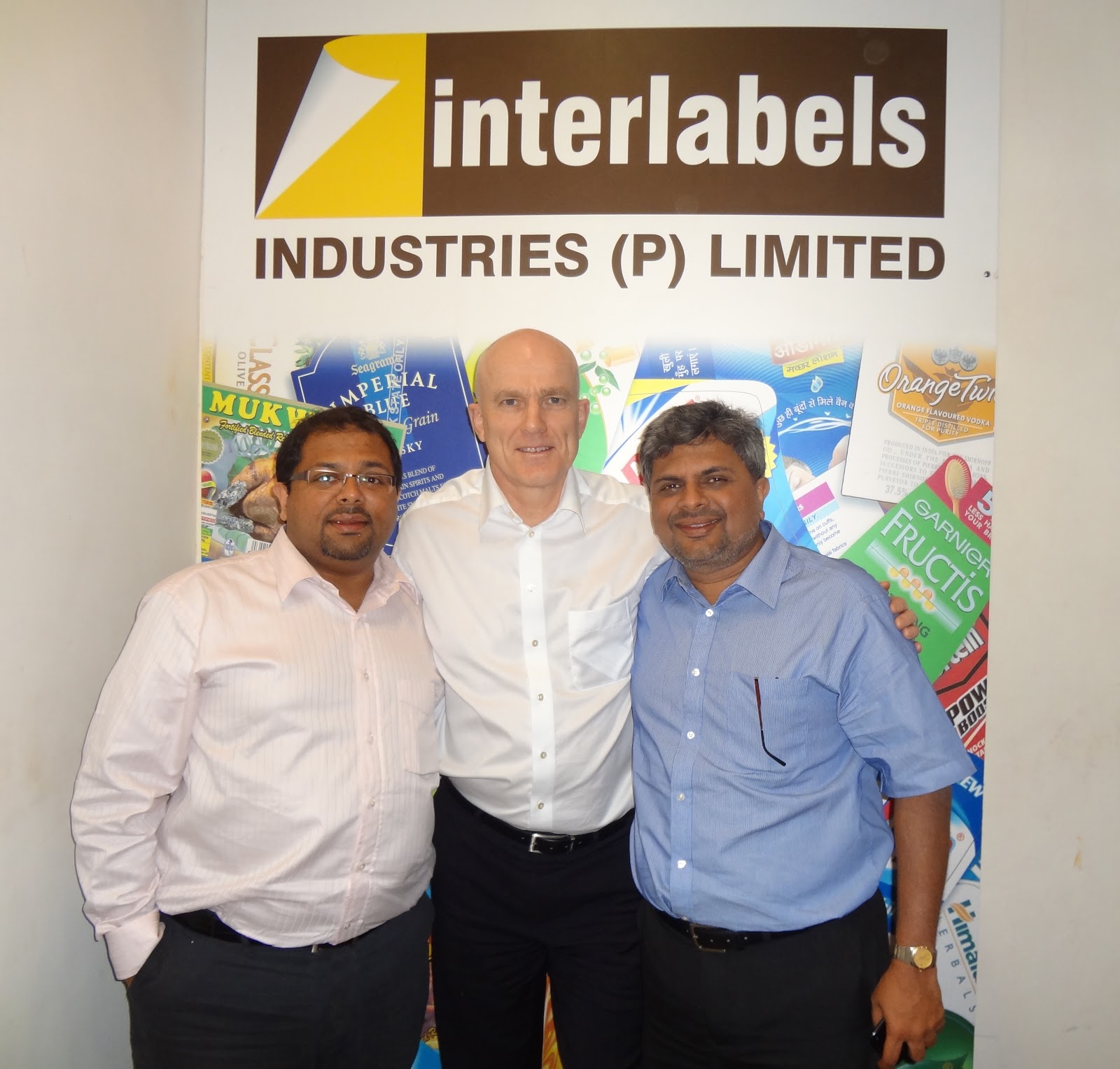
A few weeks later one of the Europe’s largest label producing company Skanem with headquarters in Slavanger, Norway, acquired 51% stake in India’s largest label company, Mumbai based Interlabels with sales of over 19Million Euros and 220 employees. The new entity is renamed as Skanem Interlabels. This has definitely triggered a trend in the label industry. Just six months later, we have the news that Bangalore based SGRE labels, has been fully acquired by Mumbai based Positive Packaging Industries Ltd. the flagship company of Enpee Group, an international conglomerate with over 50 years of business experience. Positive Packaging is a pioneer in flexible packaging with state-of-the-art facilities located strategically in India, Nigeria and the U.A.E. They offer packaging solutions to customers in various countries through a robust international sales and service network, catering to diverse sectors including FMCG, Agro products and Pet food.  The acquired business is now named as Positive Labels. This trend seems to be on the increase, more and more Indian printers are looking for partners. Some admit it others like to keep everything secret. However there are quite a handful of them who would like to have international partners to expand their businesses with global presence. Meanwhile constituents of the label industry are talking in hushed tones about another deal that has taken place but since the stake holders do not confirm publically, it remains gossip that goes on.
 
The industry is undergoing a fast transformation from being small, single owner, mostly first generation entrepreneur owned enterprises with one or two label presses to larger companies with diverse product offerings like labels, flexible packaging and cartons. These companies have made huge capital investments and are in the forefront of the label industry. The single owner family managed companies who have made rapid strides by investing in multiple label presses to expand and grow to meet the current demands of their end users include companies like Update Prints, Regal Creative, Syndicate labels, Anygraphics and Zircon in North India, Classic Images in East India, Webtech, Ajanta, Mudrika, Mahrishi, Letragraphics, Renault paper, Unique, etc. in western India and Seljegat in South India. Two of the others who expanded in South India have been already acquired. Larger professionally managed companies who have presence in offset printing, flexible packaging or carton manufacturing, who have invested in label printing include Uflex, PPL-Huhtamaki, Positive Packaging, Shree Rama Multitech, ITW, Pragati offset group, ITC, etc.
Definite segmentation has taken place in the Indian label printing industry. At the lowest end is the biggest labelstock consuming segment of the industry. These include companies who produce plain labels, barcode labels, gun labels, computer labels, EDP/VIP labels, etc. In the middle are the printers who cater to the unorganized sector and smaller manufacturers of consumer goods mainly in the MSME (Micro Small & Medium enterprises) sector. The top end that drives in the highest revenues caters to the larger companies, FMCG sector, multinationals, pharmaceutical companies, organized retail, etc. They are the ones producing the highly decorative and complicated labels on their state of art equipments. It is this top end of the label companies where all the JV’s or acquisitions are taking place. With FDI(Foreign Direct Investment) in multibrand retail permitted in India, growth rates in label consumption will rise.


With volumes expected to increase and come from the need of packaged goods that will be retailed to a young and large population, the sentiment in the industry will remain “Positive in labels”.
 
 
Written by Harveer Sahni, Managing Director, Weldon Celloplast Limited, New Delhi-110008 October, 2012
The festival season in India begins by the end of September and goes on till the middle of April. This is a time when people in general are in mood to celebrate. The weather also gets cooler and helps. During this time the Label printing and packaging industry also has a series of events in their industry to keep them busy because it is show time!
 
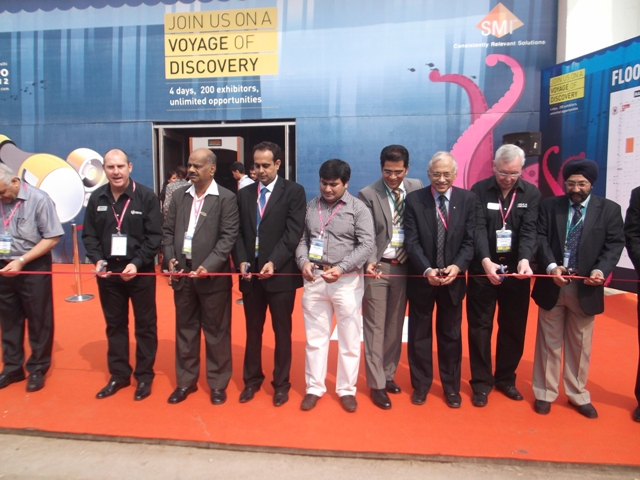
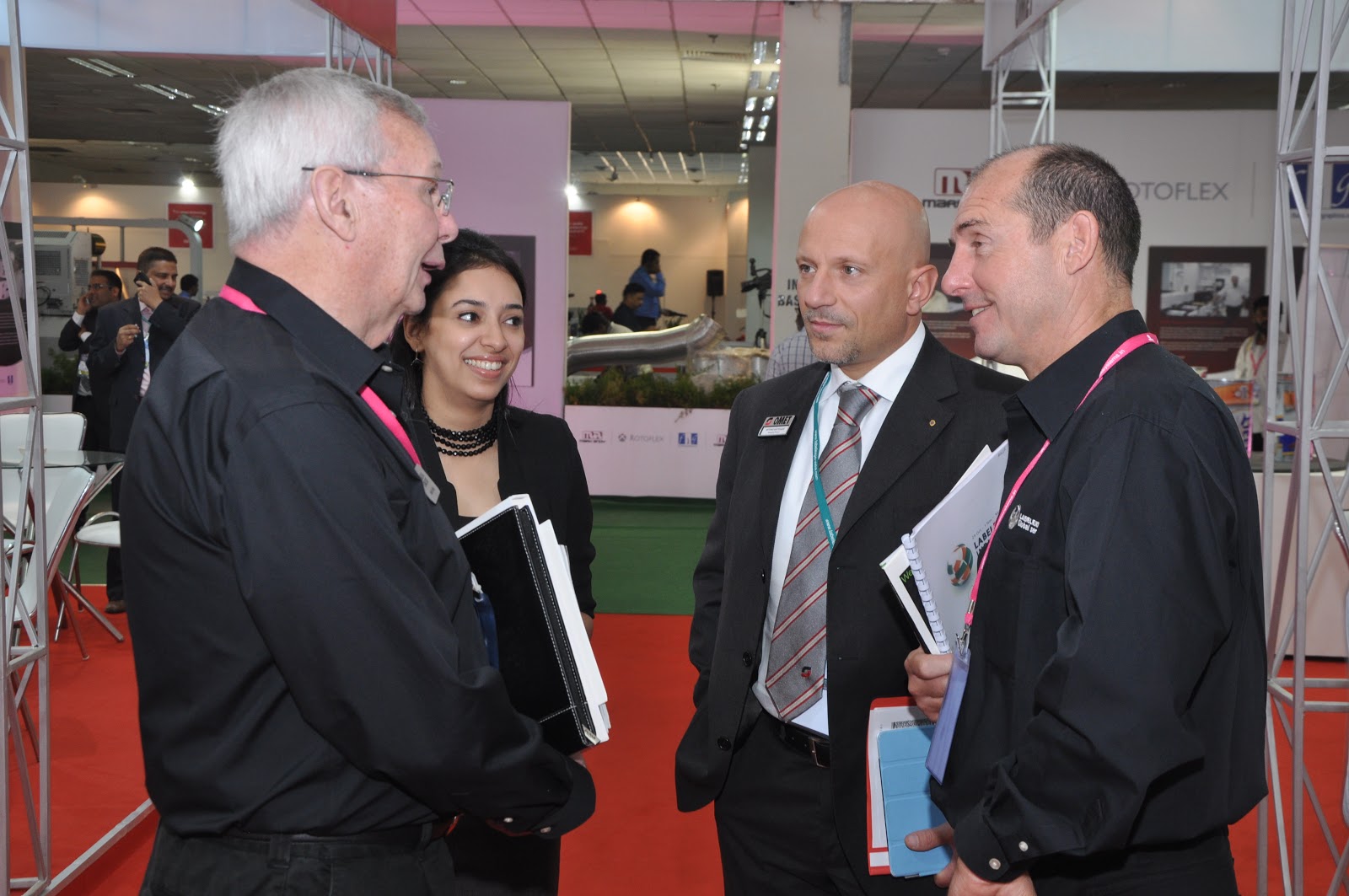
The biggest label show in India, Tarsus UK owned Labelexpo-India is to be held in New Delhi’s Pragati Maidan from 29th October to 1st November 2012. The show is just days away, the hype is already there and the Label printers are looking forward to a good show. The virtual who-is-who of the label and packaging industry in India and the surrounding countries will converge to meet at this four day event. The show intends to empower the visitors with knowledge of the latest trends and technologies evolving around the world. State of art label presses, inspection systems, equipments, toolings, software and materials will be on display. As many as 23 working presses are likely to be showcasing their printing capabilities at this international event. The last edition of the premiere show was held in 2010 when the economic slowdown was just tapering off and the indulgence of printers may have been a little restrained. The industry is now buoyant, growing and expecting a surge in demand due to a spate of economic reforms initiated by the present Government of India. FDI (Foreign Direct Investment) in multi-brand retail has been allowed and is expected to bring in an imperative need for shelf ready attractive packages. Labels are the face of any fast moving branded product and better labels with good aesthetics not only liven up the shelves but also tempt the consumers to lift the products and add to the retailer’s turnover. The Label printer has to continuously invest in upgrading his capabilities to print, decorate and convert. The general sentiment indicates the printers will be serious this time around and exhibitors will woo them with their best offerings. The event also accords opportunity to label printers and other stake holders in the industry to meet their peers in the industry share thoughts and knowledge. It is also time renew the bonds of friendship.


Harveer Sahni Weldon, Mohd. Nadeem CEO Paharpur-3P,
Alan Barreto MD Nilpeter India
 Less than two weeks before Labelexpo opens another event was organized also in New Delhi. “Packaging Summit-Challenges and Opportunities” by Assocham (Associated Chamber of Commerce and Industry in India) and supported by the Ministry of MSME (Micro, Small & Medium Enterprises) on the 17th of October 2012.  Assocham is the highest body of the Chambers of Commerce of India, providing a forum for dialogue between business and government. The summit had speakers from the label, packaging industry and the Government. Speakers from Labels and packaging segment were Allan Baretto MD Nilpeter India, Asim Dutta Head of packaging development at JubilantLife sciences, Mohd. Nadeem, CEO, Paharpur – 3P, V B Lall, V.P., Indian Plastics Institute and Director, SCJ Plastics Ltd., myself; Harveer Sahni from Weldon Celloplast Limited and N C Saha Director Indian Institute of Packaging. Senior officers from the Ministry of MSME and other departments also spoke at the event.  One week after Labelexpo ends in Delhi, International Packtech, organized by Messe Dusseldorf will be held from 6th to 8th of December 2012 at Bombay exhibition centre, Goregaon, Mumbai. This event has a limited participation from suppliers to label industry. Therefore I do not expect many label printers travelling across the country to visit the show. However the packaging industry including suppliers and end users are likely to visit the show.


“Printpack” is the largest show for printing and packaging industry in India and also the 4th largest in the world. This time the show is being held at the Greater NOIDA Expo Center from 23rd to 28th February 2013. It will be the first time this show is not being held at Pragati Maidan in New Delhi. Generally shows get popular and recognized with the venues that they have found success at. This is an important show that caters to the printing and packaging industry, demand in which, according to the organizers is likely to cross 27 Billion US Dollars. At their last showing at Pragati Maidan, they reported a visitor turnout in access of 50,000 in numbers. I wonder if they can repeat that success at a changed venue, only time will tell. In between the shows that I mention above, there are a lot of small regional shows in smaller towns spread over North, West and South India. With the number of shows going on increasing coupled with already existing successful and important shows in Europe, USA and now China, the pressure on printers, suppliers and visitors has also increased. Signs of discontent are already showing. Competition and market demands create paucity of time. Printers need also to invest with caution. The no. of genuine visitors to shows is likely to decline. Drupa is a classic example of falling No. of visitors and if this trend continues, it may lead to losses for organizer and deterioration of standards at these shows. However for growing economies like India and China, the show culture has become a must for entrepreneurs wanting to expand. The better organized shows at popular venues are more likely to succeed. The content and visitor profile of any good show ensures good bookings for the following edition and vice versa is also true. We do hope that these shows deliver the promise to empower the label and print packaging fraternity with technical up gradation and opportunity to select technologies for their future expansion.


Narendra Paruchuri, M D Pragati


Pragati Offset Hyderabad celebrated their Golden Jubilee recently at Hyderabad. Being invited to the event I was surprised by the commitment, involvement and participation of the entire team. I have already written about them in this column last year. The team Pragati is now 1800 in numbers! The founder Mr. Hanumantha Paruchuri and his wife were on stage. At this age the man was in the midst of the party enjoying his guests which included customers, suppliers, media and friends in the industry. The evening saw almost 1000 guests sharing the joy of having excelled in print for 50 years! Pragati’s trophies, awards and works of excellence over the years were also on display. The following evening another party for the team Pragati with 1500 employees in attendance is the real essence, of celebrating success with those who contributed to the excellence that delivered.


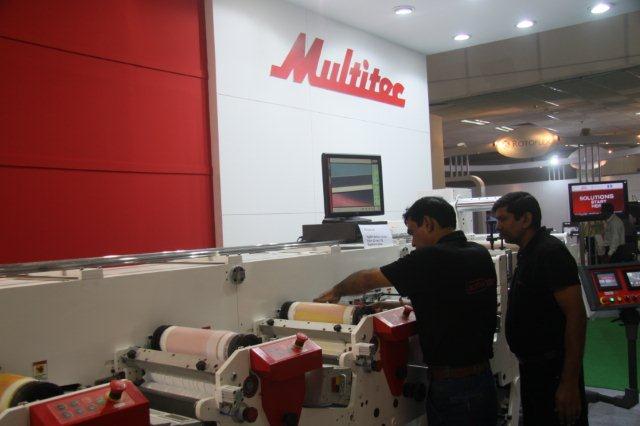
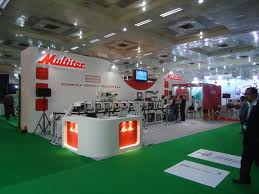
The Indian Label press manufacturers are creating another story that is unfolding and appears to be having a bright future. Leading the pack is Amit Ahuja of Multitec Aids, a qualified design engineer. His last showing at Labelexpo 2010 Delhi, then Labelexpo 2011 Brussels and now in Labelexpo 2012 Delhi later this month is all the firsts that any label press manufacturer in this country could dream or achieve. He is producing machines that stand up to challenges and exacting demands in the international marketplace. I am not allowed to disclose but as he says he will surprise the label industry with his latest offering on display at his stand at the show. I look forward to the product that he will showcase. He has installed 14 machines in the last twelve months.


Jandu Label Press
Baldev Singh Jandu from his modest beginnings has come a long way. He has catered to the needs of the label industry in more than one way. His label printing machines are a must for any small entrant in the industry. Barcode labels, gun labels, computer labels EDP labels, toll tickets, etc., Jandu is the name that will deliver. He also supplies coater laminators, slitters, sheeters and other converting machines. He too has installed 14 label presses in the last twelve months. R K Machines in Ahmedabad is another machine supplier who continues to service the entry level printers. I will attempt to estimate imported presses including the used ones at another time as it is a difficult exercise. The agents of foreign press manufacturers do not like to disclose the figures for obvious reason. Considering the installations of these three Indian leaders in label press manufacturing,  and if I add another similar figure coming from other smaller regional players, the Indian label printers seem to have sold over 50 label presses! Truly the Indian label industry is shifting gears!


Written by Harveer Sahni, Managing Director, Weldon Celloplast Limited, New Delhi-110008 October, 2012


Mumbai based Positive Packaging Industries Ltd. the flagship company of  Enpee Group, an international conglomerate with over 50 years of business experience, has in a recent move acquired Bangalore based SGRE Labels Private Limited. Positive Packaging is a pioneer in flexible packaging with state-of-the-art facilities located strategically in India, Nigeria and the U.A.E. They offer packaging solutions to customers in various countries through a robust international sales & and service network, catering to diverse sectors including FMCG, Agro products and Pet food.
 
This acquisition is a part of a series of moves in the Indian label industry, which seems to be undergoing a transformation by partnering with larger players to meet the challenges of globally active label printing companies indulging in domestic markets. This also provides the companies so acquired an access to international markets. I reproduce below the press release from Positive Packaging;
 
 
Positive Packaging continues growth and diversification, acquires Label manufacturing business: Move to address demand for superior, multifunction labels, from existing clients and add new customers.
 
Mumbai, India, 18 Sep 2012: Positive Packaging Industries Ltd. is pleased to announce the acquisition of Label manufacturing business of “SGRE Labels Pvt. Ltd.”, in a bid to offer its customers single stop packaging solutions. This acquisition follows the recent integration of ICM Packaging and is part of Positive’s vision to have the ‘Preferred Supplier’ status with its customers and equips Positive with state-of-the-art label packaging equipment and infrastructure.

Pranesh Kankanwadi, Group MD Positive
  Explaining the strategic acquisition, Mr. Pranesh Kankanwadi, Group Managing Director, Positive Packaging says, “We have observed the increased scope of requirements of our customers, who prefer to deal with a single supplier for a wider range of their packaging requirements. One of the requirements is labels. Being prompt to react to our customers’ needs, we clinched the opportunity to provide superior labelling solutions at par with global standards that Positive is known for.
 
 
The label manufacturing business of “SGRE Labels Pvt. Ltd.” is located at Bengaluru. The Company has state of the art European machines with additional equipment scheduled for commissioning in March 2013. The company has in house design facility, managed by a experienced technical team. To facilitate the quick turnaround of short run jobs and product sampling, company is also equipped with HP Indigo Digital Printing/Converting equipment.

 
The continued significant investments underline Positive’s commitment to all stakeholders to grow the relationship in a mutually beneficial manner.
 
Positive Packaging, a part of the international conglomerate, the Enpee Group; is a one-stop source for quality, printed and laminated, barrier-grade flexible packaging with manufacturing facilities in India, Nigeria and U.A.E. In India, Positive Packaging is a leading player in the flexible packaging space.
 
To know more about Positive Packaging, visit the website: www.positivepackaging.com Media Contact: Mr. Nem Kumar Jain – Sr. Manager – Corporate Communications njain@positivepackaging.com | +91 – 22 – 39211400
Manish Desai
It is generally perceived in India that a doctor’s son will become a doctor. Traditionally Indian families follow the rule that the sons take up a profession similar to the one that their father has pursued. This is more so because the father wishes it so. Also the nuances of the profession or trade that they have been in, is firmly entrenched in their minds. They are able to train and advise their off-springs when they inherit or for that matter, indulge in a similar profession. The joint family system is also responsible for such decisions by the or for the, generation next. Mumbai based R N Desai, a finance manager with Johnson & Johnson, had a different vision for his inheritors. Contrary to the above, he wished and emphasized that his sons will never be in service. They have to be successful businessmen. His children accepted his advice earnestly and worked hard to prove him right. The family prospers and grows in business due to the vision of this man. Sandeep, Vipul and Manish have given their best in building the Mudrika group to what it is today. The group continues to expand giving credibility to the motivation of their mentor. While Vipul and Manish are R N Desai’s sons, Sandeep who started it all is their cousin yet they are always seen as real brothers who are exceptionally well bonded. Manish, the youngest of the three fondly remembers that he was so influenced by his father’s decision that during his vacations in school, he used to trade in small things to make some extra money. The inclination and indulgence in trade at such tender age was definitely the reason for them to be so committed to their work.
In 1975 Stickers, was a relatively new development that was drawing attention and interest of many people. A time when people were using a gum bottle to squeeze out that little amount of glue from a squeezable bottle and spread it on the paper label and stick! It was an exciting innovation, just to peel off this paper label from the release paper and press it on to where you want to place it. Simple, neat and clean! Sandeep was working for a greeting cards company at that time. This new innovation, excited him and caught his fancy, he started to experiment with it. He would get these stickers made on job work basis and sell to customers. The project worked and a year later Sandeep left his job to plunge full time into this activity. In 1976, he started to screen print at home with 3-4 workers. The youngest brother Manish was just 10 years old then and was excited to see the stickers being made. This must have been the basis of his aggressive involvement to build the label business in later years. 1977, Sandeep moved his production from home to a proper 500 square feet facility in an Industrial Estate in Malad, Mumbai. From screen printing, he shifted to getting the paper printed on offset on job work basis, applying gum by screen, drying and then die-punching. After seven years in Malad, in 1985 Vipul joined business. As the self adhesive labelstock industry evolved, pre-gummed sheets also became available easily. Sandeep changed his business model yet again. This time around he would buy pregummed sheets and send them out for printing on sheet-fed offset presses and then he would die punch them in his factory at Malad to finish the stickers. This became a regular business and some amount of stagnation did move in. When a business delivers the desired results and takes care of one’s immediate needs, the resistance to implement change is evident. The foundation had been laid and it was time to move ahead and at this time infusion of young blood is like a shot in the arm! Manish Desai, after completing his B.Com from Mumbai University, joined Mudrika. It was time to shift gears and put Mudrika into the fast forward mode.
By 1991 the manufacturing space at Malad had swelled to over 7000 square feet however still all the printing was being outsourced from various offset printers in Mumbai. The need to have own captive printing operations became imperative. A 2500 square feet factory with an offset printing press was setup at Mahalaxmi in south Mumbai. In quick succession Mudrika expanded into packaging as well. They started to produce micro-flute monocartons, corrugated shipper cartons and folding cartons. In 1996 Manish Desai with his fondness for stickers made Mudrika labels a more indulgent and active organization. The first label press, a refurbished Kopack was installed at the Malad factory. Mudrika had moved from stickers to labels!
HTL Labels
The fast forward mode was starting to show. Just another year later the Desai brothers setup a 20000 square feet, 300 tons per month corrugated master carton manufacturing unit at Daman. Though the decision to setup a facility at Daman was due to the tax benefits available there but that reason alone does not make industry to prosper. It is the motivation, dedication and hard work of the promoters and their team that brings the fruits. All along Manish Desai had his heart in labels, in 1996 he took a very strategic decision, even though he had just one label press, he did a backward integration exercise and initiated the captive manufacturing of self adhesive labelstocks. Besides giving him an edge over his competitors, it also became another profit centre. Between 1996 and 2000 Manish increased his involvement in labels and was instrumental in installing a total of four Kopack label presses. He reminisces that the first press was virtually idle for a full year because it was a period of learning and settling down in a new manufacturing process. Understanding label printing to achieve was a very crucial part that lead to his success in years to come. He was lucky to have found crucial support from his supplier of machines in the early days. The supplier, who became a dear friend, would send his engineer from UK at short notice when ever Manish ran into a problem and would not charge him for that. Manish went on to buy five machines from him.
Manish with his new Gallus!
By the start of the new millennium the brothers divided their responsibilities to take the group forward in a systematic way. The eldest Sandeep, a B.Sc from Vidya Nagar Gujarat, became the face of the Mudrika group in corrugated board packaging, Vipul, an environmental engineer, took responsibility of building the offset printing business as also taking care of the labelstock manufacturing and Manish took responsibility of leading Mudrika Labels where all the expansion and quality up gradation came by because of his initiatives. In 2004 another 12000 square feet factory was setup at Vasai to produce labels. Four Gallus label presses were installed in this unit to catapult Mudrika labels in the select group of big label printing companies in India. Meanwhile the labelstock manufacturing was also expanded as need for stock grew with their expansion. They now have three coaters out of which two are for emulsion adhesive coating and one 1000mm hotmelt coater. In 2011, the Desai brothers took another pioneering decision of expanding into gravure printing to produce highly decorative HTL labels with Korean knowhow. All three brothers are looking after this unit to take it forward and plan to expand this business as well.
The Mudrika group has ambitious plans to expand further into manufacture of packaging products that have synergy with their present business and customer base. They will be making capital expenditure where ever they find necessary and are evaluating the way forward. They also plan a five colour intradeck UV press to produce metalized paperboard cartons. The label unit is again under an expansion programme with another 45000 square feet factory being planned again at Vasai near Mumbai. The land has been purchased, government permissions have been obtained and construction at the site is likely to begin soon. They also plan to add 18000 square feet space for offset printing business and 8000 square feet for expanding their labelstock manufacturing operations. The present scale of Mudrika group’s business emanates out of production at various facilities spread over a combined aggregate space of approximately 75000 square feet with over 300 employees. Manish is very bullish about his group’s expansion plans. A new logo is planned and a makeover is being put in place to build the brand, “Mudrika”. Manish Desai has worked his way up in the Indian label industry and has been the past president of LMAI (Label Manufacturers Association of India). He is confident that the three brothers will be able to grow the business to at least twice the size of its present operations in the next five years. However they have no intentions of patronizing the much fancied digital printing in any of their manufacturing operations. As regards their commitment to the environment, he feels they need to do more. At present they send all their label waste free of cost to the boilers at some paper mills for incineration.
The generation next in the Desai families is all girls and it is unlikely or too soon to say that any of them will join the family business. Manish has two daughters, Stuti the elder one is in class 12th and wishes to pursue medicine while Astha, his younger daughter is in class 8th and unsure on what she will do in future, Sandeep also has two daughters both of them are married and live outside India and as for Vipul, his only daughter is in class five. The brothers have decided to gradually professionalize the group and as promoters they would eventually one day into the future, withdraw from the day to day management. They wish to see their Mudrika group which started with stickers and moved to labels, to go beyond…into packaging and more.
 
Written by Harveer Sahni, Managing Director, Weldon Celloplast Limited, New Delhi-110008 September, 2012
On the 10th of December 2011, on this blog of mine http://harveersahni.blogspot.com I uploaded my post, “FDI in retail, Government defers it, Industry gives a thumbs-up! This was a post that the industry appreciated and lauded. The industry leaders who gave the thumbs up were those whose opinion matters! The industry did miss a heart beat when the decision was put on hold due to political compulsions.
 
 
Industrialists pour in investments into manufacturing facilities foreseeing the growth in market and expecting the surge in demand. Expansion and capacity enhancement with focus on producing world standard products does not come cheap! In a country like India that is home for over 1.2 Billion people most of whom are educated, young, earning more and expected to spend more, the demand for consumer goods is bound to surge upwards. The expectations of growth increases to higher levels when government decisions like allowing FDI in retail become a reality! At such times going by their projections, stakeholders do make the investments to enhance capacities. Capacities cannot emanate immediately when demand arises. They come around when manufacturers assess demand based on government policies, decisions and make projections that prompt them to invest in state of art equipment to enhance quality production. If at this stage, the government reverses decision in FDI, it would be a deterrent to growth. The pause button is pressed instantaneously. As an equipment supplier to the label industry I and my colleagues did experience the impact of this pause last year. Ordered equipment was put on hold. We lost crucial time…nine months, perhaps.
 
Indian PM Manmohan Singh
Last week, the Manmohan Singh government in India, finally stood up firmly and faced the opposition to declare that FDI in retail is a reality. Also emphatically, they asserted that the decision now was here to stay. The catch that looks to be a deterrent of sorts, is that the states still have the choice to block this process. However, one can see the steady transformation to big time internationally participated retail already initiated. Opposing states will fall in line as they witness the results in states that accept the process. The controversy is that the Mom and Pop store around the corner will suffer and wind up. A mild protest also says that the farmers may also suffer. However all know once the middleman is out the farmer will get better realization for his produce. The politicians will be left assessing who to back, the mom and pop stores or the farmers. The eventuality will happen and change the lifestyles in this country.
 
Change does worry and is difficult to accept but when you see your neighbor progressing, the me-too factor makes an impact. Imagine a Wal-Mart store at the Delhi border adjoining the state of UP (Uttar Pradesh) where FDI in retail is not accepted. When people in UP in the NCR (National Capital Region) start to patronize such stores in numbers that process cannot be ignored, the evident will happen, Wall mart will also cross the border of these states that are resisting now. The loss of revenue due to tax collections will trouble any state government. Once retail grows, manufacturing has to grow to fulfill the demand. Demand for labels growing is just a matter time. With that will grow the demand for equipment, toolings and materials.
 
It has been a few days and the opposition parties are mounting the political pressure for a rollback but this time around the decision seems to be firm, the Government is ready to face the music as it comes. The prime Minister says if we have to go down we might as well do that fighting. The industry has already given their thumbs up. The government is committed now, finally it did take them those magical nine months to deliver! As also to ensure that FDI is here to stay!!!
 
Written By Harveer Sahni September 2012
Silicon release paper
Some thirty years ago, when I was just a commercial siliconiser, people at large did not understand what release paper or silicon paper was. It is normal for people when they meet someone for first time to ask, “What business are you in?” Whenever confronted with such a question I would say, “I siliconise” or “I produce release paper” or “I produce silicon paper” instantaneously I was confronted with another question, “what is that?” On being asked repeatedly, I formulated an answer adding a little fun to my response. I would say that I produce something that eventually lands up in the dust bin. This, as intended would confuse the person and I would be prompted to go on to explain further. Those days very few people related label to the self adhesive product that we see now. People did understand what a sticker was, so I had to explain, it is the glazed paper that you see behind a sticker protecting the sticky adhesive on it. Many a times these new found friends would comment, that it must be a very good business because you produce something that goes to the dustbin so quickly, creating repeated demands for more. Those days nobody would like to produce something that could be used repeatedly resulting in reduced demand. Labels were generally recognized as the unsupported printed paper labels produced by the sheet-fed offset or letterpress printers. Glue was needed to be applied on backside of these labels before application on the final product. These are what are now referred to as wet-glue labels. The glue application and fixing on the product was done either manually or by automatic machines. Such automatic labeling machines are still extensively used by the beer and liquor industry. With time stickers evolved to become self adhesive labels and eventually settling down to a sticker being simply called a label. These labels that had a pressure sensitive adhesive on the reverse, imperatively needed to have a protective release liner to protect the tacky adhesive until the label was required to be applied on to the product. The release liner, as I mentioned earlier would be left redundant after removal of the label, would actually land in the dustbin and then be disposed off in a landfill or burnt adding smoke to the environment. It was easy those days to joke about a product being successful even though after use it was being dumped in the landfills impacting the environment adversely. Time now has changed. Concern for our environment is a matter that has become an absolute necessity. We cannot joke about the success of a product that pollutes. We have to be responsible for leaving behind a legacy of a cleaner and livable environment for generations that follow us. We have to make our manufacturing programs, sustainable.
 
Sustainable or Sustainability! What it means? Well for a simple answer it means the capacity to endure but in wider terms it is the process that will enable our planet earth to support human life. In simpler terms it means that we need to give back to mother earth what we take from it or else we stop or reduce drawing the resources that we cannot replenish forthwith. If we cut trees to build homes, manufacture paper, produce furniture, etc. we are reducing the forest cover, deforestation impacts the environment and climate adversely. So, for the sake of sustainability, we need to plant many more trees to maintain the ecological balance such that the benefits of these resources are available to our next generations. Similarly potable water is also an absolute necessity for human consumption and survival. Underground water table has been a reservoir for continued supply of this vital necessity. Unfortunately as a result of rapid urbanization this resource seems to be depleting due to unorganized and excessive pumping of underground water. For this reason the government has made water harvesting compulsory for all new construction activity in an effort to replenish this vital need for human consumption and attain sustainability in urban living. Now coming back to self adhesive labels industry that uses a vital resource, trees for manufacture of paper. Unfortunately 50% of all that this industry produces goes as waste. The liner as explained earlier goes to the landfill via the dustbin, and the waste matrix further adds to the wastage. The industry needs to dwell on management of this waste. It is either burnt or dispatched to the landfill. It is time for all the stake holders in this industry from siliconisers, labelstock manufacturer, label printers to end users, to take stock of the situation and influence the manufacturing programmes towards sustainability by either reducing waste, recycling it or eliminating it substantially. Label industry around the world has already started to debate on this problem. FINAT, the International association on self adhesive labeling, has already initiated many debates and programmes on this problem. The label industry in India will also have to soon follow the trends elsewhere in the world, whether it is by sending the used liner and the waste matrix for recycling, or by reducing the thickness of the liners by opting for thinner filmic liners that can be reprocessed after use. However it would be ideal if the industry could indulge in the evolving the concept of making self adhesive labels “Linerless!”
 
A linerless label can be or I would say, it is like, a printed packaging tape, which instead of having continuous printing would have labels printed on it such that they could be cut and applied. The manufacturing of such a product is done by printing on the substrate, siliconising it, adhesive coating on the opposite side and then rewinding it like a tape. A fire mark at each label can aid a dispenser to sense the mark and dispense the label for application. However in such a scenario one cannot have special die-cut shapes that contribute to the aesthetics and shelf appeal of consumer products. Since the media in the western world has been highlighting linerless labels consistently, a lot of label producing companies around the world have started to work in this direction, making linerless labels a definite segment. Interesting developments are taking place in this upcoming segment and many companies are doing pioneering work to produce linerless labels that will perform effectively. One of the most active equipment suppliers who has been working and developing technology for producing such labels is ETI converting based in Montreal, Canada. For the past many years they have been exhibiting at Labelexpo’s, their equipment that can siliconise the base-paper, adhesive coat face paper, laminate the two, print, decorate, die-cut, finish labels and rewind in line in a single pass. For them it is a matter of shifting and adjusting the web flow at various modules to produce linerless labels. It would need one to simply print the labels on a regular label press, turn it around with a turn bar and siliconise it, turn it around, adhesive coat it and rewind it, the label roll Is ready. In case of clear films one could use a pre-silicone coated film and reverse print eliminating one more process in producing linerless labels. As a labelstock manufacturer myself I have been wondering what the labelstock manufacturing business will experience once linerless starts to grow. Last year in Brussels at Labelexpo 2011, during a brief interaction with Dean Scarborough, President and CEO of Avery Dennison, I shared my thoughts about linerless labels. I questioned Dean about the future of Labelstocks. Even though he felt that this technology will evolve but for the present the demand for the pre-die cut labels cannot be catered by the linerless technology. He stated that the conventional labelstock business is here to stay and will grow. I did agree with him at that time but a year down the line I feel while the conventional will grow yet the linerless label technology will soon make a big impact as up-gradation of this technology goes on. I am sure Dean must be having an ace up his sleeve!
 
 
There have been many interesting developments in the processes to produce linerless labels. I will dwell briefly on some of them. While the basic concept on most of the developments being made by different companies remains printing the substrate, the application of release coat on one side and then applying adhesive on the reverse, yet there are companies that are modifying equipment and processes to meet requirements of customers. For customers who need to over print, the substrate is pattern coated with silicone and adhesive so as to provide an uncoated area where overprinting can be done. In case of variable data printing the silicone coating is replaced by a special release coating which can accept thermal transfer printing. For printing on these linerless substrates special barcode printers are employed. Care is taken that the backup rollers are kept clean so that they do not result in paper jamming due to adhesive transferring on to the backup rolls. The technology continues to evolve at a rapid pace. I would like to draw a comparison of the linerless label printing and regular linered label with the digital and conventional offset printing process. The way digital is growing, similarly linerless will grow.


ETI Cohesio
  The more startling innovation in linerless labels is coming from ETI converting about whom I have mentioned earlier in this article. In their endeavors on sustainability they first produced an equipment to produce labels on what they termed as the mini-liner. Labels produced on a multiple-reusable release liner are die-cut to special shapes and transferred to a 15 micron PET liner which is recyclable. This process helps in reducing the impact of waste as the there is lesser tonnage of the leftover liner and more over it is possible to reprocess it by re-molding. However this product does not fall into the category of linerless labels. ETI’s most interesting development is that of equipment to produce linerless labels that are pre-die cut to special shape and dispensed with the aid of a customized label applicator. The patented technology is now on offer. ETI has signed many non-disclosure agreements with companies that have decided to invest in their state of art equipment and path breaking technology. It is a matter of pride for me that my company Weldon Celloplast represents ETI for this green technology. Another interesting linerless label technology that I have come across is the one developed by US based Polykote Corporation in association with Arca Automation. They have developed a linerless label with no tack! The tack of the pressure sensitive adhesive has been deadened by an overcoat and the label appears to be like an unsupported wet glue label. However on the applicator once the label is exposed to an energy source like high energy light, radiant heat or hot air, the labels regain tack and the pressure sensitive nature of the label is re-activated.
 
While there appears to me, absolutely no indulgence in this linerless technology in India, yet the interest is positively stirring up. I have spoken and discussed with some of the leading label printers across India. It is difficult to report detailed individual responses in this article yet I give herein the gist of what the industry feels. 50% of all the printers that I contacted had not studied this concept and that they all had a problem disposing their waste. Gautham Pai led Manipal technologies and Chandan Khanna led Ajanta Packaging are extremely interested in this technology and are confident that it will grow in times to come. Sudhir Jain at Jain Transfer, Rajesh Nema at Pragati Global Indore, Shakti Jain at Great Eastern Gurgaon, Himanshu Kapur at J K Fineprints Mumbai and Sandeep Zaveri at Total Print Navi Mumbai all feel that the technology is still at a nascent stage and that for the present it is not a threat to the conventional label printing business. However they are still interested to indulge and take it forward if their customers take the initiative to go green in this direction. I was surprised by the comments of Yogesh Aggarwal of Printpack Delhi, he says, “There is no doubt that Linerless PS label stock would be a revolution and it should grow in time. It will obviously be a threat to conventional sticker with liner due to the reduced cost and environment friendly material. It should have good future.” There are other leading printers whom I spoke to and are quite knowledgeable on the subject but they decided to keep their cards close to their chest and not divulge their plans in this direction.
 
The linerless label technology is likely to take the self adhesive label industry to another level. In times to come, it will be a subject that is difficult to ignore. It cuts down the cost of a release liner from the ultimate cost of the laminate, there is no waste liners to dispose off, there will be more labels per roll thereby increasing production efficiency and also providing safety at work place because release liners are slippery and lying on the shop-floor, they are a risk where workers can slip on them and get injured. The summation on linerless labels, comes from non other then the person who has proven he can take pioneering and daring decisions. Decisions that can change the way the industry thinks and evolves! He is Narendra Paruchuri and in his words, “Apart from the cost benefit, I am very happy that this is a greener product. At present few companies are practicing being green with lower carbon foot prints. Soon Government legislation will force us to be Green. Linerless gives us a win-win situation where we are greener and we are cost efficient.”
 
In such a scenario when the same existing printing presses will be used in conjunction with some additional converting and dispensing equipment, it creates a win-win situation. It is a matter of time that the end-users will see the benefits of using these labels not just due to the price but also because they are aiding sustainability. The linerless labels will arrive and continue to grow!”
 
Written by Harveer Sahni, Managing Director, Weldon Celloplast Limited, New Delhi-110008 August, 2012
Dhiresh Gosalia
As a young boy in school I had heard my school principal speaking about the American people. He had spent long time in the United States before returning to India to become the principal of our school. He said, the Americans when talking about their country, business or otherwise would like to hear, tell and experience words like Largest, Biggest, Tallest, Deepest, Longest, Costliest and so on. The habit was promptly adopted by the north Indian Punjabis, and with time, people across India have adopted the habit. They love it and wish to hear, tell and try hard to achieve this benchmark. Dhiresh Gosalia is one such achiever. He is the undisputed largest manufacturer of pressure sensitive adhesives (PSA) in India. His company Jesons Industries Limited commands over 70% of the market share for these products. It is a unique feat that few people aspire and achieve in their life time. Dhiresh Gosalia Managing Director of Jesons, is an approachable, realistic and straightforward individual. A dreamer and achiever packed in one. I remember once some 10 years ago when I approached him for a supply problem (He has been a star supplier for my label stock manufacturing company), his reply was clear cut and straightforward, “I have always wanted my company to be system driven and not person driven” he further added, “if there is an anomaly, I need to correct it. Else the customers need to understand the system we have”. Dhiresh has built a strong company on sheer hard work, commitment and delegation. He firmly believes in the mantra, “Think big and be innovative”.
 
Self Adhesive Stickers/Labels

Shashikant Gosalia, a Mumbai based trader in textile chemicals saw future in industry and manufacturing. In 1981, he setup his startup enterprise, Jesons Corporation to manufacture wood adhesive and binders. By 1985 he saw potential in the growing self adhesive label and tape market and started producing pressure sensitive adhesives (PSA’s). The initial plant consisted of two reaction vessels, one of 1 ton capacity and the second of 500 KG. The total installed production capacity was 300 tons per annum. Those days they were producing just 5 tons per month. In 1992 Shashikant saw growth in the market and decided to move his manufacturing to a bigger 3000 square feet factory in Palghar near Mumbai. Unfortunately that year he passed away due to a lung ailment, leaving the reigns of his startup venture in the hands of his son Dhiresh, who had been in the business with him for four years. Dhiresh was used to the fact that his father was the boss and handling the company but when responsibility came to rest on him due to this tragedy, he took hold of himself and indulged in the right earnest. He took stock of the situation and reviewed the ground realities prevailing at that point of time. The size of operations in his company was rather small for a huge debt of Rs. 85 lakhs. This did not deter his determination to think big. He was a dreamer, which he still is, as he self confesses. A dreamer who works hard to make his dreams a reality. He saw a whole lot of future in the PSA industry. He fondly remembers the day in 1985 when they produced and sold the “Sticker adhesive” to their first customer, Gunvantbhai of Excel inks, a trader of screen printing materials. He carried the 100kg lot in his car to deliver it. Dhiresh decided to indulge vigorously in this product segment and studied the business very intricately. He came to a decision that they were using a wrong chemistry for the PSA segment in which they wanted to excel. He immediately decided to switch over from VAM (Vinyl acetate Monomer) based chemistry to Acrylate based chemistry. It was a tough call but he took it boldly and emphatically, proving his resolve to lead the company to success.
PSA Tapes
As a young boy Dhiresh had dreamt of meeting the challenge of excelling against the multinational giants like Rohm & Haas and BASF who are world leaders in PSA’s. The task was gigantic yet the resolve was firm. He sold his Mumbai factory, home and office to raise working capital for his manufacturing. It was time to shift gears and move his business to a higher level. The process thereafter has been historical. In 1994 the second unit at Palghar was commissioned to produce Polyurethane based adhesive for flexible packaging and PSA’s. In 1996 when incentives and tax benefits were offered, they shifted to a small 2000 square feet unit in Daman. A year later the facility at Daman had swelled to be a 20,000 square feet manufacturing unit. Another year down the line in 1998, Dhiresh bought a 60,000 square feet plot opposite the existing factory at Daman and built a 45000 square feet plant creating additional capacity.  At this time Jesons collaborated with Anchor adhesive to produce Polygrip brand rubber resin based adhesives. This Polygrip part of business was later in 2010 sold along with brand to Atul Ltd.

 
Jesons Daman Factory
Dhiresh’s resolve to think big, lead him to plan manufacturing globally at locations outside India. In 2003 he setup a 120,000 square feet factory in China and in 2004 a 60,000 square feet unit in Nepal to produce PSA’s and Paint emulsions. Unfortunately both these units had to be closed. The China unit was sold off in 2011 as it was not sustainable due to language problems and difficult work culture. The Nepal unit had to be closed in 2009 due to Maoist terrorist problems. Two of their security guards were shot dead. However now, the process for restarting the Nepal unit has been initiated. Production is expected to commence soon. In 2008, Jesons moved northwards in India and setup and additional manufacturing capacity at a 100,000 square feet facility in Roorkee to produce PSA, Paint emulsion, Construction chemicals and Leather chemicals. This year in 2012, Jesons has taken a very futuristic step by setting up a 5000 square feet state of art technology centre at Navi Mumbai, with an over Rupees 3.00 Crore investment in testing instruments. The centre is headed by a senior scientist specializing in polymer chemistry. With an overwhelming 70% marketshare in the self adhesive label and tape market, Dhiresh is confident there is scope for more. He, in his stride has taken on, on established players in the trade like Pidilite and Jubilant and has left them far behind in the number game, when we talk of PSA’s. He however laments that the pressure sensitive adhesive products industry lacks visionaries and companies who can take on multinational competitors like Avery and Raflatac. He feels, if he has succeeded in presence of world leaders like Rohm & Haas and BASF, others can also do it. All it needs is the ability to think big and innovate. Labels and tapes is a highly fragmented segment of the industry. It took 15 years for our coaters to achieve a speed of 50 meters per minute, there may be hardly one unit coating at 100 meters per minute. Big investment in state of art coating equipment is needed, he reiterates the need is to think big and innovate! Money is available for those who Endeavour.

Dhiresh is an avid reader and finds books as ideal motivators while his parents have been the teachers, the teachers who are the influence on every person’s persona. Being the only son, he joined his father’s business after graduating from Jai Hind College Mumbai. His only sister is married to a gold medalist eye surgeon now settled in Mumbai. Extremely interesting; In between his busy schedule and intense involvement in business, he found time to complete a three year executive Management programm from Harvard Business School!
Jesons Parel Office
His company Jesons Industries Limited is headquartered in an impressive 6500 square feet 9th floor corporate office in prestigious Peninsula Towers in Lower Parel, Mumbai. Jesons’ manufacturing emanates out of a total working space of over 1,85,000 square feet. 250 employees work tirelessly to produce 60000 tons per annum out of the installed capacity of 86000 tons per annum. It really is an achievement considering the initial installed capacity of 300 tons per annum. More or less close to what the capacity that was per year is now per day! PSA’s are 55-60% of their business with sales in 23 countries. Sale in last year was Rupees 450 Crores and is targeted at 550 Crores in the current financial year. 5 years hence Dhiresh feels they will be over Rs.1200 Crores. While talking about these figures he still remembers his first big break in the PSA industry when he sold a fifty thousand Rupees consignment to Hindustan Adhesives Limited, considered the most important PSA user at that time. It was a morale booster. The most difficult time came not long ago when in 2008, the Indian Rupee started to depreciate continuously. Raw material prices were falling and customers were expecting and getting lower prices. The buying was expensive while sales were being made at lower prices. First time in his life, Dhiresh made a massive loss! Jesons was not able to service their loans. Firm resolve, power to think and hard work is what it is all about, Dhiresh drove-in, the highest profit for Jesons in the year that followed.

Madhavi, Dhiresh’s wife is a masters in philosophy. Intelligent, smart, business woman and yet a home maker! She has been supporting Dhiresh by being at his side throughout. In the last two decades that I have known them I have seen Madhavi coming to office each morning after sending children to school and returning home in the afternoons to be with them. She has provided the perfect support. Her influence on this business is evident, just look around in the Jesons corporate office and you will see women manning all the important desks! Dhiresh has to agree women deliver! Honestly, even I believe. After seeing Jesons’ progress, I confirm, YES they do. Dhiresh and Madhavi have two wonderful daughters, Jhelum and Raveena. Jhelum has completed her BBA from London and followed it up with Masters in Theater production also from London. She is now in Mumbai and from earlier in June 2012 (Last month) she has started to work in Jesons. The reigns in her hand appear to be not far away. Raveena is still studying for graduation at Jaihind College, Mumbai.
In three years Dhiresh plans to completely professionalise the company, step down as CEO and hand over charge to a professional CEO. He will perhaps have more time for himself and his hobbies that include reading, walking and playing tennis. He is not sure what he will do after handing over charge of Jesons. He will still be working and that is sure.  “It could be a foray into entertainment, another venture or a completely different enterprise.” However still the mantra will remain, “Think big and innovate”.
Written by Harveer Sahni, Managing Director, Weldon Celloplast Limited, New Delhi-110008 1st July, 2012.
 
German Newspapers on Drupa opening
Before my visit to Drupa 2012, the world’s biggest print-show, I was wondering, what this show had in store for the visitors and exhibitors. The fourteen day extravaganza would definitely leave them exhausted and evaluating whether this duration was justified. While this would hold true for the exhibitors and their staff but for the visitors it was very convenient to adjust their visit to the show in terms of the duration and the dates to visit this gigantic show, considering the time available at their disposal. As visitors entered the exhibition, they were stunned by the sheer size of this event. Even the city of Dusseldorf, where the show was held, came forward to welcome the flood of visitors. Hotels were all full, guest houses and paying guest accommodations were also all taken up months before the show was to open. However still, it was possible to find a willing resident, who would offer a room in his or her home, to a needy visitor. Then there were also seen these floating ship-hotels parked on the river Rhine providing extra rooms for the show.
During the show morning newspapers, periodicals, etc carried substantial news and articles on Drupa. In fact, on the second day after the event opened, we were pleased to see the front page of the morning newspaper with headline “Dusseldorf is in Drupa fever” carrying the picture of an Indian at the show. I have scanned and attached the picture. Drupa is held every four years at the exhibition grounds, Messe Dusseldorf. The complete fairground consisting of 19 halls was transformed into a massive printing plant catering to every part of the multitude of diverse printing processes. 1850 exhibitors from 56 countries were exhibiting in stands spread over  1,65,000 square meters in an effort to attract the attention of an estimated and targeted amount of 3,50,000 visitors. 3000 journalists were to cover the show and 30000 stand personnel were available to respond to visitor queries. Stand sizes were also gigantic. The single largest stand at the show was that of press manufacturer Heidelberg admeasuring 6300 square meters in Hall No.1, which is more then all of Labelexpo India! This was followed by the HP who were showcasing their products from a 4950 square meter stand. The visitors on recovering from the initial impact of witnessing this massive display were left in awe!
 
Drupa has always been projected as a show, targeted at offset printers around the globe. More so, the show has been focused at commercial applications with conventional printing processes. All that is changing! With the electronics media assuming the position of being the prime medium for communication, commercial printing is going down. Packaging has come into lime light. So long humans need food, clothes and day to day necessities, packaging will keep growing. The focus on packaging was visible both in exhibited equipments and the visitors looking for new opportunities. Continuous advancements in electronics and need for shorter runs has seen growth and innovative developments in digital printing. At Drupa, one could see the unstoppable march of print from analogue to digital printing. Even though digital printing at this time is less than 2% of all the print, the rest being conventional, the show was perhaps showcasing a near reverse of the ratio. Numerous exhibitors from different parts of the world indulged in presenting diverse digital printing technologies to visitors, eager to acquire more knowledge of this evolving printing process.
 
HP Digital Press
HP led the way with 10 new product launches and a stand full of equipments, patronized by a sea of visitors. Kodak went on to display their evident shift of focus from consumer electronics to graphic communications as a part of their restructuring programme. They were present with perhaps the largest number of new product launches and a portfolio that justifies their endeavors to turn around.


Benny Landa and his innovative Nanography Press
In earlier times when we saw movies like “Star wars” we were excited to see them but always dispensed them as meaningless works of fiction. As we moved ahead in time and science evolved, much of fiction started to turn into reality. Mobile telephony, Wireless communications between gadgets, GPRS, RFID, wireless surveillance of your homes/offices/factories across the globe, etc. are things that were unimaginable and appeared to be work of fiction. Today they are indispensable part of human life. Evolution of Digital computer to print is also one such technology that appears to be bringing irreversible change to our lives. Benny Landa, the man who developed Indigo digital printing and sold the technology to HP, showcased the future. His presentations made many times a day, in the mini theatre built in his stand was “House Full” till the last day of the show. The industry was overawed by the huge touch screens like those of an I Pad and the fancy lit screens as big as the sides of a minivan ,serving as the casing of a digital printing press that incorporated his new offering, “Nanography”. Nanography, according to Benny Landa will change the way the world prints and will probably be the alternative to offset printing. This was great marketing, there was greater hype and even greater showmanship with a promise to deliver something maybe 18 months later. As for now, except for the fancy touch screens and lights there, not much can be written about the print quality these equipments would produce as the samples available at the stand were not good. This is so because the project is still under development. The concept may one day become a reality. There are hundreds of people who strongly believe in his concept and technology. There were problems when Indigo was launched but then it went on to become a great success story. Only time may tell what is the future of print. At this time I am tempted to quote Narendra Paruchuri of Pragati Offset Hyderabad from his discussion with fellow printers at Drupa who wondered what will happen now, he said, “nothing to worry, conventional printing will be there for a very long time, go home and print”.
Indian label printers were also seen present in Drupa and they came from all corners of India. I would be failing in my duty if I did not write about my colleagues in the Indian label industry who were present at Dusseldorf. In my earlier column I wrote about the visible interest of our label printers in packaging, an industry which is in synergy with their product offerings and is having a healthy growth rate. I could see most of these visiting label printers evaluating printing equipments, products and technologies that would facilitate their entry into this field to attain faster growth. From the western zone I met Manish Desai, past president LMAI, label manufacturers association of India. Others from western India who visited or were visible included Amar Chhajed of Webtech Mumbai, Chandan Khanna of Ajanta Packaging, Jigesh Dani and Bhagwat Shah of Mahrishi Ahmedabad, Bhushan Banhatti of Narain Offset Nagpur, Denver and Janus Annunciation of Janus International Mumbai, Aditya Patwardhan of Manohar Packaging Goa/Palghar, Ashish Patel of Gujarat Printpack Ahmadabad and Ravi Patnaik of Duralabel Mumbai. North Indian label community found representation from Sanjeev Sondhi of Zircon who also has pan national presence, Bhrigav Jain of Monarch Noida, K K Bajaj of Regal Creative, U K Gupta of Holostik Noida, Gaurav Goel from Gopsons, Yogesh Agarwal from Print & Pack Delhi Naveen Goel of Anygraphics and teams from Uflex. The South Indian label community was represented by Narendra Paruchuri & his team from Pragati Hyderabad, Vijay Varma of Arunodhya Hyderabad and Shiv Prasad Reddy of Pravesha Hyderabad. Surprisingly I found a Kolkata based new label printer as well, Avijit Sengupta from A2 Sticker Labels. Amongst international companies who invested in Indian Label companies I could see Marc Reynder of Reynders Labels and RVS Ramakrishna of ITW along with Gururaj of Wintek Bangalore. Suppliers to the Indian label industry who were present included Esko Graphics, Dupont, Ranesh Bajaj of Vinsak Gurgaon with his stand in hall 9, Vijay Pareekh of Genius Mumbai, the Riefenhauser team, Sameer Patkar from Gallus, members of the FIG team, Amit Sheth from Label Planet came to the show briefly for a day and Pawandeep Sahni from Weldon Celloplast New Delhi. On display for the label industry were a mix of presses, consumables and materials. Leading press suppliers
Omet Stand
Omet displayed their Vary flex and the new Xflex X6 press which had the capability to print conventional flexo, screen and digital with conventional finishing online in the same press, Gallus had a folding carton press on display but nothing in labels, Iwasaki from Japan, K2, labelman and a host of Chinese presses were on display. Amongst the digital presses Hp Indigo was displayed, others who showcased digital label presses included Nilpeter (Caslon at the Ffie stand) and EfI who displayed a press that was tool less printing and finishing. The EFI press could print the most opaque white alongwith CMYK in high resolution, laser die-cut with waste matrix removal and turret rewinding. ETI converting in Hall 9 exhibited the path breaking mini-liner and linerless label converting technologies. Bunting Magnetics of USA were displaying their magnetic cylinders. Inspection system manufacturers AVT, BST and Nikka were amongst the visible ones. Automatic butt splicer manufacturer, USA based Martin Automatic, who is staedily making inroads in the label industry was exhibiting in hall 3.  Other few companies offering plate mounters, toolings and consumables were also present.

 
India Day at Drupa
The show seemed to go on and on with numerous Indians in sight, they just seemed too visible everywhere. They came in big teams and were looking to be the moneybags in the show making an impact like never before. The AIFMP, All India Federation of Master Printers, in association with Messe Dusseldorf had organized an “India day” during the show. The Indian Counsel General at Frankfurt, Mr. Taranjit Singh Sandhu was the chief guest. It was pleasing to see the number of Indians who turned up for the event. Though with unending speeches from the office bearers of both associations the event was a little overbearing yet the strength of the Indian presence in foreign land, was a moment of pride. As the show came to an end we limped out of Messe Dusseldorf tired and exhausted, with fond memories of moments spent with the International and Indian print fraternity at Drupa 2012. As I reached home on the 18th of May 2012, I received a scanned copy of the most important newspaper of Düsseldorf (Rheinische Post) from the owner of the guest house where I stayed in Dusseldorf, Lothar Hofmann. He was excited, the front page headline story had the same Indian in the picture with the final story on Drupa (scanned copy attached). Though I cannot read German yet I could make out from the translation of the subtitle sent by Lothar Hofmann, “P. Sahdi was one of 15 000 Drupa visitors from India (P. Sahni has been miss spelt as P Sahdi). Besides Germany, from no other nation came more visitors!” According to the story the total No. of visitors were 314500 from 130 countries, somewhat lesser then the target, yet a huge number! However still at 15000 in number and the largest from any nation, no wonder Indians, were the most visible lot at Drupa 2012.
 
German news papers on conclusion of Drupa
Note: The Indian in both the newspaper pictures happens to be my elder son Pawandeep Sahni, I wonder how they picked him from the 15000 odd Indians.
 
Written by Harveer Sahni, Managing Director, Weldon Celloplast Limited, New Delhi-110008 20th May, 2012
 
Labels were considered to be a part of the offset printing industry for ages. Wet glue was the only type of product labels that predominantly existed till not very long ago. As time passed the self adhesive label industry emerged as a specific product line which transformed and evolved to become a distinct industry with a character of its own. Initially referred to as “stickers”, they started to be produced as a product of the screen printing industry. Gradually a major part of this segment was adopted as product offerings, by the offset printers who would print the coated art paper sheets on their sheet fed offset presses and send them out to screen printers for manual gumming by screen process, drying and fixing the silicone release paper as backing before returning back to the printers for die-cutting and eventual conversion to become stickers. When Labelstock production rose in the country and with it, ready to print “pre-gummed sheets” became available, the printers could eliminate the manual gumming. The offset printers who are used to doing many off-line processes on their printed products continue to print and decorate these pre-gummed sheets in a similar fashion. Meanwhile manufacturing of labelstocks grew and local producers perfected the quality. The market for self adhesive labels started to evolve and reach new dimensions. Labels started being printed and converted in roll form on fully automatic label presses, enabling printers to produce labels, decorate them and finish them on-line in a single pass. This eliminated the need for multiple off-line processes as in the case of offset printers. The label industry was carving out its own market.
The printed and decorated self adhesive label started to acquire the unique status of being the selling tool for the consumer products being retailed in modern retail stores. Their capability to add to the shelf appeal and attract consumer attention is being recognized. Retailing in recent times has driven unprecedented growth and development of new production technologies. The earliest four colour flatbed and letterpress printing presses that were innovations of their time to produce labels in roll form, have been or are being fast replaced by fully rotary and faster flexographic printing presses. Further developments have made various combinations of printing processes possible on these presses on multiple substrates. They also empower the printers to print by many processes, hot foil, cold foil, emboss, laminate, varnish, print front/back, half die-cut, full die-cut, perforate, etc. all on-line in a single pass to have a state of art finished product at end of the line.
Drupa, the world’s largest print show is just around the corner to be held from May 3-16 2012. The offset printers never looked at this show for any on-line converting of labels or for that matter packaging items like folding cartons. Recent innovative developments by press manufacturers and indulgence by some enterprising offset printing companies seem to be bringing an integration process. The label and packaging production by online conversion in single pass has kindled the interest of offset printers and label printers bring further growth to the label industry. Such online converting presses will be on display at Drupa. They have been there before but the interest in these presses is evident now.
All these changes were taking place and on the side, in parallel, without making much noise another segment of the self adhesive labels was evolving and growing steadily. These were the variable information labels, plain labels and intelligent labels. This segment was initially the mainstay of smaller label printers with lower capital investments in high-end printing equipments but as demand grew, this segment started galloping by leaps and bounds to eventually surpass the prime label or product label segment in the no. of square meters of labelstock used. In the self adhesive label industry, it has become “the bigger segment”.
If I look back, I can definitely pinpoint the initiation of production of variable information labels in India to early 1980’s. I would attribute this to the visionary P C Jain of Great Eastern Impex which he still heads. He brought to India price marking labelers and labels from Pitney Bowes in the United States of America and later started producing labels himself. These were perhaps the first variable information labels in India. Gun labels as they subsequently came to be called because of the labelers which dispensed these labels look somewhat like guns, started to grow at a rapid pace. They were used to affix price labels at point of purchase in retail stores. Persons who worked as employees, associates and distributors of Great Eastern saw the market of these growing and the margins provided them enough temptation to breakaway and start their own label producing ventures more so because the initial investment in equipment was not too high. Another pioneer to indulge in this was Vinayak Sud of Liddles. With consumer protection laws becoming rigid price marking labels were banned and prices were required to be printed on the package labels. The label producers were a worried lot. The market transformed yet again with introduction of barcodes and demand for barcode labels also brought the windfall of opportunity to these label producers. Price marking labels also transformed to gun labels and found extensive usage on shop floors in manufacturing processes, predominantly in garment manufacturing units. When inkjet and laser desktop printers started becoming affordable, important and absolutely necessary part of every home, office and factory, demand arose for self adhesive labels for variable information printing in A4 format. These found usage in mailing, logistics and package identification. The variable label and plain segment became identifiable and growing at a pace quicker than the overall industry rate. The gun label manufacturers found this as a welcome development. Without much change in their existing equipment their product offerings increased and they could offer a range that included gun labels, barcode labels and plain labels. From just Great Eastern and Liddles at one time, others who initially involved themselves into this segment were Better labels in Chennai, Interlabels, Super Labels and Tayabi Tags in Mumbai. These were followed by Prakash labels Noida, Shipra Ghaziabad, Rachna Overseas Gurgaon, Dyanamic Marking Delhi, etc. After this the market grew phenomenally and hundreds of converters across the country jumped into this industry. The volumes these converters were converting became huge, with the likes of Prakash Labels alone converting close to a million square meters each month. Most of these label producers also trade in accessories like Barcode printers, scanners, ribbons, ink rolls etc. needed for variable information label printing and dispensing at point of purchase. With retailing growing the demand for these labels is escalating at close to 30% per annum.
The label industry segmentation has been changing in recent times and is becoming more defined closer to international estimates of market shares. The total market of self adhesive labels in India seems to be close to a billion square meter mark. The share of different segments in the overall Indian Label industry in my personal opinion and estimation is as below:
Variable Information Labels
Inkjet/Laser label                                      20%
Barcode TTR labels                                   17%
Direct Thermal Labels                               10%
Dot Matrix or contact printed labels          5%
Prime Labels                                              40%
Others                                                         8%
 
Most of the plain labels are now being converted on Indian made narrow web label presses, which are doing a fairly good job. Notable amongst these press manufacturers are Multitec, Jandu, Webtech, RK, etc. The variable label segment has undoubtedly brought growth even to these press suppliers who have improved their equipment to be able to produce printed product labels of good and acceptable quality. This label segment that at one time was the lower end, cannot be the neglected or over looked. In terms of volume of labelstock usage, it is now the “bigger segment”.
 
Written by Harveer Sahni, Managing Director, Weldon Celloplast Limited, New Delhi-110008 April, 2012