While the Manmohan Singh Government has deferred the implementation of their decision to allow Foreign Direct Investment (FDI) in organized multi-brand retail in India, and is still battling it out with its allies and the opposition, I decided to interact with leading players in the Label and Print-Packaging industry to get their views on how this decision will impact their industry and them. The total size of the Indian packaging industry is estimated to be close to 19 Billion US Dollars with a per capita usage of about 15 US Dollars as against the global market size of over 600 Billion Dollars and 100 Dollars per capita usage. The industry continues to grow at a healthy rate of around 17%. With the expected inflow of FDI in retail, this growth is set to get a further boost. The politicians are adamant that the decision will affect their vote banks adversely because they are convinced that the local neighborhood retailer and the farmers will suffer. Contrary to this, the industry leaders are sure that the FDI decision will benefit the farmers with better prices and that the small retailer will stand to be complemented by the presence of organized retailers. They feel, it will drive rapid growth in the packaging industry. . I sent to them a set of questions to answer. I list below the questions and their response. Unanimously they give a “Thumbs Up” to this decision!
 
Question: Do you feel that this will drive in a boom in the label and packaging industry in India?


Ramesh Kejriwal, Parkson.


“Definitely!” says Ramesh Kejriwal, Managing Director of Parkson Packaging Ltd. He further adds, “The business will move from unorganized converters to organized ones requiring quality and volumes.” Priyata Raghavan at Sai Security Printers, echoes similar views, “Yes, most definitely! It will drive the demand for packaging not only in volumes but also in quality”.


Suresh Gupta PPL


Suresh Gupta, Chairman and Managing Director, Paper Products Limited, reiterates, “Modern retail certainly drives modernisation in packaging, i.e. increases demand for quality and standardisation in packaging”. Amar Chhajed, Webtech Labels, one of the largest label printers in the country states, “If FDI in retail becomes a reality, it will give a boost in demand for all kinds of packaging including labels”. Amila Singhvi at International Printo-Pac Ltd. feels that the increase in demand due to FDI in retail will make the industry focus on sustainable packing and shelf ready packs. Viresh Sheth of Kris flexipack is of the opinion that the decision will bring funds and technology to the table. Jigesh Dani of Ahmedabad based Mahrishi Labels is sure that it will create lot of opportunities and improve quality of packaging.


Question: Will it impact the local packaging industry in a positive manner?
 
India is the worlds’ largest producer of fruits (46 million tons) with a global share of over 10% and second largest producer of vegetables (80 million tons) with a global share of over 15%. In spite these achievements, about 20 to 30% of the produce is lost annually due to lack of adequate infrastructure and less use of modern post harvest technologies. Fresh horticultural produce has limited shelf life ranging from a few hours to few weeks at ambient conditions. Packaging is required not only for food preservation and protection but also for safe transportation of products during storage and handling. FDI is likely to bring in technology in cold chain development, supply chain management and Packaging. The growth in the consumer market due to rapid urbanization has also continued to drive growth in packaging. Small converters have been able to grow substantially due to the opportunities coming their way. With limited existing foreign investment in the packaging sector and the expected boost in demand due to the FDI in retail, packaging companies will also expect foreign investments and alliances. The industry leaders feel that the FDI decision will have a positive impact on the industry.


Viresh Sheth Kris Flexipack


Amar Chhajed feels there is no cause for worry as the Indian packaging industry has upgraded to some extent in recent years. Jigesh Dani comments that it will create competition for local venders however still healthy competition is good. Viresh Sheth believes that it will boost demand and packaging companies need to establish pan national presence to service the retailing giants who are expected to invest. Priyata Raghavan is expecting the larger players, playing a dominant role and lot of international packaging companies joining hands with local converters. Ramesh Kejriwal says, “Yes, the decision will make a positive impact but innovative display values need to be built into packages.”


Question: Will it bring in that expected billions of dollars?
 
“All major global retailers would like to be present in the growing India market and many will invest. Importantly, in addition to retail footage this will mean investment and training in farm to store logistics infrastructure including cold chains, road-rail-water transport systems, etc. Equally importantly is the fact that standards on nutrition, hygiene and safety in the food chain will be strengthened, and productivity improved.” says Suresh Gupta.


Amila Singhvi
IPP


Amar Chhajed, Webtech


Amila Singhvi asserts, “FDI will encourage investment in Indian packaging from multinational players which should be good for the sector as a whole.” Amar Chajjed has expressed thoughtfully, “The first few years will surely see a major inflow of dollars being invested by global retailers to setup stores as well as backend infrastructure. The potential for retail is so huge and untapped in India that it would be a big window of opportunity for most global retailers who are currently experiencing downfall or stagnancy in the developed economies. What needs to be seen is whether this retail boom also translates in boosting the overall manufacturing sector for locally produced goods.” Ramesh Kejriwal is sure that the investment will come. Priyata is not sure if the billions will come however she says, demand will peak before leveling out.


Question: How is the industry geared up to meet this demand?


Priyata Raghavan, Sai Security


“Not really!” says Ramesh Kejriwal “most converters are still using low-end technologies with lot of manual work”. Viresh agrees that the supplier has to be well equipped in terms of technology, quality and presence. Priyata feels that capacity and quality parameters need to be ramped up but good quality of raw materials like paper and board will be a bottleneck for growth. Suresh Gupta is sure that the industry is prepared to scale up to meet the demand as it arises.


Question: Will innovations in packaging become more evident?
 
“Absolutely!” Says Ramesh Kejriwal. Jigesh Dani is confident that new and innovative ideas will come to shop shelves. Suresh Gupta asserts, “Modern retail formats will certainly drive innovation!” Amila Singhvi says, “Packaging will evolve, we expect to see more of shelf-ready packaging, dispensing options and multi-packs suitable for retail stores.” Viresh agrees, “Packaging being the first handshake with the consumer it will have a significant role in order to break this clutter. This will call for more innovative designs and material”


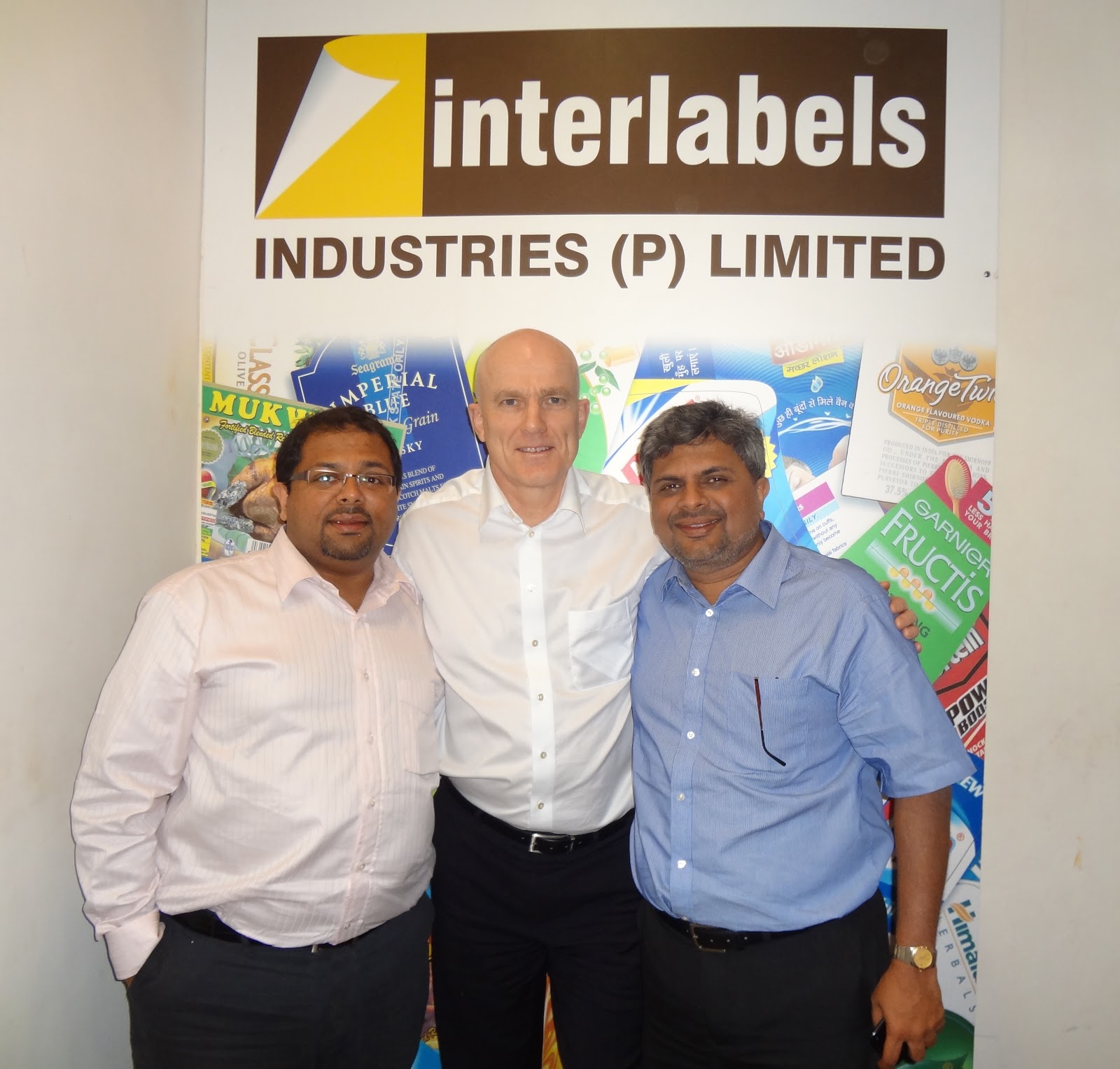
Bhavin Kothari, Interlabels


It is really interesting to see and realize the confidence of these leading personalities in the field of labels and packaging. Some of these people have grown from a stage where they were just very small start-up ventures and are now large by any standards. The kind of investments that they continue to make has paved the way forward for the Indian packaging industry. The summing up comments of some of them made are quite interesting. Amar Chhajed, “I genuinely believe that the Indian packaging industry has a great future and it must believe in itself. Focusing on Innovation, Value creation and Quality, we can excel against almost anyone in the world.” Jigesh Dani, “Off course as a nation India is emerging very strong and one must not doubt the self sufficiency but if you want it to grow and come out of the shadow, this is welcome step.” Bhavin Kothari of Interlabels, India’s largest label manufacturing company gave interesting comments, “It is very unfortunate that the politicians want not to understand the correct picture. Direct investment in organised retail by the largest corporate houses in India already exists, Tata’s (82billion USD), Reliance (60billion USD), and Aditya Birla (35billion USD). So just because the color of money is different, it is ridiculous to assume there will be problems. The large Indian corporate houses will learn the ropes in matter of time. Further so if any decimation of the ‘kirana’ store is to happen (which I believe will never happen) it will happen without FDI”. Suresh Gupta, “Modern retails will certainly gain market share very fast as it drives much needed modernisation of the retail sector. However, the kirana store will remain the "backbone" of the retail sector, and the Indian consumer will benefit greatly from the "jugalbandi"(duet) between the two formats. Whatever benefits the consumer will benefit the packaging industry” Viresh Sheth, “This will also directly spur infusion of fresh CAPEX (capital expenditure) and high-end technological innovations”


Gautham Pai, Manipal
Tecnologies Ltd.


Gautham Pai, Executive Director of Manipal technologies says," FDI in multi brand retail , in my opinion that is good for the country . The investments in infrastructure , supply chain and technology are long over due .I believe consumers will benefit from a quality , verity and experience perspective . Vendors will benefit from direct sales and efficiency/transparency in the system . Large numbers of jobs will be created . Middle men will suffer . Will boost packaging sector in a big way".


Saket Kanoria, TCPL


Finally to sum it all I got the views of Saket Kanoria, Managing Director of TCPL, “I feel that should FDI in multi brand retail happen, and am sure it will at some point, it will certainly open up lots of doors and opportunities to a host of smaller suppliers who will get access to international chains and give them the potential to scale, as well as export. I think that the political opposition notwithstanding it will be very good for India, consumers and the economy in the long run.” The industry surely has given their thumbs-up for the decision to allow FDI in multi brand retail!


Written by Harveer Sahni, Managing Director, Weldon Celloplast Limited, New Delhi. December 2011
 

Indians, busy at Labelexpo Europe 2011


Six years ago in 2005 when Weldon Celloplast Limited exhibited at Labelexpo in Brussels, they were the only one Indian exhibitor at the show. Indian visitors at that show were in quite a few numbers but looked more like tourists using Labelexpo as a reason to travel to Europe. They were visible walking around leisurely in the walkways more like window shopping with casual interests. They would drop by at some stands, make enquiries and then move on. Neither were they taken seriously by the high profile exhibitors displaying their expensive equipments nor were they sure of their expansion plans. The world attention was getting to be more concentrated on this huge market with a growing young and literate workforce creating high demand for consumer products. The Indian label market was obviously heading for phenomenal growth. Six years down the lane a lot has changed. Indian label printers have become a confident lot as they are more focused and sure of the path that they wish to traverse in an effort to meet the growing and exacting demands for labels. From a mere one Indian exhibitor in 2005, the 2011 show opened on 28th September 2011, as the largest label show on earth with fourteen Indian exhibitors, up from four in the previous show in 2009. As for the visitors, the Indian label printers have become a sought after segment for the exhibitors. These printers are now transformed into committed buyers, they are seen as business persons with firm plans to empower their companies with the latest printing technologies available anywhere. Instead of being seen as window shoppers in the walkways they were now engaged in serious discussions in the stands of leading material, toolings and equipment manufacturers. No wonder then that a gentleman walked up to me at the exhibition to say, “Not many Indians this time!” I could not answer immediately as at that time even I was wondering why. Earlier this year on the 5th of January 2011 I had predicted and tweeted on twitter, “Labelexpo Brussels will probably see the biggest number of Indian visitors. Indicates high growth in narrow-web label segment. My prediction!”. I started to look around to evaluate the situation myself. I was pleasantly surprised that the Indians, though not visible walking around, they were short of time to cover the most. They were in deep engrossing technical discussion at various stands across the show, meeting prospective suppliers of materials, toolings and equipments. My prediction made at the beginning of this year was true and had become a reality. Michael Hatton, Marketing Director- Labelexpo confirmed to me that in 2009 there were 338 Indian visitors and this figure had swelled to 429 at Labelexpo Europe 2011. There were more Indians then before and the reason that they were not visible waking around is, “They were busy at Labelexpo Europe 2011”.
 
True to the claim that Roger Pellow and his team made in the pre-show promos, Labelexpo Europe 2011 held from 28th September- 1st October 2011 at Brussels, was the biggest and most successful labelshow in the world till date. The show reported 28636 visitors from 118 countries which is an 18.6% increase over the previous show. The number of exhibitors grew from 544 to 550. It indeed was the largest show in the history of this 30 year old Labelexpo. Adding to the success is the fact that over 81% of the space for next Labelexpo is already booked. The Labelexpo team has been continuously innovating to bring value to visitors patronizing this prestigious show. Besides ensuring a huge number of working presses and equipments, new features like the Digital Printshop and the Package Printing Zone are endeavors to expand the horizon and vision of label printing companies. Most of the exhibitors to the show appeared to be satisfied with the results however some of the exhibitors in Hall 12 felt that due to the sheer size of this growing event and the increasing number of exhibitors, enough visitors did not reach them in the numbers that they were seen in first few halls. For this reason there is a strong debate that the show should be extended for one more day in future. Some exhibitors also aired the view that the venue should be moved to another location in Europe. Personally I feel such specialized events are linked to particular venues and cities and moving them may become counter-productive. Anyway it is for the organizers to decide but as for now the next Labelexpo will still be at Brussels.
 
Roger Pellow & Jade Grace of Labelexpo Group
with Raul Sylvestre of Lartec
End of the show quotes are an important part of any show and indicates the level of success it has achieved. Many exhibitors have expressed their satisfaction at the show. Jakob Landsberg of Nilpeter expressed, “Labelexpo Europe 2011 was more successful than we dared to hope for. In the current financial climate, our industry looks forward more optimistically than the rest of the world” UPM’s representative echoed similar views, ”Despite the challenging economic situation surrounding Europe these days, Labelexpo Europe 2011 nevertheless brought out the collective drive and enthusiasm in the industry. We saw plenty of people poised to push the label to the limit and we liked that!” Gavin Jones, Tectonic International Ltd said: “Labelexpo Europe is always a great shop front for our range of products and this year was no exception!” Cristina Toffolo of Gidue reports success with their innovative product range. In words of Jason Oliver Sales Director, EFI, “I’d simply say that we at EFI Jetrion were completely overwhelmed by the show.” It was heartening to see Ranesh Bajaj of Creed Engineers and Pawandeep Sahni of Weldon proudly beaming when Rotatek and Omet put up the signs on the presses displayed at their stand as sold to their customers in India. Rotatek was sold to Update Prints in New Delhi and two Omets were sold, one to Unique offset Mumbai and the second to Arunodaya Hyderabad. Other press suppliers may also have finalized deals for India but they did not respond to my email requesting information. Leading press manufacturers like Gallus, Mark Andy, Omet, MPS, Edale, Delta Industrial, Orthotec, etc had well attended stands and all felt that the show delivered the desired results. Ajay Mehta of SMI, the leading Indian Labelstock manufacturer is overwhelmed by the quality of visitors at his stand, he felt it was the right platform for his company to find recognition in the international markets. Young KD Sahni at Weldon feels his new and innovative security label products could not have found a more appropriate event to showcase. Amit Ahuja, the only Indian label press manufacturers to have ever exhibited with a working press at Labelexpo, was very busy for the entire duration of the show and carries home a whole lot of leads to work on. The press on display has been sold to a customer in Moscow, Russia. Indian label film manufacturers Cosmo films and Polyplex too reported a steady stream of visitors.
 

Kurt Walker, President-Finat
 Finat, the international association of the self adhesive label industry has played an important part in the success of Labelexpo. This event also marked the 20th year of partnership with this event organizer. In words of Kurt Walker President Finat, “ In all respects, this has been the best show ever” Jules Lejuene Managing Director Finat concludes, “The Finat booth saw hectic activity and was the meeting point for many luminaries of this industry”.


The Global label awards function and gala dinner, held on the sidelines of Labelexpo was a grand event before an audience of 550, the awards celebrate and honor those who promote best practice in the label industry. Some of the label industry’s leading companies and individuals were recognized for their outstanding contribution to the sector as the winners of this year’s Label Industry Global Awards.


Mike Fairley, Helmut Schreiner and
Dean Scarborough CEO Avery Dennison
  Helmut Schreiner, executive manager/owner of the Schreiner Group, was given the R. Stanton Avery Lifetime Achievement Award, sponsored by Avery Dennison. The Label Industry Award for Continuous Innovation – sponsored by Labels & Labeling, NarroWebTech and Label & Narrow Web – was presented to Brazil's Novelprint. EskoArtwork triumphed in the Label Industry Award for New Innovation category which is designed to underline technological advances made in the previous year. A host of other winners were also awarded at the function which was interspaced with good entertainment followed by a great dinner. Dean Scarborough, CEO of Avery and Mike Fairley were an important part of the deliberations at this function.
 

The LMAI Team
 The Indian Label industry was well represented at this exhibition. Leading the industry’s presence was the Label Manufacturers association of India(LMAI), President Vivek Kapoor. Most of the members of his team were also in Brussels for the event. Vivek and his team have created a very positive atmosphere in the association. The recent events like the GOA conference has brought unity in the industry and instilled a sense of camaraderie. Normally at the previous labelexpo’s I noticed that Indian printers would pass by their counterparts in the Indian industry in the walkways by giving a symbolic nod or a smile. This time around the bonding was evident, you could see the Indian printers standing in small groups discussing what was good and must-see at the show. These small and important get-togethers helped them reach their target exhibitors without wasting time. Printers from across the length and breadth of India were seen moving around. If it was Update Prints, Anygraphics, Zircon and Prakash Labels from North India, the west had an entourage from Creative labels, Renault paper, Webtech, Interlabels, PPL, Total print, Ajanta, Unique, Mahrishi Labels and many more. South Indians were also present in substantial no.s, Wintek, SGRE and Global from Bangalore, ITC from Chennai, Pragati and Arunodaya from Hyderabad, Raveendran from Sivakasi and so on. The list is long. This pan national representation conveyed the seriousness and firm resolve of the label industry in India to take the growth challenge head-on. These printers are now more than willing to invest, expand, innovate and globalize. They are shopping for the best equipment from presses to inspection systems, no wonder they were busy at Labelexpo.
 
Written by Harveer Sahni, Managing Director Weldon Celloplast Limited, New Delhi. October 2011
I have always been of the opinion, “it is the package that sells!” Every manufacturer of consumer goods realizes that good quality is imperative for long term success of the product. However it is an immediate and important need to first tempt the shopper to impulsively lift the product from the shop shelf. For this the manufacturers have to rely on the package design. The consumers get to experience the contents of the package only when they have reached the confines of their homes. It is another issue that repeat sale will happen when the customers find the product contents are meeting with their satisfaction. Thus it is necessary that a good product is packaged in an attractive and effective packaging. With the urbanized Indian consumer’s style of shopping undergoing a sea change from visiting traditional shops for buying goods to patronizing organized retail vends in air-conditioned ambience, packaging is getting the attention it should.
 
 
The current economic scenario and changing lifestyles in India are attracting the interest of many around the world. By the latest count, the Indian population crossed the figure of 1.20 billion people. In the last decade the addition to the population has been 181 million people, almost near to the total population of Brazil, the fifth most populous country in the world! India accounts for 17.5% of the world’s population. The Indian economy is growing rapidly, registering an 8.5 % growth in GDP. It is second most favored country for foreign direct investment (FDI) attracting an investment of US$ 25.9 billion in 2009-2010. Foreign exchange reserves have reached a figure exceeding US$ 276 billion. According to a report by McKinsey, the economy will grow five fold in 20 years. India is the biggest democracy in the world with a large English speaking population of which 64.8% is literate leading to a bulging middle class segment. Couple this with the fact that 64% of all the people in the country are in the workable age group of 15-59 years and 54% of the population is under the age of 25 years. This huge number of over 600 million young people will be getting education, working hard and earning more to spend more. It is obvious that retail spending in India is poised to grow exponentially.
 
According to the report, “Strong & Steady, 2011” Price Waterhouse Coopers (PwC), India’s retailing sector currently estimated at US$ 500 billion is expected to grow to US$ 900 Billion by 2014. According to some reports, in two years retail real estate stock in India will become double, from approx. 50 million square feet to almost 100 million square feet. The Indian retail industry is the fifth largest in the world and is growing at a fast pace. Rapid urbanization and higher spending power of a young generation are factors contributing to this amazing growth. It is interesting to note that due to the changes taking place, the large number of working women in an otherwise traditionally conservative society, are also responsible for this growth in spending. Retailing in the country is still at a nascent stage and it will be some time before it becomes the predominant and accepted way of selling across the nation. Most of the Indian consumers are used to the idea of visiting the traditional neighborhood stores for their needs. The shop owner is virtually the pushing salesperson for the brands that provide him better margins. As organized retailing becomes more and more acceptable, shoppers are experiencing the difference. There is a wide variety of products lying on the shop shelves yearning for their attention. The persistent shop owner pushing particular brands is missing. At this point in time the printed package is of prime importance. Innovative packaging tempts the shopper to reach for the product.
 
The highly fragmented Indian packaging industry is spread evenly across the length and breadth of India. The total industry size is estimated at US$ 19 billion as against the global market of US$500 million. The per capita usage of packaging in India is small at US$ 15.00 per person as compared to a global average of US$ 100.00. This does indicate the potential for growth in this market. According to Indian Institute of Packaging, the packaging industry in India is growing at a rate in excess of 15% per annum. However some industry experts express that the growth is much higher at 20-22%. Food and beverage account for 85% of packaging materials consumed in India, Pharmaceuticals 10% and balance 5% is other industries. Close to 50% of all the packaging materials used is converted into the printed packages, flexible packaging accounts for 22%, printed cartons 17%, Labels 3% and others about 8%. The rest of the 50% materials are accounted for by rigid packaging, metal, glass, caps/closures and others. The printed cartons and labels have been largely printed and converted by the offset printers employing various die-cutting, converting and decorating operations offline. The offset printing industry is well established in the country and has spread all over. This segment attracts continuous investment, expansion and up gradation. Self adhesive labels remain the forte and specialization of the narrow web label printers, who continue to grow, expand and technically upgrade steadily. In this segment the technology changed from letterpress printing process to flexographic printing and further on to combination printing using various printing and converting processes online with their narrow web presses. These include flexo, offset, screen, hot foiling, cold foiling, etc. Flexible packaging and Shrink sleeves are other segments of package printing that have attained a big market size owing to a steady 17% growth rate in recent years. The industry in these segments has been employing only the rotogravure printing in their manufacturing programme. The rotogravure printing industry is also well established and growing in India. It is the preferred technology for converting on wide web presses, providing economies of scale with high production speeds. Of late due to the need for shorter runs, faster deliveries and multi-process converting, the narrow web press suppliers are going wider to mid web presses with advanced multi process capabilities and offering these equipments to printers. These are high end presses that empower the printer to print and convert labels, folding cartons, shrink sleeves and flexible packing inline on the same press. It is just a matter of time when we shall see a paradigm shift in this direction.
 
As for the materials, with growth in the food and beverage industry the demand for specialized films and film laminates has escalated. In recent times due to environmental concerns the Indian authorities have restricted the use of plastics in certain large volume food packaging. The directive to use bio-degradable substrates has initiated a need to develop paper based substrates that will fill the void that this restriction has created. While the market for special films will continue to grow, social responsibility commitment towards a safer environment will lead the packaging industry to look for new and safer arenas. Waste management and recycling are also issues that need the converters attention. Producing a great package may bring in a lot of success but the effort to reduce the impact of packaging waste on earth, will bring satisfaction.
 
Written for the innaugral issue of Package Print Worldwid (PPW) magazine launched by Tarsus group at Labelexpo-Euroe 2011, Brussels, Belgium. by Harveer Sahni, Managing Director, Weldon Celloplast Limited, New Delhi India 19th June 2011
 
He has reached the pinnacle! Having lead his company Pragati Offset Hyderabad, to unprecedented success, he does not regret that a 12 hour work schedule from 8.30 am to 8.30 pm leaves him no time to socialize. That is the price that he paid for his indulgence in his business. He is happy that God has compensated this adequately by giving him the pleasure of coming back home each evening to a wonderful family where four generations from his father to his grandchildren, live together in perfect tradition of love, harmony and simplicity. Paruchuri Narendra is the driving force behind Pragati Offset, a company founded by his father Paruchuri Hanumantha Rao.
 
 
On the 1st of September 1962, Hanumanth Rao who after completing his BA Hons. (philosophy), a short stint as a journalist with Visala Andhra and five years as manager of Sarathi Cine Studios also doing small roles in films out of which some even with the late N T RamaRao, set up a small printing press with one treadle press and three workers. The three men that he employed were a binder, a composer and a machine man. Surprising as it may sound two of these men are still associated with is company even after almost 50 years, though only in advisory capacity.


Hanumantha Rao

Hanumantha Rao had some basic knowledge of printing from his time spent at printing detective novels written by his friend Narayana Rao in Chennai. Also he was a quick learner and does not shy from saying that he learnt and grasped well from his otherwise trained workers. He fondly remembers the first job he printed was a folder with Ganesha on it! The first big order that came his way was the 1973 voters list. Thereafter it was always the way ahead to be traversed and soon he bought his first offset press, a second hand single colour OM-4 Russian Offset Press. He vowed to be a quality producer and set standards that would be the way forward for his company. The foundation had been laid and the journey into excellence in printing had begun. It was time to induct more working hands in this business.
 
Narendra, Hanumanth Rao’s elder son had studied to be a chemical engineer from the University of Mysore specializing in precious metal plating for the watch and electronic industry. On completing education he took up a job in a metal finishing company in Bangalore to get work experience. He was not very happy in that job, he wanted to start a metal finishing unit on his own and moreover his wife Sasikala, a doctor was pursuing higher studies in Hyderabad. Having no money to start on his own, Narendra started to look around for other avenues. At that point of time he requested his father to show him some other successful printing press. Once he had evaluated the printing business, Narendra gave up his plans to pursue the plating business and finally joined his family business in 1978. There has been no looking back ever since. A turning point in the journey of this enterprise came when they bought a photocomposing machine, which was the first one that any company bought in south India besides the printers of the daily south Indian newspaper, “Hindu”. Composing, until that time used to be the biggest of bottle necks in their business, given the short runs that they were doing for customers. This installation brought all the advertising agencies in the city to their doorstep. With this came a windfall of orders and it was time to expand yet again. They decided to buy a new single colour Dominant press. Those days licenses were required to import and Narendra’s father fondly remembers that the day his grandson Harsh was born, they applied for the license. In 1985 Pragati acquired their first four colour offset press but they were formally considered big league when in 1991 they announced the installation of a Komori Lithrone 5 colour 40” press to be inaugurated by Mr. Kasturi, the owner of “Hindu”. Pragati was now into printing of posters, catalogues and other commercial printing jobs. They continued to expand and grow thereafter also making their foray into folding cartons. In 2006 Narendra and his team saw the potential and growth in labels. This made them to decide making investment in that area as well. As they had already ventured into producing cartons for some large customers this label business was in synergy with what they were doing and was witnessing a high rate of growth. The present level of operations at Pragati, have come a long way from the time that they installed their first treadle press with just three workers. They employ almost 700 people and operate out of 2,30,000 square feet of production area spread over at various premises in and around Hyderabad. Everything from pre-press to post-press is done in house. The infrastructure besides other equipment comprises of twelve offset presses, two MPS label presses, one Nilpeter Label press and the latest acquisition, Omet Varyflex the in line folding carton press. When asked about the new investment in Omet Varyflex, the first one of its kind in India, Narendra says, “It was a wish to do all operations in-line rather then moving jobs from one equipment to another, carton making involves too many offline operations”. Luckily they had gained experience in flexographic printing from their indulgence in labels, offset was already their forte and they were also producing cartons, so it was easy for them to integrate the technologies comfortably on the Varyflex.
 
The ethics, values, commitments and team spirit instilled in the entire Paruchuri family are amazing. Their involvement in their business is total. In his endeavour to sustain the high level of competence and growth, Narendra is supported by his brother Mahendra who apart from keeping the machine in ship shape, shares the management hat. Harsh his elder son who is a printing engineer and an alumni of the prestigious Rochester institute having specialized in printing technologies and Hemanth his younger son also a mechanical engineer from Purdue are heading the labels division. Of course the towering personality of P Hanumantha Rao is also there to support them, he still spends some time in the press before moving on with his involvement in social and charitable work. His social work has had the family actively contributing to the society by helping in constructing a community hall, an old age home and providing scholarships to needy students. Narendra’s wife Sasikala is a doctor specializing in laparoscopic surgery. She also does her bit to give back to the society. For the past 18 years she has been running a free clinic, Pragati Public Charitable Trust, every Thursday at village Mokila, some 30 km from Hyderabad. The clinic has almost 18,000 registered patients as of date. Her daughter in law, Shruti (Harsh’s wife), even though she has two school going children contributes her might. Besides being the perfect hostess at home to special guests she also helps out in the purchase department of Pragati. Truly a committed family with three generations actively involved in business and the fourth generation growing up to gather the reigns, eventually.
 

The Pragati team receiving the Sappi Elephant award
for excellence in printing.

Narendra is a tireless work-alcohalic. While he follows a 12 hours work regime from 8.30 to 8.30 yet he says that I am available for my team at least up to 10 pm. No wonder that the company reports 12%-15% annual growth in the offset segment and 25%-30% annual growth in the packaging segment that includes labels. He strongly feels that the MIS system implemented in 1992 helped fuel this growth. When asked about his plans and projections in the next five years. He is very clear in his thought, says that the company’s resolve to excel in print quality and deliver value to customers since inception has made it possible for it to become a zero debt company which continues to grow. The inertia of growth levels already achieved and the opportunities as and when they emanate, will automatically drive us into continuous expansion in the times to come. In his leadership, Pragati has been the recipient of many international awards for print excellence. Topping the long list of awards they won is the Sappi Elephant award for excellence in printing in 2006, 2008 and 2010. In 2010 Narendra wanted his father to receive the award personally. Since his father was not fit to travel, the organizers, as a befitting mark of respect to the founder of this press, P Hanumantha Rao came all the way to Hyderabad to honour him. The three generations of this family are not resting on their laurels, they strive hard to retain the saga at Pragati, “Winning awards for print excellence, is a way of life!”
 
Written by Harveer Sahni, Managing Director, Weldon Celloplast Limited, New Delhi August 2011
 
LMAI Team L to R: Harveer Sahni, Amit Sheth, R Deshpande, Sandeep Zaveri, Gururaj,Manish Desai, Vivek Kapoor,
Ajay Agarwal, Jigesh Dani, Ajay Mehta and missing from the picture is Ranesh Bajaj
  
Group "Drum Cafe"

As the African drummers on stage from the group, “Drum Café” started to hammer on the skins of their drums, a hall fully packed with those from the Indian label fraternity were a confused lot. These delegates to the first ever LMAI conference titled, “Innovations Unlimited” had surprised all in the industry by their overwhelming response. The event was overbooked and there were no more rooms available despite taking up rooms in adjoining and nearby hotels. Immediately after registration the delegates were asked to come for the first two hour session of presentations at the conference hall. Two hours later, the audience was ready for some fun. When they saw just a handful of drummers on stage, the confusion was obvious. Music is a very important part of every Indian’s life. From birth to wedding and till death, all ceremonies are completed with music. We pray and we sing with music. We are happy, we need music. We are sad, we still need music. Drums! They are traditionally used as an accompaniment to instruments like harmonium, sitar, guitar, violin, piano, flute, etc. so the drums alone were certainly a cause of some amount of confusion.
 
Drumbeats by your's truly!
Twenty minutes later, the hall was vibrating! Euphoria prevailed. Everyone in the hall was given separate drums and the leader of the group, “Drum Café” started to teach the audience giving them beats to follow him. Soon all in the audience were hitting the drums with fervor and unison.  They were ecstatic and enjoying every moment. Their hands hurt and throats went hoarse, yet they craved for more fun. The LMAI conference “Innovations Unlimited” had begun, the fun promised also appeared to be “Unlimited”.


When the event was conceptualized, the LMAI team was very optimistic and eager to hold the conference at Goa. As we came closer to the date of the event it became a little uneasy situation as even the event managers had not been finalized. Somewhere around the end of January 2011, Vivek Kapoor the LMAI President pressed the panic buttons. What followed is a concentrated build up to an amazing event. Vivek called all in his team across India daily and talked for hours. All of us still joke, “Vivek has free telephone lines”. The team gelled together, worked hard and what evolved months later will be a part of history of label in this country.
 
Raveendran (Seljegat) & Hemanth(Pragati)

Once the African drummers had delivered, the bar was thrown open, liquor flowed and it was networking all around. People were meeting colleagues in the industry and also striking new relationships. The virtual who is who of the label industry was there to party.


Anil Sharma CEO Avery Dennison, interacting with guests.

Anil Sharma the CEO of Avery Dennison India, who were the platinum sponsors, lead his team to welcome the delegates. Other sponsors included Rotatek-Creed, Esko Artwork, DuPont, Kurz, Mark Andy, Flint Group, Heidelberg-Gallus, label Planet-Orthotec, Nilpeter, Gidue-Reifenhauser and SMI. Important foreign visitors were seen mixing with printers. Notably besides the sponsors, there were representatives from UPM-Raflatac, Omet, A B Graphics, Lintec, Alphasonics, Rotometrics and many other international companies. Vivek and his team, with the help of event organizers Tranquil world had put up a great event. The selected venue Park Hyatt is a property par excellence. The ambience added to the fun of being in Goa, a location that the world loves to be in. It is like good music that tempts you to start dancing.

Federico from Gidue
 Presentations at the conference had interesting content Ajay Mehta, SMI spoke on success stories, Jean Pierre-Esko spoke on security and anti counterfeiting while Kelvin Boon Tai made a presentation on plate making technologies. Press manufacturers who made presentations included Bhrigav Jain on behalf of Label Planet, Jeff Feltz- Mark Andy, Federico d’Annunzio-Gidue, Dilip Shah-Nilpeter, Kishore Sarkar-Gallus,


Ranesh Bajaj, Creed Engineers.


Michael Bethge, Ahlstrom


Ranesh Bajaj-Rotatek and Itsik Krief-HP. Other presenters were Keith Montgomery-ABG, Wolfgang Burkard-Kurz, George Lyle-Flint Group, and the last presentation on recycling of siliconised liner came from Michael Bethge of Ahlstrom.
 
L to R: Roger Pellow, Amit Sheth, Mike Russel, Manish kapoor
Bibiana, Federicao, Itsik Krief, Kishore Sarkar

Roger Pellow, managing director of the Labelexpo group chaired a panel discussion on various printing processes. I have been to numerous conferences around the world, seldom have I seen the audience so committed and engrossed. Despite being at a destination that beckons them to its beaches, the delegates stayed glued to their seats in the conference hall.


Audience

 
Many a delegates yearned to go out and experience this holiday destination but I guess they postponed it for the last day before they left back home. As the conference came to an end, it was time to party yet again. The delegates were given two hours to rest and change into casual attires while the organizers reset the venue.


The LMAI team had targeted the number of delegates at 125 and they were not sure if that was achievable. A joint and concentrated effort brought in a stream of bookings and the target was revised to 160. Inching closer to the event the bookings crossed 200. Thereafter it appeared totally unmanageable. Booking were closed at 220 but more prospective delegates were persistent and brought references to put pressure on the LMAI team. Despite refusing so many people the final count at the event was 270! The organisers had on their hands a gigantic task. Gifts for all, comfort for all and fun for all. Pooja Ghai and her Tranquil world, the event company, delivered well!
 
Manasi Scott


When the guests returned to a new setting in the hall, few moments later bollywood entertainer Manasi Scott made a grand entry. She set the mood by getting the label community on to the dance floor. What followed was mind boggling, the hands were up, the feet were tapping on a jam packed dance floor.


The women on stage!

From Manasi the DJ took over and it was fun all the way.


Balle Balle! Sandeep Zaveri and Pawandeep Sahni

Simultaneously the bar was also thrown open. Delegates from around the world were happy and enjoying their time in Goa. Competitors, printers, suppliers and buyers, all were celebrating like one global family.


Kishore Sarkar-Gallus, Paolo Grasso-Omet and Harveer Sahni

Cheers!!! They were partying hard, dancing, enjoying the camaraderie and creating wonderful memories.


Rajesh Chadha Wah Kya dance hai!

It appeared to be an unending evening when I realized it was almost 2am and I decided to leave. When I left people were still at the bar and on the dance floor experiencing the “Fun Unlimited”.


PS: I have posted pictures that were in my own camera.Once I have the official CD, I will post more pictures or change some. Till then enjoy these!
 
Written by Harveer Sahni, Managing Director, Weldon Celloplast Limited, New Delhi-110008, India 5th August 2011.
 
Earlier this month from the 1st to 4th of July 2011, PackPlus South 2011 was held at the Hytex Exhibition Centre Hyderabad. With over 250 exhibitors, the organizers as expected were very optimistic about the success of the show.


Mahrishi Labels Ahmedabad at the show

As mentioned earlier by me that, owing to the organisers' past association with the label industry, a sizable presence from this industry was expected.


PragatiPack, Hyderabad

  They, the constituents of the label industry, did show up in substantial numbers. The Packaging industry and also the label industry in India is evolving to reach global standards and the consumer product  growth driven by a fast growing young and literate population to amazing levels is yearning to find new and innovative packaging solutions.


The crowds,they just kept coming
It is indeed surprising and a matter of record that a show which was dubbed as a regional show and expected to have limited success turned out to be stunner! Over 12000 visitors came to visit the exhibits on display. It was amazing to see the long ques at the registration counters even close to the day end. This is an evident indication of the development of entrepreneurial endeavors in the interiors of India. Indians are venturing out to explore the avenues they can indulge in.
 
Weldon Stand
 
 
Label industry also made their impact with not just industry suppliers exhibiting but also leading label printers like Pragati Hyderabad, SGRE Bangalore, Maharshi Ahmedabad, Sai Security Bangalore, GMG Hyderabad and many more were seen displaying their products at their stands at the show.


Creed Engineers
 
 
Industry suppliers  like Creed Engineers, Intergraphic, Weldon Celloplast, Reifenhauser, etc were exhibiting their offerings for the label industry.


Harveer Sahni

On the sidelines of this show a highly succesful and interesting conference "Package 2011" was held at the Novotel Hotel. Noted speakers from acroos the packaging industry made extremely informative presntations. Harveer Sahni, of Weldon Celloplast and Ranesh Bajaj of Creed Engineers were prominent speakers from the Indian label industry.


It indeed was a pleasure to hear a young Label printer Hemanth Paruchuri from Pragatipack Hderabad deliver an excellent presentation.


Amit Sheth of Label Planet at the nerworking evening


A grand networking evening held at Hotel Taj Banjara brought together the leaders from the label and packaging industry. A very well attended high profile evening!


Compiled by Harveer Sahni Managing Director Weldon Celloplast Limited New Delhi-110008
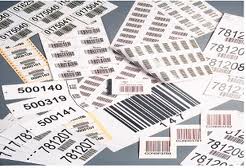
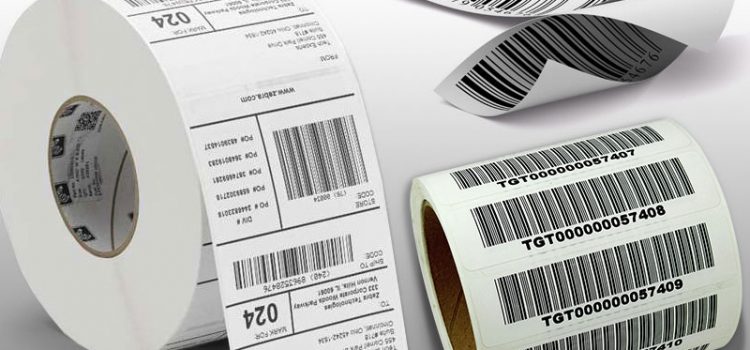
In the early nineties a printer friend of mine showed to me a package that he had designed and printed for a customer. Surprisingly, it had a barcode printed on it at a time when they were virtually not used in India. I had seen these barcodes in use on a previous trip to USA and wondered if the technology had already arrived in India. On further investigation I came to know that since imported consumer products coming into the country carried this image, my friend had put it on the carton to give the product an international look. He had no clue about the functionality or usage of these set of black lines. Little did he realize that one day soon, these barcodes would become an important and essential part of every package with widespread usage in trade and industry. The barcodes that appear as bands of vertical parallel lines of varying thickness and spacing are referred to as linear or one dimensional (1D) barcodes. These are optical representations that are machine readable and contain a lot of data about the product on which they are affixed. The data from these images is read by barcode scanners and decoded to provide information relating to retail sales, tracking, accounting, inventory control, etc.

 
2D Bar Code
Barcodes have further evolved into rectangles, dots, hexagons and other geometric pattern representations to accommodate larger amount of information. Such barcodes are referred to as two dimensional (2D) barcodes. Bar codes initially appeared as circles and were introduced in the shape of bars and stripes in 1991. Active commercial usage of barcodes commenced in USA in June 1974 when a retail pack of Wrigley’s chewing gum was scanned at the sale counter of a store.
 
 
The Government of India also realized the importance of barcodes. In 1996 the Ministry of Commerce, promoted GS1India, a joint initiative of the Government of India and industry, to educate the trade and industry on the use of GS1 numbering system for unique identification of products, services and locations in line with international practices of using them as standards for barcodes. Over the years the Government has been advocating the widespread usage of barcodes. Various steps taken in this direction are;
 
 In 2007 the ministry of micro, small and medium enterprises announced a financial assistance scheme to support the micro and small enterprises in implementation of barcodes.
 
 On 20th October 2009, The Ministry of health and family welfare, made GS1 barcodes mandatory on all drugs, devices and other medical supplies to Govt. of India w.e.f. 1st April 2010, this was later deferred to be implemented in a phased manner. The implementation will start from October 2011 and final implementation will have to be made by April 2012. With the implementation of this order the Government wants to take decisive action against the menace of substandard and spurious medicines being pumped into the public healthcare system. If this endeavor enables the government procurement agencies to pinpoint and trace the culprits who supplied spurious medicines, it will definitely improve the reliability in public healthcare.
 
 In an effort to safeguard Indian pharmaceutical exports from the bad name they were given when some spurious medicines in Africa, were found labeled "made in India", on 10th January 2011, DGFT, under the Ministry of Commerce, made it mandatory for exporters of pharmaceutical products to build track and trace capability for their export products by using barcodes as per GS1 global standards. The bar codes were to be employed at primary, secondary and tertiary level packagings. The above order was slated to come into force on the 1st of July 2011 but owing to representations made by trade and industry the implementation was deferred. The order will now be implemented in a phased manner and the final application of barcodes on primary packaging will become mandatory from 1st July 2012. Once the order is implemented, a package going out of a factory will have an identifying bar code and unique number that can be read at any point in the supply chain right up to the retail shop. These can then be matched with the batch number and other manufacturing details stored in a central database to find out if the package is genuine or not. The image can be captured in any cell phone and transmitted to get the verification from the database in seconds.
 
The Indian drug export industry is of the size of Rs.45000 crores and most of the larger producers are willing to implement this order. It is the small and medium sized manufacturers and exporters who account for exports to the tune of Rs.20000 Crores, that are objecting and fear the implications. There are about 6000 SMEs in the pharma sector spread across the country. According to them, this order will have adverse implications on their businesses:
 
1. It will make their products costlier.
 
2. They tend to lose sales due to already existing tough competition.
 
3. The cost of implementation according to some exporters is almost one crore, though this appears to be exaggerated.
 
4. The cost of barcode per strip or vial will make the product unsalable.
 
5. The whole process of barcode generation and application will need computerization and automation but the SMEs have mostly manual packing facilities.
 
Given the resolve of the government and the benefits of this order, it is a matter of time that this order will be fully implemented. Drug regulating authorities in most foreign countries are also making bar coding mandatory and exporters to these markets, whether big or small will have to comply with these regulations.
 
High Speed Anti-counterfeiting Labeling solutions:
 
Definition of counterfeiting is, " A deliberate attempt to deceive consumers by copying and marketing goods bearing well known trademarks, so that they look like the original products made by a reputed manufacturer ". Counterfeits in pharmaceuticals have far reaching damaging effects on the unsuspecting patients. With time, manufacturers and marketers have tried to develop various anti-counterfeiting solutions to counter this deception of consumers by counterfeiters. There is constant work being done in this field but at the same time these criminals who fake the products work overtime to copy these solutions to cheat the consumer. Counterfeiting is one of the fastest growing financial crimes, threatening jobs and endangering public health and safety. The World Customs Organization estimated annual global trade in illegitimate goods at about $600 billion (2004), which is expected to rise to $1.7 trillion by 2015, representing 5% to 7% of all worldwide trade. The size of global fake drugs industry is estimated some t 90 billion US Dollars. Estimates vary on the number of fake drugs made in India. The Indian government says that 0.4 percent of the country's drugs are counterfeit and that substandard drugs account for about 8 percent, but independent estimates range from 12 to 25 percent drugs to be fake.
 
I list many of the anti counterfeiting technologies available, all or most of them can be converted to self adhesive labels to be dispensed on high speed labeling machines. Some of these solutions are overt and others covert. The overt solutions are visible and verifiable by the end users but the covert ones are not visible;
 
1. Holograms: Holograms are optically variable devices. The optical interaction of the holographic image with the human eye makes it ideal for both brand promotion and security. Many holograms produced are tamper evident and also have other security features built into them like sequential numbering, UV fluorescence in the adhesive, etc. The area of holography is quite well developed and there is a lot of scope in it for producing newer security options.
 
2. Security Graphics: This involves printing technologies like the ones used for banknote printing. The security can be further enhanced using special designs like micro text and latent images.
 
3. Transfer labels: These are similar to the tattoos. The printed image is directly transferred to the product
 
4. VOID labels: These labels have special features built into them, such that they show hidden text when they have been removed and reapplied. The classic example is the label which when removed leaves the message VOID behind. Labelstock can be designed such that the residual message VOID can be customized to customer needs. It can show a brand, an emblem or a message. It can even change color when removed.
 
5. Destructible label: Destructible labels are another form of tamper evident labels. Such labels fragment into small pieces when attempted to be removed. These labelstocks can be top coated for accepting barcode printing and also adding more security features.
 
6. On product markings: On-product marking technologies allow for special images or codes to be placed on conventional oral dosage forms. These overt technologies can be difficult to replicate and offer a security technology at the pill level. This added layer of security is effective even when products are separated from the original package.
 
7. Embedded image: An invisible image can be embedded within the graphics on the pack. It can only be viewed using a special filter, and cannot be reproduced by normal scanning.
 
8. Security inks (UV sensitive): Creating security features into labelstocks or labels using security inks is possible in many diverse ways. This is possible due to the wide variety of inks available e.g. UV sensitive inks which glow under UV light or change color when exposed to sunlight and Metameric inks that are similar in day light condition but change under different light sources. One can print an invisible message which becomes readable when light conditions change, such images cannot be photocopied.
 
9. Thermochromic inks: These inks change color with change of temperature.
 
10. Micro-Taggants in labels: Microtaggants are microscopic Identification Particles that are traceable and play an important part in anti-counterfeit technology. Microtaggants are highly versatile in their use and application. In basic form, Microtaggants are a unique numeric code sequence in a multiple colored layer format. In more complex forms, Microtaggants deliver multiple layers of security through the incorporation of several taggant technologies. These can be used in inks coatings, adhesives and paper making. The simplest form of taggants can be identified from their different colours. Other taggants can be energy sensitive, fluorescent, magnetic, etc.
 
11. DNA Taggants: These are DNA-embedded biotechnology security applications. These are proprietary formulations and processes and can be verified by laboratory DNA analysis. This is used for very high level of security and anti counterfeiting measures.
 
12. Security threads and fibres: . UV sensitive fibres can be incorporated into the pulp by the paper mill or in the adhesive during production of labelstock. Such fibers can be seen under the UV light.
 
13. Barcodes: As explained earlier, these are high-density linear or 2 dimensional bar codes. A 2D code can typically be 1cm square or smaller, and yet contains up to 1 Kb of data. Linear bar codes may used where space is not a constraint. The codes are printable by on-line methods including inkjet or digital printing, allowing direct computer control and transfer of records to the central database. Systems have been developed whereby the label on a shipping case is linked to the identities of all its contents, and this can be further extended up to the pallet labels.
 
14. Consecutive or sequential numbering: Consecutive and sequential numbering is done as a part of the label printing or finishing process. This does not provide a very high level of security. The main disadvantages of sequential numbering are that the sequence is predictable and easily replicated. Infact it is generally used as a security enhancing process. A label that has other security features is given this numbering to further enhance the level of security. One of the biggest users of this process is the state excise departments who apart from having various security features in their seals also number them in an evident effort to keep a track on the labels in the supply chain.
 
15. Serialisation: The Track and Trace label may not be difficult to copy, but its security is greatly enhanced by the inclusion of unique and apparently random serialisation, or non-sequential numbering, ideally at individual item level. If the serialisation was sequential, then the level of security would be very low as the sequence is predictable, whereas “random” serialisation using a highly secure algorithm or method of encryption overcomes this. Individual packs may still be copied, but the database will identify duplicates or invalid serials, as well as those which have been cancelled or expired, or which appear in the wrong market, or with invalid product details.
 
 
16. RFID: An RFID tag comprises of an antenna with a microchip at its centre. This tag has specific and batch information which can be scanned at a distance, and without requiring line of sight (unlike bar codes). The radio frequency used determines the range and sensitivity, but no, one specification suits all applications. Some systems are able to capture multiple records for a mixture of different products, but there are some issues around orientation of the tags and absorbance of the radio signal by liquids and foils. But one clear advantage of RFID is that it has the potential to be fully automated in warehouses and even through to pharmacies, without requiring manual intervention.
 
17. Water mark paper: These are marks that you can see as an image in the paper when you hold it against light. These are built into the paper at the paper making stage in a paper mill.
 
18. Laser coding: This process of putting batch and variable details by laser coding requires special and expensive equipment. Laser codes can be applied to cartons, labels, plastic and metal components.
 
19. Odor: Micronic capsules containing distinctive odors can be applied as an additive to an ink or coating to provide a novel covert or semi-overt feature.
 
The scope of security labels and brand protection solutions are wide and no, one solution can be a permanent solution. The development and innovation does not come about quickly due to hesitation on the part of the users in avoiding to spend more. Another step required to defeat the counterfeiter is to keep upgrading the security labels but the manufacturers resist this and want a solution that would last them at least five years. This is not possible as the counterfeiter works overtime to make duplicates and fakes. Continuous innovations are required to produce security solutions that become a deterrent for them. Giving them so much time would make us fall into a trap facilitated by the time that we ourselves give to the counterfeiters. Designing a security label needs application of mind, time and money. We have to reconcile to the fact that providing security solutions is an ongoing process. Application of security labels is only one part of the exercise, educating customer to check its authenticity is the more important part. What good is a security label if it cannot protect the duplication and if you do not know how to check if it is a genuine product?
 
Presentation made at PackPlus South in Hyderabad 2011 on 2nd July, 2011 by Harveer Sahni, Managing Director, Weldon Celloplast Limited, New Delhi-110008, India
 
 
Born into a family who migrated to Delhi from Lahore (now in Pakistan) at the time of prtition of India, Prem Khanna, is a typical Punjabi who works hard, enjoys good food, makes a lot of friends, loves to entertain and puts up a brave front with a smile, even in times of adversity. While he has been born and brought up in Delhi and is an alumni of Delhi’s Kirori Mal College yet the Lahore culture and style is evident on his personality, “Doing everything with a flair!” Prem Khanna started his professional carrier as an employee of a custom clearing agent. Even as he worked hard at his job he knew one day he will be running his own show as an employer. It was just a matter of time and firm resolve that soon he started his own custom clearing company and found success. As he moved ahead in business, he struck a close friendship with one of his customer P C Jain, who was a trader and regularly imported Hand Held Labelers, Labels, etc. from companies like Pitney Bowes and Monarch Marking Systems. The concept of gun labels, as they came to be called with time, was introduced in India by P C Jain. Being a pioneer in this field, Jain saw the potential and need to start a manufacturing operation to produce these price marking labels in India complemented by trading in the imported hand held labelers. He proposed the venture to his friend and custom clearing agent Prem Khanna, inviting him to invest in equity and join the board of the start-up venture Great Eastern Impex Pvt. Ltd., as a director. Khanna, with his urge to diversify and grow, saw it as an opportunity and accepted to invest and join the board of the company as a director. This was in the year 1983-84, Prem Khanna made his tryst with self adhesive labels and silently pledged to excel in this field.
 
 
Most of the work in the initial years at Great Eastern was done by PC Jain who continuously travelled and Khanna preferred to remain a silent partner, observing the business as it grew. It was in 1987-88 when the company moved to their new premises in Gurgaon that Prem Khanna started to take active interest in the working of the company to understand the manufacture and marketing of self adhesive labels. He fondly remembers the high margins that they roped in those days. A product that they now sell for just Rs.680.00 used to sell at in excess of Rs.2000.00. Great Eastern is a success story that I intend to chronicle another day. The company grew at a fast pace and expanded with time. It was in 2002 after Shakti Jain, PC Jain’s son returned to India after completing his studies in the United States and joined business that things started to change. In time P C Jain proposed to Prem Khanna to end the partnership and split the business into different business segments and marketing zones and still maintain an association. This looked interesting on paper and appeared to work for a while but eventually the reality prevailed, the partnership had come to an end. Prem Khanna realized he had reached the turning point of his life and he was left with his start up venture Rachna Overseas Pvt. Ltd. (ROPL) to move on in life. Time had come to keep his tryst with self adhesive labels and redeem his pledge to excel in the field. In true Punjabi tradition he put his mind and soul in the venture. He was assisted in his endeavor by A S Shekhawat an alumni of IIM who also had worked as Vice President at Great Eastern and had left them at that time to join ROPL as a director.
 
With a Mark Andy 830 label press, an Ihle ribbon slitter and some staff inherited from Great Eastern, Khanna and Shekhawat went ahead to establish a pan national marketing network to sell the same product mix they were doing earlier. Space was initially a constraint and finance was difficult but Prem Khanna managed it well. The first success came with a contract from Hindustan Paper Corporation followed by orders from Hero Honda and others. Thereafter it has been continuous growth and expansion at ROPL. Starting from less than 10000 square foot factory they have now moved to a 30000 square foot smart looking facility producing primarily a range of variable data labels, barcode labels, price marking labels, thermal transfer labels, etc. They also import and sell point of sale items like barcode printers and scanners. With their manufacturing facility in Gurgaon near Delhi, ROPL operates out of six more offices located at Delhi, Mumbai, Chennai, Bangalore, Hyderabad and Kolkata. They have added more equipment and now have seven label presses, 2 Ihle ribbon presses and a host of ancillary equipment. ROPL has a workforce of over 150. Prem Khanna himself overseas all administration, while his son takes care of marketing in Delhi and Mumbai. The production and the branches are handled by A S Shekhawat. “Rachna Overseas Pvt. Ltd. has been growing at a fast pace of 35% per annum” says Prem Khanna and goes on to add with a flair, “In the next five years we will grow at least three times if not more” They have started to test their marketing with RFID and would like to start production when they feel the technology has stabilized. Digital printing has not been considered so far. As for their foray into international business, they have been exporting for a while but soon they will be a multinational of sorts. Commercial production will soon begin at their joint venture Rachna Overseas (Bangladesh) Pvt. Ltd. in Dhaka. ROPl aspires to start another manufacturing facility close to present one.
 
 
Prem Khanna’s wife Rachna, after whose name his company has been named, is a homemaker and his moral support in all endeavors. His only son Karan has joined him and given the energy levels of Prem Khanna, it will be a while before he hands over the baton completely to Karan. Prem Khanna is a dedicated family man. When he finishes for the day he heads straight home looking forward to spending time with his two granddaughters. His only daughter Nupur is married. His success has not gone to his head, he reminisces that he was innocent and slow in his younger days, his father used to tell him, ”I wonder what you will do in life?” Today a successful Khanna lends support to his extended family including his brothers and sisters. On Sunday mornings he does allocate his time to play Cricket, which has been his passion for long years. Prem Khanna goes pensive when asked about his love for going on holidays, “There is no time” he complains, “the growth in labels is addictive and compelling. It changes your priorities; they become your first love”.
 
Written by Harveer Sahni, Managing Director, Weldon Celloplast Limited, New Delhi-110008 1st June, 2011.
As we get into the middle of summer holidays, most of the bigger label printers seem to be heading to some exotic destinations with their families. They have worked hard to achieve success and so it is appropriate to reward themselves with relaxing and fun-filled vacations. When they return to work rejuvenated, it will be start of yet another bout of hard work to chisel their success stories with print. The retailing revolution in India has unfolded a growth in the Indian label industry that needs constant indulgence and continuous expansion to achieve excellence in printing with enhanced capabilities to produce defect free labels at high speeds and be cost effective. The market keeps on getting bigger and consumers get more demanding both in terms of quality and prices. With raw material prices sky-rocketing, the pressure on the label printers is evident. In such a scenario the time-off is justified, so that they come back and get back to work with enhanced vigor.


Hotel Park Hyatt, Goa
The Label Manufacturers Association of India has been toying with the idea of holding a conference for long time. The event has finally gone beyond the planning stage and has been announced. The LMAI Conference, “Innovations in Print” is scheduled to be held at Hotel Park Hyatt, Goa on the 29th, 30th and 31st of July 2011. The event is just two months away and preparations are in full swing. The management team at LMAI headed by their President Vivek Kapoor is making efforts to make this conference a big success. The industry has welcomed the move and the event appears to be heading for a fully sold out situation! Leading equipment and material suppliers have seen the opportunity in this conference where the “who is who” of the Indian label industry will meet, and have come forward with sponsorships. Most of these renowned international companies are also sending in speakers to make presentations that will impart knowledge on innovative developments in the field. LMAI is making efforts to make this event a memorable one by arranging lunches, dinners, entertainment, celebrity performances, African drummers, etc. This is an evident effort to add value to the meet with good content, good entertainment and great networking. It is interesting to note that with the announcement of this event the LMAI membership has started to grow.
 
Before the LMAI conference, earlier on in July from the 1st to 4th “PackPlus South 2011” is being held in Hyderabad. Though it is primarily a packaging show yet it does have a converting zone where important industry suppliers to the label industry as also some leading label printers will be exhibiting. Given the event organizers heritage and links with the label industry, it is expected many of the constituents of the label industry, more so from South India will be seen at the show either as exhibitors or visitors. The show also gains importance from the fact that it has established a foothold in the south Indian market in recent times.
Two months later in the end September, “Labelexpo Europe 2011” will be held from 29th September to 1st October 2011 at Brussels. This show is the Mecca for successful Label printers across the world. The last show in 2009 marketed as, “Greatest Label show on earth” lived up to its tagline with over 24000 visitors from 125 countries, despite the fears of the impact of economic slowdown. The show in September 2011 is going to be the biggest ever label event with some innovative features. Last year at Labelexpo Americas, the event promoters Tarsus had tried a new concept of organizing, “Technology Print Workshops”. The huge success of these workshops has prompted them to introduce the same at Labelexpo Europe this year. Three printing technologies (dry toner, liquid toner and inkjet) will be compared against each other during live machine demonstrations run by an independent moderator. The technologies will be represented by Xeikon, HP and EFI Jetrion respectively. There will be four sessions per day, three of which will see the different companies printing the same job – a food, pharmaceutical or personal care label – on the same substrate. The fourth session will allow participants to print a label of their choice. Visitors will also get to see the narrow web printing and converting technology undergoing a transition so as to integrate label printing, flexible packaging and package converting technologies on to the same press. This would enable a label company to acquire one high end press and have the capability to produce labels, shrink sleeves, flexible packaging, folding cartons, etc on the same equipment employing diverse print technologies. The developments displayed at this event will be an eye opener for the future trends in the label industry.
 
The no. of visitors from India to Labelexpo Europe this year is expected to be exceptionally high. They will definitely be the select band of visitors to watch and woo. They will be the ones ringing the order bells for the equipment suppliers. Most of the printers are holding their order to finally announce their acquisitions at this premium event. The year seems to be getting busy and interesting for the label industry. Hereon it will be Hyderabad followed by Goa and then finally Brussels. They will be doing business, partying and networking, all the way!
 
Written by Harveer Sahni, Managing Director, Weldon Celloplast Limited, New Delhi-110008 1st June, 2011.
 
 
Finat,the worldwide association representing the interests of the self-adhesive labeling industry, has announced the winners of its latest label awards competition at the recently held Finat congress in Sicily, Italy.It was ahighly successful congress attended by over 330delegates from across the world.The 31stFinat label competition, a part of the congress deliberations, received a record number of entries. It was also reported that entries were of higher quality than average, making selecting winners 'very difficult' and resulting in many more Highly Commended awards.

Hameed of Wintek receiving the award from Tony White
with Gururaj in the middle.
 Tony White Chairman of the judges said,"‘We received just over 360 entries from 50 companies worldwide, an eleven percent increase over last year’s record numbers’.
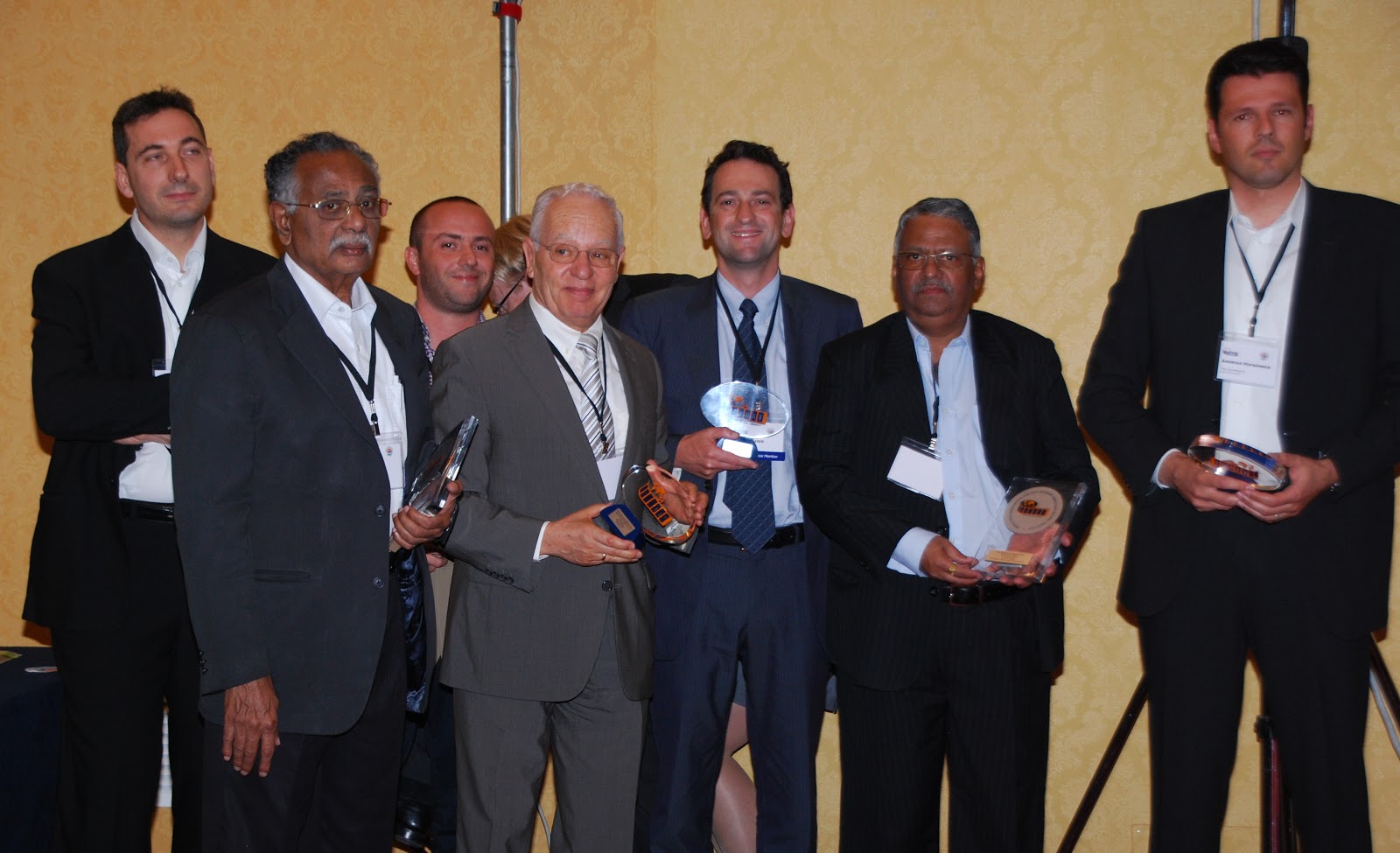
It is a matter of pride for us in India that Wintek, Bangalore and UPSL, Chennai a member of the Manipal Group headed by the enterprising Gautham Pai were recipients of awards at this prestegious events. I was extremely thrilled to hear my friend Gururaj Ballarwad say, "I am pleased to inform you that we have wontwo Category Awardsand six"Highly Commended Certificates" at the FINAT Label competition in Sicily, Italy".
In picture the winners! Hameed, Helmut Schreiner,
Isidore Leiser, Gururaj and others
The Award function was attended byGururajand his partner K M Shahul Hameed on behalf of the Wintek. "Keep it up Gururaj and team Wintek, you have worked hard and it is a journey which gets decorated by the day, with more awards coming by".


Harveer Sahni, Managing Director Weldon Celloplast Limited. 16th June 2011.