Rising prices and intense competition have made leading label printers to sit up and dip into their think tanks. To cater to the exacting demands of their customers, they need to upgrade their equipment with huge capital investment. To service the cost of these investments, they need to retain margins at a reasonable level. End user customers continue to demand better quality and service at better prices. With escalating raw material prices, label printers are considering cost effective processes to lower production costs. Large production runs, online defect detection to avoid rejections, lesser downtimes, operator efficiency, etc. are some of the issues that are being attended to. On the other hand printers are investing in complimentary equipments that can take smaller production runs economically. Cheaper flatbed presses, Chinese presses and second hand presses are being used to cater to the demands of smaller volume orders from large customers. No label printer supplying to a large volume customer would risk sending the customer to another printer for a smaller order. Neither can they afford to take small runs in their main expensive label presses increasing their downtime, expenses and production costs. While these cheaper equipments were being used for shorter runs yet there was a need for alternatives. Digital printing seems to be the ideal situation. As printing speed picks up and inks get cheaper, this technology is likely to be adopted by many large printers. All these are efforts to retain customers. Customer retention is a challenge that is facing many big label printers. Price is of course a sensitive issue but there are other factors that have also been becoming reasons for customers to shift loyalties. One big concern has been logistics. Printers, who were initially small in size, concentrated themselves in specific geographical zones. With growing demand for consumer and retail products, manufacturers or label buyers started to locate themselves across the nation, it became imperative for them to look for vendors closer to their facilities. As label printers grew in size with enhanced capital expenditures, it became a compulsion for them to retain these customers, who had multiple manufacturing locations.  These customers were demanding just in time deliveries to control their inventory levels and to ensure strict delivery program. It was time for label printers to assure their customers, “Service at Doorstep”.
Gautam Kothari
Interlabels, headquartered in Mumbai and leading label printers in India, started the trend of manufacturing at more then one location. They started by setting up their second unit in India at Delhi and then followed it up with units at Baddi, Kolkata and Chennai. They also have a unit in Nairobi Kenya, taking the total no. of units to six. They are now in the mood to consolidate before considering further locations. Gautam Kothari of Interlabels says “The trend in recent days is such that a lot of the customers want their suppliers to be close to their manufacturing locations. This, because the lead time needed to execute an order has shortened considerably due to market pressure. India being a huge country, catering to all the regions from one location is difficult. Having multiple manufacturing locations has helped us to reduce the time to get the material reaching them apart from reducing the freight cost.” He goes on to further add, “The concept of multiple locations for us is extremely beneficial as our customers are based all over the country and speed of response is essential. As far as manufacturing goes, it helps in better servicing however at a cost since having multi-location manufacturing does add to much higher operational costs which no customer is willing to pay for”. 
Amar Chhajed   
Amar Chajjed of Webtech, Mumbai who has a voracious appetite for expansion and growth was one of the first one to start (his second) a manufacturing unit in Himachal Pradesh near Baddi. He finds the experience extremely beneficial and says, “If it would not appear so, we would not do it” He feels it is one of the ways to grow and hopes to add two more locations in India or elsewhere in Asia.  Chandan Khanna of Ajanta Packaging says, “Having multiple locations is a part of Ajanta’s growth plan. Moreover it is in line with our commitment to our customers that we will go with you and grow with you” They have three manufacturing locations for label printing at Baddi, Daman and Sharjah (UAE).  Their corporate office and offset printing operations are in Mumbai. They also have marketing offices in Kolkata and Chennai.  According to Chandan, “If you have the patience and power to invest, multi-location manufacturing is highly beneficial. Ajanta will definitely add another location by 2012”.
Chandan Khanna on right
This mantra for growth is not restricted to printers in western India. NOIDA (Near Delhi) based Prakash Labels have also expanded to many manufacturing locations. Dinesh Mahajan heading the Praksash Labels management team states, “To serve customers in a vast country like India one has to be located in all zones if you wish to have a national presence”. Prakash labels have three manufacturing units in Noida, one in Baddi and one in Mumbai. Besides this they have marketing offices in various cities including Ajman, UAE. They are present in eight different cities. Dinesh further adds, “It is a definite way to grow”. Though they are fairly big in size he said he would be everywhere if he was bigger. They have recently put up the Mumbai unit so it will be a while before they think of yet another location. Zircon another Noida based label printer who commenced operations just a couple of years ago, has been reporting continuous expansion by adding new equipments. According to Sanjeev, heading Zircon, they have two manufacturing locations already and plan to add two more by end of 2011. Sanjeev feels that having multiple manufacturing locations is beneficial for rapid growth even though it needs a lot of administrative and supply chain management. I was quite surprised when Coimbatore (South India) based Rajiv Nair of Stallion Systems said, “We have four manufacturing locations and 16 marketing offices!” Rajiv used to work for another label company some years ago. Once he was on his own his company achieved grew vertical growth. He says,” Due to delivery delays to pan India customer base and high freight costs, it became necessary for us to locate at different places”.  Stallion benefitted from the decision and feel that it is the way to grow. They will continue to add more locations with better equipment.
Other label printers who have invested in multiple locations manufacturing and marketing include Unique Photo Offset, Syndicate Printers, Paper Products, Sai Security and a few others. Customer service is now acquiring new dimensions as end user demand just in time service along with delivery. This helps the end users of labels to manage their inventory, production and achieve better profitability. The parameters of vendor selection are now just not limited to price and quality. The label users are auditing their prospective vendors more rigorously. While price and quality are important yet logistics, social responsibility and environmental concerns are also considerations that decide in vendor selection. Vendors need to be extremely responsive to their customers growing demands and concerns. Proximity of the label printer to the manufacturing facility of their customers and capability to provide world class service has become necessary. There is a paradigm shift in the way label printers look at their expansion plans. Locating themselves strategically is now imperative for label printers to be able to provide, “SERVICE AT DOORSTEP.”
 
Written by Harveer Sahni, Managing Director, Weldon Celloplast Limited, New Delhi-110008 30th November, 2010 for magazine "Packaging South Asia "
 
Self adhesive labels originated in India around 1965 when a screen printer in Mumbai used a PVC film as face paper and a polyethylene film as the release liner. The hard to wet polyethylene or PE film performed as a release liner because the pressure sensitive adhesives available at that time were not designed to anchor on to PE. The label or sticker so produced would open with a crackling sound as it would be a little difficult to peel it from the PE backing liner. For the same reason paper could not be used on face as it did not have the adequate strength and would tear off while separating from the PE liner. The force required to peel was too high and thus the usage of PVC film was justified. That was the beginning! Soon special base papers and silicon release coatings were available in India. Siliconised glassine or “Silicon Paper” as it came to be known became the preferred backing liner for all self adhesive label materials. This also made it possible for paper to be used as face material. Silicone coating on these base papers provided for an “Easy Release” making it possible to peel off these self adhesive labels effortlessly from their backing release papers. Adhesive chemistries developed such that adhesives could permanently bond even to PE and silicon chemistries also experienced continuous development, such that they can now be applied to PE film for achieving excellent release properties. Since the silicone and adhesive chemistries are beyond the purview of this article, we shall dwell primarily on the various papers used in this industry.
 
Labelstock essentially consists of three main components, Release paper, Pressure sensitive adhesive (PSA) and Face paper. We will dwell on the various types of papers used to form the release paper and the face paper. It will be appropriate to mention here that the self adhesive labelstock technology has technologically advanced to a level whereby a substantial portion of the output has seen a definite shift to filmic substrates both as face papers and as release liner. Paper however remains the major and important part of the labelstock production. We discuss the two components separately.
Release papers: These are papers that are highly calendered, non-absorbent and with a smooth surface so that silicone can be coated on it for imparting release properties. The papers need to be densified and have uniform caliper for good die-cutting. The various types of papers used in production of release papers are as follows;
1.       Glassine
2.       SCK or Super Calendered Paper
3.       CCK or Clay coated paper using bleached Kraft as base paper.
4.       Polycoated papers.
5.       Saturated papers
Filmic liners have also steadily found acceptability due to their uniform caliper, smoothness and specific character, still paper based liners constitute almost 90%of all the release liner used. While SCK was the preferred substrates in North America due to lower price yet the European market was always largely using Glassine due to performance and aesthetic reasons in auto dispensed labels. India for long years followed the European model. Labelstock producers and label printers opted for labels with glassine as release paper. To have a good die-cut label, that would dispense with ease and speed on an automatic labeler, it is necessary to have a good release liner. Any variations in caliper of the liner may result in nicks in the release paper that would result in web breaks at the end user level. While die-cutting is done by the label printer, the end user of labels is the one who is dispensing them. The two processes are complimentary to each other. The functionality of the self adhesive label is highly dependent on the liner. Any web breaks would lead to increase in downtime and create problems for the users.  Auto dispensed labels and barcode labels drove the demand for glassine liners. This is due to the transparency of the paper through which the label is sensed by the sensor and dispensed or printed by a barcode printer. Things started to change but very slowly such that in the last decade, SCK which has very similar construction and properties to glassine started to be used sparingly. Since the bulk of the demand was for glassine, Indian stock manufacturers stayed away from promoting other varieties of paper. However in small manner some stock manufacturers were experimenting with SCK, CCK and Polycoated papers. The effort was extremely limited until stock lots of laminates and base papers from North America started to land in India in large quantities. Some printers under extreme pressure for cost reduction from customers started to use these stock lots. It was only a matter of time that the larger printers also started to consider these materials for customers who were not very fussy or rigid about the liners. This exercise created a definite segment of labelstocks with different release liners. While the auto-dispensed labels and barcode label segment partially started to accept SCK which had similarities to glassine, it was the sheeted product market that went in for a paradigm shift to CCK as liner. This is so because the laminate produced with CCK as backing and sheeted for Offset printing would have excellent lay flat nature. This would enable it to be printed on offset presses with speed, as curl in sheets was a printer’s nightmare. The siliconising operation involves taking the paper through high heat for thermal curing. This process depletes the moisture content of the paper and makes it unstable. Due to the highly calendered construction of glassine the paper cannot regain moisture quickly and evenly despite being subjected to re-humidification process. The uneven absorption of moisture when the labelstock is sheeted and exposed to atmosphere tends to make the release liner to expand and make the sheets to curl. CCK or clay coated paper has one side coated for imparting a good silicon hold out and the other side is left as it is, so that it can breath and regain moisture during the gumming process when emulsion adhesive are used and the heating chamber has high moisture content that helps the paper to rehumidify to a level of stability. Other segments of label printers who were now richer in their experience from using imported stockpots of labelstocks started accepting the stocks from local manufacturers with these non glassine liners for cost reasons.
Polycoated papers also have found usage in a limited quantity for the past two decades. These consist of normal maplitho variety of paper over which a layer of polyethylene or polypropylene has been extruded. Due to frequent defects in polycoating and lack of consistency in the earlier years, the growth of these papers was restricted. However in recent times imports from China and other East Asian countries with polycoated release papers made many people in the industry to rethink and improve upon the technology. So much so, that these papers have also found continued and specific usage in the computer label segment. Another paper that has started to find foothold in some segments is the saturated paper. This is very similar to polycoated paper, the only difference being that the plastic (PE or PP) is replaced by a proprietary chemical coating which provides a good silicon hold out.
Going by personal knowledge of the market over the years and assessment, I have tried to estimate the tonnage of paper used for release liners in all the labelstock consumed in India. The basis of my estimate are made on figures of total consumption of labelstock that I mention in the last Para of this article. I estimate that 45000 to 50000 tons of base papers form a part of all the labelstock sold in India solely for the purpose of self adhesive labels. The demand for other applications like tapes, Hygiene, medical, food, etc. is all separate and extra. The way this industry has evolved and due to cost pressures most of the base papers for labels are silicon coated captively by the labelstock manufacturers.
Face Papers: Face paper in labelstock is what actually and finally becomes the label. It carries the branding, product information and decoration along with the adhesive. The release paper only protects the adhesive so long as the label is not used. As soon as the label finds its application, the release paper comes to the end of its limited lifespan and ends up in a waste bin or a landfill or incinerated to dispose off. Efforts are being made to recycle them. Demand for face papers are according to the application they are needed for.  The list is exhaustive and keeps on extending as per the imagination of the designers. I list below some of the commonly used papers;
1.       C1S or Semi-gloss paper and commonly known as Chromo Art Paper.
2.       Uncoated Matt or Maplitho Paper
3.       Cast coated or Mirror Coated Paper
4.       Thermal Transfer Paper
5.       Direct Thermal Paper
6.       Fluorescent Paper
7.       Colored Papers
8.       Metalized Paper
9.       Foil Laminated paper
10.   Textured paper
11.   Security Papers
12.   Papers for Digital Printing
The semi Gloss or chromo art paper and Maplitho paper together account for the biggest chunk of labelstocks sold in India. According to my assessment between the two, they account for nearly 70% of the total stock used, over 15% is filmic and 15% is others. Filmic should have been more but the shrink sleeve has taken away substantial market share. This would amount to about 55000 tons of paper used annually, both chromo and maplitho put together for self adhesive labels. The chromo art paper labels are mostly used for pharma labels, cosmetic/product labels, lube oil labels, and also barcode label. Maplitho finds extensive application in  price marking labels for handheld labelers, computer labels, logistic and other EDP labels.  Cast coated paper, popularly known as mirror coated paper is used for high-end retail labels with lot of decoration on them. These have lost much of market since printers have started to use semi gloss paper with UV Varnish to get high Gloss. Moreover labels for smaller diameter pharma bottles faced problem with cast coated paper as due to their stiff nature they would get an edge lift leading to rejection of labels. Thermal transfer paper is a special matt finish smooth paper used for producing barcode labels in barcode printers with thermal transfer ribbons. The heated print head presses the ribbon against the paper to neatly transfer the image on to the paper resulting in a barcode. Barcodes help in retail selling, inventory control, logistics, accounting and a host of other applications. The volumes of this paper which is mostly imported, grew at a fast pace due to widespread usage of barcodes. However due to rising cost and availability problems much of this business has shifted to chromo art paper which has found a high level of acceptability from label printers and users. Everyone recognizes direct thermal paper popularly known as fax paper. It changes color when a heated print head touches it. With the advent of internet connectivity, emails becoming the mode of communication and faxes being phased out, this paper was heading towards a slow death. It suddenly got a new lease of life with new applications arising in labels with a shorter lifespan. It can print barcode without the need of a thermal transfer ribbon. Barcode labels for grocery in malls, petrol pump sale bills, toll tickets, retail vends, courier co’s, etc. started to be made on direct thermal paper. The product consumption is now growing at a fast pace prompting many companies to initiate manufacturing this product locally. Colored papers, fluorescent papers, metalized paper and foil laminated paper are used for their eye catching appearance and for attracting the consumer attention. With growth of packaged foods, gourmet foods and wines, the need for textured and designer paper for label applications has become imperative. At this time these papers are not produced in India. They are supplied by specialized paper producing companies like Fedrigoni of Spain. These papers are not produced in India and smaller volumes along with the diverse nature of designs, makes importing these, a costly proposition. Some innovative printers have started to indulge in getting the embossed effect on papers by using special flexible dies supplied by companies like Lartec also of Spain. These dies actually do not emboss but deboss and yet produce a textured effect on the paper. I am sure this will create market for textured papers in India. With increased incidents of pilferage, counterfeiting and duplication, there is a growing need for tamper evident and security labels. Some mills even in India have started to offer papers with UV fibres that glow in dark when exposed to UV light for verification. Others offer papers with water mark. There is also need for paper that would be weak and fragment into pieces on tried to be removed but this property is against the target specification of the mills who try to achieve high strength in the papers they produce.
As the digital printing industry continues to evolve and pose threat to the conventional printing, the paper mills in India cannot ignore this segment which is growing at a very fast pace. As quality and speeds pickup in digital printing, I am sure that it will be difficult to match the versatility of this technology even for label printing. Tambola tickets, lottery tickets, short run product labels, security and sequentially numbered labels are some of the applications that have already shifted over to digital printing. At this point of time special papers with top coating are required and some label printers do a primer coating on labelstocks themselves to achieve perfecting standards in digital printing. Label stock manufacturers also offer stocks top coated by them. It may just be a matter of time that paper mills offer pre-coated papers. The possibility of the technology upgrading further cannot be ruled out when all digital printers will print normal papers that are available without any additional primer coat.
India with its 1.12 billion strong populations is fast becoming a global economic powerhouse. It is estimated that this year the country will have the highest number of English speaking people in the world. Almost 30 percent of the country’s population is between the ages of 10-24 years, while the average age is 26 years. 70% of these young people are literate. A Young and literate workforce are growing up to work more, earn more and spend more. With higher disposable income they are becoming a part of a bulging middle class, larger then the entire population of United States. For this reason the world’s largest retailers are making a beeline to India to be a part of this growth.  If the number of mobile connections is an indicator, it is interesting to note that in July 2010 alone 17 million subscribers were added taking the total number of mobile users in the country to over 652 million. The demand for consumer products, packaged foods, pharmaceuticals and all packaged products is slated to see a quantum jump. With this will also increase the demand of labels. The self adhesive label industry is presently estimated to be growing by excess of 15% per annum. According to published data, 16 billion square meters of self adhesive labelstock is converted into labels in the world every year. By my own estimate total annual consumption of self adhesive labelstock in India is about 750 million square meters. This translates into a per capita consumption of almost 0.75 square meters. Compare this almost 3 square meters in China, between 13-15 square meters in Europe and a little more in the US.  Based on the above estimation of total consumption of labelstock, I calculated the quantity of paper used for release paper and that of face paper for label stock consumed in India. I conclude that over 1,00,000 tons of paper is used for the entire quantity of self adhesive labels used in India!
Written by Harveer Sahni, Managing Director, Weldon Celloplast Limited, New Delhi-110008 1st November, 2010. The article was published in October-November 2010 issue of the magazine "Paper Mart"
Amit Sheth
As a young boy, Amit Sheth would look up to the skies and wished to be flying in the clouds. He wanted to become a commercial pilot one day. As he grew up his ambition became stronger and he found support from his father Kirti Kant Sheth. His plans to pursue his ambition had to be given up when life took an unexpected turn and he was asked to give up that wish and join the family business…
Kirti Kant Sheth had started trading in printing machines way back in 1955. His flagship company “Sheth Bros.” with his brothers as partners became highly successful and respected sellers of printing and packaging equipment. By late seventies or early eighties Sheth Bros had reached their pinnacle. Their name was synonymous with printing and packaging machines. They spread across India with offices in Calcutta, Delhi, Guwahati and Mumbai. As luck would have it in 1985 the brothers decided to go in for a separation. Kirti Kant Sheth had to call upon his son Amit Sheth to give up his ambition of becoming a pilot and join him in business. Amit did accept the need of the hour and stepped in to become a salesman in his father’s company, looking after sales of letterpress printing and bookbinding machines in Eastern and North Eastern India besides making efforts to export their equipment.
In 1991 Amit accompanied their family friend Dushyant Parekh of National Art Press Calcutta to visit Taiwan. Little did he realize that this visit would be a turning point in his life and would be decisive in making his entry into the world of self adhesive labels and narrow web printing. During their visit Dushyant Parekh showed to Amit equipment that could make “Stickers”. It could print multi-colour, Hot-foil stamp, over laminate, die-cut, remove waste matrix, etc in roll and also do sheeting at the end of the line. Amit was fascinated! The presentation and introduction of the machine and its operation was made to them by John Huang of Orthotec. Amit became Orthotec’s business associate and eventually a dear friend of John. This commenced the journey of Amit Sheth into the Self Adhesive Label industry.
In the excitement of making his first sale of a label press in 1993 to Antarctica Limited, Calcutta, he accepted a condition of restricted additional sale. Due to this he had to restlessly wait for two more years to sell another press. He was getting uneasy as the new technology was fast spreading. The relief came when in the opening hours of “Printpack India 1995” in New Delhi, Amit found his most satisfying moment! He sold the press he was displaying at the show to Rajesh Chadha of P C Chadha and Co. Rajesh a third generation entrepreneur, whose flagship venture is now called Update Prints Pvt.Ltd., has by far been Amit’s biggest supporter, customer and friend. His company Label Planet has not looked back ever since. Label Planet now represents renowned international principals like Orthotec, Focus, Cartes, Miyakoshi, Inktek and Rotary Technologies. Amit Sheth has been a hands-on man and the best sales person of his company. Travelling extensively he remains personally in touch with all his customers. It is incredible that till date he has sold over 200 presses and his appetite to sell many more at a fast pace is not letting up. He finds active support from wife Rupa, homemaker and a great mother to their two wonderful daughters Ruhi and Kyra.
Amit has done pioneering service for the Indian Label Industry. Despite being an industry supplier, he initiated and actively indulged in setting up the Label Manufacturers Association of India (LMAI). He brought together leading printers from across the country to meet one evening at Mumbai. He provided the necessary support from his office premises and his staff to do the groundwork. In appreciation of his work, he has been given the honorary membership of LMAI for life, he is also the honorary secretary. He has been instrumental in bringing together suppliers and label printers together on the LMAI platform. Having gained knowledge, experience and stature in the Indian labels industry Amit hopes that one day he is able to establish a Labels Institution and would like to indulge in educating the new comers in this field. Expressing his views on the changing technologies in label industry he feels the digital will continue at a fast pace however the conventional presses will remain the workhorses and retain their charm. He feels Laser printing and die-cutting will be a technology to watch in coming times.
Amit Sheth sums up his achievements by quoting his late father,” You wanted to fly high, you do not really need an aircraft, success will do the job”
 

Written by Harveer Sahni, Managing Director, Weldon Celloplast Limited, New Delhi-110008 on October, 2010.

New Delhi or for that matter India, is still rejoicing at the success of being a proud host for the prestigious Commonwealth Games in October 2010. It is also the start of the festive season which brings with it feelings of celebration, elation and a boost to the markets. Public spending goes up and so does the sales of consumer products, which eventually leads to a high usage of labels. During this season we hope to see high growth rates in this market segment. The trends in the industry are already buoyant. Equipment suppliers are ecstatic at the growth in investment in Label Presses by Indian Label Printers. While many existing printers are the ones who are expanding and increasing their existing capacities yet it is interesting to note that an equal, if not more, volume of investment into self adhesive labels is coming from offset printers and flexible packaging companies.
Preceding and following the commonwealth games we have and have had a spate of shows relating to the label printing, Offset printing and packaging industry. I wonder how this situation is going to be taken up by the printers who have already been voicing their concerns about too many shows being held not only in a year but now, in matter of weeks. However at this point of time let me dwell on the fact that the Indian printers are in for an extravaganza of a show after another show! Some of the best suppliers/exhibitors will be trying to woe the Indian printers while they showcase their finest wares. The industry can look forward to multiple opportunities to learn, indulge, and technically update themselves. Fortunately for the exhibitors, the audiences they are targeting at are in a positive mood and as things stand these visitors are willing to see, investigate and shop. It indeed is time to show!
 
Towards the end of September 2010, Roger Pellow, the Managing Director of Labelexpo group and his team landed in India after having held a successful Labelexpo America at Chicago, earlier in the month. They held three road shows across India. In a whirlwind tour while they were in India for a week they organized road shows in Chennai, Mumbai and Ludhiana. Immediately after this it was Mumbai’s turn to showcase “Indiapack 2010” organized by the Indian Institute of Packaging (IIP) from September 30th to October 3rd 2010. Being the show of the premier government sponsored institute, it attracts a lot of interest from the major converters and users. It is interesting that majority of the packaging development managers in big companies are alumni of IIP. As we get closer to the end of the year, “Pack Plus 2010” will be held from 3rd to 6th December 2010. Just after a gap of one day “Labelexpo India 2010” will open up at the same venue Pragati Maidan. New Delhi from the 8th to 11th December. As a matter of fact both these shows were the brainchild of the husband wife team of Anil and Neetu Arora.  Anil sold his highly successful “India Label Show” to Tarsus, they renamed it as Labelexpo India. This gave the show an international perspective as it became a part of the Labelexpo series of shows around the world. The day Labelexpo will be opening its doors to printers in Delhi’s Pragati Maidan, another printing show “Screen Print India 2010” (8th-10th Dec.)will be inaugurated at Mumbai. One is left wondering how the printing fraternity is going to be at two different places in one time. As we enter the second decade of this millennium, on January 16th 2011 “Printpack India”, the prestigious show of IPAMA and ITPO will throw open its doors yet again at Pragati Maidan, New Delhi. It indeed is going to be a busy time for visitors and exhibitors. These exhibitions are expected to generate a lot of business and the market sentiments are pointing towards that. It is also time to network and meet counterparts in the industry repeatedly during this season. The printers will rejoice in the festive spirit.
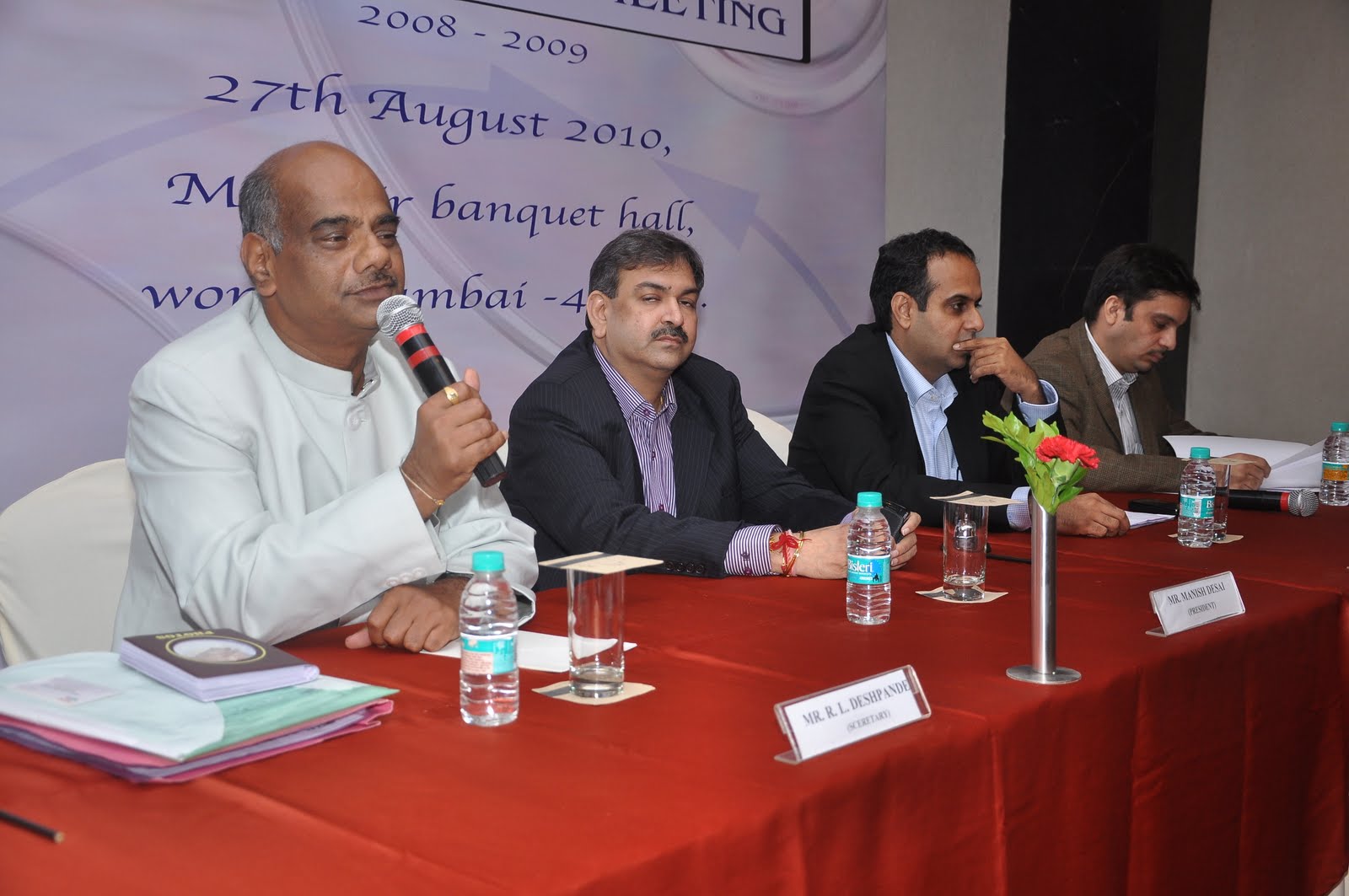
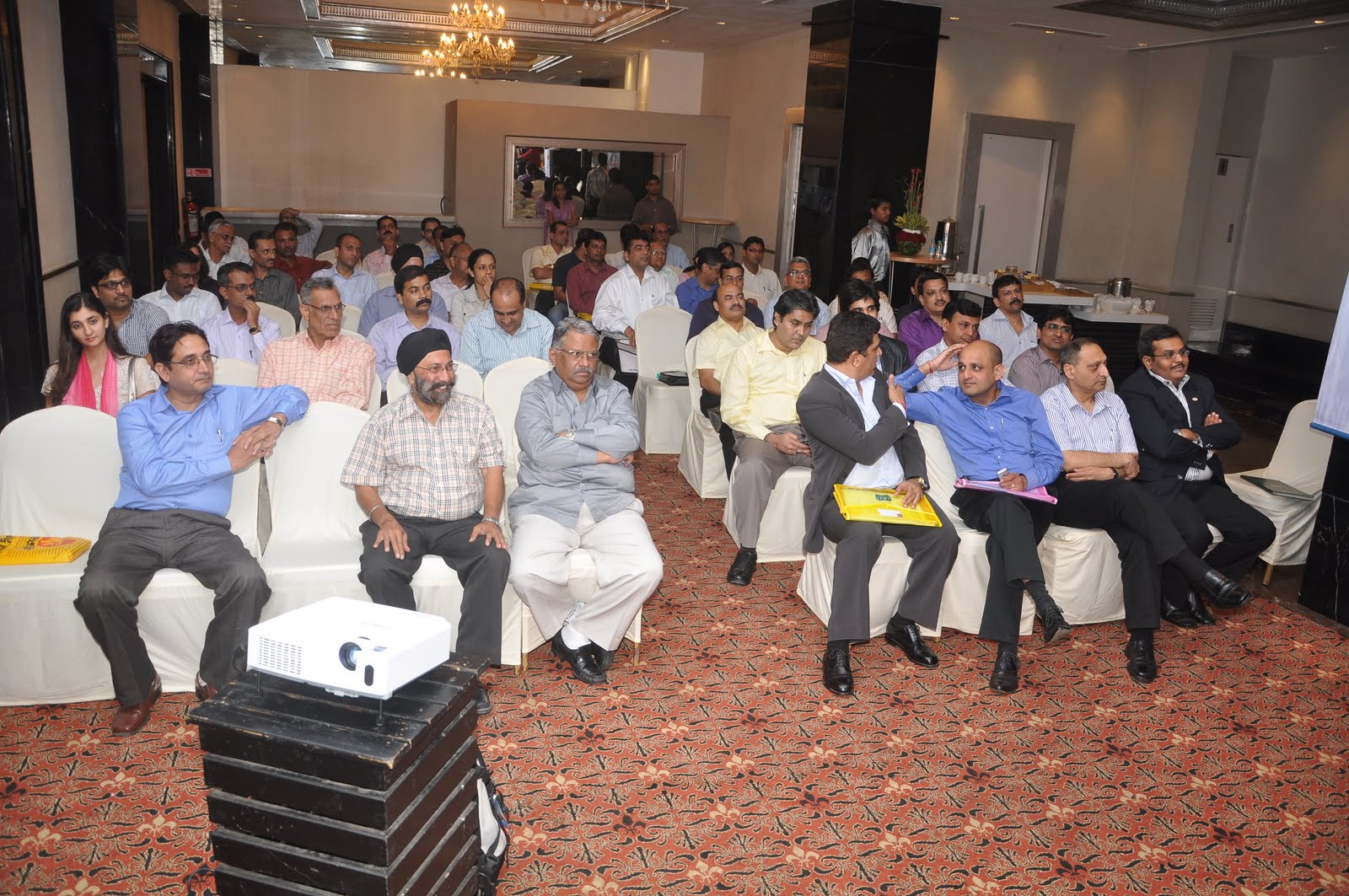
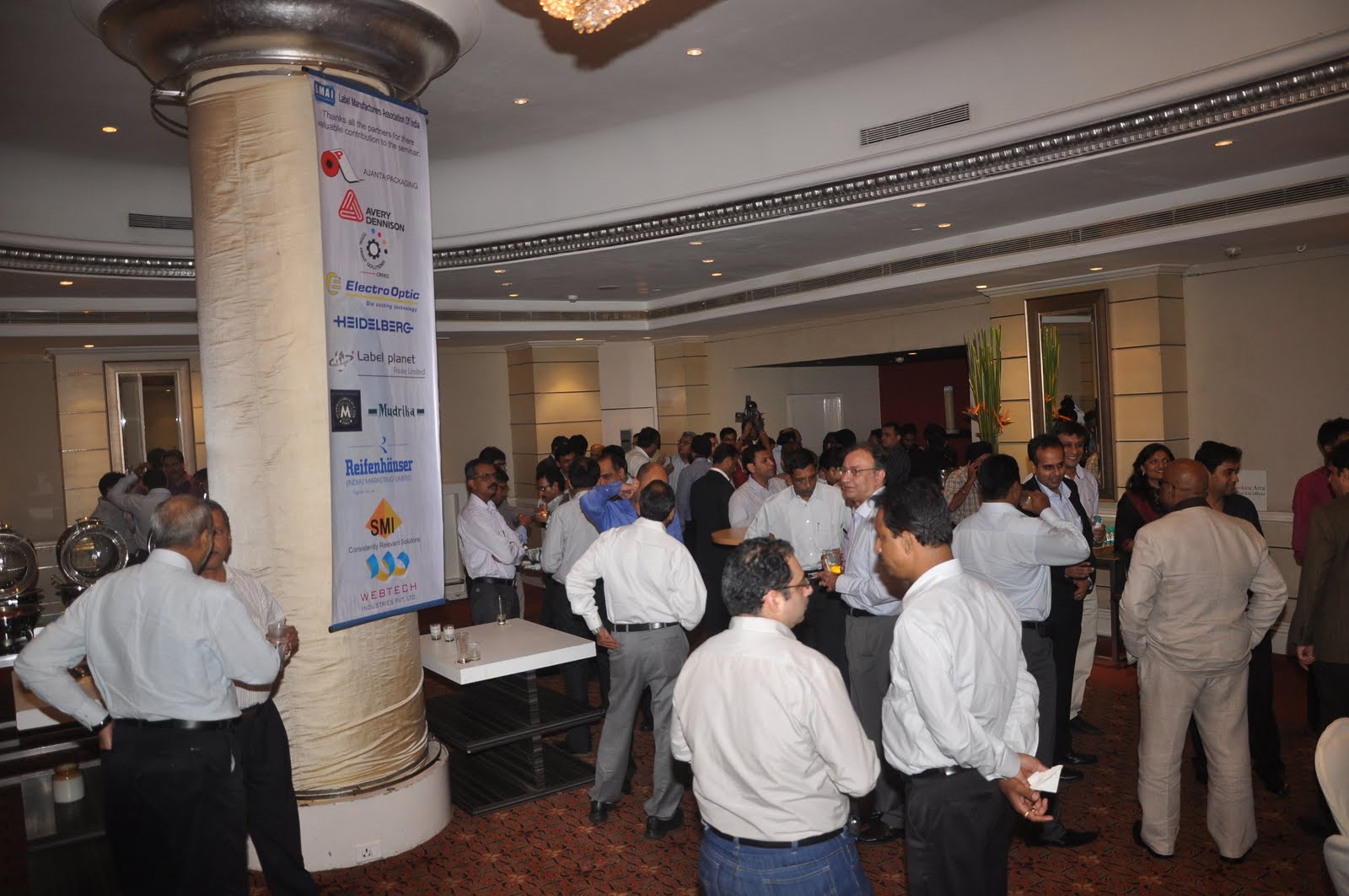
On 27th of August 2010, the Label Manufacturers of India (LMAI) organized an event for their members and the label community at large. The programme commenced with the executive committee meeting followed by their AGM. After the AGM a presentation on lean Management was made by Dr. Mohan Parmeswaran and was well received and appreciated by the printers. The evening culminated in welcomed networking over cocktails and dinner. It was an extremely successful evening, rarely witnessed before, in the industry. It was a proud moment for the LMAI president Vivek Kapoor when 120 guests turned up to give value to the eventful evening. The camaraderie and networking was evident and brought satisfying cheer to the printers. They were sharing thoughts, gossips and discussing technical up-gradation. The evening ended on a happy note with many a printers shaking a leg or two on the dance floor!

In 2002 Anil Arora launched his maiden trade event “The India Label Show”. The show was a great success and kept on getting bigger with every edition. In 2007 this show was acquired by UK based Tarsus Group who later renamed it as Labelexpo India. It became a part of the chain of shows branded as “Labelexpo” held around the world. Anil launched many shows thereafter, India Packaging Show, India Converting Show, India Flexo Show, India Corrugated Show, Food Technology Show, Pharma Technology Show, India Automation Show and India AIDC Show. 2009 saw the amalgamation of the 8 niche shows with the additional strengths of India Retail Show and India Logistics Show giving rise to the Total Packaging Processing and Supply Chain Event- “Pack Plus”. According to Anil,” The 2010 edition of PackPlus to be held at New Delhi’s Pragati Maidan from 3-6 December 2010, will be more technology driven and will showcase more exhibitors, value additions and business avenues than ever before”.

Anil’s first show India Label show was targeted at label printers with suppliers of presses, materials, consumables, equipment for pre-press and post-press, etc. as exhibitors. Label printers were always the visitors to his show. In contrast Pack Plus is meant for the end users like FMCG, Pharma, Food and Package using companies. This time the end users are the visitors to this show. The show has been aggressively promoted to these companies. Anil realized that the visitors to Pack Plus who are the buyers of packaging materials, are also buyers of labels. The visitors to his first show, who were the Label Printers, could be prospective exhibitors as now the visitors to this show were their prospective customers for them!

Anil Arora and his team noticed the void. The label printers had no platform to exhibit to prospective customers. They could exhibit generally at Pack Plus but in a big show the printers felt they would be lost in a crowd. The Pack Plus show now has decided to create a separate area only for Label Printers to exhibit and effectively promote their offerings. I feel it is a very good move and will give good exposure to the label industry. It is time when we in India agree that to sell more, we need to showcase. The label printers need to do the same, they needed the platform, and it is there now, thanks to Pack Plus.
Written by Harveer Sahni, Managing Director, Weldon Celloplast Limited, New Delhi-110008 15th October 2010
Some months ago the Tarsus management decided to hold roadshows across India to promote their premier Label show, Labelexpo India 2010, which was called “India Label Show” before they acquired it. They had already decided to hold one each in Chennai, Mumbai and Delhi. My friend Roger Pellow, the Managing Director of Labelexpo Group, wanted my opinion. I was not in agreement with him. I personally believe that the Metros and big cities have reached a point of saturation and it is now time to move to smaller towns. The real growth is coming from families of people who once thought that industry was only the forte of those who lived in big cities. A young and literate India is changing all that. They understand the dynamics of business and know that to be successful one does not have to locate in big cities. Even if we look at our label industry, we find big investments happening in towns like Sivakasi, Coimbatore, Ahmedabad, Baroda, Nagpur, Nasik, Pune, Bhopal, Indore, Chandigarh, Ludhiana, etc. I requested him to shift the last venue from Delhi to Ludhiana. I suggested Ludhiana in the state of Punjab, for many reasons. To list a few famous traits of the Punjabi’s (As those belonging to the state are referred to); they are great hosts, they are hard working entrepreneurs, they love to show and they love to splurge! No wonder the makers of automobiles like Mercedes, BMW, Audi, Jaguars, Rolls Royce, etc. make a beeline towards Ludhiana. Moreover a few years back in Ludhiana, I had the pleasure of attending an exhibition and later another label road show. The strength and unity of the local association (Offset Printers Association, OPA) was amazing! They were and still are one of the most effective trade associations in the country. Reluctantly Roger decided to give in and try what I said. Reluctantly because there were no direct international flights into Ludhiana and that the logistics were not as appealing as he would like them to be.
 
 
The labelexpo group’s final announcement about the roadshows did surprise me and others. The three shows were to be held on three consecutive days i.e. 27th September in Chennai, 28th September in Mumbai and 29th September in Ludhiana. The itinerary that Roger communicated for himself and his team was even more surprising. They were to land in Delhi on the afternoon of 26th take and evening flight to Chennai, after the roadshow next morning they would go to Mumbai for a roadshow that evening, next morning they were to fly to Chandigarh and drive to Ludhiana and later that night drive to Delhi to catch a flight to London. Anyway I left the logistics for them to worry about. I was worried if the OPA would deliver and bring the required audience to the show! I felt, maybe I have over indulged. However despite reservations my faith in this association was very strong. I called my friend Kamal Chopra, Secretary of the association to ask whether we will be able to gather enough people. In true Punjabi traditional style Kamal asked reassuringly, “How many printers do you want?” The question was the assurance.
 
Roger landed in Delhi on a Sunday 25th September around noon and had almost five hours before his flight to Chennai. We discussed the roadshows and he was very optimistic about the Chennai and Mumbai venues but did appear concerned whether Ludhiana was the right choice. As luck would have it the Chennai and Mumbai road shows were in his words, from “Not too bad” to “OK, well, good” To put it in plain words I understood they were not up to the expectation and the turnout was small. He now hoped Ludhiana would deliver. I got worried too. While the Tarsus team was flying to Chandigarh enroute to Ludhiana, I was in a train from New Delhi to Ludhiana with my son Pawandeep Sahni. I could not resist calling Kamal Chopra and asked if he was confident that the printers will come. Yet again he laughed and said, “The press carried the news of the roadshow this morning and printers will come from many cities in Punjab and also from the neighbouring states” I was surprised and reassured once again and agreed to meet Kamal for Lunch. After checking into the hotel we went straight for Lunch with Kamal and some guests from the printing community, we were amazed to see his phone kept on ringing constantly. Printers were calling to ask about the roadshow. I was pleased.
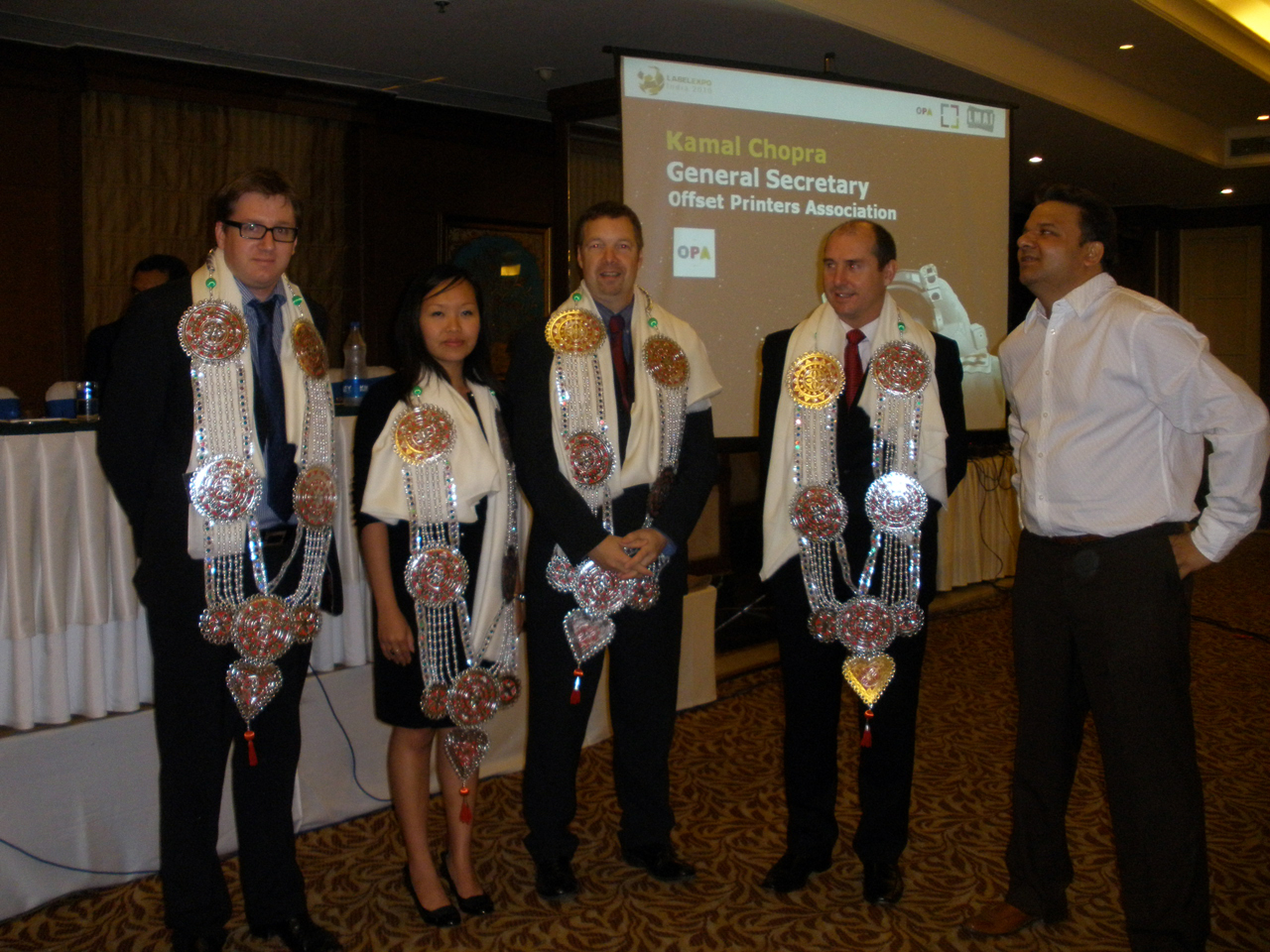
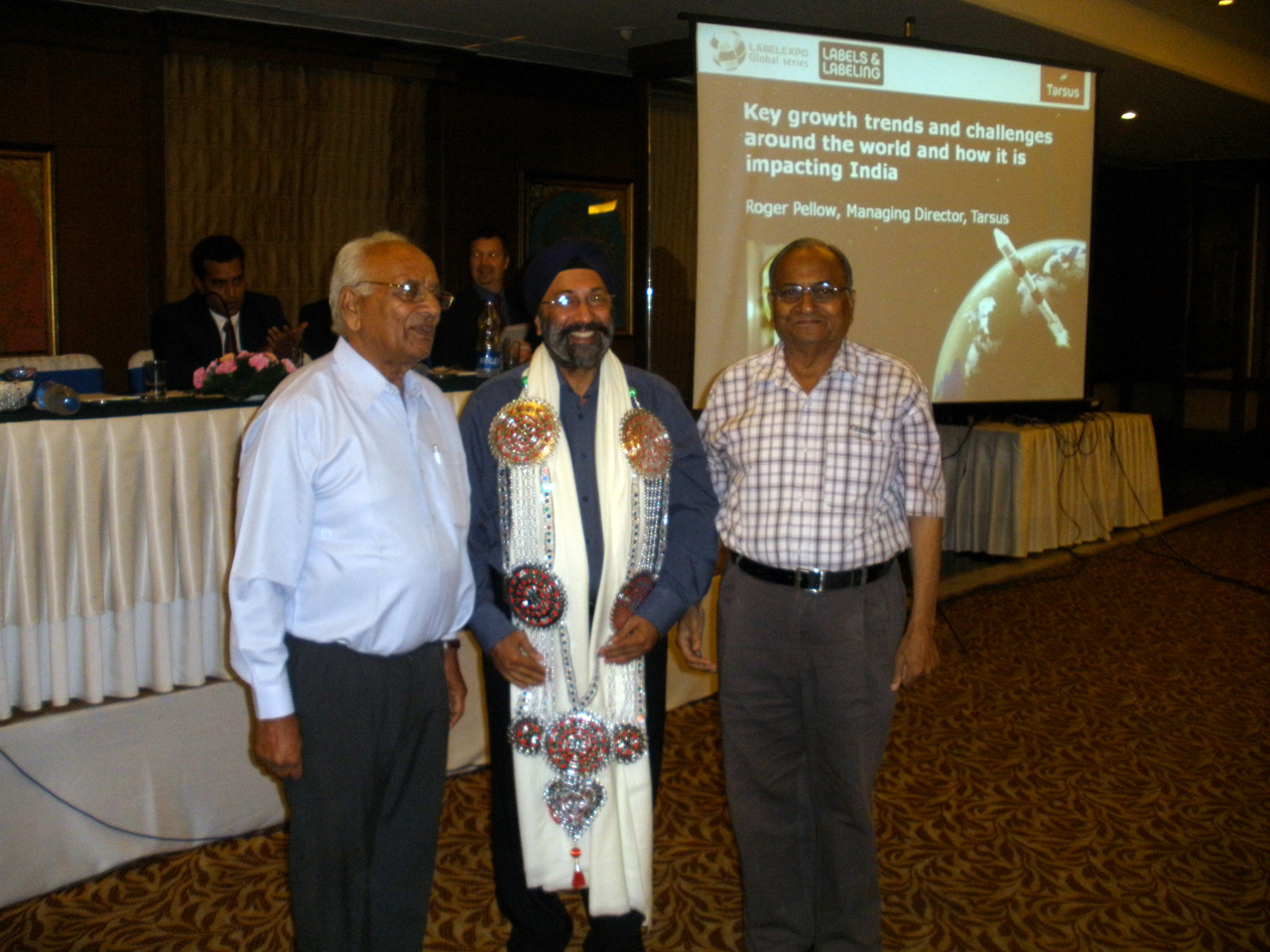
The roadshow was planned to start registration at 7PM. I and Pawan reached the venue at 6.30 PM, even before anyone from Tarsus was there. The venue was all decked up, stage was ready, Bar was laid out, Dinner tables were all set and only the guests were awaited. As the evening progressed it was surprise after surprise. The first guests arrived at 6.45 PM and at a steady pace they just kept coming in. The whole team of offset printers Association alongwith the President Parveen Agarwal and Kamal Chopra were there to welcome the guests. Representatives of MSME (Ministry of Small and Medium Enterprises) came, surprisingly the General Manager, Directorate of Industries came in and to top it all the media came in. The President OPA welcomed the guests, Roger Pellow and Andy Thomas made excellent and informative presentations. Jade Grace, Show Director Labelexpo India was the perfect hostess. Michael Hatton The Tarsus head of marketing was managing the event excellently. The OPA honoured and felicitated the Tarsus team and the important guests by presenting traditional shawls and garlands. I was really surprised and overwhelmed when Kamal Chopra called me to also to receive the felicitations for having brought the Tarsus team to Ludhiana. As I stood up to receive the honour and turned back, I was overjoyed to see the audience. It was a full house!
 
The evening ended with a lot of networking over drinks and dinner. The Punjab printers were happy to have delivered the taste of Punjabi hospitality to their guests. The news was on television in the local news and the Press carried it in all the leading local newspapers next morning. Kamal Chopra and his colleagues at Offset Printers Association need kudos for having made the “Labelexpo India Roadshow at Ludhiana, a roaring success!”
 
Written by Harveer Sahni, Managing Director, Weldon Celloplast Limited, New Delhi-110008 on 1st October, 2010.
Vivek Kapoor,the President of LMAI, Label manufacturers association of India, had been a stressed man for almost two months since he announced the LMAI’s eventful evening to be held at the Mayfair banquet in Worli, Mumbai on the 27th of August 2010. He was calling me virtually every day discussing modalities and wondering on the success of the move he made. I am sure others in his management and executive committee would also have received calls for endless discussions. He wanted to put up a good show and tried hard. By far it was planned to be the biggest of events so far to have been organized by LMAI on its own. LMAI awards night in 2008 was bigger but that was organized by Tarsus and was a part of the India Label Show events. The success of any event is evident from the number of people who attend and from the level of their indulgence in the proceedings. Vivek was not sure on the numbers that would turn up. Considering the strength of LMAI membership to be around 140, he felt if we got over 65 people it would be good. I assured him we will get more and promised him my support as also others in his management team also reassured him. Vivek himself along with Sandeep Zaveri treasurer LMAI and Amit Sheth honorary Secretary formed the core team at Mumbai to take care of the preparations. As usual the gusty Ramesh Deshpande, General Seceratary, LMAI provided support on interaction with the government. They worked hard made a sincere effort to deliver.
 
The evening started with the executive committee meeting at 3.30 pm. Most of the members travelled from across the country to be present. I must say a very interactive and constructive meeting took place taking stock of the industry in the country. Modalities of taking the association forward and creating a feeling of comradeship amongst label printers in the country were discussed. The committee also gave its approval to the Presidents initiative to launch the LMAI-Young Managers Club. A proper review of its working so far and plans for the future were on the agenda that was dwelled upon. The committee meeting was to be followed by the AGM of LMAI. As the meeting was coming to an end committee members were worried if we would have the necessary quorum as very few members had turned up. Fortunately by 4.30PM enough members were there to start the AGM.
 
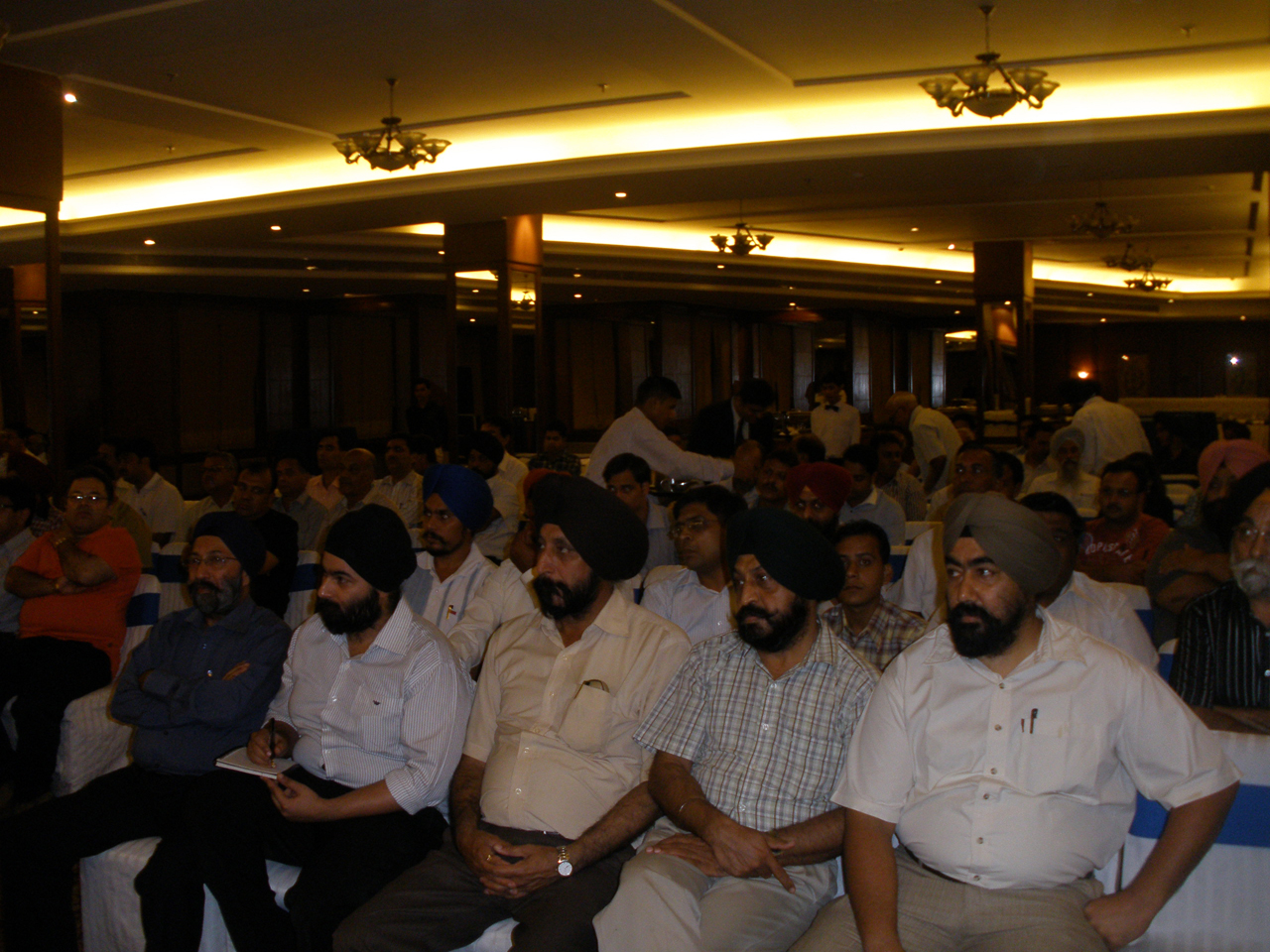
The AGM began with regular stuff that forms the part of such meetings. The AGM had to be followed up by a seminar on Lean management. As the AGM was coming to an end the flow of people coming in kept on increasing and the audience started to get highly interactive. They were asking questions from the LMAI managements and also making suggestions. The hall was three quarters full and we had overshot the estimate of the LMAI president of 65 people. The AGM got extended due to a highly indulgent audience and the next programme got delayed. The AGM that was supposed to end at 6.30 pm got over only at 7pm and was followed by a seminar on lean management. The presentation was made by Dr. Mohan Parmeswaran, Lean Management and HR Expert. It was an interesting presentation that evoked a lot of interest and questions from the audience half way through the presentation on lean management, the house was full!
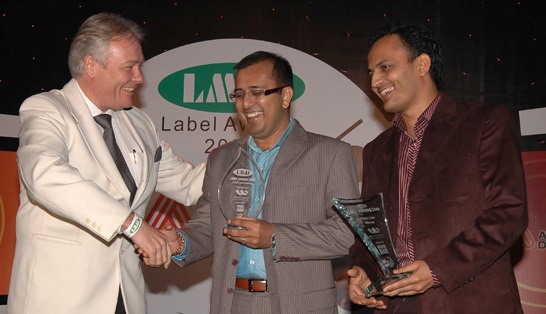
We had over 120 guests almost twice the number Vivek Kapoor had looked for. The success was showing already. The audience just did not wish to give up asking questions or commenting on issues. The President had to request the audience to discuss their issues over dinner that was to follow. A recorded presentation by Mike Fairley, Roger Pellow and Andy Thomas of Tarsus was delivered. Following this the world Label Association awards winners were announced. These were Anygraphics from NOIDA who won two awards and Wintek of Bangalore. As the seminar and presentations came to an end it was time to party!
It was really interesting to see so many printers and industry suppliers from across India. They came from Delhi, Noida, Mumbai, Ahmedabad, Indore, Pune, Hyderabad, Bangalore, Sivakasi, Chennai, etc. Unfortunately I could not identify anybody from the Eastern India. I am sure our association needs to make more active members from that area.
With drinks flowing and moods relaxed after some hard work, it was networking active all around. Suppliers were interacting with prospective customers and printers gossiping with fellow printers. It was a rare sight, these people who indulged in fierce competition in the market place were sharing moments of joy and togetherness. There were topics of mutual interests being debated upon. Many a members were expressing satisfaction on the success of the event and wished that such events are held more often across the country.
As the evening was coming to and end and the alcohol had done its good job a few printers were ready to shake a leg or two on the dance floor. It was time when I also joined in for a while but then like all good things have to come to an end, it was time to go. It was great evening, a good show, with a satisfied LMAI management team and a beaming president bidding the guests, “Good Night”, I left the venue.
 
Written by Harveer Sahni, Managing Director, Weldon Celloplast Limited, New Delhi-110008 6th September 2010


The forever travelling Roger Pellow, Managing Director of Labelexpo group, was in India recently as a prelude to leading his team’s effort in making the forthcoming Labelexpo India in December 2010, a resounding success. Roger has expressed his desire to meet the leading and progressive label printers in North India for a relaxed evening and a thought provoking discussions on the trends prevalent in India. Roger is perhaps one of the most well known faces in the “World of Self adhesive labels”. It is a typical style of his to acquire an in-depth knowledge of the industry, wherever he travels. He spends quality time with printers and understands the ground realities by indulging in thought provoking discussions with printers in their local environments.


I was given the responsibility of choosing the group and also the venue. It was a daunting task to have a mix of diversified, successful printers catering to different label segments. Also the venue had to chosen. I indulged and started to look for a restaurant that would have a lot of space and great ambience. I firmly believe that when the place is well spread out and open, the mind works in a similar fashion. In a crammed up space there is crowding of the thought process. We found an ideal place called CIBO in Hotel Imperial in the centre of New Delhi. We met on the 13th of July, 2010. The place provided a perfect mindset, as the restaurant management gave us a large private area with perfect settings, such that all of us sat around a table that was not too big and neither too small, an ideal set-up. The printers who were invited and came were also the right blend of many label segments. Those who attended this dinner evening were; Anil Goel of Gopsons Ltd., he came with his son Gaurav Goel, Dinesh Mahajan of Prakash Labels, Kuldeep Goel of Anygraphics, Aditya Chadha of Update Prints, K K Bajaj and Rakshit from Regal Creative, Pawandeep joined in as member of Finat board of YMC (Young Managers Club) and myself as member executive committee of LMAI and coordinator. Ajay Agarwal of Syndicate labels and Prem Khanna of Rachna Overseas requested to be excused for personal engagements in their respective families.
Roger Pellow in his opening remarks reiterated his company’s commitment to the Indian Label Industry. He noted that while the industry around the world had suffered due to the economic downturn, yet the Indian industry had remained more or less stable. He also noted that the present trends showed that the no. of label presses being installed in India were almost 100 annually and felt this was an indicator of the health of this industry in India. Interestingly all those who were present had already made capital investments in recent times or were in the process of making them. Concern was expressed on waste management and environment issues in the label industry. All present did give their inputs and yet agreed that much needed to be done in this area. There is need to work on this as also to brainstorm the industry on waste reduction and disposal to find effective solutions.
A healthy debate took place on digital printing. Roger informed those present about his groups effort in educating printers in this emerging and fast spreading technology. He also informed the group that Mike Fairley would be visiting India during the Labelexpo India in December and that he would be holding a master class for digital printing. This was well received, though printers in India have not been very indulgent in this technology yet their interest is very evident and definite signs of growth in this digital printing segment are evident. Printers expressed their concern about the increasing prices of high end label presses. Dinesh Mahajan of Prakash Labels said, “If a Mercedes can be sold for 70000 Dollars then why a label press cannot be made cheaper.” To which Roger could only explain in more down to earth way that a Mercedes is a part of mass production done on an organized assembly line and the presses are custom built. Each press may have some thing different incorporating a continually changing technology. Costing was another issue that was debated, on initiation by Pawandeep Sahni that the need to implement lean manufacturing is imperative, there was a very interesting discussion with inputs coming from all printers. They shared their personal experiences on how they implemented processes to reduce cost. These included waste reduction, reducing down time and measuring expenses as a ratio or measure of the final cost. I was surprised when Kuldeep Goel of Anygraphics stated that he had in his computer data like how many units of electricity was spent per square inch of labels that he produced! No wonder he has recently set up a hundred thousand square foot factory. The printers also discussed the foray of our printers to go global. Gaurav Goel informed the group of their investments in Srilanka and Mauritius. Prakash Labels have been running a company in the UAE for many years, the group also recognized the efforts of other printers who had gone global to setup units in foreign lands like Syndicate labels, Interlabels, Unique Offset, etc.
Summing it up Roger made a presentation on the forthcoming labelexpo India. He informed that the show was sold out and that there would be many more working presses. He assured that printers will benefit greatly from this show. All good things do come to an end as did this very interesting evening. While all the above was being discussed and debated upon, there was continuous servings of good food and drinks. Shows what good ambience, good food and good drinks can do to the thought process. CHEERS!


Written by Harveer Sahni, Managing Director, Weldon Celloplast Limited, New Delhi-110008 28st August 2010

Introduction:
 
 
Protection is one of the very basic human reflexes related phenomenon. What if you suddenly feel a hand touching your pocket where your wallet is placed.. Immediately your reflexes work & “Pat” goes your hand over your pocket in an evident effort to protect your wallet. In the middle of the night, you hear a noise and realise that someone is moving in the house or is trying to make an entry. Impulsively your hand goes to the light switch in a clear effort to protect your home from burglary. You are in the market for shopping and your child is in the back seat. Suddenly you see your child getting out into the middle of the busy road, you run and grab the child away from the traffic protecting him or her from getting hurt. Obviously people who are not quick in their reflexes end up losing their wallets or getting their houses burgled or suffering from their child getting hurt. But the more sensible and clever persons in todays world would go a step further and opt for security systems and devices. The person carrying his wallet would probably start using credit cards, a more secure form of carrying money. The home owner would probably opt for a burglar alarm, a cctv or a sensor light that would come on at the slightest of movement and the car owner would probably opt for the simple child lock in the car. In todays world protecting ones life earnings and valuables is a necessity. Similarly brands, which have much more value then a wallet, a car or a home, need protection.
 
Overview:-
 
A life time effort goes into building brands and protecting them is as mind boggling as it is necessary. As with time brands become more and more valuable, the need to protect them from counterfeiters and their fraudulent intentions becomes imperative. Corporate brand owners are raking their minds to find ways to protect the brand from duplication. It is not just brands that have problems with counterfeiters, currency notes, ID papers, credit cards, passports, share certificates, banker cheques, etc., are all the targets of forgers and counterfeiters. Brand piracy and product duplication are large scale frauds. The global anti counterfeiting group which represents the interest of the brand owners worldwide, estimates that fakes and duplicates cost the brand owners about 368 billion US dollar this represents 5-7 percent of world trade. Billions of dollars are lost in sales by brand owners. The government loses tax revenues; and the consumers suffer from the problems due to fake products. Pharma duplication remains the biggest area of concern as it is facing the highest level of threat and the consumer of pharmaceuticals products are the worst sufferers. Liquor is another area, greatly affected by duplicates. It is generally talked about in all the cocktail circuits in India that the amount of Johnny Walker scotch sold in India is more than what they produce in Scotland.
 
Senior level management teams in FMCG companies are dwelling more and more on security options available to fight this menace. Self-adhesive labels are now in the forefront offering a range of options to counter the attack from counterfeiters and duplicators. The narrow web label printer is playing a very important role in development of the security label. It is necessary that to arrive at the most appropriate security label a close co-operation of the end user, the narrow web label printer and the labelstock manufacturer is very important. The end user has to be aware of the possibilities that the labelstock producer can build-in at the production stage of the labelstock. The labelstock manufacturers has to have a variety of capabilities and skills to improvise in the laminate, similarly the narrow web label printer is required to have advanced capabilities to perform conversion on the label and build-in feature that contribute to the security of the product.
 
The role of labelstock manufacturers here is very important. He has to bring to the forum of these partners i.e, the user, label printer and himself, the information on the availability of raw materials and his own capabilities and the options that can be built-in at the time of producing the stock. The user brings to the forum the knowledge that he possesses about the skills of the counterfeiters and the techniques they employ in faking. The label printer who brings the label to its final shape has to have specialized converting and decorating capabilities to be able to contribute fruitfully to the efforts of this forum to design a label that would make the fakes easily identifiable. The label so produced should prove to be an effective deterrent.
 
The present scenario and the need for security label provides opportunity for the producer of security label, as a new market, where price is important, but not of prime concern is opening up and growing at a steady 20% per annum. Labelstock, primarily consists, of three main constituents- the release liner, the adhesive and the face paper. The release liner in most of the cases ends up in the dustbin. There are exceptions like the piggy back labels which have two liners and one ends upon the package as a part of the end label. So in general terms there is not much security built into the backing liner. It is however necessary to customize it according to the converting and dispensing requirement of the end label. The other two constituents i.e, the adhesive and face paper play an important role as these go along and are an integral part of the final dispensed label. The labelstock manufacturers needs to be well informed and equipped with the possibilities which can be employed to customize and secure a label. Most of the security is built into the facestock and the adhesive is designed to compliment the requirements of the security functions built into the facestock.
 
Some examples of duplication
 
Every country has its own type of counterfeiters & duplicaters. I mention here on what we have in India:-
 
1.FMCG products: I personally would probably rate toothpaste as the most widely and easily duplicated product in India. Every now and then we find the brand owners reporting raids on illegal packaging companies and catching the criminals. Yet the process of duplication goes on un-abated. The hawkers on the payments of metros or the smaller shopkeepers in smaller towns, stock & sell. Fakes or look-alikes of a famous brand Colgate being sold fraudulently under brands like Golgate, Collate or Colage in exactly similar looking packaging to many poor illiterate consumers. I wonder if it amounts to dental hygiene or not.? I feel simple a security seal affixed on the product packaging and adequately advertised, would be a deterrent but then the brand owners are the best judges, they may already have put their minds on this.
 
2.Bank frauds: I now bring to you a classic example of cheque forgery. A particular person in collusion with a postman got hold of a bankers cheque issued by a bank favouring Canara bank for Rs.Eight Million This is how the word Canara bank was written.
 
Canara Bank
 
The person used a matching pen & changed it like this.
 
"Tucanarain Bankey "
 
by affixing “T U” before Canara and in after it and then “e y” after bank. The cheque now read Tucanarain Bankey which appears to be a normal Indian name. He opened an account with Syndicate bank in name of Tucanarain Bankey, deposited the bankers cheque and withdrew the money. The fraud came to light when the man had vanished leaving some 50000/- in the account. To check frauds like this a co. in Mumbai had opted for affixing transparent filmic labels on all the written text of the cheque to prevent such tampering. Temporarily this did act as a deterrent. Now we have a request from the same customer to further modify the product as duplicators use hair dryers to heat the product label and peel it off when the adhesive softens. They make changes in the amount/name and refix the label.
 
The above examples clearly indicate the imperative need of introducing security features on all products. Labels play a very definite and important roll in this. To reach the final security labels a sincere effort and collective thinking of the brand owner, the label printer and the labelstock manufacturer is required. Without hampering the brand image, security has to be built up in the product and the method for educating the end user to verify the authenticity of the product has to be devised.
 
Security Option:-
 
I list below some of the security options available-
 
1. Barcodes
 
2. Consecutive or sequential numbering
 
3. Holograms
 
4. DNA Inks
 
5. Thermochromic inks
 
6. Multi layered label
 
7. Transfer labels
 
8. Security cuts on labels
 
9. VOID stock
 
10. Security inks (UV sensitive)
 
11. Micro Taggants in labels
 
12. Destructible label
 
13. Sub surface printing
 
14. Security threads
 
15. RFID
 
16. UV Fibres in pulp or adhesive
 
17. Water mark paper


I now dwell on the some individual security labels and the construction of such labelstocks. Some features are overt those that can be seen and others covert that can not be seen normally.
 
1. Barcode labels:-
 
I am sure most people recognize barcodes. These are present on labels as a band of verticle lines of varying thickness. These contain a whole lot of information in them. Barcodes are used for billing, inventory control, product tracking and a variety of control systems beside providing a fair amount of security. Barcodes can be printed by many printing processes but the most widely used process to print barcodes with the highest level of sensing remains the Thermal transfer printing. For accurate printing of a barcode the labelstock needs to be specially designed. The face paper is double coated on top for smoothness and for firm anchorage of the barcode to the paper. The reverse side of the face paper is also coated to prevent any seapage of the adhesive to the top, especially when the thermal transfer barcode is printed by application of heat. The adhesive has to be designed to adhere to a vide range of difficult and low energy surfaces. One can imagine the trouble that would erupt if these labels that provide a lot of information besides security, fall off the packages they are supposed to adhere on. The release paper has to be a highly calendered glassine which provides for a certain amount of transparency to enable the barcode printer to sense the label through the release paper. The release paper is also designed to offer release values which compliment high speed convertion and further dispensing on automatic labeling machines. Today demand for barcoded labels is coming from users on different substratres like BOPP, Polyester, Metalized films, etc. Again here these substrates need to be given a top coat to make them suitable for the required printing process and proper sensing and reading of the barcode thereafter.
 
2. Holograms-
 
Holograms are optically variable devices. The opticall interaction of the holographic image with the human eye makes it ideal for both brand promotion and security. These are generally produced out of polyester films and the labelstock manufacturing is a part of the process involving production of holograms. The hologram producers has to work hard to keep innovating and developing complex origination process to make it difficult for counterfeiters to copy. Many holograms produced today are tamper evident they also have other security features built into them like sequential numbering,UV fluorescence in the adhesive, etc. The area of holography is quite well developed and there is a lot of scope in it for producing newer security options. The hologram manufacturer does have special capabilities to produce the label face yet the adhesive and release are generally sourced outside. The release paper has to be specially designed with extremely low peel values for the tamper evident holograms. Smallest hindrance in the case of release may tamper the hologram before it is applied. This will render the hologram useless.
 
3. Security Inks and threads and UV Fibres- Creating security features into labelstocks or labels using security inks is possible in many diverse ways. This is possible due to the wide variety of inks available.
 
Some examples-
 
(a)Thermo chromic inks:- These inks change colour with change of temperature e.g, if you keep a bottle of cold drink or a beer in a freezer, the moment it reaches a temp of say 10 degree C the otherwise invisible printed text “chilled” would be visible and readable. It would disappear with the rise of temperature. Similarly we have inks that change colour at higher temperature.
 
(b) UV sensitive inks- These glow under UV light or change colour when exposed to sunlight.
 
(c)Metameric inks- These are inks that are similar in day light condition but change under different light sources. One can print an invisible message which becomes readable when light condition change such images cannot be photocopied.
 
At the labelstock manufacturing stage the face paper can be printed on the top or the reverse with any of the security inks. The front side is generally printed with these inks by the label printer at the time of producing labels. However if printing is desired at the reverse before the adhesive this has to be done prior to producing the label laminate security threads can also be introduced into the laminate . UV fibres can be incorporated into the the pulp by the paper mill or in the adhesive during production of labelstock. Such fibres can be seen under the UV light.
 
4. Tamper evidents-
 
  
    Sealed
        
    Opened
    Resealed
 Tamper evident labels are the most widely used security labels. These labels generally have features built into them, such that they show when they have been removed and reapplied. The classic example is the label which when removed leaves the message VOID behind. Today labelstock can be designed such that the residual message VOID can be customized to customer needs. Destructible labels are another form of tamper evident label materials. Such a label fragments into small pieces when somebody attempts to remove it. These labelstocks can be top coated for accepting barcode printing. Generally used materials for destructible are acetate and vinyls however some companies do have some proprietory constructions. Other products falling under the category of tamper evidents is the multi layer, where the layers are designed such that they split when the label is removed. In the case of the transfer label whole or part of the label is transferred to the substrate on which label is applied, blank film or partially printed film comes off from the top.
 
5. RFID-
 
The list of security labels would be incomplete without dwelling on the RFID or the Radio frequency identification. It is perhaps the most interactive technology that is making its impact on the world of packaging & labeling. It has far reaching impact on the supply chain and marketing systems. Large retail chain stores are demanding that the vendors provide smaller and compact RFID that adhere to the products. Benefits of these devices include inventory control, theft detterent, data of purchase of a full basket products be transmitted instantly for billing as also setting off the alarms if an uninvoiced product is being taken out of the exit. It is at this stage a lot of development being undertaken to incorporate the RFID into labelstocks and finally into labels. RFIDs can exist with barcoded labels and are difficult to copy or simulate. The cost of equipment to be used for inlay of chips into the labelstocks presently is huge and in face of fast changing technologies there is substantial risk. The equipment may soon become obsolete.
 
Producing finished RFID label is a challenging job. Many of the inlays may be damaged in the process and losses are estimated to be upto 15 percent. The labels and chips may get damaged in the converting process itself. Special cushioned substrates can prevent damage to the chip thus making it extremely necessary for testing the functionality and readability of the chip before and after insertion into the labelstock.
 
A typical construction has been developed by a leading US based co. Here the chip is inserted into the labelstock with a foam layer then a antistatic coating is given to prevent the RFID from static charge thereafter the face paper and finally the top coating to accept barcode printing. There is a lot of hipe of RFID being the technology of the future. It will change the face of labels that aid retailing. Then there are others, who do not agree with the line of thought. At this stage I would like to add a word of caution lest one may over indulge in a technology that changes fast and may not eventually be implemented.
 
Summary- The scope of security labels is wide. The efforts of innovative labelstock manufacturer and label producers can produce new and effective security solutions. The list of other options available can further include DNA inks, taggants that are microscopic particles or even biocodes, water mark papers or labels with security cuts, the list extends as far as the imagination of the innovative labelstock or label manufacturers extends. Preparing security labels is only one part of the exercise, educating customer to check its authenticity is the more important part. What good is a security label if it cannot protect the duplication and if you do not know how to check if it is a genuine product?
 
Before I conclude I must state that developing security labels and producing them is an ongoing process. No single solution is a permanent solution for a product, because if someone can make it then someone can fake it. It just may be a matter of time.
 
Written by Harveer Sahni, Managing Director, Weldon Celloplast Limited, New Delhi-110008


It was at Pamex 1997 when Amar saw the Mark Andy label press for the first time. He was instantly drawn to it and was overawed by it. He kept thinking about it in the days that followed. Four weeks later his decision was made, he had to buy this machine.  At an age when boys his age were dreaming of buying their favorite cars, he had decided to buy a Mark Andy Label Press! It was a big investment and Amar found support from his uncle, a part of the extended family, to fund the acquisition.  His uncle ran a successful packaging unit producing corrugated boxes, where Amar got his initial training. The experience and contacts made during this period helped him get settled in the label business. Today Jitesh, his cousin is his partner and a treasured colleague. As a young boy, in the early nineties when the stock markets were booming, like all those who wanted to make big money, Amar was also infatuated by the stocks. He wanted to become a successful stock broker. As luck would have it, while still in school at a tender age of 16years he lost his father who was a farmer turned sugar trader. He was left wondering…what next? His heart was never in studies, he indulged in stock markets and did make some money. It was only when he suddenly lost all in the trading that he realized the meaning of what his father had once said to him, “Son, you have to create something”. The family had no bread earner and those words coming back to him changed the entire way he looked at life. He decided to be successful and create. Webtech, Amar Chhajed’s startup enterprise was setup in 1998. He trained himself to be the first operator of the press that he had acquired. For six months he was the only employee and used to produce and sell all alone. His experience in his uncle’s packaging unit turned out to be a great advantage. 

While Elf Lubricants was his first customer yet it was the Indian oil order that brought in volumes and got him going. Amar, remembers the first meeting he had with the GM of Indian Oil and it lasted a couple of minutes, leaving him confused. They asked him his capacity which he assured was 5 lakh labels per day and they bluntly told him that he had to supply a million labels each day! The meeting ended. It was time to buy the next press. Amar did not stop there. Webtech today is one of the biggest label printers in India. They have as of date twelve label presses in their Mumbai unit and two in Parwanoo in Himachal Pradesh. There are two more presses on way. Many firsts in the industry include the first all UV Mark Andy press, first AVT inspection system installed on a narrow web label press, the first shuttleworth job management software for narrow web labels and the first Xeicon digital press.

He smiles when he says he was poor in maths while at school but now numbers remain his strong point in business. With 160 employees, Webtech consumes 6lakh to 7lakh square meters of label stock each month and the dedicated team put together by Amar and his cousin Jitesh is sure to double up this figure in just five years. They also aspire to diversify into other related areas in packaging. It is credible that they ship out 150 variables to different customers each day! Amar has surely created a company driven by passion to satisfy their customers.The most memorable incidence of his life remains a problem that he addressed in the earliest stages of his carrier and has become the motivating vision for his entire team. One evening at 7PM he got a call from his factory that the UV lamps on the press had failed and the production had come to a stop and that they could not meet the customers schedule.  His suppliers in the UK told him they could not deliver the lamps before 5 to 6 days even though hey had the lamps in stock. The courier co. would take that much time. Not ready to accept the situation, four hours later Amar was on a flight to London. The lamps were delivered to him by the suppliers at London’s Heathrow airport and a few hours later Amar was on the return flight to Mumbai. The lamps were collected by his people at the Mumbai airport and rushed to his factory. In less then 24 hours the labels were being produced again at Webtech, to this day the customer does not know that there was a gap in production. Amar has always been very dedicated to his customers. They start producing labels the moment their customers want them and to this day they work in two 12 hour shifts, irrespective of the situation whether there is order or no order. It is Webtech’s endeavor and resolve to be there whenever the customer needed them. He is proud to tell his customers, “We are available, 24 hours!”
Written by Harveer Sahni, Managing Director, Weldon Celloplast Limited, New Delhi-110008

 http://www.weldoncelloplast.com/