![]() |
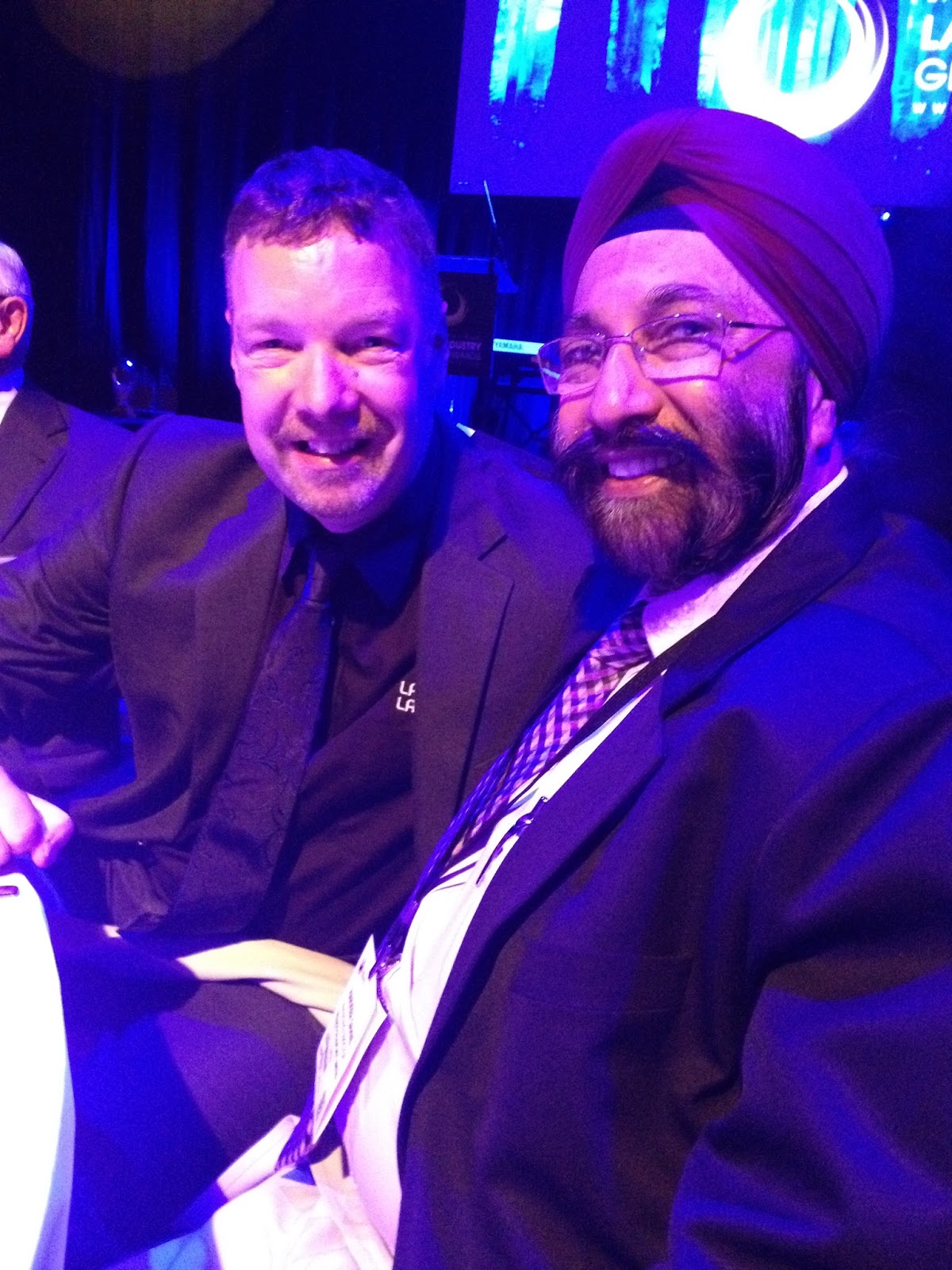
| Amar Chhajed Huhtamaki PPL-Webtech |
![]() |
| I and Adrian Tippenhauer MD Rako Etiketten |
![]() |
| Gautham Pai MD Manipal Technologies |
![]() |
| Sai Packaging team announcing Epson Surepress Purchase |
![]() |
| Hemanth Paruchuri of Pragati Pack |
On further evaluation of data compiled by me 9 out of 20 i.e. 45% of the companies who indulged in digital label printing are either multinationals or corporates and the rest 11 are family owned businesses. It is interesting to note that at least 7 out of the 11 companies have the young generation-next either in command or actively involved in day to day affairs of the company. So evidently it is the corporate mindset or the youth that is driving the march into digital printing of labels in India.
Written by Harveer Sahni, Managing Director, Weldon Celloplast Limited, New Delhi India May 2017 email: harveersahni@gmail.com
The impact of digital printing

![]() |
| Narendra Paruchuri-PragatiPack Hyderabad |
![]() |
| Gautam Kothari- Skanem Interlabels Mumbai |
![]() |
| Rajesh Nema, Pragati, Indore |
![]() |
| Amar Chhajed- Webtech Labels, Mumbai |
![]() |
| Vivek Kapoor-Creative Labels, Mumbai |
This article is exclusively written by Harveer Sahni, Managing Director Weldon Celloplast Limited, New Delhi India for Narrow WebTech Germany in May 2015 The article should not be used or published without the permission of Narrow Web Tech Germany. Should you wish to reproduce, please contact the author or editor Narrow Web Tech
![]() |
| Ramu Ramanathan |
| Anygraphics receiving the Printweek 2014 award. |
2. Green Printing Company of the Year
3. Post-Press Company of the Year
4. Pre-Press Company of the Year
5. SME Printing Company of the Year
6. Student of the Year
2. Book Printer of the Year (Specialty)
3. Brochure & Catalogue Printer of the Year
4. Creative Repro Company of the Year
5. Cross Media Company of the Year
6. Digital Photo Album Printer of the Year
7. Digital Printer of the Year
8. Direct Mail Printer of the Year
9. Fine Art Printer of the Year
10. Industrial Product Printer of the Year
11. Innovative Printer of the Year
12. Label Printer of the Year
13. Magazine Printer of the Year
14. Newspaper Printer of the Year
15. Packaging Converter of the Year (General)
16. Packaging Converter of the Year (Luxury)
17. PUR-Book Maker of the Year
18. Screen Printer of the Year
19. Social Stationery Printer of the Year
20. Wide-Format Printer of the Year
The above post maybe reproduced by giving credit to author.
![]() |
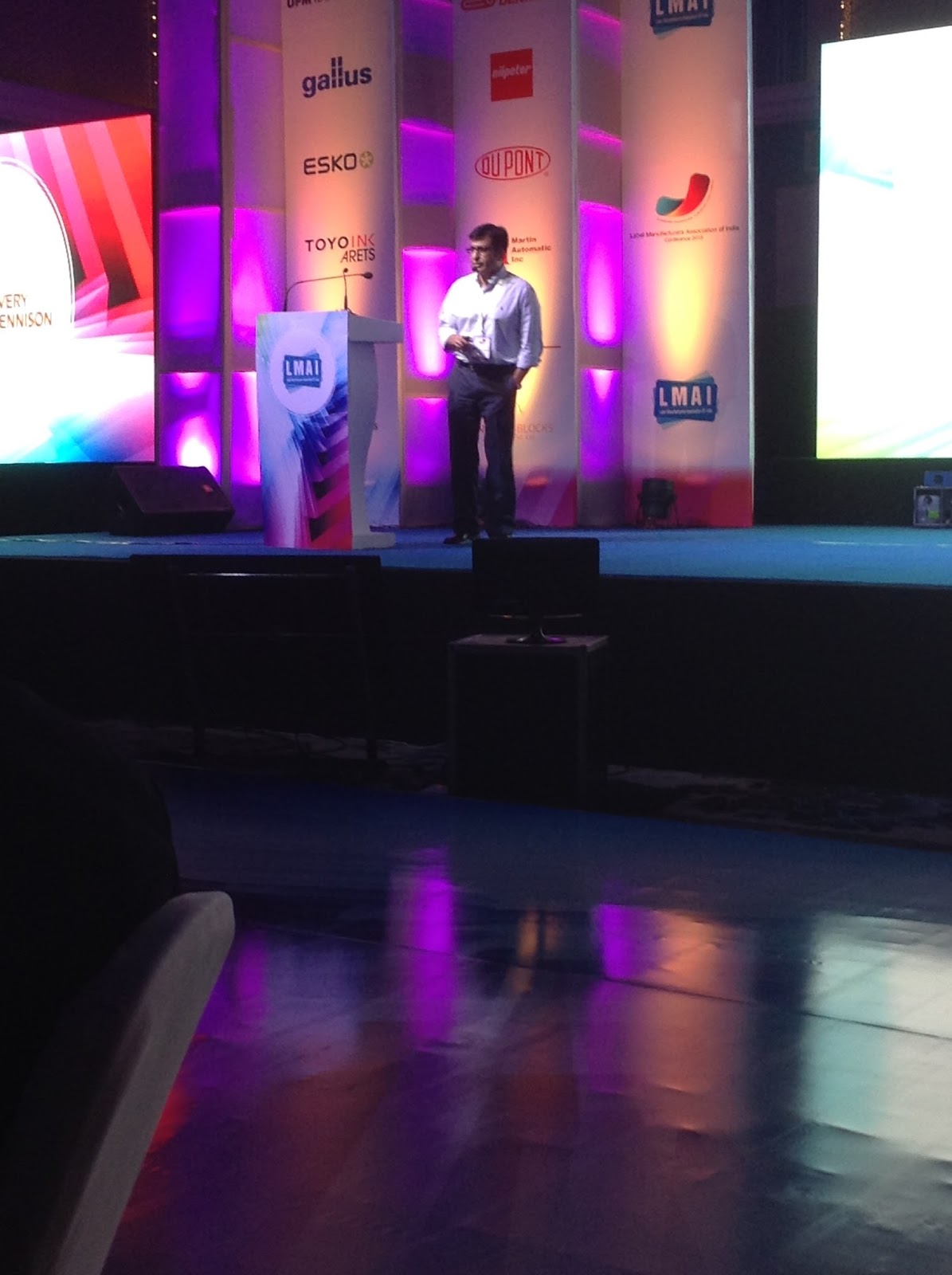
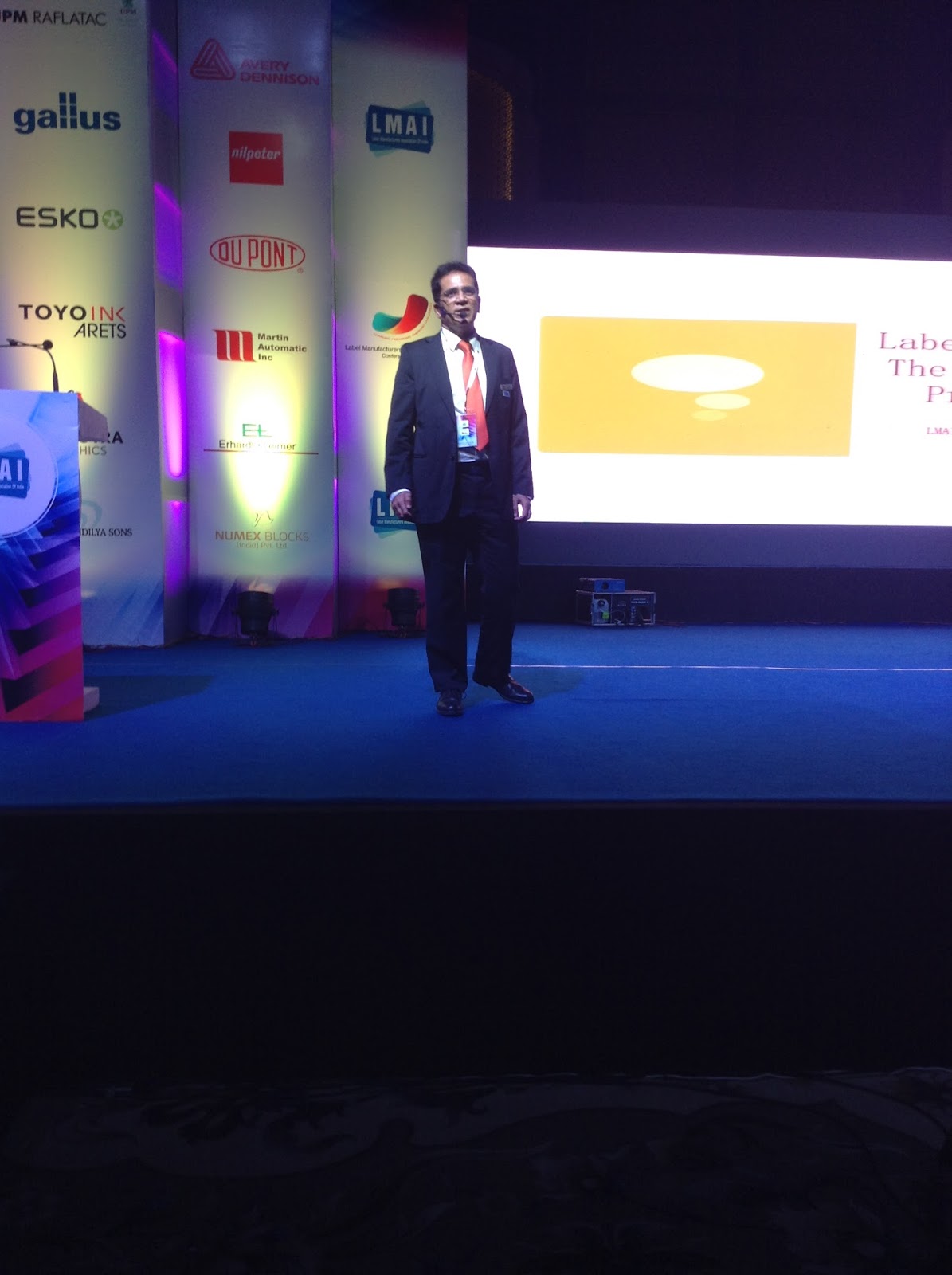
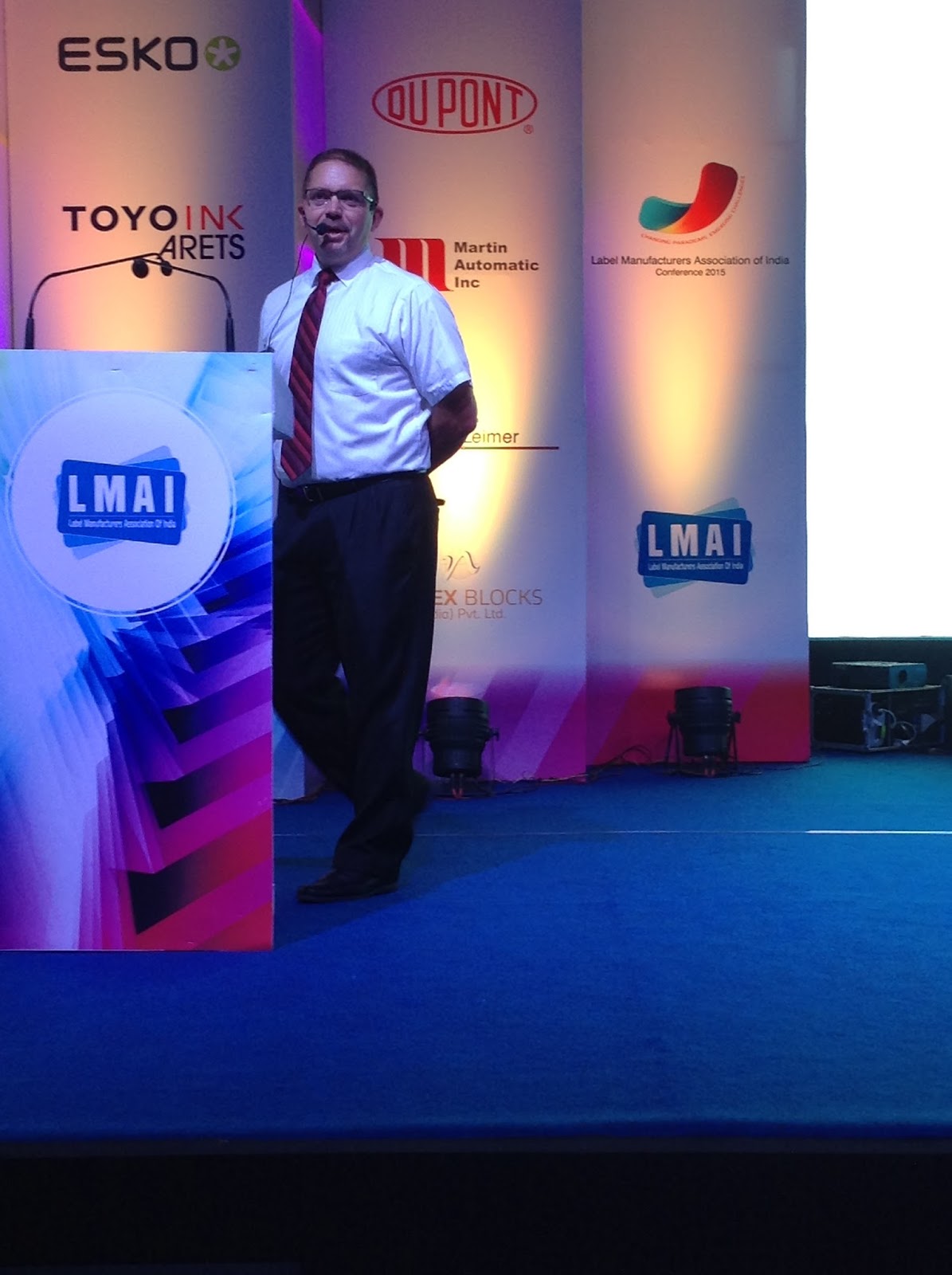
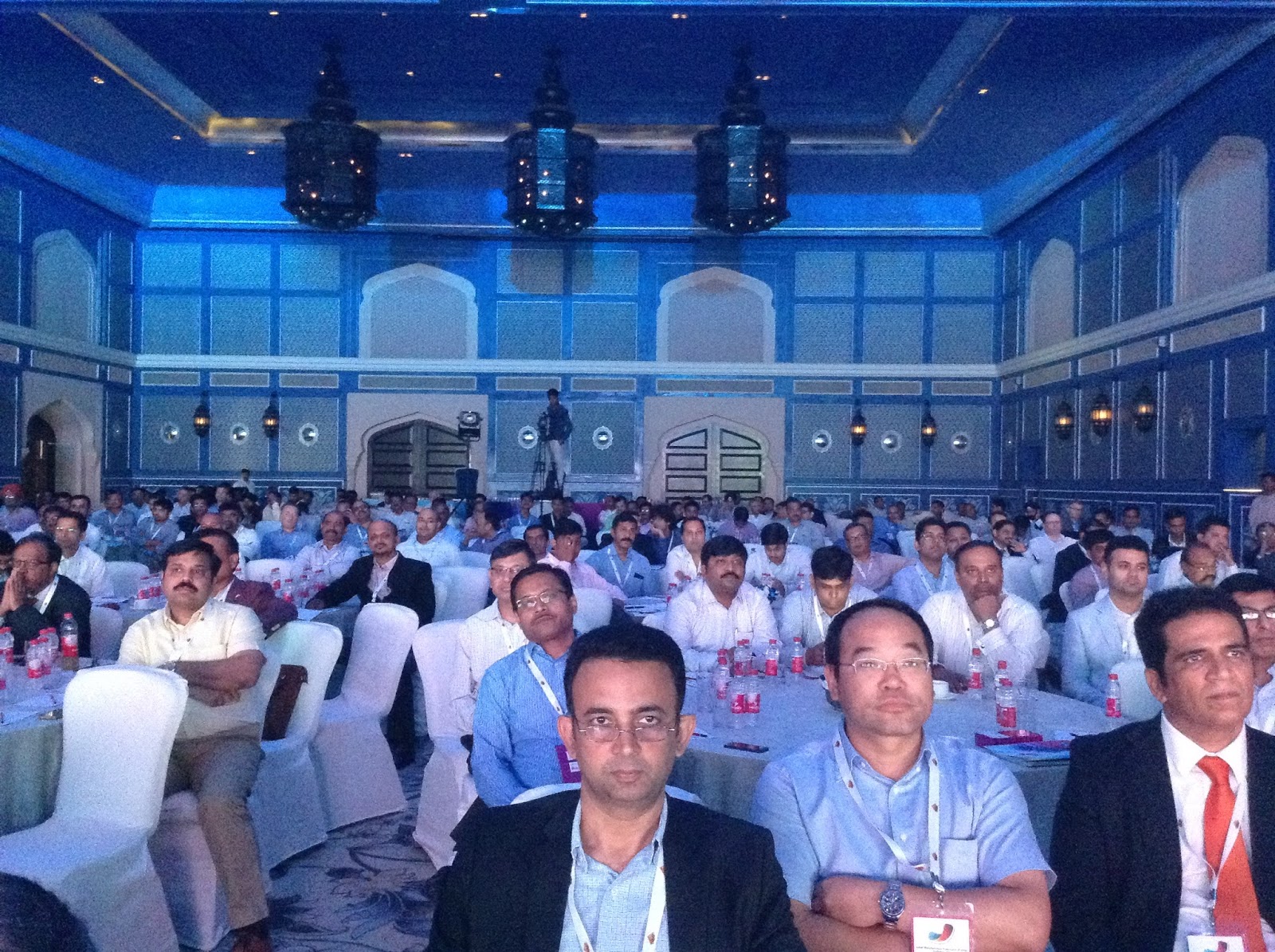
| LMAI team at first 2011 conference |
| Vivek Kapoor |
Finally the young Chandan Khanna heading multi-location Ajanta Packaging having multinational presence with units in Daman(India), Baddi(India), Thailand and Ajman(UAE) sums it all. He says, “The LMAI conference, which comes once in two years is an event that personally I try and ensure I attend. The presentations, open panel discussions, the getting together with your peers and industry suppliers in a relaxed environment is good for all industry constituents. I feel, positive changes occur from the networking whereby all in the industry stand to benefit. It is a must meet event. I am looking forward to being at the conference”.
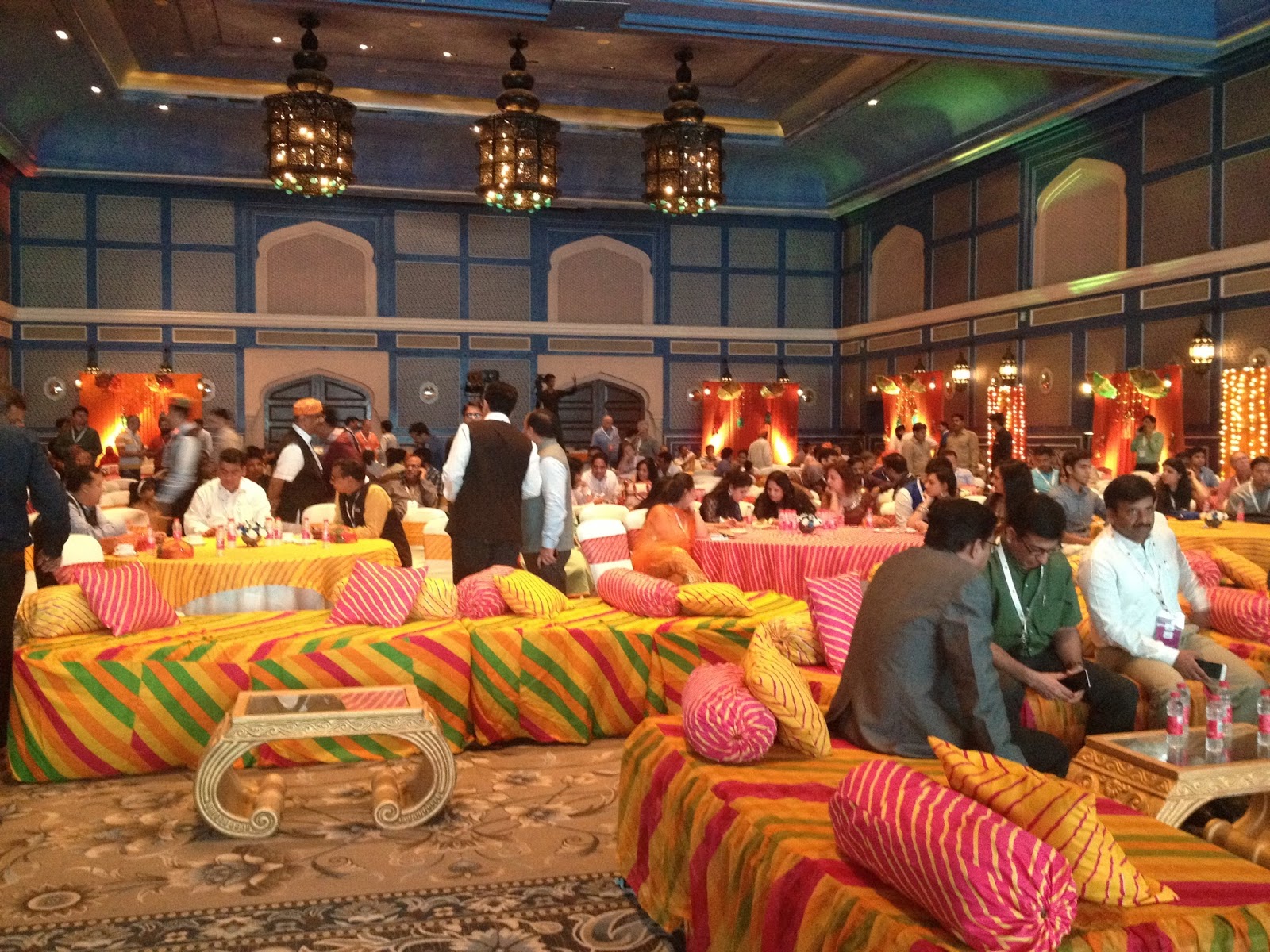
With excitement building up and registrations coming in at fast pace, the LMAI conference promises to deliver value and fun in the heritage pink city of Jaipur. I look forward to an august gathering where competitors, suppliers and customers will rejoice togetherness!
The above article maybe reproduced by magazines giving credit to the author.
Written by Harveer Singh Sahni, Managing Director, Weldon Celloplast Limited, New Delhi, India April 2015
Hanumantha Rao, the founder of Pragati Offset who passed away peacefully on the 2nd of March, 2015 was a man who grew from grass root level and became a legend in his lifetime leaving behind a legacy for his enterprise to excel in print and for generations to follow! The inertia for growth that originated with inception of the enterprise by him, has not only been carried forward by his two sons and grandchildren but has actually received further impetus from their passionate dedication to print. When I visited their home in 2011, it was indeed a very warm and eye opening experience for me. It was an ideal situation, with family bonding and respecting traditions. There, I found the true meaning for, “Athithi Devo Bhava”(The guest is like GOD), this; from the respect that the family bestowed upon me and my son Pawan that evening. I too come from family owned business but this was class! Four generations in the same room in perfect unison. Hanumantha Rao’s grand children were playing around while I enjoyed the evening with him, my friend; his son Narendra Paruchuri and his grand children. Hanumantha Rao took immense pleasure in telling me that his great grand children accompanied him to the press some afternoons after school. This was amazing foresight this man had, motivating the fourth generation as well. I am always sure that this enterprise will stay indebted to its founder in laying the path to continuous growth and excellence by personal indulgence!The ensuing generations of this family are not resting on their laurels, they strive hard to retain the saga at Pragati, “Winning awards for print excellence, is a way of life for them!”
Author: Harveer Sahni, Managing Director Weldon Celloplast Limited New Delhi March 2015
Converting process:
Designing a label is a designer’s job, passion and creative indulgence, but converting it into a label that will deliver the envisaged results of communicating with the consumer, is the job of a label converter. If, as I mentioned in the earlier two parts of this series, the designer has taken care of the converters capabilities and challenges, the result is close to being as desired. However, if at the designing stage the eventual converting process is not revisited, converting may become a nightmare and may call for more time and involvement to make changes in design. Let us consider a label that is not one of the regular shapes like a square, a rectangle or a circle. If it is a like a star or an odd shape with sharp corners, it will be a challenge to die cut the labels slowing down label conversion, bringing up the cost of label. In such a situation label dispensing may also become erratic. Such label presses are now available with many label printers that die-cut and remove waste matrix of complex shaped labels while converting but then these options are not available with all venders. The designers need to consider ease of conversion and dispensing. Sometimes designers tend to create labels in the shape of objects like a flower, a dumbbell, a butterfly, a bird or even like a falling drop. These shapes will either be difficult to die cut and will substantially slow down the label press during conversion. I am not suggesting that such shapes should not be indulged in, but on the contrary if the product and its marketing warrant’s it so and can support a higher conversion cost, it may even become a necessity to create such complex labels. At times when it is an innovation being created to reach out to a specific customer segment, the challenges in conversion and speed must take a back seat. Die-cutting in label conversion in-itself is a very exhaustive topic and an intricate technology which is beyond the purview of this article as we are dealing with the life of a label from concept, design, and conversion to its final resting on the product and its performance there from.
Brand Promotion:
Any brand from inception onwards, in its journey to success keeps gaining value as it reaches out to the product’s targeted audience. Label is one part of the package that contributes towards the brand promotion from the word go! The aesthetics and the decoration part have been dwelled upon earlier in this series, yet a very important part of the label is brand promotion. While the aesthetics and decoration of the label tempts the consumer, to impulsively lift the product off the shop shelf but it is the brand promotion in-built into the label that will bring the customers back to make a repeat purchase. A product may have been created with lot of skill and effort to be the best buy for the discerning consumer. Its commercial success will depend not only on repeated purchase by the impulsively indulgent buyer but by his spreading the message by word-of-mouth to others about the product. The information on the label should communicate the strength and reliability of the manufacturer. The label should deliver a message that the brand is “value for money” bringing appreciation from the judicious buyer who inadvertently becomes the brand’s ambassador. It is easy to mimic successful brands, but one must realize that the learned and well-informed consumer is quick to recognize a copy. I refer to this issue of duplication later in this article. The label needs to communicate the research and effort being put into creating the product to meet the emotional and aspirational requirements of the users. The label and eventually the product itself must communicate that it will add to the stature of the user. The message on label in the shortest form, given the limited space, is required to be conveyed emphatically and should be very strong and bold in branding! The content on the label is necessarily required to create an aura promoting brand recall. One must be mindful of the preferences and sensitivities of the target audience that could be children, young people, males, females or the elderly. The brand promotion capabilities of the label will create a communication link between the product and its consumer thereby establishing a channel for successful sale of the product on an ongoing basis. Often sales promotion is also incorporated in the label like free extra quantity or freebies with each purchase but here a word of caution is to be remembered, one should not confuse brand promotion with sales promotion. Brand promotion is a priority for building stature and value of a brand in the customers mind while sales promotion is a temporary step to give intermittent boost to sales. While brand promotion brings long term gains, sales promotion gives shorter gain.
Brand Protection:
As brands attain popularity and grow driving-in more revenue, another set of people wanting to make quick money by cashing in on the value of these brands, start to create look-alikes, duplicates and counterfeits. The innocent user falls prey to such unscrupulous elements by buying these non-standard products. They are exposed to dangers of being harmed by usage of such spurious products. Consumer is unable to judge whether the product is duplicate or the original product sold by the brand owner is of inferior quality. The brand is likely to suffer in value and reliability for no fault of theirs. The menace of counterfeits has attained gigantic proportions. According to a report by “The Organisation for Economic Co-operation and Development (OECD)”, Trade in counterfeit and pirated goods has risen steadily in the last few years – even as overall trade volumes stagnated – and now stands at 3.3% of global trade, according to a new report by the OECD and the EU’s Intellectual Property Office. Trends in Trade in Counterfeit and Pirated Goods puts the value of imported fake goods worldwide based on 2016 customs seizure data at USD 509 billion, up from USD 461 billion in 2013 (2.5% of world trade).
Innovation:
Consumer is the king! It is a famous quote, I would modify it a little and say, Consumer is the king maker!” If consumers approve of a product, it could deliver fortunes to the brand owners. So, to reach out to these king makers, the brand owner must innovate both in the package and label design. One sometimes wonders what innovation one can create in a label. A small patch of label that carries the brand and its information, can be decorated as mentioned earlier in this series with foiling, embossing, varnishing, lamination and die-cutting in various shape. However, in an effort to catch the consumers fancy, labels must have innovations as per the label segment they cater to. A food product label is created with a natural effect where you can see and feel the texture of the label. Portraying freshness, a leaf or a flower may be created to exhibit water droplets that one can touch and feel. These are accomplished by using diverse printing and processing technologies on their combination presses. Development of such labels is the outcome of creative capabilities of innovative label printing companies. I quote some of the innovations that I have seen in recent times;
Consider a wine label; Wine enthusiasts like to know about the wine before indulging in it. They wish to know the quality of grapes used for making that wine, the region and the terrain where the grapes came from. The label is made like a book to be read! One cannot put all this information on a single label, so labels are produced like a small booklet affixed to the wine bottle.
The hazards of using infected syringes, has been highlighted for long to curtail the spread of infection. There is an imperative need to dispose-off the used needles safely. I visited the Schreiner facility in Munich Germany, some time ago and was shown labels where after use the needle is broken on to a plastic trap which forms a part of the label on disposable syringe. These traps are then sent for safe treatment and disposal.
Another interesting example is a label created for the Heinz tomato ketchup pack. On one side if you open the pack, ketchup can be squeezed out like it is done from a regular bottle. However, if there is need to use the ketchup as dip, one can peel off the entire label by pulling the tab on another end to expose the ketchup and get a feel as if it was in a bowl.
Other innovations are like a safety temperature indicating label on cooking gas cylinders that would change colours to indicate safe temperatures or Braille labels on wine bottles for the physically challenged blind who also like normal people enjoy their wine and will like to read the information as wine lovers.
Summary
Label printing and converting technologies continue to evolve and I have written about the different processes on my blog where a lot of information is available. The printing that initially surfaced as letter press, moved over to flexographic printing followed by stand alone or hybrid presses incorporating combination of flexo, digital, screen, offset Rotogravure printing and diverse embellishing process like hot-foil, cold-foil, UV varnish, embossing, debossing, front and back printing all done in a single pass. The packaging development specialists now need to be well versed with all the technologies and processes. In this three-part series, one can see the journey of the label from concept to its life on the product after application. It goes through a technical life cycle interacting with diverse technologies from design, to printing, conversion, dispensing and life thereafter. Each of the technologies that the label encounters in its life cycle including the chemical, mechanical and physical properties is a science it itself. Before concluding we must keep in mind the end-of-life waste management while creating a label or package. The whole chain of persons who contribute to the life of a label are a team who eventually rejoice in the success of a product that adorns a label they created.
The complete 3 part series are accessible at the following links;
https://harveersahni.blogspot.com/2014/09/the-life-of-label-i.html
http://harveersahni.blogspot.com/2014/12/the-life-of-label-ii.html
https://harveersahni.blogspot.com/2022/02/life-of-label-iii.html
Written by Harveer Sahni, Chairman, Weldon Celloplast Limited, New Delhi-110008 India, January 2015 and updated in February 2022
A close look into label creation and development
India • In part one of this series of articles the author referred to the general importance of labels. Part two deals with the imperative, that the label design has to be a parallel creation when the package is being designed.
In the part one of this series, I wrote about the importance of label. It is however an imperative now that the label-design must be a parallel creation when the package is being created and designed. In earlier times one would just decide on a container depending on the product being a liquid, powder, or a product. If it had to be a bottle, it would either be glass or plastic and then the shape would be thought of. For cost effectiveness some products would go into printed or unprinted LDPE or PP bags. If the product is a solid one, it would probably end up in a paper-based package like a carton. A bottle would get a simple screw-on cap and then the rectangular label would separately be designed to adorn the package. The labeled bottle would again go into a mono carton and then into a corrugated carton. While the basics appear the same but modern-day technological mindsets have undergone a sea change on how to go about creating a package and its labels. Now extensive brainstorming is done before creating primary packaging on issues such as product chemistry, its construction, shelf life, usage, lifespan, aesthetics, convenience of product delivery from the package, product decoration on the label, communication capability of the label with the consumer with ease, value building for the brand; its enhancement, protection and its authentification, security features, pricing information, manufacturing/expiry dates, bar coding, etc. With evolution, growth of consumerism and increased retail selling; packaging waste is also now generated in gigantic quantities. So, for this reason each of the above considerations, the recyclability, waste disposal and sustainability must be kept in mind at every stage of package design.
Package:
Packaging design needs to start in reverse from the farthest end in the life cycle of a product with consumer as the end user in focus all the time at each stage. It is the consumer for whose attention and impulse to buy and comfort to use, the package is designed. One would imagine that once the product has been bought and has been used, its life cycle has ended. However present-day environmental obligations compel us to start our planning on how the packaging waste will end up, whether it is bio-degradable, or recyclable or reusable. So obviously the planning to create a package must begin with the end consumer and environment in focus at each stage. Now at the very outset we need to study the product that we have to package. It could be liquid, powder, or an appliance. It could be a chemical or a food product. Let us for the purpose of understanding the designing process consider packaging of perfumed hair oil. Large scale bottling of lubricating oils and cooking oils is done in HDPE (High Density Polyethylene) containers. HDPE is known to be somewhat porous and on long storage for months, oil seeps to the surface. Since the lifespan is short and since the lubricating oils are on shelves of gas stations before they are opened and used up, not much attention is given to the slight porosity. Similarly cooking oils are stored in cooking cabinets away from sight again it is not of much consequence. However, in case of perfumed hair oil which has to sit on dressing tables; first the porosity can make the bottle look greasy and dust attracting over long storage and secondly the perfume will gradually evaporate degrading the product. For this reason, the material of the bottle must be carefully chosen. Aromatic liquid preparations and volatile liquids like nail polish remover when packed in HDPE lose their aroma and lose levels due to evaporation. For this reason, PET becomes the preferred material for such packaging. Glass would be an ideal material and with full recyclability as it provides the best shelf life but due to the weight and its fragile nature, plastics are preferred. Similarly, when we decide to opt for flexible packaging, tin packaging, glass packaging, paper-based packaging etc., we need to dwell on how the chemistry of the product will react and stay well in the selected packaging materials. The shape of the package must be made attractive but at the same time convenience of use is importance. In case of lube oils, cooking oils and milk packaging the neck is moved to one side to facilitate pouring. Also, in bigger packs handles are molded-in to provide ease of lifting to the consumers. Additionally caps with pouring devices inbuilt or pumps are also used to make dispensing a pleasure. Once the material of the package has been selected the shape has to be created and it should keep in mind the behavior of the stability of the package on the packaging line during high-speed filling, capping and labeling process. Space needs to be provided for labels and their position, also ensuring that the label will easily dispense to be positioned correctly. The size of label should also be such that it takes into account the label printer’s press width with minimum waste matrix and deckle wastage to achieve cost effectiveness. The shape of the package should also be such that it can be placed and transported with ease and safety in secondary and tertiary packs. Another point for consideration is to provide the space for applying tamper evident label or seal wherever necessary. Most liquor bottles require government seal to be put on caps, but the uneven surface makes firm anchorage of the self-adhesive seals a challenge leaving room for tampering.
Label Design:
\As I said label has to be in mind all along. It is the communicating arm of the product. It actually becomes the one part of the package that attracts the consumer’s attention, tempts him or her to lift it off the store shelf and then becomes the communication link between the manufacturer and the buyer. At this time, it does the job of being the best salesperson that the company has. It has the consumer’s focused attention there on. It is thus that it becomes the all-important part of a package. The self-adhesive label’s journey starts at the label stock manufacturers plant and meets the label designer’s ideas in the pre-press department, gets decorated and converted on the label press of the converter. Finally, it meets and is united with its life partner, the package at the product manufacturers packaging line. Hereafter begins the harsh journey experiencing product handling by different people, usage and facing diverse environments. The labelstock consists of primarily three components i.e., the release liner, the adhesive and the face material. Each component has to be in the mind of the package and label designer. Even though the release liner ends up in the waste dump, yet it is the most important part of the label converting and dispensing operation. The release levels will ensure speed of conversion and dispensing.
If the release level is too tight then the waste matrix will keep breaking adding to down time and it will not dispense labels well. Also, if the waste matrix is too thin it will also amount to matrix breakages. On the other hand, if the release level is too easy then the smaller labels will lift with the matrix and may fly off at the label dispensing line. The designer needs to select a size that will not add to waste yet provide a waste matrix that will lift easily and will help in faster conversion. Finally, the liner, if it is paper, is adding to a gigantic waste problem as proper recycling facilities are not available. A filmic liner is thinner, decreasing the tonnage of waste generated and it is also recyclable. As for the liner to be used and the release level the stock manufacturer needs to be taken into confidence. Largely the optimum release values set by coaters, work across a very wide range. There is lot of work being done to produce linerless label materials still there is time before the product is developed to be used on existing packaging lines. The adhesive is a crucial component and needs the designer’s attention at the designing stage. It is the link between the label and the container such that it must adhere and perform well. HDPE is a hard to wet substrate and normal general purpose acrylic emulsion adhesives do not deliver a permanent bond. Specially formulated adhesives need to be used. Further if a removable label needs to be affixed and later removed, then removable adhesives are needed. Finally, the label material which is the top layer of the label stock and becomes the face of the product is also called the facestock. The designers need to do a careful selection as this is the part of labelstock that along with adhesive goes with the label on to the product. This is the most important part of label design and its integration with all the final packaging is what the product will eventually deliver.
Designers need to make the maximum indulgence in selecting the right face material. To design for printing excellence, creating appealing and convenient shapes of the packaging is an eventuality for any consumer product but what to print upon is an imperative and there is a world full of options. Not much long ago it was just deciding whether to use paper or film. By and large it still happens this way, however as vision expands and as we look around considering the possibilities that exist, labels start looking for an interesting avatar! Some parameters and inputs could provide the answer on what the label face material should be, but the way markets are evolving it needs a more intense thought process. To select the face material for a label we need to be again starting from the extreme end of the chain. We need to dwell on disposability or recyclability, endurance of usage conditions, compatibility with the product chemistry, cost analysis, aesthetics that aid selling, convertibility in supplier’s plants, statutory information, variable information on the label and capability to accept the desired printing, decorating and converting processes.
Consider any toiletry in a bathroom; it must be there all the time facing harsh and diverse conditions. It has to bear cold water, hot water, dry weather, cold weather, hot and humid environment, soap and continuous squeezing of the bottle. If the bottle material has been selected as HDPE, then the label in such a case cannot be paper as it will not withstand conditions to which it is exposed. Brand owners cannot expect their product to have a shriveled-up label lying in a customer’s bathroom for other guests to see such a situation which would have adverse impact on their brand image. Going further down the chain, a label should ideally be of a polymer that can be recycled along with the bottle. In a situation like this a PE film as label face will be preferred as it will behave same as the bottle material in recycling. However still, the selection of label face material cannot be limited due to above parameters only, even though they are necessary considerations. It must be worthwhile to deliver the sales impetus to the product that it will be applied upon. In present times designers have the options of a very diverse range of face materials. Examples are uncoated paper, coated art paper, Kraft paper, textured paper, metalized paper, foil laminated paper, PE Film, PET film, BOPP film, PP film, hybrid films, metalized films, clear transparent films, fabrics, cork sheets and the options go on increasing as per the designer’s imagination.
The final Label design
This needs the magic touch! The shape of the label must be in synergy with the package. One cannot have a square label on and oval container! Once the shape of the label has been decided we again need to design the label with the product and consumer in mind. A pharma label will be simple line jobs having consistency and legibility. It must carry all the statutory information, contents usage and dosage information. Recent government regulations have made it mandatory to print 2D barcodes to facilitate track and trace mechanism as a measure to counter duplication and fakes. Given the small size of most the primary pharmaceutical packs putting all this on a label becomes a very challenging proposition. When we consider the FMCG (Fast Moving Consumer Goods) products we are required to decorate the labels with high resolution images with real skin tones. Capability of the label printer is of importance as we move to higher end labels. Most labels are printed on flexo presses. These labels need excellent registration controls on all UV flexo presses with hot or cold foiling and combining, screen, offset or gravure printing on hybrid presses for special effects. Shapes are die-cut conforming to the shape of the package. These labels have a very tough task of convincing the consumer to buy so they need to be designed to communicate. The label must have product information with high resolution graphics to hold the customers attention. Since lot of information is required regarding usage, manufacturing dates, retail prices, bar codes, licensing details, contents and manufacturers address, a separate label is provided behind the container. The front label that is the face is made as attractive as possible to tempt the customer to reach out for it and the back label starts to communication with the user. As we go on to wine and liquor labels the need for attractive graphics becomes even more demanding. As the store shelves get crowded with number of brands and strict laws restricting advertising of alcohol, labels become the major platform to advertise and catch the consumer’s eye. Wine and liquor labels require very high level of decorating capabilities from label printers. The labels have textures, advanced graphics, foiling, printing with metallic effects, embossing and additional effects. It is for this reason that companies who indulge in liquor labels have made large investments in high end combination presses where in they can incorporate flexo printing with offset, screen and rotogravure printing to achieve the special metallic colour effects so prominent in highly decorative labels.
In the next part of this series on life of label, I will dwell on die-cutting, brand protection, building security in labels, additional decoration and finally innovations in labels.
Written by Harveer Sahni, Chairman, Weldon Celloplast Limited, New Delhi-110008 India, October 2014 and updated in January 2022
Each participant was asked to indicate the region in which their factory is located. If a participant’s company headquarters was in another region, the participant was asked to answer the questions in the survey as only applicable to the factory in which they work. This ensures the data obtained is relevant to a specific European region, rather than being applied across all of Europe. The graph below indicates a geographic breakdown for all FINAT Converter Survey Respondents…Read More.

2. The initial growth of labels came from flatbed label presses followed by the semi rotary letterpress and then on to intermittent rotary letterpress. This intermittent letterpress printing technology that was and still is, in use, came from the eastern countries like Japan, Taiwan and then China. The shift from letterpress to flexo started in the 1990s. Though in 1983 Liddles in New Delhi had acquired a used Mark Andy press but it was in 1993 that Patel Printing Press in Ahmedabad bought a new Mark Andy Label Press. Around the same time Super Labels at Mumbai installed an Aquaflex. This shift from letterpress to flexo was indeed a very important and defining moment for the Indian label industry. As flexo printing came to India, with it in the mid 1990s Dupont introduced their photo polymer plates in India. At that time it was in the form of analog plates for conventional flexo printing. In 2002 Numex Blocks, Mumbai bought the 1st CDI (Cyrel* Digital Imager) in India and thus DuPont introduces digital plates in India, which brought revolution in high quality flexo printing in India. Eventually with installations of ESKO CDI Digital imagers with the workflow (Software), India moved from conventional Flexo to Digital Flexo (Standard resolution) These exciting happenings brought the quality levels of label printing in India to the next level, matching Gravure and Offset quality.
The comments;
Bharat Mehta of Super Labels: “It was a game changing time and Super Labels was the first in India to install an all UV label press Gallus EM280 in 1997” This was reconfirmed by industry veteran Sudhir Samant.

5. Like “makeup” is an important part of a woman’s finishing touches to her appearance before she presents herself in front of an important audience, "finishing" as we term it in label converting, is a very essential part of creating a label that will attract the all important attention of a consumer. A label needs to be decorated before it actually becomes the engineered product that will become the inevitable sales tool for any product. It needs to have the right makeup on its face. To decorate it so we need more than just printing in flexo; a higher ink deposition of a particular ink, a shining gold/silver on it, an embossing that will catch the eye, a metal effect, a gloss and so on. India’s young and literate middle class is turning out a young middle class that is more demanding in value from the consumer products in modern day retail. Label printers wanting to deliver a product need to equip themselves with capabilities to dress up labels appropriately and for this, different print technologies need to be incorporated. An offset printer who is used to moving piles of paper from machine to machine in large factories may be able to do it but the effort is too cumbersome and in the end the labels will be in sheets and not in rolls. A narrow web label printer who is used to converting self adhesive labels into labels in a single pass would need to do this online in one go. Combination printing presses now provide the answer. Introduction and installation of the first combination presses in the first half of the new millennium, the decade of 2000, is another defining moment in the Indian label industry. Wintek in South India was one of the first to install a press with a combination of flexo and screen printing, Goodwork Company in New Delhi with letterpress and screen and Veekay Graphics in Mumbai with a combination of flexo and offset pioneered this change. The combination technology has continued to evolve and culminated with Pragatipack in Hyderabad opting for flexo with gravure, Zircon following it up similarly and then to top it all it is Renault Paper, part of Manohar Packaging group, who have installed a press with capabilities to print flexo, offset, screen and gravure along with foiling and embossing capabilities! The advent of combination presses being installed is another defining moment.
6. As the label industry started to evolve and printers aspired to meet global standards in quality, there was need to look around for machines and equipment that will help them print quality that would excel. Some printers would travel to Labelexpo in Singapore or to the main show in Brussels to see the machines displayed and evaluate where to invest. The smaller printers could not afford the exercise. As the last millennium was coming to an end, the need to have a label show in India was being felt. At the same time there appeared an imperative need for an industry association. In 2002 Amit Sheth of Label Planet in Mumbai took the initiative and gathered a few printers in Mumbai and announced the formation of Label Manufacturers Association of India. The very same year Anil Arora organized the first label show in India, “The India Label Show” at Nehru Centre Mumbai. I am proud of my association and support I gave to Anil for making this show a huge success. I also managed to get Andy Thomas Group Managing Editor Labels and Labeling and another colleague from Labelexpo group part of the holding company Tarsus UK to visit the show. It is history there after that by the time India Label Show reached its third edition it had been taken over by Tarsus and two years later it was renamed Labelexpo India. Nowadays exhibitions have become an important part of label industry in terms of technology up gradation and networking opportunities that they accord. The success of LMAI conferences in GOA have proved that the label printers look forward to such opportunities. The formation of LMAI and launch of India Label show (renamed Labelexpo India) was another defining moment.
9. A growing market registering double digit growth consistently for many years is always susceptible to investment beyond its natural growth. When such happens, it creates capacity higher than the demand which in turn results in intense competition. Even though the market is there and volumes are there yet margins come under pressure making ROI (return on Investment) a difficult proposition. Even when one continues to see expansions and investments in new equipment yet printers are found complaining of difficult times. At such time there is always a need felt for innovation and indulgence in new technologies. The need became an imperative in the middle of first decade of the new millennium. Somewhere around 2003-2008 printers began to actively indulge and experiment in innovation. One such initiative that has impacted my mind is a butterfly promotional label in film pioneered by the late Kartar Singh Dunglay at Goodwork Company. These were defining times when printers broke away from the custom stickers turned into labels and moved on to produce booklet label, multilayer labels, Security labels, customized promotional labels, etc. This change brought the much needed margins to the indulgent printers who dared to innovate. Evolving further printers are today buying presses with additional capabilities so as to produce unique and innovatively converted label products.
10. Printing Technologies in label printing have undergone a sea change from the time of inception. For the last two decades we have seen most of the development in flexographic printing. It surely remains the predominantly used label printing technology today. With continuous enhancement in plate technology, aniloxes, machine design, etc. this technology has become comparable to the best today. At this time one cannot ignore the entry of Digital printing and converting. Year after year at print shows around the world we see and ever increasing presence of digital printing technologies and equipments. While the digital seems to have impacted and succeeded in the sheet fed segment, it still has not found widespread acceptance in the label printing. Looking at the technology from computer to print without the plates, aniloxes, doctor blades, etc., pared with digital laser die cutting without the needs for magnetic cylinders and dies, it all looks and sounds so interesting. However the forbidding price structure for short runs in roll form, the cost of equipment, inks, etc indicates that the technology will need to evolve further and it will. The convenience in application hints that the time when this printing technology will find widespread usage in labels may not be too far. Pioneering efforts of label printers like Janus and Webtech in Mumbai and Reydun in Delhi, who acquired digital label presses, will go down in history as a defining moment.
Written by Harveer Sahni Managing Director Weldon Celloplast Limited, New Delhi October 2014 and was first published by Printweek India Vol VII Issue 7