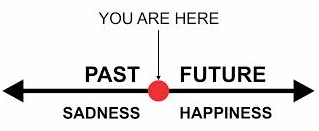
Nostalgia is an important trait of human existence. We have memories good and bad but if we live only the nightmares, life will not be worth living, essentially; we need to put the not so happy past, behind us and move on. On the other hand if we get nostalgic and sentimentally reminisce a part of the past that brings back smiles to us, remember the pleasurable moments that gave solace and whereby we made happy associations that have left yearning and longing for the time gone by; life becomes so much more meaningful. Evolution and nostalgia are inseparable. Imagine a time when we did not have cars, planes and other modern modes of transport. I can remember my father with a strange smile on his face talking about the early days of his business. Those were the days when he started his career in the 1930s; he peddled his stationery articles in retail markets on a cycle. Even though he bought his first car in 1947, yet the thought of times when he used his cycle, brought a look of satisfaction and euphoria on his being. I remember somewhere in the 1950s we got our first telephone. Before that when our father left for work each morning we knew we would see him or talk to him only in the evening without any communication in between. With evolution we have reached a pinnacle of connectivity, every member of the house has mobile phones and we can see and talk to the person in real time all across the globe. Now it is difficult to imagine a day without wives calling every two hours to check on you and ask, “Where are you?” Even though when through activated location services she can see where her husband is. When we got our first black and white TV in the 1960s there was only one TV channel broadcasting two hours in the evening. Neighbors used to come over and sit to watch the TV with us. It was like a mela (a village fair) each evening. Now with evolution of television which is history in itself, we see our neighbors maybe once in six months. Label printing in this country has also evolved from a very nascent stage in the 1970s to what it is now. I feel extremely nostalgic about this evolution that has taken place and continues to progress at a rapid pace, this so because I have grown and lived with it for most of these years in evolution of label printing. People who have contributed to the industry in the early years and have set the foundation of the industry have been very close to me and have shared their individual experience in the industry with me over the years. I personally believe chronicling the events that lead the industry to reach where it is today is a service that the industry at large will be appreciative in time to come. The generations that follow will have something to refer to when they wish to learn and take inspiration from the past. It is for this reason that I wrote my article, “History of Indian Label Industry” eight years ago in August 2006. For a long time now I have wanted to update the article but the exercise is arduous and calls for indulgence in time and money because of the industry having spread over the length and breadth of this country. When my elder son Pawan asked me to write this article on the “Ten most defining moments of Indian Label Industry” I agreed for various reasons like, it links me to my passion of writing about labels, it will be an extension of my article on the history and it will further trigger the mindsets to take evolution in this industry to another level.
My efforts to collate the events and defining moments has been possible with support from industry veterans like Bharat Mehta of Super Labels, Kamlesh Shah of Letragraphix, Sudhir Samant, Rajesh Nema, Manish Desai, Kusum Dunglay of Reydun, …. I appreciate their inputs and thank them for this. I have listed the ten most defining moments of the Indian label industry below.

1. For the label industry what more defining time than the time when the industry was actually initiated and came into existence. The credit of bringing self adhesive labels, in their present form, to India goes to a US multi-national, Johnson & Johnson. It was around 1965 that they entered into the manufacture of self adhesive labels. They installed a rotary label press. They sold only converted labels and did not offer any labelstock to others in the market. The first self adhesive label produced by an Indian printer also started around the same time in 1965, almost thirty years after Stanton Avery produced the first self adhesive label in Los Angeles, California. Manohar Lal Bhatia, a screen printer, producing water transfers in his company, Sharat Industries, did pioneering work and produced what was the first self adhesive sticker in India. Using a PVC face stock with pressure sensitive adhesive supplied by Calico and a Polyethylene sheet as a release liner they manufactured their stickers. The reason they did not use paper as face material is that silicon release liners were not available and Polyethylene provided for a very tight release due to which the paper would tear off. Thereafter these stickers became the forte of many screen printers. It was in the beginning of the 1970s that Shanti Lal Doshi & Co. started to produce self adhesive labelstocks in Mumbai. 1972-193 was a landmark year that lead to birth of the self adhesive labels made by Indians, in roll form. It was at this time Jeetubhai Shah in Mumbai imported a flatbed Iwasaki label press to produce self adhesive labels. In the second half of 1970s Super labels, Pressure Tags and R K Papers had started to produce self adhesive labels at Mumbai, Better labels in south while Liddles and Rikki Sales in New Delhi.
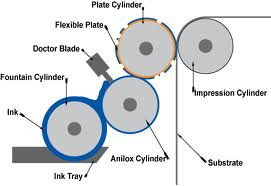 2. The initial growth of labels came from flatbed label presses followed by the semi rotary letterpress and then on to intermittent rotary letterpress. This intermittent letterpress printing technology that was and still is, in use, came from the eastern countries like Japan, Taiwan and then China. The shift from letterpress to flexo started in the 1990s. Though in 1983 Liddles in New Delhi had acquired a used Mark Andy press but it was in 1993 that Patel Printing Press in Ahmedabad bought a new Mark Andy Label Press. Around the same time Super Labels at Mumbai installed an Aquaflex. This shift from letterpress to flexo was indeed a very important and defining moment for the Indian label industry. As flexo printing came to India, with it in the mid 1990s Dupont introduced their photo polymer plates in India. At that time it was in the form of analog plates for conventional flexo printing. In 2002 Numex Blocks, Mumbai bought the 1st CDI (Cyrel* Digital Imager) in India and thus DuPont introduces digital plates in India, which brought revolution in high quality flexo printing in India. Eventually with installations of ESKO CDI Digital imagers with the workflow (Software), India moved from conventional Flexo to Digital Flexo (Standard resolution) These exciting happenings brought the quality levels of label printing in India to the next level, matching Gravure and Offset quality.
3. With introduction of full rotary flexo presses in the 1990s the label stock consumption in India picked up pace and with that also started the setting up of coating and lamination plants all across India in Mumbai, Ahmedabad, Delhi and Chennai. Labelstock production technologies also started evolving. It was during this period that the ordinary sticker started to become an engineered product called self adhesive label. At this moment I would like to quote Kamlesh Shah of Letragrafix, he says “Meanings of both the above words are different. Stickers” are used for publicity purpose whereas Self-Adhesive Labels are being used on products (Containers, Bags, Bottles, Information, etc.). One would not necessarily get repeat orders for stickers but will definitely get repeat orders for Self-Adhesive Labels”
.
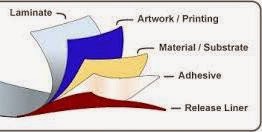
The labelstock consists primarily of three components, the release paper, the adhesive and the face paper. As label dispensing technologies found automation in packaging plants across the nation, exacting demands were being made on the quality of labelstocks being produced. Silicone coating chemistries changed from the solvented tin catalyst system to solvented platinum catalyst systems to finally settle down with now largely used solvent free platinum catalyst silicone coating. This provided consistent and reproducible release levels required for faster converting and dispensing needs. A market that was passionate about using only glassine liners has evolved now to use different base papers like CCK, SCK, Polycoated, Polyester, etc. At this time the adhesives also found a lot of shifting first from solvented to hotmelts and now to largely emulsion adhesives. Variants like permanent adhesives, high temperature adhesives and removable also started to be offered. A market that was predominantly limited to Semi-Gloss or Chromo Art paper and Woodfree or Maplitho paper, transformed into using face stocks like, high gloss paper, BOPP, PE, PET, etc. Such changes in the Indian label scenario brought India in the focus on the international stage. At this time in 1996-97 the world’s largest labelstock producer Avery Dennison moved into India by setting up manufacturing facility in Gurgaon in North India. This was followed up by Raflatac setting up slitting facilities in India. This entry of multinationals into India was indeed a very defining moment that changed the way labels and labelstocks would be sold in the country.
4. The Indian label printers are unanimous about one change that defined its future till date. All the leading printing companies who I approached for their inputs came back so strongly to reaffirm that this was the
most defining moment that I felt like researching more on this and writing in detail about it. However due to the space constraint I will just present here some of the comments of various printers who responded. Now the defining moment!
“The switch over to UV Flexo”.
The comments;
Bharat Mehta of Super Labels: “It was a game changing time and Super Labels was the first in India to install an all
UV label press Gallus EM280 in 1997” This was reconfirmed by industry veteran
Sudhir Samant.
Kamlesh Shah of Letragraphix: “U.V. Printing is a “Must” in all printing Methods!”
Rajesh Nema of Pragati Global: “I went from sheet fed offset to full rotary water based flexo. In 1996, I started with water based flexo and the learning curve was too big. The color matching of each job (even when it was a repeat) was a big problem because of the ever changing viscosity of the ink in the shelf & in the pan (while running on the press). Changing temperatures did also affect the print quality hence there was a lot of changes. Around 1999 I heard of full UV flexo and studied the press as also availability of inks. I could sense that UV Flexo would change the flexo printing scenario at one go and this is what happened. Although the ink costs were prohibitive and availability was a big question mark, I decided to go in for this technology. The learning curve was extremely small and from day one, my operators could operate the machine, handle the inks without any difficulty whatsoever. Gone are the days of measuring ink viscosity, ink pH, color variation, setting time (to get the exact color), and the wastage stands reduced. Because of higher strength of UV inks vis-a-vis water based inks, I could use higher line count aniloxes which enabled me to go to higher plate screen line count, finer print and reduced ink consumption (and higher speed too). Although the overall power consumption is higher in comparison to water based inks (this also is being taken care of by new UV technology), other advantages are far more than higher energy costs and more than compensates the higher energy costs. Any company moving from offset/letterpress to flexo is well advised to straight away move to UV flexo to get the grip in shortest possible time.”
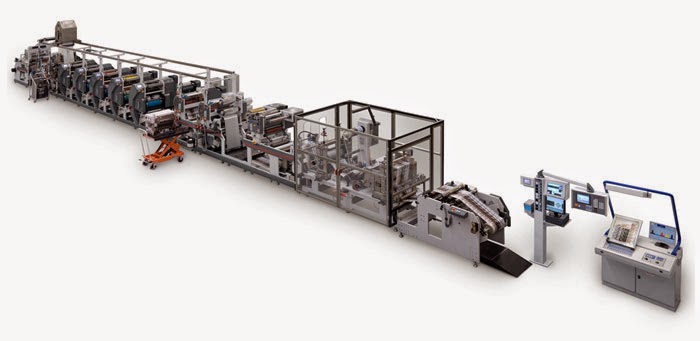
5. Like “makeup” is an important part of a woman’s finishing touches to her appearance before she presents herself in front of an important audience, "finishing" as we term it in label converting, is a very essential part of creating a label that will attract the all important attention of a consumer. A label needs to be decorated before it actually becomes the engineered product that will become the inevitable sales tool for any product. It needs to have the right makeup on its face. To decorate it so we need more than just printing in flexo; a higher ink deposition of a particular ink, a shining gold/silver on it, an embossing that will catch the eye, a metal effect, a gloss and so on. India’s young and literate middle class is turning out a young middle class that is more demanding in value from the consumer products in modern day retail. Label printers wanting to deliver a product need to equip themselves with capabilities to dress up labels appropriately and for this, different print technologies need to be incorporated. An offset printer who is used to moving piles of paper from machine to machine in large factories may be able to do it but the effort is too cumbersome and in the end the labels will be in sheets and not in rolls. A narrow web label printer who is used to converting self adhesive labels into labels in a single pass would need to do this online in one go. Combination printing presses now provide the answer. Introduction and installation of the first combination presses in the first half of the new millennium, the decade of 2000, is another defining moment in the Indian label industry. Wintek in South India was one of the first to install a press with a combination of flexo and screen printing, Goodwork Company in New Delhi with letterpress and screen and Veekay Graphics in Mumbai with a combination of flexo and offset pioneered this change. The combination technology has continued to evolve and culminated with Pragatipack in Hyderabad opting for flexo with gravure, Zircon following it up similarly and then to top it all it is Renault Paper, part of Manohar Packaging group, who have installed a press with capabilities to print flexo, offset, screen and gravure along with foiling and embossing capabilities! The advent of combination presses being installed is another
defining moment.
6. As the label industry started to evolve and printers aspired to meet global standards in quality, there was need to look around for machines and equipment that will help them print quality that would excel. Some printers would travel to Labelexpo in Singapore or to the main show in Brussels to see the machines displayed and evaluate where to invest. The smaller printers could not afford the exercise. As the last millennium was coming to an end, the need to have a label show in India was being felt. At the same time there appeared an imperative need for an industry association. In 2002 Amit Sheth of Label Planet in Mumbai took the initiative and gathered a few printers in Mumbai and announced the formation of Label Manufacturers Association of India. The very same year Anil Arora organized the first label show in India, “The India Label Show” at Nehru Centre Mumbai. I am proud of my association and support I gave to Anil for making this show a huge success. I also managed to get Andy Thomas Group Managing Editor Labels and Labeling and another colleague from Labelexpo group part of the holding company Tarsus UK to visit the show.

It is history there after that by the time India Label Show reached its third edition it had been taken over by Tarsus and two years later it was renamed Labelexpo India. Nowadays exhibitions have become an important part of label industry in terms of technology up gradation and networking opportunities that they accord. The success of LMAI conferences in GOA have proved that the label printers look forward to such opportunities. The formation of LMAI and launch of India Label show (renamed Labelexpo India) was another
defining moment.
7. As flexo and other Label printing processes continued to find up gradation in technologies around the world, printers in India also were looking out for adopting such changes that would make them globally comparable in quality. Like the defining moment when UV Flexo came in, similarly changes in machine design by international label press suppliers came to be noticed to become unique defining moments. Set up time for a job in a regular label press would waste at least 100 running meters of labelstock. Press manufacturers innovated to produce presses with short web path and chill drums and then further innovations brought in automatic registration control. These changes not only reduced material wastage to single digit but also reduced manual intervention in register control decreasing dependence on operators. Operators are already a commodity that is becoming difficult to source in times of increasing label press population. Similarly gear, marks wearing shafts, difficult changeover times tension controls were a consistent cause for worry for the quality conscious label printers. Servo motor technology changed life for printers as these are welcome changes.
8. As mentioned in the beginning of this article, a multinational Johnson and Johnson initiated label production in this country. Thereafter the Indian indulgence started at a very basic stage in screen printing, evolving and progressing into flat bed letterpress and then on to flexo and combination printing. Printers grew in size and stature as the economy and population grew. With the world’s eye on this huge growing young workforce creating a mind boggling marketplace for retail in consumer and industrial products, the multinational large players in label world turned their attention towards India. We are coming to a full circle. While many small deals brought in some international players like Brady’s-USA, Reynders-Belgium, Nordvalls-Sweden, Printcare-Srilanka, etc to India it was in 2012 that controlling stake in India’s largest label printing company Interlabels was acquired by European label company Skanem. This was indeed a defining moment that changed the way the larger Indian label companies would move ahead. This acquisition was followed up by ITW acquiring Wintek in Bangalore, Positive packaging acquiring SGRE in Bangalore and Huhtamaki acquiring Webtech in Mumbai. One goes on hearing rumors of other foreign companies on prowl but another positive sign is that Indian label companies have also dared to venture out. Ajanta Packaging has set up units in Daman, Baddi, UAE & Thailand. I would not be surprised if his next step is Europe! Syndicate labels, Prakash Labels and Stallion are some of the other label printers who have offshore manufacturing in UAE besides India.
9. A growing market registering double digit growth consistently for many years is always susceptible to investment beyond its natural growth. When such happens, it creates capacity higher than the demand which in turn results in intense competition. Even though the market is there and volumes are there yet margins come under pressure making ROI (return on Investment) a difficult proposition. Even when one continues to see expansions and investments in new equipment yet printers are found complaining of difficult times. At such time there is always a need felt for innovation and indulgence in new technologies. The need became an imperative in the middle of first decade of the new millennium. Somewhere around 2003-2008 printers began to actively indulge and experiment in innovation. One such initiative that has impacted my mind is a butterfly promotional label in film pioneered by the late Kartar Singh Dunglay at Goodwork Company. These were defining times when printers broke away from the custom stickers turned into labels and moved on to produce booklet label, multilayer labels, Security labels, customized promotional labels, etc. This change brought the much needed margins to the indulgent printers who dared to innovate. Evolving further printers are today buying presses with additional capabilities so as to produce unique and innovatively converted label products.
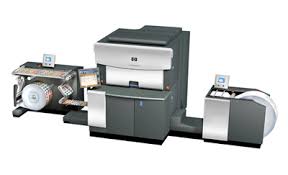
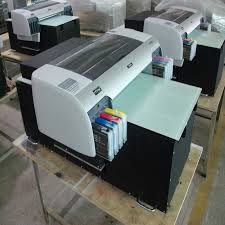
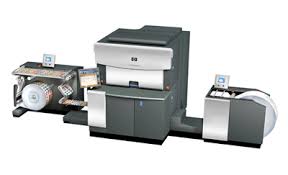
10. Printing Technologies in label printing have undergone a sea change from the time of inception. For the last two decades we have seen most of the development in flexographic printing. It surely remains the predominantly used label printing technology today. With continuous enhancement in plate technology, aniloxes, machine design, etc. this technology has become comparable to the best today. At this time one cannot ignore the entry of Digital printing and converting. Year after year at print shows around the world we see and ever increasing presence of digital printing technologies and equipments. While the digital seems to have impacted and succeeded in the sheet fed segment, it still has not found widespread acceptance in the label printing. Looking at the technology from computer to print without the plates, aniloxes, doctor blades, etc., pared with digital laser die cutting without the needs for magnetic cylinders and dies, it all looks and sounds so interesting. However the forbidding price structure for short runs in roll form, the cost of equipment, inks, etc indicates that the technology will need to evolve further and it will. The convenience in application hints that the time when this printing technology will find widespread usage in labels may not be too far. Pioneering efforts of label printers like Janus and Webtech in Mumbai and Reydun in Delhi, who acquired digital label presses, will go down in history as a defining moment.
The label industry in India has still a long way to go, as consumerism is on the rise and retail selling gains in significance; label usage is set to rise steadily. The per capita usage in India is still a fraction of what it is in Europe or USA. For a large population base a small increase in the per capita usage will amount to a huge amount in numbers. As volumes grow the waste generated by this industry is also going to grow manifold. It is an industry in which almost 50% of the product ends up in landfills. We have a gigantic problem at hand and need to address this problem is an imperative. Government legislations when they come will make life difficult for the industry. It is better that the industry leaders both users and converters of labels as also the users, apply their mind on this problem. At present we are just reading and watching what is happening in the western world. The local industry associations and other forums need to debate on it and find innovative solutions for the self adhesive label industry. If they do find solutions on this front, it will be the next most defining moment that will deliver a better environment for generations that follow.
Written by Harveer Sahni Managing Director Weldon Celloplast Limited, New Delhi October 2014 and was first published by Printweek India Vol VII Issue 7

















.JPG)