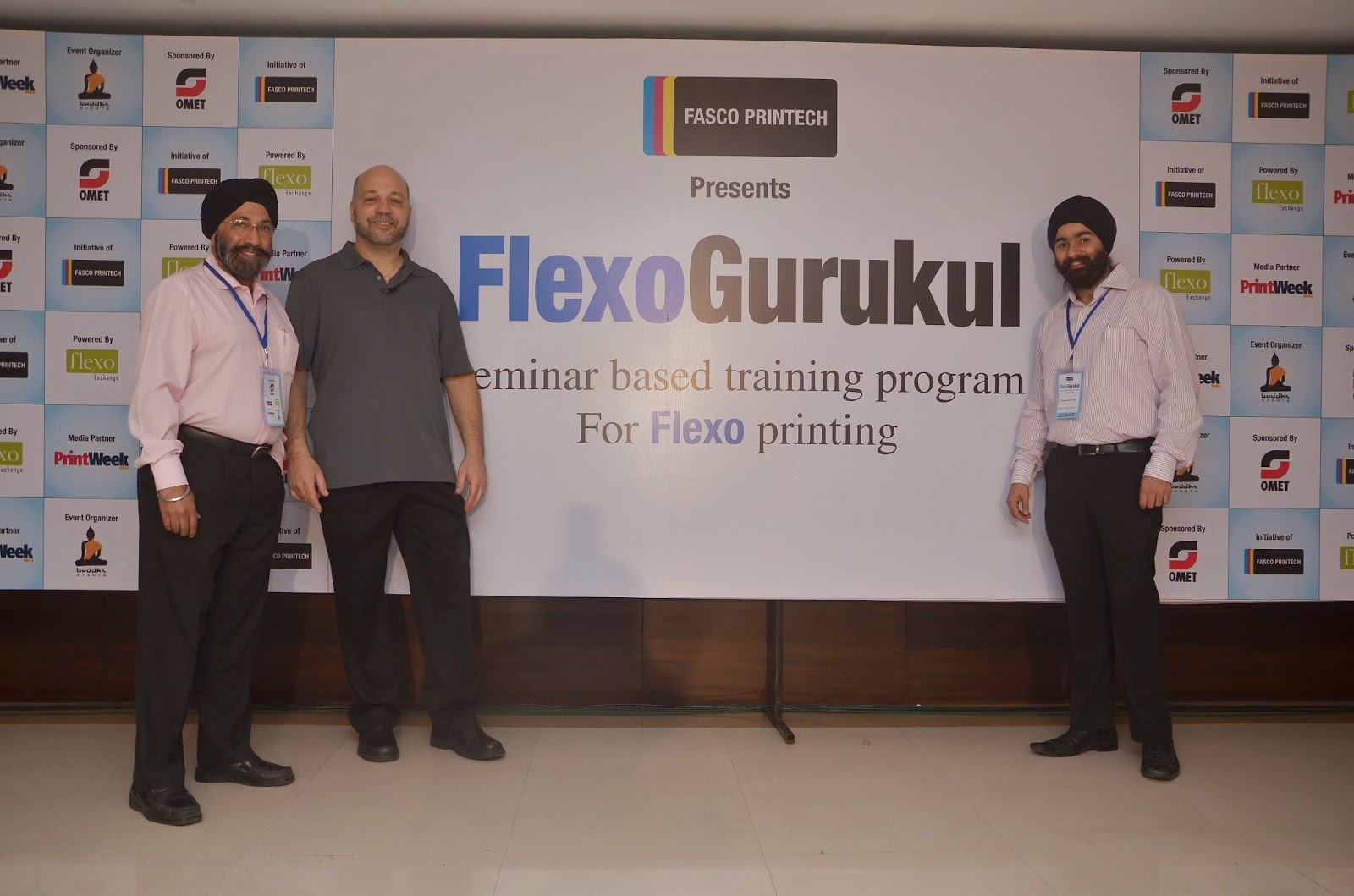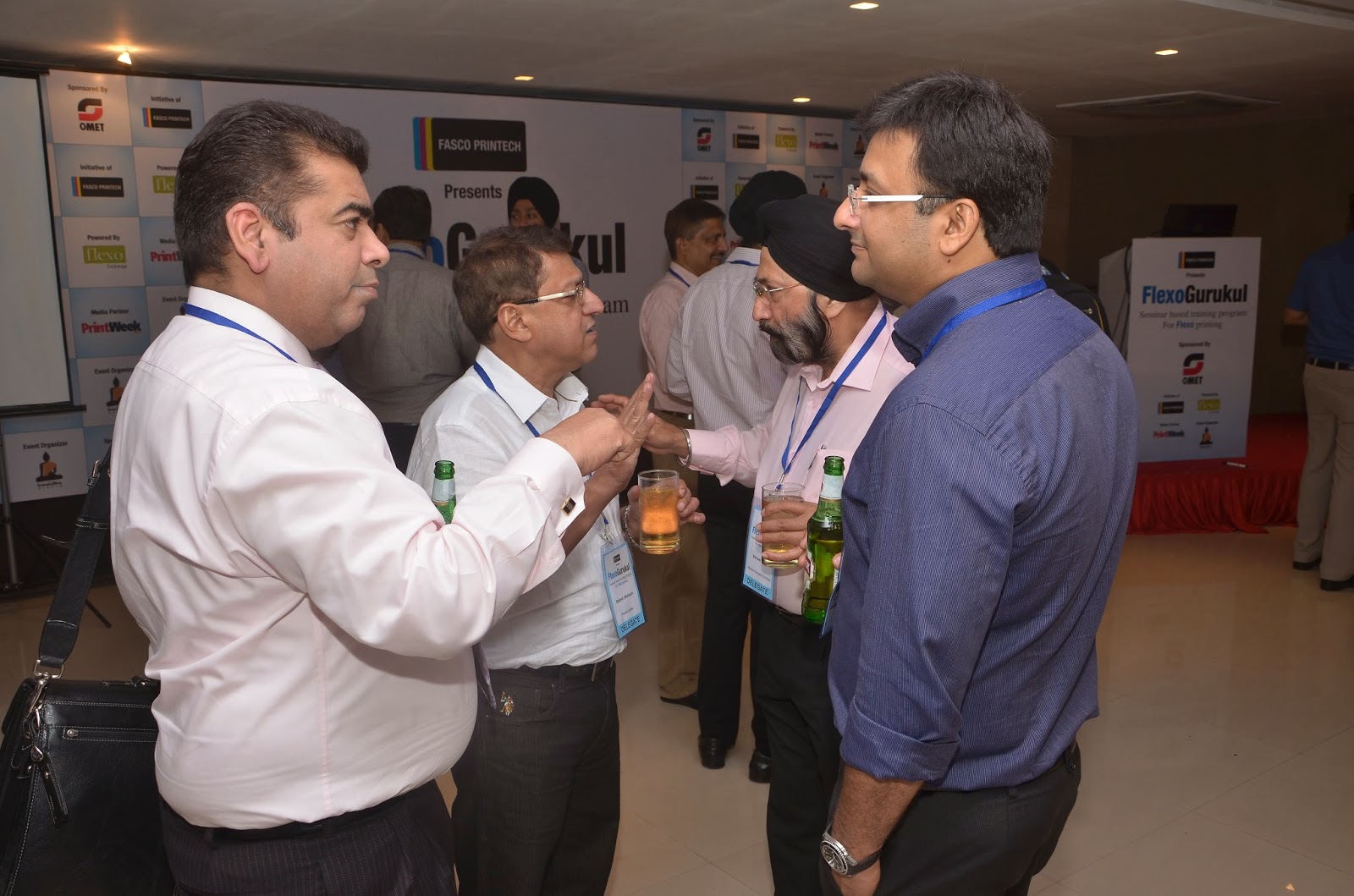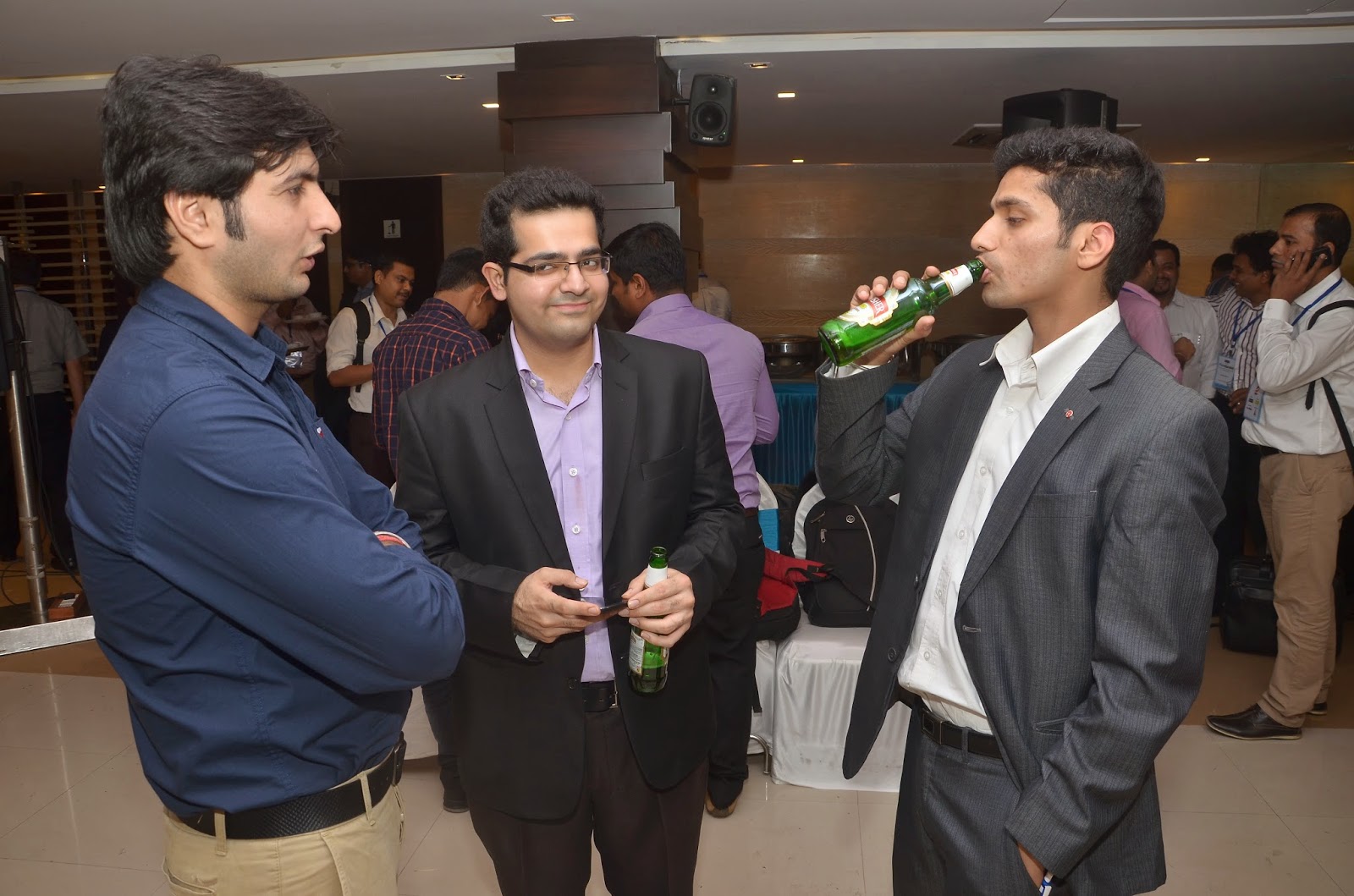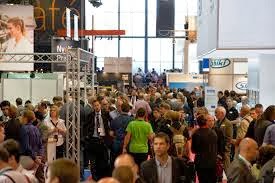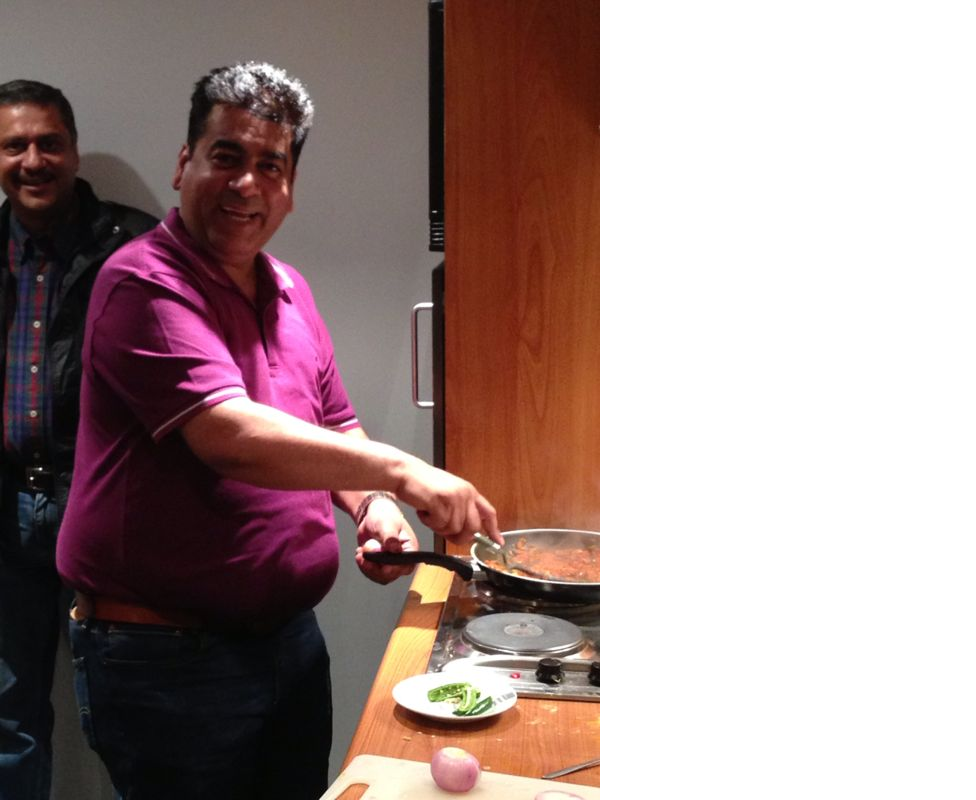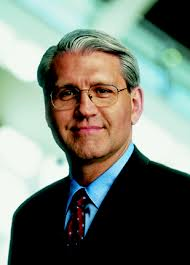
The euphoria was visible as the number of delegates consisting of label printers, suppliers from around the world, media persons and also all those remotely connected to label industry, continuously swelled with flight after flight landing at Goa’s Dabolim airport from destinations across India, on the 26th of July 2013. The party appeared to have begun at the airport itself! Industry friends were shaking hands and hugging each other and expressing happiness in being together for this bi-annual event. The reception and registration process at the Grand Hyatt Hotel Goa was welcoming and warm. It was nice to see the entire LMAI working committee helping incoming guests in registration and giving return gifts, all with a smile. As busloads of delegates continued to pour into the lobby of the hotel; smiles, handshakes and back patting hugs were seen all around. While the LMAI President stood smiling to welcome the incoming guests, one could notice a little nervousness. After-all, this second event under his leadership was twice the size of the earlier event in 2011. For 390 delegates a lot of effort and planning had been done and everything needed to move on smoothly. Suppliers and label printer were meeting their peers and looking forward to two days of fun and fellowship. By 5pm it was time for all to freshen up and assemble in the main hall. The LMAI conference 2013 titled “Print Innovation” had begun!
 
Vivek Kapoor President
The conference started with a welcome address from Vivek Kapoor, besides welcoming delegates he thanked the sponsors and his team members who worked tirelessly to make this event a success. He also informed about the important activities that LMAI has done in recent times. Important ones are;
1. Donation sent to Uttarakhand PM relief fund
2. Launch of the LMAI website www.lmai.in
 
3. Launch of the LMAI members directory
 
4. Support to SIES students seeking jobs in the label industry
5. Subsidy to 60 LMAI members for travel to Labelexpo Europe this year as against only 25 last year (This is an activity spearheaded by the dynamic secretary Ramesh Deshpande)
6. Now the initiative that LMAI is to take up next is on “Sustainability”.


Anil Sharma(Avery) & Kamlesh Shah Letragrafix
Anil Sharma, Managing Director Avery Dennison, who were the Platinum sponsors for the event, took the stage next informing the industry about further investments by his company and re-asserting Avery’s faith in the Indian markets. He said the per capita usage of labelstock is the lowest in India and given the size of population and a literate workforce the potential for growth is immense. He set the tone of the conference going by reassuring Avery’s commitment to support innovation in the pressure sensitive label industry.
 
Peter Henderson Esko


Lindsay Rice from Dupont spoke on the evolution of flexo plate making technology and the improvements there in. Peter Henderson of Esko informed about proofing systems and support there-of. Kishore Sarkar of Daetwyler gave an interesting presentation on the usage of doctor Blades with different settings. Christina Nilsson of Flint spoke on benefits of using UV flexo inks. Ajay Mehta of SMI made a presentation on his assessment of the size of Indian label market.


Dupont Team with LMAI president


As the days schedule was coming to an end all the sponsors, without whom an event of this scale was not possible were felicitated by LMAI.


With this, the days working schedule came to an end and the fun part began. There were dancers and performances.


Veer Das
The star of the evening was standup comedian Veer Das. He was amazing. Spoke for one hour non-stop and had every one laughing their hearts out. An outstanding performance! As the DJ took over, the younger delegates and not the so young ones who love to dance decided to stay on stage while others moved to the bar, to quench their thirst. They had had a long day travelling and conferencing and laughing out to the non-stop delivery of jokes from Veer Das. Even though the bar was closed a little before midnight so that delegates come back in time for the second day of the conference, yet there were those who refused to leave and were partying till we left.
Ranesh Bajaj of Creed
 
Surprisingly despite a late night, day two started with an almost full house. Ranesh Bajaj of Creed
Engineers/Vinsak made his presentation on technologies available for Brand security, Tamper evident solutions and anti-counterfeiting options.


Carmen Chua Avery
Carmen Chua of Avery spoke on sustainability solutions for labels and packaging as also the need to reduce the adverse impact on the environment. She reaffirmed Avery’s commitment to sustainability.
 
Lisa Milburn MD Labelexpo and her team
Over the year,s Tarsus the owners of Labelexpo series of exhibitions have, become close to the Indian Label fraternity and to LMAI. It is a partnership that has been fruitful for both. For this reason senior executives of the Labelexpo group make sure to be present at the LMAI conference. Lisa Milburn the young new Managing Director of Labelexpo group came to attend the conference along with marketing Director Michael Hatton and other members of her team posted in India. She went onstage to make short presentation on LMAI partnership with Tarsus and also on the fast approaching labelexpo Europe at Brussels. It was good to see her mixing with printers and suppliers establishing contacts and reinforcing relationships. The former Managing Director of Labelexpo group Roger Pellow who has been promoted to be the Chairman of Labelexpo Group, has many friends in the industry. Many printers and suppliers missed their “International Labelpal” Roger.
 
 
Ferdi and wife (Gallus) with Harveer Sahni (Weldon)


Backbone of any printing show is the primary printing equipment producers. They are the biggest exhibitors and the biggest sponsors. This holds true for the narrow web label industry as well. The heavy presence of top executives of all the big label press manufacturers gave credibility to the fact that India continues to be the market for them that grows consistently and continuously. It has like Anil Sharma of Avery said a market that has the lowest per capita usage and there is only one way it can go and that is, up! Ferdinand ‘Rüesch owner of Gallus was present along with his wife, son, Samir Patkar MD India and other team members. The Gallus presentation talked about forces influencing Indian markets.
 
Paolo (Omet) Pawan(Weldon)


Paolo Grasso Sales Manager Omet made an interesting presentation on how the leading international label press manufacturers innovated to aid evolution of label printing and converting technologies to present day level.


Federicio: Gidue

Federico D’Annunzio Managing Director of Gidue spoke on excellence of digital flex. Manohar Dhugga of Mark Andy talked about Innovation & Automation for today's label needs & UV LED. Presentations were also made by Alan Baretto of Nilpeter and Spring XU of Weigang Machinery China. Each time we visit Labelexpo Europe we see the number of Chinese label press manufacturers exhibiting there, keeps on growing.


Amit Ahuja Multitec
A part of us always yearned for our own Indian local machine builders to excel enough to come to the international arena and showcase. A vacuum was always felt. The first Indian to full-fill this gap and the only one so far is Amit Ahuja of Multitec. He made us proud when at the last labelexpo he showcased his press printing at 150 meters per minute without the register moving! He will exhibit at Brussels yet again next month. Amit was also a sponsor at this conference. In his presentation he spoke of his experiences and challenges faced as an Indian press manufacturer pitted against global brands.
Wolfgang Burkard of Kurz


Wolfgang Burkard from KURZ the second Platinum sponsor spoke on boundless opportunities in
label finishing.


Kudos to the extremely focused and indulgent audience! They were the reason for the success of this conference.


Appa Durai: HP
Josep Roca Xeikon
No print show or conference is complete without deliberations in the digital printing. It is a process that is tempting all and appears to evolve fast to make other technologies obsolete some day in the future. Even though digital printing maybe attracting substantial investments from printers around the world, it has a lot of resistance from Indian label printers. Despite the resistance the interest in this technology does not wane. In fact on the contrary, printers continue to study the developments carefully and feel that it is the future. Leading digital printing equipment suppliers including Appa Durai from HP, Josep Roca from Xeikon, Ramprasad from CPG and Mark Huisman from SPG Prints made interesting presentations on the various developments in digital printing.


Harveer Sahni with Chiara Prati
 Other international suppliers who were not sponsors also made it a point to be present for this event. Chiara Prati of Prati Italy, Marco Aengenvoort of Rotocontrol, David and Hope from Martin Automatic, the Rotometrics team, etc were some of the many others who came.
 
Federico(Gidue) andMarco(Rotocontrol)


On the sidelines during the coffee an lunch breaks networking was largely evident. 
 
 
Naresh Khanna of IPP deliberating
Ramu Ramanathan Printweek


Media also marked their presence!


As the presentations came to an end European dancers emerged, followed by  excellent singing performances by Arshpreet Kaur a “Sa-Re-Ga-Ma-Pa” (Popular TV Programme).


Arshpreet


Arshpreet entertained the audience with fine performance and singing.


Chang


The last performer for the evening was another TV contestant and popular singer Meiyang Chang.


Label industry's favorite dancers Pawandeep (Weldon)
and Sandeep Zaveri (Total Print)


Before Chang’s singing session came to an end he had a crowd on to the dancing floor.


Chandan Khanna Ajanta


The bar was open and the delegates were unstoppable drinking, dancing, networking, striking new relationships and going on as if the night will never end.


Lisa Milburn & Ajay (SMI)
Rupa and Amit Sheth

They danced and made merry and pulled every one close by to the floor.


The competition was forgotten only comradeship and friendship prevailed. It appeared like a global label family was celebrating endlessly! Around 3AM they were still partying when I was thoroughly exhausted and left wondering how long they would go on…

All good things have to come to an end. Next morning it was time to say good bye but I guess some business being in their blood, I could see printers trickling into the breakfast area with suppliers in tow for a meeting before they left. It really was a very busy event and one wished there was time to steal moments to enjoy the destination, Goa! The event management company did a good job. Vivek Kapoor had a genuine smile, now that everything went well. As we checked out of the hotel, delegates who over indulged last night, came somehow half asleep limping toward their coaches to take them to airport on their way back home. Even in their slumber they vowed to come back again for the next conference with more vigour and in bigger numbers. One thing common they communicated to each other alongwith the good bye as they left, was a commitment to meet again soon. Each bye-bye was followed by “See you at Labelexpo Europe”.  
 
Written by Harveer Sahni, Managing Director, Weldon Celloplast Limited, New Delhi-110008 August 2013
LMAI Conference 2011
 Two years ago, the LMAI (Label Manufacturers Association of India) conference was held at Hotel Park Hyatt Goa. That time in a preview of the conference I wrote in this blog “History is being created”. The 2011 conference titled “Innovations Unlimited” was an immense success. A progressive Indian label fraternity was elated by the presence of suppliers and media from destinations around the world. The conference venue was good and the content of presentations was thought provoking. Delegates were seen sitting glued to their seats in rapt attention throughout the presentations. All work and no fun would have made it a mediocre event. The LMAI organizing team had put together programs along with, to liven up the moods of label printers gathered there. There was learning, there was entertainment, there was dancing, there were glasses being clicked and there was a lot of fun. The memories of a wonderful event lingered on and one wondered if the event would be recreated.
 

Hotel Grand Hyat, Goa
Two years have gone by and now the new LMAI team lead by the continuing president Vivek Kapoor has put together the second LMAI conference “Print Innovation” to be held yet again, in Goa on the 26th and 27th of July 2013. However this time it will be at the Grand Hyatt Hotel due to the need for a venue which has bigger halls to accommodate a larger number of happy and colorful printers. The LMAI team has, with nostalgic memories of the last event, endeavored to create a bigger and better event. The experience of having organized the previous conference helped them copy the success of what was appreciated and improve upon it, as also to ease out the shortcomings of an otherwise perfect last event. They are now ready to roll out a content and fun-filled conference and look forward for the members of this label association to get together and strike new friendships and alliances at Goa. It is interesting that two months later the global label event Labelexpo Europe is to be held in Brussels, it will be an opportunity to renew and strengthen the friendships made at Goa.
 
“Sponsors who pitched in to support the last event were a satisfied lot” says Vivek
Vivek Kapoor
 Kapoor, President LMAI, he further adds, “After the last conference most of the sponsors called back to express their satisfaction that the audience was totally committed and sat attentively to presentations being made, till the very end”. Taking inspiration from these sentiments, Vivek’s team has taken upon themselves to engineer and create an LMAI event that will be held every alternate year on an ongoing basis. An event, their members and suppliers to the industry, will look forward to. It will be a platform that will provide information, entertainment and networking opportunities in abundance.  That according to Vivek has been the basis on which this year’s LMAI conference 2013 has been structured. “The event is receiving an overwhelming response!” says a beaming Amit Sheth Honorary Secretary LMAI; he is one of the founders of the association. According to him most of the rooms have been taken at the hotel and they have had to requisition more rooms. He says we are requesting the printers at large to hurry up with their decisions to be in Goa as later it will not be possible to accommodate them. Gururaj Ballarwad of Wintek Bangalore an ITW group company has been the driving force behind getting the right sponsors and putting together the right content for the presentations to be made. The total participation in the event is expected to go way past the last events number of 270. This, if achieved is definitely credible and from my experience I can state that if managed well and also if it is handled with sensitivity, this event could well grow to be one of the most important global label events, given the size of our country.
Success of any conference lies in the quality of presentations, the satisfaction of the presenters and a diverse geographical spread of delegates who understand and are yearning for the more information. LMAI has endeavored to motivate their members in all zones through dedicated associate members to create a delegate profile that is pan national. Efforts of young Nalin Sharma of Global Graphics are laudable! Since this is a member’s only event, Nalin not only enrolled existing members as delegates from North India but also registered a lot of new members to add to the strength of this association.


The conference programme is rather tightly packed and it will be imperative for presenters to stick to deadlines of time allocated to them. The conference is slated to begin at around 4pm in the evening of 26th July 2013, with a welcome speech from Vivek Kapoor. The opening presentations will come from Lindsay Rice of DuPont and Peter Henderson of Esko. Amit Ahuja the only Indian press manufacturer who has excelled and exhibited his technical capabilities globally, will be making a presentation on his experience as an Indian machine building entrepreneur trying to succeed both in domestic and international markets against established and accepted brands. Christina Nilsson, Head of Trelleborg NW, Technical Centre, Sweden, will speak on the sleeve technology for flexographic printing followed by a presentation by leading Indian Labelstock manufacturer Ajay Mehta of SMI. The evening’s last speaker will be Kishore Sarkar, Vice President-Sales, East & South Asia, Daetwyler Swiss Tec AG talking on doctor blades.
 
Ranesh Bajaj of Creed Engineers will initiate the deliberations for the next day i.e. 27th July2013 followed by presentation from Carmen Chua of Avery Dennison. Impressive presentations are expected from leading press manufacturers which include the illustrious Ruesch Ferdinand – Owner & Vice Chairman Gallus/Samir Patkar also from Gallus, Federico d'Annunzio of Gidue, Paolo Grasso Sales Manager of OMET, Allan Baretto Managing Director Nilpeter India, Mary Sullivan of Mark Andy  and Spring Xu of Weigang. Renowned foil manufacturer Kurz will deliver presentations through Wolfgang Burkard, Head of International Product Management and Brend Danglemeyr, Head of International Marketing & Sales. In today’s time no print event is complete without deliberation on the digital print technologies. Even though the technology has not really established a foothold in the Indian label industry, yet it is a technology that cannot be ignored. It is a matter of time that this technology will evolve to become affordable and technically feasible justifying widespread adaptation. A panel discussion is slotted with following speakers; Appa Durai from HP, Josep Roca from Xeikon, Ramprasad from Epson and Mark Huisman from SPG Prints-Stovec. It is a bouquet of very diverse subjects that will help label printers derive information from. Press manufacturers are expected to deliver the information on new innovations that make label printing more cost-effective and technically superior helping them in these times of intense competition.


The dance floor is busy
The conference would not be complete without the fun part being meticulously planned and incorporated into the schedule. All work would definitely make it a dull event and so after each day's hard work, events have been planned for delegates to unwind, relax and enjoy. Time has been provided for entertaining performances, cocktails and networking dinners.  I am sure like last time once the event is in its last leg the dance floor will come alive with music blaring and printers dancing till the vee hours of a Goan Sunday morning. I am sure most of the printers and delegates will come prepared with a late evening flight back home so as to have nursed the euphoria of an indulgent evening. It is now time to look forward to a well knit Indian label fraternity getting together at Goa for fun, fellowship after some serious conferencing. Cheers!
 
Written by Harveer Singh Sahni, Managing Director, Weldon Celloplast Limited, New Delhi, India July 2013
Winds of Change-II
 
Over a year back I wrote an article, “Winds of change” in the Indian label industry, I now relook at this subject.


The subject has wider implications in India, as global players descend on the scenario with commitments to environment, sustainability, innovation and the threat perception from new and emerging technologies. An industry in India for whom change meant just a new printing or


converting process, will soon have to show decisive indulgence in innovative products, waste management, sustainable production, implications of new technologies for getting a firm foothold. When confronted with the change perception, it is a normal answer from a large no. of printers in India, “this will take time”. Let me ask, “Does time wait?” As is well said, time and tide, wait for none.


My family’s traditional ink and glue, stationery business flourished in the country and our main
product was fountain pen ink and office glue. When Ball pens came in, we felt it will be another 50 years before fountain pens will get eliminated in India. We have most of the country living in the villages in India where people believe if you use ball pens, you will spoil your hand writing. What happened? Before we knew India started to get literate and knowledgeable, television provided widespread information, everything was available to the young and growing Indian population. Fountain pen ink became history and ball pens were in. Fountain pens became the decorative assets of the rich and famous. As for office glue, well the stickers and glue stick did the job! If we did not change even then, we would not have been in any kind of reckoning now.


In the early part of the first decade of the new millennium I was researching the market size of labelstocks in India. When I presented my findings at the pressure sensitive symposium in St. Moritz Switzerland 2003 organized by the Cham Paper Group, it was widely appreciated. I noted that the filmic label segment was the fastest growing label segment in India as regards the self adhesive label industry. On return some time later I wanted to recheck and met Bhavin Kothari of Interlabels to discuss the growth of filmic labels in India. Shrink sleeve labels were moving into the Indian consumer product market. Bhavin said, “It was time to reap the fruits of indulgence in the pressure sensitive label industry’s foray into filmic labels, shrink sleeves have spoilt the party”. He further added, “The rate of growth of filmic labels in India will take a definite beating for the time being”. He was so correct. A segment that appeared to be growing at that time at 25-30%, became stagnant. It is years later now that filmic labels have started to register a smart growth.
 

Drawing a parallel, I cite my recent interview at Munich, of Helmut Schreiner, Chairman of


Schreiner Group. In his words “The biggest threat to the label industry is going to come from printing direct on products”. On way back from Germany at the duty free shopping, I bought a pair of bottles of   Chivaz Regal Scotch. I would have preferred to buy single malt but the free bag scheme with two bottles tempted me to opt for Chivas.


I opened the bottle at home and was surprised to see the bottle having a label in single white colour directly printed on the bottle, the contents provide the background colour! The vision of this man Helmut Schreiner is amazing.


Shrink sleeve


Labels used to be printed directly on bottles in earlier days also. Dabur Chyawanprash was a classic example; they had plastic molders spread all over, making bottles and screen printing on these bottles and supplying to Dabur India Ltd. All that Dabur had to do was fill and pack. No label dispensers and label inventories were needed. With time Dabur shifted to shrink sleeves. The advantage of 360 degrees advertising because of shrink labels saw an upsurge in the product sales. Pressure sensitive labels, filmic or otherwise was not an option anymore. With evolution of digital printing, we see things changing rapidly. While printers are still imagining printing on paper and film and converting to labels, consider what Helmut Schreiner cautioned!


Directly printed Vodka bottles
Consider a multi-colour label on the Chivaz Regal bottle or the Absolut bottles shown here, with no paper and no adhesive and no liner to dispose off. New technology, innovation, waste management, sustainability, etc. all delivered in one go. Truly as Helmut said, “This is definitely the threat!” It will hinder the growth of self  adhesive label.


Innovative self adhesive labels

True to the perception I mentioned earlier on, we believe it will certainly be a while and slow for things to change. Pressure sensitive labels, with the decorative options available to convert them will still be there and continue to grow consistently. Definitely it is not end of the road. I do not still see foiling being done directly on to the product for a long time now. Neither do I see any embossing showing on wine labels without the paper being there. I cannot imagine a booklet label or a label with a plastic attachment to dispose off a needle from a syringe or a label with a hanger being produced and dispensed without aid of PSA technology. This gives credibility to my point that innovation is the need of the hour.


The imperative direction PS label industry has to pursue is innovation, innovation and


self adhesive booklet labels
innovation! It is a natural wish that consumers will like to do away with unwanted or non performing parts of a product. Like in a label the liner always lands up as waste in a landfill at a time when environmental concerns are supreme and also it is a cost that if eliminated can make the label cheaper. At this time it provides the necessary impetus to the linerless label technology or even the liner going thinner for the time being. Similarly in barcode labels, even though thermal transfer label printed barcodes continue to be the preferred technology yet it is evident the ribbon is the excess baggage and that one day it will be dispensed with.


Linerless label technology appears to be the one gaining foothold faster than expected. in a few weeks, Labelexpo-Europe may bring in some surprises as environmental concerns have become compelling reason for change to eliminate liners wherever possible. This will bring in change in production and dispensing technologies. Label printers need to see this change coming in and have to eventually invest in such technologies to remain competitive and delver with environmental concerns. Sustainability is another issue that has to be considered by the organized label community, giving back to mother earth what you draw or recycle the waste to reduce the impact on the environment is a concern that will soon have mandatory implications. Going thinner with filmic liners that can be easily recycled is and will definitely find acceptance with   label users who are committed to sustainability and have environmental concerns. Our narrow web label printers have come a long way from starting with screen printing in earlier time to flat bed label printing, rotary letterpress, flexographic printing, offset printing, rotary screen, gravure printing, Digital Printing and then on to combination printing. As I said earlier that in these times when winds of change continue to blow endlessly just adapting new printing and converting processes is not the way forward. Accepting the change to be the inevitable process they need to start innovating to create new products to stay in the reckoning. To meet the challenges emanating due to these winds blowing over the Indian label industry, innovation remains to be the imperative need of the hour.
So my advice: Continuous innovation is the way forward!
“Unauthorized use or publishing of this article is prohibited”

Written by Harveer Singh Sahni, Managing Director, Weldon Celloplast Limited, New Delhi, India June 2013

This week 426 label industry professionals are gathered at the Westin Grand Munich hotel in Munich Germany for the FINAT Congress, the annual meeting of the European label association. The year’s event, which is taking place June 12-15, has been jointly organized by FINAT and Vske, the German label association. With the theme of “Label Your Future,” speakers on Day One focused on where the industry, as well as society in general, is headed.


“We are not talking about the crisis, and we are not talking about the problems we are having – we are talking about our future. It is a wonderful theme,” said Marc Buttgenbach, director of labels and consumables for Bizerba, and also the Congress moderator. 
 
Leading off the diverse speaker lineup was a presentation by Horst Opaschowski, a “futurologist” and author who has the aliases “Mr. Future,” and “The pope of the future.” Through his analysis of the mood and behaviors of the German people, he discussed his thoughts on impending changes in the economy and society. Among the several trends Opaschowski touched on was the globalization of the working world, where he introduced a new term – “Glocalization.” Ultimately, he said, globalization means the distribution of the available volume of work around the globe. “But credibility can only be earned at the local level. Talent needs to be immigrated into the country, and these people need to be received in a positive way,” Opaschowski said.
 
Opaschowski predicts a performance explosion from the young generation, and from women in particular. “A baby boom will be developing but will require time. And our working world will become more female,” he explained. “In Germany, women are coming up with higher education and higher university degrees. Women will catch up and may even pass their male colleagues, and will be just as recognized in society. Men will find themselves losing career opportunities to women, and, of course, this will not go without conflict. Managing family life will be an issue.” In the future, there will be a significant emphasis on health, Opaschowski predicts. He said, “Health will be the mega market of the future. It will be viewed like a religion, and the health sector will be like a church. It will be all about feeling well in your own body.” In summary, Opaschowski emphasized that society and politicians will have to deal with new social problems. He stated, “There will be a big change – people will be poorer, but not less happy.”
 
The German Label Market, labelstock statistics
 
Robert Magerlein, president of Vske, and managing partner of Eurodruck, a German converter that employs more than 300 people, presented at the Congress a concise overview of Germany’s label market. According to Magerlein, in Germany there are 450 companies that manufacture labels, and these businesses employ 19,000 people. Their combined sales total is $2.4 billion euro.  In Germany, small to medium-sized businesses dominate the label printing landscape. Magerlein pointed out that 40% of the country’s label converters employ between 10 and 50 people, and 38.5% have less than 10.  Germany’s label converters, he said, are a robust and resilient lot. “During the crisis, very few converters gave up. During the recovery, growth has been positive. This is due to the growing packaging market and positive economic development in Germany. We are quite fortunate.”
 
Following Magerlein, Jules Lejeune, FINAT’s managing director, shared current statistical data

pertinent to the industry. He said that in 2012, total labelstock consumption in Europe was nearly 6 billion square meters, an increase of 1.7%. Remarkably, Lejeune said, the label industry has doubled its business in just two decades. Lejeune pointed out that a major source of the growth is tied to the profliferation of filmic labels, which now represents more than 25% of total demand in Europe. He also noted that while Germany, the UK, Spain, France and Italy makes up over 60% of Europe’s label market, it is Eastern Europe that is really driving the growth. In summary, Lejeune noted that with the market’s significant growth, there is now more at stake, and the label industry shoulders more responsibility. He said, “Self adhesive is now a dominant force in mature markets, which thus makes it more volatile and sensitive to consumer behavior. We are not just printers, but solutions providers and a key part of the supply chain.”


The Future of the Label Industry – A Global Perspective
 
Day One of the FINAT Congress business program concluded with presentations from representatives of the label industry’s leading labelstock suppliers. Jussi Vanhanen, president, UPM Raflatac (Finland), and Angelo Depietri, president, materials group, Avery Dennison, each gave presentations and then sat down with moderator Marc Buttgenbach to answer audience questions. Both Vanhanen and Depietri focused on the label industry’s dominant trends: decreasing run sizes and margins, digital print, thinner substrates for sustainability and recycling, product safety and security, consolidation, and changes in the retail environment.“The European retail market will continue to consolidate,” Vanhanen said. “This means more concentrated power in decision making, which will have an impact on our businesses.” Vanhanen also emphasized the importance of partnering with “A” brands and private label. “Don’t get stuck with just the ‘B’ and ‘C’ brands,” he said, adding that the emergence of internet retail has implications for the label industry. “Typically, when people buy online, they buy established and trusted brands. So again, this works in favor of ‘A ‘brands and private label.”
 
Depietri, presented many of Avery Dennison’s sustainability endeavors, and emphasized that the best way to reduce a product’s eco-footprint is to look at the entire product lifecycle. Avery Dennison’s Global MDO film labels, he said, produce 40% less waste, while using 26% less energy and 62% less water than conventional materials. As digital printing becomes increasingly widespread in Europe, Depietri noted that it also presents challenges to the supplier as well as opportunities. “Worldwide, digital equipment accounted for 20% of new press sales, and 25% in Europe. While sales have been mostly HP and Xeikon, inkjet is coming on strong. The challenge for the supplier is to continue to develop products for an increasing number of print processes,” he said.
 
The above report by Steve Katz, Editor, Label & Narrow Web www.labelandnarrowweb.com is brought to you by Harveer Sahni
 
World War II from 1939 to 1945 was a global war that spelt widespread devastation. A war that lasted six years, involved over a 100 million people in 30 countries with use of nuclear warfare resulting in over 50 million casualties. It was, by far the deadliest war in the history of mankind. In the aftermath of World War II, sometime in 1952, on the streets of Dusseldorf in a war torn Germany, a poor young boy, barely into his teens, stood on the road side watching children going to school, barefoot! While his father was trying to show him historical monuments in the city, this boy was instead more interested to see the factory workers enter their workplaces. Pensive in his thoughts, he was wondering that while the children like he himself, got to eat just one meal a day and the workers he was watching, slogged hard in the factories, the owners of these factories were rich men with elaborate lifestyles. They drove big cars and wore expensive clothes. Even though life was extremely difficult in those trying times, this poor destitute boy silently wished and resolutely committed to his destiny that one day soon in the future he will become the owner of a big factory. That defining moment in his life and the adversities of life post World War II taught this poor boy that all his life he has to be careful with money and save it. With passing years it dawned on him to be firm and not solve problems with just the use of money but to solve them with innovative ideas. That poor young boy standing on the roadside and dreaming of a prosperous future was none other than Helmut Schreiner, the mentor and owner of 130 million Euro, Schreiner Group.


Theodore Schreiner was a prisoner of war in Russia while his family suffered in Germany during the war. His son Helmut was born in 1939 at the start of World War II, and had an initial childhood wrapped in difficulties of the times prevailing then. At the end of the war, Theodore returned home tired, shattered and with health problems. There was no money or work and he did not know what to do to survive and support his family in such distressing times. While in army, Theodore worked as an engineer for “reference and logistics”. The technical knowledge and capabilities was his only wealth at that time and it implored him to explore possibilities into manufacturing something. A close friend, who was an engraver, suggested a business to him and said, “I make the plates, and you make the labels and sell”. These words made sense to Theodore. Poverty and hardship had even made him to consider leaving everything, including his homeland and immigrate elsewhere in search for a better future for himself and his family. However in 1951, his technical abilities lead him to initiate his startup venture named after his wife Margarete, “Margarete Schreiner-Spezialfabrik fur gepragte Siegelmarken und Etiketten” to produce embossed labels in a 45 square meter garage, which was their first factory. His 12 year old son Helmut was the only help that he had at that time. Both father and son duo actually carried stones to the garage to lay the flooring of their first factory.   Just one year down, Theodore bought his first 3 inch single colour flatbed label press. With Helmut as an apprentice, they started to print wet glue labels for stockings, bread, garments, etc. That was thebeginning.


As is always the case in a maiden start-up venture, the initial years were the most difficult and memorable ones. Memorable because one looks back and learns from the experience of having tackled distressing situations. There was not enough money, space and orders. Whenever an order came by, it had to be managed from the existing capabilities. A four colour job had to be done in four passes through the same press. The wet labels had to be laid carefully in card board boxes to dry. They worked hard to make both ends meet, Helmut’s sister also pitched in to help in the manufacturing. Helmut reminisces about the difficulties like pulling a handcart himself for 20 kms for either bringing the paper in or for delivering the parcels to the postoffice for dispatch to customers. In 1955 the Schreiners bought their second 6 inch two colour press and started to make their own special printing plates by doing the etching process in their bathroom. They would also undertake dying and colouring the fabric garment tags for their customers in their kitchen. The family made tremendous compromises in the initial years of their struggle for survival. The space was so short that Helmut would spread his bed each night on the kitchen floor and fold it in the morning to commence another days cooking and production work. Every young child also needs schooling and education to be able to face up to the challenges and diversities of modern day life. Helmut Schreiner had become a boy scout and one day while interacting with friends he realized that he was not educated. He was so motivated that he started reading on his own and in due course of time he adjusted his time such that he would work during the day and attend school in the evening. He got so engrossed in acquiring knowledge that books and cassettes became his regular and immediate companions. On another front, his heritage coming from a parent with engineering background inspired him to start working one day every week as a printer apprentice with a printing company without any remuneration. He was a quick learner and was judged the best in his class. However still, Helmut maintains that most of his learning came from his mentor and father Theodore Schreiner. His father taught him how to manage and reach goals.
 
As Helmut progressed towards the end of his teens, he became restless and ambitious yearning for growth into wider avenues. Towards the end of 50’s in 1958 a USA based company approached them with a 50 meter sample roll for pressure sensitive labels. Theodore Schreiner was not interested in the product but young Helmut saw the new opportunities and wished to move ahead to take up the challenge. With some modifications he could print and produce both wet glue and pressure sensitive adhesive labels with sprocket holes on his flat bed press. It was an invention at that time. This was a game changing moment for them. Helmut could also improve the speed of his press to drive in larger profits. It was their first big moment! Out of teens, the ambitious young man, 20 year old Helmut aspired to sharpen his skills, in 1960 he left the active work in the company and for six years he went to study printing technology and economics. To fund his endeavors he would work on week-ends in a big offset printing company. This way he was acquiring theoretical knowledge as well as practical experience.  After completing his studies he joined yet another large offset printing company printing maps and brochures on big format printing machines like Roland and Heidelberg. Helmut was leaving no stone unturned to acquire knowledge and art of printing. Meanwhile in 1961 his father’s company name was changed to, “Etiketten Schreiner-Spezialfabrik fur Haft, Präge-und Anhänge-Etiketten” (meaning special factory for embossed labels and tags). The small 45 square meter garage and further rooms in the house was falling too short in space for them even to move within. So in 1965 they rented a bigger place measuring 400 square meters. A move from just 100 square meters to 400 square meters was a dramatic move for those times!
 
In 1970 Helmut was trained and competent to take up responsibilities in his father’s company which by that time had reached a sales turnover of 600.000 DM an equivalent of 300.000 Euros. He rejoined business and 4 years later by 1974 Helmut Schreiner was in the driving seat. The name of the company was this time changed to “Etiketten Schreiner”. In these four years Helmut Schreiner had steered the company to a turnover of 2.50 Million DM or 1.25 Million Euros. Thereafter there has been no looking back. In 1986, as the company grew into the self-adhesive or pressure sensitive label production, the name was again changed to “Etiketten Schreiner und Selbstklebetechnik”. The company’s sales had started doubling up every five years to reach a figure of 130 million Euros now. Restructuring the growth and providing the right impetus to newly segregated growth areas the company was registered in 2002 as “Schreiner Group GmbH & Co.KG subdivided into the following;
 
1. Schreiner Protech
 
2. Schreiner Medipharm
 
3. Schreiner ProSecure
 
4. Schreiner LogiData
 
5. Schreiner Variolight
 
6. Schreiner Etiketten und Selbstklebetechnik
 
The Group now operates out of a total workspace of 60,000 square meters with over 800 employees. A walk through the Schreiner manufacturing facility is an experience and an eye opener. One witnesses the extent of passion this company has in their products and innovation. The company exports 60 % of their turnover and have a backup unit in the State of New York with 50 employees. 55% of the total group turnover comes from Medipharm catering to medical applications, 35% from Protech catering to automotive and technical fields and 10% from Printrust catering to security applications. Prosecure is a sensitive data & Technology maintenance and competence centre, in simpler terms it is the R&D centre. LogiData is the R&D centre for RFID. Helmut Schreiner seems to have lost count of the number of printing equipments in his company, “maybe 70 or more he shrugs” The company has presses of various makes in specialized departments spread over the vast production areas in five multistoried buildings.
 
Diverse printing technologies like flexo, offset, rotary screen, flat screen, etc. and custom
converting processes are employed to produce innovative and state of art label products some of which are patented. Most of the leading brands in label presses and custom converting equipments are obvious by their presence at Schreiner manufacturing facilities. During my visit many production areas had been cordoned off even for general company employees for reasons of high security printing jobs for specific customers. The entire unit is under surveillance and monitored by CCTV cameras. Sensitive production areas are fully sanitized due to medical requirements. The finishing department has the best inspection system a large presence of the NIKKA defect detection systems is quite visible. Extreme care is taken right up to final packaging. Each roll of labels produced after inspection is shrink packed in strong corrugated carton and multiples of these cartons go into master cartons with special paper based cushioning being produced in the cushioning machines in their packing department. Every package is labeled, bar-coded and entered into a computer which provides information to various courier companies and transport companies on the packages ready for shipment. I was really impressed by the huge 1050 square meter computerized and fully automated raw material warehouse which is 14.3 meters high, has three levels for storage and three lanes. The warehouse can store 3624 pallets and can automatically deposit and retrieve reels or pallets of material on computer generated commands. As for innovations in labels; whether it was the labels with built in hang tags for intravenous drug delivery applications or the labels for disposable syringes with a device inbuilt to dispose off the needle safely so that it does not accidentally scratch anyone causing spread of infection. The uniqueness of their products is amazing.
 
When I asked Helmut Schreiner about the new label technologies impacting PS labels, his reply was, “All technologies will coexist. The customer today is very knowledgeable and knows about the increasing number of options available. Labels are a necessary decoration for any product, innovation is the need of the hour. For example one can design a label such that if you touch a label, it plays music.” He adds, “I am a fan of innovation. If everyone sells tomatoes, I would like to sell peaches!” Adding a word of caution, “Printing directly on products is dangerous, it reduces cost and could decrease the demand of labels”. Helmut believes his company has to respond to customer needs and innovate to deliver good performing labels whether it is for security, pharmaceuticals or other applications. His opinion on digital printing is that it is a fantastic technology along with laser die-cutting and once it evolves to perfection it will change the printer’s life. One could not imagine reading a newspaper digitally on the phone! On RFID, he feels it is a wonderful technology but on the business side it is not very lucrative. It changes too fast.
 
Helmut’s wife Ulrike has been by his side as a solid support ever since their marriage in 1966. She still contributes in the business by supporting in the human resources development in this way she is the “soul” of the family business.


They have two children, son Roland and daughter Carina who is married and is a coach, mentor and motivator for young people. She is a qualified economist and psychologist.


Helmut Schreiner is now 73 years old and believes in the capabilities of the next generation. In September 2012, he had already handed over the reigns of the Schreiner Group to his only son 43 year old son Roland.


Roland completed his studies in printing technology, finance and management before proceeding to USA. While in America, Roland worked in two different label companies for two years before returning home in 2000 to join his father. When I asked Helmut where he sees the Group five years from now, he feels that it is not the size that really matters. It is important for this enterprise to be healthy and consistently deliver to the customers what is needed. Roland wanted to lead the company on his own and Helmut has given that opportunity to his next generation and it is now for him to find the right direction. He feels he has an excellent advisory board.


Having more time on his hands, Helmut founded a new company “Schreiner Innovation GmbH & Co. KG”. Here he is interested in developing partnerships with other companies as well as dealing real estate. He is also now devoting a substantial part of his time to social activities and charities. He lives his philosophy, to be honest and true to himself and to his people and this has evolved from personal experiences in his life. His philosophy for his company and his people has been clear and value oriented. The values were innovation, quality, performance and joy! This clear positioning was always the bases for his personal happiness and business success.
 
The above article was first published in “Narrow Web Tech” magazine published by G&K TechMedia GmbH, Am Stollen 6/1, 79261 Gutach-Bleibach, Deutschland e-Mail: info@flexo.de
“Unauthorized use or publishing of this article is prohibited”
 
Written by Harveer Singh Sahni, Managing Director, Weldon Celloplast Limited, New Delhi, India April 2013
 
 
Harveer Sahni(Weldon), Paolo Grasso and
Vinesh Bhimani(Kimoha UAE) at Omet booth in Converflex
On the 10th of May 2013 I landed in Milan Italy to participate in the leading label press manufacturer Omet’s celebrations on completing 50 years in machine building. Since the major part of the celebrations was to begin the next day, I decided to visit the Converflex and Graphitalia, printing and converting shows being held at Fiera Milano. The show was well laid out and had a good mix of exhibitors and visitors largely from Italy. It appears the show has lost its clientele substantially in the no. of visitors over the years. This is bound to happen with the number of printing shows going on increasing. Printers and exhibitors are confused and wonder which shows to attend. After all it takes a toll on the expenses and the time available. In March 2013, it was the Ice show in Munich Germany, in April we saw Gulf Print Pack at Dubai and in May we have already seen Converflex and Graphitalia at Milan and the huge Chinaprint in Beijing! Next month in June 2013, the Finat Congress will be held in Munich Germany. Despite other shows in between, the biggest event for the narrow web label industry “Labelexpo Europe” will be held at Brussels in September 2013. The regularity with which these shows are held, one is left wishing that there is a monitoring mechanism but then in these days of liberalization it may not be possible. Converflex had almost no Indian visitors however it was interesting to see the sole Indian exhibitor, machine builder “Expert Industries” from Bangalore. Infact this exhibitor was also present at the Ice show in Munich Germany. The show had a fair no. of exhibitors who are also exhibitors in the Labelexpo’s catering to the label industry. These included; Xeikon, Omet, Vetaphone, Ace, Apex aniloxes, Daetwyler, E+L, ESKO,  etc. The organizers claim the show after hitting the bottom has started to recover and recorded over 18000 visitors from nine different countries. The future edition of the show in 2015 is being clubbed with two more shows i.e. IPACK-IMA and Intralogistica Italia. The organisers expect 2500 exhibitors and 100000 visitors to the combined event! This is a good step
Marco(Omet) releasing the book,
"50 Years of Passion and Excellence"


Omet did have the press day on the same afternoon. The official presentation of the monograph of OMET "50 Years of Passion and Excellence" took place at the Villa Cipressi in Varenna, Lecco. In the splendid setting of the villa and gardens built between the XV and XIX century, Antonio Bartesaghi, Managing Director of OMET and Marco Calcagni, Sales Director made presentations about the company. Local authorities and leaders of chamber of commerce and industry attended to support the Omet endeavours to excel in an otherwise distressing economic situation for the manufacturing companies. Chiara Mauri, Professor of Marketing at SDA Bocconi in Milan and author of the monograph, had the honour of closing the day's proceedings recalling the genesis of the book, the difficulty to enclose a huge amount of different materials in a limited number of pages and the incapacity to retain the force and the passion that would spread out at every turning point in OMET’s history.


The main celebrations were held the next day on 11th May 2013. 187 visitors from 27 different countries collected on the shopfloor of Omet’s main plant amongst a collection of state of art Omet presses.


Antonio Bartesaghi


Antonio Bartesaghi, son of late Angelo Barthesaghi the founder of Omet, took the stage to initiate the celebrations. He spoke at length detailing the path and landmark events that marked the journey of Angelo over the years.


Mike Fairley


Marco Calcagni, sales Director Omet spoke briefly and handed over the stage to the International Label Guru, Mike Fairley. Mike chronicled the history of print packaging and the evolution of it all over the advancing years.


Chip Tonkin of Clemson University South Carolina USA

Chip Tonkin of Sonoco Institute of Packaging of Clemson University, South Carolina, with whom OMET has a long standing collaboration, spoke on the future of printing in areas other than traditional packaging and was the last speaker of the day.


After a demonstration on the new XFlex X6 equipped with offset sleeve groups, the first press in the world to allow an exceptionally quick job changeover having to replace the sleeve only at each new execution, the visitors were allowed to move around and see the various Omet presses running in the demo center and ask questions to Omet technicians. Once they were done at the Omet plant the guests were ready to relax, it was now time to party!


All the visitors and the hosts moved to picturesque Lecco harbor to continue on the most relaxed part of the day: a boat trip from Lecco to Bellagio with a sightseeing tour of the village, from Bellagio to Como.
 
With Paola Barthesaghi


After the boat trip the guests were left at their respective hotels in Como for a change and reassemble for the Gala sit down Dinner at the beautiful Villa Olmo in Como.


Networking over cocktails preceded the dinner.


After networking the guests were seated on their tables for dinner with musical performance and a magic show.


Antonio Barthesaghi
At the end of it all Antonio Bartesaghi spoke and thanked all who came.


Bartesaghi and Calcagni family


It was a nostalgic moment when all the Bartesaghi and Calcagni family was on stage along with their mother the wife of Angelo Bartesaghi.


Marco and Antonio receiving momentos


Many a customer who came from long distances, brought with them mementos to express their gratitude to the Omet team. They came on stage to make presentations and express their pleasure at being partners with Omet.


Villa Carlotta


Many of the guests left early next morning but a few like me who had a late evening flight, were taken for another interesting tour to Villa Carlotta and then for lunch before being dropped to the airport with fond memories of the event.


Written by Harveer Sahni, Managing Director, Weldon Celloplast Limited, New Delhi-110008 May 2013.


On 8th of April 2013 Kimoha, based in Jebel Ali Free Trade Zone, celebrated its 25th Anniversary in grand style! Some time words say less and pictures deliver, I present a photo feature:


The impressive and imposing 30,000 sq. meter facility Kimoha factory


On the 26th of February 2012, I wrote on this blog about this illustrious Dubai based Label producing company Kimoha Entrepreneurs Limited, lead by Kiran Asher and Vinesh Bhimani the post is available on http://harveersahni.blogspot.in/2012/02/bringing-excellence-to-xel-lent-and.html?q=Kimoha


The hosts welcoming guests


Guests and customers travelled from far and near to share the joy of this landmark event.


Kimoha believes in success with participation from all stakeholders. The board inside the factory is inspiring!


One should never forget the initiation! A time of life that called for immense indulgence. This is the first small machine fabricated in their Hyderabad based workshop to produce Telex Rolls! They surely have come a long way.


The sprawling gleaming Shopfloor of Kimoha


Guests had the opportunity to experience the finesse of a facility that sets the standard for: "World Class"


I have visited factories around the world. This is perhaps the cleanest of them all


Signages displaying Kimoha product offerings


The Kimoha product range!


Facts about Kimoha!


  • ISO 9001 – 2008 certified company
  • 24 / 7 Air Conditioned Factory and Warehouse
  • In-house Flexo and Digital Pre-press Facility – CTP
  • Laser labels produced entirely from recycled label stock and packed in
            recyclable boxes
  • Converting photopolymer plates from 1.7mm to 1.14mm, thus reducing Carbon footprint
         by 17%
  • Ensuring that the new Premises meets the rigid green standards set by
         USGBA and EHS, viz. among other things,
        Over 900 tons Air Conditioning with aid of R 410 A Refrigerant
        Minimal CFC emissions
        Occupation and Movement sensors
  • Recycling 95% of plate-making solvent


Guests taking seats at an elaborate auditorium within the factory


Guests ready for presentations


Vinesh Bhimani with Salma Hareb, CEO of EZW


Kiran Asher Chairman Kimoha welcoming Guets


It all started in this 18 sq.mtr room!


German Precision! Wolfram Gruening Executive Director with Vinesh Bimani


The ceremony was attended by HE Salma Ali Saif Bin Hareb, CEO of Economic Zones World ( EZW ), the parent company of Jafza , Ibrahim Al Janahi, Dy. CEO of Jafza and Chief Commercial Officer of EZW , Kiran Asher, Chairman, Kimoha Group, Vinesh K Bhimani, Managing Director of Kimoha Entrepreneurs Limited, The Indian Ambassador to UAE, and senior Jafza and Kimoha officials.

Quote: Salma Hareb, "I am delighted to be a part of Kimoha's momentous day-their Silver Jubilee celebrations. To me Kimoha is not just a Jafza company but a key pillar of this vibrant community. They are the pioneers and a great example of a company starting very small to become an industry leader. Their innovative and flexible approach has helped them achieve such a fast and sustained growth during good and not so good economic times. Their eagerness to contribute to community and preserve the environment is exemplary. I assure them of our full support in all their ventures and wish them even greater success in the years to come."

Compiled by Harveer Sahni, Managing Director, Weldon Celloplast Limited New Delhi. April 2013

Late S. Kartar Singh Dunglay


Sardar Kartar Singh Dunglay the founder and owner of Good Work Company New Delhi breathed his last in the intervening night of 7th and 8th of April 2013. He had been ill for the last few months, the end came peacefully. He was 78 years of age.


Kartar Singh Dunglay was extremely passionate about his work in the printing industry. He started his career in printing in 1955, a time when print had yet to evolve and was still in the primitive phase of its life cycle. He started as a screen printer and innovating there-in, was his passion. He always endeavored to think ahead of time while he and other screen printers continued to print manually, yet Kartar Singh developed, launched and exhibited a semi-automatic screen printing machine in an exhibition in Delhi. It was an effort ahead of its time. So passionate was he and indulgent to innovate that I am constrained to quote an incident from my own home. One evening Dr. M K Raina, at that time a senior leader in the management of Ballarpur Industries, later the CEO of Sinar Mas Paper, was at our home for dinner to meet my illustrious father Harbans Singh Sahni, the founder of brand “Weldon”. Dr. Raina was so impressed with the personality of my father that he compared him with his own mentor, Lala Karam Chand Thapar, the founder of Ballarpur Industries Limited, he said, “Sir, I can only say people like you who excelled, pioneered and achieved were extremely passionate and in love!!! They were in love with their work. In love as a boy is, with his new girlfriend. You live with her thoughts all the time, scribble her name on the notebook, write it on a stone, on a tree and she is on your mind all the time. Your work has really been your girlfriend! The passion delivered results.” When I met Kartar Singh Dunglay and saw his passion, Dr. Raina’s words were ringing in my ears. In a post on this blog titled, “Women who endeavored in the Indian Labels industry.” I wrote about his enterprising wife Kusum Dunglay who was mentored by him and had excelled in the self adhesive label business, I quote from that post,


“In the late eighties, I had the chance to meet a very talented screen printer Kartar Singh Dunglay of Goodwork Co. which had started to print in 1955. He is one of the elders in our industry from an era and class of people who were in love with their work as the youngsters are today with their girlfriends.”


He was a smiling and pleasing personality, eager to learn more defying the growing years. A Dedicated family man who gave enough room and mental space to his son Rouble Dunglay. In words of his daughter Penny Bhandari, “He was the most beautiful and divine person. His blessings will always be on all of us!”


Kartar Singh has many innovations to his credit; Metal labels, Transfer labels, Tattoos, Fancy Butterfly Labels and the list can just go on. He was the first one to set up a joint venture with a European company in the labels industry. He partnered with leading European label printers Reynders to set Reydunn in Manesar, Gurgaon Haryana India. Unfortunately the partnership fell apart and the both the constituents went their own way. Reynders set up their own wholly owned unit at Chopanki in Rajasthan. Such was the awe of Kartar Singh’s personality that Marc Reynders, owner of Reynders came over to my home for a dinner last month and despite having parted ways with Dunglays he said, “Mr. Dunglay is not well, I have to go visit him tomorrow before I go back home”


Kusum Dunglay has been the pillar of strength for Kartar Singh. She was mentored by him to run the label business from the front. She took the business to new heights and leading FMCG brands are their customers. Kartar Singh Dunglay has been a man for whom work was always been the reason for moving on. Kusum Dunglay says, “Even when he was critically ill in the last few weeks, he insisted and managed to come to the factory!” He was a caring parent, an indulgent business man and a great friend. We will miss “Sardarji”, as we all fondly referred to him. May his soul rest in peace!


Written by Harveer Sahni, Managing Director, Weldon Celloplast Limited, New Delhi-110008 April 2013


As February 2013 was coming to an end, the biggest Indian printing and packaging show Printpack 2013 was held at the India Expo Centre and Mart, Greater NOIDA. The centre that  appears to be a risk selection, as compared to the New Delhi’s Pragati Maidan, yet event organizers seem to be persistently inclined to move and host their well known successful shows at this venue. I can attribute only one reason for this; the high handedness of ITPO and the ever increasing prices. Competition is the buzzword and this is evident from the effort that event organisers put into the promotions to make it a success. IPAMA the event organizers for Printpack had projected that 50000 visitors would visit the show. Due to the changed venue and the logistical disadvantage, many in the print industry felt the target was ambitious and the number of visitors to the show would see a decline. The post show figure available on the Printpack website is extremely surprising. The organizers claim a 40% increase in footfall and that a mammoth 70000 visitors came to the show! Incredible as it sounds and if this is so, other events that have traditionally been held at Pragati Maidan may also start considering this venue for future showings. It is indeed a wake-up call for the government sponsored organization ITPO to gear up to meet the challenge of competition. Personally I feel Pragati Maidan really needs to change. They need to upgrade such that the venue is friendly to not only visitors but also event organizers. ITPO is sitting over large tract of prime real estate in the National capital with metro connectivity. They are backed by the central government, it is time they converted this venue to be amongst the best in the world. Something like how they transformed the Delhi International airport.


 I visited this exhibition on the very first day, there was an impressive display of equipments
Vivek Kapoor President LMAI
 , consumables and services for the printing and packaging industry. For me it was quite interesting to find a lot of visitors and some exhibitors from the label industry. The LMAI (Label Manufacturers Association of India) President Vivek Kapoor came from Mumbai along with other members and LMAI committee members who included Ramesh Deshpande from Renuprints Aurangabad, Gururaj Ballarwad from Wintek (ITW) Bangalore, Amit Sheth of Label Planet Mumbai, Ajay Mehta of SMI Mumbai, Yudhviram Solanki of Sicon Prints Navi Mumbai, Harveer Sahni of Weldon Celloplast New Delhi, Ananth Rao of Stay-On Papers Hyderabad, Ranesh Bajaj of Creed Engineers Gurgaon, etc. Suppliers to the label industry who were exhibitors at this premium show provided the space by way of their stands to these label industry constituents to get together and network. The ever smiling industry friend Srihari Rao was welcoming label printers at the Esko stand and a pleasant and mild mannered Amit Ahuja of Multitec displaying his Ecoflex label press was pleased to welcome colleagues from the industry. Others who contributed to the cause of labels at the show included Jandu Engineers, Kumar labels, Alliance Faridabad, Ashish Patel of Gujarat Printpack Ahmedabad promoting his new venture for selling used presses and a few others. I was also pleased to have to met label press manufacturers Bibiana and her mother from Rotatek Spain as visitors to this show.


Earlier this year the LMAI elected Vivek Kapoor as the president for a record third two year term! Immediately on his election this time, Vivek took steps to address the longstanding demand of the narrow web label industry to make LMAI as pan national organization representing the interests of label printers spread out all across India. Four vice presidents were appointed, one in each geographical zone with liberty to appoint one associate member and one zonal secretary as their local team member. With teams in place we hope to see more activities in the label industry. On March 9th 2013, initiated by the west zone vice president and treasurer Sandeep Zaveri, the LMAI organized a workshop at Mumbai to educate the zonal label printers on labelstocks and inks used in the making of labels. While Seigwerk sponsored the ink session, SMI sponsored the labelstock part. The western chapter of LMAI plans to repeat the workshop yet again sometime soon, this time with a different subject “Selection of anilox rolls”. Nostalgia of the previous successful LMAI conference still prevails! LMAI plans to repeat the conference this year but the dates and plans need to be worked out and we may expect an announcement in the near future. In recent times, self adhesive printing units have come up in various geographical zones, all over India. An industry that in the 1960s found its roots in the commercial capital of India Mumbai and then slowly drifted to Gujarat now has emphatic presence not only in the metros but also in smaller cities and towns. Till just a few years ago the label industry was located in Mumbai, Delhi, Chennai and later in Hyderabad and Bangalore, but now, it is present and established in smaller towns across the country with all kinds of label presses ranging from basic to very high-end combination presses. Where there is demand, the supply emanates there eventually. Labelstock manufacturers also surfaced and located themselves close to their prospective customers in these smaller towns. Starting off with small entry level Indian coating and laminating machines, these stock manufacturers have upgraded to Chinese hotmelt coaters. Not long ago one could identify these few stock manufacturers located in Mumbai, Delhi, Hyderabad & Chennai. Now they are everywhere! Instead of mentioning towns and cities I will say they are there in towns and cities in the states of Punjab, Haryana, Himachal, UP, MP, Andhra, Karnataka, Gujarat, Tamilnadu, Pondicherry, Daman and so on. The North eastern sector has somehow always lagged behind and has not attracted large investments. There have been a few who have endeavored to excel like Sarkar of Classic Images, the Jains of Secure Print Solutions. Lack of industrial growth in the East as compared to that in other parts may be the reason for the demand of labels not growing in line with the national growth projections. The last few years the growing garment industry in Bangladesh has resulted in an increased label demand which impacted in increased activity in labels in the west Bengal. Printers were trying to cater to this segment but this may be short lived with investments in label production increasing in Bangladesh itself. Some of these investments have been made by Indian label printers in partnership with local Bangladeshi entrepreneurs.


The widespread increase in the number of label printers in India has lead to a steep growth in capacity resulting in what some leading label companies' term as “over capacity”. Most of the new entrants in the industry or the smaller players going in for expansion opt for local Indian or Chinese label presses. In comparison the larger printers catering to the premium segment continue to invest in the European and US built high-end most sophisticated presses.  There is a huge difference in the quantum of investment in these two segments. Due to this reason the market available to the larger printers is getting restricted and largely segmented creating a top end that is catering to lesser number of users of labels. Owing to customer pressures on the premium segment, printers have to constantly upgrade their equipments and capabilities leading to more capacity, is ground enough for intense competition. The compulsion to achieve a fair return on investment and service the huge debt that such equipment brings in, entrepreneurs are under extreme pressure to sell volumes, and obviously the margins get continuously depressed! At this time my advice to the industry is to innovate on an ongoing basis, innovation is certainly the way ahead to drive profits, stay afloat and eventually prosper.


The plain label, VIP (Variable Information Label) or barcode label, simple line job labels, etc.
segment continues to grow and drive large volumes. This segment has more or less become the forte of the lower end label printers. However given the nature of the jobs and the volumes, there is very low margin. All said and done, the market for labels continues to grow steadily in India due to the huge population and its big and emerging literate manpower which is finding employment and will have disposable incomes to spend, increasing the spectrum of retail on the shop shelves. Growth in demands in labels is imperative. On interaction with leading printers I find that there is a general perception, that while the capacity is on the increase, the growth in demand in terms of percentage, seems to have slowed down considerably.  What was supposed to have been growing at over 20% some years ago and stabilized to 15% in last couple of years, now seems to have come trickling down to less than 10% or even less to single digit growth in the last couple of years.


In such a scenario the label industry is facing intense pressure on margins in all segments. The continuous increase in the prices of inputs as also that of the equipments coupled with a crowded market place where capacity is being added steadily leaves little room to drive in higher margins to enable better return on investments. Gururaj Ballarwad from Wintek in the South, Vivek Kapoor in the West and Rakesh Mahajan in the North have all echoed similar sentiments on the present state of the Indian label industry. They all say they continue to register growth in sales over the last year figures but definitely margins have either stagnated of reduced due to increased operational expenses. The printer members of the LMAI under the aegis of the LMAI leadership are exchanging cost sheets so as to create a consensus and endeavor to reason out with label buyers, that to deliver quality and upgraded products, they need to invest in new and modern equipment making it imperative to get better and remunerative prices for their labels justifying a fair return on their investments. It is however interesting to note that new investments are being steadily made in complex printing machines with capabilities unheard of in the past. Printers are not averse to innovations in labels and also attempt to cross over to the carton packaging and flexible packaging in an effort to expand their bouquet of offerings to a synergic customer base. They are investing in multipurpose equipment that can produce labels, cartons, shrink sleeves, lamitubes, etc. on the same equipment. New investment has also come forth in the linerless label segment that has yet to evolve in the Indian label scenario and is a pioneering endeavor.


Most of the printers across the nation agree there is growth in the industry, it may not be as rapid  as before yet there is unison in response from industry constituents that the “Label industry in India is definitely still growing, but growing under pressure!”


Written by Harveer Sahni, Managing Director, Weldon Celloplast Limited, New Delhi-110008 April 2013


Historical initiation!


In 2006 I chronicled the history of self adhesive label in India, to collect inputs from veterans who were the initiators of these products, I went to visit Jeetubhai in Mumbai, the first Indian to start self adhesive label production in roll form in India. Now as I prepared to put together the whole process of evolution from early seventies to now, yet again, I decided to call the grand old man Jeetubhai who is now 78 years old and get his inputs. Yes, he did oblige! When I asked him what technology the industry employed then and where it has reached today. He started laughing and said, “I don’t understand the technology being employed now, it is all different but how we printed then is still fresh in my mind!” He printed on flat bed machines that worked more or less like a rubber stamp but today the flexo rotary printing technology is very advanced and continuously improving. His son and grandson take care of their label printing business which employ flexographic printing techniques and talk about it but Jeetubhai loves to be with what he did in his days. My own experiences from those early times make it easy for me to recall the process used at that time.


The first self adhesive label printed in India was not in roll form but in sheet form,


using screen printing process by Manohar Lal Bhatia. Even the screen process at that time was primitive those days and has transformed dramatically over the years. I can describe it because as a young man I did try it out in my laboratory in the factory with my own hands and printed labels for our consumer products. I also trained my workers on how to do it. Stickers that later transformed into labels, were the forte of screen printers. The pre-press those days was very basic, there were no computers to do the designing. I fondly remember the designer who made the artworks, were referred to as artists, they were the artists in the true sense of the word. They would create a concept in mind and draw it on paper, make a couple of variations and present to the brand owners. Not like today when you just walk to a computer, use designing software and in a few moments we have a design that we can use. Having made the design, there was need to get the type setting done, don’t ask me how all they did that, the youngsters will feel we are from jungles. We had to be the proof readers ourselves and any change, called in for a lot of effort, not like today, just hitting a few keys on the computer. Once the basic design stage was over the vertical cameras were used to produce the bromides which had to be pasted on the card boards alongwith the cuttings of typesetting to arrive at the final artwork.  The cameras were then used to make the negatives. To prepare the screen for printing we needed a wooden frame, a nylon bolting cloth, a thin rope and nails to fix the bolting cloth or the silk screen on the frame. Once the frame was made a solution of Potassium Dichromate in a solution of PVA was coated on this screen and dried in darkness. Once dried, the negative was pasted on it with tape and the frame was kept in sun for an hour to expose the screen. After this it was washed to open the screen. The screen was now ready for printing. If some portion had to have another colour it was blocked by remoistenable paper tapes and later the process reversed to print the blocked matter. The screen would be fastened to a wooden table with a door hinge and a rubber squeeze was used to spread the ink on the screen and print the exposed matter.  Once screen printing was done the paper was turned around and this time again screen printed with an emulsion based pressure sensitive adhesive DM45 supplied by Hoechst Dyes and Chemicals, later by Mafatlal Industries Ltd. These gummed sheets were put in racks to air dry and then release paper was pasted on them. The sheets were then again turned upside and on a glass sheet with help of a shaving blade and a steel rule the stickers were half-cut to produce finished stickers, ready for use. As time went on, all that changed; the wooden frame became that of aluminum, manual screen printing became semi automatic, then automatic and then on to rotary screen. The Potassium Dichromate solution was replaced by state of art photo sensitive films like Five Star from Autotype or Chromaline, the rubber squeezes were replaced by specially formulated polymer ones for different types for desired results. The negative generation came directly from computer to print in matter of minutes! Automatic screen printing of products, paper web and products became all possible.


In 1972, Jeetubhai had already joined hands with his income tax consultant and friend P P Bhagat to form a Company called International Trading Company at Kalyandas Industrial Estate in Worli, to install his Japanese flat bed label press to print labels in roll form. It took him quite an effort that time to get the pre-press done. While the design making and producing the negative/positive process was same as that for screen printing process, yet the complication arose because these machines used copper or zinc blocks to print.
General printers who used the treadle machines were also using such blocks mounted on wooden base but these Japanese machines needed unmounted blocks with much deeper etchings. Jeetubhai had learnt about these requirements during his trip to Japan before the delivery of the machine so he could impress upon the block makers to perfect the technique to produce blocks suitable for his application. Flat bed cutting dies also posed a big problem as the general printers were using dies made with 1” wide blade rule on wooden bases while these machines required a Bakelite base with 8mm blades that were not available in India. “Necessity is the mother of invention” Jeetubhai located a die maker with workshop in Mumbai’s redlight district and who was ready to take the challenge to develop these dies. Jeetubhai spent many late nights in the area sitting in the die-makers workshop trying to get the dies right. They finally used a slotter to cut the 1 inch blade to 8mm and fix on to the Bakelite plate and produce the workable die. Those days Jeetubhai grew a beard so that he would not be recognized for frequenting the redlight area by any acquaintances. His indulgence and persistence paid, Jeetubhai could print and die-cut the labels in roll form.


As more people installed such label presses the infrastructure to support this process
also developed. The block makers at this time could do the colour separation and provide blocks for multicolour line and even halftone jobs. By 1980-81 Surinder Kapur at R K Papers Mumbai, had switched over to Nylo (Polymer) Plates for printing on these flatbed machines. They were also the first company to have installed a plate making machine in-house for captive consumption. Around this time the semi rotary letterpress label press with multiple rolls to spread ink and achieve fine printing had arrived in India. This was followed by the intermittent letterpress and later by full rotary letterpress with servo motors. In 1983 Vinayak Sood of Liddles New Delhi had installed a preowned Mark Andy flexo rotary label press. This was beginning of an era of faster label production up from the slow letterpress technology. Here just one anilox roll would deliver the measured quantity of ink to the polymer plate which in turn would print the image on the paper in a fully rotary continuous process. The printed web was also die-cut in-line at the same speed with the help of solid cutting dies and later by flexible dies mounted on magnetic cylinder. Polymer plates for narrow web label presses were initially not available and had to be imported. The wide web industry was using crude rubber sheet moulded to form the printing plate. As flexo printing evolved polymer plates for flexo printing also became available locally. As for cutting dies; solid dies, magnetic dies and flexible dies are even till this day, largely imported. However there are at least two small scale manufacturers who offer magnetic cylinders and another company in south India, has invested in a project to produce flexible dies. The established label printers still prefer to use imported dies that are reliable and available in three working days of ordering. It was only in 1993 that the first brand new Mark Andy label press was installed by Patel Printing Press in Ahmedabad. I could get some of these vital inputs from an industry veteran, Sudhir Sawant who has been servicing the equipment needs of the industry for long years. Sudhir used to work for EAC Graphics when they were agents for Mark Andy in India. When Heidelberg acquired EAC around 1999, Sudhir started to sell Gallus label presses, later he joined Reifenhauser to sell Gidue label presses. The narrow web flexo technology further evolved into UV flexo when Amar Chhajed at Webtech Mumbai, bought the first all UV Mark Andy in 1999. This facilitated printing with specially formulated UV inks which dried on exposure to UV light from UV lamps. Filmic label production got a shot in arm with the arrival of this technology. Amar has many firsts to his credit, he installed the first MIS in the narrow web label industry, specialized software from Shuttleworth dedicated to the print industry. He was also the first one in this industry to install an AVT defect detection systems.  He followed it up by being the first label printer to install a computer to polymer plate making system from Kodak for captive use. Originally the flexo printing was very elementary and did not match up to the standards of offset. It was only after 1990 that advances have been made to the quality of flexographic printing presses, printing plates and printing inks. Most of the development in flexographic printing is attributed to photopolymer printing plates, including improvements to the plate material and the method of plate creation. Digital computer to plate systems has done well for the industry. Companies like Asahi Photoproducts, AV Flexologic, Dupont, MacDermid, Kodak and Esko have pioneered the latest technologies, with advances in fast washout and the latest screening technology. In India the credit for upgrading and bringing flexo printing to a quality almost similar to that of offset, goes largely to Dupont and Esko  I received a important inputs from Prasenjit Das, Sales manager at Dupont Packaging Graphics and Shrihari Rao, Sales Director at Esko, I reproduce their inputs as written by them below;
 
Prasenjit Das:
 
DuPont has always been in the forefront when it comes to leading the flexo industry, by introducing and upgrading the technology in the area of plate making. It all started in 1975 when DuPont 1st introduced Cyrel* Photo-polymer Plates to the world. From that day till today the journey never stopped. The same has influenced Indian flexo printing industry as well. :
 
  • In mid 90's DuPont Cyrel* Plates were introduced in India. At that time it was in the form of analog plate.
  • In 2002 Numex Blocks, Mumbai bought the 1st CDI (Cyrel* Digital Imager) in India and thus DuPont introduces digital plates in India, which brought revolution in high quality flexo printing in India as well.
  • In 2006 DuPont introduced its revolutionary technology Cyrel* Fast in India when the 1st unit was installed in Color Dot, Chennai. Today we have more than 10 installations in the Indian sub-Continent.
  • Meanwhile DuPont introduced plates like HIQS, DPR, NOWS in solvent and DFQ, DFM in Fast (thermal) portfolio, targeting label and flexible packaging of India.
  • And the Journey continues :
 
Shrihari Rao;
 
India moved from conventional Flexo to Digital Flexo (Standard resolution) way back
in 2002 with NUMEX being the first to invest in ESKO CDI 2530 – Digital imager with the workflow (Software). It took a while for the momentum to catch up as the demand for high quality, also the cost of digital plates did not justify/boost the growth of Digital Flexo. However still, NUMEX’s consistent push and education in the market with industry leaders like ESKO and DuPont started yielding results in 2004 when NUMEX upgraded to a bigger size CDI 4835. COLORDOT – Chennai and VEEPEE – Bangalore, were the next to invest in ESKO’s CDI 4835.  From 2005 many new SERVO based presses started its foothold in India raising the need for Quality plates.
 
Pinmark, Shilp Gravure, Creative Graphics and other FLEXO trade shops,  followed the suite with ESKO and alternate solutions. Today, all the major Quality driven trade shops in India are on ESKO CDI technology and HD Flexo. VEEPEE (serving PragatiPack) has just installed the latest and greatest from ESKO moving to HD Flexo Ver 2 with in-line UV2.  NUMEX installed the first of its kind in South Asia – a Digital imager with SLEEVE and PLATE possibilities.
 
New entrants like System Flexo, SAI Enterprises have invested in ESKO CDI technology because of the vast FLEXO experience that ESKO and DuPont brings to the Label/Flexo markets. Captive investments were made by forward looking Label printers like WINTEK, WEBTECH, SELJEGAT, EIH PRESS, REYNDERS, ZIRCON, ANY GRAPHICS, REGAL CREATIVE, ESSEL PROPACK, 3D TECHNO PACK, etc. ZIRCON & WINTEK were the first two companies to be HD CERTIFIED. ESKO developed CDI in the year 1996 and since then the product has gone through several phases of development. Today SHILP GRAVURE, who was the first ESKO customers in India (1997), have upgraded to the latest and greatest from ESKO (CDI 4260 with HD FLEXO) without change in technology – Completely investment protected.
 
To conclude, we must say that Esko’s CDIs with HD Flexo has brought the quality levels of label printing in India to the next level matching Gravure and Offset quality.
 
The label industry in India found a new direction when New Delhi based Goodwork company installed the first combination press Gallus with in-line rotary screen printing alongwith flexo printing. As we entered the new millennium in 2000, young Chandan Khanna at Ajanta Packaging, coming from a family of seasoned offset printers announced installation of India’s first waterless offset intermittent label press at their Daman factory. It was natural that coming from a family so involved in offset printing, he preferred to indulge into label printing with the same technology. As more and more offset printers started to romance with the self adhesive label industry, the concept of inline converting attained a new meaning. Offset printers are used to moving their material around their factories for different processes. Shifting stacks of sheets from printing to foiling, to varnishing to embossing to lamination, to die-cutting, etc. is or was an accepted process. When the offset printers indulged in label conversion they realized the convenience of in line converting. On the other hand the label printers wanting to expand into packaging wanted their manufacturing to deliver like in labels, all in a single pass! These wishes and aspirations brought about the demand and installations of combination presses having decorative capabilities to finish the product in line in a single pass. Established offset printers opted for combination presses. Veekay graphics in Mumbai opted for a flexo with offset capabilities.
The culmination of all this was announced with Pragatipack Hyderabad installing an
Omet Varyflex with capabilities to print flexo, Rotogravure, cold foil, hot foil, emboss, automatic register control, die-cut and sheet. Printers like Zircon have followed it up with even advanced features. Taking the industry a step ahead, ETI converting in Canada has signed up with a printer in India to produce linerless labels.
 
The last two editions of Labelexpo Europe at Brussels and then Drupa this year indicate the move of print from conventional to digital. Benny Landa’s show at Drupa got printers across the various segment wondering when his “Nanography” will impact the print industry to become the preferred print technology.
 
I witnessed EFI Jetrion at Drupa and wonder how soon this technology for making
labels will overtake the present trends. The Jetrion is a plate less and tool less converting technology. It converts the labelstock with command from computer to print, die cut, remove waste matrix, laminate and rewind. It provides the option of higher speed shorter runs, separating the different labels with a turret rewinding system. Gone is the need for making artworks on paper, converting them into, negatives or positives, making screen or block or plates. It is just designing on a computer screen and giving the command to deliver labels. You can deliver while the customer is waiting at your office! Indian label printers like Janus and Webtech have installed digital label presses. There are others who have followed their footsteps but this technology has yet to take off in India. The technologies continue to evolve while the printers and the machine builders need to keep on developing new processes. The contribution of the likes of Manohar Lal Bhatia and Jeetubhai has to be acknowledged as the pioneering work they initiated, brought the label industry in India to this level of evolution. The integration of new and diverse innovative printing and converting technologies to print, decorate and finish in-line in a single pass has been steadily accepted and patronized by the Indian label industry.
 
Written by Harveer Sahni, Managing Director, Weldon Celloplast Limited, New Delhi-110008 September, 2012 For purpose of adaptation and space constraints, the above article was edited and published in FlexoTech Magazine of Whitmar Publications Ltd. published from Kent UK. To read the published version, please click on the link below;
 
“Unauthorized use or publishing of this article is prohibited”